
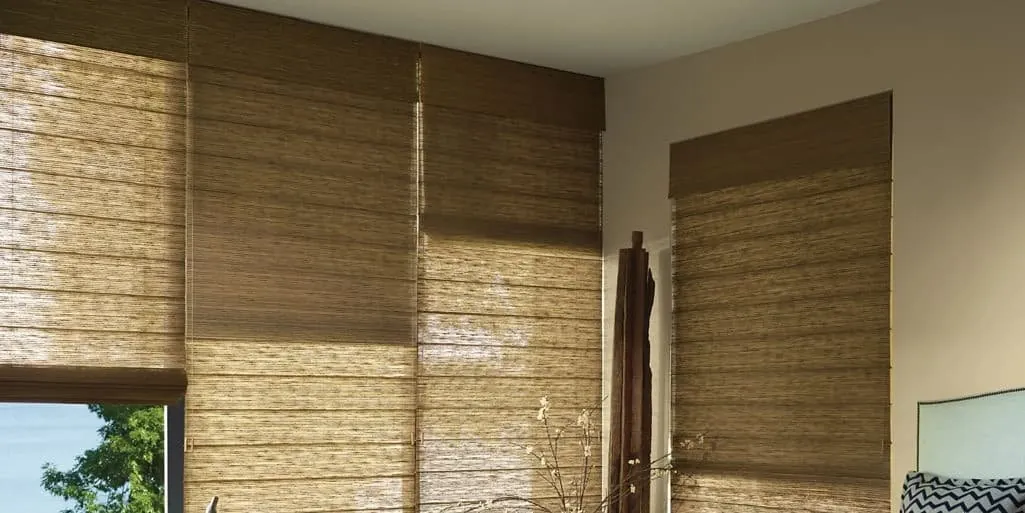
From the bay shore to the Sound
Barnstable runs the whole width of the Cape, from Cape Cod Bay on the north shore to the Sound on the south. Drive from one side to the other and the houses change, but so does the light. A house on the bay side looks north over the water and gets a steady, cool light for most of the day. A house further south may take full sun across its main rooms from late morning to evening. Two houses in the same town can need completely different shades.
That is why we never start with a product. We start with the house, the way each room faces and the windows themselves. For roman shades in Barnstable, MA, that usually means two very different kinds of building: the old houses of the 6A village, with their small, deep-set sash, and the larger, newer houses on the bay side, with wide modern glass.
Both suit a folded fabric shade beautifully. The trick is choosing the right line, fabric and mount for each, and planning the north-facing and sun-facing rooms on their own terms.
Our roman shades in Barnstable, MA
We fit two Hunter Douglas lines, Vignette and Carole Fabrics, in flat and folded styles. These three are where most conversations begin.
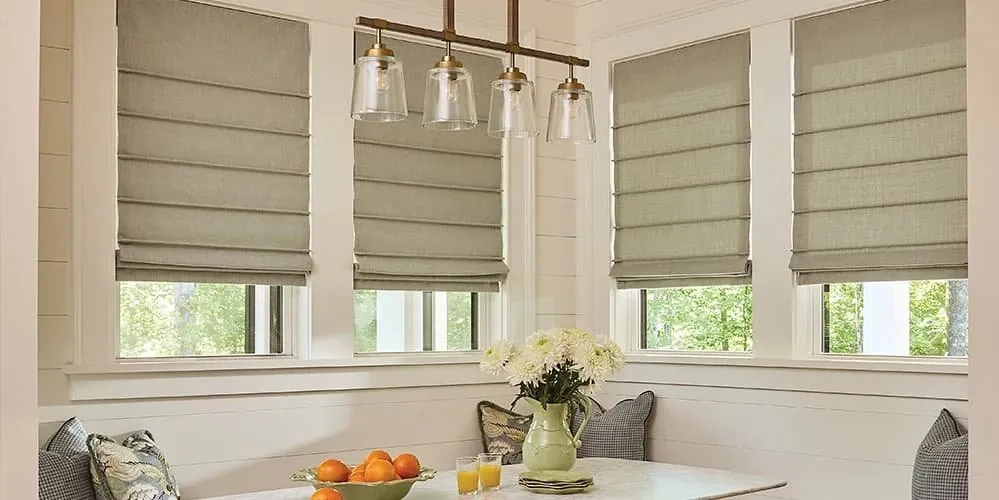
Carole Fabrics flat fold
A tailored panel that stacks into crisp pleats, sewn to order in the fabric you choose. Set inside a deep old reveal, it looks as if it was always there.
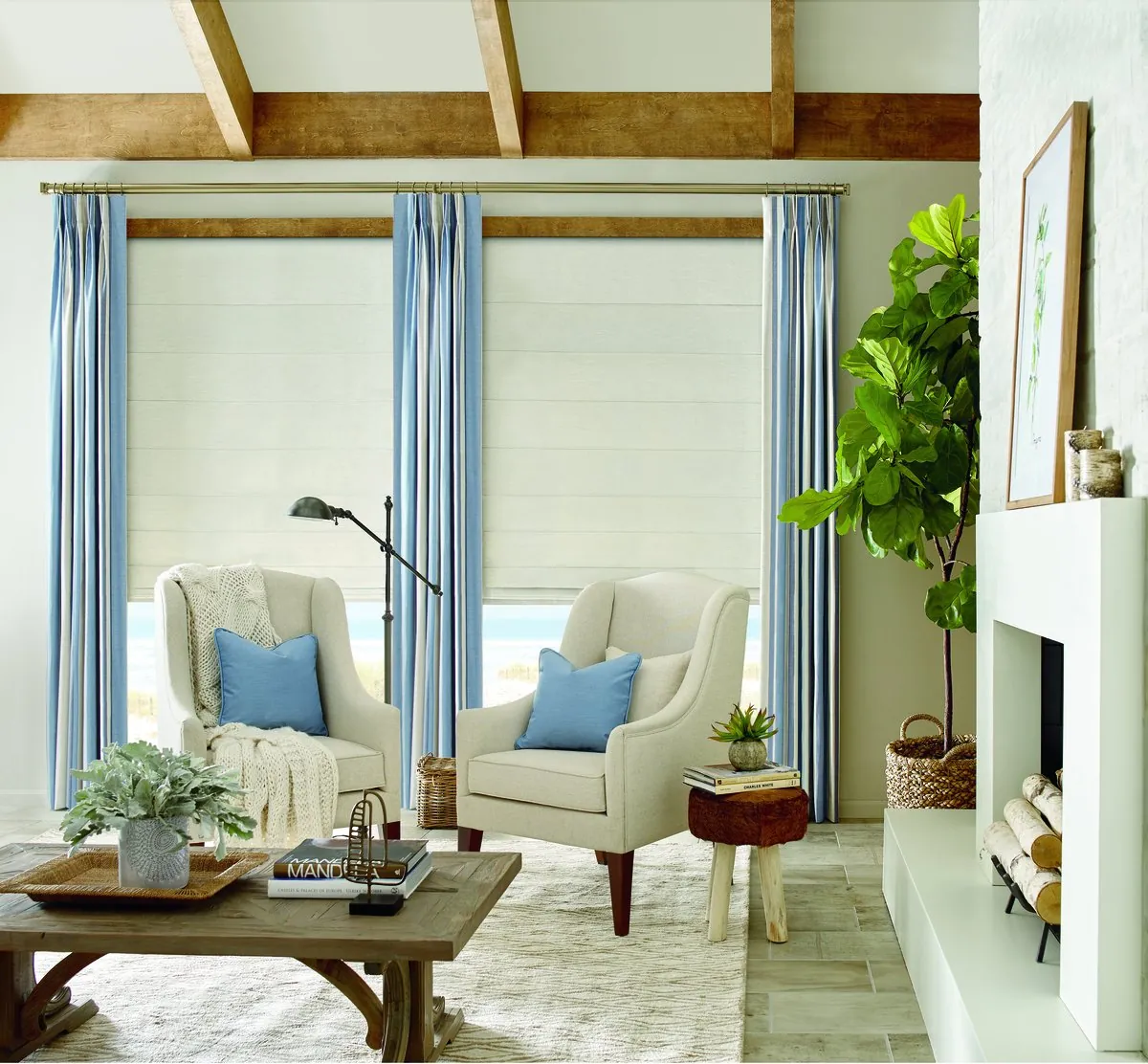
Carole Fabrics folded style
Soft loops of fabric across the face, for a fuller, more traditional look in a parlor or a dining room with period character.
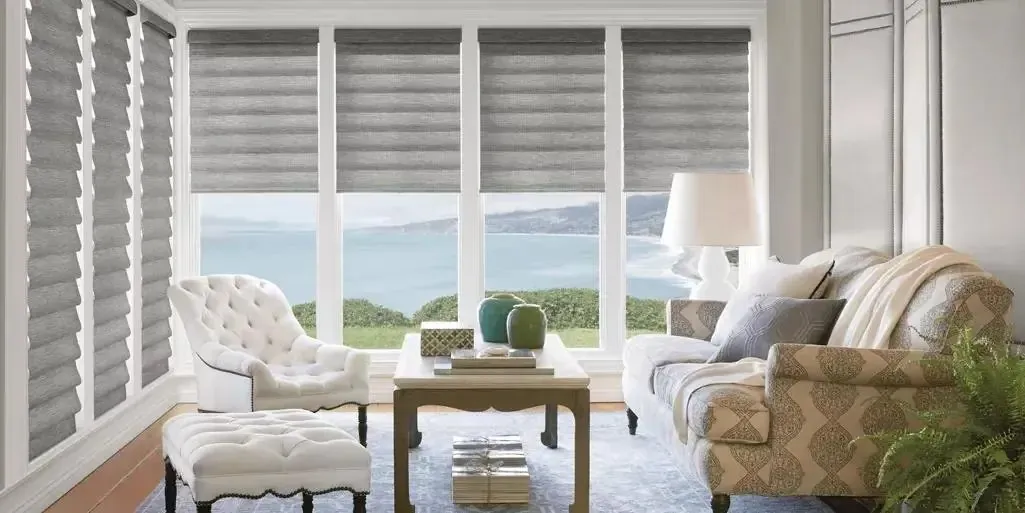
Vignette modern roman shades
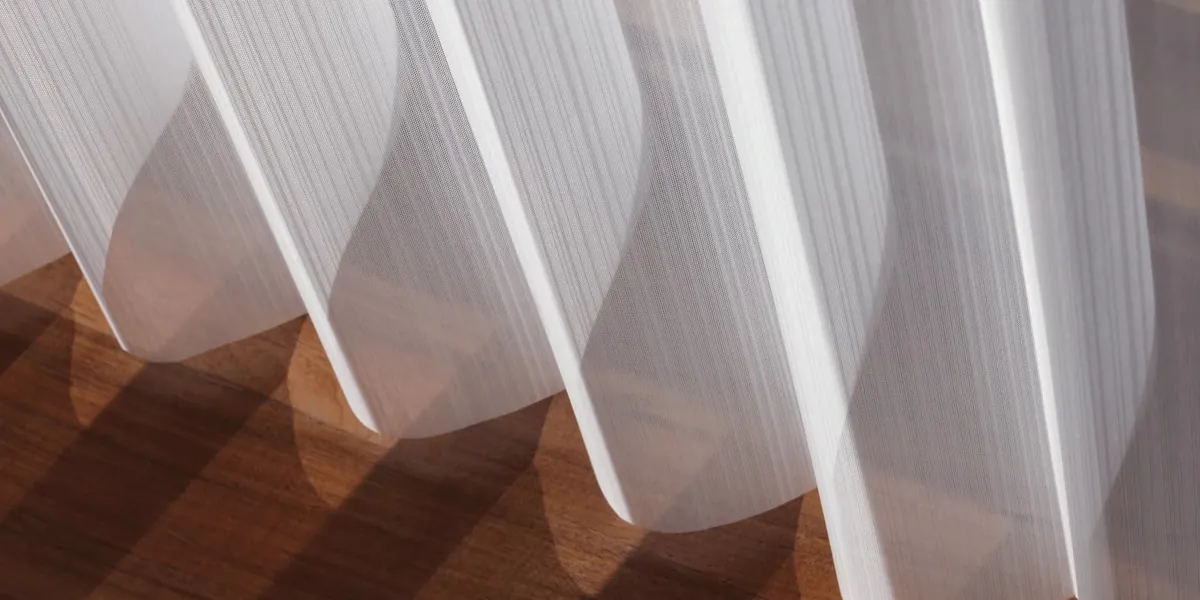
Folds at the front, with the fabric rolling into the headrail when raised. It clears the glass on small sash and works with PowerView on large bay-side windows.
Deep-set sash along 6A
The old village along Route 6A is full of antique capes and Federal houses, and their windows have a character all their own. The sash is small, often divided into many little panes, and it sits deep in a thick wall, with a wide reveal between the glass and the room. In some houses there is a window seat in that depth. In others there are panelled shutters folded into the reveal, still working after all this time.
That depth is good news for a roman shade. A headrail set inside the reveal sits well back from the room, the casing and trim stay completely visible, and the shade disappears into the window when it is raised. On a house where the woodwork is the best thing about the room, an inside mount is almost always what we suggest.
The small size of the sash is the other side of it. A sewn shade gathers its folds at the top when raised, and on a short window those folds can cover a noticeable part of the glass. Where that matters, we suggest a lighter Carole fabric that folds into a slimmer stack, or Vignette, which rolls its fabric away. If the reveal has original interior shutters, we check whether a shade can sit in front of or behind them without stopping them from closing.
Historic district expectations
The village along 6A sits within a historic district, and its houses are looked at closely. Window treatments are inside the glass, but they are still part of how a house reads from the road. A neighbor walking past sees the lining of every roman shade, not its fabric.
Our usual approach is simple. We keep one quiet, pale lining on every window that faces the street, so the front of the house looks even and calm. We mount inside the reveal wherever it fits, so nothing shows above the window head from outside. And we set the shades at a consistent height when they are partly lowered, which keeps the rows of windows looking orderly. The fabric facing into each room can then be whatever suits that room.
If you have particular guidance from the district for your house, bring it to the consultation and we will plan the shades around it.
Federal houses and their proportions
The Federal houses along the old road were built with symmetry in mind. The front is balanced around a central door, the windows line up across each floor, and inside the rooms are tall and well proportioned. A roman shade in a Federal house should respect that order.
Inside the parlor, a flat fold in a plain or quietly patterned fabric keeps the lines clean and lets the mouldings and mantel take the attention. A folded style adds softness in a dining room or a bedroom. Where a room wants more height and color, drapery panels at the sides of each window can frame the shade, with the shade doing the everyday work of light and privacy.
Upstairs, the windows are often shorter than those below and sit close under the eaves. We plan the fold spacing so the shades on both floors look related from the street, even where the sizes differ.
Ells, additions and window seats
Very few antique houses in the village are exactly as they were built. Most have grown at the back, with a kitchen ell, a mudroom, a family room or a bedroom wing added at one time or another. The additions bring a second set of windows into the same house: modern units with thinner frames and larger glass, set right beside the old deep-set sash. Planning roman shades in Barnstable, MA, for a house like that means making the old part and the new part feel like one home.
We usually do it with fabric and fold rather than with an identical product everywhere. A Carole flat fold in the front parlor and a Vignette in the same color family in the kitchen ell look related, even though one stacks and the other rolls. Fold spacing that is close from room to room helps too, so the shades look like a set when you stand in a doorway and see both parts of the house at once.
The thinner frames in an addition often leave less room for an inside mount than the old reveals do. Where that happens, an outside mount above the window can actually help, because it lets the raised folds sit on the wall and gives a modest window a little more height.
Window seats deserve their own word. A seat built into a deep reveal is one of the nicest places in an old house, and a shade mounted at the front of the reveal can close the seat off like a small room. Mounted close to the glass instead, it leaves the seat open to the room. Both work; it depends how you use the seat, and we look at it with you when we plan roman shades in Barnstable for that room.
Larger newer houses on the bay side
On the bay side, away from the old village center, there are larger houses built much more recently. These have a very different set of windows: wide living room glass looking north over the water, tall windows in two-story rooms, and runs of windows across the back.
North-facing glass gets very little direct sun, which changes the advice. Fading is less of a worry on those windows, so deeper colors and bolder fabrics that might struggle on a south-facing window can work well. What a north-facing room does need is warmth and comfort in the evening. A lined roman shade lowered at dusk takes the chill off the room and stops the big dark panes from reflecting the lamps back at you.
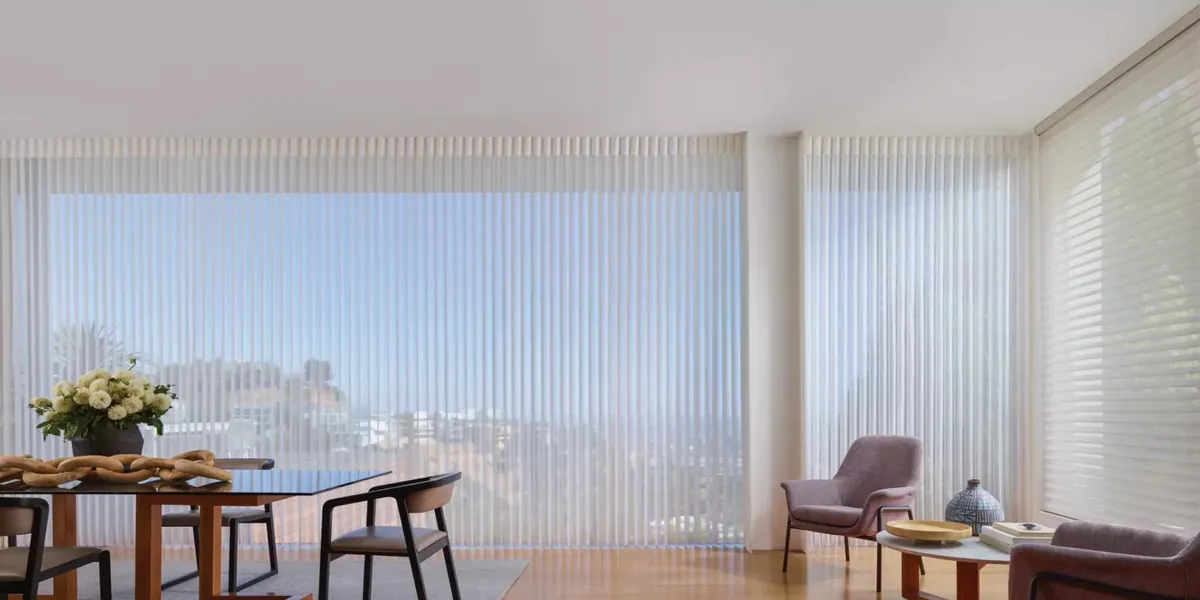
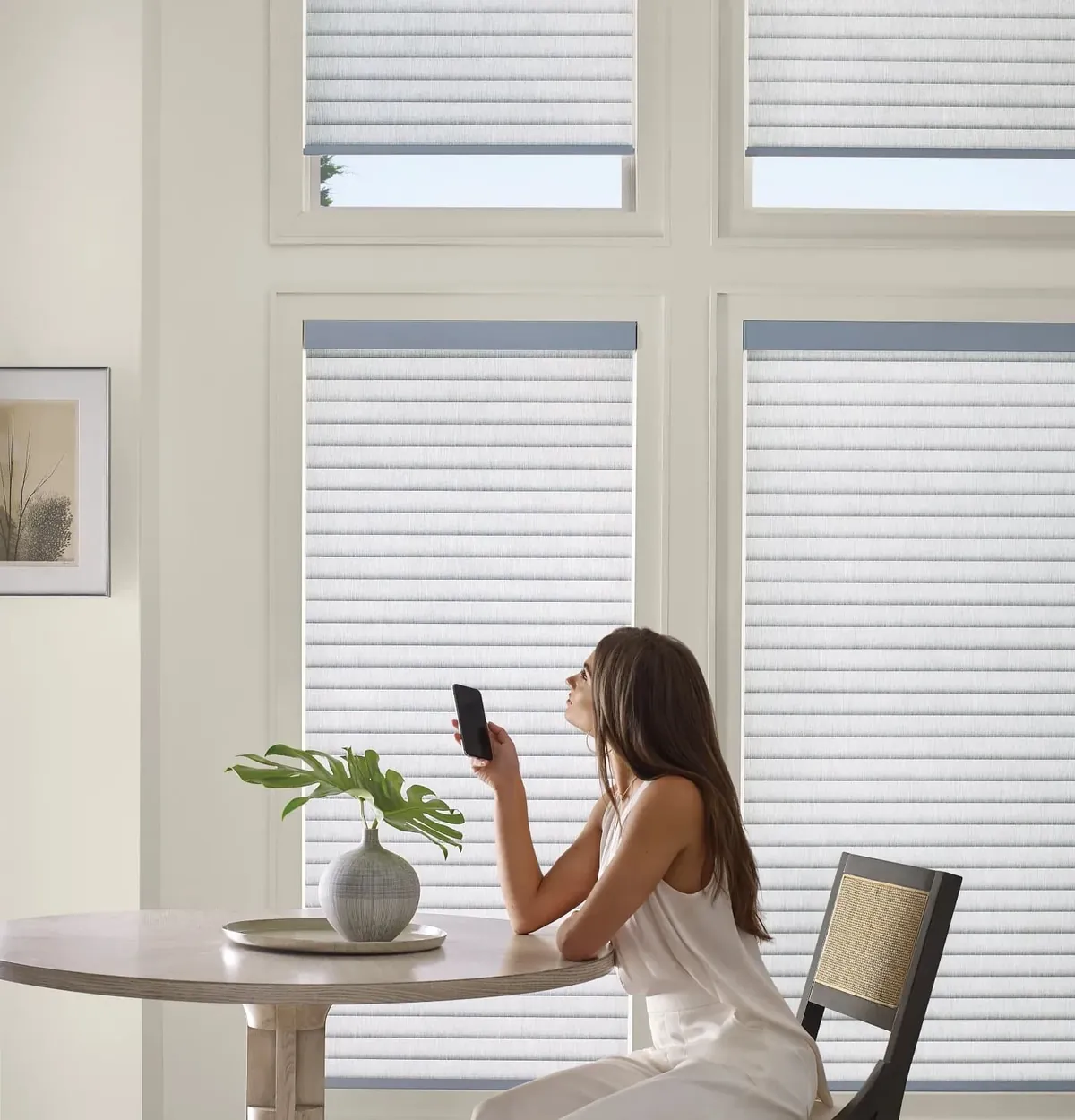
Scale is the other issue. A wide window is usually split into two or three shades that line up, with matching fold spacing so they read as one design. Tall windows are often best with Vignette on PowerView, so you can raise and lower them from a phone or remote, and group a whole wall of shades together.
Reading the light, room by room
Because the town spans so much ground, the way a room faces matters more than the village it is in. These are the patterns we see most often.
- North-facing rooms: soft, steady light with little direct sun. Bolder colors hold up well. A lining adds evening warmth and privacy.
- South-facing rooms: strong sun for much of the day. A light-filtering lining and a lighter fabric protect the room and the shade.
- East-facing bedrooms: early, bright light in summer. A room-darkening lining keeps the room dim until you are ready.
- West-facing rooms: long, low afternoon sun and heat. A lined shade, often motorized to lower on a schedule, keeps the room comfortable.
Many houses have all four. We walk round with you and suggest a fabric and lining for each window, then make sure the street side still looks consistent from outside.
Choosing between Vignette and Carole Fabrics
Each line has its strengths, and the house usually points the way.
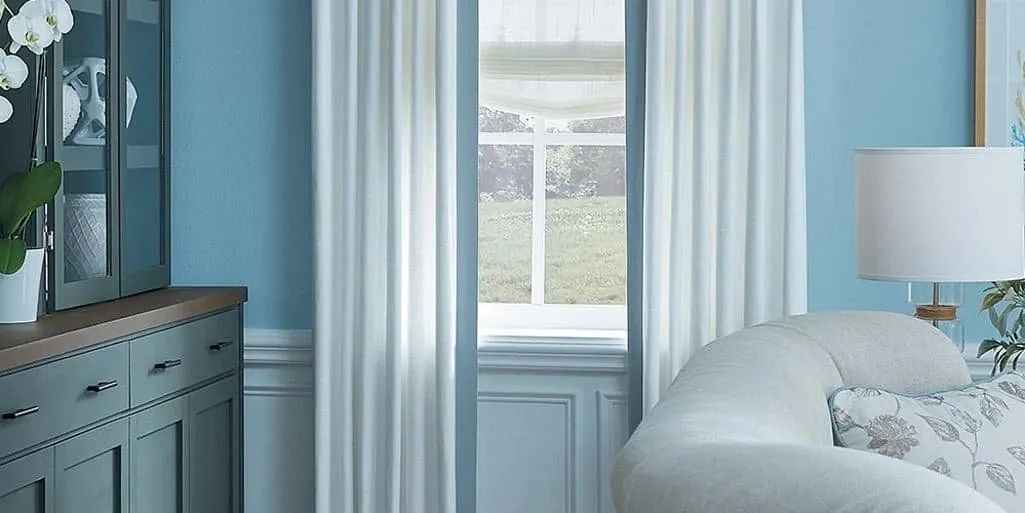
Carole Fabrics shades are sewn to order from an enormous choice of decorator fabrics, in flat or folded styles. They are the natural choice for an antique house, where the fabric needs to suit old woodwork, painted walls and period furniture, and for any room where the shade should work with drapery or upholstery. When raised, a Carole shade gathers into a neat stack of folds.
Vignette has soft folds across its face, but its fabric rolls up into the headrail rather than stacking. On small, deep-set sash that keeps more glass clear when the shade is up. On large bay-side windows it gives a clean, modern look and pairs with PowerView motorization.
It is common to use Carole shades in the old front rooms and Vignette in the kitchen, family room and bedrooms at the back. Our Vignette modern roman shades and Carole roman shades pages explain each line, and the roman shades page shows the whole range.
What we do at your home
Old glass, deep reveals and changing light are all things you need to see in person, so we come to you. Our vans carry samples, so we can bring the showroom to you.
- Request a consultation online or with the call button, and we will agree a time.
- We walk through the house, starting with the rooms you use most and noting which way each faces.
- You hold Carole Fabrics and Vignette samples at your own windows and compare fabrics and linings in real light.
- We talk through mounting in the reveal, interior shutters, drapery and motorization where they apply.
- We measure every window, including the depth of the reveal and anything that might get in the way.
- You receive a free estimate for the shades you are considering, with no pressure to decide on the day.
If you want help pulling a room together, ask about our interior design consultations. You can read what happens at an in-home consultation before we arrive.
Measuring an old window properly
An antique window is rarely square. Frames settle, sash wear, and the reveal can be a little wider at the sill than at the head. For an inside mount we measure the width at the top, middle and bottom and the height at both sides and the center, then order to the tightest figure so the shade moves without rubbing.
We also check the depth at several points, since an old wall can bow, and we look for sash locks, pulleys and shutter hinges that might sit where a headrail needs to go. Every mounting choice is agreed with you before the order goes in. When the shades arrive, our certified Hunter Douglas installers fix them into solid wood, level each headrail and show you how each lift works.
Care and everyday use
Roman shades are simple to live with. Dust them now and then with a soft brush or the brush attachment on a vacuum, and they keep their look. A lined shade protects its face fabric from sun, which helps it last on a bright window.
Cordless lifts keep the side of the window free of cords, which looks tidier against old woodwork and suits a house with children or pets. For windows that are hard to reach, such as those over a deep window seat or a kitchen counter, PowerView on Vignette does the lifting for you. And if a shade ever needs attention later, we handle blind and shade repairs as well.
Why work with a Gallery dealer
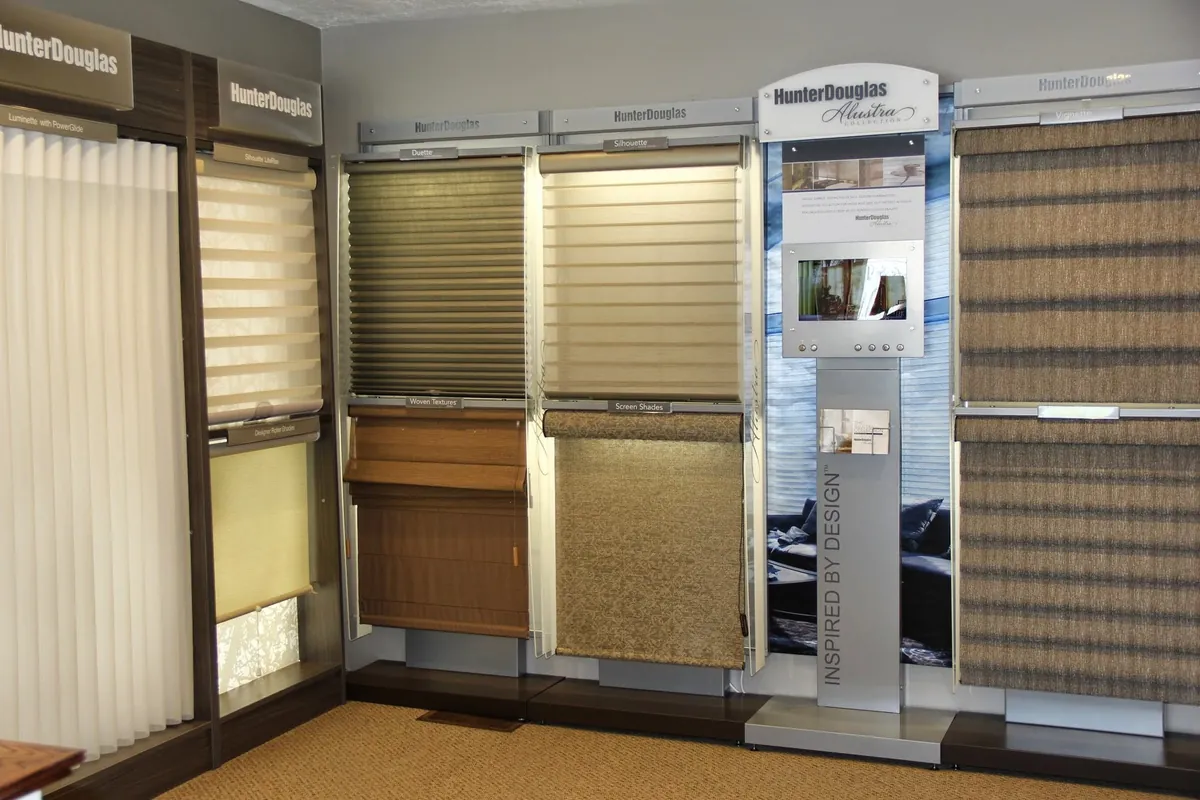
Blinds & Designs is a Hunter Douglas Gallery dealer, a designation Hunter Douglas reserves for dealers who meet its standards. For you, that means the complete Carole Fabrics and Vignette ranges, every lining and lift option and PowerView motorization, all from one place.
Our installers are certified by Hunter Douglas. We measure, order and fit, so one company is responsible from the first sample to the final adjustment.
If other rooms need something different, see our plantation shutters in Barnstable, cellular shades in Barnstable or custom blinds in Barnstable, or everything we offer in town on our Barnstable page.
The Sagamore showroom, up the road
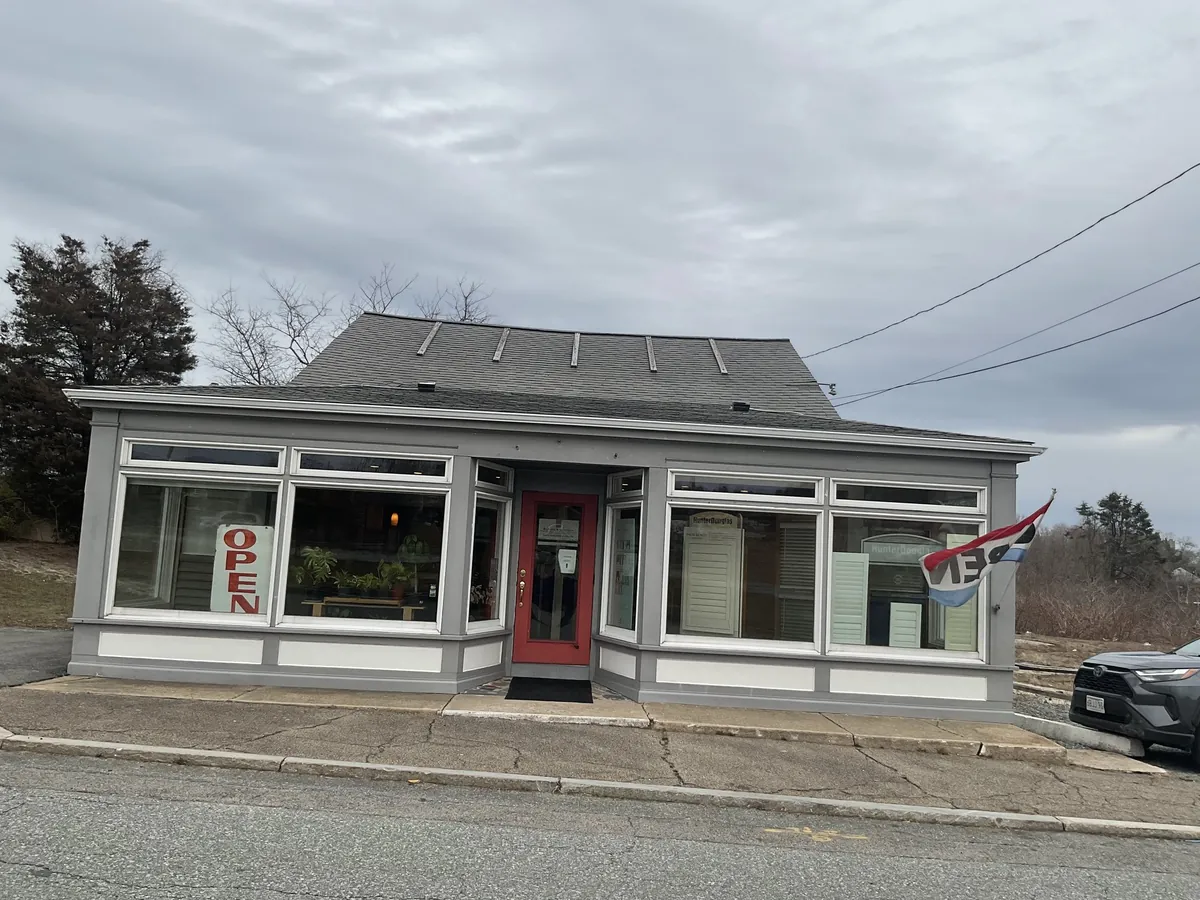
Our Sagamore showroom is the closest to Barnstable. If you would like to see Hunter Douglas roman shades before we visit, stop by during opening hours or use the call button to ask a question first.
Most of our Barnstable work begins with a home visit, though, because the light in a deep-set window or a north-facing great room is something you can only judge in the room itself.
Questions from Barnstable
Will a roman shade fit inside the deep reveal of my antique cape?
Usually, yes. Deep reveals are ideal for an inside mount, which keeps the casing in view. We measure at several points, because old walls bow and frames settle, and we check for interior shutters or hardware that might get in the way.
How do I keep the street side looking right in the historic district?
We keep one pale lining on every window that faces the road, mount inside the reveal wherever we can and set partly lowered shades at a consistent height. The fabric facing each room can still be your own choice.
My bay-side windows face north. What do I need?
North-facing glass gets little direct sun, so fading is less of a concern and bolder fabrics work. A lined shade adds warmth and privacy in the evening and stops dark glass reflecting the room at night.
Can I raise the shades on tall windows without a ladder?
Yes. Vignette on PowerView lets you control them from your phone or a remote, group a whole wall together and set schedules.
Do you charge for the estimate?
No. After we measure, you receive a free estimate for the shades you are considering. Request a consultation and we will bring samples to you.
Bring the samples to your windows
The surest way to choose roman shades in Barnstable, MA, is to see the fabrics in your own rooms, in the light each one actually gets. Request a consultation and we will bring the Carole Fabrics and Vignette range to you, measure every window and leave you with a free estimate. You can also use the call button, or visit our Sagamore showroom.