
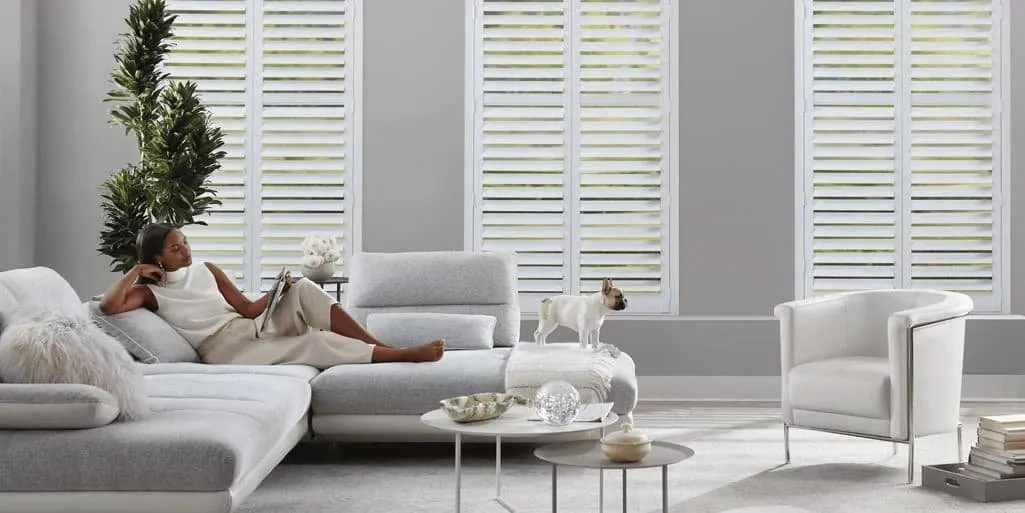
When the house next door is a few steps away
Most of Randolph was built after the war: capes, ranches and two-families on modest lots, with standard single-hung windows and sliders in nearly every room. The houses sit close together, and on many streets a side window looks almost straight into the window of the house beside it. That closeness is the first thing we think about when planning plantation shutters in Randolph, MA.
It is also why we start at your house. We run in-home consultations across the area, with vans that carry shutter samples, so you can see a louver tilt open against your own side window and judge how much of the neighboring wall shows through. Nobody has to guess from a showroom how that will look on a narrow side yard.
A shutter suits this kind of housing because it gives you a choice that most coverings do not: light without a view in, at any hour, with a simple turn of the louvers.
What we plan for in a Randolph house
Three situations come up again and again on these lots. Each one shapes the louver size, the layout or the way the panels open.
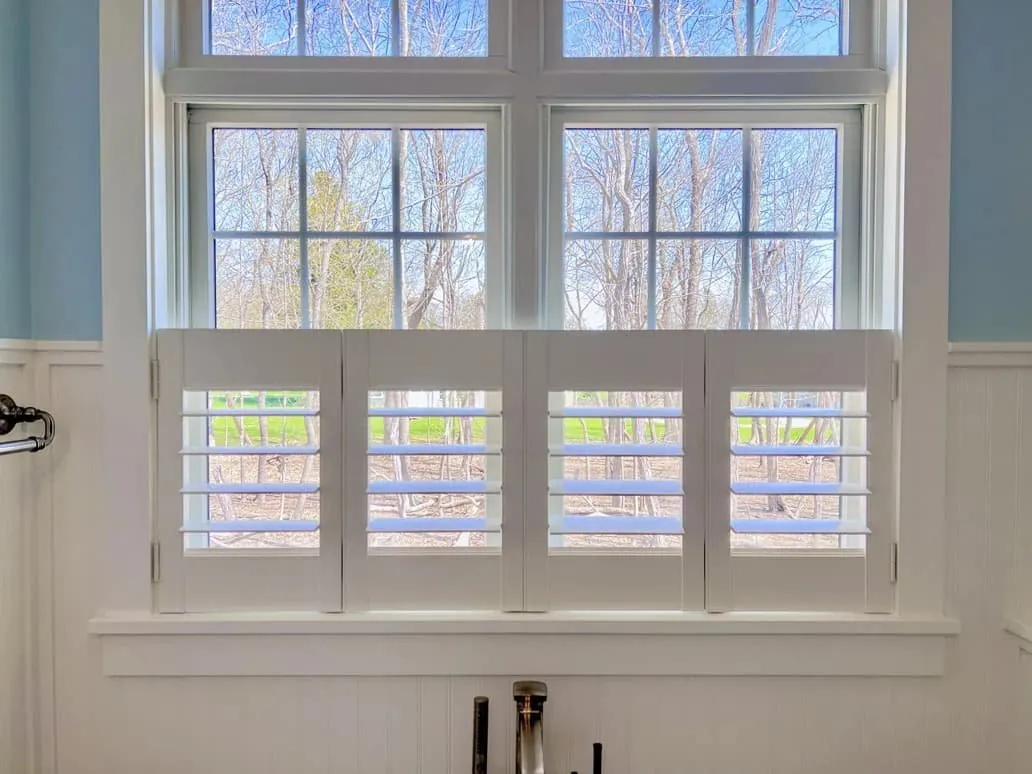
Side windows facing a neighbor
Louvers angled up let daylight in while blocking a direct line of sight from the house next door. Cafe styles cover the lower glass and leave the top open.
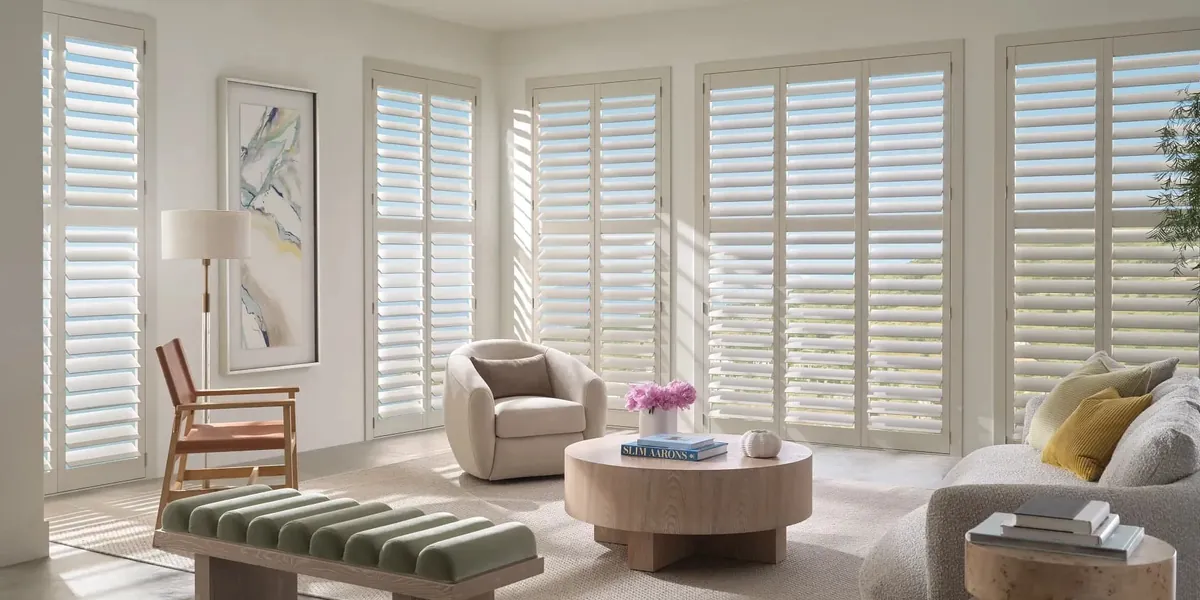
Living rooms with a wide opening
A ranch picture window or a row of front windows takes a set of panels lined up so the whole wall reads as one piece.
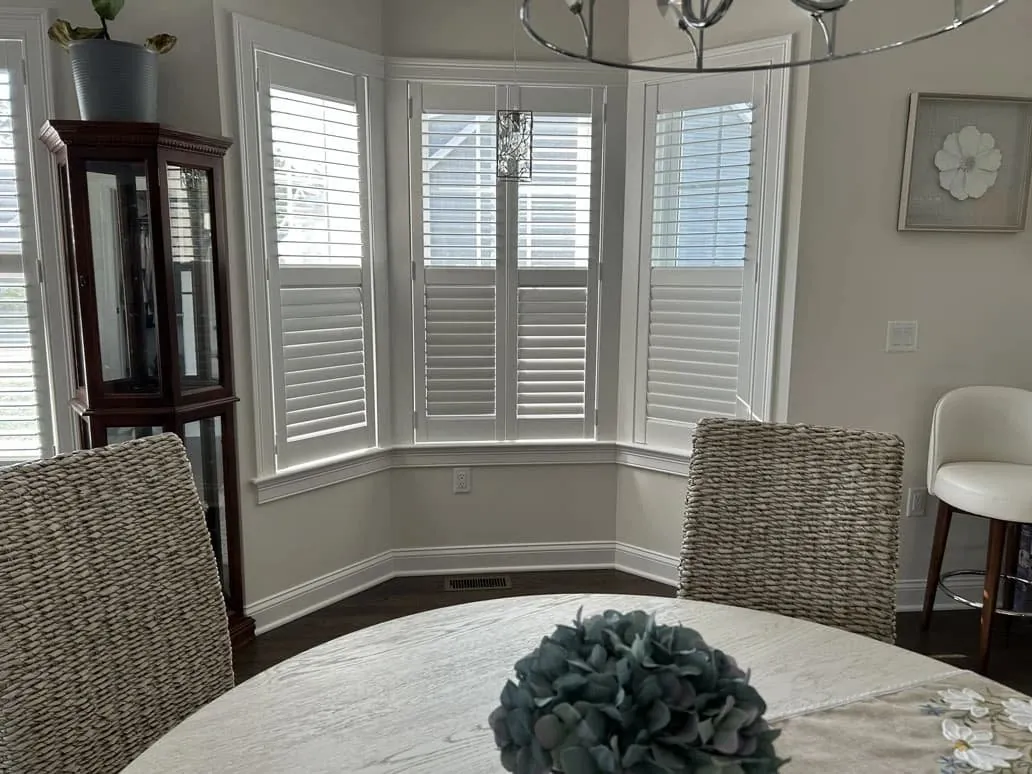
Upstairs and downstairs units
In a two-family, both floors face the same street. Matching shutters on each level keep the front of the building looking settled and tidy.
Starting with a visit at home
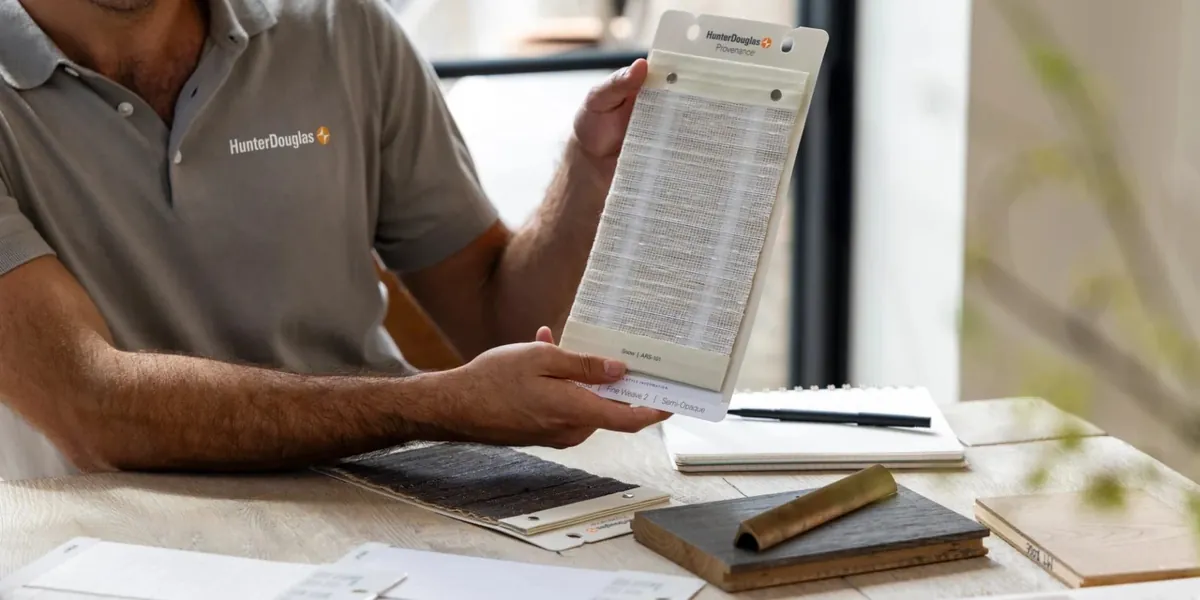
Randolph falls inside the area served from our Canton shop-at-home base. Canton has no storefront to visit; the shop-at-home model means a consultant comes to you, and the van is stocked with shutter samples in every Hunter Douglas collection. In other words, we bring the showroom to you.
For a house where the neighbor’s siding is a few steps from your glass, that is the right way round. You see how a louver angle blocks the view from next door. You see how the panels swing in a bedroom that is already tight on space. You see how a white sample looks against the trim you actually have, in the light your rooms actually get.
Here is how the appointment tends to unfold:
- You fill in the Request a Consultation form, or tap the call button, and pick a time.
- We arrive with samples and start in the room that bothers you most, often the one with the side window.
- You handle the samples yourself, tilting louvers and opening panels against your own glass.
- We note each window’s purpose: privacy, light, or both.
- We measure the openings you want covered.
- You get a free estimate and take as long as you need to think it over.
You can read a fuller account in what happens at an in-home consultation.

Single-hung windows and how shutters sit on them
The standard single-hung window is the workhorse of post-war building, and it is one of the easiest openings to shutter well. The frame is usually square and the opening is a sensible width, so a pair of hinged panels or a single panel fits it comfortably.
The detail worth thinking about is the lower sash. On a single-hung window only the bottom half moves, so that is where any window lock and lift sits. When you open the window for air, you open the shutter first and fold it back. On most of these openings that is a simple daily habit, and in summer many people leave the panels folded back and use the louvers only in the evening.
Where a room has two single-hung windows side by side, we usually treat them as a matched pair, with louvers and panel breaks lined up across both, so the wall looks deliberate rather than patched together.
Sliders and the wider openings
Slider windows, the kind where one pane glides sideways past the other, are common in Randolph kitchens, bedrooms and back rooms. They tend to be wider than they are tall, which changes how a shutter looks on them.
A wide, low opening suits panels that fold back to the sides, leaving the glass fully clear for the slider to move. On a very wide one, we split the width into several panels so none of them is awkwardly broad. Louver size matters here as well: a larger louver often looks more in proportion on a wide, short window, while a smaller one can make a low opening look busy.
Sliding patio doors are a different matter. A door you walk through every day is usually better served by a covering that moves out of the way on its own, and we will show you options for those openings rather than forcing a shutter onto them. Our roller shades in Randolph and cellular shades pages show some of them.
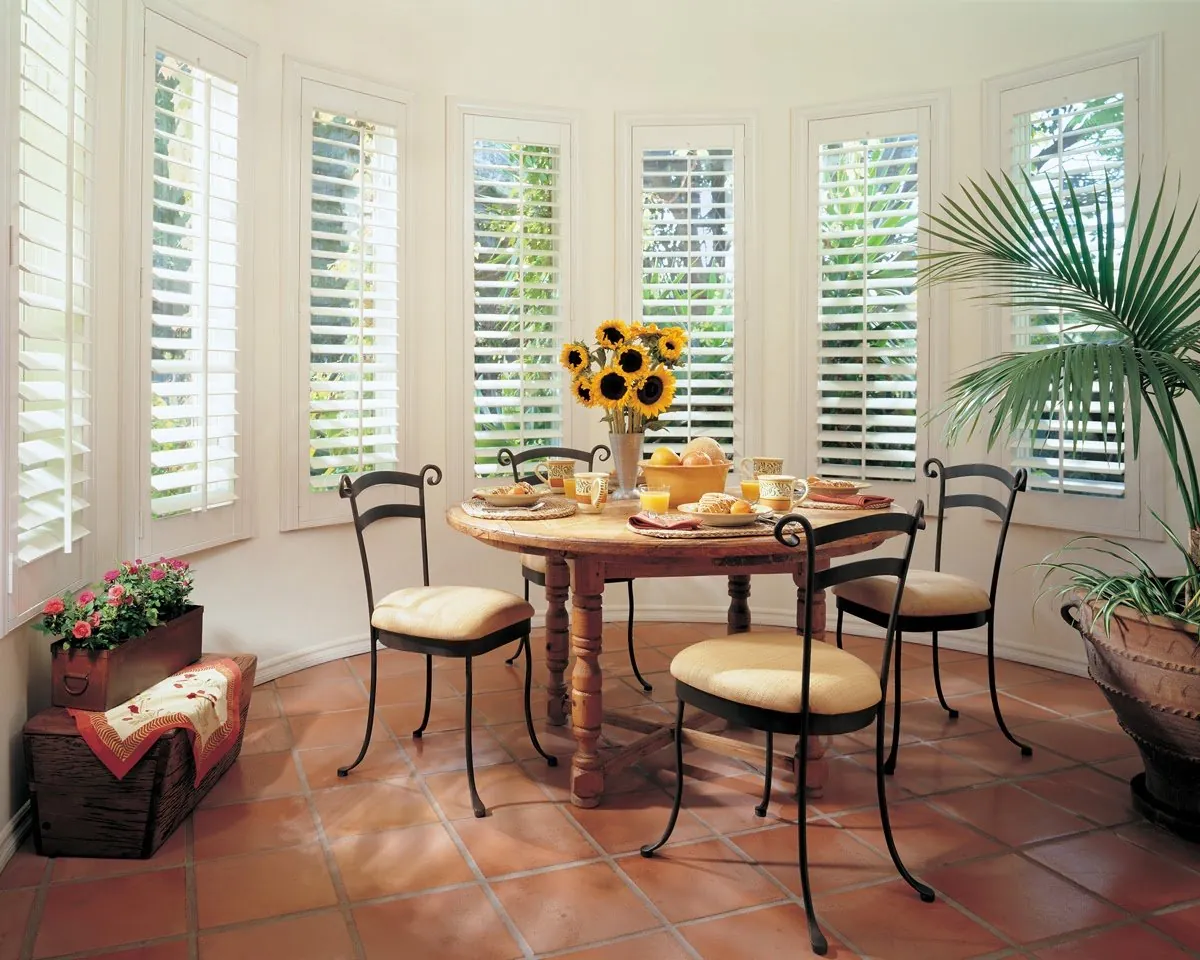
Privacy on a short setback
On many Randolph streets the front door is only a short walk from the sidewalk, and the living room window faces the road directly. Add the side windows that face the house next door, and a room can feel watched from two directions at once.
Plantation shutters in Randolph, MA, answer that in a quiet way. Tilt the louvers upward and light comes in off the ceiling, while anyone outside looks up at the slats rather than into the room. Close them at night and the room is private. Fold the panels back on a weekend morning and the glass is completely open.
This is the real difference from a shade. A shade is either down or up, and halfway is a compromise. A shutter gives you light and privacy at the same moment, in whatever balance the hour calls for.
Capes: dormers and bedrooms under the roof
Capes are everywhere in town. Their ground floors usually have a living room with a pair of front windows, a kitchen at the back and a bedroom or two, and their upstairs bedrooms sit in the roof with dormer windows.
Dormers are small, deep openings with a sloping ceiling on either side. A shutter fits inside the window and stays there, so it does not crowd the slope the way a long fabric covering can. With the panels closed and the louvers shut, a dormer bedroom is calm and private. With them open, it gets every bit of light the small window can give.
Downstairs, the front windows of a cape face the street. A consistent louver size and color across both front windows, and across the dormers above, makes the face of the house look finished from the road.
Ranches: one floor, many windows
A ranch puts every room on one level, which means every window sits at the same height above the yard and the sidewalk. From outside, you see the whole house at a glance: the picture window, the bedroom pair, the bathroom, the kitchen.
That is a strong argument for one plan across the house. When every window carries the same louver size and color, a ranch looks tidy and complete from the street. Inside, the rooms flow into one another, and matching shutters tie them together.
The picture window is usually the centerpiece. We lay it out as a set of panels that fold back in pairs, lined up with each other so the louvers run in one level line from end to end. The bedrooms then take a simpler version of the same plan. Here, plantation shutters in Randolph, MA, are less about any one window and more about the whole house reading as one.
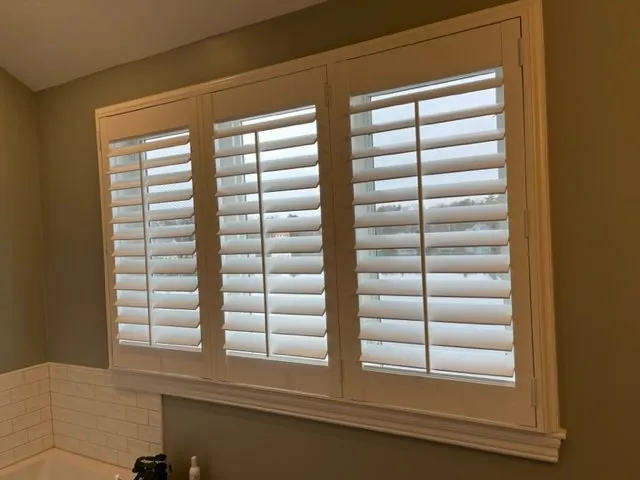
Two-families: one building, two households
A two-family has two front doors, two living rooms stacked one above the other, and two sets of windows facing the same street. If one floor has shutters and the other has an assortment of blinds, the building looks uneven from the sidewalk.
If you own the building, or if both households agree, matching shutters on both floors give it a settled face. If you live on one floor only, we can still match a color that looks right beside whatever is on the other floor. Inside, each unit is planned on its own: the bedrooms that need privacy, the kitchen at the back, the side windows close to the house next door.
Two-families also often have a back stair, a rear porch or a narrow window beside an entry. These odd windows are planned in the same visit, so nothing is left out.
Bathrooms and kitchens
A bathroom window in a close-set house is a privacy question first and a light question second. A shutter on a bathroom window keeps the room private with the louvers closed and lets light in with them tilted. A cafe style, covering only the lower glass, is another common choice, especially where the window looks toward a neighbor’s yard.
Kitchens are about light and the view over the sink. A shutter that folds right back leaves the window clear, and the louvers can soften a low afternoon sun without closing the room off.
Back entries are worth a mention too. Many capes and two-families have a side or rear door with a small window beside it or in it, opening onto a driveway that runs right alongside the house next door. A narrow shutter beside that door, in the same color as the rest, gives the entry privacy from the drive and finishes a spot that usually gets overlooked. The same goes for the little window on a stair landing, which in a close-set house often looks directly across at a neighbor’s landing. Because we plan every opening in one visit, those small windows end up matching the main rooms instead of being left bare or covered with whatever was handy.
Home offices and spare rooms
Many smaller post-war houses now give one bedroom over to a desk. A spare room with one single-hung window and a screen facing it has a glare problem for part of every day, and a side window looking at the neighbor’s house adds a privacy problem on top.
Shutters handle both without closing the room in. Tilt the louvers to the angle that keeps the sun off the screen and the room still has daylight. When a video call starts, close them a little further so the window behind you is calm rather than bright. At the end of the day, fold the panels back and the room becomes a bedroom again. In a compact house where rooms have to do more than one job, that flexibility is a large part of why plantation shutters in Randolph, MA, earn their place.
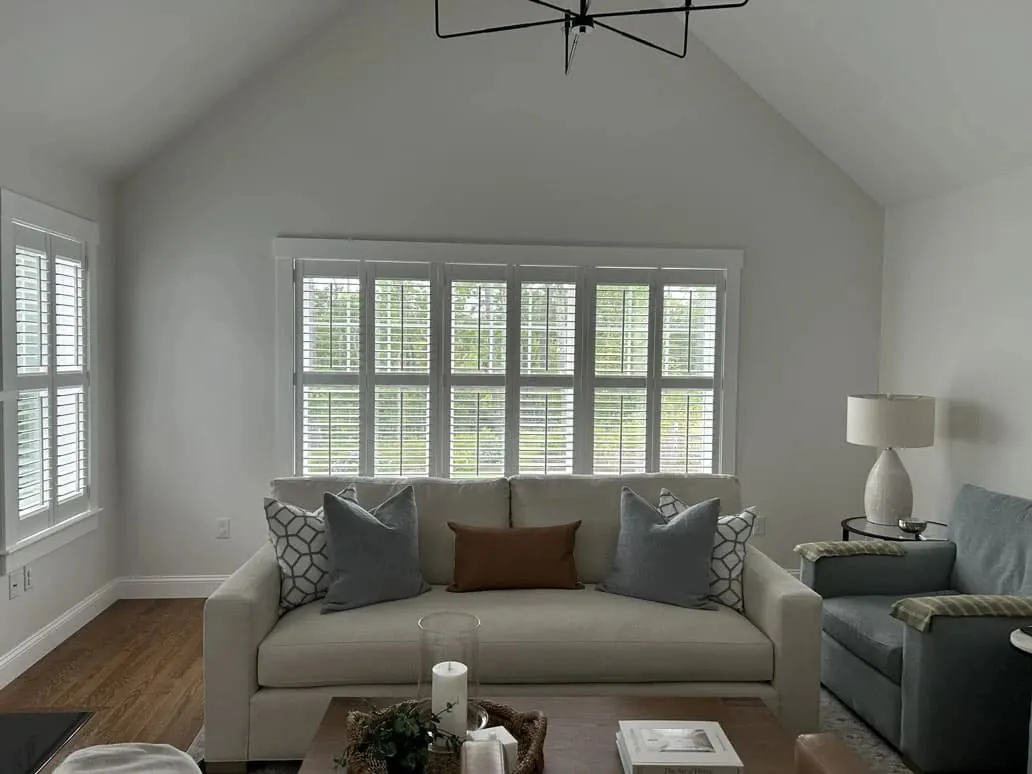
A whole house or a room at a time
Some people want every window done in one go. Others start with the rooms that matter most, usually the street-facing living room and the bedroom with the side window, and add the rest later. Both approaches work.
If you start small, we record the louver size, frame style and color on the first order so that later rooms match exactly. If you plan the whole house at once, we walk every room in the same visit and you get one free estimate that lists each window, so you can see what each part of the plan includes and decide where to begin. Either way, the first visit is the time to talk about the long-term picture, so the plantation shutters in Randolph, MA, that go up first already fit the plan for the rest.
Choosing louver size and frame style
The three Hunter Douglas collections we bring to every visit are Palm Beach, NewStyle and Heritance. We would rather you compare them on your own window than read a list of features, so the samples come to the house with us.
Within any of them, two choices shape the look:
- Louver size. Standard post-war openings suit a mid-sized louver, which gives a balanced view and a classic look. A larger louver opens up more view and suits wide sliders and picture windows.
- Frame style. Builder trim in a cape or a ranch is often plain. A frame can give each window a finished outline, or sit quietly within the opening so the trim stays as it is.
The plantation shutters page covers the collections in more depth.
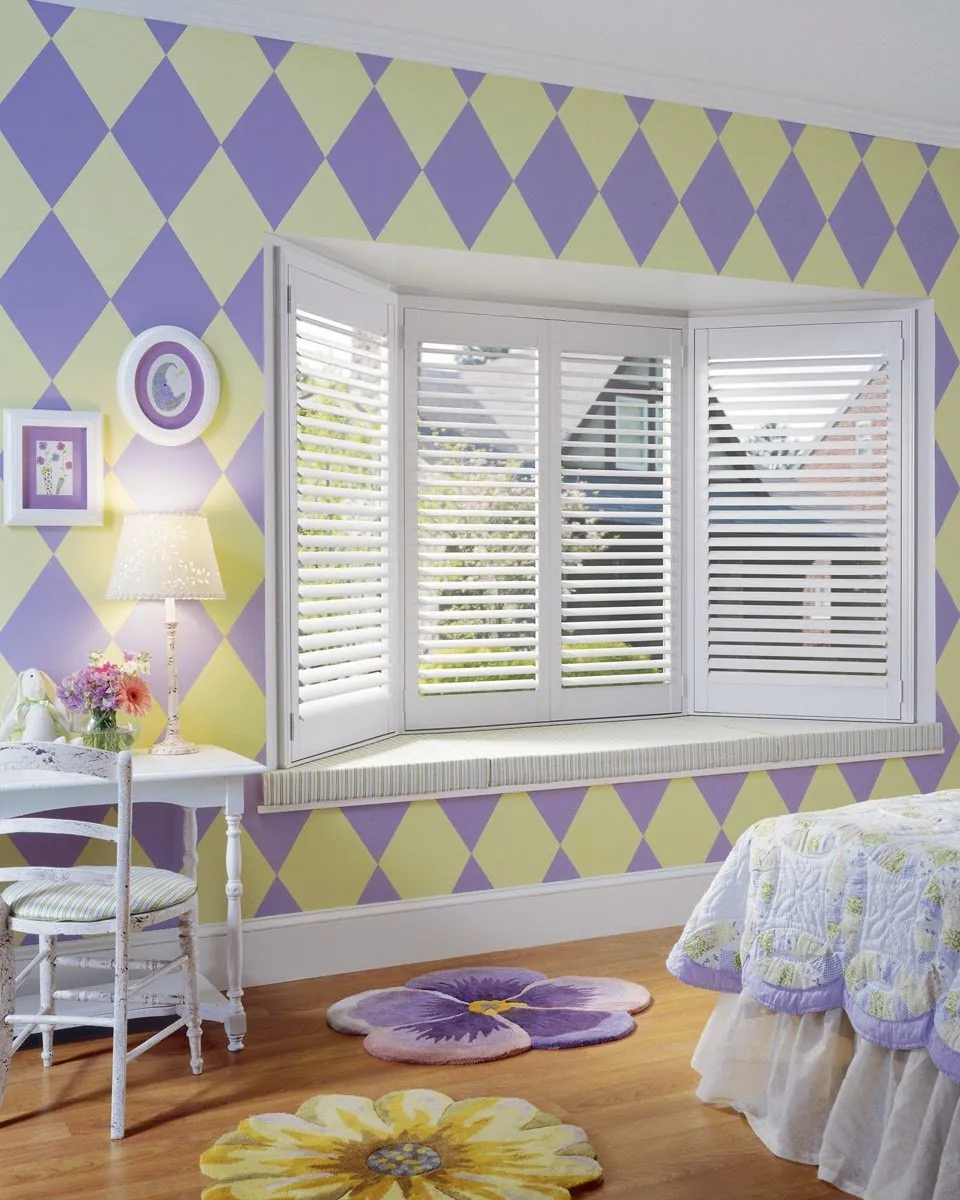
Color for smaller rooms
In compact rooms, a pale shutter helps the space feel larger and brighter, because it reflects light back into the room rather than absorbing it. Most households choose a white or a soft white, matched to the trim. Where the trim is a warm off-white, a matching warm white keeps the shutter from looking stark.
A child’s room, a den or a dining room can take a color if you want one. We bring options to compare against your walls in daylight, and we suggest settling the main color first and carrying it through.
Why a Gallery dealer matters
Blinds & Designs is a Hunter Douglas Gallery dealer, and our installers are certified by Hunter Douglas. A shutter is a fixed, precise piece of work, and how well it is fitted decides whether the panels close evenly and the louvers line up.
The same visit that plans your shutters can cover the rest of the house as well. We offer interior design consultations, we handle blind and shade repairs, and we automate window coverings for high or hard-to-reach glass.
If you would like to look around a showroom as well, the nearest to Randolph is our Franklin showroom.
More for Randolph homes
For a bedroom that needs to be dark, or for a sliding door, shutters may not be the best fit. See custom blinds in Randolph, motorized blinds and shades, or every service we offer in town on the Randolph page.
Questions from Randolph
My side window faces the house next door. Will shutters help?
Yes. Tilting the louvers upward lets light in while blocking a direct view from next door. For full privacy, close them.
Do shutters work on slider windows?
They do. The panels fold back to the sides, so the glass is clear and the slider moves freely. A wide slider is split into several panels.
Can I match shutters across both floors of a two-family?
Yes. We can carry one louver size and color across both floors, or match a color to what is already on the other floor.
Where do I go to see samples?
You do not need to go anywhere. We bring them to your house. If you would like to see a showroom too, Franklin is the nearest.
Is there a charge for the estimate?
No. We measure the windows you want covered and give you a free estimate.
Book your visit
Pick a time that suits you and we will bring shutter samples to your Randolph home, look at every window you have in mind and leave you with a free estimate. If the room you care about most is the one with the side window, say so when you book, and we will start there. The call button is there if you would rather talk it through first, and you can also browse what we do on the shop-at-home page before the visit.