
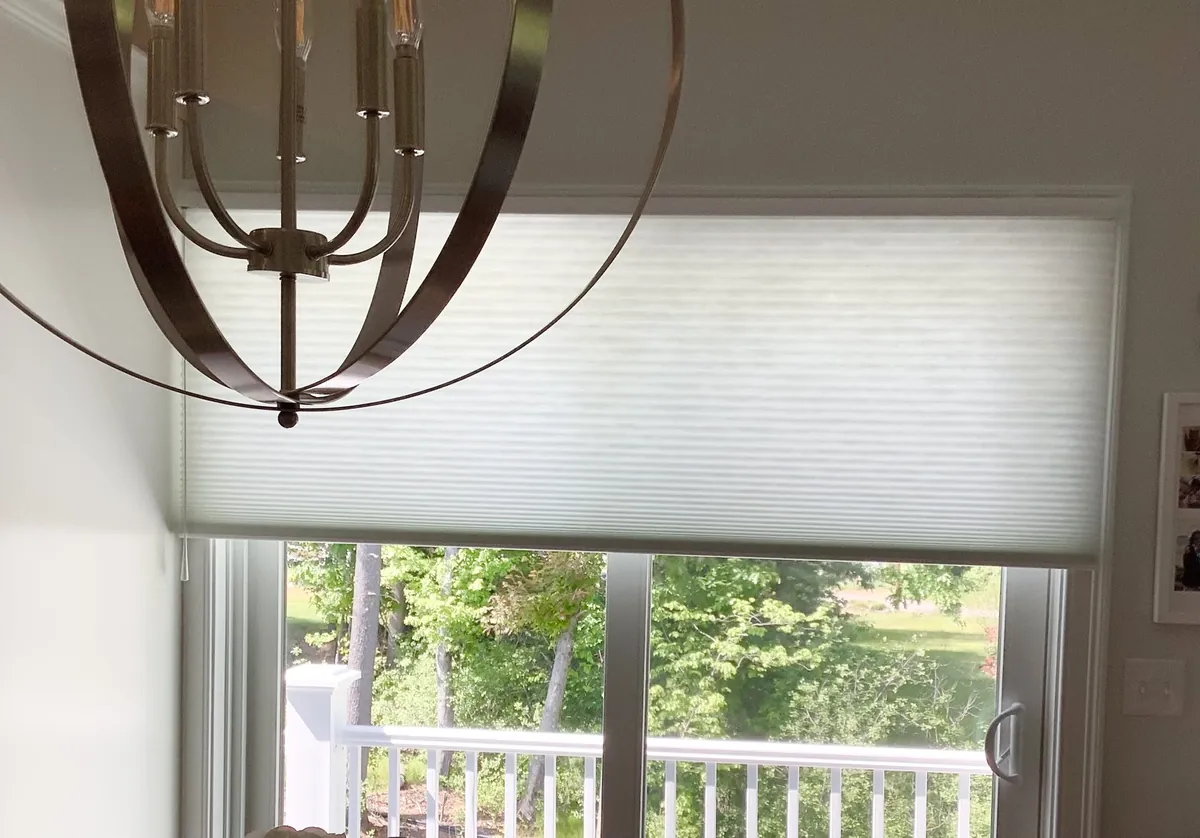
Rooms that look at the pond, and feel the glass
A lot of Pembroke houses were placed to look at water. The post-war ranches and capes around the ponds tend to have their best room on the pond side, with a picture window or a slider facing the shore, and that room is often the one that turns cold first when the wind comes across the ice in January. It is the room we usually start with when we plan cellular shades in Pembroke, MA.
Honeycomb shades work because of their shape. Look at the edge of one and the fabric forms a line of hollow cells; with the shade lowered, every cell is a small, still pocket of air. That air sits between the glass and the room and slows the cold coming in. In summer the same layer slows the heat of a long afternoon on the water side of the house.
The other thing working in your favour here is size. Most of the town’s housing has standard modern openings, so the shades come in neatly, fit closely and look as though they were part of the plan from the start. That leaves the real decisions for the parts you actually notice every day: the fabric, the light and the way each shade moves.
The honeycomb options we bring to Pembroke
Every one of these comes in our sample cases. You can see them against your own walls, your own floors and your own view of the pond.
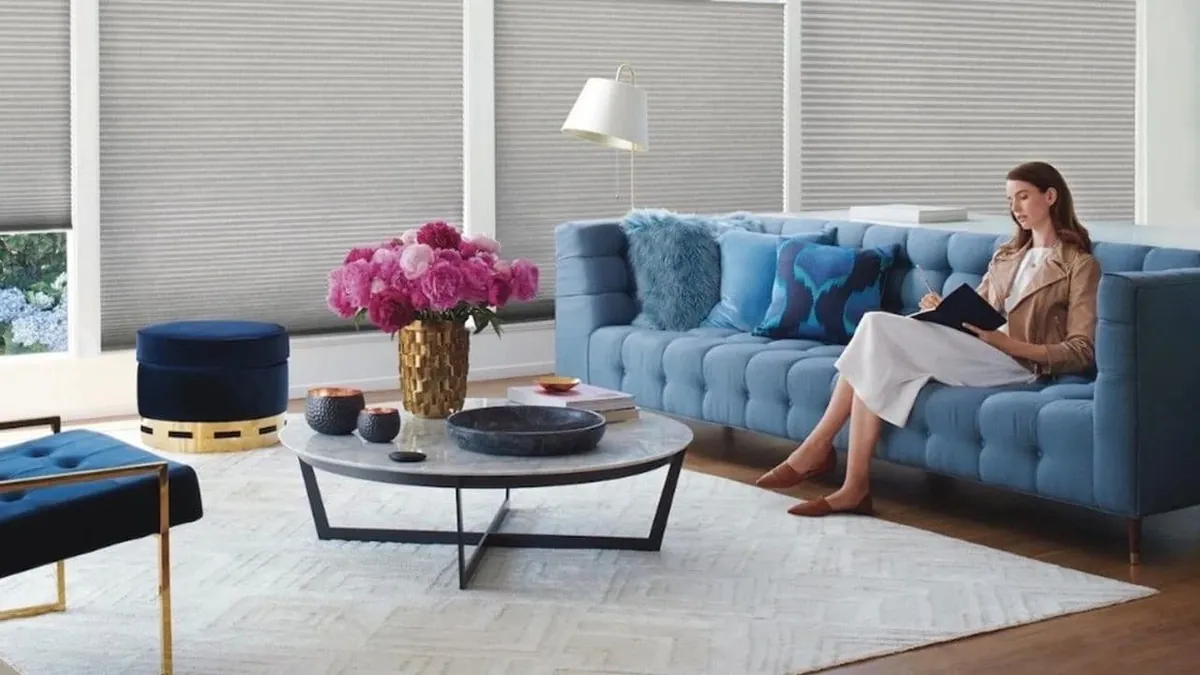
Duette honeycomb shades
Hunter Douglas’s original honeycomb line, with the widest fabric range and the most sizes, including the shade for sliders.
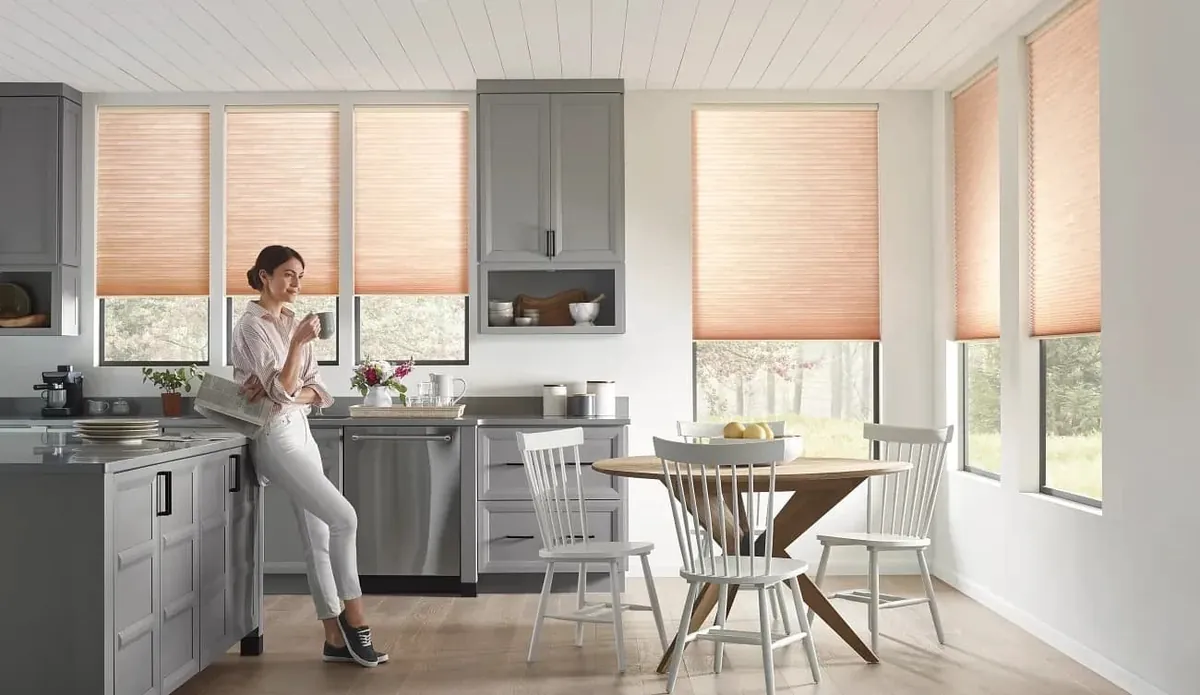
Applause honeycomb shades
A second honeycomb collection with its own palette, well suited to the standard windows found through most Pembroke houses.
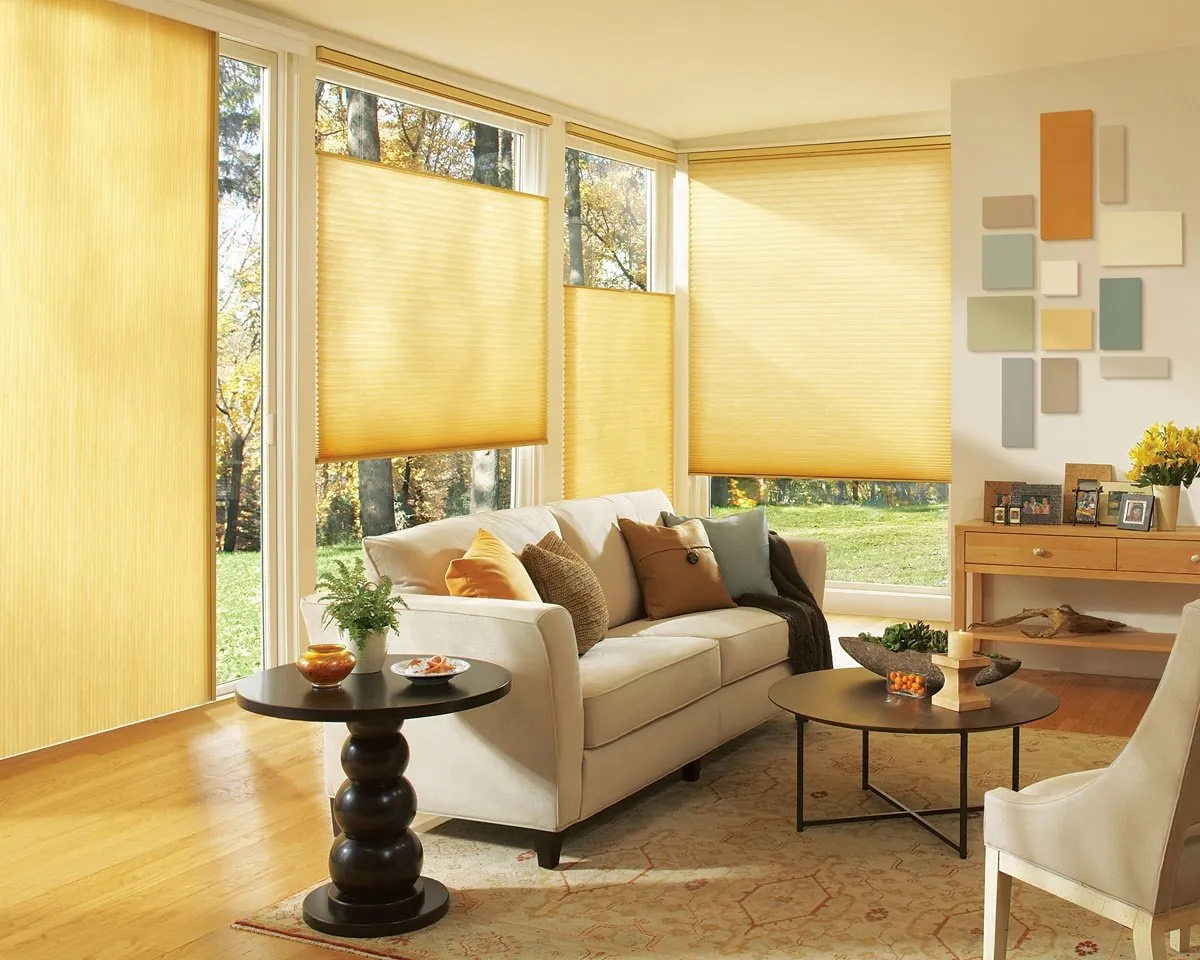
Top-down, bottom-up
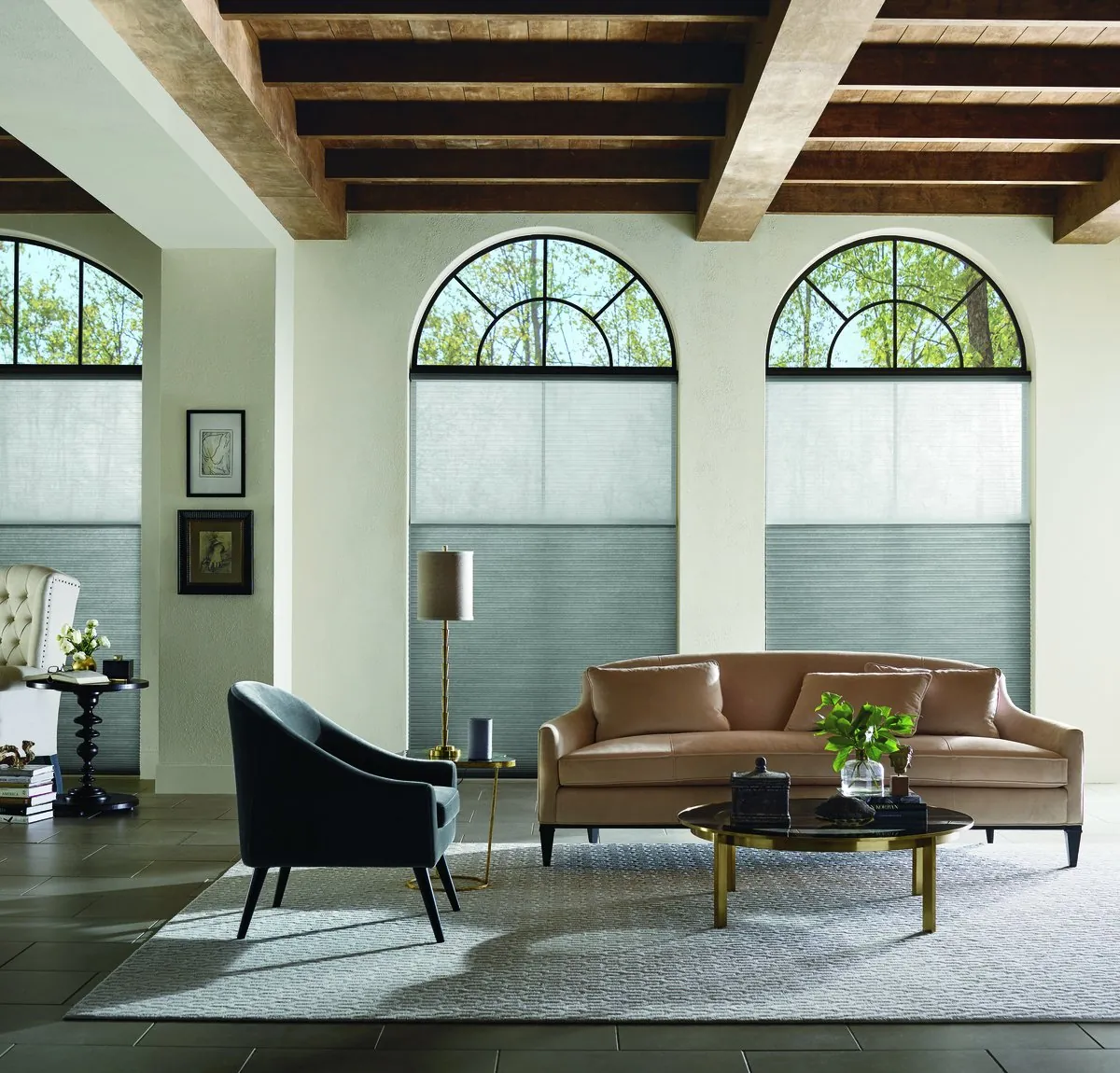
Lower the top to keep the shoreline in sight while the bottom of the window stays covered.
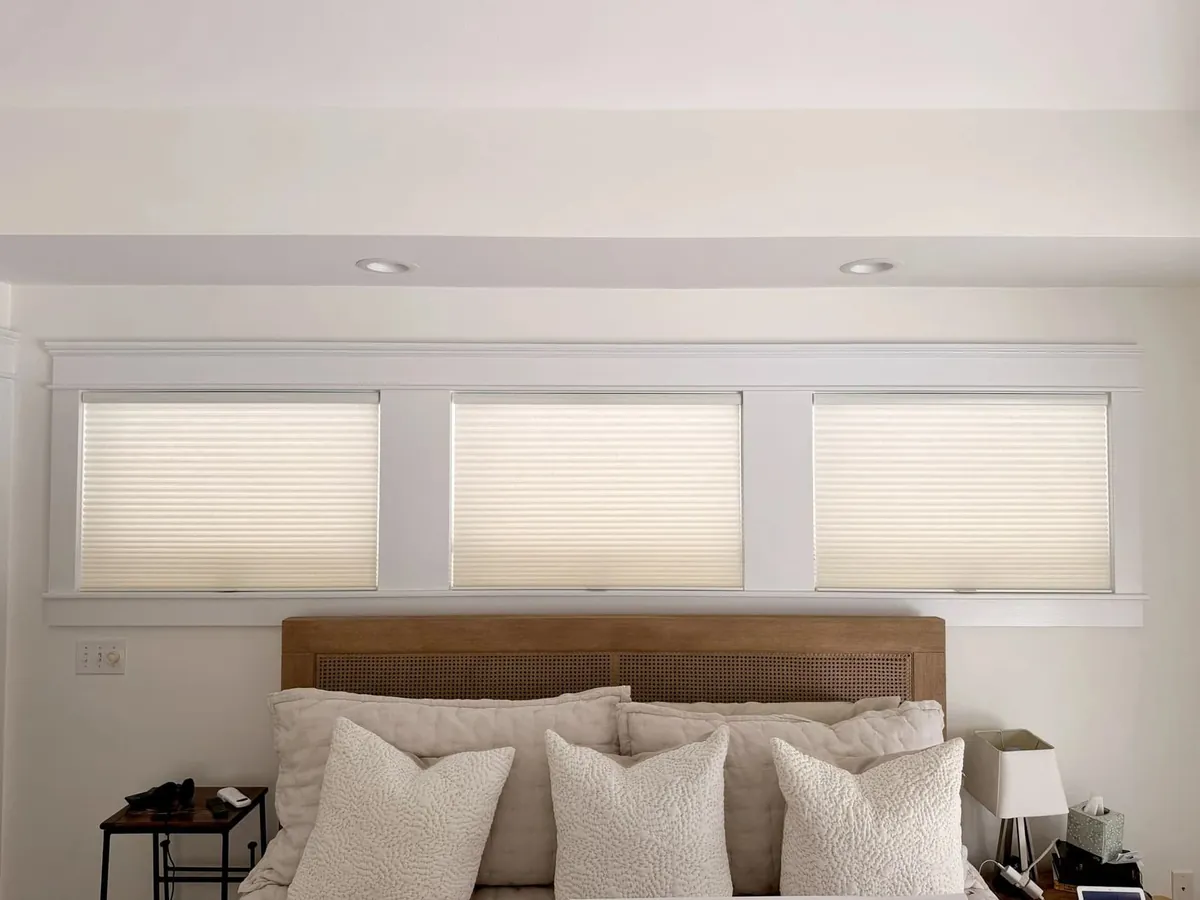
Room-darkening bedrooms
A denser fabric for bedrooms that catch the early sun, with the cells still holding air against the glass.
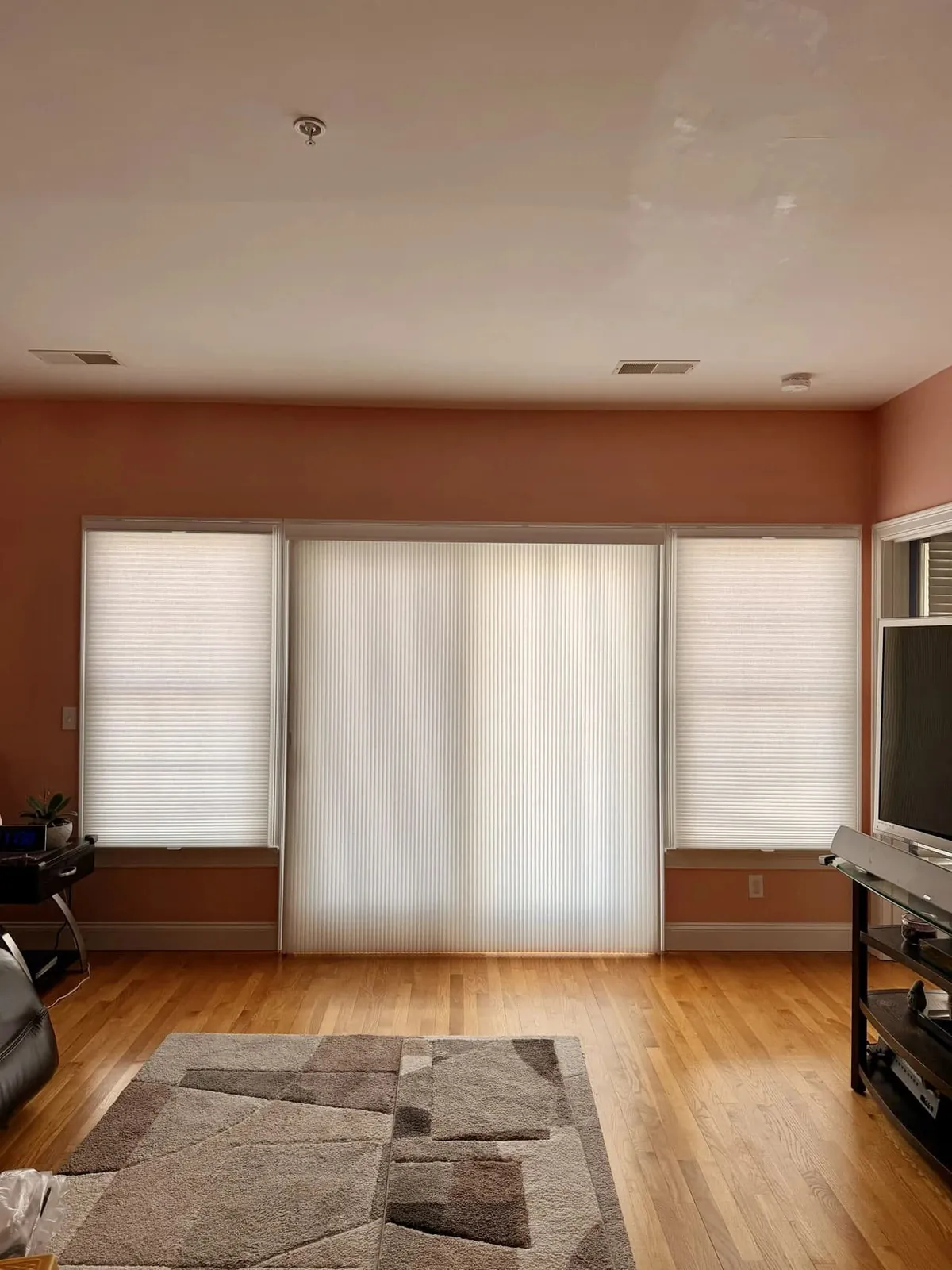
Shades for sliders
A vertical honeycomb shade crosses the slider to the deck and stacks neatly to one side when the door is in use.
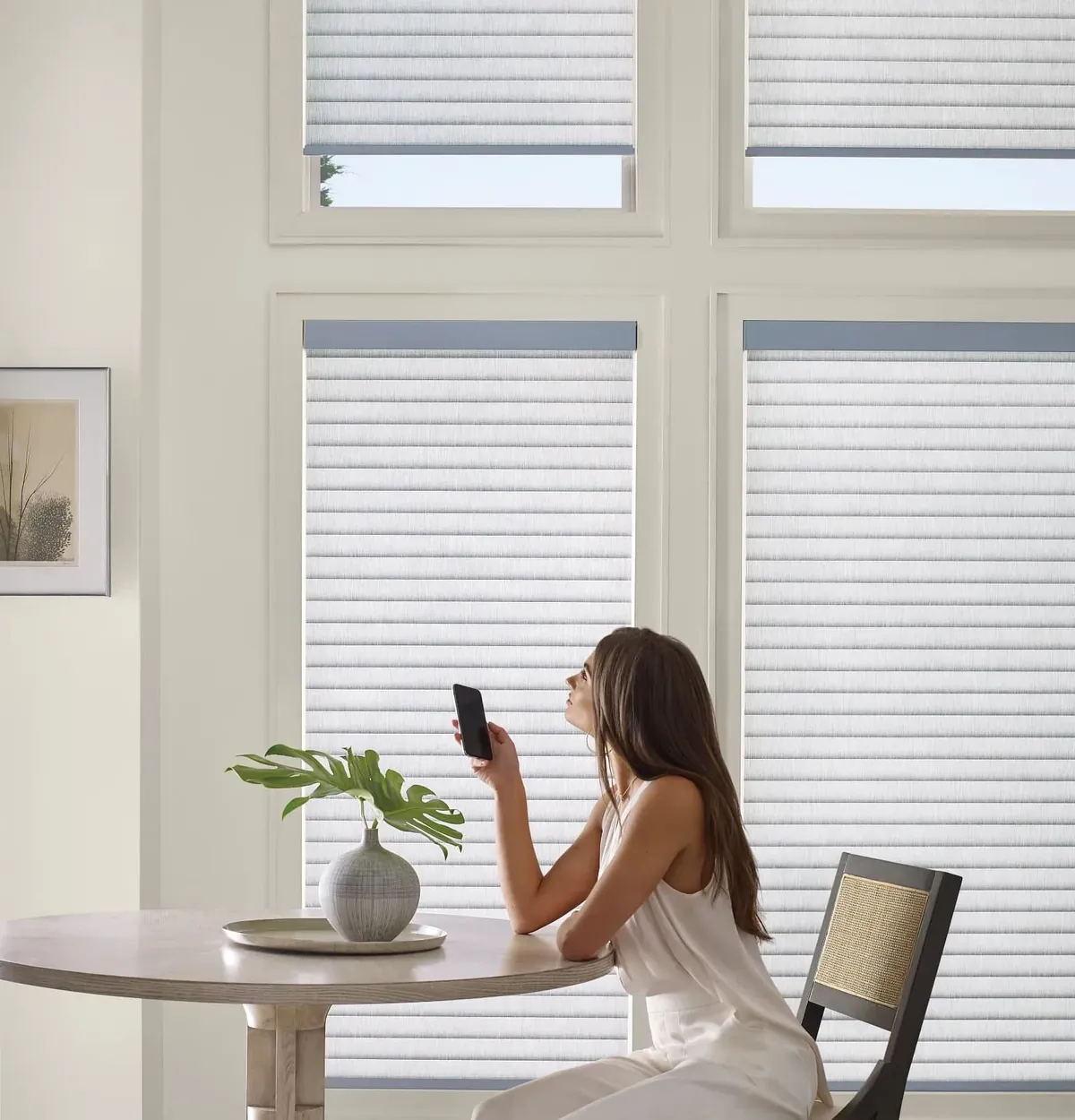
PowerView motorization
Raise and lower every shade from a phone or remote, or put them on a schedule that follows the sun.
Post-war ranches and capes around the ponds
The houses closest to the water are mostly ranches and capes built after the war. They tend to be single story or story and a half, with the living room stretched along the side that faces the pond and a set of bedrooms at the other end. Many have been opened up and updated since, with a bigger window or a slider to a deck added where a smaller window used to be.
In a ranch the living room picture window is the obvious place for a honeycomb shade. It is usually the largest pane in the house and the one that looks straight across the water. A single wide shade or two or three shades on one headrail can cover it, moving together or independently. A light-filtering fabric keeps the view softly visible through the day and gives you privacy from the shore path in the evening.
Capes bring their own windows. The upstairs bedrooms sit under the roof with dormer windows, often small and set back in a deep recess. An inside mount fits those well, and a cordless lift is easy to reach even in a tight dormer. Since the dormer rooms get the coldest in winter and the warmest in summer, they are often where the honeycomb cell makes the biggest difference you can feel.
Why standard sizes make a cleaner job
When the windows in a house are standard modern sizes, the shades fit very closely to the frame. An inside mount sits snugly within the opening, with only a narrow gap at each side, and that close fit helps the cells do their job, because there is less space for air to slip past the edges of the shade.
It also means the conversation can move quickly past the question of whether the shade will fit, and on to the choices you will live with: which fabric suits the room, how much light you want, and how each window should be raised and lowered. We still measure every opening, top, middle and bottom, because even newer frames vary, but on most Pembroke houses the measurements confirm what the eye already tells you.
Standard sizes help with consistency too. In a colonial with a long row of matching windows across the front, every shade can be built the same, so the house looks tidy and even from the street.
They also make it simple to add rooms later. Many customers start with the pond room and the bedrooms, live with the shades through a winter, then come back for the rest of the house. With matching openings the later shades line up with the first ones, in the same fabric and the same stack height, so nobody can tell which went up first.
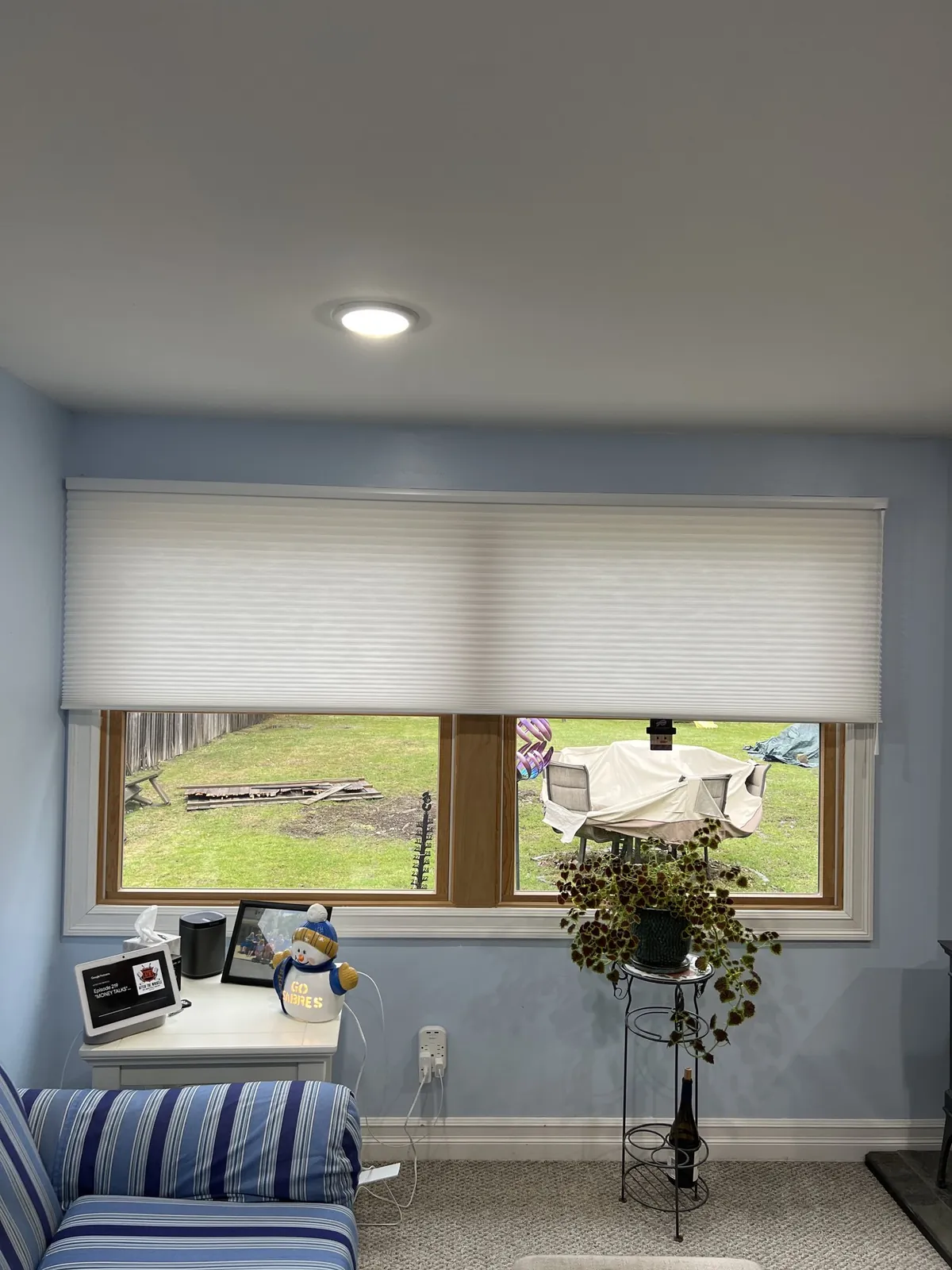
Newer colonials off Route 14 and Center Street
Further from the ponds, the newer colonials off Route 14 and Center Street have a different layout: two full stories, a family room off the kitchen, bedrooms upstairs, and often a slider or French door out to the back yard. Windows are standard double-hung units, set in matching rows.
For these houses the usual plan is a whole-house order with one fabric family across the front so the street view stays even, then different choices room by room inside. Kitchens often get a light-filtering fabric that brightens the room without glare on the counters. Family rooms facing south or west get a fabric that calms the late-afternoon sun. Bedrooms upstairs get a room-darkening fabric if anyone in the house sleeps past sunrise.
Back doors and sliders get a vertical honeycomb shade, so the whole back wall of the house matches. When cellular shades in Pembroke are planned as a set like this, the result looks considered rather than collected over time.
Kitchens, sinks and the window over the counter
The kitchen window is the one most people use the most and think about the least. In a ranch it is often over the sink, looking out to the yard or down toward the water, and in a newer colonial it may be a pair of windows above a long counter. Reaching across a sink to raise a shade is awkward, and a cord hanging into a wet counter is worse.
A cordless honeycomb shade with a top-down, bottom-up option solves most of that. Lower the top a little to let in sky and light while the lower half stays covered from the street, and you never need to lean across the sink to adjust it. Where the window is genuinely out of reach, PowerView lets you raise it from your phone or a small remote kept by the stove. A light-filtering fabric keeps a kitchen bright on a gray morning, which matters in the room where the day starts.
Light, privacy and the shore
Pond-facing rooms are built around the view, but the shore is not always private. Boats, the path along the water and neighbors across the cove can all see into a lit room after dark. That makes the choice of fabric opacity as important as the choice of color.
Light-filtering fabric gives you daytime privacy: from outside it shows a soft glow, not the room. After dark, with the lamps on, a semi-opaque fabric gives more cover. For a bedroom on the water side, room-darkening fabric does both, keeping the room private and dim.
A top-down, bottom-up shade is the other answer. Lower the top half to see the water and the sky, keep the bottom half closed, and you have the view and the privacy in one window. In a ranch living room with a long run of glass it is often the most useful single option you can choose.
What the cell does through the year
People often think of honeycomb shades as a winter product, and winter is where they are best known. With the shade lowered on a cold night, the air held in the cells slows the warmth leaving the room through the glass, and a window seat or reading chair by the pond window becomes comfortable again.
Summer is the other half. A pond-side room facing west takes a lot of sun in the late afternoon, and the water reflects even more. Lowering the shades during the hottest hours keeps that heat at the glass instead of letting it into the room. Because a light-filtering fabric still lets daylight through, the room stays bright without the glare.
Double-cell shades add a second row of cells for more air in the same space. Both come to the visit in our sample cases, and the difference is easiest to judge with the fabric in your hand and the pond light behind it.
Color, fabric and a view of the water
On a pond-facing window the shade is seen from two sides. Inside, it is part of the room. Outside, it is part of how the house looks from the water and the shore. Soft whites and warm neutrals look tidy from outside and let the most light through. Deeper colors give a richer look inside but read darker from the shore and absorb more of the afternoon sun.
We usually suggest choosing the outward-facing color first for every window on the water side, then picking fabrics for the rooms on the road side more freely. When you are choosing cellular shades in Pembroke for a room built around the view, hold each sample to the glass at the time of day you use the room most, and look at it from your favorite chair, not only up close.
A consultation at home
The best place to choose a shade is the room it will hang in. Our vans carry samples, so we bring the showroom to you, and a visit usually runs like this:
- You request a consultation online or with the call button, and we agree a time.
- We walk the house with you, starting with the pond room or whichever room feels coldest.
- You hold fabric samples to the glass and see how each one handles your light.
- We talk about privacy, glare and how you want each window to open.
- We measure every opening and check each mount.
- You receive a free estimate, with no pressure to decide that day.
Many customers ask us to look at fabric and color across the whole house at the same time, and our interior design consultations cover that. Our page on what happens at an in-home consultation covers the visit from start to finish.

Duette or Applause, room by room
Duette and Applause share one principle: cells of fabric that trap air. Duette offers the longer list of textures and pleat widths, plus a sideways version for doors. Applause brings a separate set of colors and suits the standard windows in a bedroom or kitchen very well.
In practice a Pembroke house often uses both: Duette on the pond-side picture window and the slider, where the fabric is on show and the size is larger, and Applause on the upstairs bedrooms and secondary rooms. The Duette and Applause pages go deeper into each line, and the cellular shades page shows the whole family.
Cords, children and pets
Many families now prefer no cords at all at the window. Cordless lifts let you raise and lower the shade by its bottom rail, with nothing hanging down for a child or a pet to catch. PowerView removes the reaching altogether. Both work with every honeycomb shade we bring, and both keep the window looking clean. For a nursery or a child’s bedroom we often pair a cordless lift with a room-darkening fabric, so naps happen in a dim room and nobody has to reach behind a crib to find a cord. In a busy family room with a dog that likes to watch the yard, a top-down shade leaves the lower glass covered and the shade itself out of reach.

Fitted by certified Hunter Douglas installers
Hunter Douglas reserves its Gallery title for dealers who meet its standards, and Blinds & Designs carries it. In a Pembroke house that translates into choice: any Duette or Applause fabric, any lift, the sideways shade for a slider and PowerView, all from one appointment.
The shades are fitted by certified Hunter Douglas installers. They mount each bracket into solid framing, level every headrail, test every lift and show you how it all works before they go. If a shade ever needs attention later, we offer blind and shade repair too.
Honeycomb shades are only one part of what we do in town. See our custom blinds in Pembroke, roller shades in Pembroke or everything together on our Pembroke page.
Measuring and fitting, step by step
Close-fitting shades start with careful numbers. This is how we take them and how the shades go up.
- We measure the width of each opening at the top, the middle and the bottom, and order to the narrowest.
- We take the drop down both sides and through the middle.
- We look at how deep the frame runs, and whether a lock or crank handle sits where the headrail wants to go.
- We confirm the fabric, the lift and the mount for every window with you before the order is placed.
- Our certified Hunter Douglas installers fit each shade, level every headrail, test every lift and pair any PowerView shades.
Because the shades are made to those exact measurements, cellular shades in Pembroke sit close to the frame on both sides, which looks better and helps the cells hold their air.
Questions from Pembroke
Which shade is best for a room facing the pond?
A top-down, bottom-up honeycomb shade in a light-filtering fabric suits most pond rooms. You keep the view across the top of the window, the lower glass stays covered, and the cells hold warmth in winter and slow heat in summer.
My windows are standard sizes. Do I still need someone to measure?
Yes. Even newer frames vary slightly, and an inside mount depends on an exact fit. We measure every opening at several points so each shade sits closely within its frame.
Can I match the shades across the front of a colonial?
Yes. We usually keep one fabric and color on every street-facing window so the house looks even from outside, then choose different fabrics room by room inside.
What goes on the slider to the deck?
A vertical honeycomb shade. It glides across the door and gathers at one edge whenever you head outside, so the slider holds warmth through the winter like the windows on either side of it.
Is the estimate free?
It is. Once every window is measured we write up a free estimate for the shades you are weighing up and leave it with you.
See the samples at your own windows
Choosing cellular shades in Pembroke, MA, is easiest with real fabric held up to your own glass, in the room that looks at the pond. Book a time and we will come with the full set of honeycomb samples, measure each opening and write up a free estimate on the spot. Our nearest showroom is in Sagamore, if you would like to call or visit there first.