
Outer Cape light on old capes and new glass
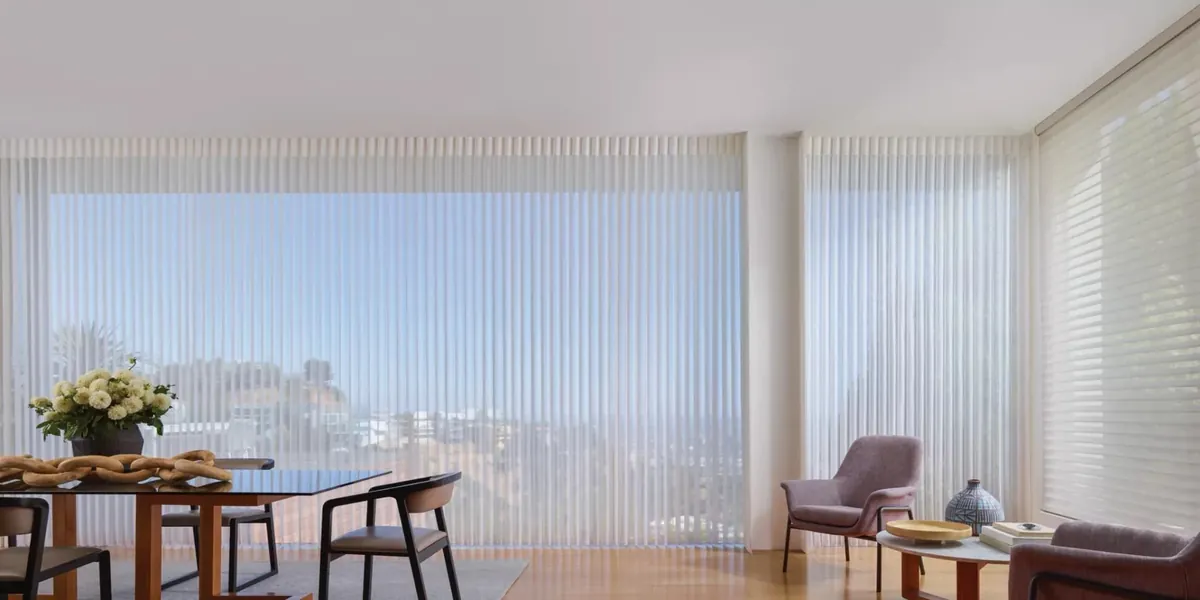
Out on the outer Cape the light changes character. With so much open water and sand around, it arrives hard and direct, with very little to soften it, and it reflects back up off the bays into every room that faces them. In Orleans that light lands on two very different kinds of house. Near the village center are antique capes, low and modest, with small sash windows set in thick old walls. Out toward Nauset and around Pleasant Bay, newer houses have been built to look at the water, and their bay-facing glass often runs floor to ceiling. As a Hunter Douglas dealer in Orleans, MA, we spend our time moving between the two.
There is one more thing many Orleans houses share. A large part of the town is lived in seasonally, and a house that is empty for weeks or months still has the sun pouring through its glass every clear day.
Blinds & Designs is a Hunter Douglas Gallery dealer, which puts every Hunter Douglas family within reach for either kind of house, and the people who fit your order hold Hunter Douglas installation certification.
Hunter Douglas choices for Orleans houses
These six come up most often in Orleans. Each card leads to our page for that product in town.
Roller shades for walls of glass
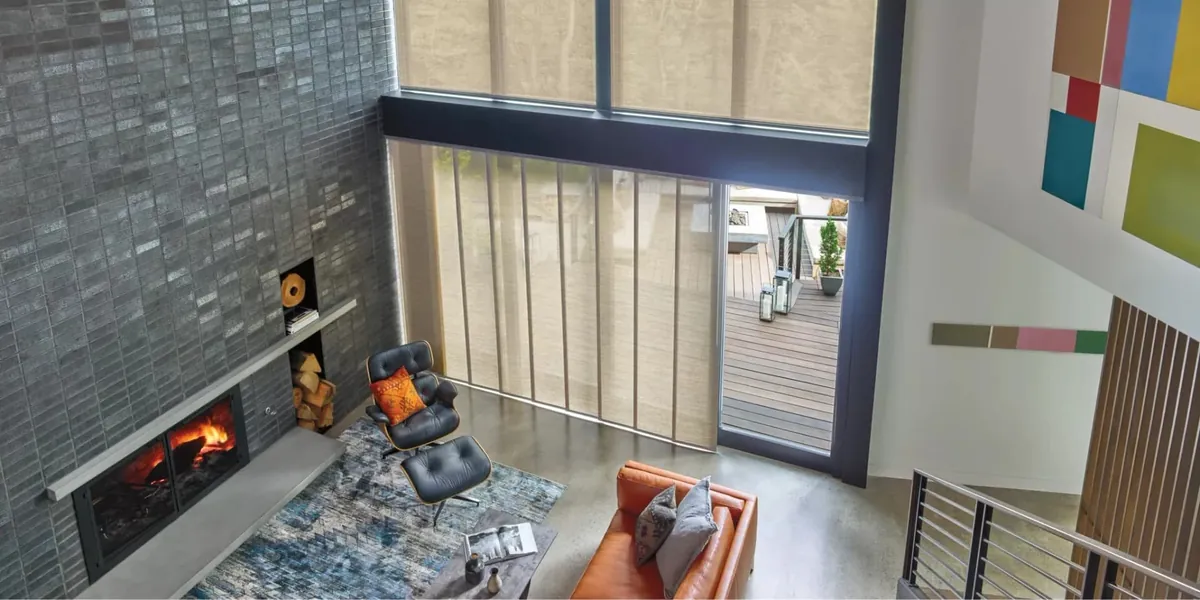
Luminette, vertical honeycomb and gliding panels move side to side, so floor-to-ceiling glass opens fully to the bay.
Motorized shades for hard light
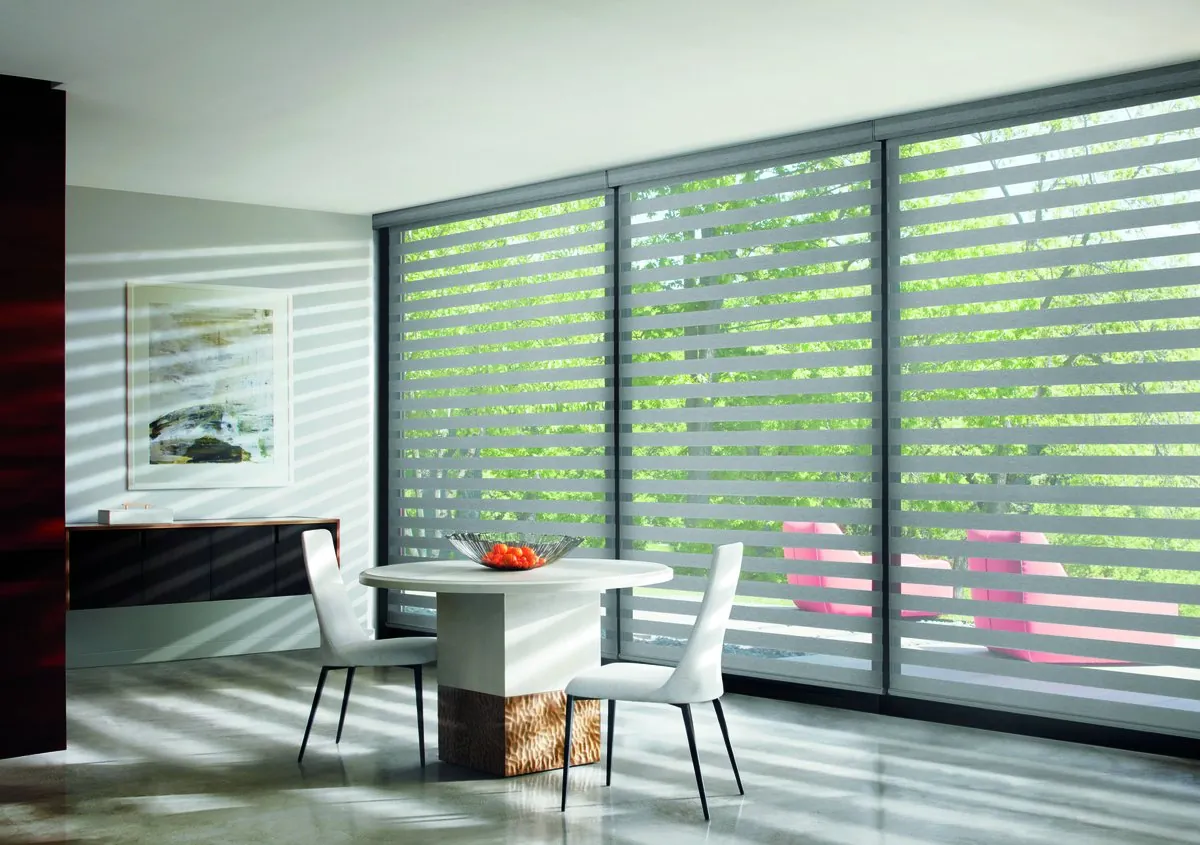
Designer banded and screen fabrics, plus Alustra, take the hard edge off outer Cape sun while keeping the view.
Honeycomb for tall and shaped windows
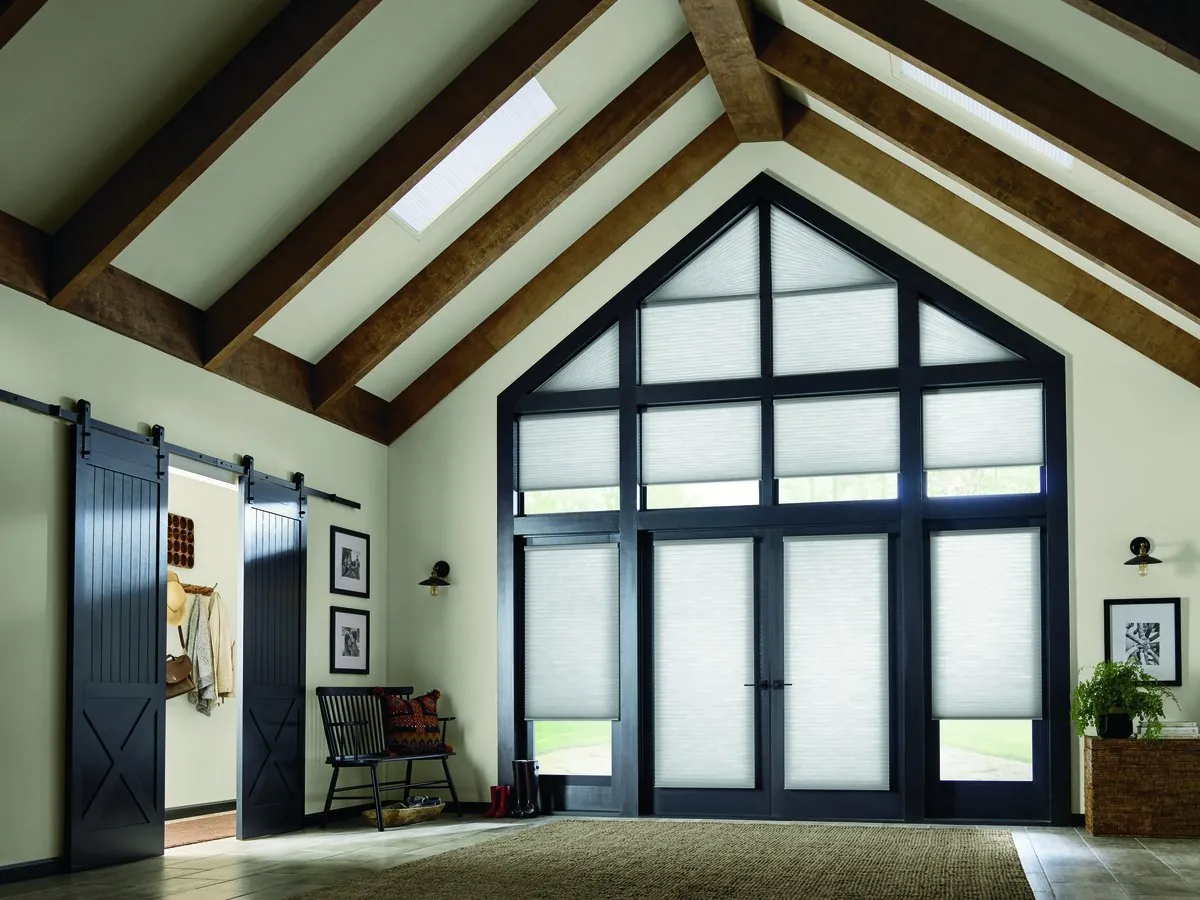
Duette and Applause can follow gables and tall panes in a new build, or warm a small, drafty sash in an old cape.
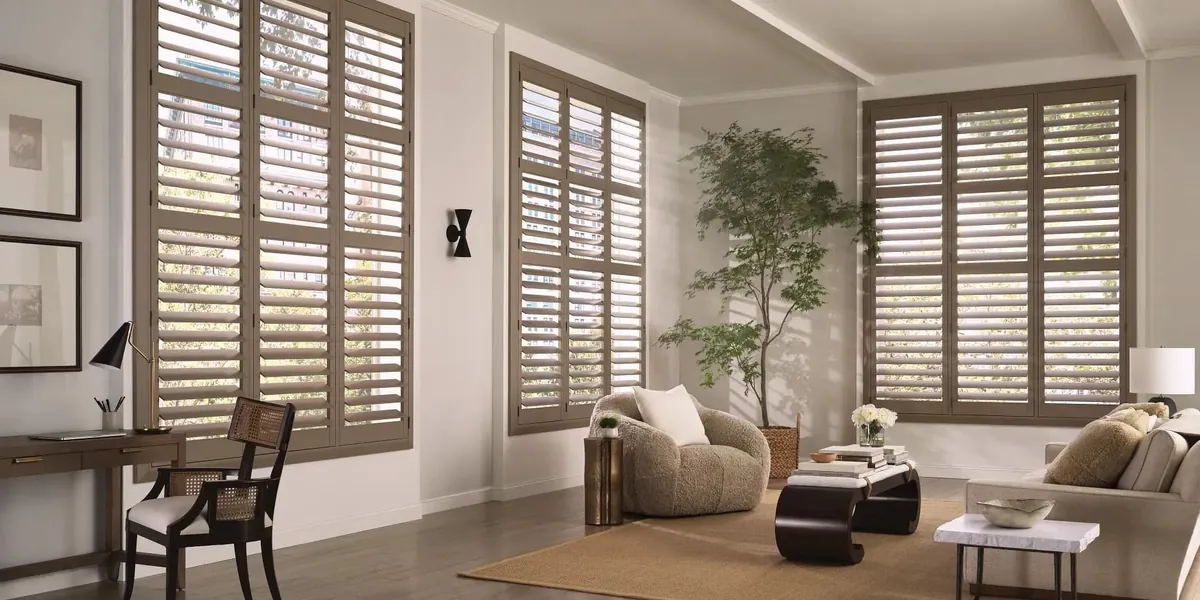
Shutters for the village capes
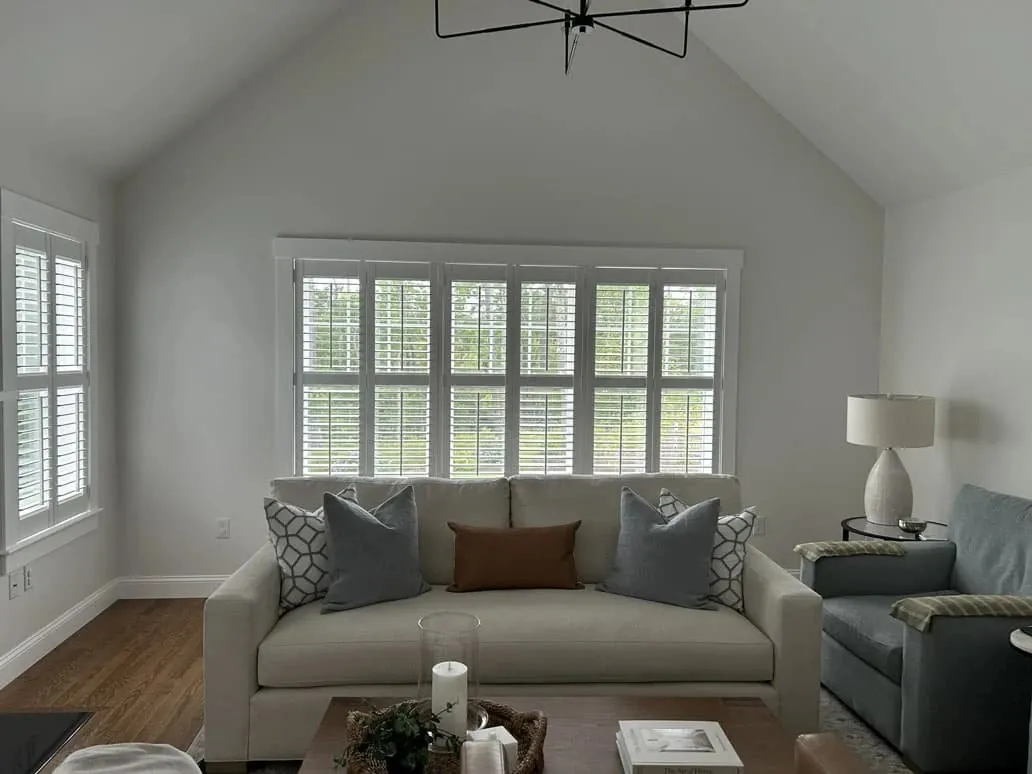
Palm Beach, NewStyle and Heritance, set inside a deep old reveal or across a newer opening.
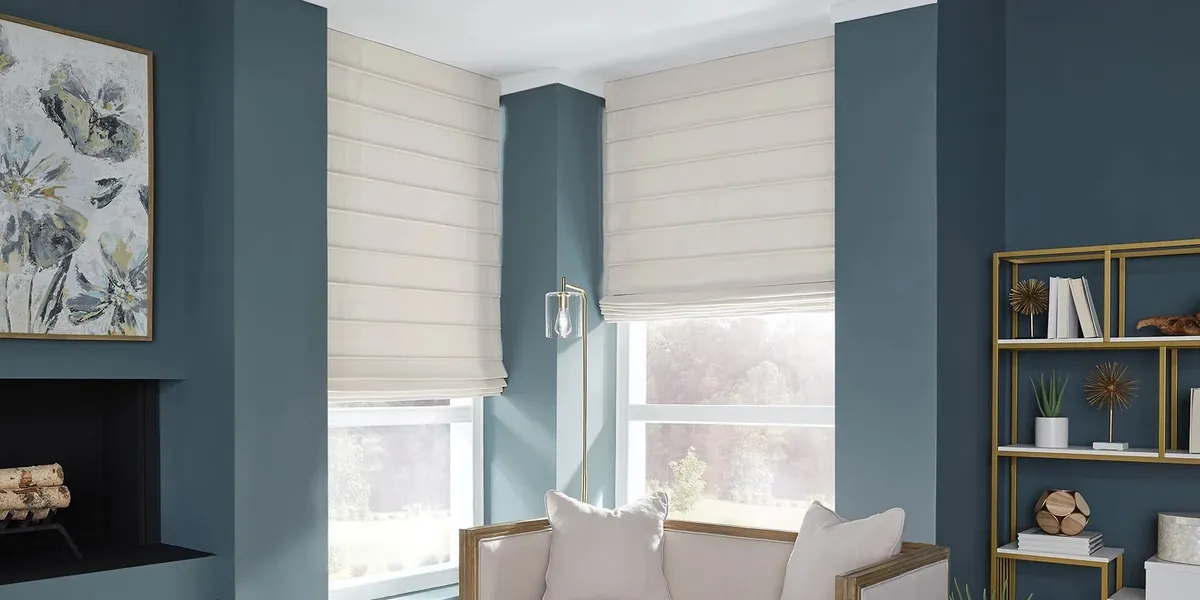
Roman shades for a softer room
Vignette and Carole fabrics, flat or folded, for a cape’s front room or a quiet bedroom.
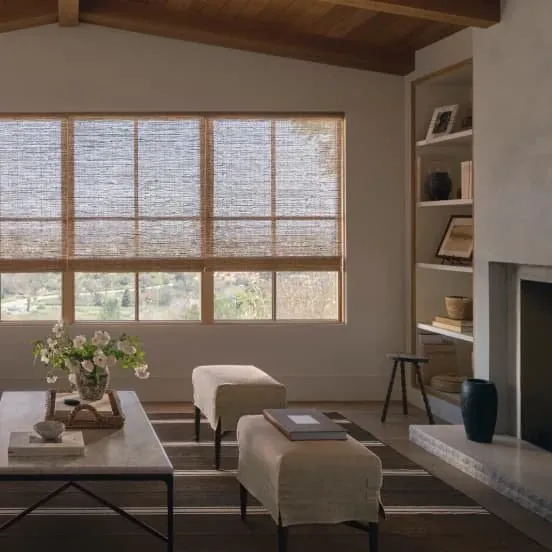
Blinds for the rooms by the water
Natural weaves filter outer Cape sun warmly and suit a shingled shore house with exposed beams.
Floor-to-ceiling glass toward Pleasant Bay
The newer houses around Pleasant Bay and out toward Nauset were designed for the water. Their bay-facing rooms often have glass from floor to ceiling, sometimes across a whole wall, with sliders or French doors opening onto a deck. On a calm evening it is a wonderful thing. At noon in July, with the sun high and the bay throwing light back up through the windows, it can make the room almost unusable.
Treating a wall of glass well starts with how the product moves. A shade that rises from the bottom has to lift a long way on a floor-to-ceiling window, and when it is up, the stack sits across the top of the view. Products that travel sideways often suit these walls better. Luminette, with soft fabric vanes on a sheer backing, stacks neatly to one side and leaves the glass clear. The vertical honeycomb shade does the same and adds the insulating cells of a Duette. For a modern room, gliding fabric panels give a clean, architectural line.
Where a horizontal product is the right call, motorization takes the effort out of it. A tall roller or screen shade on PowerView rises and falls from a remote, an app or a schedule, and a whole wall of shades can move together at the touch of a button.
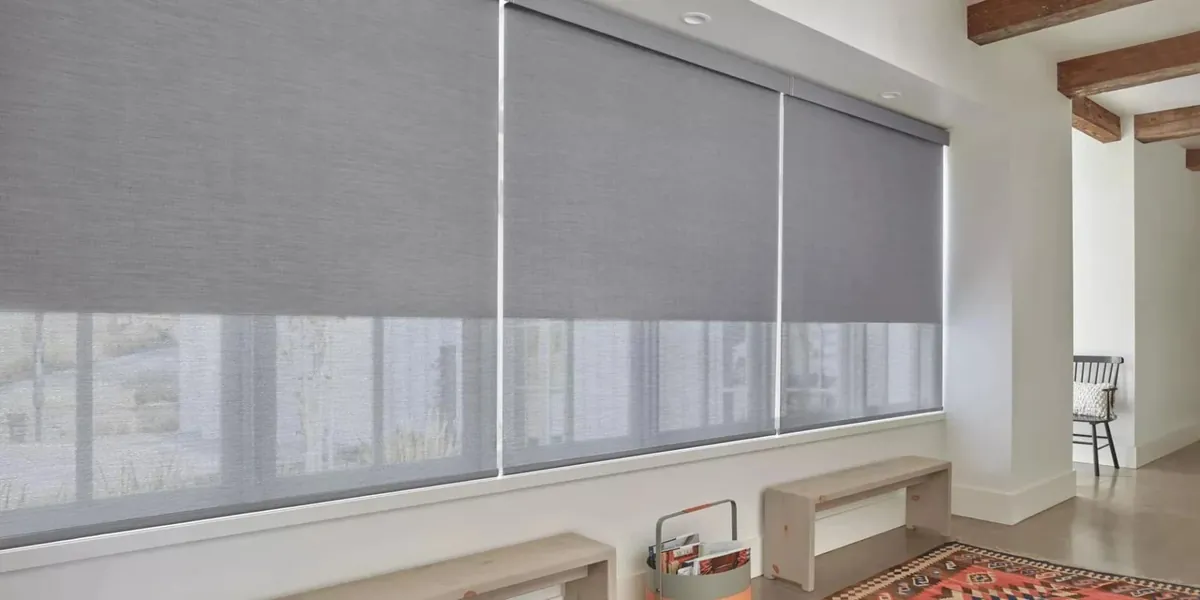
Taming the hard, direct light
The outer Cape’s light is beautiful, but it is not gentle. It comes in at full strength, reflects off water and sand, and creates glare that bounces around a room full of white walls and pale floors. Screens, televisions and even a book become hard to look at.
Screen fabrics are the most useful tool. A Designer Screen shade reduces glare and heat while keeping the view outside visible, and its openness sets the balance. A looser weave keeps more of the bay in sight; a tighter weave cuts more light. Banded shades, with alternating sheer and solid stripes, let you shift between a view-through setting and a privacy setting without raising the shade at all. Sheer shades with tilting vanes do something similar in a softer way, diffusing the light into an even glow.
For the very brightest rooms, layering is worth considering: a screen shade for daytime glare and a honeycomb or drapery for evening privacy and warmth. We look at which way each room faces and how you use it before suggesting a plan, and bring samples so you can see the effect at the glass.
Antique capes near the village center
The older houses close to the center of Orleans are a world away from the glass houses on the bay. Antique capes sit low under their roofs, with small windows of original sash set deep in thick walls. The rooms are cosy, the ceilings low, and the woodwork often original.
These windows want a lighter touch. On an opening that small, the headrail and the gathered fabric are a large share of what you see, so proportion matters more than anything. A honeycomb shade pleats up into a band only a few fingers deep. A flat-fold Roman shade in a plain linen gives a cape’s parlor a soft, finished edge. Where the wall is thick, a shutter can sit right inside it, its frame tucked behind the casing, and narrow louvers keep the scale in step with the old divided glass.
Capes that have stood through many Orleans winters have usually shifted a little, so no two openings in the house are quite the same. We take each window’s width and height in three places and check the sill depth on both sides before deciding whether a product goes inside the frame or on the casing. You can read more on our page for cellular shades in Orleans.
Houses that sit empty part of the year
Close an Orleans house for the winter and the bay-side glass carries on working without you. Every clear day the sun crosses the same rugs and the same sofa, and by the time the house opens in late spring, the side of a cushion that faced the window can be a shade paler than the side that did not.
Motorized PowerView shades are the dependable fix, because they do not rely on anyone remembering. Set them to drop for the middle of the day and come back up toward evening, and the furnishings are shielded while the house still looks lived in to anyone driving past. On a floor-to-ceiling wall, that one setting moves every shade together. When you arrive for the season, a single scene on your phone opens the house to the water.
Each motor’s power is worked out at the visit, window by window. The motorized blinds and shades page and our page for motorized blinds in Orleans go further into PowerView.
Gables, clerestories and windows out of reach
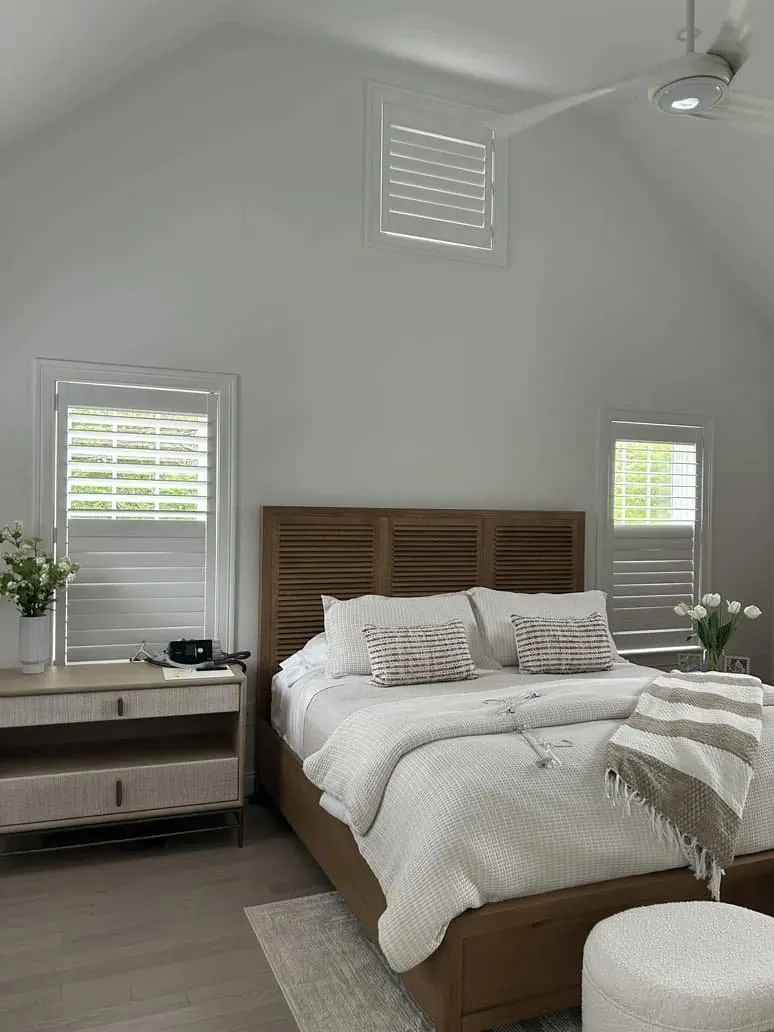
Newer Orleans houses often have windows that are hard to reach: a gable window high in a vaulted great room, a row of clerestory windows above the main glass, a tall window over the stairs. These openings can take the strongest sun of all, since they sit above any overhang, and they are where heat builds up first on a summer afternoon.
Honeycomb shades can be made to fit shaped and angled windows, and a top-down shade can cover just the part of a tall window that catches the sun. For windows too high to reach by hand, PowerView is the practical solution. Any Hunter Douglas dealer in Orleans, MA will see a lot of these windows in the newer builds, and they are worth planning together with the main glass so the whole wall works as one.
Toward Nauset: sand, wind and open decks
Out toward Nauset the houses sit closer to the open ocean, and the weather shows it. Fine sand blows onto decks and through any window left open on a breezy afternoon, and the wind can rattle a loose blind against the frame all night. Products with fewer exposed parts are easier to live with here. Cordless honeycomb and roller shades have nothing dangling to catch the draught, and their mechanisms sit inside the headrail away from the grit. Shutters are another sturdy answer: a Palm Beach panel closes firmly in its frame, the louvers tilt to let the breeze through, and a damp cloth takes care of any salt or sand.
Decks on these houses often wrap around two sides, so the doors and windows facing them take light from morning to evening. We tend to treat the deck-side glass as one composition, with matching fabric on every door and window, so the house looks considered from the beach path as well as from the sofa.
Open kitchens facing the water
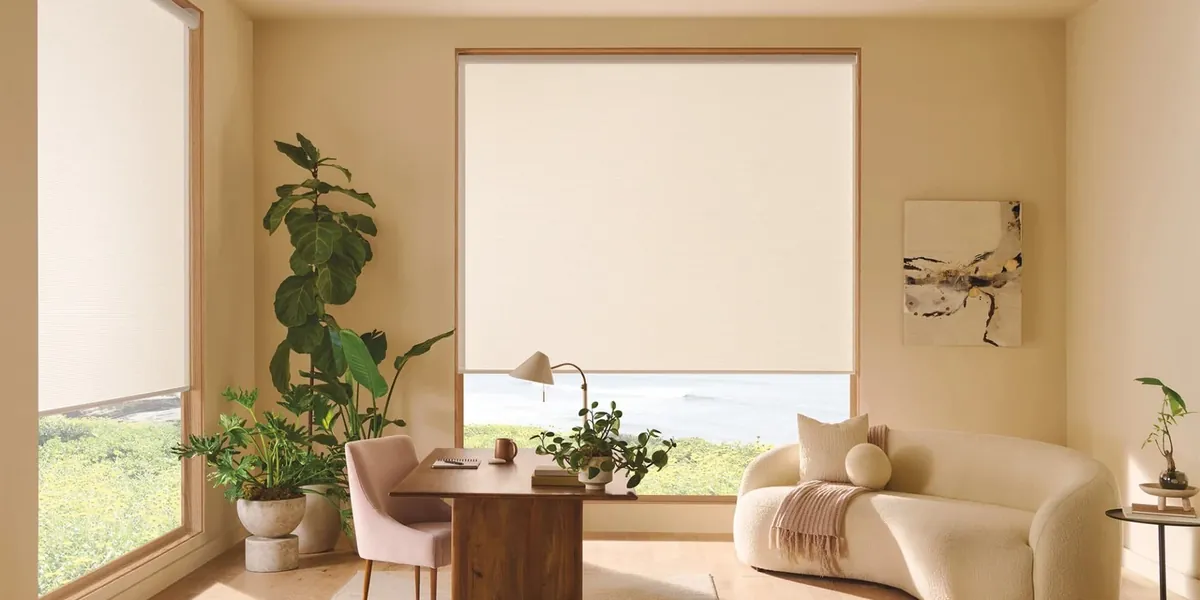
The newer Orleans houses usually put the kitchen in the same open room as the living area, facing the bay. That means the kitchen windows take the same hard light as the rest of the wall, plus steam, splashes and the odd greasy fingerprint. A fabric that suits the living room may not suit the window over the sink. For a Hunter Douglas dealer in Orleans, MA, the trick is to keep the look consistent across the whole room while choosing a hard-wearing product where the cooking happens. A roller or screen shade in the same color as its neighbors, in a wipeable fabric, often does both jobs, and EverWood faux wood blinds are steady in humid air if you prefer slats.
Bedrooms that face the sunrise
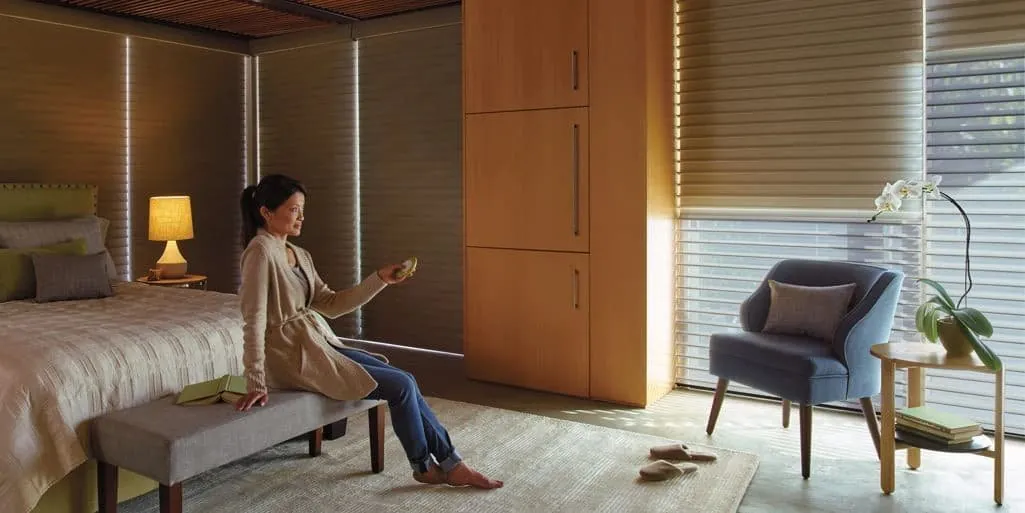
East-facing bedrooms in Orleans take the sunrise straight in off the water, and on the outer Cape it comes early in summer. A light-filtering fabric will not hold it back. Room-darkening honeycomb shades are the usual answer: they block the light and hold warmth through a cool night. Shutters with the louvers closed darken a room well too, and let you tilt in daylight when you are ready.
For a bedroom with a wide window or glass door to a deck, a room-darkening vertical honeycomb or a drapery panel drawn across at night completes the picture. PowerView can raise the shades gently at a set time if you prefer to wake to daylight.
What an Orleans consultation looks like
Choosing by catalog picture rarely works on the outer Cape, where the light is so much brighter than in any photograph. So we come to you, with the samples in the van.
- Ask for a visit through Request a Consultation, or ring through on the call button, and pick a day you are in town.
- We load the van for your house: vertical and screen fabrics if you face the bay, slimmer shades and shutters if you live in an old cape.
- You point out the rooms that bother you, whether the trouble is glare, heat or being seen from the water.
- Samples go up at the glass, best of all around midday when the light is fiercest.
- Every window gets measured, the high ones as well.
- A free estimate follows, and nobody expects an answer on the doorstep.
- When the order comes in, our Hunter Douglas certified installers put it up, set any motors and run through how each product works.
Many seasonal owners book the visit early in their stay so the installation can follow before they leave. If a room needs a wider plan for color and fabric, ask about our interior design consultations, and the in-home consultations page explains the first visit.
Samples brought to the bay side
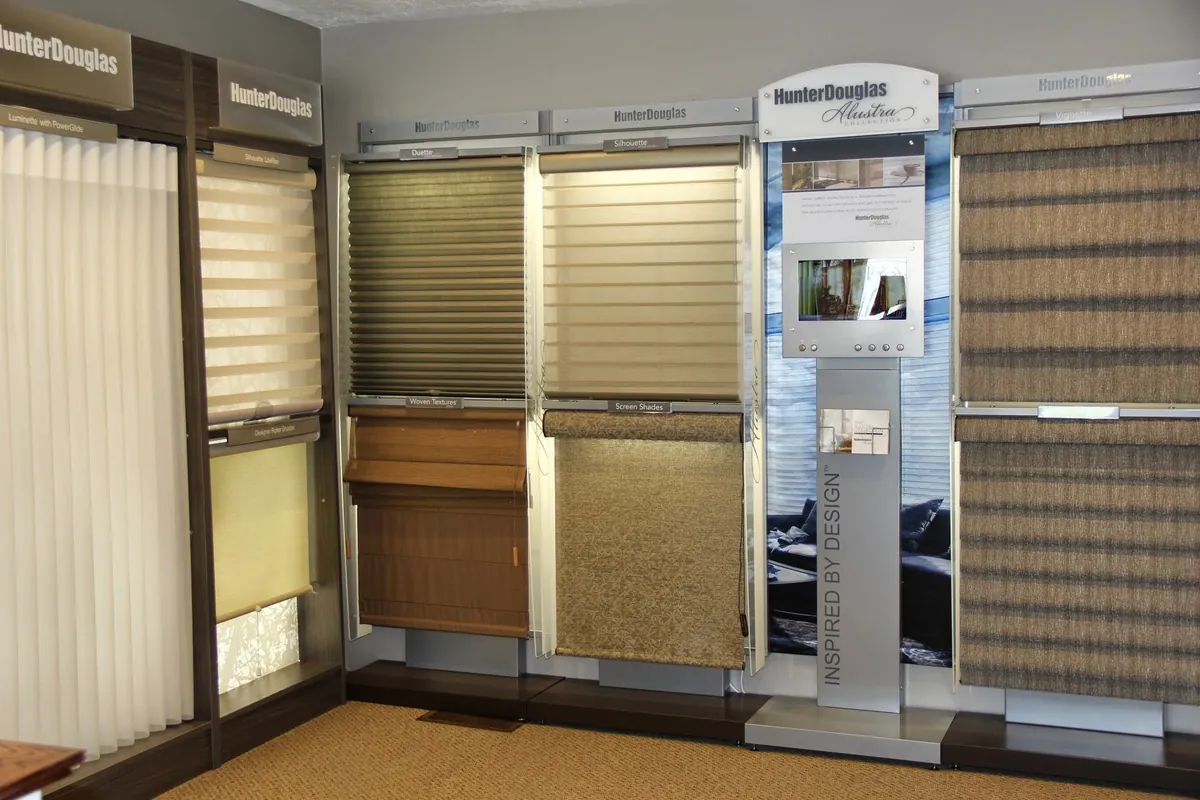
The lines on that wall are the ones that matter most for an Orleans house: Luminette and Silhouette for soft light, Duette for warmth, screen and roller shades for glare, Woven Textures for a relaxed room and Vignette for a tailored one. Seeing them working side by side makes the differences obvious in a way a brochure never can.
We bring the same lines to you as samples, so you can compare them against your own glass, your own floors and your own view of the bay. That is especially useful in a house with floor-to-ceiling windows, where the right choice depends as much on how a product moves as on how it looks.
Browse the Hunter Douglas range ahead of time
Before we visit, you can look through the Hunter Douglas online catalog, which shows each product line with its fabrics and colors. Jot down anything you want a closer look at and mention it when you book. We will pack those samples beside our own picks for your windows.
A Gallery dealer for the outer Cape
Gallery dealer is the designation Hunter Douglas gives to dealers who meet its standards, and Blinds & Designs holds it. In practice it means we never have to force a house into a short product list. An antique cape off Main Street and a glass-walled house over Pleasant Bay can each be given the line that genuinely suits it, from shutters to sheers to drapery.
Installation is certified by Hunter Douglas, and it stays in the same hands as the measuring, so what we agreed at your window is exactly what goes up. Motorized shades are paired and checked on the spot. We also repair blinds and shades that are already in the house, which you can read about under blind and shade repair.
Put simply, a Hunter Douglas dealer for Orleans, MA houses should take responsibility for every window from the first sample onward, and that is how we work. Our Orleans page lists all our services in town, and the Hunter Douglas page covers the brand.
Questions from Orleans
What works on floor-to-ceiling glass facing the bay?
Products that move sideways, such as Luminette or a vertical honeycomb shade, keep the whole wall clear when open. For horizontal shades on very tall glass, PowerView motorization makes them easy to raise and lower.
How do I cut the hard outer Cape light without losing the view?
A screen shade reduces glare and heat while you still see out. Its openness sets how much view you keep. Banded and sheer shades give you more control over the balance through the day.
Will anything suit the small sash in an antique cape?
Yes, as long as it is in proportion. Honeycomb pleats up very small, a flat Roman shade adds softness, and narrow-louver shutters can sit inside a deep wall. Each frame is measured before we suggest a mount.
The house is closed for months. How do I stop the sun fading everything?
Set PowerView shades to lower through the middle of the day and rise again later. The rooms stay shaded while you are away, and the house does not look shut up.
Is the estimate free?
Yes. You receive a free estimate once we have measured.
Book your consultation
Outer Cape light is the real test of any shade, so the surest way to choose is at your own glass. Ask for a consultation and we will arrive with the Hunter Douglas lines that suit your house, measure each window and leave a free estimate. You can also reach us through the call button, or stop at the Sagamore showroom when you cross the canal. Either way, the Hunter Douglas dealer in Orleans, MA who measures is the one who installs.