
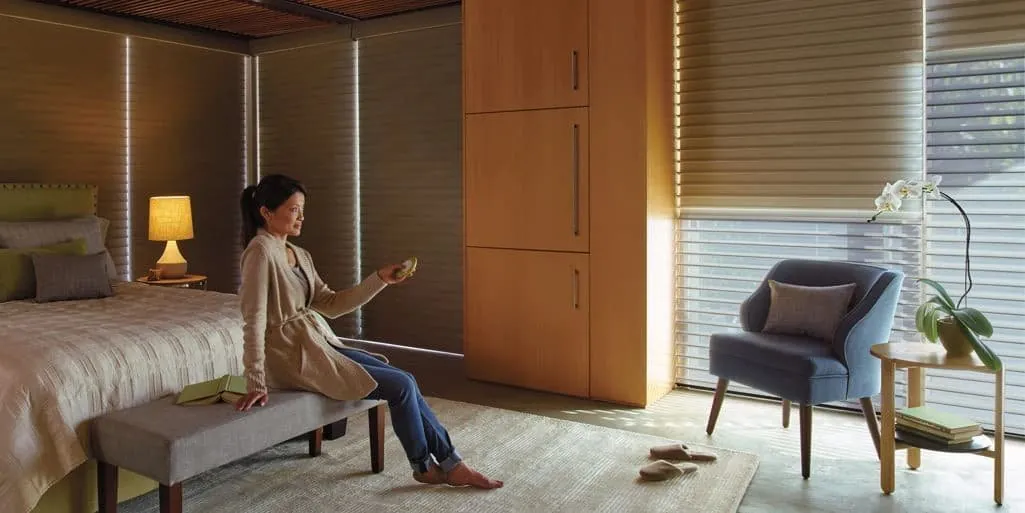
Tall sash and high ceilings in New Bedford
New Bedford’s older housing reaches upward. The mill-era triple-deckers of the North End and the West End have tall, narrow double-hung windows on every floor, set into rooms with high ceilings. The Federal houses in the historic district above the waterfront go further still, with long sash that runs nearly from the floor to the cornice. A shade on one of those windows can hang well above head height when it is raised, and lowering it by hand means reaching up for a cord or a bottom rail that is barely within reach.
That is the simplest case for motorized blinds in New Bedford, MA. With Hunter Douglas PowerView, the motor sits in the headrail at the top of the window and does the lifting. You press a button on a remote, tap the PowerView app on your phone or tablet, or let a schedule move the shade at a set time. The tall window becomes as easy to manage as a short one.
Two other things shape the work in this city: the depth of the window reveals, which decides how a shade can be mounted, and the historic district’s expectations about how a house looks from the street. A motorized shade suits both, because the working parts disappear into the headrail and no cord shows at the glass.
Motorized options for New Bedford’s tall windows
Almost any Hunter Douglas shade can be the starting point. These three handle tall, narrow sash especially well, and each can carry a PowerView motor.
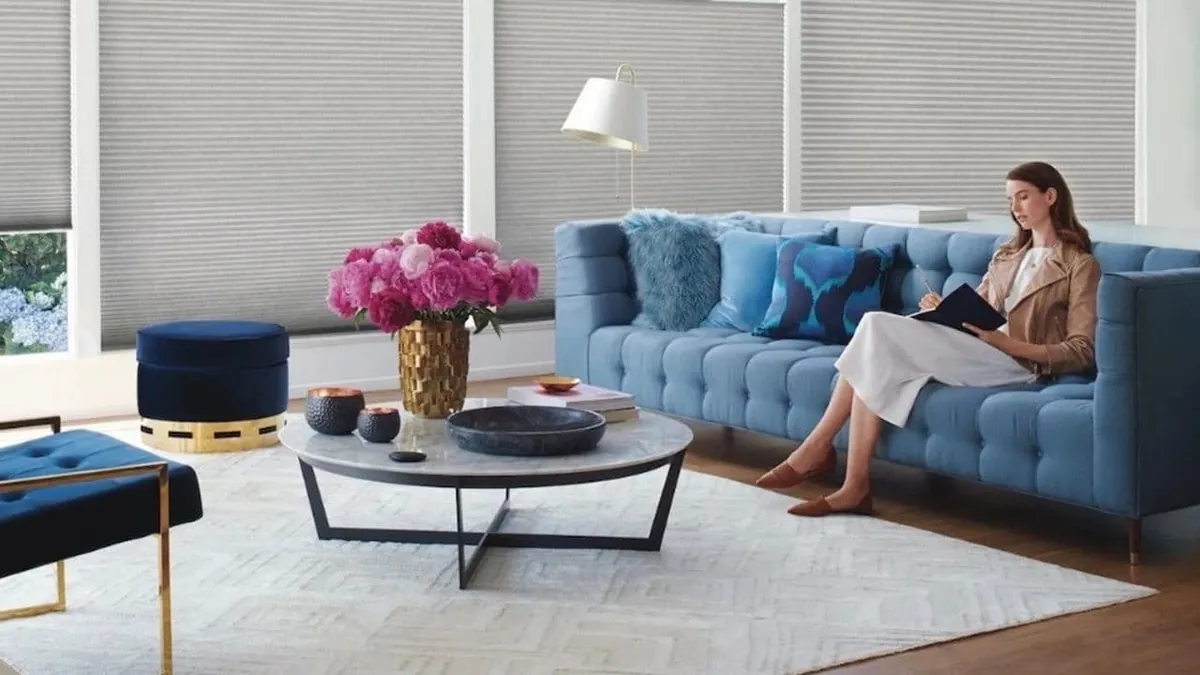
Honeycomb shades on tall sash
Duette and Applause stack into a slim band at the top when raised, so the tall window stays open to light. The cells help a high-ceilinged room keep its warmth.
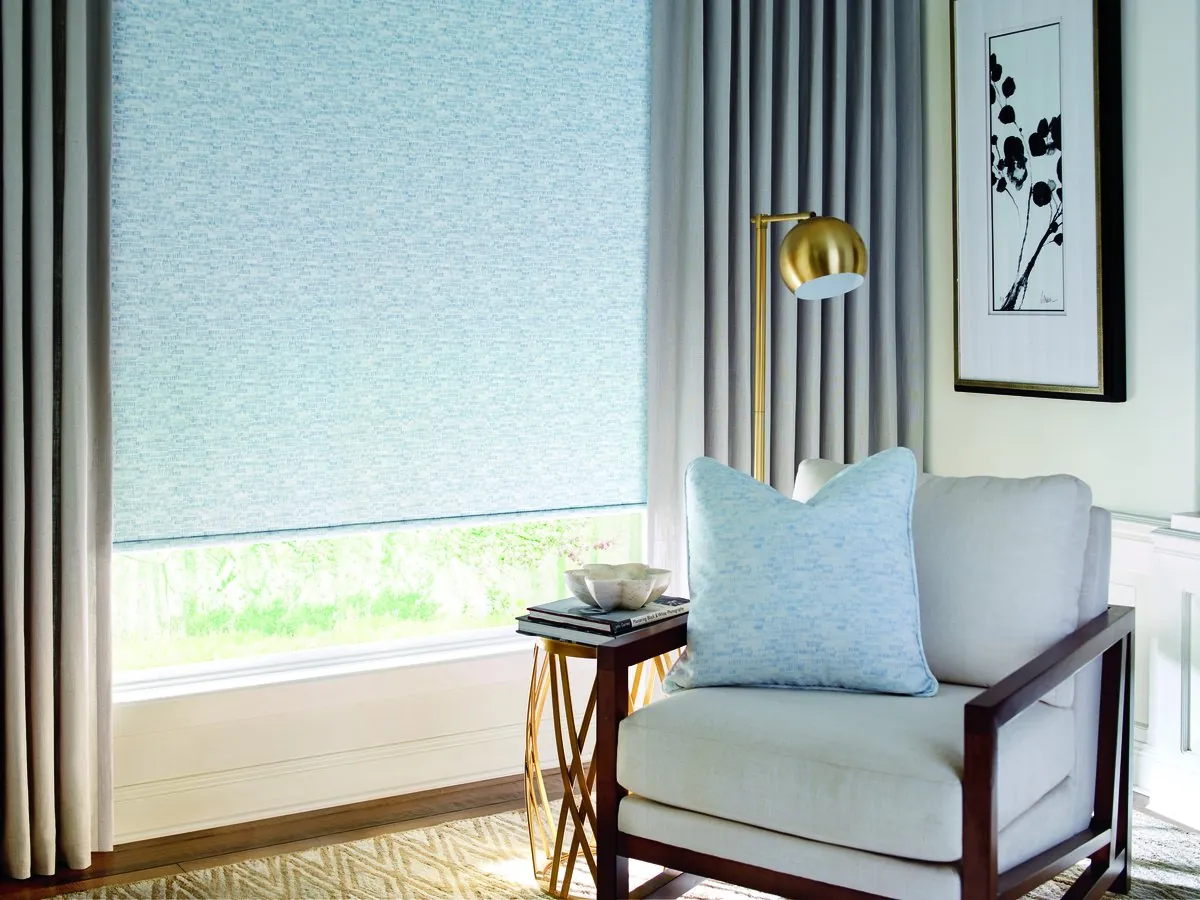
Roller shades for the narrow openings
Designer roller shades roll up into a compact headrail, which matters where the reveal is shallow. A motor sets every shade in a row to the same height.
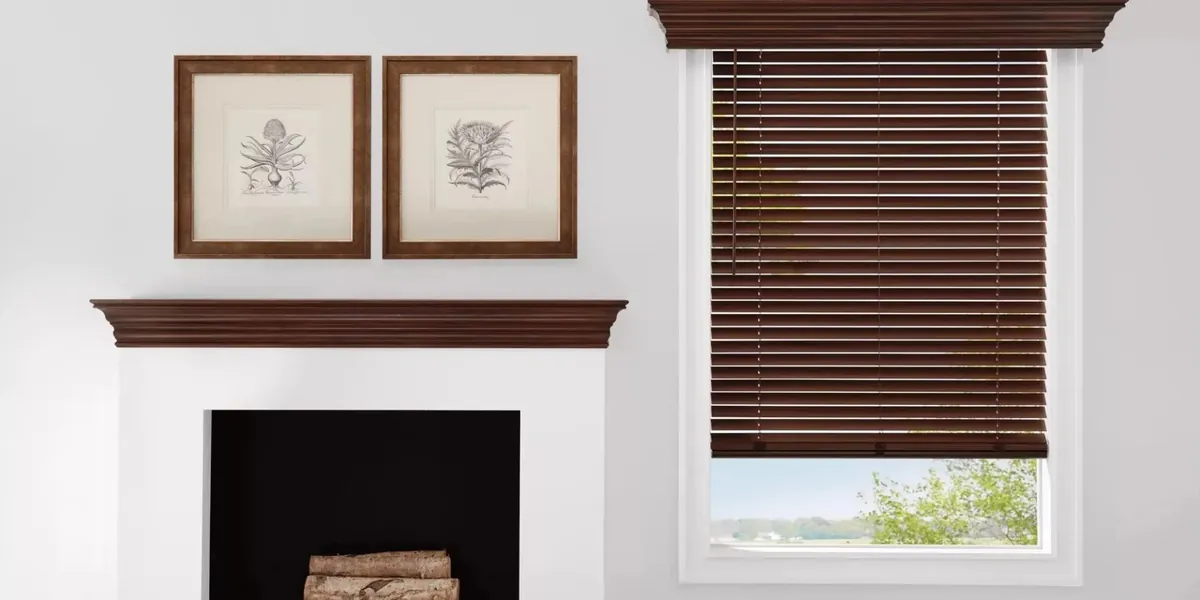
Wood blinds with a motor
Traditional slats that suit a Federal interior. We confirm which blind lines and operating options suit your windows before anything is ordered.
Triple-deckers in the North End and the West End
A triple-decker stacks three apartments, and each floor has much the same layout: front rooms facing the street, a long hall and a kitchen at the back, with tall double-hung windows throughout. Whether you own the whole building or live on one floor, the windows are the same height on every level, and none of them are easy to reach at the top.
Motorization can be planned floor by floor. Each unit can have its own remote and its own set of shades in the PowerView app, so one household’s schedule does not move another’s. If you own the building and live on one floor, you can treat your own unit first and leave the others for later.
The front rooms of a triple-decker sit close to the sidewalk, and the windows on the side often face the next building only a few steps away. Privacy matters in those rooms as much as light. A schedule that lowers the street-facing and side-facing shades at dusk keeps the rooms private every evening without anyone walking from window to window.
Federal houses above the waterfront
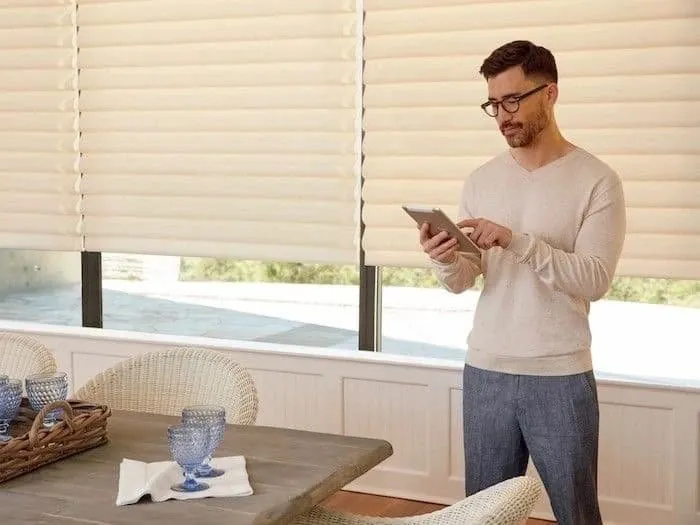
The historic district holds some of the finest early houses in the region, with symmetrical fronts, tall sash and interior trim that has often been restored with real care. These houses carry expectations about how they look from the street. A window covering seen from the sidewalk should look orderly and calm, not a row of shades stopped at different heights with cords looped across the glass.
Motorized shades help with that. A row of front windows on one scene rises and falls together, so the facade always looks even. With an inside mount, the headrail hides within the window opening and the trim stays fully visible from inside. No lift cord means nothing visible at the glass from outside.
We look at the street view during the consultation as well as the room. If a house is in the historic district, we suggest fabric colors that read quietly from outside, such as whites and soft neutrals, and we can talk through how the shades will look from the sidewalk before you choose.
Reveal depth decides the mount
How deep the window frame is from the face of the trim to the sash governs everything else. A deep reveal lets the headrail sit inside the opening, where it all but disappears. A shallow reveal, common in older double-hung windows where stops and sash hardware take up space, may not leave enough room for a motorized headrail to sit cleanly inside.
We measure that depth at the top, middle and bottom of every window, because older frames vary. Where an inside mount works, we use it. Where it does not, an outside mount fixed to the casing is the honest answer, and it can look very neat on a tall window, especially with a fabric chosen to sit well against painted trim. We would rather tell you that at the visit than install a shade that juts out of the frame.
Roller shades and Roman shades each have their own headrail sizes, and some shade types need less depth than others. That is one reason we bring several kinds of samples. If one product will not sit inside a shallow window, another often will.
Transoms, stair halls and the top floor
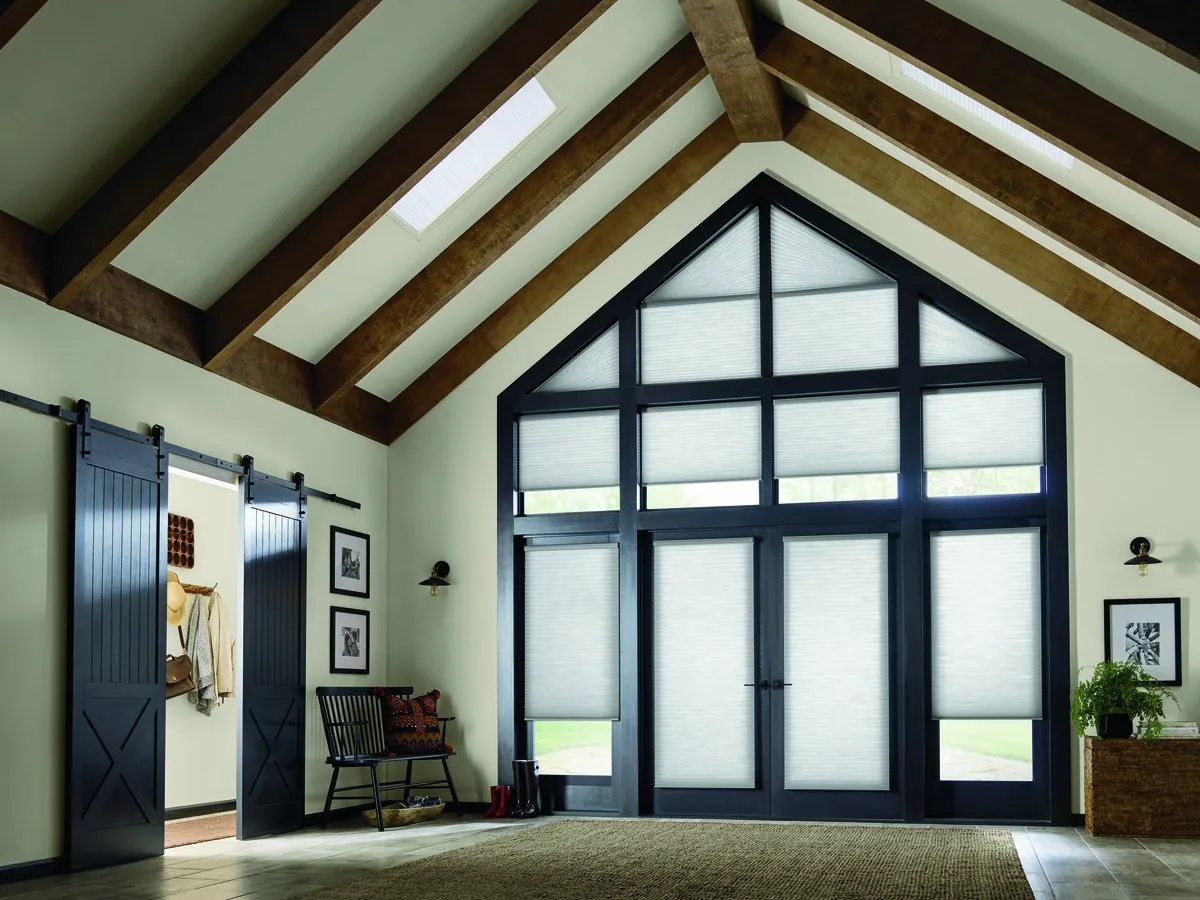
Older New Bedford houses often have windows in places a stepladder struggles to reach. A transom above a parlor door, a tall window on the stair landing, a narrow light at the top of a triple-decker’s back stairs. Many of those windows go uncovered because nothing practical fits them, or they carry a shade that has sat in one position for years.
A motorized shade gives those windows a purpose again. The landing window can lower in the afternoon when the sun pours down the stairs, and the transom can close at night. On the top floor of a triple-decker, where the rooms run hot in summer under the roof, a schedule that lowers the sunny-side shades through the middle of the day takes some of the heat out before it builds up.
These windows are usually the ones customers mention last and value most once they are done, so it helps to make a list of them before the consultation.
Kitchens at the back of the house
In both triple-deckers and Federal houses the kitchen tends to sit at the back, often with a window over the sink and another facing a narrow yard. The sink window is a reach across a wet counter, and the yard window often looks straight at the next house.
A motorized roller or honeycomb shade over the sink solves the reach. A top-down, bottom-up shade on the yard window lets light in from the top while the lower half stays covered, and with a motor you set the exact split from the remote. Both can share a scene with the rest of the floor, so the kitchen closes with the front rooms in the evening.
High ceilings and the light they let in
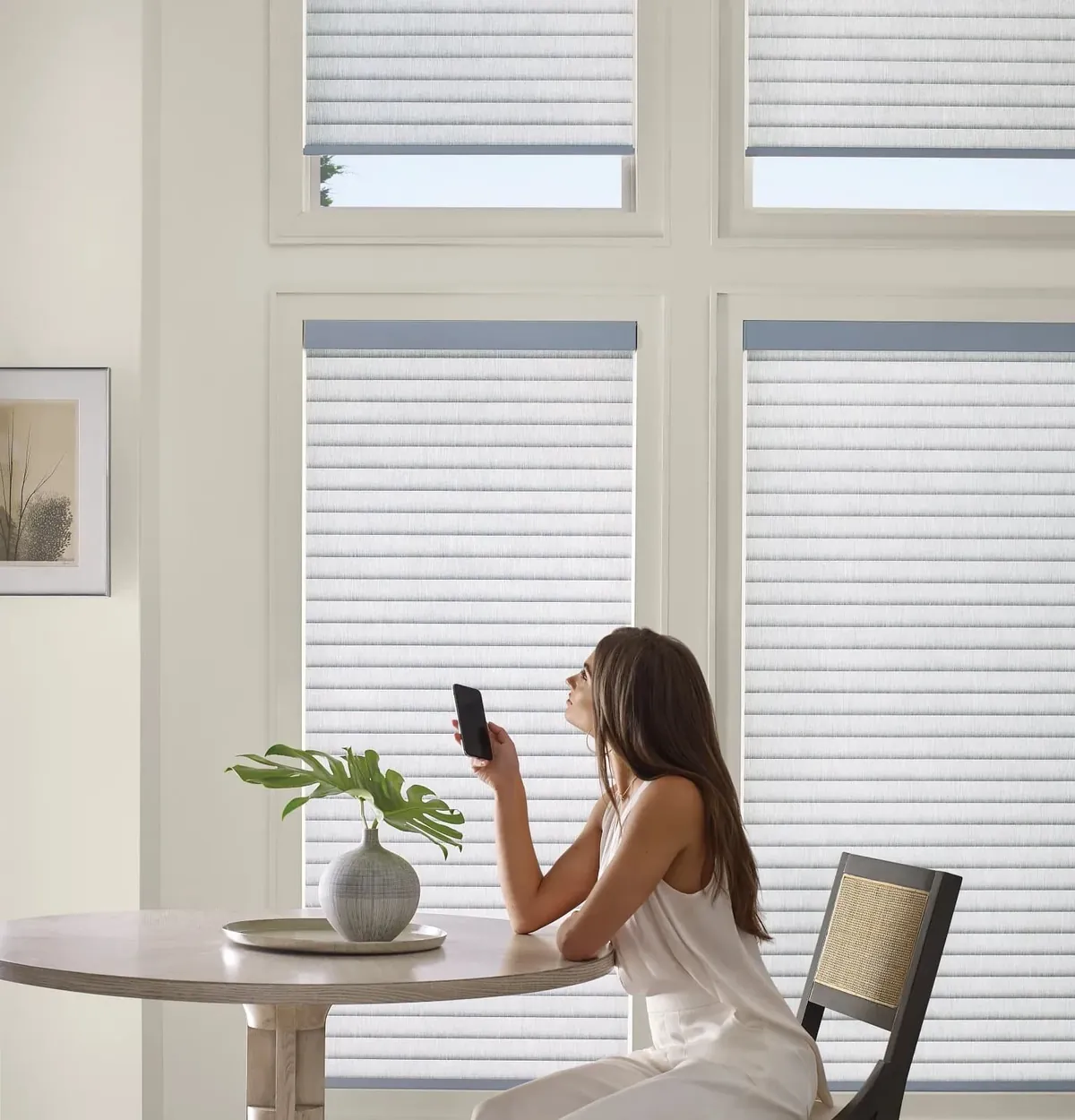
Tall windows in high rooms bring in a lot of daylight, which is one of the pleasures of these houses. They also bring in a lot of sun on a summer afternoon and lose a lot of warmth on a winter evening.
Motorized honeycomb shades handle both seasons with a pair of schedules. In summer, the shades on the sunny side lower through the hottest hours and rise when the sun moves off. In winter, they close at dusk and the cells hold a layer of air between the glass and the room. Because the windows are so tall, the difference in comfort is easy to notice.
For rooms where you want light without glare, a sheer shade such as Silhouette filters the sun while the street outside stays softly visible. Pirouette gives a similar effect with soft fabric vanes. Both can be motorized, so the vanes tilt and the shade lifts from the same remote.
Remote, app or schedule
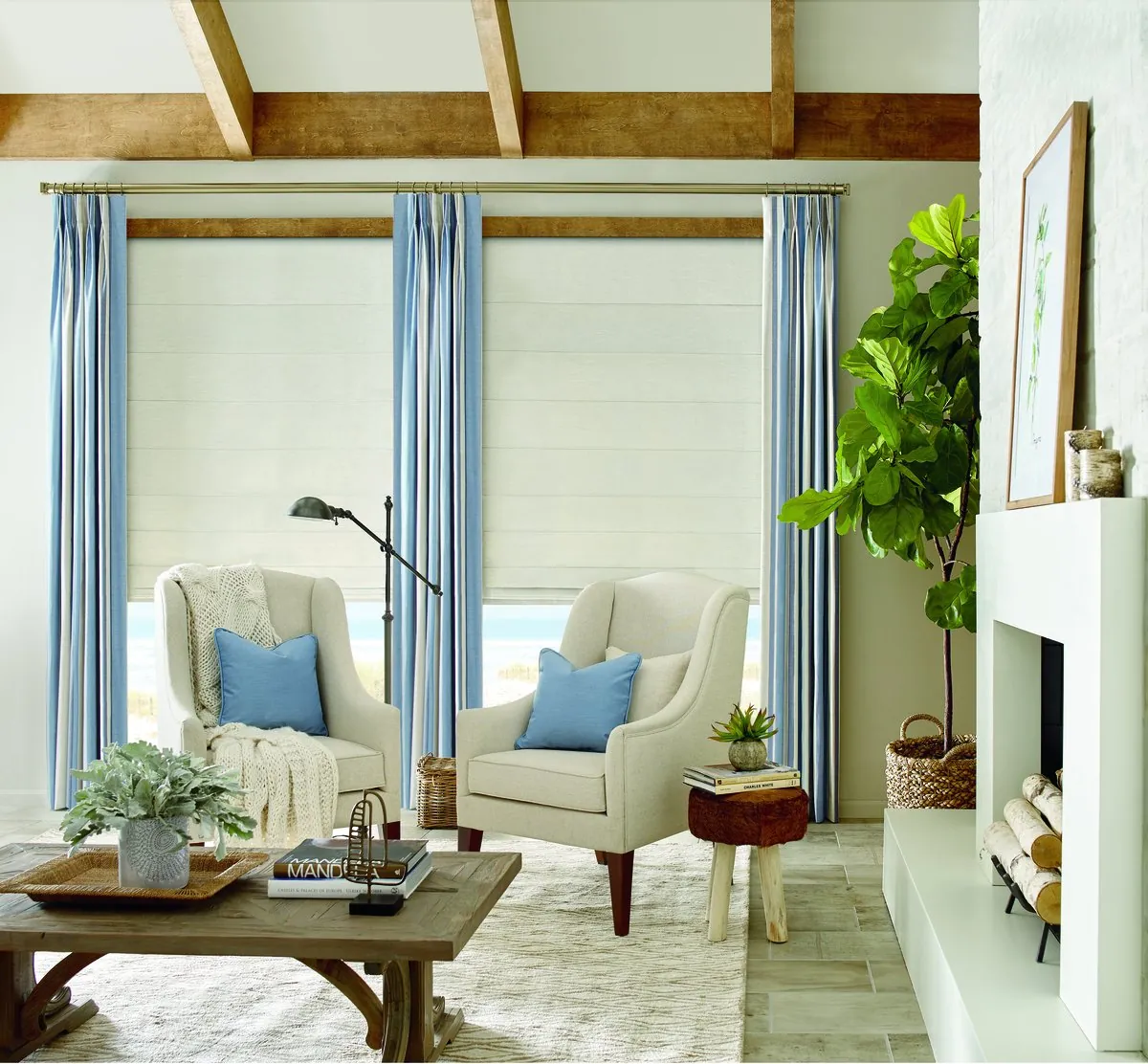
Every PowerView shade can be run in three ways, and you choose how much of each you want.
- A remote. Hold it in your hand or mount it on the wall by the door. Pick a shade or a group and press up or down. This is all many households ever use.
- The PowerView app. On a phone or tablet you can move any shade in the house, stop it at an exact height, and group shades into rooms.
- Schedules and scenes. Save an arrangement, such as every front window half lowered, and set it to run at a time of day. The shades then move on their own.
The how motorized shades are controlled guide explains each of these without jargon, and the window covering automation page goes further into schedules and scenes.
Fabric against painted trim
The interiors of these houses tend to be defined by their woodwork: painted casings, deep sills, sometimes original shutters folded into the jambs. A shade should sit comfortably against all that rather than compete with it. Soft whites and warm neutrals usually work best, and a fabric with a little texture can echo old plaster walls without drawing the eye away from the trim.
Color also matters from outside. In a row of tall front windows, a consistent lining color across every shade keeps the facade calm, even where the rooms behind use different fabrics. We can pair a decorative fabric facing the room with a quiet backing facing the street, and we show you both sides at the visit.
Light-filtering fabrics in the parlor, room-darkening in the bedrooms and a sheer in the kitchen is a common mix. All of them can carry the same motor and answer to the same remote.
Choosing motorized blinds in New Bedford or a shade
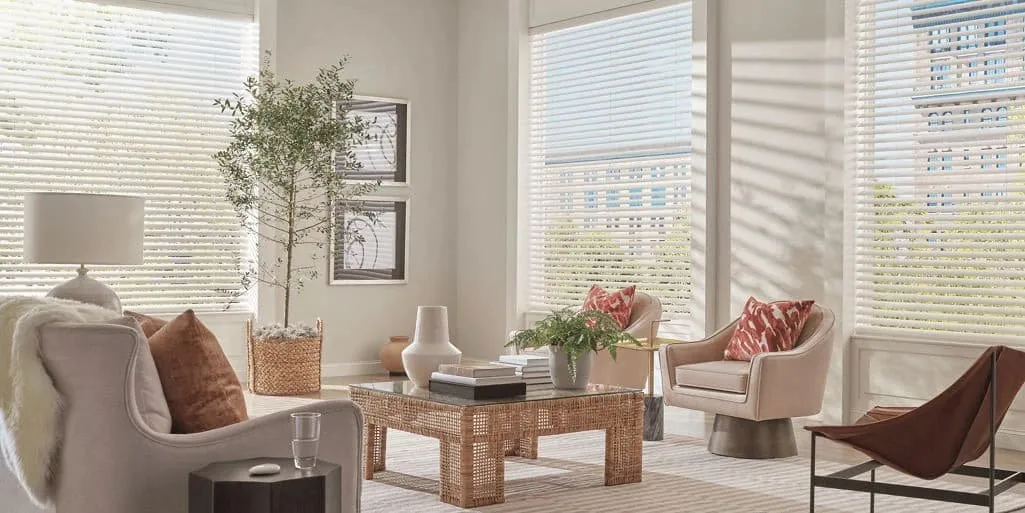
Before anything else, decide whether a room wants slats or fabric. Blinds tilt, so you can angle the light, cut glare on a screen and still see out. Wood slats suit the panelled rooms of a Federal house and look traditional from the street. If you have your heart set on motorized blinds in New Bedford for a study or dining room, we will confirm which blind lines and operating options suit those windows.
Shades offer a softer look and a wider range of light. A honeycomb adds insulation, a roller shade tucks away into a slim headrail, a Roman shade gives folds of fabric and a sheer turns direct sun into a glow. Room-darkening fabrics are made for bedrooms.
Many houses use both. Blinds might go in the study and kitchen, shades in the bedrooms and parlor. They all run from the same app, so the house still behaves as one.
Starting with a few windows
You do not have to motorize every window at once, and in a large Federal house or a whole triple-decker that would be a big job. Many customers begin with the windows that give the most trouble: the tallest front windows, the stair landing and the bedroom that catches the early sun. The rest keep a cordless lift for now.
Because PowerView shades all run in the same app, more can be added later and slot straight into the rooms and schedules you already have. That makes it easy to spread motorized blinds in New Bedford across a house over time, starting where the reaching is worst.
Cordless for safety and a cleaner window
On a tall window, a corded shade needs a long cord, and a long cord is exactly what you do not want in a child’s room or a house with pets. A motorized shade has none. That alone is why many families choose it for bedrooms, and it also leaves the window looking clean, with nothing hanging down the side of the trim.
A motor also treats the shade kindly. It lifts both sides evenly, so the fabric is not pulled at an angle each day, and the shade hangs straight for longer.
What we do at your house
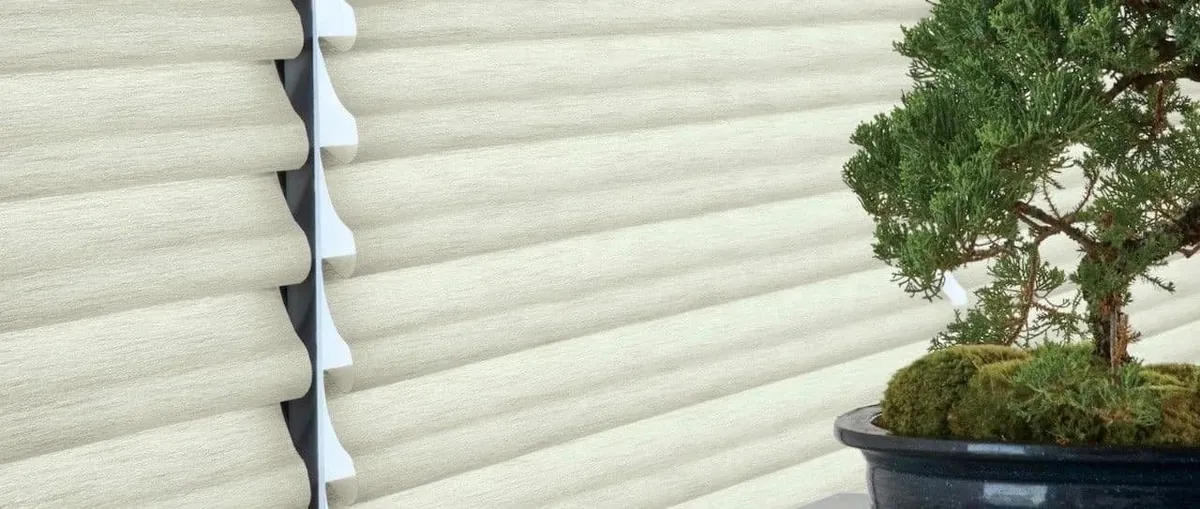
Seeing a fabric against your own window, in your own light, is the only reliable way to choose. Our vans carry samples, so we bring the showroom to you.
- You request a consultation online or with the call button.
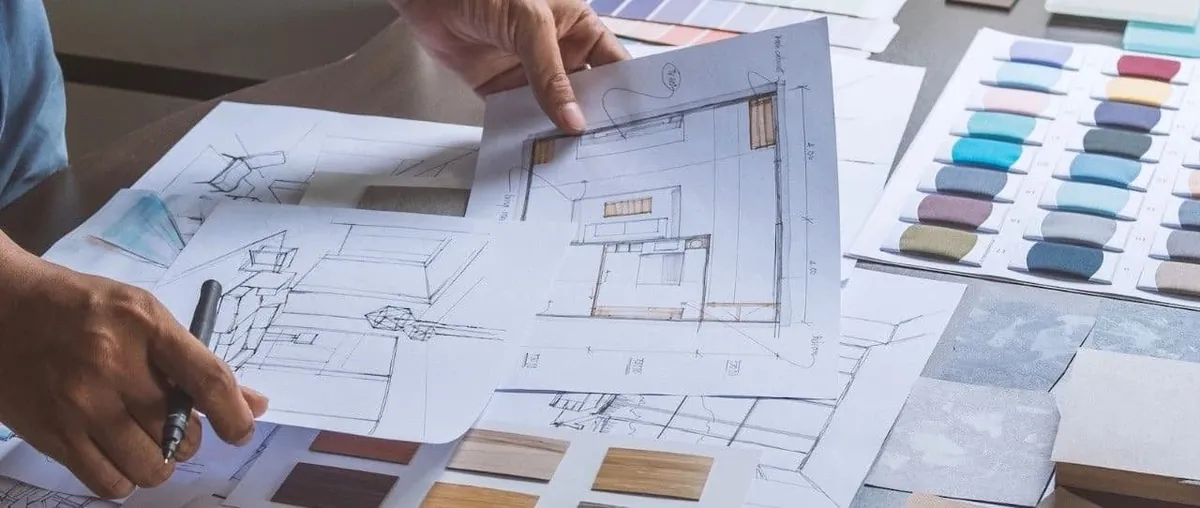
- We arrive with samples and walk through the rooms, noting the tall windows, the street-facing ones and any that are hard to reach.
- We measure each window’s width, height and reveal depth at several points.
- We plan which windows get a motor, how they are grouped and what schedules make sense.
- You get a free estimate for the shades and motors you are considering, with no pressure to decide on the spot.
- Once the shades are made, a certified Hunter Douglas installer fits them, sets their limits, pairs them with your remote and app, and shows you how everything works.
Read more about what happens at an in-home consultation if you would like to know the visit in advance.
A Gallery dealer for older houses
Hunter Douglas names only dealers who meet its standards as Gallery dealers, and Blinds & Designs is among them. With PowerView reaching across honeycomb, roller, Roman, sheer and screen shades as well as blinds, that range means we can choose the right product for each opening rather than forcing one style onto every window.
Installation is certified by Hunter Douglas. Interior design consultations are available if a room needs a broader plan, and we offer blind and shade repair in New Bedford for window coverings you already have.
Other services in the city include cellular shades in New Bedford and roller shades in New Bedford, and the New Bedford page lists everything we do here. Our main motorized blinds and shades page covers the whole range.

Close to the North Dartmouth showroom
Our North Dartmouth showroom is the nearest to New Bedford, just to the west of the city. Many customers like to stop in first, then book a visit at home once they have a sense of what they want.
Others prefer to start at home, where the tall sash and the reveals are right in front of us. Either way, the planning is the same: the right shade for each window and motorized blinds in New Bedford where a motor genuinely makes life easier.
Questions from New Bedford
My windows are very tall. Can a motor handle them?
Yes. Tall, narrow double-hung windows are one of the best uses for PowerView, because the motor does the lifting at the top of the window where reaching is hardest. We size each shade to its own opening.
My window frames are shallow. Can the shade still go inside them?
Sometimes. It depends on the depth of the reveal and on the shade type, since some headrails need less room than others. We measure each window, and where an inside mount will not sit cleanly we recommend a neat outside mount on the casing.
Will motorized shades look right on a house in the historic district?
They tend to look tidier than manual shades, because a row of front windows moves together and no cords show at the glass. We suggest quiet colors that read well from the street.
Can each floor of a triple-decker have its own controls?
Yes. Each unit can have its own remote and its own shades in the app, so schedules on one floor do not affect another.
Do you charge to come out and measure?
No. The estimate is free. We measure at the consultation and give you a free estimate for the shades and motors you are considering.
Book a visit for your tallest windows
Start with the windows you can barely reach. Request a consultation and we will bring samples to the house, measure every reveal and give you a free estimate, or use the call button to ask a question first. You are also welcome at the North Dartmouth showroom.