
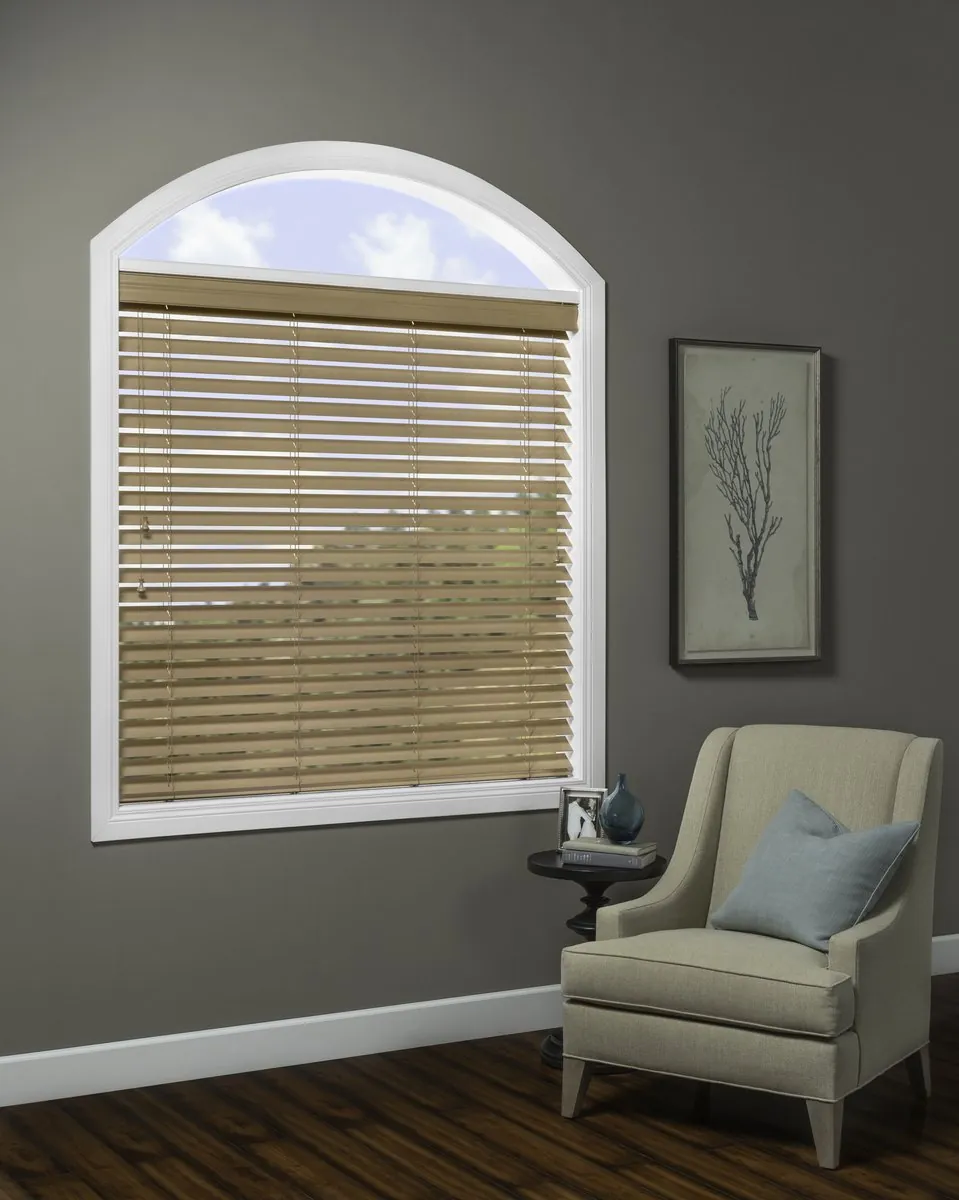
Rooms with light on every side in Norfolk
Norfolk is a town of colonials and capes spread out on large wooded lots. Most of the houses are relatively recent, built in the later years of the last century and since, with standard modern windows on every elevation. Density is low and setbacks are real, so houses rarely stand shoulder to shoulder.
That openness has a clear effect indoors. With no neighbor blocking a side wall, many rooms take light from two or three directions. A corner living room might have morning sun on one wall and afternoon sun on another. A kitchen at the back might face south across the yard while its breakfast nook looks west. The light moves around the house all day, and each window sees something different.
That is why we plan custom blinds in Norfolk, MA, by the side of the house as much as by the room. A blind on an east window and a blind on a west window in the same room may need different colors, different controls or a different slat angle to do the same job.
A blind for each side of the house
Here is how the four sides of a typical house tend to shape custom blinds in Norfolk, MA, and the Hunter Douglas blinds that suit each.
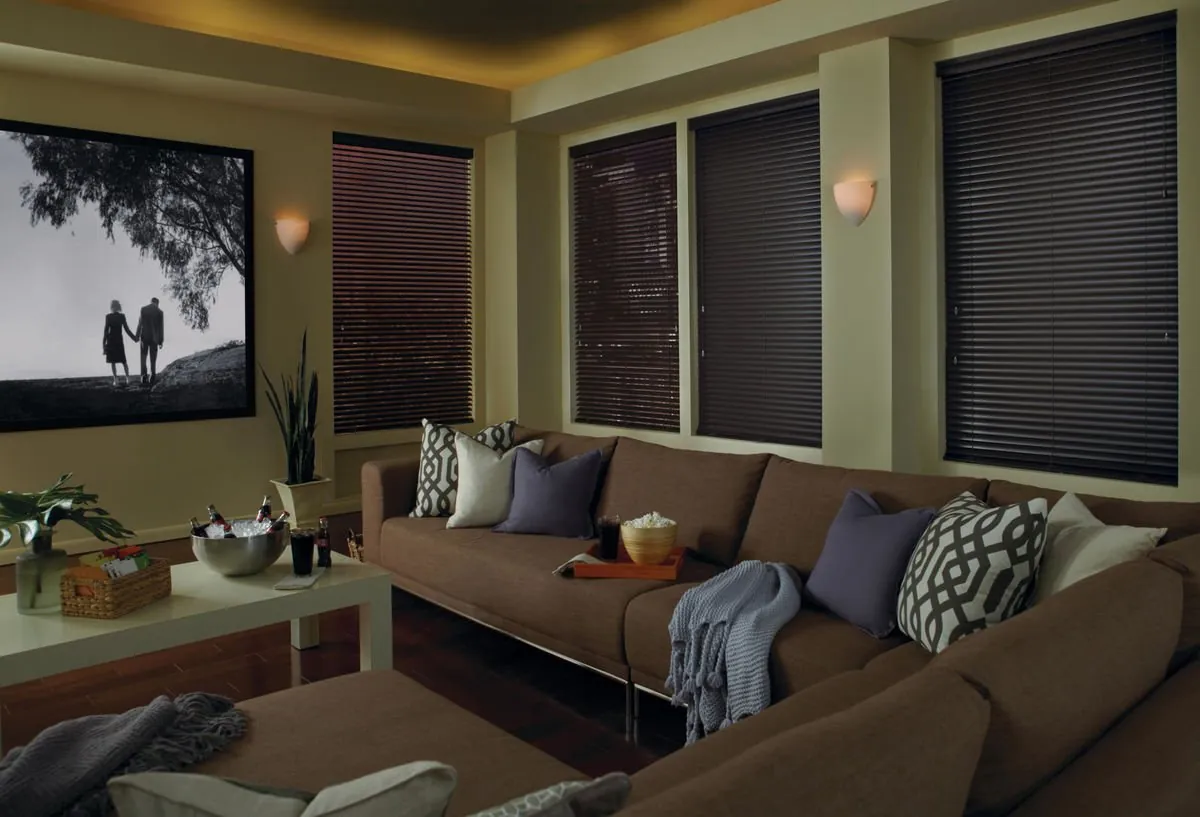
East bedrooms: room-darkening wood blinds
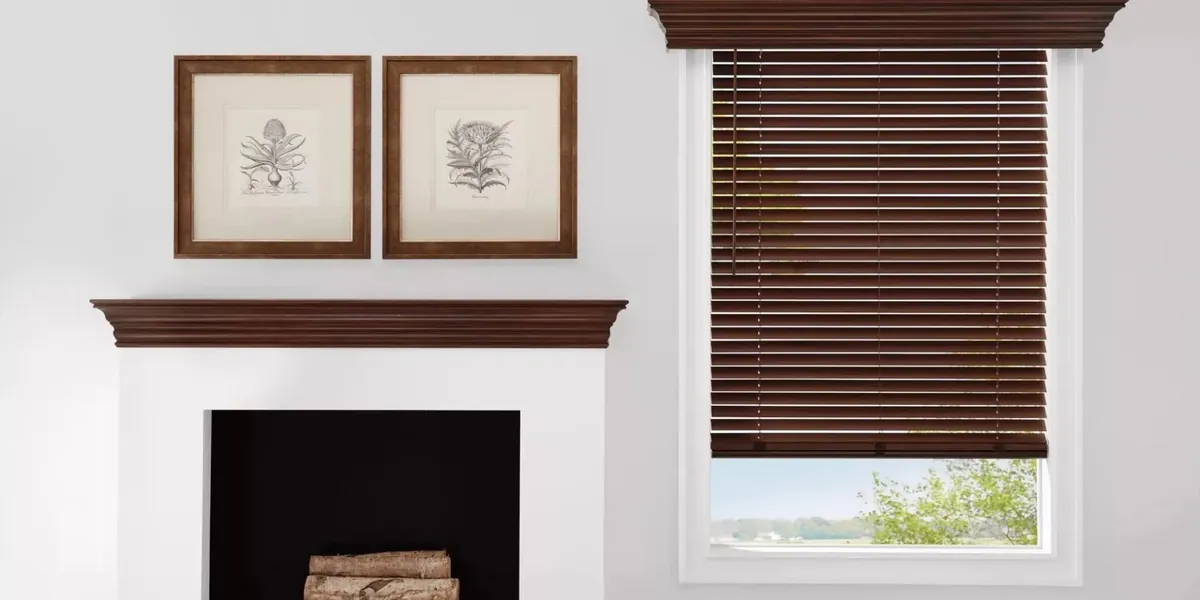
Deep-toned wood slats, closed tight, hold back first light so a bedroom stays dim until you open it.
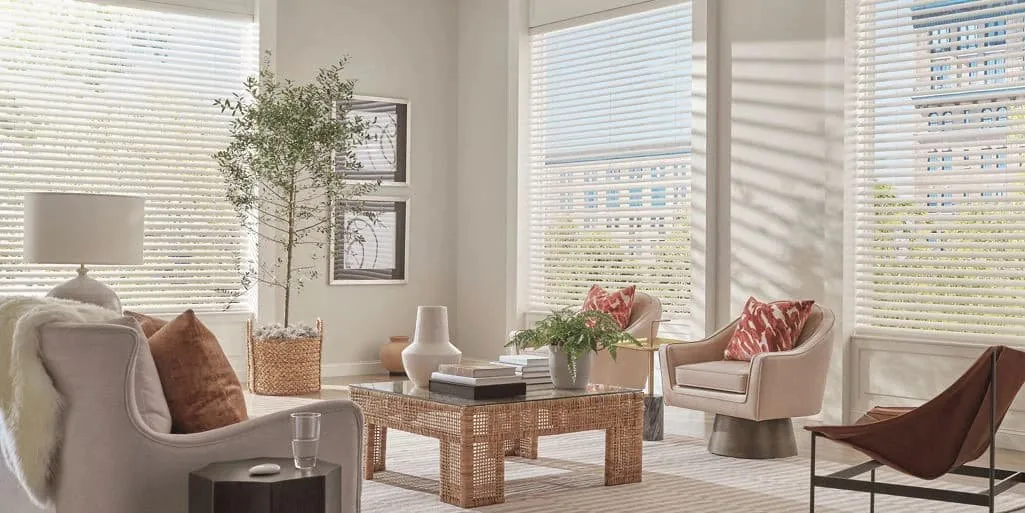
South rooms: Parkland wood blinds
Light slats angled upward spread strong midday sun across the ceiling instead of across the floor.
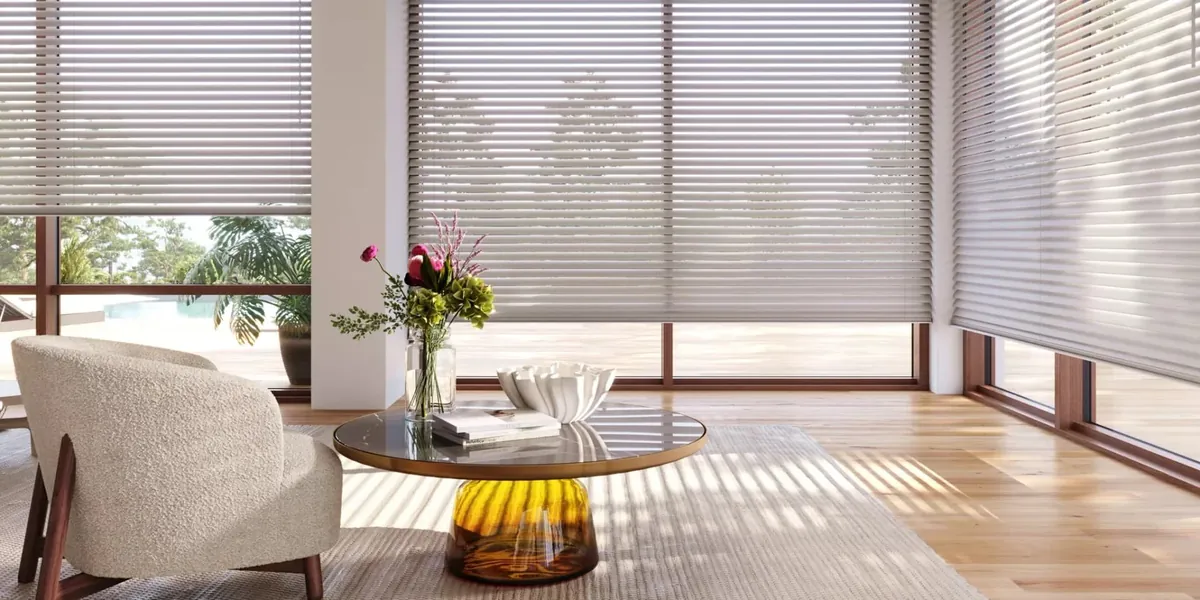
West corners: EverWood faux wood blinds
EverWood slats on both walls of a corner room handle the low, hot sun of a late afternoon.
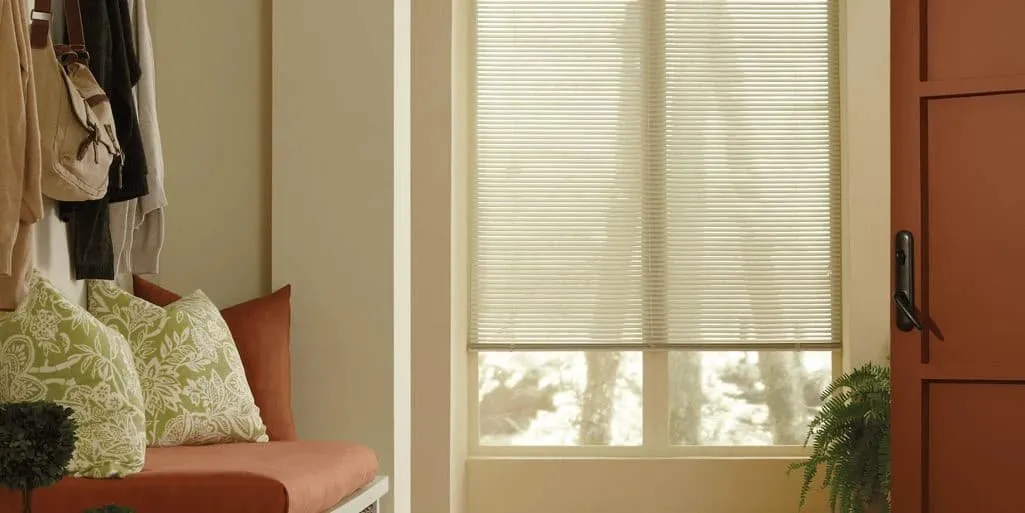
North entries: metal blinds
Slim aluminum slats suit side lights and door glass in a front hall that takes little direct sun.
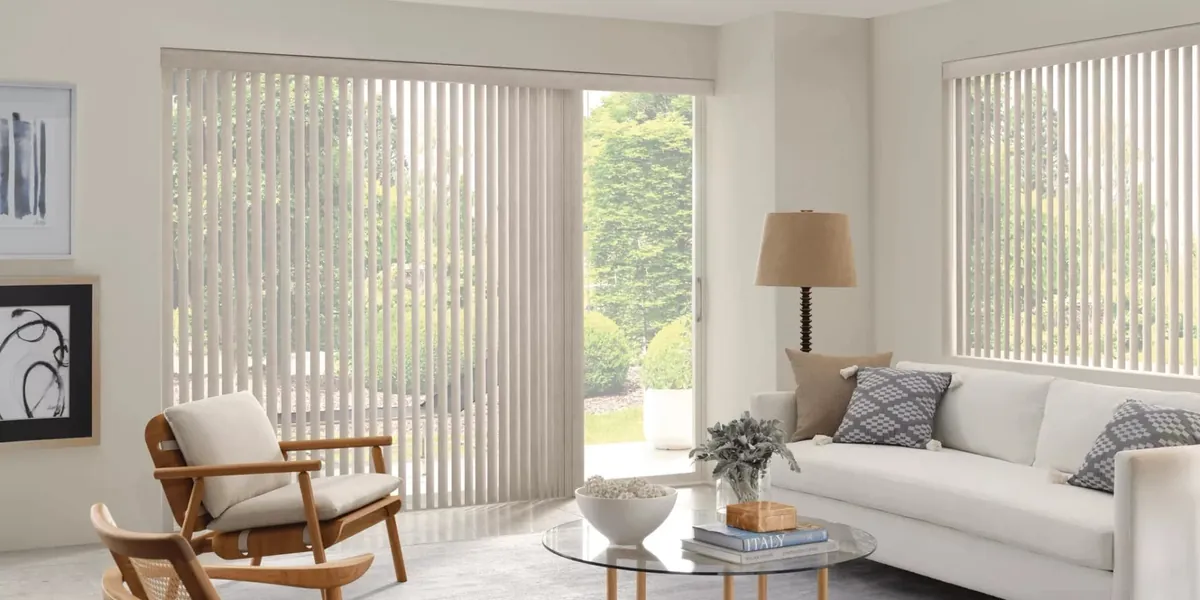
Back sliders: vertical blinds
Vanes that stack to one side for the slider out to the deck, turning to block a low sun across the yard.
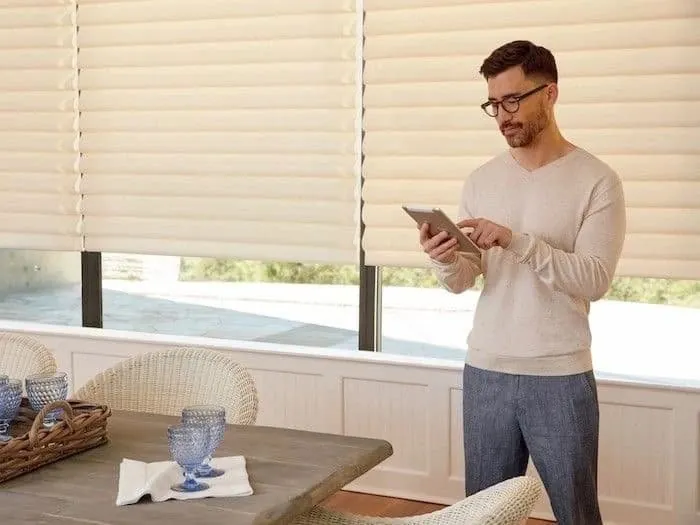
Motorized blinds in Norfolk
PowerView schedules can move each side of the house on its own timetable as the sun comes round.
Following the sun around a Norfolk house
On a house with open ground on all sides, the day starts on the east wall and ends on the west. In between, the south side carries the strongest light, and the north side stays even and cool. Each of those has its own problem.
East-facing rooms take low, bright sun straight in at breakfast time. That is pleasant in a kitchen and less so in a bedroom. Blinds on east windows are often chosen in a darker tone, or with routeless slats, so the room can be kept dim until you want it bright.
South-facing rooms get sun for most of the day, high in summer and lower in winter. Here the ability to tilt is the most useful thing a horizontal blind offers: you can angle the slats so direct sun hits the ceiling and spreads evenly, and adjust them through the seasons. A light color keeps the room bright even when the slats are partly closed.
West-facing rooms catch the low, hot afternoon sun. It comes in under any overhang and straight across the room, onto sofas, screens and floors. Closing the slats on the west windows in the late afternoon, while leaving the rest of the room open, keeps the light without the heat and glare.
North-facing rooms rarely need much sun control, and their light stays soft and steady from morning to evening. Their blinds are mostly about privacy at night and a finished look, so a slim metal or a painted faux wood blind is often enough.
Colonials with windows on four elevations
The colonials in Norfolk generally have a center or side hall, formal rooms either side of it at the front, a family room and kitchen across the back, and bedrooms upstairs on all four sides. That adds up to a lot of windows, almost all of them standard in size and set in frames deep enough for an inside mount.
With so many windows of similar size, the easiest way to a calm look is to choose one material and color for the front of the house and keep to it. Wood or faux wood in a white or off-white that matches the trim is the most common choice. At the back, where the house faces the woods, you can vary by room: a stain in the family room, faux wood in the kitchen, a darker color in the main bedroom.
Inside mounts suit these modern frames well. The blind sits within the opening and the window trim stays on show, and a cordless lift keeps the sills clear. We still measure each window in several places, because standard openings vary a little once trim and paint are in place, and a blind made to the actual opening drops cleanly without catching.
Capes with dormers and knee walls
Norfolk’s capes put bedrooms under the roof, lit by dormers on the front and sometimes a shed dormer across the back. A dormer window sits in a small alcove with sloped sides. Upstairs rooms in a cape often warm up quickly on a summer afternoon, because they sit right under the roof.
An inside-mounted horizontal blind keeps the alcove clear and raises into a small stack. A lighter slat color on the sunny side reflects more heat back out, while a darker color on an east-facing bedroom dormer helps keep the early light out. If a dormer has two windows side by side, matched blinds with level headrails make the alcove look neat.
Downstairs, a cape usually has a living room across the front and a kitchen and dining area at the back, sometimes opening onto a deck. These are the rooms where custom blinds in Norfolk most often mix materials: wood at the front, faux wood in the kitchen, and a vertical blind on the deck door.
Kitchens, mudrooms and the garage entry
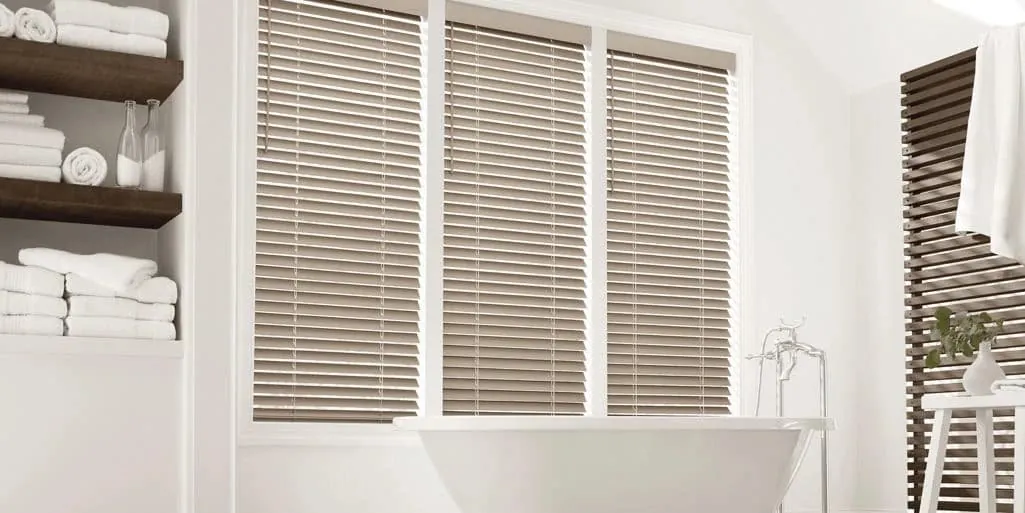
The working end of a Norfolk colonial or cape is usually at the back or side: a kitchen with a window over the sink, a breakfast area with a slider, a mudroom or laundry by the garage door. These rooms get the most use and the most moisture, from cooking, washing and wet boots coming in from the yard.
EverWood faux wood is the natural fit for all of them. The slats hold their shape in humid air and wipe clean, and the colors sit comfortably beside real wood blinds in the front rooms, so the house still looks planned as a whole. Over a sink, where reaching across the counter is awkward, a cordless lift or a motorized blind saves a stretch every morning.
The door from the garage or the mudroom often has a window of its own. A slim metal blind mounted on the door sits close to the glass and moves with it, so the door still opens and closes freely. If the mudroom faces west, closing that blind in the afternoon stops the low sun from heating a small room full of coats.
Bonus rooms and finished lower levels
Many larger colonials have extra space beyond the main floors: a room over the garage with windows at either end, or a finished basement with a walkout to the yard. These rooms are often used as a playroom, an office, a gym or a place to watch films, and each use asks something different of the windows.
A media room or a home office usually wants control of glare on a screen, which points to horizontal blinds in a darker tone, closed or angled as needed. A playroom wants something durable and cordless, and faux wood fits. A walkout slider gets a vertical blind. Because these rooms sit at the ends or below the rest of the house, they also catch light from unexpected directions, and we look at each one with the same side-by-side thinking we use upstairs. Planning custom blinds in Norfolk for these extra rooms at the same visit means they arrive and go up with everything else.
Wooded lots and changing light
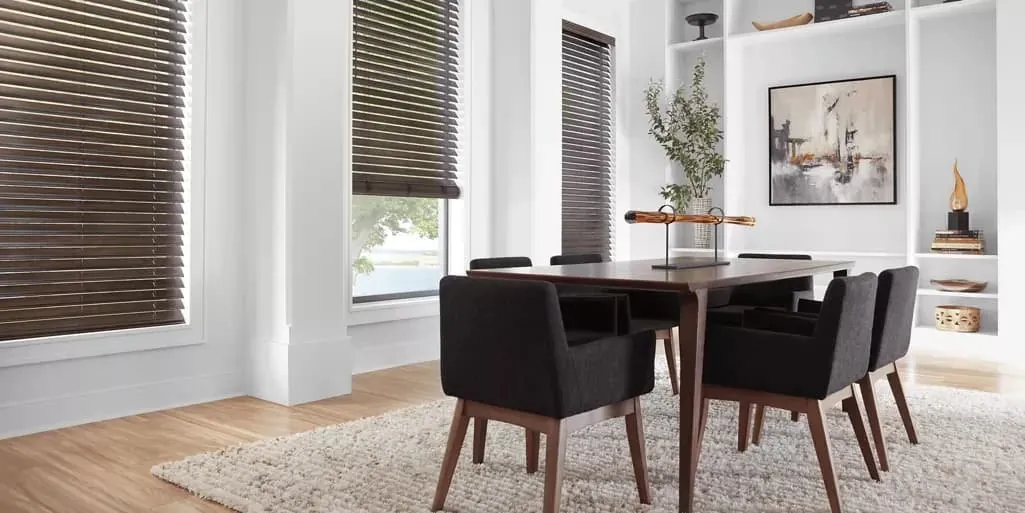
The trees around most Norfolk houses change the light through the year. In summer the canopy filters the sun, and rooms can feel shaded until a bright beam breaks through and lands on a table. In winter the trees are bare and the low sun comes deep into rooms that were dim in July.
Horizontal blinds adapt to that easily, because you adjust the angle rather than raising or lowering the blind. In summer the slats can stay open for the soft green light, with a small turn when the sun breaks through. In winter, a gentle upward tilt sends the low sun to the ceiling. A warm wood tone looks natural against a view of trunks and leaves.
Wood, faux wood, metal and vertical side by side
All four are Hunter Douglas blinds made to measure. Each one has rooms where it does well.
- Parkland wood brings real grain and warmth to living rooms, dining rooms and bedrooms.
- EverWood faux wood has the look of painted wood and copes with humidity, so it suits kitchens, bathrooms, laundry rooms and a sunny west room where heat builds.
- Metal has a slim headrail and thin slats for door glass, side lights and spare modern rooms.
- Vertical blinds hang from a track and draw aside for sliders and wide windows.
In practice most Norfolk houses use at least three. Our main custom blinds page describes each range further, and our vertical blinds page covers the sliders.
Corner rooms and the problem of two walls
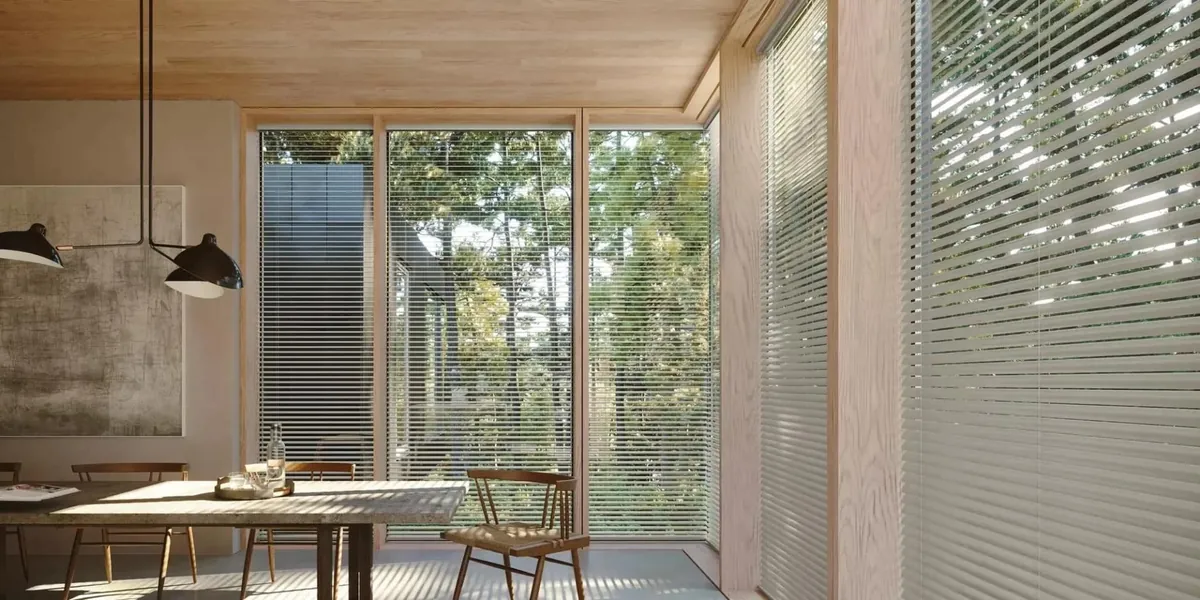
A corner room with windows on two walls is one of the nicest rooms in a house and one of the trickiest to dress. The light comes in from two directions and changes at different times, and the blinds on the two walls are seen together, so they need to match.
We usually suggest the same material and color on both walls, with separate blinds on each window so each wall can be adjusted on its own. In the morning you might close the east wall and leave the south open. By late afternoon you might do the reverse with the west wall. If the corner room is a family room you use all day, motorizing both walls with PowerView lets you set a scene for each part of the day.
Evenings on a large lot
During the day, deep setbacks and woods mean few people can see in. After dark, a lit room with bare windows can be seen from a long way off across an open yard. Closing horizontal blinds at dusk takes seconds, and routeless slats keep a bedroom free of pinpricks of light from outdoor lamps. On a larger house, a PowerView schedule can close every blind at sunset and open them again after sunrise, side by side as the sun moves.
Controls and motorization
Cordless lifts are a sensible default: tidy, quick and safe around children and pets. A wand tilts the slats. For windows that are hard to reach, over a sink, behind furniture, or high in a stairwell or a two-story family room, PowerView motorized blinds can be worked from a phone, a remote or a schedule. In a house where each side needs attention at a different time of day, schedules are especially useful. We plan how each motor is powered during the visit, window by window.
A visit to your house
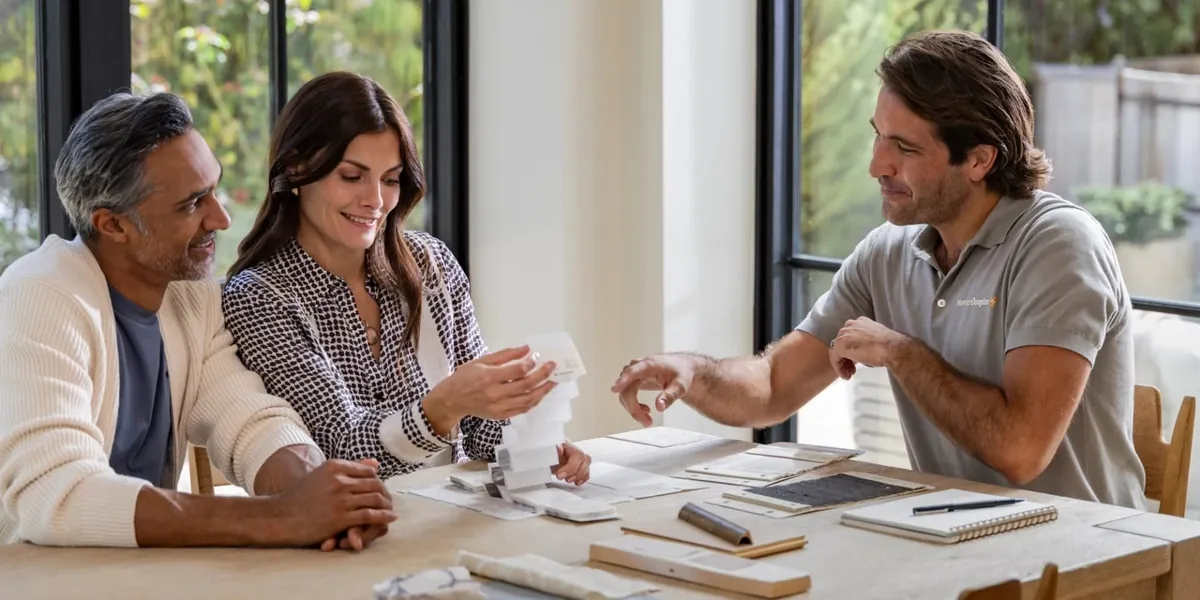
Most Norfolk customers prefer to choose at home, where you can see each sample on the side of the house it will live on.
- Choose a time using Request a Consultation or the call button.
- We come with wood, faux wood and metal slats in many colors, vertical vanes and each lift and tilt control.
- We walk around the house with you, noting which way each room faces and how it is used.
- You try samples on the sunny side and the shaded side, and see how the color changes.
- We measure every opening and confirm the mount.
- You get a free estimate and decide in your own time.
- Our certified Hunter Douglas installers fit the finished blinds, set each headrail level and show you how everything works.
Choosing samples in your own light
A slat color that looks right in a store can look very different on a north wall in winter or a west window at five in the afternoon. Our vans carry the samples, so we can bring the showroom to you and test each color on the side of the house where it will hang.
If you want a wider view of a room, we offer interior design consultations too, and can look at color, fabric and other window treatments during the same visit. Our page on what happens at an in-home consultation explains the visit, and our guide to the best shades for sun and glare is useful for west and south rooms.
Installation and the finished house
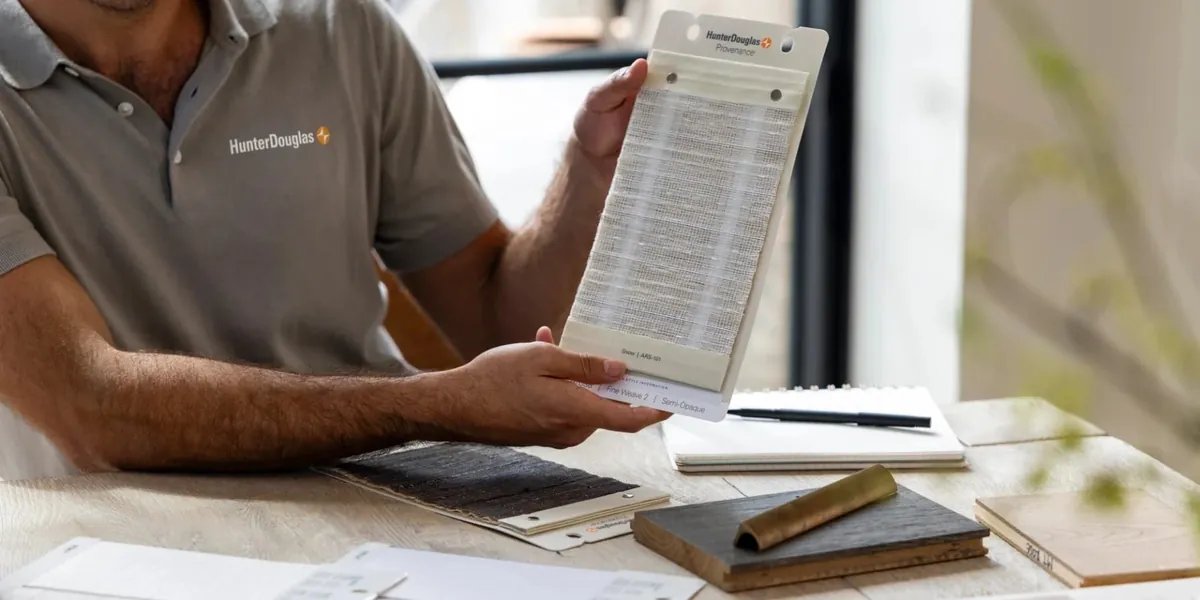
Once the blinds are made, our certified Hunter Douglas installers fit them. Each bracket is set into solid framing, each headrail levelled, and each lift and tilt tested. Corner rooms and dormer pairs are lined up so the blinds match. Before we leave, we show you how each blind works, including any PowerView scenes. Made to measure and fitted with care, custom blinds in Norfolk, MA, look as though they were part of the house from the start.
Gallery dealer, Franklin showroom
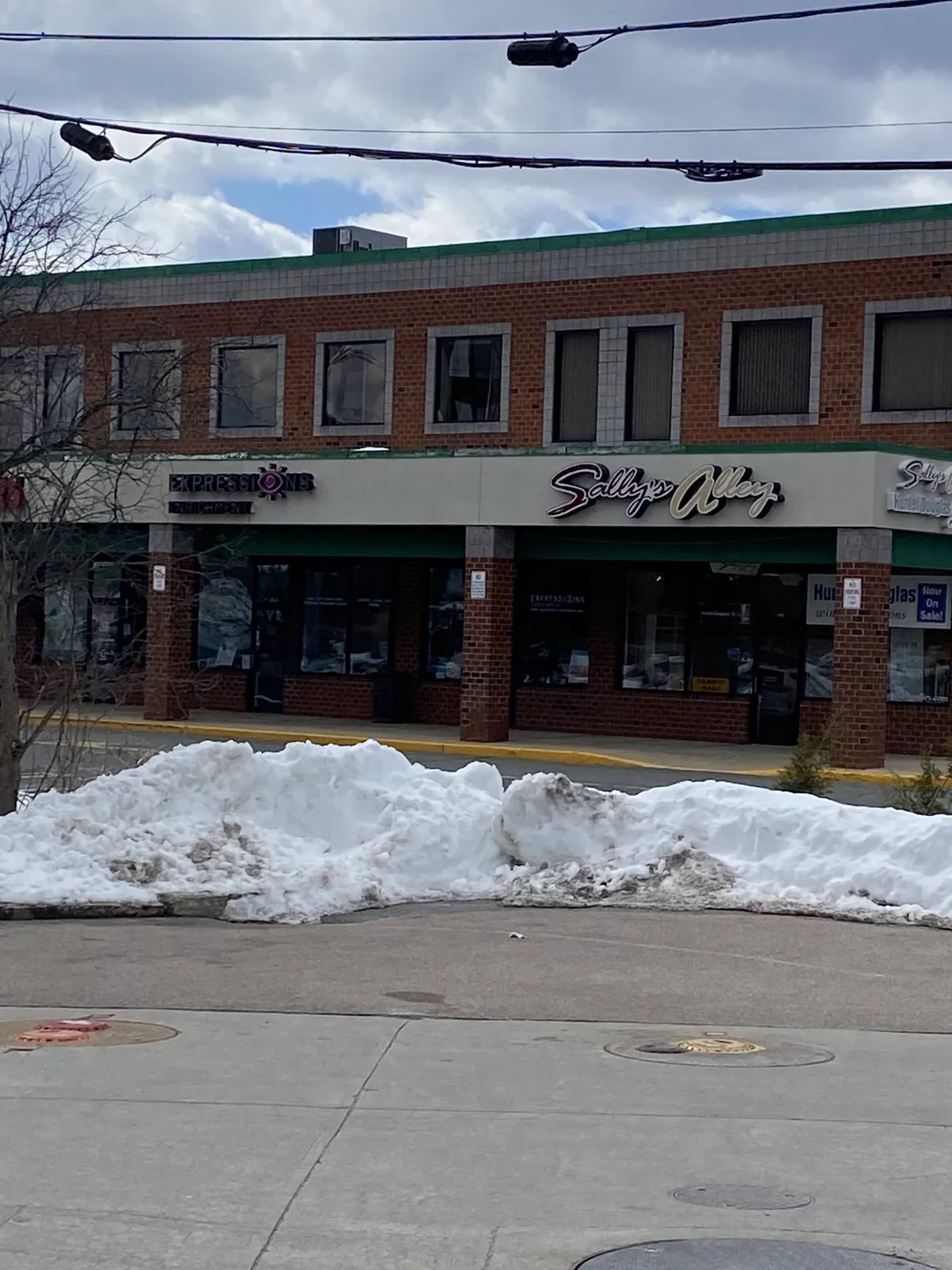
Blinds & Designs is a Hunter Douglas Gallery dealer, the brand’s own title for dealers who meet its standards, with installers certified by Hunter Douglas. You get the full range of blinds in one visit, and we handle blind and shade repairs too.
Franklin is our nearest showroom to Norfolk, a short drive away. Its address and hours are on the Franklin showroom page. For other rooms, see our cellular shades in Norfolk, plantation shutters in Norfolk, or all our services on the Norfolk page.
Questions from Norfolk
My living room gets sun from two sides. How should the blinds work?
Use the same material and color on both walls, with a separate blind on each window. You can then close one wall and leave the other open as the sun moves. PowerView can do it on a schedule.
What is best for an east-facing bedroom?
A darker slat with routeless construction, closed fully, keeps the room dim when the sun comes up. A cordless lift keeps the sill clear.
Do I need custom blinds if my windows are standard sizes?
Made-to-measure blinds fit the actual opening, which varies slightly from window to window once trim and paint are in. They drop cleanly and look consistent across a whole elevation.
What goes on the slider to the deck?
A vertical blind. It draws fully aside so the door opens, and the vanes turn to block low sun across the yard.
Is the estimate free?
Yes. After we measure, the estimate costs nothing and there is no obligation.
What to do next
The best way to choose is to try the samples on each side of your own house. Request a consultation and we will bring Hunter Douglas blinds to your Norfolk home, measure every window and give you a free estimate. You can also use the call button, or visit our Franklin showroom.