
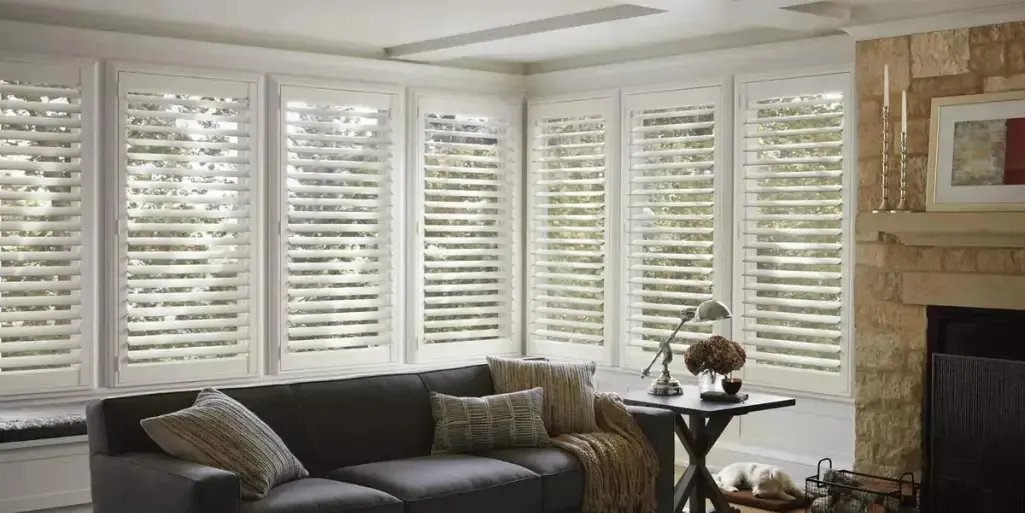
Bay windows, transoms and split-level stairs
Attleboro’s housing falls into a few clear bands. Downtown and up on Oak Hill, the Victorians and colonials carry bay windows and transoms, the sort of openings that never came in a standard size. Off Route 123 you find split-levels built in the sixties, with their half-flights of stairs and windows at three different heights. Down in South Attleboro the ranches are long and low. Plantation shutters in Attleboro, MA, have to suit all of it.
The older houses are where made-to-measure really earns its keep. A bay is several windows at angles, each a slightly different width. A transom is a strip of glass above a door or a window, sometimes straight, sometimes arched. Neither will take a shutter off a shelf.
The newer houses are simpler, but they have their own puzzles: a split-level’s lower rooms sit half below the ground, with short windows set high on the wall, and the main living room usually has one big window facing the street.
Three collections, one house
Hunter Douglas makes three shutter collections, and an Attleboro order often mixes them room by room. They share louver sizes and frame styles, so a house can change material from the bath to the parlor without looking any different from the hall.
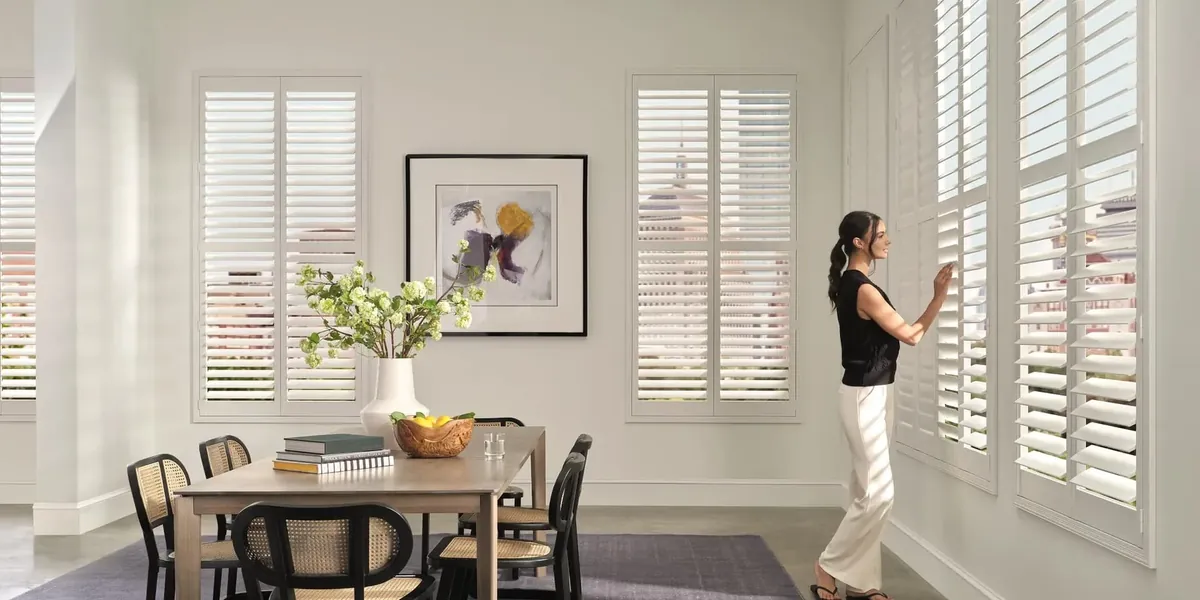
Palm Beach
Our suggestion for the rooms where water and steam are part of the day: bathrooms, the sink window, a laundry off the back door.
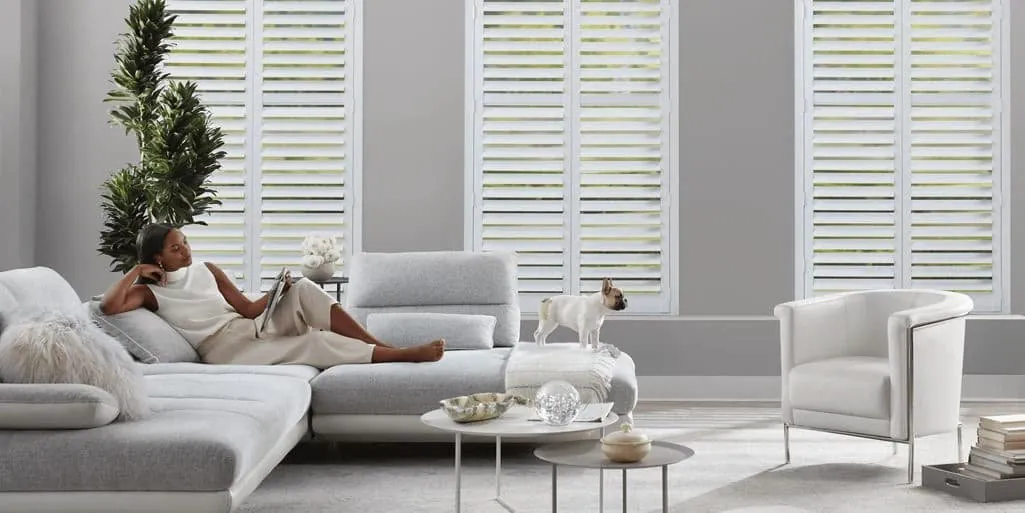
NewStyle
The everyday choice for bedrooms, family rooms and the split-level’s big front window.
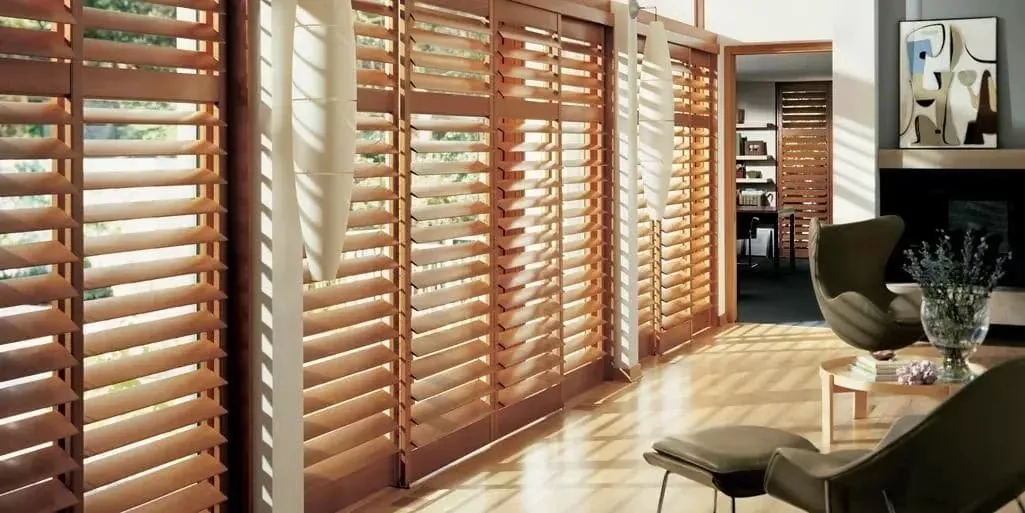
Heritance
Real hardwood, painted or stained. Worth a look where an older house downtown still has natural wood trim.
Bays in the older houses downtown and on Oak Hill
A bay window changes how a room feels, and it is often the first window someone asks about. In the Victorians on Oak Hill and the older colonials nearer downtown, bays come in all shapes: a shallow three-sided bay in a dining room, a deeper one on a front parlor, sometimes a bay stacked on the floor above.
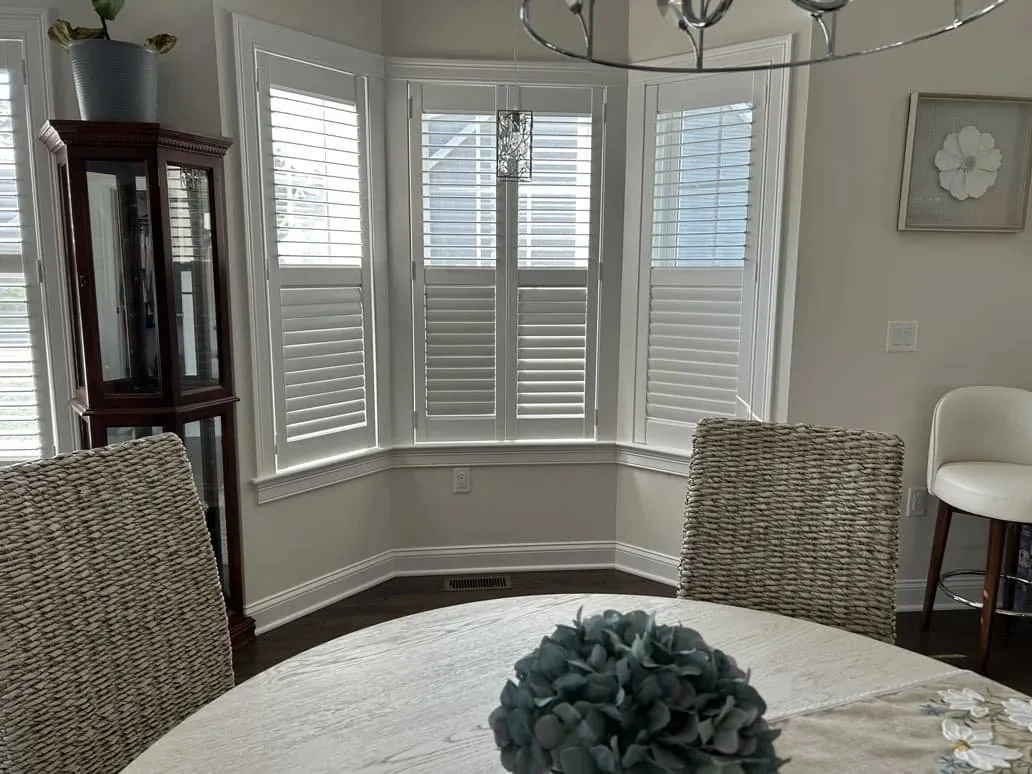
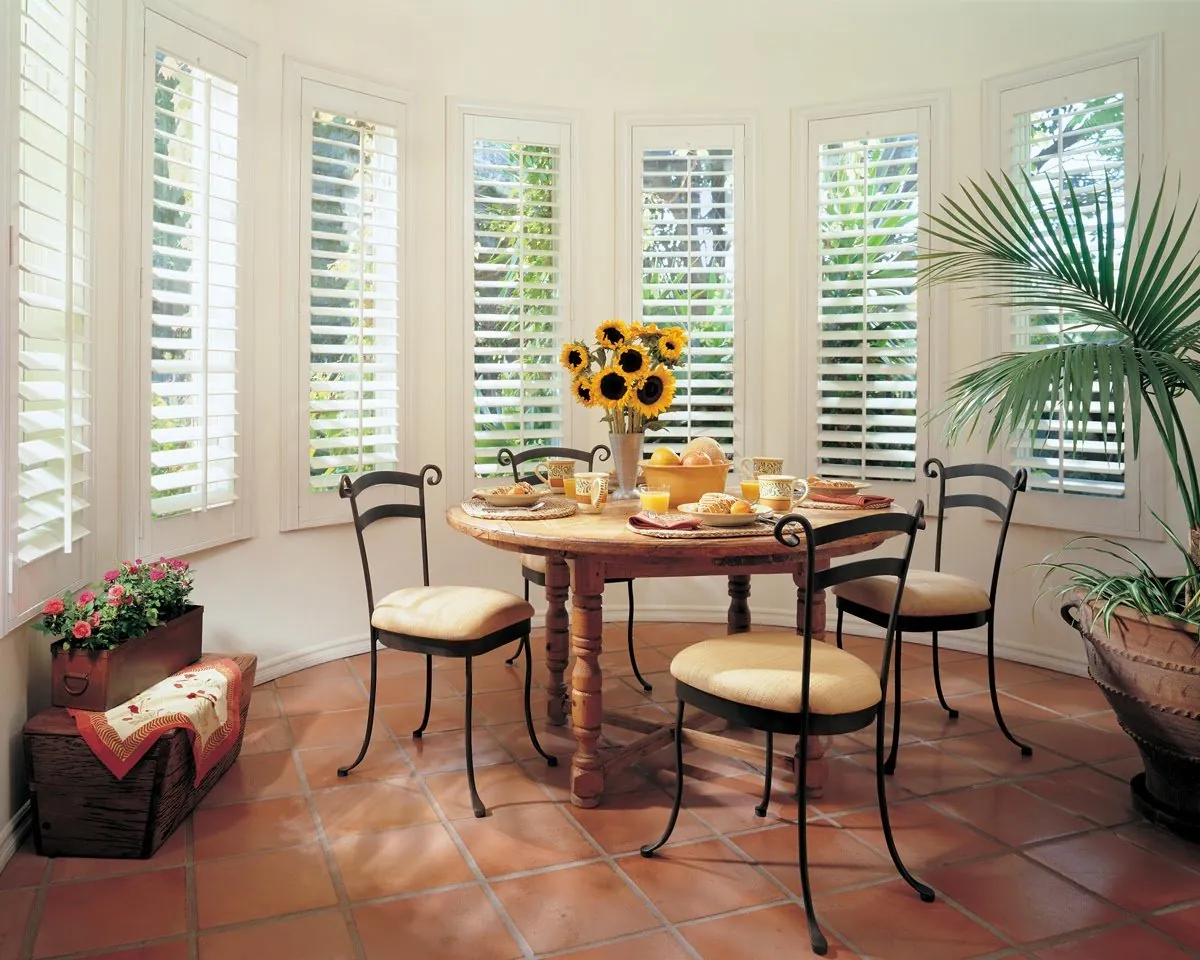
We treat each face of the bay as a window of its own. Each gets its own frame and its own panels, and the frames meet at the corners so the angles stay tight and nothing gaps. Because the faces rarely match exactly, every one is measured separately, at the top, middle and bottom. The panels then share one louver width and one rail height, so the whole bay reads as a single, curved piece.
What sits under the bay matters as much as the glass. A window seat, a radiator, a built-in bench or a plant shelf all change how far a panel can swing. We check that at the visit so the shutters fold back cleanly without hitting anything. On a shallow bay, panels hinged to fold flat against each other often work better than a pair that swings wide into the room.
Transoms above doors and windows
Many of the older houses in town have transoms: a band of glass over the front door, over an interior door, or above a tall window. They were there to bring light into a hall before electric lighting, and they still do that job well. The question is whether to cover them.
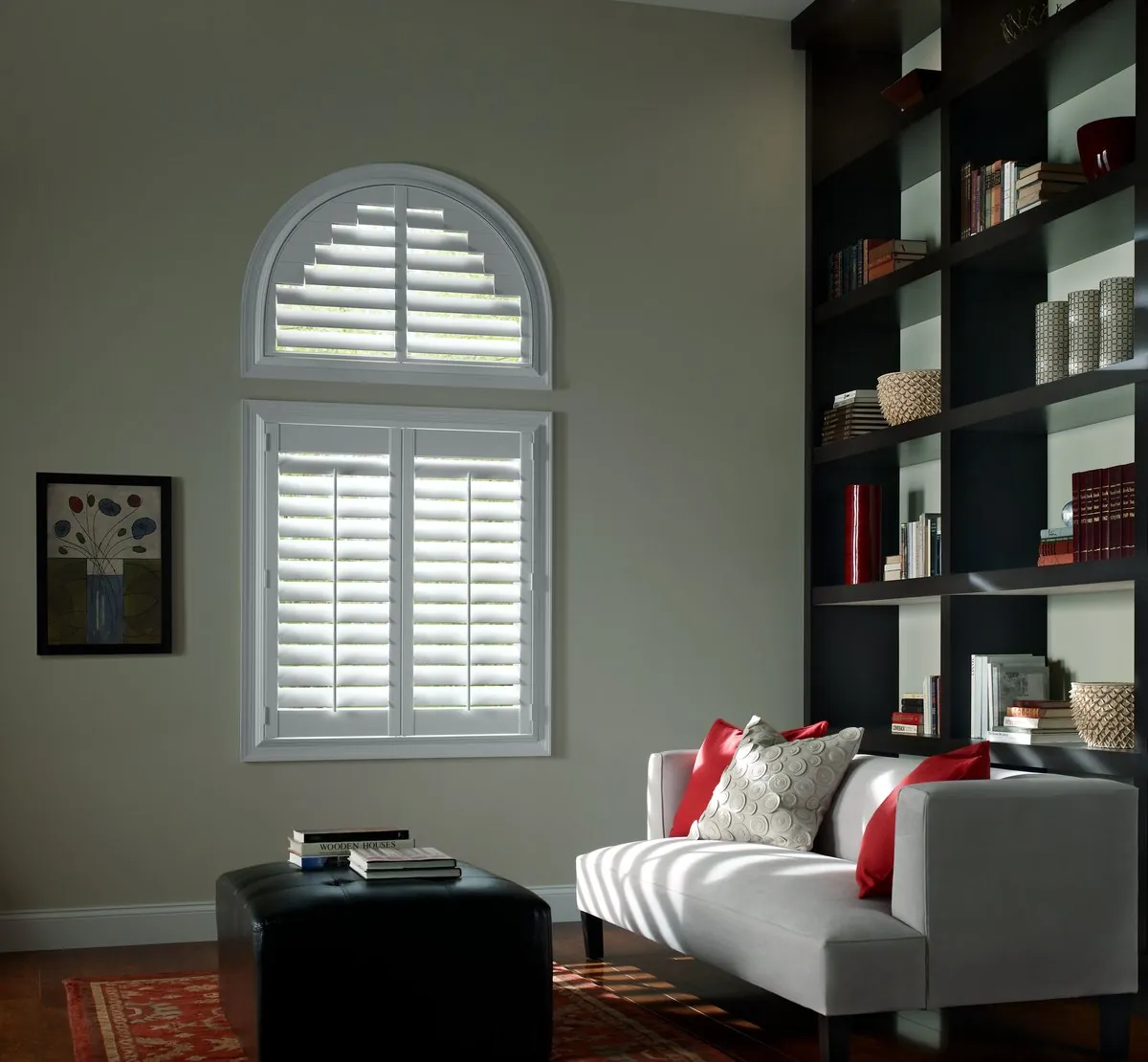
Often the answer is to treat the transom as its own small shutter. A straight transom can take a short fixed panel with its louvers set at one angle, so it lets light through, blocks the view in, and never needs touching. An arched transom gets a shaped panel built to the curve, with louvers that fan out or a solid insert, mounted so the line of the frame below carries around the arch.
Sometimes the best thing is to leave the transom bare. If the glass is decorative, or if the hall needs every bit of light it can get, we will say so. A shutter on the window below, with a rail that lines up with the bottom of the transom, still gives the opening a finished look. Our guide to window measuring terms explains how we describe these shaped openings on the order.
Split-levels off Route 123
The split-levels built off Route 123 put a lot of different windows into one house. There is usually a big living room window on the street side, a kitchen window over the sink, bedroom windows up a half-flight, and short windows in the lower-level family room, set high because that room sits partly below ground.
Each group wants a different approach. The front window is the one people see, so we divide it into panels that fold back in pairs and use a broad louver to keep the view open. The upper bedrooms take matching panels, usually with a divider rail so the top can open while the bottom stays shut. The lower-level windows are the tricky ones: short, high and often deep. A single panel with a narrow louver suits them, and an inside mount keeps it neat.
The stairs between levels sometimes have a window of their own. On a split-level it is usually within easy reach from a landing, so a hinged shutter works there like anywhere else.
Ranches in South Attleboro
The ranches in South Attleboro are steady, regular houses, and they take shutters well. Openings are square, walls are a standard depth, and most rooms have one or two windows of a similar size.
That makes it easy to plan a whole floor at once. One louver width and one color run through every room, and the outside of the house looks orderly from the street. The front picture window gets the most thought: we usually split it into three or four panels, with the middle pair opening on its own and the end panels hinged to fold behind them. A ranch kitchen often has a window over the sink, and a cafe layout on the lower sash keeps the counter private while the top lets in light.
Many ranch orders start with the front room and the main bedroom and add the rest over time. That works fine, provided the first order fixes the louver size and color for the ones that follow.
Picking a louver width
The width of the louvers sets the look of the finished shutter, and the range of houses in Attleboro means there is no single right answer.
- Narrow louvers suit the small, high lower-level windows of a split-level and the narrower sash of an older colonial. They keep the blades in proportion to the glass.
- Medium louvers work for most bedroom and kitchen windows, where privacy, light and view all matter about equally.
- Wide louvers belong on the big windows: a split-level’s front window, a ranch’s picture window, the deep bay on an Oak Hill parlor. Tilted open, they give a clearer view out through fewer blades.
How the louvers tilt is a second choice. A tilt rod down the front of each panel is simple and easy to reach. A hidden tilt at the edge leaves the face of the shutter clean. Neither is better; it comes down to the look you prefer and how often each window gets adjusted.
Street-side privacy, garden-side light
The older houses downtown sit fairly close to the sidewalk, and their front rooms are only a few steps from anyone walking by. Up on Oak Hill the lots open out a little, but the parlor windows still face the street. With the lamps on in the evening, an uncovered front window shows the whole room.
Louvers solve that without changing anything else about the window. Tilt them slightly down and you can see out while the view in from the sidewalk is cut off. Tilt them up and the daylight lands on the ceiling, so the room stays bright and private at the same time. Close them and the room is shut away for the night.
On a tall sash, a divider rail takes this further: the lower louvers stay shut while the upper ones open to the sky. At the back of the house, facing a yard, the same shutters can simply fold right back against the wall so nothing stands between you and the garden. That flexibility is the main reason so many front rooms end up with plantation shutters in Attleboro, MA, rather than a shade.
Color beside old and new trim
Most shutters we fit are white, and white suits nearly every room. But the trim in the older houses has usually been painted many times, and layers of old paint tend to drift toward cream. A bright white panel set inside a mellowed casing can make the woodwork look tired, so we bring warm whites and off-whites to hold against it.
In the split-levels and ranches, trim is usually a flat builder white, and a crisp white shutter matches it well. Rooms with darker walls are worth trying in a soft gray or taupe. Where a Victorian still has its natural wood trim, a stained Heritance shutter can pick up the tone of the casing and the floor.
We look at colors in daylight and again with your lamps on, because a sample that looks right at midday can change a lot by evening. For a whole house, we suggest settling the color in the front hall first, since it is the room you glimpse from all the others.
Frames: where made-to-measure shows
The frame is the part of the shutter that meets the house, and on Attleboro’s older openings it decides whether the result looks built in or bolted on.
An inside mount sets the frame within the opening. On a deep Victorian sash it can all but disappear, leaving the original casing in full view. It needs enough depth for the louvers to swing and an opening that is close to square, which is why we measure the older windows at so many points.
An outside mount sets the frame on the casing or the wall. It is the answer for a shallow window, a window with locks or cranks in the way, or an opening that has moved too far out of square to fit inside. On a ranch or split-level with flat trim, it can also make a modest window look larger.
Decorative frames add a profile around the outside edge. They give some presence to windows where the builder left very plain trim, and they suit the front rooms of the newer houses especially.
Every one of these comes in all three collections, so frame and material are separate decisions. That freedom is a big part of why made-to-measure plantation shutters in Attleboro, MA, fit the older bays and transoms so cleanly.
Kitchens and baths in each kind of house
Wet rooms vary across town as much as the living rooms do. An older house downtown often has one bathroom tucked under a roof slope, with a small, deep window and no fan. A split-level puts its bath at the top of the half-flight, usually with a frosted or small window over the tub. A South Attleboro ranch has its bath and kitchen along the back wall, both with windows that get splashed.
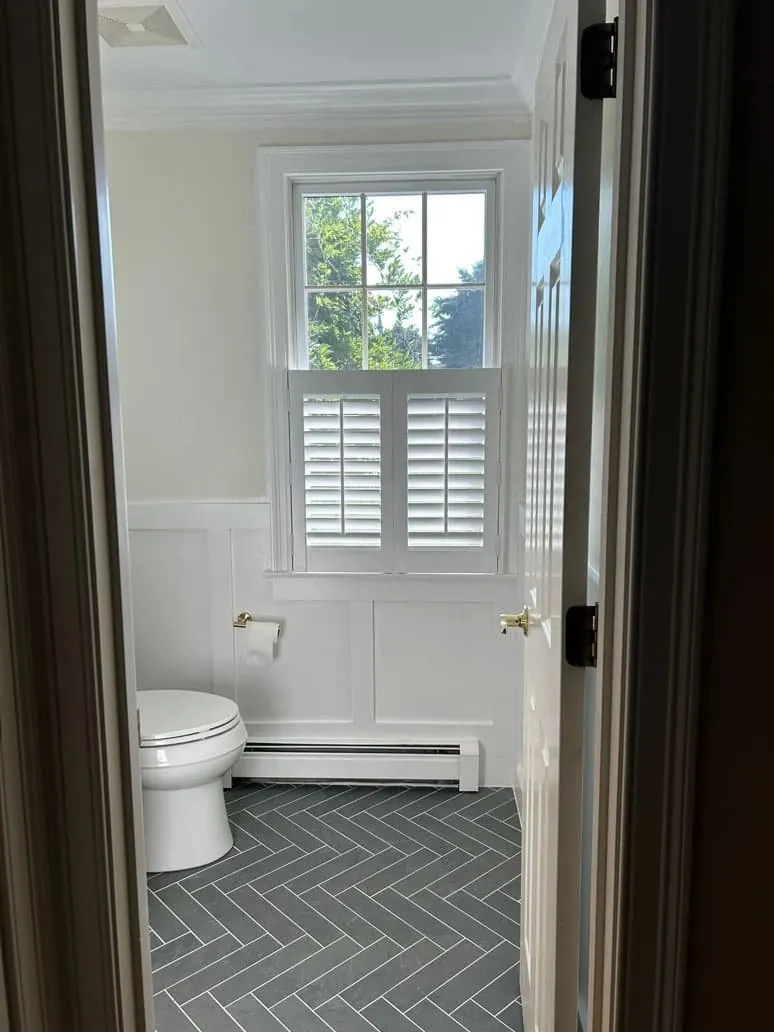
These are the windows where we suggest Palm Beach. It comes in the same colors, louver widths and frames as NewStyle and Heritance, so a bathroom shutter painted to match the rest of the house looks identical from the hall. A cafe layout over the lower sash suits a bath on the street side, keeping the lower glass private and the upper glass open to light. Over a kitchen sink, louvers tilted up keep the counter bright without a view in from the driveway. A complete plan for plantation shutters in Attleboro, MA, usually treats the kitchen and bath first, because they are the rooms used most every day.
Installation day
Once your order arrives, installation follows a set order. Our installers are certified by Hunter Douglas, and on bays and transoms that training shows.
- We confirm the plan room by room with you before any tools come out.
- Each frame is set in or on the opening and brought square and level, even where the opening itself is not.
- Panels are hung, and the hinges are adjusted until the panels meet evenly in the middle.
- Every louver is checked to make sure it tilts freely and closes flush.
- We show you how the tilt and the panels work, and clear up before we leave.
You can read more in what happens on installation day. If any shutter or shade in the house needs attention later on, we carry out blind and shade repairs as well.
A Gallery dealer at your windows
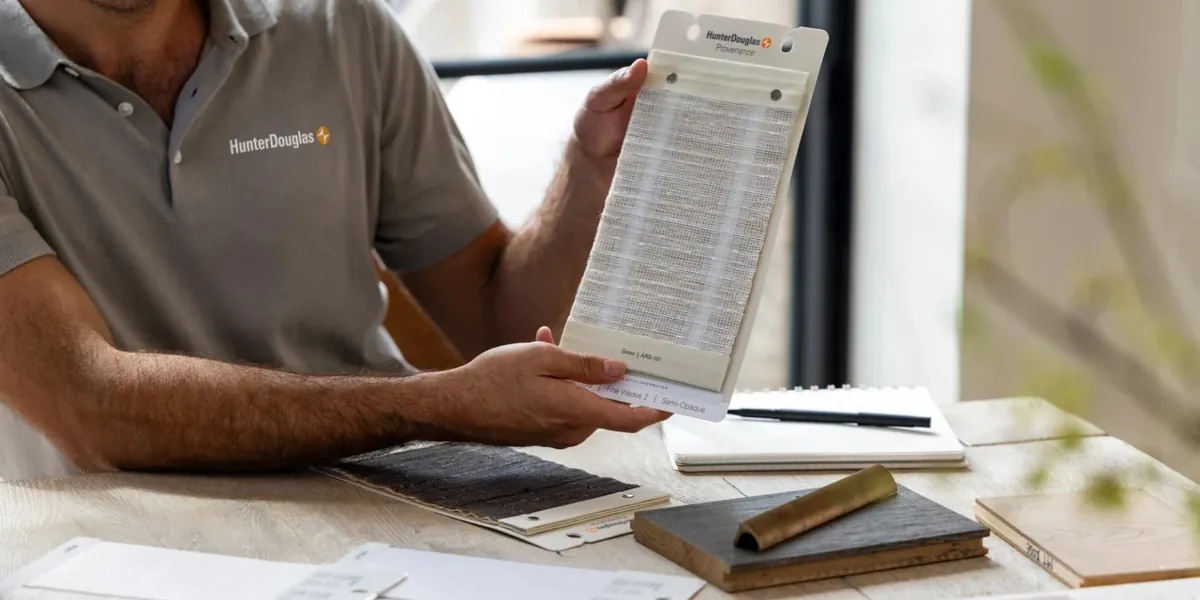
Blinds & Designs is a Hunter Douglas Gallery dealer. For shutters, it means all three collections, every louver width and the full set of frames and finishes are open to you in a single consultation.
Our vans carry samples, so we can bring the showroom to you. You hold Palm Beach, NewStyle and Heritance against your own trim, compare louver widths at the bay and the transom, and see colors in your own light. We measure every opening on your list and leave you with a free estimate.
If you would rather browse first, the nearest showroom is in Franklin. Either way, the measuring happens at your house before anything is ordered.
Beyond shutters
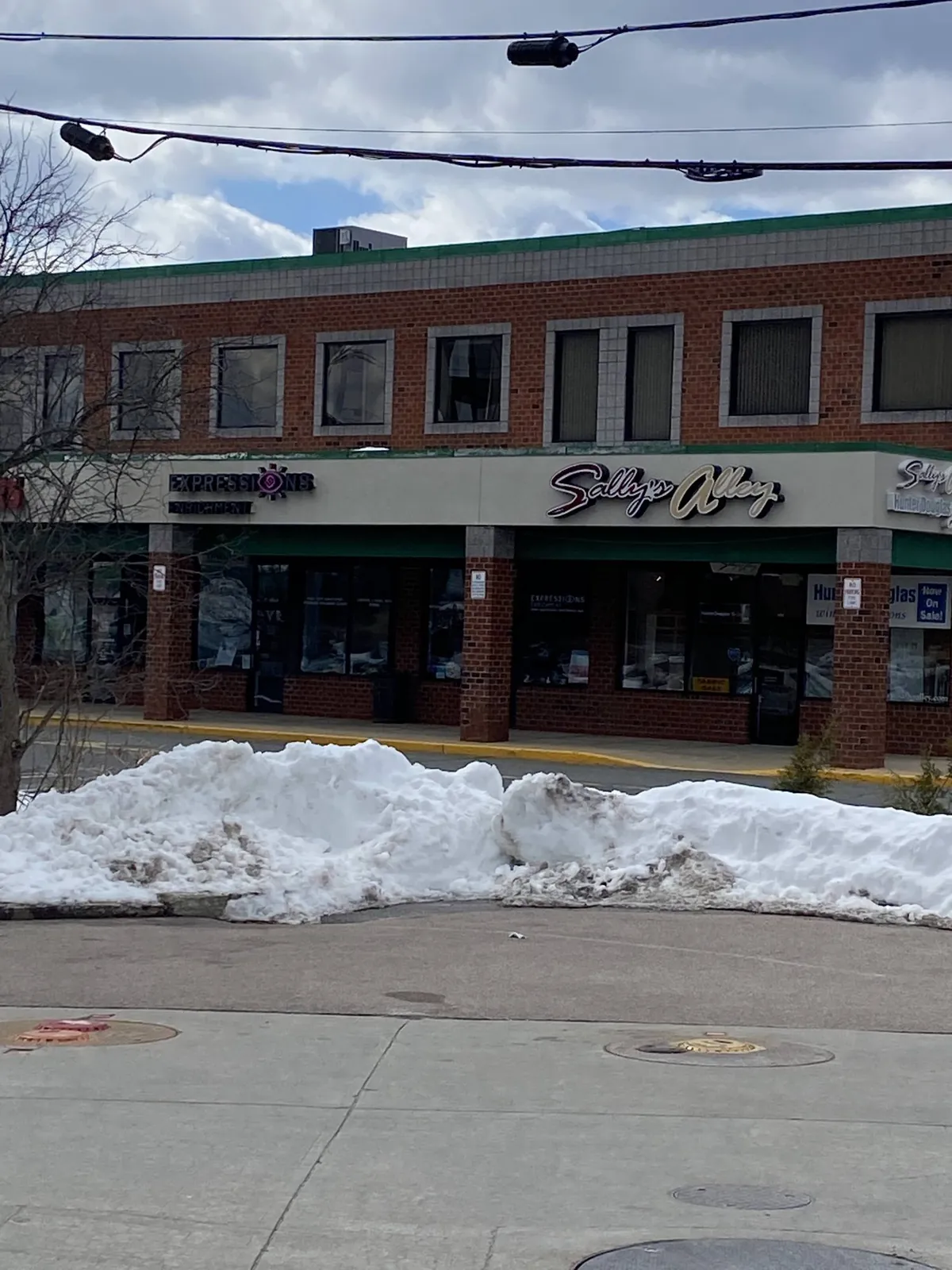
A house rarely wants the same covering at every window. A lower-level family room might suit a shade, and a bedroom that needs real darkness might suit something softer. Have a look at custom blinds in Attleboro, cellular shades in Attleboro and roller shades in Attleboro, or see everything we do in town on the Attleboro page. The Franklin showroom page has its address and hours, and the main plantation shutters page compares the three collections.
Questions from Attleboro
Can you fit shutters on a bay where every window is a different width?
Yes. Each face of the bay gets its own frame and panels, measured separately, and the frames join at the corners. The panels share one louver width and rail height so the bay still looks like one piece.
Should I cover the transom over my front door?
It depends on the glass and the hall. A short fixed panel lets light in while blocking the view. If the glass is decorative or the hall is dark, leaving it bare and lining up a rail on the window below often looks best.
What works on the short high windows in my split-level’s lower level?
A single panel with a narrow louver, usually mounted inside the opening if there is depth for it. It keeps the window tidy and lets you tilt for light without giving up privacy.
Can I start with a few rooms and add more later?
Many people do. We record the louver width, frame style and color from the first order so the later rooms match.
What does an arched window take?
A shaped panel built to the curve, with louvers that fan out or a solid insert. It is mounted so the frame below continues around the arch, and it is usually set at a fixed angle since nobody needs to reach it.
Book a visit
To see plantation shutters in Attleboro, MA, at your own bay or transom, request a consultation. We will bring samples in every collection, measure each window and give you a free estimate. You can also use the call button, or start at the Franklin showroom.