
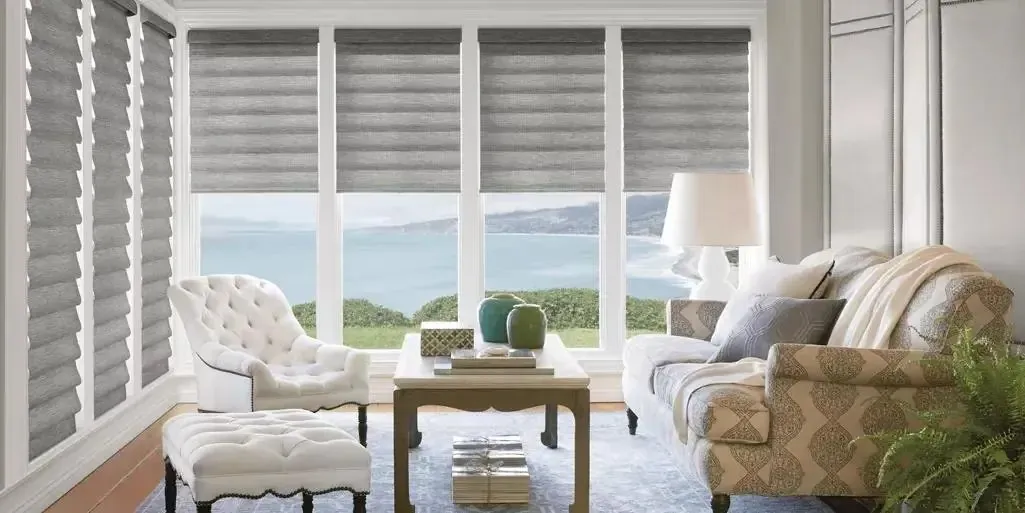
Long low light and a fabric that has to last
Two very different kinds of house share this town. Up in Dennis Village, antique captains’ houses face Route 6A with their tall front windows, wide boards and painted trim. Down in Dennis Port, cottages and condominiums sit shoulder to shoulder near the sound, many of them opened up for summer and shut again in the fall. When we plan roman shades in Dennis, MA, we start by asking which of those two houses we are standing in.
Both have one problem in common. Rooms on the bay side take the sun low and long, late in the day and through the shoulder seasons, and that slanting light is the hardest thing there is on fabric. A folded shade is made of cloth, so the fabric you pick, and the lining behind it, decide how it looks after a few summers in that window.
The other thing we keep in mind is how the house is used. A place that is lived in for a few months and closed for the rest needs shades that can be left down to protect the rooms, and that still look right when the family arrives in June.
What roman shades in Dennis can do in each kind of house
Every Hunter Douglas roman shade we sell comes from one of two families: Vignette, which rolls its folds away into the headrail, and Carole Fabrics, sewn to order in flat and folded styles. Within those, these are the choices that come up most in town.
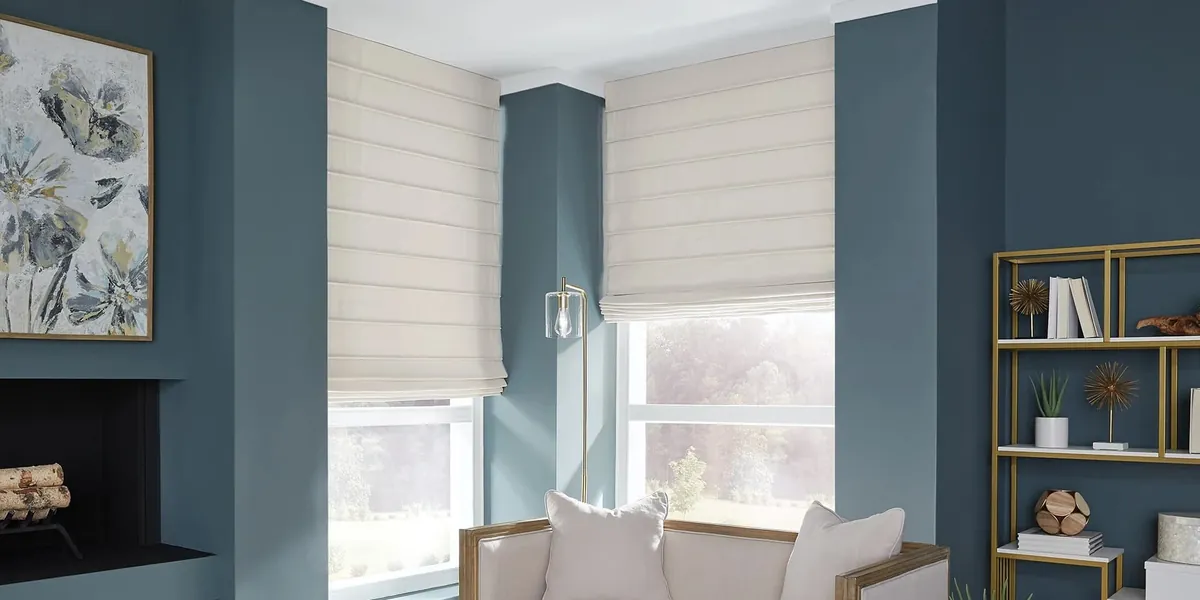
Tailored flat folds
Crisp pleats raised, one smooth panel lowered. A Carole Fabrics flat fold suits the formal front rooms of a captain’s house and shows a pattern well.
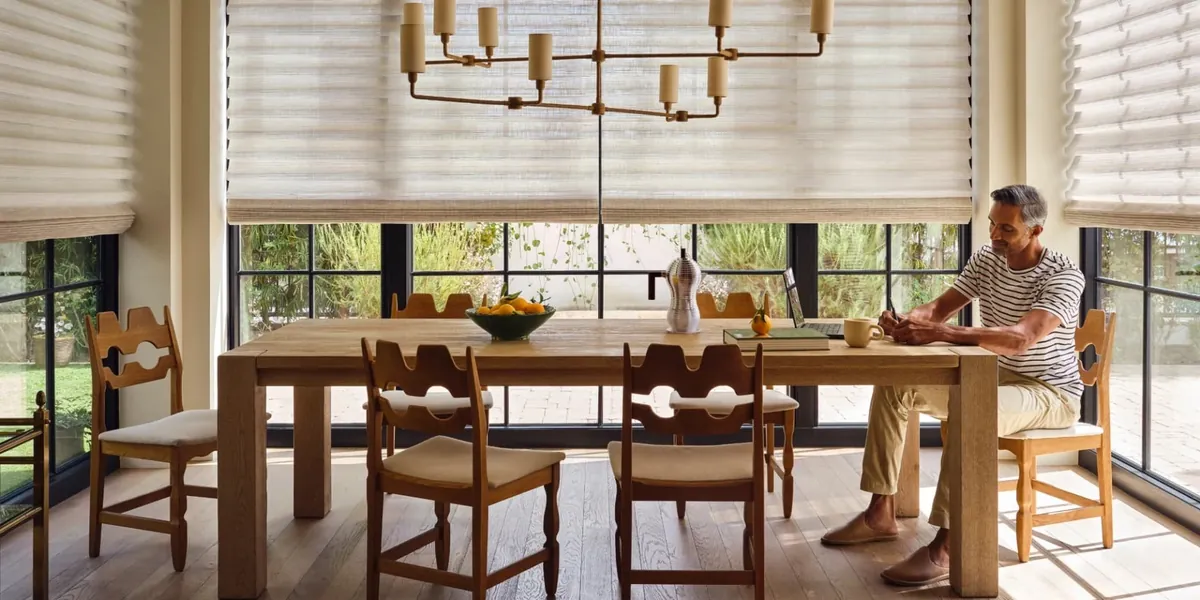
Softer looped folds
Fabric that keeps gentle cascades even when the shade is down. A relaxed choice for a cottage living room or a summer bedroom.
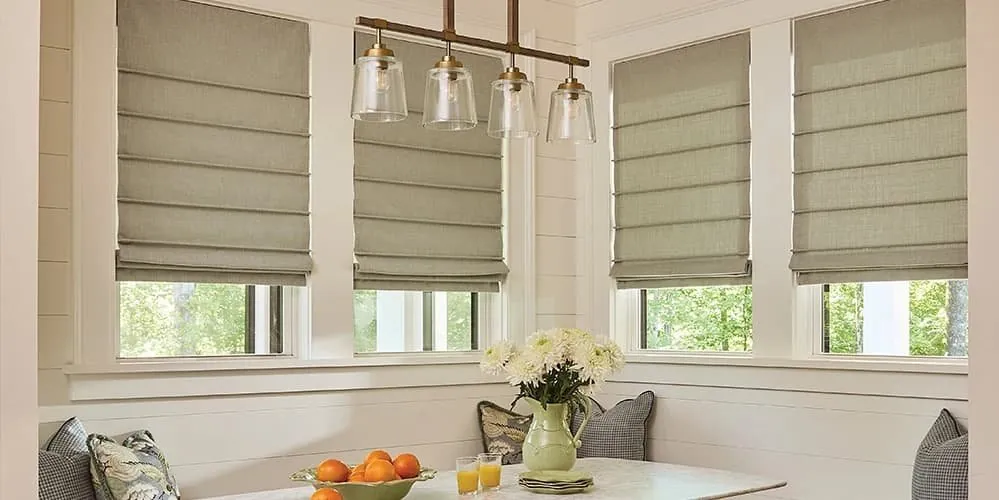
Vignette for shallow frames
Its fabric winds up into a compact headrail instead of stacking at the top, which helps on short cottage windows where every bit of glass counts.
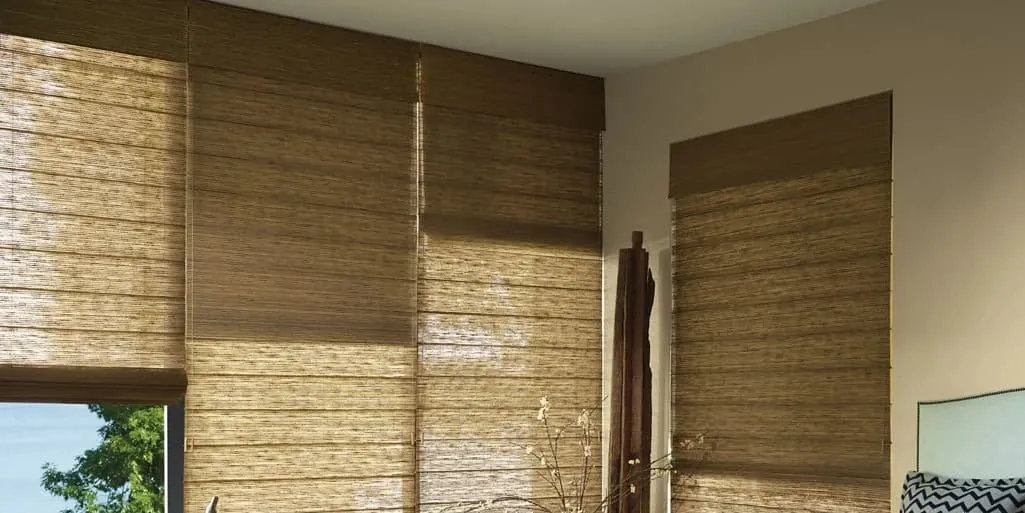
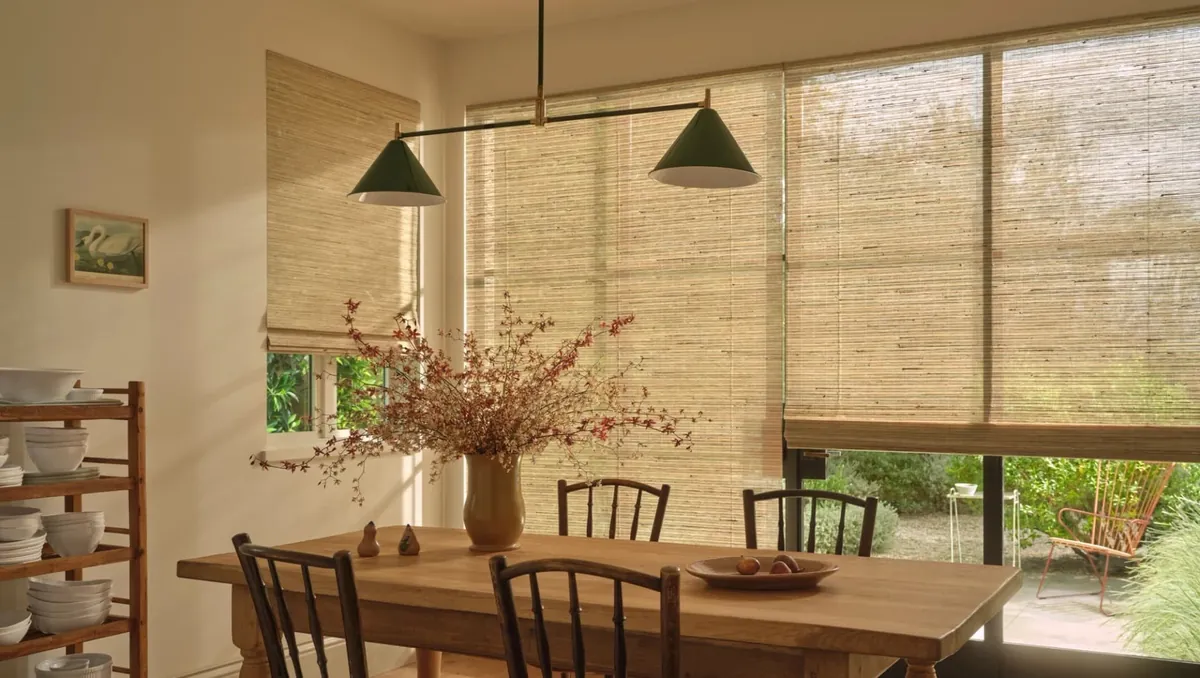
Woven textures
A natural, loomed look folded into a roman shape. It sits easily in a shingled cottage with painted beadboard and wicker.
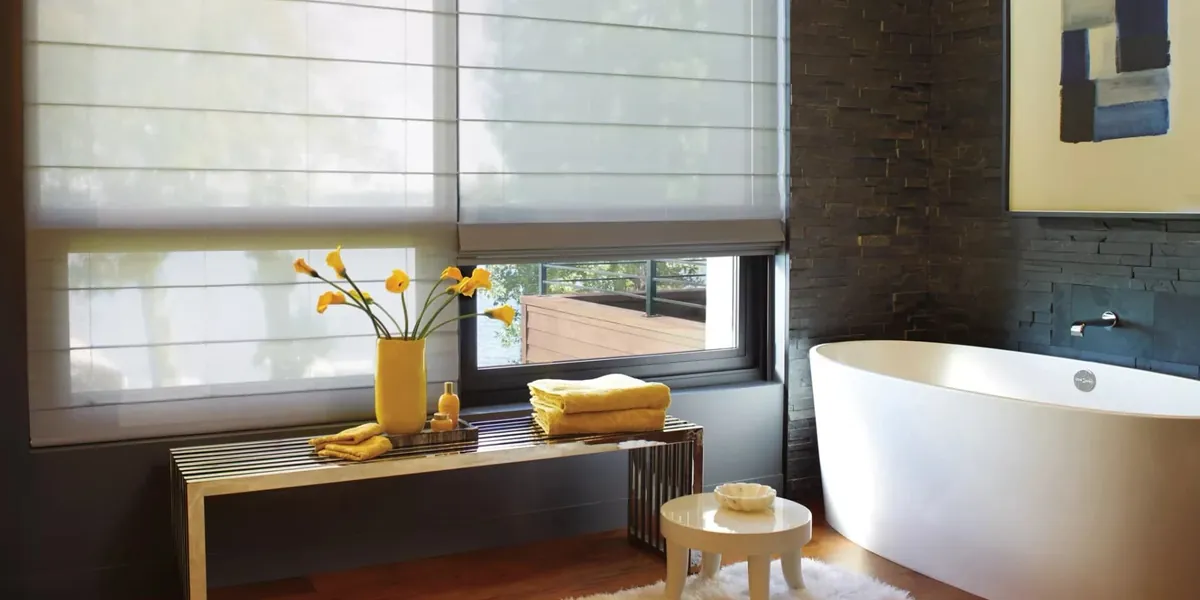
Sheer fabric for bathrooms
Close-set condominiums mean windows that face a neighbor. A sheer or light-filtering cloth keeps a bathroom private and bright.
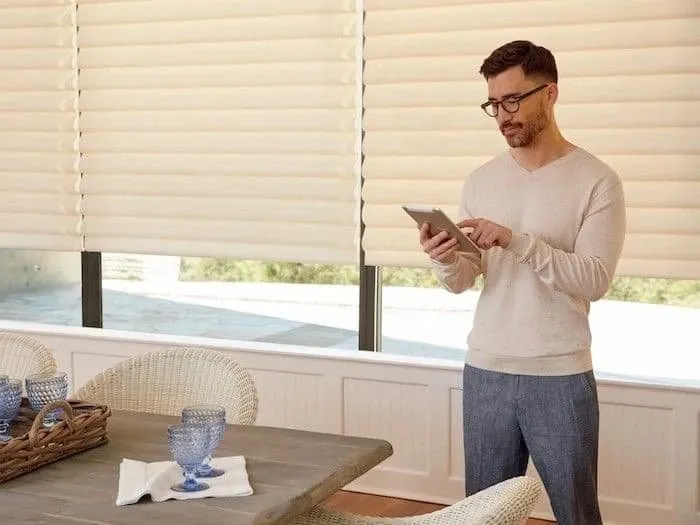
PowerView control
Raise or lower every shade from a phone, a tablet or a remote, or on a schedule that keeps the bay-side rooms covered through the afternoon.
The captains’ houses on 6A
A captain’s house was built to be looked at. The windows are tall double-hung sash, evenly spaced across the front, with deep painted casings and sometimes a cornice or a hood over each one. Inside, the front parlor and the dining room usually have the best of the trim, and those are the rooms where roman shades for Dennis homes do the most for the look of a room.
The goal in a room like that is to keep the woodwork in view. A Carole Fabrics shade mounted inside the frame sits behind the casing, so the trim stays whole and the shade reads as part of the window. Lowered, a flat fold hangs as one clean rectangle; raised, it gathers into level pleats at the head of the window. In a formal room the regular lines of a flat fold echo the regular lines of the sash.
There is a practical side as well. Antique frames are rarely square after this long, and the sash cords, pulleys and stops all take some of the depth a headrail wants. We measure each opening at the top, middle and bottom, check the depth in more than one place, and only recommend an inside mount where it will sit properly. Where it will not, a slim outside mount on the casing is the better choice, and we will say so at the window.
The street side matters too. On 6A the front of the house is on show all year, and what a passer-by sees through the glass is the lining of the shade. One quiet, pale lining across every front window keeps the face of the house calm and even, whatever color or pattern faces the room.
Fabric, fading and the bay-side rooms
Sun coming in low over the water reaches deep into a room. It lands on the shade for hours at a time and it lands at an angle, so even a shade that is raised most of the day still catches it along its folds. Over a few seasons, an unlined bright fabric in that window will lose its color first where the light hits hardest.
There are three things we look at to slow that down.
- The color of the face fabric. Soft neutrals, sandy tones, grays and whites hold their look far longer in a sunny window than deep reds, navies or bold prints.
- The lining. A lined Carole Fabrics shade puts a layer of cloth between the glass and the decorative face, so the lining takes the sun and the face fabric is protected. A room-darkening lining does the same job and also darkens the room.
- The fold. A flat fold shows a broad band of fabric to the light when it is raised; a Vignette rolls its fabric inside the headrail, so less of it is exposed while it is up.
We bring fabric samples to the house partly for this reason. Holding a swatch against a bay-side window at four in the afternoon tells you more about how it will age than any color card. If you love a stronger color, we can usually find a way to use it in a room that faces away from the water.
Cottages and condominiums near the sound
Dennis Port is a different job. The cottages there are small, often one story or a story and a half, with low ceilings and windows that are short and close to the roofline. Many have been opened up and added to over the years, so one house can have three or four different window sizes. The condominiums nearby tend to have standard modern windows and sliders, but they sit close together, so privacy in a bedroom or a bathroom matters.
On a short cottage window the main question is stack height. A sewn roman shade gathers its folds at the top when it is raised, and on a short window that gathered fabric can cover a noticeable part of the glass. There are a few ways round it:
- Mount the shade above the frame, if there is wall to spare, so the folds sit clear of the glass when raised.
- Choose a lighter fabric, which folds into a smaller stack than a heavy lined one.
- Choose Vignette, which rolls its fabric away rather than stacking it.
In a condominium the trouble is usually the view into the room rather than the view out of it. A light-filtering fabric lets daylight through while blurring the room behind it, and a lined shade gives full privacy once the lamps are on. Top-down, bottom-up operation, available on many Carole Fabrics styles, lets you lower the top of the shade for sky and light while keeping the bottom of the window covered from the next unit.
Closing the house for the season
A lot of houses in town are used hard from Memorial Day to Columbus Day and then closed. That changes how we think about window coverings in a few useful ways.
First, the shades can do some work while nobody is there. Left lowered on the bay side through the fall and spring, a lined roman shade keeps the low sun off the upholstery, the floors and the art on the walls. A house that is closed with its shades down also looks lived in from the road, rather than showing bare rooms.
Second, cords are worth avoiding. A cordless lift means there is nothing to tangle or tie up before you leave, and nothing to sort out when you come back. In a cottage rented to other families for part of the summer, cordless is the simplest choice for everyone.
Third, PowerView motorization can be set on a schedule, which suits roman shades in a Dennis house that sits empty for weeks. The shades lower in the morning on the sunny side and raise again in the evening, whether you are in the house or not. We plan how each motor is powered at the consultation, window by window, depending on where the shade sits.
How we plan the job, from first visit to installation
Fabric is personal, and it looks different in every room. That is why we bring the samples to you: our vans carry the Vignette and Carole Fabrics ranges, so the choosing happens at your own windows, in your own light.
- Ask for a visit through Request a Consultation or the call button, and pick a time that suits you. For a seasonal house, many people book while they are down for a weekend.
- We walk the house with you and talk about each room: which windows take the bay-side sun, which face a neighbor, which need darkness for sleep.
- You handle the fabrics and linings, hold them up to the glass, and compare flat folds, softer folds and Vignette side by side.
- We measure every opening and check frame depth for an inside mount, noting sash hardware, storm windows and anything else in the way.
- You receive a free estimate, window by window, and take whatever time you need to decide.
- When the shades are made, our certified Hunter Douglas installers fit them, level them, test every lift and show you how each one works.
If the rooms need more than shades, ask about our interior design consultations. We can look at fabric, color and the rest of the room on the same visit.

Vignette or Carole Fabrics?
Both make a folded fabric shade, and both can be lined, motorized and made to fit an unusual window. The difference is in how they behave.
Carole Fabrics shades are sewn, and the choice of cloth is enormous: linens, cottons, textured weaves, stripes, florals and plain colors, in flat folds, looped soft folds and relaxed styles. If you want the shade to match a sofa, a cushion or drapery elsewhere in the room, this is usually the family to start with. Raised, the fabric stacks in pleats at the top of the window.
Vignette is engineered differently. Its folds are even and uniform from top to bottom, and when you raise it the fabric winds into the headrail instead of gathering in a stack. That keeps more of the glass clear on a short window and gives a cleaner look from the street. It suits a modern condominium as well as a cottage where the window head sits tight under the eaves.
Plenty of orders mix the two. A captain’s house might have Carole Fabrics flat folds in the parlor and dining room, where the cloth is on show, and Vignette upstairs where the windows are shorter. Our Vignette and Carole Fabrics roman shades pages go into each one further, and the main roman shades page covers the whole range.
Linings, light and a good night’s sleep
Most of what a roman shade does to the light in a room comes from what sits behind the face fabric. An unlined shade in a light linen lets the day glow through and shows the shape of the folds against the window. A standard lining adds body, makes the folds hang more neatly and gives privacy at night. A room-darkening lining blocks most of the light, which is what you want in a bedroom that catches the sunrise or the glow of a street lamp.
In a cottage bedroom with a short window, a room-darkening lining in a lighter cloth gives a dark room without making the stack too bulky. In a captain’s house bedroom with tall sash, an outside mount with a room-darkening lining cuts the light that would otherwise slip in round the edges of the frame.
Kitchens and breakfast rooms usually want the opposite: a light-filtering fabric that softens the glare off the water and keeps the room bright. Bathrooms want privacy first, with a sheer or light-filtering cloth that still lets the daylight in.
Working with the trim, the drapery and the rest of the house
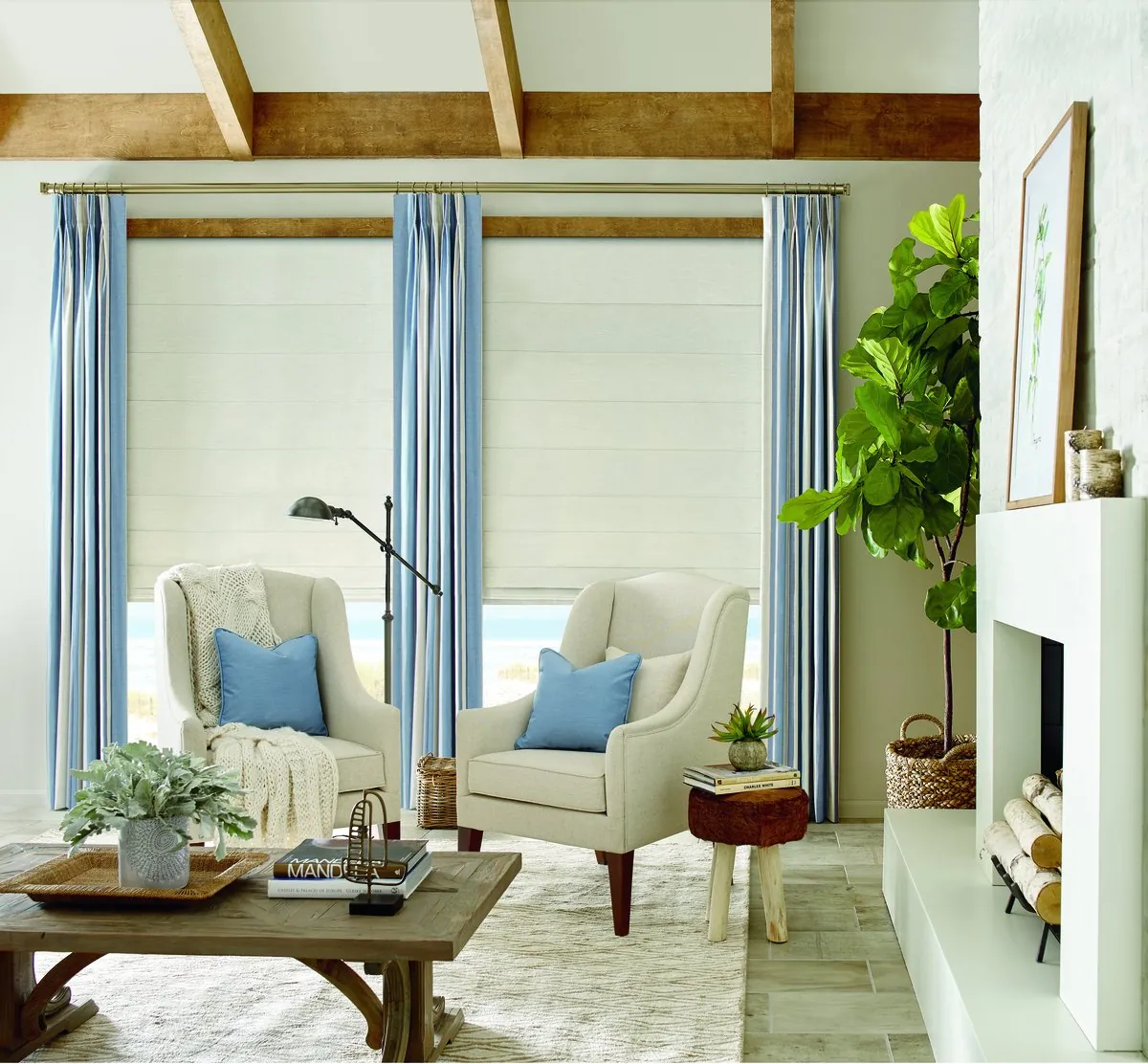
A folded shade can stand on its own or work alongside drapery. In the formal front room of an antique house, side panels either side of the window add height and color, and the roman shade inside the frame does the daily work of light and privacy. In a cottage, a single woven or linen shade is usually all a window needs.
Many customers in town treat the whole house in one go: roman shades in the living rooms, something else in the rooms that need it. If you are weighing other options as well, see our cellular shades in Dennis for colder rooms, plantation shutters in Dennis for a bathroom or a front window, or motorized blinds and shades in Dennis for the hard-to-reach glass. Everything we do in town is on our Dennis page.
A Gallery dealer for the mid-Cape
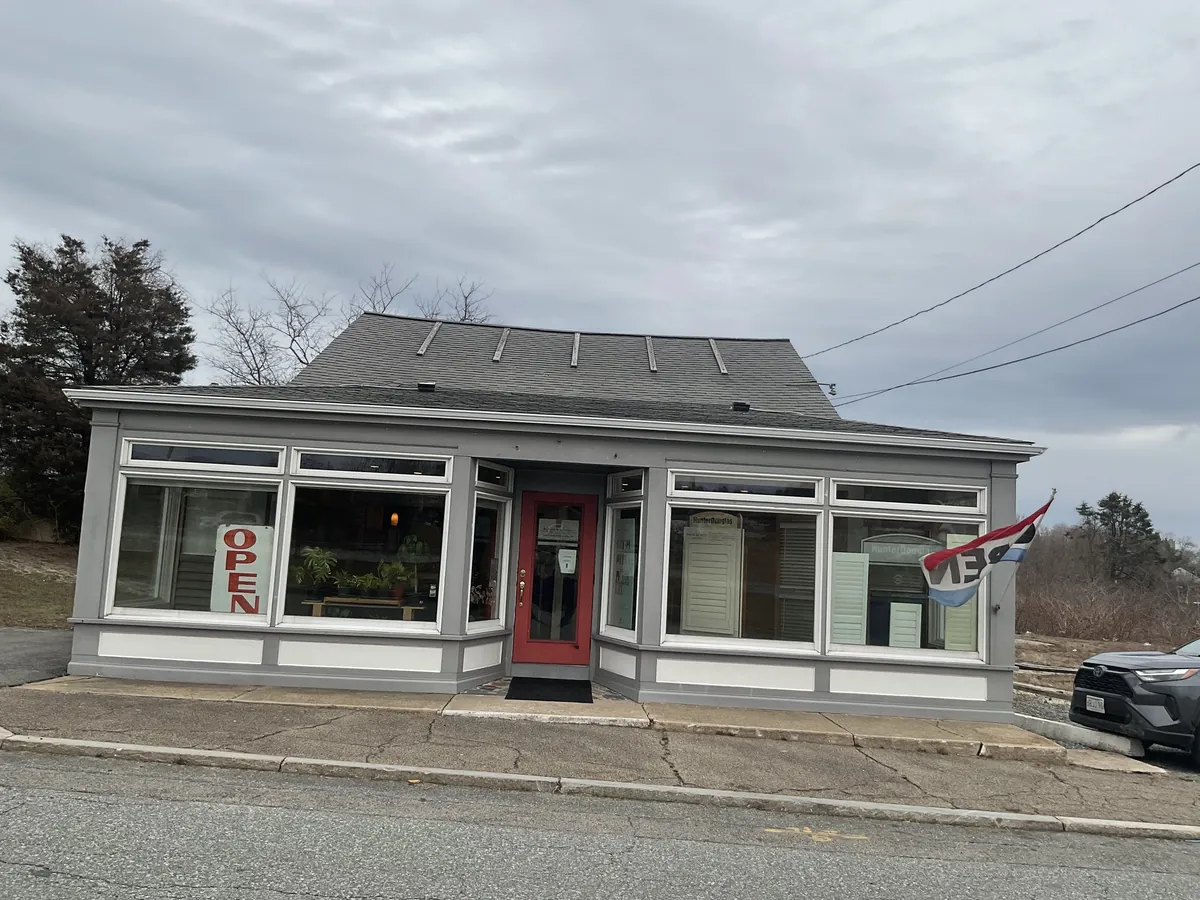
Blinds & Designs is a Hunter Douglas Gallery dealer, a designation Hunter Douglas gives to dealers who meet its standards. For a house on 6A or a cottage near the sound, that means the whole folded shade range is open to you, from every Carole Fabrics cloth to Vignette and PowerView, with nothing ordered from a short list.
The shades are fitted by our own installers, who are certified by Hunter Douglas, so each one goes up square and level and folds the way it should. If a shade you already own has a broken cord or a tired lift, we handle blind and shade repair as well.
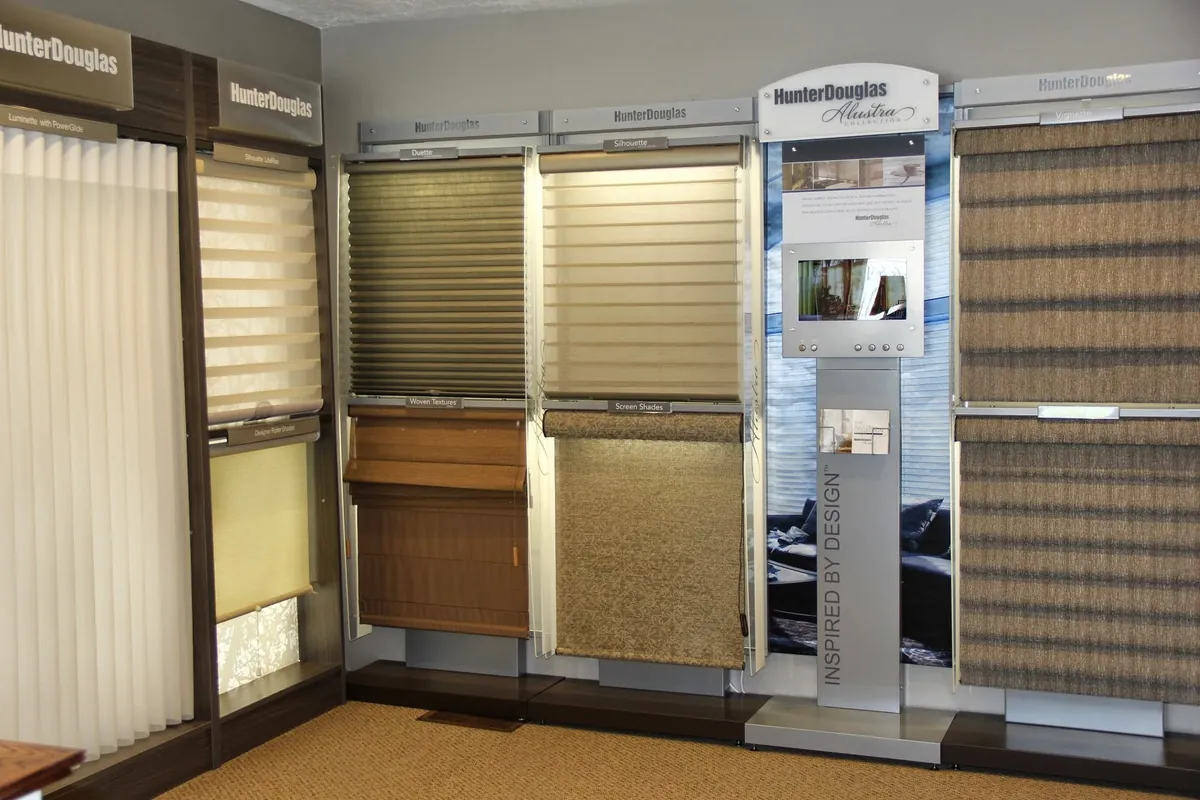
Our nearest location to town is the Sagamore showroom, just over the canal, where you can raise and lower the shades yourself. Or stay home and let the samples come to you.
Questions from Dennis
Will a fabric shade fit the old sash in a captain’s house?
In most cases, yes. We measure each frame for depth and squareness first. Where the sash hardware leaves enough room, an inside mount keeps the casing fully visible. Where it does not, a slim mount on the casing looks tidy and works just as well.
How do I stop the fabric fading in a bay-side room?
Choose a softer color for the face fabric and add a lining, which takes the sun so the decorative cloth does not. Vignette also hides its fabric in the headrail when raised. We bring samples so you can judge them in the actual window.
My cottage windows are short. Will the folds block the view?
They can if the shade is mounted inside a short frame. Mounting above the window, choosing a lighter fabric or choosing Vignette all keep more glass clear. We will show you how each one looks before you decide.
Can I leave the shades down while the house is closed?
Yes, and in the sunny rooms it is a good idea. A lowered, lined shade keeps the light off your furniture and floors. PowerView motorization can also raise and lower them on a schedule while you are away.
Is there a charge for the estimate?
No. After we measure, the estimate is free, with every window listed so you can see exactly what you are choosing.
Ready when you are
The best way to choose roman shades in Dennis, MA, is with the fabric in your hand and the bay-side light coming through the window. Request a consultation and we will bring the samples to your house, measure every opening and leave you with a free estimate. If you would rather see them first, the Sagamore showroom is our nearest, or use the call button to talk it through.