
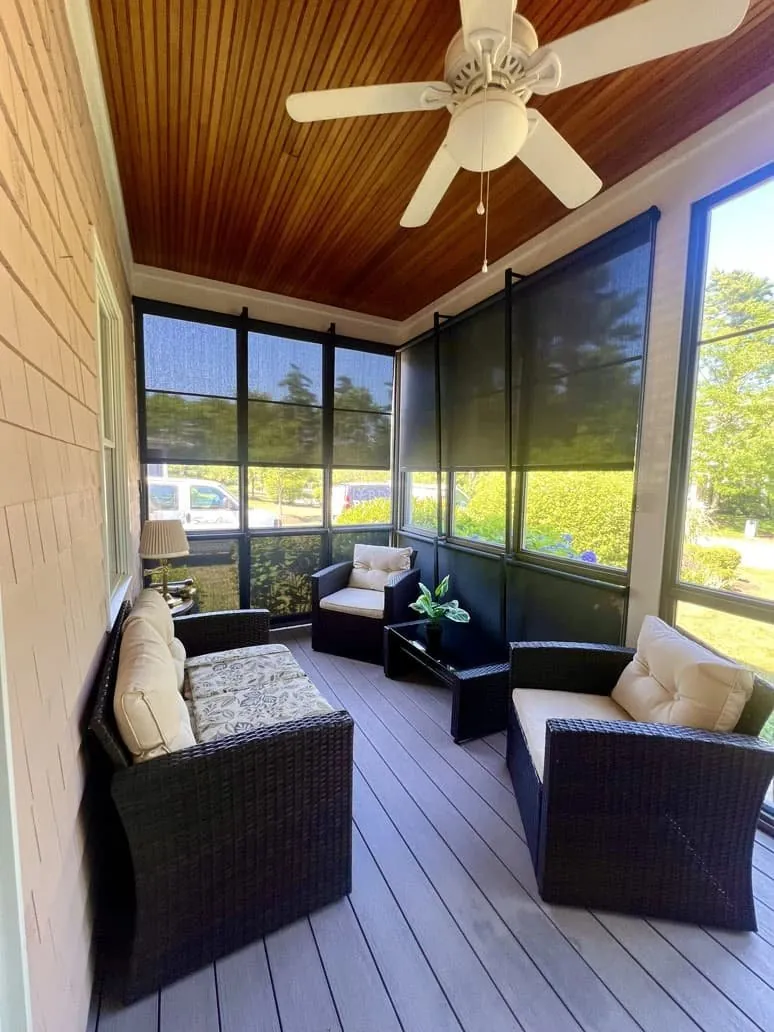
Harbor light and the houses that face it
Fairhaven looks straight across the harbor, and a lot of its houses were built to take in that water. The trouble is the sun that comes with it. On the east side of town the first light of the day rises low over the harbor and bounces off the surface, so a breakfast room or a front bedroom can be too bright to use for the first hours of the morning. Roller shades in Fairhaven, MA, are often the simplest fix: one flat panel of fabric that rolls down to the exact height you want and disappears into a slim tube when you do not need it.
The housing stock is a real mix. Around Poverty Point and Oxford Village you find tall Victorians with layered trim and shingled cottages set close to the road. Further south, along Sconticut Neck, mid-century ranches open up with wide picture windows and sliders. Each of those asks for something different from a shade, and a roller can be made to suit all three.
Then there is the salt. Air off the water settles on hinges, cords and brackets near any window that stays open through the summer, so the fewer moving parts on show, the better a treatment ages here.
Roller shades in Fairhaven, MA, from screen to blackout
Every option below comes from Hunter Douglas, and samples of each travel in our vans so you can try them against your own glass.
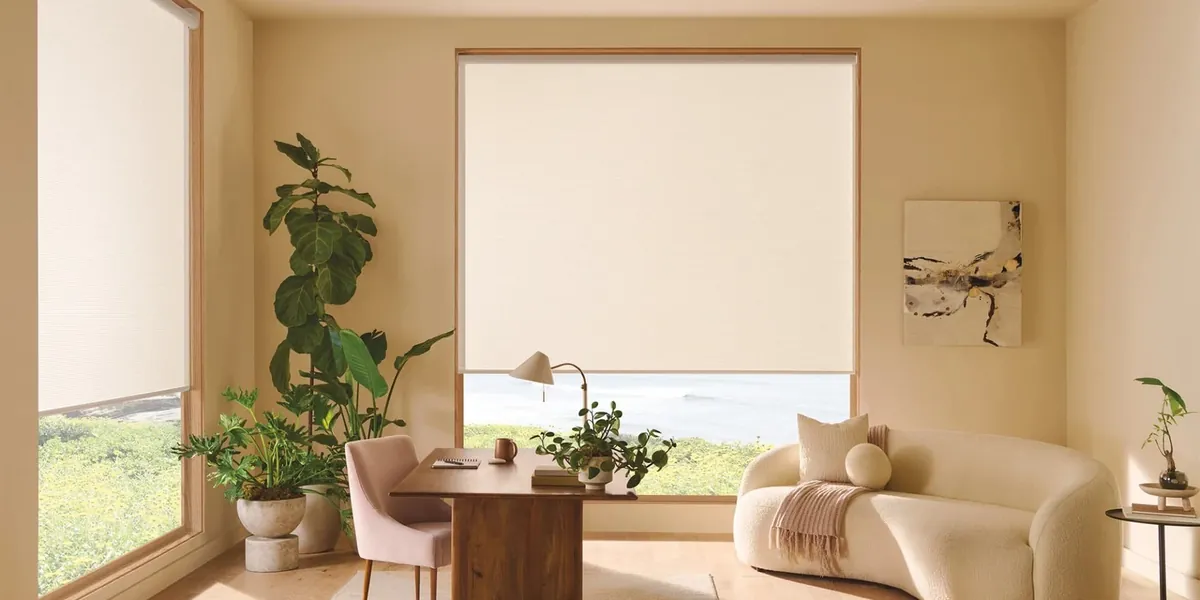
Designer Roller in light filtering fabric
A soft fabric that lets daylight through while blurring the view in from outside. A good everyday choice for living rooms and kitchens on the harbor side.
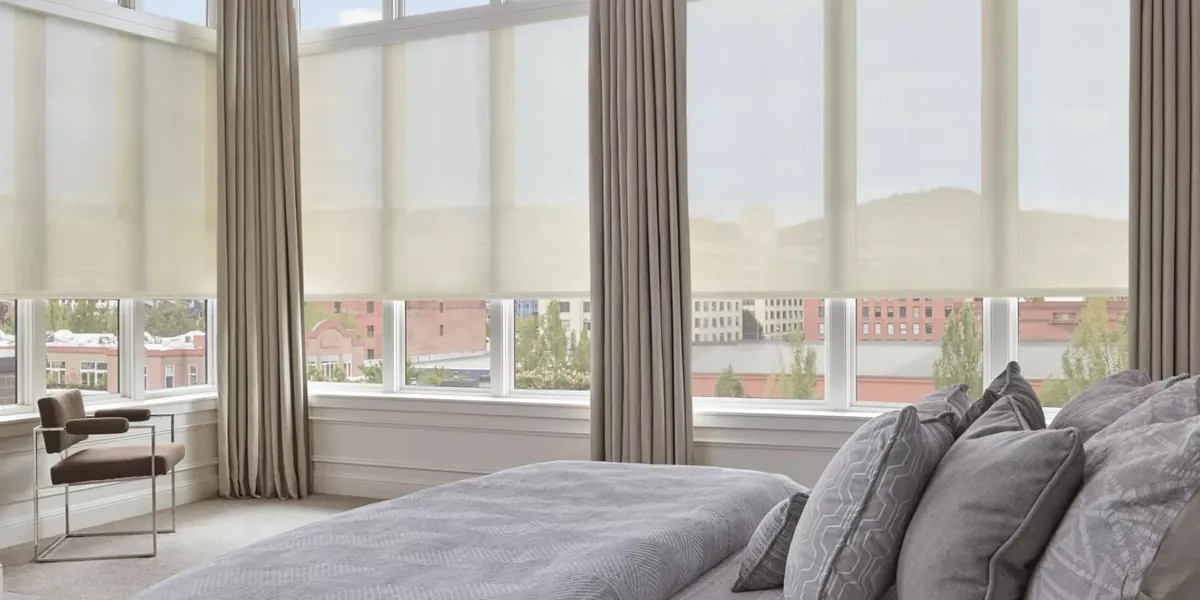
Designer Screen solar shades
A woven screen that cuts the glare off the water while you still see the boats. The weave you choose decides how much of the view comes through.
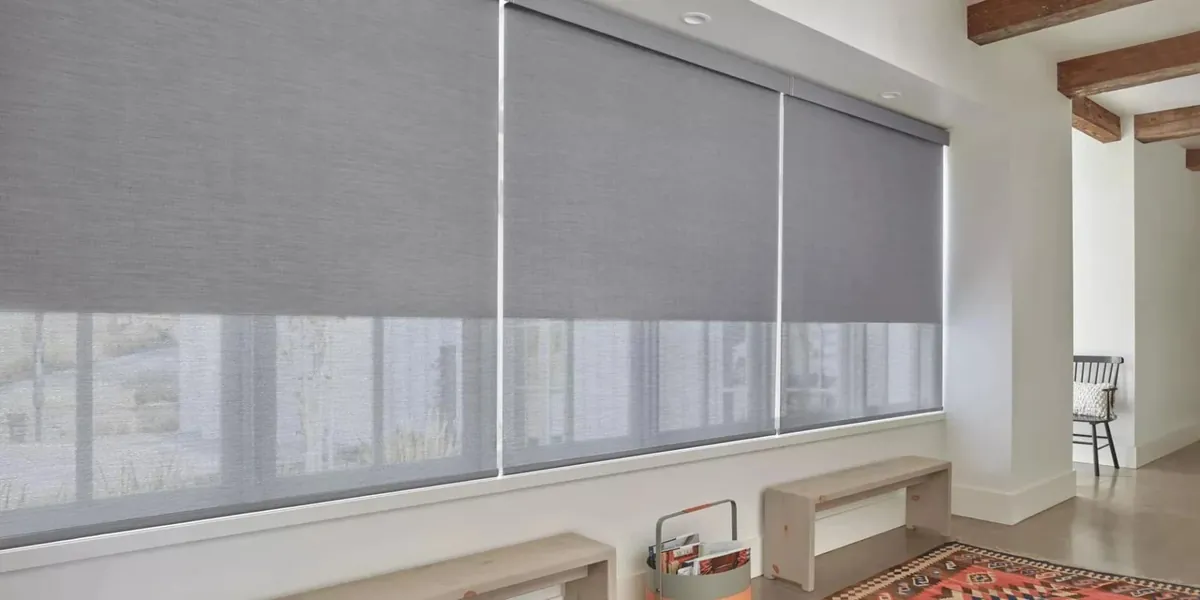
Blackout rollers for east bedrooms
An opaque fabric for rooms that catch first light. Paired with a deeper side mount, it keeps a bedroom dim until you decide it is morning.
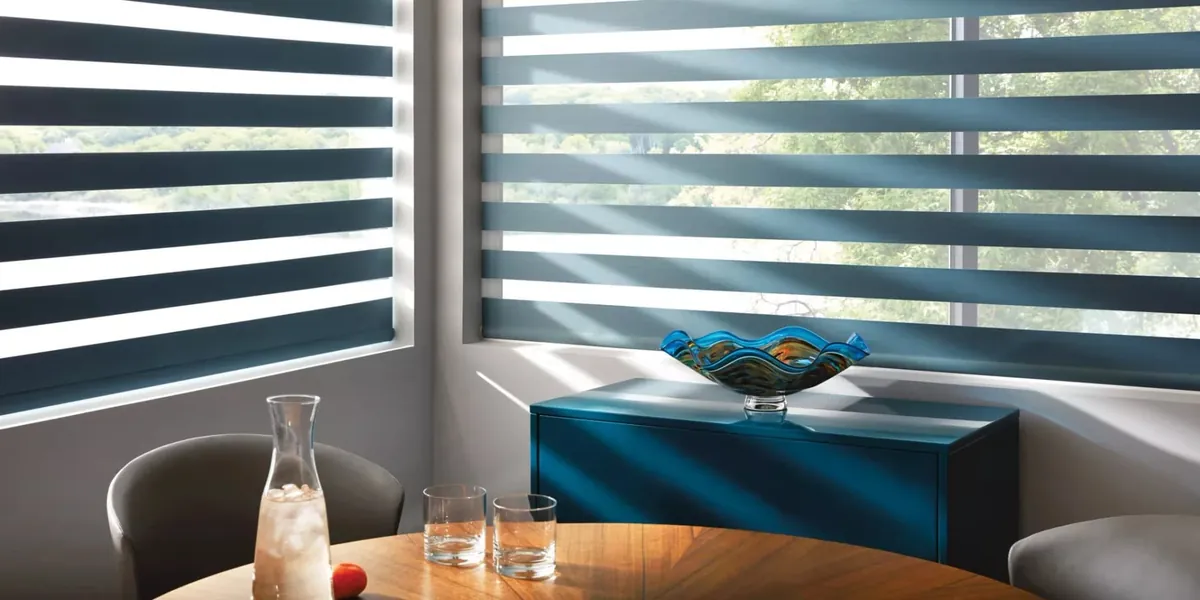
Designer Banded shades
Alternating sheer and solid stripes on one shade. Line the stripes up for a view, offset them for privacy, all without raising it.
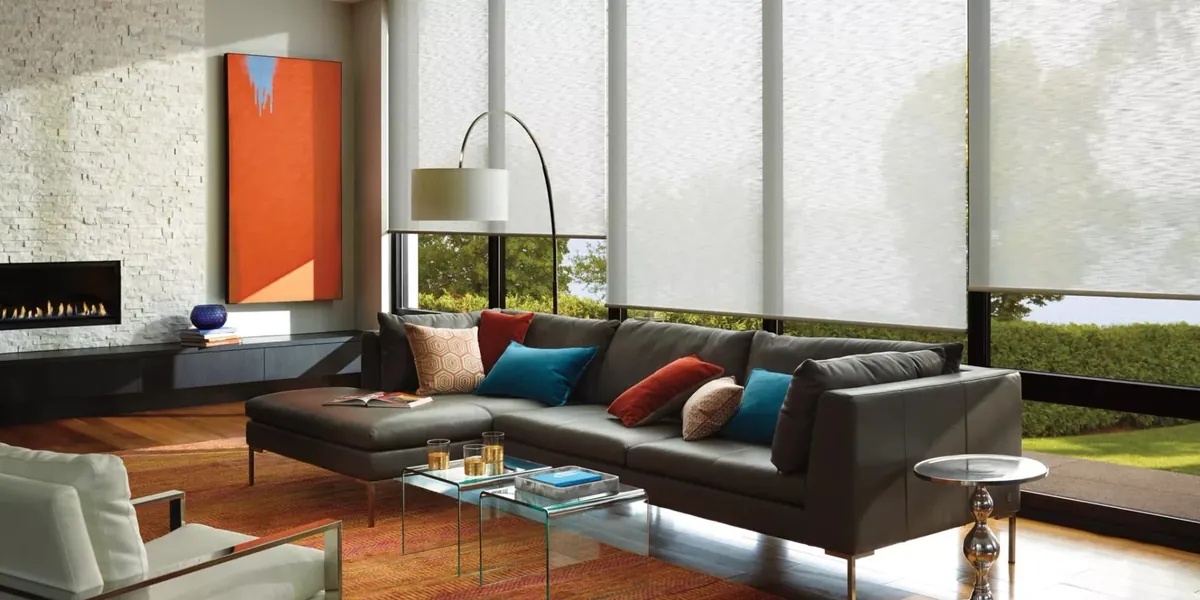
Alustra Architectural rollers
Hunter Douglas’s most refined roller collection, with fabrics and headrail finishes chosen for rooms where the shade is part of the design.
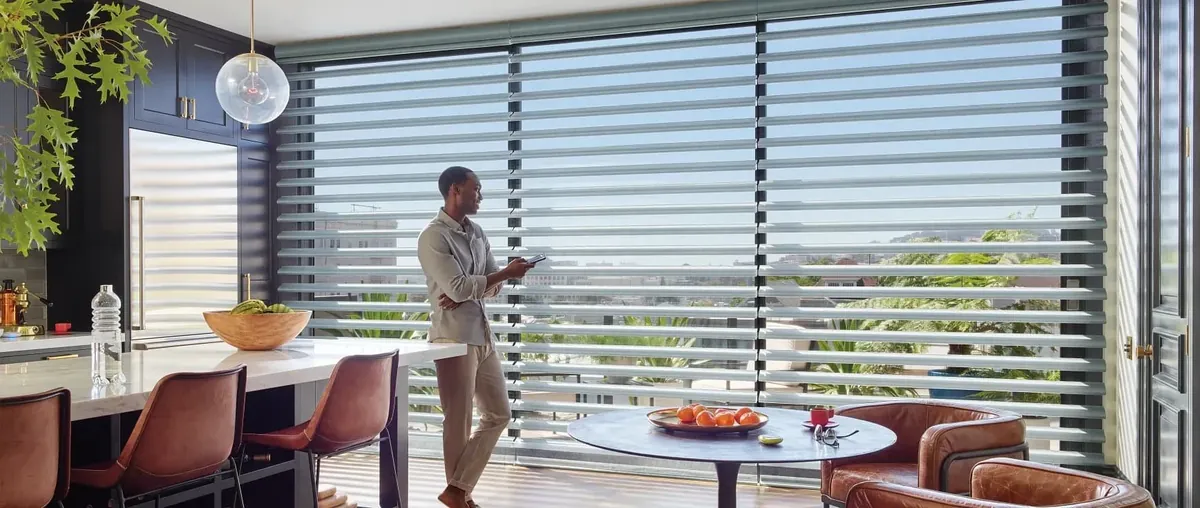
PowerView control
Lower every shade on the water side before the sun clears the harbor, on a schedule, from your phone or a remote.
Picking an openness for a harbor view
A solar screen is a woven fabric with tiny gaps between the threads. The share of the fabric left open is called its openness. It is the single most important choice you make with a screen shade, and in Fairhaven it comes down to how much you want to see the water against how much glare you can live with.
A tighter weave blocks more of the low morning sun and gives more daytime privacy, but the view through it is softer. A more open weave keeps the harbor crisp and bright, yet lets more light and heat into the room. Color matters too. A darker screen is easier to see through, because your eye is not fighting a bright surface, while a light screen reflects more of the sun but glows when the light hits it.
For a front room that looks across to New Bedford, many people settle on a medium weave in a dark or neutral color. For a bedroom, a screen on its own is rarely enough. That is where a second blackout shade on the same window, or a dual shade with both fabrics on one bracket, earns its place. We bring screen swatches in several weaves and colors so you can hold them up at the window at the time of day the glare bothers you most. Our guide to the best shades for sun and glare explains the trade-offs at more length.
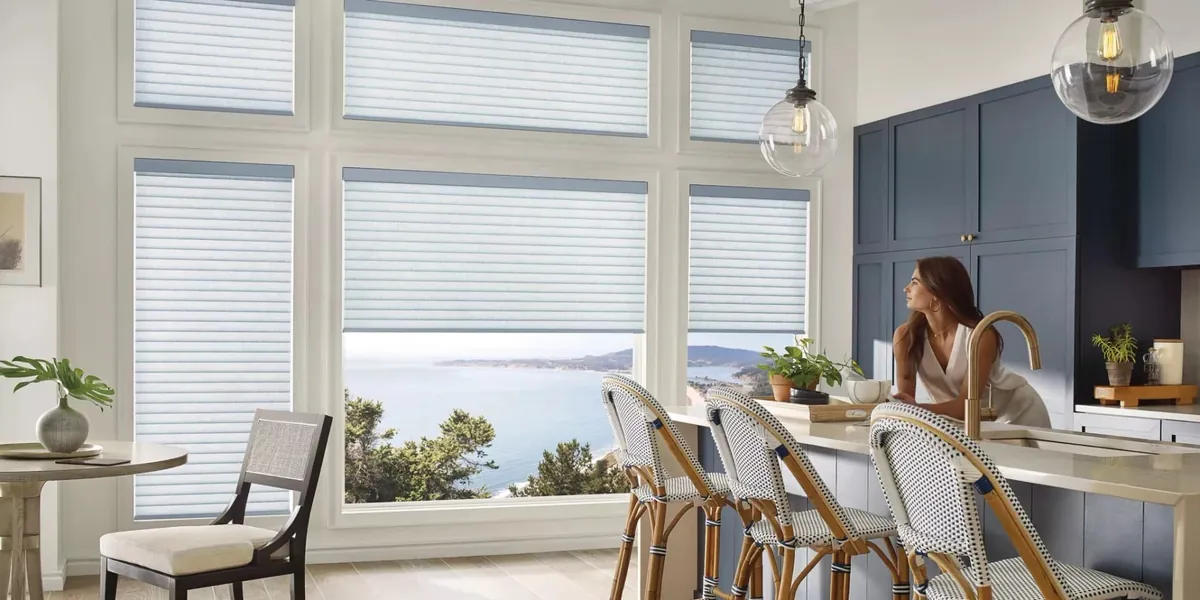
Victorian windows near Oxford Village
The tall double-hung windows in the older streets are often the best feature of the house. Owners have stripped and repainted the casings, kept the old glass, and put back the trim. A roller shade respects that work better than almost anything else, because when it is raised it is nothing more than a slim tube tucked at the top of the opening.
An inside mount keeps the trim fully visible, and that is our first choice wherever the frame allows. Old windows do not always allow it. Sash pulleys, parting stops and a frame that has settled out of square can all eat into the depth a roller needs. We measure the opening at several points and check the depth across the top before suggesting a mount.
One honest point about rollers inside a frame: a narrow strip of light shows at each side between the fabric and the jamb. For a living room nobody notices it. For a bedroom on the harbor side it can be enough to wake you. A cassette headrail, an outside mount that laps over the casing, or a blackout roller paired with drapery all close that gap, and we will show you which one suits the window.
Cottages close to the street
The shingled cottages near the village sit near the sidewalk, and the neighbors’ windows are often only a few steps away. Privacy matters in those rooms as much as light does. Here is something worth knowing before you choose a screen. In daylight a solar screen hides the room well, because the outside is brighter than the inside. After dark the balance flips, and with the lamps on, people outside can see in.
So a cottage front room usually needs one of three answers. A light filtering roller gives privacy day and night while still letting the room glow. A dual shade puts a screen and an opaque fabric on one bracket, so you lower the screen by day and the solid fabric at night. Or a banded shade lets you shift the stripes to close the room off. We talk through how you use each room before suggesting one.
Ranches along Sconticut Neck
Down the Neck the windows grow. A ranch from the middle of the last century often has a broad picture window in the living room, a slider to the back deck, and long low windows in the bedrooms. Big panes in a low house take the full force of the afternoon sun and the wind off the water.
Wide windows suit roller shades well, because a roller has no slats or pleats to sag across the span. Past a certain width the fabric is split into two or three shades that share one bracket and sit edge to edge, so they move together or one at a time. On a slider, a roller can be mounted high on the wall so it clears the door handle and the track. And because roller shades in Fairhaven, MA, so often face the water, a screen on the living room glass with blackout in the bedrooms is a very common combination for a ranch.
Salt air, cords and the working parts
A roller shade is mechanically simple, which is a real advantage near the harbor. The fabric winds on a tube, the tube turns in two brackets, and the lift is either a cord loop, a cordless spring or a motor. There are no ladders, no tilt mechanism and no stacks of slats collecting salt and grit.
Cordless lift removes the loop altogether: you lift or pull the bottom bar by hand and the shade stays where you leave it. A continuous cord loop is easier on a tall or heavy shade and is held taut by a tensioner fixed to the wall. For windows you cannot easily reach, PowerView motors do the work. We also look at which side the loop or any power connection sits on, so nothing hangs where it catches the breeze through an open sash.
When the shades go up, our certified Hunter Douglas installers fix the brackets into solid wood, level each tube and run every shade up and down before they leave. You can read about what happens on installation day if you want to know what to expect.
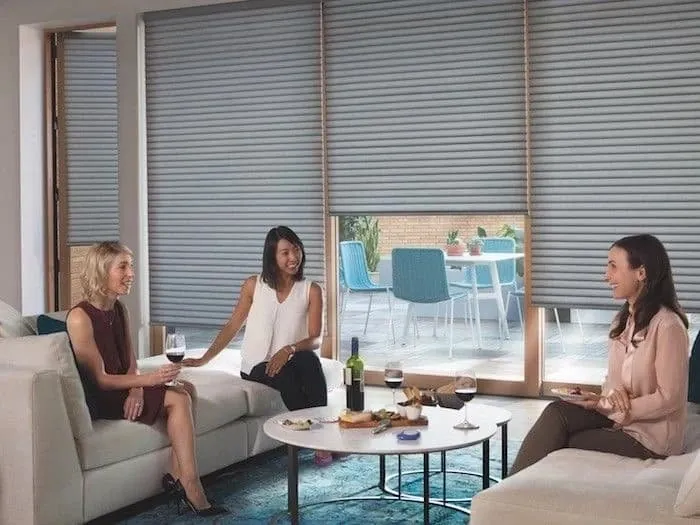
Your in-home consultation, step by step
Fabric that looks pale gray under shop lighting can read almost blue in harbor light. That is why most Fairhaven orders start at home. Our vans carry the samples, so we can bring the showroom to you.
- Request a consultation online, or use the call button, and we agree a time that suits you.
- We walk through the house with you, starting with the rooms where the glare or the privacy problem is worst.
- You hold roller, screen and blackout samples at your own windows, ideally on the side of the house the sun hits.
- We measure each opening, check the depth for an inside mount and note anything in the way, such as a crank handle or a radiator.
- We go over lift options, from cordless to PowerView, and whether any window would suit a dual or banded shade.
- You get a free estimate for what you are considering, and the decision is yours to make in your own time.
If you want help with color, fabric and how the shades sit with the rest of the room, ask about our interior design consultations at the same visit.
Designer or Alustra
Both collections are true Hunter Douglas roller shades and both come in light filtering through blackout and in screen fabrics. The difference is in the finish. Designer is the broad everyday range, with a wide spread of colors, textures and weaves and every lift option. Alustra is the premium collection, with more distinctive fabrics, cleaner headrail details and options aimed at rooms where the shade has to look as good as the furniture.
In practice a Fairhaven house often uses both. The front parlor of a Victorian might take an Alustra fabric, where it is on show from the street and the room, while the kitchen, the bedrooms and the back hall take Designer. Each line has its own page if you want to look closer: Designer Roller, Designer Screen and Alustra Architectural. The main roller shades page covers the full family.
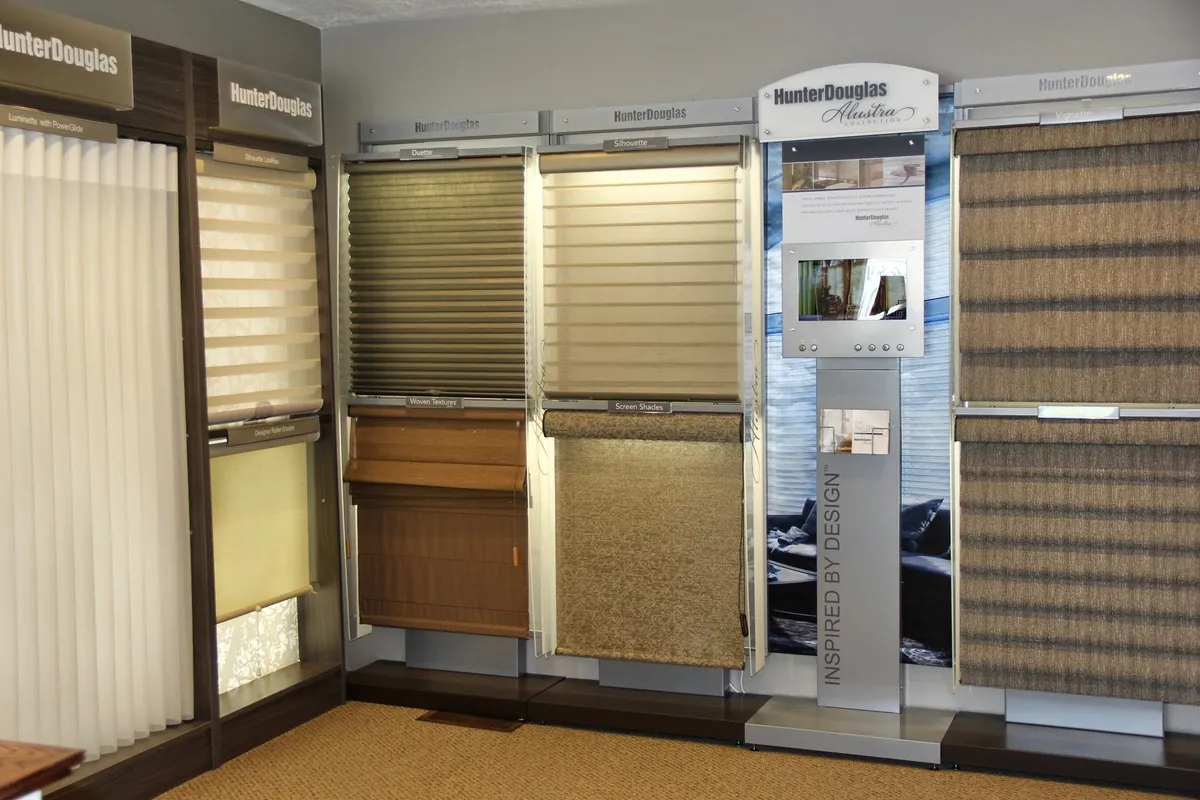
Kitchens, baths and the rooms at the back
Not every window in the house faces the water, and the rooms on the landward side have their own needs. A kitchen window over the sink takes splashes and steam, and a roller there is easy to live with: the fabric wipes clean, nothing hangs into the basin, and a cordless lift means you raise it with one hand while the other holds a pan. Many screen and vinyl-backed fabrics shrug off damp better than pleated or woven materials.
Bathrooms in the older cottages tend to have one small window placed low, often facing a neighbor. A light filtering roller mounted inside the frame keeps the room bright and private at the same time, and a top-mounted shade can be set to stop partway so the upper glass stays clear. In a back hall or a mudroom, a plain screen does the job without fuss. A mudroom near the water collects sand and damp coats, and a smooth roller fabric brushes clean far more easily than pleats or slats, which is why we often suggest one for the door that leads to the yard.
Ordering roller shades in Fairhaven, MA, for every room at once has a practical upside too. The fabrics, bottom bars and headrail finishes can be matched through the house, so the windows look tidy from the street even when each room has a different opacity behind the glass.
Fabric in strong sun
Morning sun over salt water is bright and it is daily, and any fabric that faces it will fade in time. A few choices slow that down. Lighter neutral colors hold their look longer than deep saturated ones on a window that takes direct light. Screen fabrics stand up well, because the weave is built for sun. And a shade that is raised for most of the day spends most of its life rolled up, out of the light.
We point out which fabrics in the sample books suit an east window, and which are better kept for the north side of the house. For cleaning, most roller fabrics need nothing more than a light dusting or a soft brush, and our page on caring for fabric shades covers the rest.
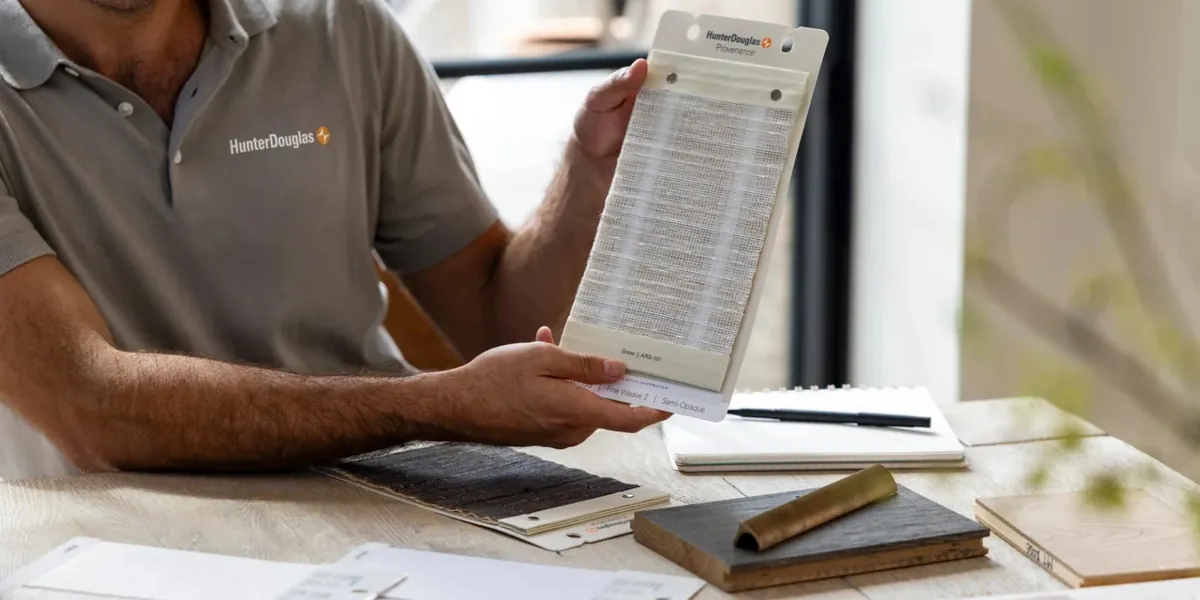
Why a Hunter Douglas Gallery dealer
Blinds & Designs is a Hunter Douglas Gallery dealer, the designation Hunter Douglas gives dealers who meet its standards. For a roller shade order that means the full range in one place: Designer Roller, Designer Screen, Designer Banded, Alustra and Sonnette, with every lift option and PowerView.
The installers are certified by Hunter Douglas, so the brackets, tubes and motors go up the way the maker intends. If a shade needs attention years from now, we handle blind and shade repairs as well.
Rollers are rarely the only question in a house. If you are weighing other rooms, see cellular shades in Fairhaven for the colder windows or motorized blinds in Fairhaven for the hard-to-reach ones, and everything we do in town on the Fairhaven page.
Questions from Fairhaven
Will a solar screen still let me see the harbor?
Yes, that is what it is for. A screen cuts the glare and some of the heat while the water stays in view. The more open the weave and the darker the color, the clearer the view. We bring several weaves so you can compare them at your own window.
Do roller shades suit the tall windows in an old Victorian?
They suit them well, because a raised roller is just a slim tube at the top of the opening and the trim stays on show. Where old sash hardware leaves too little depth for an inside mount, we suggest a slim outside mount on the casing instead.
How do I stop the light gaps at the sides of a bedroom shade?
A roller inside the frame always leaves a thin strip of light at each edge. An outside mount that overlaps the casing, a cassette headrail or blackout fabric paired with drapery will close it. We look at the window and suggest the neatest option.
Can I have a screen by day and full privacy at night?
A dual shade puts a screen fabric and an opaque fabric on one bracket, so you lower whichever one the time of day calls for. A banded shade does a similar job with one fabric.
What does the estimate cost?
Nothing. After we measure, you get a free estimate for the roller shades in Fairhaven, MA, you are considering. Request a consultation and we will set a time to come to you with samples.
Ready when you are
Seeing the fabric against your own harbor light is the quickest way to choose. Request a consultation and we will bring the roller and screen samples to your house, measure every window and leave you with a free estimate. If you would rather look at the shades in person first, our North Dartmouth showroom is just across the river.