
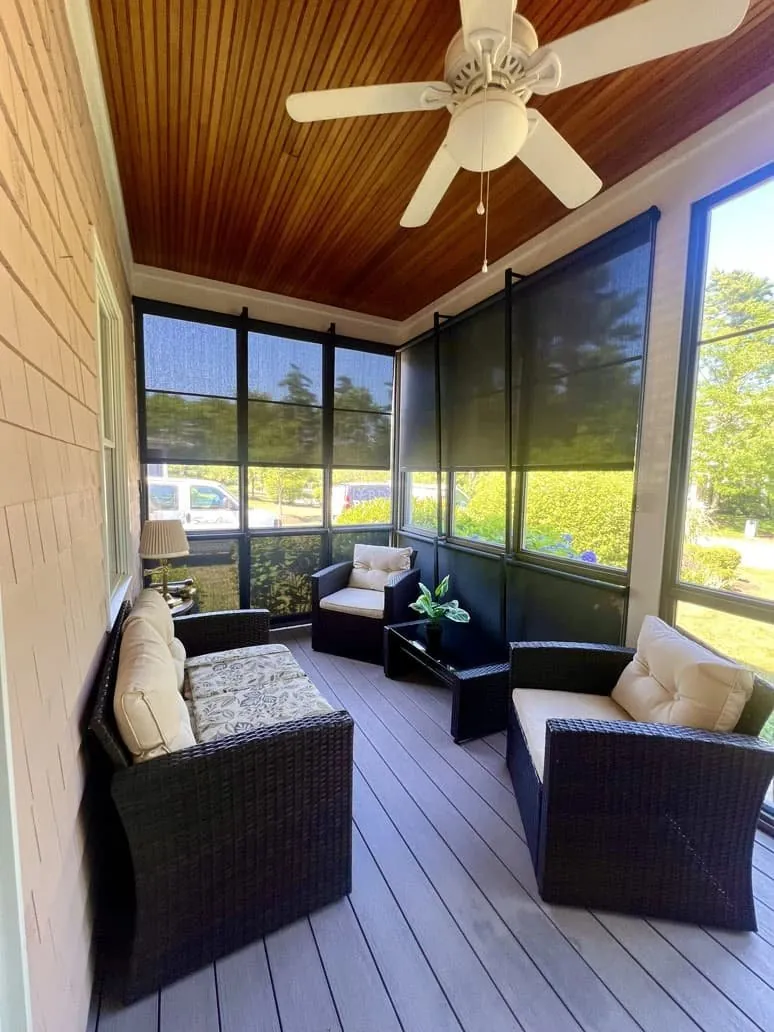
Glare is not the same as light
When people ask us about shades for sun and glare, they rarely want a dark room. They want to read a screen, sit by the window without squinting and still see the garden or the water. Glare is the hard, bright reflection that makes a room uncomfortable; daylight is what makes it pleasant. A good glare shade takes away the first and keeps most of the second.
That is why the brightest rooms usually call for a different kind of shade than a bedroom. Instead of blocking the window, you want something that softens it, and the main tool for that is the fabric itself: how open its weave is, how it handles light passing through, and how it looks with the sun directly behind it.
Openness: the number behind the view
Screen and solar shades, like Hunter Douglas Designer Screen, are woven with tiny gaps between the threads. The openness of the weave tells you how much of the view comes through and how much glare is held back. A more open weave keeps more of the outlook and lets in more brightness. A tighter weave cuts more glare and gives a little more daytime privacy, at the cost of some view.
Neither is right on its own. A sunroom where you want to watch the water all afternoon might suit a more open fabric, while a home office where the sun lands on a monitor usually needs a tighter one. The best way to choose is to hold two or three openness levels up to the glass at the hour the glare is worst, which is exactly what we do at an in-home consultation.
The color of a screen fabric matters too, and it is something you see best with samples in hand. Holding a lighter and a darker screen side by side against the same bright window shows you the difference straight away.
Other shades for sun and glare
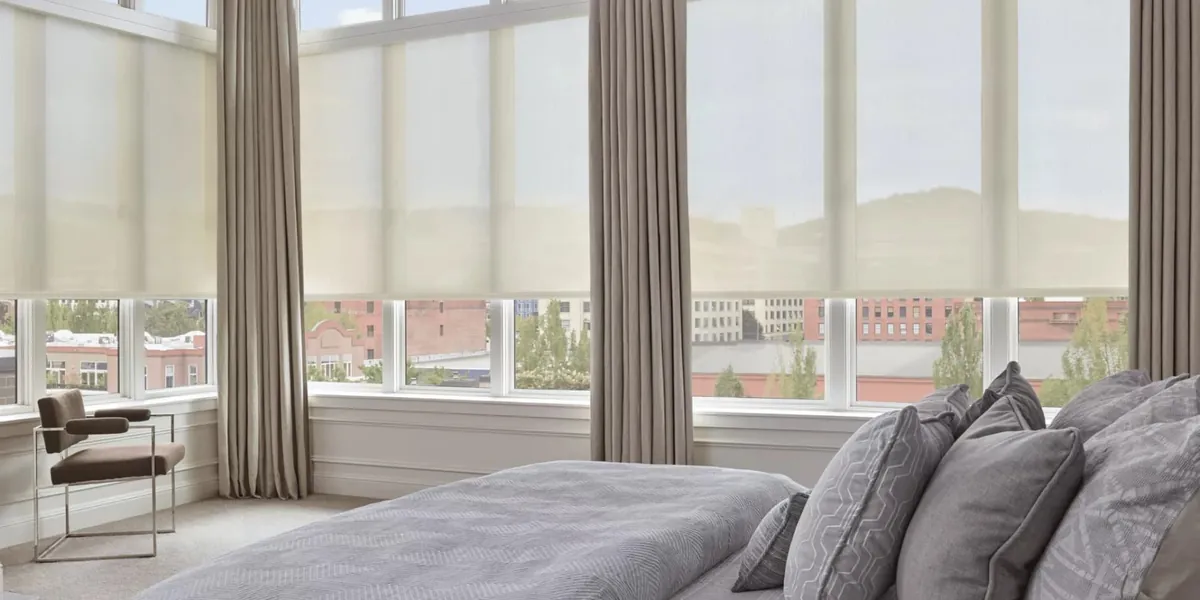
Screens are not the only answer. Depending on the room, several other Hunter Douglas shades handle strong sun well.
Roller and screen shades
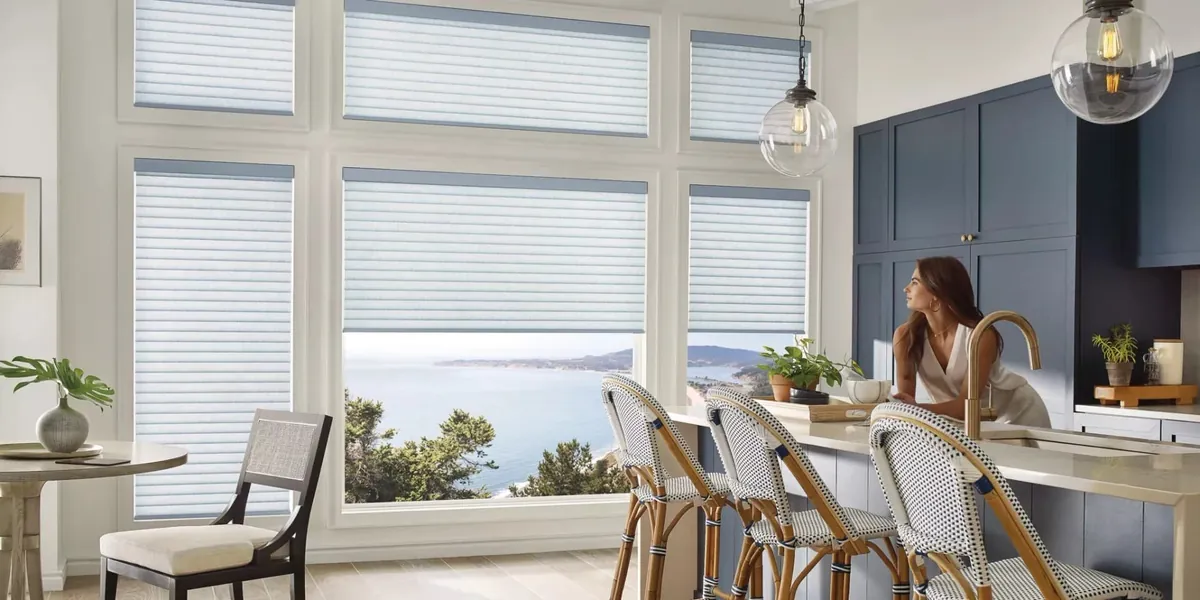
Designer roller and screen shades give a clean, flat face and a choice of openness for glare and view.
Sheer shades
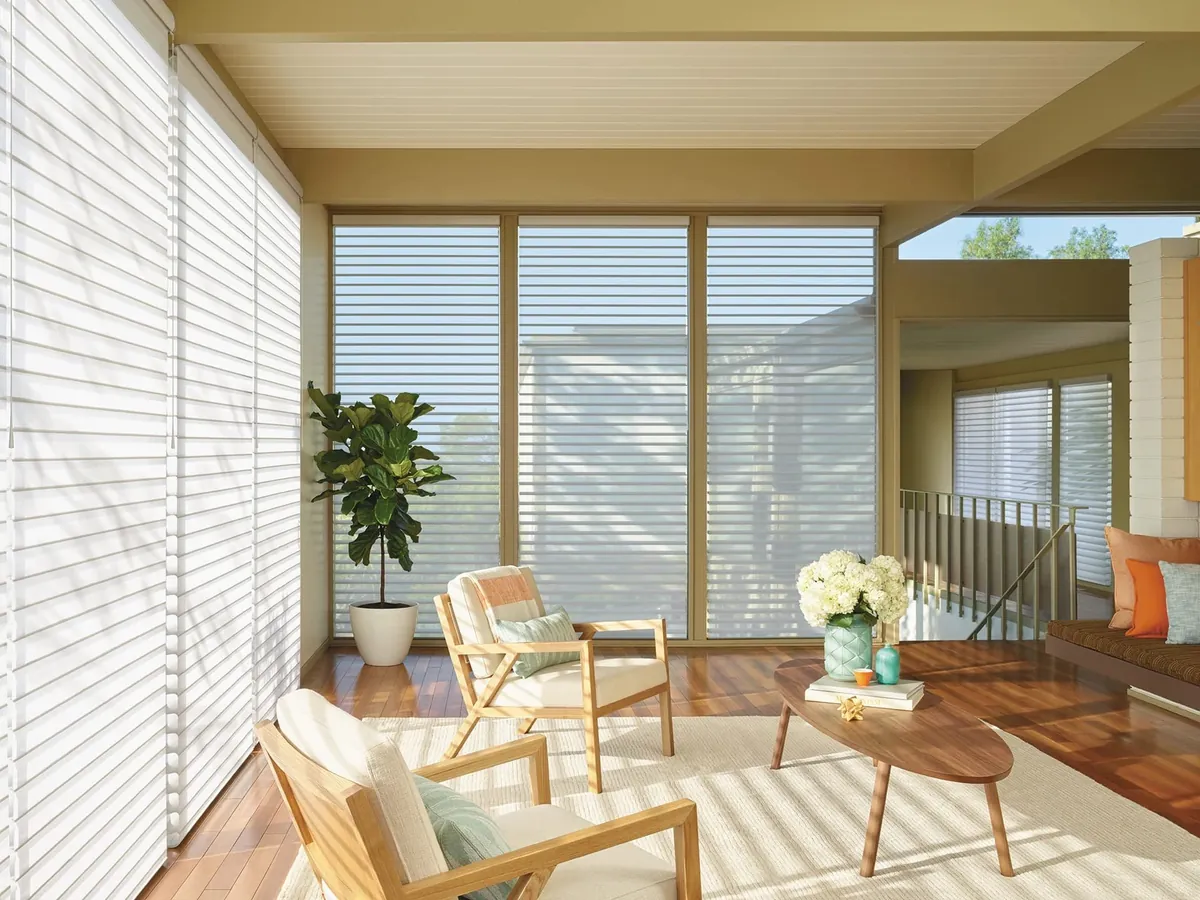
Silhouette and Pirouette soften hard light through sheer fabric, with vanes you can tilt for more or less brightness.
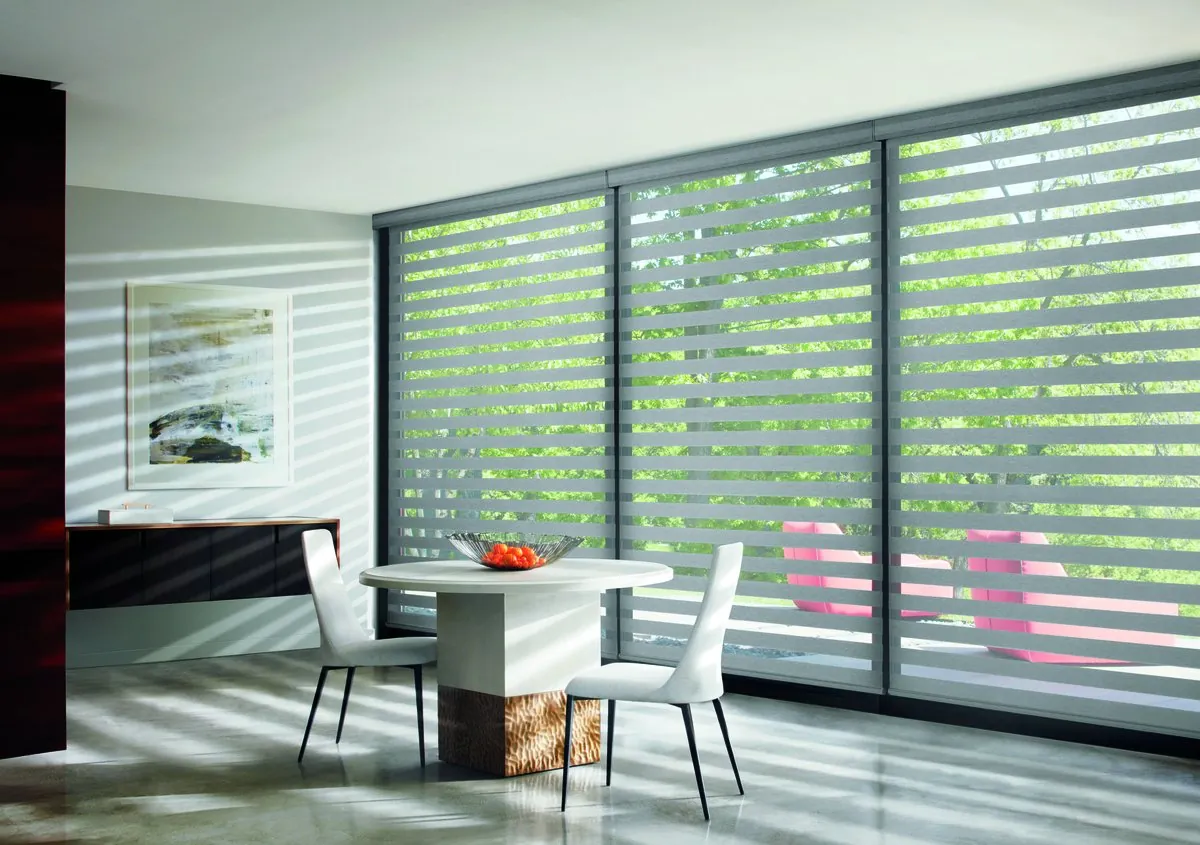
Banded shades
Designer Banded lines up sheer and solid stripes, so you can move between view and shade.
Where the glare comes from in local houses
Sun and glare behave differently in each kind of house across our territories, and the right shade follows the house.
Water-facing glass
In Osterville, Chatham and Marion, many rooms facing the water are mostly glass, and the glare comes twice: once from the sky and again off the water. This is screen shade country. A screen keeps the horizon visible while cutting the shine, and a sheer shade is a softer alternative in a sitting room where the look matters as much as the function. Sliders onto decks often take a vertical sheer like Luminette, which draws to the side.
Two-story foyer and great-room glass
The newer colonials in Franklin, Medway and Needham often have tall upper windows that catch the sun for hours and throw it across the stairs or the family room floor. Because no one can reach those windows, they are where motorized PowerView shades matter most. A schedule can lower the upper shades at the time of day the sun becomes a problem and raise them again later.
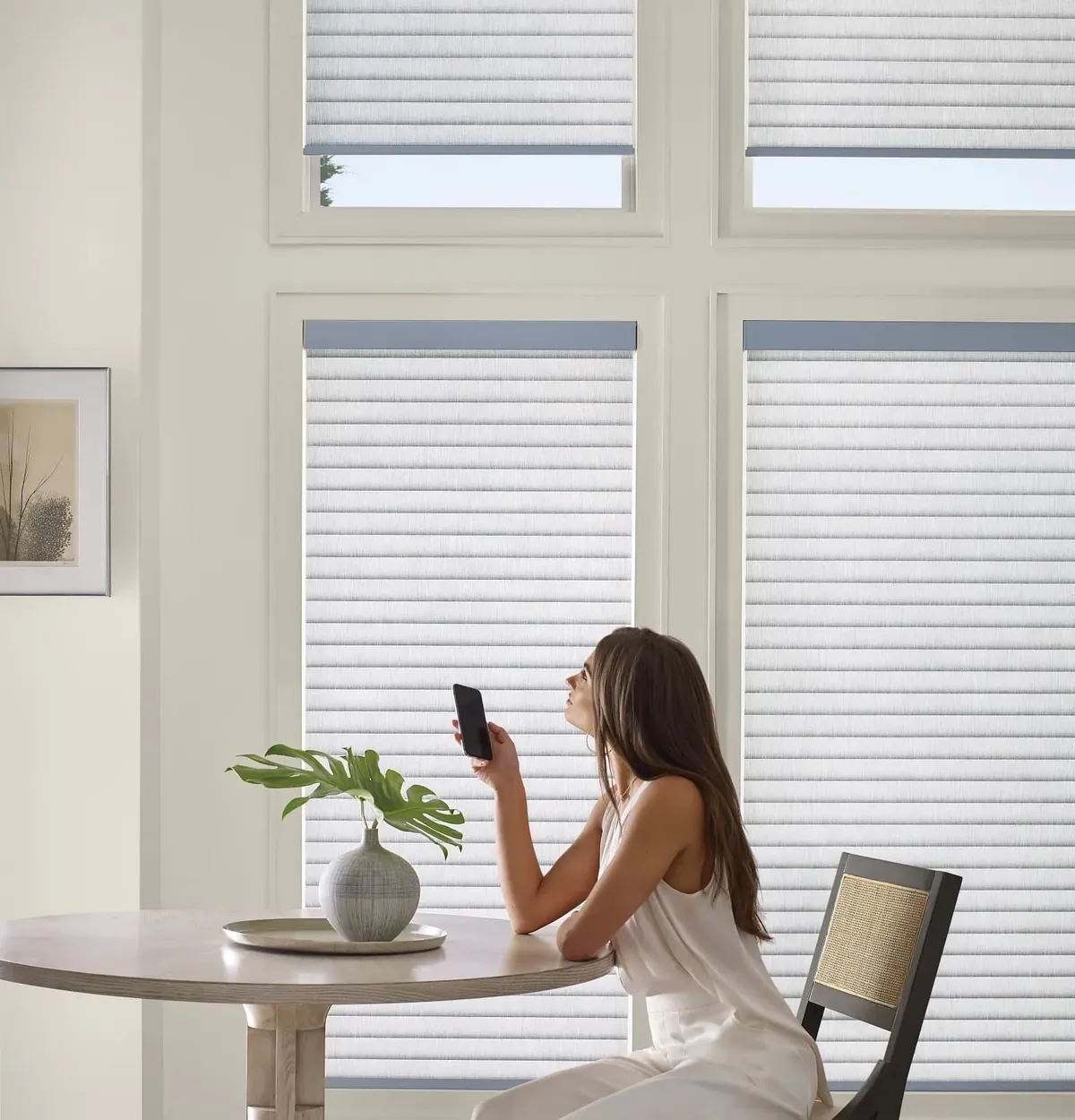
Tall, narrow triple-decker windows
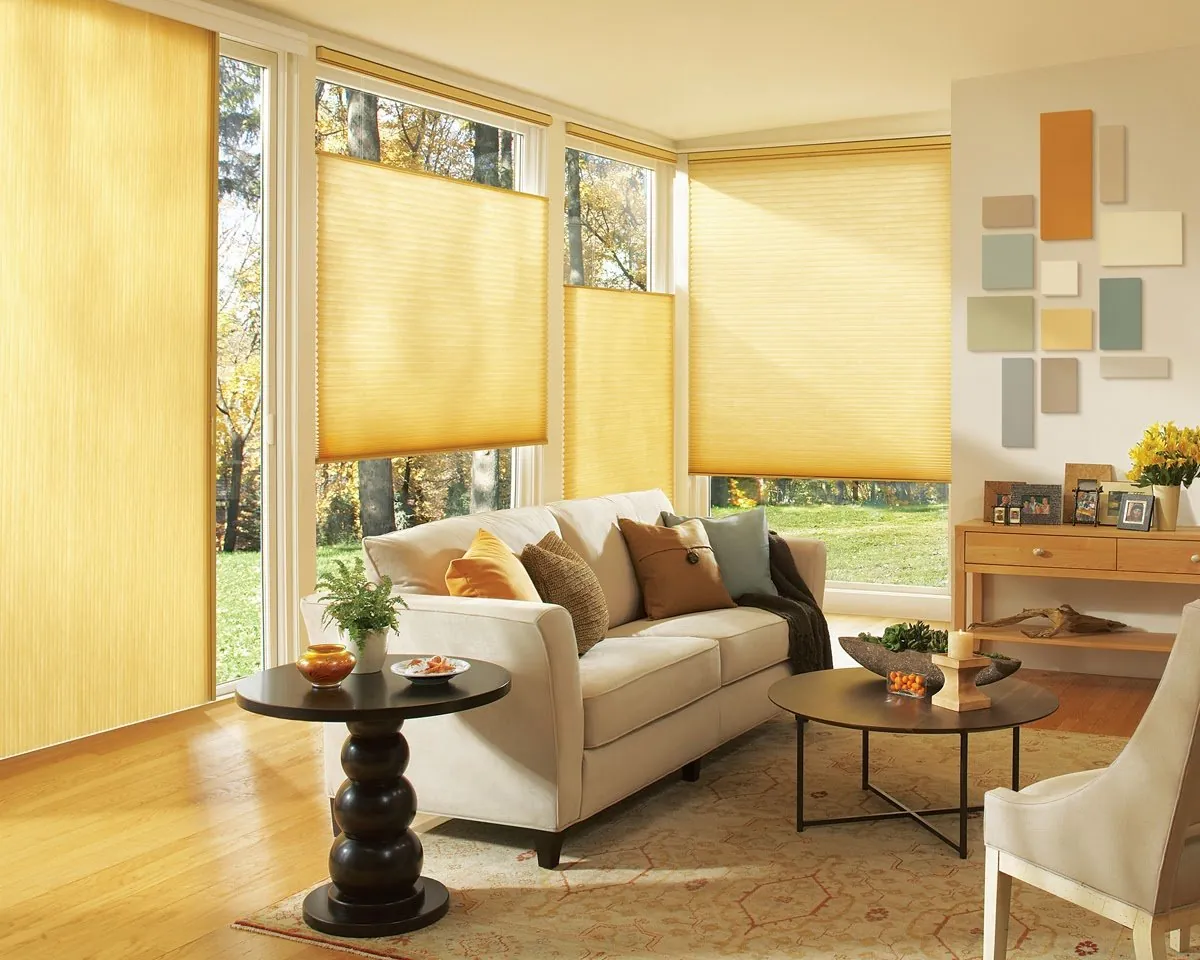
In the mill-era triple-deckers of New Bedford, Fall River and Woonsocket, a west-facing row of tall, narrow windows can turn a top-floor apartment bright and hot by late afternoon. A light-filtering honeycomb or roller shade softens that without darkening the room, and a top-down, bottom-up shade keeps the sky while blocking the low sun.
Small sash in antique capes
The capes along Route 6A and in Sandwich and Hingham have small, deep-set windows, so glare is usually milder. It tends to show up in winter, when the sun sits low and comes straight in. A light-filtering shade mounted inside the casing handles that and keeps the old trim visible.
Glare moves with the seasons
The sun that floods a room in June is not the sun that floods it in January. In summer it climbs high and lands on the floor near the window; in winter it stays low and reaches deep into the room, straight into your eyes on the sofa or across a kitchen counter. A shade that was plenty in August can feel too open by Thanksgiving, and the other way round.
That is one reason we ask which months bother you, not only which hours. Good shades for sun and glare cope with both: a fabric that softens the low winter sun without making the room gloomy in summer, or a top-down, bottom-up shade that lets you cover only the band of glass the sun is coming through at that time of year.
Picking the fabric for your brightest room
Here is how we usually think it through with homeowners at the window:
- Do you need to see out? If yes, start with screen or sheer shades for sun and glare, and compare openness levels.
- When is it worst? A room that glares only for two hours in late afternoon may suit a schedule better than a heavier fabric.
- Is anyone working in there? Screens and monitors need tighter control than a sitting room.
- Does the room also need darkness? A bedroom facing the sun may want a room-darkening fabric instead, and that is a different conversation.
- What about color? Fabric looks very different with sunlight behind it, so we judge color against the glass rather than in the hand.
For more on how sunlight treats fabric over the years, see our guide to choosing fabric for a sunny room. For the question of which product family suits each room, see shades or blinds.
Why it pays to see it in person
Glare is almost impossible to judge from a photo or a sample mailed in an envelope. The same fabric that looks perfect at a showroom window may be too open for a room that faces the water. That is why our in-home consultations come with sample vans: we hold the options up to your brightest glass, ideally at the time it bothers you.
As a Hunter Douglas Gallery dealer, we can show you screen, roller, sheer and honeycomb choices side by side and compare them honestly. Estimates cost nothing, every order goes up through certified Hunter Douglas installation, and if you want the shades to move on their own, window covering automation is something we plan with you.
Glare questions we hear
Will a glare shade make my room dark?
Not if it is chosen well. Screen and sheer shades are meant to cut brightness while keeping daylight and view. A darker room is a choice you make with room-darkening fabric, not a side effect.
Can I still see out at night?
Screen fabrics work best by day. After dark, with lights on inside, the view tends to reverse, so rooms that need night privacy may want a second layer or a different fabric. We talk this through at the visit.
What is the best option for a sliding door?
Vertical options such as Luminette sheers or a vertical honeycomb shade draw to the side, so the door can be used with the shade open.
Are shades for sun and glare the same as blackout shades?
No. Glare shades soften and filter light. Room-darkening fabrics block it. Some rooms want both on one window.
Can glare shades be motorized?
Yes. Many Hunter Douglas shades can be ordered with PowerView, which lets you control them by remote or app, or set them to move on a schedule. See how motorized shades are controlled.
Start with your brightest window
Request a consultation and tell us which room glares, and when. We will bring screen, sheer and roller samples so you can compare them in that light. You can also visit the North Dartmouth showroom, or use the call button at the top of the page to reach it.