
Village sash, Riverdale capes and the sidewalk out front
Choosing roller shades in Dedham, MA, starts with which part of town the house is in. Through Dedham Village and Oakdale, the antique colonials and Victorians carry tall, narrow sash windows, and the houses expect a certain look: trim that shows, windows that line up, nothing that fights with the age of the place. Toward Riverdale, the post-war capes and ranches are simpler, with openings that take a shade without much fuss.
The village houses add one more thing to think about. Many of them sit close to the street, so a front parlor window may be only a short walk from the sidewalk. That puts privacy near the top of the list on the front of the house, while the back rooms are usually more about sun.
A roller handles both ends of that range. It is a single, flat panel of fabric, which keeps it quiet against old woodwork, and the cloth can be anything from a soft light filtering weave to a full blackout. The work is matching the right cloth to each window.
Roller fabrics we bring to Dedham
Three Hunter Douglas lines cover most of what we fit here. Every one comes in a long run of colors and weaves, and the samples ride along in the van.
Designer Roller
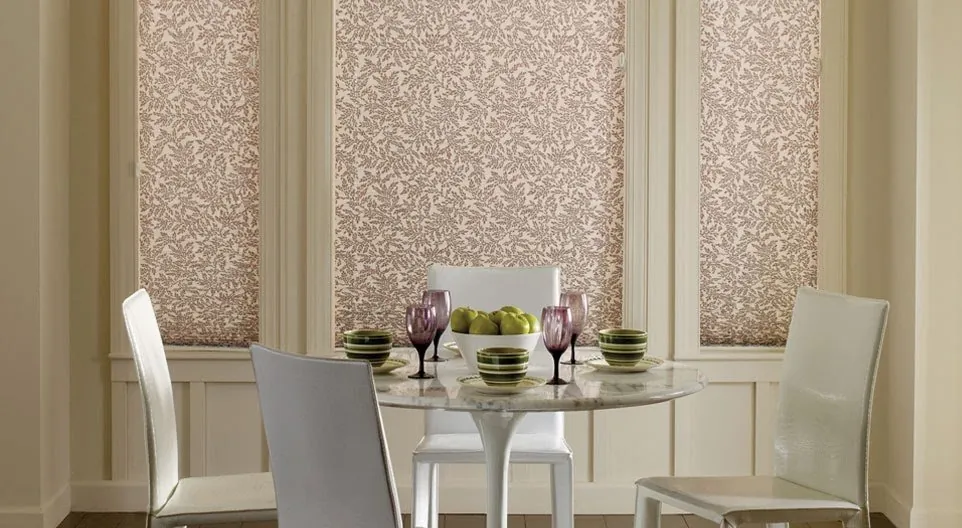
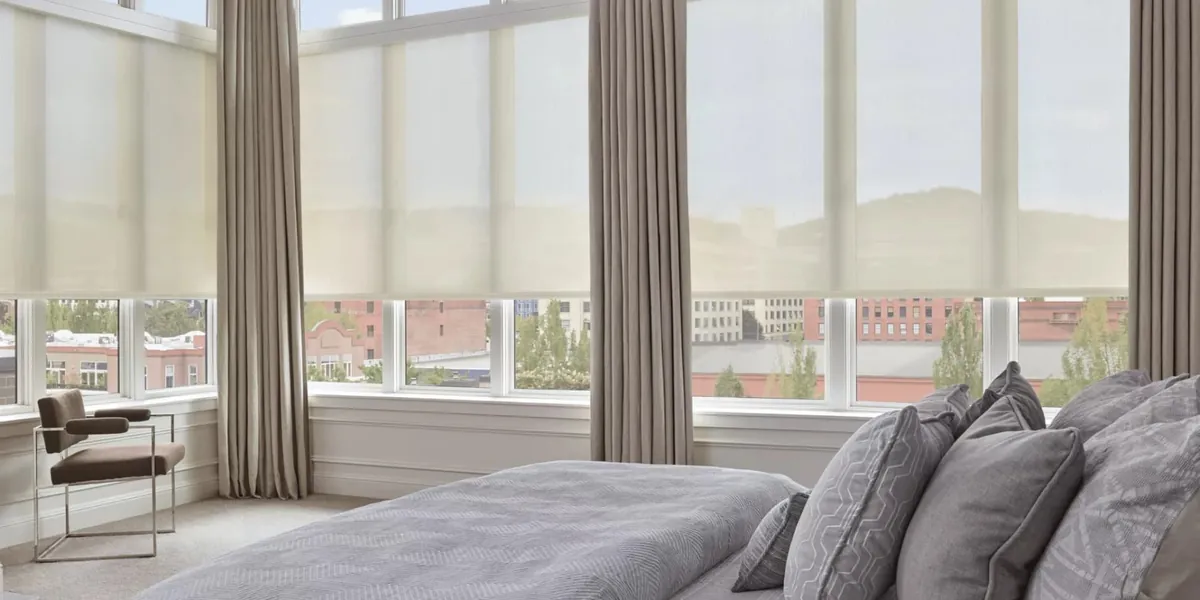
The everyday roller, with plain and textured cloth from light filtering to blackout. It suits parlors, bedrooms and kitchens alike.
Designer Screen
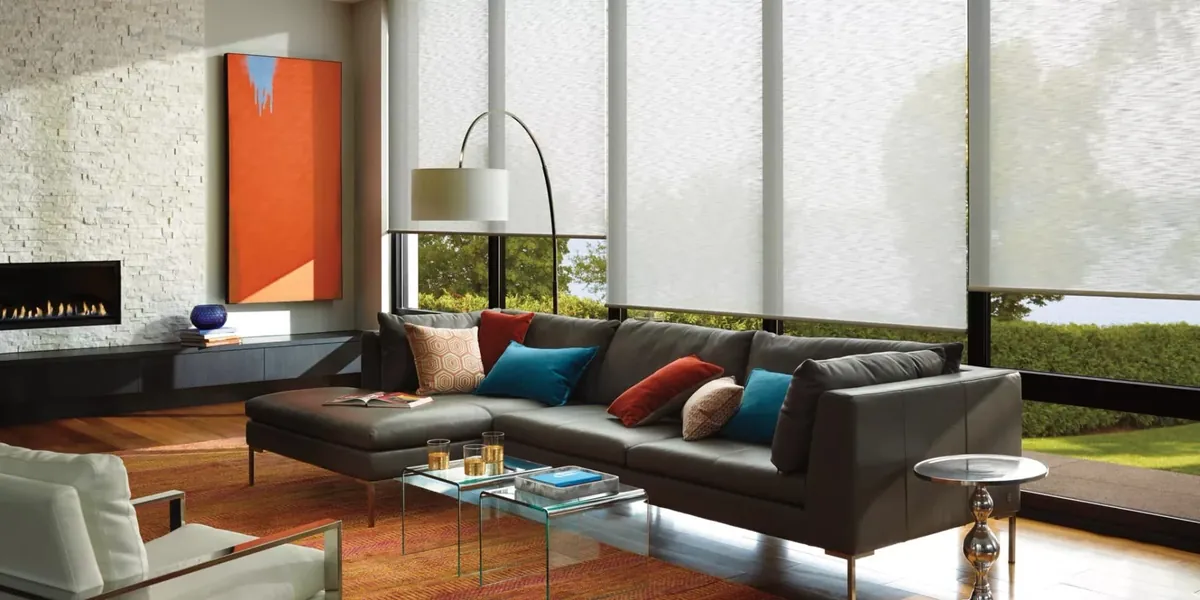
Solar screen fabric for the sunny side of the house, where you want the glare gone and the yard still in view.
Alustra Woven Textures
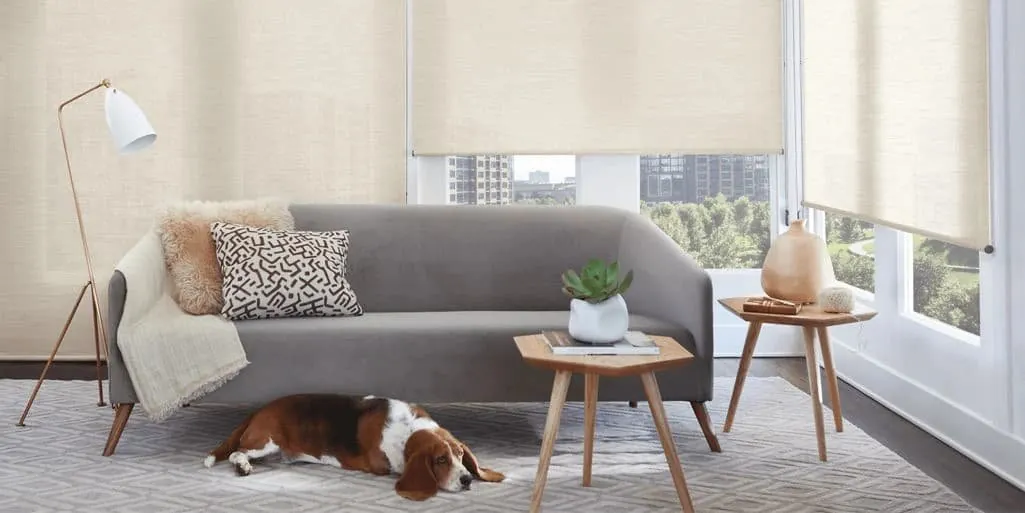
Hunter Douglas’s Alustra collection, with a woven look that sits comfortably beside painted trim and old floors.
Front parlors a few steps from the sidewalk
In the village, it is common for the front door to open almost onto the street. The parlor and dining room windows face that same sidewalk, and anyone walking a dog can see straight in once the lamps come on.
During the day, a light filtering roller is usually the answer for those rooms. The cloth lets plenty of daylight through, so the parlor stays bright, but from the sidewalk the window reads as a soft, even panel instead of a view of the sofa. You keep the morning light without feeling watched.
Evening is where the choice gets more careful. A lit room behind a thin cloth can show shapes to the street. If the front rooms are used at night, a denser weave or a room darkening fabric keeps things private after dark. Some households split the difference: light filtering in the parlor, where the shade is often up, and something heavier in a front bedroom upstairs.
Color matters on the street side too. From outside, a row of tall sash with matching shades looks calm and deliberate. A neutral that suits the paint color of the house keeps the facade looking like the house it has always been, while the room side can still feel warm.
Respecting tall, narrow sash
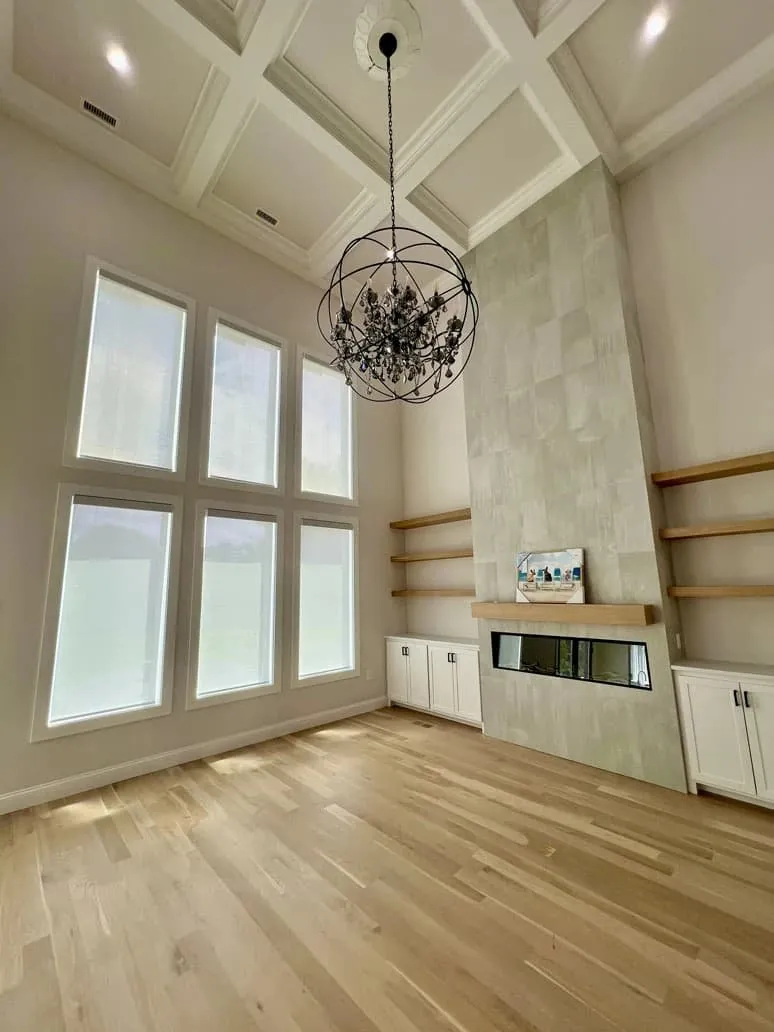
The antique houses in Dedham Village and Oakdale were built with sash windows that run tall and slim, often two or three in a row across a front room. Their casings, sills and muntins are part of why the houses look the way they do, and most owners want any window covering to keep out of the way of all that.
A roller is one of the easiest coverings to live with on that kind of window. Raised, it tucks up near the head of the frame and leaves the sash and trim on full view. Lowered, it is a flat plane of fabric with no folds or slats to compete with the woodwork. Whether a shade sits within the frame or across the trim is a question we work through with you at each window, because old frames vary from room to room.
The fabric is where the historic expectation really comes in. Smooth, bright synthetics can look out of place in a room with old plaster and wide floorboards. A woven or textured cloth, such as one from the Alustra Woven Textures range, tends to feel at home there. Soft off-whites, linens and warm grays are popular choices because they sit quietly against painted trim.
Oakdale’s Victorians, room by room
The Victorians around Oakdale tend to have more rooms and more variety in their windows than the colonials: a front bay, a side parlor, a stair window, bedrooms tucked under steep rooflines. Each room asks for something a little different.
The front room. Often the brightest room in the house and the one closest to the street. Light filtering fabric keeps it open to the day. If the room faces south or west, a screen fabric is worth comparing, because it cuts glare while you can still see out.
The dining room. Usually lit from the side, sometimes facing a neighbor’s driveway. A roller in a medium weave gives privacy at dinner without turning the room into a cave at lunch.
The stair window. Tall and hard to reach. This is a natural place for a PowerView motor, so the shade can be lowered from the hall or on a schedule.
Bedrooms. Here the choice is mostly about sleep. Room darkening cloth handles most bedrooms; blackout suits east-facing rooms and anyone who sleeps late.
Working through the house this way usually turns up two or three fabrics rather than one, and that is fine. Rollers in different cloths but matching colors still look like a set from the street.
What openness means for glare and view
Solar screen fabric has a measure called openness: how loose or tight the weave is. It is the single most useful idea when you are choosing roller shades in Dedham, MA, for a sunny room.
A more open weave lets you see out more clearly and brings in more daylight, but it lets more glare through too. A tighter weave cuts glare harder and gives more daytime privacy, but the view through it becomes hazier. There is no right answer, only the right balance for that window.
Color plays its part. Darker screen cloth is easier to see through, because your eye looks past it. Lighter screen cloth brightens the room but softens the view. On a back window facing a garden, a dark screen with moderate openness often feels like the glare just switched off. On a room facing the street, a tighter weave adds privacy during the day.
One thing to know: a screen does its job in daylight. After dark, with lights on inside, a screen does not give privacy. Rooms used at night may need a second layer or a different fabric altogether.
Capes and ranches toward Riverdale
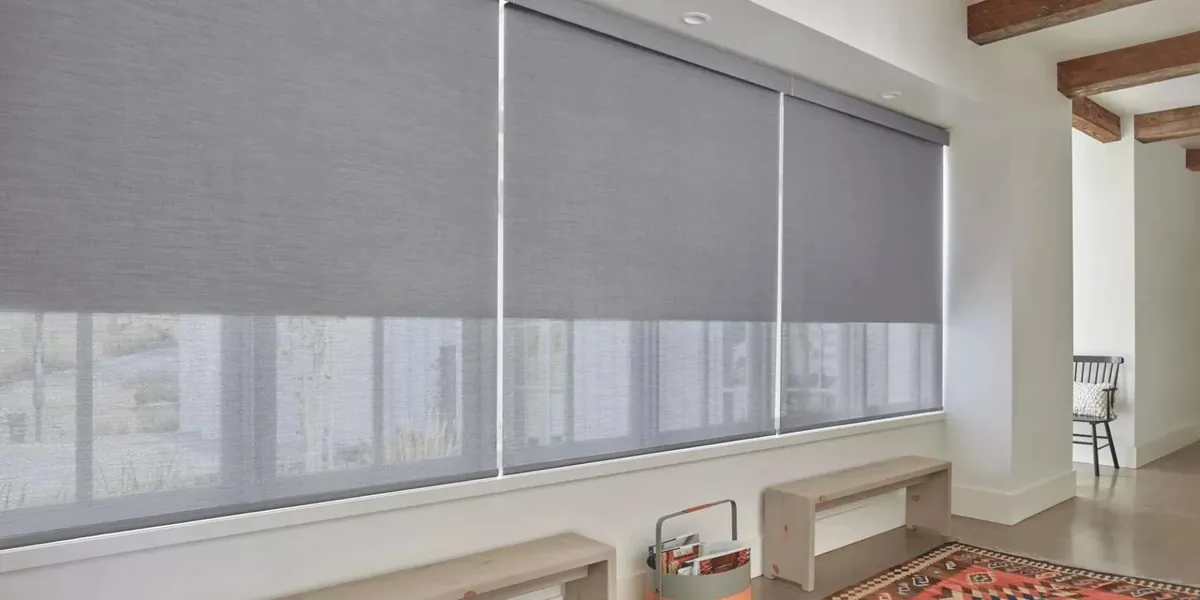
Roller shades in Dedham, MA, get simpler to plan as you head toward Riverdale, and the housing changes and the housing changes with them. The post-war capes and ranches here were built with simpler, more regular openings, and the windows tend to repeat in size from room to room. That makes a full-house roller order straightforward to plan.
Ranches usually put a large picture window at the front, sometimes flanked by narrower windows on each side. A single roller across the big pane can be paired with matching shades on the side windows so all three lower to the same line. On a west-facing front, a screen fabric keeps the late afternoon glare off the television while leaving the street in view.
Capes put their upstairs bedrooms under the roof, lit by dormer windows. A dormer is a small, deep opening, and a blackout roller in that recess makes for a properly dark room. Downstairs, the kitchen and living room windows are usually standard sizes, and light filtering fabric keeps them bright.
Because these houses are newer than the village colonials, there is often more freedom with color and pattern. A bolder fabric in a child’s room or a patterned roller in a kitchen can work well here, where the house does not carry the same historic look.
Kitchens and back rooms facing the yard
Behind the formal front rooms, most Dedham houses open up at the back. In the village colonials, a kitchen addition or a back parlor often looks over a narrow garden toward the next lot. In the Riverdale capes, the kitchen usually sits at the rear with a window over the sink and a door out to the yard.
These rooms have different needs from the street side. Privacy matters less, because the view is of your own yard, and the main concerns are sun and how the room feels at different times of day. A back wall facing west catches the low afternoon sun just as dinner is being made, and that glare can bounce off counters and screens.
A solar screen roller is often the right fit here. It takes the hard edge off the sun while leaving the garden in view, so the room stays connected to the outside. On a window over the sink, a roller is useful because it rises clear of the faucet and stays out of the way while you work.
Where a back door has glass, a roller on the door itself can match the window shades, so the room looks finished when everything is lowered. In a back room used as a home office, a light filtering fabric cuts reflections on a computer screen without making the room dim.
Light filtering through blackout
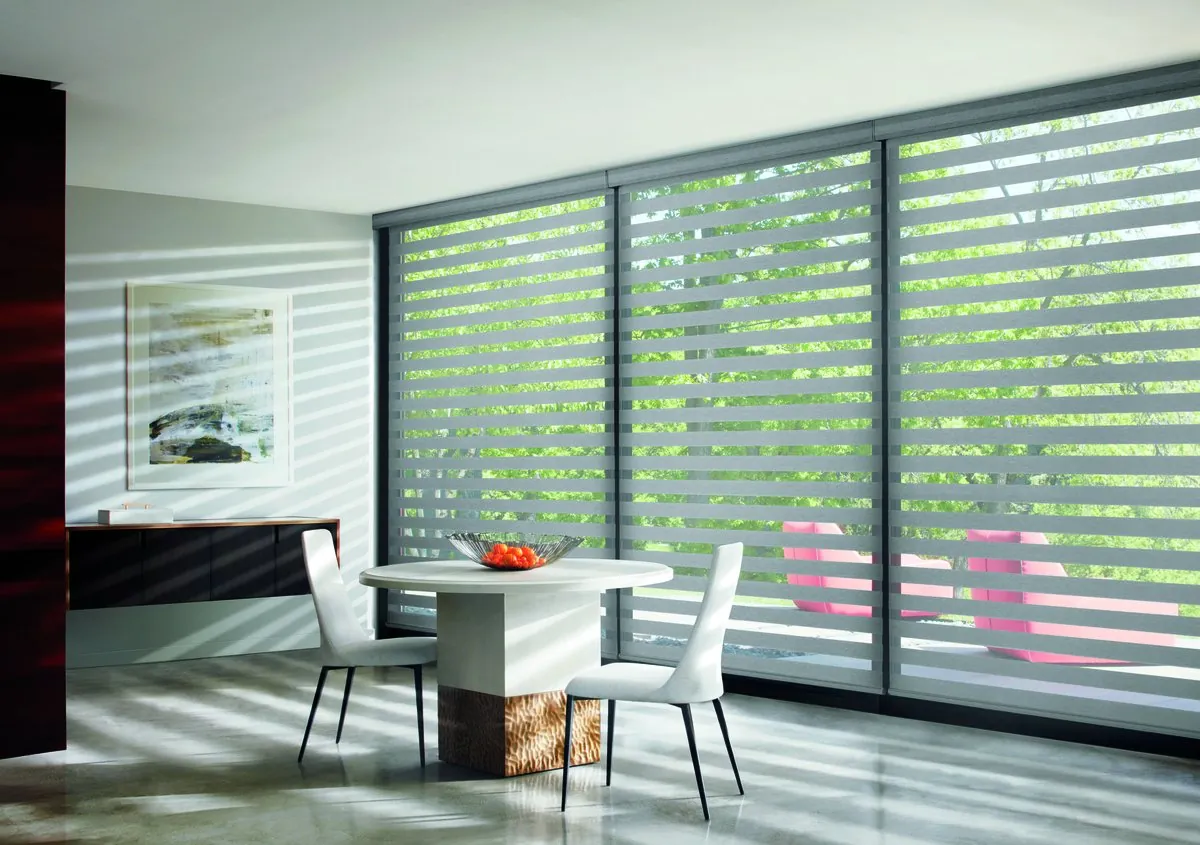
Roller fabric runs across a full range of opacity, and most of the decision comes down to picking the right level for each room.
- Light filtering keeps a room bright and blurs the view from outside. Parlors, kitchens and front rooms are the usual places for it.
- Room darkening blocks most of the light and suits bedrooms where a little glow at the edges does not matter.
- Blackout stops light coming through the cloth itself, for nurseries, east-facing bedrooms and rooms used for daytime sleep.
- Solar screen cuts glare and keeps the view, for sunny rooms where seeing out is the point.
In an antique colonial with a parlor near the street and bedrooms at the back, a typical mix might be light filtering at the front, blackout in the bedrooms and a screen in a south-facing sunroom. In a Riverdale ranch, it might be a screen on the picture window and room darkening in the bedrooms. We bring all of these on the same visit, so you can compare them side by side at the glass.
PowerView on tall and hard-to-reach windows
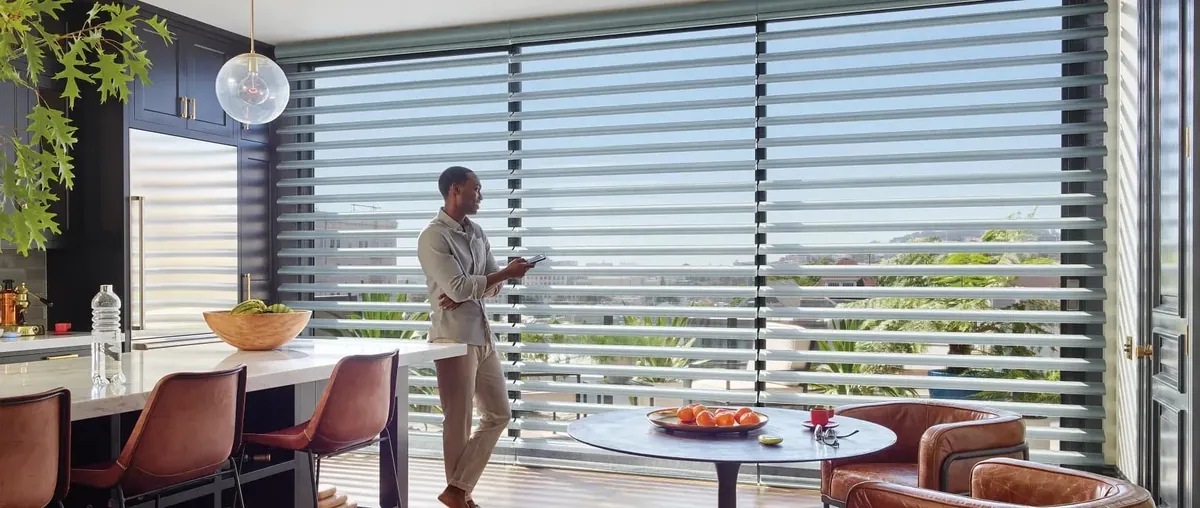
Tall sash is lovely to look at and awkward to reach. On a stair landing or above a radiator, lowering a shade by hand can mean leaning or stretching. Hunter Douglas PowerView motorization takes that away.
With PowerView, a roller can be raised and lowered from a phone app or a handheld remote. Schedules let the shades move on their own: lowering the front parlor shades at dusk for privacy, raising the bedroom shades in the morning, or closing the screen shades on a sunny back wall during the brightest hours. Several shades can move together as a scene, so a row of tall front windows lowers in one even line.
How each motor is powered is something we plan with you at the visit, window by window. If you want to read more first, our page on motorized blinds and shades in Dedham covers it, and the guide on how motorized shades are controlled explains the controls in plain terms.
Before a consultant comes to the house
Dedham is in our shop-at-home territory, so the easiest way to choose rollers is at home. A consultant arrives with a van full of samples, and you see each fabric in the light of your own rooms. You can read how the territory works on the Canton shop-at-home page.
A little preparation helps the visit go well:
- Request a consultation online, or use the call button, and mention that it is about roller shades.
- Walk through the house and note which windows bother you most: glare, privacy from the street, or light in a bedroom.
- Think about how each room is used at night, since that changes the right fabric.
- Keep any paint chips or fabric swatches you want to match handy.
- Set aside time to hold samples against the glass in each key room.
- Expect a free estimate for the windows you choose.
If you would like help with color or the whole room, ask about our interior design consultations as well.

Designer or Alustra for a Dedham house
Both lines behind our roller shades in Dedham, MA, come from Hunter Douglas, and both are in the van. The difference is mostly in the cloth.
Designer covers the broadest range: plain and textured rollers, screen fabrics and banded styles. It is the line most rooms end up with, from a Riverdale kitchen to a village bedroom. If a window faces a neighbor closely, Designer Banded is worth seeing too, with its alternating sheer and solid stripes.
Alustra is the Hunter Douglas collection with a more tailored, woven character. In an antique colonial, where the trim and the floors carry the room, a woven Alustra fabric can feel more natural than a smooth modern cloth. Many orders mix the two: Alustra in the parlor and dining room, Designer in the bedrooms and kitchen.
You can compare every line on our roller shades overview, or see how rollers fit with everything else we do locally on the Dedham page.
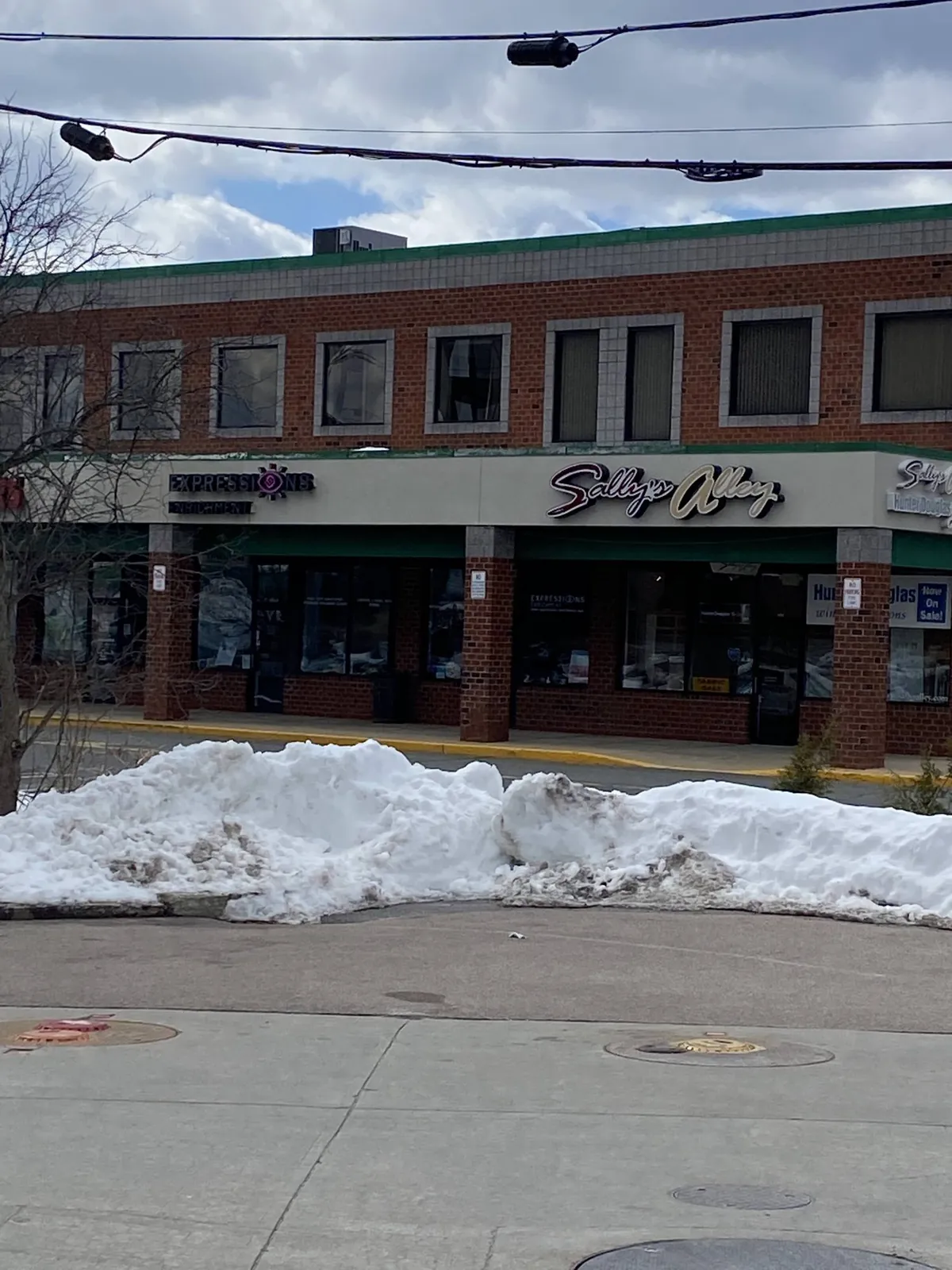
Franklin is our closest showroom to Dedham
For most Dedham customers, a home visit is the simplest route, because the fabrics are judged where they will hang. If you would rather see shades in a showroom first, the nearest one is our Franklin showroom.
Blinds & Designs is a Hunter Douglas Gallery dealer. That means the full Hunter Douglas range in one conversation: Designer and Alustra rollers, solar screens, banded styles, and PowerView motors for any of them. When the order is ready, the shades go up with certified Hunter Douglas installation.
If a shade you already own needs attention, we also take on blind and shade repair. And if a room needs more warmth than a roller gives, cellular shades in Dedham are worth a look.
Questions from Dedham
Will a roller look right in an antique colonial in Dedham Village?
Usually, yes. Raised, a roller leaves the sash and trim on view, and lowered it is a flat panel with no folds. A woven or textured fabric in a soft neutral tends to suit old woodwork best.
Our house is close to the street. What keeps the front rooms private?
A light filtering roller keeps the room bright and blurs the view by day. For evenings with the lamps on, a denser weave or room darkening fabric is the safer choice on the street side.
Can a screen shade cut glare and still let us see the garden?
Yes. That is what screen fabric is for. A darker screen with a moderate openness usually keeps the view clear while taking the edge off the sun.
Do you have a showroom in Dedham?
No. Dedham is served by our shop-at-home team, who bring samples to your house. The nearest showroom is in Franklin.
Is the estimate free?
Yes. Estimates are free, and there is no obligation to go ahead.
Your next step
The quickest way to settle on roller shades in Dedham, MA, for a village parlor or a Riverdale ranch is to see the fabrics against your own glass, in your own light. Request a consultation and a consultant will bring the roller range to your door, talk through each window with you and leave a free estimate. You can also reach us with the call button at the top of the page.