
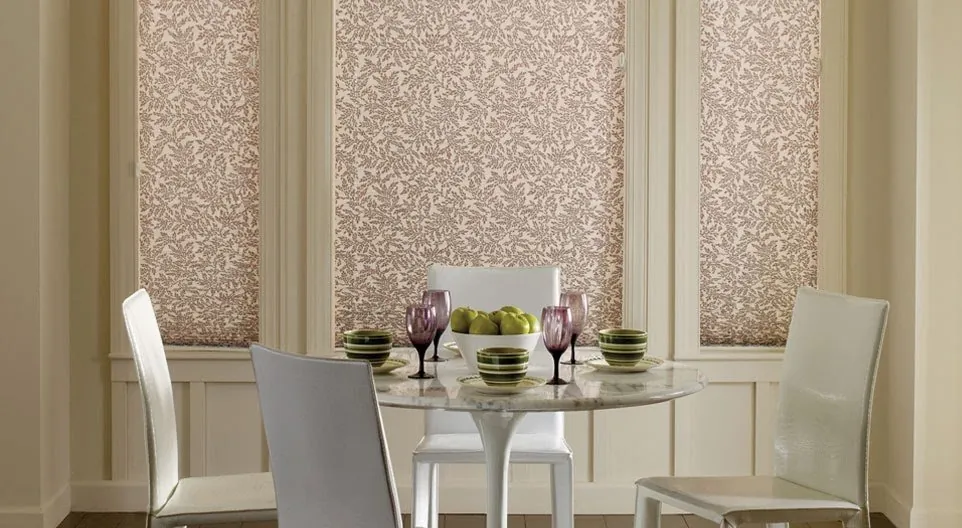
Close neighbors and tall, narrow sash
The streets around the center of Milford were built up quickly when the granite quarries were busy, and the houses stand close together as a result. Tall Victorians and two-families share narrow side yards and driveways, and their long, slim double-hung windows often look straight across at the house next door, only a few strides away. On the front, a parlor window may be not much further from the sidewalk than that. When we fit roller shades in Milford, MA, in the center of town, privacy at street level is usually the first thing on the list.
Further out, the picture changes. Post-war ranches and newer colonials sit on bigger lots, with picture windows, sliders and more distance from the neighbors. Those houses care more about sun and glare than about who can see in.
A roller suits both. It is a single layer of fabric on a tube, so it slips into a narrow Victorian frame without fuss, and it comes in everything from sheer screens to full blackout. The skill lies in matching the cloth to the room and to the time of day you need it most.
Roller shades in Milford, MA: four ways to handle light and privacy
We carry the full Hunter Douglas roller family on every visit. These four lines do most of the work in Milford houses, and each links to its own page.
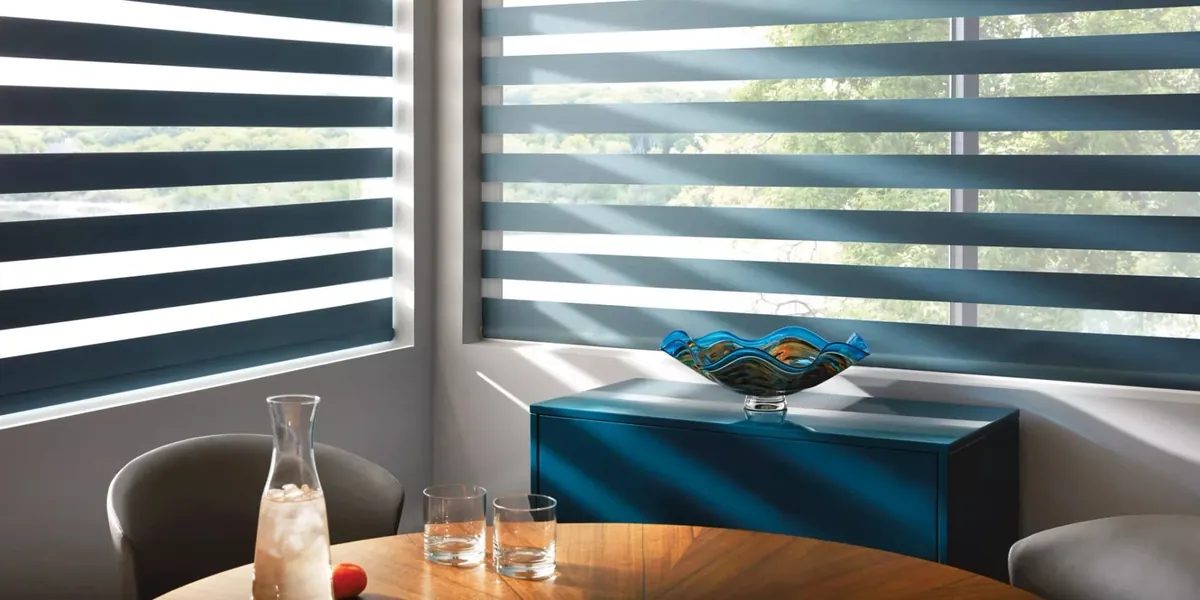
Designer Banded
Two layers of sheer and solid stripes. Slide them apart to see out, together to close off the view from next door.
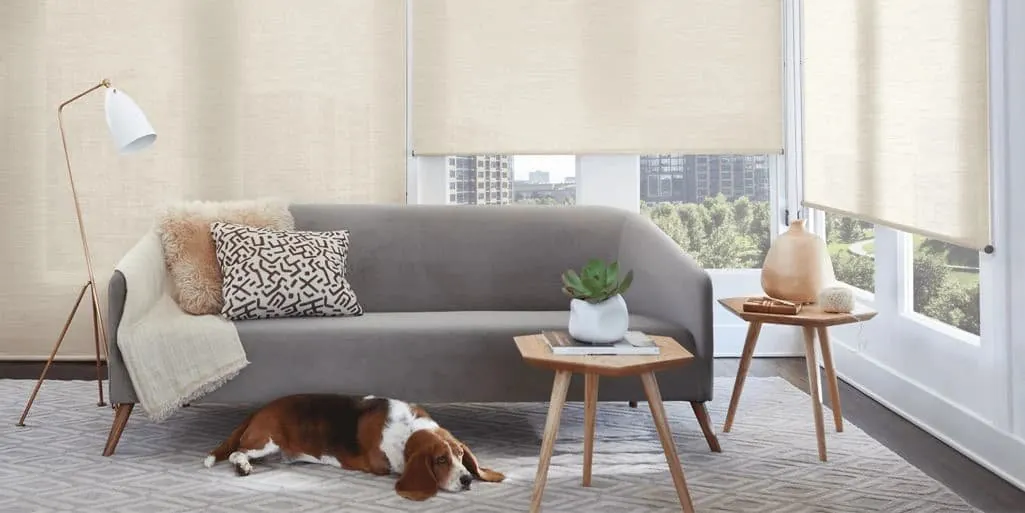
Designer Roller
Plain and textured cloths from light filtering to blackout, sized to fit the slimmest double-hung frame.
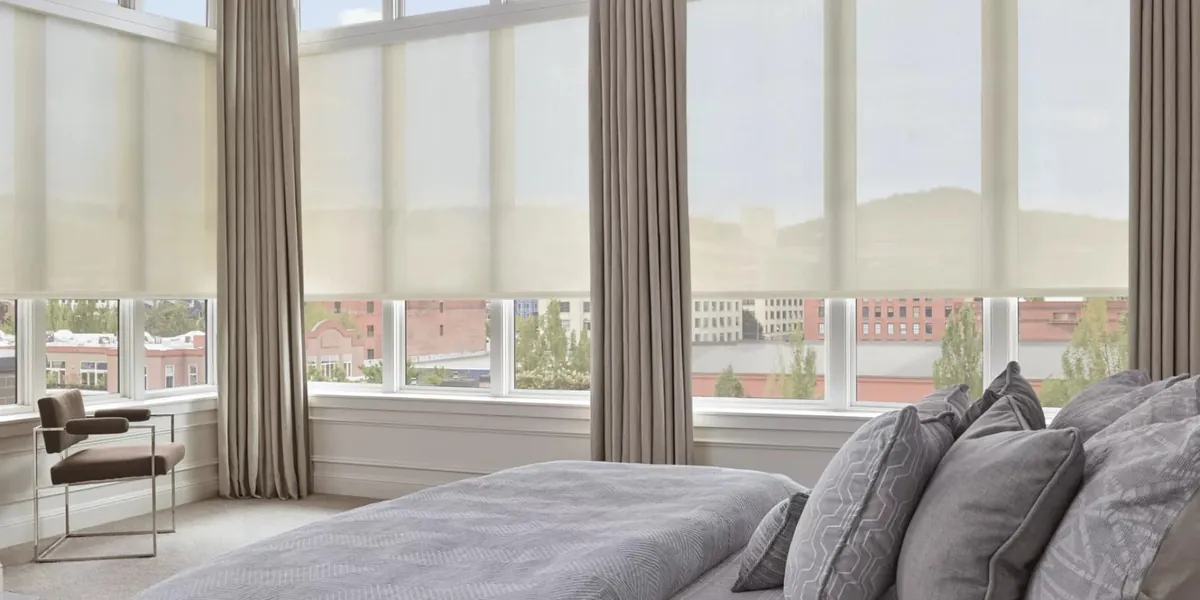
Designer Screen
Solar screen fabric that cuts glare and heat while keeping a view, best on the sunny side of a ranch or colonial.
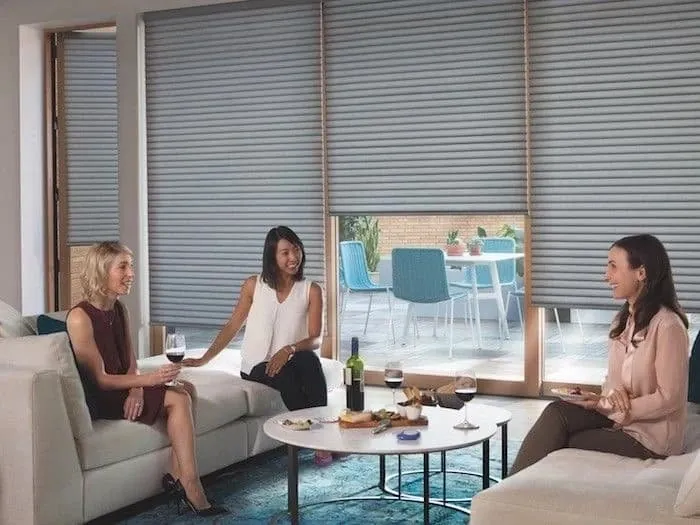
Sonnette Cellular Roller
A rolled shade with a soft curved cell, for a fuller look in a Victorian front room or bedroom.
Daytime privacy is not the same as night privacy
This is the single most useful thing to know before choosing a shade for a house close to its neighbors, and it catches a lot of people out.
During the day, the outdoors is far brighter than your living room. A light filtering roller or a solar screen glows with that daylight, and from the street or the next driveway it looks like a lit panel. People outside cannot make out much behind it, while you can still see a softened view out. It feels private, and in daylight it is.
After dark, the balance flips. With the lamps on, your room becomes the bright side, and a sheer screen or a thin light filtering cloth can show shapes and movement to anyone outside. The same shade that felt private at noon is not private at nine in the evening.
There are a few honest answers. For rooms you use at night, such as a living room facing the street or a bedroom facing next door, choose a room darkening or blackout fabric, or a heavier light filtering cloth that stays opaque with lights on. Designer Banded shades give you both in one: open the bands by day for light, close them at night for privacy. Or layer a screen for daytime with a second, more opaque roller or drapery for evening. We hold samples up with the room lights on and off so you can see the difference for yourself.
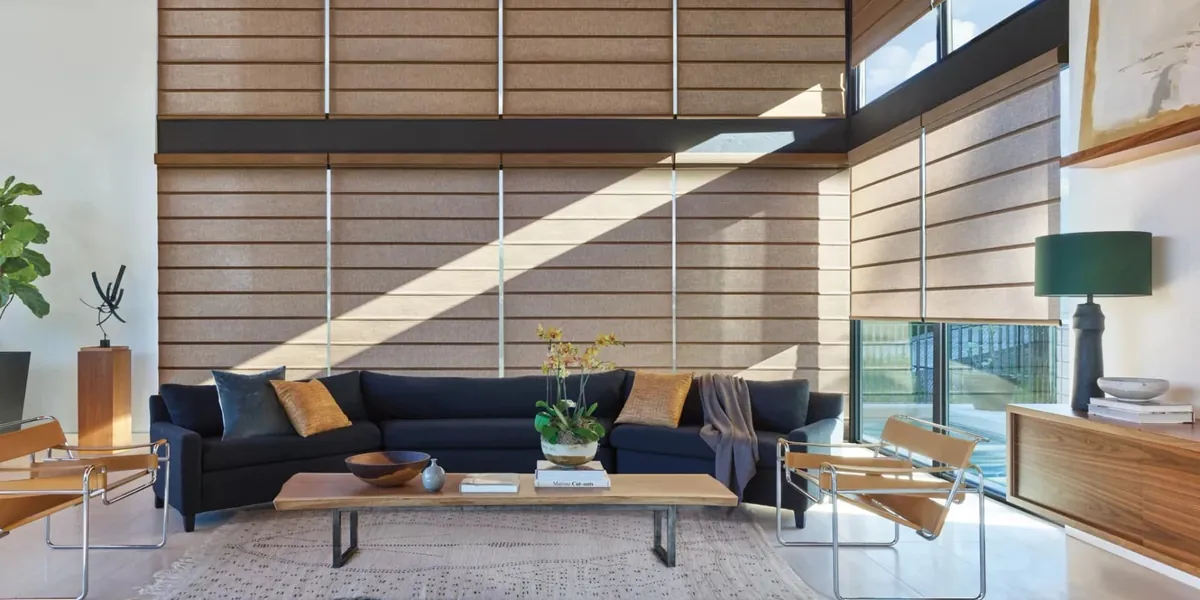
Tall, narrow double-hungs in the Victorians
The Victorians around the center have some of the most elegant windows in town: tall, narrow double-hung sash with deep casings, often in pairs or set into a bay. They let in plenty of light and they deserve a shade that does not hide them.
An inside mount usually looks best, with the roller tucked into the top of the frame so the casing stays on view. Old frames need careful measuring, though. A window that has stood for a long time is rarely square, sash weights and pulleys sit inside the frame, and interior storm panels or old locks can eat into the depth. We measure the width at the top, middle and bottom and the height at both sides, and check the depth before suggesting a mount.
On a narrow window the side gaps that every roller leaves are a larger part of the opening, so a little more light shows at the edges than on a wide modern window. In a living room that is rarely a concern. In a bedroom facing the house next door it can be, and that is where an outside mount on the casing or a pair of side channels earns its keep.
Very tall windows also raise the question of reach. A cordless roller on a very tall sash can be awkward to pull down from the top. A continuous loop or a PowerView motor makes it easy, and either keeps the window free of loose cords.
Two-families: upstairs, downstairs and the stairs between
Milford’s center has a good number of two-family houses, stacked one flat above the other, often with front porches on both floors and a shared stairwell. Each flat has its own rooms and its own needs, but from the street the house is seen as one building.
If you own the whole house, choosing one neutral fabric color, or one color family, for every street-facing window keeps the front tidy. Many roller fabrics have a white or neutral back, so the tenant upstairs can have a different color inside while the street sees a matching row. Rollers are also straightforward to look after between tenancies, with no slats to bend and nothing fragile to break.
If you live in one of the flats, the questions are the familiar ones: privacy from the next house and the street, darkness in the bedroom and a bright kitchen. The upper flat often has more light and less street-level exposure, so a light filtering roller may be enough at the front. The lower flat sits right at eye level with the sidewalk and usually wants a heavier cloth or banded shades in the front rooms.
Stairwell windows in these houses tend to be tall and set halfway up a flight of stairs, out of easy reach. A motorized roller there saves a lot of stretching.
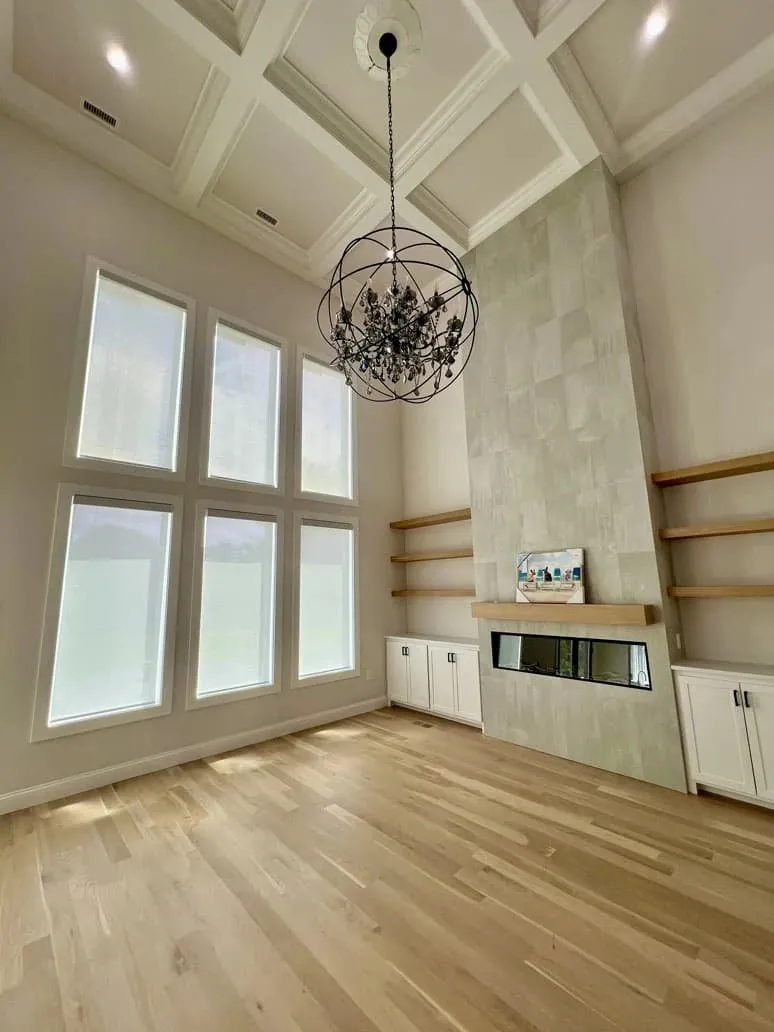
Front parlors a few steps from the sidewalk
In the oldest part of town, the front parlor of a Victorian can sit just a short walk from the pavement, with only a narrow strip of yard or a porch between the window and the people passing. These rooms were built to be seen, with tall windows and good trim, and most owners want to keep that character while not living on display.
A good approach is to think about the room by the hour. During the day, a light filtering roller in a warm neutral keeps the parlor bright and blurs the view in from the street. In the evening, when the lamps come on, you want something that stays opaque, so either the roller itself is a heavier cloth or a second layer takes over: drapery, or a banded shade that closes fully. On a porch-fronted house the porch roof shades the window for much of the day, so a lighter fabric often works well there.
We also think about how the room looks from outside. A row of parlor windows with shades at matching heights, in a color that suits the paint on the house, makes the whole front look cared for. Roller shades for Milford homes in the center are as much about the street view as the room itself.
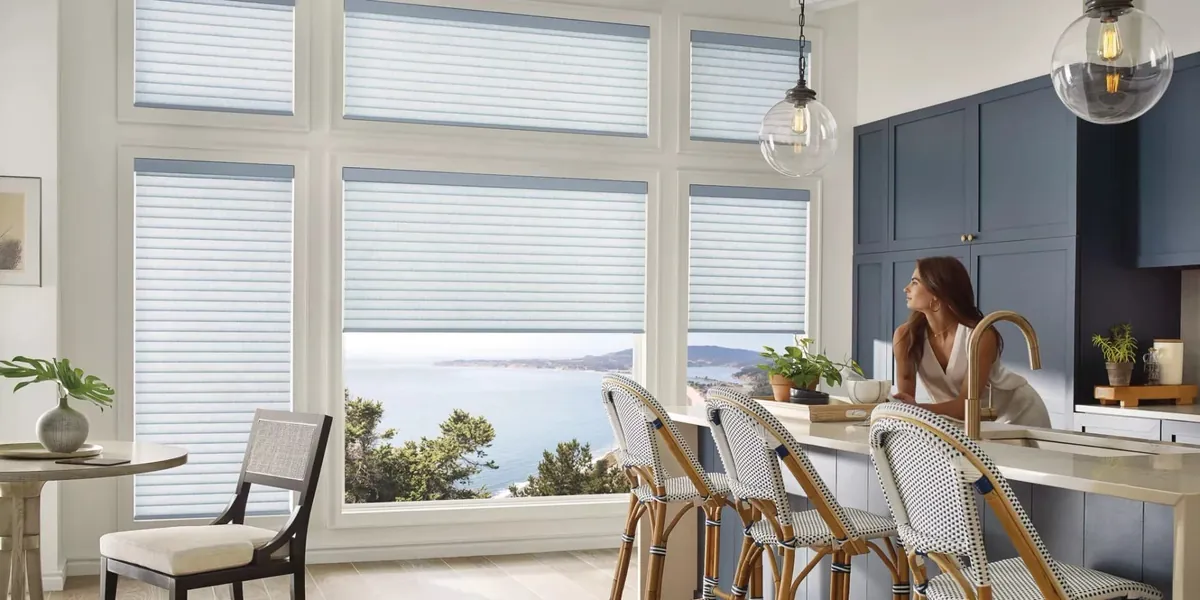
Kitchens at the back of a narrow lot
On a close-set lot, the kitchen is usually at the back of the house, sometimes looking onto a small yard and sometimes onto the side of the next building. Light can be scarce, so the last thing you want is a shade that makes the room darker than it needs to be.
A pale light filtering roller mounted inside the frame lets in as much daylight as possible while softening the view of the neighbor’s wall. Over the sink, it should clear the faucet when raised and be easy to wipe. If the kitchen opens to a back porch or a small deck through a glass door, a matching roller on the door keeps the look consistent and the door free to swing. Where the back of the house faces west, a screen fabric on those windows takes the glare off the counter during the late afternoon, when most cooking happens.
Bay windows and windows that face next door
Many Victorians in the center have a bay at the front or along the side: three or more tall windows set at angles. Each window in a bay gets its own roller, and we make sure they line up at the top and drop to the same height so the bay looks like one piece. Where the angles are tight, we check that the headrails will clear each other and the casing between them.
Side windows are a different matter. In a close-set neighborhood they often face another house’s windows across a narrow gap. These are the windows where privacy matters all day, not just in the evening, and where a room darkening roller or a banded shade usually makes more sense than a sheer screen. Many people keep the lower part covered while still letting light in above. A roller lowered most of the way, with a light filtering fabric, gives daylight at the top and screens the line of sight from next door.
Kitchens and bathrooms on the side of the house have the same issue. A roller in a wipe-clean fabric is a practical choice for both.
Ranches and colonials further out
Away from the center, Milford’s post-war ranches and newer colonials sit further apart and further back, and their windows are mostly standard modern openings. Here the priorities change from privacy to sun.
A ranch living room usually has a wide picture window. One shade can cover it, but three shades in one fabric, a center and two sides, are often easier to use and look neater, especially if the side windows open. A slider to the deck needs its roller set to clear the handle; some people prefer one shade over the fixed glass and another over the moving door.
On the sunny side of the house, a solar screen cuts the glare and heat and keeps the yard in view. In bedrooms facing east, room darkening fabric keeps the early sun out. And in a colonial’s home office, a screen fabric stops glare on the computer while the room stays bright. Rollers in these houses are simple to fit, and a whole-house order comes together quickly because the openings are so consistent.
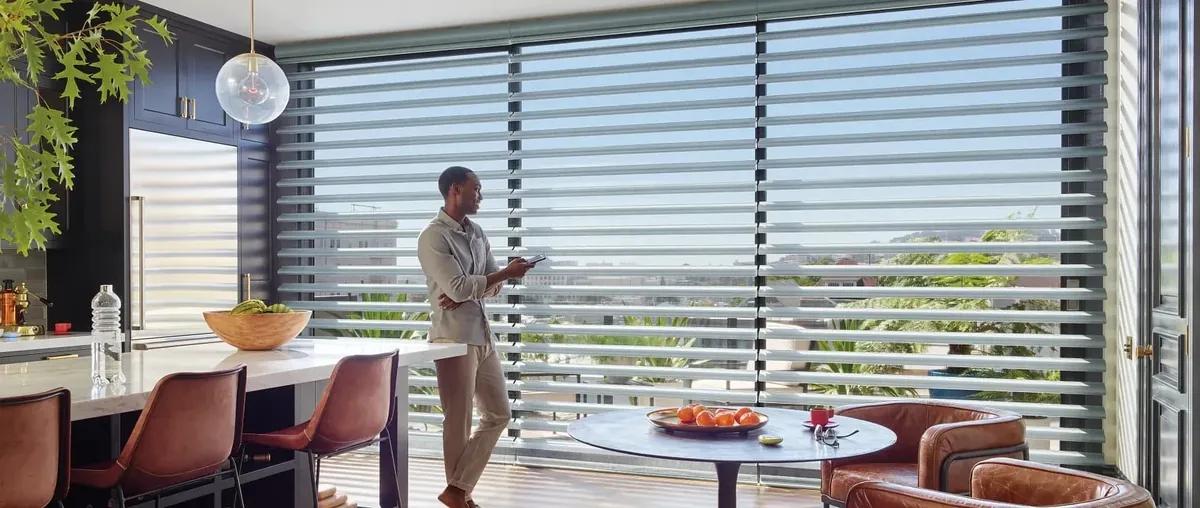
What a visit to your home looks like
Privacy is something you can only judge in your own rooms, looking out at your own street and the house next door. That is why we come to you. Our vans carry samples, so we can bring the showroom to you.
- Choose a time on the Request a Consultation page, or call using the call button.
- We arrive with roller, banded, screen and Sonnette samples, plus the lift options.
- We walk through the rooms with you and talk about what each window faces: the street, a neighbor, the yard or the sun.
- You try samples at the window, and we show you how each looks with the room lights on and off.
- We measure every opening, check the depth of the frame and note any old hardware in the way.
- You get a free estimate for the shades you are considering, and take the time you need to decide.
Our interior design consultations can help with color and fabric across a whole room at the same visit. To know what to expect, read what happens at an in-home consultation.

Cordless, loop or motorized
The way a shade is raised matters more than people think, especially on the tall windows of a Victorian.
- Cordless rollers lift and lower from the bottom rail by hand. They suit windows you can reach easily and are a good choice in children’s rooms, since nothing hangs at the side.
- Continuous loop rollers move a tall or heavy shade with little effort, which helps on the longest sash.
- PowerView motorization raises and lowers shades from an app, a remote or a schedule. It is ideal for stairwell windows, bays and any room where you want the shades to close at dusk without thinking about it.
Mixing them is normal. A two-family might have cordless rollers in the bedrooms, a loop on the tall parlor windows and a motor on the stairwell. See motorized blinds in Milford for more on PowerView.
For other windows in the house, we also fit cellular shades in Milford and plantation shutters in Milford, and our Milford page lists everything we do in town. The main roller shades page compares every roller line. Many customers start with roller shades in Milford, MA, on the street side and add other treatments over time.
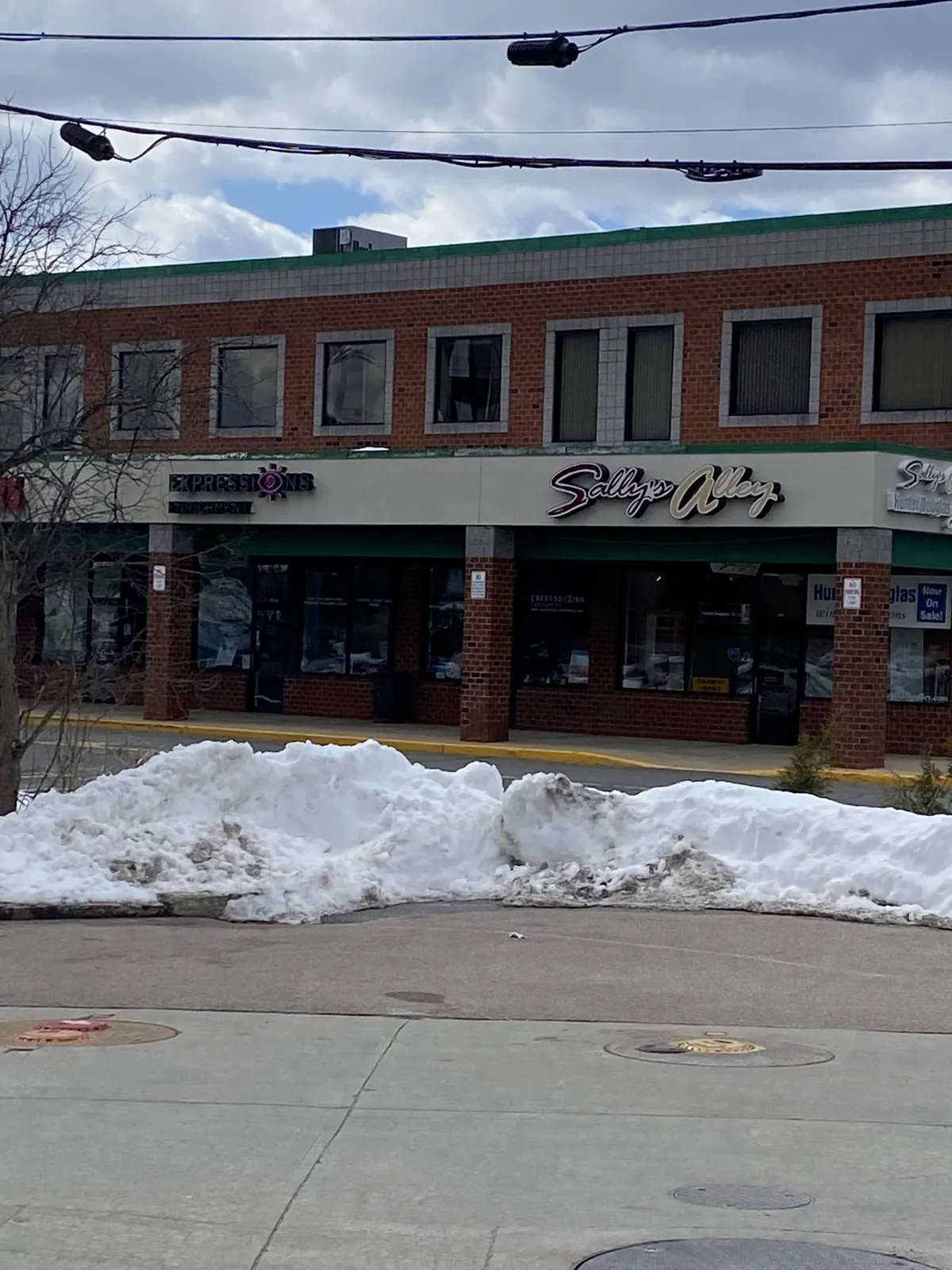
The showroom closest to Milford
Our Franklin showroom is the nearest to Milford. If you would like to see shades in person before a home visit, it is an easy place to start.
Then let us come to the house, so you can see the fabric against your own windows and your own street.
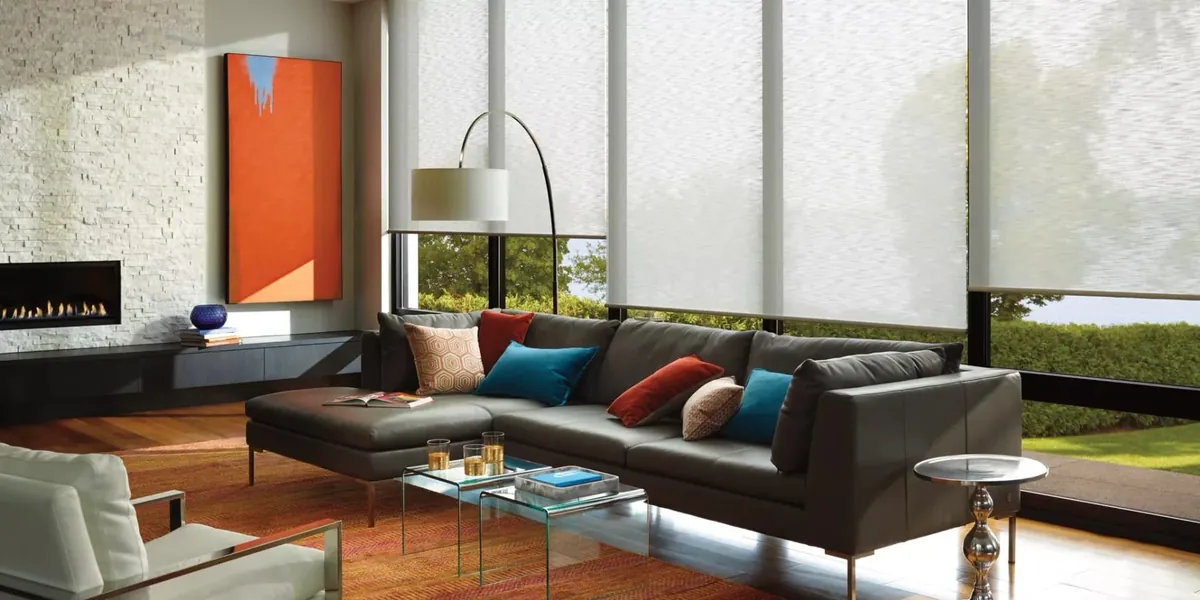
Working with a Gallery dealer
Blinds & Designs is a Hunter Douglas Gallery dealer, a title Hunter Douglas gives dealers who meet its standards. It means the whole roller family, every lift option and PowerView automation are available through one consultation.
Our installers are certified by Hunter Douglas. They take the time an old Victorian frame needs, levelling each headrail so the shade hangs straight even when the window has settled.
If a shade needs attention later, we handle blind and shade repairs as well.
Questions from Milford
Will a light filtering roller give me privacy at night?
Not always. By day the bright outdoors makes a light filtering shade look opaque from outside, but at night with lamps on a thin fabric can show shapes. For rooms you use after dark, choose a room darkening cloth, banded shades or a layered option.
Can a roller fit the tall narrow windows in my Victorian?
Yes. The slim headrail fits most old frames, and we measure at several points because old windows are rarely square. On tall sash a loop or a motor makes the shade easy to operate.
What works best on a window that faces the house next door?
A room darkening roller or a banded shade, which give privacy all day. A roller lowered most of the way can screen the line of sight while letting light in above.
Can tenants in a two-family choose their own colors?
Yes. Many roller fabrics have a neutral back, so each flat can have its own color inside while the street sees a matching row.
Is the estimate free?
Yes. We measure at the consultation and give you a free estimate with no obligation.
Book a consultation
The surest way to choose roller shades in Milford, MA, is to see the fabric at your own windows, with your street and your neighbors in view. Request a consultation and we will bring the range to you, measure every window and leave you a free estimate. If you would rather talk first, use the call button, or visit the Franklin showroom.