
Short sightlines, small panes
In much of Whitman, the house next door is close enough that you could almost pass a cup of sugar across the gap. Two-families stand side by side on narrow lots, post-war capes sit tight to their neighbors, and the sightline from one kitchen window to the next is often only a few strides long. Near the center, the older Victorians add another wrinkle: their original openings are often small, with modest panes set deep in old frames. Those two things, short sightlines and small windows, shape almost every choice we make with roller shades in Whitman, MA.
Close houses mean privacy is needed on more windows, and for more of the day, than on a roomier lot. Small windows mean every bit of daylight counts, so a heavy covering that blocks the glass can leave a room dim. A roller handles that balance well. It is a single flat panel that rolls up into a slim tube, so it takes nothing from a small opening when raised, and its cloth can be chosen to let light in while keeping the view out.
The fabric range runs from soft light filtering through room darkening to blackout, with solar screens for any wall that faces open sky.
Matching the cloth to a close-set house
Rather than starting with product names, it helps to start with what each window needs. These are the three jobs a roller does most often in Whitman, and our consultants bring samples for all of them.
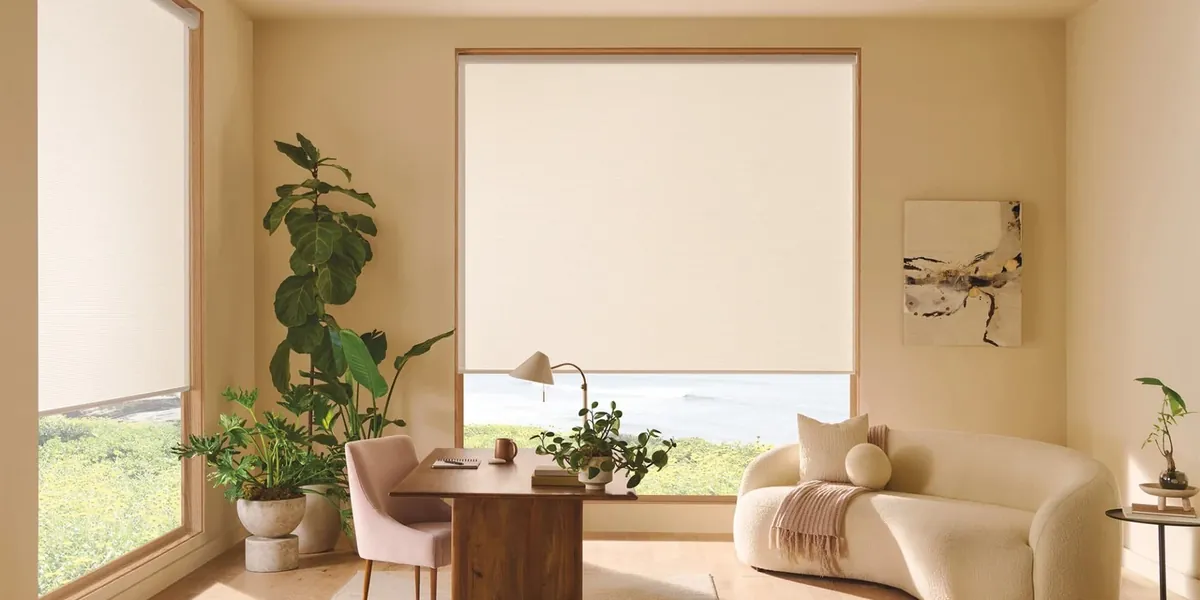
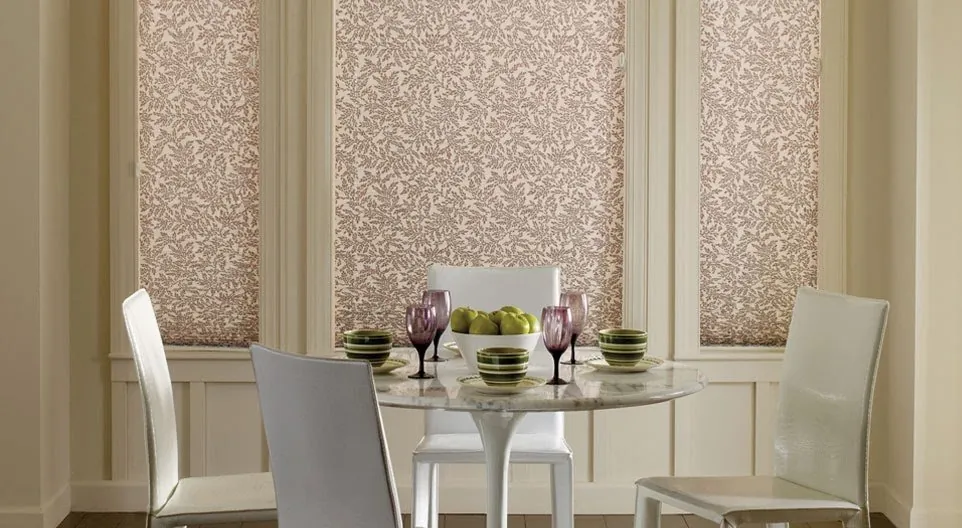
Daylight with privacy
Light filtering cloth lets the sun through while the room behind it becomes a soft blur from outside. The everyday answer for side windows a few strides from the next house.
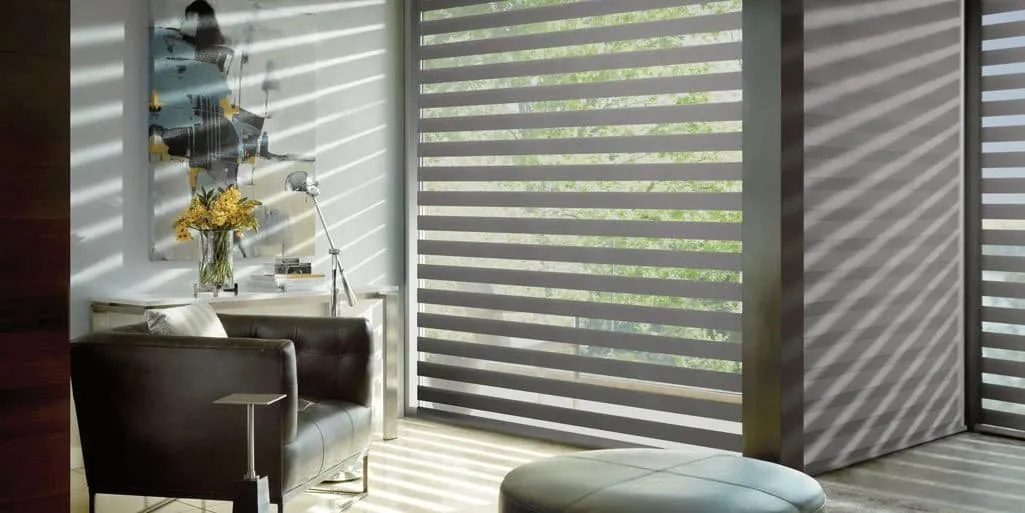
A view you can open and close
Banded fabric, with sheer and solid stripes on two layers, moves from see-through to covered with a small adjustment. Handy on a kitchen window that faces a neighbor’s.
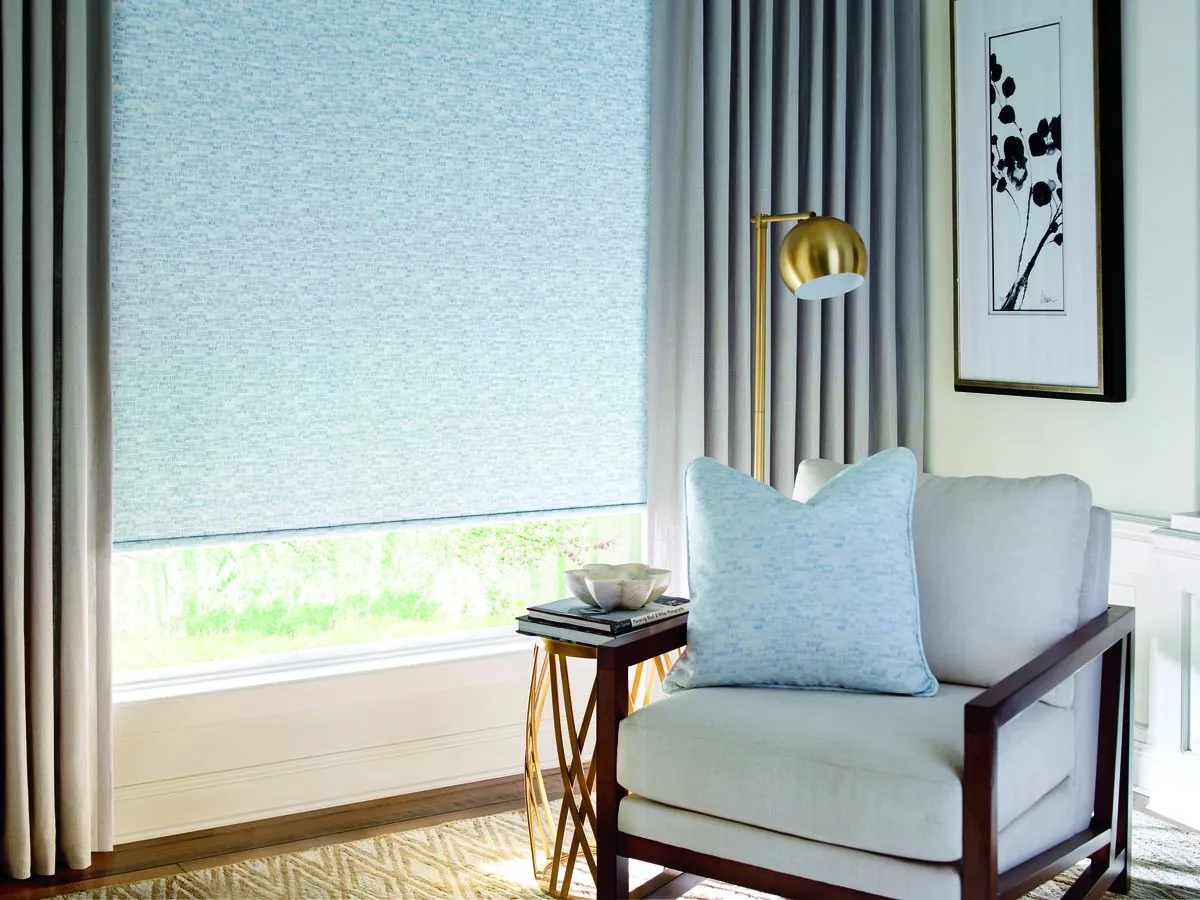
Dark rooms for sleep
Room darkening and blackout cloth for bedrooms, nurseries and any room where a neighbor’s porch light or a streetlight shines in.
The gap between two houses
On a narrow lot, the side windows of one house look straight across a driveway or a slip of lawn into the side windows of the next. Often the two windows line up almost exactly, so a kitchen faces a kitchen and a bathroom faces a stair. That is the single most common reason Whitman households call us about rollers.
The goal for those windows is usually simple to say and harder to get right: keep the light, lose the view. A light filtering roller lowered most of the way does it. Daylight passes through the fabric, the room stays bright, and from the other house the window reads as a plain, glowing surface. You can go about your day in the kitchen without feeling watched.
Evenings work differently. Once a lamp is on inside and it is dark outside, a light cloth begins to show shapes. For side bedrooms and bathrooms we usually suggest a denser fabric so the room stays private after dark. On a kitchen window, banded fabric is often the happier compromise, since it can be opened for the morning and closed for supper.
Because so many windows in a close-set house face the same short gap, consistency helps too. Using the same fabric on every side window keeps the house looking ordered from the driveway and means you never have to remember which shade does what.
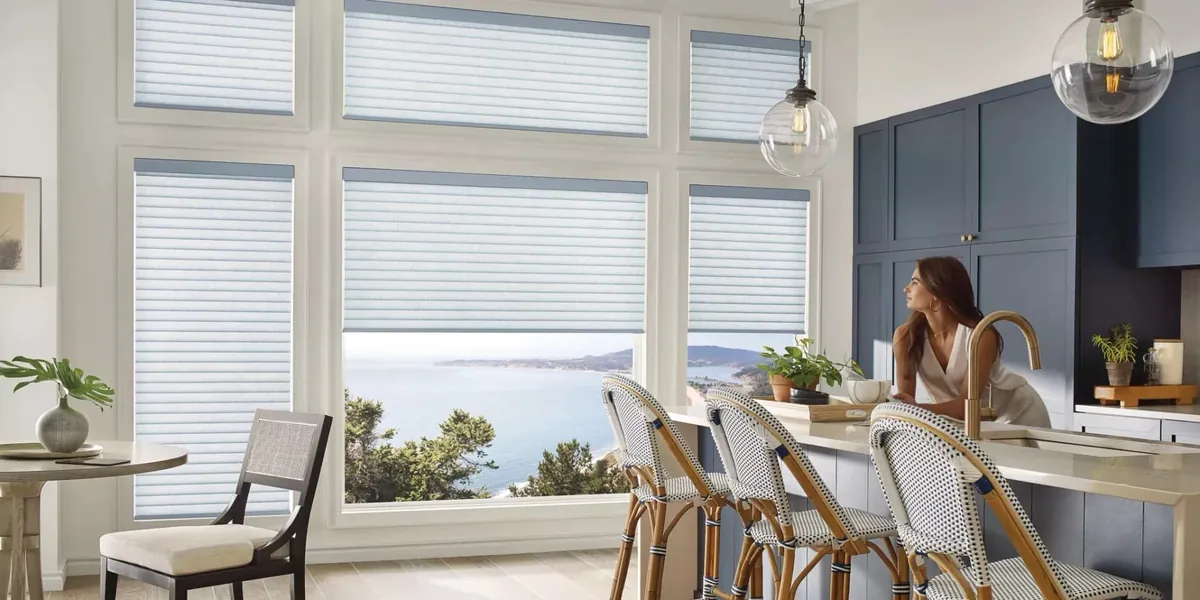
Two-families, upstairs and down
Whitman has a good share of two-families, and each floor of one lives a slightly different life at the window.
Downstairs, the front room sits a short way from the sidewalk and the side windows face the neighbor at eye level. Light filtering cloth handles the front by day, and a denser roller or banded fabric looks after the side windows in the evening.
Upstairs, the front windows rise above the line of passers-by, so they can often take a more open weave or a screen. The side windows, though, still look at the neighbor’s upper floor at the same height, so they need much the same privacy as the rooms below.
The back of a two-family often has a rear porch or a shared stair with glass doors. A roller on each door, matched to the window beside it, keeps that corner neat and gives privacy after dark.
If you own the whole building, we can plan both units in a single visit. Many owners choose one outward color for every window that faces the street, so the house looks tidy from the curb, and then let each unit pick its own fabric inside.
Small original openings in the older houses
The Victorians near the center often surprise people. From the street they look generous, but many of their original windows are fairly small, with narrow sash set deep in thick old frames. Small openings make every inch of glass valuable. Any covering that hangs below the head of the window when raised, or bunches up at the top, steals light from a room that does not have much to spare.
A roller is about as slim as a window covering gets. Raised, it rolls tight under the head of the frame and the whole pane is open. Lowered, it is a flat sheet with no folds. That makes it one of the best choices for a small Victorian window, especially in a bedroom or a hall where the window is the only source of daylight.
Deep old frames also give a roller a natural home. Where there is enough depth, the shade can sit inside the opening so it is almost invisible from the room, leaving the old casing in full view. Where the frame is shallow or out of square, mounting on the face of the casing is the neater choice. We check each older window on the day and talk the mount through with you before anything is ordered.
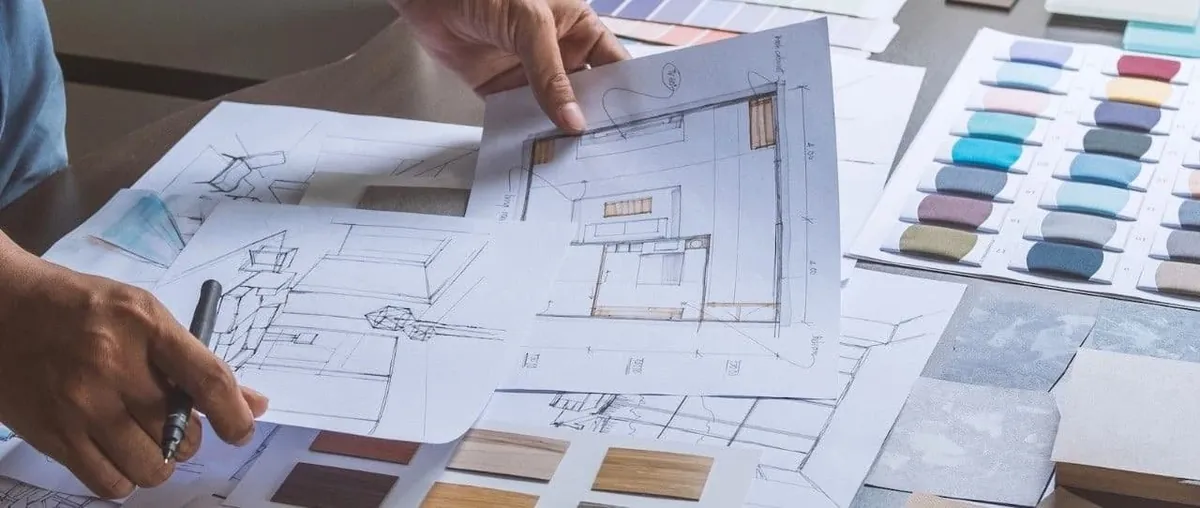
Capes on small lots
The post-war capes in Whitman are compact houses on compact lots, and their windows tend to be standard sizes repeated through the house. That makes them easy to fit and easy to plan, and it leaves the real decisions to the fabric.
The front rooms of a cape face the street at a short distance, so light filtering cloth is the usual choice. The dormer bedrooms upstairs are snug rooms with a single window, often catching early light, which makes room darkening or blackout a common pick. The kitchen, at the back or side, often looks across the same short gap as the side windows, so it may want banded fabric or a light weave depending on how close the neighbor is.
A compact house also benefits from simplicity. Rollers add no bulk to a small room and leave the walls and trim uncluttered. In a cape where every room is modest, that matters more than people expect.
A desk by the window
More Whitman households work from a spare bedroom or a corner of the dining room than ever, and in a compact house the desk usually ends up beside a window. That brings two problems at once. The screen picks up glare from the glass, and on a close-set street the person at the desk is in plain view of the neighbor’s window across the gap.
A light filtering roller deals with both. It spreads the daylight evenly, so there is no hard patch of sun across the keyboard, and it turns the window into a soft surface from outside. If the window faces open yard rather than another house, a darker solar screen is worth comparing, because it cuts the glare while keeping the view. For video calls, a pale fabric behind the desk gives an even, bright backdrop. Planning roller shades in Whitman, MA, for a home office is usually a matter of which way the desk faces and what is across the way.
Roller shades in Whitman, MA, for sunny walls
Not every window in town faces a neighbor. A back wall that looks over the yard, a sunroom off a cape or the upper floor of a two-family can face open sky and take the full afternoon sun. For those windows, a solar screen is worth a look.
Screens are chosen by openness, which simply describes how open the weave is. A more open screen gives a clearer view and a brighter room, letting more of the sun’s sparkle through. A tighter screen quiets the light and gives more privacy in daylight, while the view softens. Color matters as well: a dark screen is easier to see through, while a pale screen glows and looks more private from outside during the day.
The usual caution applies on close-set streets. Screens are private by day because it is brighter outside than in, and that flips when the lights go on at night. A screen on a back window facing open yard is no problem. A screen on a side window facing a neighbor usually wants a partner fabric for the evening.
A room-by-room plan
Most Whitman houses end up with two or three fabrics, and roller shades in Whitman, MA, are rarely a single cloth repeated through every room. A two-family might use light filtering across the downstairs front, banded fabric on the side windows of both floors, room darkening in every bedroom and a screen on a sunny upstairs back room. A center Victorian might choose light filtering in its small parlor windows, blackout in a child’s room and one richer fabric in the dining room. A cape might keep it simpler still: light filtering downstairs, blackout in the dormers.
What ties a plan together is the street side. When every window facing the road shows the same color from outside, the house looks considered even if the fabrics inside vary. Neutral whites, creams and light grays are the easy choices for that outward face.
The rest is personal. A patterned roller in a child’s room or a kitchen adds character without taking up any space, and the back of a house is the natural place to try one.
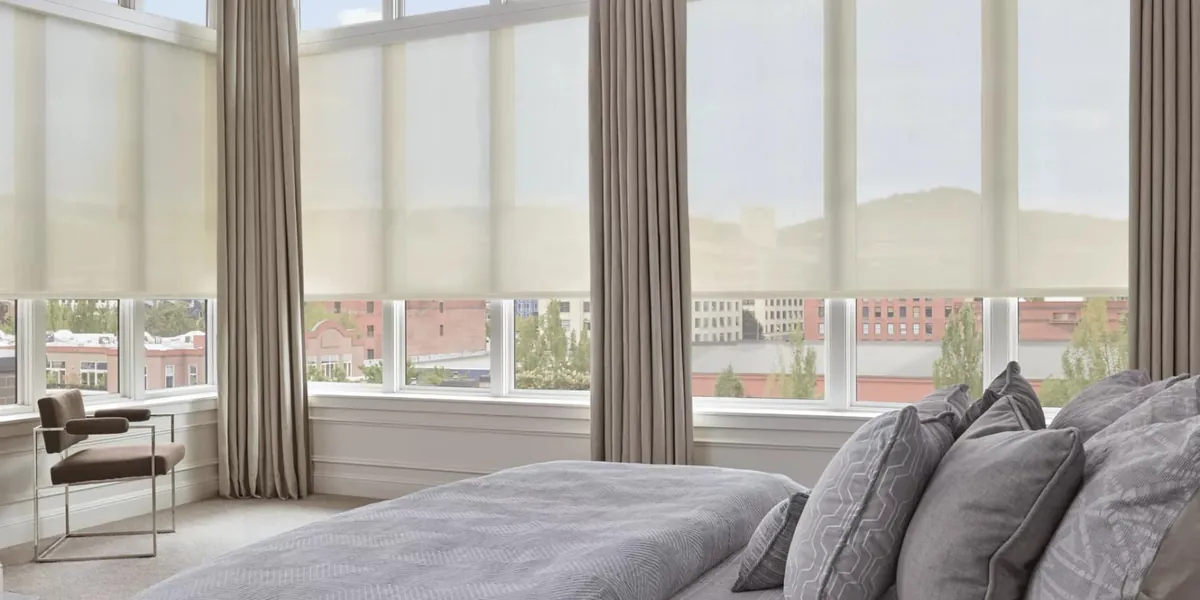
Entries, stair windows and baths
The small openings in a Whitman house are easy to overlook until the main rooms are done. A front door sidelight sits a step from the sidewalk. A stair window in a two-family often lines up with the neighbor’s stair across the drive. A bathroom window on the side of a cape faces the same short gap as the kitchen.
All of them want privacy above anything else. A room darkening fabric or a dense light filtering weave usually suits them, and keeping those small shades in the same color as the main windows ties the whole side of the house together. In the older Victorians, a stair or bath window is often one of those small original openings set deep in the wall, which gives a roller a tidy home inside the frame. We include every one of these windows in the walk-through so nothing is left bare once the bigger rooms are dressed.
Designer and Alustra
All of the fabrics above come from two Hunter Douglas roller families. The Designer range is the practical heart of it: Designer Roller for plain and textured cloth from light filtering to blackout, Designer Banded for the striped two-layer fabric, and Designer Screen for solar screens. Between them they cover every window in a close-set house.
Alustra is the more tailored collection, with richer weaves for a room where you want the shade to be part of the decoration. In a Whitman Victorian, that is usually the parlor or dining room. Many orders use Designer for most of the house and Alustra for one or two rooms. Our main roller shades page shows the whole range.
PowerView on a busy street
PowerView motorization lets rollers move from a phone app, a remote or a schedule. On a street where privacy matters on so many windows, a schedule is the real benefit: every side shade can lower itself at dusk without anyone going from room to room, and bedroom blackout can rise at the time you choose in the morning.
Motorization also helps on the awkward windows, such as a dormer over a bed or a stair window at the turn of a flight. Shades can be grouped so all the side windows move together. We plan how each motor is powered at the visit. See our page on motorized blinds in Whitman for more.
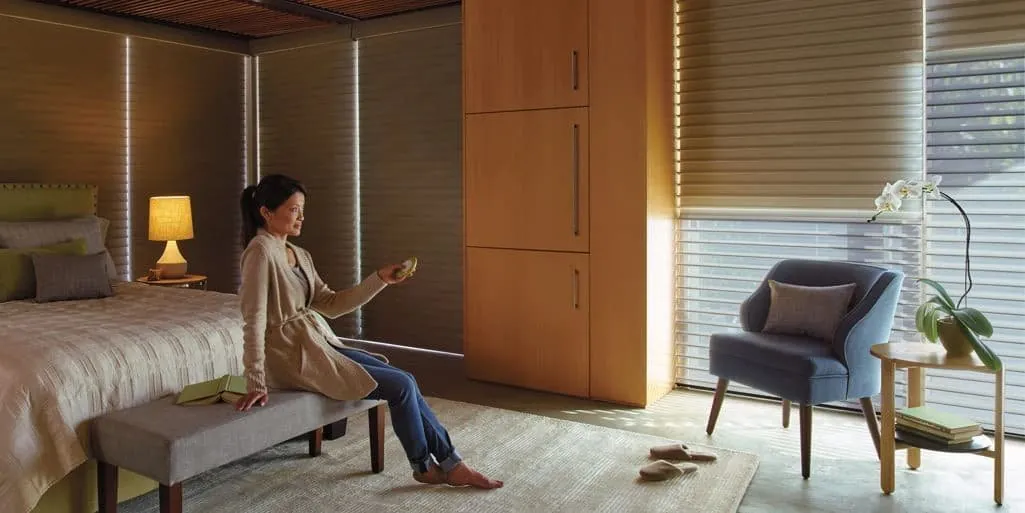
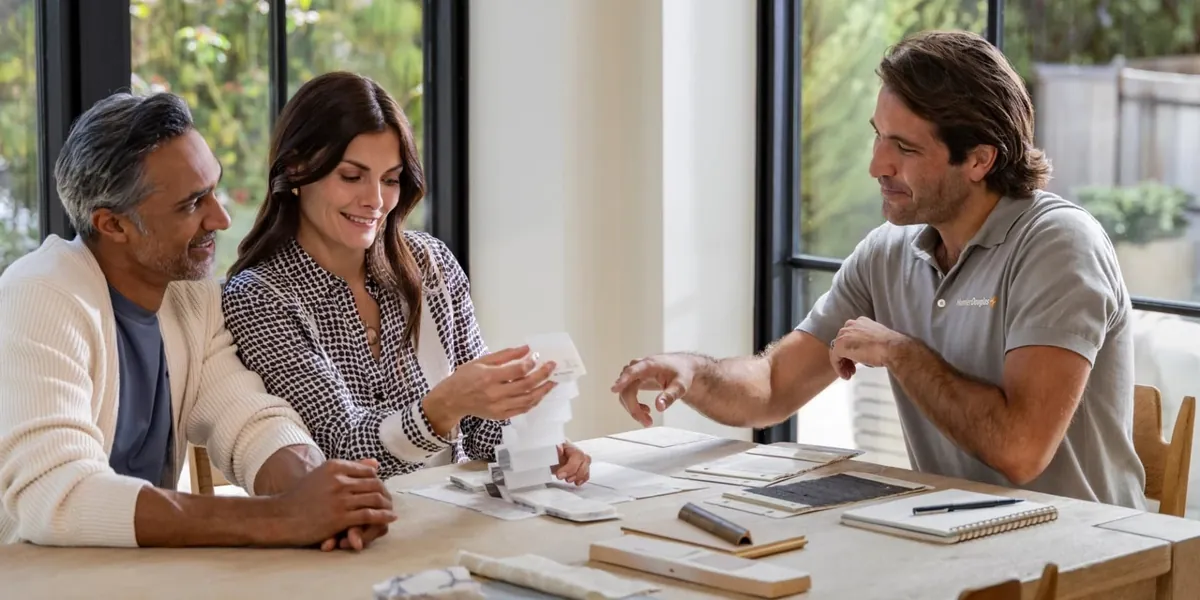
Samples at your kitchen table
Whitman is part of our shop-at-home territory. That means you choose at home, with the fabric held up against your own windows and the house next door in plain sight. Our vans carry samples, so we can bring the showroom to you. The Canton shop-at-home page describes how the territory works.
A typical visit:
- You book online with Request a Consultation or by the call button.
- A consultant arrives with Designer and Alustra samples.
- You start with the side windows, where the sightlines are shortest.
- You compare light filtering, banded, screen and blackout at each window.
- Every opening is measured and the mount agreed.
- You get a free estimate to take your time over.
If you would like help pulling a room together, ask about our interior design consultations.
Why a Gallery dealer
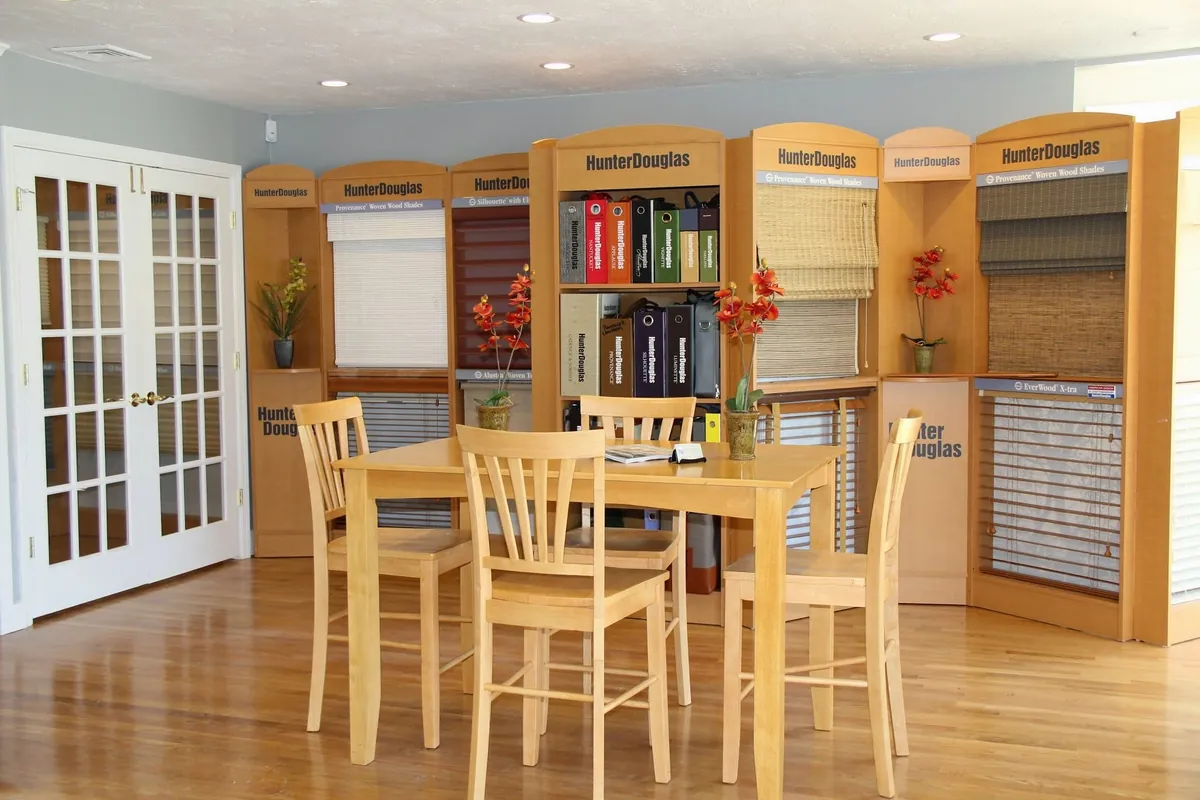
Blinds & Designs is a Hunter Douglas Gallery dealer, so every Designer and Alustra roller is open to you, and your shades are fitted by installers certified by Hunter Douglas.
Beyond rollers we carry Hunter Douglas blinds, shutters, cellular and roman shades, and we handle blind and shade repairs, so one consultation can cover the whole house. A small Victorian bedroom that runs cold may suit cellular shades in Whitman, and our Whitman page lists everything we do in town.
For a showroom visit as well as the home consultation, the Franklin showroom is our nearest to Whitman.
Questions from Whitman
The house next door is only a few strides away. What fabric should go on the side windows?
Light filtering cloth keeps the room bright by day while the window reads as a plain glow from next door. For bedrooms and bathrooms, a denser fabric keeps things private once the lights are on.
Our Victorian has small original windows. Will a roller make the rooms darker?
No more than it has to. Raised, a roller rolls tight under the head of the frame and leaves the whole pane open, which makes it a good fit for small openings.
Can you plan both floors of our two-family together?
Yes. We can cover both units in one visit and keep a single outward color across the street side.
Is there a showroom in Whitman?
No. Whitman is in our shop-at-home territory, so samples come to your house. The nearest showroom is Franklin.
Is there a charge for the estimate?
No. Estimates are free, with no obligation.
Your first window
Most Whitman households already know which window to start with: the one that looks straight into the house next door. Request a consultation and a shop-at-home consultant will bring the roller range to that window, show you how each fabric handles the short sightline and the small panes, and leave a free estimate room by room. Roller shades in Whitman, MA, are easiest to judge with the house next door right there outside the glass. If you would rather talk it over first, use the call button at the top of the page.