
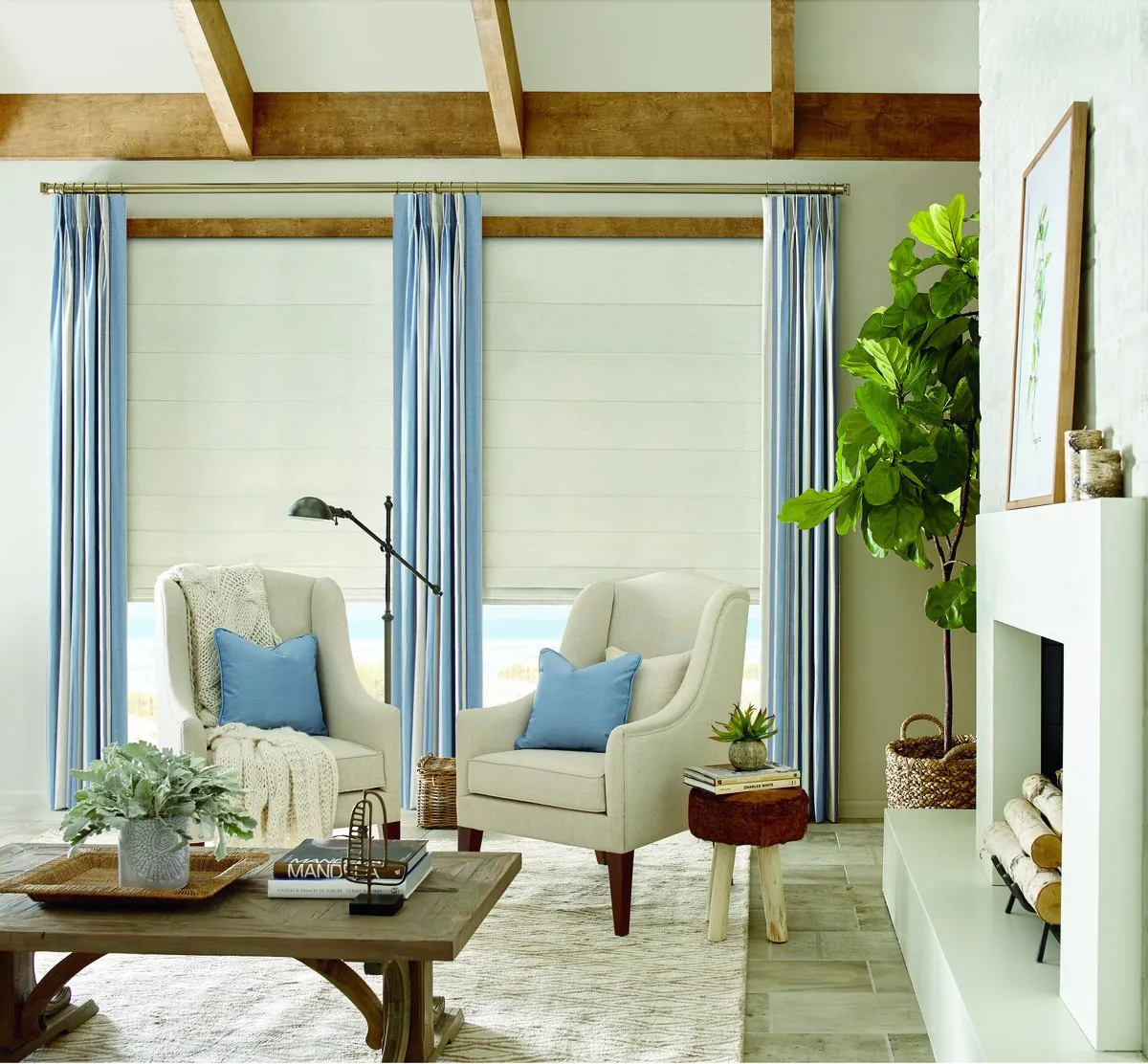
Two kinds of house, two different answers
Middleborough covers a very large area, and its houses fall into two broad groups. Around the town center stand Victorians and Federal houses with tall, narrow sash windows, high ceilings and painted wood casings. Spread across the miles beyond are post-war ranches and newer colonials, with modern openings in standard sizes. A shade that suits one of those groups is often the wrong choice for the other, and so we plan motorized blinds in Middleborough, MA, as two separate questions.
In the center the issue is reach and proportion. Windows run up toward the ceiling, the top sash is well above head height, and the casings deserve to stay in view. In the outer neighborhoods the windows are easy to reach, so the case for a motor rests instead on routine, on high foyer glass and on bedrooms that face the open land.
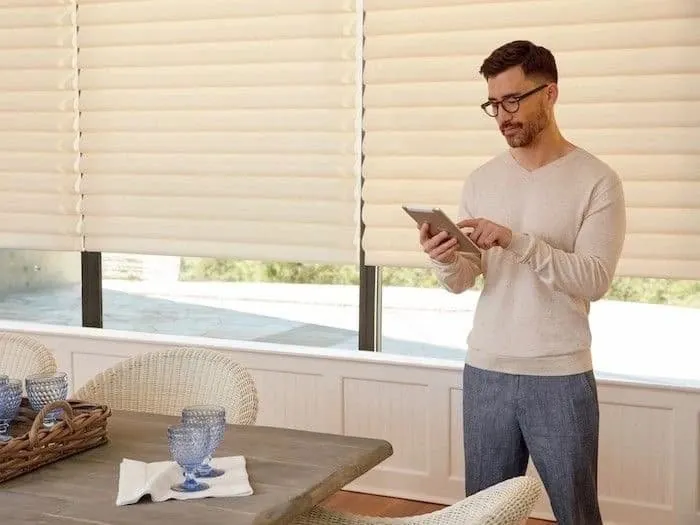
Hunter Douglas PowerView handles both. Shades run from a remote, from the app on a phone or tablet, or on schedules you set once.
Hunter Douglas shades that take a PowerView motor
These are the lines we suggest most for a motorized project in Middleborough, with the kind of room each one suits.
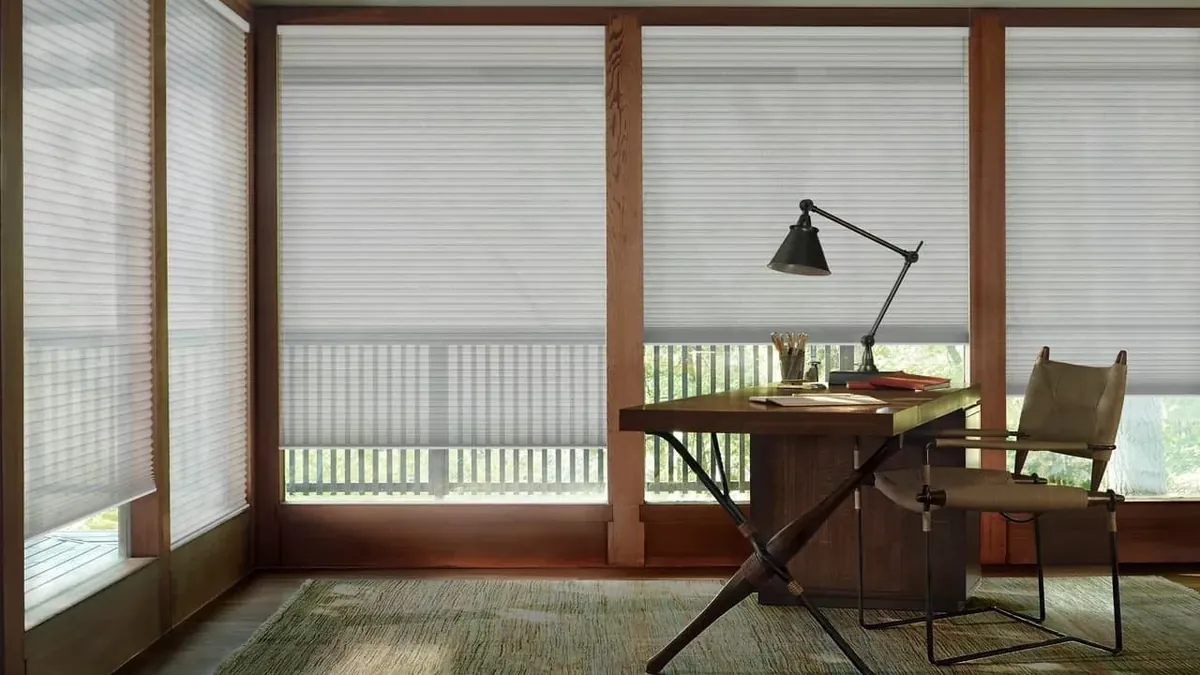
Duette honeycomb
Cells that hold air at the glass. A strong choice for the tall, draughty sash of an older house in the center.
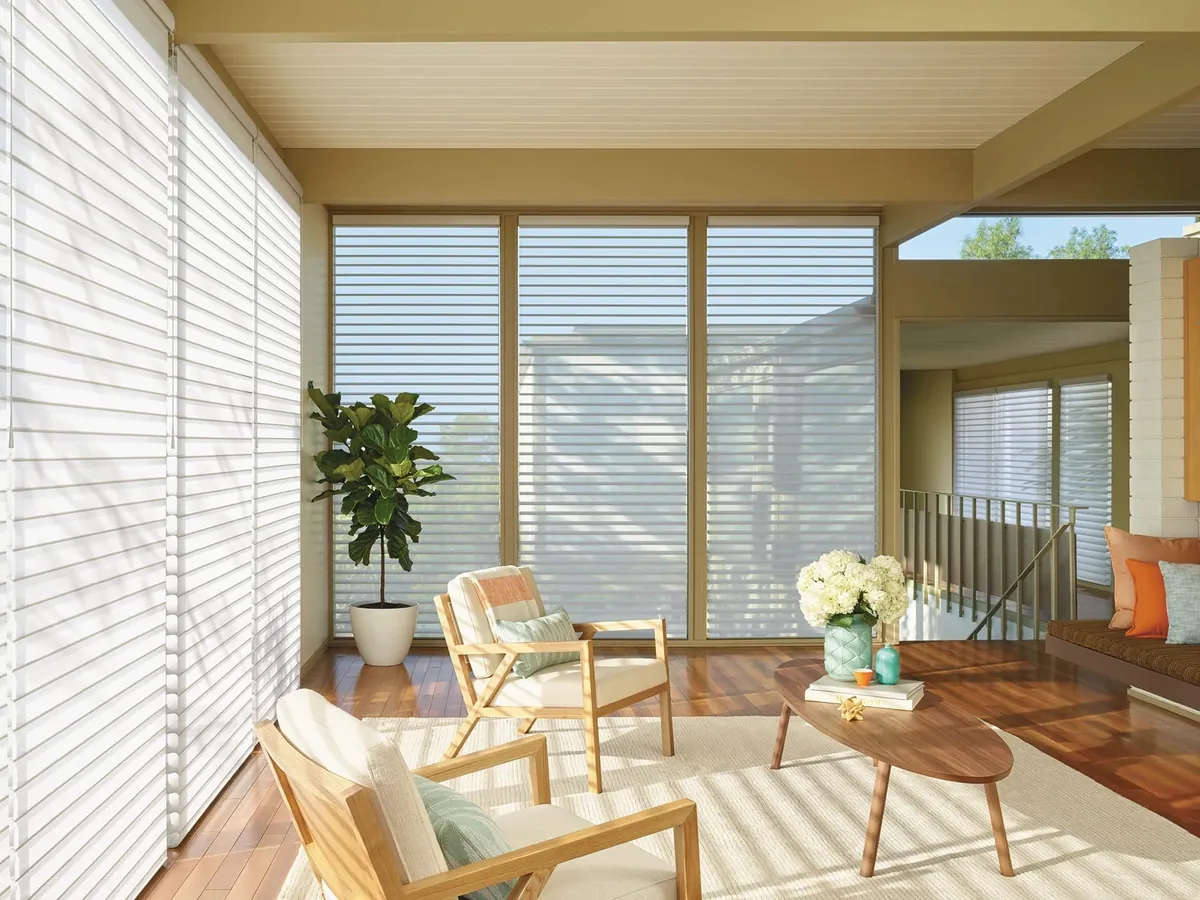
Silhouette sheer
Soft vanes that tilt to filter the light. Well suited to a newer colonial’s family room.
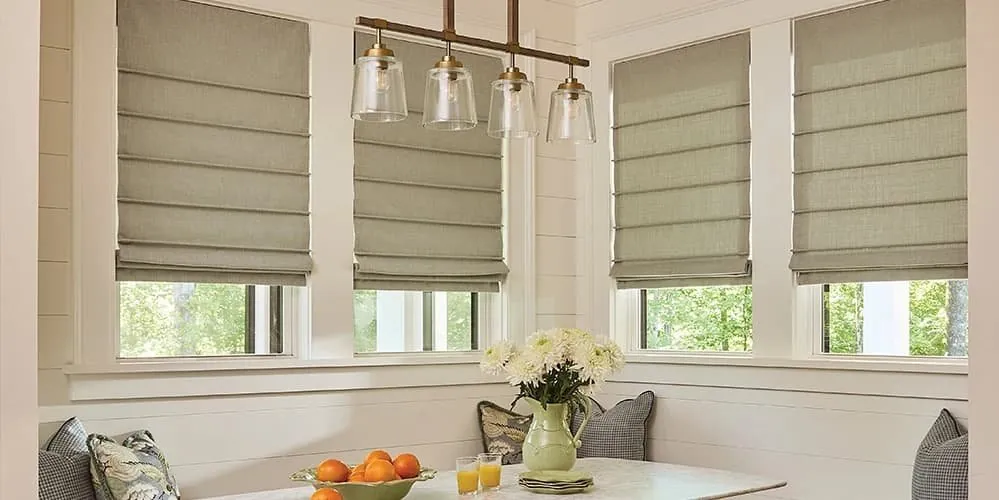
Vignette Roman
Fabric folds with a traditional look, at home in a Federal dining room or a Victorian parlor.
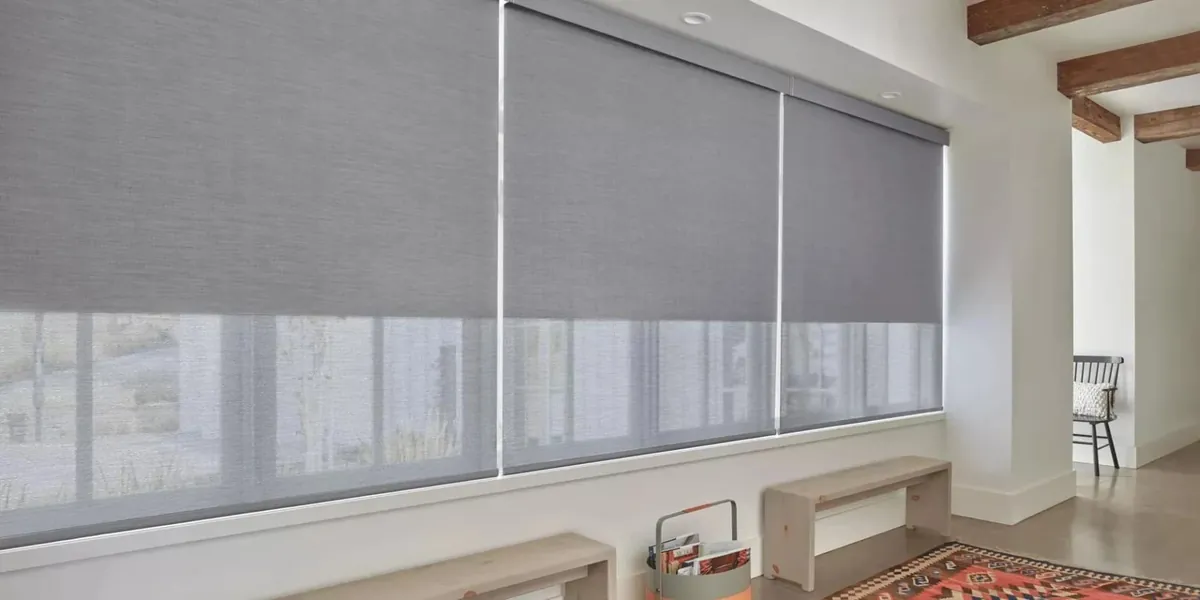
Designer roller
A clean, simple shade for long runs of standard windows in a ranch.
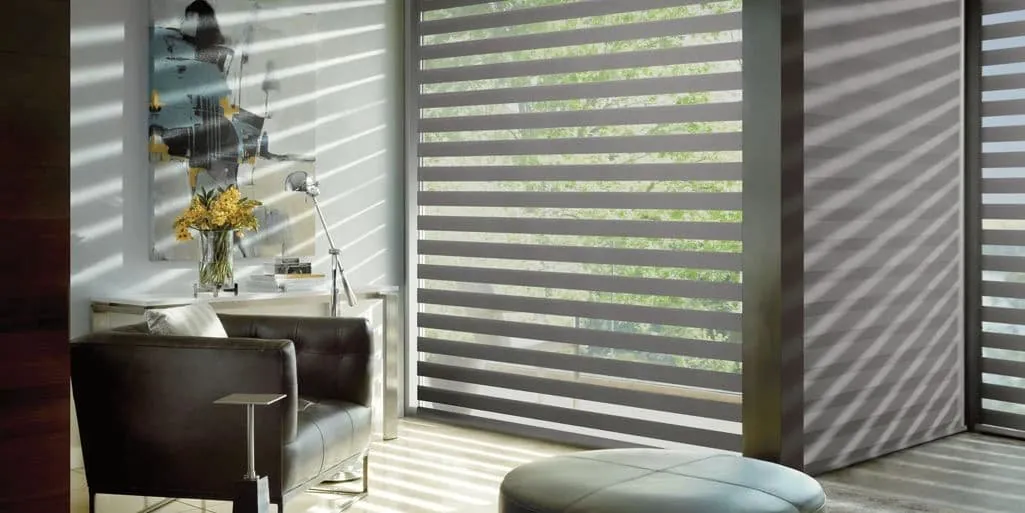
Banded shades
Sheer and solid stripes that shift to let light in or block the view, a modern option for a den.
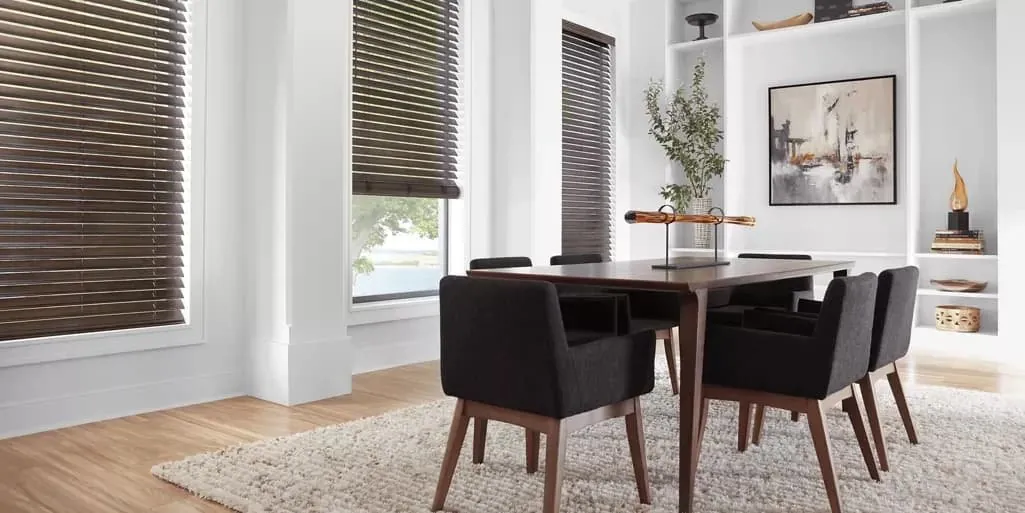
Wood blinds
Warm slats for a formal room. Not every blind or size takes a motor, so we check each window first.
In the center: tall, narrow sash
The older houses near the center were built when ceilings were high and windows were made tall and slim to bring light deep into a room. A Victorian front room can have sash that reaches close to the ceiling. A Federal house repeats the same narrow window across its front, often five across, on two or three floors.
Those proportions shape the shade. A tall, narrow window looks best with a shade that stacks neatly into a small band at the top when raised, so the glass and the casing read as they were meant to. Honeycomb and Roman shades both do this well. Inside the casing is the ideal position, with the motorized headrail hidden at the head of the opening. We measure each window across the top, middle and bottom, and check the frame depth at more than one point, because sash that has been painted and repainted over the years is seldom quite square or the same depth from one side to the other.
Where a frame is too shallow for the headrail, the honest answer is a slim mount on the face of the casing. We will show you that option alongside the inside mount and let you judge it at the window.
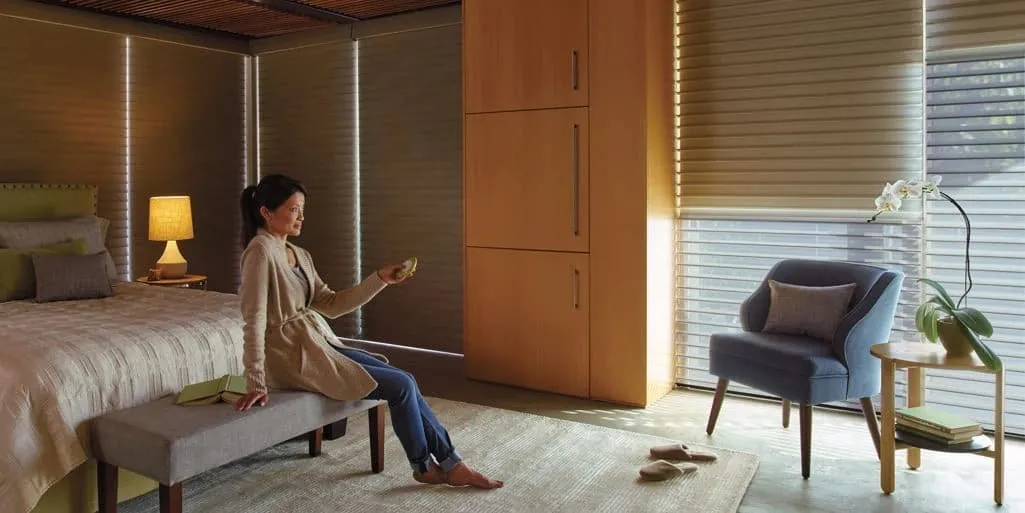
The top sash nobody can reach
In a high-ceilinged room, the problem with a manual shade is simple: the top of the window is out of reach. A shade that is raised all the way has to be pulled down from a height, and a cord long enough to work it ends up coiled on the floor or looped round a cleat. Many owners of older houses in town give up and leave the shades at one height all year.
A motor removes that problem completely. The shade rises and falls from a remote in your hand, stops wherever you want it and returns to the same positions every time. With no cord at all, there is nothing hanging down the side of the casing, which suits a period room and makes the window safer around children and pets.
Victorian bays and corner rooms
Many Victorians near the center have a bay window in the front parlor or the dining room, and some have a turret or angled corner room with windows on several faces. Each of those windows gets its own shade, and on PowerView they are grouped so the whole bay moves together and the shades line up when they stop. Where the bay has a curved or angled top, we check each opening separately.
Bays catch light from more than one direction, so the right position for the shades shifts through the day. A schedule can lower the side that takes the morning sun and leave the other side open, then reverse it in the afternoon.
Federal fronts, kept tidy
A Federal house is all about its symmetrical front, and nothing spoils that faster than shades left at five different heights. On a motor, each floor’s front windows become one group. One press and they all move to the same line, so the face of the house stays orderly from the road whatever time of day it is.
Grouping helps inside too. A dining room with windows on two walls closes as one, and a front room can stay half shaded on the street side while the side window stays fully open.
Warmth at old glass
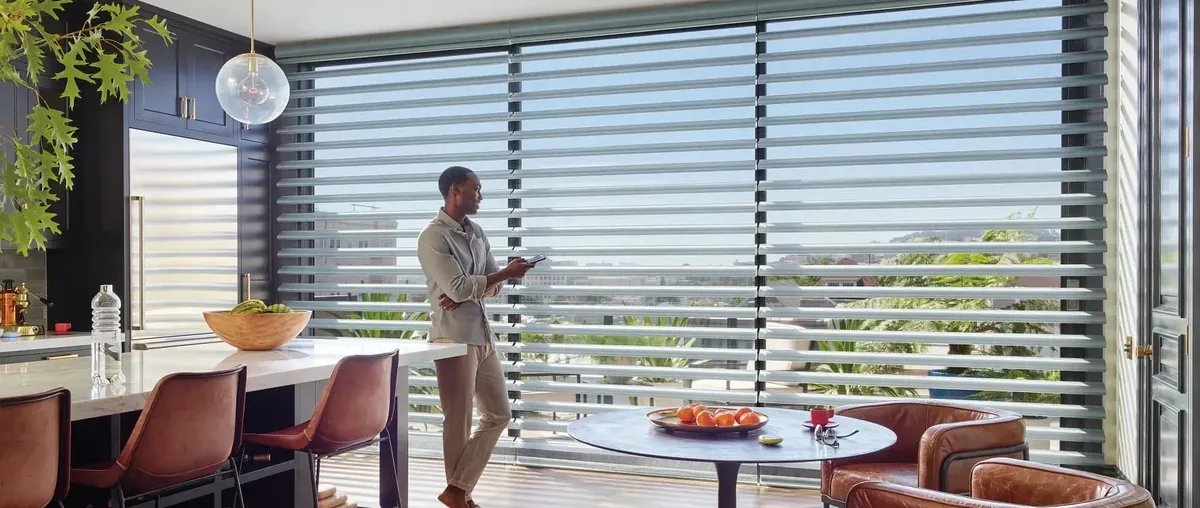
Tall sash in an older house loses heat on a winter night, and there is a lot of glass in a room with three or four tall windows. A honeycomb shade lowered at dusk holds a layer of still air between the glass and the room, which makes a clear difference to how warm the area by the window feels. On a schedule, the shades close as the light fades and open in the morning, so they are doing that job every night rather than only when someone remembers.
Beyond the center: ranches and newer colonials
Most of Middleborough’s land area is outside the center, and most of the housing out there is post-war ranches and newer colonials. Their windows are standard modern sizes, square and regular, with frames that usually leave enough depth for an inside mount. That makes them simple and predictable to motorize.
In a single-story ranch the windows are within easy reach, so the motor is less about height and more about how many there are and how often they move. The broad living room window is commonly divided into two or three shades that travel as one, and the bedrooms along the hall get a shared morning and evening routine. Requests for motorized blinds in Middleborough, MA, from ranch owners usually begin there and spread room by room.
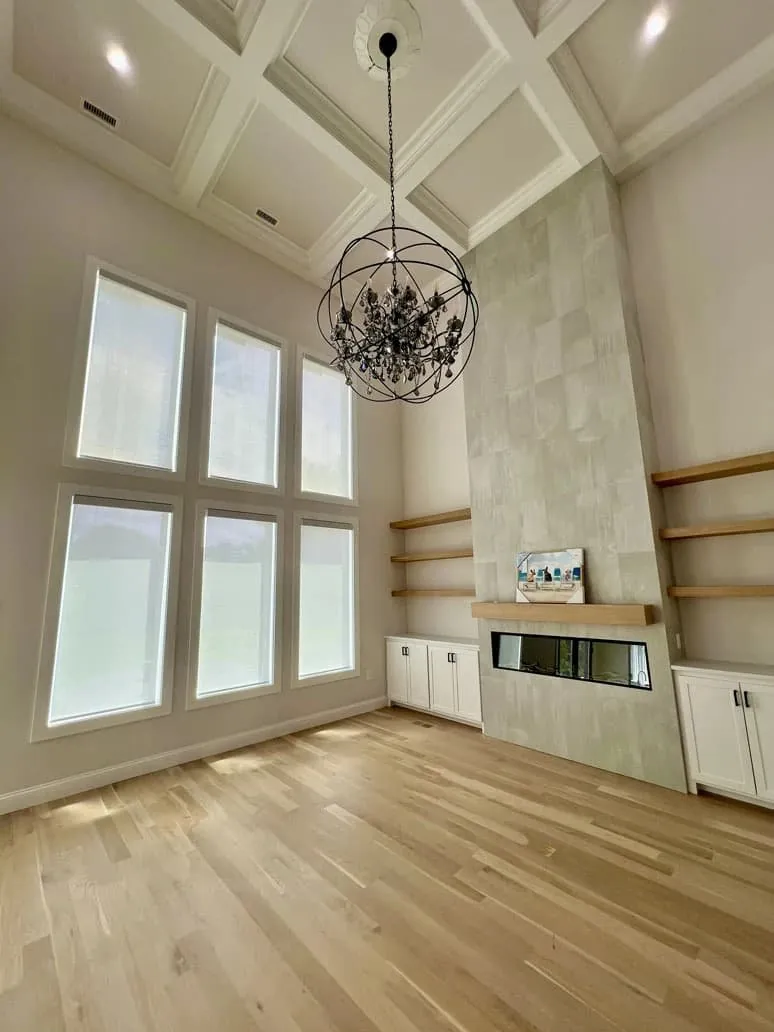
A newer colonial brings height. Many have a tall foyer, a window set high above the front door, or a family room with glass reaching up toward a vaulted ceiling. Those high windows are almost always the starting point, because by hand they cannot be covered at all.
Open land, early light
Houses in the outer parts of town often sit on large lots with fields or woodland round them, and no street lights. That changes how light behaves. Morning sun arrives early and uninterrupted across open ground, straight into an east bedroom, and the nights are properly dark.
Room-darkening fabric on a motor suits those bedrooms well. The shades stay down until the hour you choose, then lift, partway at first if you like. In the evening, a sunset schedule closes them as the light goes. For motorized blinds in Middleborough, MA, out on a rural lot, it is often the bedrooms rather than the living room that come first.
Privacy works differently on a large lot too. With the nearest neighbor far away, a living room can stay open into the evening, and the shades there are chosen more for glare and heat than for screening the room from the road.
Old houses with newer additions
Plenty of older houses near the center have been extended over the years: a family room across the back, a kitchen opened up to a sunroom, a primary suite over the garage. The result is a house with two sets of windows. The original rooms keep their tall, narrow sash, while the addition has modern windows of a different size, sometimes a wide slider or a row of casements.
One PowerView system ties them together. The original rooms can keep their Roman or honeycomb shades fitted carefully inside the old casings, and the addition can take a roller or sheer shade that suits its larger, newer glass. Fabrics and colors can be coordinated so the two parts of the house feel connected, and every motorized shade, old side and new, appears in the same app. The addition often faces the garden and takes the afternoon sun, so it can run its own schedule while the formal front follows another.
When we plan motorized blinds in Middleborough for a house like this, we measure the two parts separately, because the frames and depths are completely different, and then draw the groups and scenes up as one plan.
West windows and the late-day sun
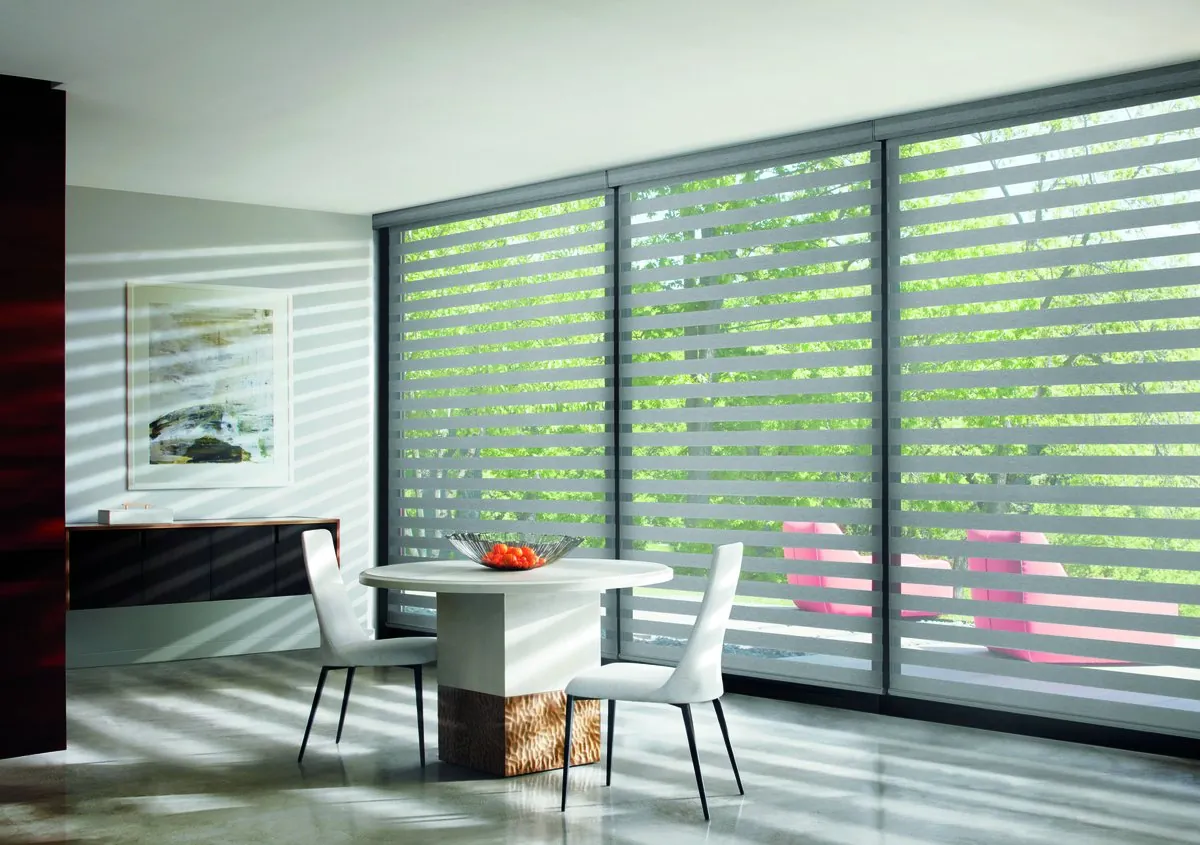
On both sides of town, the windows that cause the most complaints are the ones facing west. Late in the day the sun drops low and comes in level, straight across a kitchen table or into a television screen, and in summer it warms a room just as the household gets home. In an older house that heat collects under high ceilings; in a newer colonial it pours through the tall family room glass.
A schedule for the west side is one of the simplest and most useful things PowerView does. The shades on that wall lower partway in the late afternoon and lift again once the sun has set, and because the timing can follow sunset, it shifts through the year without being reset. A light-filtering fabric keeps the room bright while it takes the edge off the glare. Our guide to the best shades for sun and glare goes into the fabric choices in more detail.
Children’s rooms and cordless windows
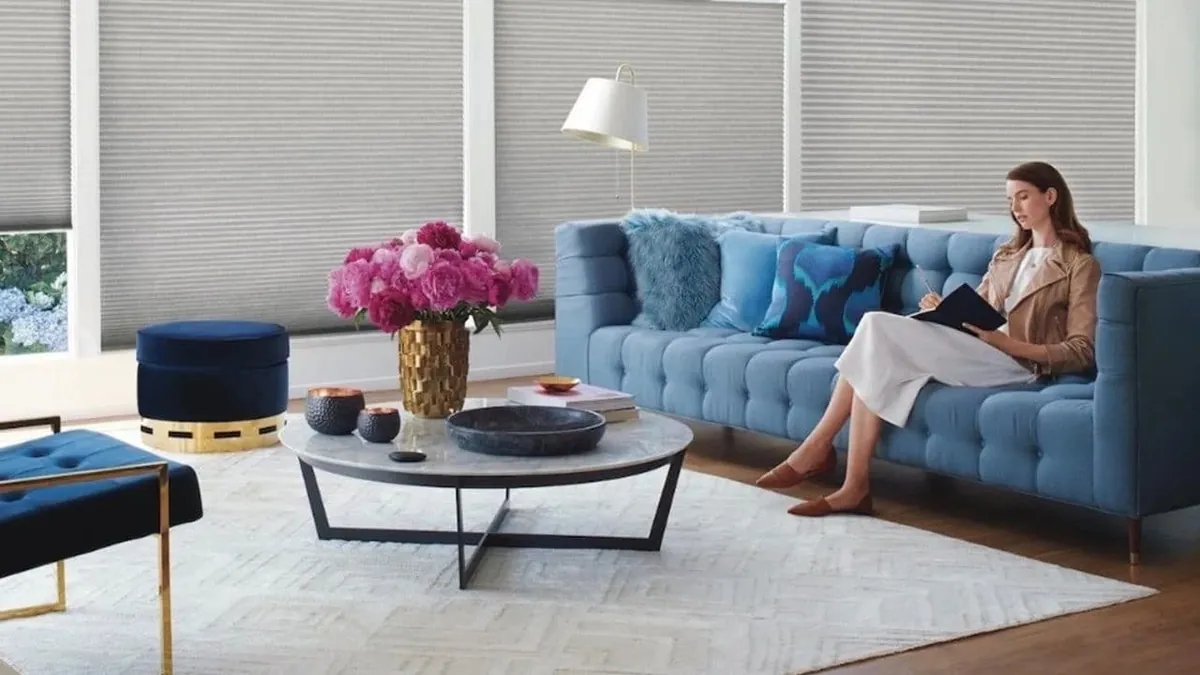
A motorized shade has no lift cord at all, which makes it a sensible choice for a nursery or a child’s bedroom. There is nothing hanging beside the window to reach for, and the shade can be set to stay closed for a daytime nap and open again later. In a tall Victorian bedroom, where a manual shade would need a very long cord, the difference is especially marked. In a newer colonial the same shade can sit on the remote by the crib or the bed, so a parent can darken the room without crossing it. Many families who look at motorized blinds in Middleborough, MA, for the main rooms end up adding the children’s rooms for this reason alone.
Planning the two side by side
If you are comparing a house in the center with one further out, or own an older house with a newer addition, here is how the two plans usually differ.
- In the older stock: inside mounts measured carefully, honeycomb or Roman shades that stack small, motors for reach on the tall top sash, groups to keep the front orderly.
- In the outer subdivisions: standard sizes, long runs split into grouped shades, motors for high foyer windows, room-darkening bedrooms on a schedule.
- In both: the same app, remote and schedules, and the option to start with a few rooms and add more later.
Running the shades
A remote or wall control moves a single shade, a room or a group. The PowerView app shows every motorized shade by room on your phone or tablet and stores the scenes you save. Schedules play those scenes at set times or at sunrise and sunset. Read more in our guide to how motorized shades are controlled, or see the window covering automation page for scenes and timing.
Power for each motor
A motor needs power, and what suits a plaster wall in a Victorian may not suit a newer house. We plan how each motor is powered at the visit, opening by opening, and agree the plan with you before ordering.
How the visit works
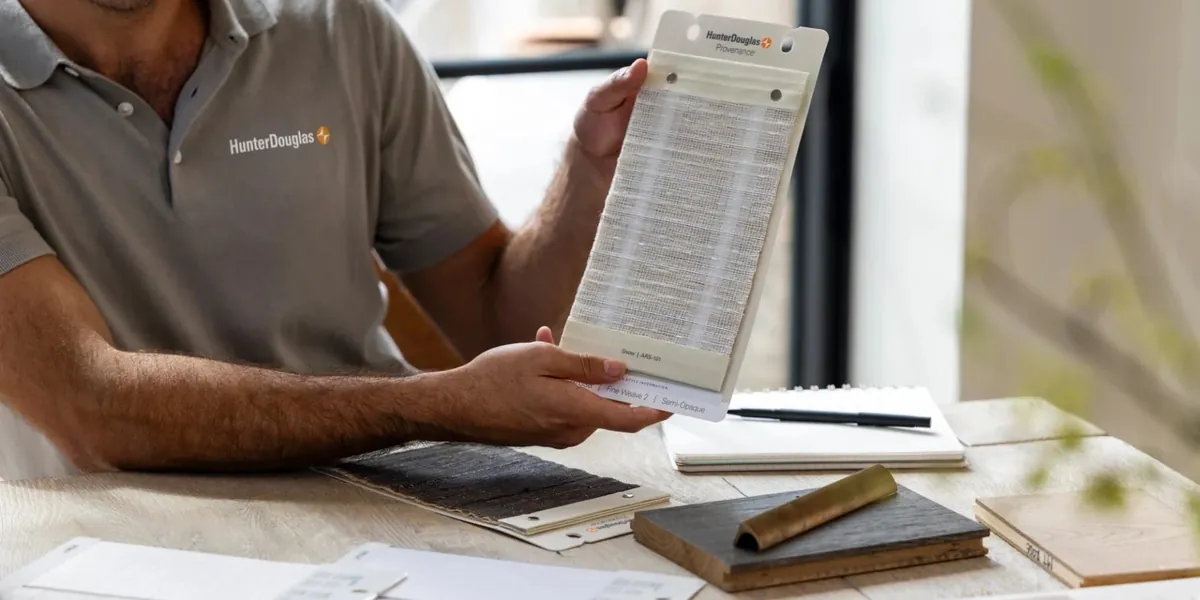
With so much distance between one side of town and the other, the visit comes to you. Our vans carry samples, so we can bring the showroom to your door.
- Request a consultation online or by the call button.
- We walk through the house with you and talk about how each room is used.
- You hold samples at your own windows to see the light and color.
- We measure every opening, paying particular attention to the frames of older sash.
- You choose which windows get motors and how they group, and we agree power for each one.
- You receive a free estimate to take your time over.
- Our certified Hunter Douglas installers fit the shades, set the stops, pair the controls and program your schedules.
There is more in what happens at an in-home consultation.
Why a Gallery dealer suits a mixed town
Blinds & Designs is a Hunter Douglas Gallery dealer. In a town where a Federal house in the center and a newer colonial on the outskirts need such different things, the full PowerView range lets us suggest the right shade for each, not one compromise for both.
Our installers are certified by Hunter Douglas, and they set up the groups, scenes and schedules before they leave. We offer interior design consultations, and we repair blinds and shades you already own.
More in town: custom blinds in Middleborough, cellular shades in Middleborough, roman shades in Middleborough and our Middleborough page. The full range is on the motorized blinds and shades page.
Our nearest showroom
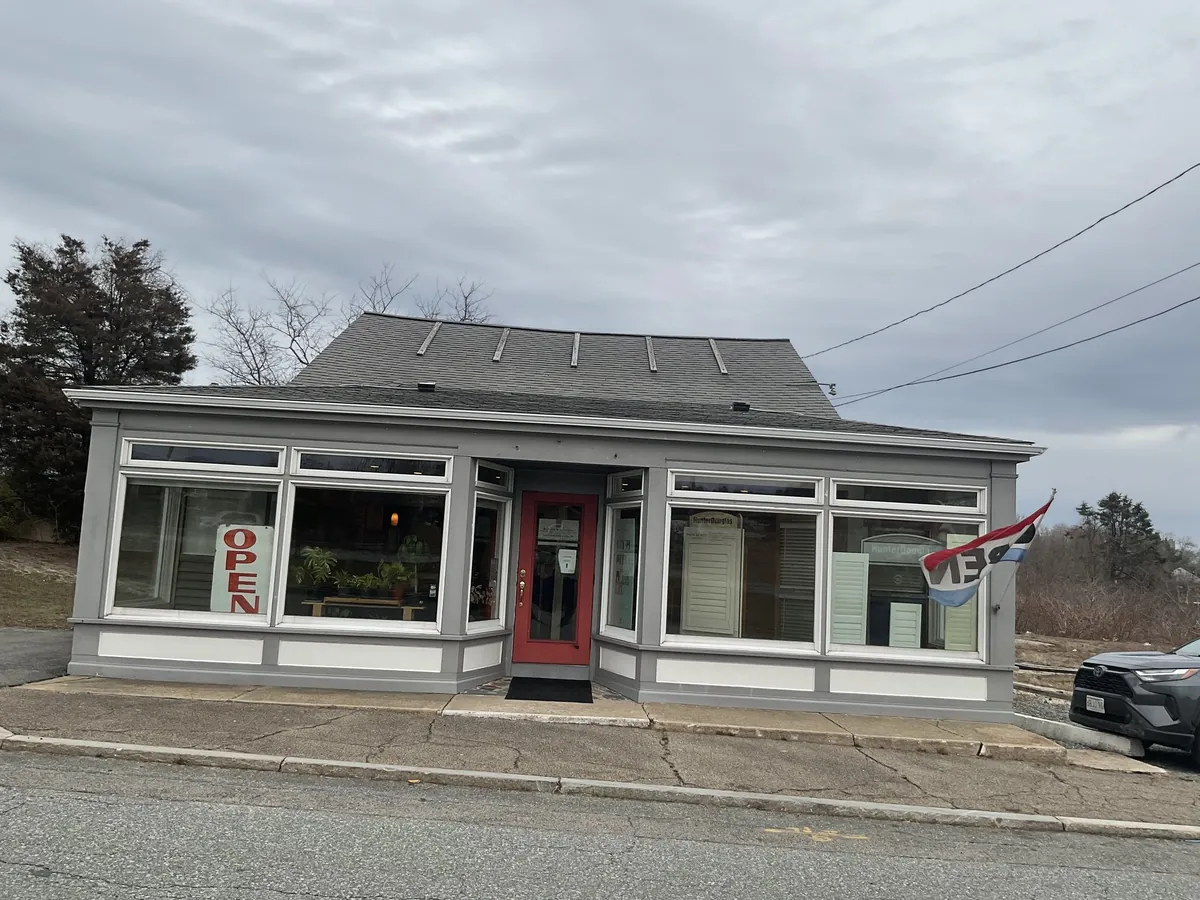
The Sagamore showroom is our nearest location to Middleborough, out toward the canal. You are welcome to visit and talk through your windows.
For a house with tall sash in the center, though, the measuring is the part that matters most, and that happens at home.
Questions from Middleborough
Will a motorized shade fit the tall, narrow windows in my Victorian?
Usually, yes. Honeycomb and Roman shades suit tall, slim sash and stack neatly at the top. We measure each frame for depth and squareness, and suggest a slim outside mount where an old casing is too shallow.
Is it worth motorizing a ranch with ordinary windows?
For the picture window, the kitchen window and the bedrooms, many people find it is. Standard sizes make the fit straightforward, and you can start with a few windows and add more later.
Can the shades help an old house feel warmer in winter?
Honeycomb shades lowered at dusk hold still air between the glass and the room. On a schedule they close every evening without anyone having to remember.
We live out on a big lot with no street lights. What should we put in the bedrooms?
Room-darkening fabric on a motor, set to lift at the hour you choose. Early sun across open land then waits until you want it.
Do you charge for the estimate?
No. After we measure, the estimate is free.
Book your visit
Wherever your house is in town, the next step is the same. Request a consultation and we will come with samples, measure every window and leave a free estimate for your motorized shades. If you would like to ask something first, use the call button, or call in at the Sagamore showroom.