
Old sash by the common, tall glass off Route 140
Franklin is the town our Franklin showroom calls home, so the houses here are the ones we know best. Around the common and along Main Street the antique colonials and Victorians still carry tall, narrow sash, often set in deep casings with trim worth keeping on view. Head out toward the subdivisions off Route 140 and the windows change completely: big colonials with two-story entry glass, stairwells lit by a window nobody can reach from the landing, and sliders to the back deck. Choosing window treatments in Franklin, MA, starts with knowing which of those houses you live in.
An old sash window and a two-story foyer window ask opposite questions. The first wants something slim that fits inside a narrow frame without hiding the woodwork. The second wants something that covers a large, high pane neatly and can be worked from the floor. Most houses in town have at least one of each problem somewhere, and some of the larger newer colonials have all of them.
Everything we sell comes from Hunter Douglas, and everything we fit goes up with certified Hunter Douglas installation. Below you will find each service we offer in town, with its own page, and then the details that matter for the houses on your street.
What we fit in Franklin homes
Every card opens a page devoted to one of our window treatments in Franklin, MA. Start with the one that fits the room you are thinking about, or request a consultation and we will go through the whole house together.
Custom Blinds in Franklin
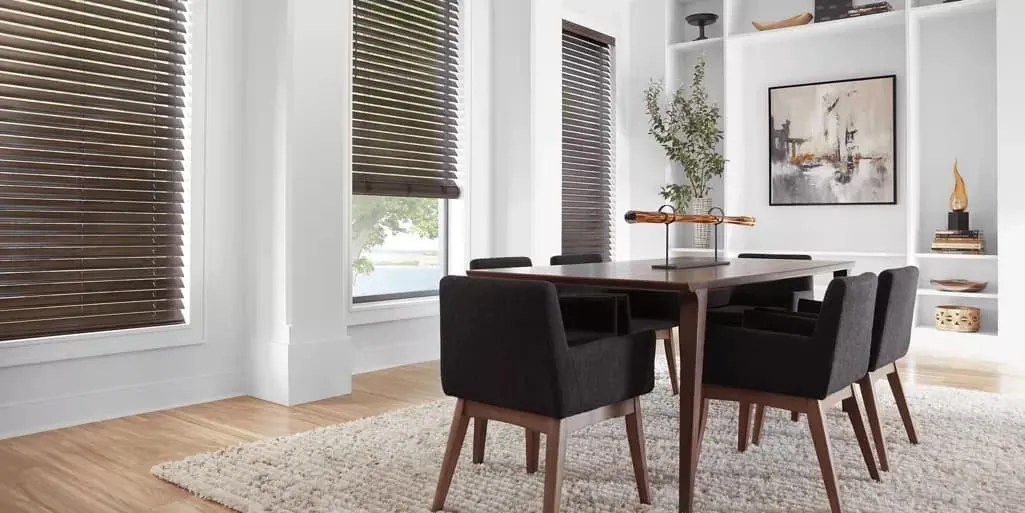
Parkland wood, EverWood faux wood, metal and vertical blinds, cut to the narrow sash near the common or the wide openings in a newer kitchen.
Cellular Shades in Franklin
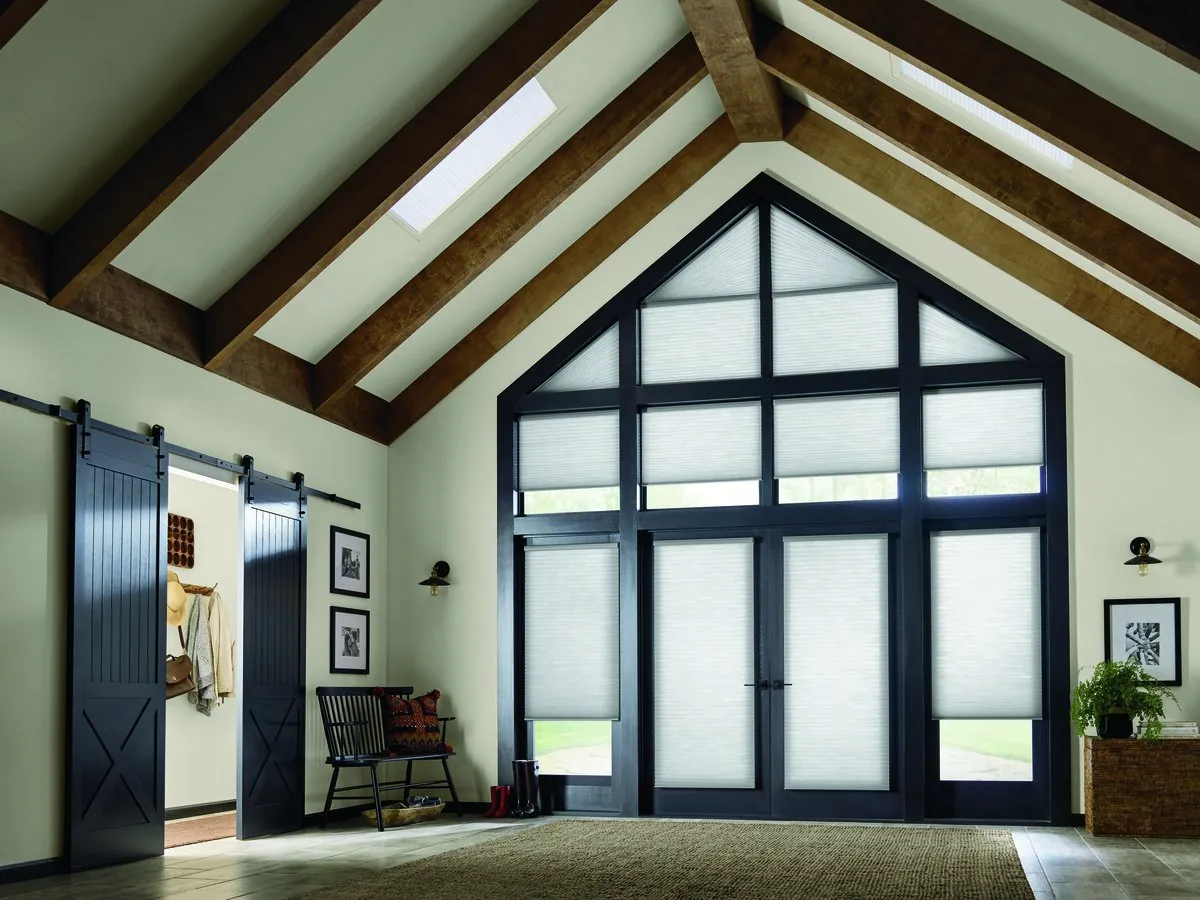
Duette and Applause honeycomb shades, whose cells hold still air against cold glass. A favorite for drafty antique sash and big entry windows alike.
Roller Shades in Franklin
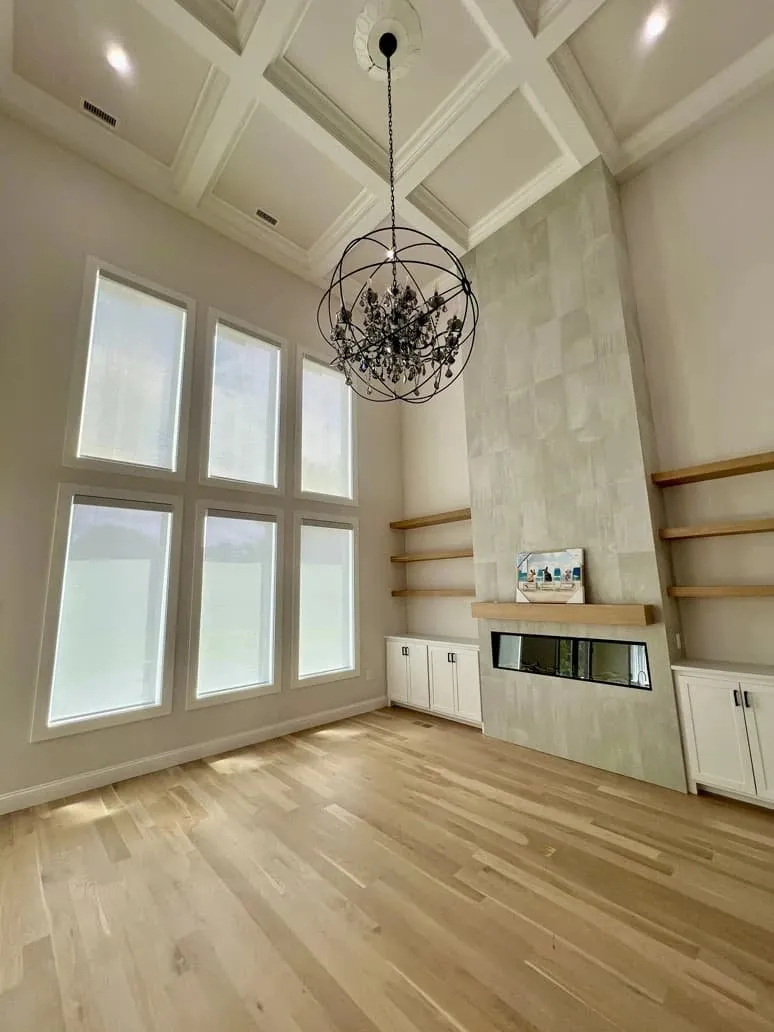
Designer and Alustra rollers and solar screens. Clean, simple and well suited to the tall glass of a two-story family room.
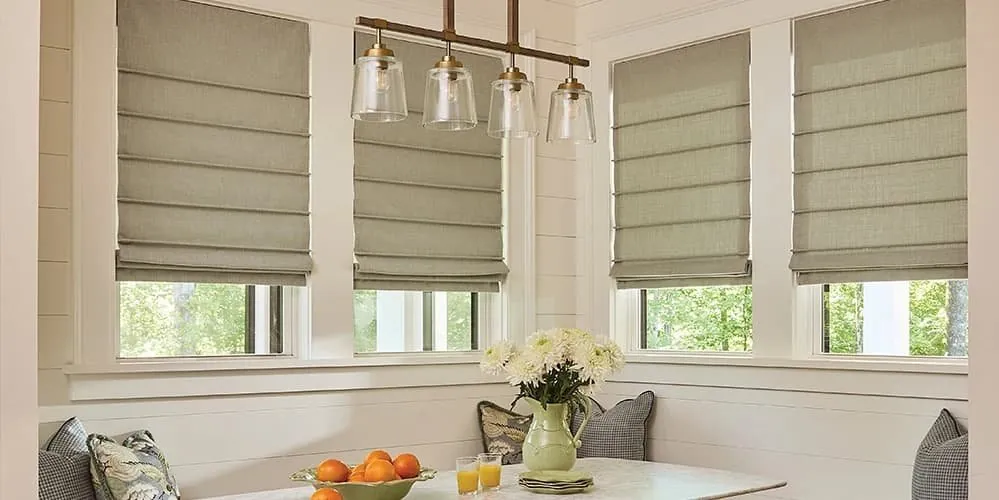
Roman Shades in Franklin
Vignette and Carole Fabrics roman shades in flat and folded styles, for a softer look in a front parlor or a breakfast nook.
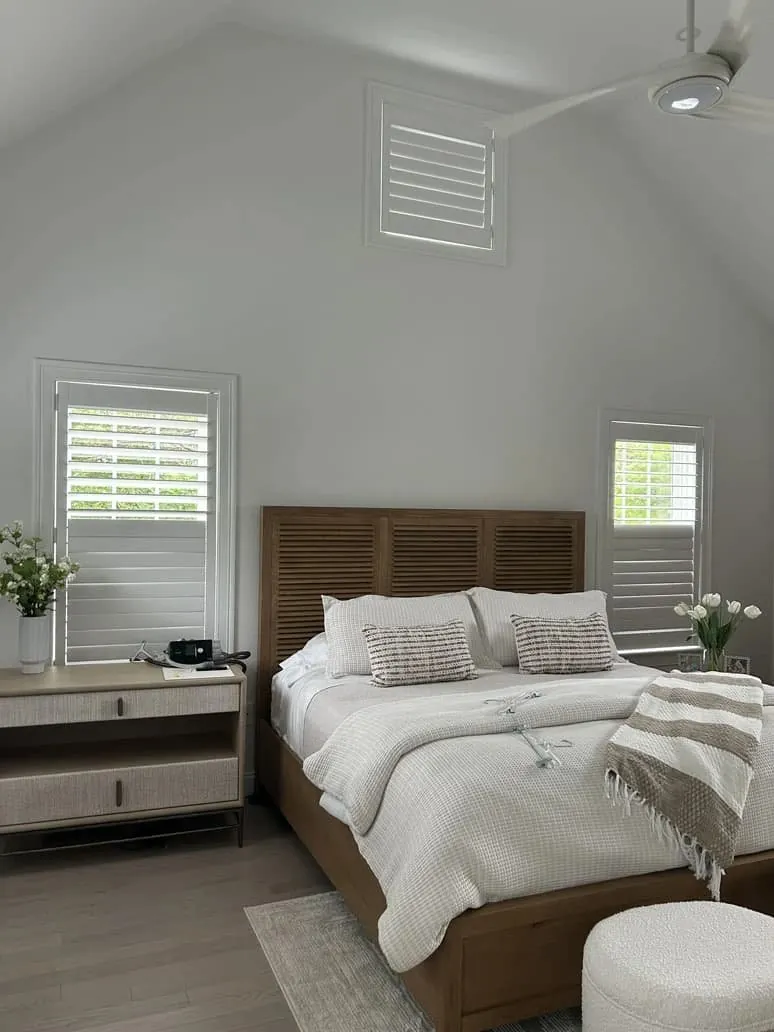
Plantation Shutters in Franklin
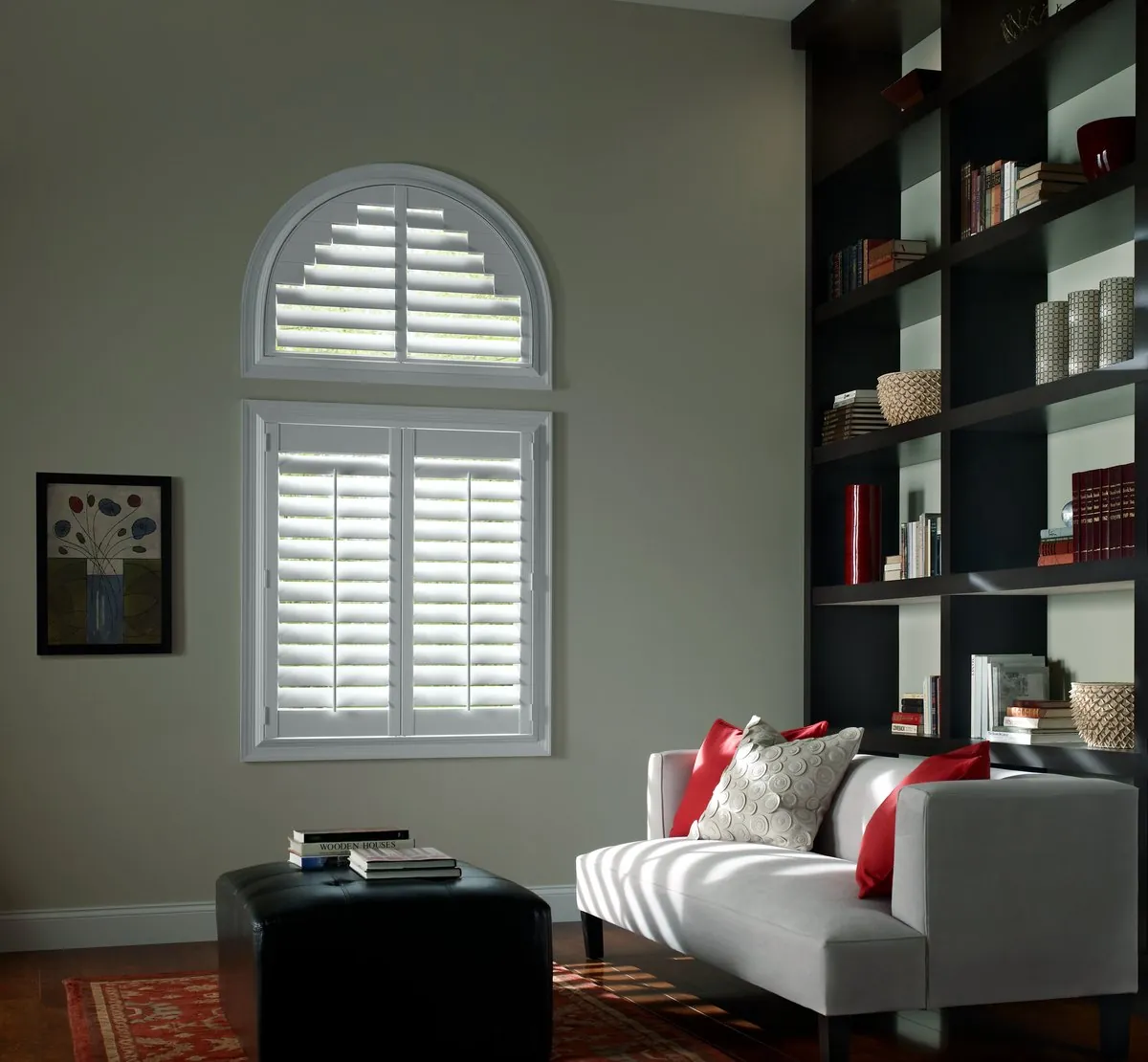
Palm Beach, NewStyle and Heritance shutters, with louver size and frame style chosen for each opening, gable windows included.
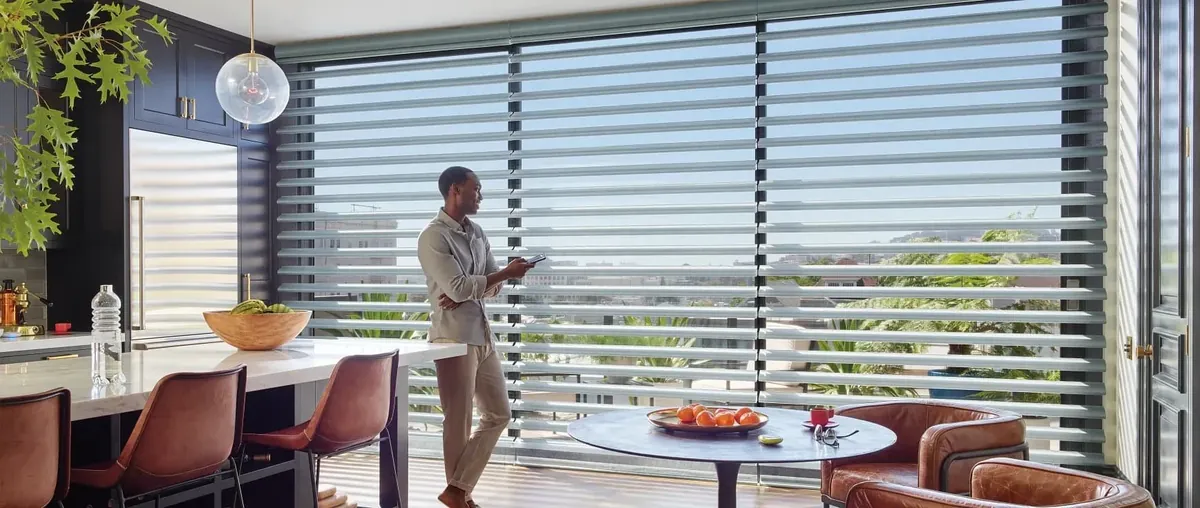
Motorized Blinds and Shades in Franklin
PowerView control by remote, app or schedule. The usual answer for a stairwell window or a foyer shade well out of reach.
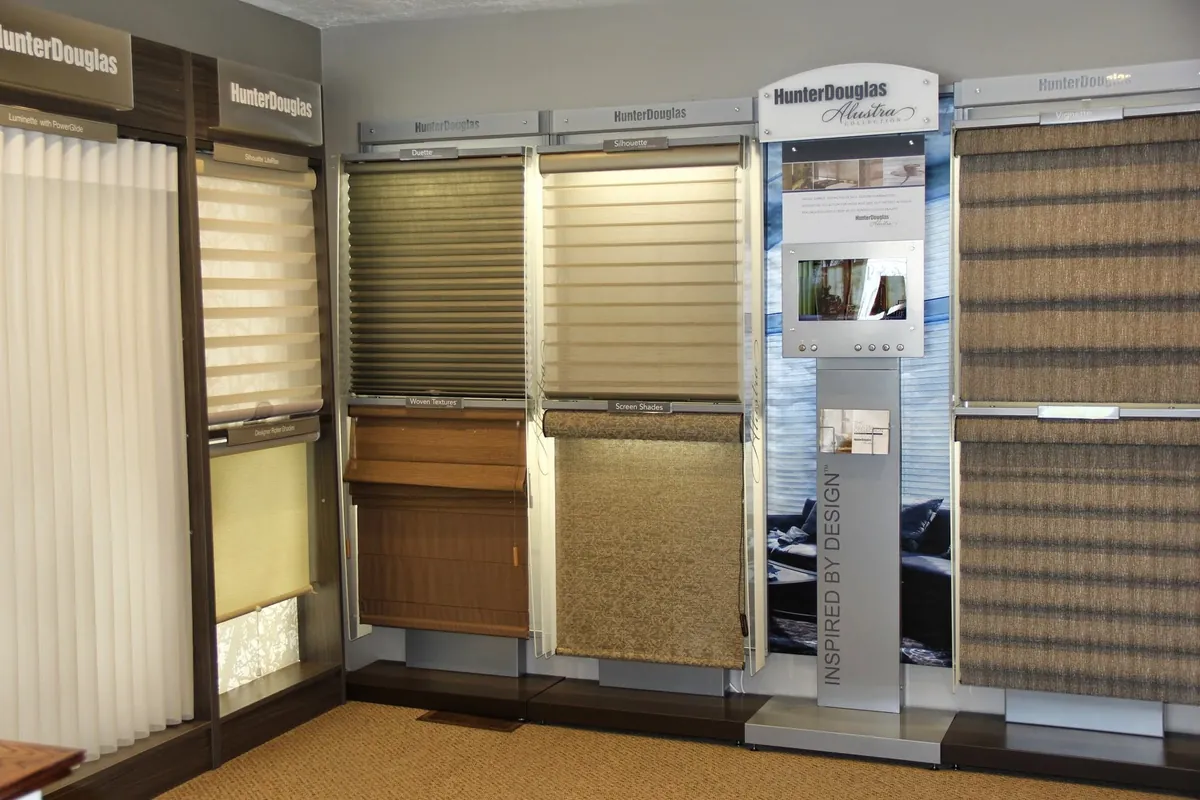
Hunter Douglas Dealer in Franklin
What being a Hunter Douglas Gallery dealer means for your order, from the full product range to certified installation.
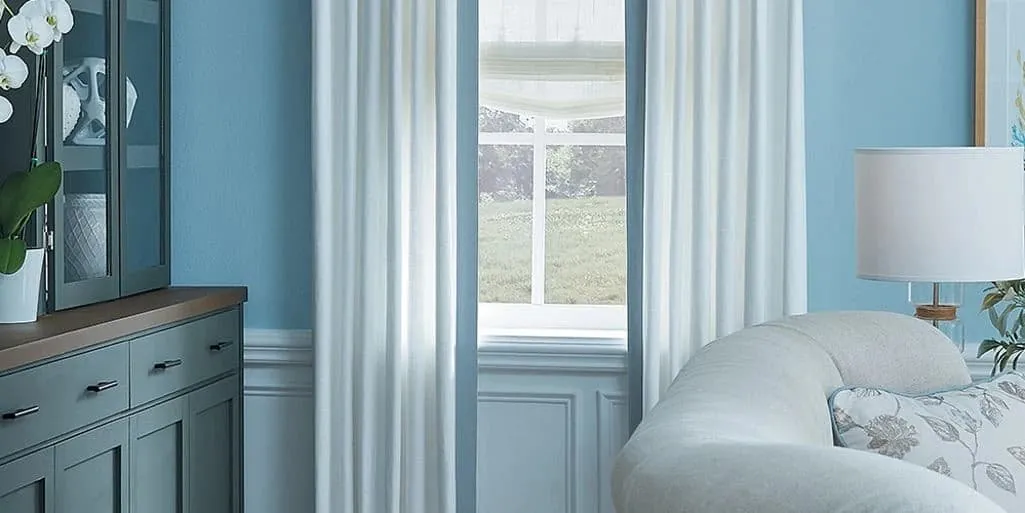
Custom Drapery in Franklin
Made-to-measure drapery panels, on their own or layered over a shade, to frame a tall window and soften a formal room.
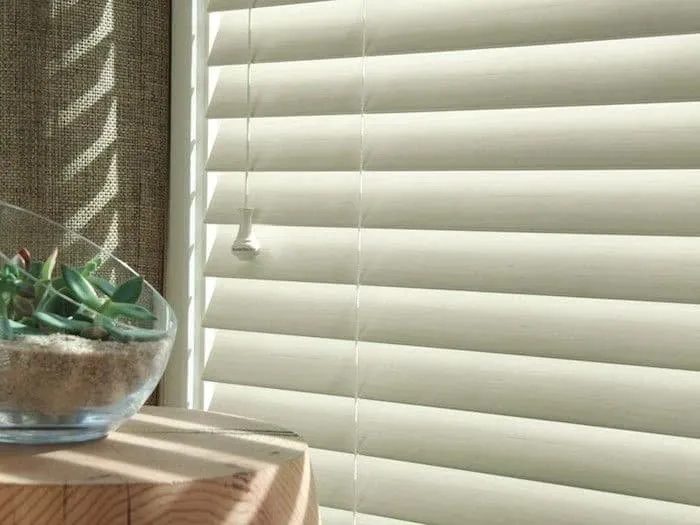
Blind and Shade Repair in Franklin
A shade that has stopped lifting or a blind with a tired cord. We are glad to look at the window coverings you already have.
Antique sash around the common
The oldest houses in town sit close together near the common and up Main Street. Many were built long before standard window sizes existed, so two windows in the same room can differ by a fraction of an inch, and a frame that has settled over the years is rarely square. Tall, narrow sash is the rule, with the glass divided into small panes and the casings deep enough to make a window feel like part of the wall.
The first question we ask on these windows is whether you want to keep the trim on show. If you do, an inside mount is the aim: the headrail sits within the opening and the covering disappears into the frame when it is raised. Honeycomb shades, roller shades and slim blinds can all be made narrow enough. What decides it is depth. Sash weights, pulleys and old stops can leave less room than a headrail needs, so we measure the depth at several points before we suggest anything. Where an inside mount would not sit right, we say so and talk about a neat outside mount on the casing instead.
Shutters are the other natural fit for an antique colonial. A shutter set in its own frame can square up an opening that has drifted, and a narrow louver suits small-paned sash better than a wide one. The plantation shutters in Franklin page goes into frame styles in more depth.
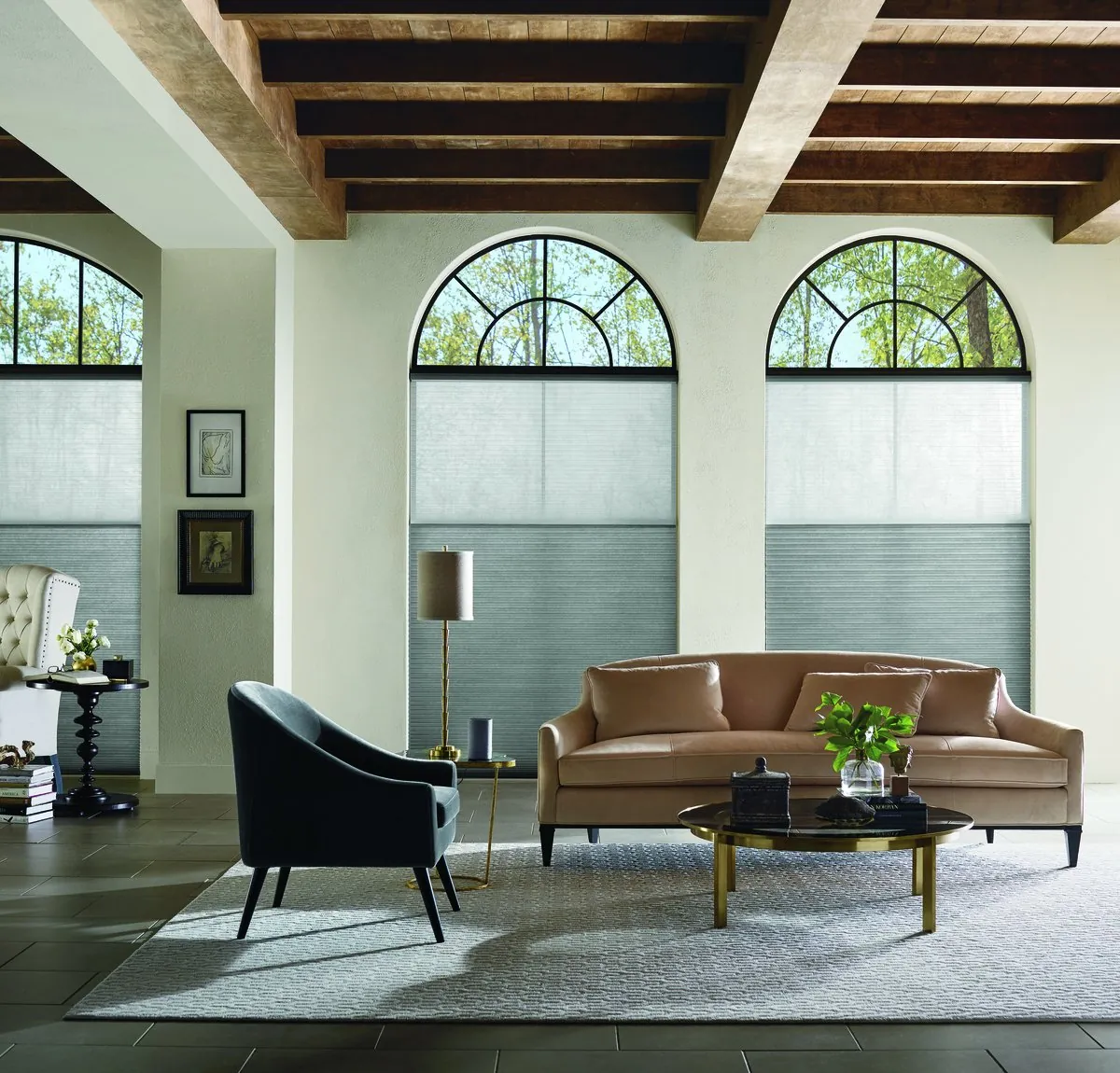
Victorians on Main Street
The Victorians mixed in along Main Street bring a few shapes of their own: bay windows, tall front windows that run nearly to the floor, and sometimes a round or arched top. A bay looks best when each panel has its own covering and they all line up when raised, so we measure the bay as a set rather than window by window.
Arched tops are where people often get stuck. One good answer is to leave the arch open and cover only the rectangle below it, which keeps the shape of the window and still gives privacy where you need it. Another is a shutter made to the arch. Top-down, bottom-up honeycomb shades are a third choice for tall front windows close to the sidewalk: drop the top for daylight and keep the lower glass covered.
Two-story entry glass in the newer colonials
The subdivisions off Route 140 are full of large colonials built with a big entry hall, and many have a tall window or a stack of windows above the front door. That glass brings in a lot of light, which is the point, but it also brings in afternoon heat, glare across the stairs and, after dark, a view straight into the hall.
Covering it well comes down to three things. The covering has to suit a large, high opening, which points toward honeycomb shades, roller shades or sheer shadings that hang flat. It has to be worked from the floor, which in most cases means PowerView motorization rather than a long wand. And it has to match the rest of the front of the house from the street, so we look at what is on the other front windows before suggesting a fabric.
The stairwell window nobody can reach
Almost every newer colonial in town has one: a window halfway up the stairs, or high on the landing wall, that would take a ladder balanced on the treads to reach. It is the hardest window to cover in town, and the one most often left bare.
Motorization solves the reach. A PowerView shade on that window can be raised and lowered from a remote on the hall table, from a phone, or on a schedule so it closes by itself when the sun swings round in the afternoon. We go through how the motor is powered and how to keep the install tidy for your stairwell before anything is ordered. Our motorized blinds and shades in Franklin page has more on how the controls work.
Fitting the shade is a job for proper equipment and an installer who does it every week. Our certified Hunter Douglas installers bring what they need to reach the window safely and mount the brackets into solid framing.
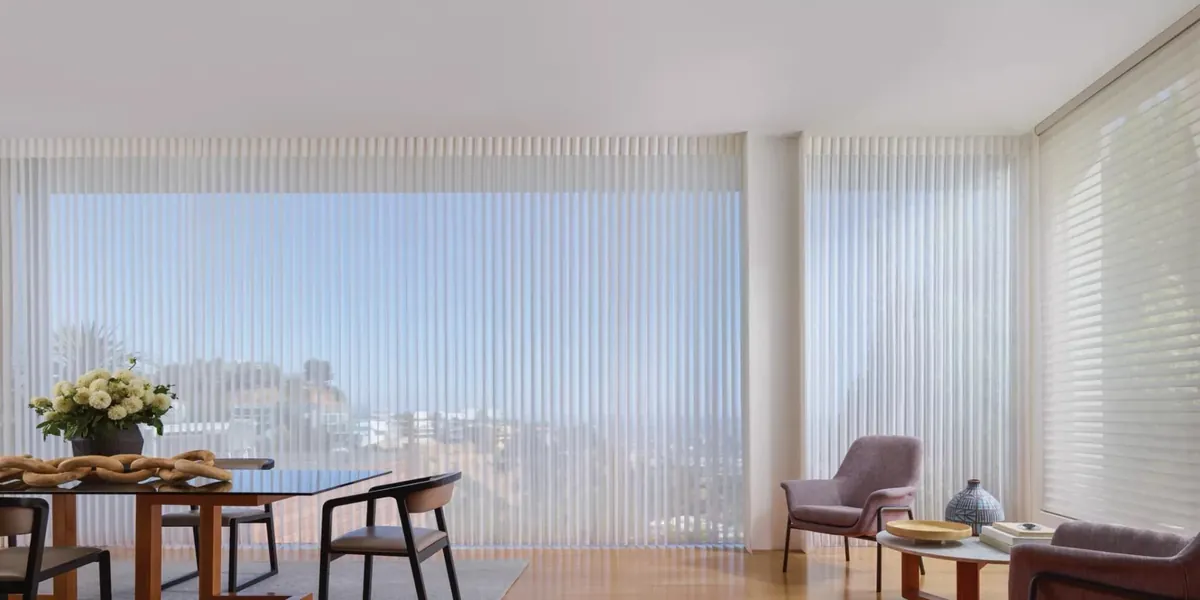
Choosing room by room
Most of the window treatments in Franklin, MA, that we fit are part of a whole-house plan rather than a single window, because a newer colonial has a lot of openings across two floors and an antique house has its own mix of sizes. Thinking room by room keeps it manageable.
- Front rooms on the street side. Privacy by day and by night, and a look that sits well from outside. Shutters, roman shades or top-down, bottom-up honeycomb shades.
- Kitchens and baths. Something that wipes clean and handles steam. Faux wood blinds, shutters or a moisture-friendly roller.
- Family rooms with sliders. A covering that moves sideways or stacks out of the way, such as a vertical honeycomb shade or vertical blinds.
- Bedrooms. Room-darkening fabrics, or a roller behind drapery for the darkest result.
- Home offices. Glare control on the screen without losing the daylight. Light-filtering fabrics or a solar screen.
You do not have to use one product throughout. Plenty of houses take shutters downstairs at the front, honeycomb shades in the bedrooms and a roller on the slider, and they still look consistent because the colors are chosen together.
Your in-home consultation
The showroom may be down the road, yet plenty of Franklin projects begin in the living room instead, since a swatch only tells the truth in the light it will live in. Sample-laden vans mean we can bring the showroom to you, and the visit tends to follow this pattern.
- Book through the Request a Consultation form or the call button.
- The consultant unpacks fabric books, slat and shutter samples, drapery swatches, lift choices and PowerView controls.
- Starting with the stairwell, the foyer or whichever window annoys you most, we tour the house.
- Swatches get held against morning glass and afternoon glass alike, so nothing surprises you later.
- Each opening is measured, frame depth noted, sash hardware and cranks marked.
- A free estimate arrives afterwards, and you set the pace from there.
Color, pattern and how the whole room hangs together are what our interior design consultations are for. A step-by-step account of the home visit is on the in-home consultations page.

Measuring an old frame and a new one
The measuring is where an antique house and a newer colonial differ most. On the old sash near the common, we take the width at the top, middle and bottom of every opening and the height at both sides and the center, because a frame that has moved over the years can be a little wider at one end than the other. The smallest figure sets the size for an inside mount, and the depth readings tell us whether the headrail will clear the stops and any sash hardware.
In the newer houses the openings are closer to standard, but the challenge moves upward. Entry glass and stairwell windows need careful measuring from safe footing, and stacked windows above a door have to be sized so their shades line up when lowered. Wide family room windows sometimes need two or three shades on one headrail so they move together.
- Every opening is measured and noted room by room, with the mount type marked.
- Frame depth and any obstacles, such as cranks, alarm contacts or sash locks, are checked.
- You confirm the product, fabric, color and lift choice for each window.
- Once the order arrives, our certified Hunter Douglas installers fit each covering, level it and show you how it works.
Because every piece is made to those measurements, the coverings sit neatly in the frame with the narrowest gaps at the sides.
Privacy close to the street
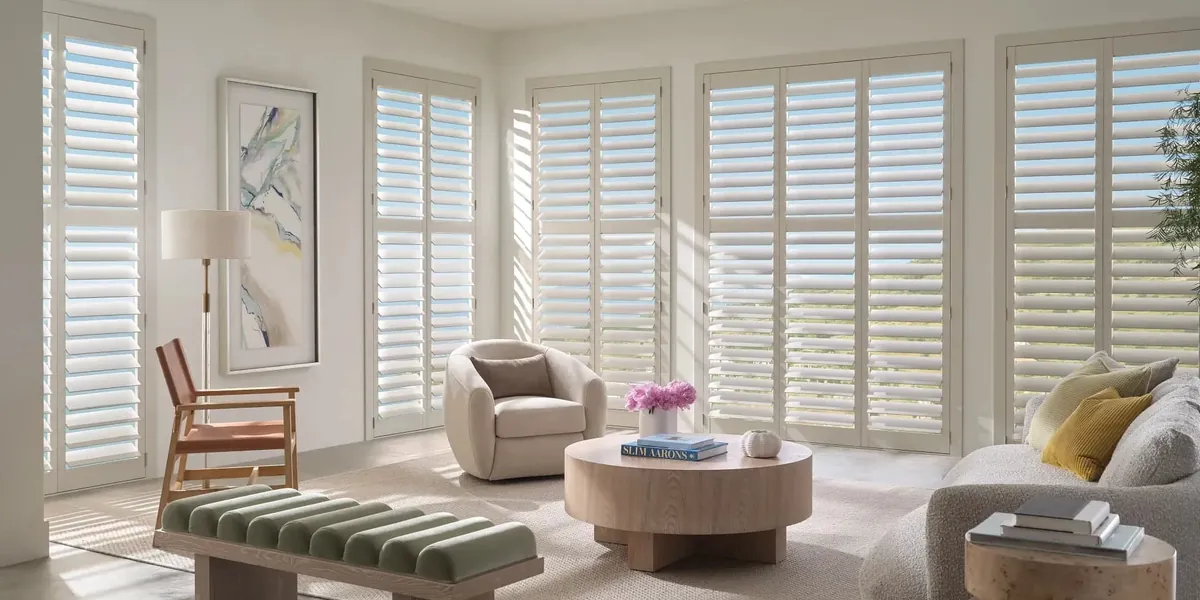
Houses near the common and along Main Street often sit only a few steps from the sidewalk, so the front rooms are on view to anyone walking past. In the daytime a light-filtering fabric glows rather than showing what is inside. At night, with lamps on, you need something more opaque, or a second layer such as drapery. Shutters handle both well, because you tilt the louvers to let light in while blocking the view at eye level. In the newer subdivisions the setbacks are deeper, but the entry glass and the big front windows still face the street, and the same choices apply.
Light, heat and the direction a room faces
The newer colonials off Route 140 often sit on open lots with little shade from trees yet, so west-facing family rooms and bedrooms take the full afternoon sun. A honeycomb shade slows the heat coming through the glass, a solar screen cuts the glare while keeping the view, and a room-darkening fabric does what it says in a bedroom that faces east.
The antique houses near the common tend to have the opposite problem in winter: thin old glass and drafty sash. Here the honeycomb cell earns its keep: the trapped air inside it acts as a buffer between old glass and the parlor, so the chair by the window stops feeling like a draft seat. Double-cell fabrics give the air even more places to stay put.
Picking the right fabric for a sunny window also protects your floors and furniture from fading. Lighter, neutral fabrics stand up to direct sun most happily, and we point those out when you are choosing.
Drapery, layering and a finished look
A formal living room in an antique colonial or a two-story family room in a newer house often looks unfinished with a shade alone. Side panels lend height and softness, and pulled shut after dark they add privacy and warmth. Hang them over a honeycomb or roller and the window has two layers to play with, a shade for midday glare and fabric for the evening.
Rods, shades and drapery are measured at the one visit, so they are planned as a set. Panel styles and fabrics are on our custom drapery in Franklin page.
Coverings you already own
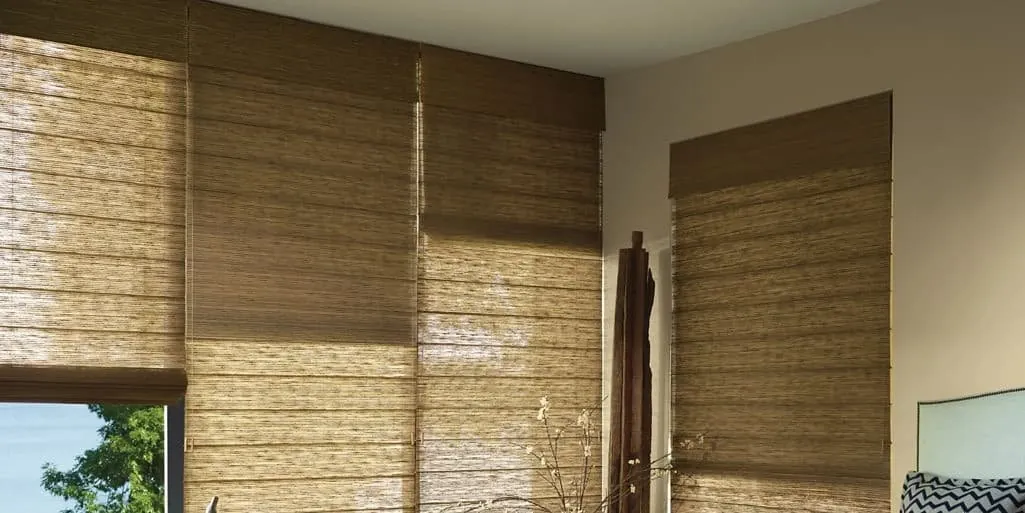
Some calls are about mending, not buying. A Victorian’s roller that drifts down on its own, a faux wood blind in a newer kitchen with a snapped ladder string, a stairwell motor gone quiet: these are often fixable. Repair work on coverings you already own is welcome here, and when mending would be money poorly spent, we say so. The blind and shade repair in Franklin page describes what to expect.
Visit our Franklin showroom
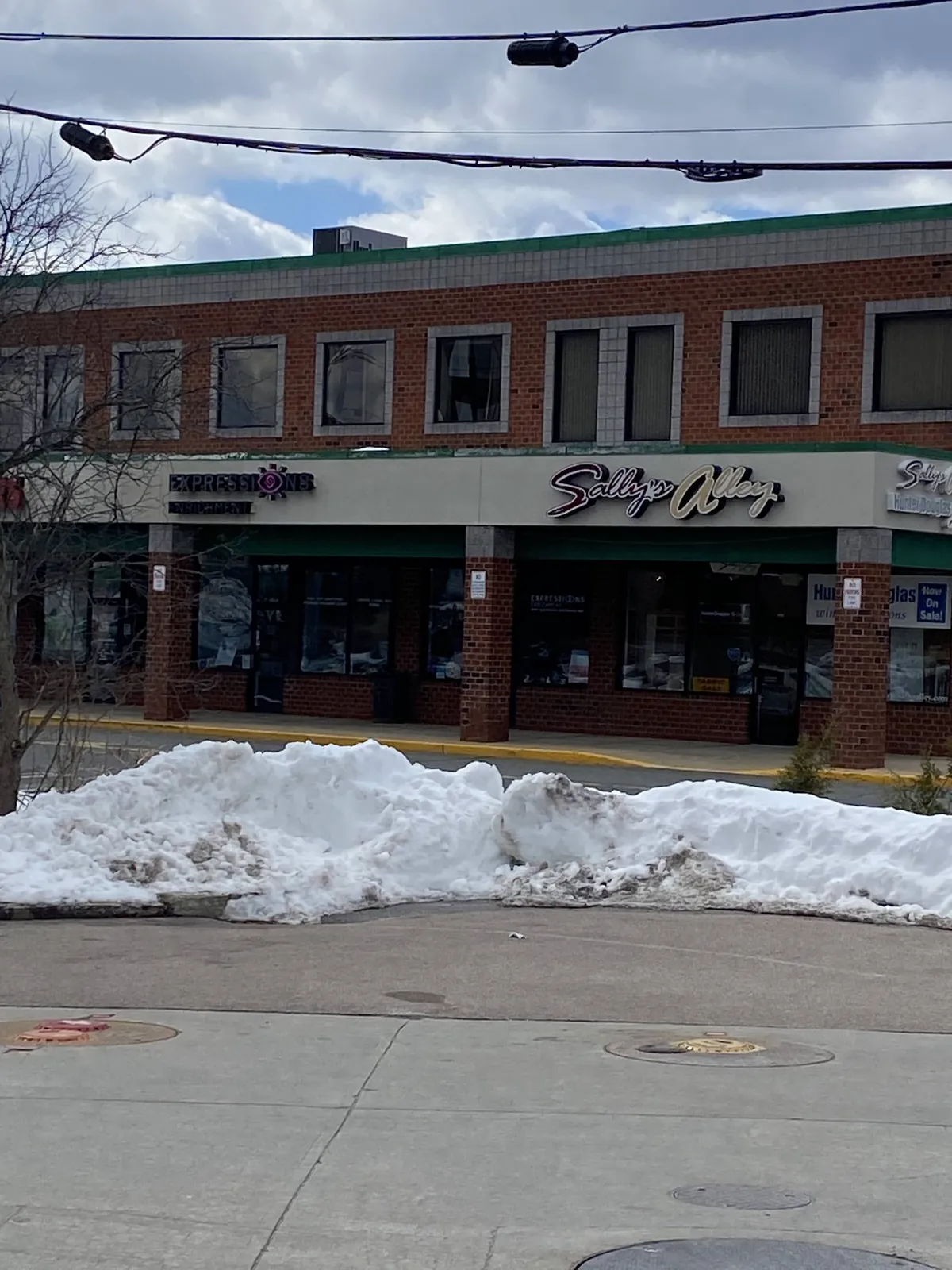
Because the showroom is in town, you can stop in before or after a home visit, bring a photo of the window or a paint chip, and talk through what you have in mind. If the antique house near the common and the big colonial off Route 140 have anything in common, it is that both are a short drive from our door.
The showroom page has the address, phone and opening hours. If you would rather not travel at all, we will bring the samples to you.
Why choose a Hunter Douglas Gallery dealer
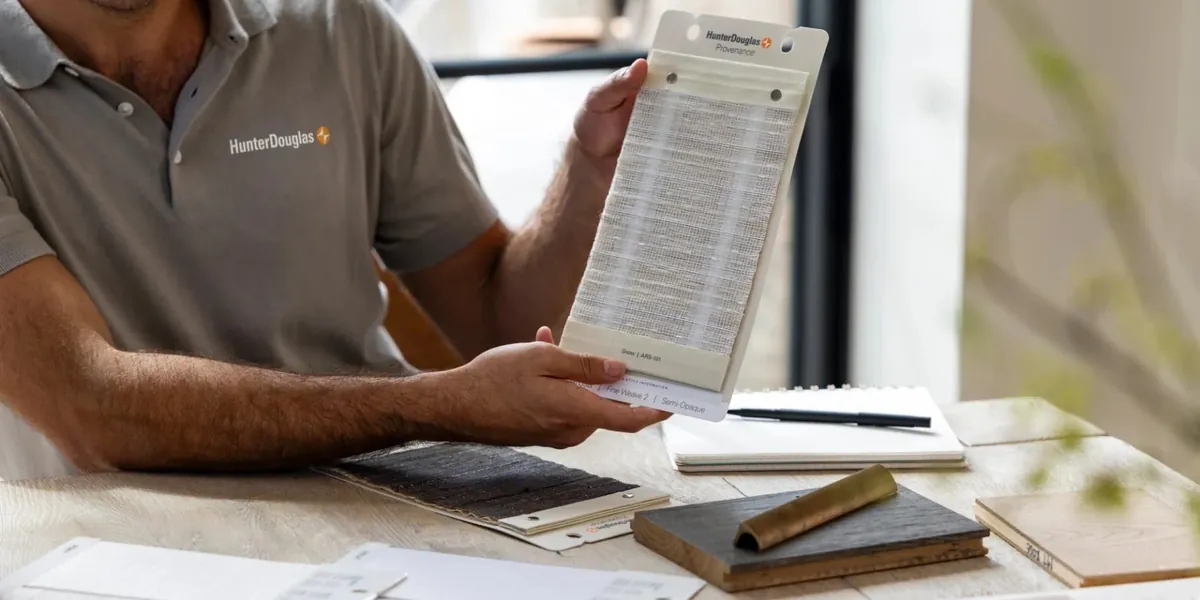
Gallery is the tier Hunter Douglas keeps for dealers who meet its standards, and our business is one of them. On a Franklin job that translates into choice without gaps: Duette for the drafty sash, PowerView rollers for the foyer, Heritance shutters for the parlor, drapery for the formal room, and everything between.
Hunter Douglas has certified our installers, so the brackets, motors and headrails go in to the maker’s standard. Whoever measures is from the same company that installs, and later repairs come back to us too. Automation and interior design consultations complete what we offer for window treatments in Franklin.
Questions from Franklin
Can I see the products in person before anyone comes to the house?
Yes. Our Franklin showroom is in town, and its page has the address and hours. Many people visit first and then book a home visit, so the samples can be seen in their own light.
What do you suggest for the tall entry window above my front door?
For most two-story entry glass we suggest a honeycomb, roller or sheer shade with PowerView motorization, so you can work it from the hall without a ladder. We match the fabric to the other front windows so the house looks consistent from the street.
Will a shade or blind fit inside the narrow sash of my antique colonial?
Often, yes, but it depends on the depth of the frame and any old sash hardware. We measure each opening at several points and suggest an outside mount where an inside mount would not sit properly. Shutters in their own frame are another option for out-of-square windows.
Do I have to use the same product in every room?
No. Most houses mix products, for example shutters in the front rooms, honeycomb shades upstairs and a vertical shade on the slider. We choose colors across the whole house so it still looks consistent.
What does an estimate cost me?
Nothing at all. Estimates are free: we measure, write up the options you picked out, and leave the decision with you.
Start with your windows
One stubborn stairwell window or a whole colonial, getting started on window treatments in Franklin, MA, takes one step: request a consultation. Samples travel to you, the tape measure comes out, and a free estimate follows. To talk it over beforehand, press the call button, or call in at the showroom across town.
To compare everything we carry side by side, see our window treatments page.