
Around the common, and out past it
Stand on the common and look around and you see the oldest part of Bridgewater’s housing: colonials and Victorians, many close to the common and the college, with tall sash windows set in deep frames. Drive a few minutes in any direction and the picture changes to post-war ranches, then to newer subdivisions with two-story houses, sliders and open kitchens. Standard modern openings make up most of the town, with that pocket of tall older sash around the center. Choosing cellular shades in Bridgewater, MA, starts with knowing which of those houses you live in.
For all of them the honeycomb does the same job. Its fabric is pleated into cells, and each cell traps a little air when the shade comes down. That pocket of still air sits between the window and the room, so a cold pane loses some of its grip on the space behind it. It is the warmest kind of shade Hunter Douglas makes, and the one we suggest first when somebody says a room never quite warms up.
What changes from house to house is the fitting, the fabric and the lift. A tall Victorian window near the college and a bedroom window in a newer colonial want different things, and we plan each one on its own.
Honeycomb choices for Bridgewater rooms
Six options come up again and again in town. Every one is in our sample cases, ready to hold against your own windows.
Duette
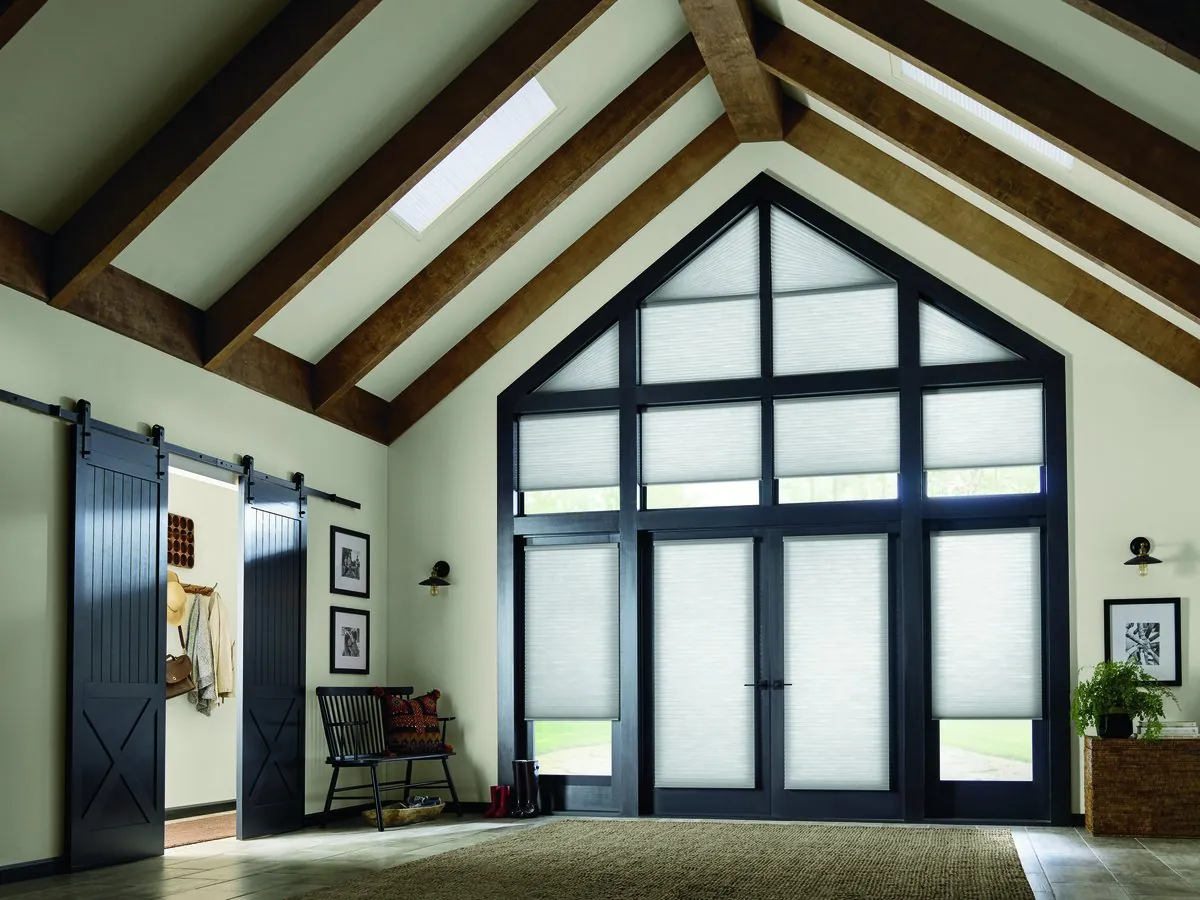
The Hunter Douglas honeycomb with the most fabrics, sizes and shapes, including very tall shades for older sash.
Applause
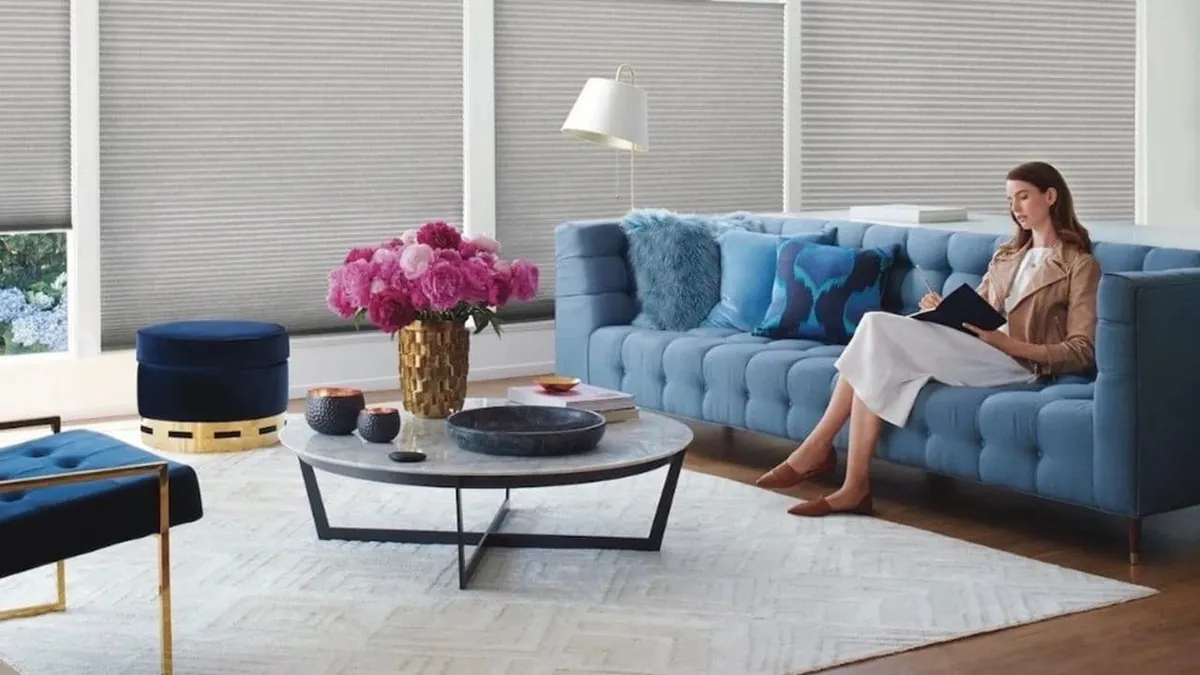
A second honeycomb line with its own colors, a natural fit for the standard windows that fill most of the town.
Cordless lift
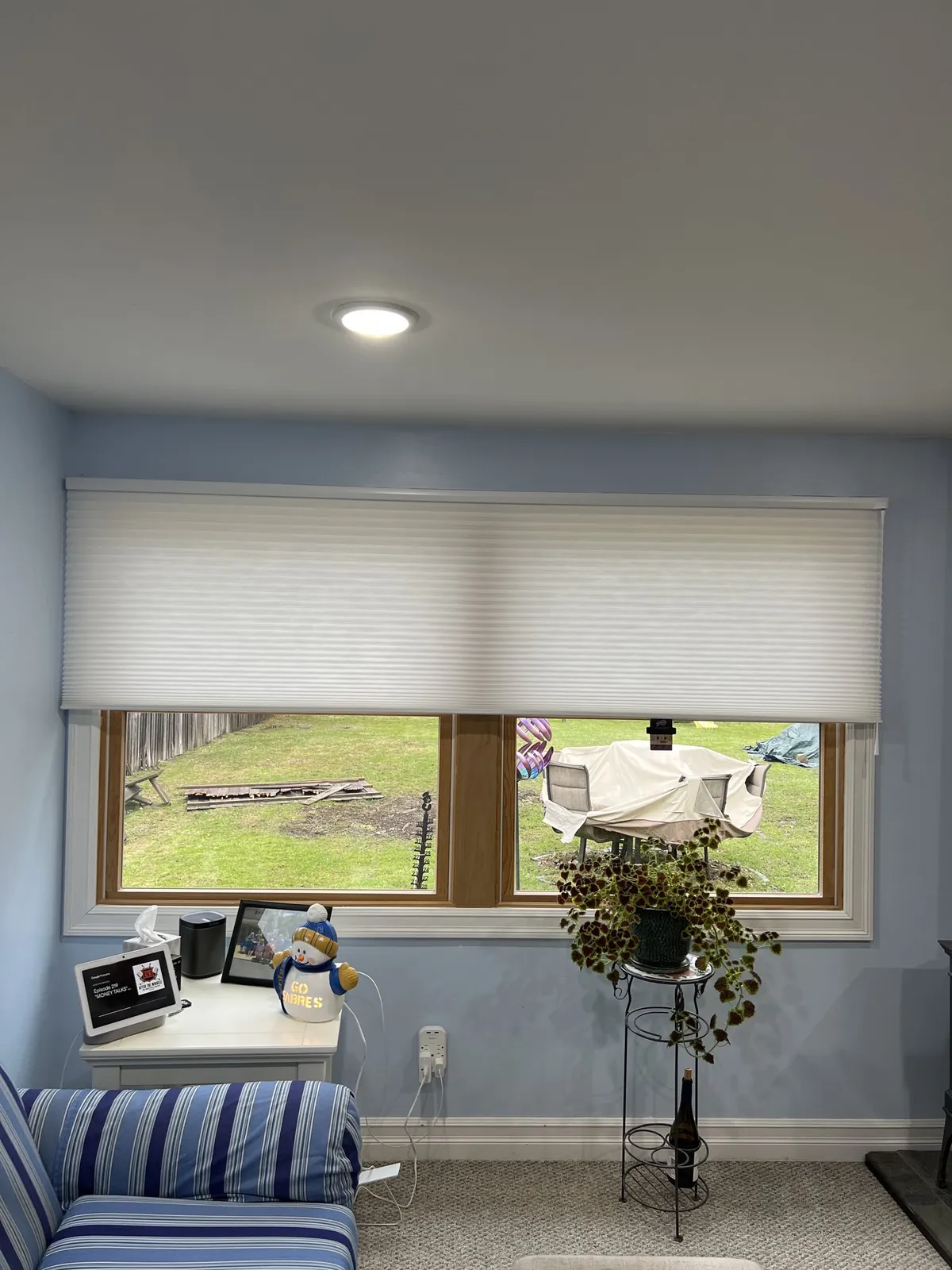
Raise or lower the shade by its bottom rail, with no cord at the side of the window.
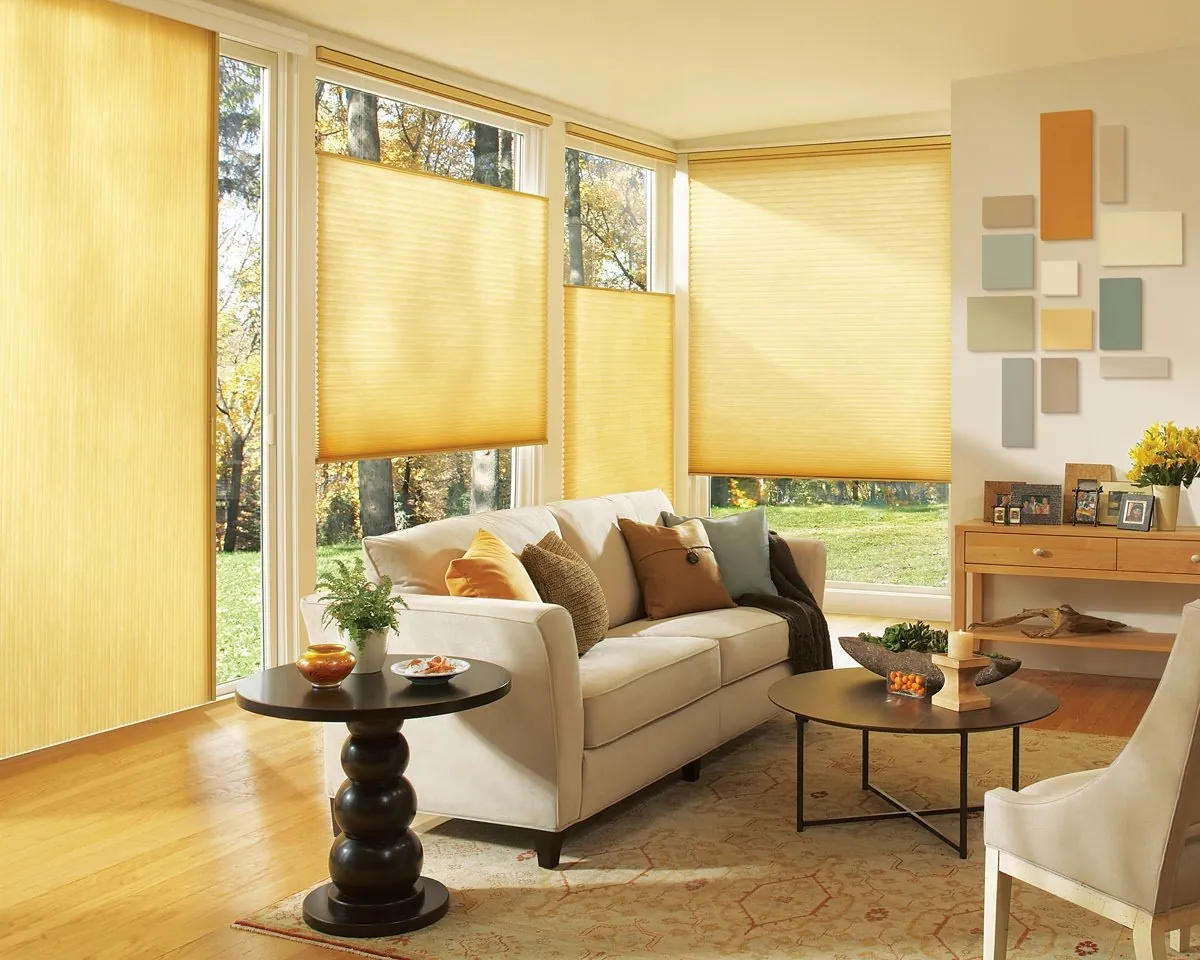
Top-down, bottom-up
Open the top for daylight and keep the lower glass covered, handy on a front room near the street.
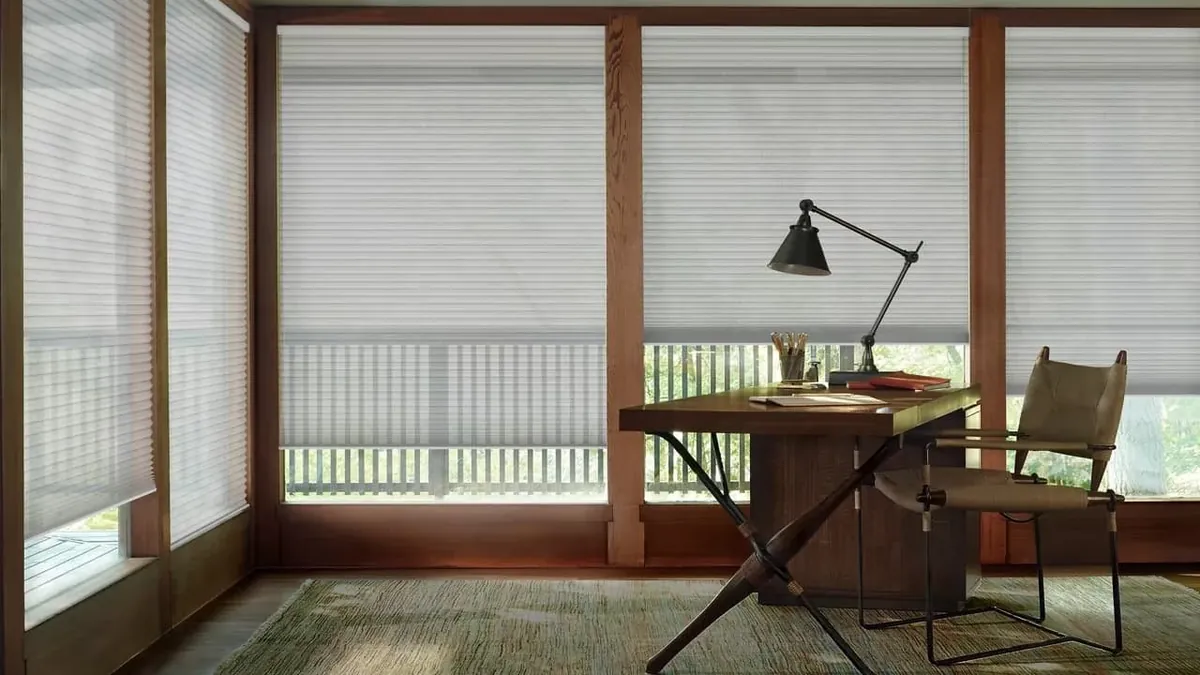
A shade for the study
Light-filtering fabric takes the glare off a screen without turning the room dim.
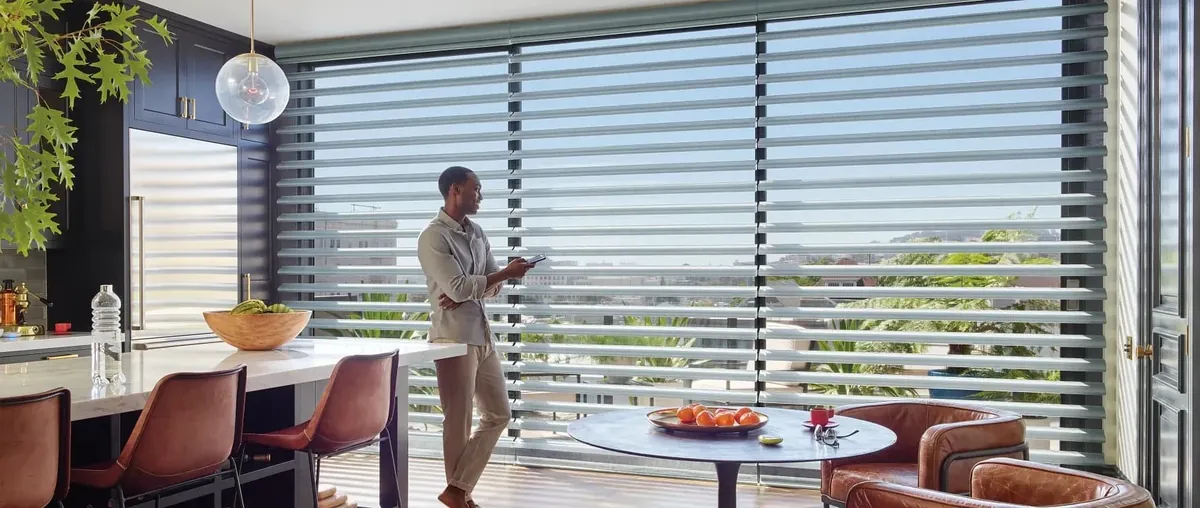
PowerView
Move every shade from a phone, a remote or a wall control, or let a schedule do it.
Colonials and Victorians near the common and the college
The houses closest to the center are the oldest, and their windows show it. Colonials have rows of evenly spaced double-hung sash, usually with wide casings. Victorians add height, with tall, narrow windows, bays and the occasional odd shape tucked under a gable. In both, the trim is part of what makes the room, and most owners want a shade that leaves it on show.
An inside mount does that. The shade sits within the opening and stacks up neatly under the head of the frame when raised. Duette can be made long enough for the tallest sash in a Victorian front room and narrow enough for the slim windows beside a door.
Older frames take more care to measure. Over time a window can move a little out of square, and the pulleys, stops and beads in a sash window take up depth at the top of the frame. We check the width and height at several points and the depth at both corners before we suggest a mount. Where there is not enough room inside, mounting on the face of the casing still looks tidy, and we will show you exactly where it would sit.
Victorian bays deserve a word of their own. Each window in a bay gets its own shade on its own headrail, and we set them so the stacks line up across the bay when raised. A small window up in a gable or beside a chimney can be fitted too, with a shade made to its exact size so it matches its larger neighbors.
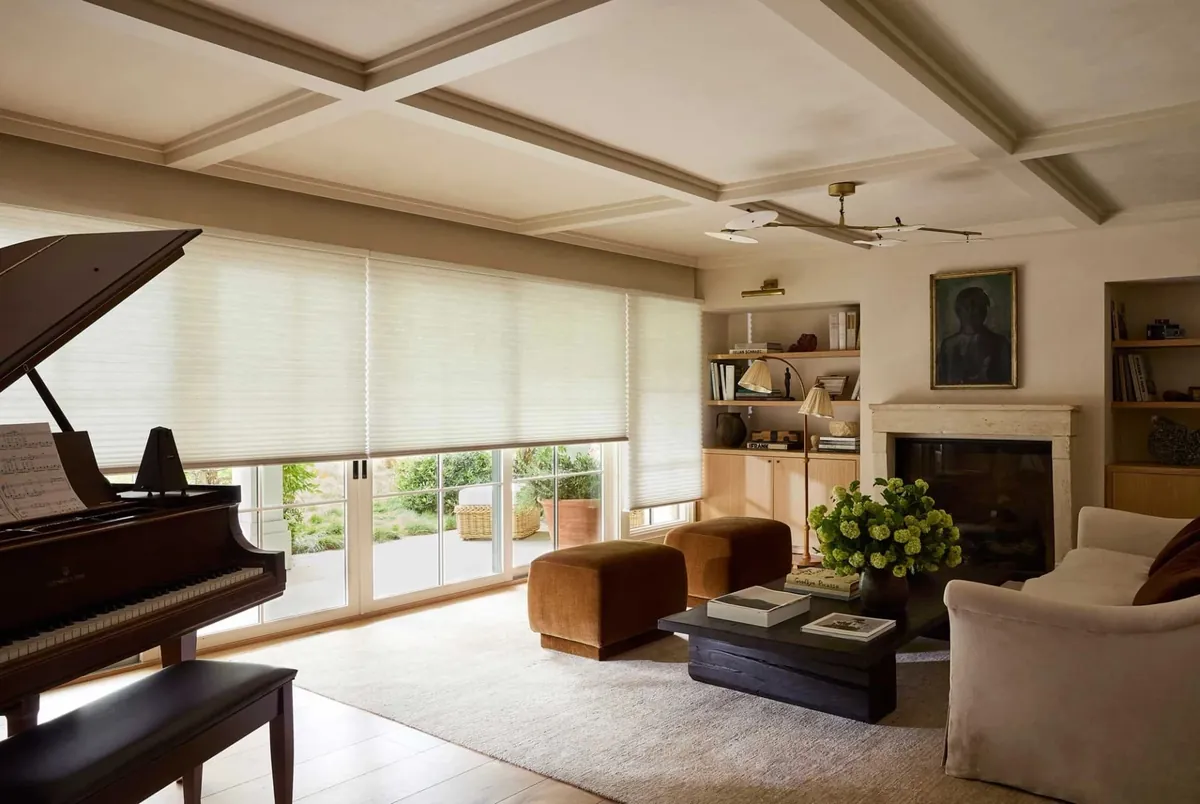
Tall old sash and a cold front room
A Victorian parlor with three tall windows is a lovely room for most of the year and a chilly one in January. Old single glass, sometimes behind an aging storm window, lets warmth escape faster than newer glazing, and the high ceiling gives cold air room to settle near the floor where you sit.
Lowering a honeycomb shade across each of those windows in the late afternoon places a column of trapped air in front of the glass. The room holds more of its warmth through the evening, and the chair by the window becomes a place you want to sit again. Double-cell constructions put two rows of cells in the same shade for more trapped air, and we bring both kinds so you can compare them.
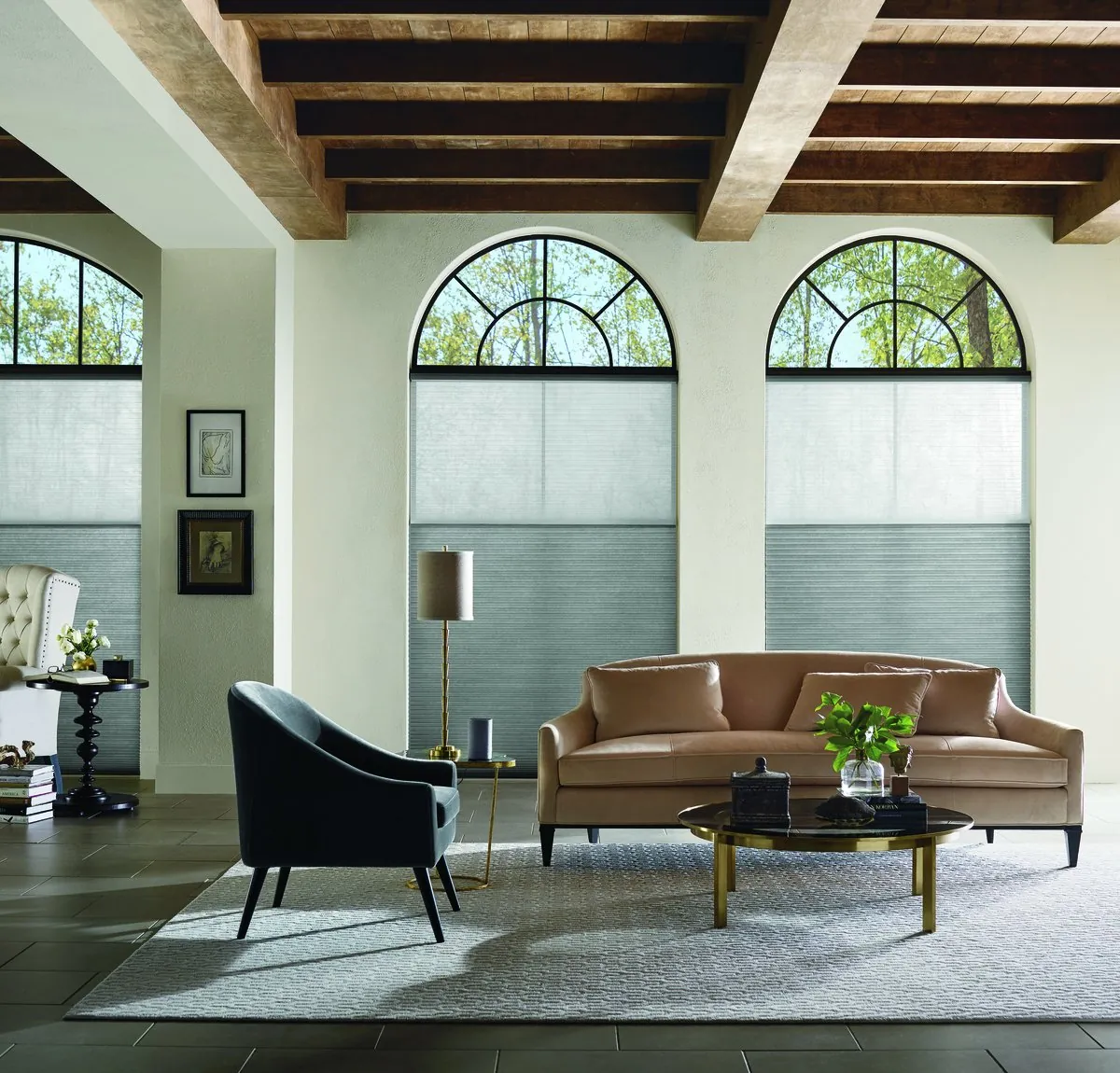
Tall windows also bring a practical question: reaching the top. A cordless lift lets you raise a long shade with one hand on the bottom rail. A top-down, bottom-up shade lets you lower it from the top without stretching. PowerView takes the reaching out of it entirely.
Post-war ranches a little further out
Move away from the center and the ranches begin. Their layout is simple and sensible: a living room at the front with a picture window, a kitchen at the back, bedrooms along a hall. Most of their windows are standard sizes, so the shades fit them closely and the job is straightforward.
That frees the conversation to focus on how each room is used. The picture window often takes two or three shades on one headrail, so you can raise one end for the view and keep the other end down against the afternoon sun. Bedrooms facing east wake you early in summer, and room-darkening fabric solves that while still holding air in its cells. Kitchens usually suit a light-filtering fabric that keeps the room bright on a gray day. In a ranch the bedrooms are on the ground floor, often a few steps from the sidewalk or the driveway, so a top-down shade that keeps the lower glass covered while letting the sky in gives you privacy without making the room feel shut in.
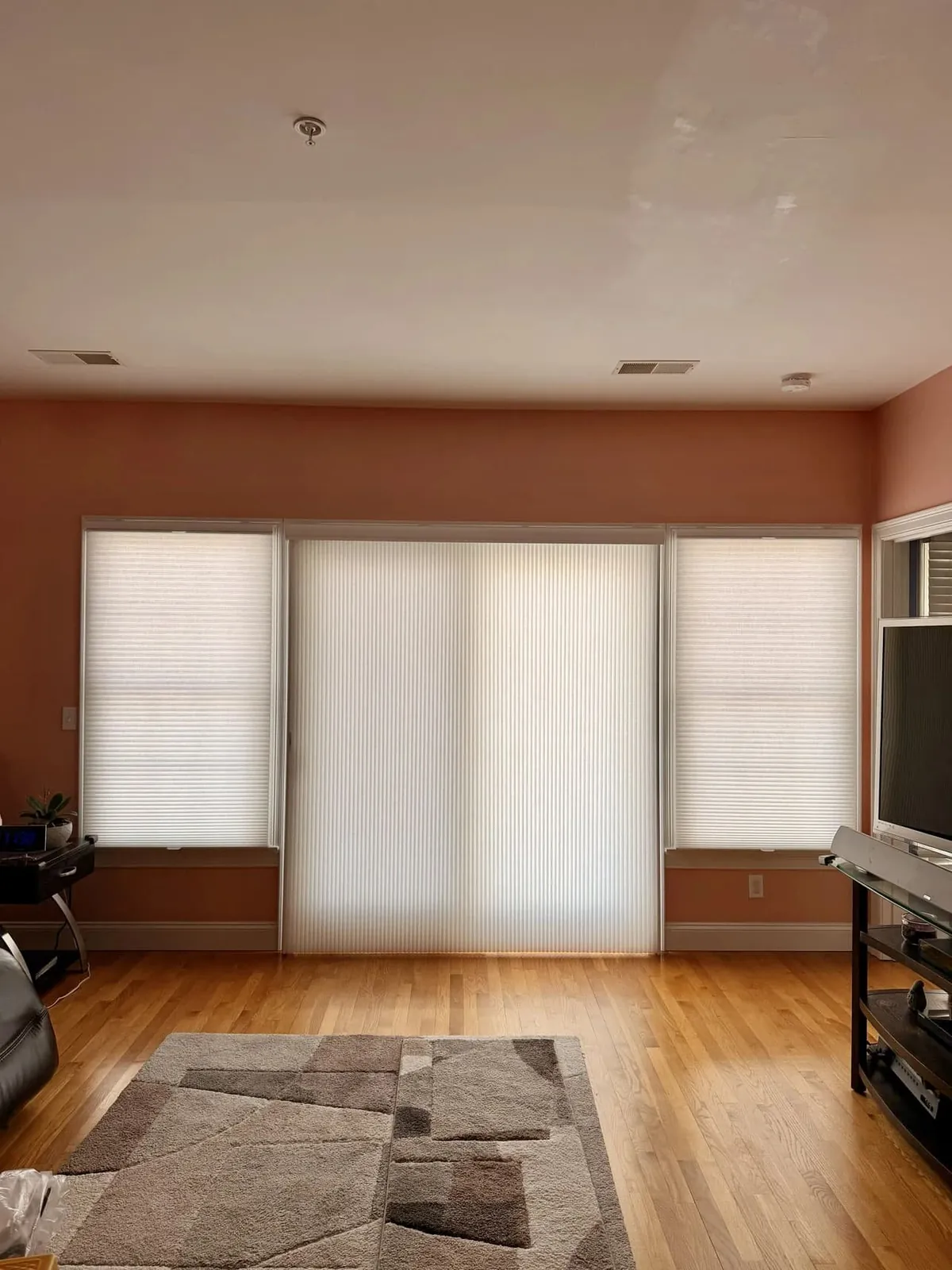
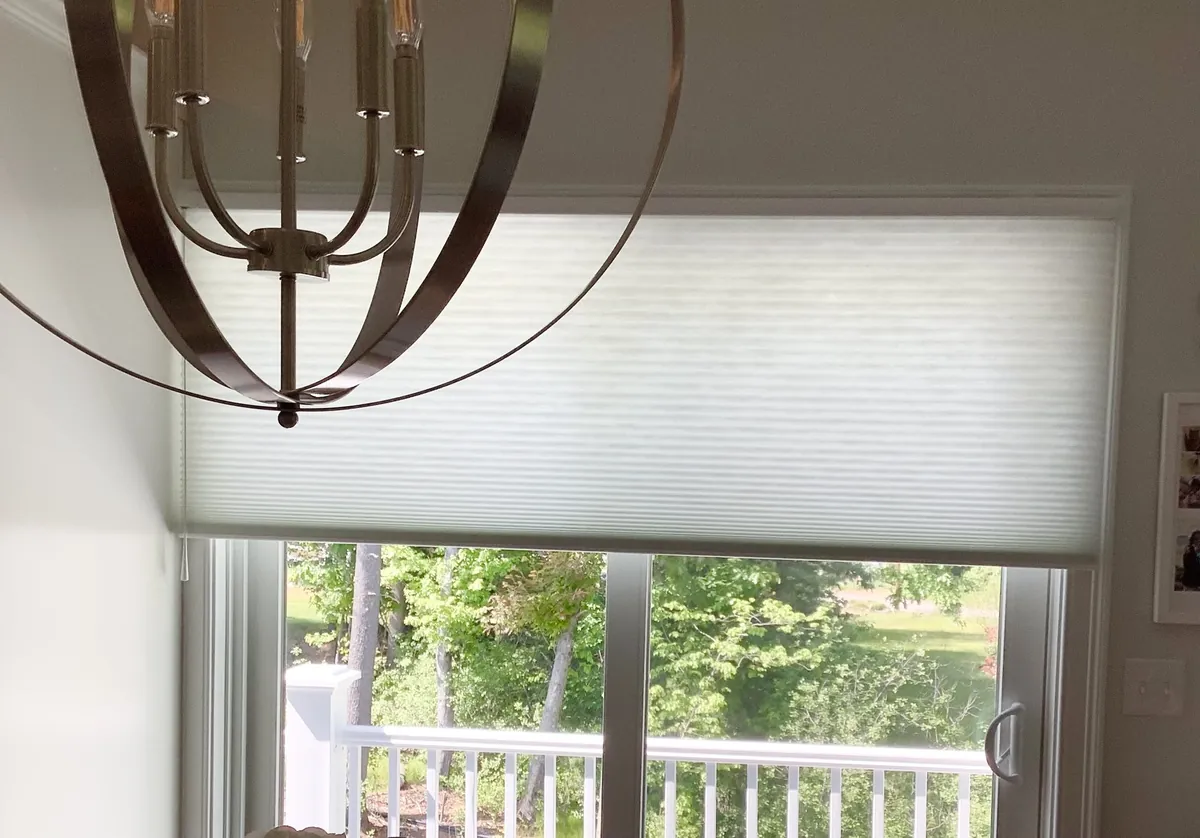
Ranches often have a slider or a back door added to reach a deck. A vertical honeycomb shade moves across the door from side to side and gathers at one edge when you go out, so the door matches the windows on either side.
Newer subdivisions and open plans
The newer subdivisions on the edges of town bring two-story colonials and larger family homes. Kitchens open into family rooms, sliders open onto decks, and some houses have a tall window over the entry or the stairs. Every window is a standard modern size, and there are a lot of them.
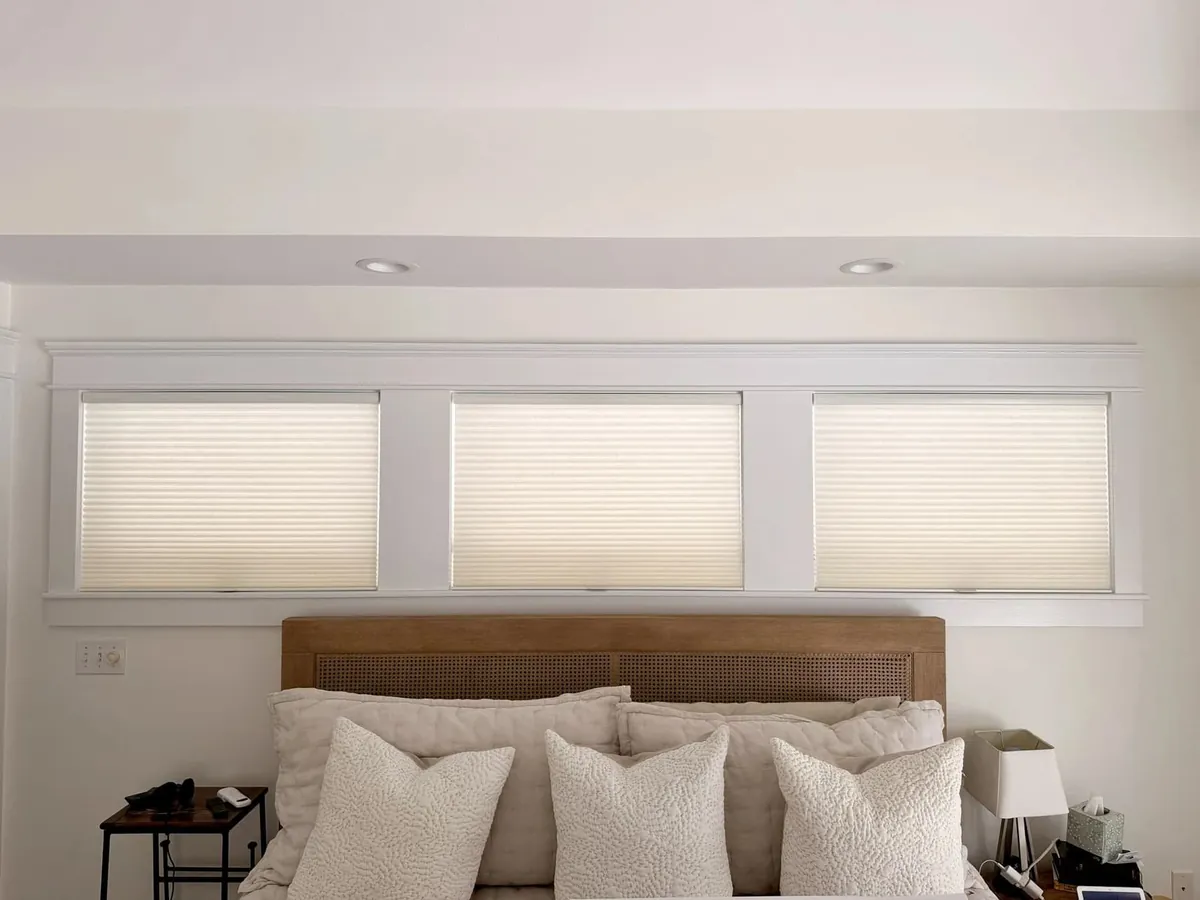
These houses are where a whole-house plan for cellular shades in Bridgewater pays off. We usually keep one fabric and color across the front windows so the house looks even from the street, then choose more freely room by room inside. The open kitchen and family room often share one fabric, so the long wall of windows reads as one piece. The primary bedroom gets room-darkening fabric. The home office gets something light enough to work by without glare on the screen.
For the tall window over the stairs, PowerView makes the difference between a shade that is never adjusted and one that does its job every day.
Light-filtering, semi-opaque or room-darkening
Honeycomb fabrics come in different opacities, and choosing the right one for each room matters more than almost any other decision.
Light-filtering fabric lets daylight through and softens it, spreading an even glow across the room. It hides the room from the street during the day, and it suits living rooms, kitchens and offices where you want daylight without glare. Semi-opaque fabric lets less light through and gives more privacy in the evening, a good choice for a front room near the sidewalk in the older part of town. Room-darkening fabric blocks most of the light and suits bedrooms, nurseries and any room used for sleeping during the day.
Many houses end up with all three. At the consultation we bring a sample of each so you can see them against your own window at the time of day you use the room.

Fabric color and the street
Color does two jobs. Inside, it should suit the walls, the floors and the furniture. Outside, it shapes how the house looks from the street, because a lowered shade fills the window and becomes part of the front of the house.
For the older houses near the common, warm whites and soft linens tend to suit both the old trim inside and the painted clapboard outside. In the newer subdivisions, a pale neutral on every front window keeps the house tidy from the road. Bolder colors work beautifully in a family room or bedroom at the back, where they only have to please the people inside.
Sunlight changes color too, so we always look at samples against the actual window, not in a catalog. A fabric that looks cool and gray on a north window can look warm and almost golden on a south one, and the light in a room shaded by old trees near the common is very different from the open light in a new subdivision. Holding two or three favorites to the glass, morning and afternoon if you can, usually makes the choice obvious.
What happens when we visit
Choosing cellular shades in Bridgewater, MA, is far easier at home than anywhere else, because that is where the light and the trim are. Our vans carry the samples, so the visit comes to you.
- Book online or with the call button, choosing a time that suits your week.
- We start in the room that bothers you most, then work through the rest of the house with you.
- Fabrics go up against your glass so you can judge the light, the color and the privacy.
- We measure every window and settle each mount and lift with you.
- You get a free estimate, room by room, to look over in your own time.
If you would like help with color and fabric across the whole house, our interior design consultations can be part of the same visit. There is more on what happens at an in-home consultation if you want to know what to expect.
Duette and Applause, side by side
Both are Hunter Douglas honeycomb shades, built on cells that trap air. Duette is the larger range: more textures, more pleat widths, specialty shapes for arched and angled windows, the tallest and widest sizes, and a sideways version for sliders. Applause has a fabric collection of its own and suits the standard openings that make up most Bridgewater houses.
In a Victorian near the common, Duette usually goes on the tall front windows. In a ranch or a newer colonial, Applause often covers the bedrooms while Duette takes the living room and the slider. See the Duette and Applause pages for more on each line, or the full cellular shades range.
Measuring, ordering and fitting
Each shade is built to the window it will hang in, so the measuring sets the standard for everything that follows.
- We take the width at the head, the middle and the sill of every opening, and the height down both sides and the center.
- We check the frame depth for an inside mount and note anything in the way, from sash locks to window cranks.
- Fabric, color, lift and mount are confirmed with you window by window before the order goes in.
- When the shades arrive, certified Hunter Douglas installers fix each bracket into solid framing and set every headrail level.
- Every lift is tried, PowerView shades are paired and grouped, and we show you how it all works.
That care is what makes cellular shades in Bridgewater sit snugly in their frames, with a narrow, even gap on each side, whether the frame is a tall old sash near the common or a standard opening in a new subdivision.
Summer sun on the west side
Honeycomb shades are best known for winter, but they earn their keep in July as well. A family room or kitchen facing west takes the full force of the late afternoon sun, and in a newer house with a big slider and a run of windows that can make the room hard to use until evening.
Lowering the shades during the hottest hours keeps much of that heat at the glass. A light-filtering fabric lets enough daylight through that the room stays usable, and a top-down, bottom-up shade can cover just the part of the window the sun is coming through. PowerView can lower the west-side shades on a schedule each afternoon, so the room is already shaded by the time you get home.

Gallery dealer, certified installers
Hunter Douglas gives the Gallery title dealers who meet its standards, and Blinds & Designs is one of them. For your house that means the whole honeycomb collection, every fabric, lift and size, plus PowerView, through one consultation.
The shades are hung by certified Hunter Douglas installers. In an older house near the common they find solid wood behind the plaster for every bracket and level each headrail, even where the frame has moved. In a newer house they fit long runs of matching shades and pair any motors before they leave. If a shade ever needs fixing, our blind and shade repair service takes care of it.
We do much more than honeycomb shades in town. See custom blinds in Bridgewater, plantation shutters in Bridgewater or the full list on our Bridgewater page.
Our nearest showroom is in Sagamore
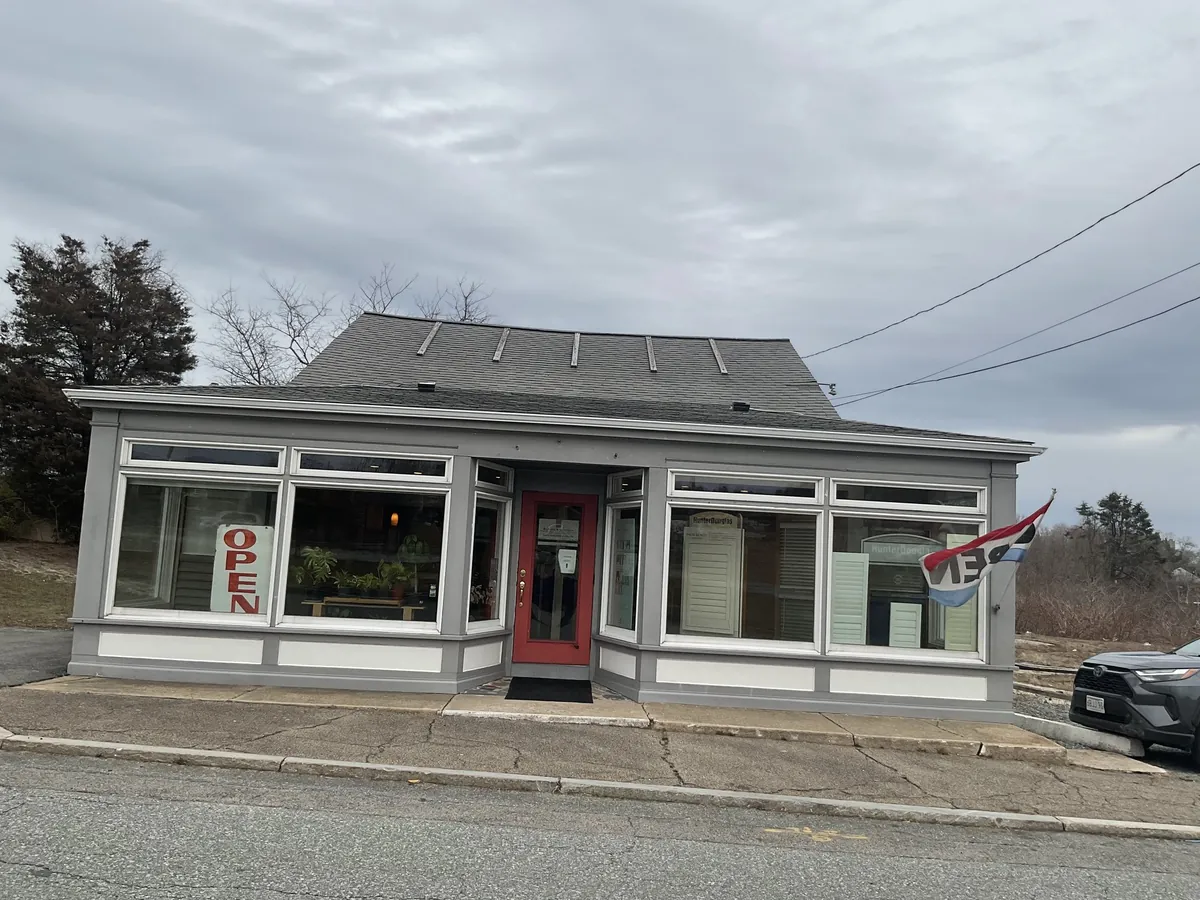
The Sagamore showroom is the closest Blinds & Designs location to Bridgewater. Its address and hours are on the Sagamore showroom page, and the call button reaches it.
Most Bridgewater customers still choose to start with a visit at home. A tall parlor window near the common and an east-facing bedroom in a subdivision are hard to picture from a showroom floor, and seeing the fabric in place answers most questions in minutes.
Questions from Bridgewater
Can honeycomb shades go inside the tall windows of an old Victorian?
Usually. Duette is made in tall, narrow sizes, and an inside mount keeps the original trim visible. We check the depth at the top of each frame first, since old sash hardware can leave too little room, and suggest mounting on the casing where that suits the window better.
Which fabric should I choose for a bedroom?
Room-darkening fabric is the usual choice. It keeps the room dim in the early morning and still holds air in its cells against the cold glass.
How do I reach the shade over my stairs?
PowerView motorization raises and lowers it from a phone, a remote or a wall control, and can follow a schedule, so a tall window is never left uncovered on a hot afternoon.
Do the shades match from outside?
They can. Most customers keep one fabric and color on every street-facing window so the house looks even, then choose differently in the rooms at the back.
Do you charge for the estimate?
No. We measure during the consultation and give you a free estimate for the shades you want, with no pressure to decide that day.
Book a consultation
Seeing the samples at your own windows is the surest way to choose cellular shades in Bridgewater, MA, whether you are covering one cold room or the whole house. Request a consultation and we will come with the Duette and Applause range, measure each opening and write a free estimate before we leave. Or visit our Sagamore showroom first.