
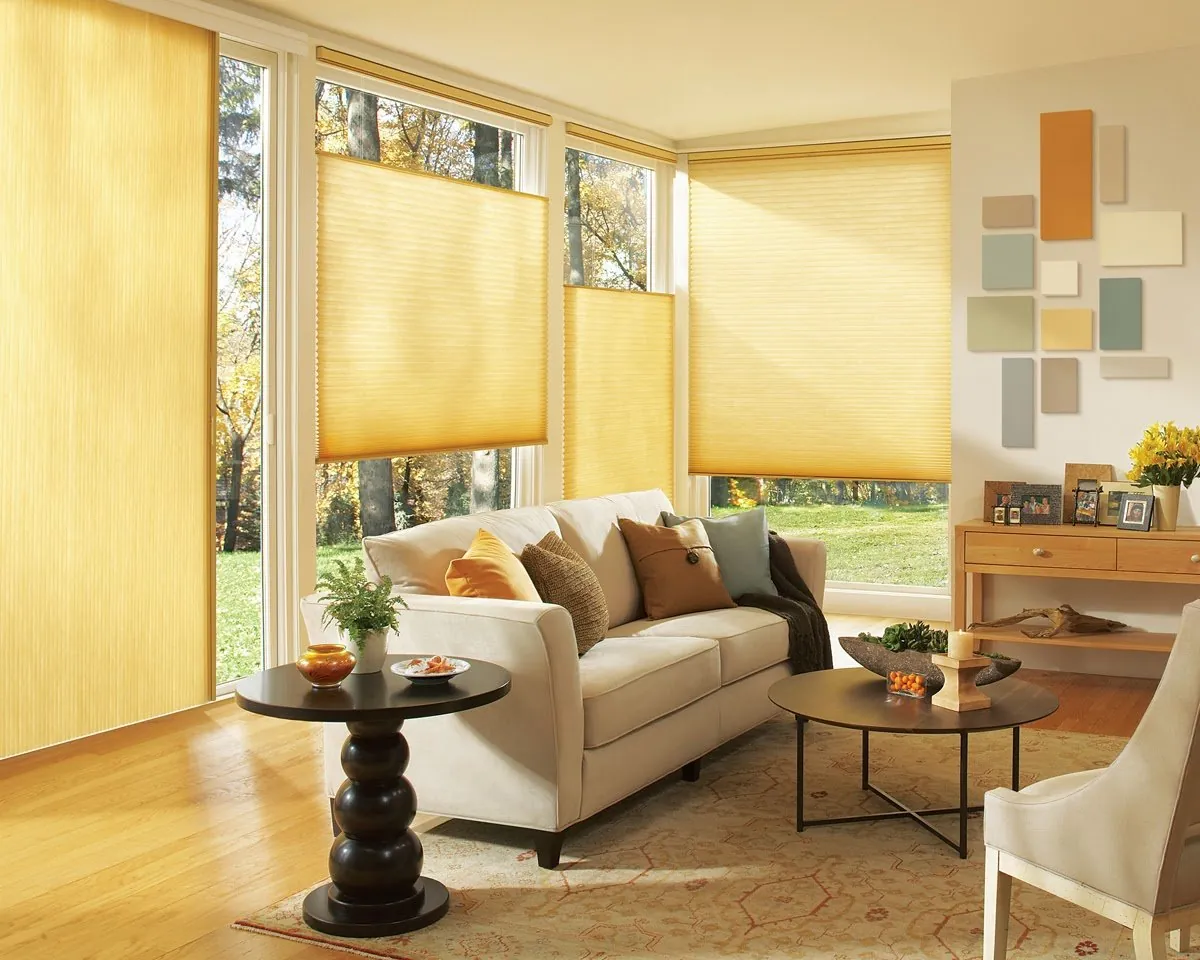
Rooms that see the sun from more than one side
Much of the housing here is colonials and capes on large wooded lots, a lot of it built in the later part of the last century and since, with standard modern openings throughout. Houses stand well apart, with real setbacks from the road, and that low density has a side effect people do not always notice until they live with it: most rooms get light from two or even three sides. A family room might have windows facing east and south; a corner bedroom catches the morning and the afternoon. Planning window treatments in Norfolk, MA, is mostly a matter of following that light around the house.
Because the frames are square and the openings standard, the window itself rarely limits what you can choose. The real decisions are about which wall catches the sun at which hour, which rooms you want bright and which you want dim, and how to make a house with windows on every side look consistent from the drive.
Privacy is a smaller question on a deep wooded lot than it is on a close-set street. Light is the bigger one.
Norfolk services, one card each
Each card leads to our Norfolk page for that service, so you can read more about how it fits colonials and capes in town. Between them they make up the window treatments in Norfolk, MA, that we supply and install.
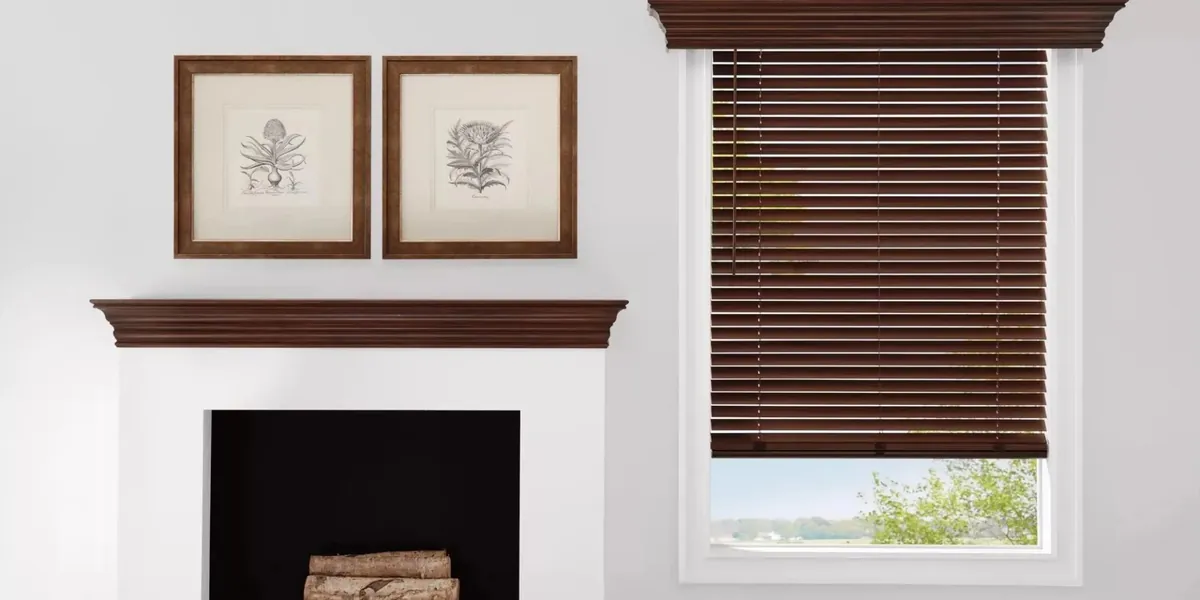
Custom Blinds
Slatted blinds in wood, faux wood or metal, plus verticals. Pick the material first, then how the slats should move.
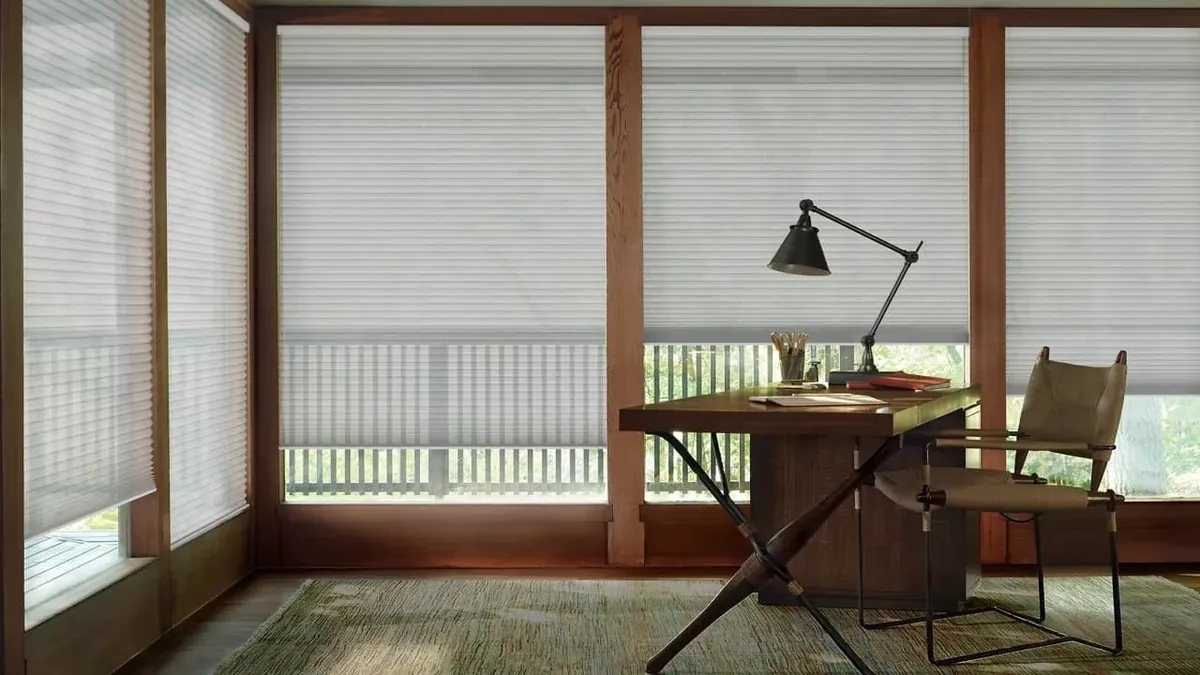
Cellular Shades
Duette or Applause. Their cell shape traps air at the window, and that trapped air is why a north room stays warmer.
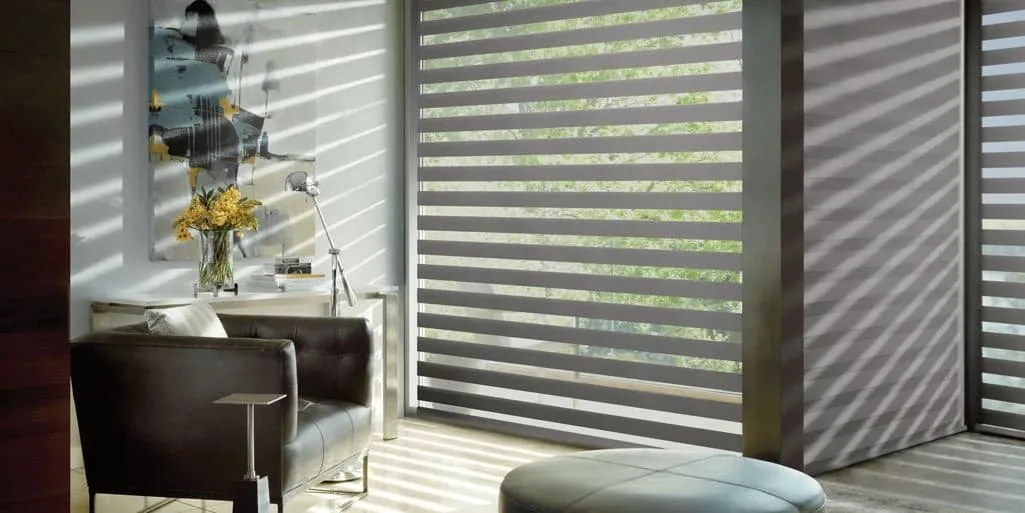
Roller Shades
Rollers, banded shades and solar screens from the Designer and Alustra lines; openness trades view against glare.
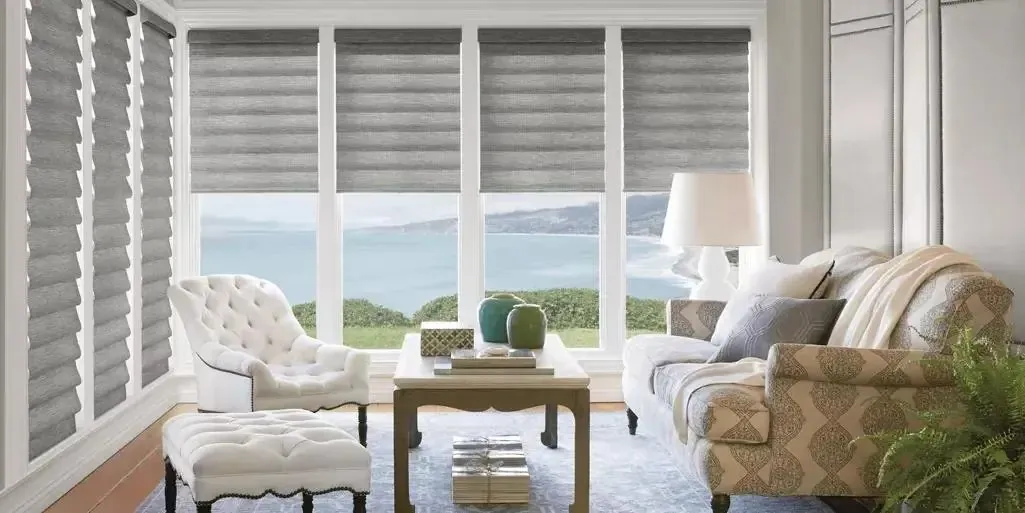
Roman Shades
Flat or folded fabric romans from Vignette and Carole Fabrics, soft enough for a bedroom, smart enough for a dining room.
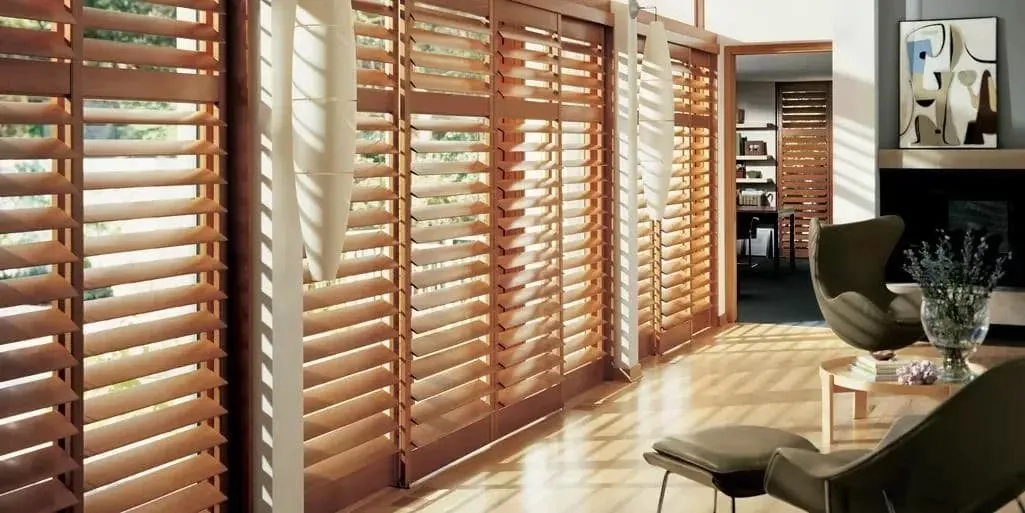
Plantation Shutters
Shutters from the Palm Beach, NewStyle and Heritance lines, louvers and frames sized room by room.
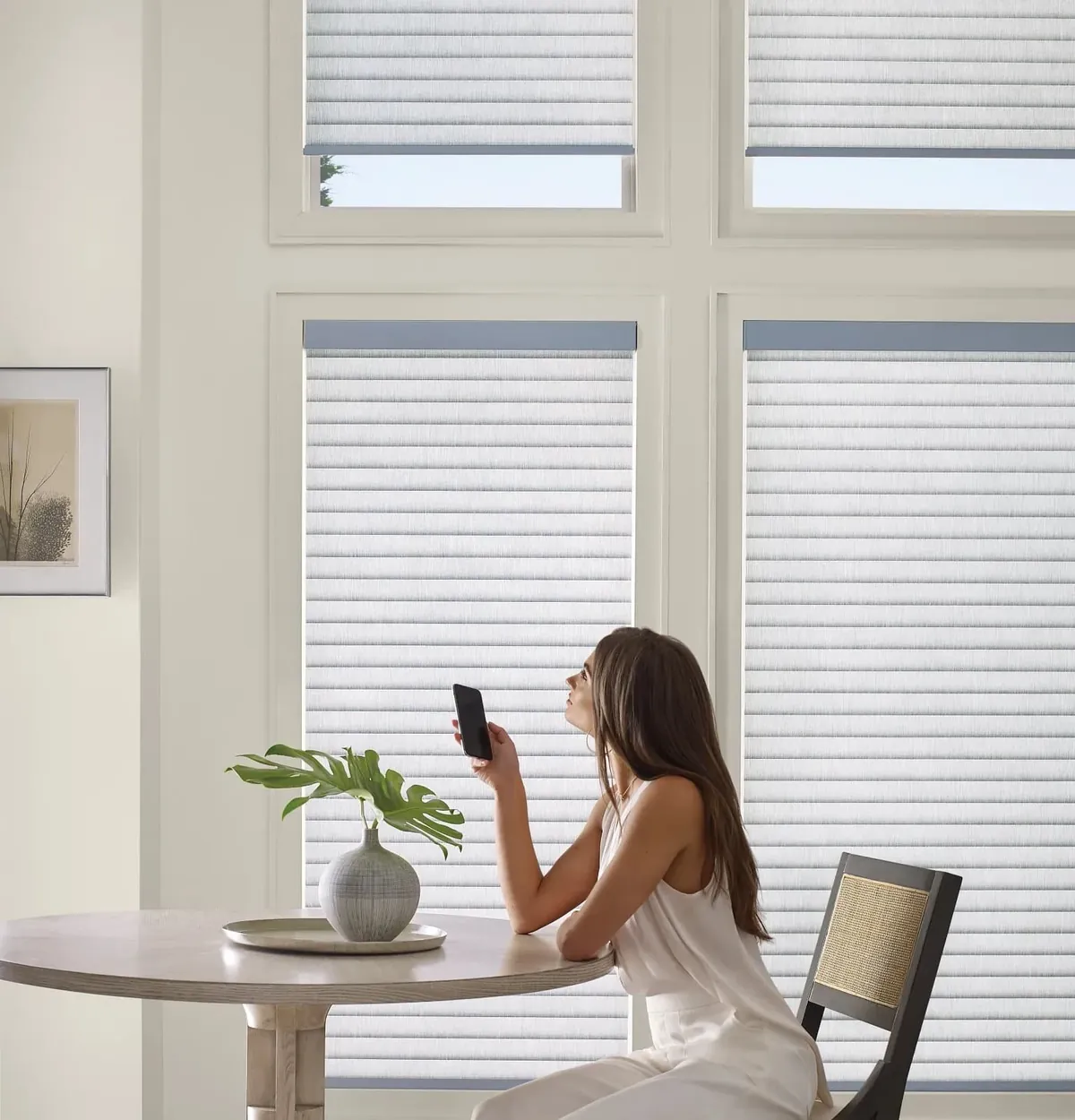
Motorized Blinds and Shades
PowerView lets shades follow the sun on a schedule, or move from a remote or the app.
Hunter Douglas Dealer
Every Hunter Douglas line through one Gallery dealer, put up by certified installers.
Following the sun around the house
With windows on several sides, a room’s needs change through the day. A useful way to plan is to walk the house in your head from sunrise to sunset and note when each room becomes too bright, too warm or too dim. On a home visit we do exactly that with you, compass in mind.
- Early morning, east side. Bedrooms and kitchens facing east catch the first light, which can arrive well before you want to be awake in midsummer. Bedrooms want a fabric that properly darkens; kitchens usually want the opposite, a filtering fabric that brightens the room without glare.
- Midday, south side. South-facing living rooms take long hours of sun. In winter that is welcome warmth; in summer it can fade fabrics and heat the room. A honeycomb or a solar screen evens it out.
- Afternoon, west side. The low western sun is the hardest to manage, coming in under the eaves and straight across the room onto screens and faces. Solar screens and sheers cut the glare while leaving the view.
- All day, north side. North rooms get soft, even light and rarely need glare control. Here the concern is warmth in winter, which honeycombs help with, and privacy at night.
Seen this way, a corner room facing east and south needs a different answer from one facing south and west, even if both are living rooms. Our guide to the best shades for sun and glare helps with the west and south walls in particular.
Corner rooms and cross-light
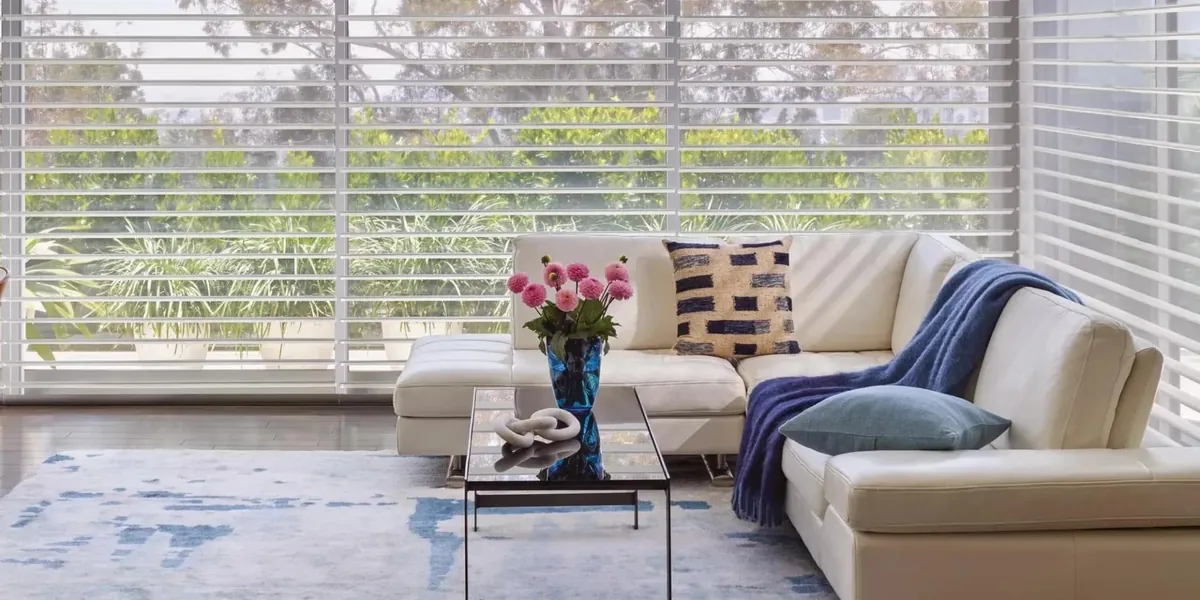
Corner rooms are among the nicest rooms in a colonial, bright and airy with windows on two walls. They are also where light gets complicated, because the sun reaches them for much of the day from changing angles. A shade that is perfect on the east window at nine in the morning may be the wrong choice on the south window at two in the afternoon.
There are two ways to handle this. One is to use the same product and fabric on both walls so the room looks unified, and simply operate the shades differently through the day. The other is to vary the fabric by wall, a filtering fabric on the gentler side and a tighter screen on the side that takes the hard sun, while keeping the color the same so the room still looks calm. PowerView makes either approach easier, because each wall can move on its own schedule without you thinking about it.
Colonials on large lots
The colonials in town tend to be generous houses: a formal living room and dining room at the front, a kitchen and family room run together across the back, a staircase in the hall, and bedrooms upstairs. Most have a slider or French doors to a deck or patio.
That adds up to a lot of windows, which is where a whole-house plan earns its keep. The usual approach is a house standard, one product in one color across most rooms so the front reads as a whole from the road, with deliberate departures: shutters in the formal rooms, darkening honeycombs upstairs, faux wood blinds in the baths, a screen or a sheer in the sunny family room. Agree the standard and the departures, and the rest of the decisions get quick.
Capes on wooded lots
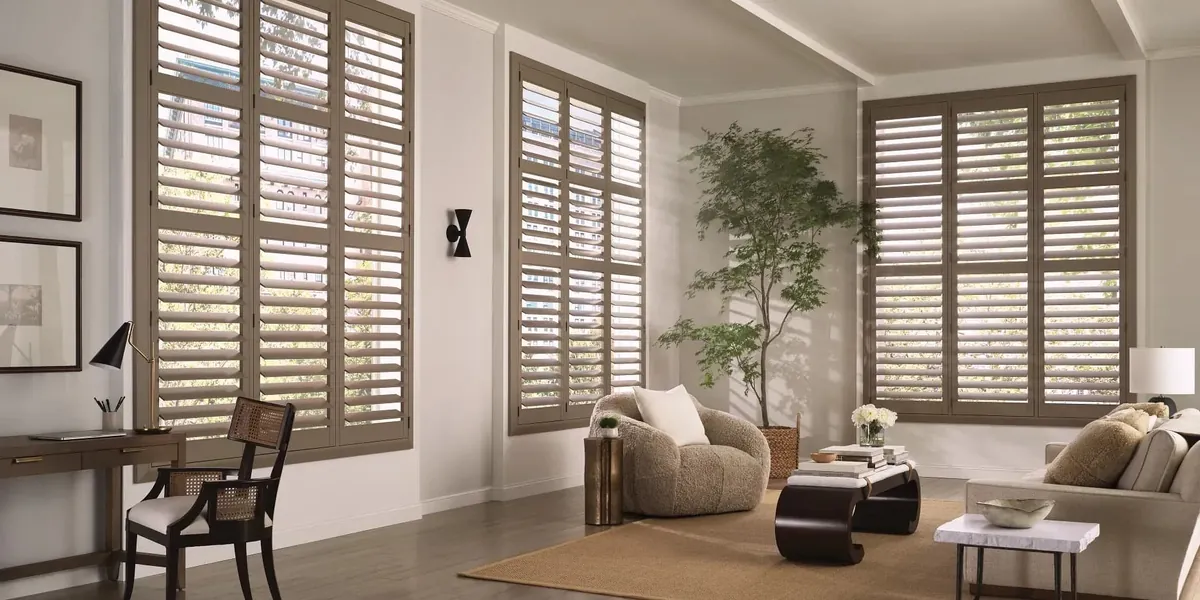
The capes in town are often newer than the classic post-war kind, built on larger lots with modern windows, but they share the same shape: living space on the ground floor and bedrooms tucked under the roof, lit by dormers and gable windows. Those upstairs rooms are where light and temperature swing the most, because only the roof separates them from the weather.
Dormers sit at the end of a shallow alcove; mounting the shade within the frame leaves that alcove uncluttered. A honeycomb is the usual pick up there, its cells buffering the room against both July heat and January chill. Gable-end windows sometimes face two directions at once in a cape’s upstairs, which brings the cross-light question up to the bedrooms as well.
When the trees change
On a wooded lot, the leaves do a lot of shading in summer. The south and west walls may be in dappled shade from June to September. Come November, with the branches bare and the sun low, those same rooms can be glaring.
That seasonal swing argues for filtering fabrics in the living spaces: up while the canopy is full, down once the low sun starts reaching the sofa, and the room never goes gloomy. In bedrooms, where you want darkness all year, a darker fabric does the job whatever the trees are doing. Window treatments in Norfolk, MA, that account for the bare months as well as the leafy ones save a lot of second thoughts.
Keeping heat in, and keeping it out
Houses with windows on every side have more glass than most, and glass is where heat comes and goes. On winter evenings a Duette or Applause pulled down at dusk puts a cushion of still air between the room and the cold glass. Our guide to cellular shades and winter heat explains the idea.
Summer flips it on the south and west walls. Closing shades during the hottest hours keeps the sun off floors and furniture, and a schedule on PowerView can do that before you get home. On a house with this much glass, it makes a noticeable difference to how the rooms feel.
Shades on a schedule
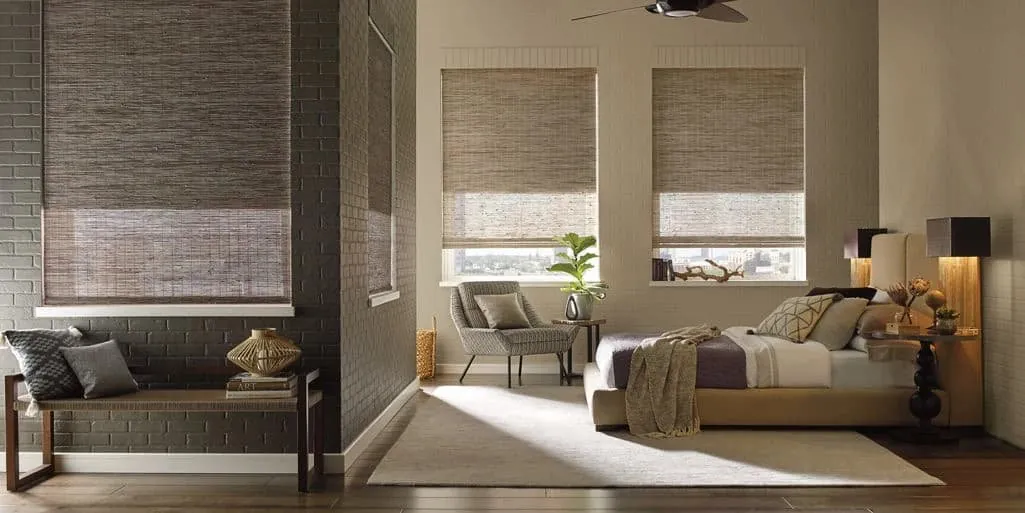
Motorization is especially useful in a house where the sun moves around many windows. With PowerView, you can set the east bedroom shades to rise when you get up, the south living room shades to lower partway at midday in summer, the west family room shades to close as the afternoon sun arrives and every shade in the house to come down at dusk. A remote or the app on your phone handles anything in between.
It is also the easy answer for windows that are awkward to reach: the high window in a two-story foyer, a window over the kitchen sink, a gable window above a bed. We plan how each motor is powered at the visit. For more on control options, see how motorized shades are controlled.
Baths, laundry and the kitchen sink
The working rooms follow the same compass logic, with a few extras. A kitchen on the east side wants brightness at breakfast, so a filtering roller or honeycomb that takes the edge off the low sun suits it better than anything dark. The window over the sink is usually a stretch across the counter, which makes it one of the first candidates for a motor in a house that is going to have PowerView anyway.
Bathrooms and laundry rooms swap the light question for a privacy one, even on a big lot, because these are the rooms where you want certainty. Faux wood blinds and shutters are the usual pair: they tilt for daylight, close fully, and look at home beside white tile and painted trim. A powder room off the front hall often faces the drive, and a shutter sized to that small opening finishes it neatly.
Patio doors and decks
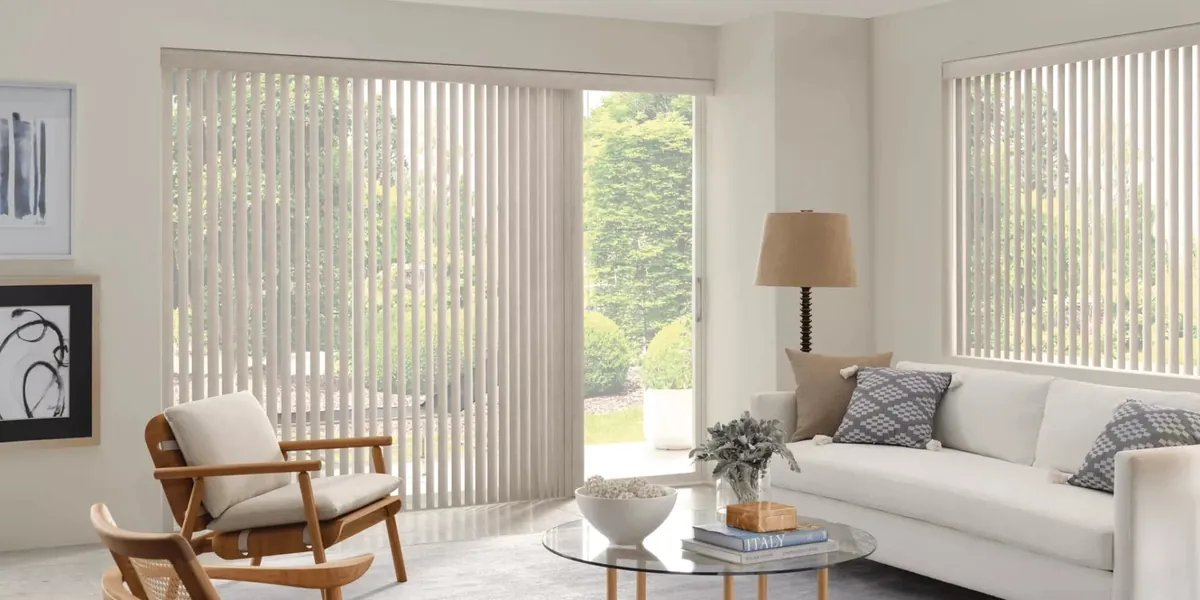
Most of the colonials and many of the capes have a slider or French doors to a deck or patio, usually off the kitchen or family room. A door covering has to clear the opening when you step out and still deal with the light when it is closed. On a slider, choose something that travels sideways: a vertical blind, a vertical honeycomb or gliding panels. On French doors, a shade or shutter mounted on each door moves with it.
Because these doors often face south or west onto the yard, they can bring a lot of afternoon sun into the kitchen. A covering on the door that matches the kitchen windows in color and fabric keeps the space tidy and handles the glare.
One dealer for every wall of the house
A house that takes light from every direction tends to need several kinds of covering, and it helps when they all come from one place. As a Hunter Douglas Gallery dealer, Blinds & Designs can put a darkening honeycomb in the east bedroom, a solar screen on the west family room wall and shutters in the formal front room, all chosen together and all ordered at once.
Every order goes up with certified Hunter Douglas installation. Alongside that sit the services that make a big project manageable: home visits by consultants whose vans are stocked with samples, interior design consultations when the color choice feels daunting, window covering automation, and a free estimate before you commit to anything.
Planning it on site
Light is hard to judge from a description, so the planning happens in the house. We can bring the showroom to you. A consultant arrives with a van of swatches and samples, and if you can, book the visit for the part of the day when the sun bothers you most, so we can hold a fabric up to the west glass while the glare is actually there.
From there the visit is practical. We go room by room, note which way each wall faces, measure every opening and check its depth, and sketch which product and fabric suits each window. You end up with a room-by-room plan and a free estimate, and you can sit with both for as long as you like. More on our in-home consultations page, and if you would like help pulling colors together across open rooms, ask about our interior design consultations.

A plan for a house this size
A large colonial can have a great many windows, and nobody has to do them all at once. Some people start with the rooms that cause trouble, usually the west-facing family room and the east bedrooms, and do the rest a season or two later. That works well as long as the first rooms are chosen with the whole house in mind. At the first visit we are glad to set out the full plan, so the later rooms match the earlier ones, and the estimate is broken down room by room so you can decide what to order first.
Window treatments in Norfolk, MA, often follow that pattern: the sunniest rooms first, the formal rooms next, and the quieter north rooms last.
The day the shades go up
When your order comes in from Hunter Douglas, the fitting is booked. Certified installers handle the whole job: they compare each piece with the opening it was made for, fix the hardware level and firm, hang everything and adjust it until it runs smoothly. If you have chosen PowerView, they set up the motors, link them to the remote or the app and build the schedules you asked for, so the east and west walls are ready to move on their own once the crew leaves. The boxes go with them. Read what happens on installation day for a fuller picture.
If an older blind or shade elsewhere in the house is misbehaving, mention it. We repair coverings people already own, and if it is past saving we will tell you so. See blind and shade repair.

Franklin is the closest showroom
Of our showrooms, Franklin is the nearest to Norfolk. A stop there before your home visit can be handy, especially if you bring a phone photo of the corner room that gets the worst of the afternoon sun.
Even so, the deciding usually happens at home, where a fabric meets your actual light at the hour it matters. Use one, the other or both.
Questions from Norfolk
My family room has windows on two walls. Should both get the same shade?
Often the same color, but not always the same fabric. A tighter screen on the wall that takes the afternoon sun and a filtering fabric on the gentler wall keeps the room comfortable and still looks unified.
Which side of the house needs the most attention?
Usually the west, where the low afternoon sun comes straight in. South walls come next in summer. East bedrooms need darkening for early mornings, and north rooms mostly need warmth in winter.
Do bare branches in winter really change things?
Yes. Rooms that sit in dappled shade from June to September can take strong, low sun once the leaves are down. That is why we suggest filtering fabrics in living spaces: raised in the green months, lowered when the glare arrives.
Can shades follow the sun automatically?
Yes. With PowerView, each group of shades can run on its own schedule, so the east, south and west walls move at different times. We plan how each motor is powered at the visit.
What does the estimate cost?
Nothing. Estimates are free, and they come broken down by room so you can decide what to do first.
Your next step
Window treatments in Norfolk, MA, start with a visit. Request a consultation, and we will bring the samples, follow the light around your rooms and measure every window, then leave you with a free estimate. Rather talk first? Use the call button, or stop by the Franklin showroom.
Our window treatments page lays out every shade, blind, shutter and drapery line we sell.