
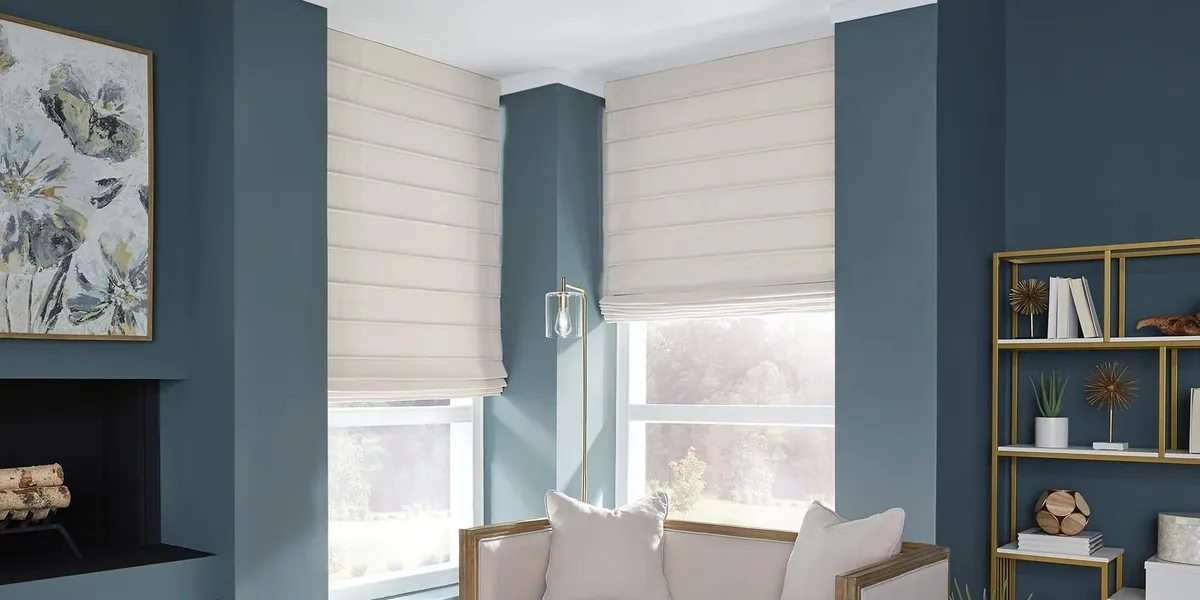
Standard windows, short setbacks
Rockland is mostly capes and ranches on modest lots, with a cluster of newer colonials off Union Street. Across nearly all of it, two things hold true. The windows are standard modern openings, square and regular, in sizes that repeat from room to room. And the houses sit fairly close to the road, so the front rooms are in plain view of the sidewalk and passing cars. Those two facts are the starting point for roman shades in Rockland, MA.
Standard openings make a fabric shade easy to fit and easy to repeat. A whole house can carry the same cloth and fold on every matching window, which gives a calm, finished look inside and a tidy face to the street. Short setbacks make the front rooms the place where privacy matters most, especially once the lights are on in the evening.
We plan all of this with Vignette and Carole Fabrics roman shades, in flat and folded styles, and we bring the samples to the house so you can see them against your own windows.
Choosing a roman shade for a Rockland home
Three directions cover most of what homes in town ask for. Each one can be held up at your windows when the consultant visits.
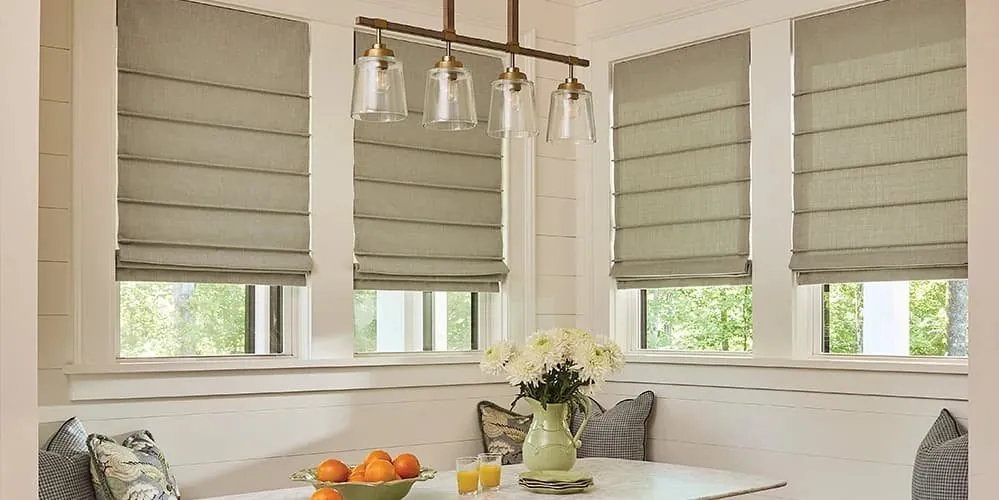
Vignette for a clean line
A tailored roman shade with even folds, well suited to the simple trim of a ranch or a colonial kitchen.
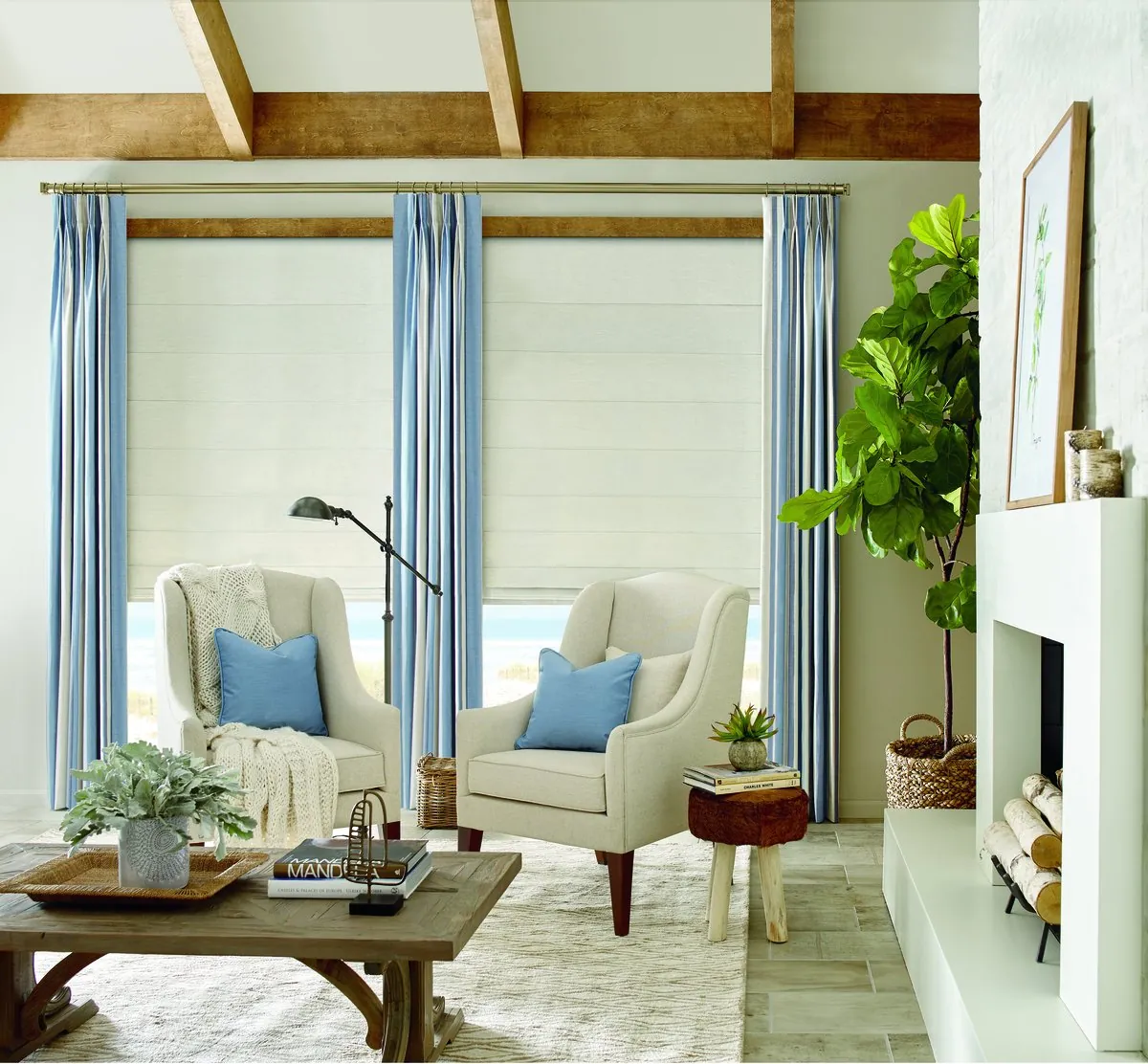
Carole Fabrics for living rooms
A wide library of cloths in flat or folded styles, for a front room where color and texture carry the look.
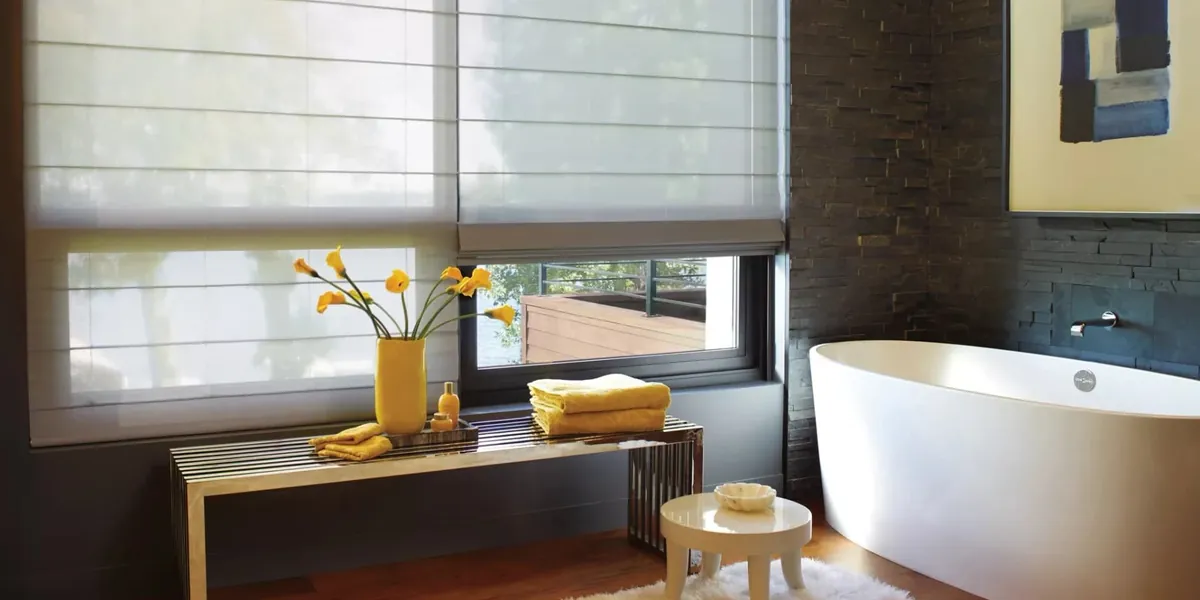
Sheer weaves for baths
A light, open fabric softens a bathroom window and keeps the room bright with the shade lowered.
Front rooms close to the road
With short setbacks, the living room of a Rockland cape or ranch sits only a little way back from the sidewalk. During the day, that is rarely a problem: the outside is brighter than the inside, and passers-by see mostly reflection. In the evening, with lamps on, the room is easy to see into. That is when a front window needs a shade that closes it off properly.
A roman shade in a fabric with some body handles this well. Lowered fully after dark, it gives a solid, even panel across the window. During the day it can sit raised, or partway down if the sun is on that side. Because the shade can stop at any height, you can cover just the lower part of the glass, where the sightline from the sidewalk falls, and keep the upper part open to the sky.
The front of the house also faces the neighbors across the street. On a short setback, the shades are a noticeable part of the facade, so many owners like the front windows to match each other in color and fold.
Standard modern openings
Rockland’s capes, ranches and colonials were built or updated with standard window sizes, and that helps at every step. Square frames take a roman shade easily, either inside the opening so the trim shows, or mounted on the wall above when you want the raised shade to sit clear of the glass. Repeated sizes mean a matching set of shades looks the same from window to window.
In practice, the decisions in a house like this are not about fitting problems. They are about how each room is used. A living room wants a fabric that keeps the room bright by day and private at night. A bedroom may want something heavier for a darker room in the morning. A kitchen wants a shade that is easy to raise over the sink. Because the openings are straightforward, most of the consultation can go on fabric, color and style. When we measure for roman shades in Rockland, MA, we still check every window, because a single replacement or an older frame can turn up anywhere.
The colonials off Union Street
The newer colonials off Union Street are larger than the town’s capes and ranches, with two full floors and a regular pattern of windows across the front. The front facade usually lines up its windows in rows, one above the other, and the result is a very orderly look from the street. Fabric shades in a single color across every front window keep that order.
Inside, a colonial gives each room a clear job. A formal living room and dining room at the front, a family room and kitchen at the back, bedrooms upstairs. The front rooms face the road and the short setback, so privacy matters there. The back rooms face the yard and tend to be about light and comfort. Upstairs, bedrooms are above the line of sight from the sidewalk, so the shade is mainly about the morning sun and the darkness of the room at night.
That means a colonial often uses two or three fabric weights: a medium cloth at the front, something lighter at the back, and a heavier fabric in the bedrooms. The fold and color can stay the same across all of them, so the house still looks unified.
Capes and ranches
A Rockland cape puts its bedrooms upstairs under the roof, often with dormer windows set into the slope. Downstairs, the front windows usually flank the door in pairs. A dormer is smaller than a downstairs window and sits in a recess, so a flat fold in a lighter fabric suits it best, staying compact when it is raised.
A ranch spreads everything along one floor. The living room window at the front is often the widest in the house, and on a broad opening two shades side by side can be easier to use than one. Along the side, the bedroom windows usually repeat, which makes them simple to treat as a set. At the back, the kitchen window looks into the yard.
In both kinds of house, the modest lot means the sides of the house face the neighbors at fairly close range. Side windows in bedrooms and bathrooms need privacy at night and a fair share of daylight during the day, and a translucent fabric does both. A short sample session at one of those side windows, with the room lights on, usually settles the question quickly.
Family rooms and kitchens at the back
The rear of a Rockland house is usually where daily life happens. In a colonial, the family room and kitchen often run across the back, looking onto the yard. In a ranch, the kitchen and perhaps a den sit at the far end from the street. With the road out of sight, these rooms are less about privacy and more about comfort: keeping the glare off a screen, letting in the view of the yard, and making the room feel relaxed.
A lighter fabric suits most of these windows. It can sit partway down through a bright afternoon and still leave the room full of light. Over the kitchen sink, a flat fold that stacks neatly keeps the window easy to use. In a family room where people watch television, a slightly heavier cloth on the sunny side cuts reflections without blacking the room out. Because the yard side is rarely seen from the road, you can be freer with color and pattern here than at the front.
Bedrooms upstairs
In a Rockland colonial or cape, the bedrooms are upstairs, above the line of sight from the sidewalk. That changes the brief. Privacy from the street is less of an issue, and the shade’s main job becomes controlling the light: a darker room on summer mornings, a softer glow in the afternoon.
That usually means a heavier fabric than you would choose for the rooms downstairs. A child’s room or a guest room may want the darkest cloth in the house, while a main bedroom might use a medium weight that still lets the room feel bright with the shade half down. On the side of the house, an upstairs window can look across at the neighbor’s upstairs window on a modest lot, so evening privacy still matters there. We bring a range of weights to try in each bedroom.
Bathrooms
Most bathrooms in Rockland’s capes and ranches have a modest window on the side or back of the house, often close to the next lot. The shade here spends much of its time lowered, so the fabric has to give privacy without making the room dim. A translucent cloth that blurs shapes but passes daylight is the usual answer, and a sheer weave works where the window faces the yard rather than a neighbor. A flat fold keeps a small window clear when the shade is up.
How the visit works
For Rockland, appointments come out of our Canton shop-at-home territory, so nobody needs to drive anywhere: the swatch books ride over in the van. Read more on the Canton shop-at-home page.
- Pick a time through Request a Consultation, or arrange it over the phone with the call button.
- Give us a rough list: the front windows only, the upstairs bedrooms, or the whole house.
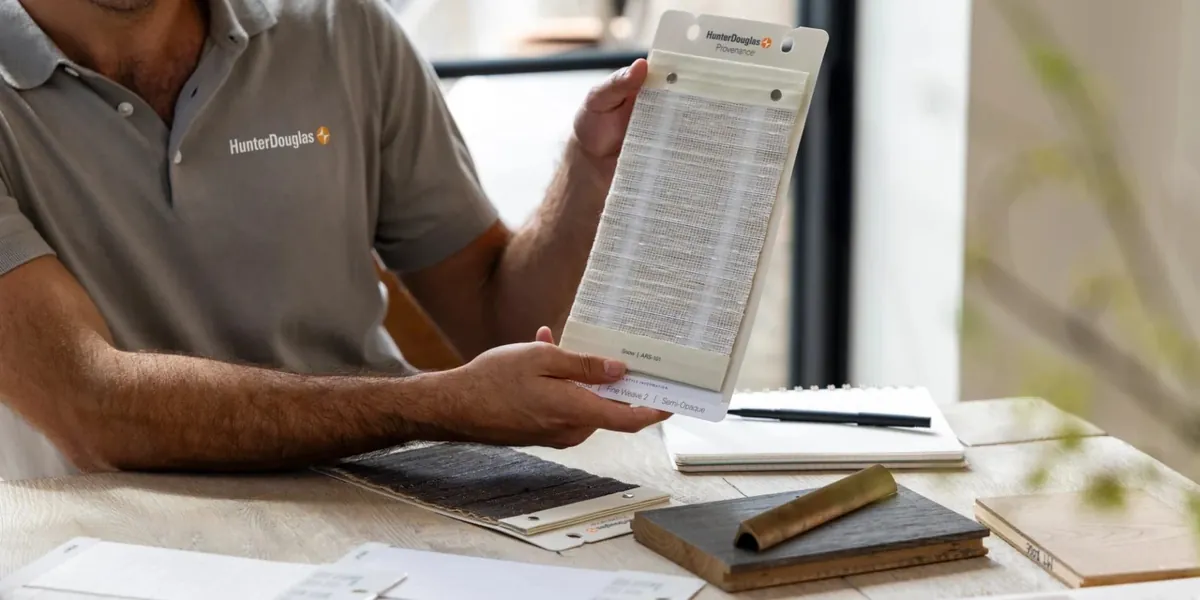
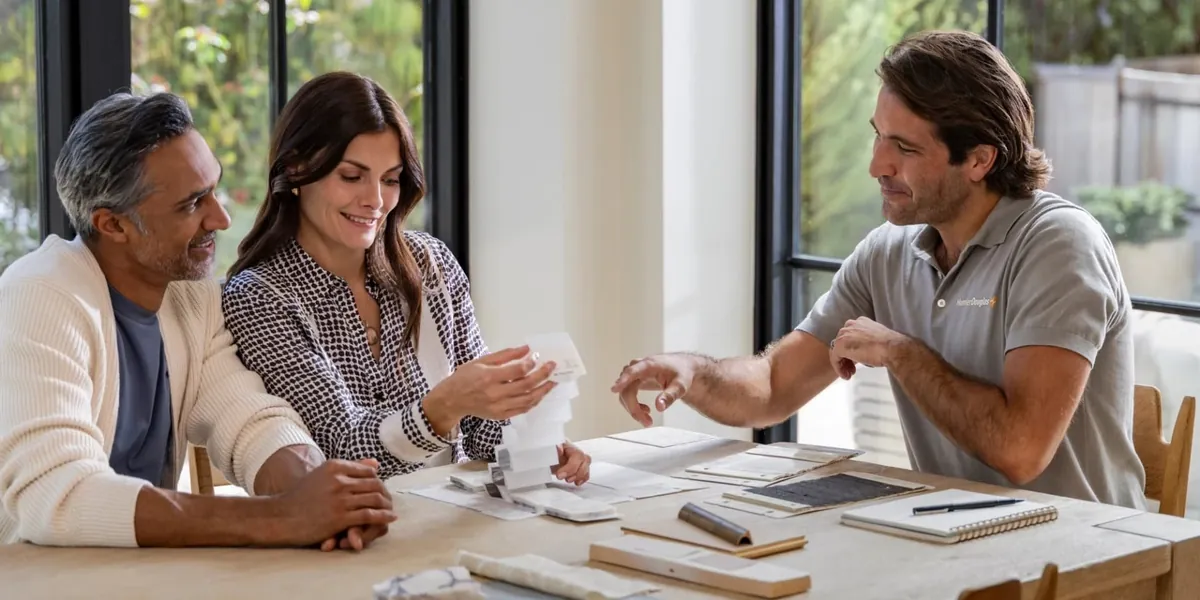
- Swatch books for both fabric lines are spread across a table near your windows.
- Cloths are held up first at a street-facing window, then at one facing the yard, since the light differs.
- Each window gets its own measurement.
- A free estimate, room by room, is handed over at the end.
There is more on the in-home consultations page.
A consistent face to the street
On a short setback, the windows are a big part of how a house looks from the road. Shades in different colors and fold styles on each front window can make even a well-kept house look unsettled. Matching shades, lowered to the same height, look deliberate.
The simple approach is to choose one fabric color and one fold for every street-facing window, then vary the weight or the color inside where it makes sense. A colonial with six front windows across two floors, a cape with a pair either side of the door, a ranch with a broad living room window and a smaller one beside it: each looks best when the front windows read as a set. Many owners planning roman shades in Rockland, MA, start with the front of the house for exactly that reason.
Light by direction
Because so many Rockland houses are simple rectangles, each side of the house tends to get a predictable kind of light. A room facing the morning sun is bright early and softer later. A room facing the afternoon sun can be hot and glary from midday on. A north-facing room gets steady, gentle light all day.
Fabric weight follows that pattern. A heavier cloth in an east-facing bedroom keeps the early sun out. A light, textured fabric in a west-facing living room takes the edge off afternoon glare without making the room dim. A pale, translucent fabric in a north-facing room keeps as much daylight as possible. Our guide to choosing fabric for a sunny room is useful for the bright side of the house.
Flat or folded
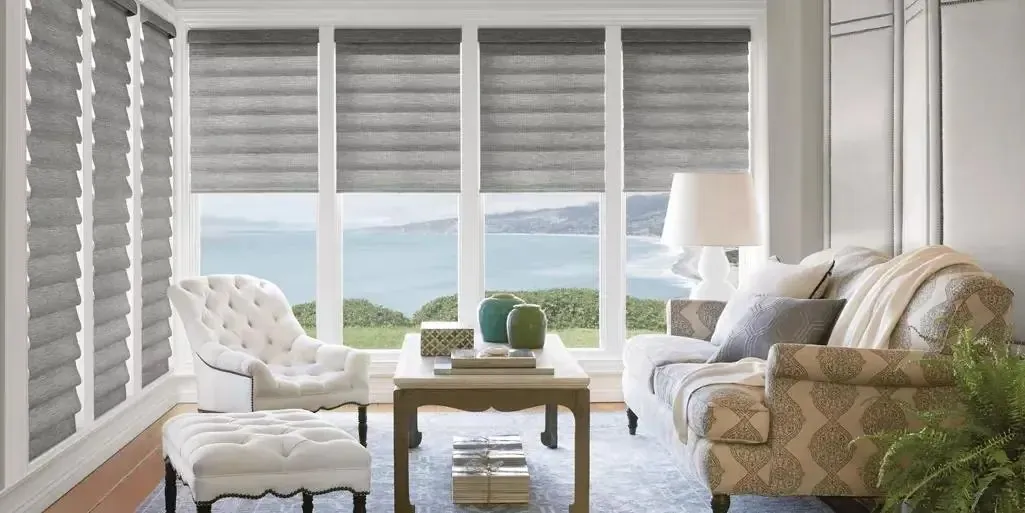
Both Vignette and Carole Fabrics come in flat and folded styles. A flat style lowers as a smooth panel and lifts into neat stacked pleats, which suits the clean lines of a ranch or a colonial. A folded style keeps soft loops across the face, giving a fuller, more relaxed look that can suit a living room or a bedroom.
Many houses use both: flat in the kitchen, bathrooms and bedrooms, folded in the front living room. The front windows can stay matched while the back of the house follows its own style.
Color and pattern
On standard openings, pattern scale is easy to judge. A medium print, a stripe or a textured plain all have enough room to show without being cut off. A vertical stripe can make a modest window look taller, while a horizontal texture can make a narrow room feel wider.
Color usually takes its cue from the room: a wall, a sofa, the floor. Light neutrals keep a small bedroom open and bright. Deeper colors make a living room or dining room feel warm in the evening. If you want a plan that brings fabric, paint and furniture together, our interior design consultations take that wider view.
PowerView motorization
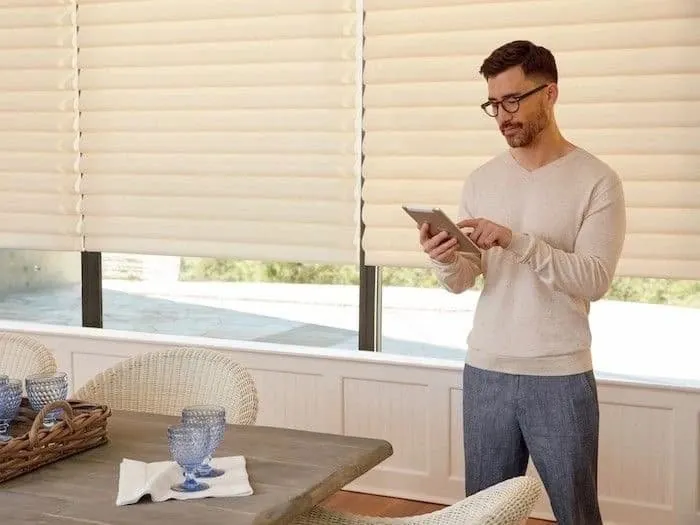
Motorizing a fabric shade with PowerView means it answers to a remote, a phone app or a timetable. That last option suits a house near the road. Set the street-facing shades to drop at a chosen hour and the front rooms are covered every evening, whether or not anyone is in. On a colonial, the upper and lower rows of front windows can be grouped so they travel together. The power source for each motor is settled at the consultation. Other things around the house that can be automated are covered under motorized blinds in Rockland.
Installation
Certified Hunter Douglas installers fit every shade. Because the openings are regular, the headrails sit at one height along each wall, and on a street facade where every shade is seen at once, that evenness shows. Each shade is cycled up and down as a final check. The guide to what happens on installation day has the rest.

Working with a Hunter Douglas Gallery dealer
As a Hunter Douglas Gallery dealer, Blinds & Designs can show a Rockland household both fabric collections without narrowing the choice first. Should a family room or bath be better off with a blind, a shutter or another shade, those swatches are already on board the van. Fitting is by certified Hunter Douglas installation.
You pay nothing for an estimate. We can also help with a whole room through an interior design consultation, and we mend blinds and shades you already have. For bedrooms, owners here often look at cellular shades in Rockland as well, and the Rockland page gathers our services in town. Read about both fabric lines on the roman shades page.
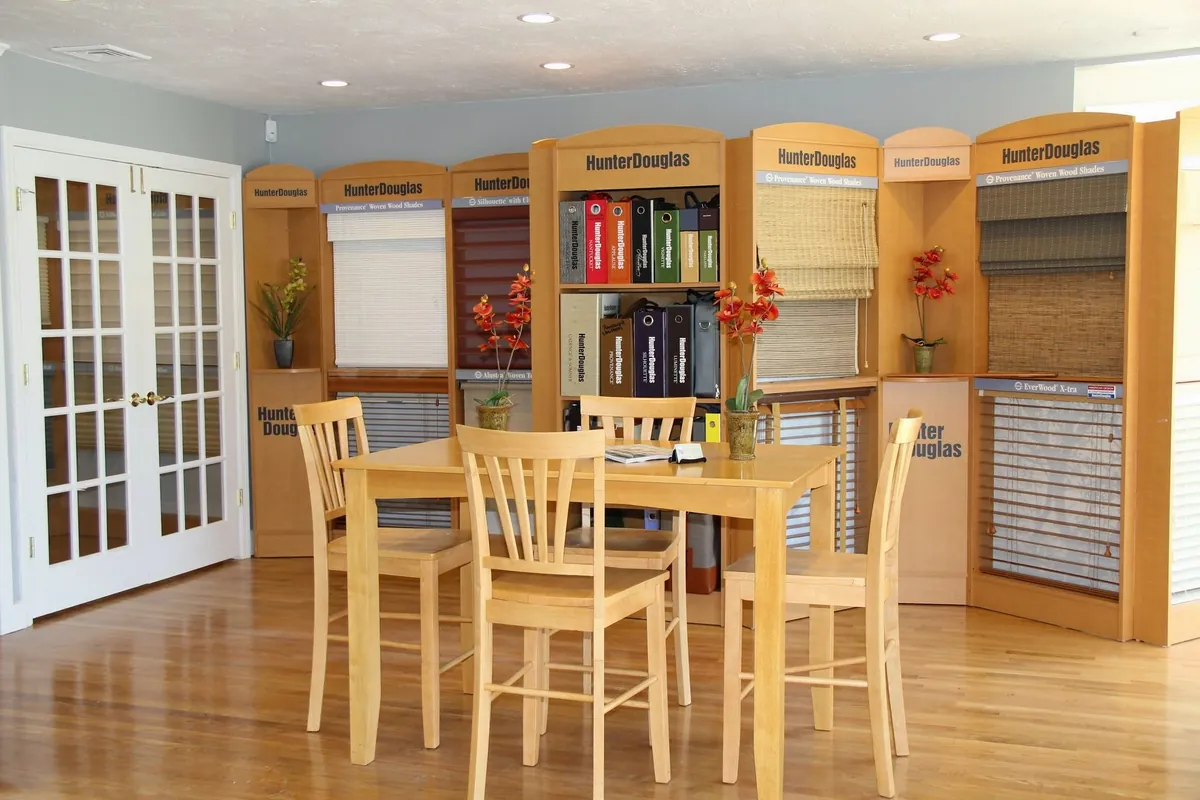
Most Rockland projects begin at the kitchen table during a home visit. The closest showroom, for anyone who wants to stop by, is Franklin.
Questions from Rockland
My living room is close to the road. What fabric gives the most privacy?
A denser cloth, dropped all the way after dark, gives full cover. By day it can stay up or sit halfway, screening the sidewalk sightline.
Should every front window match?
It is not required, but on a short setback matching front windows look tidy from the street. You can vary the fabric inside where it makes sense.
Will a fabric shade suit the dormers in my cape?
Usually. Dormers take a slim flat style well, and we check how deep each recess is when we measure.
My windows are all standard sizes. Do you still measure each one?
Yes. A replacement window or an older frame can turn up anywhere, so we take a tape to each window.
Does the estimate cost anything?
Nothing at all. You get it in writing, room by room, at the end of the visit.
Getting started in Rockland
Swatches tell the truth only at your own glass, in your own daylight. Use Request a Consultation to pick a day and the van brings both fabric collections to your street, with measuring and a free estimate as part of the same appointment. Whether it is a ranch living room near the sidewalk or every front window of a colonial off Union Street, roman shades in Rockland, MA, start there. Anything you would like to ask beforehand, the call button is the quickest way.