
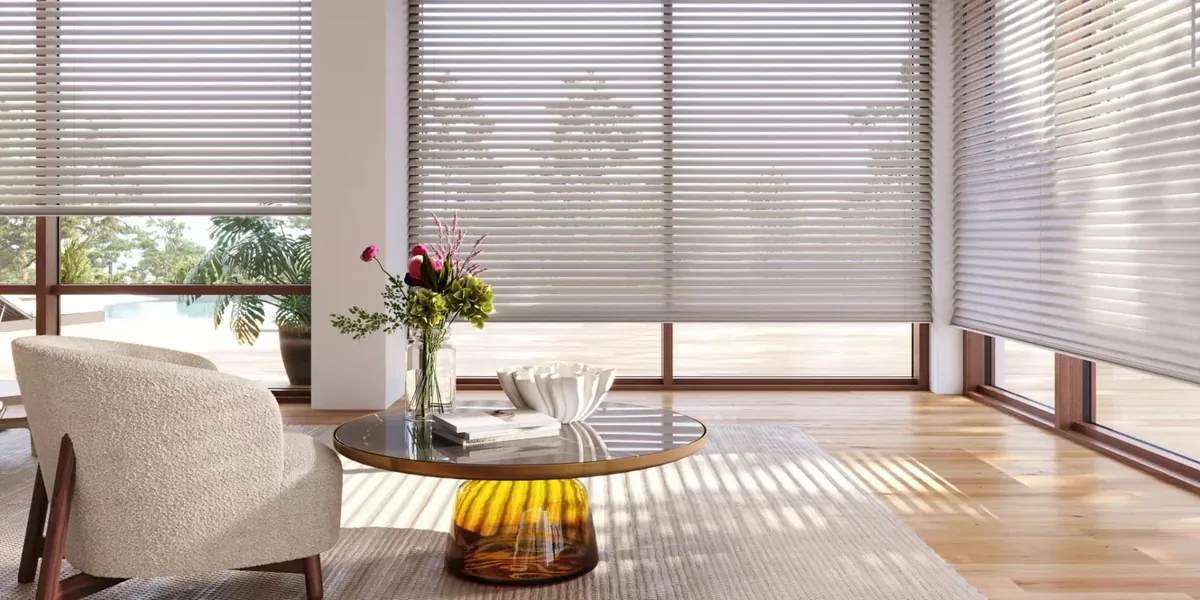
Sun on more than one wall
Large lots and a very low-density pattern give houses here something many towns lack: open space on every side. Farmhouses and capes sit well back from each other, with newer colonials scattered in between, and a single room may have windows on two or even three walls. There is often no neighboring house, hedge or tall building to cut the sun before it reaches the glass.
That openness is lovely, and it shapes window treatments in West Bridgewater, MA, in a particular way. Privacy from neighbors is rarely the first concern. The sun is. A living room can get bright morning light on one wall, strong midday sun on another and low glare in the late afternoon on a third, all between breakfast and supper.
So we plan each room by the direction its windows face, not just by what the room is used for, and we do it at the house, where you can see the light move.
Each service, with its own page in town
The cards below cover the window treatments in West Bridgewater, MA, that have their own town page. Select any one to read more.
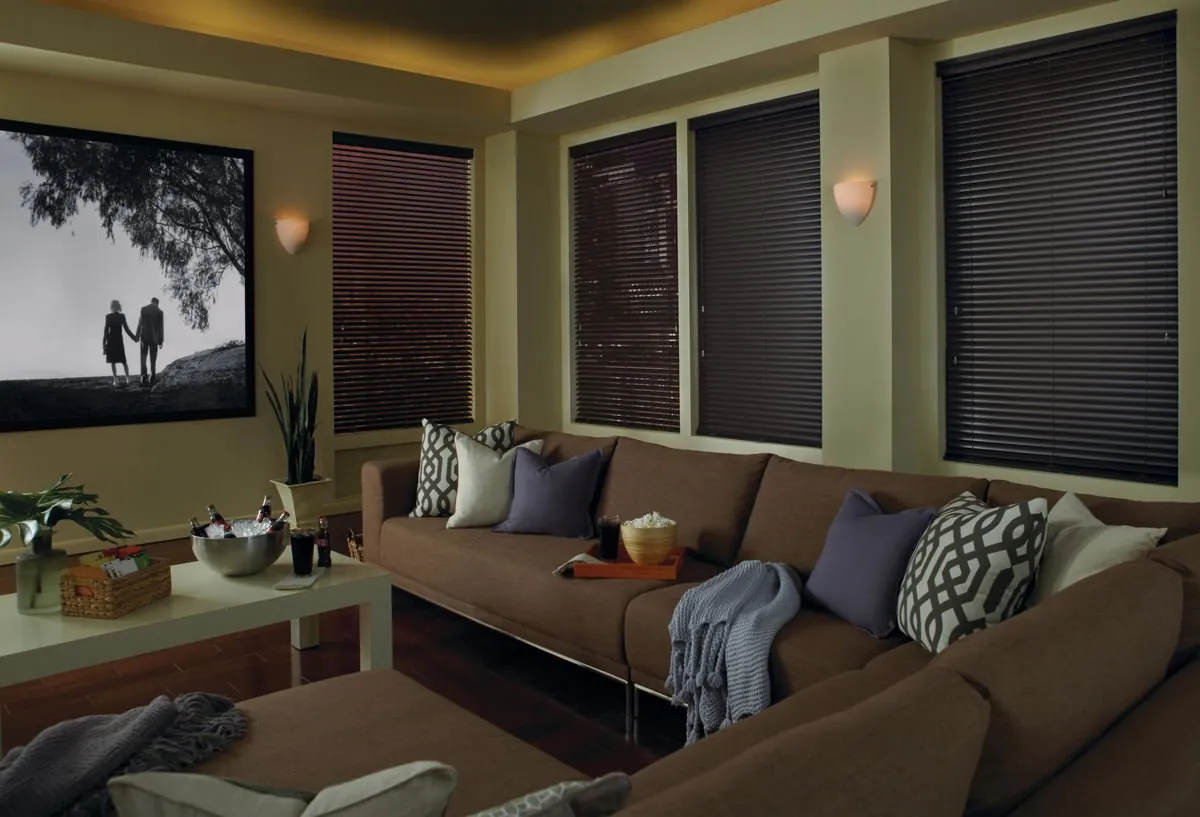
Custom Blinds in West Bridgewater
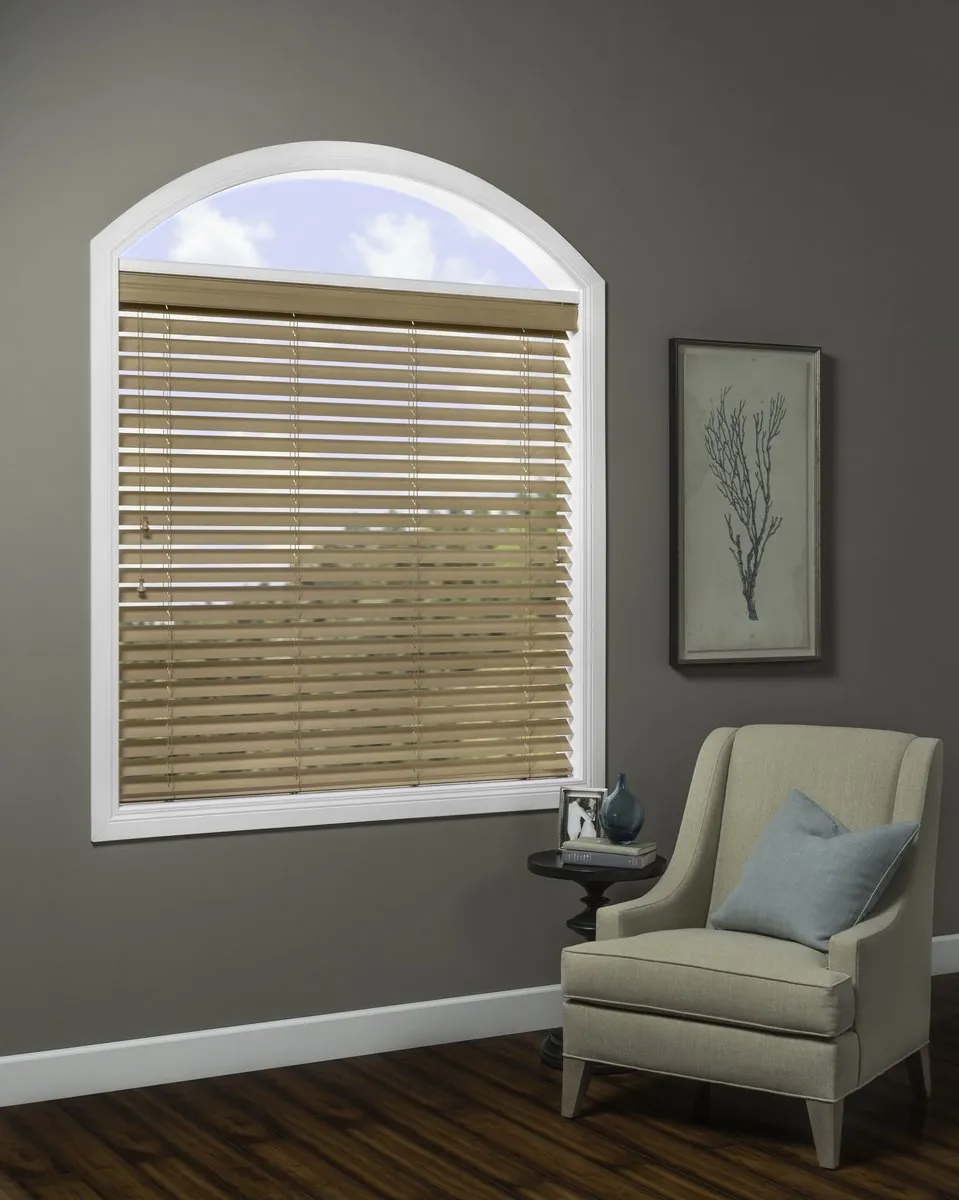
Wood, faux wood, metal and vertical blinds. Slats can be angled through the day to steer sun away from a screen or a sofa.
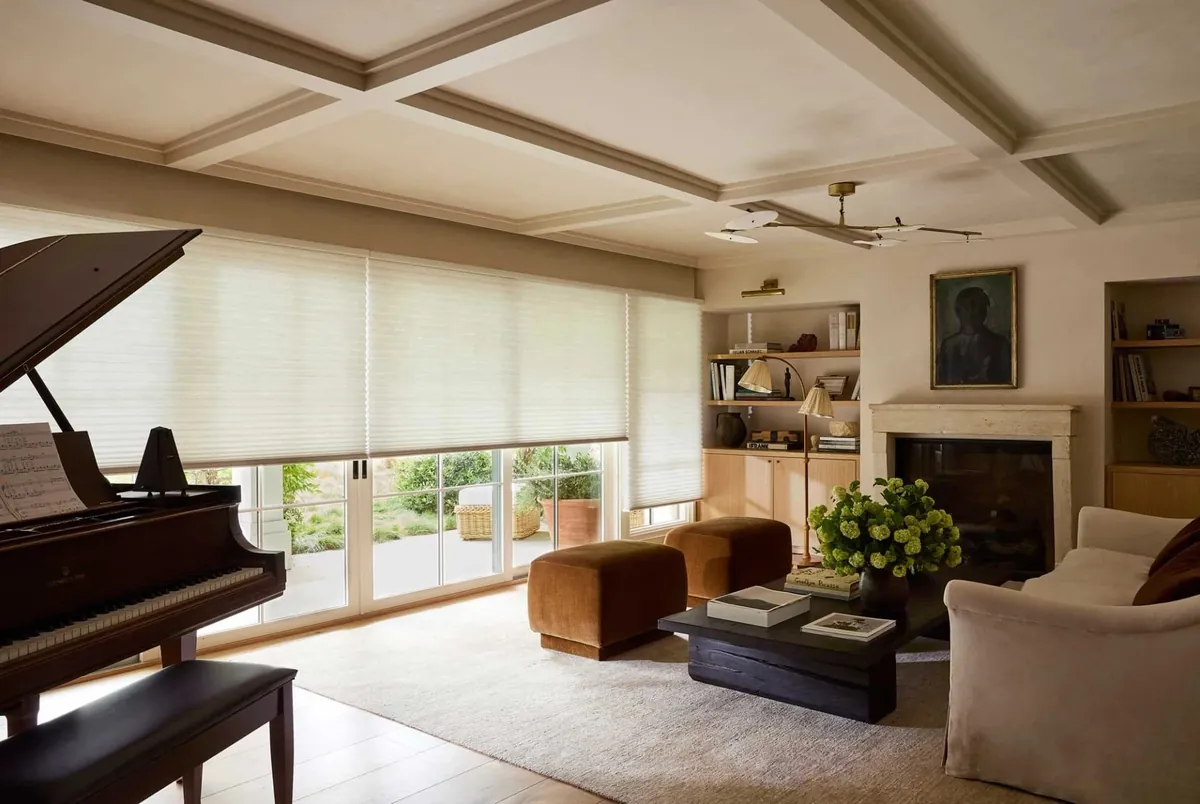
Cellular Shades in West Bridgewater
Duette and Applause honeycomb shades in light-filtering or room-darkening fabrics, one color across every wall of a corner room.
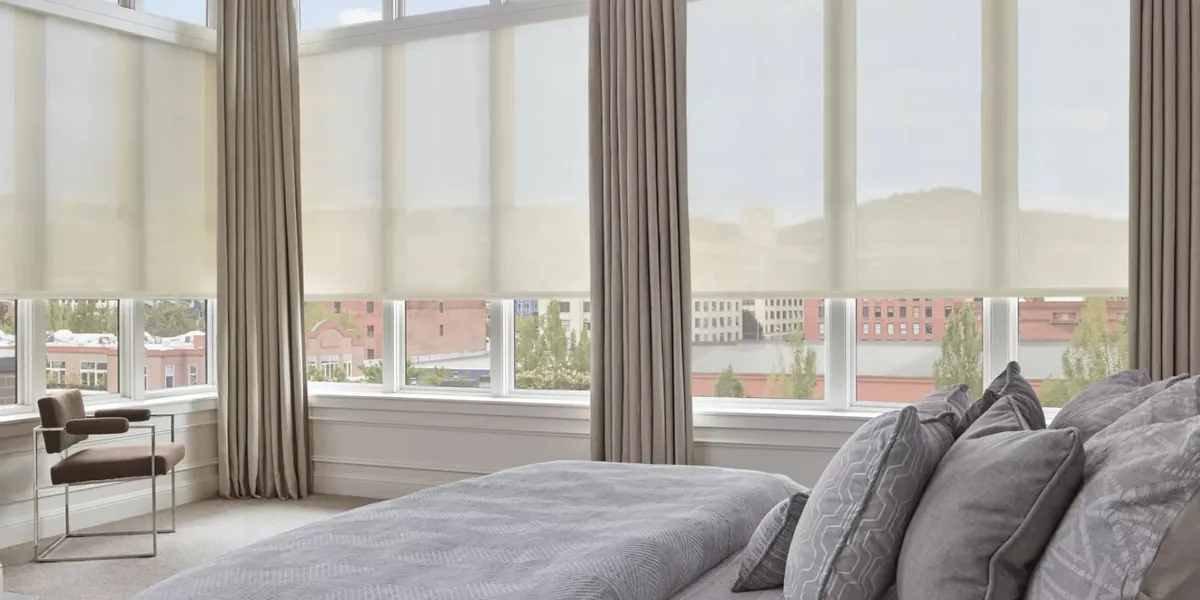
Roller Shades in West Bridgewater
Designer Roller and Alustra screen and solid fabrics. A screen keeps the open view while it calms the glare.
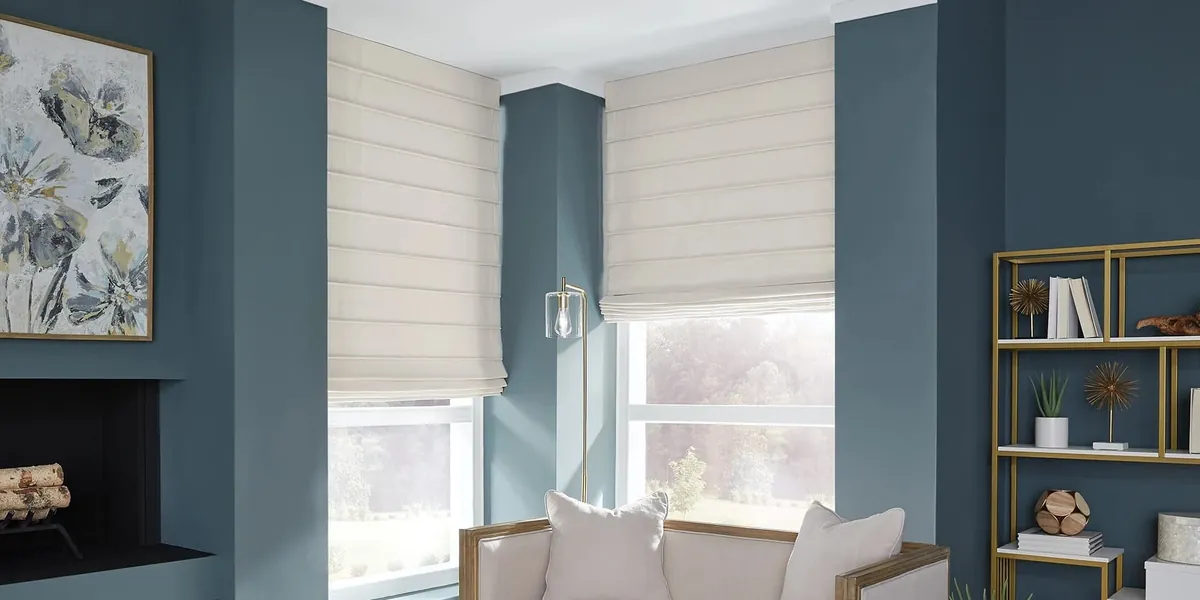
Roman Shades in West Bridgewater
Vignette and Carole romans, flat or folded, adding fabric and a softer line to a farmhouse front room.
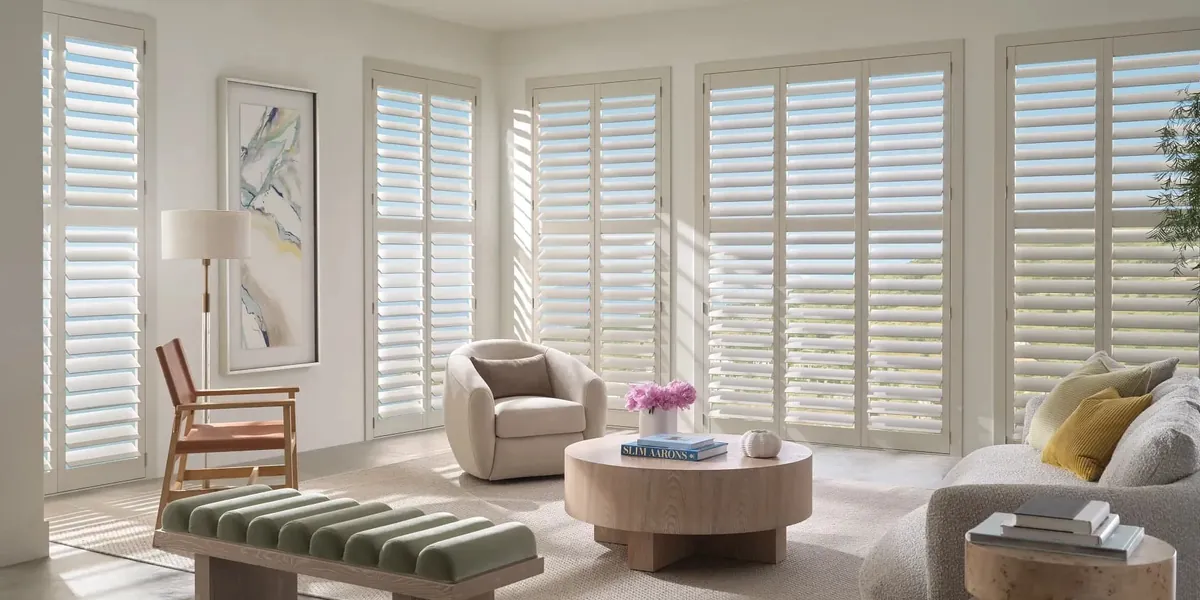
Plantation Shutters in West Bridgewater
Palm Beach, NewStyle and Heritance shutters, with louvers that tilt to follow the sun as it crosses the sky.
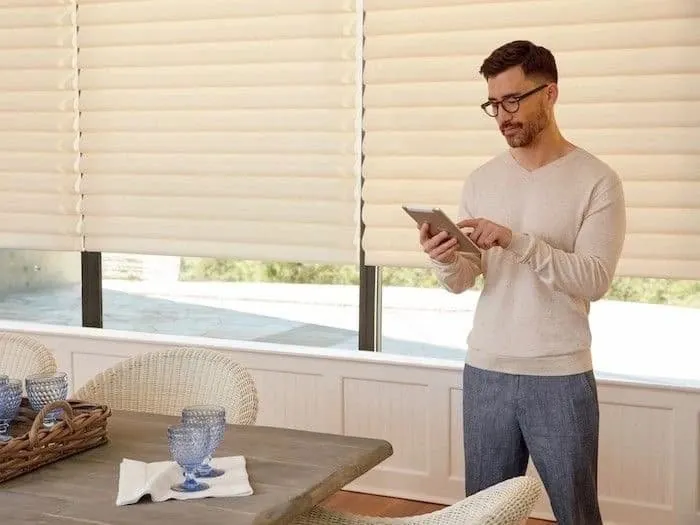
Motorized Blinds and Shades in West Bridgewater
PowerView, with schedules that move each side of the house at its own time, plus remote and app control.
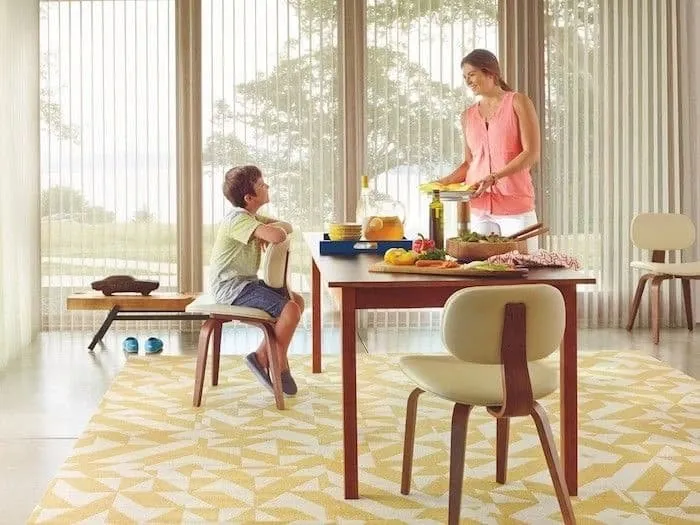
Hunter Douglas Dealer in West Bridgewater
Our status as a Hunter Douglas Gallery dealer opens the full range, with certified Hunter Douglas installation.
Following the sun around the house
When a house stands alone in open land, each side gets the sun on its own schedule. Knowing which way a window faces tells you most of what it needs.
- East-facing windows catch the first light. In a bedroom, that can mean waking far earlier than you would like, so a room-darkening fabric is worth it. In a kitchen, the same light is welcome at breakfast.
- South-facing windows get the longest, steadiest sun, high in summer and low in winter. Light-filtering fabrics or shutters let you take the brightness down without closing the room off.
- West-facing windows take the low, direct sun of late afternoon and evening, the hardest light to manage because it comes in nearly level. Screen fabrics and shutters handle it well.
- North-facing windows get soft, even light all day and often need the least, perhaps just something for evening privacy. They are also the windows where a pale, light-filtering fabric keeps a room from feeling dim.
A corner room with windows on two sides may need two answers. That is fine: the same product in the same color, with different fabric openness or a different setting on each wall, still looks like one room.
When nothing screens the glass
In a closer-set town, a neighbor’s house or a row of trees often takes the edge off the sun. Here, with wide lots and open fields, the light frequently arrives with nothing in the way. Rooms are brighter, which is a pleasure, but glare on a television, a computer or a kitchen counter can be hard to escape.
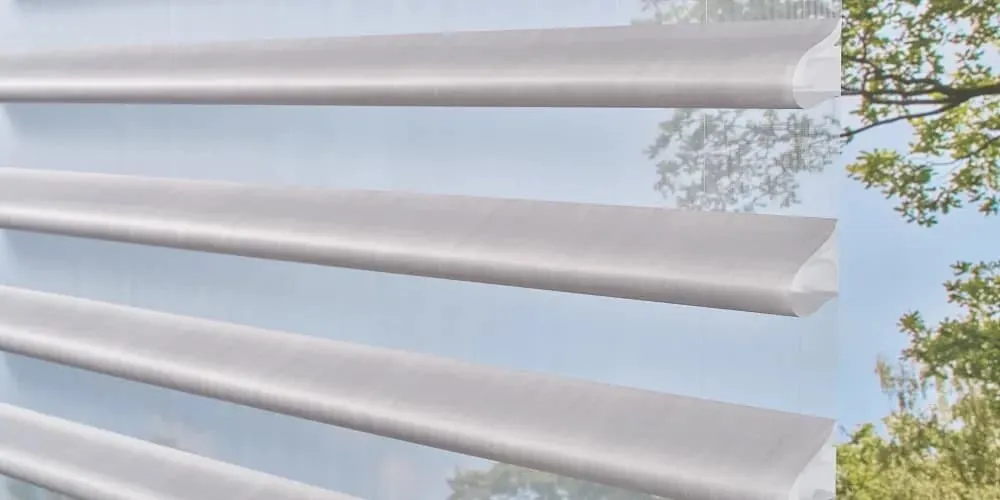
Screen fabrics in roller shades are made for this. They cut glare and brightness while keeping the view out, so you still see the yard or the field from your chair. Sheer shadings do a similar job more softly, with fabric vanes that can be tilted to steer the light. Blinds and shutters give the most precise control, because each louver or slat can be angled exactly to block the sun’s line while letting light bounce off the ceiling.
The right openness depends on how bright the window is and how much view matters. We bring screen samples in a range of openness so you can compare them at the actual window.
Farmhouses and their many windows
The farmhouses in town often have windows on every side of the main block, plus more in an ell or a later wing. A kitchen at the back may look out on two sides; a front parlor may have windows facing the road and the side yard.
Older farmhouse windows are often smaller and set in thicker walls, with deeper recesses than a modern house. An inside-mount shade or shutter sits neatly in that depth and leaves the trim on show. Shutters are a traditional fit for a farmhouse and give fine control over light from any direction. Wood blinds suit the period too.
Because so many rooms have windows on more than one side, keeping a single outward color across the house matters. Seen across a field, a house with mismatched coverings looks untidy from a long way off.
Capes on wide lots
A cape on a large lot often gets more light than the same house would in a denser town, because nothing shades it. The living room at the front, a kitchen at the back and dormer bedrooms upstairs can all take direct sun at different times of day.
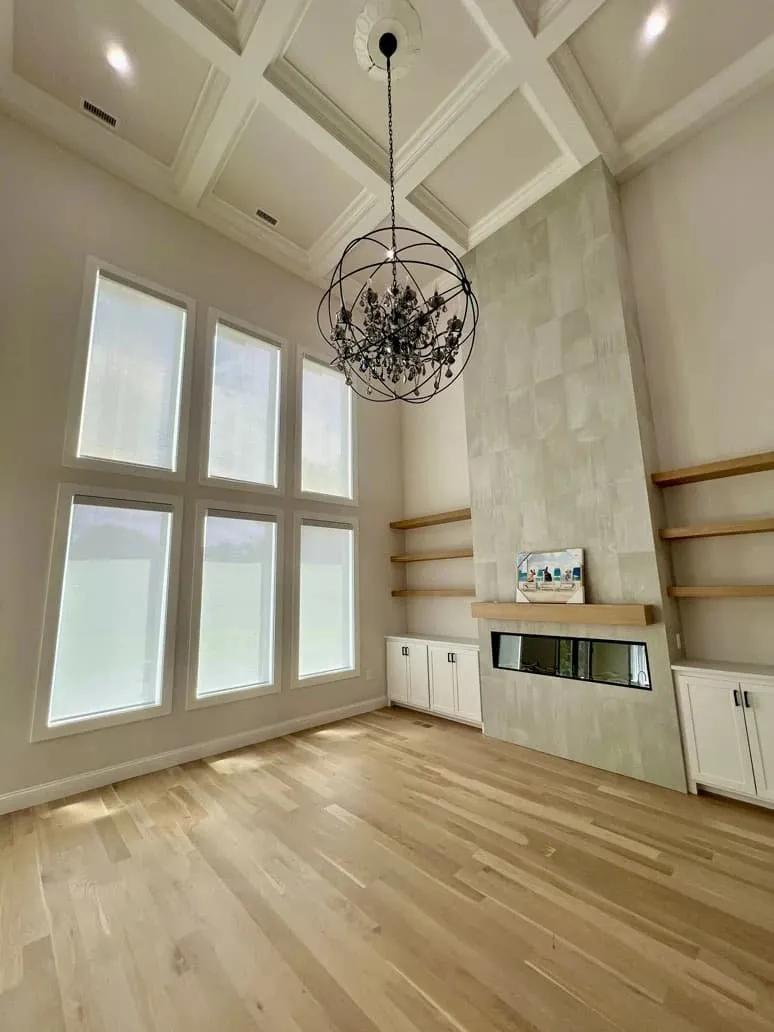
Dormer windows sit in recesses with little wall around them, so an inside-mount honeycomb or roller shade is the tidy choice. If a dormer faces east, a room-darkening fabric stops early light from waking you. Downstairs, a light-filtering honeycomb or a set of shutters can carry through every room, with a screen fabric on any west-facing window that catches the evening glare.
Newer colonials between the older houses
The newer colonials dotted between the farmhouses and capes have standard modern openings, often in larger sizes and greater numbers than the older houses. A family room across the back may have a wide run of windows or a slider; a two-story entry may have a tall window over the door.
Standard openings make these houses easy to fit, and one product can usually repeat throughout. The bigger question is orientation. A colonial with its back to the west may need screen or light-filtering shades across the whole rear of the house, while the front, facing east, needs more darkness in the bedrooms. Tall windows that are hard to reach, such as over a two-story entry, are good candidates for PowerView.
Getting ready for a consultation
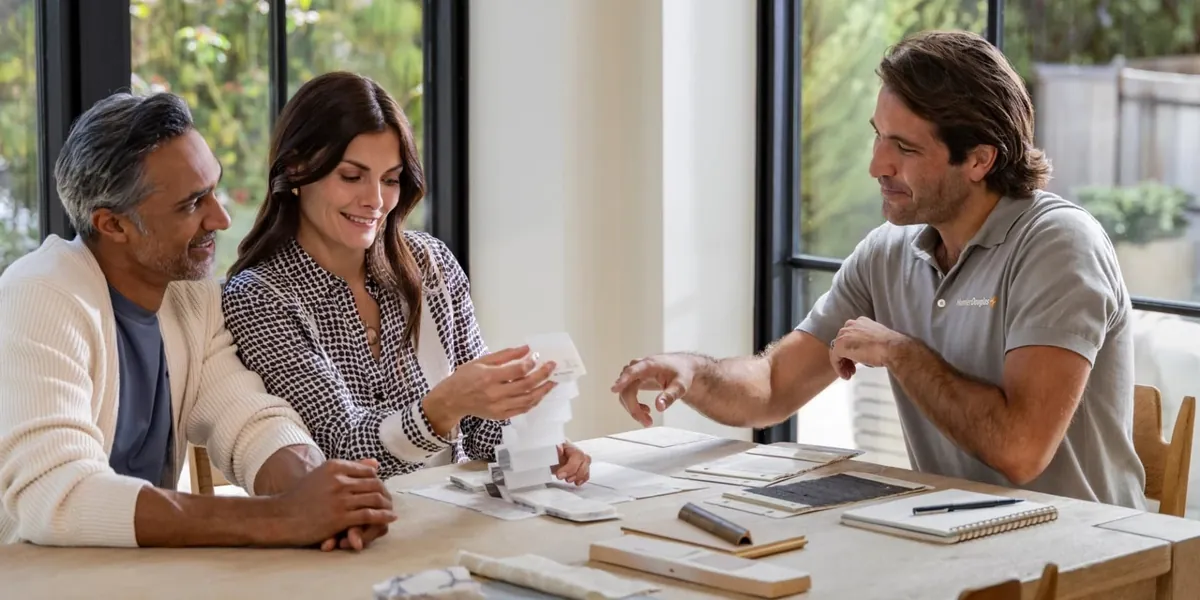
Our shop-at-home service runs from Canton, and the vans carry samples, so we can bring the showroom to you. On a house that takes light from several sides, seeing samples at the real windows makes all the difference, because the same fabric can look quite different on an east wall in the morning and a west wall in the afternoon.
A few things that help us plan:
- Note the problem times, such as a bedroom that is bright too early or a family room that glares at supper.
- Think about views you want to keep, a field, a garden or a long look down the yard.
- Book a time through Request a Consultation, or use the call button.
- Walk the house with the consultant, who brings fabric books, screen samples, slats, shutters and a PowerView remote.
- See samples at each window, ideally at the time of day that troubles you.
- Receive a free estimate after every window is measured.
The Canton shop-at-home page explains more, and our guide to the best shades for sun and glare is useful reading before the visit.
A lit house in open country
After dark, the situation reverses. With no other houses close by, a lit window can be seen from the road a long way off, and a room that felt open and private all day can feel exposed once the lamps are on.
Light-filtering fabrics glow at night and can show shapes inside. In the rooms you use after dark, a room-darkening fabric or shutters closed tight keep the room private. Many owners choose a light-filtering fabric for the day rooms and something more solid for the bedrooms and the living room. PowerView can lower the shades on the road side at sunset each evening, so you never have to remember.
Keeping the view
A house on a big lot often comes with an outlook worth keeping, and the last thing you want is a covering that hides it. The good news is that several products let you control light without giving up the view.
Screen roller fabrics keep a clear view out by day while cutting glare. Sheer shadings let you see out through soft vanes. Shutters and blinds with the louvers open frame the view in neat strips. And any shade that raises fully clears the glass completely when you want the whole outlook. On a picture window facing a field, a screen or sheer shade is often the best balance.
Bedrooms that face the morning
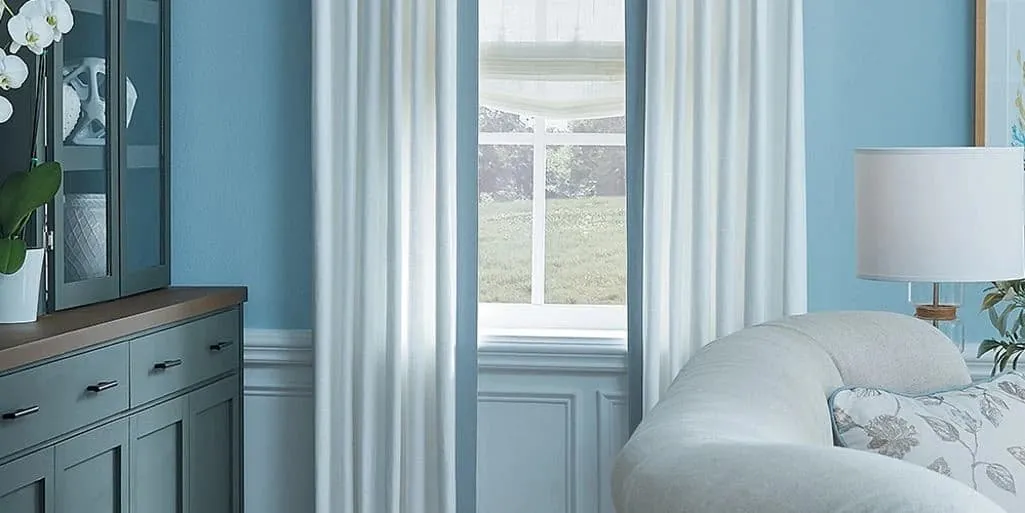
East-facing bedrooms get early light that nothing outside softens. In summer, that can mean a bright room well before you want to be awake. A room-darkening honeycomb or roller fabric is the simplest fix. Shutters closed tight also darken a room well. If you like the idea of a gentler start, PowerView can raise the shades at a set time, so the room brightens when you choose rather than when the sun rises.
West-facing bedrooms have the opposite issue, staying bright well into the evening. A screen or light-filtering shade lowered in the late afternoon helps the room feel calmer by bedtime.
Corner rooms and long runs of glass
Many rooms here, whether in a farmhouse, a cape or a colonial, sit on a corner with windows on two walls. Some family rooms and sunrooms have a long run of windows across one wall as well.
For a corner, matching the product and color on both walls keeps the room calm, even if the fabric’s openness differs to suit each direction. For a long run, several shades can share a headrail so they move together and read as one. Shutters across a long run should have their panels planned so the louvers line up end to end.
Kitchens that look two ways
Farmhouse and colonial kitchens alike often sit at a back corner, with a window over the sink on one wall and another window or a door to the yard on the next. That gives the kitchen light from two directions, which is cheerful in the morning and can be harsh at supper if one wall faces west.
The window over the sink is reached across the counter, so it needs something simple to raise and lower. Shutters on the lower sash keep the top open to the sky and are easy to tilt. A light-filtering honeycomb or a screen roller suits the second window, softening the evening sun without hiding the yard. Keeping both in the same color makes the kitchen feel like one room even when the products differ.
Sliders and French doors to the yard
With so much open land around, the back of the house is usually where the living happens in good weather, and most houses here open to a deck, a patio or the lawn through a slider or French doors. That glass often faces the afternoon sun.
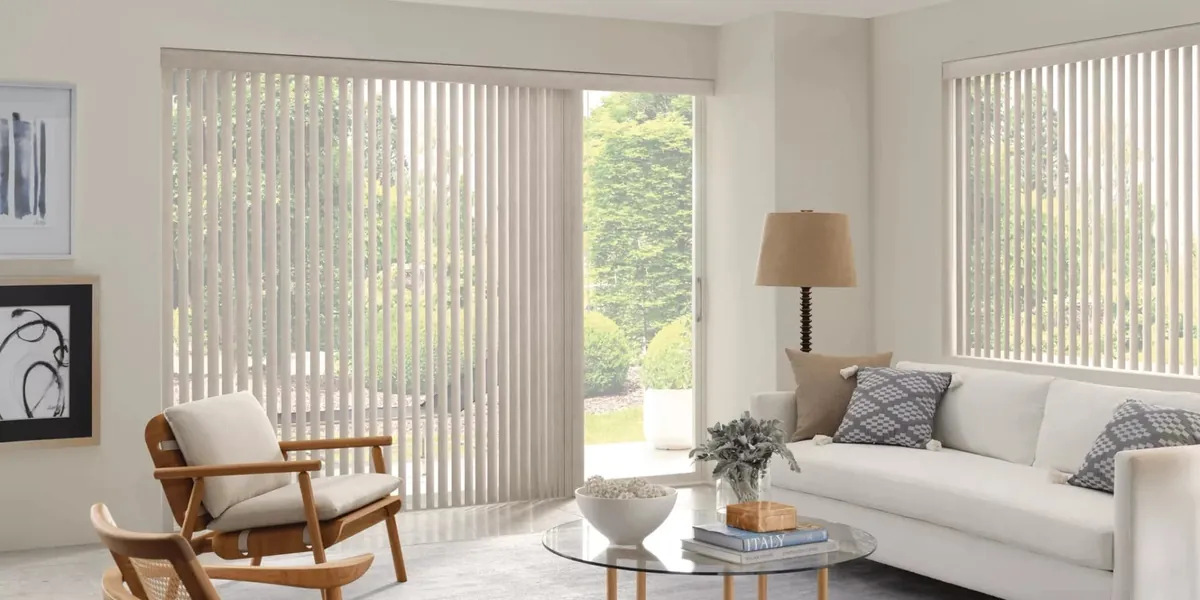
A slider suits a covering that moves sideways, such as vertical blinds or a vertical honeycomb shade, which gathers at one side so the door opens fully. For French doors, a shade or shutter mounted on each door moves with it. If the doors face west, a screen or light-filtering fabric takes the glare off the room in the evening while you can still see the yard. When we plan window treatments in West Bridgewater, MA, we look at these doors with the windows beside them, so the whole back wall works together. Seen from the yard, matching the outward color of the door covering to the windows keeps the back of the house as neat as the front.
Automation by side of the house
On a house that takes sun from several directions, PowerView automation earns its keep. Shades can be grouped by side of the house and given their own schedules: the east bedrooms open at breakfast, the south rooms lower slightly at midday, the west family room closes against the evening glare, and the road side closes at dusk. All of it can also be controlled by remote or app. We plan how each motor is powered at the visit. See motorized blinds and shades in West Bridgewater, and our guide on how motorized shades are controlled.
Mending what is already there
If an older blind or shade in the house has stopped working, a repair may be all it needs. A broken cord, a slat that will not tilt or a shade that will not stay up can often be put right. We are happy to look at the coverings you already own. Read about blind and shade repair.

A Gallery dealer for every side of the house
Blinds & Designs is a Hunter Douglas Gallery dealer. For a farmhouse with windows on every side, a cape on a wide lot or a newer colonial with a sun-filled back wall, that means the whole Hunter Douglas line: honeycomb, roller, screen, roman, sheer and woven shades, wood, faux wood and metal blinds, vertical blinds, shutters and PowerView.
Certified Hunter Douglas installers put up every order. With free estimates, interior design consultations and repairs, that is the full range of window treatments in West Bridgewater, MA, that we can help with.
Questions from West Bridgewater
My living room gets sun on three sides. Do I need three different products?
No. One product in one color can cover all three walls, with a different fabric openness or setting on the brightest side.
Which window treatment handles low evening sun best?
Screen roller shades and shutters. Screens cut the glare while keeping the view, and shutter louvers can be angled to block the low sun’s line exactly.
Nobody can see into my house by day. Do I need privacy at night?
Often, yes. A lit room can be seen from the road a long way off after dark. Room-darkening fabrics or closed shutters keep it private.
Can motorized shades follow the sun?
PowerView shades can run on schedules you set for each side of the house, so the west rooms close in the evening and the east bedrooms open in the morning.
Is there a charge for the estimate?
No. Estimates are free, and there is no obligation.
Make a start
Start with the room where the sun bothers you most, at the time of day it bothers you. Request a consultation and we will bring samples to see at the windows themselves, measure every opening and leave you a free estimate. Your window treatments in West Bridgewater, MA, can grow room by room from there. If you would like to see the range in person as well, our nearest showroom is in Franklin, and the Franklin showroom page lists its address and hours. Neighboring towns have pages too, including East Bridgewater and Brockton.
Every product line we offer is gathered on our window treatments page.