
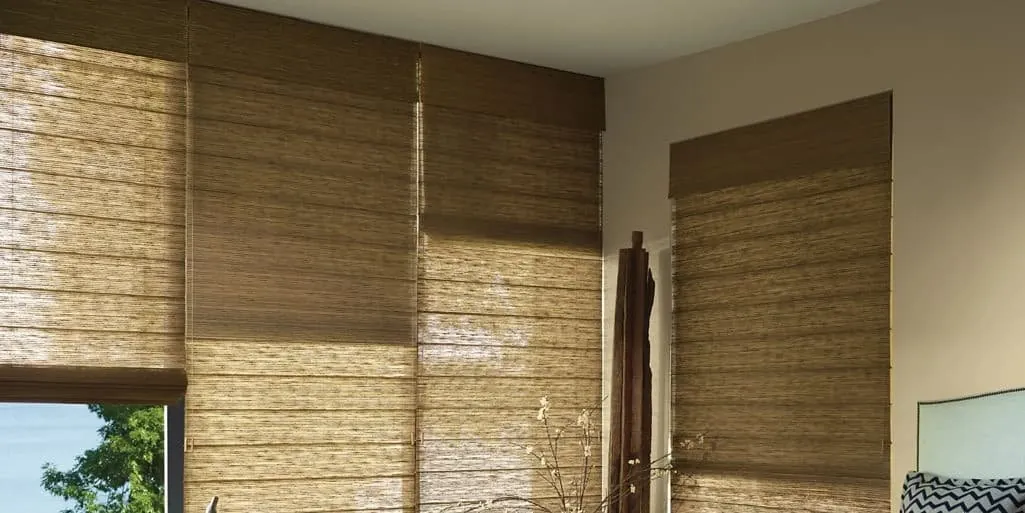
Wooded lots, long driveways and every size of window
Wrentham houses tend to sit well back from the road. Off Route 1A and around Lake Pearl, the newer houses stand on generous wooded lots at the end of long driveways, and many of them have a great room or entry with two-story glass looking into the trees or across the water. Around the common it is a different picture: antique colonials whose original openings are tiny by modern standards. Planning roman shades in Wrentham, MA, usually means handling both extremes, sometimes in the same week.
The setbacks change what a shade is for. When the nearest neighbor is out of sight behind the trees, privacy from the street matters less than it does in a town center, and the job becomes managing light: the glare off the lake, the low sun that pours in once the leaves drop, and the glow of a big window after dark. A soft fabric shade does that job while making a tall room feel warmer and more furnished.
We plan these windows with two Hunter Douglas lines. Vignette has a modern fold that rolls up into its headrail. Carole Fabrics shades are sewn to order in flat and folded styles from a large decorator library.
What Wrentham windows call for
These are the options we bring out most in Wrentham, and every one travels with us on the sample van.
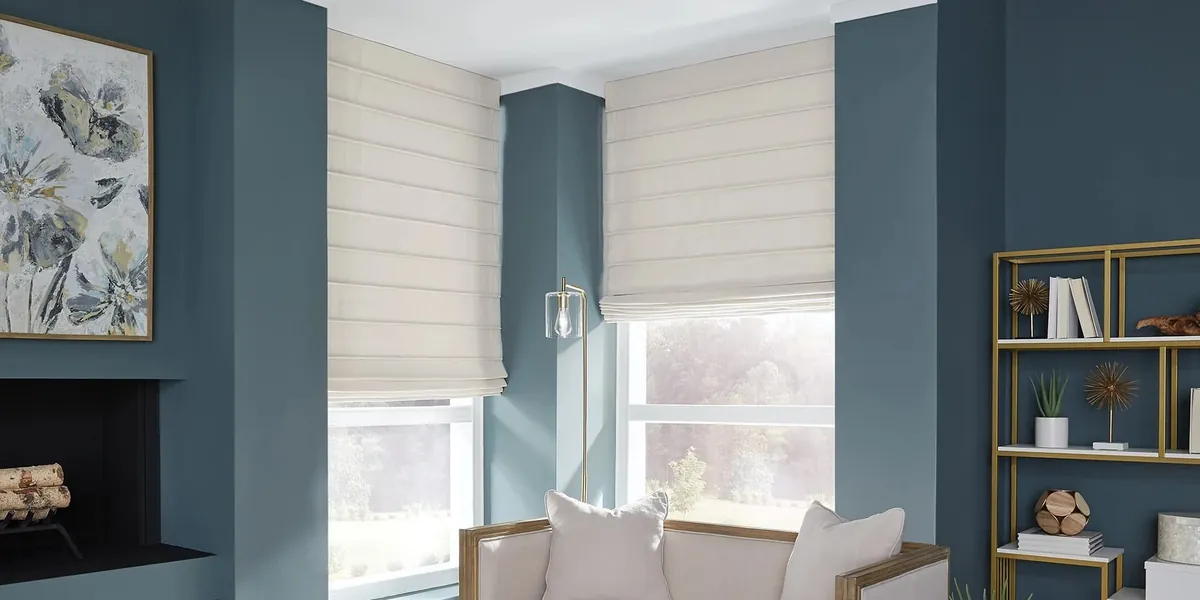
Carole flat fold for the common
A tailored flat fold suits the formal rooms of an antique colonial and keeps a small opening looking neat when lowered.
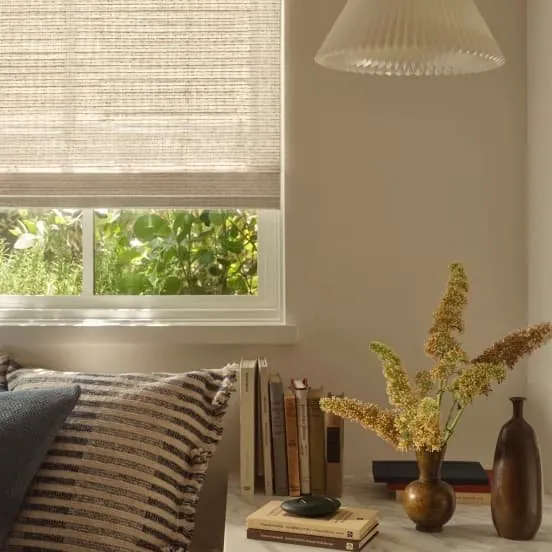
Light fabrics under the trees
On a heavily shaded lot, a pale, unlined fabric keeps every bit of daylight while still softening the window.
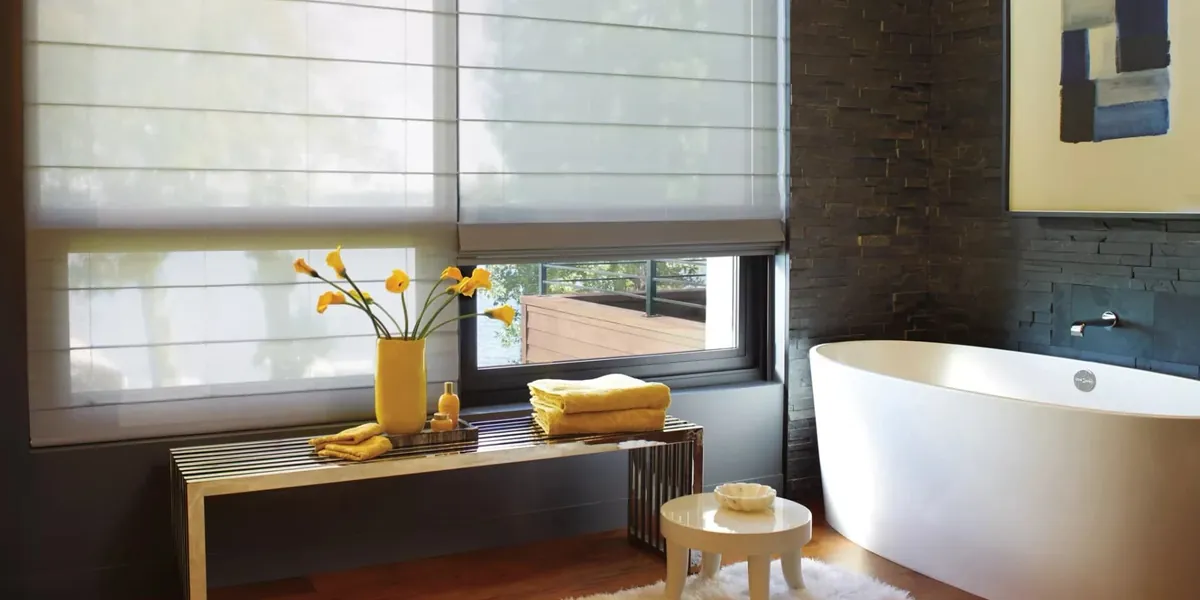
Sheer romans for baths
A sheer roman blurs the view while letting light through, which suits a bathroom or a dressing room facing the woods.
Light through the trees, season by season
A wooded lot does odd things to the light in a house. From late spring to autumn the canopy filters the sun, and rooms on the shaded sides can feel dim even at midday. Then the leaves fall, the sun drops lower in the sky, and the same rooms are suddenly bright, with long beams reaching right across the floor in the afternoon.
That swing affects which fabric you choose. A dark or heavily lined fabric that seems sensible in January can make a summer room feel gloomy. A very light fabric that suits July may not take the edge off a low winter sun. On the shaded side of a wooded house we often suggest a pale, light-filtering fabric that can be raised fully in summer and lowered in winter to diffuse the glare. On a side that takes direct sun all year, a privacy or room-darkening lining earns its place, and it protects the face fabric from fading.
It helps to look at samples at the time of day a room is at its brightest. During the consultation we hold them up in more than one room and, where we can, on both the shaded side and the open side of the house, so you can see how differently the same fabric behaves.
Two-story glass in the newer houses
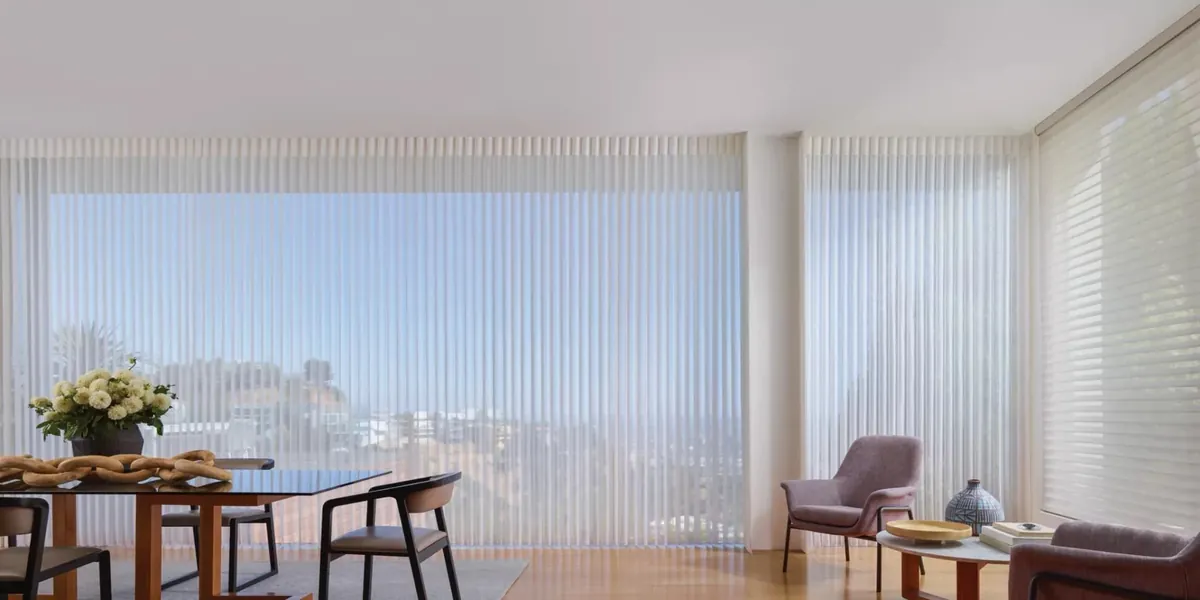
The large houses off Route 1A and near Lake Pearl often have a great room, an entry or a stair hall with glass rising through two floors. Typically there is a row of tall windows at the bottom and another row, or a single wide window, above. It is the defining feature of the house and the hardest thing in it to dress, because whatever goes on it is seen from every room that opens onto it.
There are a few honest ways to handle it. The lower row can take roman shades on cordless lifts, since they are within reach, while the upper row is left bare to keep the view of the tree tops. Where the upper glass brings in too much heat or glare, it needs its own shades, and at that height they have to be motorized. PowerView lets every shade on the wall move together, either by remote, from the app or on a timetable you set once. Lowering the whole wall at sunset also stops a lit great room glowing out into the woods like a beacon.
Fabric choice matters more on a wall this size than on a single window. A strong color repeated across a dozen shades can overwhelm a room, so we usually suggest a quiet neutral or a texture for the main wall and save pattern for smaller rooms. If a different look suits the wall better, Hunter Douglas sheer and vertical shades are also options, and we can show them side by side with the roman fabrics.
Tiny original openings around the common
The antique colonials around the common were built with small windows, and many still have their original sash. They are part of the character of the house, so the aim is a shade that covers them when needed and gets out of the way when raised.
Small openings are where the bulk of a raised shade shows most. The gathered fabric sits at the top of the window, and on a short sash that can hide a real share of the light. There are three ways to keep it small. Vignette rolls its fabric up into the headrail rather than stacking it. A light, unlined Carole fabric folds more compactly than a heavy lined one. Or the shade can be mounted on the wall above the casing, so that when it is raised the fabric clears the glass completely. On an old frame that is out of square, mounting outside also avoids any trouble with a shade catching on one side.
When the frame is sound and deep enough, an inside mount looks best, because it keeps the old casing in full view. We measure each opening on its own, top to bottom and side to side, since two windows in the same wall of an antique house are rarely the same size.
For the lift on these little windows, a cordless shade is usually all that is needed. The shades are light, they sit within easy reach, and there is no cord to coil on a narrow sill. The same goes for most roman shades in Wrentham antiques, where the rooms are modest and every window can be reached from the floor.
What the house looks like from the driveway
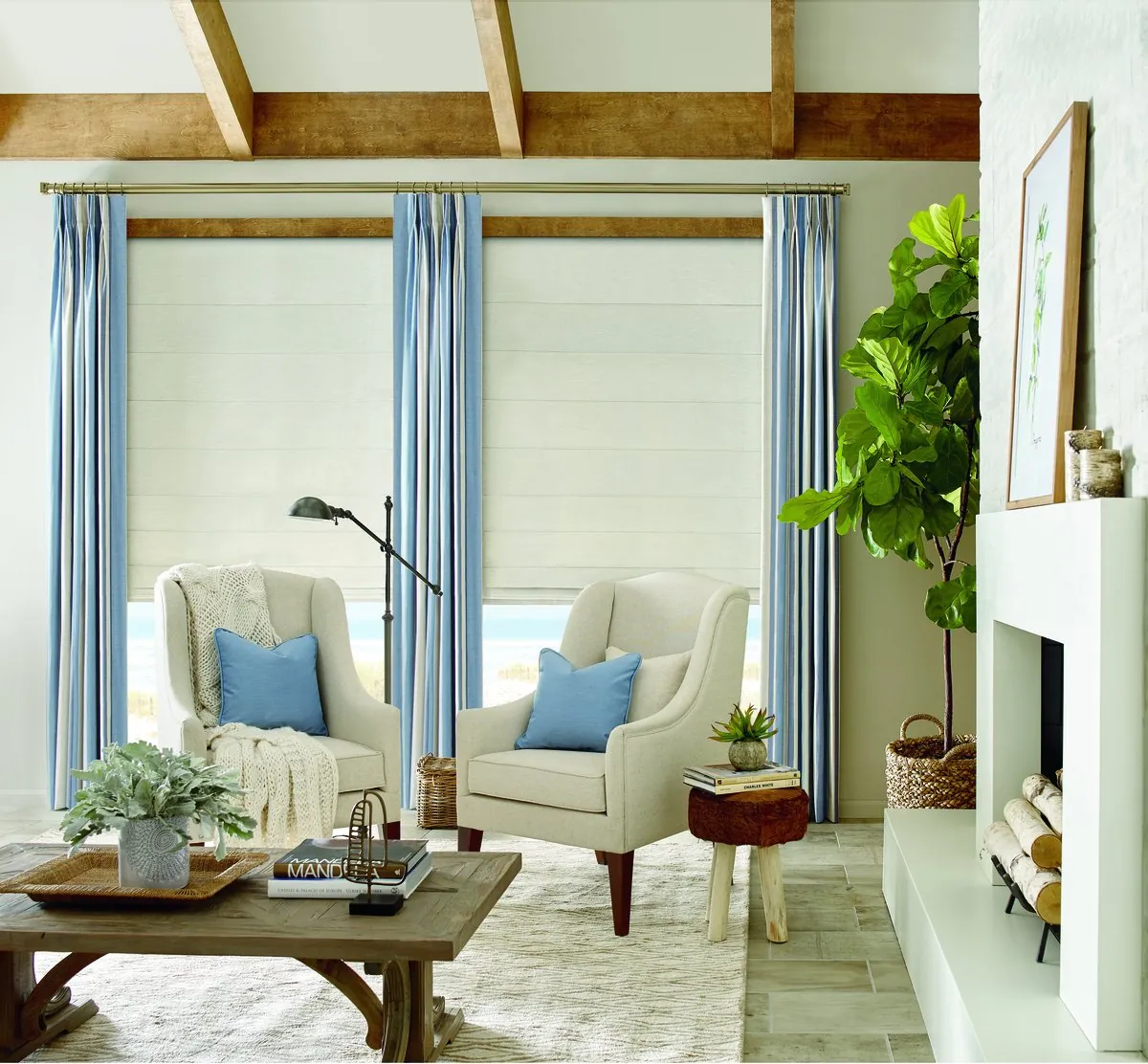
With a deep setback, the first view anyone gets of a Wrentham house is from the far end of a long driveway, and from there the windows read as a pattern across the front. Shades at odd heights, or a mix of linings that show different colors from outside, break that pattern up. A simple fix is to choose one lining color for every street-facing window, whatever the face fabric is on the room side, and to set the shades on each floor to a consistent lowered height. Vignette helps here too, because the back of the shade is neat and even. Getting this right is a small part of planning roman shades in Wrentham, but it is the part that makes the outside of the house look finished.
Glare off Lake Pearl
Houses facing Lake Pearl get the sun twice: once from the sky and again bouncing off the water. On a bright afternoon the reflected light comes in low and hard, straight into a living room or kitchen, and it can make screens unreadable and send people hunting for sunglasses indoors.
A roman shade lowered partway is often enough to cut the worst of it while keeping the view of the lake across the lower part of the window. A light-filtering fabric spreads the light evenly instead of leaving a bright patch on the floor. For rooms where the reflection is constant, a privacy lining tones it down further without turning the room dark. If you would like more on handling this kind of light, our guide to the best shades for sun and glare compares the options.
Waterfront rooms also face the sun for long stretches, which is hard on fabric color. Lighter, neutral fabrics hold up better on those windows, and a lining behind the face fabric shields it further. We point out the fabrics that suit a bright, lake-facing room while you are choosing.
A walk through the consultation
Most customers in Wrentham begin at home. It is the only way to see how a fabric reads against the trees, the lake or the old trim, and our vans carry the samples so the showroom effectively comes to you. A typical visit runs like this.
- You request a consultation online or with the call button, and we settle on a time.
- We start in the room that bothers you most, often the great room or the lake-facing side.
- Fabrics in several weights are held up at the glass, so you can compare light-filtering, privacy and darkening options.
- We talk through lifts room by room: cordless where the shade is in reach, a continuous loop for a wide lined shade, and PowerView for anything up high.
- Every window is measured, including the frame depth and any hardware the headrail must clear.
- You receive a free estimate and take whatever time you need to decide.
You can read more about what happens at an in-home consultation before the visit. If you want guidance on color and the rest of the room too, ask about our interior design consultations.

Vignette or Carole Fabrics
Both lines are genuine roman shades, and the choice usually comes down to the house and the room.
Vignette suits the newer houses best. Its folds are uniform from top to bottom, the fabric rolls neatly into the headrail, and the back of the shade, which faces outside, stays tidy. On a long run of matching great room windows, that consistency is exactly what you want. The Vignette page covers it in full.
Carole Fabrics suits the antique houses and any room where the fabric is the star. The shades are sewn to measure, with a choice of a crisp flat fold, which shows a print cleanly, or a folded style with soft, rounded loops that look traditional and relaxed. The Carole Fabrics page describes the range, and our roman shades page compares both alongside Alustra Woven Textures.
Plenty of Wrentham houses use both: Vignette across the open-plan rooms and Carole in a dining room, study or primary bedroom. Keeping the fabric family related, for example the same warm white in a smooth weave for Vignette and a textured weave for Carole, lets the two lines sit side by side without looking mismatched. We bring both sets of sample books so you can build the combination at your own kitchen table.
Bedrooms that face east into the trees
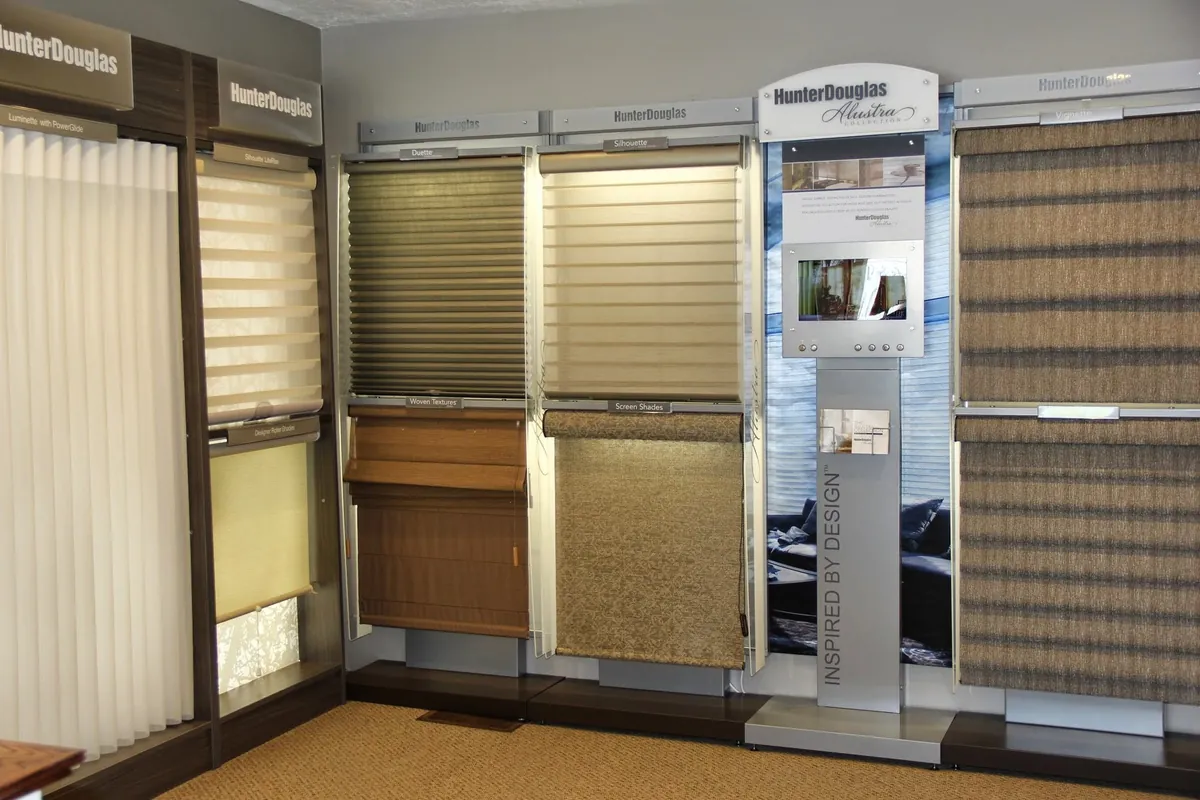
Even under heavy tree cover, an east-facing bedroom catches the first light, and in the months when the branches are bare it can be very bright very early. A room-darkening lining behind a roman shade holds the room dim until you raise it. Mounting the shade outside the frame, a little wider than the opening, reduces the thin lines of light that can creep in around the edges.
For anyone who likes to wake with the light instead, a PowerView schedule can raise a bedroom shade slowly at a set time. It is a small thing that many customers end up using every day, and it means nobody has to reach behind a nightstand or a bed to find the bottom rail in the dark. Our page on how motorized shades are controlled explains schedules and scenes in more detail.
Roman shades alongside other coverings
A big Wrentham house rarely needs the same covering on every window. Roman shades shine in living rooms, dining rooms, bedrooms and studies, where fabric adds warmth. A kitchen slider or a door to the deck is usually better served by a covering that moves sideways or rolls tight, and a mudroom or laundry might want something more practical. We plan roman shades in Wrentham as part of the whole house, so the rooms flow even when the product changes. Our cellular shades in Wrentham page covers one of the most common partners, and our Wrentham page lists every service in town.

Why a Hunter Douglas Gallery dealer
Blinds & Designs holds Hunter Douglas Gallery dealer status, the maker’s own mark for dealers who meet its standards. For a Wrentham house that means one source for every roman shade fabric and fold, the PowerView system for two-story glass, and Hunter Douglas blinds, shutters and other shades for the rooms that need something different.
Our installers carry Hunter Douglas certification, so a tall wall of shades goes up level, aligned and working the way it should. We also offer blind and shade repairs on coverings you already own, and free estimates on anything new.
The Franklin showroom, a short drive away
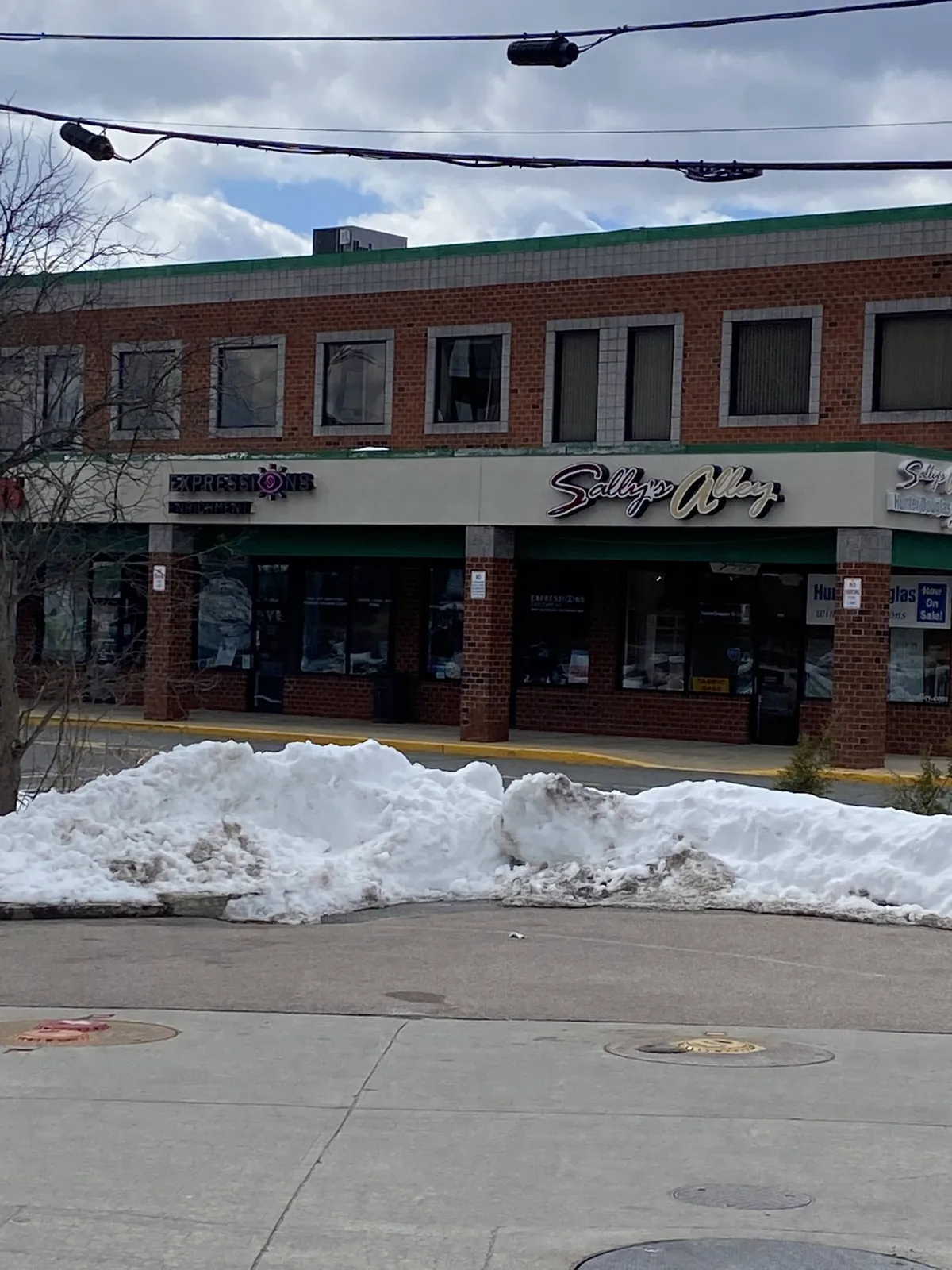
Our Franklin showroom is the nearest to Wrentham. It is a good place to try roman shades before a home visit: raise them, lower them, and compare a Vignette fold against a Carole style.
After that, book a consultation so we can see the windows themselves. A two-story wall or a lake-facing room is hard to plan from a showroom, and the right fabric depends on the light at your house.
Questions from Wrentham
How do you handle a two-story wall of windows?
Usually with roman shades on the lower row and either no shades or motorized shades on the upper row. PowerView moves the whole wall together on a remote, the app or a set timetable, and lowering it at dusk keeps a lit room from glowing into the woods.
My lot is heavily wooded. Will a shade make the room too dark?
Not with the right fabric. On the shaded side we suggest a pale, light-filtering fabric that can be raised fully in summer. Save linings for the sides that take direct sun.
Can I cut lake glare without losing the view?
Yes. Lower the shade partway to block the low, reflected light and keep the lower part of the window open to the water. A light-filtering fabric softens what comes through.
Do roman shades suit the small windows in an antique colonial?
They do, as long as the stack is kept small. Vignette rolls into its headrail, a light Carole fabric folds compactly, or the shade can be mounted above the casing to clear the glass.
Do you charge for the estimate?
No. The estimate is free. We measure every window you are considering and give you a written estimate with no obligation.
When you are ready
Roman shades in Wrentham, MA, are easiest to choose with the fabric at the window and the trees or the lake behind it. Request a consultation and we will come to the house with the Vignette and Carole Fabrics samples, measure every opening from the tiniest sash to the great room, and give you a free estimate. You can also use the call button or stop in at our Franklin showroom.