
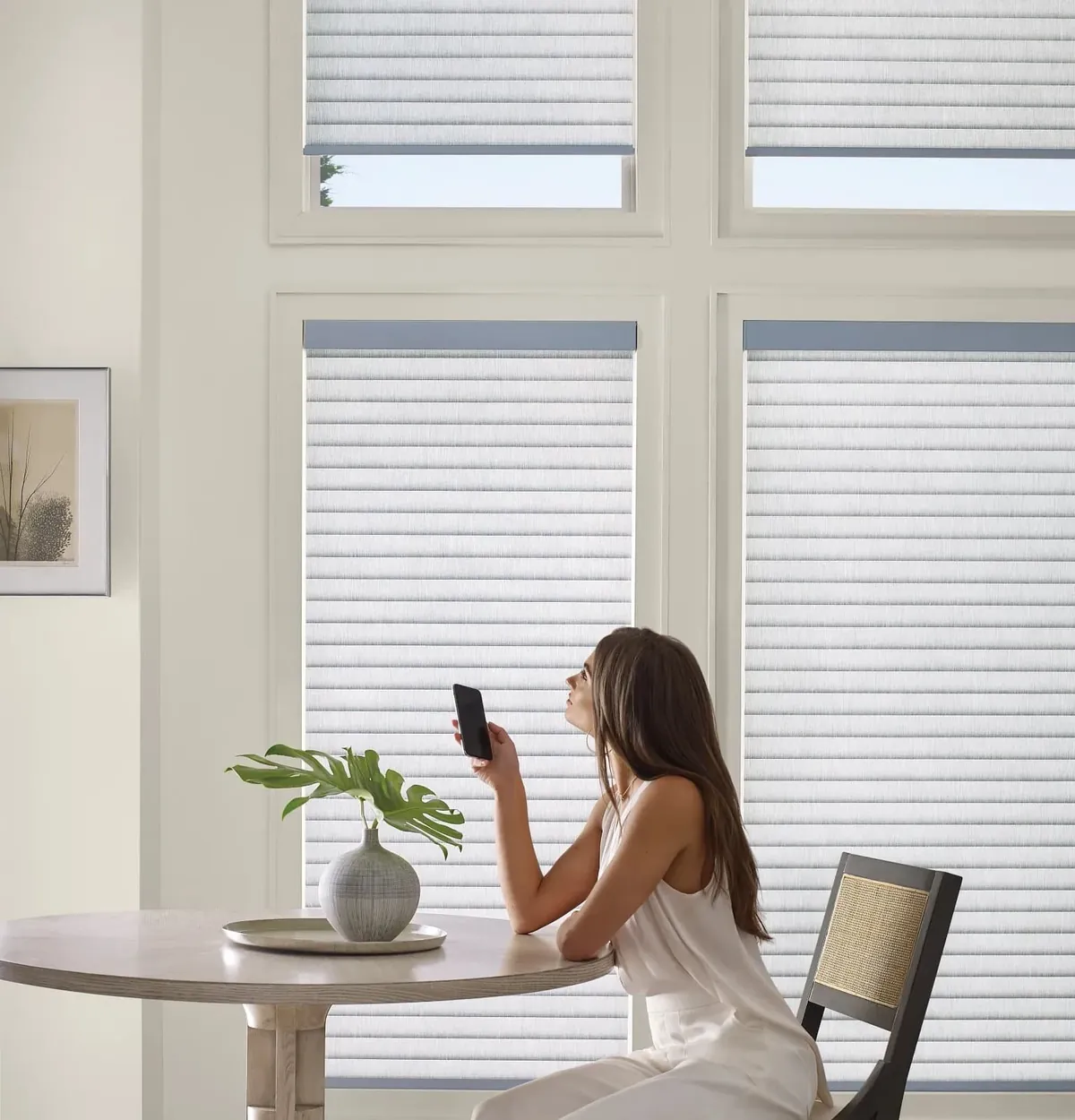
Canal wind and bright water in Bourne
Bourne sits on both sides of the Cape Cod Canal, and the canal shapes how many of its houses meet the weather. Rooms that face the water take wind-driven rain and spray when a storm funnels through, and on a clear day the light bounces off the moving water and fills the room with a hard, flickering glare. Further from the canal, the cottages at Monument Beach and Pocasset sit close to Buzzards Bay, the village housing in Buzzards Bay packs older houses together, and the newer colonials inland bring tall foyers and big family rooms.
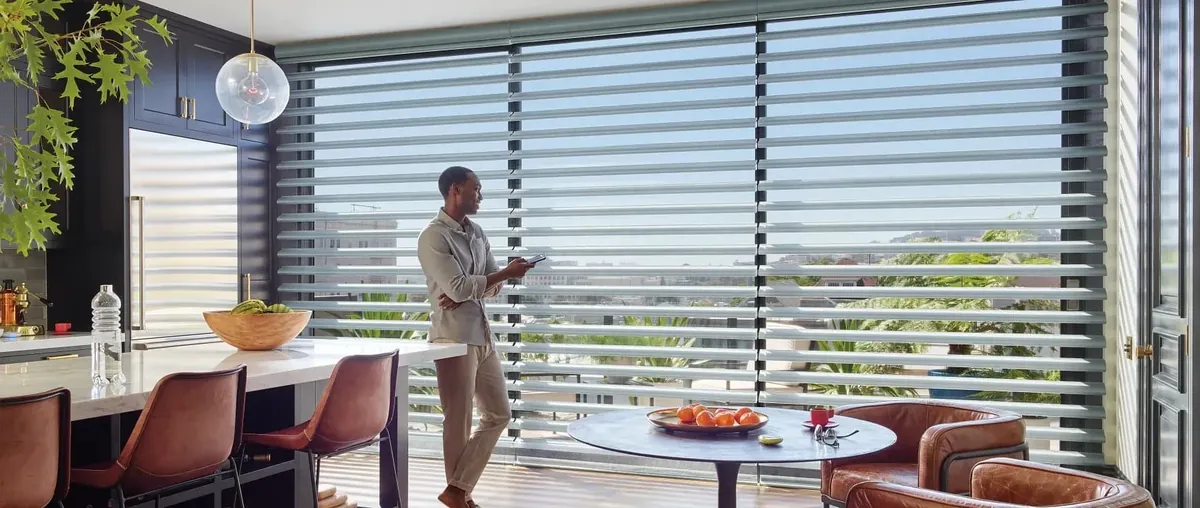
Motorized blinds in Bourne, MA, take the effort out of managing all of that. PowerView, the Hunter Douglas motor system, hides a small motor in each headrail to lift and lower the shade or blind. A handheld remote runs it, so does the PowerView app on a phone or tablet, and so does a schedule that moves the shades at set times without you.
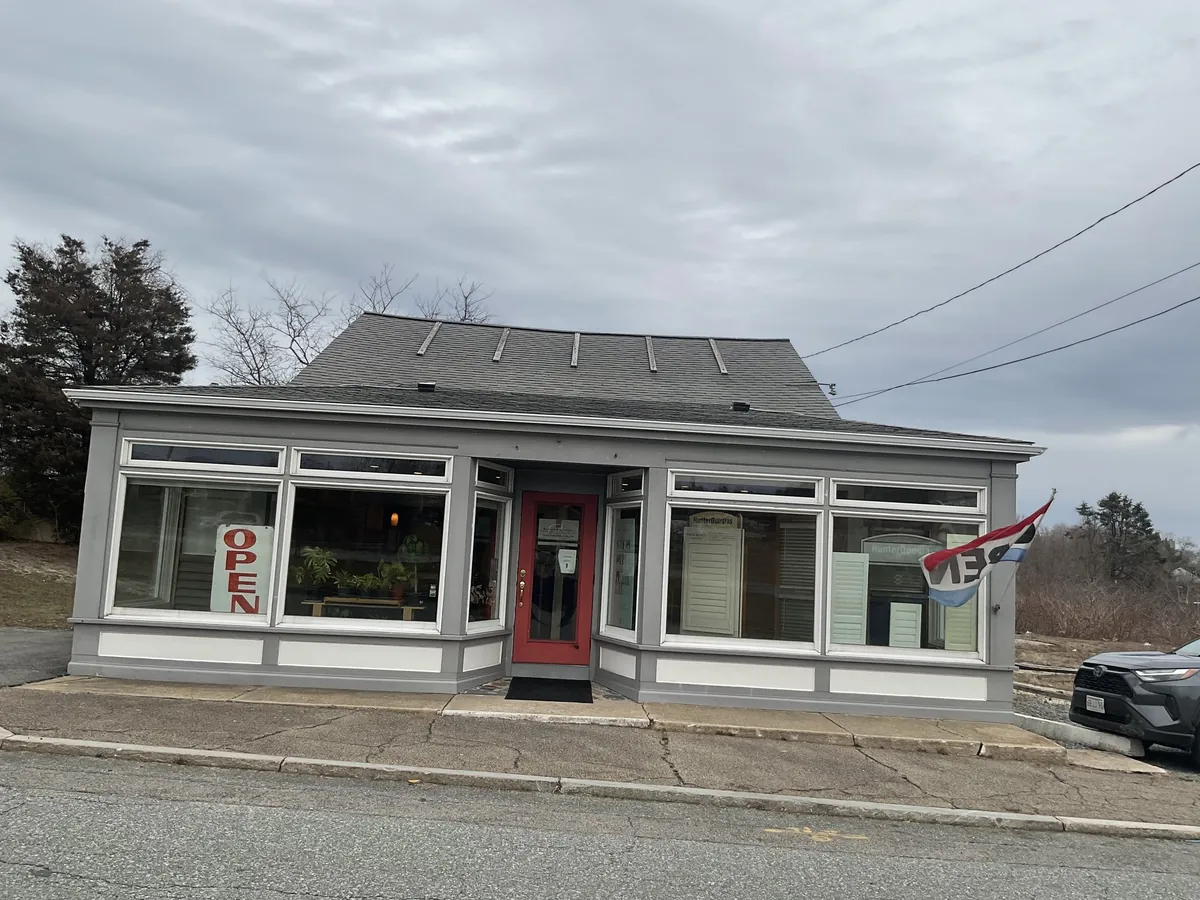
This is our showroom’s own town. The Sagamore showroom is in Bourne, so the canal light and the cottage windows on this page are the ones we see every day.
Where we start in a Bourne house
PowerView runs across much of the Hunter Douglas range, so the first decision is the shade itself. These three are where many Bourne projects begin.
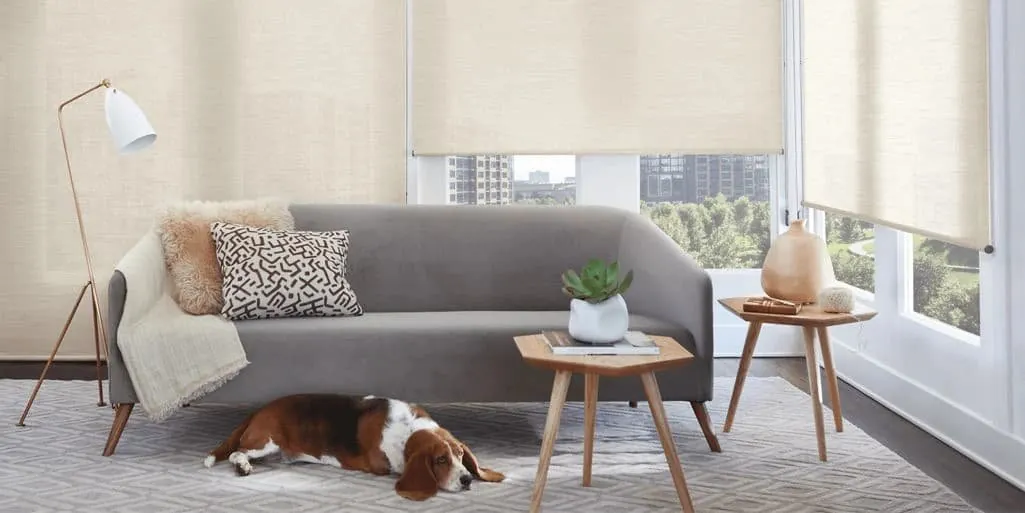
Roller shades for canal-facing glass
Designer roller and screen shades roll into a slim headrail and cover wide windows cleanly. A schedule can bring them down when the water glare peaks.
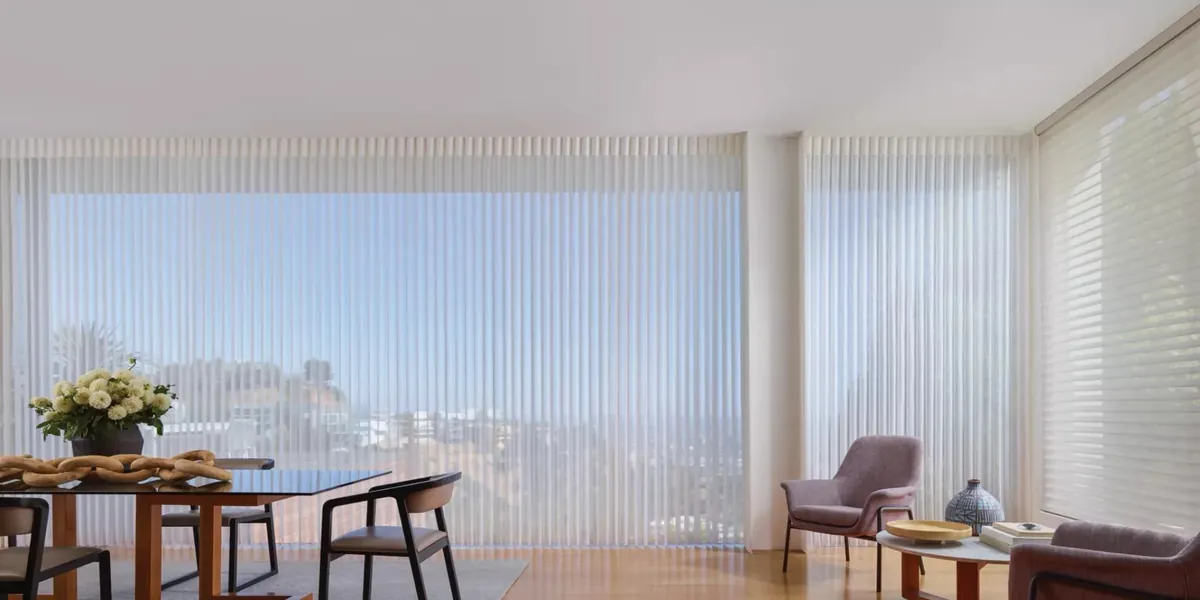
Luminette for sliders and window walls
Vertical sheer panels that soften the light and draw aside for a door. Ideal for a family room that opens onto a deck.
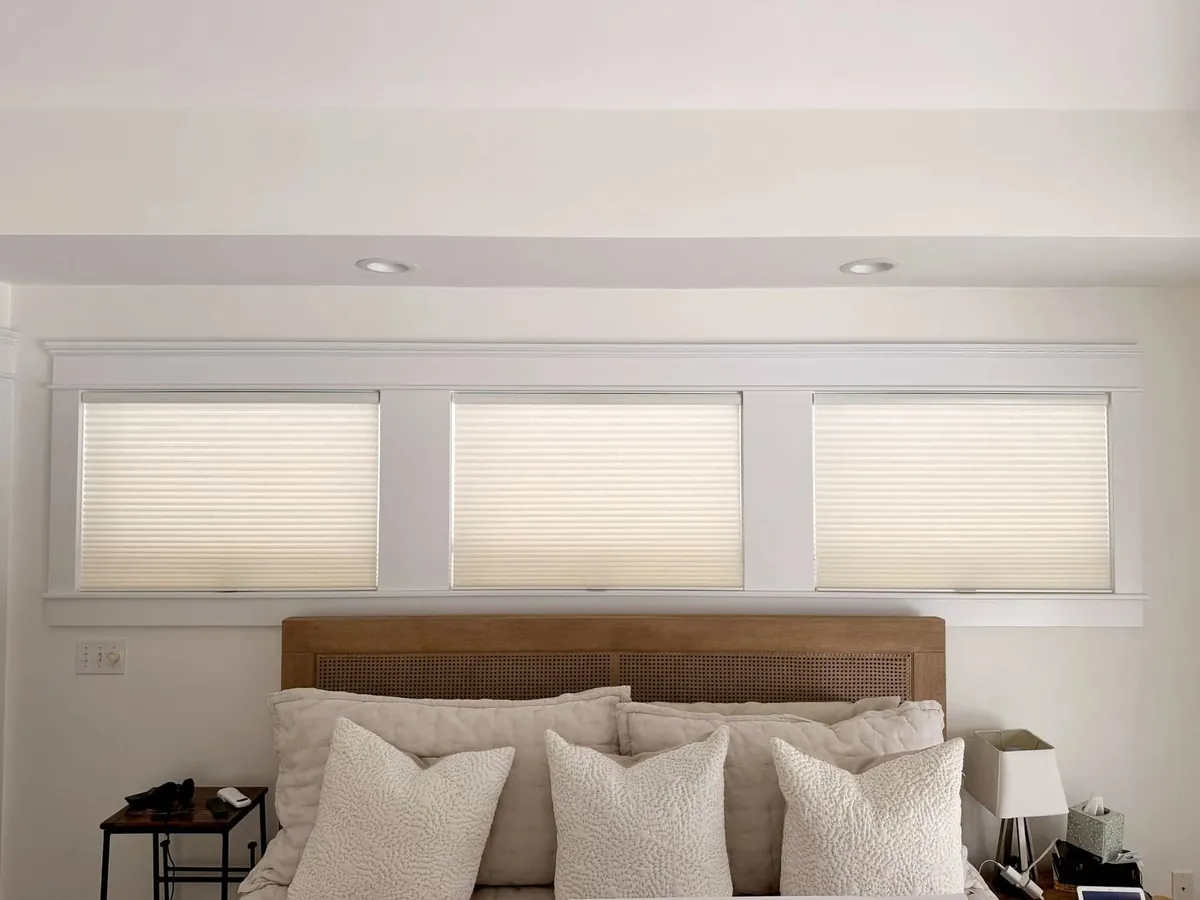
Room-darkening honeycomb for bedrooms
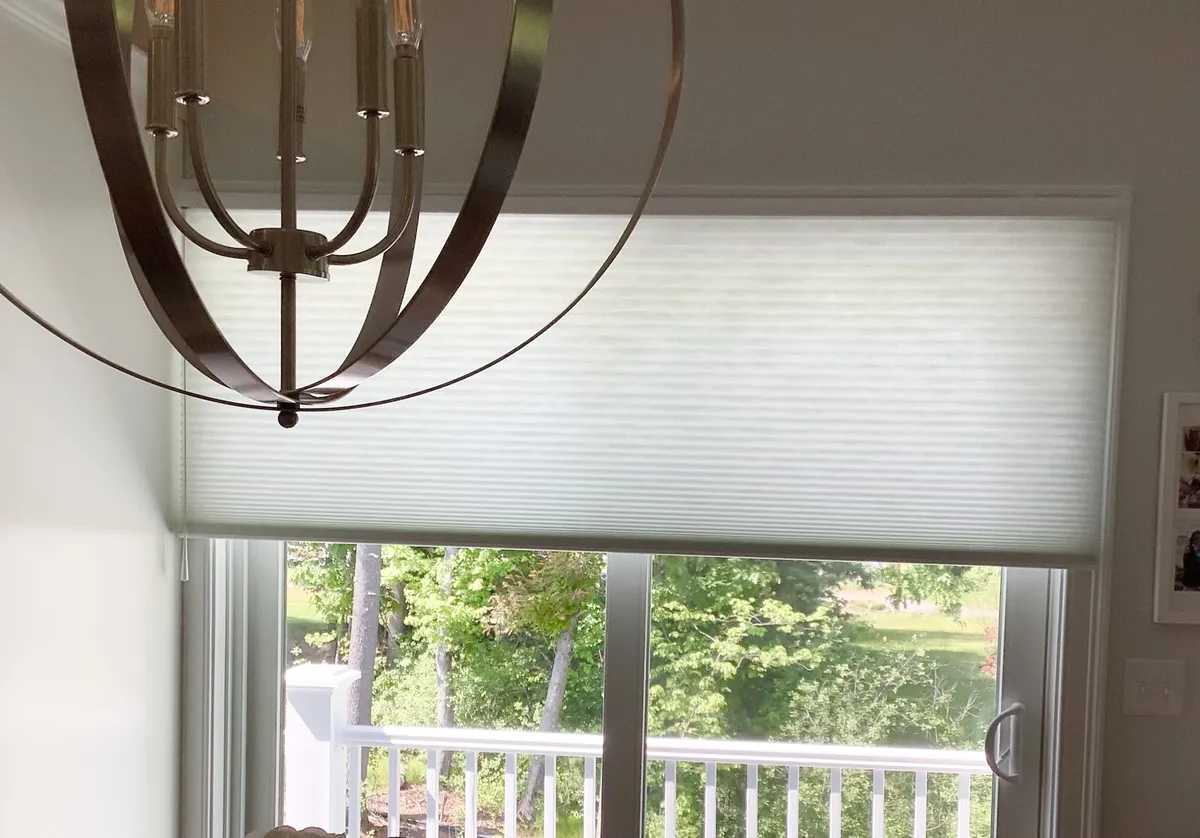
One of our own installs. Honeycomb cells hold a layer of air, and a room-darkening fabric keeps a cottage bedroom dim until the motor lifts it.
Canal-side rooms
A house that looks across the canal gets a view few places can match, with ships and boats passing all day. It also gets the canal’s weather. Wind is channelled along the water, so a storm can drive rain hard against the glass, and on a bright afternoon the surface throws reflected light into the house at a low angle that no overhang can stop.
That reflected light is the main problem we solve in these rooms. It glares on televisions and screens, makes it hard to read, and fades fabric and flooring over time. Covering the window fully defeats the point of living by the canal. A sheer or a screen shade is the middle ground: the glare softens, and the passing boats are still there to watch.
The motor matters because the glare comes and goes. It is strongest at certain hours and on certain days, and it moves with the seasons. A timer can bring the canal-side shades halfway down for the worst of it and raise them again afterwards. When a big ship comes through and you want the full view, the remote lifts everything at once.
On the windy days, keeping windows closed and shades down protects the room from spray-streaked glass and the chill that comes with a storm. With PowerView, closing every canal-facing shade is one press, not a walk around the house.
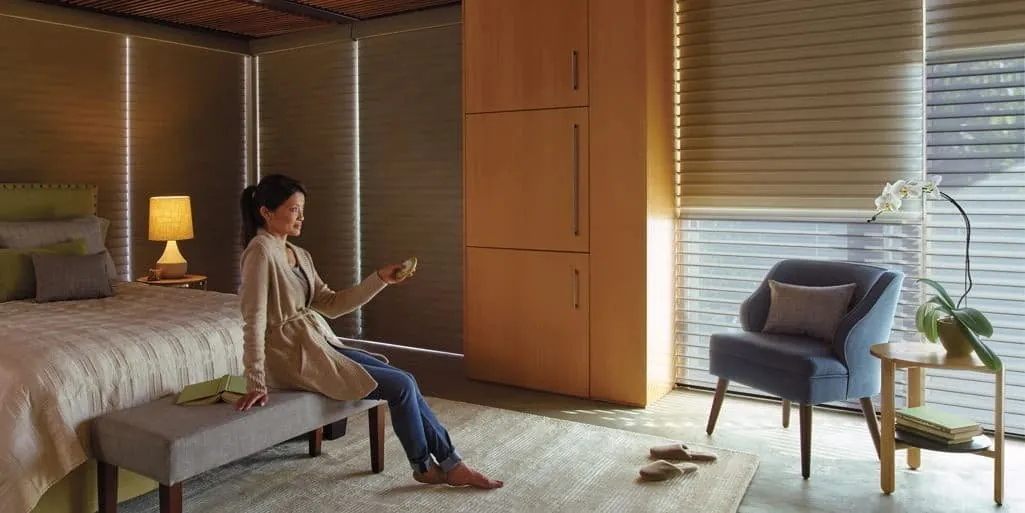
Monument Beach and Pocasset cottages
The cottages along the shore at Monument Beach and through Pocasset were often built as summer places and enlarged over the years. Rooms have been added, porches closed in and dormers pushed out of the roof, so one cottage can have half a dozen different window sizes and some windows in very awkward spots.
These are the houses where a few motorized shades make the biggest difference. A window over a built-in bench, a dormer behind a bed, a high window in a closed-in porch: each is a stretch to reach and tends to stay in one position. Put a motor on those and leave the easy windows with a simple cordless lift. Everything that is motorized runs from one remote.
Salt air is part of life this close to the bay. Cords and cord locks are the first parts of a shade to suffer from it, because they hang in the open and get gripped every day. Take them away, with the lifting gear shut inside the headrail, and the damp, salty air has far less to work on.
Plenty of these cottages stand empty through the off season. PowerView carries on regardless: the shades rise in the morning and fall in the evening as if someone were home, and the rooms that bake in the afternoon sun get their cover on time.
Village houses near Buzzards Bay
Bourne’s own village of Buzzards Bay has close-set older houses and converted cottages near the canal’s western end, where the windows of one house look across a narrow gap at the next. In those houses privacy is usually the first job a window covering has to do.
A top-down, bottom-up honeycomb shade handles that well, letting light in through the top of the window while the lower half stays covered. With a motor you set the exact split from the remote, and a dusk schedule closes the side-facing shades every evening when the lamps go on. Our separate page on motorized blinds in Buzzards Bay goes into the village houses in more depth.
Newer colonials inland
Away from the water, Bourne’s newer colonials bring a different set of windows: two-story foyers with a tall window over the front door, family rooms with windows high above a fireplace, and bonus rooms over the garage with windows tucked under the eaves. Those high windows are the reason many inland customers ask about motorization in the first place.
Nobody adjusts the glass over a two-story foyer by hand. With PowerView, it lowers from the same remote as the windows below, and it can join a schedule so the foyer stays shaded through the afternoon sun. In a family room, a group of shades across the high and low windows moves together and stays level.
Roller shades and banded shades suit these big, modern openings well. Honeycomb shades are a strong choice for the bedrooms, where warmth and darkness matter, and sheer shades soften the light in a living room without making it dim.
A schedule for each side of the house
Because Bourne houses face the water from so many directions, the light comes from a different side depending on where you live. A house on the north bank of the canal looks south into the sun. A Pocasset cottage may face west across the bay into the evening light. An inland colonial gets ordinary morning and afternoon sun on its east and west sides.
PowerView lets each side of the house keep its own timing. The east-facing bedrooms can stay closed until you choose to wake, the west-facing living room can lower through the late afternoon, and the street side can close at dusk for privacy. You set the schedules once in the app with our installer and adjust them whenever the seasons change.
Bonus rooms and bedrooms under the eaves
Many inland houses have a bonus room over the garage, and many cottages have bedrooms squeezed under the roof. Both tend to have windows set low in a knee wall or high in a gable, and both get hot under the roof on a summer afternoon. They are also the rooms that get adjusted least, because the windows are so awkward to reach.
A motorized shade turns those rooms around. A honeycomb shade lowered through the middle of the day keeps the worst of the sun off the glass, and with a schedule it happens whether or not anyone climbs the stairs. In winter the same shade closes at dusk and holds a little more warmth in a room that usually runs cold. For a guest room used only now and then, the remote can sit in a drawer until it is needed.
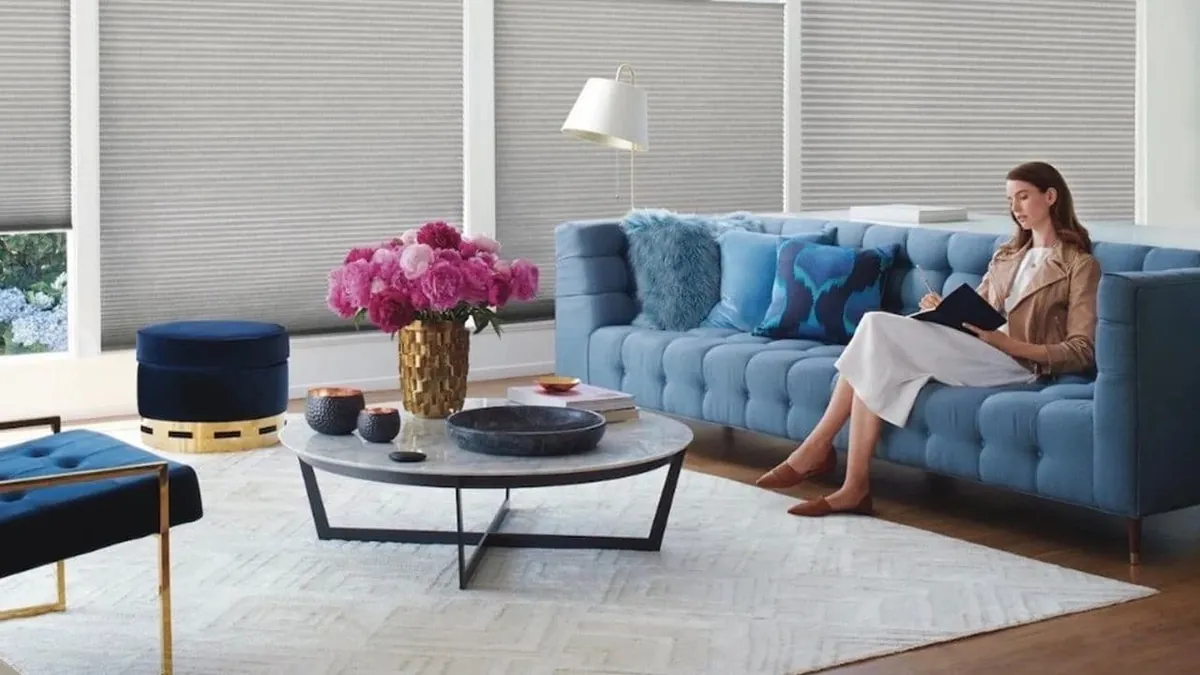
Storm season along the canal
When a nor’easter comes through, the canal funnels the wind and rain into the houses that face it. Windows on that side take the brunt, and an older cottage window can let in a draught you feel across the room.
On those days most households want every shade on the weather side down, both to keep the room warmer and simply to shut out a gray, streaming view. A scene that closes the whole canal side does that in one press, and it can be undone just as quickly when the storm clears and the light comes back. Honeycomb fabrics are the most useful here, because the air held in their cells adds a layer between the room and the cold glass.
One room first, the rest later
A whole-house project is not the only way to begin. Plenty of Bourne customers start with the single room that bothers them most, often the canal-facing living room or the bedroom that gets the early sun, and live with it for a season before deciding on more.
PowerView makes that easy, because every motorized shade joins the same app. Shades added next year drop into the rooms and schedules you already have, so the house builds up into one system rather than a collection of separate remotes. We note your other windows at the first visit so the later rooms are easy to plan when you are ready.
That is how motorized blinds in Bourne often spread through a house: the canal room first, then the high foyer window, then the bedrooms once the first season has shown how much easier the routine becomes. Fabrics stay available across the range, so a room added later can match the ones you already have, or deliberately differ where the light in that room calls for something else. If you already know you will want more rooms eventually, tell us at the start and we will keep the fabric choices and the grouping consistent from the first order.
Control without the jargon
There are only three things to know about running PowerView shades.
- The remote. Pick a shade or a group of shades and press up, down or stop. It can sit on a table or be mounted on the wall like a light switch.
- The app. Every shade in the house on your phone or tablet: send one to an exact height, or gather several into a room.
- Scenes and schedules. A scene remembers where each shade in a group should sit; a schedule calls that scene up at a chosen time.
You can use as much or as little of this as you like. Plenty of households only ever use the remote. The how motorized shades are controlled page explains each option, and the page on window covering automation goes into scenes and schedules.
Choosing motorized blinds in Bourne or a shade
Slats and fabric each have their place. Blinds let you tilt the slats and direct the light, which is useful in a home office or a kitchen facing the canal. Wood and faux wood slats also look right in a traditional colonial. If a particular room calls for motorized blinds in Bourne, name it at the visit and we will check which Hunter Douglas blinds can carry a motor at that size and how they would operate there.
Shades handle light in more ways. Screens and sheers tame glare with the view intact, honeycombs bring their insulating cells, rollers vanish into a slim headrail and blackout-style fabrics make a bedroom properly dark. A typical Bourne house might take screen shades on the canal side, honeycombs in the bedrooms and blinds in the office, all running from one app.
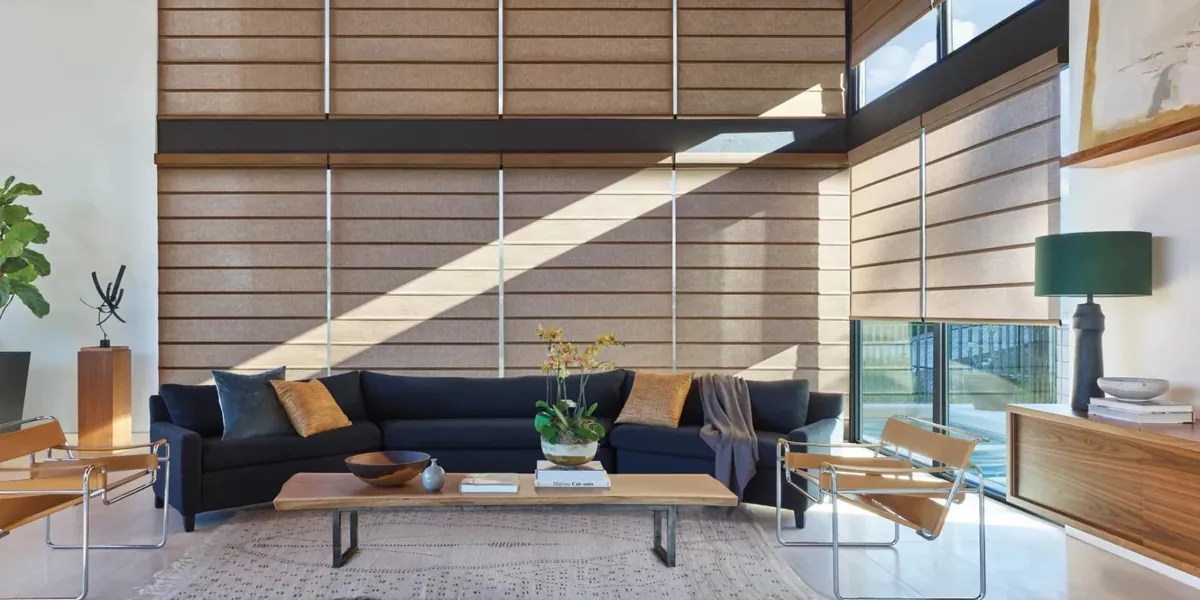
Cordless at every window
With no lift cord at all, a motorized shade removes the dangling cord that worries parents and pet owners. Bedrooms, nurseries and playrooms are where families most often start for this reason.
The window looks better too, with nothing hanging down the side. Since the motor raises both ends at once, the fabric is never hauled up crooked, and the hem keeps square to the sill.
What to expect from us
Choosing fabric under a store’s lights tells you little about how it will look by the canal, so most Bourne projects begin in your living room. Our vans come stocked with samples: we bring the showroom to you.
- Request a consultation online or with the call button.
- We tour the house together and note the canal-side glass, the high windows and anything awkward to reach.
- You try samples against the glass, best of all when the water glare is at its height.
- We decide together which windows get a motor and how the rooms are grouped.
- Every opening is measured, and a free estimate follows, yours to think over.
- A Hunter Douglas certified installer fits the shades, sets their limits, pairs them with your remote and app and sets up the first schedules.
There is a fuller walk-through of what happens at an in-home consultation if you like to know the plan in advance.

Why a Gallery dealer for motorization
Blinds & Designs is a Hunter Douglas Gallery dealer, a title the maker keeps for dealers who meet its standards. Because PowerView reaches across so many lines, from honeycomb, sheer, roller, screen and Roman shades to blinds, that range lets us pick the right product for each window and still run them all together.
Our installers hold Hunter Douglas certification, and they pair and program every motor themselves. When a room needs more than shades, ask about interior design consultations, and if an older shade of yours has stopped working, we take on blind and shade repair in Bourne too.
Other pages for the town: roller shades in Bourne, cellular shades in Bourne and the Bourne page with every service we offer here. For PowerView across the whole range, start at motorized blinds and shades.
The Sagamore showroom is in Bourne
Our Sagamore showroom is right here in Bourne, on the Cape side of the canal. Come by to talk about your windows, or have us bring samples out to you.
If your rooms face the canal or the bay, a home visit is often the best start, because the glare you want to control is right there at the glass. Wherever we start, we plan motorized blinds in Bourne around the windows that give you the most trouble.
Questions from Bourne
Can motorized shades handle the glare off the canal?
Very well. A sheer or a screen takes the sting out of the reflected light and the boats stay visible through it. Put those shades on a timer and they drop for the bright spell and come back up when it passes.
Are they a good idea for a cottage near the bay?
They suit cottages well, especially for awkward windows over benches, behind beds or in closed-in porches. The lifting parts sit inside the headrail, so there is less exposed to salt air than on a corded shade.
Can the tall window over my front door be motorized?
Yes. High foyer and family room windows are one of the most common reasons to choose PowerView. They lower from the same remote as the windows below and can join a schedule.
Will the shades keep working while the cottage is closed?
Yes. A schedule does not need anyone in the house. The shades go up and down on time all winter, which also keeps the cottage from looking shut.
What does the estimate cost?
It is free. Once the windows are measured, you get a written estimate at no charge, and you can take as long as you like over it.
Plan your windows with us
Tell us about the canal-side glass, the high foyer window or the cottage dormer you can never reach, and we will plan around it. Request a consultation for a home visit with samples and a free estimate, use the call button, or stop in at the Sagamore showroom.