
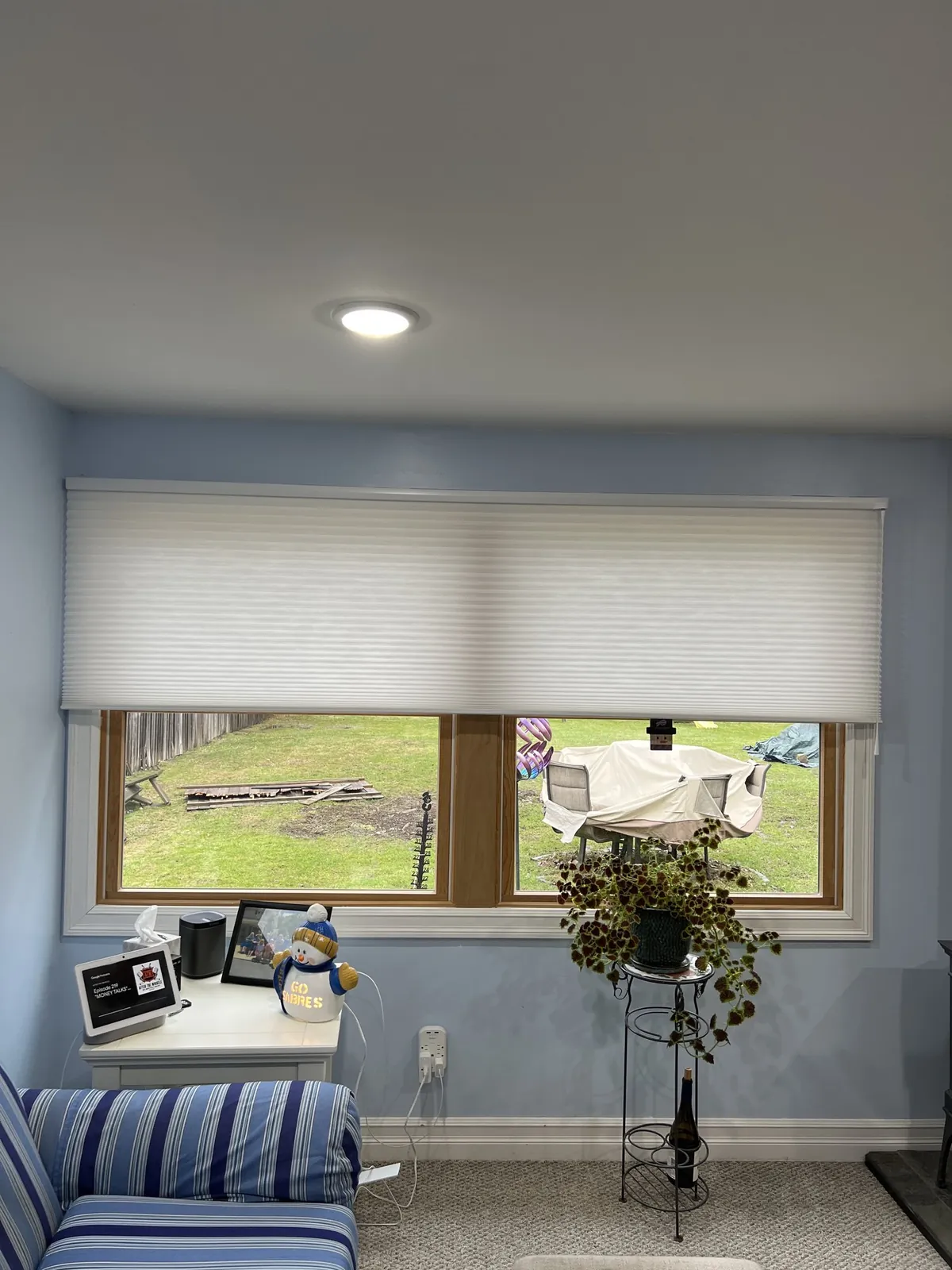
Tall sash, high ceilings and a house across the street
Much of Brockton was built close together. Victorians, two-families and three-deckers stand shoulder to shoulder on narrow city lots, and their tall, narrow double-hung windows reach toward ceilings that sit well above arm’s height. Out toward the edges of the city, post-war ranches spread out on their own lots with a lower, simpler set of openings.
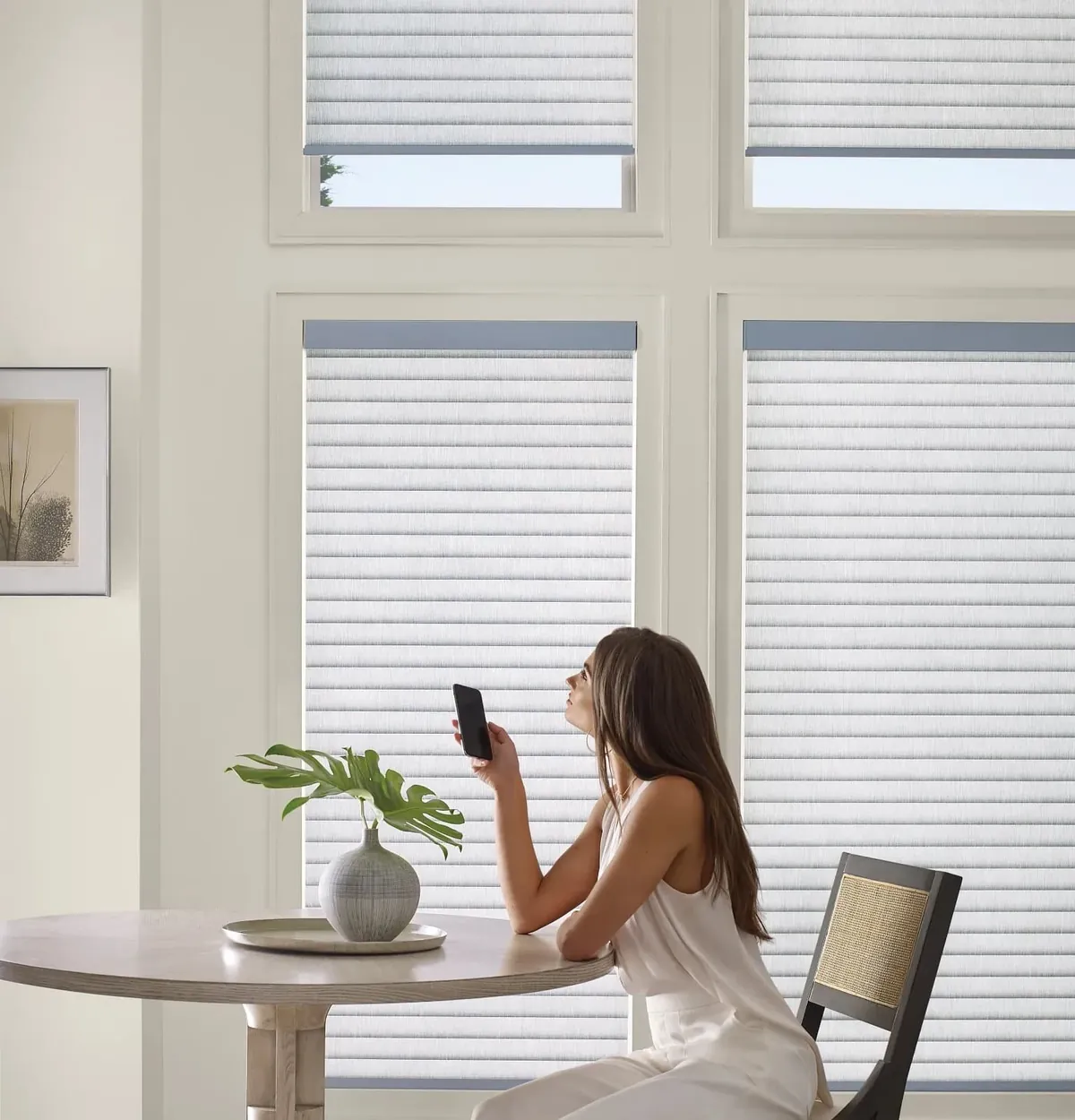
In the older stock, two things make shades hard to live with. The top of the window is a long way up, so a cord or a wand has to travel a long distance and the top rail sits beyond easy reach. And because the next house is often a driveway’s width away, privacy at street level is the first problem every room has to solve. Motorized blinds in Brockton, MA, answer both. A PowerView motor in the headrail does the reaching for you, and the shade moves from a small remote, from an app on your phone, or on a weekly schedule you choose.
You keep the tall window and the high ceiling that make these houses what they are. You simply stop climbing to manage them.
Choosing a motorized style for a city house
We talk through every style at your windows, but in Brockton three families of Hunter Douglas products tend to come up first. Each one has its own page for the city.
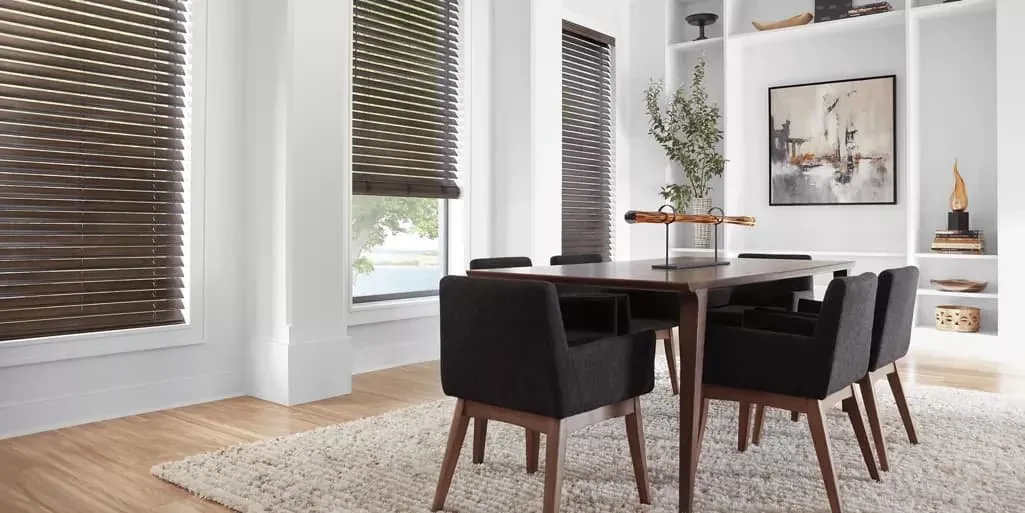
Custom blinds
Slats you can angle to block the view from the sidewalk while daylight still bounces off the ceiling. On a tall sash, that tilt is the control people use most.
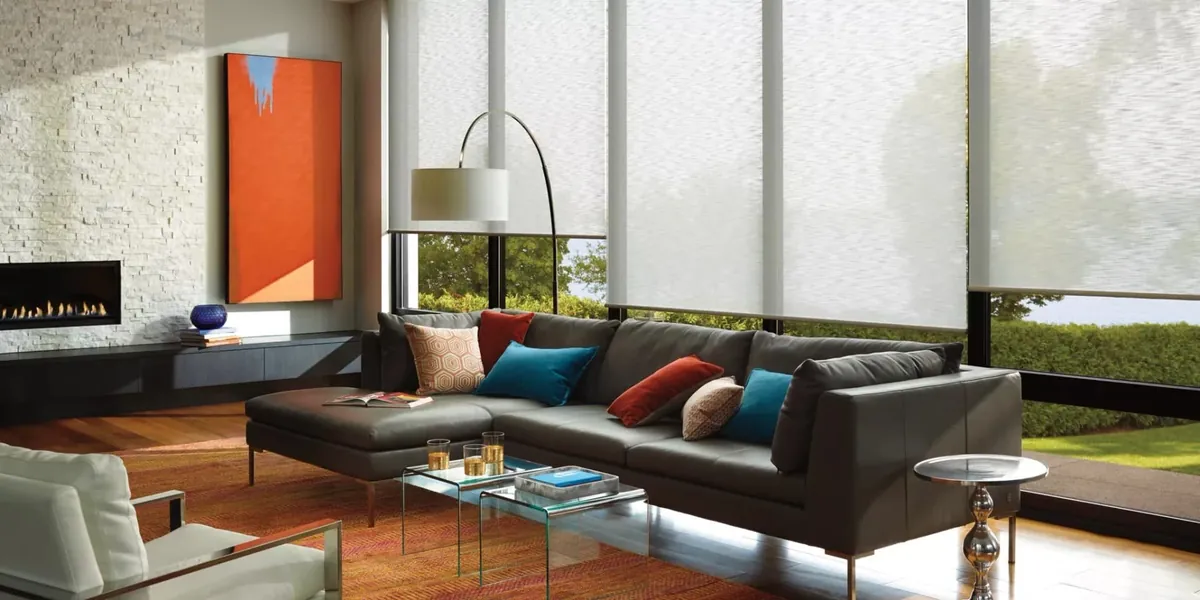
Roller shades
A clean, flat fabric that rolls tight at the top of the frame. Screen fabrics soften the street view by day without blacking out the room.
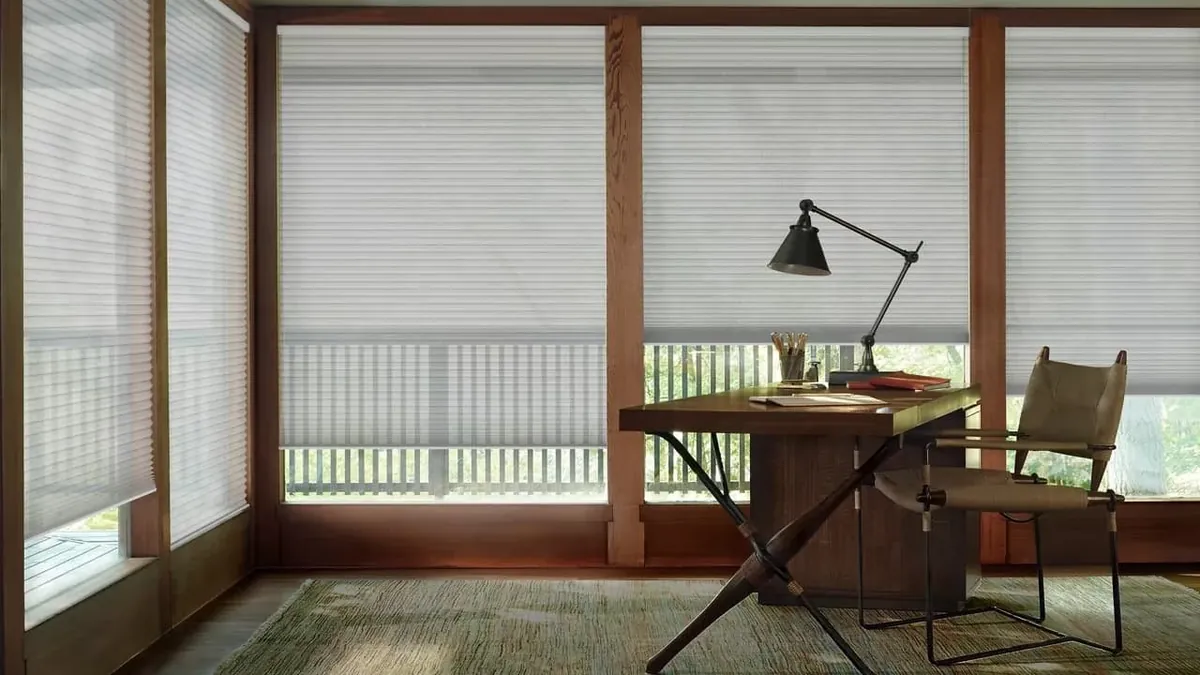
Cellular shades
Honeycomb fabric that glows with daylight and hides what is behind it. A strong choice for bedrooms and baths that face a neighbor.
Why the top of a Brockton window is the hard part
Stand in the front parlor of a Victorian on a Brockton side street and look up. The upper sash often finishes a foot or more above where most people can comfortably reach, and the ceiling sits higher still. A shade mounted inside that frame has a long way to travel, and its cord or wand ends up either trailing on the floor or tied up out of the way where nobody can use it.
The result in a lot of older houses is the same: shades set once at a compromise height and then left there. Half down all day, so the room is never fully bright and never fully private. On the upper floors of a two-family, where the bedroom windows are just as tall, it is often worse.
A motor removes the reach from the problem entirely. Once the shade answers a button, height stops mattering. The top of the frame is just as easy to work as the bottom, and a full drop from ceiling to sill is the same single press as a small nudge.
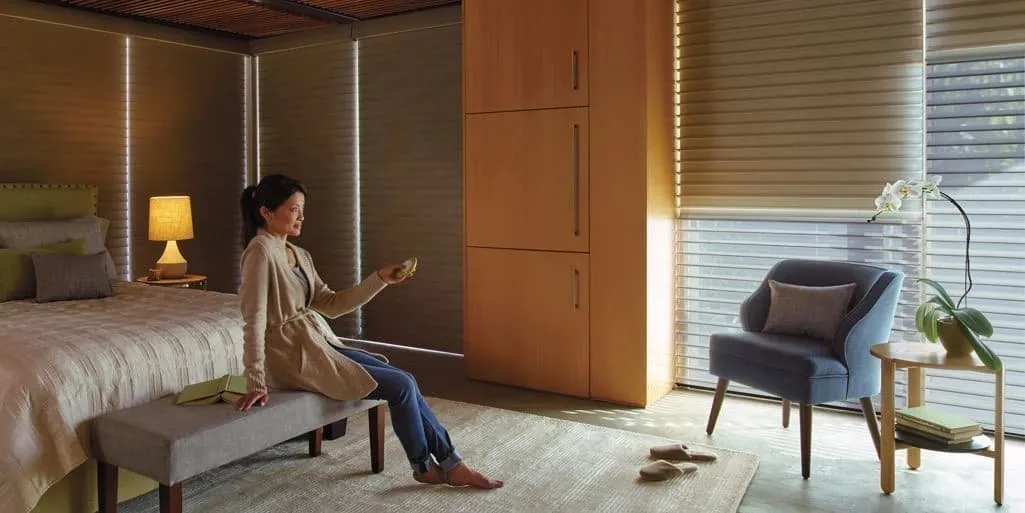
Privacy at sidewalk level, light from above
The second Brockton problem is that the street is close. In many neighborhoods the front windows look straight out at the sidewalk and the porches opposite, and the side windows face the next house across a strip of driveway. If you want a private ground floor, you close the shades, and if you close the shades, you lose most of the daylight a tall window is good at bringing in.
There are two good answers, and both work better on a motor.
The first is a blind. Tilt the slats up and they block the view in from the street while reflecting light toward the ceiling. In a high-ceilinged room, that upward light carries a long way. With PowerView, the tilt is adjusted from the remote or the app, so you can change the angle as the sun moves around the house rather than leaving it at one setting all week.
The second is a light-filtering fabric, a honeycomb or a screen roller, that lets daylight through while turning the view into a soft blur. These are popular on the side windows of two- and three-families, where a neighbor’s kitchen window may sit only a few steps away.
With either one, saved positions in the app make the routine quick. You can store a “street privacy” height for the front windows and bring every shade on that side of the house to it with one tap.
Motorized blinds in Brockton, MA, for the post-war ranch
Not every Brockton house has a tall sash. Out toward the city’s edges, post-war ranches put the whole house on one floor, with standard openings, a broad front window facing the street and a row of bedrooms down a hallway. Here the reach is easy, but motorization earns its place in other ways.
The broad front window is often split into two or three shades. Grouped in the app, they move together and stop at the same line, so the front of the house looks tidy from the road. Bedroom shades along the hallway can each keep their own schedule. And because every room is on one level, an evening schedule that closes the front and side windows at the hour you pick does a lot of work in one go.
If the ranch has a lower level, its small high windows over a couch or a workbench can join the same system and be raised or lowered from the main floor.
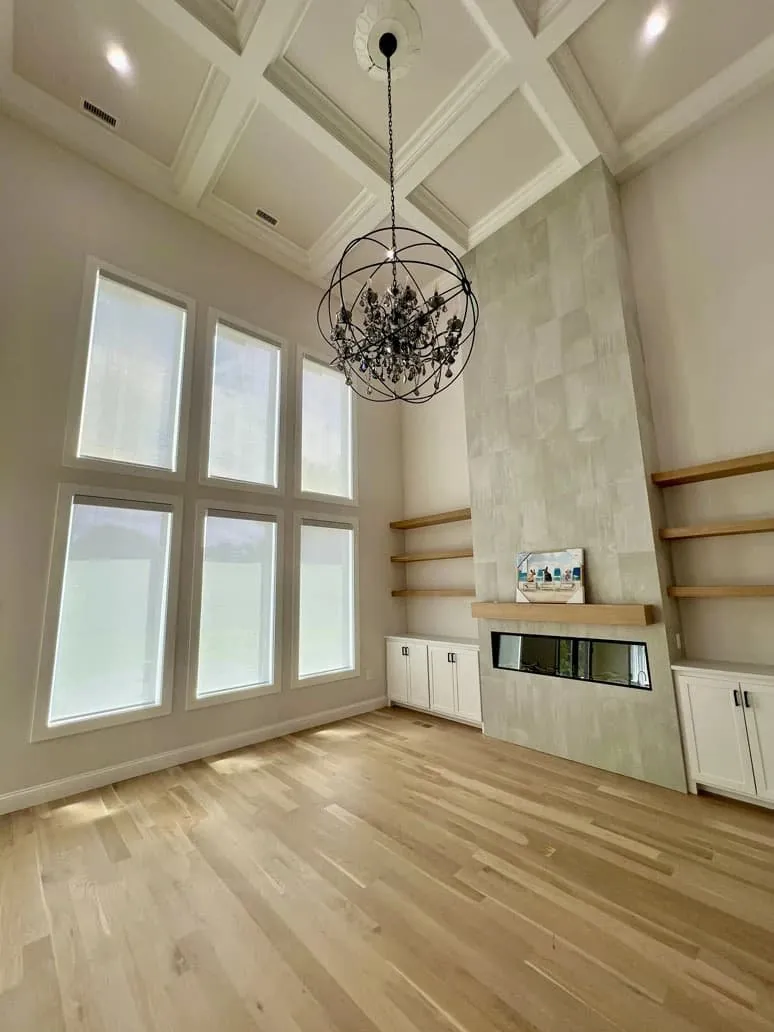
How you control a PowerView shade
Three tools work together, and you can use as many or as few of them as you like.
- The handheld remote. Buttons to raise, lower and stop, and it can talk to one shade, a room or a whole floor. It needs no phone, which makes it the easiest choice for guests and for anyone who would rather not use an app. Many households mount it on the wall by the light switch.
- The PowerView app. Every shade appears by room. Drag one to the height you want, or save a position as a favorite so you can return to it later with a tap.
- Schedules. A weekly plan that opens and closes chosen shades at the times you set. It repeats on its own until you change it, and the remote overrides it whenever plans change.
Our guide to how motorized shades are controlled walks through each one, and the window covering automation page explains schedules across a whole house.
A day in a Brockton two-family
Picture an upstairs unit in a two-family on a busy street, with tall windows on three sides.
- Early morning, the bedroom shades rise on their schedule, at the time the alarm goes off.
- Before leaving, one tap brings the street-facing living room shades to the saved privacy height.
- Through the middle of the day, the side windows facing the next house sit at a light-filtering position nobody needs to touch.
- When the afternoon sun comes low through the back windows, a press of the remote drops those shades partway.
- Once the lamps come on, the front and side shades close at the hour set in the app, so the whole unit is private without anyone walking room to room.
Downstairs can run on a completely separate setup. Each unit has its own shades, its own remote and its own schedule.
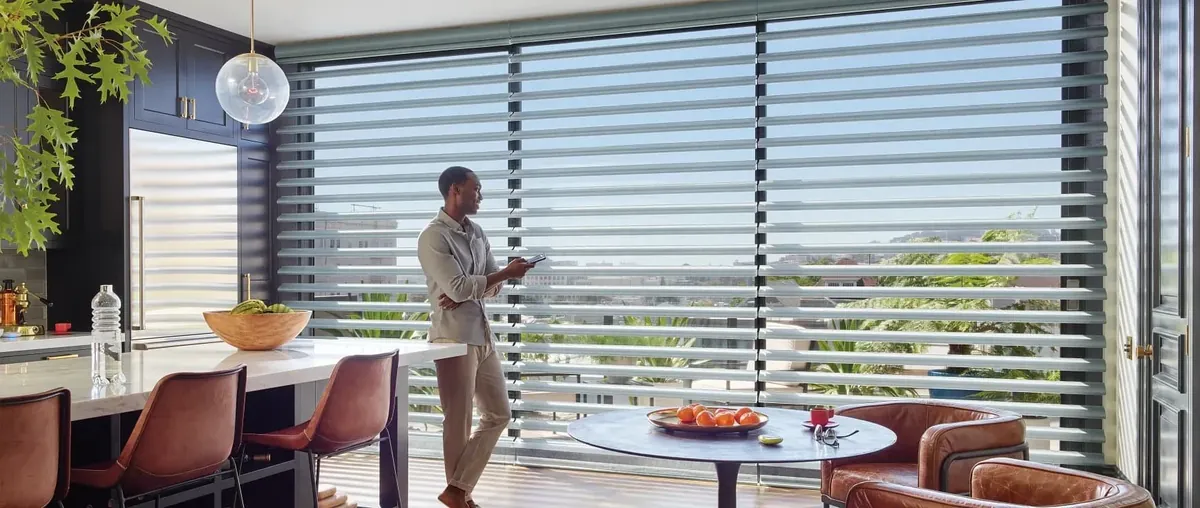
Bay windows and turrets
Brockton’s Victorians often carry a bay at the front or a rounded corner turret, with three or more tall windows set at angles to each other. Hand-operated shades in a bay can be a chore: three cords or wands, each at a slightly different height by the end of the day.
On a motor, the whole bay becomes one group in the app. The shades travel together and stop at the same line, which looks far neater from inside and from the street. If one window in the bay catches the low sun before the others, you can still lower that one on its own and then bring the group back together later.
The top floor of a three-decker
On the third floor of a Brockton three-decker, every room has a window, and most rooms have two. The ceilings are high, the windows are tall and narrow, and the porch stack at the front or back adds a row of doors and sidelights of its own. Walking that floor at night to close each shade by hand is a small job that happens every single evening.
Motorized blinds in Brockton make that floor run as one. The front rooms can form one group, the back rooms another, and a schedule can close both at the time you choose. A remote by the kitchen door lets you override the lot on your way out, and anyone who prefers a phone can do the same from the app.
Top-floor bedrooms also tend to catch the first light over the neighboring roofs. A room-darkening honeycomb on a morning schedule keeps them dim until the hour you pick, then opens on its own.
Bedrooms that look across the driveway
In a close-set two-family, the side bedroom window often lines up almost exactly with a window in the house next door. It is the room where privacy matters most and the room where people least want to be fiddling with a cord after dark.
A motorized shade there can close at a set time every evening, whether anyone is home or not, and open again in the morning. Through the day it can sit at a light-filtering height that lets in daylight while blurring the view across. The remote on the nightstand covers everything in between.
Getting the whole front to match
From the sidewalk, a Brockton house is judged by its front windows. When every shade on the front sits at a different height, the house looks unsettled, and that is hard to avoid with tall windows worked by hand.
Grouped in the app, the front shades stop at one line every time. You can save a few heights, fully open, privacy and closed, and move the whole front between them with one tap. Inside, the room looks calmer for it too.
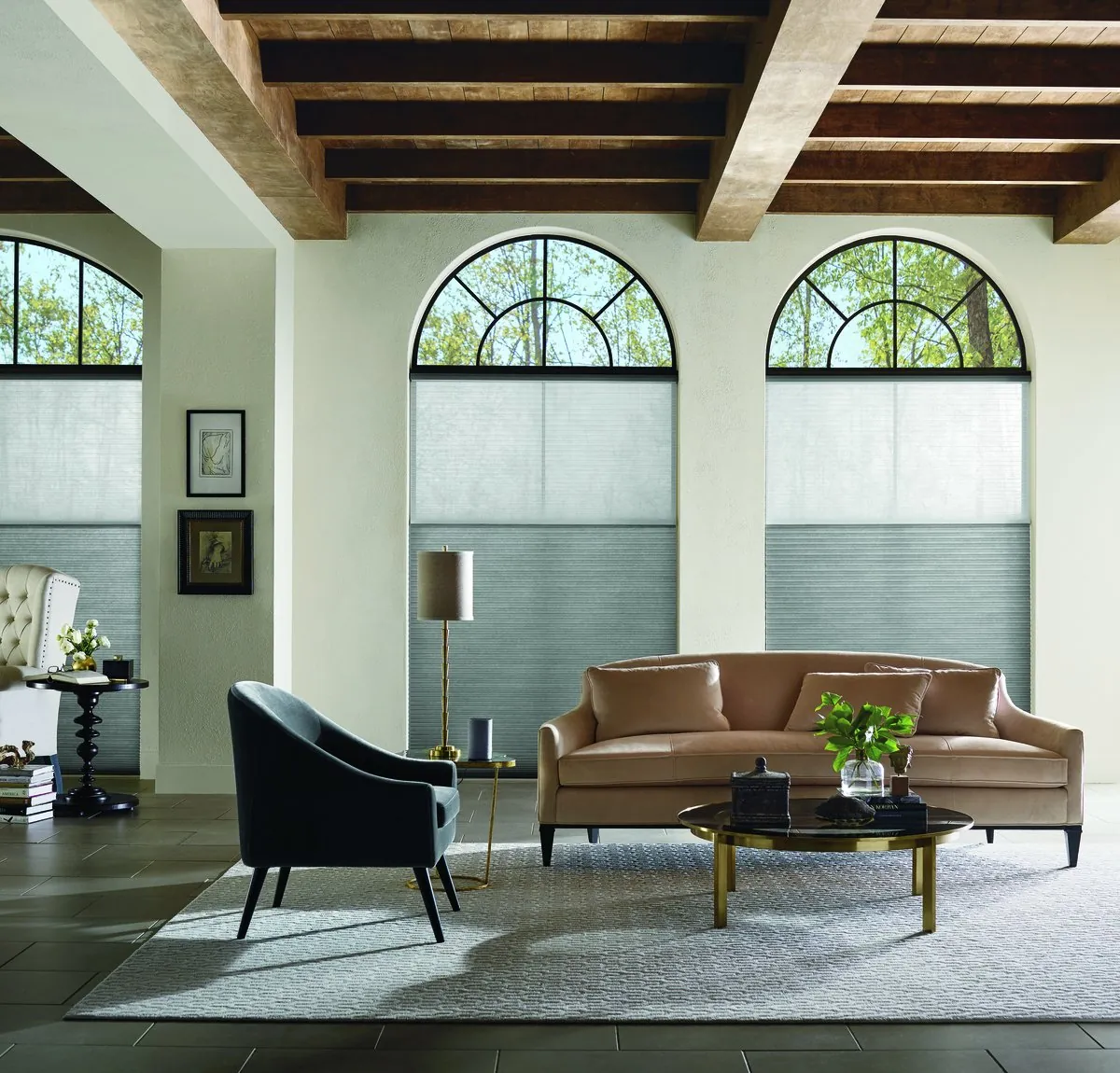
Kitchens at the back of the house
Brockton kitchens in the older houses usually sit at the back, with a tall window over the sink and another facing the side yard. The sink window is the classic hard reach: you lean across the counter, past the faucet, to a cord that hangs behind a row of dish soap and plants. Most people leave it alone.
On a motor, that window becomes the easiest one in the house. A button on the remote or a tap in the app lifts it in the morning and lowers it once the evening lights are on, and nothing on the counter has to move. A screen roller or a light-filtering honeycomb keeps the room bright while softening the view of the house behind.
Stairwells and landings
The tall window on a stair landing is one of the hardest to reach in an older Brockton house. It usually sits halfway up a flight, over the treads, with no safe place to stand. Shades there tend to stay wherever they were last left, often for years.
A motorized shade on the landing answers the same remote as the rest of the house, or a schedule that opens it in the morning and closes it at night. Of all the motorized blinds in Brockton we plan, the landing window is often the one people mention afterwards, because it is the one they had given up on.
Shopping from home with our samples
Brockton is part of the shop-at-home territory we cover from Canton. Instead of you coming to us, we bring the showroom to you: our van carries the Hunter Douglas samples, and you hold them up to your own tall windows to see what they do. Our Canton shop-at-home page has the details.
That matters with motorization. You want to know how a fabric handles the light from your street, how much of the house opposite it hides, and how it looks against your own trim and wall color. A swatch in a store cannot tell you that; your window can.
At the visit we work out which shades should be grouped, which rooms want a schedule, how many remotes the household needs and how each motor will be powered. If you would like help with color and pattern across several rooms, interior design consultations are available. Every window is measured, and you are left with a free estimate to consider in your own time.
If you also want to see a showroom in person, the nearest one to Brockton is in Franklin. You will find it on the Franklin showroom page.

Why a Hunter Douglas Gallery dealer for a city house
Blinds & Designs is a Hunter Douglas Gallery dealer. For a Brockton house with a mix of tall sash upstairs, a bay at the front and plain openings at the back, that means one dealer can cover blinds, honeycomb shades and rollers, and run them all from the same PowerView system.
Every installation is carried out by certified Hunter Douglas installers. We offer in-home consultations with samples, free estimates, interior design consultations and repairs to the blinds and shades you already own. The full range of motorized blinds and shades is on its own page, and everything we offer in the city is on our Brockton page.
Where most Brockton households begin
You do not have to motorize every window at once. Many people start with the windows that cause the most trouble: the tallest ones in the front parlor, the landing window over the stairs, the bedroom that faces the house next door. Further shades can be added later and join the same remote, app and schedules.
Starting small is a good way to find out how you use motorized blinds in Brockton before deciding on the rest of the house.
Questions from Brockton
Our windows are very tall. Is that a problem for a motor?
No. Tall double-hung windows are one of the best reasons to motorize, because the motor does the reaching. We measure each frame at the consultation so every shade is made to its own height.
Can we keep privacy from the street and still get daylight?
Yes. Tilting blinds, screen rollers and light-filtering honeycomb all let light in while blocking or blurring the view. On a motor you can change the setting as often as the day calls for.
We live in one unit of a two-family. Can we have our own setup?
Each household can have its own shades, remotes and schedules. Nothing has to be shared with the other unit.
Do we need a smartphone?
No. The handheld remote works on its own. The app and schedules are there if you want them.
Where can we see samples?
At home. Our van brings them to your windows. If you would like to visit a showroom too, Franklin is the closest.
Start with the window you can’t reach
Pick the shade you have stopped adjusting because it is too high or too awkward, whether in the parlor, on the stairs or in an upstairs bedroom, and make that the first one. Request a consultation and we will bring samples to the house, measure and leave a free estimate.
If you would rather ask a question first, use the call button, or read what to expect on our in-home consultations page.