
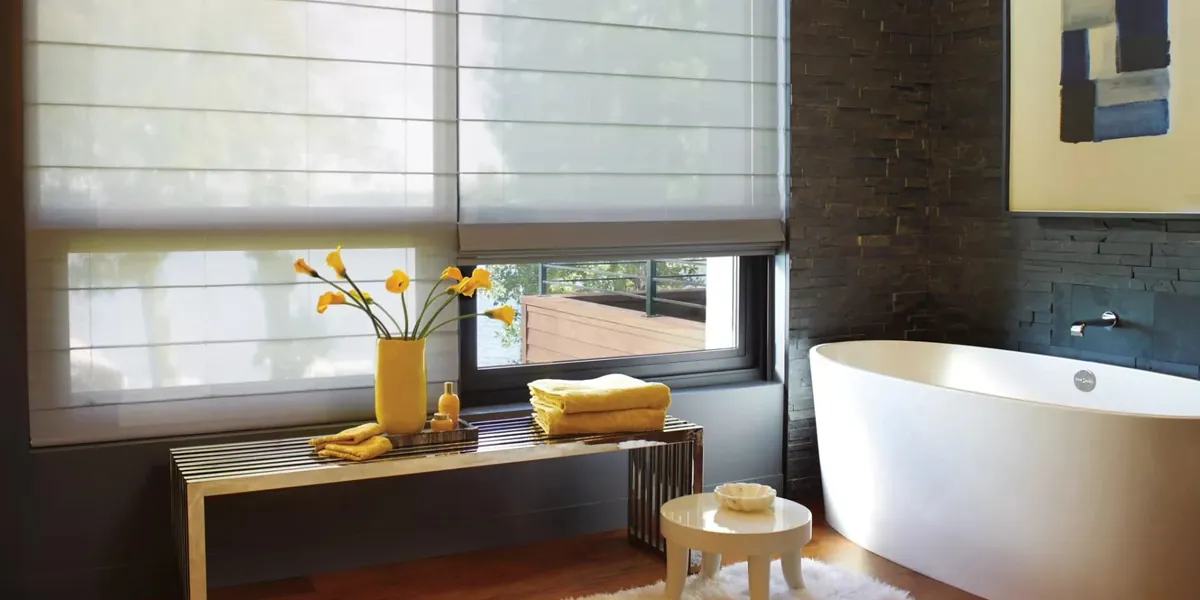
Close neighbors and busy streets
Hyannis is the busiest place on the Cape, and its houses show it. Through the village the older houses stand close together on a tight grid of streets, many of them only a driveway’s width from the next. A side window may look straight into a neighbor’s kitchen. A front room may sit a few steps from the sidewalk, with cars and people passing all day and street lights on all night. In houses like these, privacy is usually the first thing anyone asks for, and it is where we begin with roman shades in Hyannis, MA.
A folded fabric shade handles privacy gracefully. It can be sheer enough to blur the view in while keeping a room bright, or lined to close a room off completely after dark. Because each shade is made to order, a single house can have both: light, airy fabric on the side that faces the garden, and something more private on the side that faces the street or the house next door.
The town has other kinds of houses too. Down at Hyannis Port the shingled summer houses face the harbor and take strong light off the water. Near Main Street, older buildings have been converted into condominiums, with windows that rarely come in standard sizes. Each gets its own plan.
Privacy, light and the right fabric
Every one of our roman shades in Hyannis comes from Hunter Douglas, in two lines: Vignette and Carole Fabrics. These are the options that shape most orders in the village, the Port and the converted buildings downtown.
Sheer fabrics for the garden side
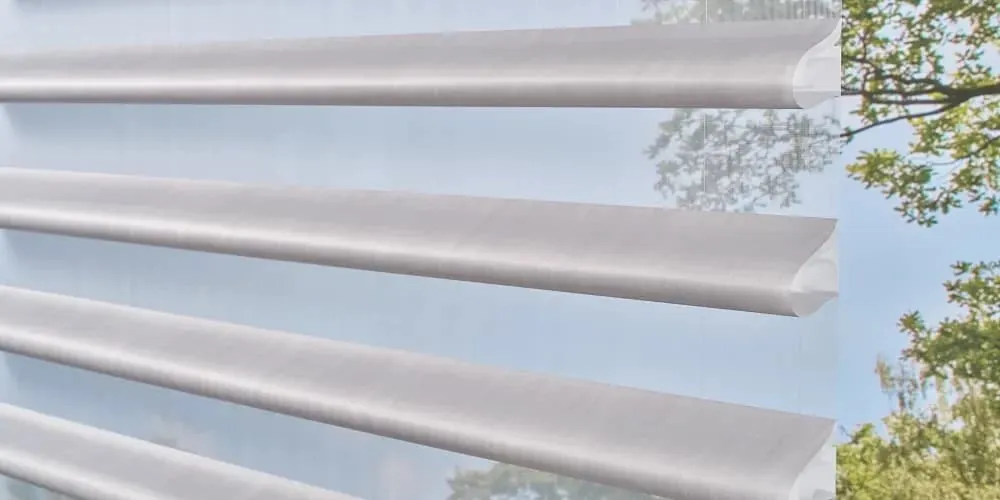
Lets in nearly all the daylight and softens the view in, for windows that face a yard rather than a neighbor.
Light-filtering for street-facing rooms
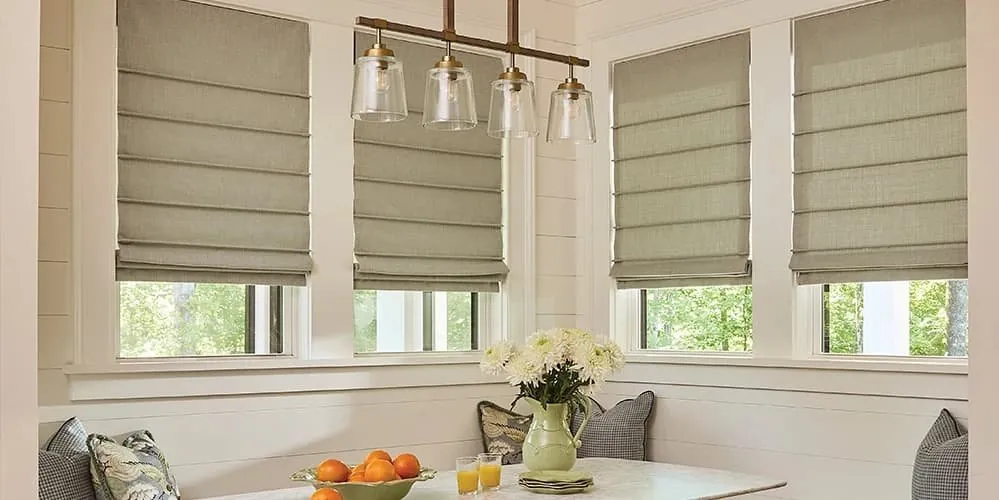
The room stays bright, but passers-by see a glowing panel of fabric rather than the room behind it.
Room-darkening for bedrooms
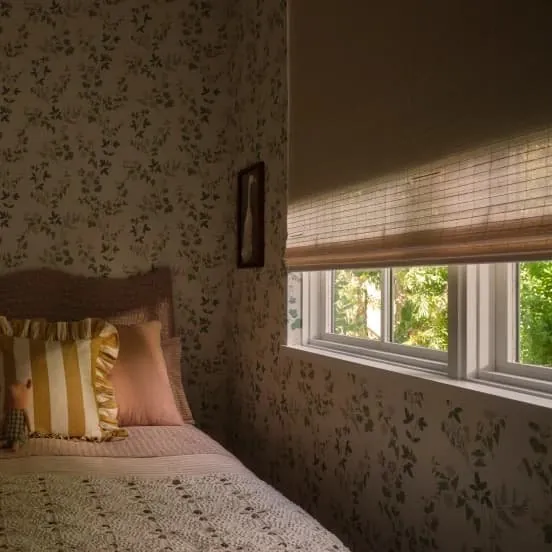
A lining that keeps out street lights, headlights and early summer sun, for a bedroom on a busy road.
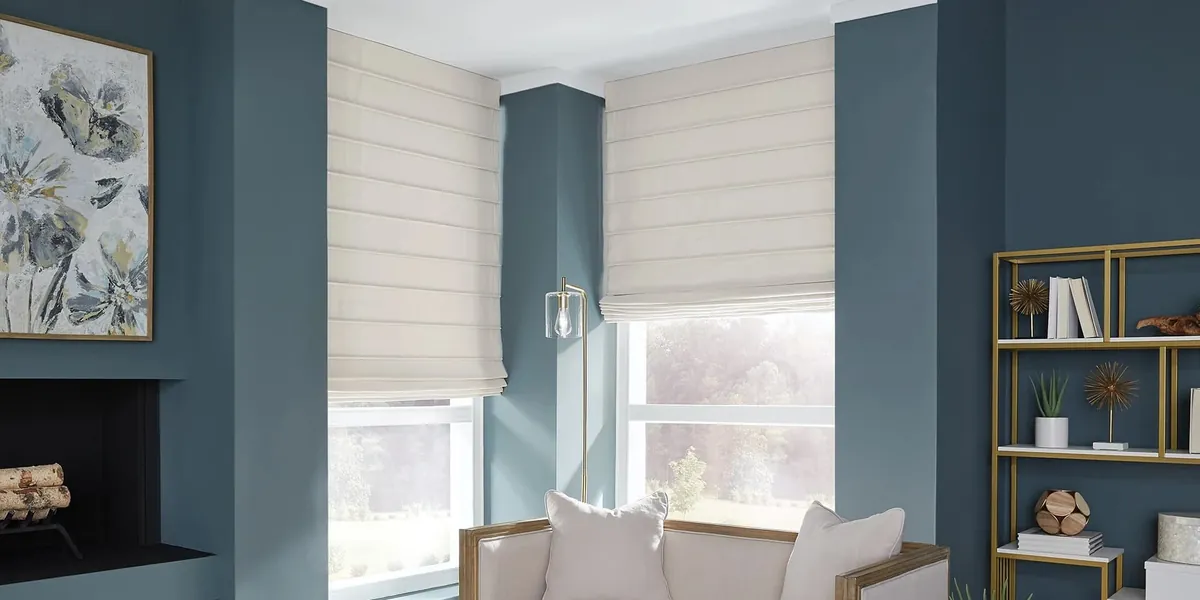
Vignette for small sash
The fabric rolls into the headrail, so short windows in an older village house keep their light when the shade is up.
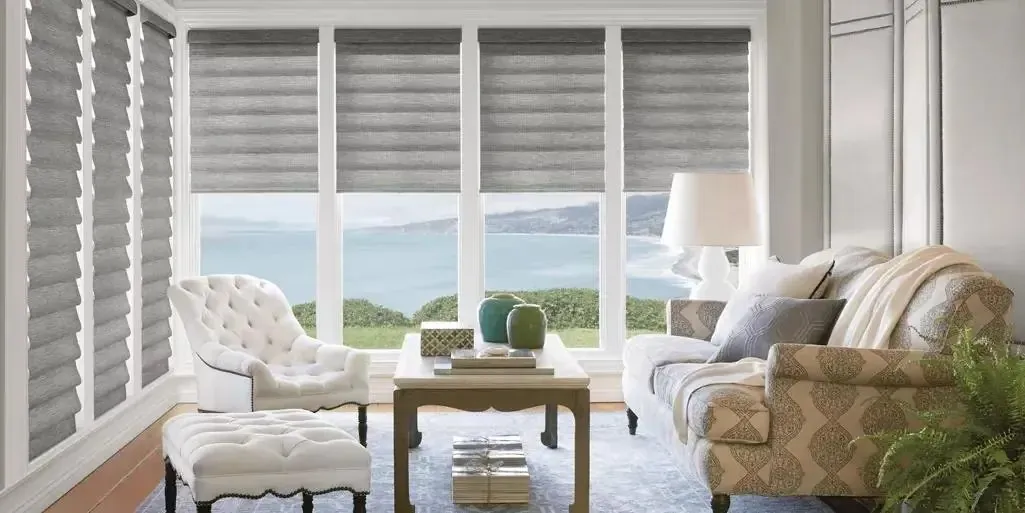
Carole Fabrics, sewn to order
A huge choice of decorator fabrics, made in flat and folded styles, for rooms where the fabric sets the tone.
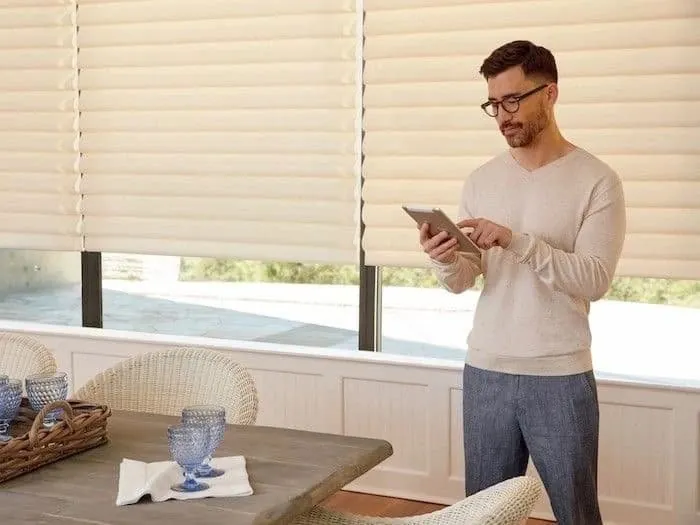
Remote and app control
Vignette on PowerView, so you can close every street-facing shade at once when the lamps go on.
Older houses on the village grid
The older houses through the village were built close together, and most were built before anyone thought much about what a neighbor could see. Windows were placed for light and air. Now they look out on driveways, side yards and the next house along. On a typical lot you might have a front room on the street, a dining room facing a neighbor’s side wall, and bedrooms upstairs looking straight across to the next house’s bedrooms.
So we plan by direction. Windows that face the street or a close neighbor usually take a light-filtering fabric, which gives daytime privacy without darkening the room. Windows that face a garden or a quieter side can take a sheer or unlined fabric and let in every bit of light. Bedrooms that face the street usually want a room-darkening lining, because street lights and passing headlights are a nightly problem on a busy road.
Top-mounted shades help on a tight lot as well. If a window faces a neighbor at eye level but sees open sky at the top, you can leave a roman shade partly lowered to cover the lower glass while the upper part brings in light. Mounting the shade above the frame lets the raised folds sit on the wall, so the top of the window stays clear.
These houses vary in age and condition, and their window frames do too. Some have deep old reveals; others have been fitted with replacement windows with narrow frames. We measure every opening to see whether an inside mount will fit.
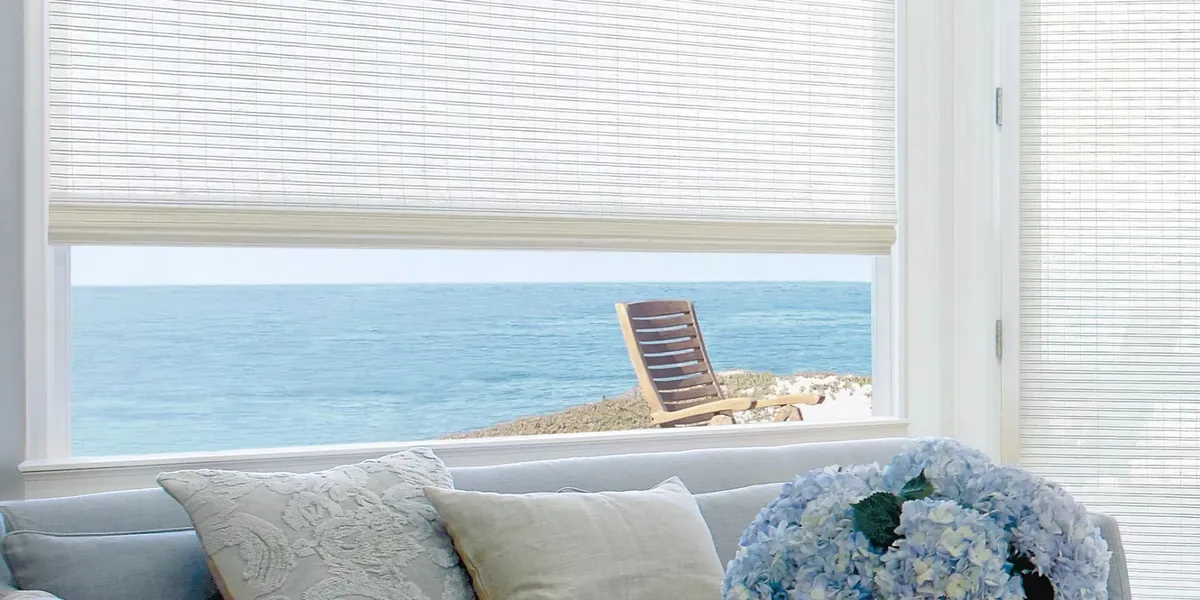
Hyannis Port’s shingled summer houses
The houses at Hyannis Port are a world away from the village grid. Shingled, generous and turned toward the harbor, many of them were built for summer living, with porches, big sitting rooms and bedrooms that catch the breeze off the water. Their windows are larger and more numerous, and the light on the harbor side is strong and full of reflection.
On that side of the house the job is glare and sun. A light-filtering lining softens the brightness off the water without blocking the view, and lighter, natural fabrics hold their color better on windows that take sun all afternoon. On porches and sunrooms that are almost all glass, a run of matching roman shades with fold lines set at the same height turns a bright, exposed space into a comfortable room.
Salt air is part of life at the Port. Most of a roman shade’s working parts sit inside the headrail, but a corded lift leaves a cord and cord lock at the side of the window. A cordless lift, or Vignette on PowerView, removes that hardware and gives a cleaner window that suits a house you open up to the breeze.
Summer houses are often closed for part of the year, too. A lined shade lowered when you leave protects floors and furniture from the sun, and PowerView schedules can raise and lower shades while nobody is home.
Condominium conversions near Main Street
Near Main Street, older buildings have been turned into condominiums, and that brings an unusual mix of windows. A unit in a converted building may have a tall original window in the living room, a small dormer in the bedroom, a window set unusually low or high in a wall, and a modern slider added when the building was converted. Very little comes in a standard size.
This is where made-to-measure roman shades really help. Each shade is built to the opening it covers, so a tall old window and a squat dormer can wear the same fabric and still each fit perfectly. Keeping the fabric and fold spacing consistent across the unit makes the mix of windows look intentional.
Dormers need some thought. They are often small and set into a sloping ceiling, so a shade has to fit within a narrow opening and still raise clear of the glass. Vignette is often the answer, since it rolls its fabric away rather than stacking.
Units close to Main Street also share the busy street’s light and life. Light-filtering fabrics for the living space and room-darkening linings for the bedroom are common choices. If your building has rules about what shows from outside, a single white or off-white lining across every window keeps the exterior uniform.
Stairwells and landings are worth a mention here, because converted buildings are full of them. A tall landing window between floors is often the brightest pane in the unit and the hardest to reach. Fitting roman shades in Hyannis, MA, to a window like that usually means Vignette on PowerView, so the shade can be raised and lowered from the hallway or your phone rather than from a stepladder on the stairs. Where a landing window faces a neighbor across a narrow alley, a light-filtering fabric left lowered most of the day keeps the stairwell bright and private without anyone having to think about it.
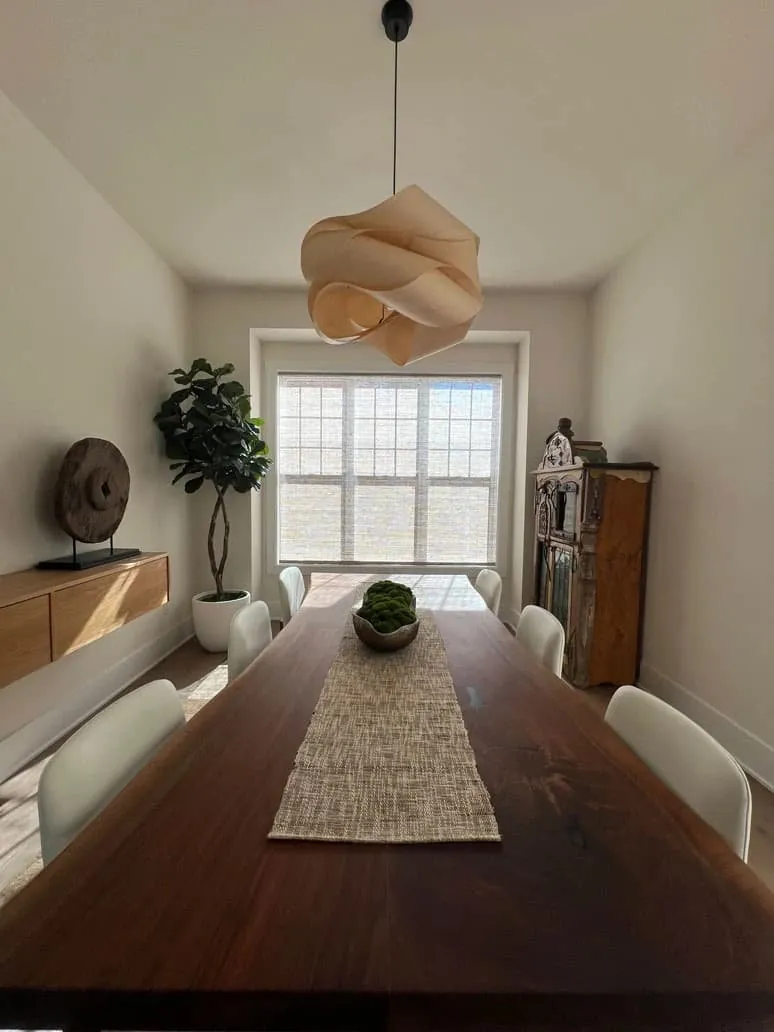
Smooth panel or soft loops
Two looks cover almost every roman shade, and the difference shows most in a small room.
The smooth look is the flat fold. Down, it is one clean sheet of fabric from top to bottom; up, it gathers into tidy horizontal pleats. It takes up little visual space, which is welcome in the narrow front rooms of a village house, and a stripe or a printed fabric reads clearly on it.
The soft look keeps gentle swags of fabric running across the shade at every height. It feels relaxed and summery, it gives a plain linen some depth, and it sits happily in a Port sitting room or a guest bedroom with a quilt on the bed.
Then there is the question of line. Vignette has its folds sewn into the front, and when you lift it the whole fabric winds onto a roller hidden in the headrail. Small sash and dormers keep their full glass, and it is the line that works with PowerView. Carole Fabrics is about choice: a sewn shade from a deep library of decorator cloth, sheer to heavy, made in either look. When a shade has to sit beside cushions, drapery or a favorite chair, Carole is usually where we look first. Each line has its own page, Vignette modern roman shades and Carole roman shades, and the wider family is on our roman shades page.
When we come to the house
Privacy depends on what your neighbor can see from their window and what the street lights do to your room at night. None of that shows up in a catalog, so the consultation happens in your rooms, with the samples our van brings along.
- Pick a time through Request a Consultation, or ring us with the call button.
- Together we go from room to room and note which windows look onto the street, a neighbor’s wall or a garden.
- You try sheer, light-filtering and room-darkening swatches against the glass and judge for yourself how much each one hides.
- We go over the two styles, the two lines, where each shade would mount, how it lifts and whether PowerView makes sense.
- Every opening gets measured, odd sizes and dormers included, along with the depth of its frame.
- A free estimate follows for the shades you have in mind, and the decision stays yours, on your own schedule.
If the room as a whole needs thought, color, fabric, how the windows sit with the furniture, our interior design consultations cover that. There is also a short page on what happens at an in-home consultation.
Night privacy and street lights
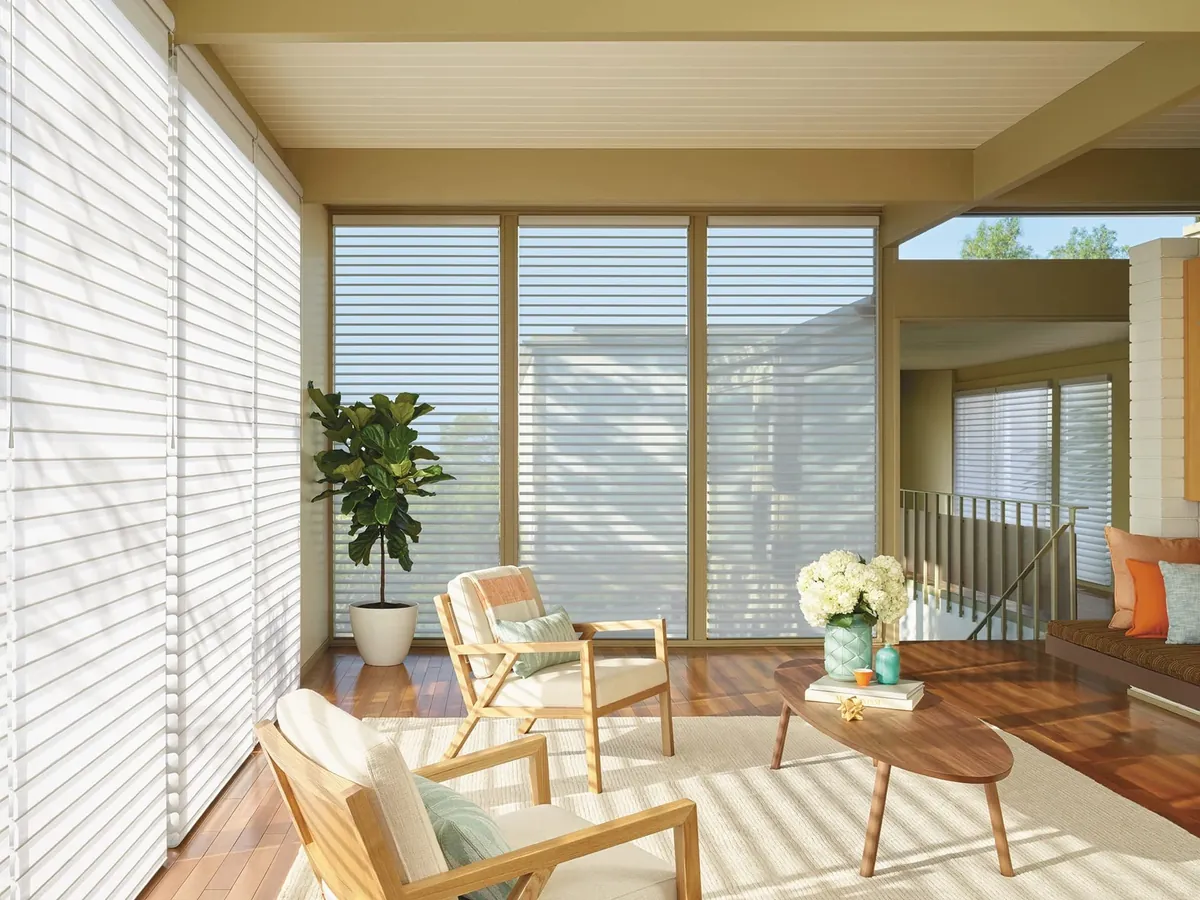
Something that catches out many new owners of a close-set house is how different a room feels after dark. With lamps on inside and night outside, a window turns into a lit picture for anyone walking by. A fabric that seemed private at noon can show shapes and movement in the evening.
So evening use is part of every plan. A light-filtering fabric is fine for a room you mostly use by day. A living room where you sit with the lamps on wants a lined shade or a denser cloth. A bedroom facing a street light wants a room-darkening lining so the glow stays outside.
PowerView turns the evening routine into one tap. Group the street-side shades, lower them together from your phone, or let them close on their own at dusk. On winter evenings, when it is dark before supper, that small convenience gets used every single day.
Busy rooms: kitchens, baths and home offices
A village house uses every room hard. The kitchen window often looks straight at the neighbor’s driveway, so a light-filtering roman shade lets you cook in daylight without feeling watched; mounted high, the raised folds stay clear of the taps and the splashes. A small bathroom facing the next house needs privacy at every hour, so a lined fabric, or a sheer one lowered to cover the lower glass, is usual, and if the room fills with steam every morning we will say honestly whether another Hunter Douglas product would cope better.
Home offices are more common than ever in the converted buildings near Main Street. Glare on a screen is the complaint there. A light-filtering fabric evens out the light so the screen stays readable, and a shade you can stop at any height lets you block the sun at the angle it arrives.
When people plan roman shades in Hyannis for a whole house, these working rooms are often where the most practical choices get made, and the living rooms then follow the same fabric family so everything ties together.
Getting the fit right
Village houses and converted buildings both have windows that are slightly out of square. For an inside mount we take the width in three places and the height in three, then work to the smallest figure so the shade glides without catching. Frame depth gets checked too, along with any lock, crank or trim that could block a headrail.
Nothing is ordered until you have agreed each mount and lift. On installation day our certified Hunter Douglas installers set every headrail level, run each shade up and down, and walk you through the controls, the app included if you chose PowerView. Later on, should a shade need attention, we also repair blinds and shades.

Gallery status, and why it matters
Hunter Douglas names dealers who meet its standards Gallery dealers, and Blinds & Designs holds that status. In practice it means the whole Vignette collection, the whole Carole Fabrics library and every lining, lift and PowerView option are available through us, with nothing held back.
The installers who fit your shades are certified by Hunter Douglas. One company handles the measuring, the order and the installation, and stays on hand afterwards for any adjustment.
Other rooms can be planned at the same visit. Have a look at roller shades in Hyannis, plantation shutters in Hyannis and motorized blinds in Hyannis, or the full list on our Hyannis page.
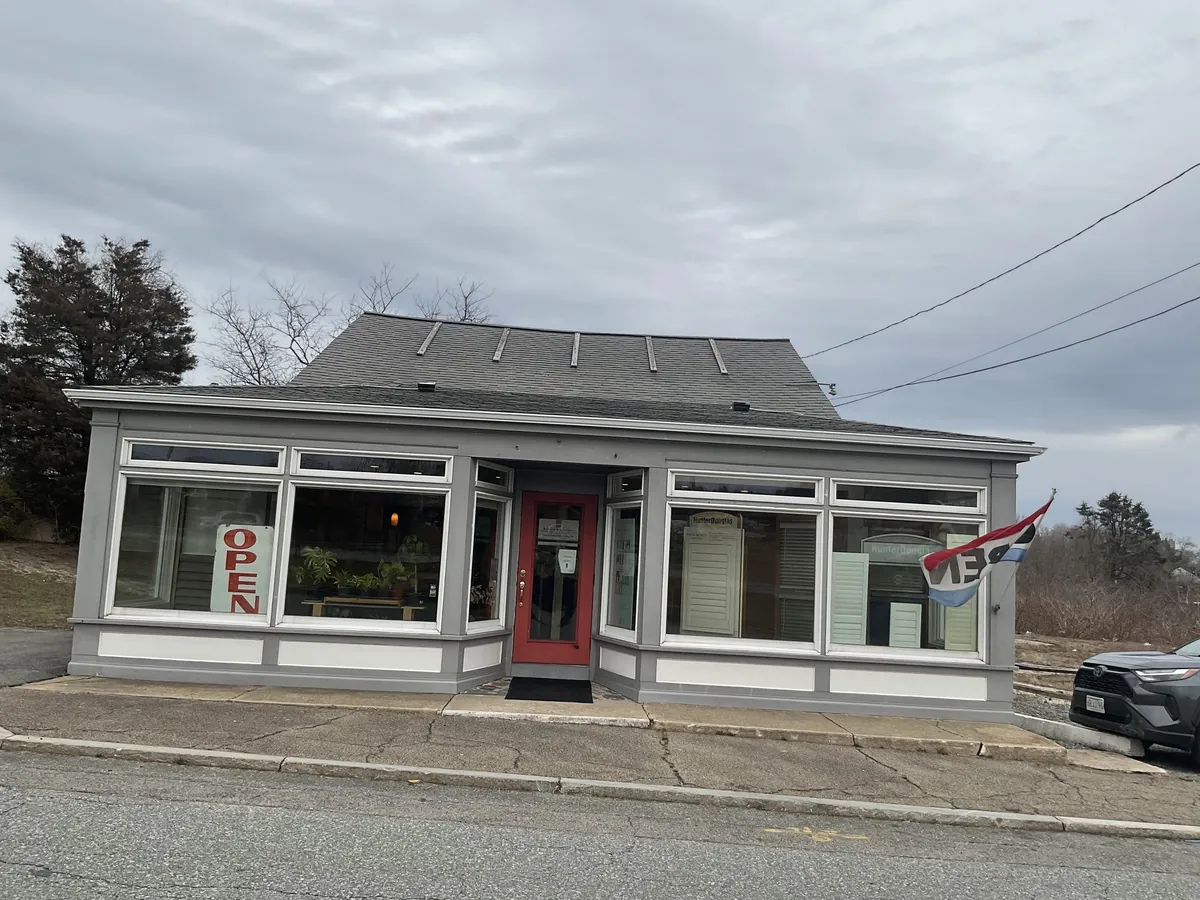
Sagamore, our nearest showroom
Sagamore is the showroom closest to Hyannis. Drop in during opening hours if you want to handle Hunter Douglas fabrics before anyone visits, or use the call button with a question first.
That said, most Hyannis projects begin at home, because only there can you see how much each fabric hides from the street and the house next door.
Hyannis questions, answered
My windows face the house next door. What fabric gives privacy without darkness?
A light-filtering fabric. Daylight comes through, but the room behind it is hidden during the day. For evenings with the lamps on, a lined or denser fabric keeps the room private, so we ask how you use each room first.
Can roman shades fit the odd windows in a converted condominium?
Yes. Each one is made to measure, so a tall original window and a small dormer can wear the same fabric. Dormers usually suit Vignette, whose fabric winds away into the headrail.
What works on a Hyannis Port porch that is mostly glass?
A row of matching roman shades with the fold lines set at one height, usually in a light-filtering fabric that calms the harbor glare and keeps the view.
Can I close all the street-facing shades together?
With Vignette on PowerView, yes. Group them and lower them from your phone or a remote, or schedule them to close at dusk.
Does the estimate cost anything?
No. Once the windows are measured, the estimate is free. Use Request a Consultation and we will arrange a visit with samples.
See how much each fabric hides
Choosing roman shades in Hyannis, MA, is easiest with the swatches against your own glass, checked from the sidewalk as well as the sofa. Request a consultation and we will bring Vignette and Carole Fabrics samples, measure each window and leave a free estimate behind. The call button and the Sagamore showroom are there too, whichever suits you.