
Whitinsville’s company houses, close to the street
In Whitinsville, the mill village at the heart of Northbridge, the company houses were built close to the street and close to one another. Many still have their original sash, tall and narrow, set in frames that have moved a little with the years. Further out, on the edges of town, newer colonials sit on bigger lots with larger windows in standard sizes. A Hunter Douglas dealer in Northbridge, MA spends much of the time working between those two kinds of house.
The village stock brings two privacy problems at once. The front windows are only a short way from the sidewalk, so anyone walking past is almost level with the room. The side windows face the next house across a narrow gap. Both need covering in a way that keeps light coming in, because a tall narrow window is the main source of daylight for the room behind it.
The outskirts colonials are a simpler fit and a different set of concerns: sun, glare and the windows that are hard to reach.
The full range for Northbridge houses
We are a Hunter Douglas dealer in Northbridge for every family in the range. Each card links to the Northbridge page for that product.
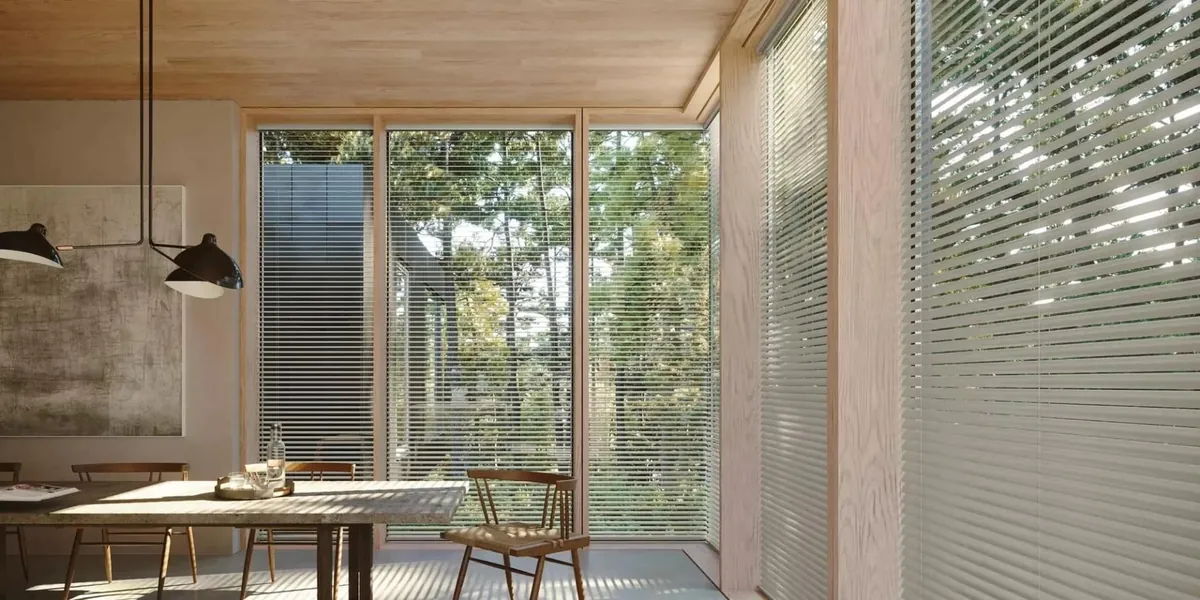
Custom blinds
Wood, faux wood, metal and vertical blinds, chosen for their material and for how you prefer to tilt and lift them.
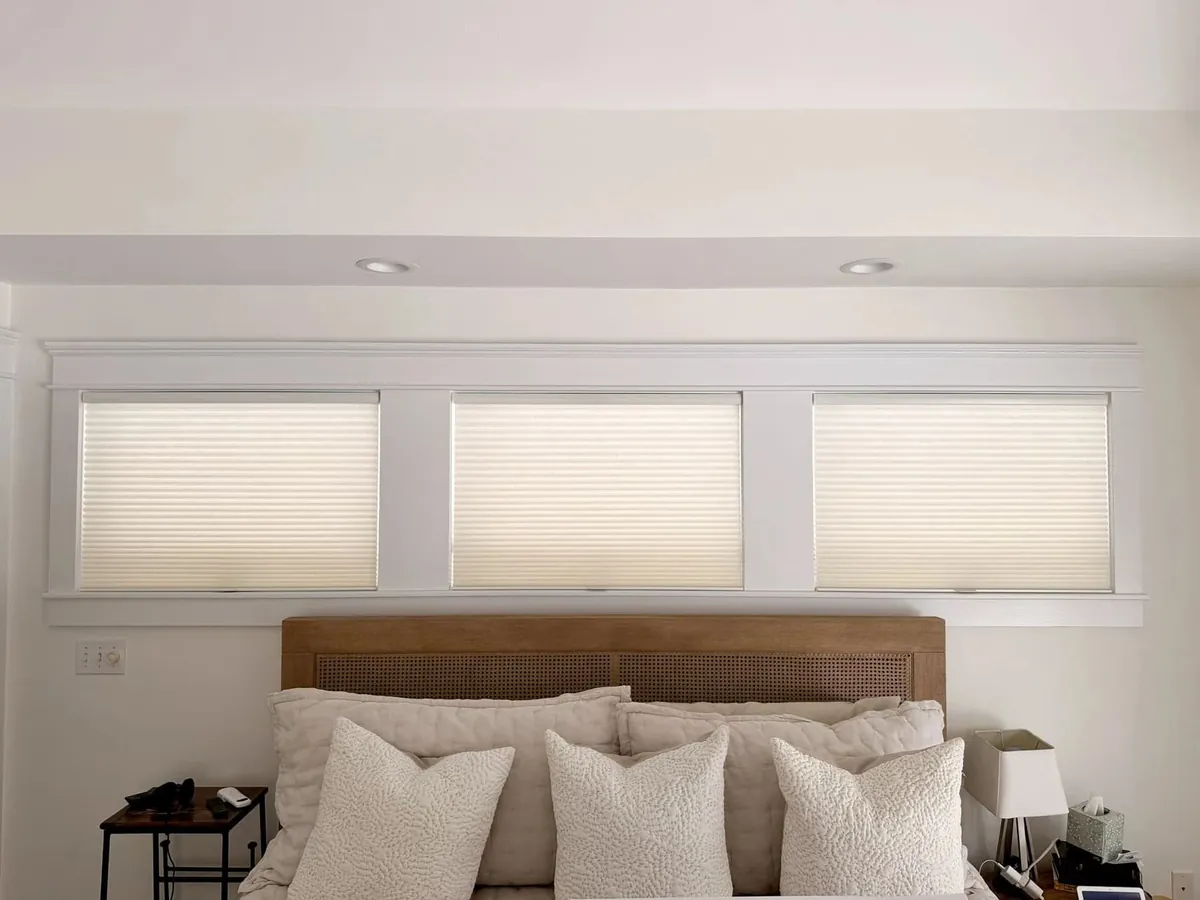
Cellular shades
Duette and Applause honeycomb shades. The cells hold air, which is why the room behind them holds on to its heat.
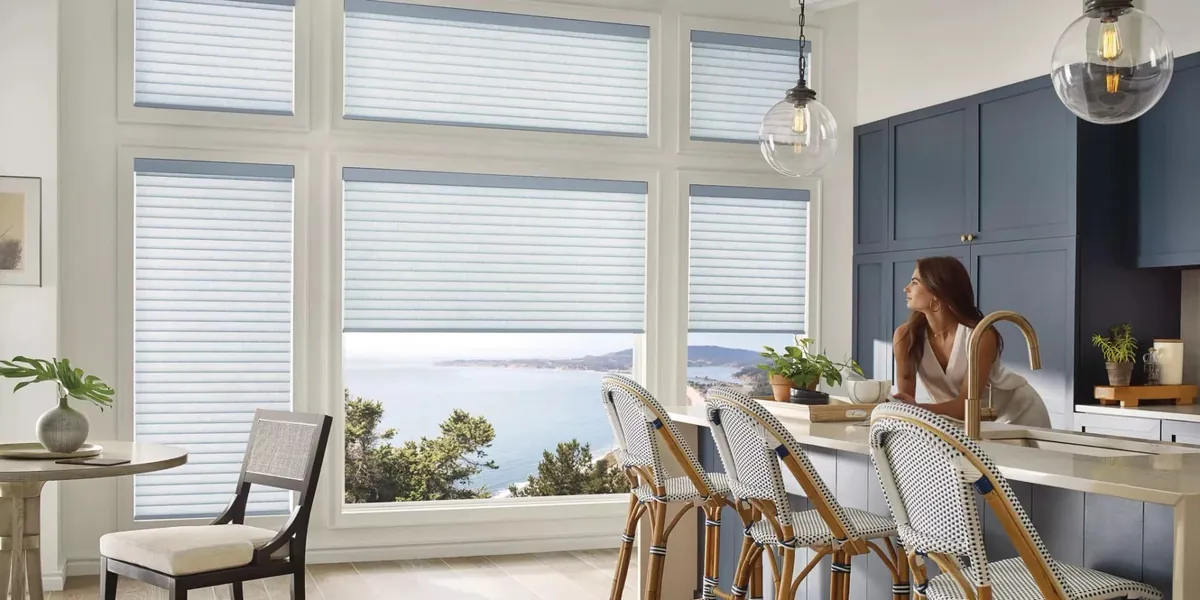
Roller shades
Designer and Alustra rollers and solar screens. Openness is the setting that trades view against glare.
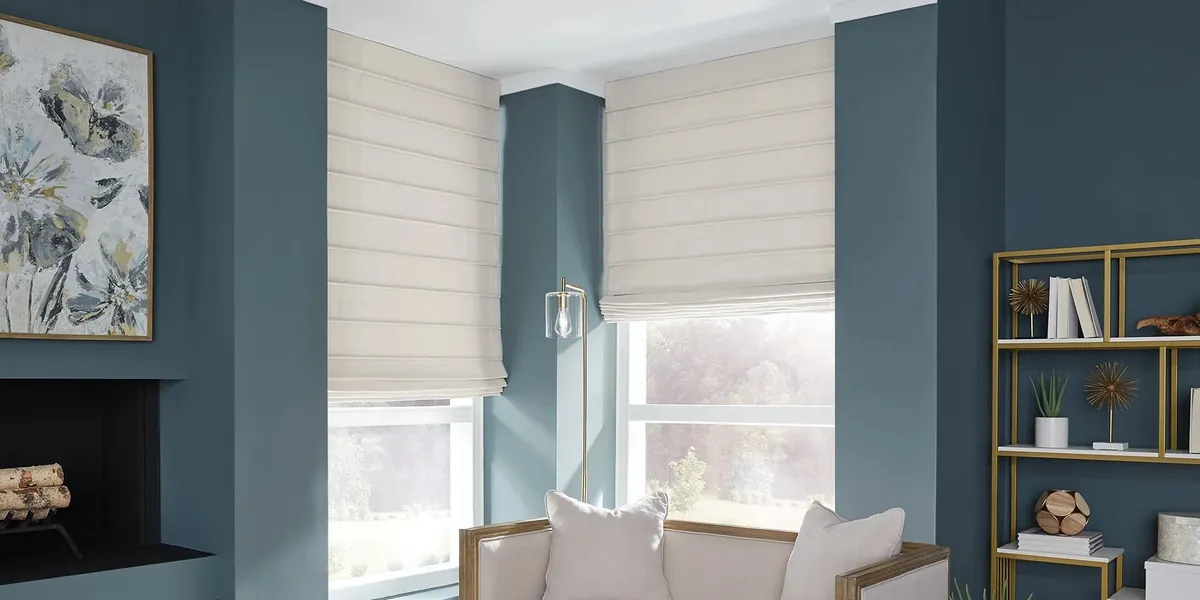
Roman shades
Vignette and Carole Roman shades, flat or folded, for a front parlor or bedroom that wants soft fabric.
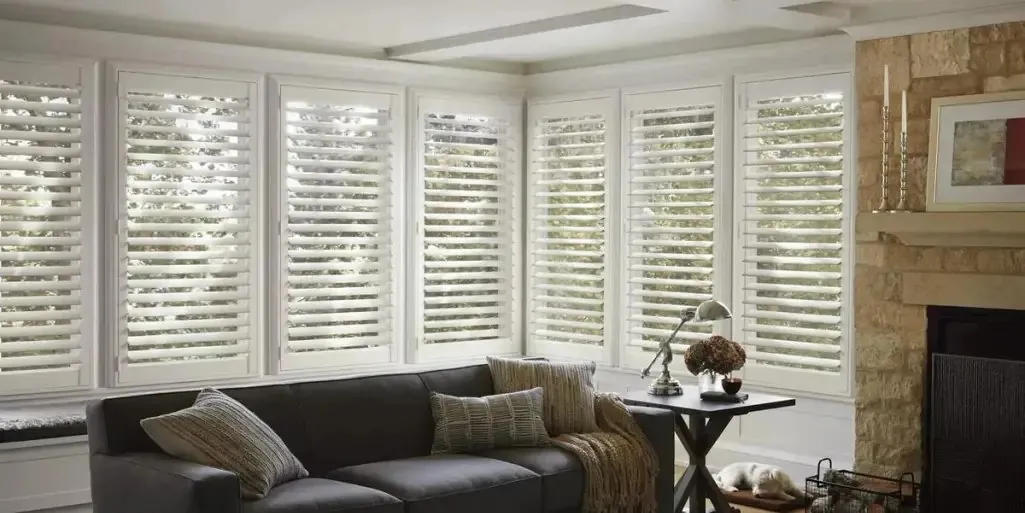
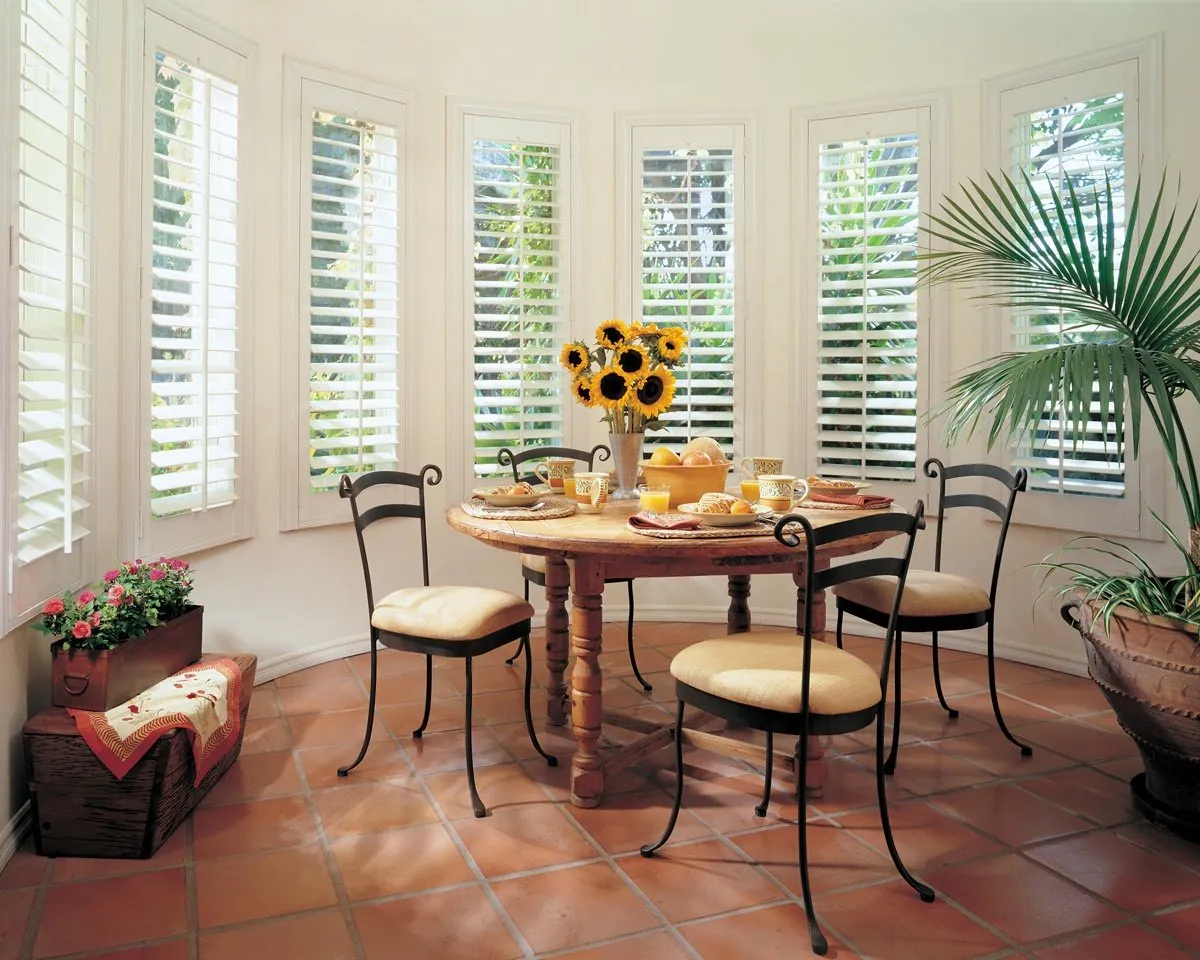
Plantation shutters
Palm Beach, NewStyle and Heritance shutters, planned by louver size and frame style to suit tall sash.
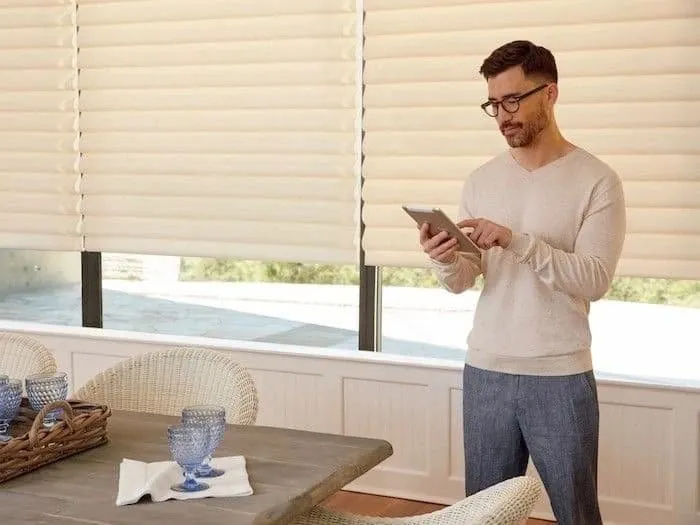
Motorized blinds and shades
PowerView, with a remote, an app and schedules to move shades through the day.
Front rooms a few steps from the sidewalk
A company house in Whitinsville often has its front windows within a few strides of the pavement. During the day, a passer-by can see straight into the front room; after dark, with a lamp on, the room is on full view. Yet the front room is usually where the household spends its evenings, and its tall windows bring in most of its light.
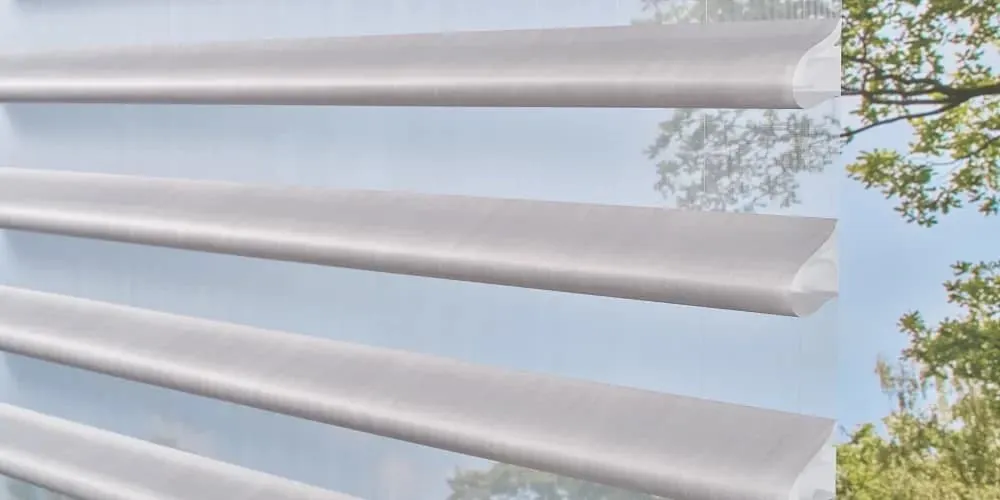
For a Hunter Douglas dealer in Northbridge, the aim is privacy that does not turn the room into a cave. A light-filtering fabric does this well: lowered, it lets daylight through while blurring what is inside. Sheer shades such as Silhouette and Pirouette soften the view further and turn sunlight into an even glow. Shutters give a different kind of control, because tilting the louvers changes the angle of sight; tilted up, they keep the sidewalk from seeing in while the sky stays visible.
At night, a room-darkening fabric or a layer of drapery closes the window entirely. Many front rooms end up with a light-filtering shade for the day and drapery for the evening.
The gap between neighbors
Side windows in the village look across at the house next door, sometimes close enough to see into its kitchen. Those windows usually need covering at all hours, but they still provide light.
A light-filtering honeycomb is a common choice for these: it lets the light through, holds air in its cells against the glass, and keeps the neighbor’s view soft. Shutters suit side windows well too, since the louvers can be set to block the line of sight across the gap. In a bedroom on the tight side, a room-darkening fabric shuts out the glow from next door’s lights at night.
Fitting tall, narrow sash
Whitinsville’s company sash runs tall and slim, and the frames around it have had a long time to drift out of true. On a window that narrow, a shade hung a fraction off level is obvious from across the room, and a headrail that is a touch too wide will rub the trim every time it moves.
Our tape goes on each opening more than once. Across the head, across the meeting rail, across the sill. Down the left jamb, down the right, down the middle. Then a reading of how deep the pocket is between the glass and the room, and a look at the hardware: an old thumb latch or a sash lift sitting proud of the frame will decide where a bracket can go.
Those numbers settle the mount. Inside the opening, the covering disappears into the frame and the original casing stays on show. On the face of the casing, the covering gets more room to work and the slim window reads a little wider. Proportion matters as well. A shade that gathers into a shallow band at the top keeps the window looking tall, and a bulky stack would cut its height visibly.
Colonials on the edge of town
On the outskirts of Northbridge, newer colonials sit on larger lots with standard-sized windows and, often, a family room or two-story foyer with tall glass. These houses face less of the close-quarters privacy of the village and more of the sun.
A family room with tall glass facing west can be bright enough to make a television hard to watch. A Designer Screen or solar shade cuts that glare while you keep the view of the yard, and the openness of the fabric sets the balance. Bedrooms often get honeycomb shades for darkness and comfort. A slider to a deck wants something that moves sideways: Luminette sheers, a vertical honeycomb or vertical blinds all clear the door.
High windows over a foyer are a natural fit for PowerView, which lets you lower them from a remote, an app or a schedule.
Rooms that face the street versus rooms that face the yard
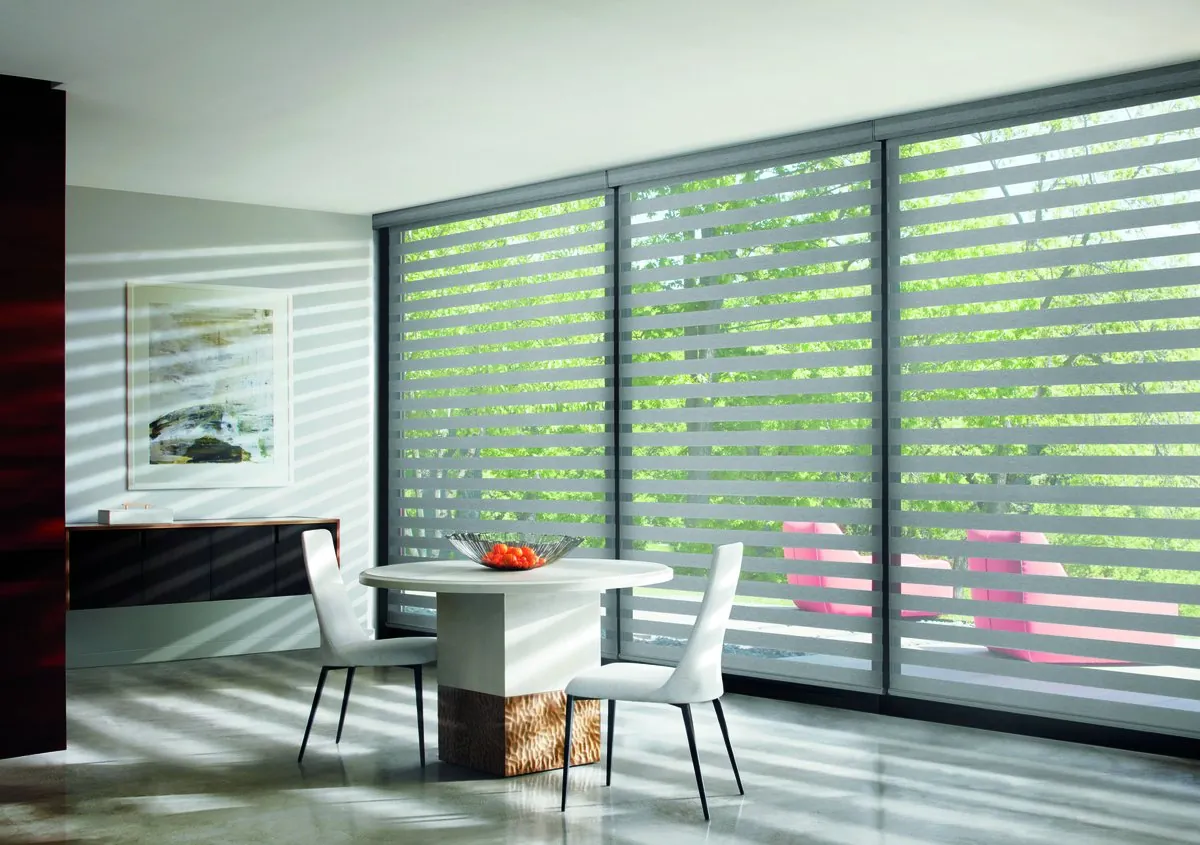
In a village house, the rooms at the front and the rooms at the back can need quite different things. The front faces the sidewalk and calls for privacy first. The back usually faces a small yard and the backs of other houses, where light and view matter more.
We often suggest a single family across the whole house with the fabric changing from front to back: a light-filtering honeycomb at the front, perhaps a lighter sheer or a screen shade at the back. Or a mix of families, with shutters at the front for angle control and rollers at the back for simplicity. Either way, the outward-facing color on the street side can stay the same, so the house looks calm from the road.
Comparing the privacy choices
Because privacy is the main question in the village, it helps to see the options side by side.
- Light-filtering fabric. Lets daylight through and blurs the view in. Good on front rooms by day; less private once the lamps are lit.
- Sheer shades. Silhouette and Pirouette soften the view and the light together. Good where a room needs every bit of brightness.
- Shutters. Tilt the louvers to set the line of sight; close them for full privacy. Good on side windows facing a neighbor.
- Room-darkening fabric. Closes the window completely. Good for bedrooms and evening privacy.
- Drapery over a shade. A second layer drawn at night. Good for front rooms that want a light shade by day.
Most company houses end up with two or three of these across their rooms: perhaps shutters on the side windows, a light-filtering shade in the front room and room-darkening fabric upstairs.
How the first visit goes
With a Hunter Douglas dealer in Northbridge, the choosing happens in your own front room and bedrooms, because a tall village window and a wide colonial window light a room in completely different ways. The van comes loaded with samples from the whole Hunter Douglas range, which is how we bring the showroom to you.
- Ask for a visit through Request a Consultation, or press the call button and speak to the Franklin showroom.
- We book a time and arrive with fabrics, slats and shutter finishes picked for your rooms.
- Standing at each window, we look at what it faces: the sidewalk, the house next door or the yard.
- You hold the samples against the glass and watch how each one handles your light.
- Every opening gets measured, the village sash several times over.
- A free estimate follows, and the decision stays with you for as long as you like.
- Hunter Douglas builds the order to our numbers, and our certified installers hang it.
More on that first visit is on the in-home consultations page, and the free estimates page covers the estimate. If you would like a hand pulling fabric and color together, an interior design consultation is there for that.
The middle rooms between two houses
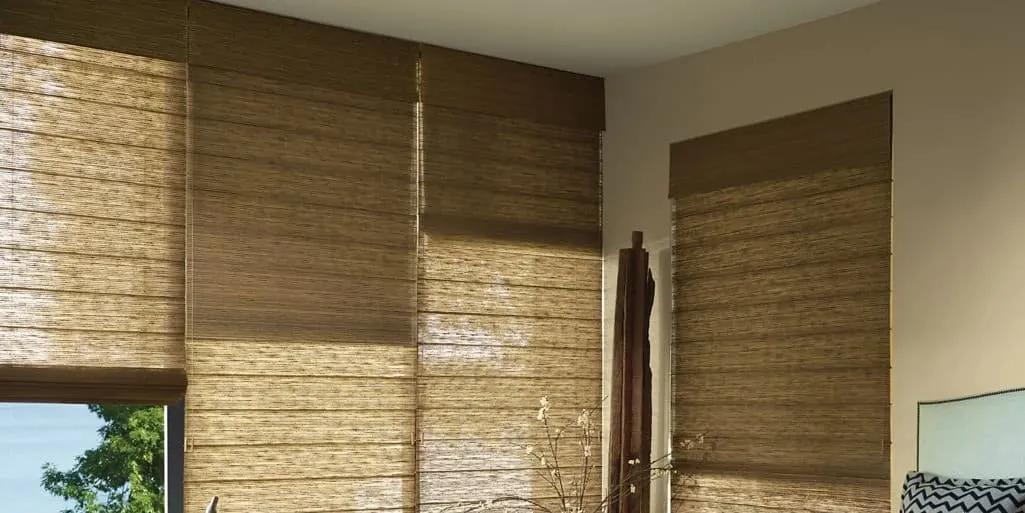
Close-set company houses have a quirk worth mentioning. A room in the middle of the house, with no front or back wall of its own, often gets its only daylight from a side window facing the neighbor. A dining room or a stair hall in that spot can feel dim even at noon.
For those rooms we steer away from anything that blocks light by day. A sheer shade such as Silhouette softens the view across the gap while passing almost all of the brightness. A light-filtering honeycomb does a similar job with a plainer face. Shutters can stay open wide through the day and close at night. What we avoid on these windows is a heavy room-darkening fabric, which would leave the middle of the house gloomy.
Upstairs bedrooms
Bedrooms on the upper floor of a village house have the same tall narrow sash as the rooms below, and often face the neighboring house directly. The first question is how dark you want each one.
A room-darkening honeycomb mounted inside the frame closes the window and helps the room stay warm. If you want daylight in the afternoon and privacy at night, a light-filtering fabric covers both. A Roman shade in a heavier fabric gives a softer look for a main bedroom. We bring samples so you can see each in the room.
Bedrooms in the outskirts colonials
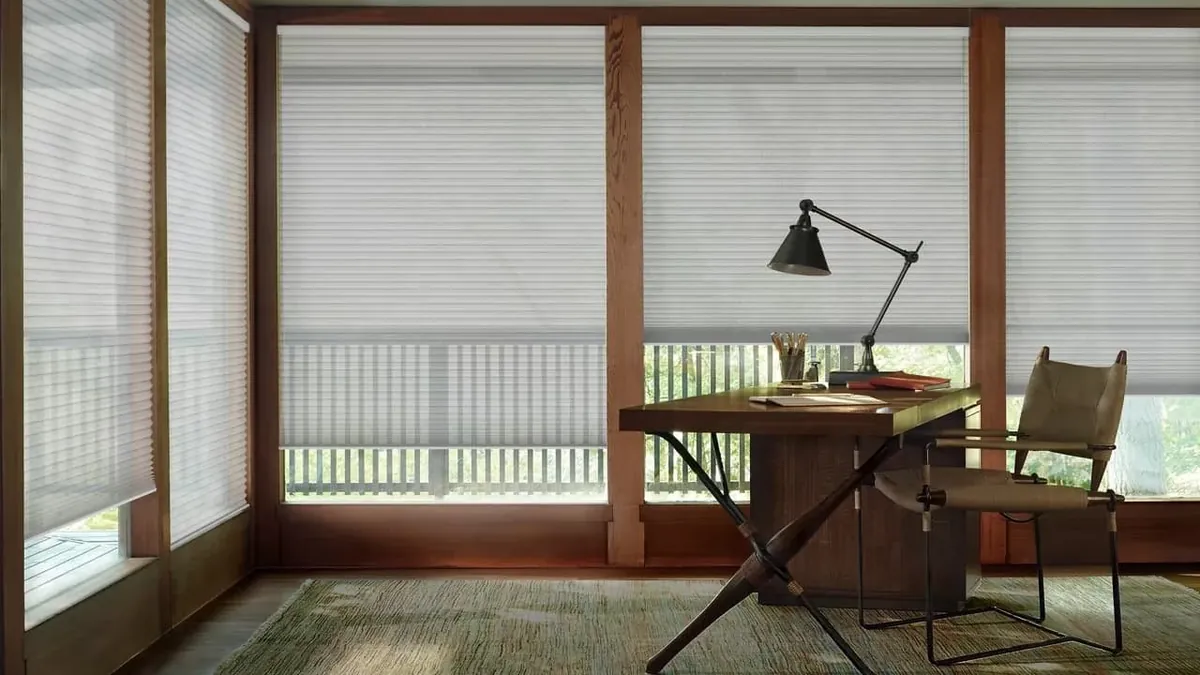
Bedrooms in the newer colonials on the edge of town are usually bigger, with two or three standard windows, and often face east across a yard with little to block the morning sun. Privacy from neighbors matters less than darkness at dawn.
Room-darkening honeycomb shades are the common choice, and in a room with several windows they can be set on one schedule with PowerView. A main bedroom may also get drapery for softness. We bring samples of both so you can see how they look together on your walls.
Motorization in Northbridge
A tall village window with a deep sill or a radiator beneath it can be awkward to reach, and that is the most common reason a Northbridge household asks about PowerView. The other is routine: front shades that close themselves when the street lights come on and open again after breakfast.
PowerView works from a remote, from an app or from schedules you set. We plan how each motor is powered at the visit. The motorized blinds in Northbridge page and the window covering automation page go further.
How a row of company houses reads from the road
Walk down a Whitinsville street and the company houses read as a set, with similar fronts, similar windows and similar spacing. Window coverings are part of that face. When every front window shows the same pale color to the street, the house looks settled and tidy; a jumble of colors and styles makes it look busy.
So we often suggest a soft neutral facing outward on the street side, whichever product sits behind it, and leave the color and pattern for the room side. On the outskirts colonials, set further back on bigger lots, the outward face matters less and bolder choices show from the road without fuss.
Evening, when the lamps go on
The privacy problem in the village changes at dusk. During the day, glass reflects the street and a light-filtering shade is often enough. Once the lamps go on, the reflection flips and a lit room shows clearly to anyone outside, even through a fairly dense fabric.
That is why many front rooms here get two layers of control. A light-filtering shade covers the day. For the evening, either a room-darkening fabric in the same window or a pair of drapery panels drawn across it closes the room completely. On a side window facing the neighbor, shutters handle both, since louvers closed tight block the view at any hour.
Why the Gallery dealer matters on village sash
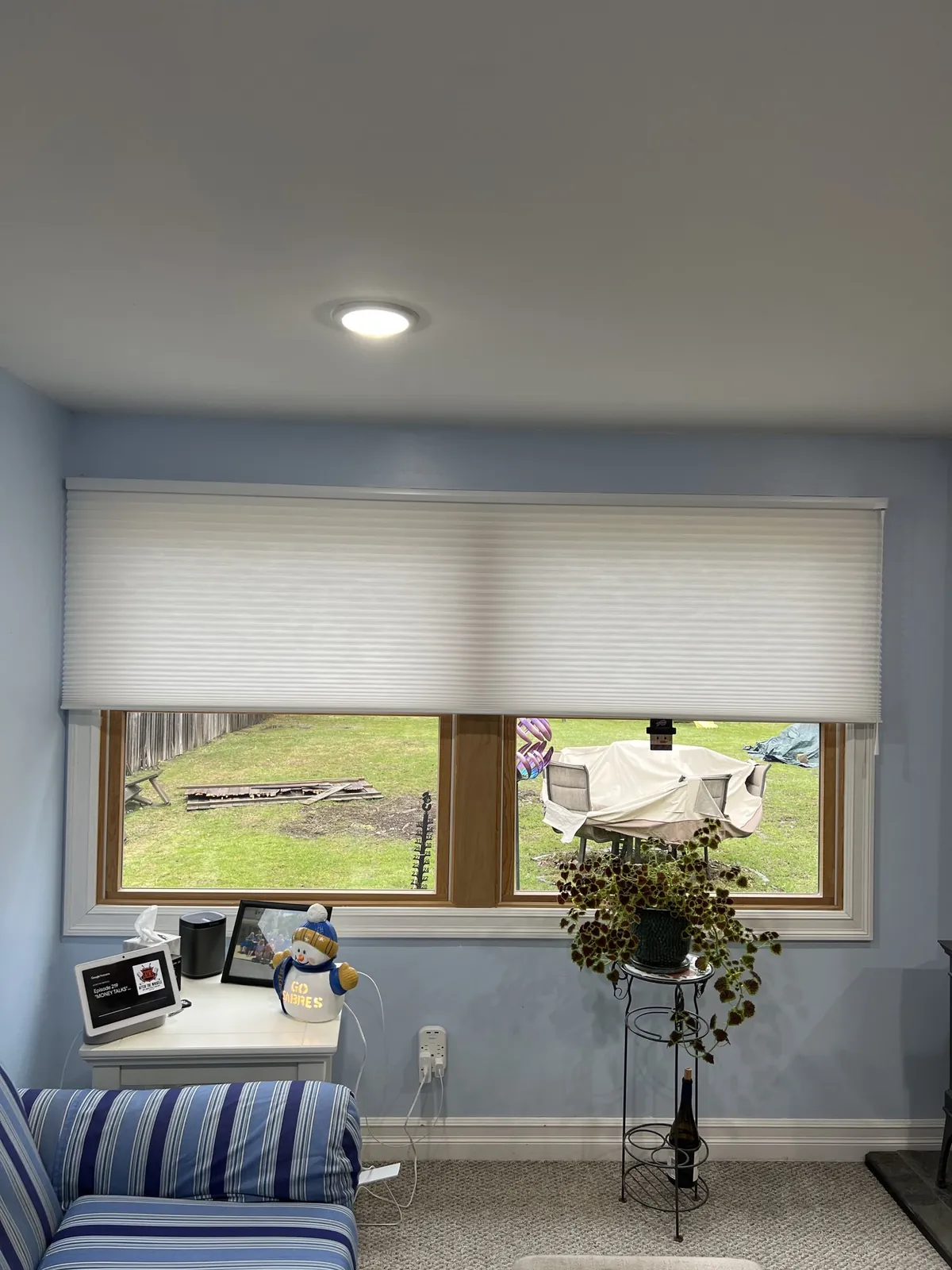
We are a Hunter Douglas Gallery dealer, so nothing in the family is off the table for your house: honeycomb, sheer, roller, Roman, woven and vertical shades; wood, faux wood, metal and vertical blinds; Palm Beach, NewStyle and Heritance shutters; drapery; and PowerView.
The people who hang it are our own installers, certified by Hunter Douglas. A tall company-house frame that has drifted out of square gets brackets set true, every latch and lift is cleared, and each shade, blind or shutter is run up and down before anyone packs up.
There is more about our dealer work on the main Hunter Douglas page, and every line is in the Hunter Douglas online catalog.
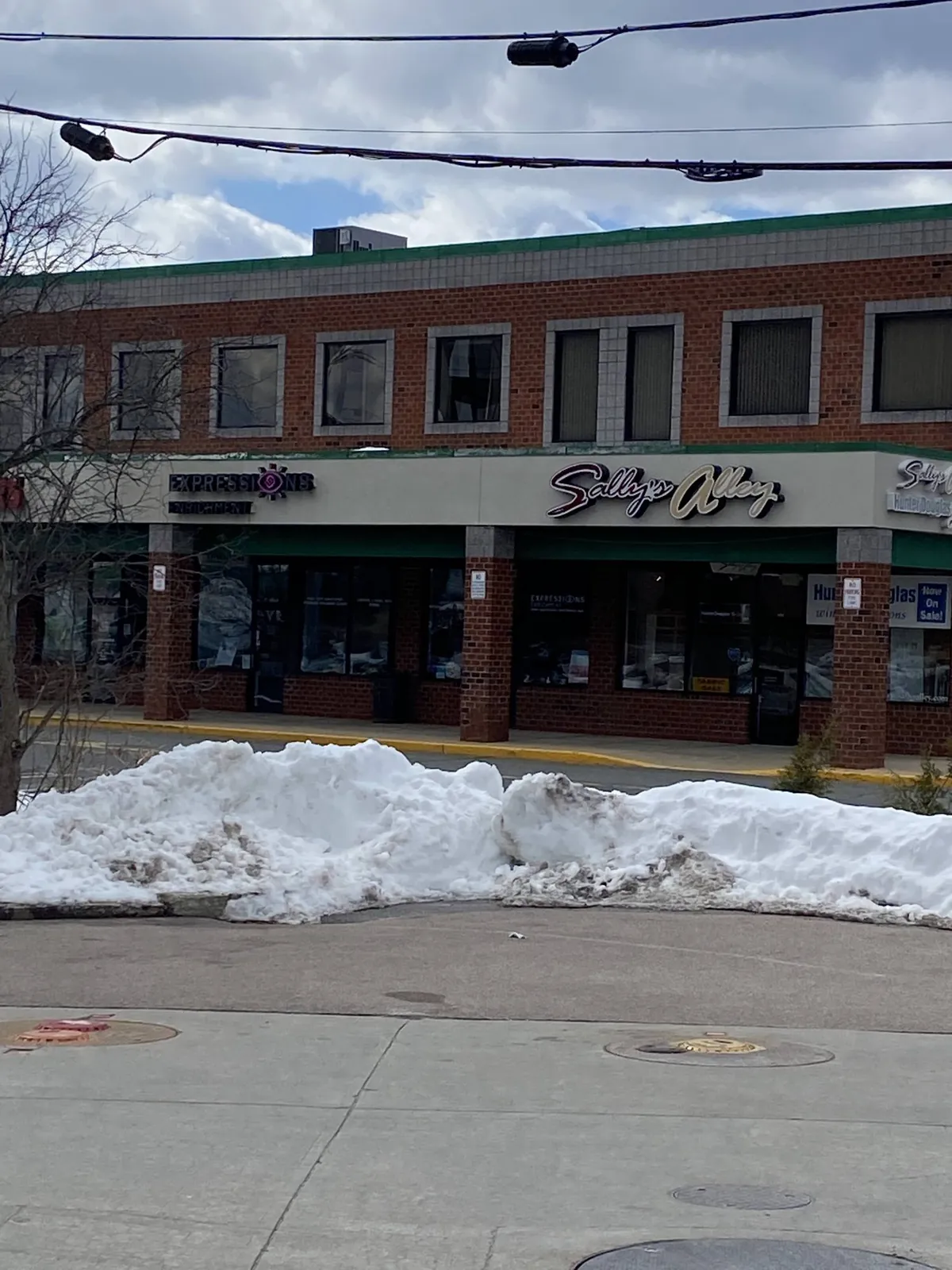
Franklin is the nearest showroom
Of our showrooms, Franklin is the one nearest Northbridge. Drop in if you would like to talk through the house before we bring the van round.
Even so, the final picks are nearly always made at home, against your own tall sash or your own family room glass, with a free estimate left behind once everything is measured.
Find the address and hours on the Franklin showroom page, and everything we do in town on the Northbridge page.
Questions from Northbridge
My front room is close to the sidewalk. How do I keep it private by day?
A light-filtering fabric lets daylight in while blurring the view in. Shutters tilted upward block the sidewalk’s line of sight and keep the sky in view. For evenings, a room-darkening fabric or drapery closes the window.
Will a shade suit the tall, narrow windows in a Whitinsville company house?
Yes. We measure each frame in several places, check its depth and pick a mount and a product that keep the slim shape intact.
What works on the side windows facing the house next door?
A light-filtering honeycomb or shutters, which let light in while blocking the view across the gap. A room-darkening fabric suits a bedroom.
My colonial’s family room gets strong afternoon sun. What helps?
A solar screen or Designer Screen shade cuts glare and keeps the view of the yard. PowerView can lower it on a schedule before the sun arrives.
Does the estimate cost anything?
No, it is free. When you go ahead, our Hunter Douglas certified installers hang the whole order.
Take the first step
Request a consultation with a Hunter Douglas dealer in Northbridge and the van comes to you: samples for each room, a tape on every window from the slimmest company sash to the widest colonial glass, and a free estimate at the end. If a conversation first suits you better, the call button reaches the Franklin showroom, and you are welcome to stop in.