
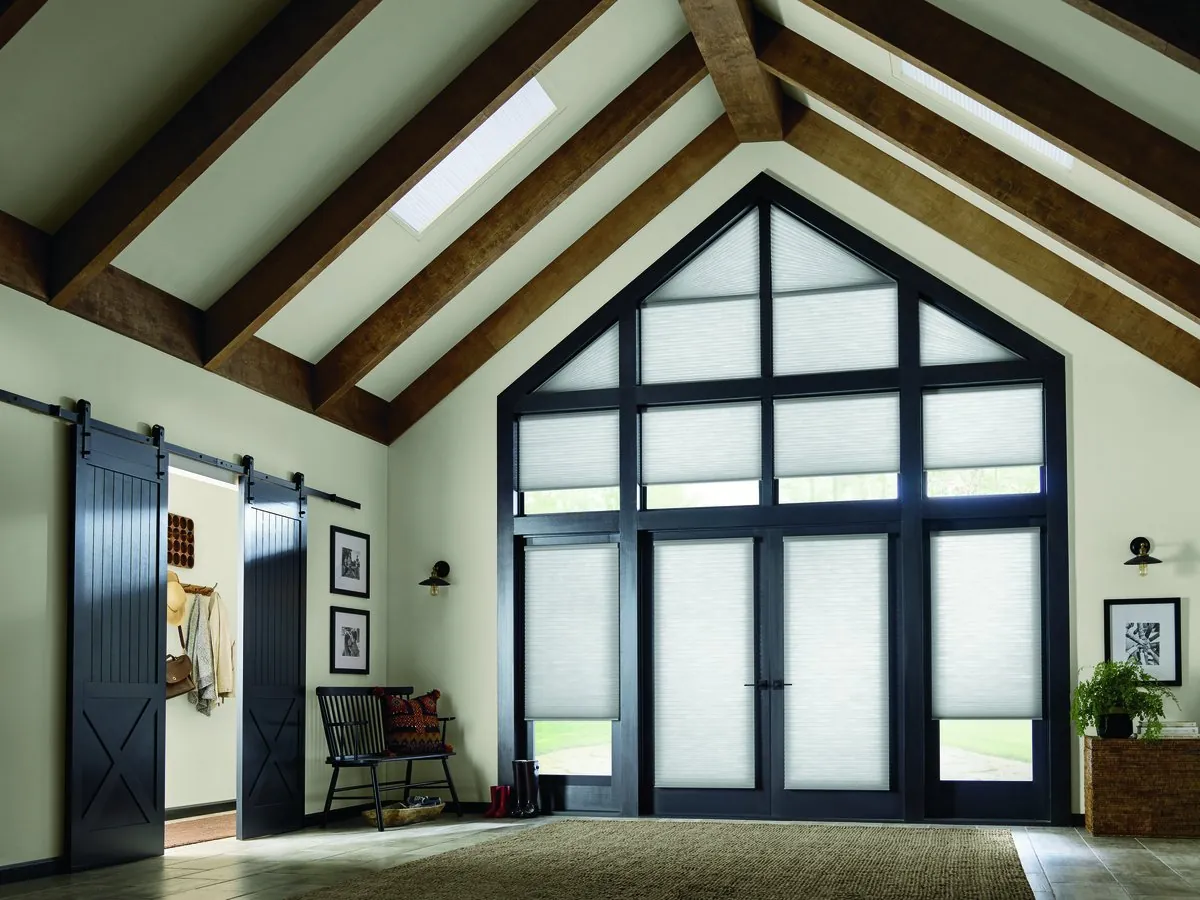
Mill houses, capes and two sizes of window
Millville is a small town, and most of its housing falls into two groups: the older mill houses and the post-war capes, both on modest lots along and around Main Street. The older houses still tend to have their original narrow sash. The newer ones have the standard window sizes that went in after the war. A plan for cellular shades in Millville, MA, usually covers some of each, often within a single street.
Both groups share the same complaint in winter: a room that feels cold near the glass. Narrow old sash are thin and often a little loose in their frames; standard windows in a cape may be newer but still give up heat on a cold night. A honeycomb shade closes that gap with trapped air, a pocket of still air held in each cell between the window and the room.
Modest lots also mean the houses sit reasonably close to the road and to each other, so privacy at the front and sides matters as much as warmth. The right fabric and the right way of opening the shade handle both.
Honeycomb shades in three useful forms
Most Millville houses need some combination of these. We bring each as a sample so you can see how it suits your rooms.
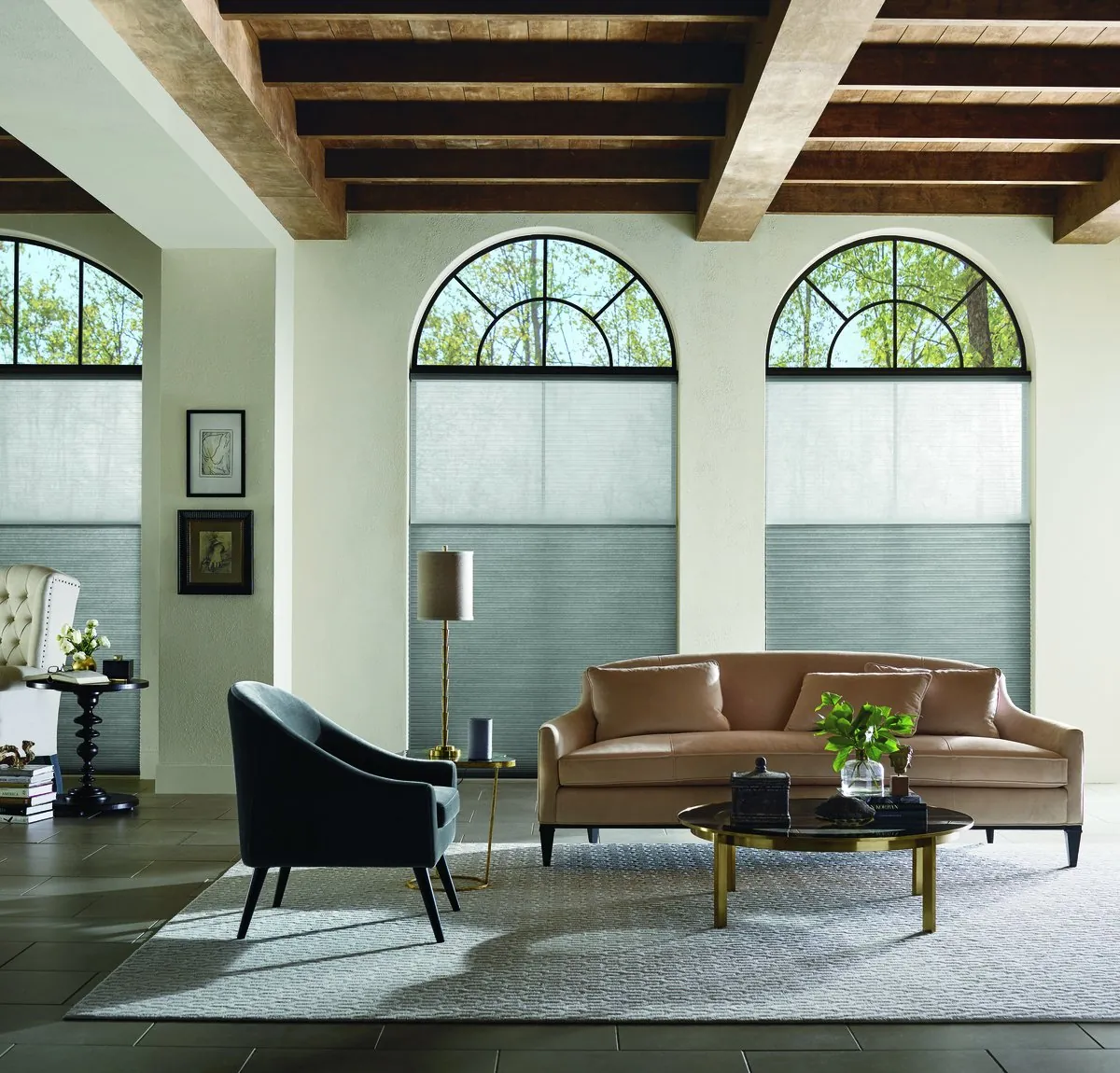
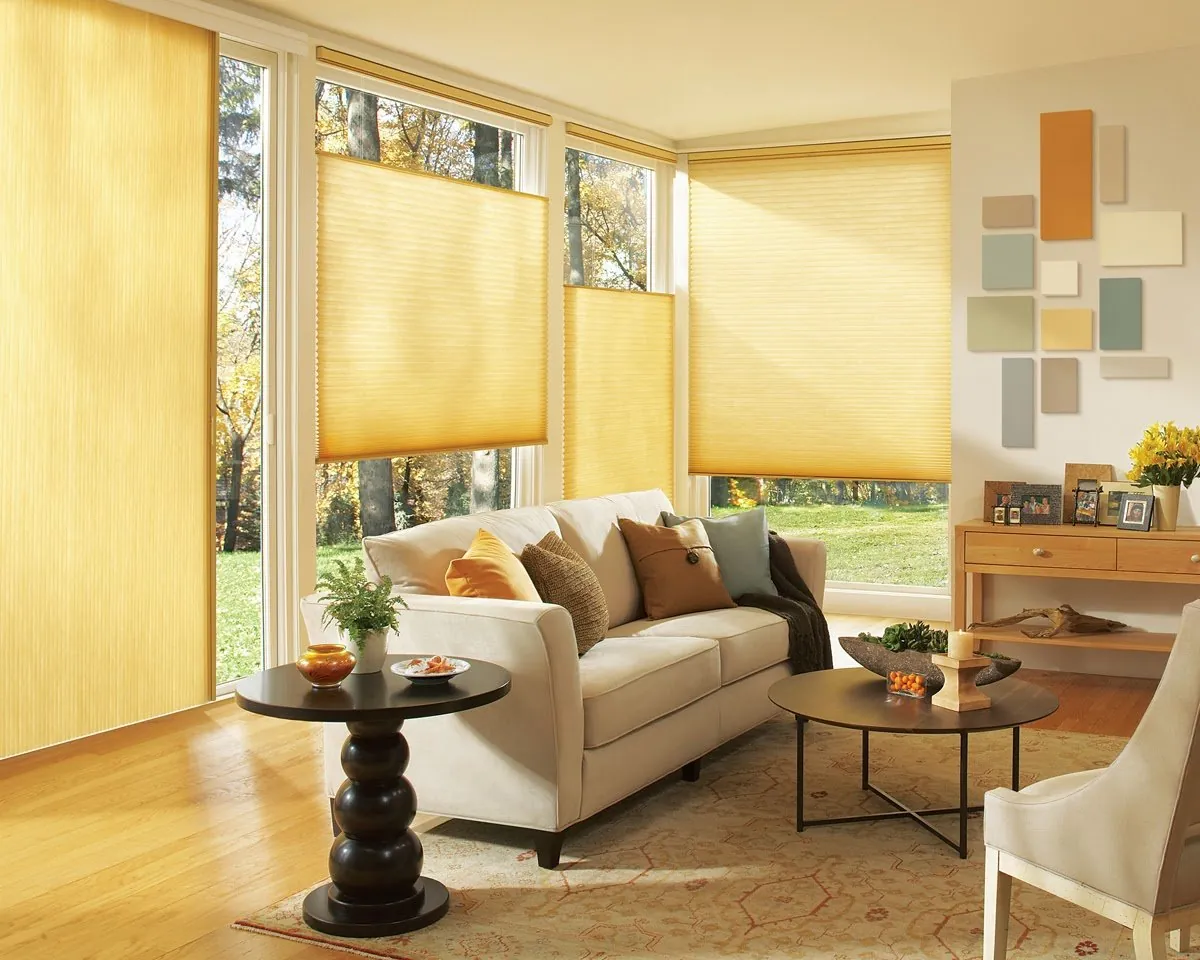
Top-down for Main Street windows
Lower the shade from the top to let in daylight over the heads of passers-by, and keep the bottom of the window covered.
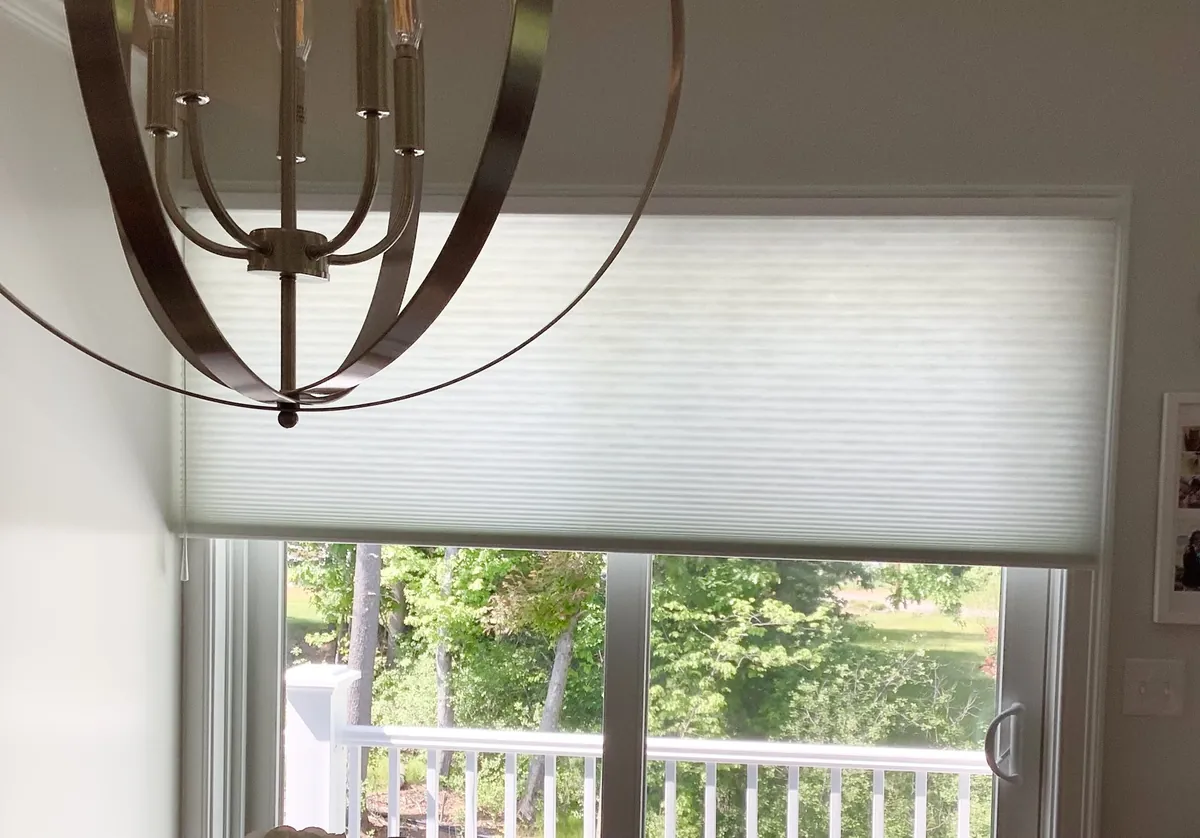
Vertical shades for back doors
Where a cape has had a slider added to the back, a honeycomb shade that draws sideways covers it and stacks at the edge.
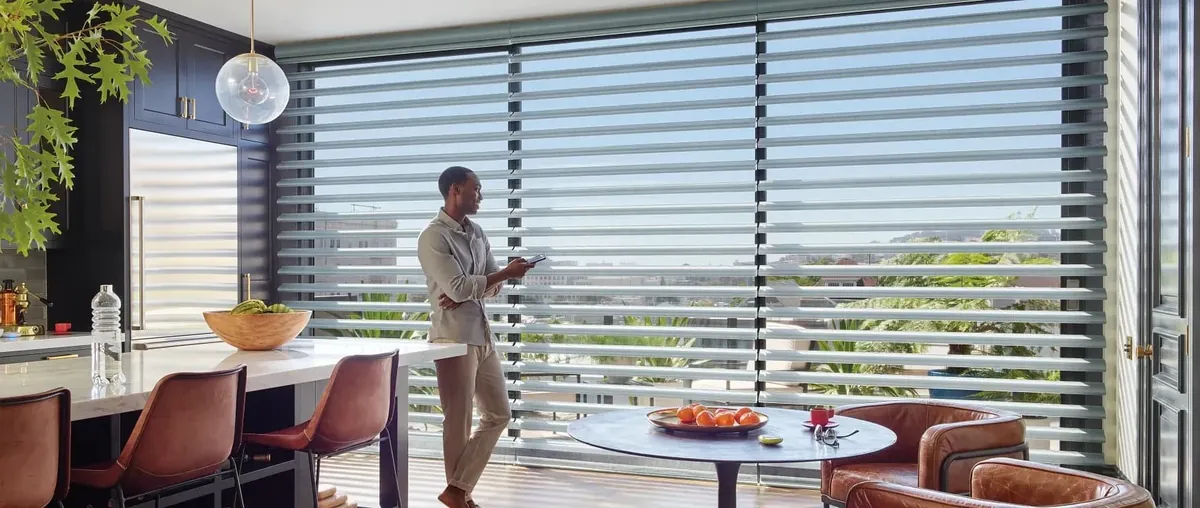
PowerView where reaching is a chore
Motorized shades move from a phone, a remote or a timetable, handy for a window behind the sink or above the stairs.
The older houses and their narrow sash
The mill houses were put up to be practical. Rooms are a sensible size, windows are tall for their width, and the original sash in many of them are still in place, with their stops, beads and counterweights. Those narrow openings give the houses their proportions from the street, and most owners want to keep them.
A narrow window is not hard to fit with a honeycomb shade, but it rewards care. The neatest result is an inside mount, where the headrail sits inside the opening and the shade nearly disappears when raised, leaving the casing on show. For that to work there has to be enough depth at the top of the frame, clear of the stops and any pulley hardware, and the opening has to be close enough to square that the shade does not rub on the way down.
We check both things on every window. Width is read in several places, height on both sides, and depth where the headrail would go. Where an old frame will not take an inside mount cleanly, a slim mount on the face of the casing gives a tidy result and covers the edges of the glass, which also helps with the draughts that creep round old sash.
Post-war capes on modest lots
The capes in town follow the familiar pattern: a central door, a room on each side, a kitchen to the back and bedrooms upstairs under the slope of the roof. Downstairs windows are standard double-hungs, sometimes original to the house and often replaced. Upstairs, the bedrooms have dormers or gable-end windows.
Standard sizes make a cape straightforward to fit. Frames are usually square and deep enough for an inside mount, and the shades can be ordered in one fabric for the whole house. The upstairs rooms are where the honeycomb earns its keep. Bedrooms under the roof run warm in summer and cool in winter, and a shade that slows heat in both directions makes them more comfortable all year.
A room-darkening fabric is a frequent choice for those bedrooms, particularly on the east side. Downstairs, light-filtering fabrics keep the living room and kitchen bright while giving privacy from the street. With the houses on modest lots, that daytime privacy is more useful than it might be on a big rural plot.
Small rooms, slim stacks
Rooms in a mill house or a cape are not large, and in a small room every bit of glass counts. A heavy window treatment that hangs below the head of the window when open, or bunches up at the sides, takes daylight away from a room that has little to spare. A honeycomb shade avoids that because its pleats fold up very tightly. Raised, it gathers into a slim band at the top of the opening, so almost all of a narrow sash stays clear.
The same compactness helps where a window sits close to a corner, beside a kitchen cabinet or just above a radiator. Nothing projects into the room, and an inside-mounted shade sits within the depth of the frame. For a front room facing Main Street with two narrow sash and a door between them, that tidiness makes the room feel larger. It is one of the quieter reasons we suggest cellular shades in Millville, MA, for the smaller houses in town, alongside the warmth they add.
Standard windows in the newer houses
Some of the newer houses in Millville have only standard-size windows, a slider to the back yard and perhaps a larger window in the living room. These are the simplest houses to plan, and they suit a whole-house order in one visit.
Even so, every window is measured. Standard sizes vary a little from one maker to another and from one decade to the next, and a shade made to the exact opening fits better than one made to a nominal size. For a larger living room window we may suggest two shades on one headrail, lifting together. For a slider, a vertical honeycomb shade drawn across and gathered at one side.
When every window in a house takes the same fabric, color and headrail, the house looks finished from the street, which matters on a road like Main Street where the fronts of the houses are close to view.

The honeycomb, explained simply
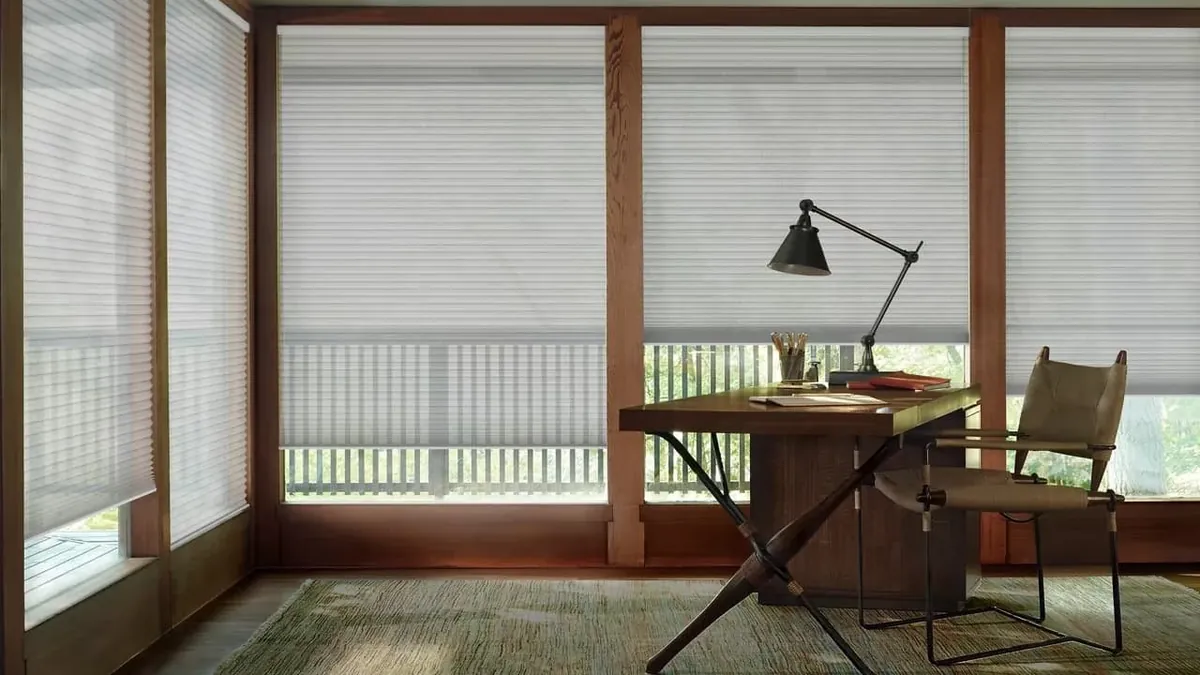
A cellular shade is a stack of fabric tubes. Raised, the tubes fold flat into a slim band at the top of the window. Lowered, they open into a column of hollow cells, each holding air that has nowhere to go. That still air is a poor conductor of heat, so it slows the warmth of the room from reaching the cold glass in winter and slows the sun’s heat from reaching the room in summer.
There are single-cell fabrics, double-cell fabrics with two rows of tubes, and some Duette fabrics with a cell inside a cell. The more layers of trapped air, the more the shade resists heat moving through it. On a thin old sash the difference between a bare window and a lowered honeycomb shade is easy to feel with your hand.
That is why cellular shades in Millville, MA, often go first into the rooms people use most in winter: the living room in the evening, the kitchen in the morning, and the bedrooms at night.
One visit, every window
Most Millville houses are small enough that one visit covers every window, so most customers prefer to start at home. Our vans carry the honeycomb range, which means we bring the showroom to you. A typical visit goes like this.
- Choose a time with Request a Consultation or the call button.
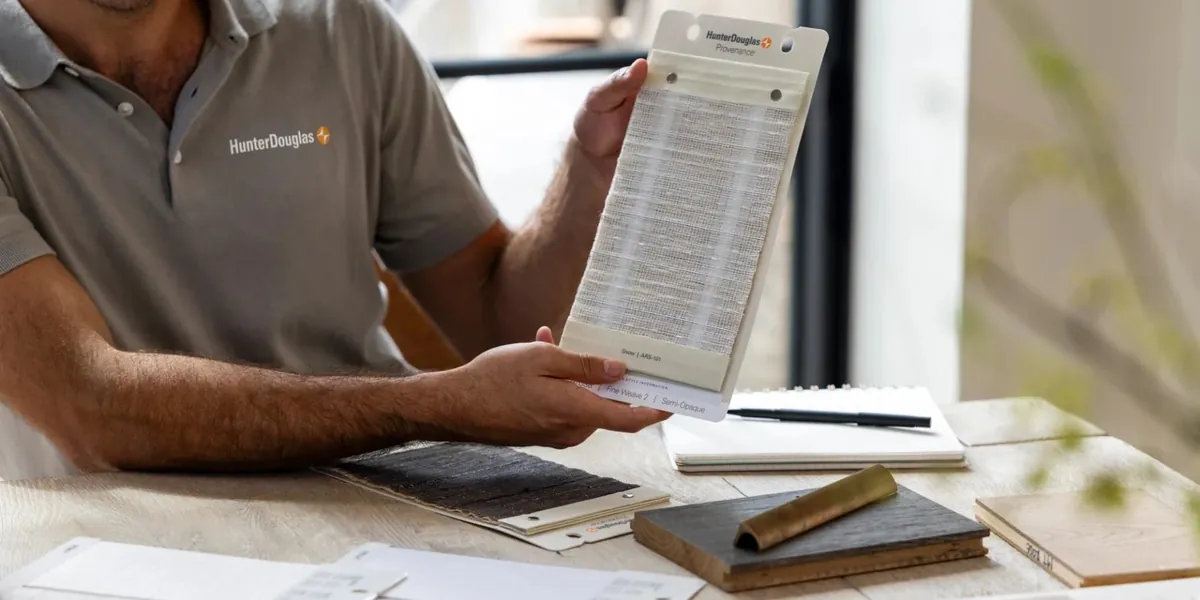
- We arrive with honeycomb samples in many colors, cell types and light levels, from soft light-filtering to full room-darkening.
- You show us round, starting with whichever rooms feel coldest, brightest or most overlooked.
- We hold samples up at each window so you can see how the fabric looks against your own walls and trim and how much light it lets through.
- Every opening is measured, with its depth and any quirks noted.
- You get a free estimate, and you are free to take as long as you like over it.
For more on the visit, see what happens at an in-home consultation. If you are repainting or rearranging at the same time, an interior design consultation can be part of the same appointment.
Light levels, room by room
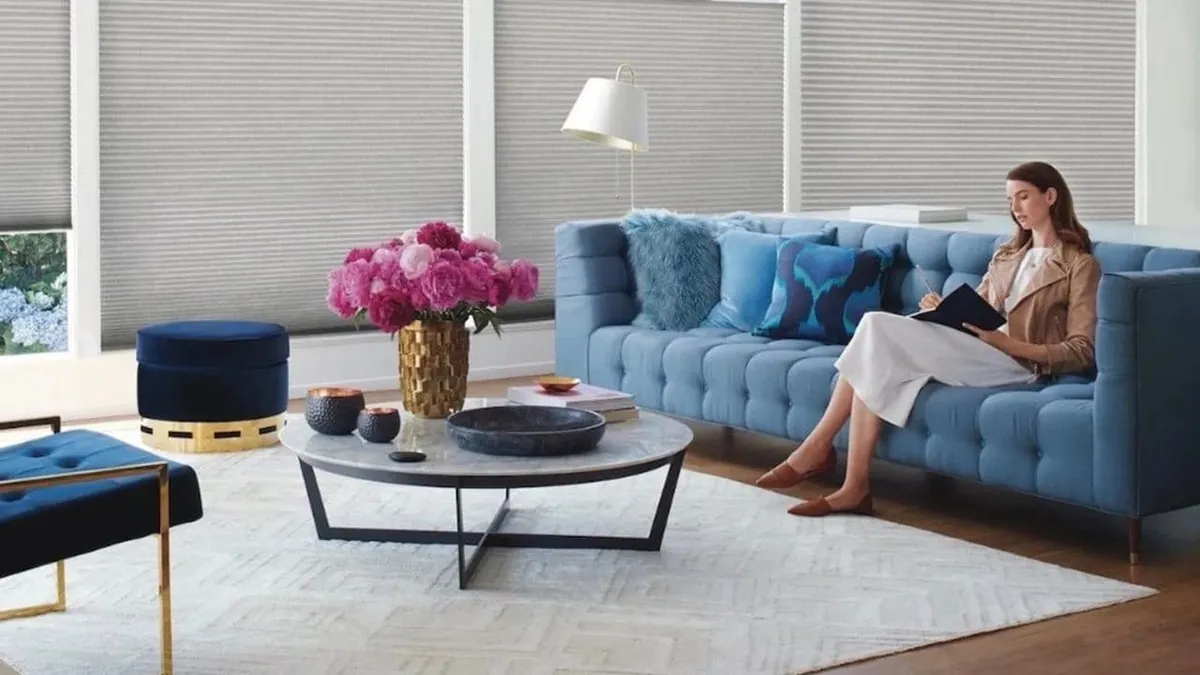
Choosing a honeycomb shade is mostly about choosing how much light you want in each room, and that changes as you move through a house.
In a front living room on Main Street, a light-filtering fabric is usually right. It lets daylight through softly, so the room stays bright, while hiding the inside of the room from the street. After dark, with lamps on, a light-filtering fabric becomes easier to see through, so many people pair it with a top-down, bottom-up lift and lower the top only in the daytime.
Kitchens often take a lighter fabric still, because they are working rooms that need plenty of daylight. Bathrooms want privacy at all hours, so a heavier fabric or a top-down shade that keeps the lower glass covered works well. Bedrooms usually take a room-darkening fabric, and in a cape that applies especially to the dormer rooms that catch the morning sun.
Choosing room by room does not mean the house has to look patchwork. Many honeycomb colors come in both light-filtering and room-darkening versions, so the shades can look the same from the street while doing different jobs inside.
Duette or Applause for a Millville house
Duette and Applause are both Hunter Douglas honeycomb lines, and the air pocket works the same in each. The choice comes down to fabrics, textures, cell builds and lift systems. Duette has the wider range, including very slim widths, double cells and the vertical shade for sliders. Applause has its own palette and suits standard windows like those in a cape very well.
For the narrow sash in a mill house, Duette is usually where we start. For a cape or a newer house with standard windows, Applause often covers most of the house, with Duette for the slider or any odd-shaped window. You can read more on our Duette honeycomb shades and Applause honeycomb shades pages, or start from the cellular shades page.
Cordless, top-down and motorized lifts
A cordless lift is the default for most houses now. There is no cord at the side; you raise or lower the shade by its bottom rail and it stays where you leave it. That keeps a narrow window tidy and removes a hazard in a house with children or pets.
A top-down, bottom-up lift adds a second rail at the top, so you can open the upper part of the window and keep the lower part covered. On a house close to the road it is often the single most useful feature you can choose.
PowerView motorization lets you control shades from a phone, a remote or a schedule, so a window over a sink or at the top of the stairs is no longer a stretch. We plan how each motor is powered at the visit, and how motorized shades are controlled explains the options in plain language.
Doing a house in stages
Not everyone wants to do every window at once. Some start with the coldest room, or the bedroom that faces the street, and add others over time. That works well with honeycomb shades, provided the first order is planned with the rest of the house in mind. We note the fabric, color and headrail you chose, so a later order for the next rooms matches the first. If you know you will want PowerView eventually, we can talk at the first visit about which windows suit it, so the house can be brought together later without changing what is already up.
Ordering cellular shades in Millville, MA, this way also lets you live with the first few shades for a season before choosing light levels for the rest of the house.
Measuring and fitting
Shades made to the exact opening are what make cellular shades in Millville, MA, look built in, and that starts with measuring.
- Width is measured at the top, middle and bottom of each opening; the smallest figure is used for an inside mount.
- Height is measured at both sides and in the middle.
- Depth is checked where the headrail will sit, with any old hardware noted.
- Mount, fabric and lift are agreed with you for every window before ordering.
- Our certified Hunter Douglas installers fit the shades, fixing brackets into wood, levelling each headrail and testing every lift before showing you how they work.
A close fit at each side looks neater and lets less cold air past the edges of the shade.
A Gallery dealer, close to home
Hunter Douglas names only some of its dealers as Gallery dealers, and Blinds & Designs is one of them. Through us you can choose from every Duette and Applause fabric, every lift, the vertical honeycomb shade and PowerView, with advice on which suits each window in your house.
The people who hang your shades hold Hunter Douglas installation certification. And when an older blind somewhere in the house gives up, blind and shade repair is something we welcome.
Beyond honeycomb, the rest of the Hunter Douglas line is on offer too: blinds, shutters, roller shades and romans. See custom blinds in Millville or roman shades in Millville, or everything we offer in town on our Millville page.

Franklin is the nearest showroom
The closest Blinds & Designs location to Millville is the Franklin showroom. It is a good place to start if you want to see honeycomb shades before anyone comes out; photos of your windows help.
For most houses in town, though, the home visit is quicker and more useful. We can see the narrow sash, the dormers and the view from the street in person, and the visit includes measuring and a free estimate.
Questions from Millville
Can you fit the narrow original sash in an old mill house?
Yes. Duette can be made very slim. We check the depth and squareness of each frame, and where an inside mount would not sit cleanly, we mount the shade on the face of the casing instead.
My cape has standard windows downstairs and dormers upstairs. Can they all match?
They can. The same fabric and color can be used throughout, with light-filtering versions downstairs and room-darkening versions in the bedrooms, so the house looks consistent from the street.
Our house is close to Main Street. How do we keep privacy and daylight?
A top-down, bottom-up shade lets you open the top of the window for light while the lower part stays covered. A light-filtering fabric adds daytime privacy while keeping the room bright.
Can you do the whole house in one visit?
In most Millville houses, yes. We measure every window at the consultation and give you one estimate covering the rooms you choose.
Do you charge for the estimate?
No. The estimate is free after we measure. Use Request a Consultation to pick a time.
Getting started
The fabric you choose will live at your windows, so that is where to judge it. Ask for a visit through Request a Consultation: samples come to you, each sash and standard window is measured, and the estimate is yours at no cost. A quick word on the call button works too, or drop in at the Franklin showroom on your way through.