
Canal light and coastal weather
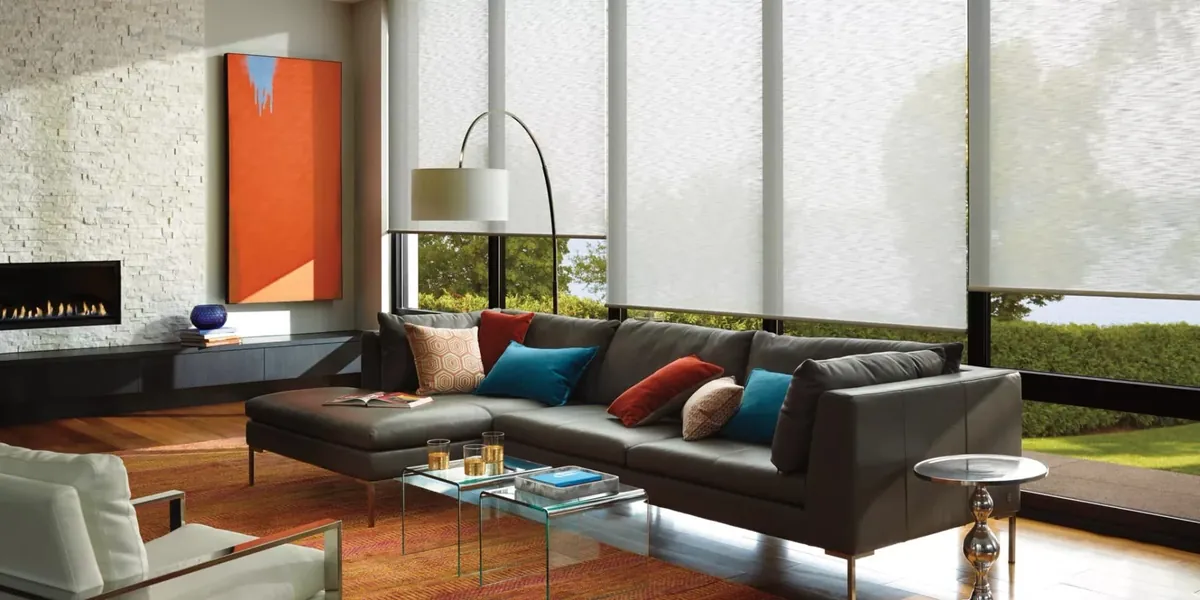
Bourne straddles the Cape Cod Canal, and the rooms that look onto it live with two things at once: a moving view of boats and water, and a harsh, reflected light that comes off that water through much of the day. Add the wind that funnels along the canal, pushing rain against the windward walls, and you have windows that need a covering that is tough as well as good looking. Roller shades in Bourne, MA, fit that brief. A screen fabric knocks back the reflected glare while the canal stays visible, and the shade has so few parts that there is little for the weather to work on.
The town is also home to our Sagamore showroom on Cranberry Highway, so the houses here are familiar ground. The cottages at Monument Beach and Pocasset, many of them enlarged over the years, sit near the shore. Buzzards Bay village has its own close-set housing at the western end of the canal. Inland, newer colonials line the quieter roads, with larger windows and more regular openings.
Each of those calls for a different approach, and we take them one window at a time.
Roller shades in Bourne, MA: where to start
These three come up in almost every Bourne house we visit. Samples of each travel in our vans.
Screens for canal and bay views
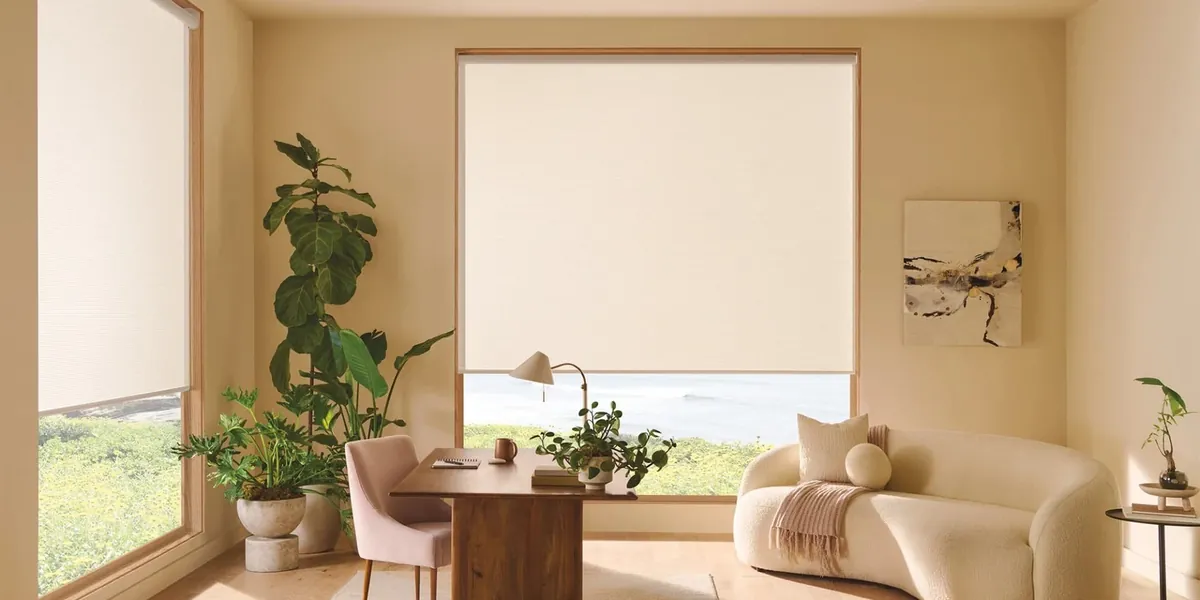
A Designer Screen fabric filters the reflected glare off the water while the boats and the far bank stay in view.
Sonnette for cottage bedrooms
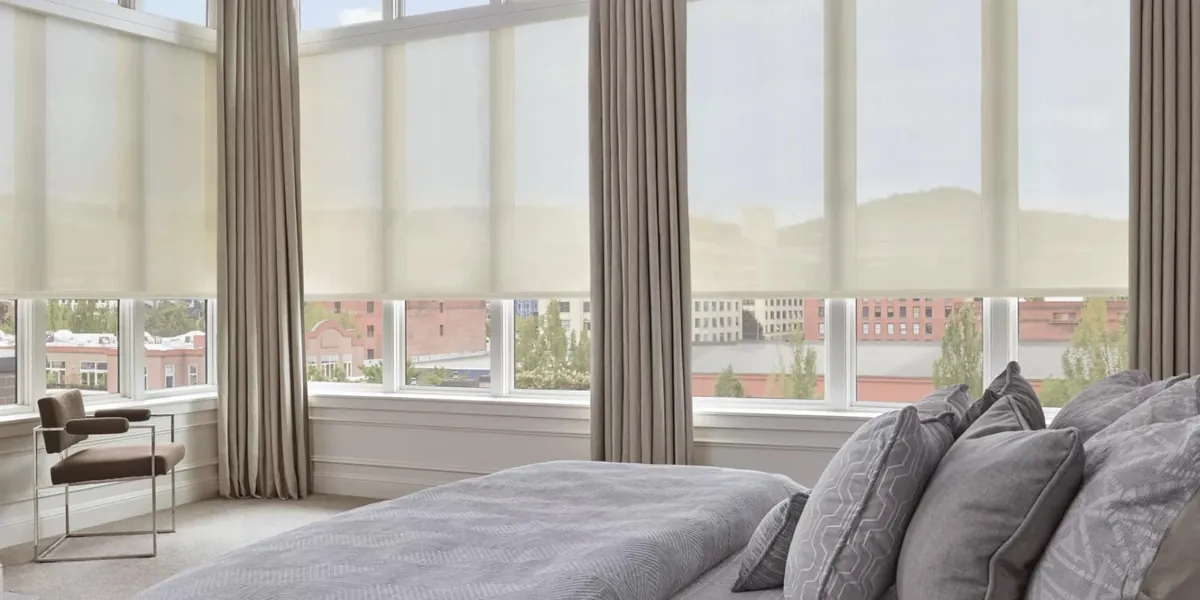
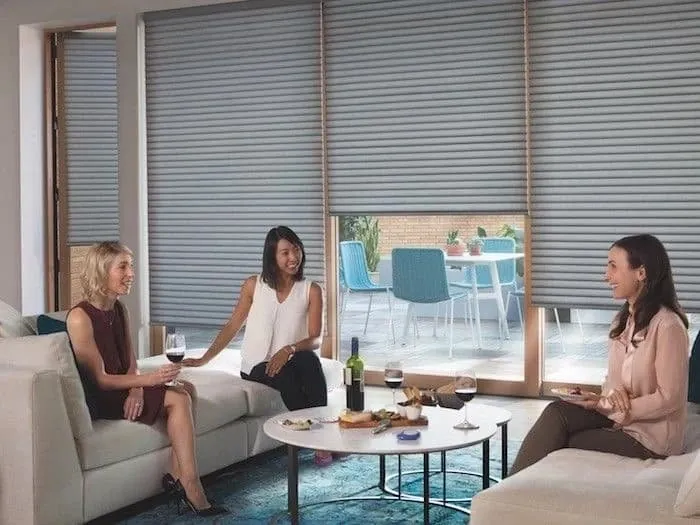
A cellular roller with a softly curved face, a touch warmer looking than a flat fabric and still rolling neatly out of the way.
Patterned and Alustra fabrics
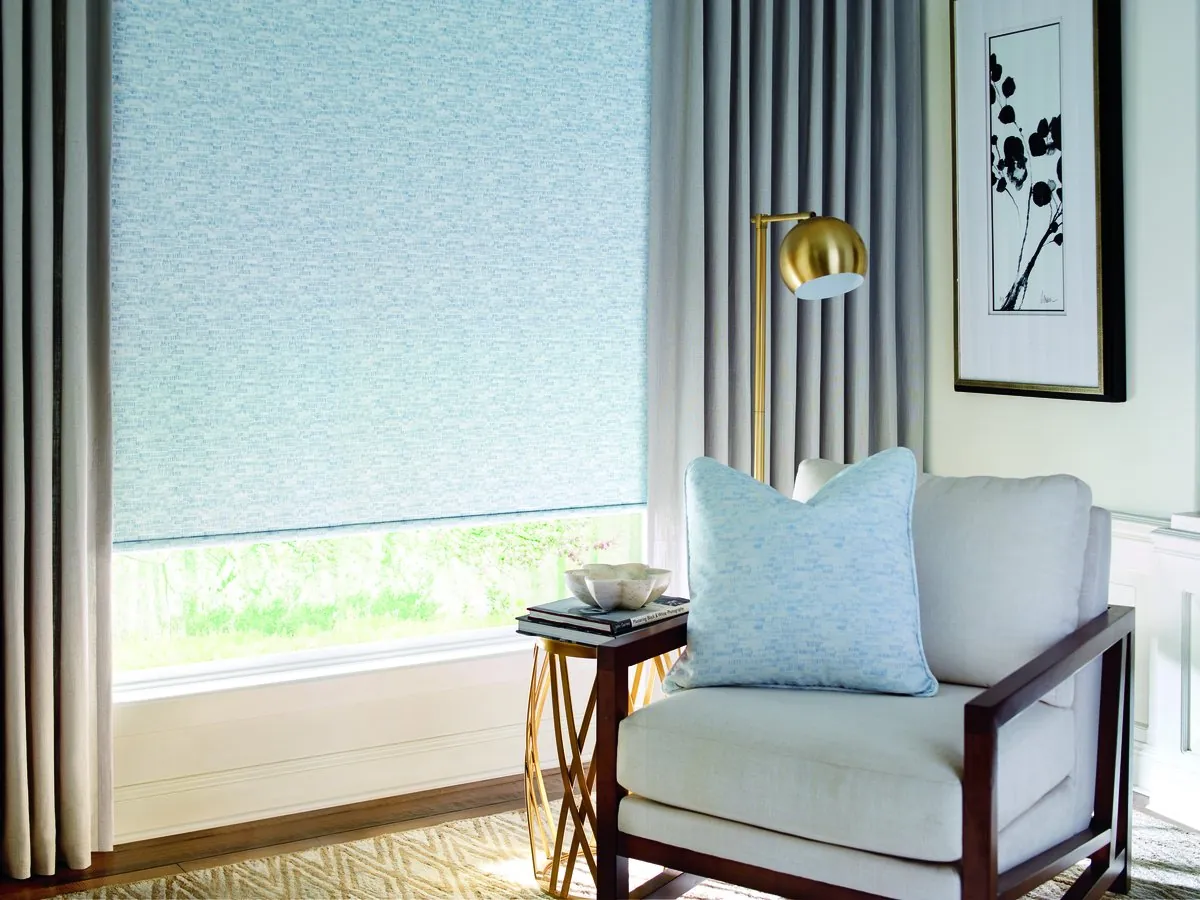
For a living room or a dining room in one of the inland colonials, a fabric with pattern or texture turns the shade into part of the decor.
Why water makes glare worse
Sunlight that reaches a window directly is one thing. Sunlight that has bounced off the canal or the bay is another. Water acts like a mirror, so a room facing it can get hit twice, from the sky and from below, and the reflected light comes in at a low angle that slips under a roof overhang and across the floor. On a bright day a canal-side living room can be uncomfortable to sit in even when the sun is behind the house.
That is the job a solar screen does best. The fabric is a fine open weave, and the amount of open space in it, which Hunter Douglas calls the openness, sets the balance between view and protection. A screen with less open area takes out more of the glare and heat; one with more keeps the view sharper and the room brighter. Darker screens are the easiest to see through, since they do not light up in the sun, while pale ones send more heat back out through the glass but turn milky when the light is strong.
For a room where the canal is the whole point, a darker screen in a middle weave is a good place to begin. We bring several so you can compare them at your own window, ideally at the time of day the glare is worst. The guide on choosing fabric for a sunny room goes into the choices in more detail.
Monument Beach and Pocasset cottages
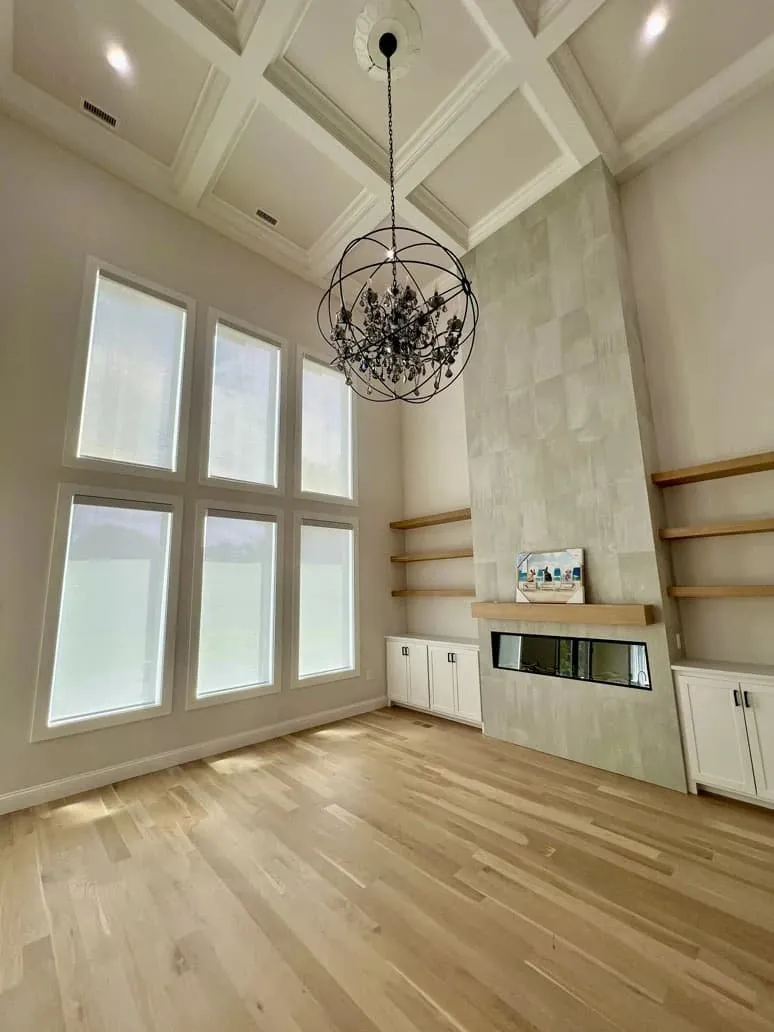
The shore cottages in Monument Beach and Pocasset started small, and many have been added to bit by bit: a dormer here, a porch closed in there, a new room on the back with bigger glass. The result is a house where no two windows quite match. An original front window may be small and close to the road, the enclosed porch may be almost all glass, and the addition may have a slider facing the water.
Roller shades are forgiving in a house like that. Each one is made to its own opening, so a run of mismatched windows still ends up with shades that look like a set when they are lowered to the same line. The fabric facing out can be the same on every window even where the rooms need different light.
Enclosed porches deserve special thought. They take sun on three sides, they heat up fast, and they are often used as the main sitting room in summer. Screen rollers on each panel of glass let you shade the side the sun is on while keeping the others open. Where the porch has a low ceiling or the glass runs right up to a beam, the shade may mount on the face of the beam instead of inside the frame.
In the original part of a cottage, the windows are often shallow and sometimes not quite square. We check the depth and measure each opening at several points before suggesting an inside or an outside mount.
Wind, weather and what stays outside the glass
The canal acts like a wind tunnel, and the rooms that face it take wind-driven rain and spray more than most. Windows on that side tend to stay shut in rough weather, but they are opened wide on a still summer day, and anything at the window has to cope with both.
A roller shade has very little to go wrong. There are no slats to rattle, no ladder tapes and no tilt gear. On a door to a deck, hold-down brackets at the bottom keep the shade from swinging when the door opens. A cordless lift leaves nothing dangling at the side of an open window. If you choose a continuous cord loop for a large shade, it is clipped to a tensioner on the frame so the breeze cannot catch it.
Every bracket is screwed into solid framing by our certified Hunter Douglas installers. On a windward wall, where a window is opened and closed all summer, that is what keeps a shade level for the long run.
Village houses at the canal’s western end
Within Bourne, the village of Buzzards Bay has a character of its own: older houses set close together near Main Street, cottages that have been converted, and flats above the shops. Windows there are often small and face a neighbor across a short gap, so privacy is the first thing a shade has to deliver. A light filtering roller does that without making a small room dark, and a compact headrail suits the narrow openings. Because roller shades in Bourne, MA, cover such different houses, from the village to the shore to the inland roads, we never assume one fabric or one mount will suit them all.
The newer colonials inland
Away from the water, the newer colonials on the inland roads are a different kind of house. The windows are regular, square and usually deep enough for an inside mount. There are often a lot of them: a front elevation with a row of double-hung windows on both floors, a family room with a wide window or a slider, a primary bedroom with a pair of windows.
Here the roller shade is less about weather and more about light and privacy. A light filtering fabric is the usual choice for living spaces, keeping rooms bright while blurring the view in from the road. Bedrooms often take room-darkening or blackout fabric. Because the windows are consistent, the house can carry one fabric color across the whole front for a calm, even look.
Larger family room windows and sliders in these houses suit a wide roller, or two shades sharing one bracket that move together. A cassette headrail, which encloses the rolled fabric in a neat box, gives a finished look on a window without a deep top casing.
Bedrooms and the sliver of light at the edges
Every roller mounted inside a window frame leaves a narrow strip of light down each side, between the fabric edge and the jamb. In a living room it does not matter. In a bedroom that catches early sun off the bay, or sits across from a neighbor’s floodlight, it can be noticeable.
There are three ways to deal with it. Mount the shade outside the frame so it overlaps the trim on both sides. Choose a cassette headrail that closes off the top. Or pair a blackout roller with side panels of drapery that cover the edges and soften the room. For a bedroom with a water view you would rather not lose, a dual shade puts a screen and a blackout fabric on a single bracket, so the screen comes down by day and the solid fabric at night.
How the house looks from the road
Shades are seen from outside as well as in. On a colonial with a symmetrical front, or a cottage close to the road, a mix of white, gray and patterned backs in the windows looks untidy from the street, even when each room is right on its own. Most roller fabrics have a back that is lighter or plainer than the face, and many can be chosen so the outward side matches across the house.
When we plan roller shades in Bourne, MA, for a whole front elevation, we look at the house from the road as well as from inside. A light, neutral outward color is usually the safest choice, and it also reflects a little more summer heat back through the glass. Inside, each room can still have the face fabric, color and opacity it needs, from a bright screen in the kitchen to blackout in the bedrooms. Bottom bars and headrails can be matched too, so the hem of every shade lines up when they are lowered to the same height.
Your consultation at home
Choosing at home is the best way to see how a fabric behaves in Bourne light, which can be very different from one side of a house to the other. Our vans carry samples, so we bring the showroom to you.
At the visit we go through the house with you, starting with the rooms that are hardest to live in: the canal-side room that is too bright, the bedroom that never gets dark, the porch that overheats. You hold roller, screen and blackout fabrics at your own windows, and we talk about how each room is used. Then we measure every window, check the depth and any hardware that affects the mount, and explain the lift choices. You receive a free estimate and take the time you need to decide.
A few things make the visit more useful:
- Think about which rooms bother you most, and at what time of day.
- Note any windows that are hard to reach or that you open often.
- If you have fabrics, paint colors or furniture you want to match, have them handy.
Our in-home consultations page has more, and if you would like help with color and fabric across a whole room, ask about interior design consultations at the same visit.
PowerView for windows you cannot reach
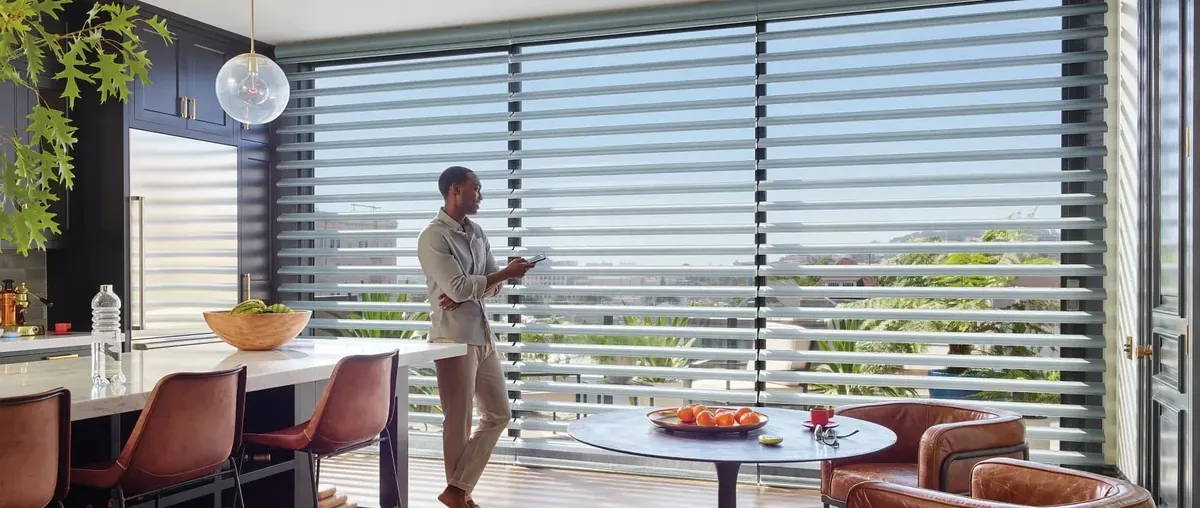
Several kinds of Bourne window are awkward to reach: the high glass above a slider in a newer house, a gable window in a cottage loft, the top of a tall stair window. PowerView solves that with a motor inside the roller tube. You move the shade with a remote, from the app on your phone, or on a schedule you set.
Schedules are especially useful on the canal side. You can have the screens come down when the reflected glare is worst and go up again in the evening, whether or not anyone is home. If the house is closed for a while, the shades can still move each day so rooms are shaded from strong sun. We explain how each motor is powered and where any power connection sits, and you can read more on how motorized shades are controlled.
Designer and Alustra side by side
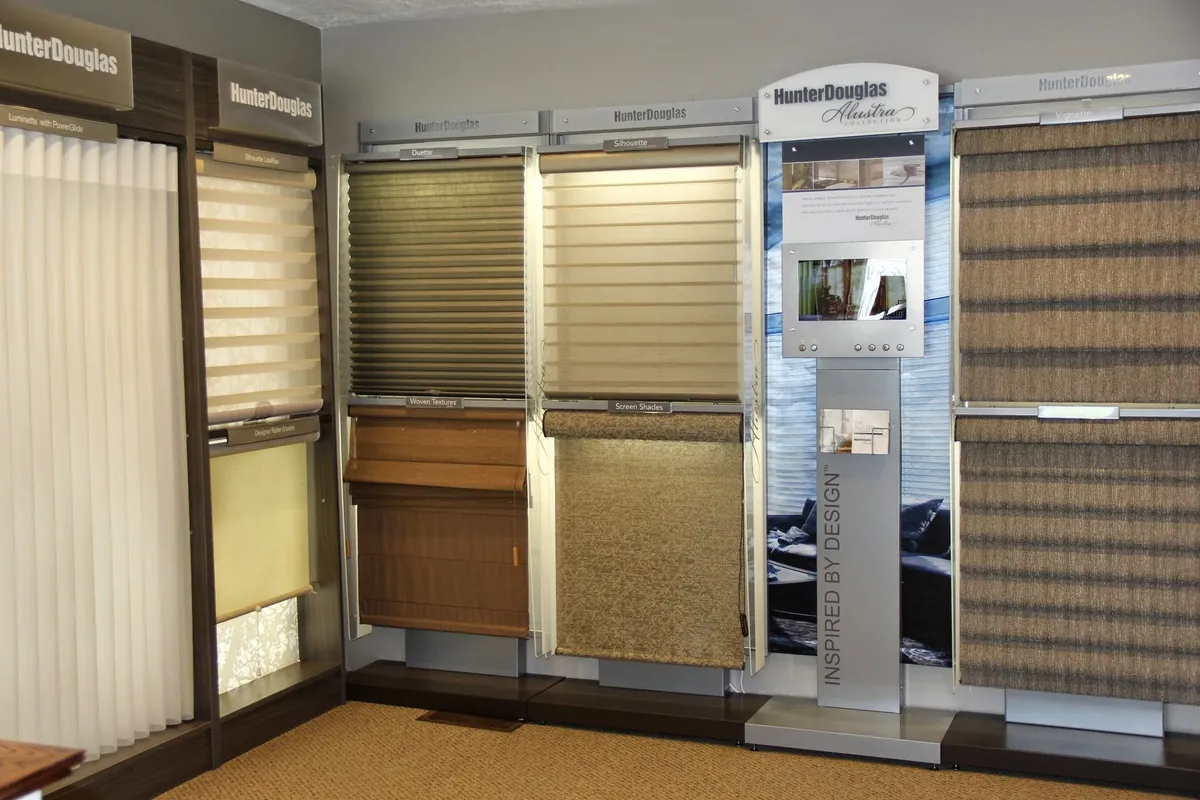
Hunter Douglas makes two main roller collections, and roller shades in Bourne, MA, often mix them. Designer is the wide range: a very broad choice of looks across light filtering, blackout and screen fabrics, with every lift and PowerView. Alustra is the upper tier, offering more unusual fabrics and woven textures and a cleaner finish to the headrail and hem, for the rooms where the shade is seen as much as used.
A typical whole-house order might put an Alustra fabric in the canal-side living room and Designer through the bedrooms, kitchen and baths. See Designer Roller for the everyday range, or the main roller shades page for the whole family.
From order to installation
Once you have chosen, the shades are made to the measurements we took. When they are ready, a certified Hunter Douglas installer returns to fit them.
- Each shade is checked against the window it belongs to.
- Brackets are fixed into solid framing and levelled.
- Shades that share a bracket are aligned so their hems line up.
- Every shade is run up and down, and motorized ones are paired with the remote or the app.
- You are shown how to use each lift and any schedules are set.
Our page on what happens on installation day explains it further.
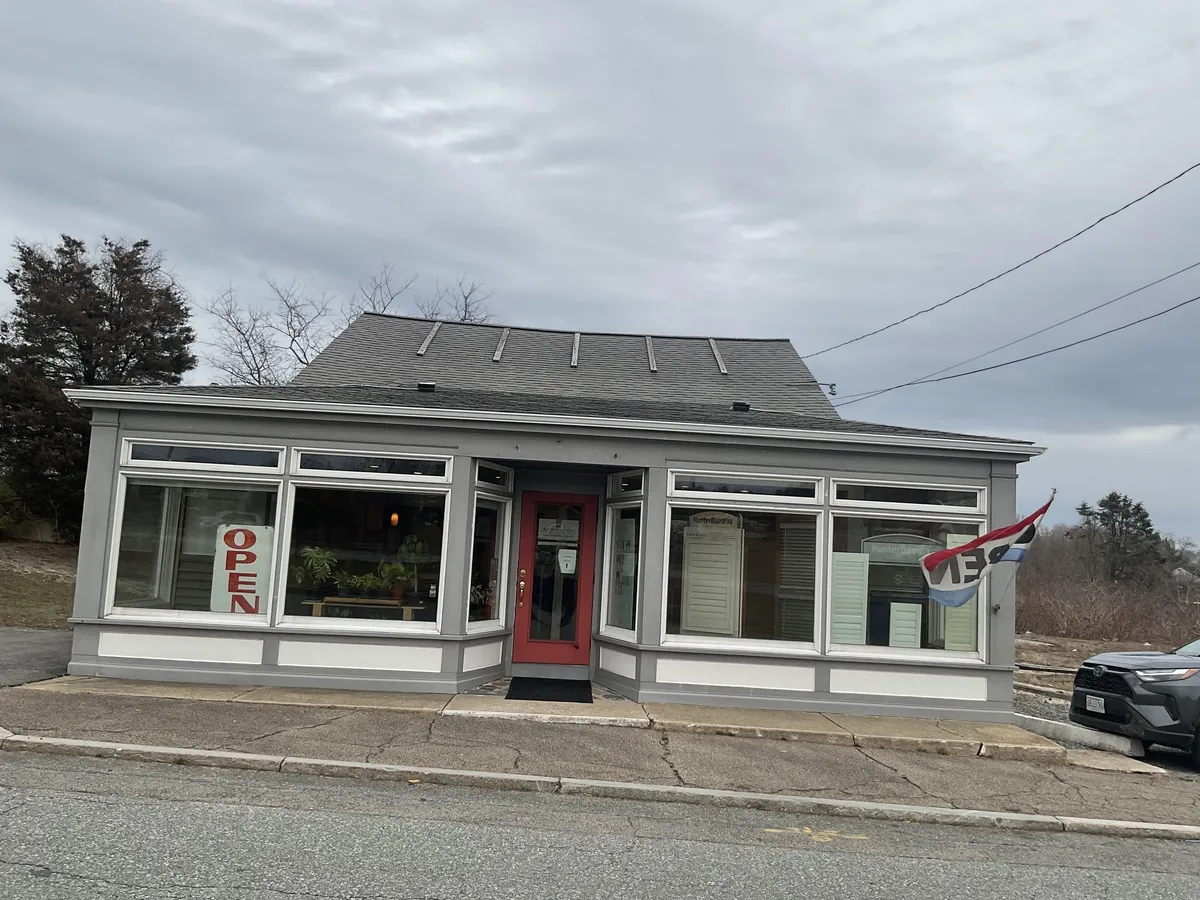
Our Sagamore showroom
Bourne is the home of our Sagamore showroom, on Cranberry Highway in Sagamore. If you would like to see roller and screen shades working before we visit, it is the closest place to do it, and an in-home consultation can follow.
Blinds & Designs is a Hunter Douglas Gallery dealer, a standing Hunter Douglas gives only some of its dealers, and our installers are certified by Hunter Douglas. We also take care of blind and shade repairs.
For other rooms, see cellular shades in Bourne for the draughtier windows or roman shades in Bourne for a softer look, and everything we offer on the Bourne page. Buzzards Bay village has its own page for roller shades in Buzzards Bay.
Questions from Bourne
What helps with glare off the canal?
A solar screen roller. It filters the reflected light while you keep the view of the water. Darker screens with a medium weave are a good starting point, and we bring several to compare at your window.
Will roller shades work in a cottage with mismatched windows?
Yes. Each shade is made to its own opening, so different sizes still look like a set when lowered to the same height, and the fabric facing out can match throughout.
How do I stop a shade swinging on a door to the deck?
Hold-down brackets at the bottom of the door keep the shade flat against the glass when the door is opened.
Can I see the shades before you come to my house?
Yes. Our Sagamore showroom is in Bourne, and you can look at working shades there before booking an in-home consultation.
Is there a charge for the estimate?
No. Estimates are free. After we visit and measure, you get a free estimate for the shades you are considering.
Where to go from here
The best test of a roller or screen fabric is your own window at the brightest time of day. Request a consultation and we will come to you with samples, measure, and leave a free estimate, or stop in at the Sagamore showroom to see working shades first.