
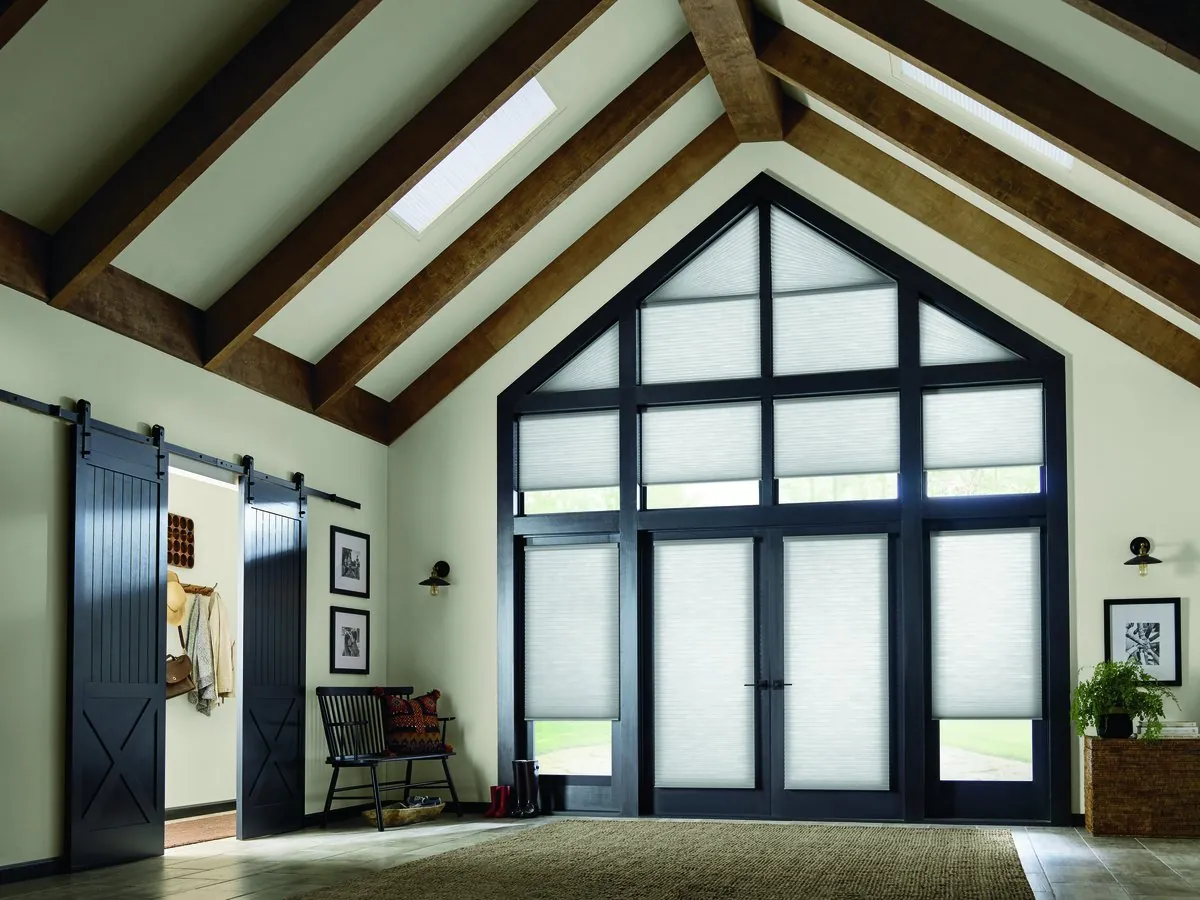
Formal rooms with a lot of glass
Around Milton Village and up against the Blue Hills, the houses are large: colonials and Victorians whose tall sash rises toward high ceilings, and a run of formal rooms across the front. Double-width openings are common, and many rooms are drapery-scale, big enough that a window covering becomes part of the architecture. Lower down, in the lower village, the houses are post-war and the windows simpler. Across all of them, the question we hear most is how to keep generous rooms warm without losing the light, and that is where cellular shades in Milton, MA, earn their place.
A honeycomb shade does it with air. Its fabric folds into a row of sealed pockets, and lowered over the window those pockets trap a calm layer of air against the pane. In a formal parlor with tall windows on two walls, that layer is the difference between a room you use in winter and a room you walk through quickly.
The scale of the rooms changes how we plan. A shade on a tall, wide window is seen from across a big room and from the street, so the fabric, the way the shades line up and how they sit beside any drapery count for just as much as comfort.
Honeycomb choices for large Milton rooms
Most plans for cellular shades in Milton, MA, draw on four arrangements we come back to again and again in Milton’s colonials, Victorians and post-war houses. Every one is made to measure, and the van carries a sample of each.
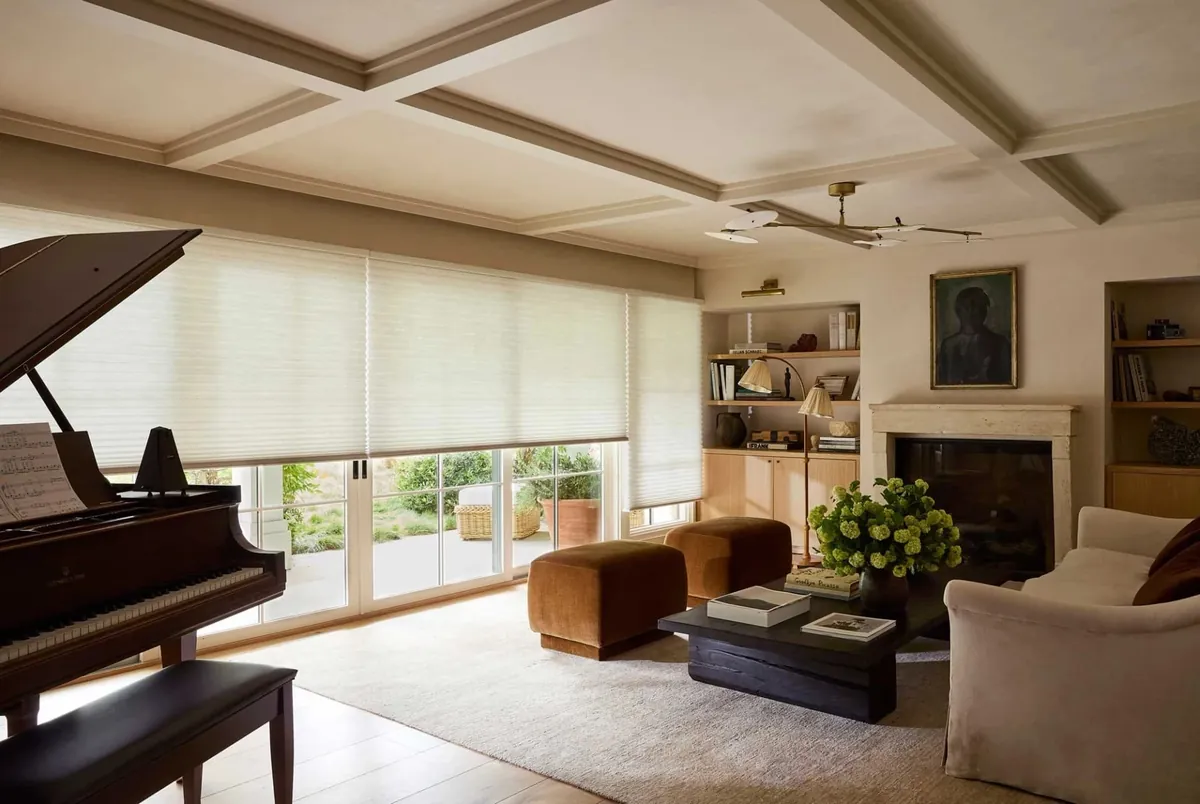
Wide double openings
Two windows framed as one, or a wide opening onto a porch, covered by matching shades that line up exactly across the width.
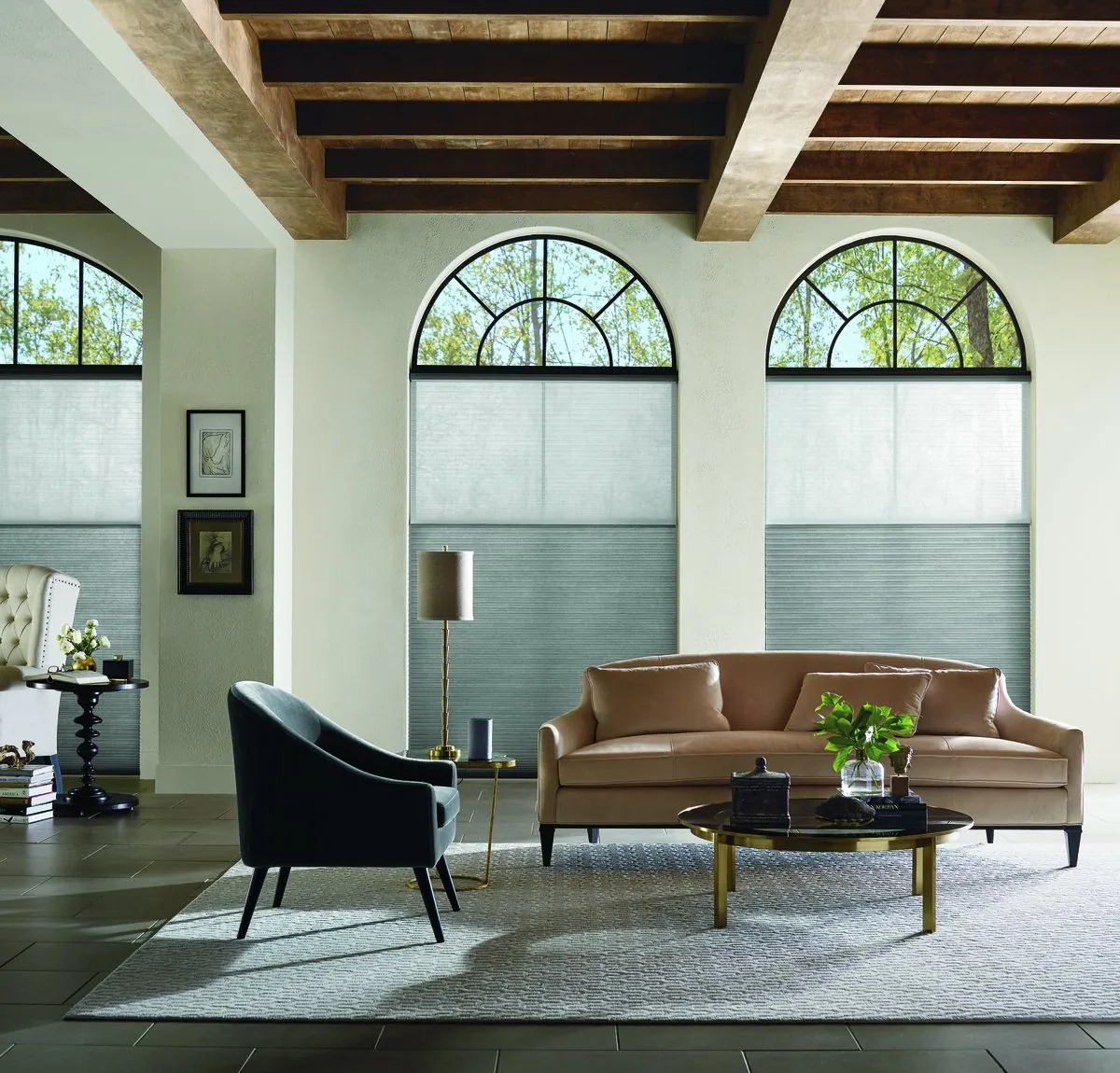
Tall sash with shaped tops
Rectangular shades fitted to the lower part of a towering Victorian window, with any arched top left open to keep the shape of the window.
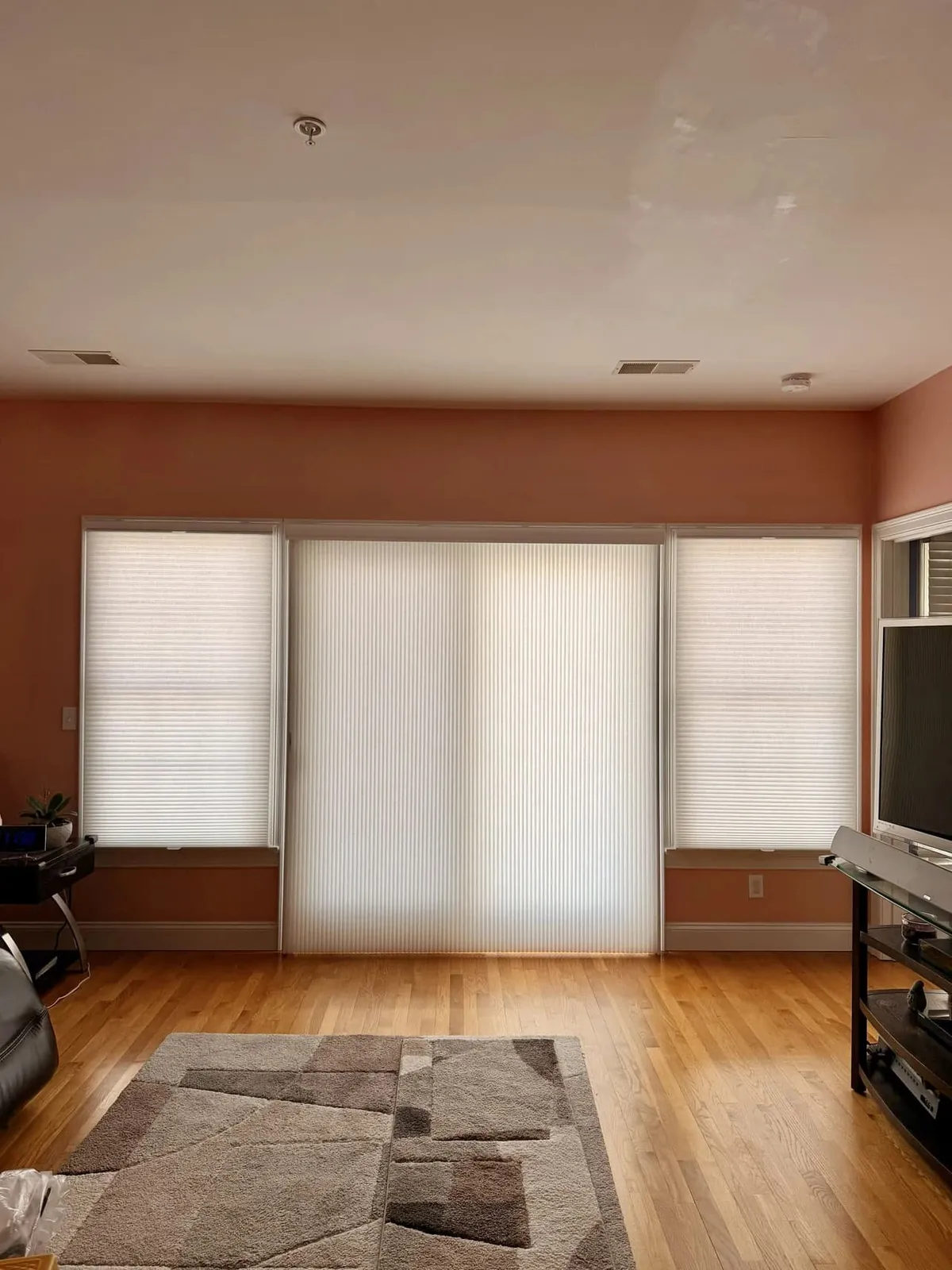
Family rooms and back doors
The everyday rooms behind the formal front of a large house, often with doors to a terrace, covered in one fabric so the room reads as a whole.
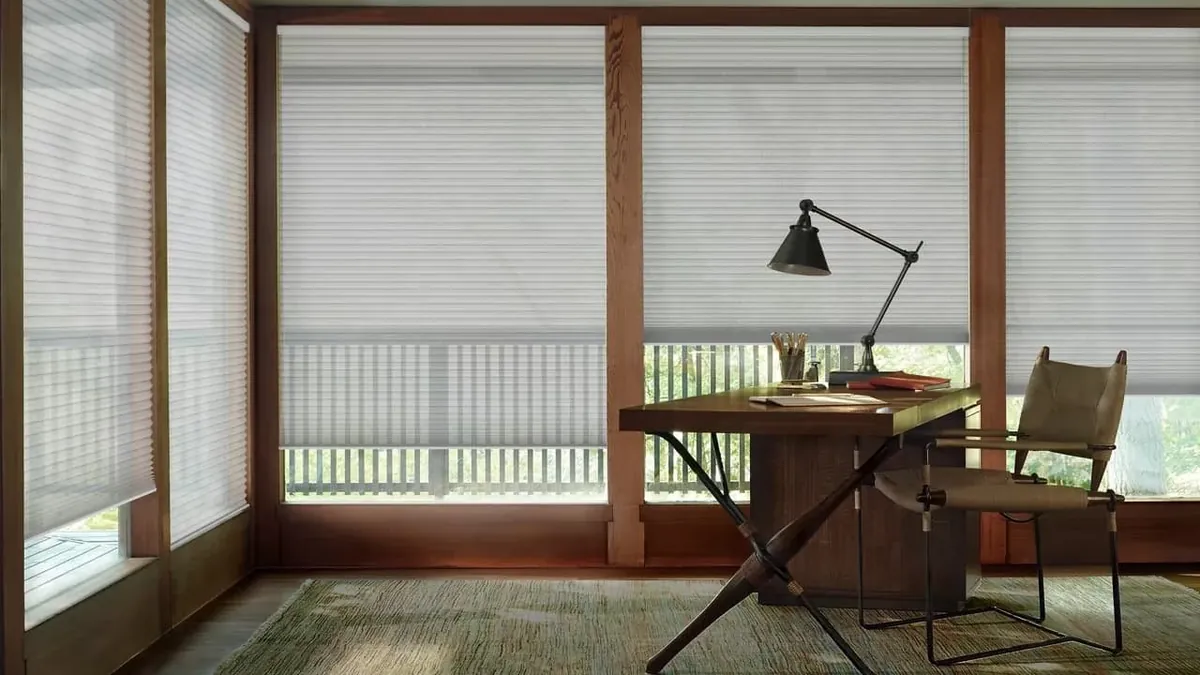
Duette honeycomb shades
The broader of the two Hunter Douglas honeycomb collections, which we usually show first in a formal Milton room seen by every guest.
Drapery-scale rooms and the shade underneath
Many of Milton’s formal rooms were made for heavy curtains: high ceilings, tall windows, and enough wall either side of the glass for panels to stack back. Some houses still have drapery; others have had it taken down and left the windows bare. Either way, a honeycomb shade fits into the picture well.
Where drapery stays, the shade does the daily work. It sits inside the window frame, raised out of sight most of the day and lowered in the evening to hold the warmth in, while the curtains stay as a frame for the window and are drawn only when you want them. The two layers together make a formal room feel finished and comfortable at the same time.
Where the windows are bare, the honeycomb shade is the whole treatment, and it needs to look right on its own. In a large room that usually means a fabric with some texture and a color that sits easily with the walls and the woodwork. Samples go up against the woodwork so the decision is made in the room itself. If the whole room needs rethinking, drapery included, our interior design consultations cover that too.
Double-width openings
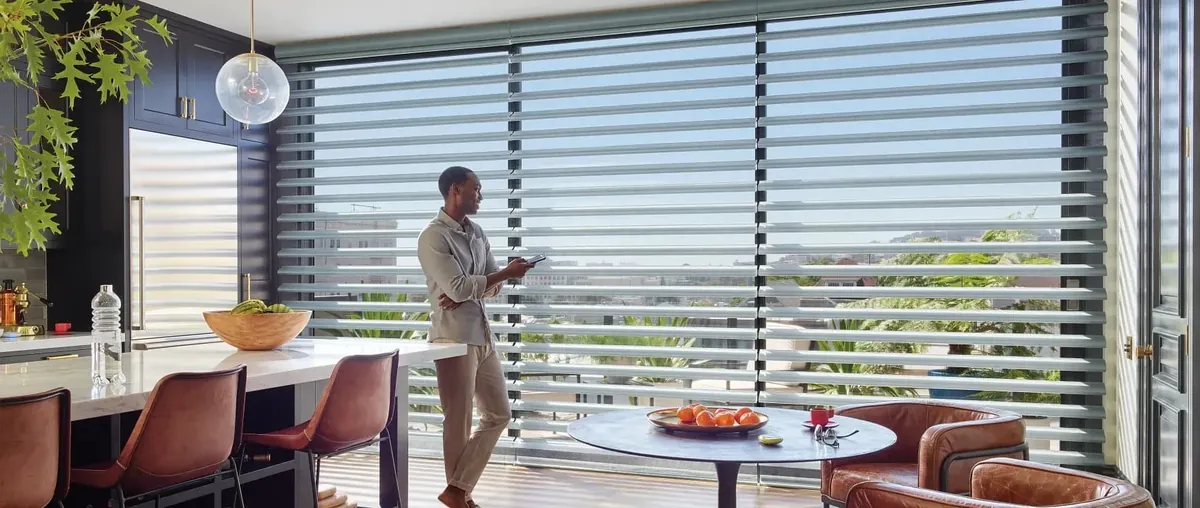
A double-width opening is two windows set side by side in one frame, or a wide opening that was built to read as one window from the street. Milton has plenty of both, especially in the front rooms of the larger colonials. Covering them well takes some thought, because a single shade across the full width can be heavy and awkward, and two shades that do not line up look careless in a formal room.
Our usual answer is one shade per sash, each cut to its own sash, all mounted level and all in one fabric. Drawn up together they tuck away under the head of the frame; let down together they make a single even surface. Want one side open for a reading chair or a garden view? Each shade still works independently.
That approach carries over to a pair of tall windows either side of a fireplace or a run of three across a dining room wall. When the shades in a group are measured and hung as a set, the room looks calm and ordered, which is what a formal room asks for.
Tall sash in the older houses
Milton Village’s colonials and Victorians carry very tall sash, and in many houses the original windows or careful replacements are still in place. Tall windows are lovely to look out of and hard to cover well.
The first question is how the shade will mount. Old frames can have weights, pulleys and stops near the face, and a frame that has settled over a long life is rarely perfectly square. So each opening is taken three times across and three times down, and its depth is checked in more than one place. If the headrail fits within the frame, the casings remain fully on show. If it cannot, the shade goes on the wall above the window and overlaps the opening slightly on each side, which reads as intentional on a big window.
The second question is reach. On a towering window the head of the shade can be well above head height, and in a stairwell it may be out of reach altogether. That is where PowerView motorization comes in, covered further down.
Houses up against the Blue Hills
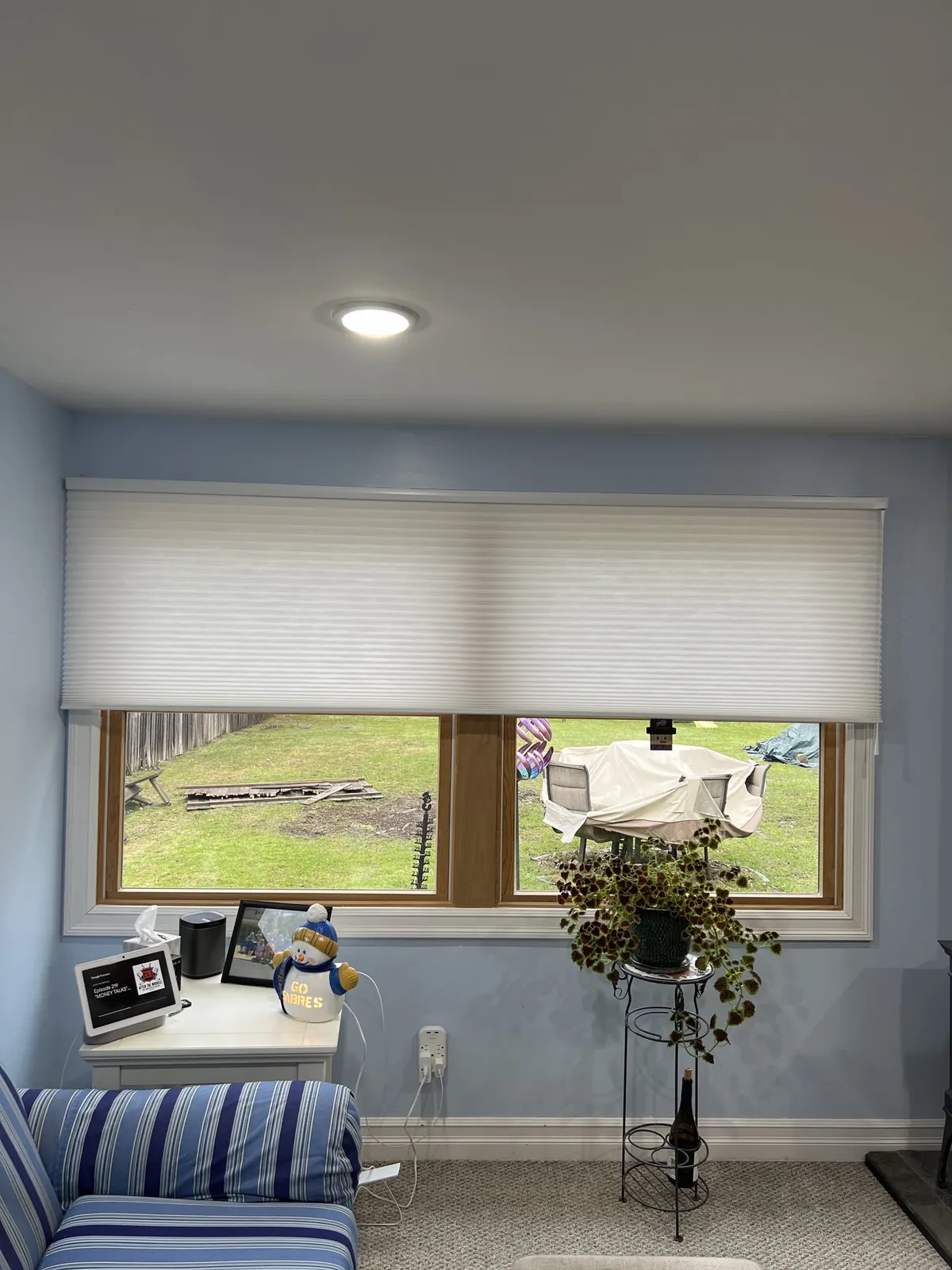
Toward the Blue Hills the lots grow larger and the houses sit among trees. The light at the back of a house there can be soft and green for much of the year, and the rear windows may look onto woods and slope rather than onto another house. That changes what a shade needs to do.
Privacy at the back is often less of a concern, so a shade can stay raised through the day without anyone feeling overlooked. What matters more is keeping the warmth in on a cold evening and keeping as much light as possible in rooms that are already shaded. A pale fabric that lets light through is usually the best choice for those rooms, because it softens the bright patches that break through the trees without darkening the room.
Fabric color also looks different under trees. A white can look gray, and a warm beige can take on a faint green cast. Seeing samples at your own windows, at the time of day you use the room, is the surest way to choose cellular shades in Milton for a house near the hills.
Post-war houses in the lower village
The lower village has a different kind of house: post-war homes with standard openings and smaller rooms than the big colonials up the hill. The work there is simpler. Openings repeat, so two fabric decisions, one for the day rooms and one for sleeping rooms, settle most of the house, and the measuring goes quickly.
The houses are often closer together, so the side windows can face a neighbor across a short distance. A translucent fabric screens the view in by day without dimming the room, and something heavier upstairs keeps bedrooms private once it is dark. The front windows, closer to the sidewalk than in the larger houses, often want the same.
Upstairs in a large colonial or Victorian
The bedrooms of a big Milton house rarely get the attention the front rooms do, yet they are where a good shade makes the most daily difference. Tall sash runs upstairs as well as down, ceilings are still generous, and corner bedrooms often have windows on two walls, so the cold reaches the bed from more than one side on a winter night.
Cellular shades for Milton bedrooms are usually chosen in a heavier fabric than the formal rooms below, dense enough to keep the room private once the lamps are lit and to hold back the early light in summer. On a pair of tall windows either side of a bed, matched shades mounted at one height keep the room tidy. A dressing room or a bathroom with a single tall window can share the same fabric, so the whole upper floor looks considered when you walk the hall.
Why the honeycomb matters in a big room
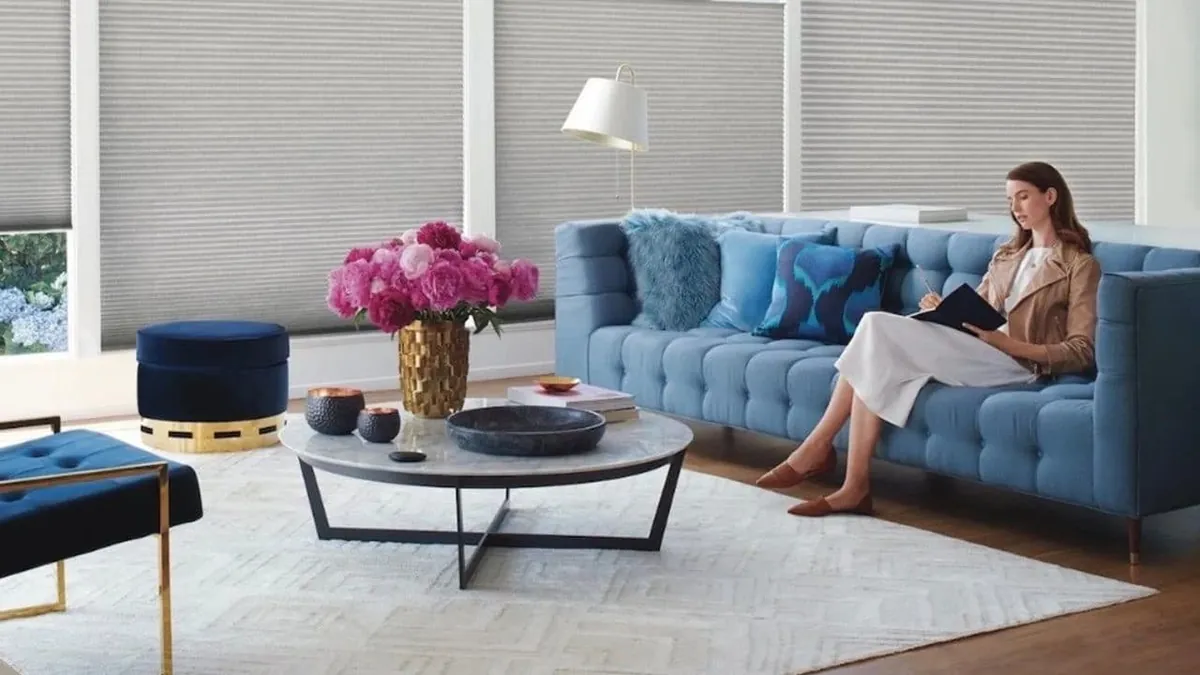
A big room with tall glass gives up a lot of heat at the windows. Look at a cellular shade end on and you see tubes of fabric spanning the window. Let down, those tubes hold air in place, and air that cannot circulate is a poor path for heat. Cold off the pane takes longer to reach your chair, and the room’s heat takes longer to reach the pane.
In a formal room with high ceilings, warm air rises and the space near the windows can feel cool even when the radiators are working hard. Lowering the shades at dusk takes the chill off the seats closest to the glass. Come July, the same shades let down on the bright side of the house through midday cut the heat pouring in. There is a plain-language explanation in cellular shades and winter heat.
A consultation at your house, not a trip to a store
Milton is covered by our Canton shop-at-home service, so the first meeting happens in your house. Our sample vans mean we can bring the showroom to you, and in a house of this size there is no better way to decide: a fabric that suits a north-facing library may be wrong for a sunny breakfast room, and you can only see that in the rooms themselves.
- Use Request a Consultation, or the call button, to set a day.
- The consultant arrives with Duette and Applause swatches covering many colors, textures and weights.
- You lead the tour, normally from the formal front rooms to whichever room feels coldest.
- Swatches go up at each window, against the woodwork and beside any curtains, in the room’s real light.
- Every window is measured, frame depths are noted, and double-width openings are flagged.
- A free estimate follows, and the decision stays with you, on your own timetable.
A large house can be planned all at once and ordered a floor at a time if you prefer. Measurements and fabric choices from the first visit are kept on file, so rooms done later still match.

Picking a honeycomb line for a formal house
Hunter Douglas makes two honeycomb lines, Duette and Applause, and the air-filled cell works identically in both. Where they part company is in fabric. Duette’s collection is wider in texture and color, so it tends to win the formal rooms of a Milton colonial that are viewed from across a large space. Applause brings its own set of colors and is well suited to bedrooms, kitchens and the plainer openings in the lower village.
Plenty of large houses end up with Duette downstairs at the front and Applause upstairs and at the back. Comparing the two swatch books at the actual window makes that call easy. Read more on the Applause honeycomb shades page, or see the full cellular shades range.
PowerView for tall windows and big rooms
In a large Milton house, motorization solves real problems. Tall sash in a stairwell, a high window over a landing, or a double-width opening behind a heavy piece of furniture are all hard to reach. PowerView puts them on a handheld remote or a phone app, and on a timetable too: down at dusk, up at breakfast, no walking the house.
Shades in a big room can also be grouped so they move together, so the two halves of a double opening, or a line of tall windows, always travel level with each other. You do not need to motorize everything at once; many households start with the hardest windows to reach. How each motor gets its power is something we work out with you during the visit. Our page on motorized blinds in Milton covers more.
Measuring and installation in a large house
- Three widths and three heights per opening, plus frame depth, go on the measuring sheet.
- Grouped windows, double openings and nearby curtain rods are noted so the shades can be planned as sets.
- Mount and fabric for each window are agreed with you before anything is ordered.
- On installation day, certified Hunter Douglas installers anchor the brackets in solid timber and set every headrail level, sighting along each group so it lines up.
- Each shade is run up and down, PowerView remotes, groups and timetables are set, and you get a walk-through before the crew leaves.
A shade built to its opening sits snugly inside it, which suits a formal window and narrows the side gaps where cold air would otherwise slip past.

A Hunter Douglas Gallery dealer for Milton
Hunter Douglas lists Blinds & Designs as a Gallery dealer, and Hunter Douglas certifies the people who hang our shades. In a big Milton house, that puts the entire Duette and Applause fabric library and PowerView within one conversation, from the first swatch to the last bracket.
Other Hunter Douglas products, from blinds and shutters to roller shades, roman shades and drapery, can be planned at that same visit. A library or study may call for plantation shutters in Milton, and a guest room for roman shades in Milton. The full list for the town is on our Milton page.
To look at Hunter Douglas products in person, our Franklin showroom is the closest.
Questions from Milton
Can honeycomb shades sit under the drapery in a formal room?
Yes, and it is a common pairing in Milton’s colonials. The shade mounts inside the window frame and does the daily work of holding warmth and softening light, while the drapery frames the window and is drawn only when you want it.
How do you cover a double-width opening?
Normally with one shade per sash, each sized individually, all mounted level in a single fabric. Moved together they look like one window; moved apart, each half does its own job.
My tall stair window is out of reach. What are the options?
Put it on PowerView. A remote, a phone or a timetable moves it, and the ladder stays in the garage.
Will a shade make my rooms near the Blue Hills darker?
Not with the right fabric. A pale fabric that lets light through softens bright patches from the trees without darkening the room. We bring samples so you can see the effect at your own windows.
Is the estimate free?
It is. Once the windows are measured you get a free estimate, and nothing is owed for it.
Planning the shades for your Milton house
A formal room with tall sash, a double opening in the front parlor or a cape in the lower village: each is easiest to plan with the samples at the window and the measurements taken on the spot. Book through Request a Consultation and a consultant will arrive with the swatch books, measure each opening and write up a free estimate for cellular shades in Milton, MA, room by room. Questions before then go through the call button.