
Old sash in the villages, woods off Route 123
Easton’s houses fall into two broad groups. Near the villages stand antique colonials and Victorians, with tall sash and the detailing of an older era. Off Route 123 and the roads around it, newer colonials sit on wooded lots. What both share is space: generous lots and deep setbacks through most of the town, so a house may be a long walk from the road.
That space shapes window treatments in Easton, MA, more than you might expect. With the road so far away, front-room privacy is rarely the first concern in daylight. Instead the questions are about light: how to keep tall old windows looking right, how to brighten rooms under trees, how to handle the one side of the house that does get full sun, and what to do once dusk falls and a lit house shows up clearly among the dark.
We answer those in your rooms, with the samples held up at the glass.
Every Easton service, one card each
Here are the window treatments in Easton we can plan with you; each card opens the matching service page.
Custom Blinds in Easton
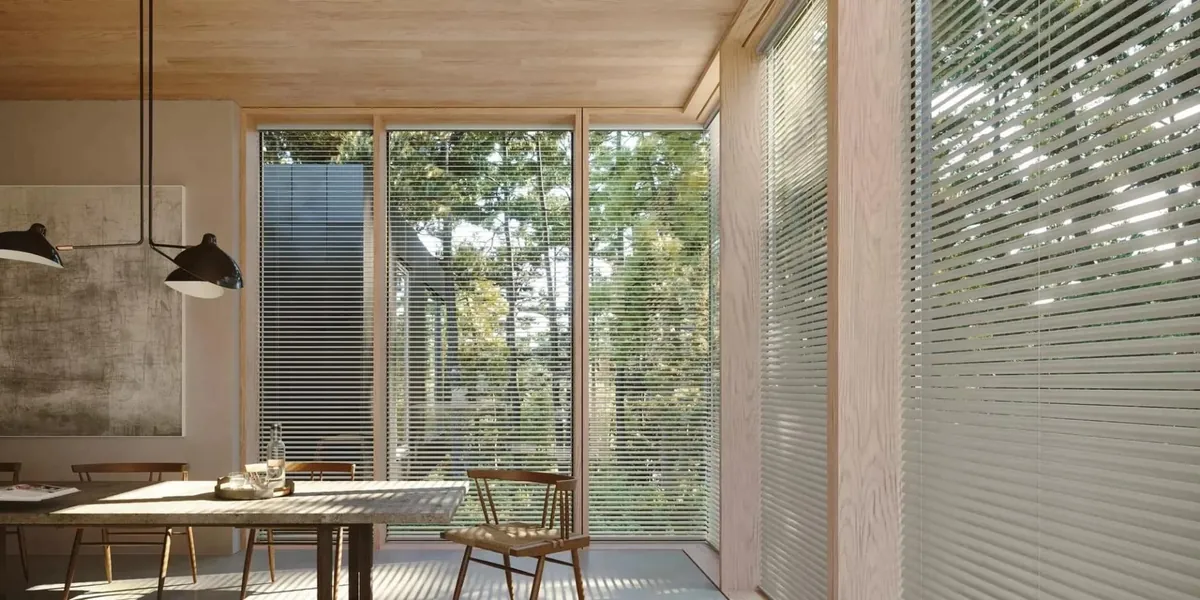
Blinds in wood, faux wood and metal, and vertical blinds for a back door. Slats turned upward lift daylight onto the ceiling.
Cellular Shades in Easton
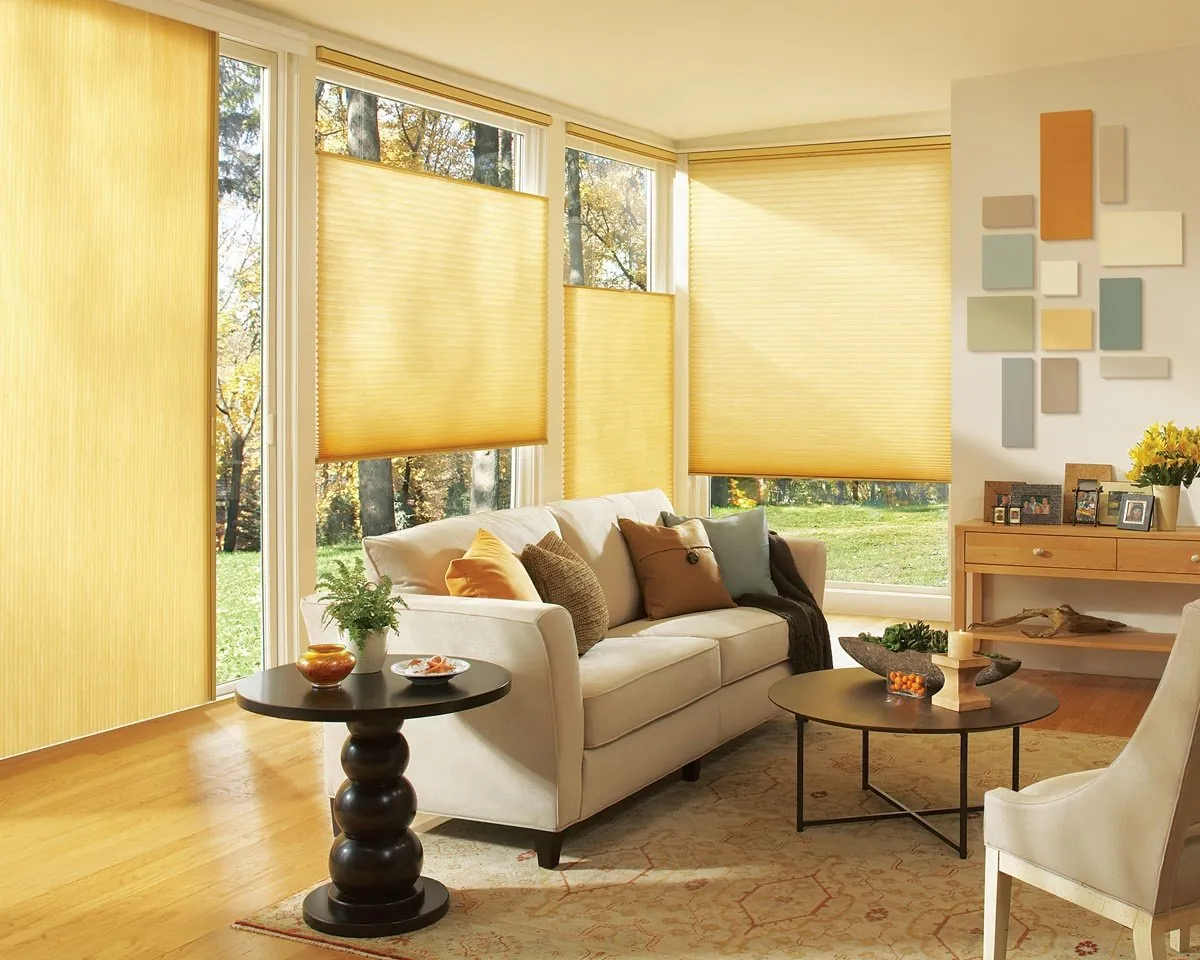
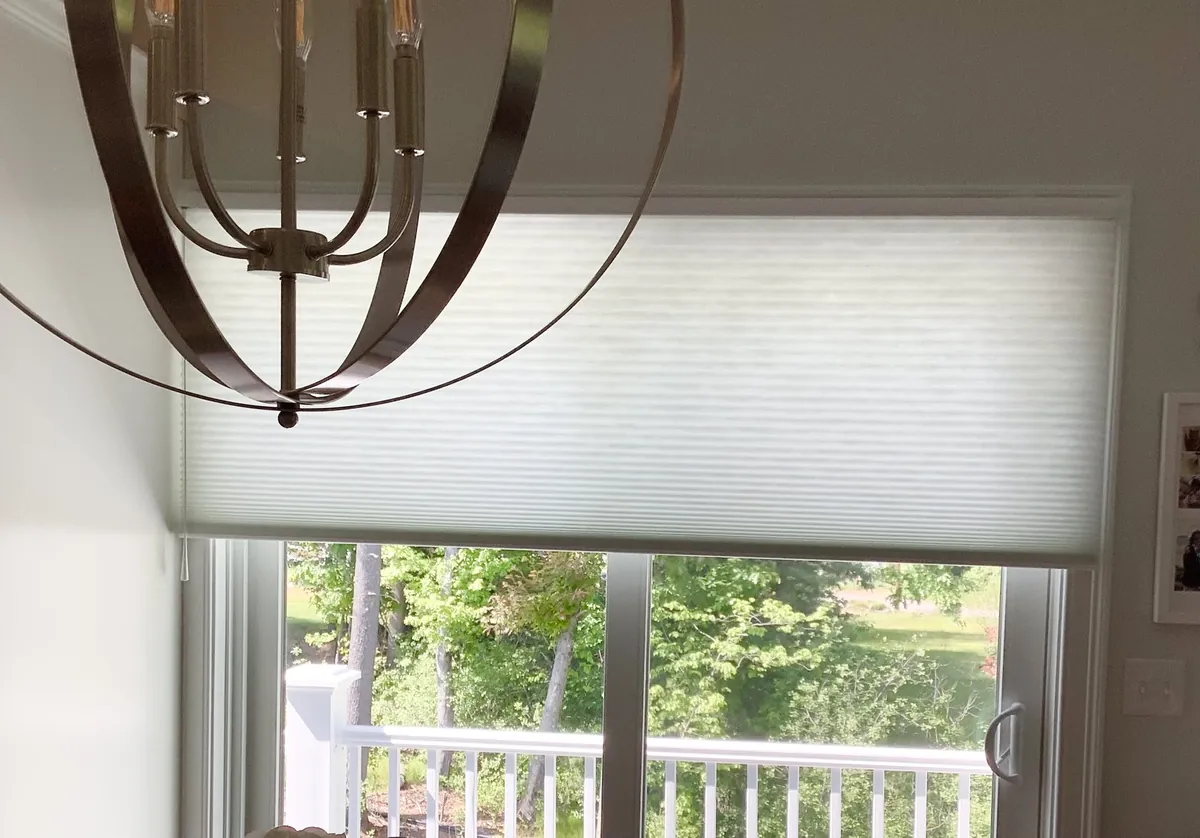
Duette and Applause honeycomb shades with a slim stack, so tall sash and wooded-lot windows keep their glass clear.
Roller Shades in Easton
Designer and Alustra roller and solar screen shades, for the sunny side of the house or a newer family room.
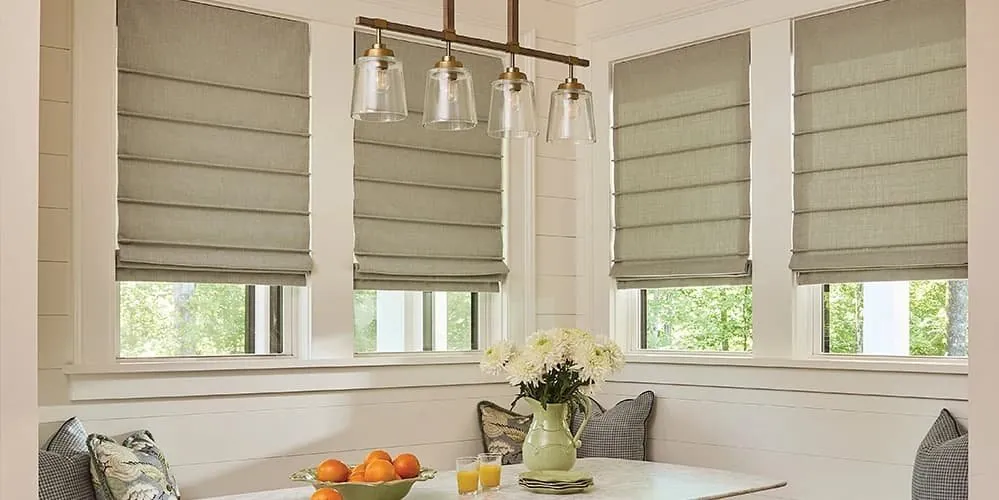
Roman Shades in Easton
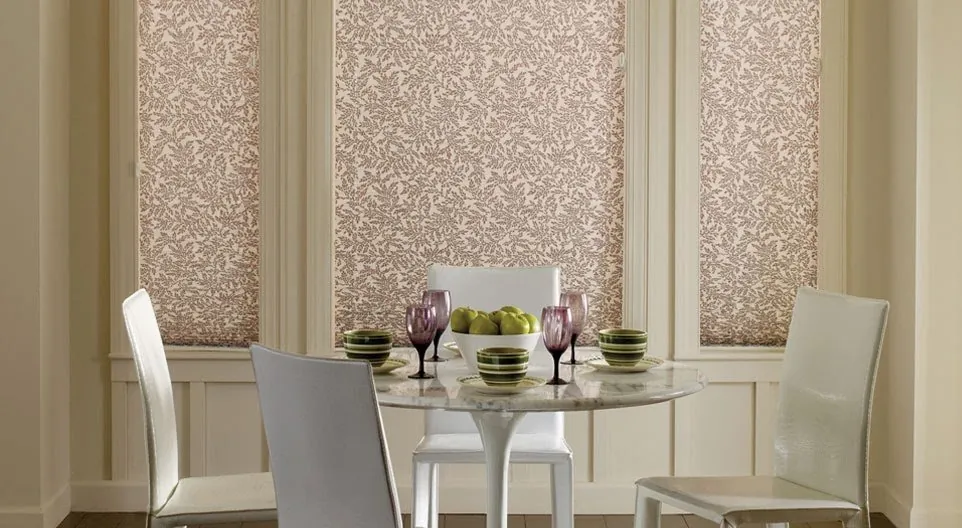
Vignette and Carole fabric romans, flat or folded, for a village parlor or a breakfast room looking into the trees.
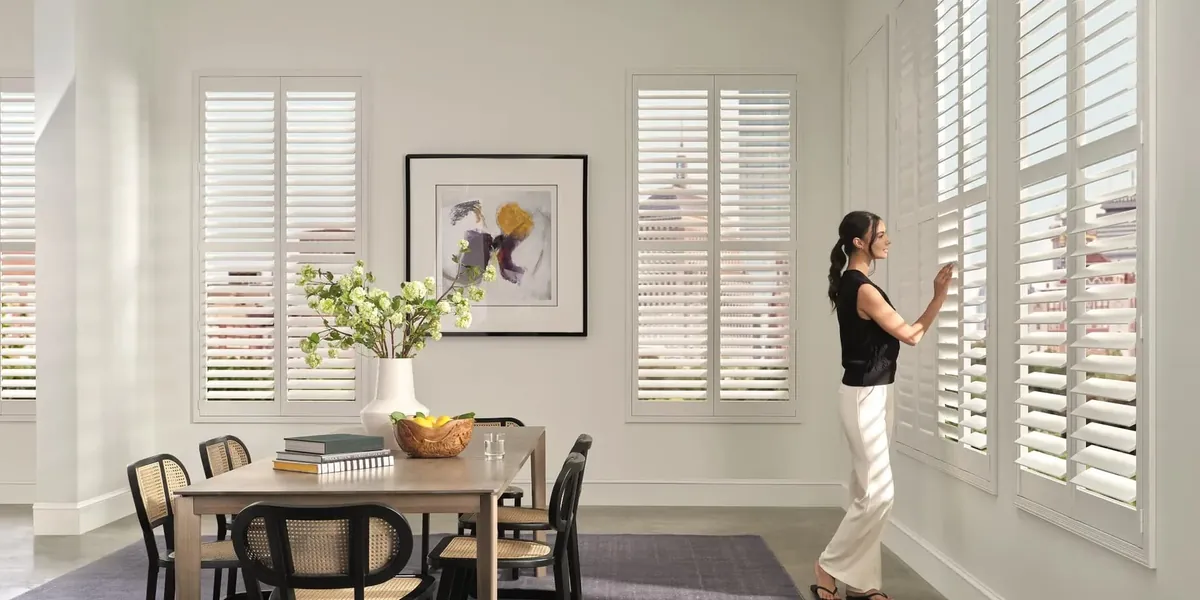
Plantation Shutters in Easton
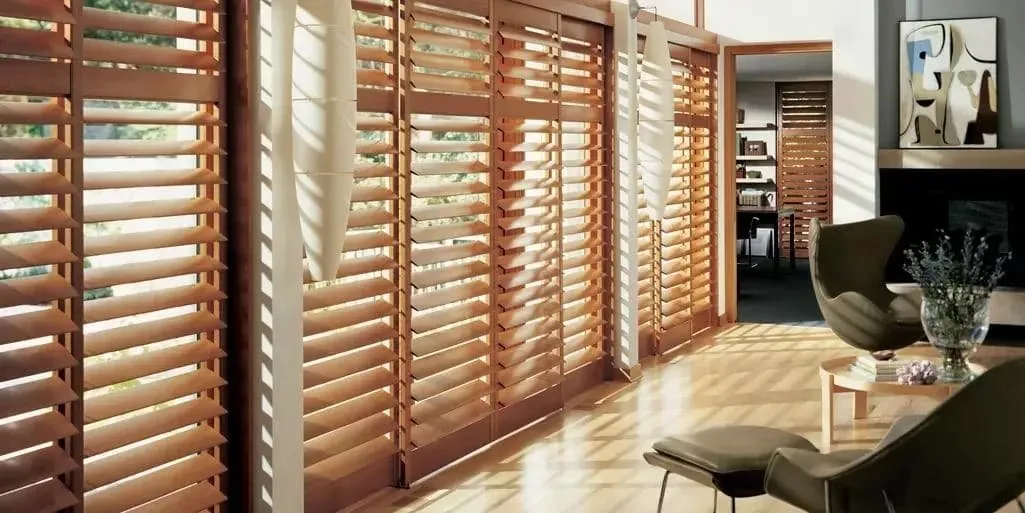
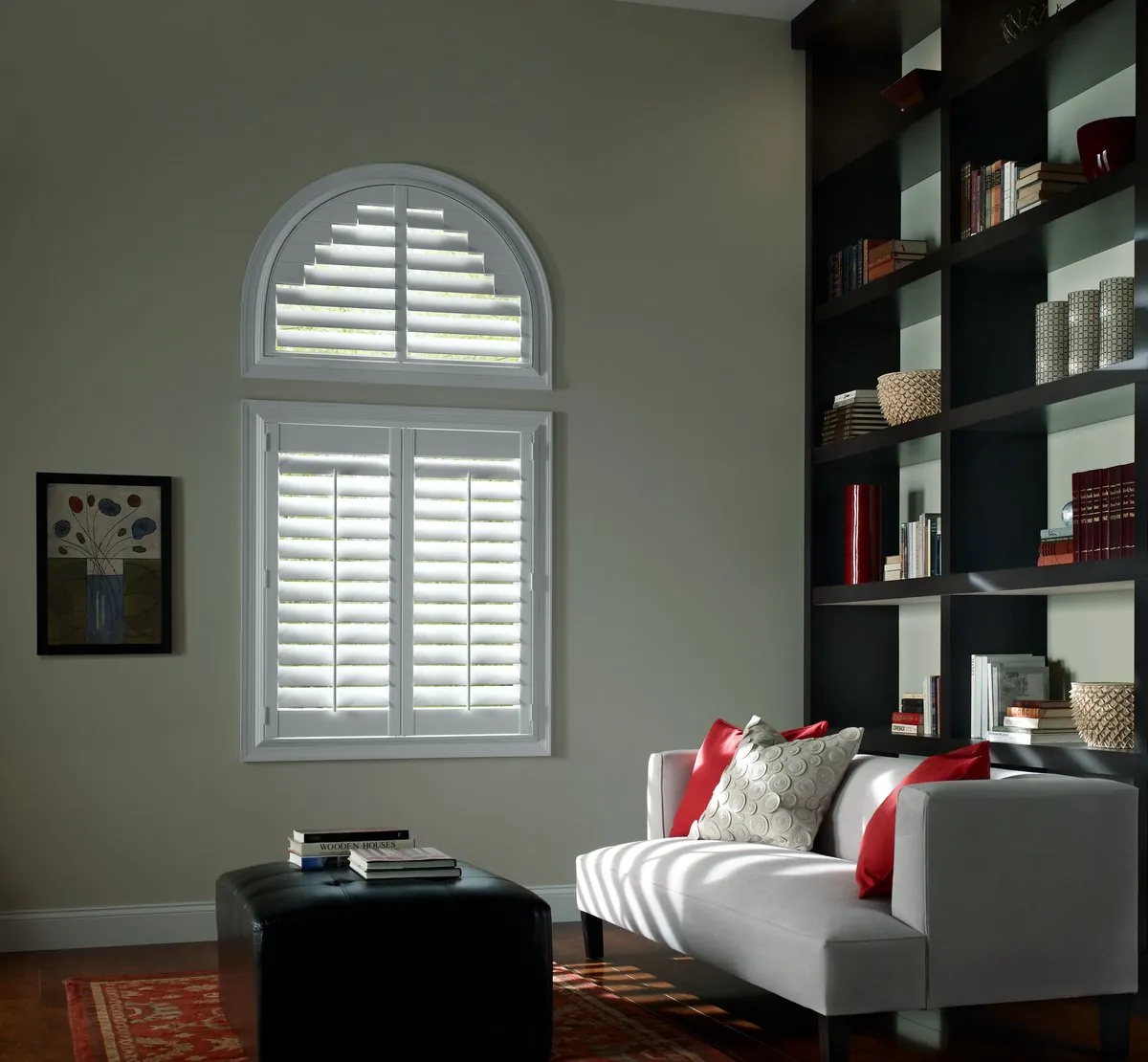
Heritance, NewStyle and Palm Beach shutters, with louver widths and frames picked for tall antique sash.
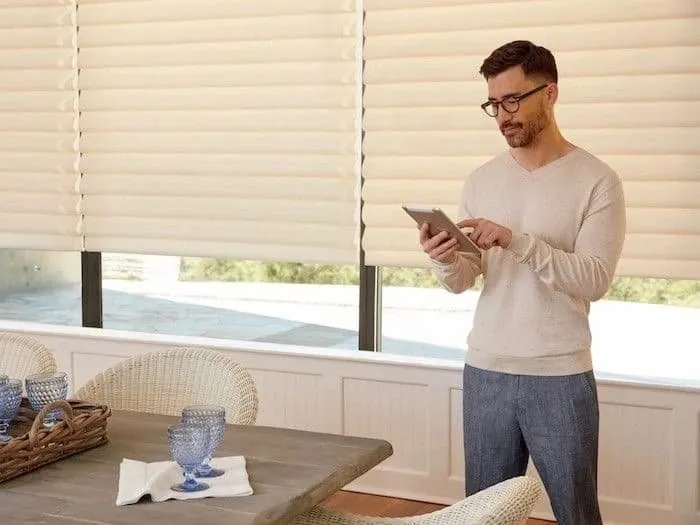
Motorized Blinds and Shades in Easton
PowerView, run from a remote, a phone app or a set schedule, so every shade in a large house can close at once.

Hunter Douglas Dealer in Easton
Gallery dealer access to the whole Hunter Douglas collection, with certified Hunter Douglas installers doing the fitting.
Antique sash near the villages
The colonials and Victorians near Easton’s villages were built with tall sash, often in frames that have moved a little with age. The trim around those windows is usually part of what makes the room, so the aim is a covering that works hard indoors while leaving the casing in view.
That points toward inside mounts wherever the frame allows. We check depth and squareness at each window, because an old frame can be deeper at one corner than another, and a shade needs an even fit to look right. Honeycomb shades and rollers are forgiving here, with slim headrails that sit neatly in a shallow frame. Shutters can be made with their own frame, which squares up an opening that has drifted and gives the window a crisp, finished edge.
In a Victorian, expect variety: a tall parlor window, a bay, a narrow window by the stair, perhaps one with a curved top. Each gets its own solution, held together by a shared color so the rooms still feel related.
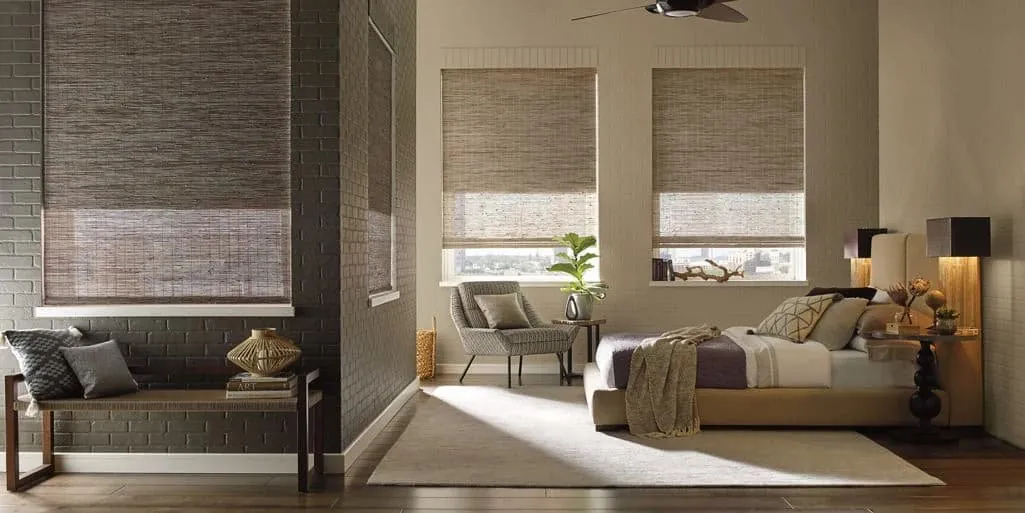
Light under the trees off Route 123
The newer colonials off Route 123 sit on wooded lots, and the trees decide how much daylight each room receives. A room on the shaded side may be dim even at noon in summer, while a room facing a clearing gets strong, direct sun.
For the shaded rooms, the covering’s job is mostly to stay out of the way. Choose something that clears the glass fully when raised, such as a roller or a honeycomb with a very slim stack, and keep the fabrics pale so they reflect light rather than absorb it. Blinds can help too, with their slats tilted upward to throw daylight onto the ceiling and deeper into the room.
For the sunny rooms, glare control matters. A light-filtering honeycomb softens the light, and a solar screen keeps the view of the woods while taking the edge off a bright afternoon. Because shaded and sunny rooms often sit side by side, we pick fabrics from the same family in matching colors, so walking from one to the next feels seamless.
When the leaves come down
On a wooded lot, the light in a room is not the same all year. In summer the canopy filters much of the sun. Once the leaves fall, the same windows may suddenly face low, bright sun through bare branches, sometimes straight in at eye level in late afternoon.
That is worth planning for. A room that seems to need nothing in July may want a light-filtering shade it can lower in November. Top-down, bottom-up shades are useful here, because they can block a low winter sun across the lower glass while leaving the upper part open to the sky. Evergreens behave differently, so we look at which trees stand where before suggesting how much control each room needs.
Deep setbacks, daylight and dusk
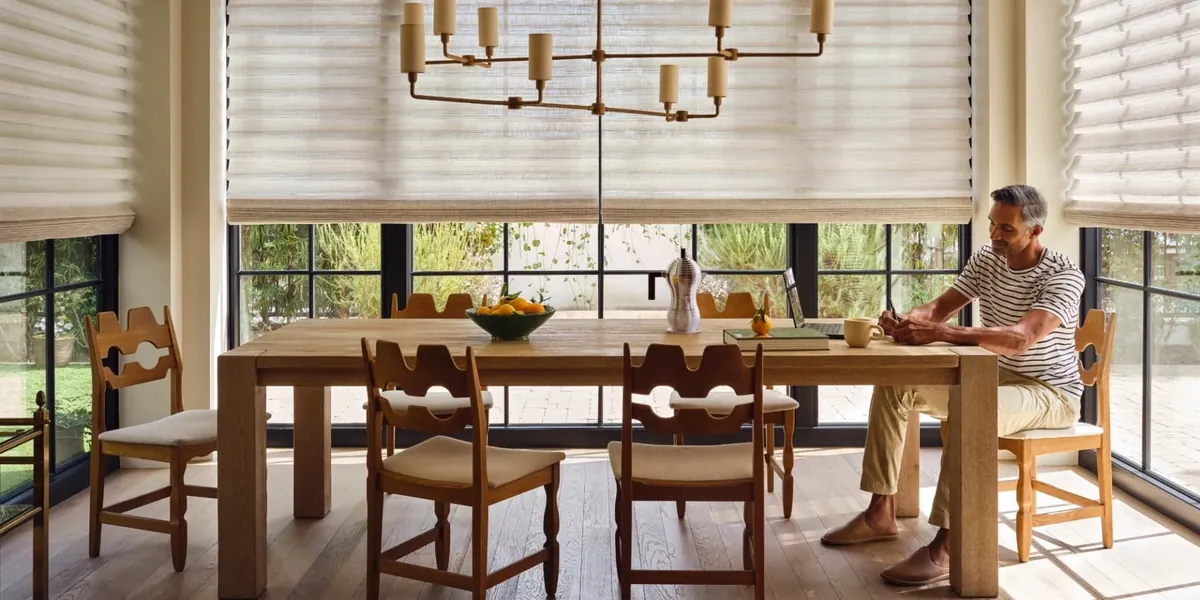
When the house sits far back from the road, nobody is looking in during the day. Front rooms can be kept open and bright, with coverings chosen for the way they look and the light they let in rather than for privacy.
Evening is another matter. On a wooded lot, the dark comes in around the house, and a lit room becomes visible from the road and from neighbors through the trees, often from further away than you would guess. So the front rooms still need something that closes fully at night. Sheer shadings handle both moods well: soft daylight with the vanes open, full privacy when closed. Light-filtering honeycomb shades and shutters do the same with a different look.
Window treatments in Easton houses on deep lots often come down to this pattern: open by day, closed by night, with one covering per window doing both.
Newer colonials: more rooms, more glass
The colonials built more recently on the wooded lots tend to be roomier than the antique houses, with more windows on every side. Downstairs, a kitchen usually flows into a family room; upstairs, a primary bedroom has its own bath; somewhere there is a study, and at the back a pair of doors or a slider steps out to a deck under the trees.
Each of those spaces pulls in a different direction. The kitchen and family room read as one big room, so they look calmest with a single product carried across both, often rollers or honeycomb shades, with PowerView on anything above a counter or a tall window. In a study, the concern is a bright patch of sky behind the monitor, best handled by a light-filtering fabric that comes down only as far as needed. The primary bedroom wants dark nights, from room-darkening honeycomb or a blackout roller. The back doors take a covering that travels sideways and parks at one edge, such as a vertical honeycomb shade or vertical blinds, so stepping onto the deck is never a struggle.
With a long view into the woods from many of these rooms, keeping the coverings slim and pale lets the outlook do the decorating.
Long views across a deep lot
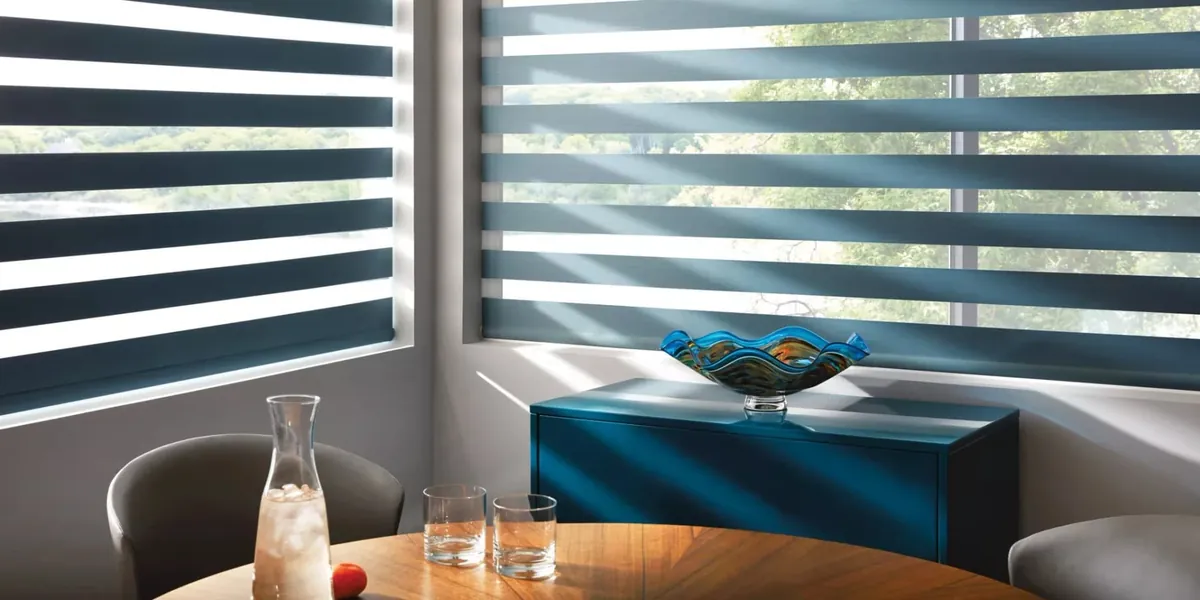
A deep setback usually comes with a view: a lawn running down to the road, a stone wall, a line of trees, a garden at the back. Many owners in houses like these want the windows to frame that view rather than hide it, which changes how the coverings are chosen.
Outside mounts set a little above and beyond the frame let a raised shade clear the glass entirely, so nothing interrupts the view. Shutters with wide louvers give an open, airy look when tilted and swing clear when the panels are opened. Solar screens are worth considering on a sunny side, because they keep the outlook visible while cutting the glare that comes with it. In a room where the view is the main event, the plainest, palest covering is often the right one.
Bedrooms on a dark, quiet lot
Away from streetlights, an Easton bedroom can be wonderfully dark at night, and that changes the summer morning. With nothing else to compete, the dawn light through an east window is all the more noticeable, arriving long before most alarms.
For sleep, room-darkening honeycomb shades or blackout rollers make the difference. On the road side, a white or neutral backing keeps the front looking consistent. Guest rooms that are used only now and then can take a light-filtering fabric, since nobody is relying on them for a lie-in every day. Children’s rooms are best with motorized shades or shutters, so nothing hangs within reach.
Sunrooms and rooms facing a clearing
Where a lot opens up, often at the back of a house behind the deck or at the end of a long lawn, the room facing it can get more sun than any other. Sunrooms and family rooms on this side are lovely in spring and autumn and can be uncomfortably bright on a summer afternoon.
Here, glare control earns its keep. A solar screen keeps the view of the clearing while toning down the brightness, and a light-filtering honeycomb softens the whole room. Because these rooms often have many windows, PowerView makes it easy to lower the whole room at once. And since a sunny room usually sits next to shaded ones, choosing fabrics in the same color family keeps the house looking consistent from inside.
Mixing old and new in one plan
Some Easton houses combine both stories: an antique core with a newer addition at the back, or a newer colonial built in a traditional style with tall windows at the front. In those houses, the front rooms often suit shutters or roman shades that respect the traditional look, while the newer family room and kitchen at the back can take rollers or banded shades that feel current.
The link between them is color. A single outward tone on every window facing the drive keeps the house looking of a piece, and choosing room-side colors that relate to one another keeps the inside from feeling like two different houses. Planning window treatments in Easton houses of this kind is easier when we can walk the whole house in one visit and see how the rooms connect.
Kitchens and the side door
In both the antique houses and the newer ones, the side or back door near the kitchen tends to be the one everybody actually uses, often through a mudroom with a small window or a glass panel in the door. These are working spaces, and the coverings should be simple and quick.
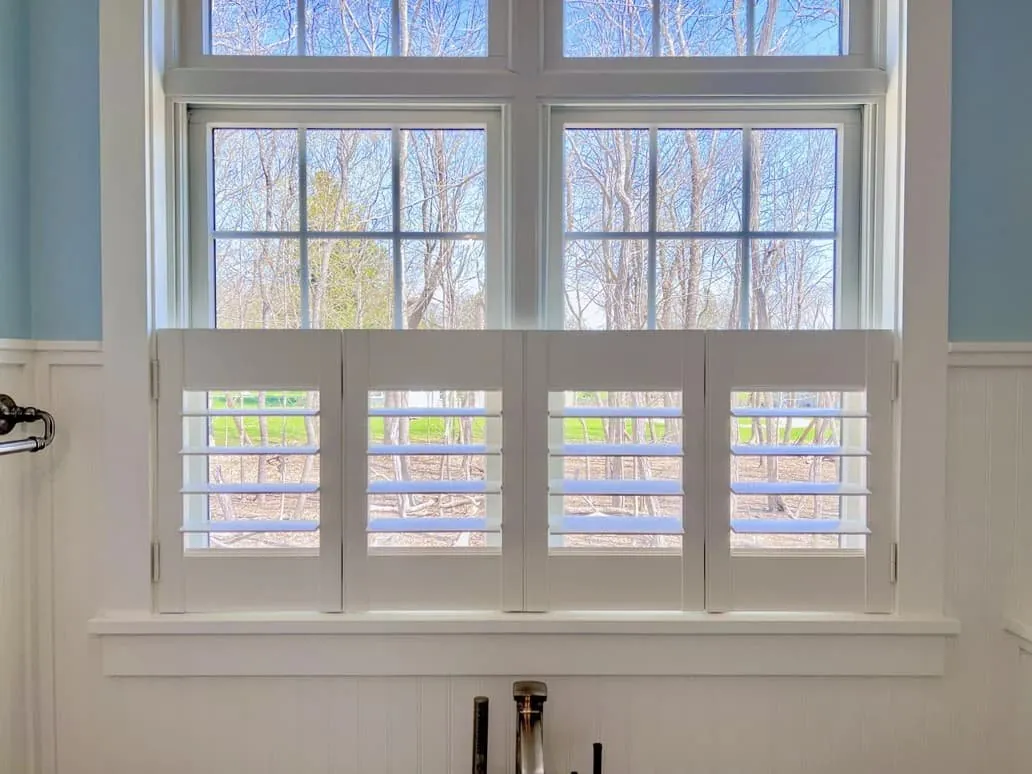
A shade fixed to the door itself, held at the foot so it stays put when the door swings, keeps a glass panel private. A small mudroom window is fine with a plain roller or a mini blind. In the kitchen, the window over the sink is reached across a counter, so a motorized shade, or cafe shutters that cover only the lower half, saves stretching. Where the kitchen looks out to the trees and nobody else, many owners leave the upper glass open all day.
Your consultation at home
Light filtered through trees, tall antique sash and a long view across a deep lot are all hard to judge anywhere but in the house itself. Canton runs our shop-at-home service and has no store to visit, so consultations for Easton take place at your home. Our vans carry samples, which lets us bring the showroom to you.
- Set up a visit online with Request a Consultation, or by phone with the call button.
- The consultant pulls up the drive with fabric books, blind and shutter samples and a PowerView remote.
- We start with the room that troubles you most, whether a dim shaded room or one that gets too much sun.
- Samples are held in each window, so you see how they look in filtered light and in direct sun.
- Every frame is measured and checked, old ones for square, new ones for size.
- A free estimate follows, with time to consider it.
The Canton shop-at-home page explains how the service works. If you have antique windows, shutters for older windows is worth a read.

Motorizing a house on a big lot
A large colonial with many windows, some of them tall or hard to reach behind furniture, is a good candidate for PowerView. Each group of shades answers to a handheld remote, an app or a timetable you choose: the woods-facing family room up at breakfast, the sunny side lowered through the afternoon, the front of the house closed every evening. Power for each motor is something we decide together when we come out. The motorized blinds and shades in Easton page has more.
Repairs to coverings already in place
An older house often comes with blinds or shutters already up, and a newer one may have shades that have seen hard use. If a lift cord has frayed, a tilt has stopped working or a shade hangs unevenly, it may be repairable. We are glad to look at what you have and tell you honestly whether repair is the better route. See blind and shade repair.
A Gallery dealer for houses with room to breathe
Blinds & Designs is a Hunter Douglas Gallery dealer. For an antique colonial near the villages or a newer house off Route 123, that means a choice from the whole range: honeycomb, roller, roman, sheer and woven shades, blinds, shutters, drapery and PowerView.
Certified Hunter Douglas installers carry out every installation, from a single tall parlor window to every window in a large colonial. Free estimates, interior design consultations, automation and repairs are all part of the service. Franklin is our nearest showroom to Easton, and its page gives the address and hours.
Questions from Easton
Nobody can see my front windows from the road. Why cover them at all?
In daylight you may not need to. After dark, though, a lamp-lit room glows through the trees and can be seen from a surprising distance, so a covering that closes fully earns its place in the evening.
What keeps a shaded room under the trees as bright as possible?
A roller or a slim-stacking honeycomb shade that clears the glass when raised, in a pale fabric that reflects light. Blinds with the slats tilted upward also bounce light deeper into the room.
Will a shade fit inside an old frame that is out of square?
Usually. We measure at several points, and a honeycomb shade or roller can often sit inside with an even gap. Shutters with their own frame are another way to square up an opening.
Why does my room get so much more sun in winter?
On a wooded lot, the leaves filter the sun in summer. Once they drop, low winter sun comes through bare branches. A light-filtering or top-down shade handles it.
Is the estimate free?
It costs nothing. Once every window is measured, the estimate is yours to think over.
Book your home visit
From tall sash in a village Victorian to a family room looking into the woods off Route 123, new window treatments in Easton, MA, start with a visit to your house. Request a consultation and we will bring samples, measure every window and leave you a free estimate. Prefer to ask something first? Use the call button.
Our window treatments page lays out every shade, blind, shutter and drapery line we sell.