
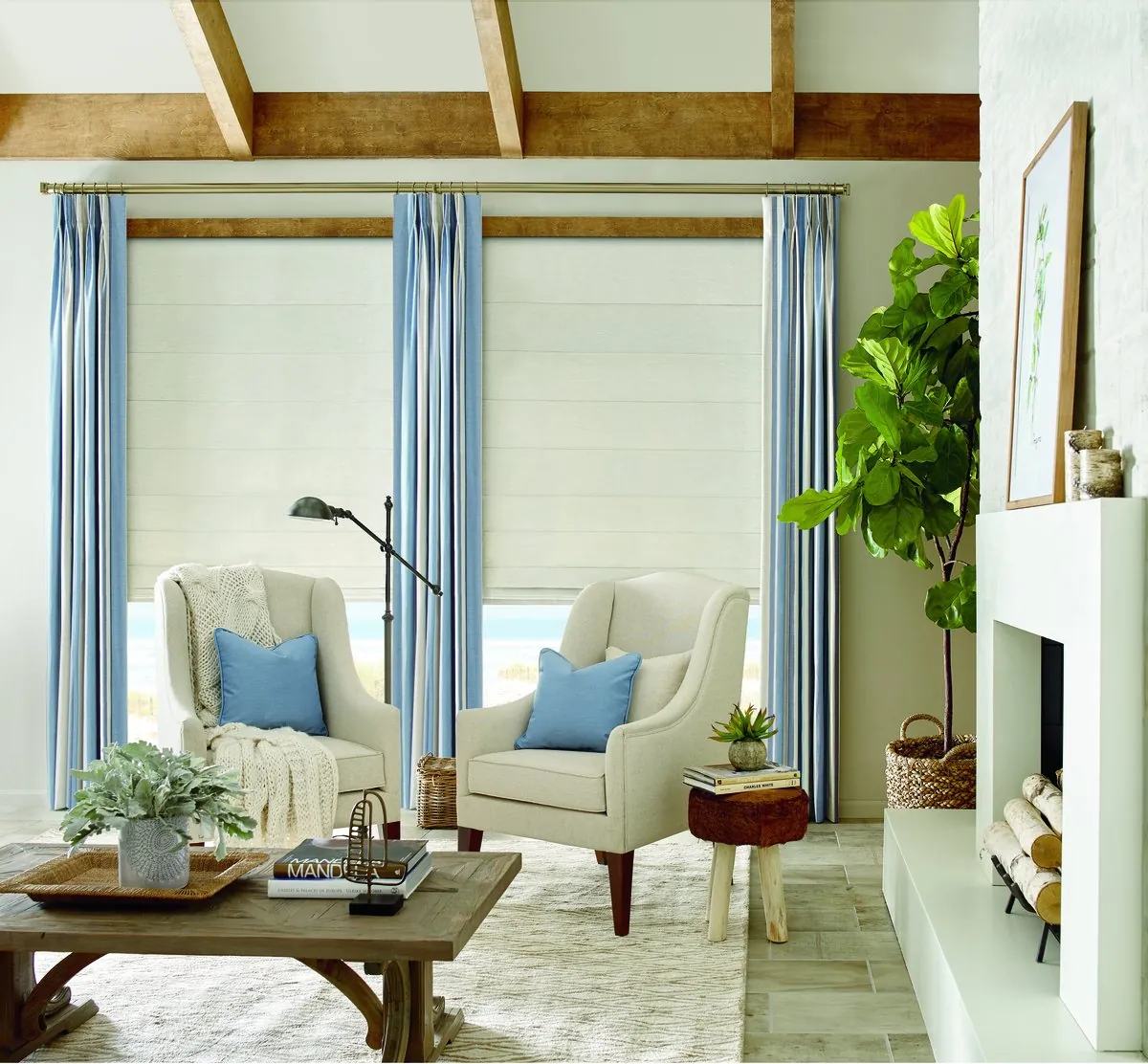
Big rooms, tall glass and openings built for drapery
Around Milton Village and on the streets that climb toward the Blue Hills, the houses are large colonials and Victorians with generous, formal rooms. Their windows match the scale: tall sash in the parlors and dining rooms, and double-width openings where two sashes sit side by side under one head. Motorized blinds in Milton, MA, are built for exactly this kind of glass, where a single room may hold six or eight tall panes that nobody wants to work by hand.
The motor rides hidden inside each headrail. A shade made to the opening rises, lowers or stops at a touch of the remote, from the PowerView app, or on a schedule. In a room this size, that means the whole wall of windows can move at once, evenly, to the same line.
Down in the lower village the post-war houses bring smaller, plainer openings, and the case for a motor there is more about convenience than scale. Both sit comfortably in one system.
A shade for each kind of Milton room
PowerView goes on much of the Hunter Douglas range, so we start with the shade that suits the room and fit the motor to it.
Roman shades
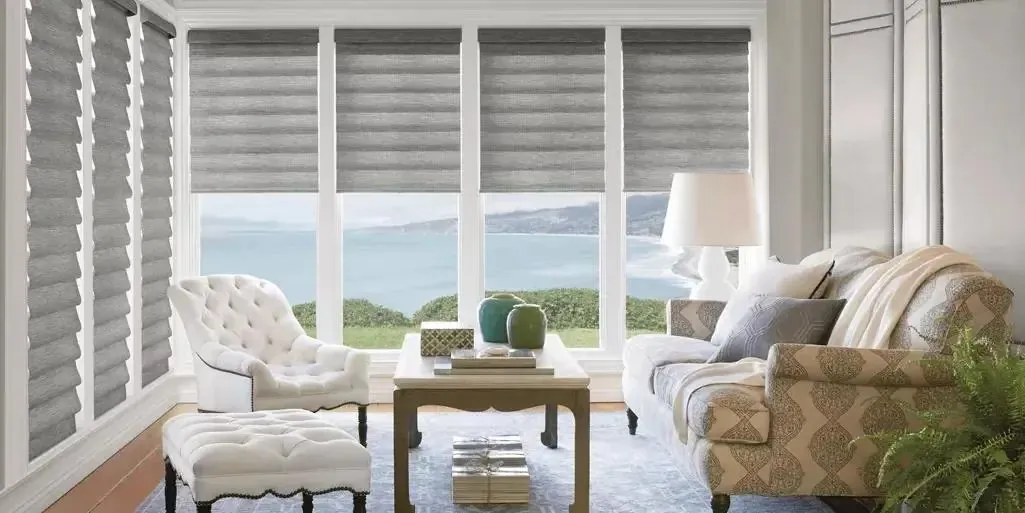
Soft folds that sit well in a formal living or dining room, and that layer neatly inside a frame beneath existing panels.
Sheer shades
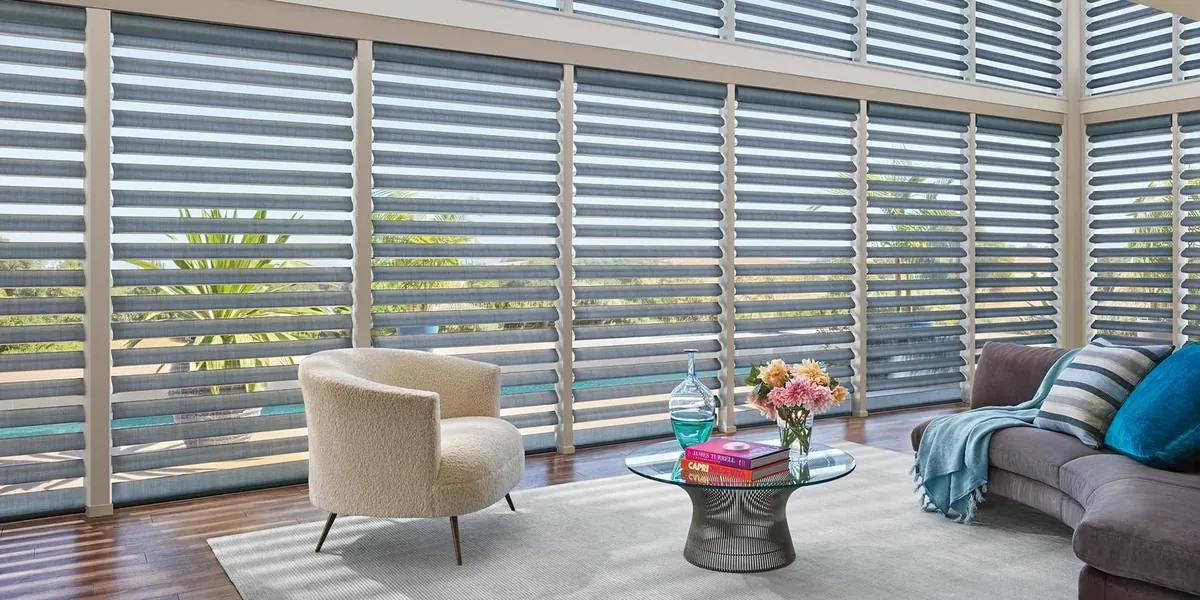
Fabric vanes that turn bright glass into soft light. On a tall double opening, the vanes tilt together from one button.
Plantation shutters
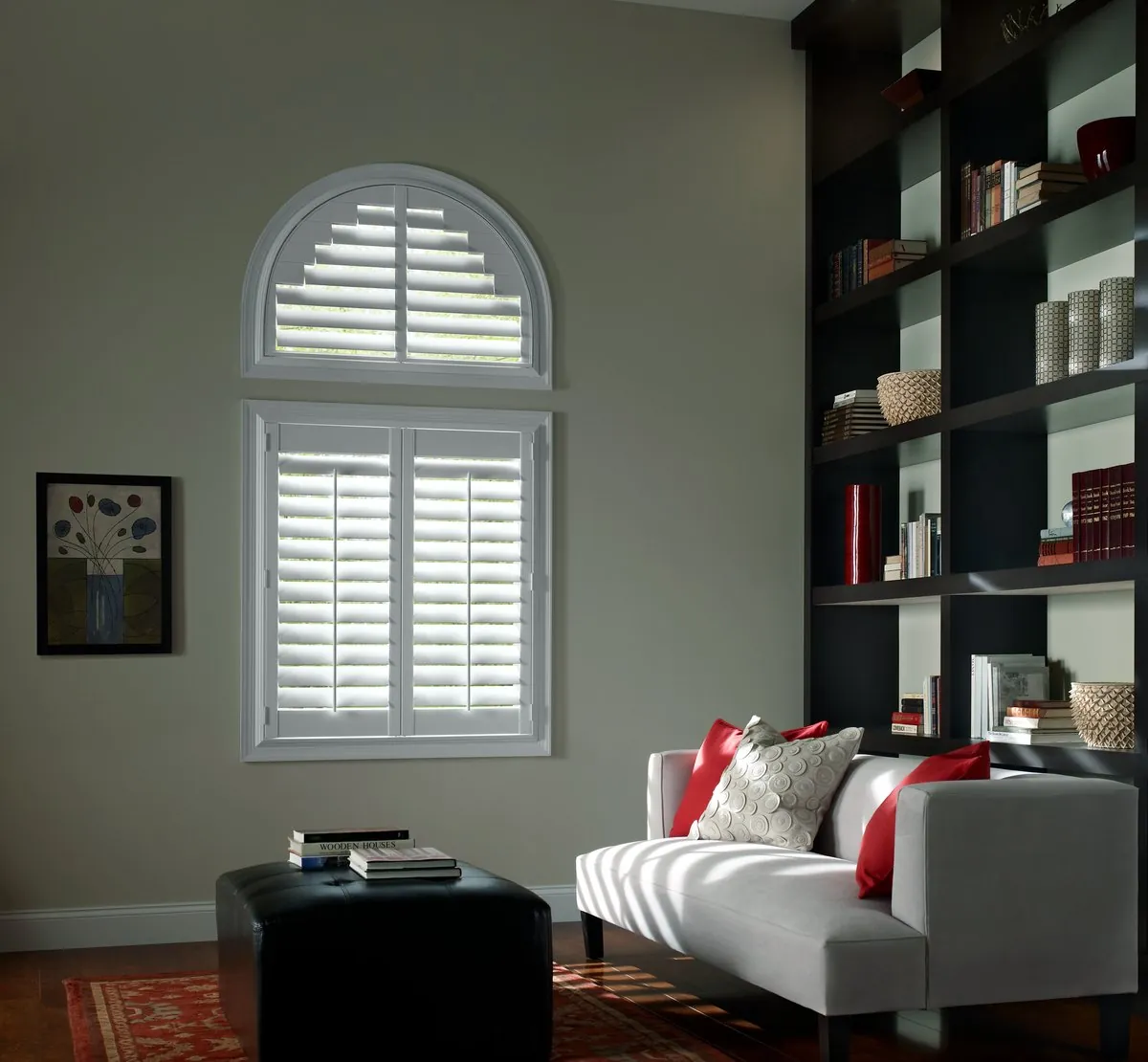
For the rooms where a motor is not the answer, shutters suit tall Victorian frames and pair well with motorized shades elsewhere in the house.
Double-width openings, handled as one
A double-width opening, two sash side by side in a single frame, is one of the features that sets the older Milton houses apart. It floods a room with light. It also asks more of a window covering than a single sash does.
One wide shade across both sash is possible where the frame and the fabric allow. More often, two shades sit side by side in the opening, one for each sash. By hand, that pair almost never lines up: one gets pulled a little higher, the other drifts down, and the opening looks lopsided. Motorized, the two travel as a pair. They start together, stop together and finish level, so the opening reads as one window.
The same logic carries through a whole room. A Milton dining room may have two double-width openings on one wall and a single tall sash on another. Grouped in the app, all of them rise at one press, or each wall can be set on its own when the sun only hits one side. That kind of control is what makes motorized blinds in Milton feel natural rather than fussy.
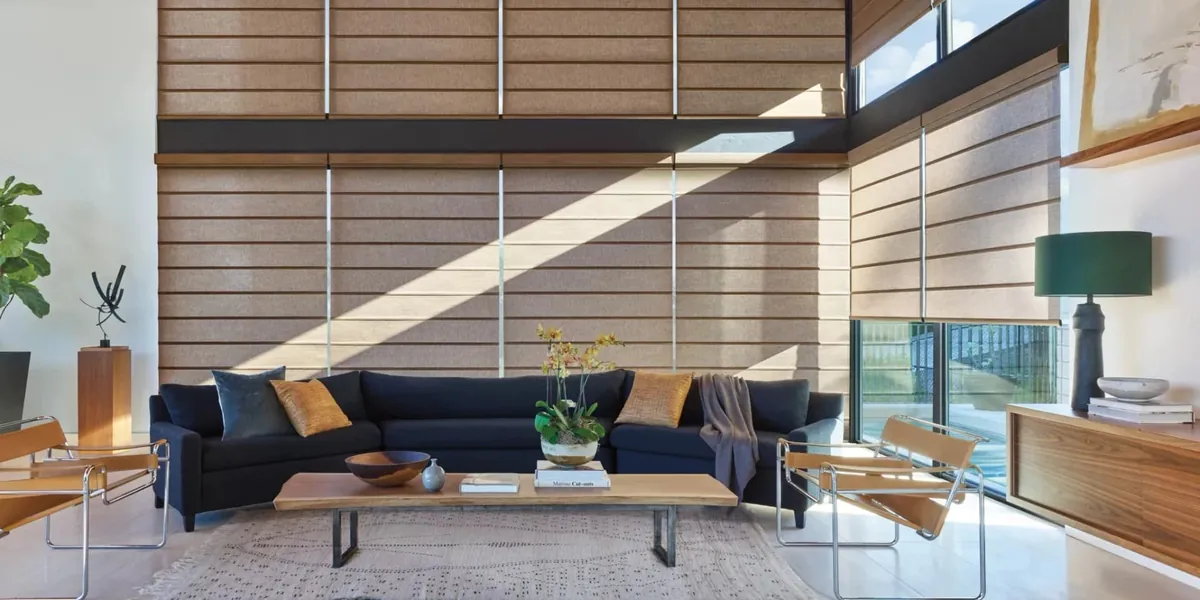
Formal rooms that are not used every day
Many larger Milton colonials have a formal living room and a formal dining room, rooms that are kept beautiful but are not always in use. Their shades often stay in one position for weeks, simply because nobody walks in to change them.
A schedule changes that. The front rooms can open each morning and close each evening at the times you set, so from the street the house looks lived in on every side, and the rooms are ready for guests without anyone walking through to raise six shades first. On the evening of a dinner, a press of the remote brings the dining room shades to whatever height suits the table.
When the house is quiet for a stretch, the same schedules carry on. Tall front windows that open and close on a routine read very differently from a facade where every shade has stayed down for days.
Tall sash and the stretch to reach the top
The tall sash in a Milton Victorian parlor or a colonial stair hall is part of the house’s character. It also puts the top of a shade well above arm’s reach. A long cord on a tall shade gathers on the floor, and a shade lifted by hand often ends up crooked, with one side higher than the other.
A motor lifts both ends of the bottom rail together, so a tall shade stays straight from top to bottom of its travel. There is no long cord to coil on the sill and nothing to tie off. On a stair landing, where the window may sit over the treads, there is simply nothing to reach.
Old frames still need care. Settling, repainting and original hardware all change how much room there is inside the casing. We measure each opening at several points across and down, check whether it is square and gauge the depth before we suggest a mount. Where an inside mount will not sit cleanly, a slim mount on the face of the trim keeps the line straight. How each motor is powered is planned with you at the visit, window by window.
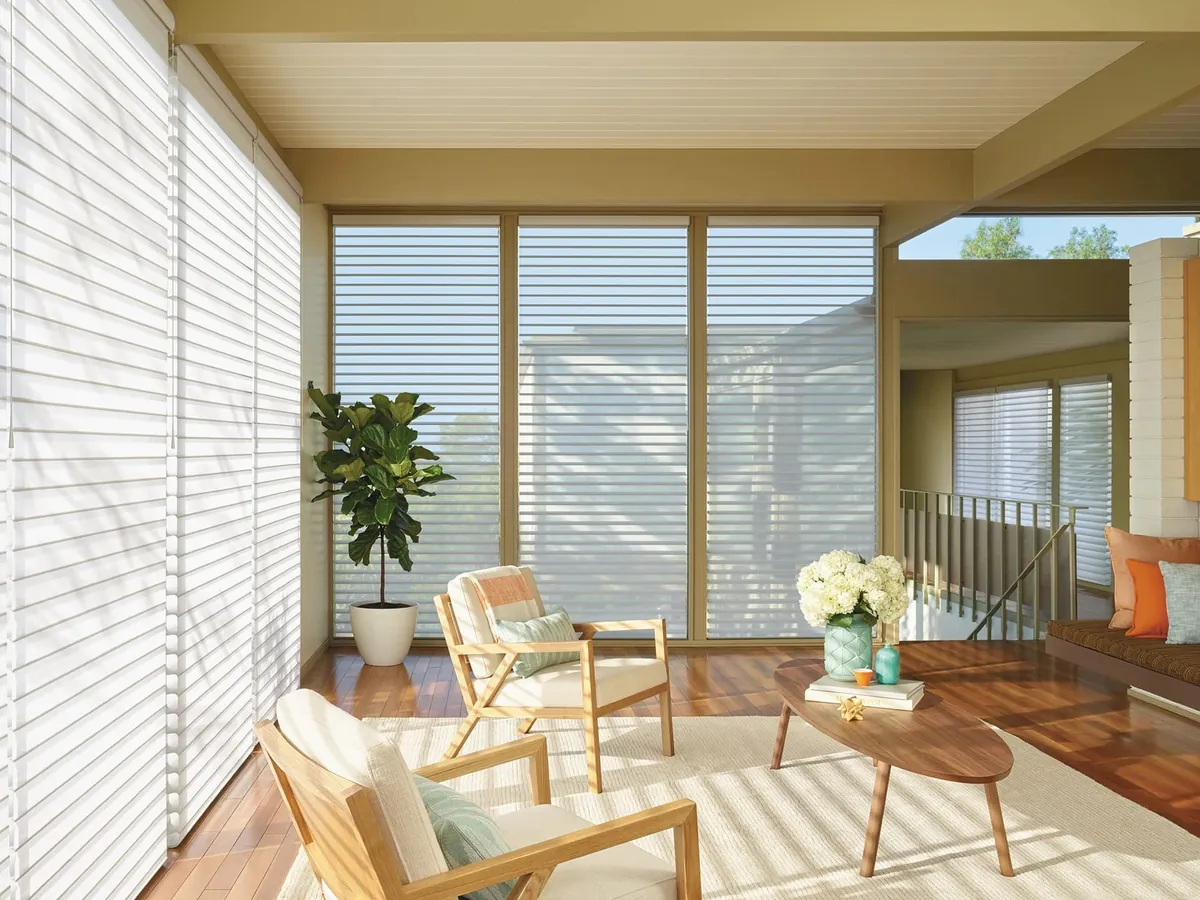
Layering with drapery in drapery-scale rooms
Milton’s bigger rooms were made for full-length panels, and plenty of them still have drapery hanging. A motorized shade does not ask you to give that up. Mounted inside the frame, it sits behind the panels and does the daily work of privacy and light, while the drapery stays in place as the room’s frame and softness.
That pairing solves a common frustration with tall, heavy panels: they are a chore to draw, so they end up permanently open or permanently closed. With a shade on a motor doing the moving, the panels can stay put and look their best.
Roman shades are a natural partner here, with folds that echo the drapery. Sheer shades work too, especially where you want the room to stay bright behind the panels during the day. We bring samples so you can try them against your existing fabric at the window.
Remote, app and schedule, side by side
A big house tends to have more than one way of doing things, and PowerView allows for that. The remote is the everyday tool: no phone needed, and one remote per room or per floor keeps control where the people are. The PowerView app shows every shade by room, sends any of them to a chosen height, and is where you build schedules. Schedules then run the routine on their own, while the remote can still step in.
In a house with several floors and a lot of windows, it often helps to give each floor its own remote and keep the app for the overview. We plan those groups room by room with you. Our guide on how motorized shades are controlled goes further, and the window covering automation page covers running schedules across the house.
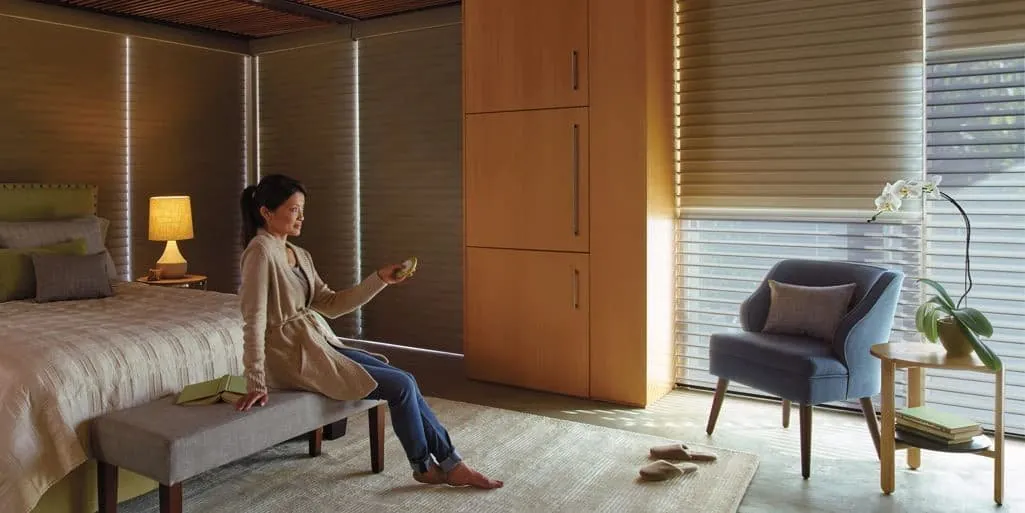
Kitchens and family rooms at the back
Many of the larger Milton houses have been opened up at the back, with a kitchen running into a family room and a row of windows or a wide double opening looking over the yard. This is the part of the house used from breakfast to bedtime, and its shades get adjusted more often than any others.
Here the remote earns its place on the counter. The window over the sink, the wide opening behind the sofa and the glass by the breakfast table can each be moved on their own or together, without walking around the island or reaching over a backsplash. A working-day schedule can raise the kitchen shades first thing and close the family room as the evening draws in. Roller and honeycomb fabrics in a light-filtering weave keep the space bright while softening the glare that crosses a big room.
Lower village houses
The post-war houses in the lower village are a different proposition: capes, ranches and smaller colonials with standard openings, square frames and room for a headrail inside the casing. Motorizing them is about the everyday nuisances rather than scale.
The window behind the couch, the bedroom sash at the head of the bed, the kitchen window above the sink: each is a small reach, made every day. Put on a motor, they become a button on the arm of a chair or a schedule that runs while you get on with the morning. Many lower village houses start with three or four of those windows and add the rest later, since every PowerView shade joins the same system. Upstairs in a lower village cape, the dormer bedrooms are a good place to begin: the windows are a normal size, but the sloped ceilings and the furniture beneath them make every reach awkward. A remote by the bed, or a schedule that opens the room on school mornings, turns that into something nobody has to think about again.
Planning a big house without guesswork
For Milton, the consultation comes to you. Our shop-at-home service runs from Canton, and our vans carry the samples, so we bring the showroom to your door. The Canton shop-at-home page explains how it works.
In a house with large, formal rooms, seeing the fabric in place matters. A pale sample can turn creamy against painted paneling. A soft gray can cool down beside dark wood. A sheer that looks crisp in the hand can glow when the afternoon sun hits a tall south window. Choosing at home lets you see all of that before deciding.
The visit also maps out the motorization: which openings should travel together, which rooms suit a schedule, how many remotes the household needs and where they should live. A consultant walks through with you, tries samples at the glass and talks each room through. Interior design consultations are available if you want help bringing a large room together.
Every window is then measured, and you receive a free estimate. You take the time you need. If you also want to see a showroom, the nearest to Milton is our Franklin showroom.
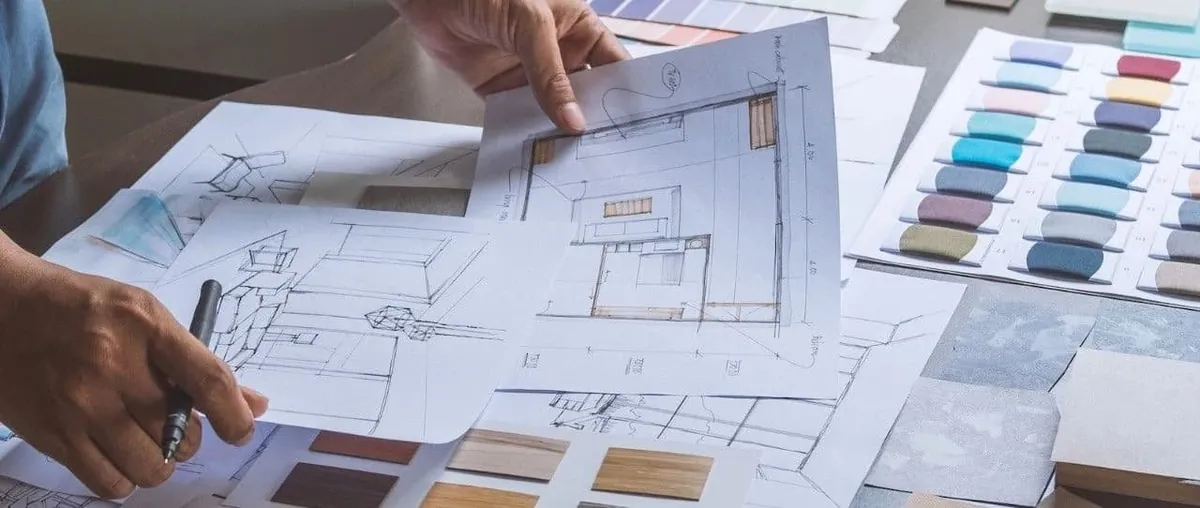
The order of things
- Send a consultation request and suggest a time that works for the household.
- Our consultant brings the samples and starts with the rooms you care about most.
- Openings get measured at several points, with depth, squareness and any old hardware recorded.
- A free estimate arrives, and the decision stays with you, on your timetable.
- Hunter Douglas builds every shade to the recorded sizes.
- Our Hunter Douglas certified installer hangs each one, programs its upper and lower stops and links it to the remotes and app.
- Before the van leaves, every group and starter schedule gets a trial run with you.
You can read about the day itself on what happens on installation day.
One look from the street, many windows behind it
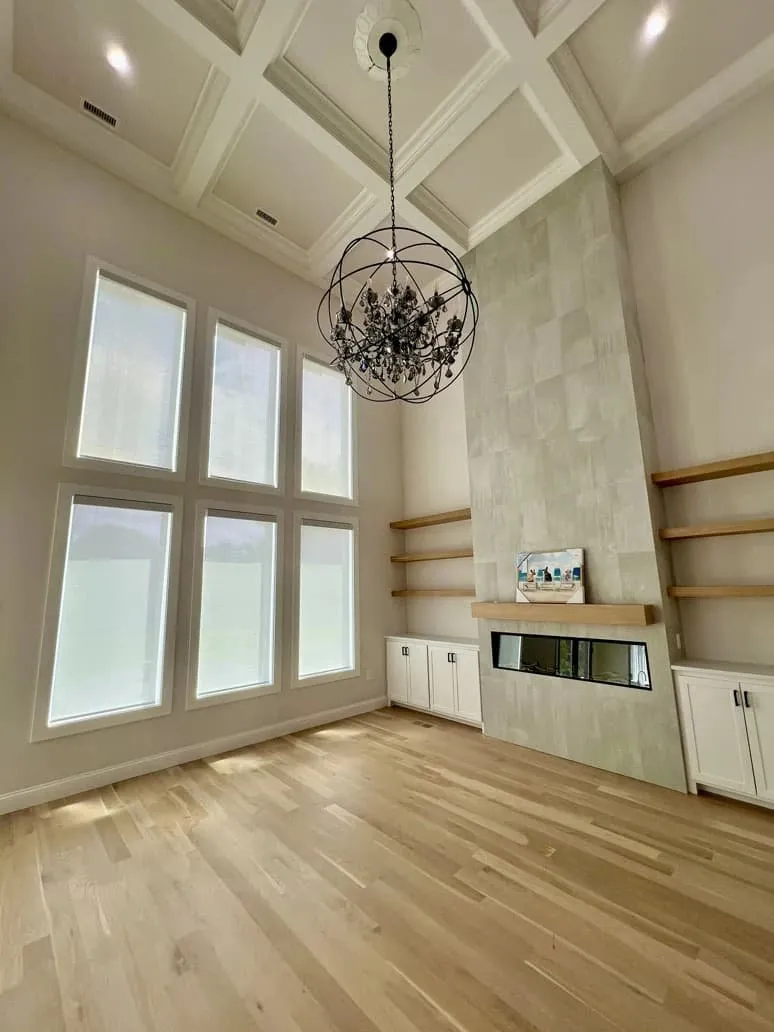
A large colonial can show a dozen or more windows on its front alone. When every shade is a slightly different height, the facade looks restless, however handsome the house. When they all sit at the same line, it looks composed.
That is one of the quieter benefits of motorized blinds in Milton. Grouped by facade, the front shades open to one height in the morning and close together in the evening, either from the remote or on a schedule. The house looks the same from the sidewalk whether you set the shades yourself or the schedule did it while you were out.
Fabric color plays its part as well. On a long run of tall windows, a single even shade color seen from outside keeps the front calm, while each room can still have its own feel indoors. We bring samples so you can judge the outside view and the inside view at the actual windows.
The front hall, the library and the study
Beyond the living and dining rooms, older Milton houses often have a center hall with a tall window on the landing, and a library or study off the front. These are rooms with particular needs. The landing window is almost impossible to reach without a ladder. The study wants soft, glare-free light on a desk or a screen during the day and privacy in the evening.
A motor on the landing window ends the ladder problem for good, and a schedule can keep it in step with the front of the house. In the study, a sheer or light-filtering fabric lowered to the right height from the remote or the app takes the glare off the desk without darkening the room. Bookshelves often surround those windows, so a slim headrail matters, and motorized blinds in Milton studies keep the shelves and trim uncluttered.
Bedrooms and the upper floors
Large Milton colonials often have bedrooms on two upper floors, with tall windows on the second and smaller ones tucked under the roof on the third. The top-floor rooms are the hardest to keep up with by hand, partly because nobody climbs the extra flight to open a guest room’s shades.
Schedules keep those rooms in step with the rest of the house. A room-darkening fabric in the main bedroom can close at night and rise at the hour you choose on working days, with a different routine on days off. A guest room can simply follow the front of the house. Each bedroom can also have its own remote, so a teenager’s room or a home office runs on its own timetable.

Why a Hunter Douglas Gallery dealer suits a Milton house
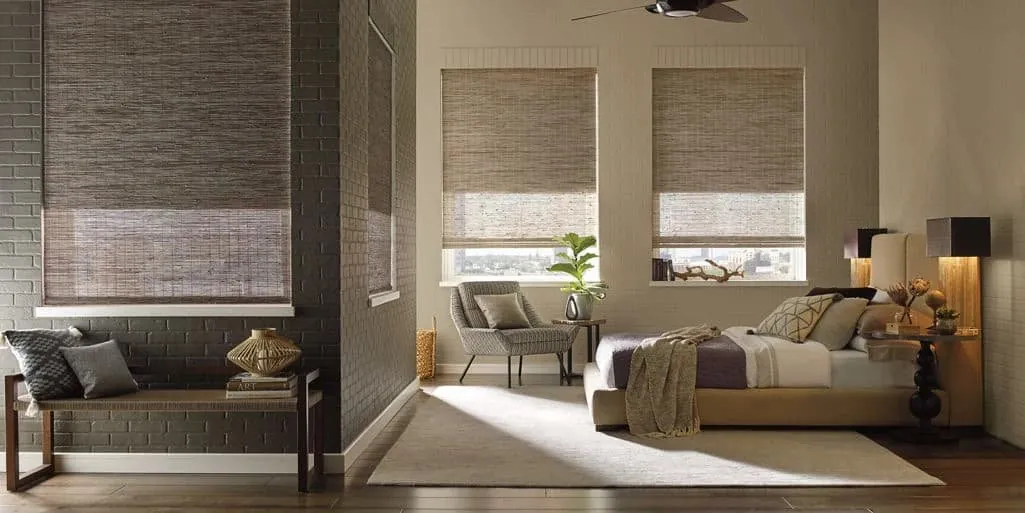
Blinds & Designs is a Hunter Douglas Gallery dealer, which puts the whole PowerView lineup within reach. A parlor might want romans, the dining room sheers, the bedrooms room-darkening rollers and the kitchen blinds, and every one of them can still answer to the same remote and app. Browse the lineup on our motorized blinds and shades page.
The people who hang and program the shades hold Hunter Douglas certification, and they run each motor through its paces before leaving. Estimates cost nothing. We also offer interior design consultations, and we repair blinds and shades too. The Milton page gathers all our services in town.
Questions from Milton
Can a double-width opening take motorized shades?
Yes. Usually two shades sit side by side, one per sash, and they are paired so they move and stop together. Where the frame and fabric allow, one wide shade can cover both.
We have drapery panels we love. Do we have to take them down?
No. A motorized shade mounted inside the frame sits behind the panels and does the daily raising and lowering, while the drapery stays where it is.
Will tall sash shades hang straight?
They will. The motor lifts both ends of the bottom rail together, so a tall shade stays level. We check frame depth and squareness at each window before recommending a mount.
How do schedules help with rooms we rarely use?
The formal rooms can open each morning and close each evening at set times, so they look lived in from the street and are ready when guests arrive, without anyone walking through to adjust them.
Is the estimate free?
Yes. We measure at the in-home consultation and give you a free estimate for the shades and installation you are considering.
Starting with the biggest room
In most Milton houses there is one room that would change the most, usually a formal front room or a dining room with tall double openings. Begin there. Request a consultation and we will bring the samples to your house, measure, and prepare a free estimate for motorized blinds in Milton.
You can also reach us with the call button, or read about in-home consultations before you book.