
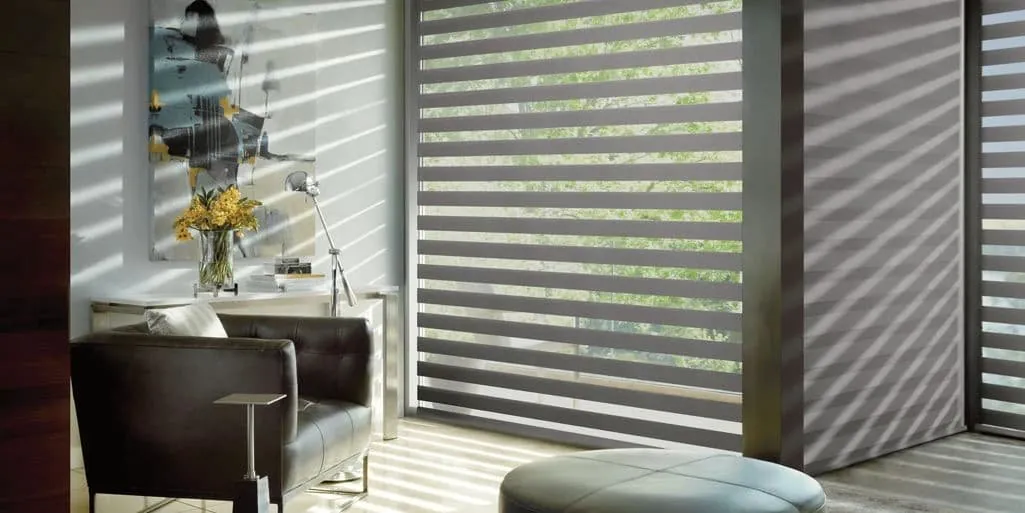
A small town with two kinds of window
Millville is a compact place, and its houses fall into two broad groups. There is the mill housing, older and closer to the street, with the original narrow sash still in many of the frames. And there are the post-war capes, set on modest lots along Main Street, with the standard window sizes of their day. Most streets have a bit of both, so planning roller shades in Millville, MA, usually means dealing with two kinds of opening in the same neighborhood and sometimes in the same house, where an older place has had a newer addition.
The narrow sash needs careful measuring and a shade slim enough not to crowd it. The standard windows are simpler, but they bring their own questions: a front room that faces the road, an upstairs bedroom that faces the sunrise, a back room that gets the full afternoon.
A roller answers both. One flat panel of fabric on a slim tube, it sits neatly in a narrow frame or a wide one, and the choice of fabric, from an open screen to full blackout, does the real work.
Roller shades in Millville, MA, for both kinds of house
Each visit for roller shades in Millville includes Hunter Douglas Designer and Alustra fabrics, light filtering through blackout. The three cards below show how we usually approach each kind of house, and how to tie them together.
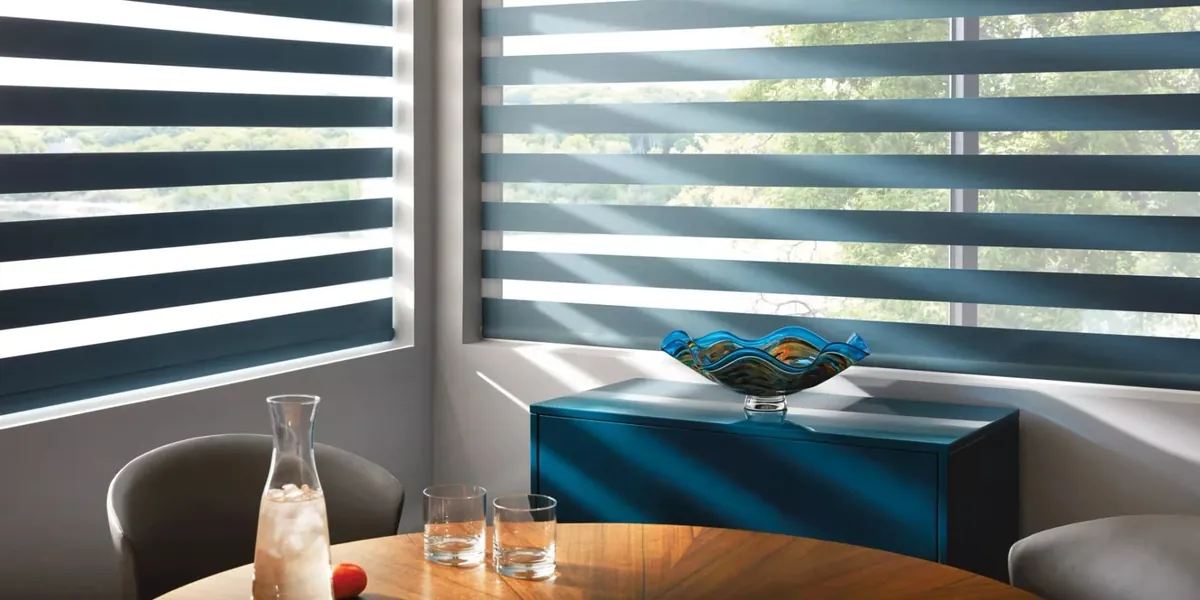
The mill houses
Slim rollers fitted inside the original narrow frames, with fabrics chosen for privacy from the street and the house beside.
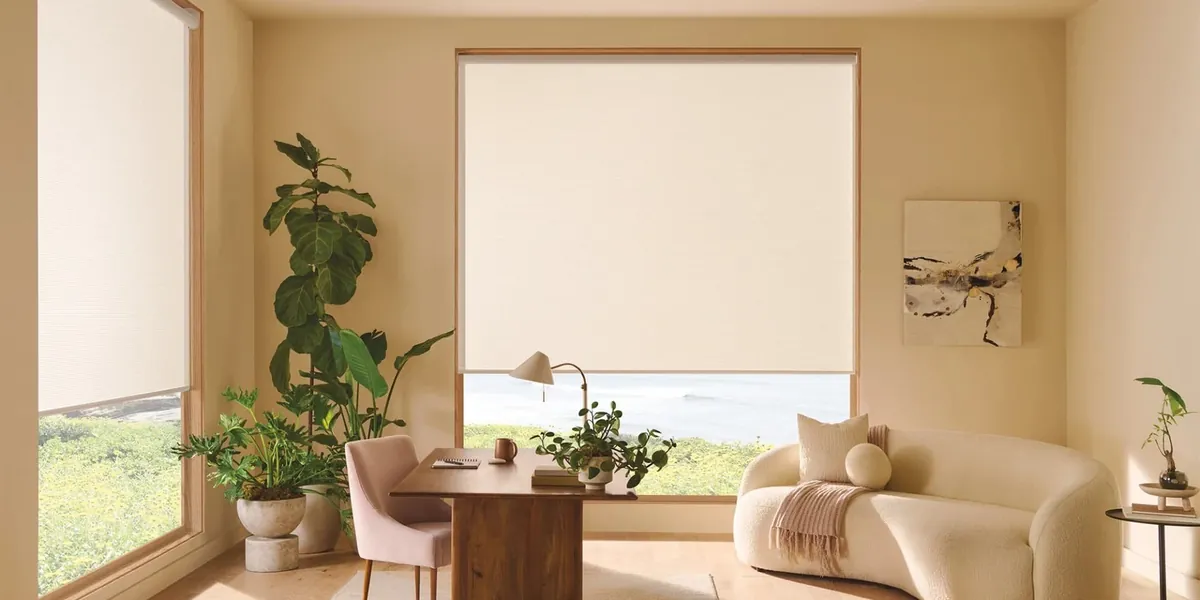
The post-war capes
Standard openings that take a roller with ease. Screens for the sunny side, darker cloths for the bedrooms upstairs.
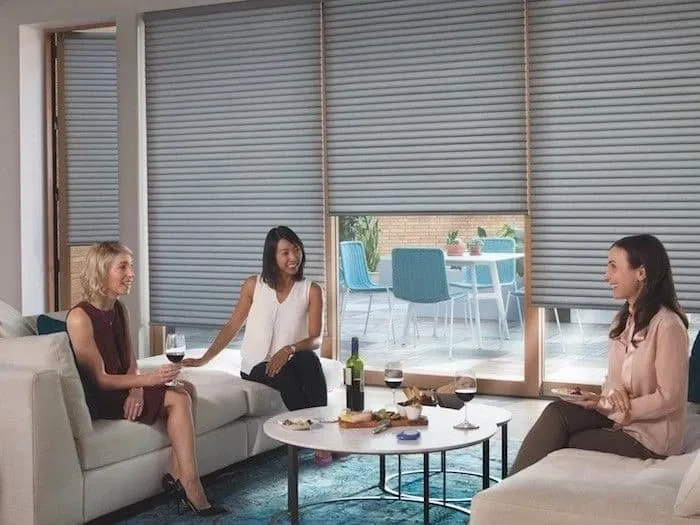
One look across the house
A single color family across different fabrics, so old and new windows read as one house from Main Street.
Why a roller suits a small room
Rooms in a mill house or a cape are rarely large. Furniture tends to sit close to the windows, a bed may be pushed against the wall beneath one, and there is not much space to spare at the sides of the frame. A window covering that needs room to stack, swing or fold can end up crowding the room.
A roller asks for very little. Raised, it winds into a slim roll at the head of the window and leaves the glass clear. Lowered, it is a flat panel with nothing sticking out into the room. There are no slats to tilt or collect dust and no fabric bunching at the sides. That simplicity is a large part of why rollers work so well in small houses: the window stays the feature, not the shade.
It also keeps a small room light, which counts for a lot on a short winter afternoon. A pale light filtering roller lets daylight spread evenly across the room instead of throwing a bright patch on the floor, and a small room that is lit evenly feels bigger than it is.
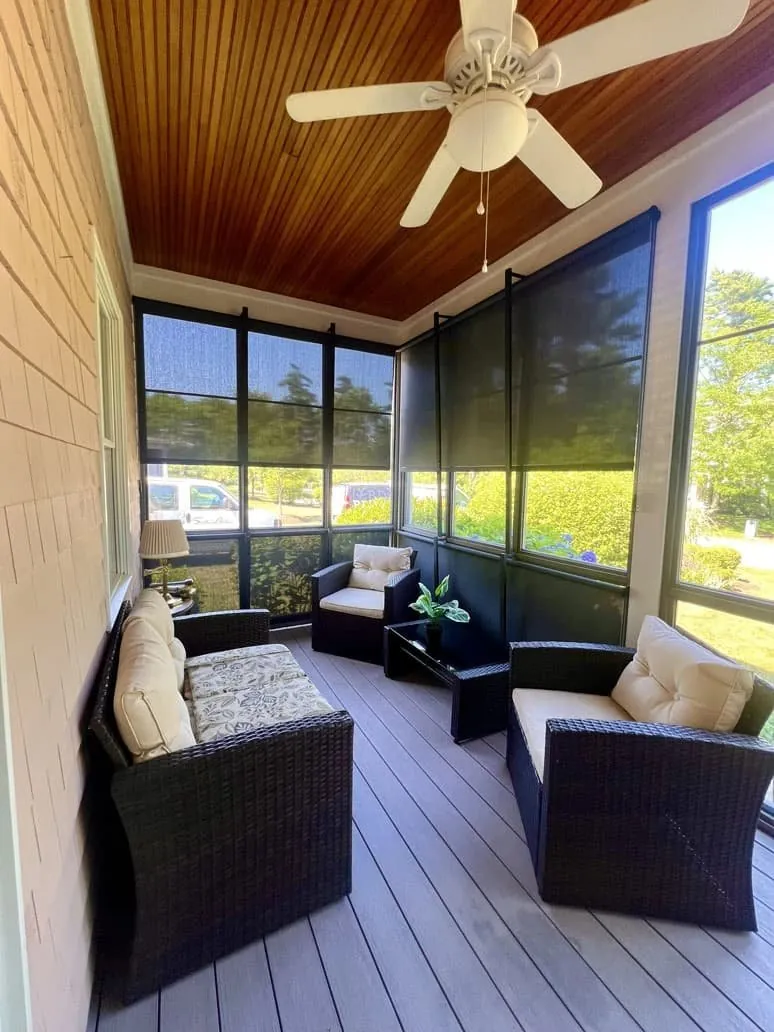
Taking the measure of the old sash
The original narrow sash in the mill housing has been opened and closed for a very long time. Frames move. One side can lean in, the head can sit lower at one end, and paint builds up on the stops. From across the room the window looks square; with a tape it often is not.
We take three widths, at the head, the middle and the sill, and use the smallest for an inside mount, so the roll clears the frame along its full length. We take three heights, left, center and right. Then we check how deep the frame is where the bracket will sit, and look for anything that intrudes: a sash lock, a pulley, the track of a storm panel.
An inside mount keeps the slim old casing in view and is our first choice on these windows. Where the depth is too shallow, or the frame too far out of true for a clean fit, a mount across the face of the casing is the better answer. It also covers the narrow strips of glass a roller leaves at each side, which matters more on a slim window than on a wide one, especially in a bedroom you want dark.
Main Street at night
The houses along Main Street face the road and the sidewalk, some at a fair distance and some quite close. By day the front rooms are easy to screen. The street is bright, the room is dimmer, and a light filtering roller glows from outside and gives away very little while you see out through a soft haze.
At night things change in two ways. First, your lamps make the room the brighter side, so a thin cloth can show shapes and movement to anyone on the sidewalk. Second, passing headlights sweep across front windows, and in a bedroom facing the road that moving light comes straight through a light fabric.
For front rooms used in the evening, a room darkening cloth stays private once the lamps are on. For a front bedroom, blackout keeps the room dark and stops the headlight sweep. If you like a bright front room by day, a lighter roller with drapery for the evening is another route, and Designer Banded shades give both in one shade, open for light and closed for night.
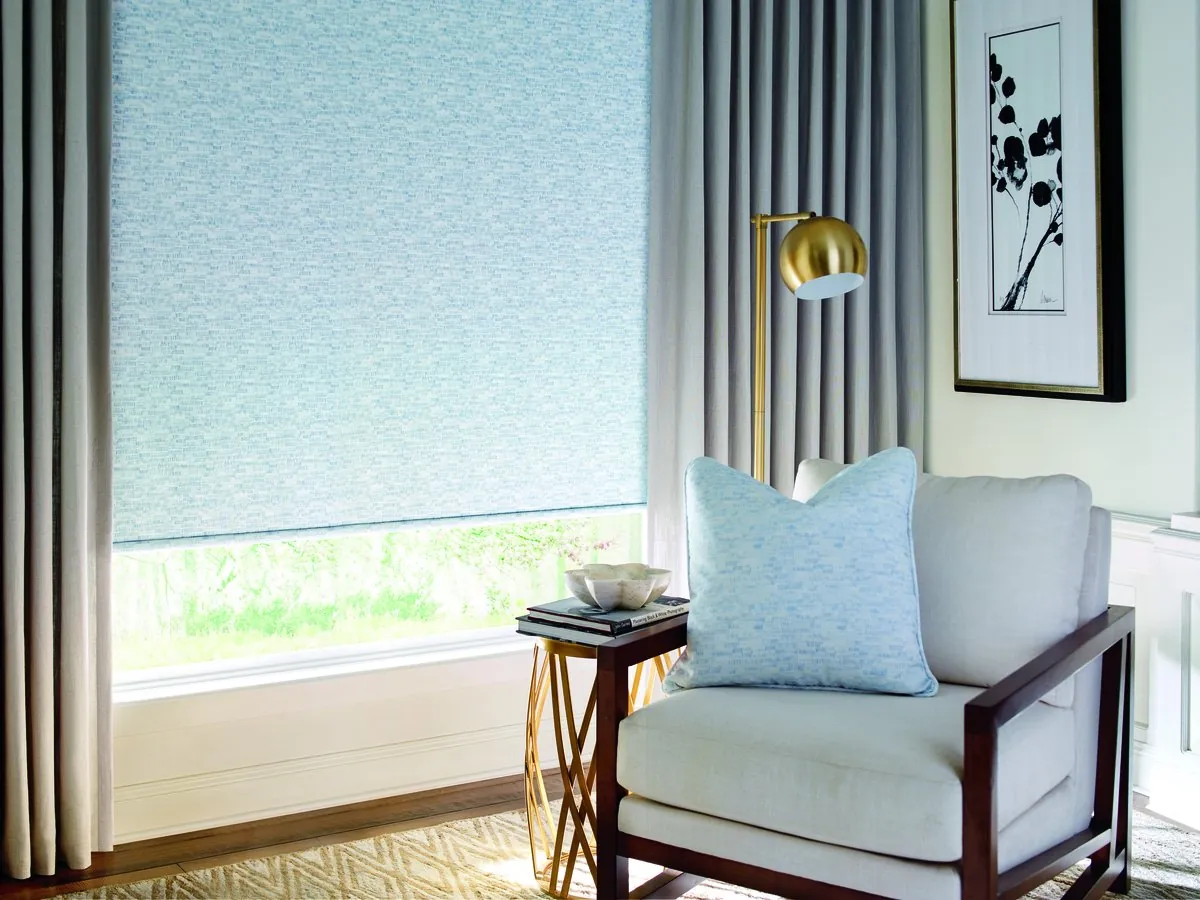
Side windows on a modest lot
On a modest lot the neighbors are near enough that a side window can look across at theirs, though usually not as tightly as in a dense village. Often only the lower part of the window lines up with anything. A roller lowered partway handles that well: the top half stays open for light and sky, the lower half is screened.
Where a side window faces a neighbor’s window directly, think about when you use the room. A kitchen used mostly by day can take a light filtering cloth. A bedroom or a den used at night does better with a denser fabric or a banded shade.
The capes and their standard openings
The post-war capes are the easy part of a Millville order, in the best way. The openings are standard sizes, square and consistent from one room to the next, so a roller fits cleanly and a row of them looks tidy from the street.
Upstairs, a cape’s bedrooms sit under the roof with dormer windows or windows in the gable ends. Those small upper windows can catch strong early or late sun, so a room darkening or blackout roller is usually the choice there. Downstairs, the living room often faces the road and wants daytime privacy, while the kitchen and any back room face the yard and want light. A screen on the sunny side of the house takes the glare off without hiding the yard.
Because the sizes repeat, a whole-house order in a cape is straightforward to plan and simple to keep consistent. It also means a shade from one bedroom can be swapped with another of the same size if you rearrange rooms later, as long as the fabric suits the new spot. The one window to watch is the small one over the stairs, which is often a size of its own.
Choosing a fabric, room by room
Living room
A light filtering cloth by day. If the room faces Main Street and you sit there in the evening, step up to room darkening, or add drapery or a banded shade.
Bedrooms
Room darkening or blackout. In a cape’s upper rooms the small windows catch the sunrise; at the front of a mill house, headlights.
Kitchen
Something pale and translucent, so the counters stay lit while the window next door turns to a soft blur. Near the sink, pick a cloth you can wipe.
Back rooms in the afternoon sun
A solar screen, chosen by openness. More open keeps more of the yard in view; tighter cuts more glare. Darker colors are easier to see through from inside.
Bathroom
A dense cloth that stays solid with the vanity light on, hung clear of the sash lock.
Our guide to choosing fabric for a sunny room explains light and color in more detail.
What to expect when we come to the house
You can judge a roller fabric only in the light it will live in. That is why most Millville orders start at home. Our vans carry samples, so we can bring the showroom to you.
- Request a consultation online or with the call button, and choose a time that suits.
- We bring Designer and Alustra fabrics in every opacity, plus screens in several openings.
- We look at each room with you: which way it faces, what it looks at and when you use it.
- You see each fabric at your own window, and at the front of the house we check it with the lamps lit.
- We measure each frame, old or new, and note the mount that suits it.
- You get a free estimate for the shades you are interested in, with no pressure on the day.
The what happens at an in-home consultation guide sets the visit out in full. Want color advice for the room as a whole? Add one of our interior design consultations while we are there.

Screens for the sunny side
Nearly every house has a side that bakes, usually a back room or kitchen looking south or west. Solar screen rollers were made for exactly that glass. The cloth has a measured looseness to its weave, called openness, and choosing it is a question of how much yard you want to see against how much glare you want gone. Looser screens frame the yard clearly and admit more daylight. Denser screens hold back more of the glare but blur the outlook further.
Color shifts the result. Charcoal and dark bronze tones read as more transparent from your chair, while white and pale stone bounce sunlight back out and keep the room lighter. In a small Millville room the chair is often only a step or two from the glass, so those contrasts jump out, and that is the reason we hang test screens right in the frame instead of flipping through a book. Our guide to the best shades for sun and glare covers it further.
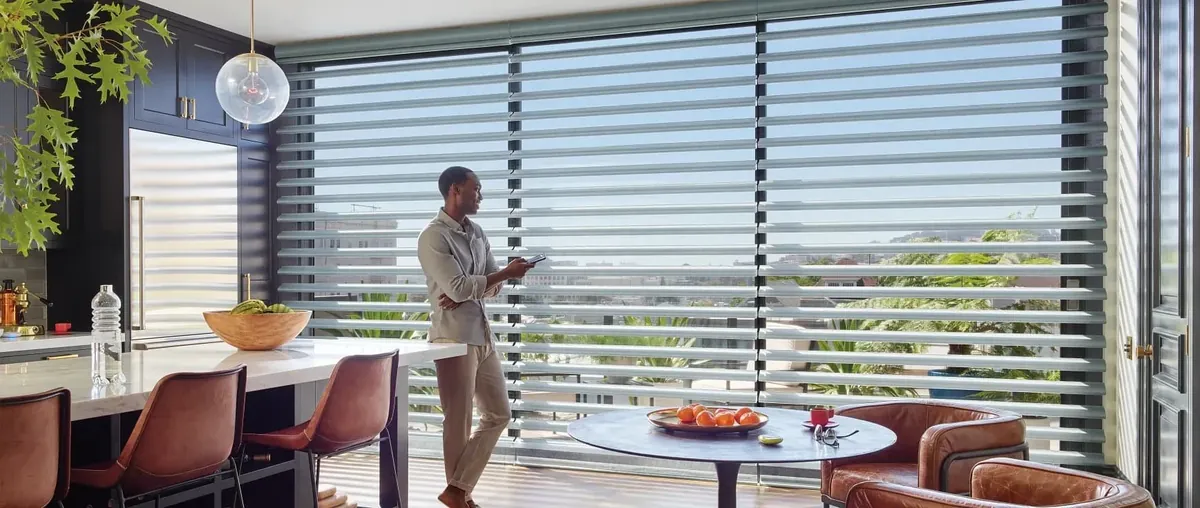
PowerView in a small house
Motorization is not only for big houses. In a cape, a schedule that lowers the front shades at dusk and raises the bedroom shades in the morning makes the house easier to live in, and a window over a bed or behind a sofa is much easier to work from an app or a remote than by reaching across furniture. PowerView lets you group shades, set scenes and run schedules. We plan how each motor is powered at the visit.
Most small houses motorize only one or two awkward windows. Our page on how motorized shades are controlled explains the options, and our motorized blinds in Millville page covers PowerView in more detail.
Additions and the join between old and new
Plenty of Millville mill houses have grown a kitchen or a family room at the back, built long after the original rooms. The front half keeps its narrow old sash while the addition has standard modern openings, and the two meet somewhere around the kitchen door. Walk from one to the other and the windows change shape, size and depth.
That join is where a house can start to look patched together, and it is also where rollers help most. The same fabric can be made for a slim old frame and a wide new one, mounted inside both, and set to drop to the same line. Matching the color and the hem height across the join makes the house feel like one place again. We plan roller shades in Millville, MA, for houses like this by walking the whole ground floor in one go, so the old rooms and the new are measured and chosen together rather than one at a time.
Hung by certified installers
Each installer who comes to your door is Hunter Douglas certified. In an older mill house that means locating sound timber behind the plaster before a single screw goes in, shimming each roll level where the frame has sagged, and running every shade top to bottom until it travels cleanly. In a cape they line up the shades so a row of windows drops to the same height. Before they go, they show you how each shade works. See what happens on installation day for more.
Shades for the rest of the house
No house has to choose one product for every window. Honeycomb cellular shades in Millville help a chilly bedroom, soft roman shades in Millville dress a dining room, and plantation shutters in Millville give a front parlor a permanent look. Custom blinds in Millville round out the list, and the Millville page shows the lot in one place. The roller shades overview compares the lines.
A common plan is to start with roller shades in Millville, MA, on the front windows and the sunny side, and add to the rest of the house over time.
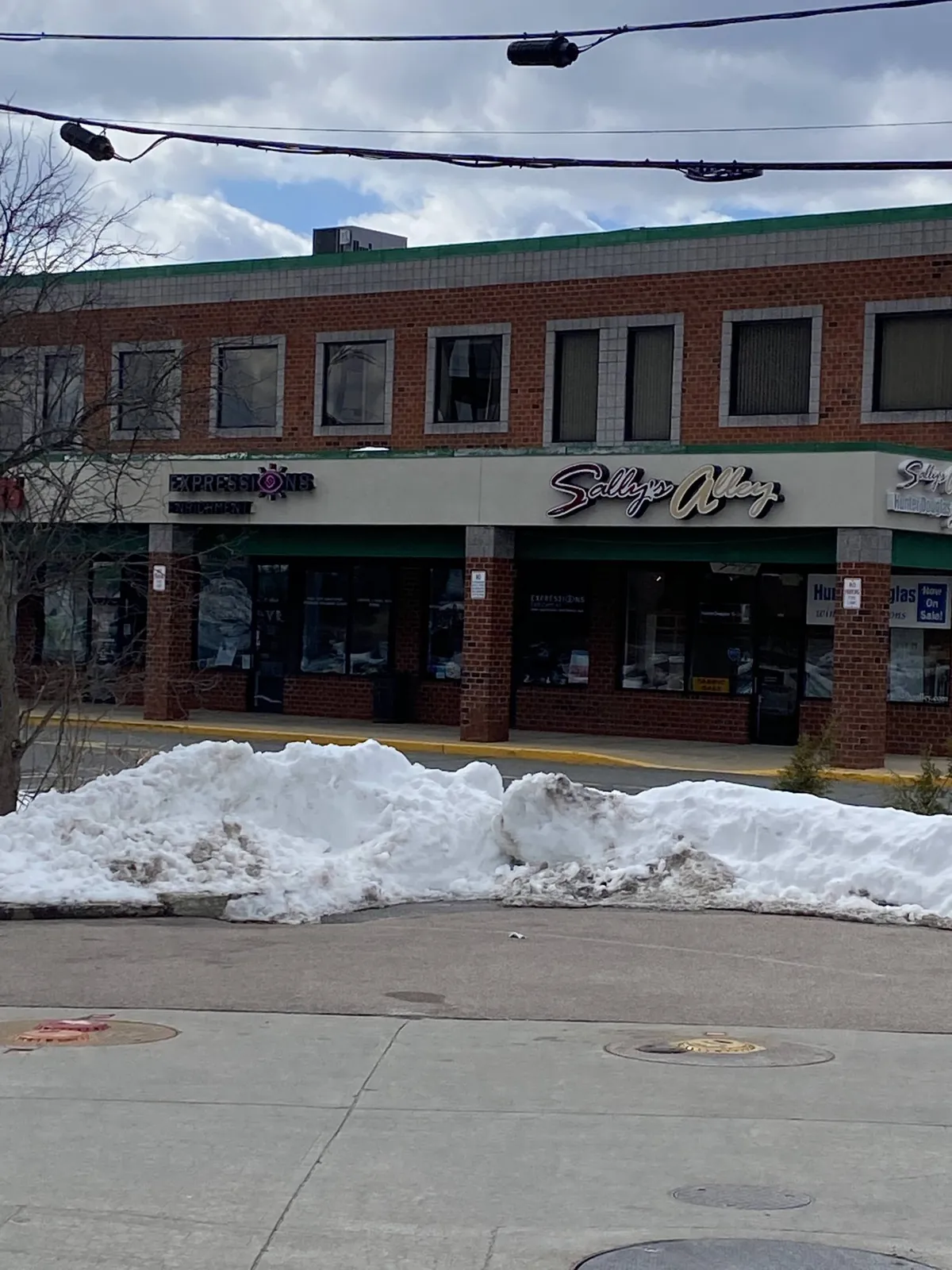
Our nearest showroom is in Franklin
Franklin is our nearest showroom to Millville. It is a good place to handle fabrics if you would like to before a home visit.
For the final choice, nothing beats seeing a sample at your own window, in the light of your own street.
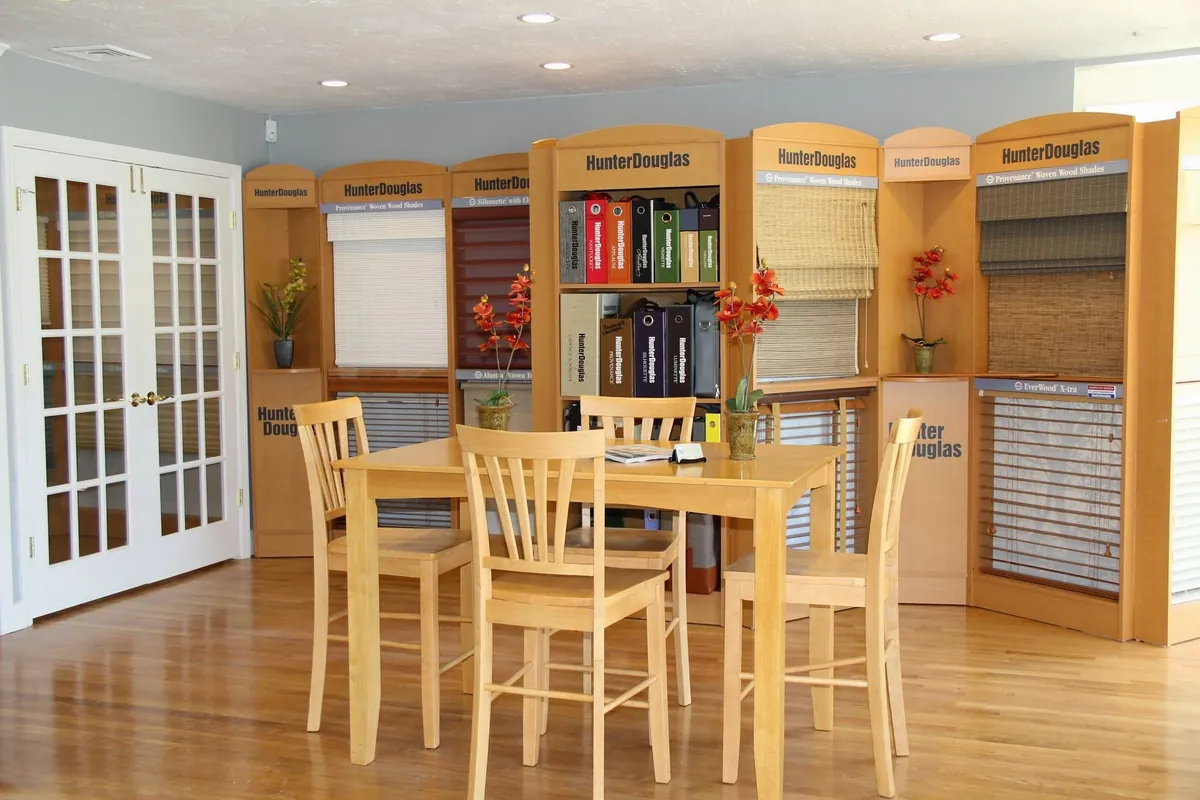
Why a Gallery dealer
Hunter Douglas names a group of its dealers Gallery dealers, and Blinds & Designs is one of them. For a Millville house that puts all of the roller choices on one table at one visit: the Designer cloths, screens and banded fabrics, the Alustra range and PowerView.
The fitting is done by certified Hunter Douglas installers, and if an old shade of yours has stopped working, blind and shade repairs are part of what we do. There is more on our page as a Hunter Douglas dealer in Millville.
Questions from Millville
Will a roller fit the narrow original sash in my mill house?
Usually it tucks inside the frame. Three widths are taken, top, middle and bottom, since old frames drift. A shallow frame gets a casing mount instead.
Headlights shine into my front bedroom at night. What stops them?
A blackout roller. A casing mount covers the side strips as well, which helps on a narrow window.
Can old and new windows in my house match?
Yes. Rollers come in the same fabric for a narrow sash or a standard window, so one color family ties the house together.
Which roller suits a sunny back room?
A solar screen. Loose weaves keep the yard in sight, dense ones fight glare harder, and we hang both in your frame to compare.
Is the estimate free?
Yes. We measure during the consultation and give you a free estimate.
Take the next step
Choosing a roller is easiest with the fabric at your own window, whether it is a narrow old sash or a standard cape window. Request a consultation and we will bring the samples, measure each frame and leave a free estimate. You can also use the call button, or visit the Franklin showroom.