
Summer cottages turned into year-round homes
A good share of Wareham’s housing started life as something else. In Onset and around Swifts Beach, rows of small summer cottages were built for a few warm months and have since been winterised, extended and turned into homes people live in all year. Along Main Street the older village housing sits close together, and inland the newer colonials follow a more familiar suburban pattern. Each of those groups asks something different of roller shades in Wareham, MA.
The converted cottages are the most distinctive. Their original window openings are small, often odd sizes, and sometimes set in walls that have been rebuilt or furred out during the conversion. On the shore streets they also take heavy salt exposure, with the wind off Onset Bay or Buzzards Bay carrying it right up to the glass. A roller shade is light, compact and simple, with very little exposed metal, and that makes it one of the most practical coverings for a small, salty window. It also makes sense in the larger rooms added later and in the colonials inland, which is why we use it so widely here.
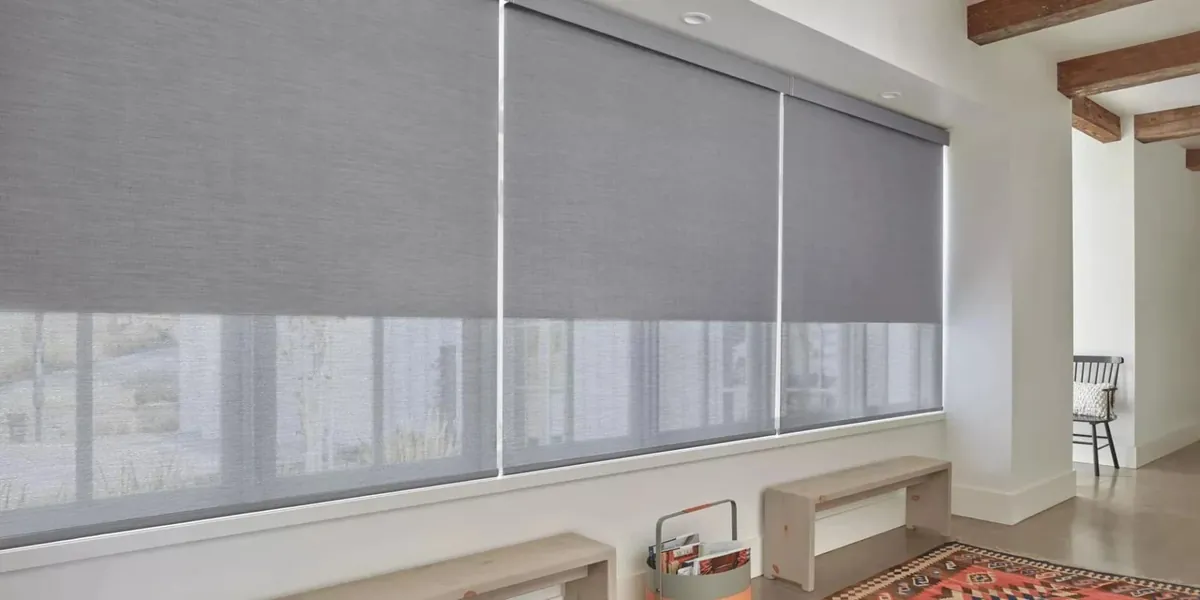
Picking roller shades in Wareham, MA, by light level
Most decisions come down to how much light a room needs. These are the three Hunter Douglas fabric families we bring in the van.
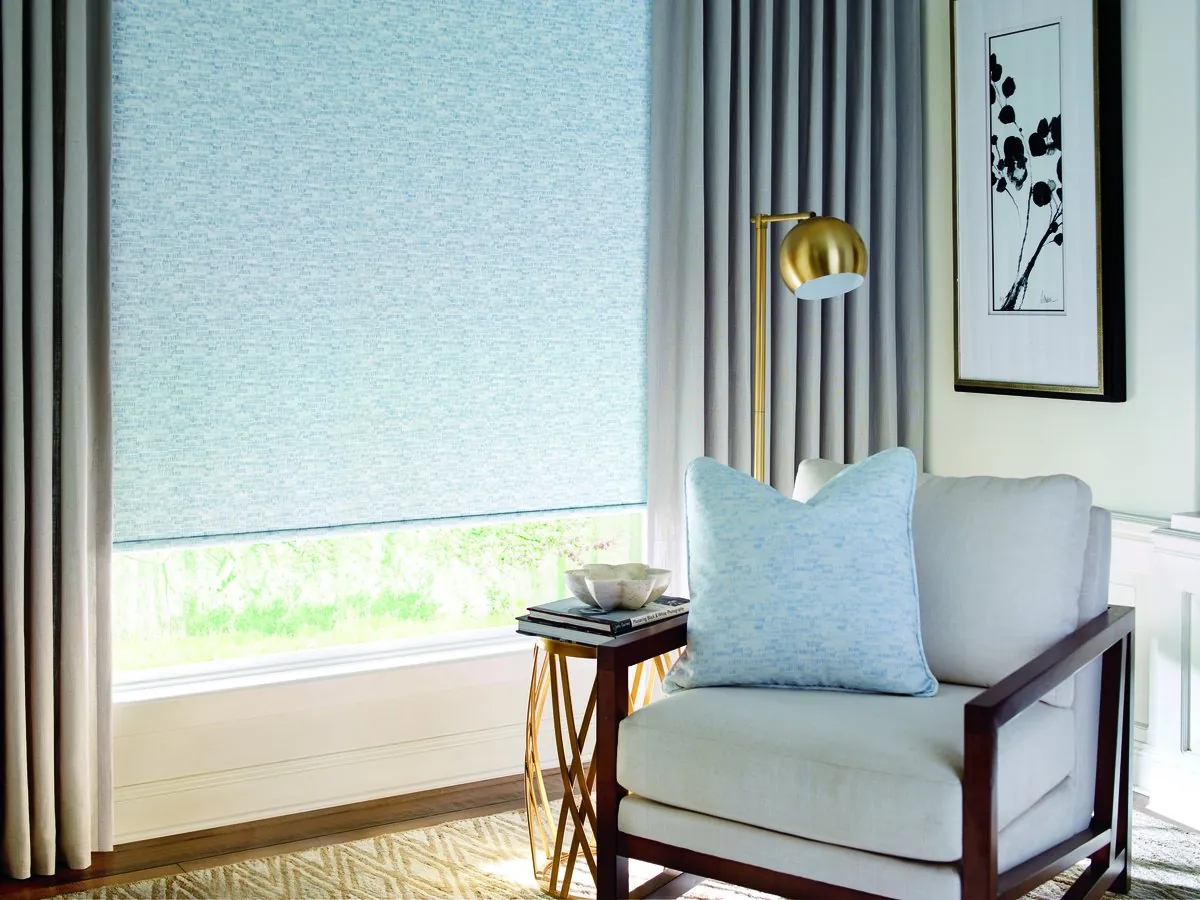
Light filtering
Blocks the view in and lets daylight through softly. The everyday choice for cottage living rooms and village kitchens.
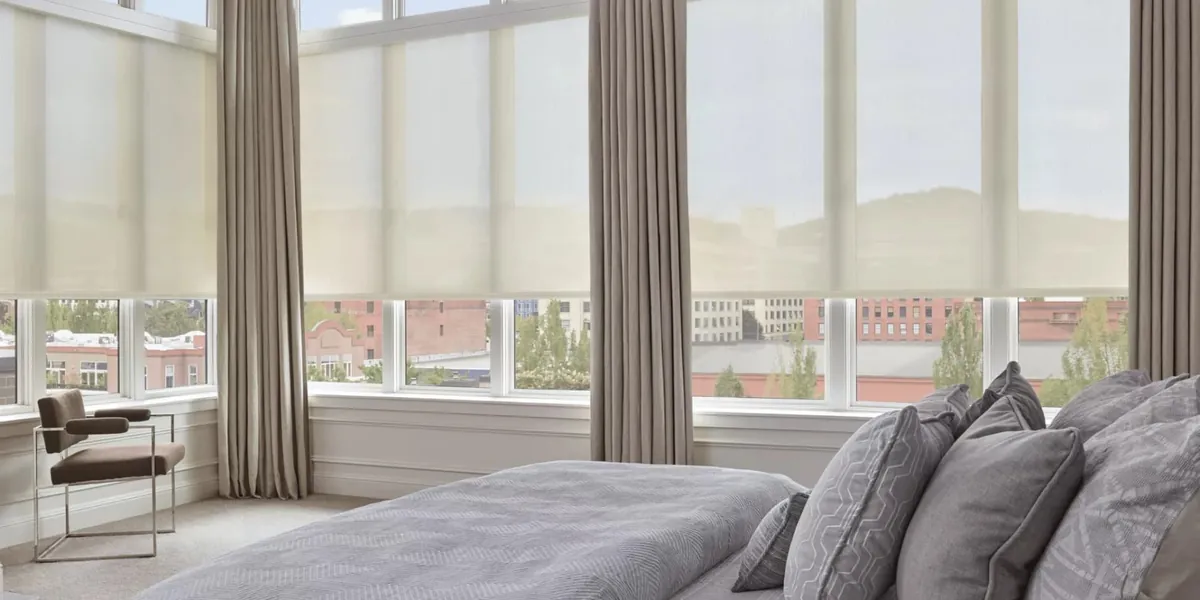
Solar screen
An open weave that cuts glare off the water and keeps the outlook. For rooms facing the bay and big windows that take the afternoon sun.
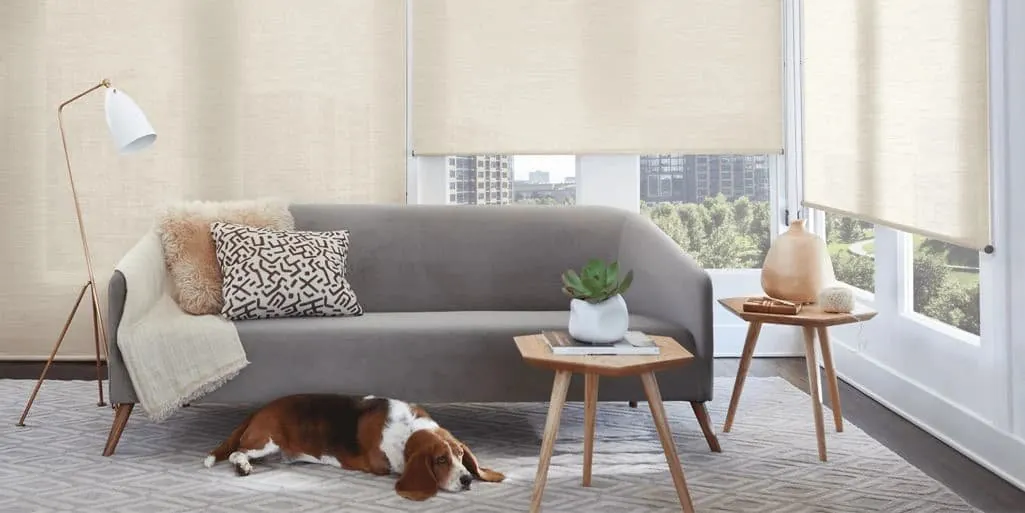
Room darkening and blackout
Dense fabrics for bedrooms and media rooms, including the small cottage bedrooms that catch the early light.
Small, odd-sized openings in converted cottages
When a summer cottage becomes a year-round house, the windows are usually the last thing to be standardised. Some keep their original small sash; others were swapped for whatever replacement windows fitted the old openings, so one wall may have three windows of three slightly different sizes. Walls thickened with insulation can change how deep the frame is, and a few windows end up set further back in the wall than they were before.
Off-the-shelf shades rarely suit openings like that, which is where a made-to-measure roller earns its keep. Every shade is made for its own window, so a slightly narrower or taller opening gets a shade that fits it exactly. When the frame has enough depth, an inside mount tucks the roll neatly at the top of the opening; when it does not, a mount on the face of the trim covers the window fully and hides any uneven edges.
We measure every cottage window on its own, never assuming two that look alike are the same. Width is checked at more than one height, the height on both sides, and the depth at the head where the bracket will go. On a small window, a few millimetres matters, so we take our time over it.
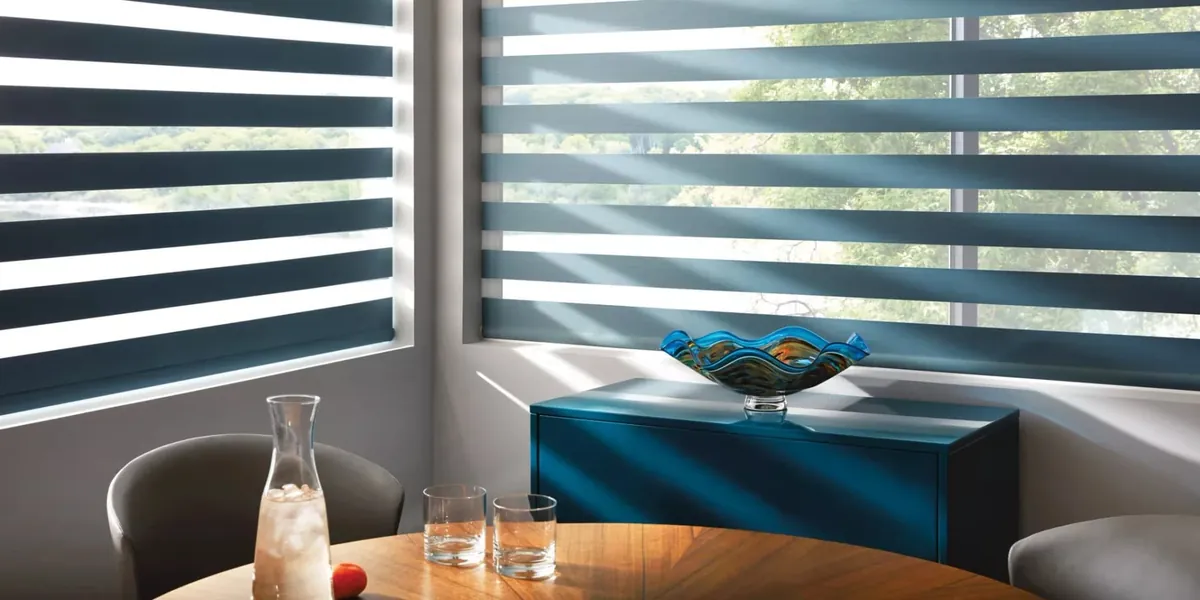
Salt exposure on the shore streets
On the streets closest to the water in Onset and Swifts Beach, salt is part of daily life. The wind brings it up from the bay, it settles on screens and sills, and over time it works on anything metal near an open window. Old metal blinds with exposed ladders and cord locks are often the first thing to suffer.
A roller handles salt air better for a few simple reasons:
- Less exposed hardware. The clutch or motor sits inside the tube, and the brackets are small. There is no ladder or row of slats to corrode.
- Cordless or motorized lifts. With no cord lock at the side, there is one less part to seize up. A PowerView roller is worked by remote, phone or schedule, so nothing needs to be touched at all.
- Easy cleaning. A smooth fabric is cleaned with a soft brush or a vacuum on low. Our guide to caring for fabric shades has the routine.
On a window that is open much of the summer, we also suggest fabrics that hold their color well in strong light, since the shore streets get plenty of sun as well as salt.
Cottage rooms where every bit of light counts
Converted cottages tend to have small rooms with small windows. That makes light precious. A heavy, dark window covering can turn a cosy room gloomy, and a bulky one can hide half of a small window even when it is raised.
A roller is a good match. Raised, the fabric winds into a slim roll at the head of the window and leaves almost all of the glass clear. Lowered, a pale light filtering fabric gives privacy from a close neighbor or the street while still letting soft daylight through. For a cottage that sits a few steps from the next one, which is common in Onset, that balance matters more than anything else.
In the bedrooms, small windows still let in a surprising amount of early light. A room-darkening fabric on an outside mount, sized a little wider than the opening, covers the gaps at the sides and keeps the room properly dim.
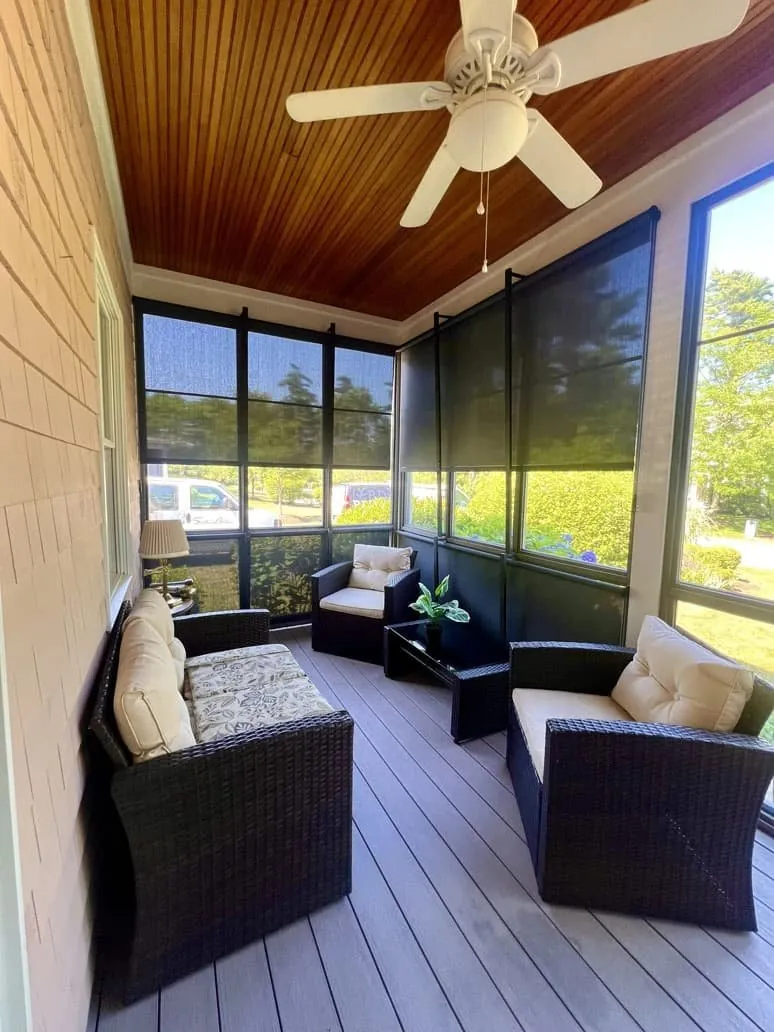
Porches and sunrooms added during conversion
Many converted cottages have gained a sunroom, an enclosed porch or a bigger living room facing the water. These additions tend to have much larger glass than the original house, sometimes on three sides, and they can get very bright and warm in summer.
A solar screen is usually the best fit for those rooms. It cuts the glare and some of the heat while keeping the view of the water or the garden, and it can be lowered on just the sides that are taking the sun. The openness of the weave decides how much view and light come through: a looser weave keeps the outlook sharper, a closer weave blocks more sun. Darker screen colors are generally easier to see through than light ones.
On a porch with many windows, a separate shade per window, all in the same fabric, keeps the room tidy and lets you shade one side at a time. For a long run of glass, PowerView lets you lower them all together. Our guide to the best shades for sun and glare compares the options.
From summer use to every season
A cottage that was only opened in July never had to cope with a January morning, and the people who convert one often find the windows behave differently through the year. In summer the sun is high and the problem is glare and heat on the water side. In winter the sun is low, reaches deep into the small rooms, and is welcome for its warmth, but it shines straight into your eyes across the kitchen table.
Roller shades in Wareham, MA, can be planned for both halves of the year. A screen or light filtering fabric lowered part way in winter cuts the low sun at eye level while still letting the warmth reach the room. In summer the same shade comes all the way down through the brightest hours. For a cottage bedroom, a Sonnette cellular roller adds a soft pocket of air behind its curved face, giving the fabric a little more body against old glass on a cold night.
Thinking about the whole year at the consultation saves you from choosing a fabric that only suits one season. If you can, book the visit for the time of day the sun gives you the most trouble, so we see the problem as you do.
Village houses along Main Street
The older houses along Main Street are a different type again: village houses built close to the road and to each other, with taller double-hung windows than the cottages, and interiors that often keep some original trim. Privacy from the street is the first concern in the front rooms, and light from the side windows is often limited by the house next door.
For the street-facing rooms, most roller shades in Wareham, MA, are light filtering. It gives privacy through the day and keeps the room bright, and a light, neutral outward color on every front window keeps the house looking tidy from the sidewalk. Where a front room is used in the evening with lamps on, a denser fabric keeps the inside from showing.
Side windows that face a neighbor a few feet away often need privacy more than light control. A top-mounted light filtering roller lowered most of the time, with the lift kept simple, works well there. Where a village house still has good original casings, an inside mount keeps the trim fully visible.
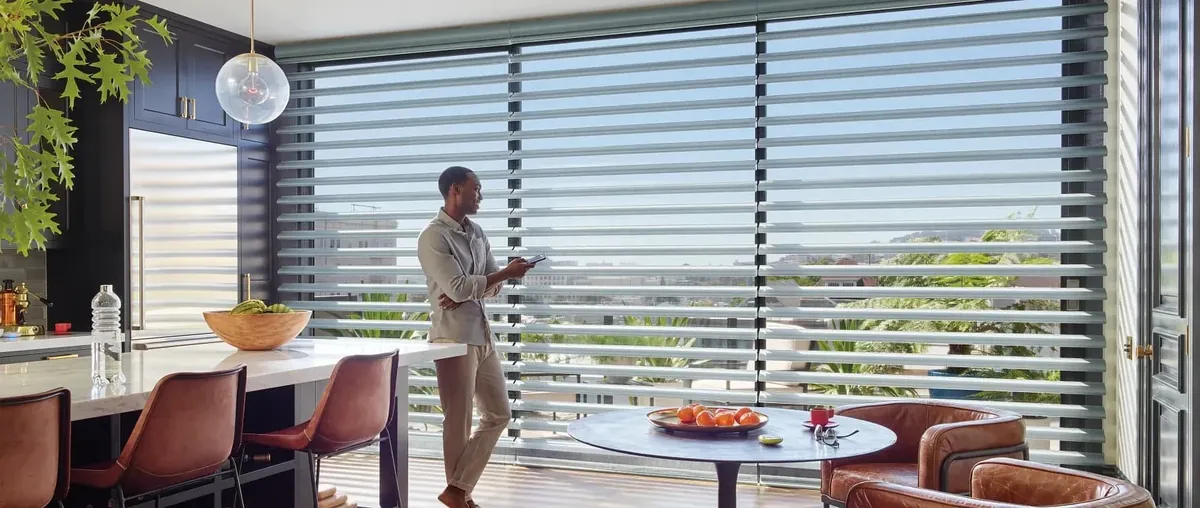
Newer colonials inland
Inland, away from the bay, the houses are younger and more regular. A typical colonial has two stories of matching double-hung windows across its front, a family room at the back with one larger opening, and a kitchen that steps out to the yard through a slider. Frames are square and usually deep enough to hide a roll inside them, so fitting is simple.
Regular windows reward a regular plan. We often suggest a single fabric facing the street on every front opening, so the house looks finished from the road, then vary the weight room by room: brighter downstairs, darker in the bedrooms. On the slider, the shade goes up on the wall above the door so it never fouls the handle. A wide family room opening can be split into a pair of shades sharing one bracket.
Two-story entries and tall stair windows are the awkward ones in a newer house. With PowerView they can be lowered from the hallway or on a timer, and the rest of the house can join the same schedule if you like. More on that in how motorized shades are controlled; the details of powering each motor are settled once we see the windows.
Hands, cords and cottage windows
In a small cottage room, the way a shade is raised matters more than you might think. A cord hanging beside a narrow window takes up visual space, catches in an open sash on a breezy day and, in a house where grandchildren visit, is one more thing to keep an eye on.
That is why so many of the cottage windows we fit in Onset and Swifts Beach end up cordless. You simply take hold of the bottom rail and move it; the shade stops where you let go. On the taller sash along Main Street, or a wide window in a sunroom, a cord loop with its tensioner screwed to the frame takes the weight off your arms. Where a window sits behind a sofa, above a tub or high on a stair, PowerView does the lifting for you.
It is perfectly normal for one house to use all three, and from inside the room the shades still look like a matched set.
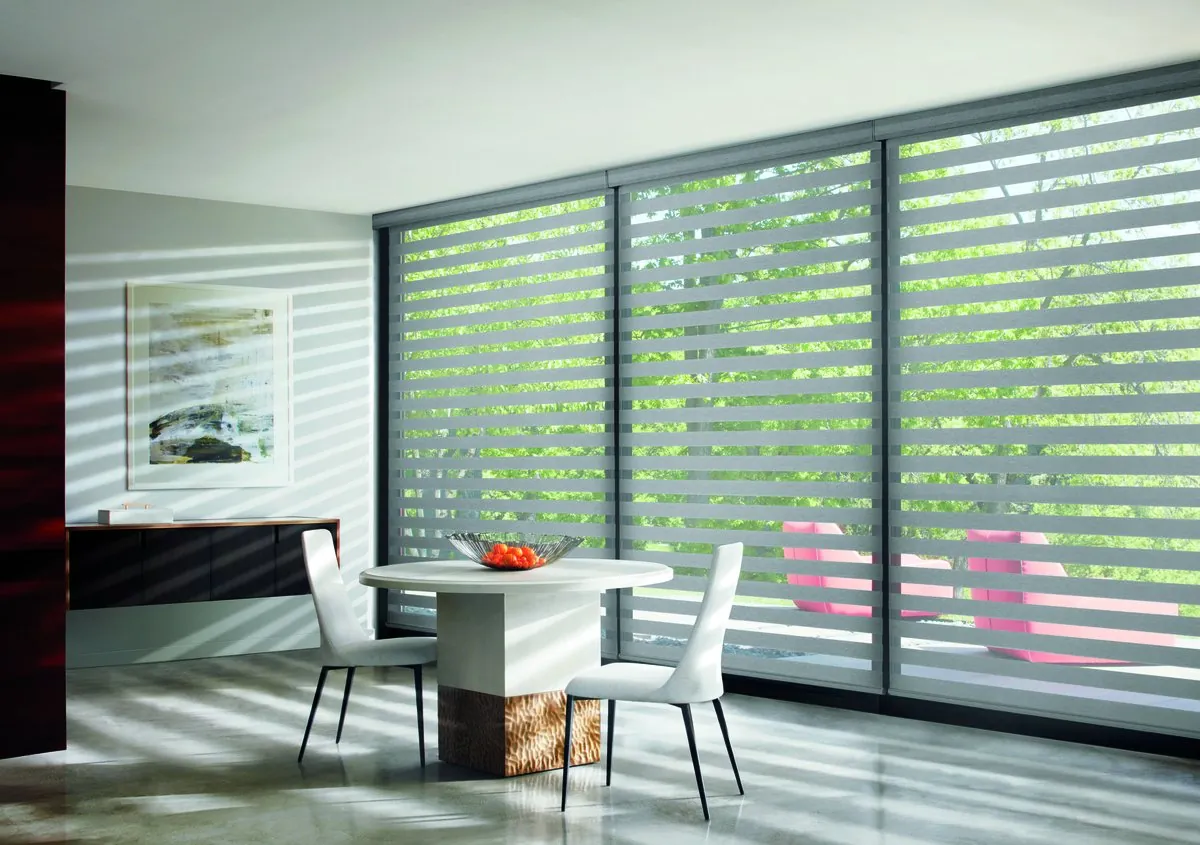
Banded shades for open-plan rooms
When a cottage is opened up during conversion, the living room, kitchen and dining area often become one space. Designer Banded shades are well suited to that kind of room. Sheer and solid stripes alternate on one continuous loop; line them up to let light and a view through, offset them to close the room. You can adjust the light at the dining end without touching the shade over the sink.
They are also handy in a home office, where the light needs adjusting through the day. See Designer Banded for more.
What to expect at your consultation
Odd-sized cottage windows and bright porches are much easier to plan in person, and our vans carry the samples, so the showroom can come to you.
- Use Request a Consultation or the call button to choose a day.
- Starting in the original cottage rooms and moving to any addition, we look at each window and ask what bothers you about it now.
- Fabrics go up against your own glass, from soft light filtering through screen to blackout, so you judge them in real light.
- Each opening is measured on its own, with the depth noted where a hidden roll might sit.
- For every window you get our suggestion for fabric, mounting and lifting, and the reasons for it.
- Then you have a free estimate in hand, with no pressure to decide that day.
You can also read what happens at an in-home consultation.
Two Hunter Douglas collections
Hunter Douglas sorts its rollers into Designer and Alustra. Designer is the everyday workhorse: a big library of colors, textures and patterns, the complete screen range, and every opacity from sheer-looking to blackout. Alustra is the boutique end, a shorter list of finer materials finished with more tailored details.
In a converted cottage or an inland colonial, Designer usually covers every window, with Alustra kept for a front parlor on Main Street or a living room where the shade is on show. When we plan roller shades in Wareham, MA, both collections come in the van, along with the Sonnette cellular roller for a room that wants a softer face.
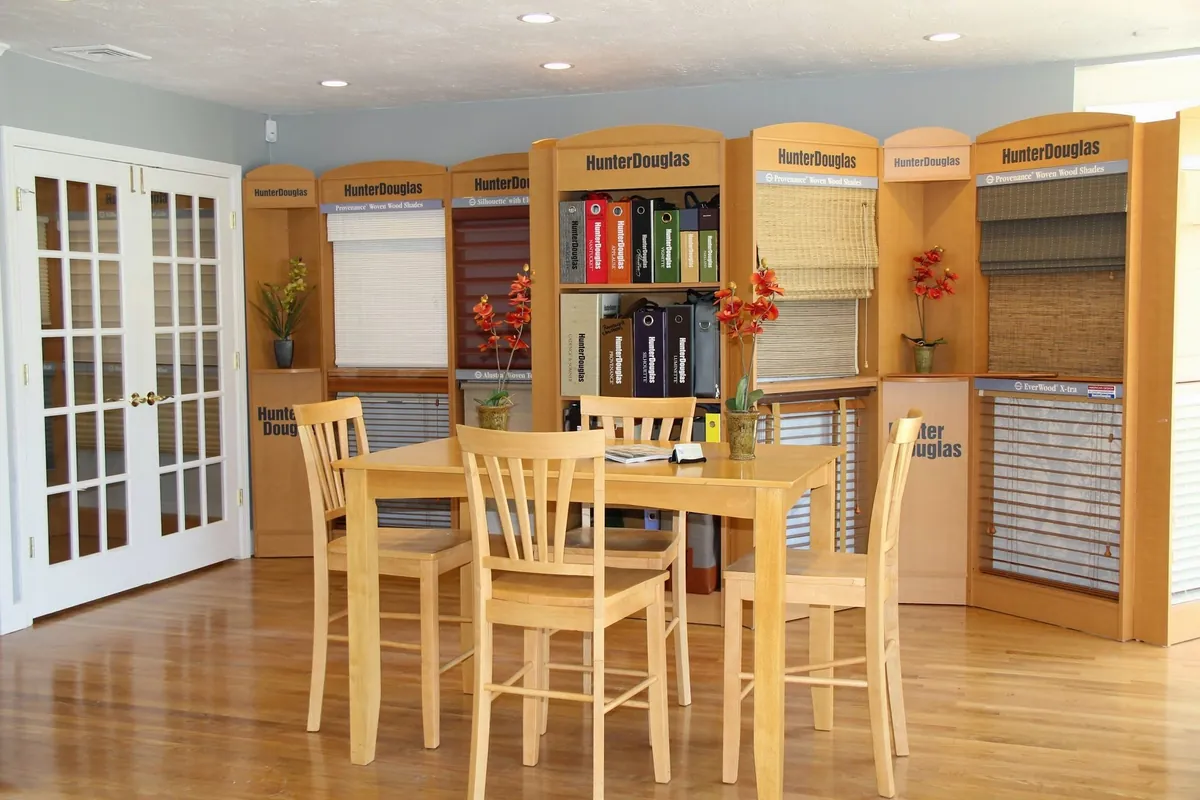
What a Hunter Douglas Gallery dealer means for you
Gallery is the name Hunter Douglas gives dealers who meet its standards, and Blinds & Designs holds it. In practice that puts the whole roller family, Designer and Alustra, banded and Sonnette, and PowerView, on your table at a single visit.
Certified Hunter Douglas installers hang every shade. A converted cottage mixes old framing with new, so they find solid wood for each bracket, square each roll to the opening and run every lift with you. Interior design consultations are available too, and if a blind or shade you already own needs attention, we handle repairs.
Elsewhere in the house, cellular shades in Wareham suit the draughtier windows and custom blinds in Wareham suit a kitchen or bath. The Wareham page gathers everything we do locally.
Questions from Wareham
My cottage windows are all slightly different sizes. Is that a problem?
Not at all. Every roller is made for its own window, so we measure each opening on its own and order each shade to fit.
How do roller shades hold up near the water in Onset?
Well. The mechanism sits inside the tube and the brackets, so very little metal is exposed. A cordless or PowerView lift removes the cord lock altogether.
What suits a bright sunroom added onto a cottage?
A solar screen, one shade per window, in a darker color that is easy to see through. It cuts the glare and some of the heat while keeping the view.
Can a small cottage bedroom be made properly dark?
Yes. A room-darkening roller mounted on the trim, a little wider than the window, closes the gaps at the sides where light would otherwise get in.
Is the estimate free?
Yes. We measure at your home and give you a free estimate for the shades you are considering.
Getting started
A sample held against your own cottage sash tells you more than any photograph or catalog page. Ask for a consultation and the van comes to you with the full roller range; every opening gets measured, odd sizes and all, and you keep a free estimate to think over. Prefer to see working shades in person first? Sagamore is our closest showroom to Wareham. Or tap the call button and tell us about the windows that trouble you most.