
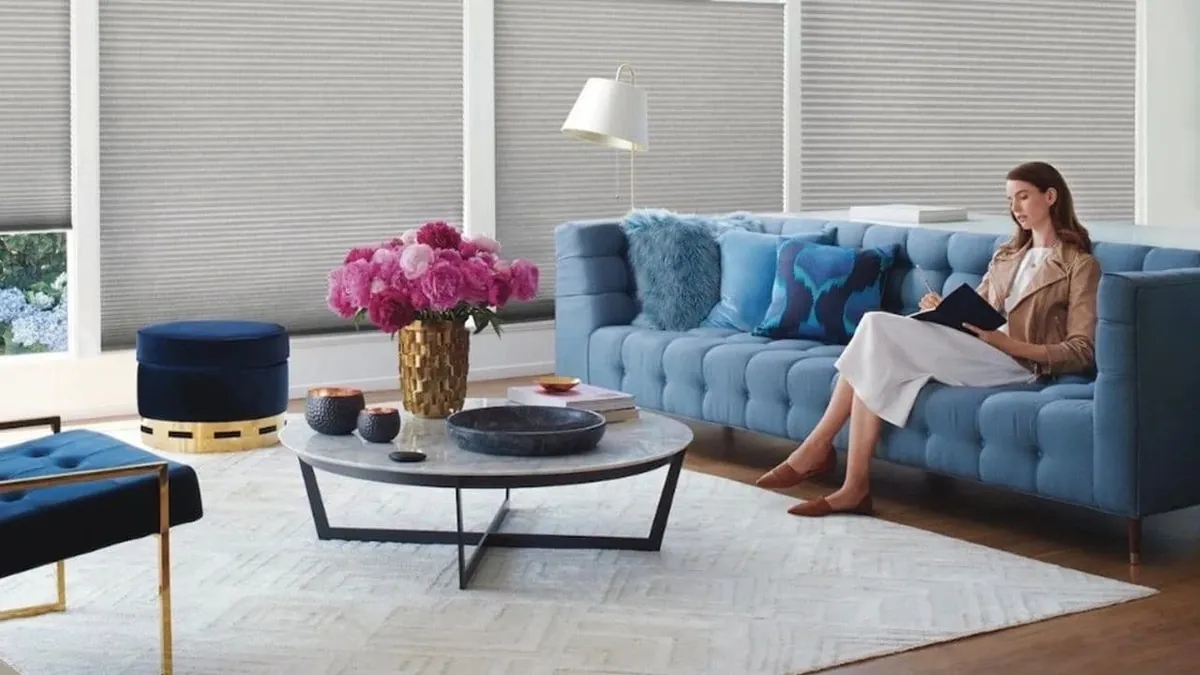
Three Cantons, three kinds of window
Canton’s houses change as you cross town. Near Canton Center, Victorians and older colonials stand with tall sash windows that reach almost from floor to ceiling. Through the middle of town, post-war capes and ranches line the streets with plainer, more modest openings. And on the Blue Hills side, larger newer houses sit up on lots that climb steeply from the road, with long driveways and big windows looking out over the slope. Each of those houses loses warmth at the glass in its own way, and that is the problem cellular shades in Canton, MA, are made to solve.
Canton is our shop-at-home territory, so everything begins at your house. We bring the samples, measure the windows and talk through the choices in the rooms where the shades will hang.
What makes a honeycomb shade different from any other soft shade is inside the fabric. Two layers are joined into a line of hollow cells, and when the shade is lowered each cell is filled with air that cannot move about. That still air sits between the room and the window like a thin quilt. Warmth from your heating stays in the room longer on a cold night, and summer sun on the glass does less to heat the room behind it.
Honeycomb choices for Canton houses
From tall Victorian sash to a hillside picture window, these are the options we bring to most consultations for cellular shades in Canton.
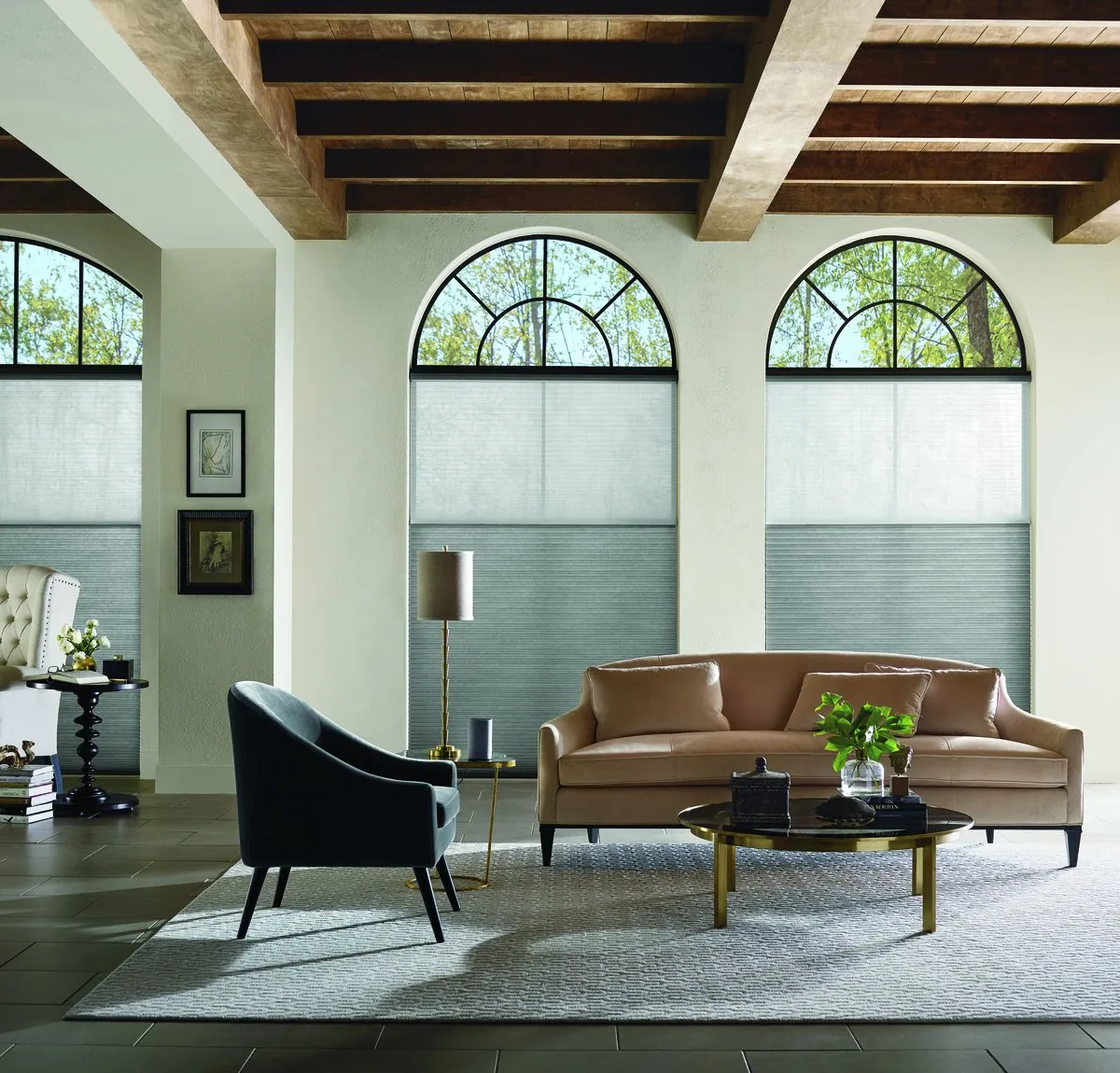
Duette for tall sash
The broader Hunter Douglas honeycomb line, made in the tall, narrow sizes that the older houses near Canton Center need.
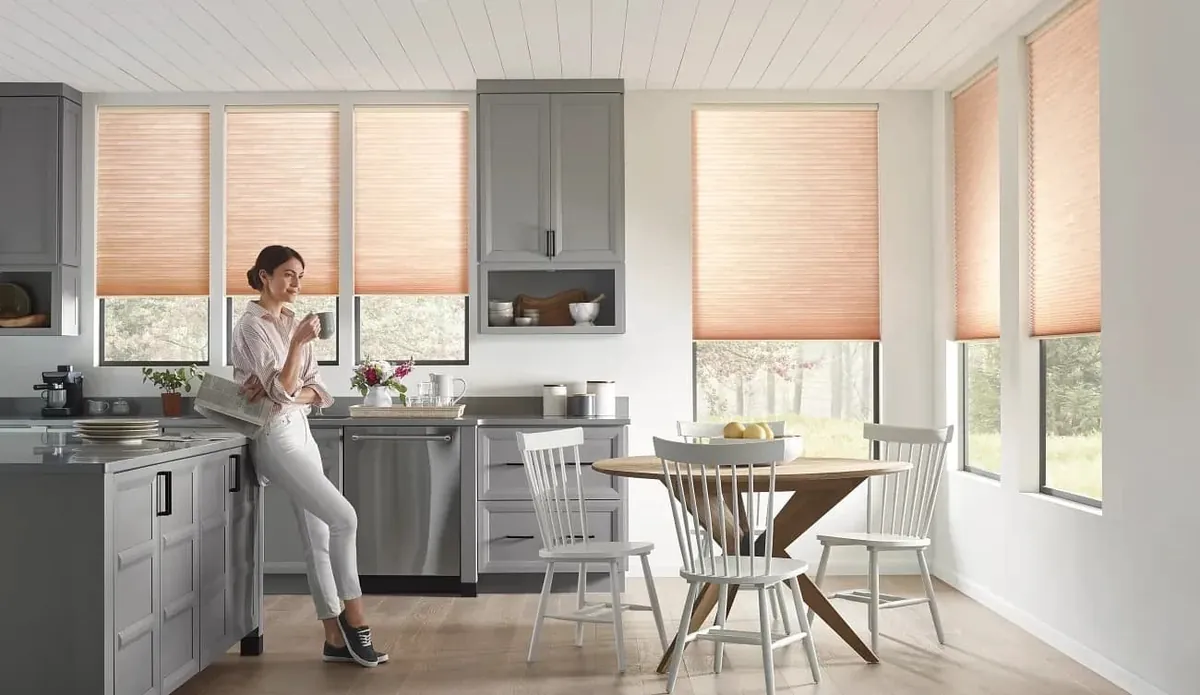
Applause for everyday rooms
A focused palette that fits the standard openings of a cape or ranch kitchen, bedroom or office neatly.
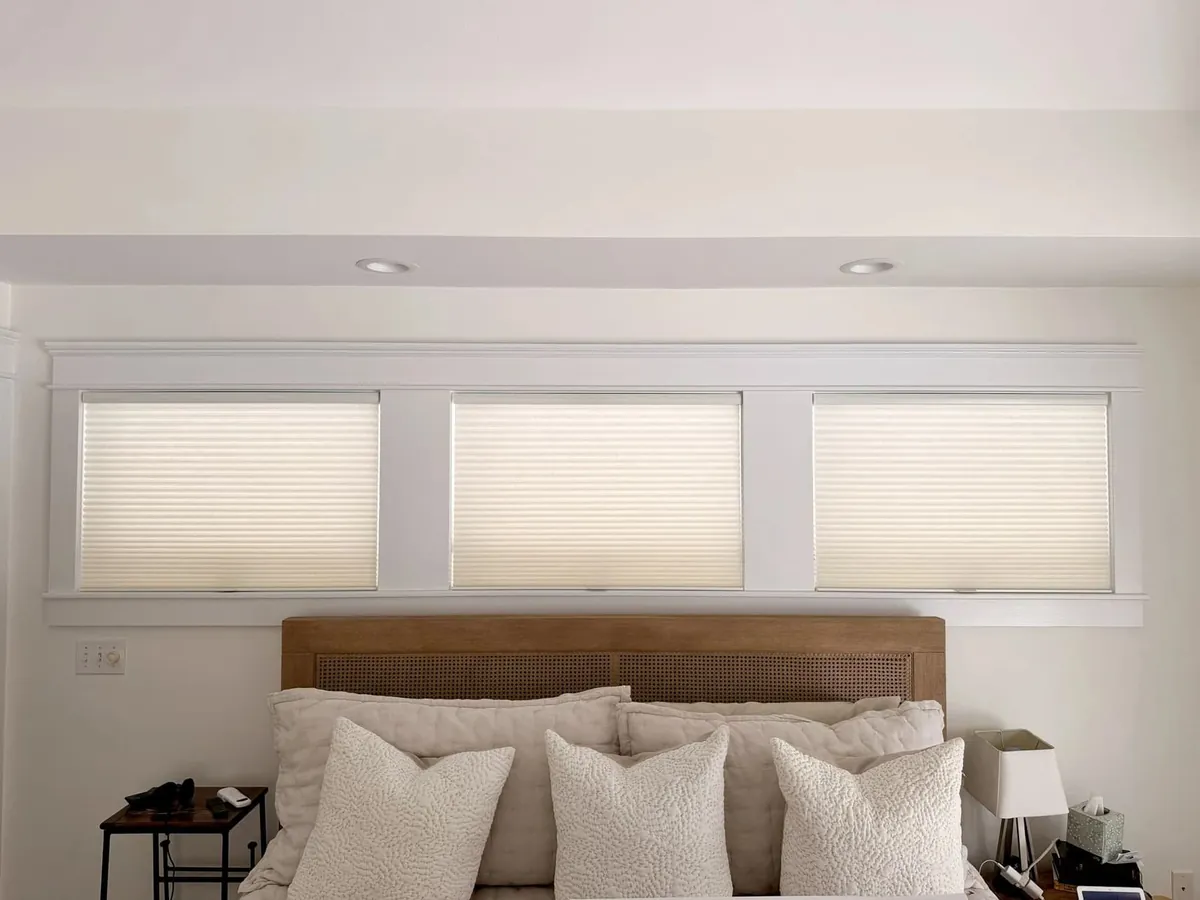
Darkening for bedrooms
Room-darkening fabric keeps a bedroom dim until you choose to raise the shade, and the cells still do their work.
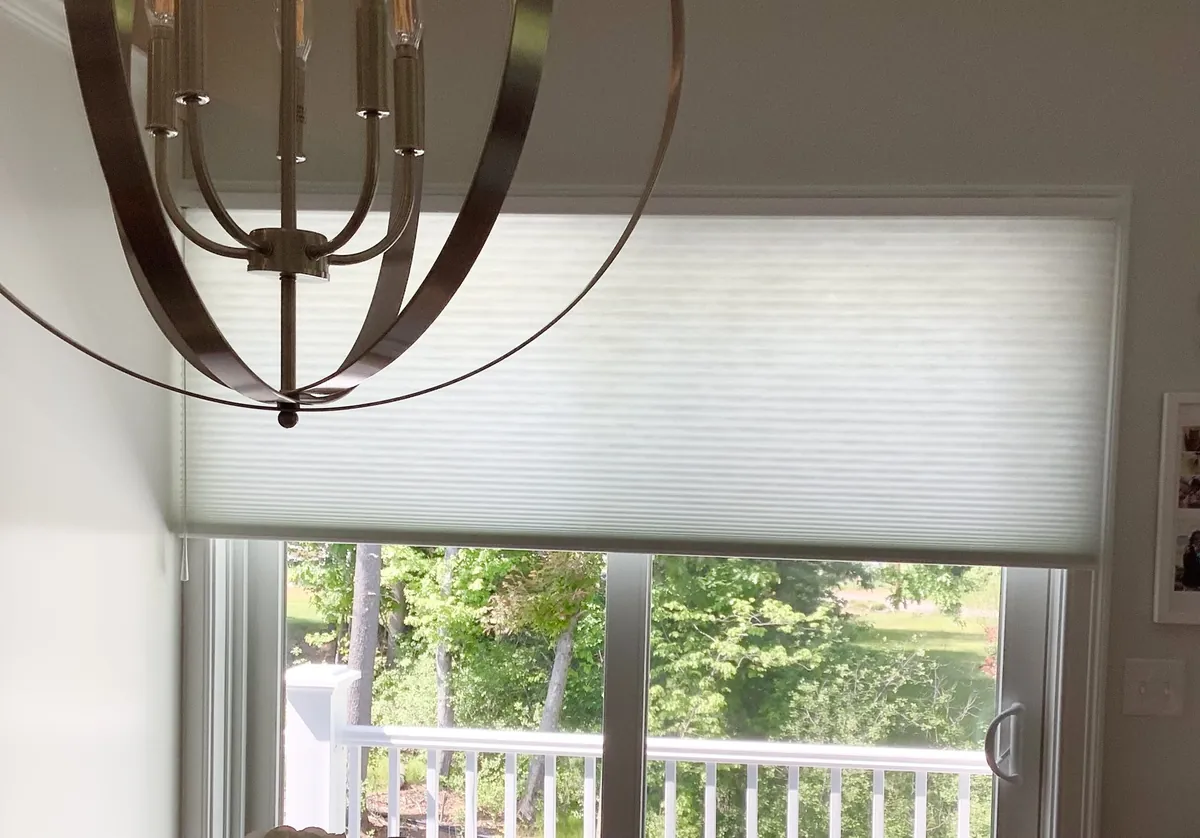
Walk-out sliders
On a hillside house, a slider at the lower level or out to a raised deck, covered with honeycomb to match the windows.
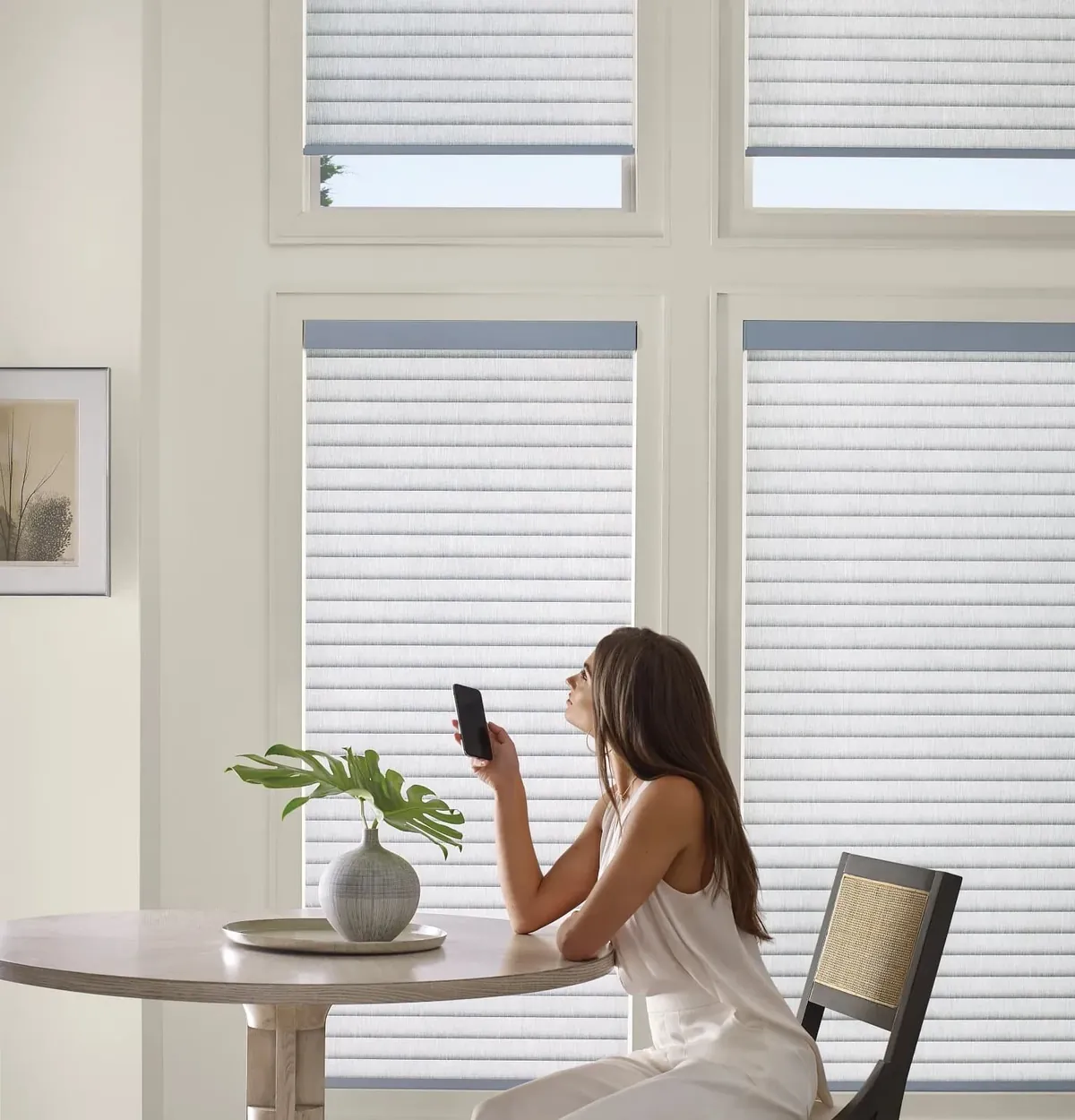
PowerView for high windows
Motors raise and lower shades you cannot reach, from a phone, a remote or a schedule you set.
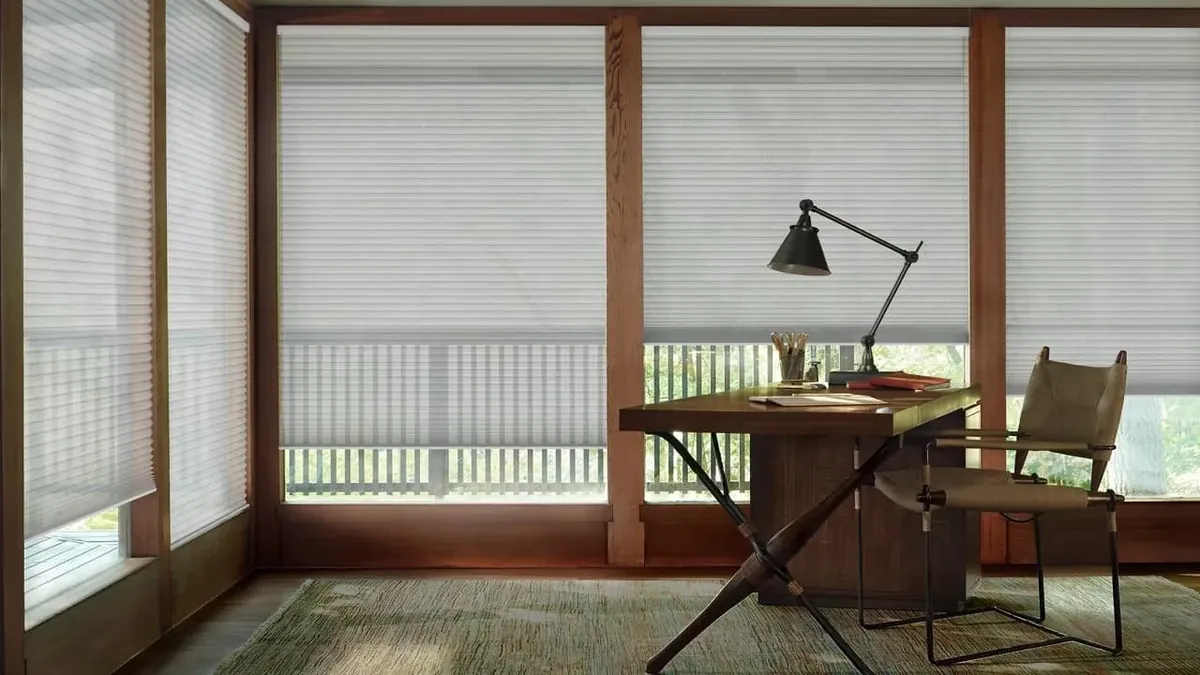
Light-filtering for work rooms
Soft daylight without glare on a screen, for a home office or a room you use all day.

We bring the showroom to you
In Canton, an in-home consultation is how we work. Our vans carry samples, so we can bring the showroom to you, and you choose with the fabric in your hand and your own window in front of you.
That matters for honeycomb shades more than for most things. A light-filtering fabric that looks warm and creamy in one room can look cool and gray in a room facing the other way, and a sample against your trim tells you far more than a photograph ever could.
We start with the rooms that bother you most, measure every window you want covered and leave you with a free estimate. There is no need to drive anywhere or bring measurements. Read more about our in-home consultations.
Victorians and colonials near Canton Center
The older houses around Canton Center are the ones with the tallest windows in town. Victorian sash often runs almost the full height of the room, sometimes with a narrow pair of windows side by side, sometimes in a bay. The trim around them is usually generous and often original, and nobody wants a shade that hides it.
A honeycomb shade can sit inside the opening, with the headrail tucked up under the top of the frame. Raised, it gathers into a slim band at the top and leaves the window and its casing almost untouched. Lowered, the fabric hangs close to the glass, where the trapped air does the most good against an old, thin pane.
Tall windows bring two practical questions. First, the frame: a window that has stood for well over a century is rarely perfectly square, and old sash hardware can leave less depth than a headrail needs. We measure each window at several heights and check the depth along the jamb before suggesting how it should mount. Second, reach: the top of a very tall sash can be hard to get to, which makes a cordless lift or PowerView motorization worth considering for the tallest windows.
Bays are common in the Victorians, and the aim is to make the shades in a bay behave as one. Each window gets its own shade, but they are measured and built so that they stack at the same height when raised and meet the sill evenly when lowered.
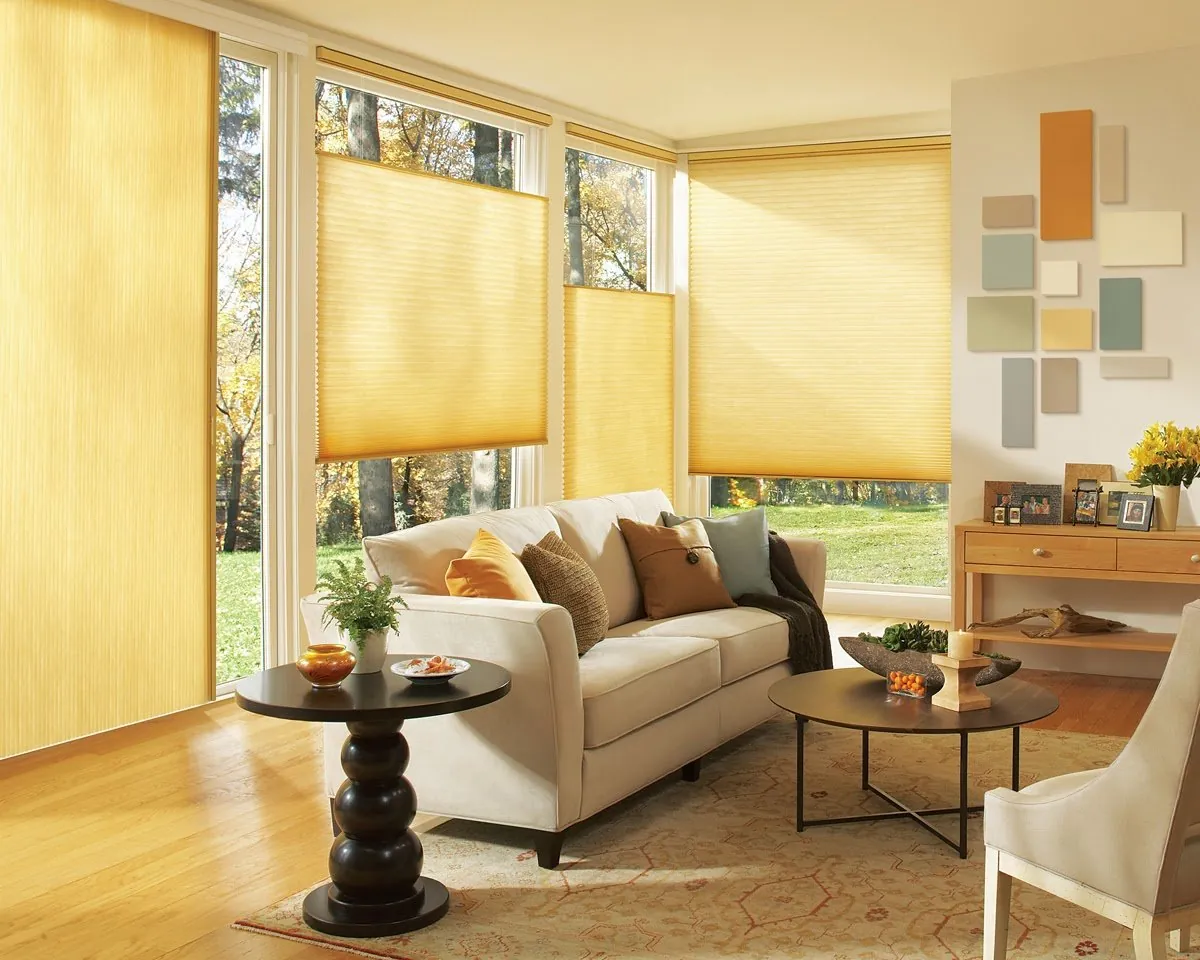
Capes and ranches through the middle of town
The post-war capes and ranches that fill the middle of Canton are simpler houses with simpler windows, and that makes them easy to do well. The openings are generally standard, often replacement units, and many rooms share the same window size, which makes it easy to give a whole house one consistent look.
The cape’s upstairs is where most of the discomfort lives. Those rooms sit under the roof, lit by dormers, and they swing from warm to cool faster than the rest of the house. A honeycomb shade in each dormer, mounted inside the little recess when the depth allows, steadies those rooms noticeably. In a bedroom, a room-darkening fabric in a soft color gives you darkness for sleeping without making a small room feel shut in.
In a ranch, the living room picture window is usually the big one. For a wide window, two or three shades on a shared headrail can move together or separately, so you can open one end for light and keep the rest closed. A top-down, bottom-up option lets you open the top for sky while the lower glass stays covered from the street.
One detail to check on replacement windows is depth. Some replacement frames are shallow, with locks and tilt latches close to the front, and a headrail needs room to clear them. We check each window, and where an inside mount will not sit right we mount the shade just above the opening, slightly wider than the frame, which also stops light leaking around the sides.
Hillside houses on the Blue Hills side
On the Blue Hills side of town, the larger newer houses are set on lots that run steeply up from the road. Those sites shape the windows. The main rooms often face downhill or across the slope with large windows and sliders to take in the view, and many houses have a walk-out lower level with its own slider or patio doors.
A house on a slope is more exposed than one tucked into a street. Wind across the hillside pulls warmth from big panes on a winter night, and the sun on an open slope can make south and west rooms very warm by mid-afternoon. Honeycomb shades handle both seasons: lowered at dusk in winter to hold the warmth in, and lowered through the brightest hours in summer to keep the heat down.
Because the house sits above the road, privacy works differently too. The street rarely looks straight in, so many rooms can stay open during the day. At night, when the lamps are on, a large window on a hillside can be seen from a long way off, and that is when a light-filtering or room-darkening fabric earns its place.
For the view rooms, a top-down, bottom-up shade is often the favorite. Lower the top to cut the glare from the sky and leave the lower glass clear for the view across the slope. For a walk-out slider, a vertical honeycomb shade runs sideways on a track and folds back to one side when you step out. Of all the cellular shades in Canton houses we plan, the hillside rooms are often the ones where customers notice the change first, because those big panes were doing so little to hold the warmth in before.
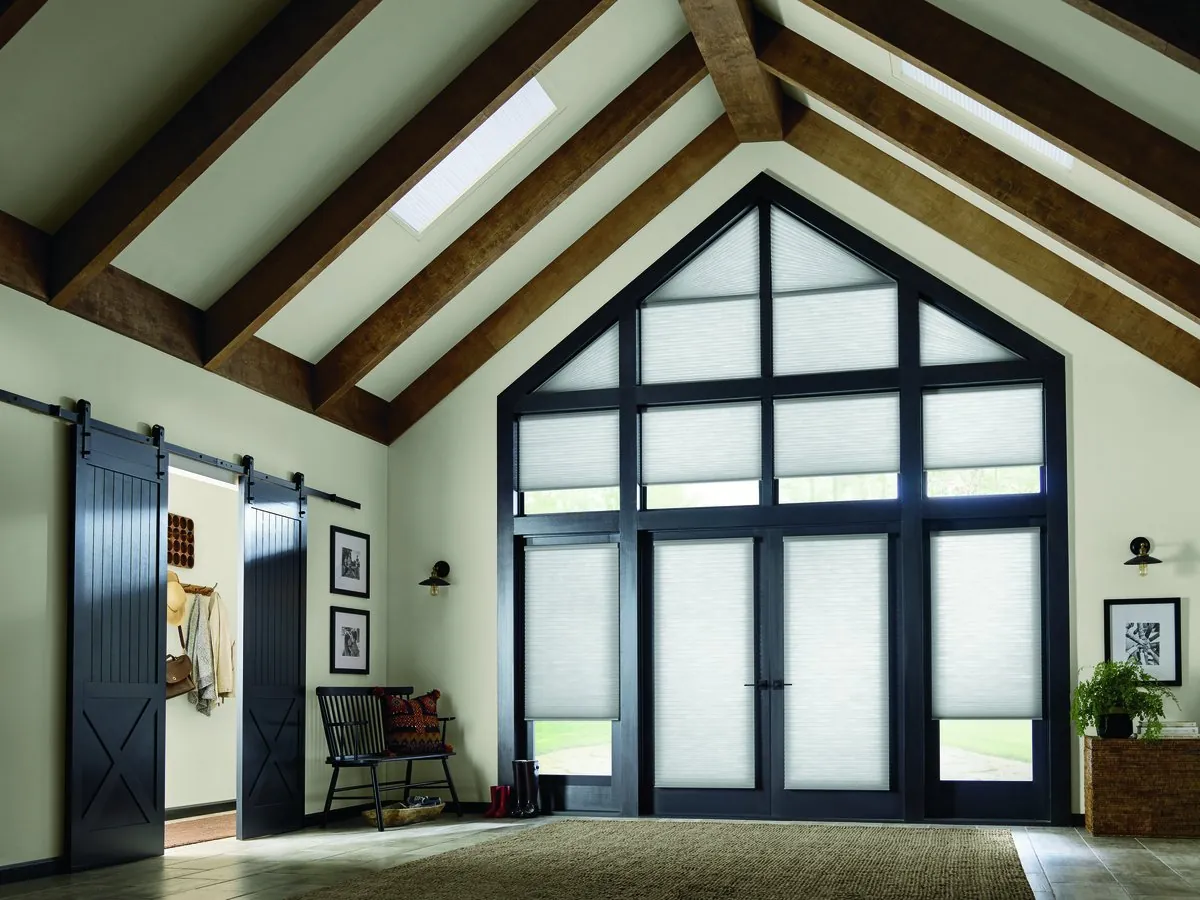
Duette, Applause and how to choose
Both are honeycomb shades from Hunter Douglas, and they keep a room comfortable in exactly the same way, through the air held in their cells. The choice between them comes down to range.
Duette has the broadest selection: more fabrics and textures, the tallest and widest sizes, specialty shapes and a vertical version for sliders. That range is usually what the tall Victorian sash near the center and the large windows on the hillside need. Applause is a more compact line with a palette of its own, and it fits the standard openings of the capes and ranches very well.
Many Canton houses end up with both, Duette in the main rooms and on the sliders, Applause in the bedrooms and kitchen. You can compare them on the Duette honeycomb shades and Applause honeycomb shades pages, and see the whole range on our cellular shades page. Our guide to cellular shades and winter heat explains the cold-weather side in more depth.
One visit, the whole house
Because we come to you, it is easy to look at every room in one go, and in Canton that is often worth doing. A Victorian near the center might have tall formal windows at the front, a kitchen added later at the back and small bedrooms upstairs. A ranch might have a picture window, a slider and a row of identical bedroom windows. A hillside house might have a two-level layout with very different light on each floor.
Planning cellular shades in Canton, MA, for all of those rooms at once lets you keep one look running through the house while choosing the right opacity and lift for each room. You might pick a light-filtering fabric for the living spaces, room-darkening for the bedrooms, a vertical honeycomb for the slider and motors only for the windows nobody can reach. If you would rather start with two or three rooms, we note your choices so that the rest can follow later and still match.
It is also the moment to think about the other windows. We carry the full Hunter Douglas range, so if a room would suit shutters or a roman shade better, we can show you that at the same visit.

Single cell or double cell
A single-cell shade has one row of cells. It is lighter, folds into a smaller stack when raised and suits most windows, including the tall, narrow sash where you want as much glass showing as possible. A double-cell shade has two rows, which gives the air more room to stay still between the window and the room.
On the Blue Hills side, where big panes face open air, double cells are often worth a look for the main living rooms. In the capes, they can make a real difference in a dormer bedroom that never quite warms up. We bring both so you can feel the difference and see how each filters the light at your windows.
The visit, start to finish
Here is how a Canton consultation usually runs, from the first call to the free estimate.
- You ask for a visit through Request a Consultation, or use the call button for the Canton line.
- We arrive with honeycomb samples in a range of fabrics, colors and opacities, plus the different lift options.
- We walk through the rooms with you, beginning with the coldest, the brightest or the hardest to reach.
- You hold samples at your own windows and see how each fabric handles your light.
- We measure every window and check the depth of each frame for an inside mount.
- You get a free estimate for the shades you are considering, and the decision is yours in your own time.
If you would like help with the wider look of a room, ask about our interior design consultations. Our page on what happens at an in-home consultation answers the common questions.

Measuring and fitting
- On each window we record three widths and three heights, and an inside-mount shade is built to the narrowest width.
- We check the depth where the headrail will sit and note any hardware in the way.
- You confirm the mount, fabric and lift for every window before anything is ordered.
- When the shades arrive, our certified Hunter Douglas installers fit them, leveling every headrail and fixing the brackets into solid framing.
- Each shade is raised and lowered, any PowerView shades are paired, and you are shown how everything works.
Made to those measurements, each shade fills its opening with only a narrow gap at the sides, which looks tidy and helps the cells hold the warmth in.

A Gallery dealer that comes to you
Blinds & Designs is a Hunter Douglas Gallery dealer, one of the dealers Hunter Douglas recognises at the top of its network. For a Canton house, that means the complete honeycomb collection arrives at your door: every Duette and Applause fabric, the vertical honeycomb for sliders, and PowerView motorization for the windows you cannot reach.
The shades are fitted by installers certified by Hunter Douglas. We also carry blinds, shutters, roller and roman shades and drapery, so one visit can plan the whole house, and we take care of blind and shade repair in Canton for the window coverings you already own. Our Canton page lists everything we do in town, and plantation shutters in Canton are worth a look for the Victorian rooms. If you ever want to see shades in a showroom, the nearest is our Franklin showroom.
Questions from Canton
Do I need to visit a store to choose?
No. Canton is our shop-at-home territory, so the consultation happens at your house. We bring the samples, measure the windows and give you a free estimate there.
Will honeycomb shades work on my tall Victorian sash?
Yes. Duette is made in tall, narrow sizes, and the shade can usually sit inside the frame so the trim stays visible. We check the depth and squareness of each old frame first, and suggest a mount on the casing if the opening is too shallow.
My house is up a steep lot and gets a lot of wind. Will cellular shades help?
They help with the cold that comes through big panes on an exposed site. Lowered at dusk, the cells hold a layer of still air against the glass, and for the main rooms a double-cell shade adds a second layer.
What works for the dormer bedrooms in a cape?
A honeycomb shade mounted inside the dormer recess when the depth allows, usually in a room-darkening fabric in a soft color, so the room is dark for sleep without feeling closed in.
Can I keep my view and still cut the glare?
A top-down, bottom-up shade lets you lower the top to block the bright sky while the lower glass stays open to the view.
When you are ready
Choosing cellular shades for Canton homes is easiest at your own windows. Request a consultation and we will come to you with the honeycomb range, measure every window and leave you with a free estimate. If you would rather talk first, the call button reaches the Canton line.