
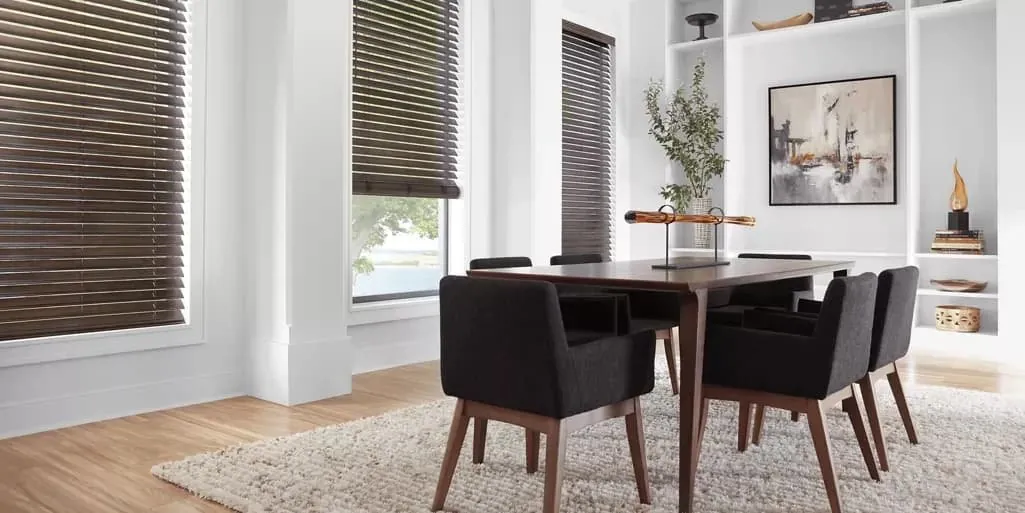
What Bellingham houses need from a blind
Drive along Hartford Avenue or South Main and the houses tell a clear story. Post-war capes and single-story ranches line the older stretches, and newer colonials have filled the lots between them. Most of those houses have standard, modern window openings, which makes them some of the easiest windows anywhere to fit well. A few of the older village houses still have small original sash, and those need a little more thought.
Standard openings are good news when you order custom blinds in Bellingham, MA. A blind made to the exact width sits neatly inside the frame with an even gap on each side, the slats line up from one window to the next, and the whole house can be done in one consistent look. The decisions are about material, color and how you want each blind to work, rather than about making an awkward window behave.
What changes from house to house is the room behind the glass. A cape has dormer bedrooms tucked under the roof and a kitchen at the back. A ranch has a long living room with a picture window and a slider to the yard. A newer colonial has a bit of everything. We match the blind to the room.
Custom blinds in Bellingham, MA, room by room
Rather than start with a catalog, we start with your rooms. These are the spaces that come up again and again in Bellingham capes, ranches and colonials, and the blind that usually suits each.
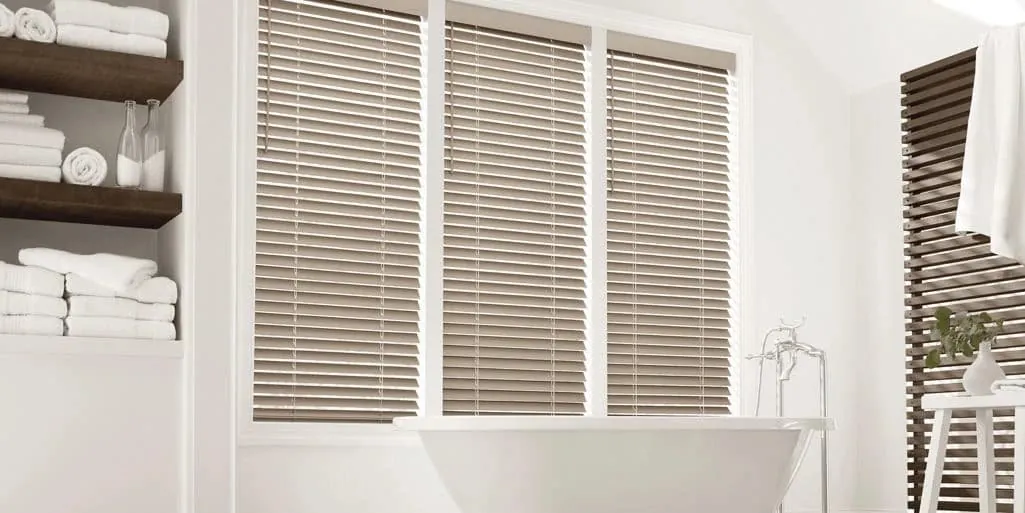
Kitchen and bath
EverWood faux wood blinds keep their shape over a sink or a steamy tub, and they wipe clean. Painted-wood looks without the worry about water.
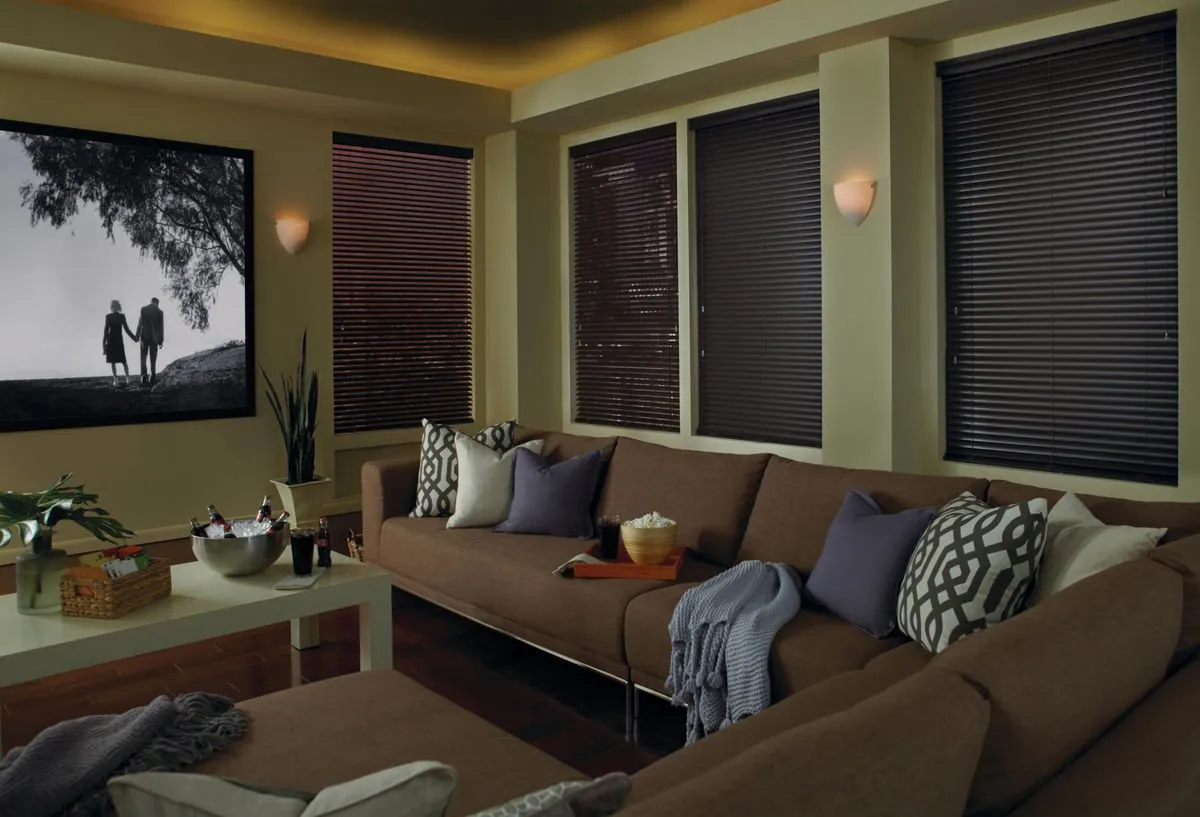
Dormer bedrooms
The small windows set into a cape’s dormers face the morning. Closed slats in a darker color keep an upstairs bedroom dim.
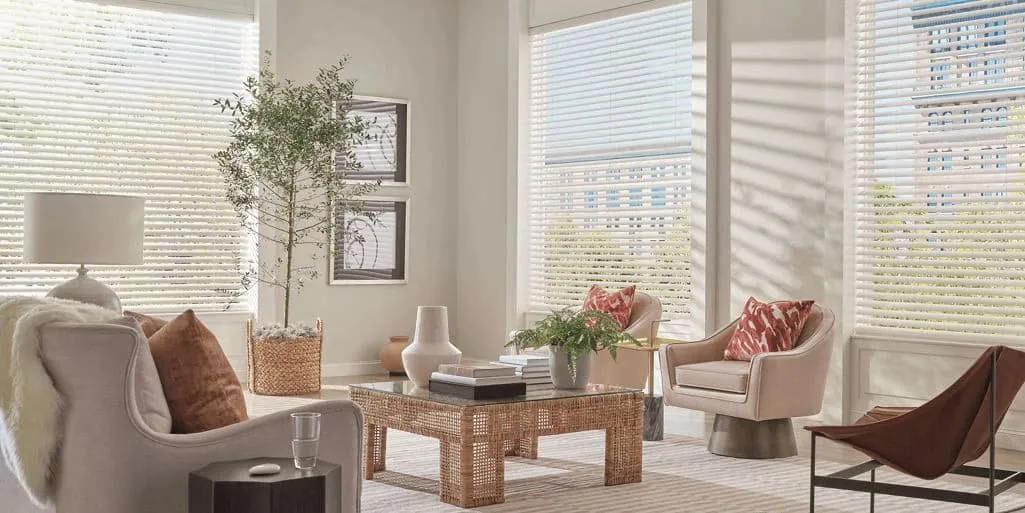
The ranch picture window
A wide window can take two or three blinds on matching headrails, so you open one end for light and keep the other closed.
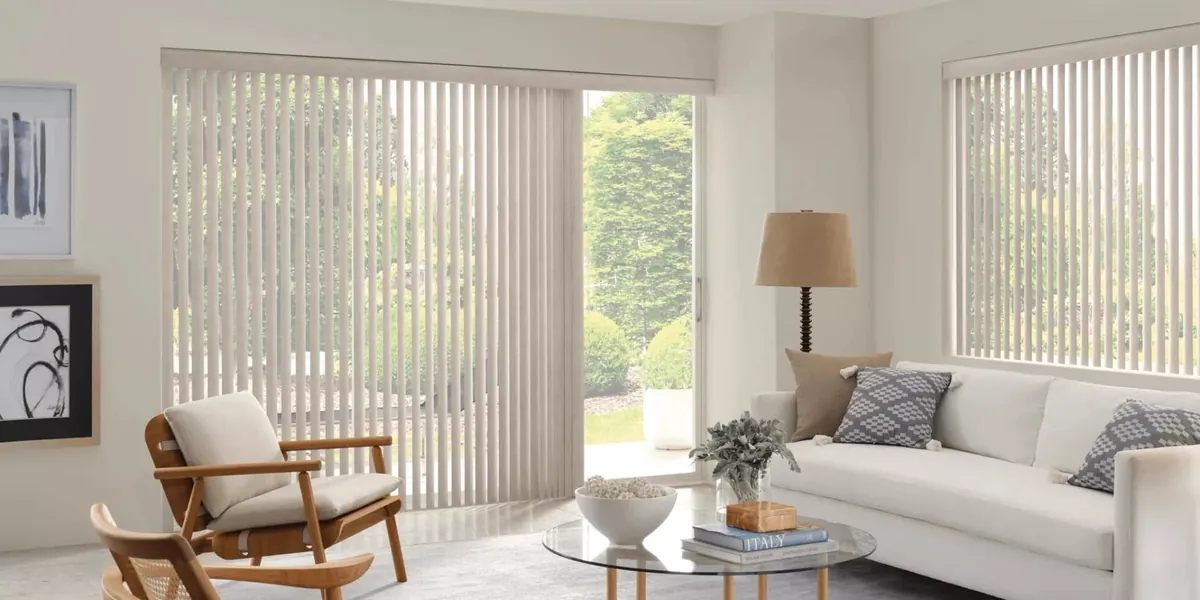
The slider to the yard
Vertical blinds draw aside so the door opens freely. The vanes turn to cut afternoon glare off a back patio.
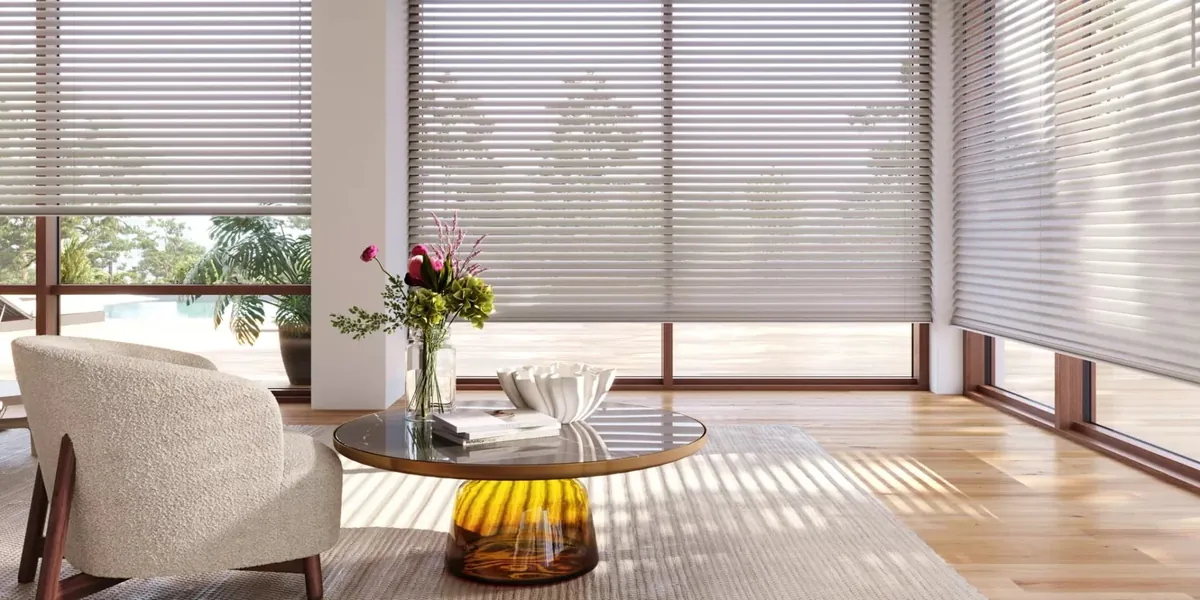
Home office
Tilt the slats up and the light bounces off the ceiling instead of across your screen. Metal or wood both work here.
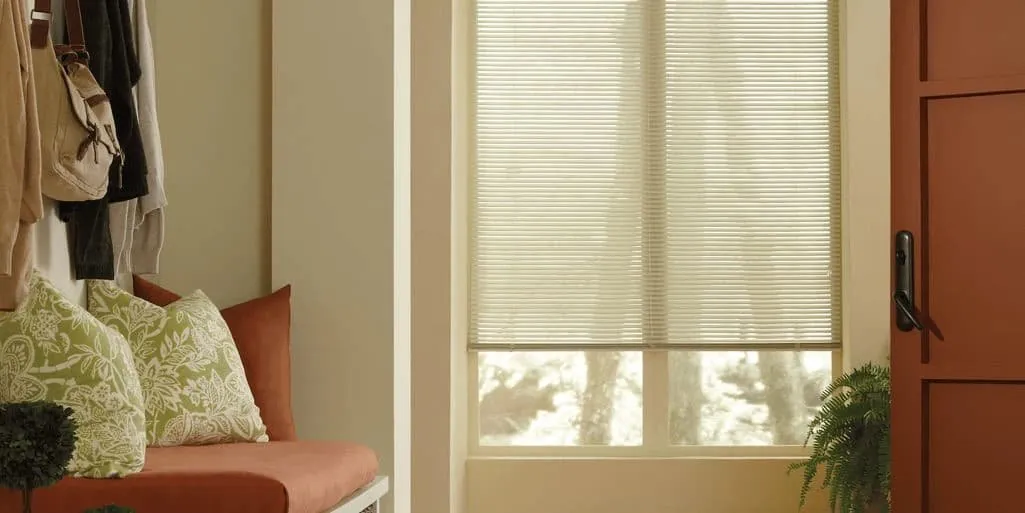
Front hall and side door
Slim metal blinds fit the narrow glass beside or in a door, with a headrail shallow enough to clear the frame.
Capes along Hartford Avenue
A post-war cape packs a lot into a small footprint. Downstairs there is usually a living room at the front, a kitchen at the back and one or two bedrooms. Upstairs the bedrooms sit under the slope of the roof, lit by dormer windows that push out from the roofline. The upstairs windows are smaller than the ones below and set back in a deep little alcove.
That alcove is a gift for an inside-mounted blind. The headrail tucks up inside the dormer, the blind hangs flush with the window, and when it is raised it disappears into the top of the frame. Because the room is small, a light color keeps it feeling open, while a slightly darker slat closed at night keeps it private and dim. If a child sleeps in that room, a cordless lift removes any hanging cord.
On the ground floor, the front windows of a cape usually sit close to the street. A horizontal blind with the slats angled down lets you see out while anyone walking past sees very little. Turn them the other way in the evening, slats tilted up, and the room stays private with the lights on.
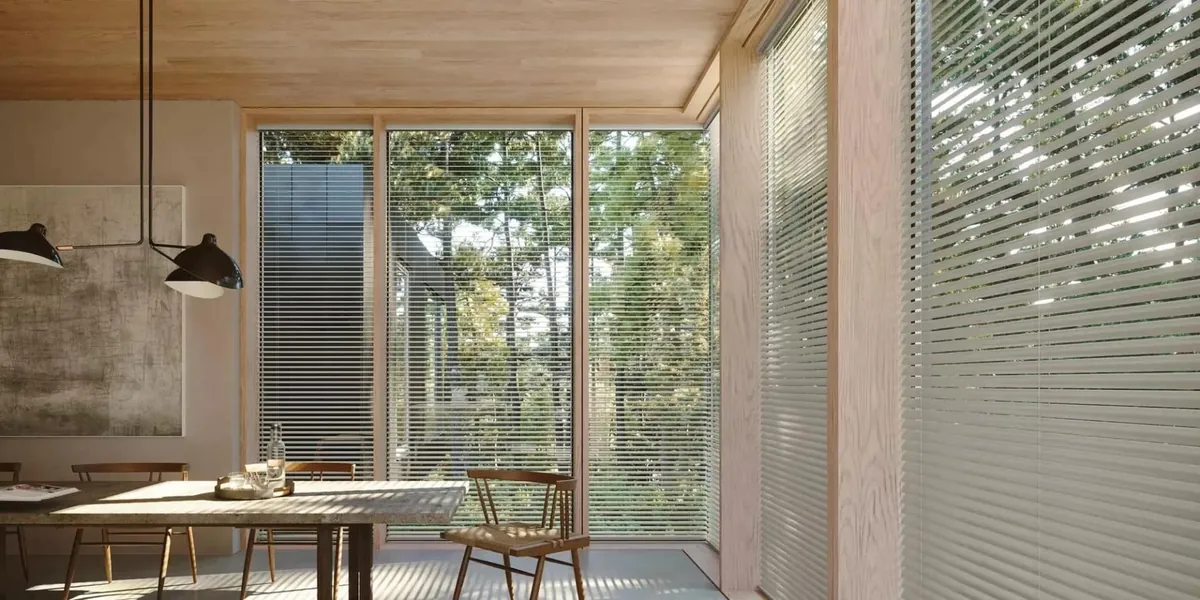
Ranches along South Main
A single-story ranch spreads out instead of up. The living room is long, the picture window is wide, and bedrooms run down a hallway with matching windows. Many have a slider in the kitchen or family room opening to a patio or deck.
The picture window is the one to plan carefully. A single blind across the whole width would be heavy to lift and would block the view in one piece. Splitting it into two or three blinds, each on its own headrail but lined up as a set, gives you choice: raise the middle one for the view, keep the end ones closed where the sun comes in. With matching color and slat size, the window still looks like one finished piece.
The hallway bedrooms are a good place for consistency. Ordering them together, the same color, slat and control, means the whole side of the house looks tidy from the yard. That is one of the quiet benefits of doing custom blinds in Bellingham as one project instead of one window at a time.
Newer colonials between them
The colonials built on the lots between the older capes and ranches have bigger rooms and more windows, often with a family room at the back, a formal dining room at the front and four or more bedrooms upstairs. The openings are still standard and square, so fitting is straightforward. What they bring is variety: a bright kitchen, a darker den, bathrooms on both floors, sometimes a two-story foyer.
For a house like that we often suggest a simple plan. Real Parkland wood in the rooms where you entertain, EverWood faux wood in the kitchen and baths, a vertical blind on the slider, and metal blinds wherever a frame is shallow. Matched in color, the four read as one house from the street.
The family room at the back of these colonials often has the most glass in the house: a bank of windows, a slider, sometimes a set of transoms over them. It also tends to face the yard and take the afternoon sun. A row of horizontal blinds on the windows, with a vertical blind on the slider in the same color, keeps the wall tidy and lets you shade the television end of the room while the other end stays bright. If the transoms are out of reach, they can be motorized and grouped with the blinds below so one tap on the phone sets the whole wall.
Upstairs, bedrooms in a colonial are larger than those in a cape, with two windows on different walls. Ordering both with the same slat and control keeps the room consistent, and a darker color or routeless slats help where someone sleeps late.
Small sash in the old village houses
A few of the older houses in the village still have their original small-paned sash. The openings are narrow, sometimes slightly out of square, and the frames can be shallow. Not every blind fits.
Metal blinds are often the answer, because their headrail is the slimmest of the range and the slats are fine enough to suit a small window. We measure each opening at the top, middle and bottom, and if the depth will not hold an inside mount we look at mounting on the casing instead, so the blind still covers the glass cleanly.
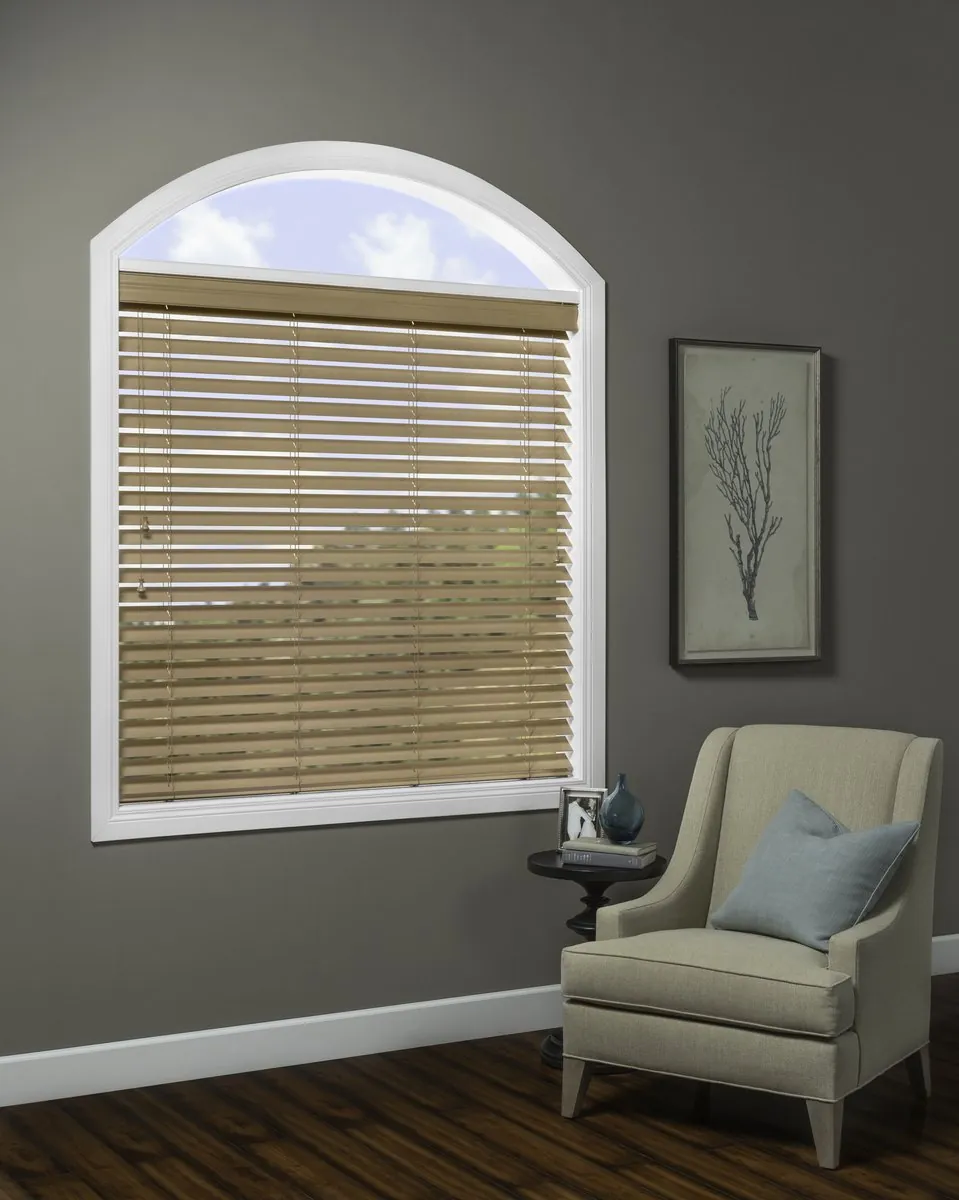
Wood, faux wood, metal or vertical
All four are custom made by Hunter Douglas, and all four tilt to control light. Here is how they differ in practice.
- Parkland wood is real hardwood, light for its size, with stain or paint finishes. Suits living and dining rooms.
- EverWood faux wood looks like painted wood and stands up to humidity. Suits kitchens, baths and laundry rooms.
- Metal has slim slats and a shallow headrail, in a wide choice of colors. Suits shallow frames and door glass.
- Vertical hangs from the top and draws aside. Suits sliders and very wide windows.
We bring samples of each, so you can feel the weight of a wood slat against a faux wood one and see how the colors sit with your walls.
Choosing a color for capes and ranches
White is the most common choice for a reason: it matches the white trim on most capes, ranches and colonials, it reflects light back into the room, and from outside it gives the house a clean, even look. But it is far from the only option.
Stained wood suits a ranch living room with wood floors or a dining room with a wood table, and it brings warmth to a room that faces north. Grays and soft neutrals sit well in a newer colonial with painted trim in a color other than white. Darker slats are useful in a bedroom or a den where you want the room to feel calm and dim when the blinds are closed.
A good rule we share at the visit: keep the color on the street side of the house consistent, and vary it inside where only you see it. A cape with white blinds across the front can still have stained wood in a back family room. Holding the samples at your own windows, in the light you actually get, settles the question far faster than a catalog does.
The visit to your Bellingham house
Most customers start with an in-home consultation, because a blind looks different in your own light than anywhere else. Our vans carry the samples, so we can bring the showroom to you.
- Book a time through Request a Consultation or the call button.
- We arrive with slats in each material and color, vertical vanes, and the lift and tilt controls.
- We go room by room, starting with whichever windows bother you most.
- You compare samples at your own windows, front of the house and back.
- We measure every opening and check the frame depth.
- You get a free estimate for the blinds you have in mind.
There is no need to decide on the spot. If you also want a second opinion on color and fabric for the rest of a room, ask about our interior design consultations at the same visit.
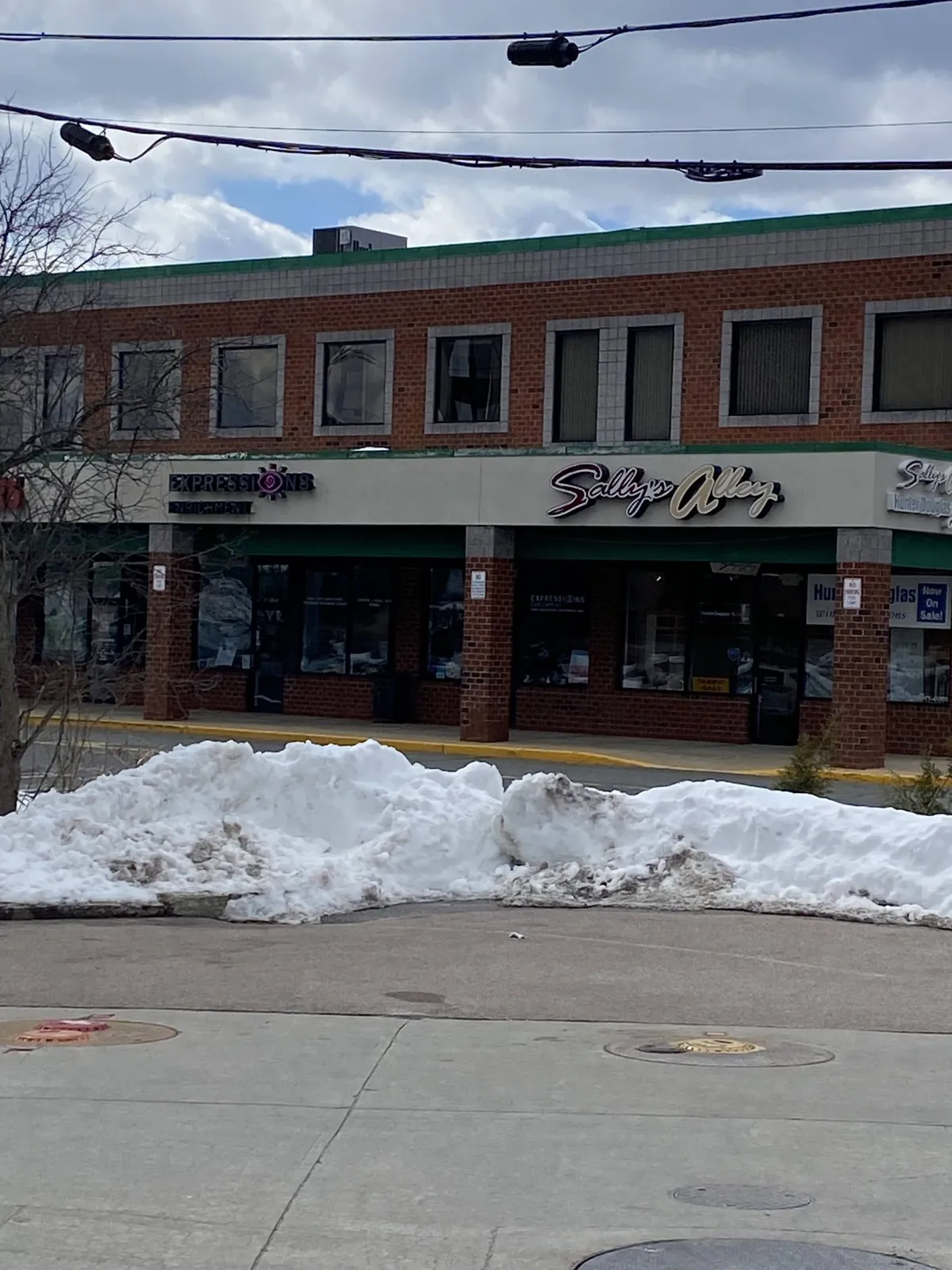
Our Franklin showroom, next door
The nearest showroom to Bellingham is in Franklin, just over the town line. If you like to see and handle a product before anyone comes to the house, it is an easy place to start: compare stained and painted wood, try a cordless lift, and look at the vertical vanes up close.
You can also skip the trip. Plenty of Bellingham customers simply book the in-home visit and see everything at their own windows. The showroom’s address and opening hours are on the Franklin showroom page.
Controls that suit the person using them
How a blind works every day matters as much as how it looks. There are three main ways to run a Hunter Douglas blind.
A cordless lift has no hanging cord. You push the bottom rail up or pull it down, and it stays put. Tilt comes from a wand. It is the tidy choice for bedrooms and for anywhere children or pets spend time.
A classic cord lift is still available where you want it, for a large blind that is easier to raise with a pull.
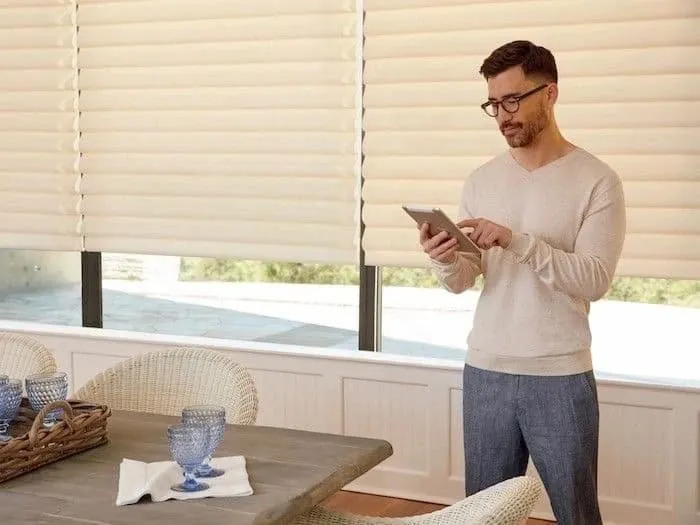
PowerView motorization raises and tilts the blind from your phone, a remote or a schedule. In a ranch it is handy on the wide picture window; in a colonial it earns its keep on a high foyer window or a window behind furniture.
Privacy for houses set close to the road
Many of the older capes and ranches along Hartford Avenue and South Main sit only a short walk from the road, with the living room window facing traffic. In daylight, a blind with the slats tilted down gives you an open view while blocking the line of sight from the sidewalk. After dark, when the lamps are on inside, tilting the slats up or closing them fully stops the room from glowing like a shop window.
Side windows are worth a look too. Where the newer colonials were built on lots between older houses, a side window can look straight across at a neighbor’s. A blind lets you keep that window lit without feeling watched, and you can leave it set at a half tilt all day.
For bathrooms on the street side, EverWood with the slats closed and a cordless lift is a simple, practical answer that copes with steam. Thinking through each side of the house this way is part of how we plan custom blinds in Bellingham at the visit.
Measuring and certified installation
Standard openings are forgiving, but a custom blind still depends on a careful measurement. We take the width at three heights and the height at three points, and we use the narrowest width for an inside mount so the blind never binds. We note anything in the frame that could get in the way, such as a window crank, a lock or an alarm sensor.
When the blinds arrive, our certified Hunter Douglas installers fit each one, check that it hangs level, test the lift and tilt, and show you how they work. The fit is what makes custom blinds in Bellingham, MA, look as though they came with the house.

Why a Hunter Douglas Gallery dealer
Blinds & Designs is a Hunter Douglas Gallery dealer, a designation Hunter Douglas reserves for dealers who meet its standards. For you it means the whole blind range in one place, from Parkland and EverWood to metal and vertical blinds, with every finish and control.
Our installers are certified by Hunter Douglas, and if a blind ever needs attention later, we do blind and shade repairs too.
If other rooms call for something different, see our cellular shades in Bellingham, roller shades in Bellingham or plantation shutters in Bellingham, or everything we do in town on our Bellingham page. Our main custom blinds page covers the full range, with more on faux wood blinds and metal blinds.
Questions from Bellingham
My house has standard windows. Do I still need custom blinds?
Standard openings are still slightly different from one another, and a made-to-measure blind fits each one exactly, with an even gap on both sides and slats that line up across the house. You also get the full choice of materials, colors and controls rather than whatever a stock size comes in.
What works in the small dormer windows of my cape?
An inside-mounted horizontal blind sits neatly in the dormer alcove and disappears into the top of the frame when raised. A cordless lift is a sensible choice for a bedroom.
How do I cover the wide picture window in my ranch?
We usually split it into two or three blinds on matching headrails, so each section raises on its own while the window still looks like one piece.
Do faux wood blinds look cheap next to real wood?
Not from across a room. EverWood is made to look like painted wood, and we can match its color to Parkland wood blinds in the next room.
Is the estimate free?
Yes. After we measure, you get a free estimate. Request a consultation to set a time.
Take the next step today
Seeing samples at your own windows is the surest way to choose. Request a consultation and we will bring the Hunter Douglas blind range to your Bellingham house, measure each opening and give you a free estimate. Prefer to talk first? Use the call button, or stop in at our Franklin showroom.