
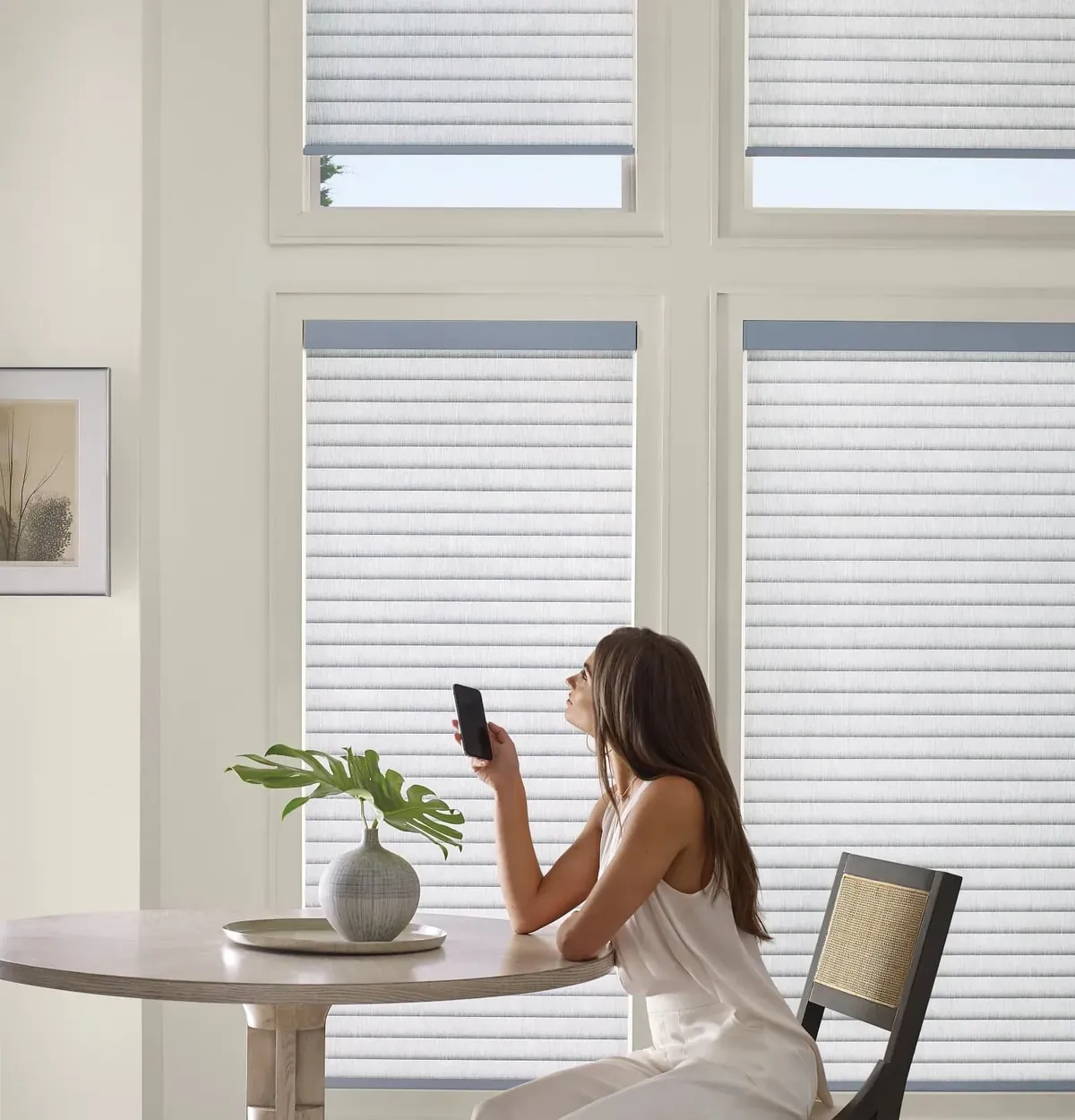
Big openings and empty weeks
Most of the housing around Mashpee Commons and out through New Seabury is young by Cape standards. Colonials, townhouses and condominium villages went up across the town in the later part of the last century and after, and they were built with the larger openings that came in with them: wide sliders, tall great-room windows, transoms over doors and clusters of glass at the corners of rooms. Motorized blinds in Mashpee, MA, are mostly about handling that much glass well.
The other thing that sets the town apart is how many of its houses are second homes. A house that is lived in for a few weeks in summer and visited now and then the rest of the year has different needs from one lived in every day. It sits closed up for long stretches, it takes the strong summer sun with nobody there to lower a shade, and when you do arrive you want it ready, not stuffy and faded.
A Hunter Douglas PowerView system answers both. The motors handle large and high shades without effort, and schedules move the shades through the day whether anyone is in the house or not. When you are there, you run everything from a remote or the PowerView app on your phone or tablet.
What motorizing does for a Mashpee house
We tailor every system to the house in front of us, but these three jobs come up on almost every visit here.
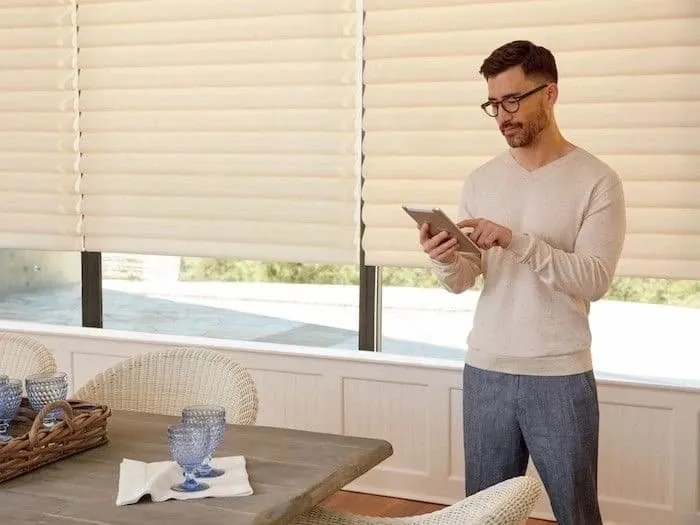
Schedules for the quiet months
Set the shades to open and close at chosen times each day. The house never sits with every window bare, and never sits shut tight all week either.

One button for a wall of glass
A great room with six tall windows moves as one. Every shade stops at the same height, so the wall always looks finished.
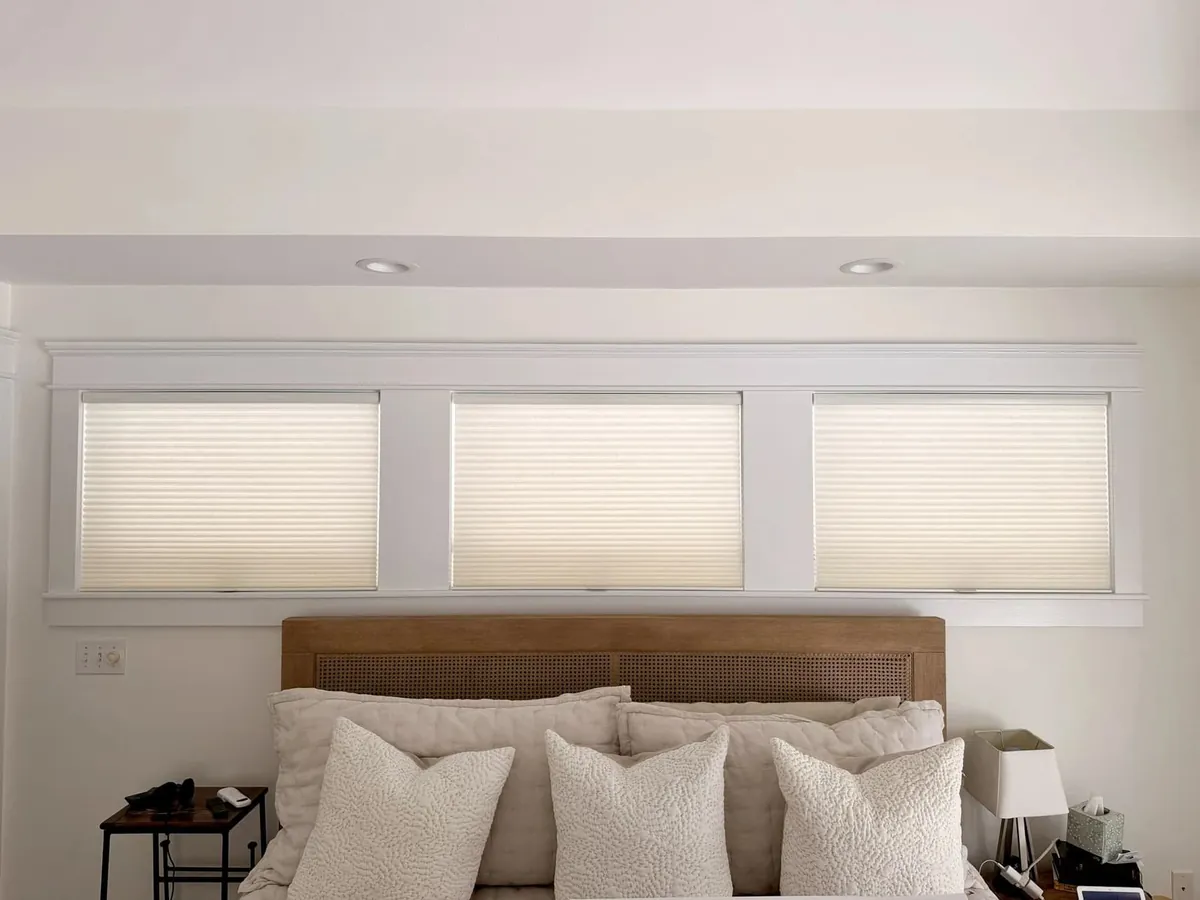
Dark guest rooms
Room-darkening honeycomb shades from our own installs, lowered on a timer before sunrise so visitors sleep past the first light.
Colonials near Mashpee Commons
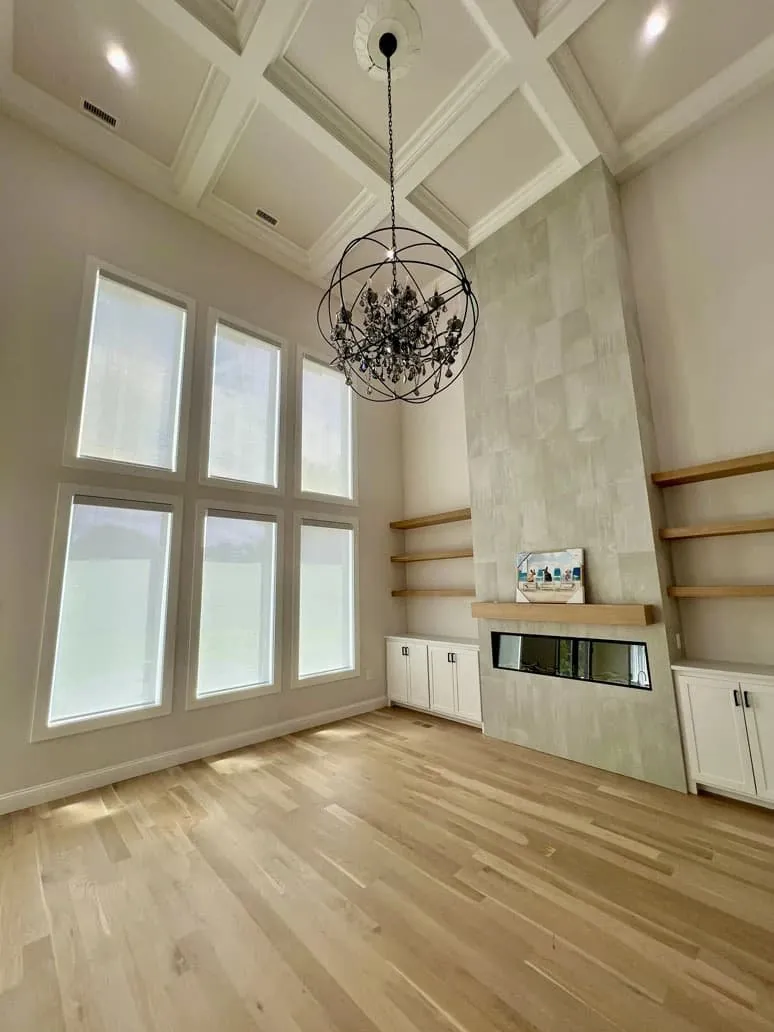
The neighborhoods that grew up around Mashpee Commons are full of colonials and capes with a recognisable layout: a front entry, sometimes two stories tall, a family room at the back with a slider to the deck, and bedrooms upstairs. Windows are generous and standard in shape, and there is usually at least one high window, over the entry or above a family room fireplace, that nobody can reach from the floor.
That high window is often the reason a customer calls. It gets the full sun in the afternoon and there is no easy way to cover it. With a motor, it joins the windows below on the same remote and the same schedule. The family room can close in step on a hot afternoon, and the high shade lines up exactly with the rest because the motor lifts both sides evenly.
The rest of the house tends to follow. Once the family room runs off one button, most households want the bedrooms to lower at night and the kitchen to open first thing in the morning. Grouping the shades that way takes no more than a few minutes during the installation, and the groups can be changed later in the app.
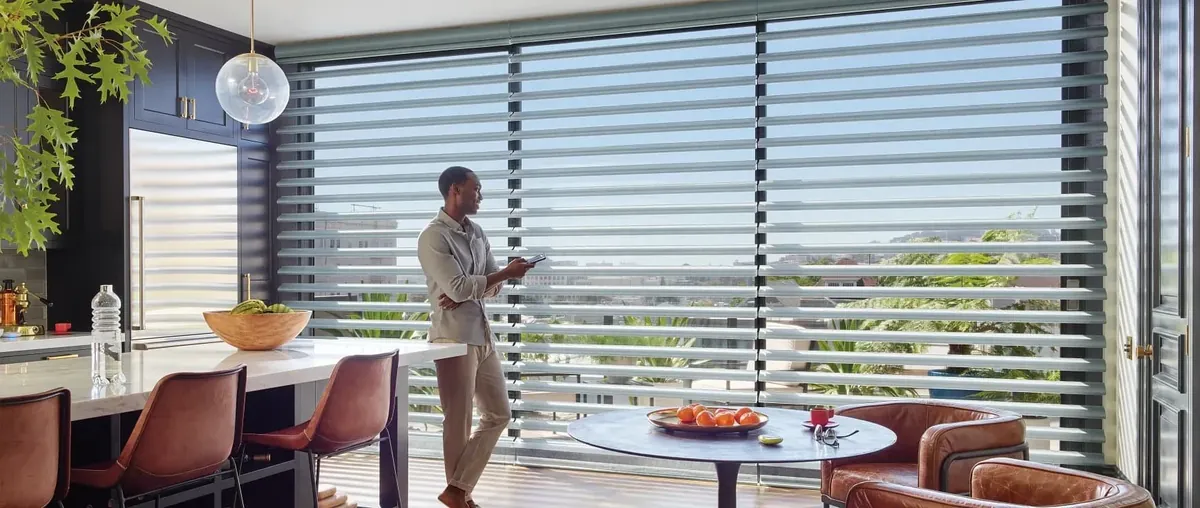
Condominium villages and townhouses
Many of Mashpee’s condominium villages share a pattern: units with an open main floor, large sliders to a deck or patio, and a loft or second floor above. Some face a golf course, some a pond, some the sound. The glass is often concentrated on one wall, which means one wall of the unit takes almost all the sun.
Motorized shades suit that layout well. A single group can cover the whole sunny wall and lower during the hours it faces the light. Sliders take a vertical honeycomb shade that moves side to side, or a roller set high enough to clear the door, depending on how often the door is used.
Associations often care about how windows look from outside. A pale or white backing on every shade facing the street or the common, whatever color faces the room, keeps the outside view uniform. Bring along any association guidance you have, and we will choose fabrics with it in mind.
Strong summer sun with nobody home
The summer sun on the south side of the Cape is bright and long. In a closed-up house it beats on floors, furniture and artwork for hours each day. Over a season, an uncovered south or west window can fade a rug or a sofa unevenly, and a room with a lot of glass can build up a good deal of heat.
There are two easy ways to deal with that. The first is fabric. Screen roller shades, sheer shades and light-filtering honeycomb shades all reduce the light reaching the room, and the right choice depends on how much view you want to keep. The second is timing. A schedule can lower the shades on the sunny side through the hottest hours and raise them again in the evening, every day, with nobody needing to be there.
Together they let the house sit through a summer week without baking, and still look lived in from the road, because the shades are moving rather than sitting closed all week.
New Seabury and the water
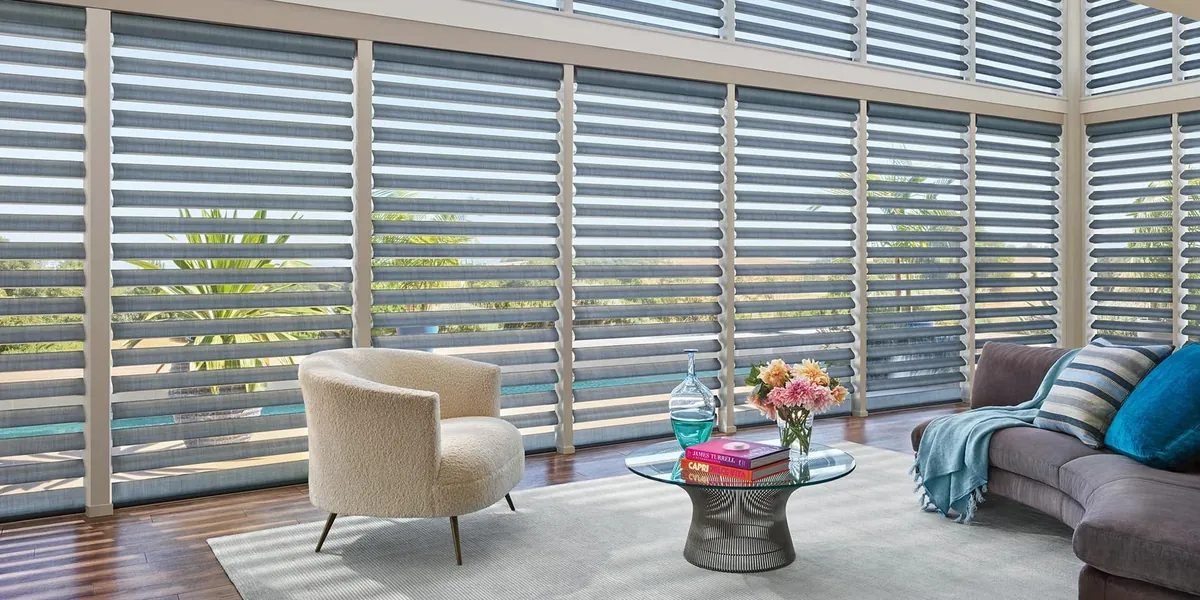
Down toward New Seabury, the houses and villages look out over Nantucket Sound and the light changes again. Water-facing rooms take glare off the sound as well as direct sun, and many of them have wide openings meant to show off the outlook. Covering them completely defeats the purpose of the view.
For these rooms we usually suggest a screen roller or a sheer shade on the water side. Screen fabric comes in different weaves, and a more open weave keeps more of the view while still taking the edge off the glare. Sheer shades tilt their fabric vanes to control how much light comes through, and close completely for privacy.
On many of these houses, the motorized blinds in Mashpee, MA end up split between two kinds of fabric: a light one on the water side that lowers on a schedule for the bright hours, and a heavier one in the bedrooms that closes fully at night.
Transoms, corner glass and clerestories
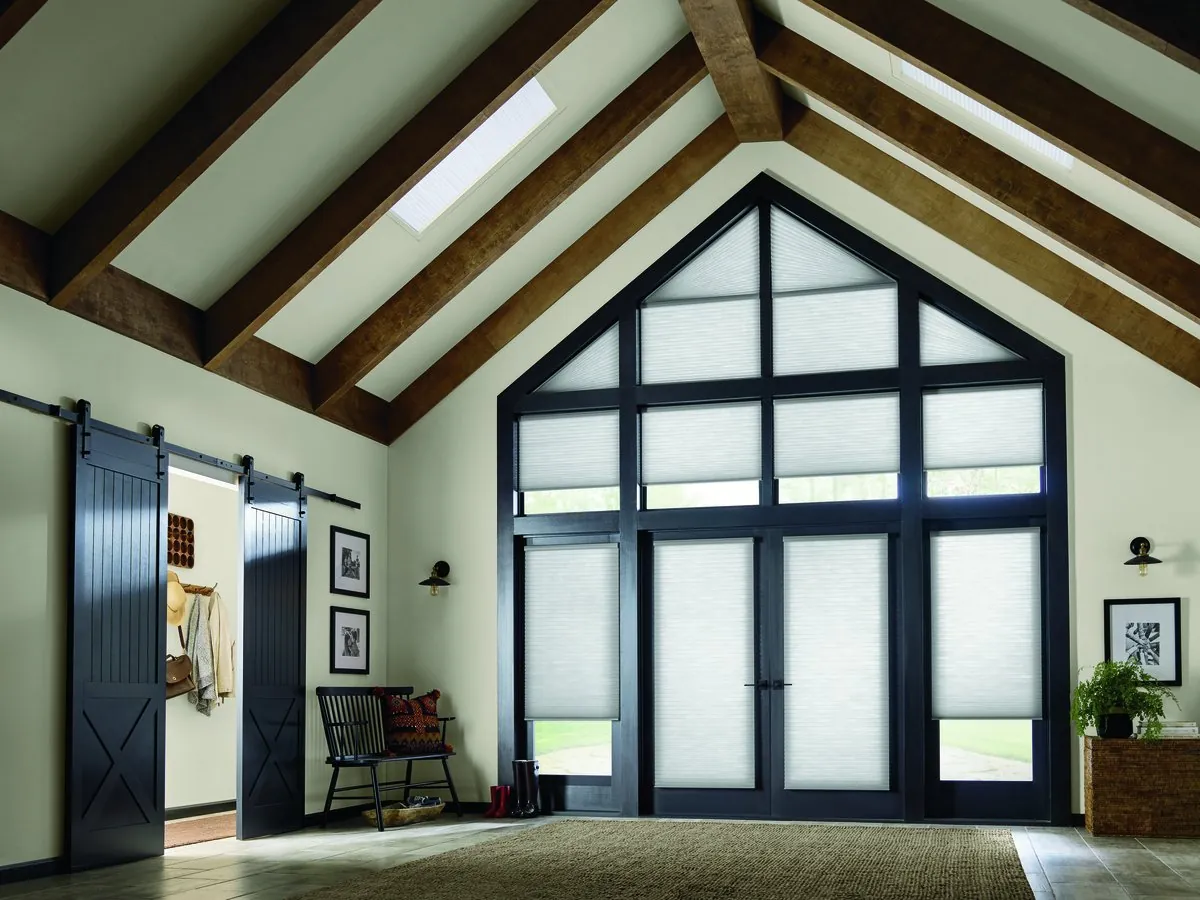
Newer houses love a transom. A row of small windows over a slider, a half-round over the front door, a strip of clerestory glass high in a great-room wall: they bring in lovely light, and they are the hardest windows in the house to cover. Most of them are out of reach, and many of them catch the sun at exactly the wrong hour, throwing a bright patch across the television or the dining table.
Rectangular transoms and clerestories take a motorized shade well. Because they cannot be reached by hand anyway, a motor is the only practical way to have them open some of the time and closed the rest. They join the room’s group, so the high glass closes along with the windows below it, or they can be set apart and lowered on their own when the sun hits them.
Arched and half-round windows are different. They are usually left open, or given a fixed covering, while the rectangular window beneath them takes a shade that moves. We look at every one of these at the visit, because on a newer house they are often where motorized blinds in Mashpee, MA make the biggest difference to how a room feels at four in the afternoon.
Arriving to a house that is ready
One of the quiet pleasures of a motorized system in a second home is walking in to rooms that already feel right. Instead of a dark house with every shade down, or a bright, hot one with every shade up, the shades are where the schedule left them, and a scene brings them all to your favorite positions as soon as you arrive.
A scene is just a saved set of positions. One might be called arrival: everything on the water side up, the bedrooms halfway, the front of the house light-filtering. Another might be evening, with the street side closed and the deck side open to the sunset. You choose them from the app or the remote, and the shades take care of the rest.
When it is time to close up, a single scene can put every shade in the house into its away positions. Then the daily schedules take over until you come back. How remote control and automation fit together is covered in our guide to how motorized shades are controlled, and our window covering automation page explains timers and scenes in more depth.
Choosing the right shade for each room
PowerView runs across most of the Hunter Douglas range, so the product for each room is chosen for the room, not for the motor. In a typical Mashpee house, the choices tend to fall out like this:
- Great rooms and lofts with tall windows suit roller shades or sheer shades, which tuck into slim headrails and look clean on modern glass.
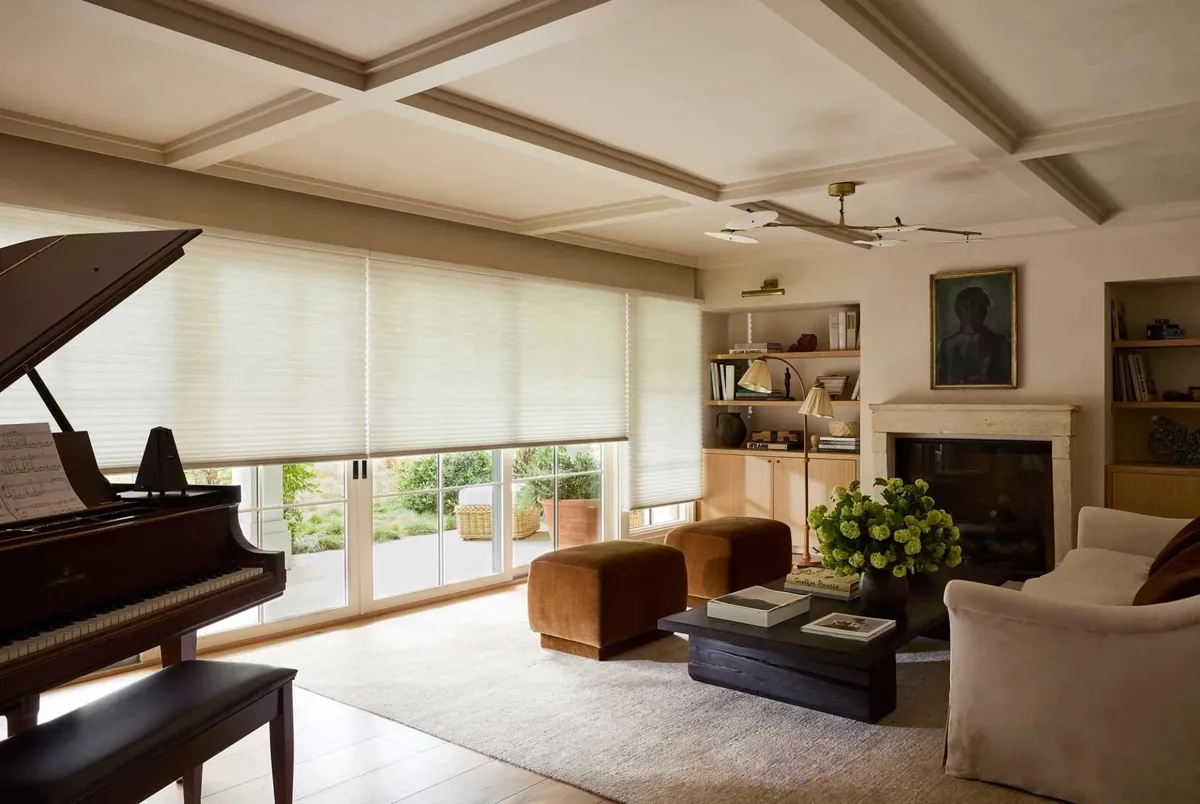
- Bedrooms and guest rooms suit honeycomb shades with a room-darkening fabric. The cells hold air, which keeps the room calmer on a hot afternoon and warmer on a cold night.
- Kitchens and dining areas often take a light-filtering roller or a Roman shade, depending on whether the room leans modern or traditional.
- Sliders take a vertical honeycomb shade or a roller hung high, depending on how the door is used.
Blinds are possible too. Wood and faux wood slats can be motorized in many sizes, and they give a crisp, tailored look in a study or den. Whether a given blind can take a motor depends on its size, so we confirm that at your windows instead of promising it beforehand.
The shoulder seasons and winter
A second home is not only a summer question. Many Mashpee houses are visited at Thanksgiving, on winter weekends or through a long spring, and some are lived in more and more of the year. Each season asks something different of the windows.
In the colder months, the low sun swings round to the south and can warm a room nicely in the middle of the day, then the glass turns cold as soon as it sets. A schedule that raises the south-facing shades around midday and lowers them at dusk makes the most of both. Honeycomb shades are the strongest choice for this, because the air held in their cells sits between the room and the cold pane.
Changing the schedules for the season takes a minute in the app. You might keep a summer set that guards against the long afternoon sun and a winter set that lets the low light in. With motorized blinds in Mashpee, MA, switching between them is a tap rather than a weekend of adjusting every window by hand.
What the system asks of you
Very little. Once the shades are fitted and the schedules set, they run by themselves. If you want to change a schedule for the season, the app lets you do it in a minute. If you want a shade somewhere different for an afternoon, the remote or the app moves it, and the next schedule puts it back.
There are no cords, which makes the shades simpler to live with and safer in a house where grandchildren or pets visit. The bottom rails move evenly on both sides, so a wide shade stays straight. The motor itself is hidden in the headrail.
How each motor is powered is something we plan window by window at the visit, once we have seen the layout of each room.
How we plan a Mashpee project
Second homes bring a particular kind of timing, and we work around it. Many customers like to start while they are on the Cape and see the work finished before they leave or on their next stay.
- Request a consultation online or with the call button, and tell us when you will be at the house.
- We bring samples in our vans, so fabrics are seen in your own summer light.
- We go through each room, noting which windows face the sun and which face the street.
- We measure every opening, high windows and sliders included.
- We discuss the groups, scenes and schedules that suit the way you use the house.
- You receive a free estimate to consider.
- Once the shades arrive, our certified Hunter Douglas installers fit them and program everything.
Our guide to what happens at an in-home consultation goes into the first visit in more detail.
A Gallery dealer for the whole house
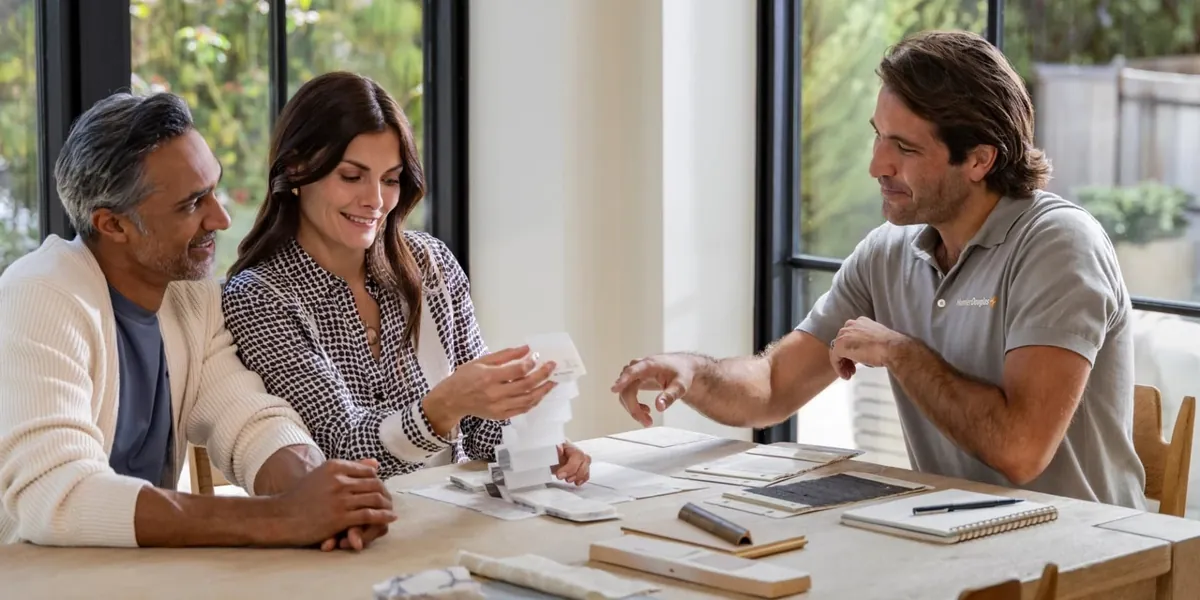
Blinds & Designs is a Hunter Douglas Gallery dealer. That matters in a house with as many kinds of opening as a Mashpee colonial or condominium: tall great-room glass, sliders, transoms, bedrooms and a kitchen can all be covered from one range, and all run from one PowerView app.
Our installers are certified by Hunter Douglas and set up the motors, remotes, app and schedules as part of every installation. We also offer interior design consultations if you are furnishing a new place, and blind and shade repairs for coverings you already have.
For the other services we offer in town, see our Mashpee page, or go straight to roller shades in Mashpee or cellular shades in Mashpee. The full PowerView range is on our motorized blinds and shades page.
Sagamore is the closest showroom
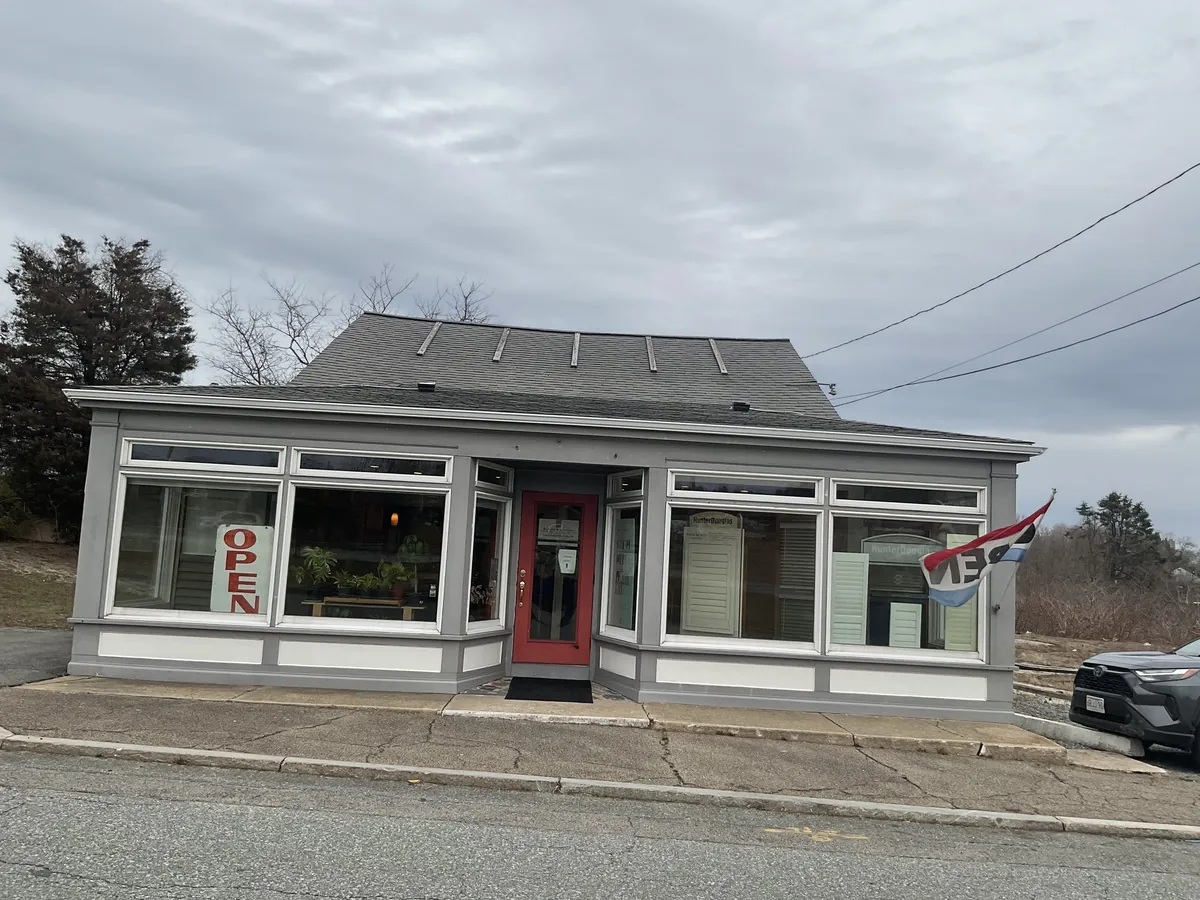
The Sagamore showroom is our nearest location to Mashpee, by the canal at the gateway to the Cape. Stop by when you are passing, or let us come to you.
For a second home, the visit at the house is often the more useful one. We can look at the real light, the real windows and the real views, and plan motorized blinds in Mashpee, MA around the weeks you are there and the weeks you are not.
Questions from Mashpee
Will the shades keep moving while I am away?
Yes. Schedules are stored in the system, so the shades open and close at the times you set every day, whether or not anyone is in the house.
Can I keep the view of the sound and still cut the glare?
Yes. A screen roller or sheer shade softens glare while keeping the outlook, and a more open screen weave keeps more of the view. A schedule can lower them only for the brightest hours.
Our condominium association has rules about windows. Is that a problem?
Usually not. We can choose a white or pale backing for every shade facing outside, whatever faces the room, so the units look uniform from the street or the common. Bring any guidance you have to the visit.
Can the high window over our entry be motorized?
Yes. It runs from the same remote, app and schedules as the windows below, and the motor stops it level with them.
Is the estimate free?
Yes. We measure every window at the house and give you a free estimate for the shades and motors we discussed.
Plan it while you are here
Ask for a consultation, tell us when you will be at the house, and we will bring samples, measure every opening and plan the schedules with you. You will receive a free estimate to think over. Or use the call button, or stop in at the Sagamore showroom on your way onto the Cape.