
Street-level privacy comes first
Woonsocket is a mill city, and its housing is dense. Triple-deckers line street after street, each floor its own home, with Victorians mixed in among them. Both share tall, narrow double-hung windows and high ceilings, and both sit on close-set streets where the house across the way and the house next door are only a short distance off. As a Hunter Douglas dealer in Woonsocket, RI, the first thing we solve on almost every job is privacy at street level.
A ground-floor window on a Woonsocket street is in plain view of anyone on the sidewalk, and a tall double-hung puts a lot of the room on show. Covering it completely solves the privacy but leaves a high-ceilinged room dark. The work is finding the covering that gives the room back its privacy while keeping the daylight those tall windows were built to bring in.
Higher up, the problem changes. A second or third floor looks across at the neighbors’ upper floors rather than down at the sidewalk, and the windows there are just as tall.
Hunter Douglas for Woonsocket windows
As your Hunter Douglas dealer in Woonsocket, we bring every family in the range to the house. Each card links to that product’s Woonsocket page.
Custom blinds
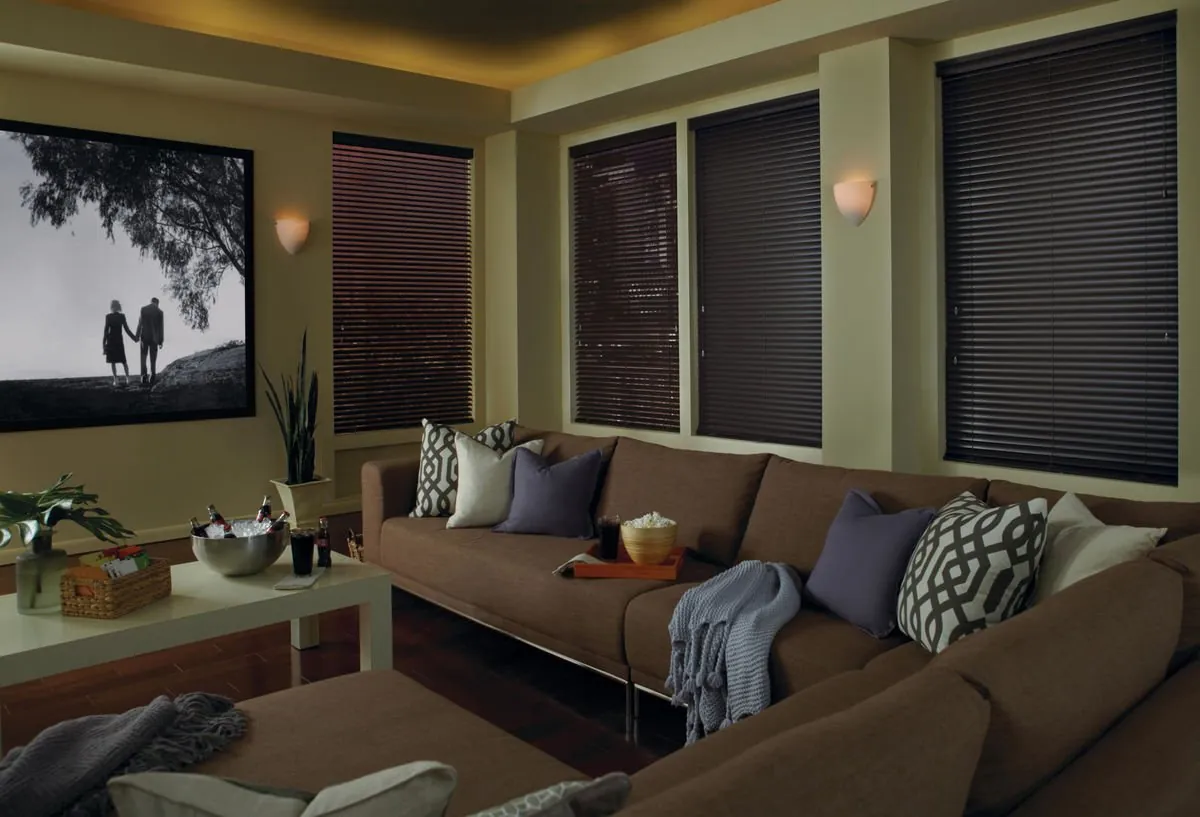
Wood, faux wood, metal and vertical blinds, chosen for their material and for how you like them to tilt and lift.
Cellular shades
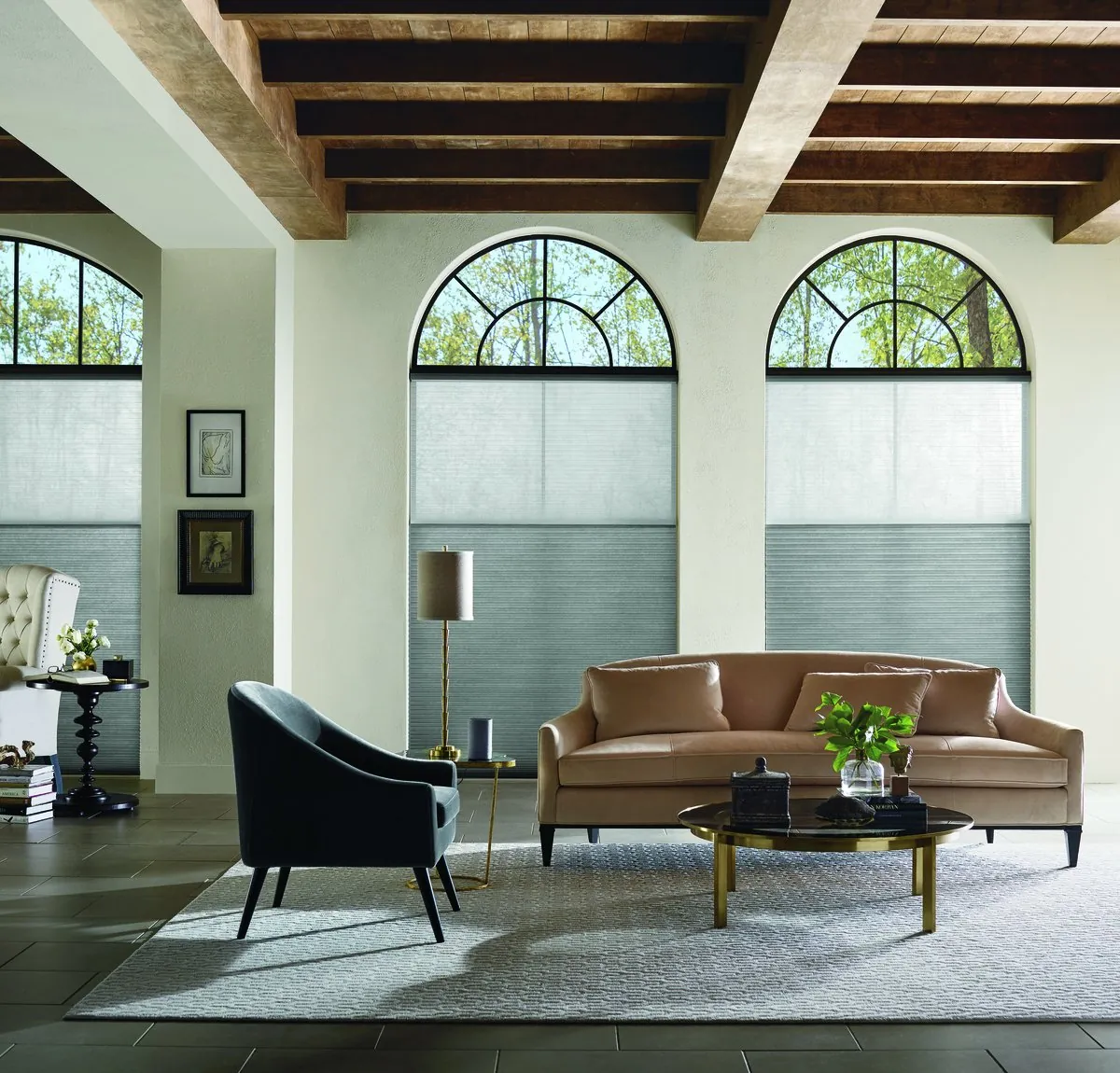
Duette and Applause honeycomb shades. Air held in the cells is why the room behind them keeps its heat.
Roller shades
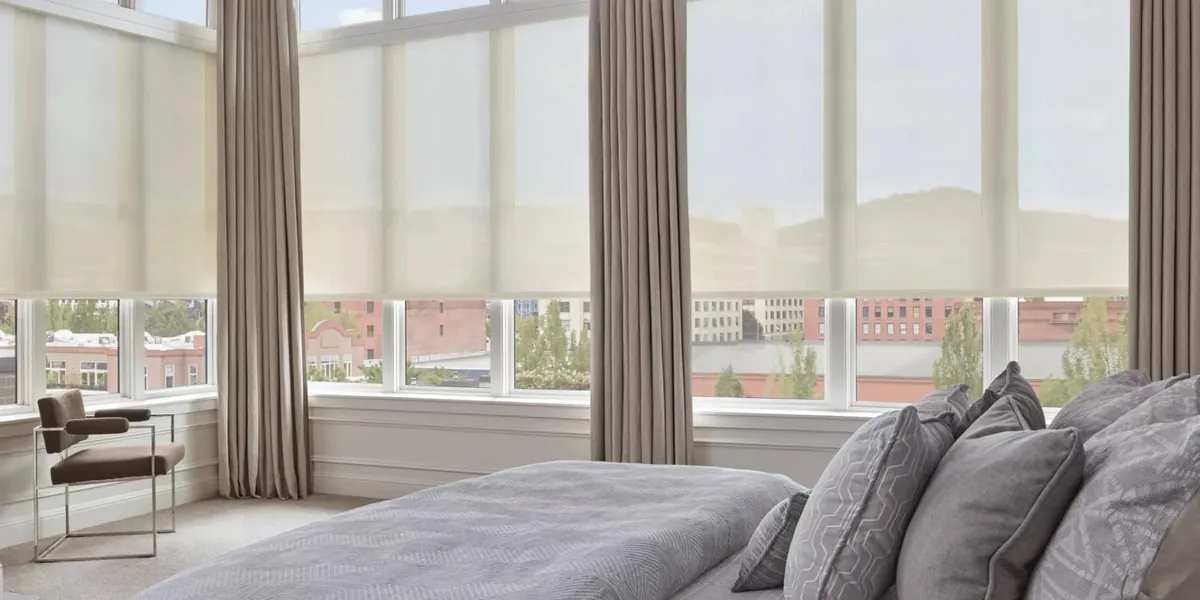
Designer and Alustra rollers and solar screens. The fabric’s openness is about how much view you keep and how much glare you lose.
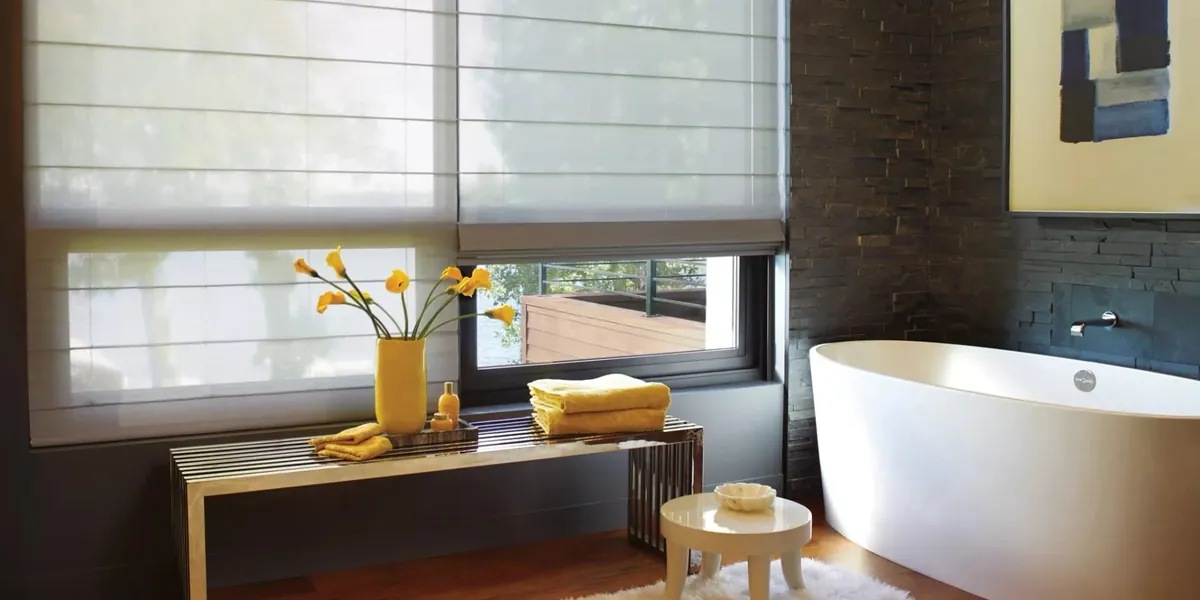
Roman shades
Vignette and Carole Roman shades, flat or folded, a soft fabric choice for a tall Victorian window.
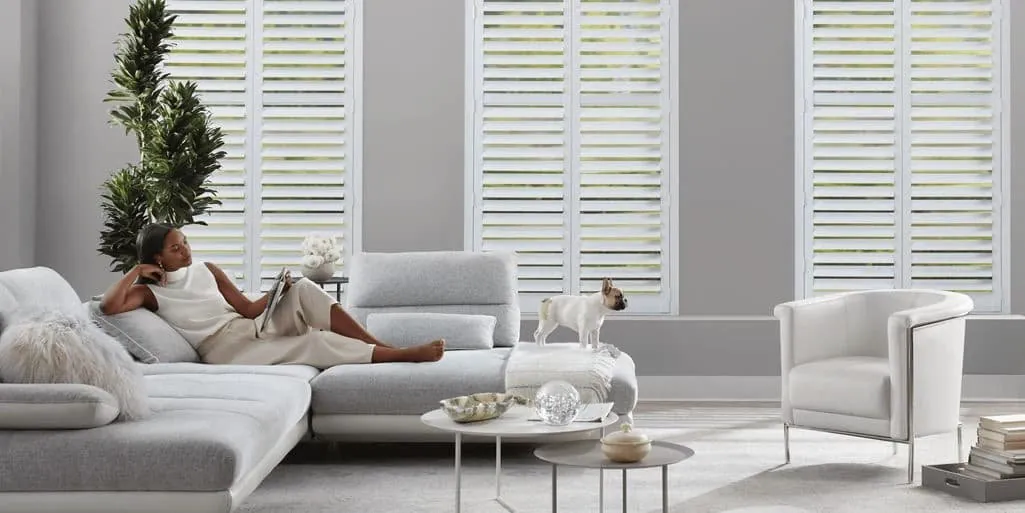
Plantation shutters
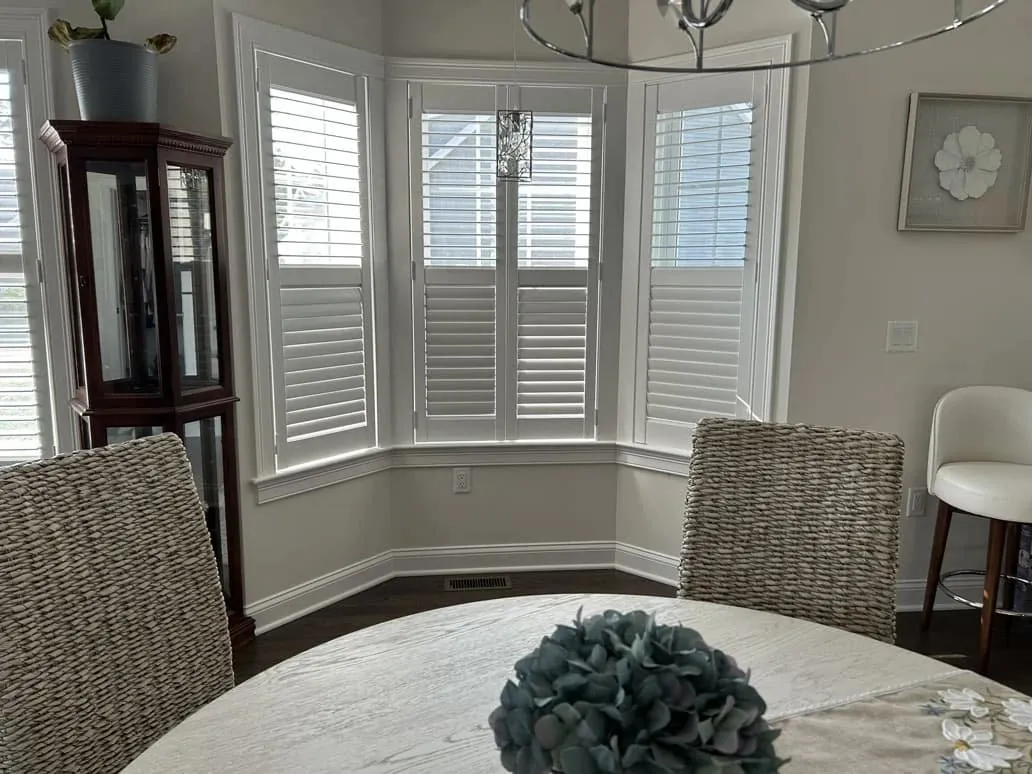
Palm Beach, NewStyle and Heritance shutters, with louver size and frame style matched to tall double-hungs.
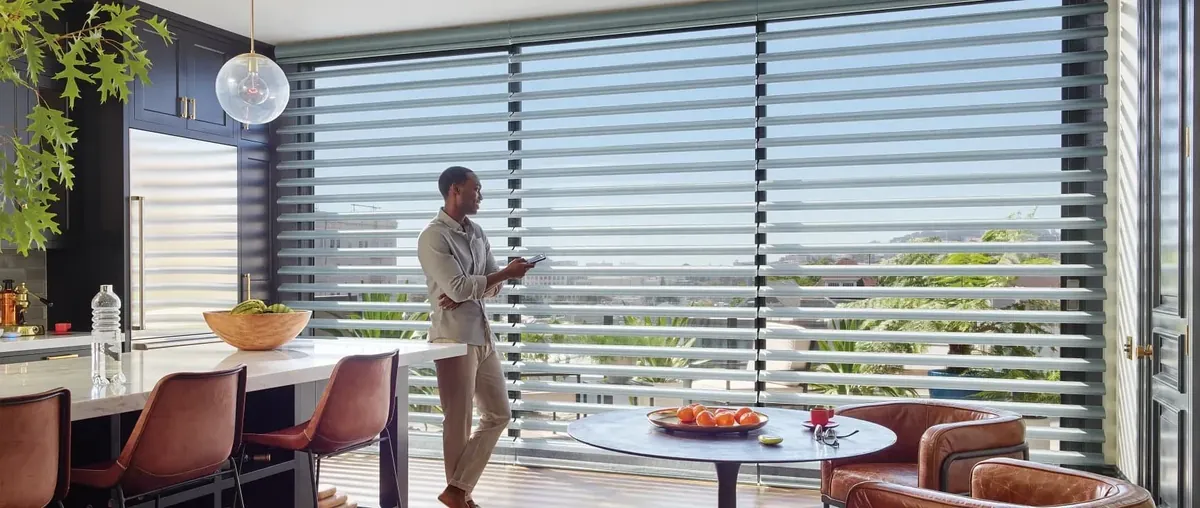
Motorized blinds and shades
PowerView, run from a remote, an app or schedules, for windows that reach up towards a high ceiling.
The ground floor and the sidewalk
On the first floor of a triple-decker or a Victorian, the front windows can be only a porch’s depth from the pavement. A tall double-hung there frames almost the entire room for anyone walking by, and on a close-set city street there is rarely a quiet moment on the pavement.
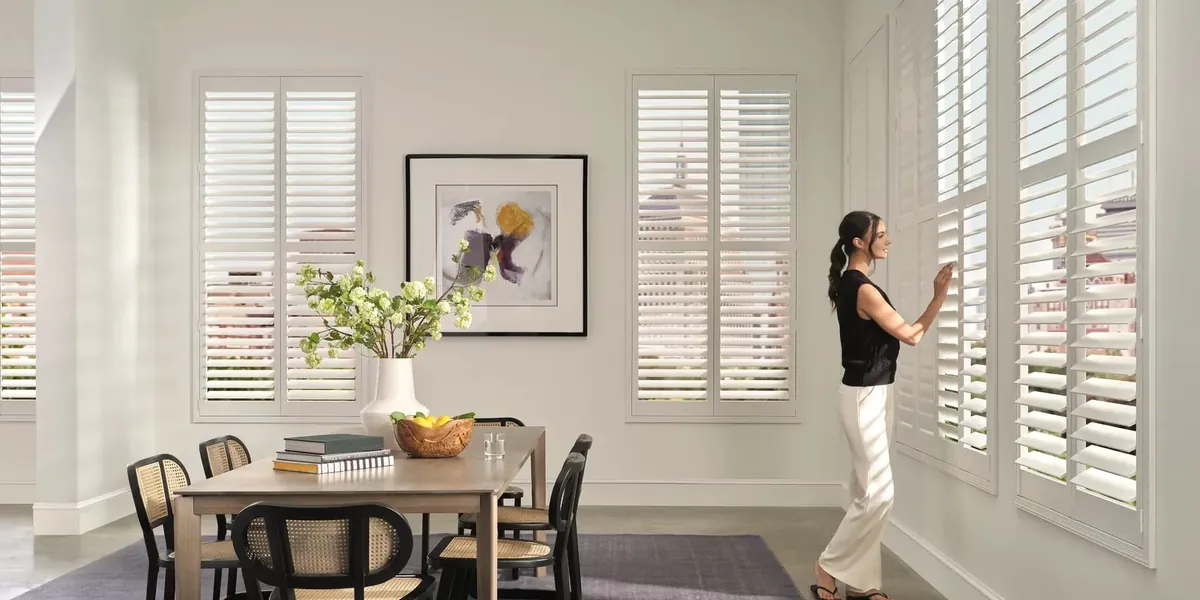
Three approaches cover most first floors. A light-filtering fabric across the whole window keeps the room bright and turns the view in into a blur; a honeycomb or a Pirouette sheer both do this. Shutters let you angle the louvers so the pavement sees slats and you see sky. Or cafe-style shutters on the lower sash cover only the part at a passer-by’s eye level, leaving the upper glass clear for daylight.
Many ground-floor flats combine two of these, with something light for the day and something that closes fully after dark, such as a room-darkening fabric or a pair of drapery panels.
Second and third floors
Climb a floor and the sidewalk stops mattering much. What matters instead is the building next door, whose upper windows can be directly opposite yours across a narrow side yard, and the triple-decker across the street, whose porches look straight at your front windows.
On these floors we usually lean towards fabrics that keep light. A honeycomb in a light-filtering fabric passes daylight and blurs the view across the gap, and the cells add warmth on a cold night. Shutters do well on a side window where you want the louvers closed against the neighbor and open to the sky. Bedrooms facing the next building often take a room-darkening fabric so lit windows opposite do not disturb sleep.
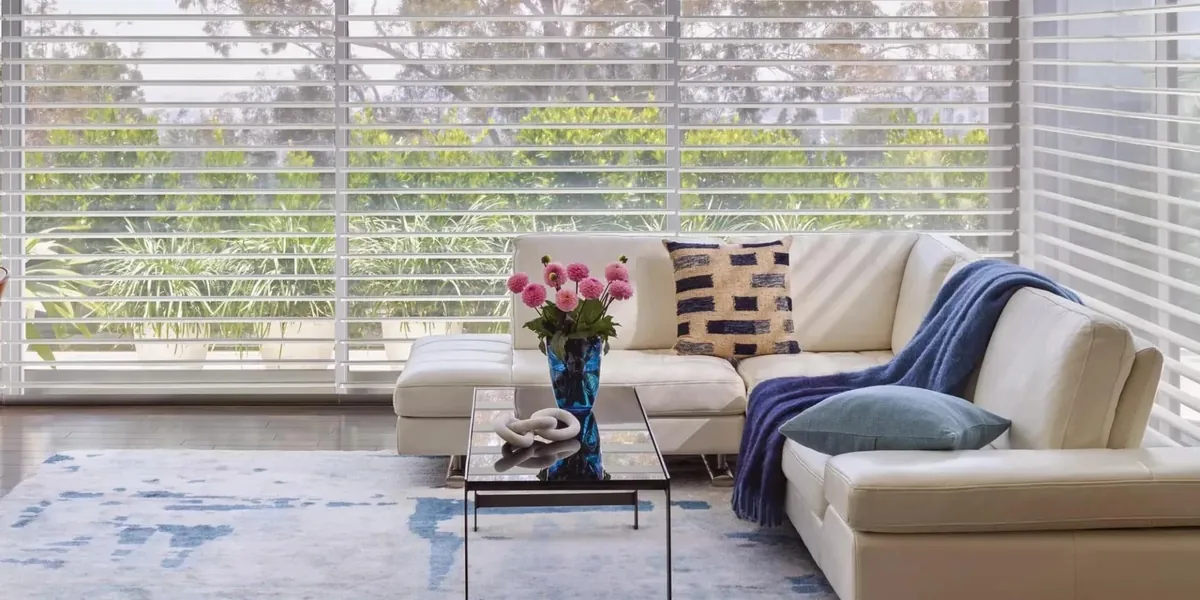
Tall double-hungs and high ceilings
The windows in Woonsocket’s triple-deckers and Victorians are tall and narrow, and the ceilings above them are high. That combination shapes both the look and the practical side of every covering.
On the look, proportion matters. A tall slim window is elegant when its covering respects its shape: a shade that stacks neatly at the top keeps the window looking tall, while one that stacks deep can cut off a good share of the glass even when raised. Flat Roman shades give a tailored band of fabric that suits the height. Shutters sized to the opening suit the double-hung’s tall, slim shape.
On the practical side, the top of a tall window can be out of easy reach, especially above a radiator or a deep sill. That is where PowerView helps, letting you raise and lower a shade from a remote, an app or a schedule.
Measuring city windows that have settled
Double-hungs in a mill city have been painted, propped, stuck and freed many times over, and few of the frames are still truly square. On a tall narrow window, any difference between the top and bottom of the opening is plain to see once a shade is hanging in it.
So the tape goes on every window more than once: side to side at the head, the meeting rail and the sill, top to bottom at both jambs and the middle, and in depth from the glass to the room. We note the sash locks and pulley covers too, since either can block a bracket. The readings decide whether the covering sits within the opening, leaving a Victorian’s original casing on show, or across the face of it, where it has more room and makes a slim window look wider.
Victorian bays and front parlors
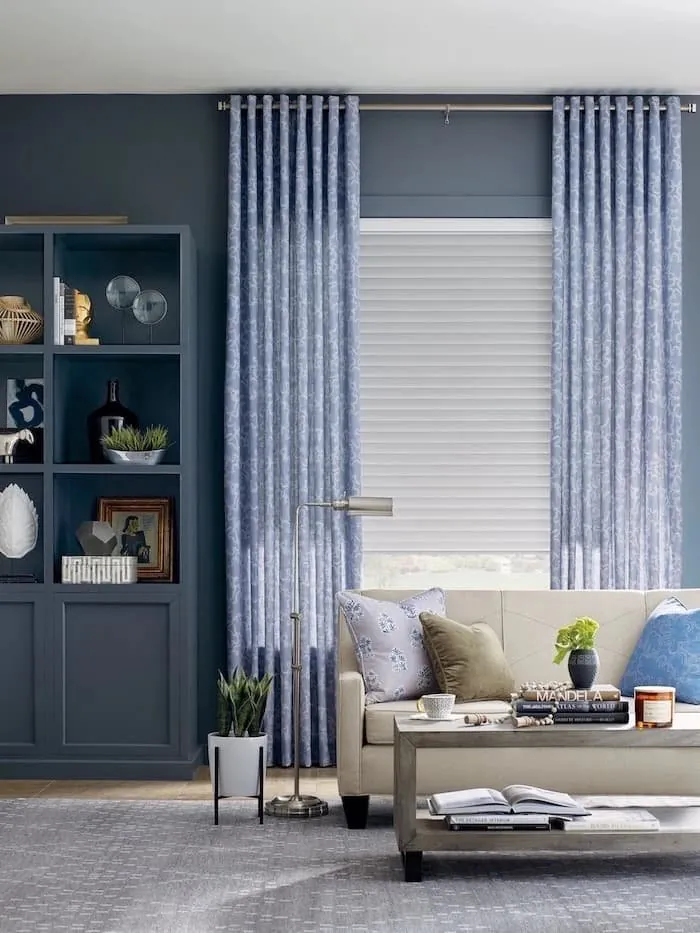
Many Woonsocket Victorians have a bay in the front parlor, three tall windows angled out towards the street. A bay brings in light from three directions and puts the room on show from three as well.
We usually treat each window in the bay separately, so each can be raised or lowered on its own, while keeping the same product and color across all three so the bay reads as one. A light-filtering honeycomb or a sheer shade suits a parlor bay by day. Shutters across a bay give a crisp, finished look from inside and from the street. Drapery over shades adds softness and closes the room completely in the evening.
One building, three homes
A triple-decker usually holds a separate home on each floor, and each floor has its own windows and its own view. The ground floor faces the sidewalk. The middle floor looks across at the neighbors. The top floor often gets the most light and the best view over the rooftops.
That means the right answer can differ from floor to floor, even in the same building. A Hunter Douglas dealer in Woonsocket looks at each floor on its own terms: privacy first on the ground floor, a balance of light and privacy in the middle, and sun and glare control at the top. Where the whole building is being covered at once, we can keep the color facing the street consistent across all three floors so the front looks tidy from the road.
Victorian stair halls and landing windows
Many Woonsocket Victorians have a tall stair hall with a window on the landing, sometimes the tallest window in the house. It lights the stairs, and it is visible from the street in the evening.
A landing window wants a covering that keeps the stair bright by day and closes when the hall lights are on. A sheer or light-filtering shade does both. If the top of the window is out of reach from the stairs, which is common, PowerView lets you raise and lower it from a remote or on a schedule, so nobody has to lean over a banister.
Porches and the light they block
Triple-deckers often have stacked front porches, one for each floor. A porch roof shades the windows behind it, so a front room can be darker than its tall windows suggest. On the other hand, the porch brings people and neighbors close to those windows.
For a front room behind a porch, we usually suggest a covering that keeps as much light as possible: a light-filtering fabric that still passes daylight when lowered, or shutters that can be opened wide. A room-darkening product would make an already shaded room gloomy by day, so we keep that for bedrooms.
Middle-floor bedrooms in a triple-decker
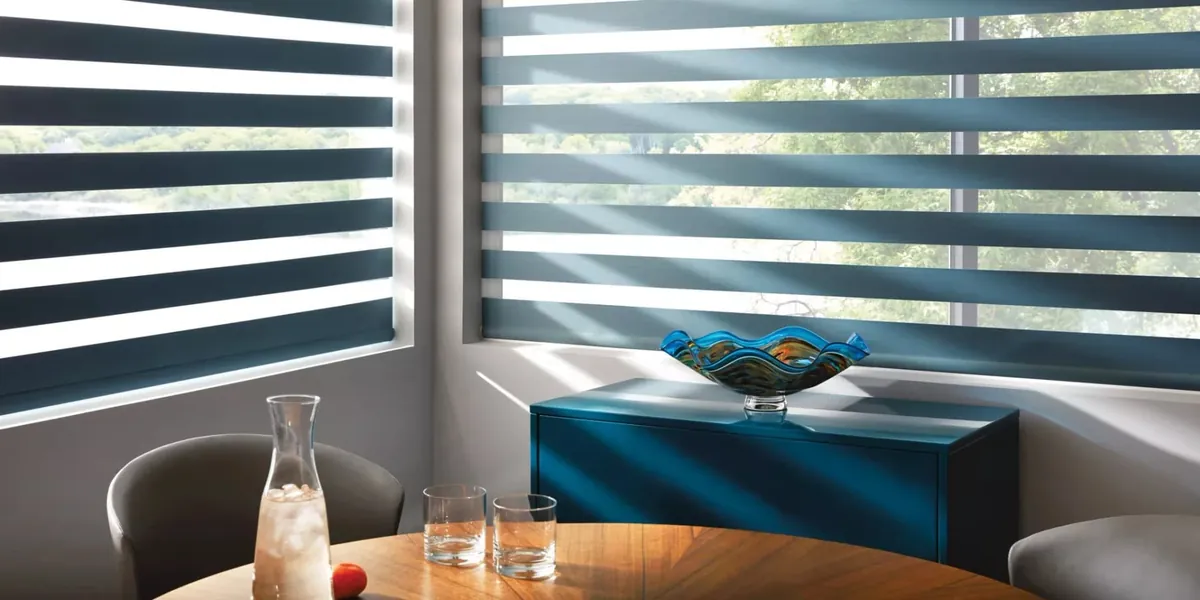
The middle flat of a triple-decker has neighbors above, below and on both sides, and its bedrooms often face the side yard and the next building. They are usually the rooms that most need darkness at night and some privacy by day.
A room-darkening honeycomb fitted inside a tall window closes it neatly and helps the room hold its warmth. Where a bedroom also serves as a home office, a light-filtering fabric gives daylight with privacy, and a second room-darkening shade or drapery can be added for night. We look at each bedroom separately, since one may face the street and the other the side yard.
The consultation at your home
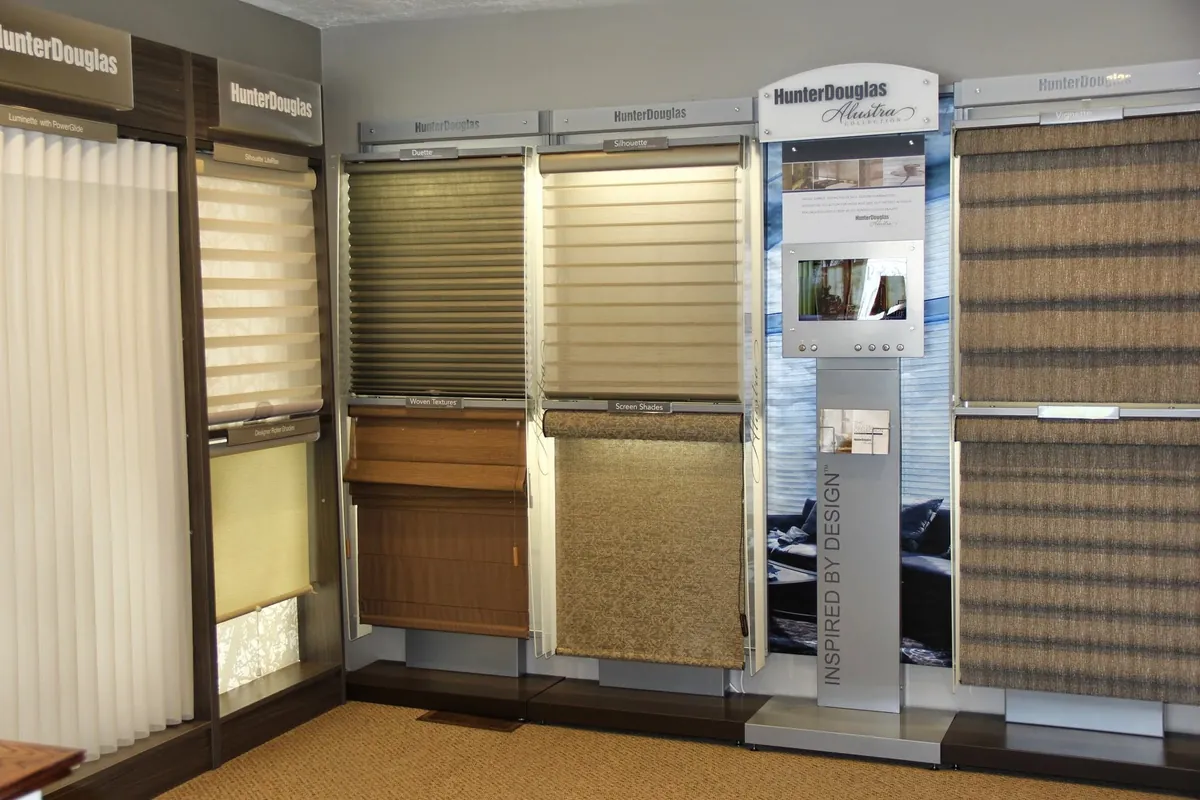
With a Hunter Douglas dealer in Woonsocket, most projects are decided at home, with your own street outside the window. The van carries samples from the entire Hunter Douglas range, so the showroom comes to your door, whichever floor you live on.
- Ask for a visit through Request a Consultation, or use the call button to speak to the Franklin showroom.
- We set a time and bring samples chosen for your floor and your rooms.
- We look at each window together and note what it faces: sidewalk, neighbor or rooftops.
- You hold the samples up to your own tall double-hungs.
- Every opening is measured, the old double-hungs several times.
- A free estimate follows, and you decide when you are ready.
- Hunter Douglas makes the order to our measurements, and our certified installers hang it.
There is more about the first visit on the in-home consultations page, and the free estimates page explains the estimate. An interior design consultation can help with color and fabric.
Warmth under a high ceiling
High ceilings let warm air rise away from where you sit, and old double-hungs can make the seat by the window feel draughty in January. A honeycomb shade helps more than any other covering here, because the air trapped in its cells sits between the cold glass and the room. Lowered at dusk across a parlor’s tall windows, Duette or Applause shades make the room noticeably more comfortable for the evening. On a top-floor flat in July, the same shades keep the afternoon heat from building up under the roof.
Motorization for tall windows
The top rail of a tall Woonsocket window can be well out of reach, especially behind a radiator, and that is where PowerView earns its place. A schedule can also close the ground-floor front shades as the street lights come on and open them in the morning. Control is by remote, app or schedule, and we plan how each motor is powered at the visit. The motorized blinds in Woonsocket and window covering automation pages go further.
Radiators, sills and the space below a window
Woonsocket’s older houses often have a radiator under the front windows and a deep sill above it. Both affect what goes on the window. A covering that hangs down over a radiator can block the heat from reaching the room, and one that rests on a deep sill can look untidy.
We measure with those in mind, choosing the length and mount so the covering clears the sill and leaves the radiator free. Where a window is hard to reach over a radiator, PowerView takes away the stretch. Shutters are another neat answer, since the panels sit within the frame and open away from the glass. Whichever way we go, the radiator and the sill are noted on the measuring sheet for that window, so the order arrives sized to clear them and nothing has to be trimmed or adjusted on the day.
Color on a busy street
On a dense street, the side of each covering that faces outward is part of the building’s face. A white or soft neutral backing on every street-side window makes a triple-decker read as one tidy front, whatever is behind each pane. Inside, Victorians take richer fabrics, Roman shades and painted shutters well, while lighter coverings keep a triple-decker flat bright.
Back porches, back stairs and the rear windows
The back of a triple-decker often has its own stacked porches and an enclosed back stair, and the rear windows look across at the backs of the next street’s houses. These windows can be just as overlooked as the front, only from a different direction.
Kitchens usually sit at the back, so the window over the sink wants light more than anything, and a simple light roller handles it. Back bedrooms facing the next building need privacy at night, and a room-darkening fabric or closed shutters takes care of that. A bathroom window at the back is a natural place for shutters, since the louvers set the line of sight at any hour.
Gallery dealer, certified installation
As a Hunter Douglas Gallery dealer, we bring the whole family to a Woonsocket job: every kind of shade, blinds in wood, faux wood, metal and vertical styles, Palm Beach, NewStyle and Heritance shutters, drapery and PowerView.
Our installers are our own and hold Hunter Douglas certification. On a tall double-hung that has moved over the years, they set each bracket true, clear the locks and pulley covers, and run every product before they leave.
The main Hunter Douglas page has more on our dealer work, and the Hunter Douglas online catalog shows the lines.
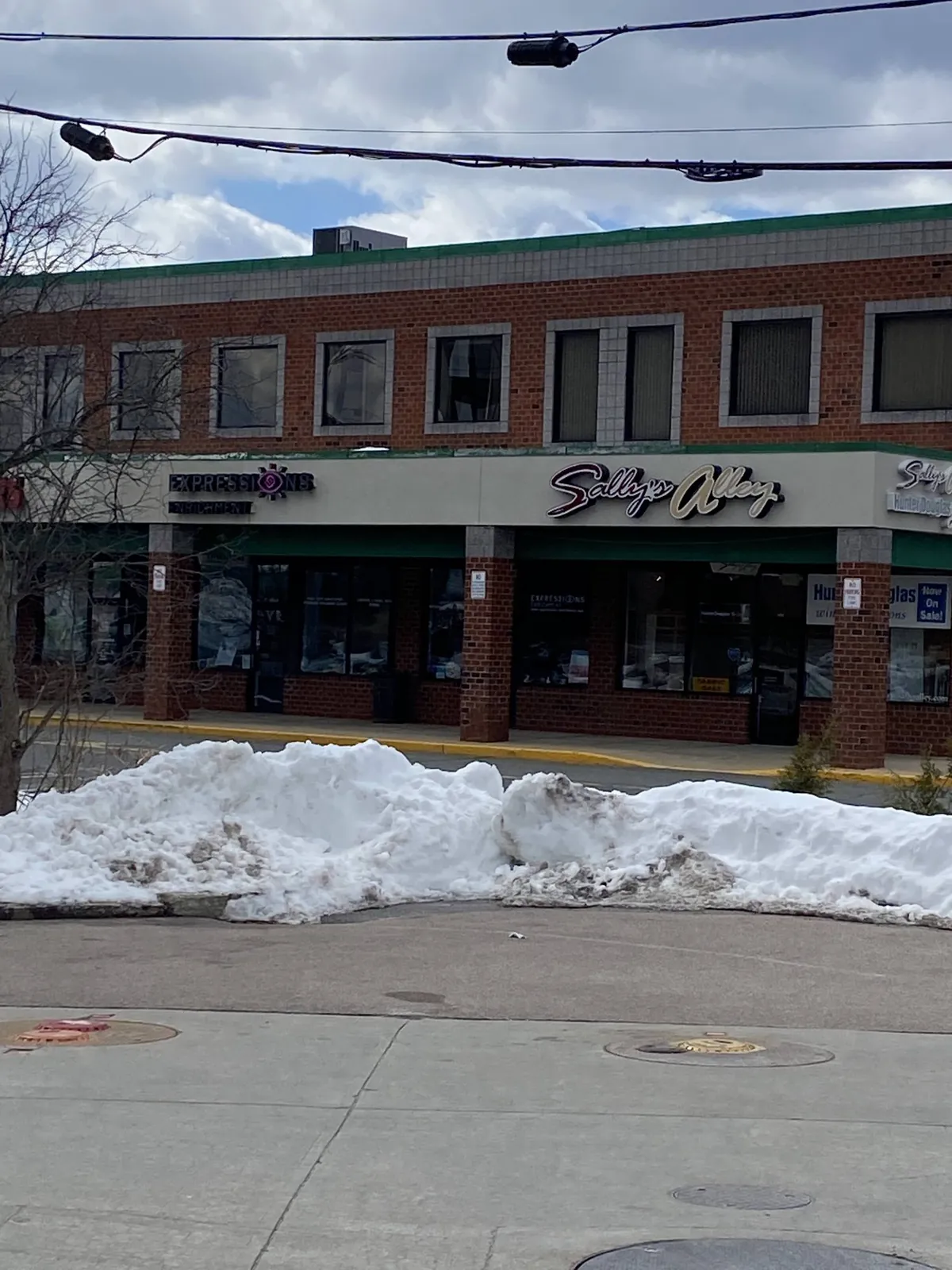
Franklin, our nearest showroom
Our closest showroom to Woonsocket is across the state line in Franklin, Massachusetts. You are welcome to call in before we visit.
The final choice is still best made in your own rooms, against your own tall windows, and a free estimate follows once we have measured.
See the Franklin showroom page for the address and hours, and the Woonsocket page for everything we offer in the city.
Questions from Woonsocket
My first-floor windows face the sidewalk. How do I keep privacy without losing light?
A light-filtering fabric lets daylight in while blurring the view. Shutters with tilted louvers block the sidewalk’s line of sight, and cafe-style shutters cover just the lower sash. For evenings, a room-darkening fabric or drapery closes the window.
Will a shade suit the tall, narrow double-hungs in my triple-decker?
Yes. We measure each frame in several places, check its depth and choose a product that stacks neatly, so the window keeps its tall shape.
Can each floor of a triple-decker have something different?
Yes. Each floor faces a different view, so the products can differ, while the color facing the street stays the same across all three floors.
How do I reach the top of a tall window under a high ceiling?
PowerView lets you raise and lower the shade from a remote, an app or a schedule.
Is there anything to pay for an estimate?
No, estimates are free. Once you order, our Hunter Douglas certified installers fit everything.
Start with the window that bothers you most
Request a consultation with a Hunter Douglas dealer in Woonsocket, and we will come to your floor with samples, measure every tall window and leave a free estimate. If you would like to talk first, the call button reaches the Franklin showroom.