
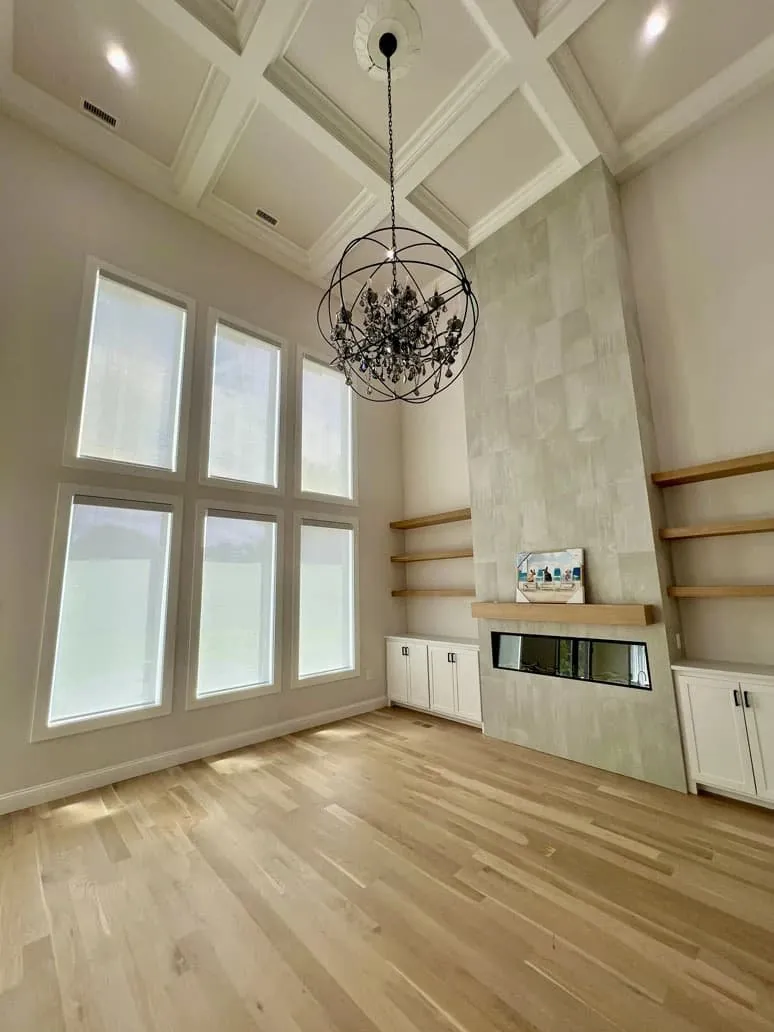
Tall sash on Main Street, two-story glass off Route 140
Franklin has two very different kinds of window, and a roller shade suits both. Around the common and along Main Street, the antique colonials and Victorians keep their tall, narrow sash, often with original casings that deserve to stay in view. Out in the subdivisions off Route 140, the newer colonials are built around big entry halls with two-story glass over the front door and a stairwell window halfway up the wall. Fitting roller shades in Franklin, MA, means planning for a slim shade that tucks inside an old frame and, a few streets away, a long panel that has to be raised and lowered from the floor below.
A roller is about the simplest shade there is: a single length of fabric wound onto a tube. When it is up, almost nothing shows. When it is down, it gives you whatever the fabric was chosen to do, from a soft daytime glow to a room dark enough for a late sleep.
That one decision, the fabric, is where most of our time goes with Franklin customers. The window shape tells us how to mount the shade. The room tells us what the fabric has to handle.
Hunter Douglas rollers we fit around Franklin
Every one of these starts with the same tube and fabric. They differ in what the fabric does to the light and the view, and we bring samples of each to the house.
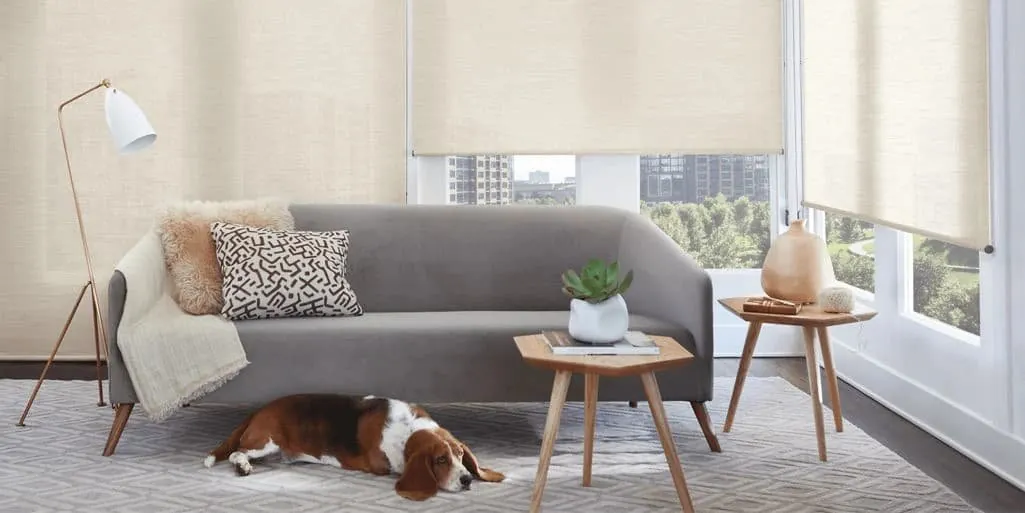
Designer Roller
The everyday Hunter Douglas roller, in fabrics that run from light filtering through room darkening to blackout.
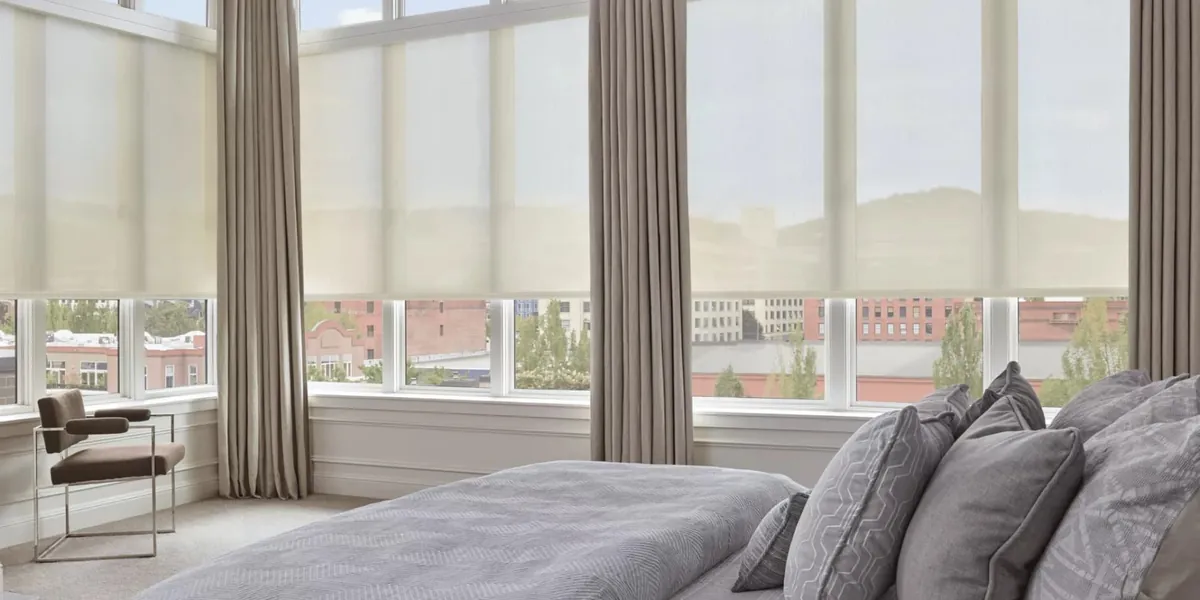
Designer Screen
Solar screen fabric for rooms where you want to cut glare but still see out to the yard.
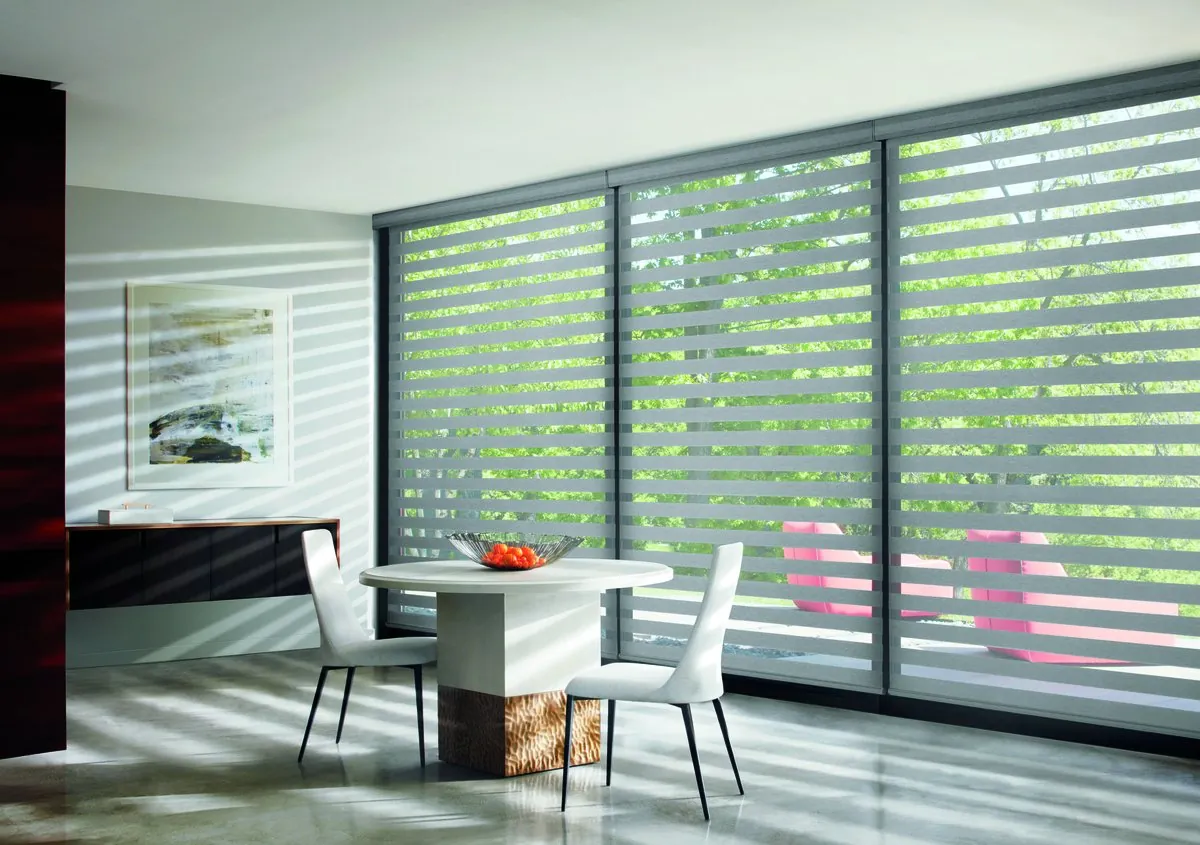
Designer Banded
Sheer and solid stripes that line up when you want the view and slide past each other when you want privacy.
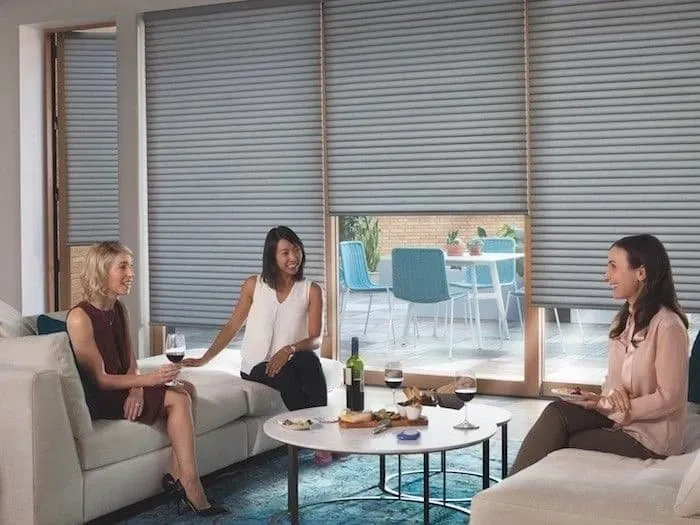
Sonnette
A roller built from a curved cell of fabric, softer in the light and a little fuller than a flat panel.
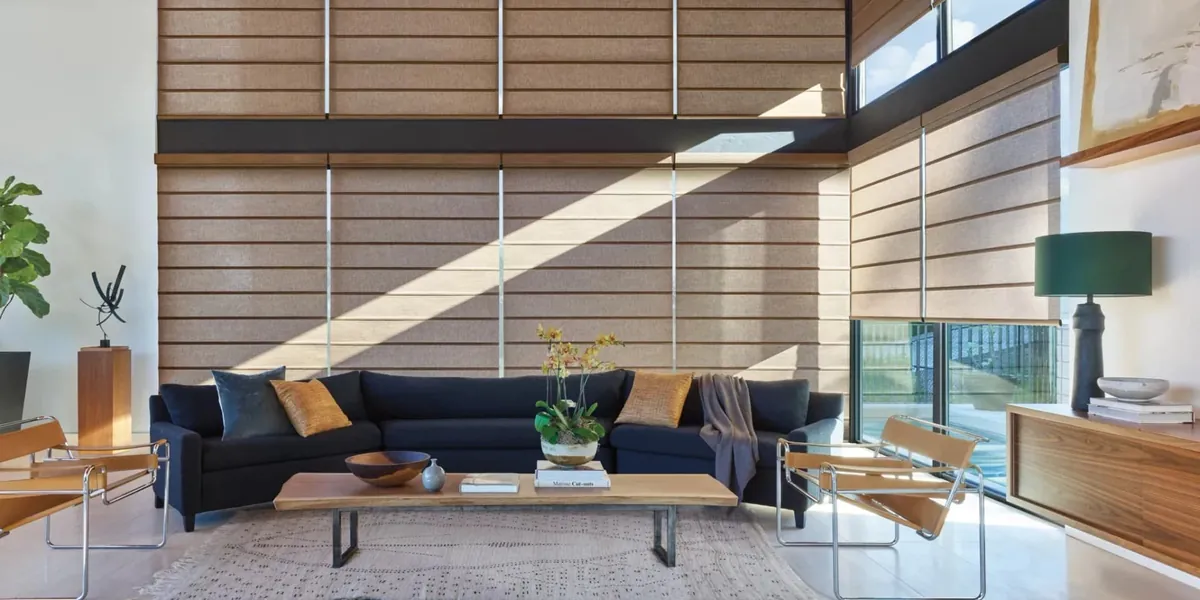
Alustra Architectural
The top of the roller range, with designer fabrics made for large modern glass like a Route 140 great room.
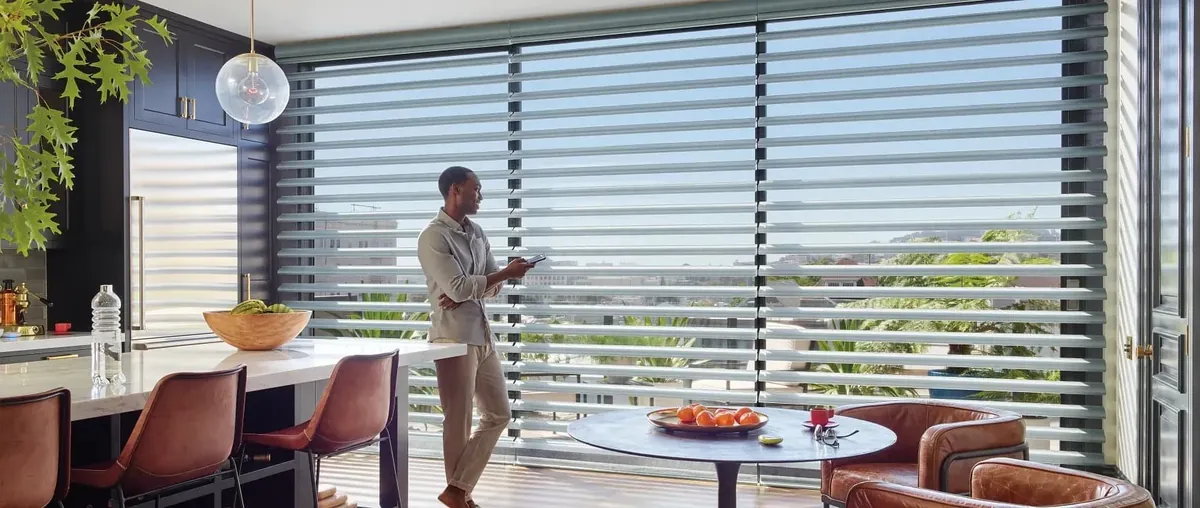
PowerView motorization
Motors for the shades nobody can reach, run from a phone, a remote or a schedule.
Fitting a roller inside an antique frame
The older houses near the common were built with windows that are taller than they are wide, set into deep wood casings. Many have been painted a dozen times, and many have settled so the opening is no longer quite square. A roller shade suits them because the headrail can be very slim. Mounted inside the frame, the shade sits behind the trim and leaves every bit of that woodwork showing.
What decides whether an inside mount works is depth. The roll of fabric gets fatter as the shade rises, so the frame has to be deep enough to hold the tube plus the rolled fabric without the shade rubbing on the sash lock or the stop. On some antique sash there is room to spare. On others the window has been fitted with interior storms or new stops, and the space is gone.
We check that at several points on each window. Where an inside mount will not fit cleanly, a slim outside mount fixed to the top of the casing is the better answer, and a decorative fascia across the top can make it look deliberate rather than tacked on.
Light gaps are the other thing to think about in an old frame. A roller mounted inside always leaves a thin line of light at each side, because the fabric cannot run right to the edge of the tube. In a living room nobody notices. In a bedroom where you want darkness, an outside mount that overlaps the casing by a little on each side closes most of those gaps.
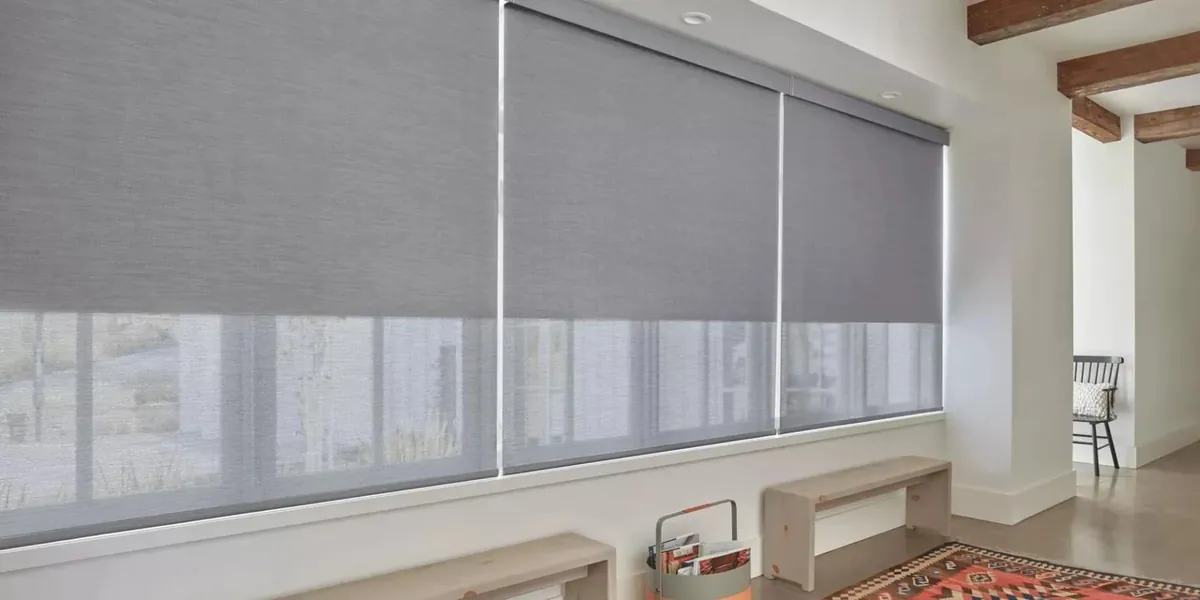
Entry halls and stairwells in the newer colonials
The subdivisions off Route 140 were built with a lot of glass at the front. A typical newer colonial has a tall window above the front door, sometimes an arched transom over that, and a window on the stair landing that sits well above anyone’s reach. In the afternoon, that glass pours sun straight down the stairs and across the hall floor.
The stairwell window is the hardest reach in town. A ladder on a staircase is awkward at best, and a corded shade high on the wall is one you set once and never touch again. That is where we usually suggest PowerView. A motorized roller can be raised in the morning and lowered when the sun moves round, from your phone, a small remote by the door or on a schedule that runs whether you are home or not.
For the two-story glass itself, the fabric choice matters as much as the motor. A light filtering fabric keeps the hall bright but stops the hard patch of sun that fades the floor and the stair runner. A solar screen keeps the view of the front yard while cutting the glare. A room darkening fabric is rarely what an entry needs.
Very wide or very tall openings may need more than one shade. We can line several rollers up on one headrail so they rise together, or set them to move separately, and we will explain what the size of each window allows before anything is ordered.
Choosing a fabric for each Franklin room
Roller shades in Franklin, MA, cover everything from a north-facing den to a south-facing kitchen, so we rarely pick one fabric for the whole house. These are the questions we ask room by room.
- Which way does the window face, and when does the sun hit it?
- Do you want to see out when the shade is down, or just have light?
- Is privacy from the street or a neighbor a concern, day or night?
- Does anyone sleep in the room after sunrise?
- Is there a television or a screen that takes glare?
Light filtering fabric lets daylight through and blurs the view, so a room stays bright and private in the daytime. Room darkening fabric blocks most of the light. Blackout fabric blocks the light that comes through the fabric itself, which is why it goes in nurseries and bedrooms on the east side of the house. Solar screen sits in a class of its own, which the next section covers.
What openness means on a solar screen
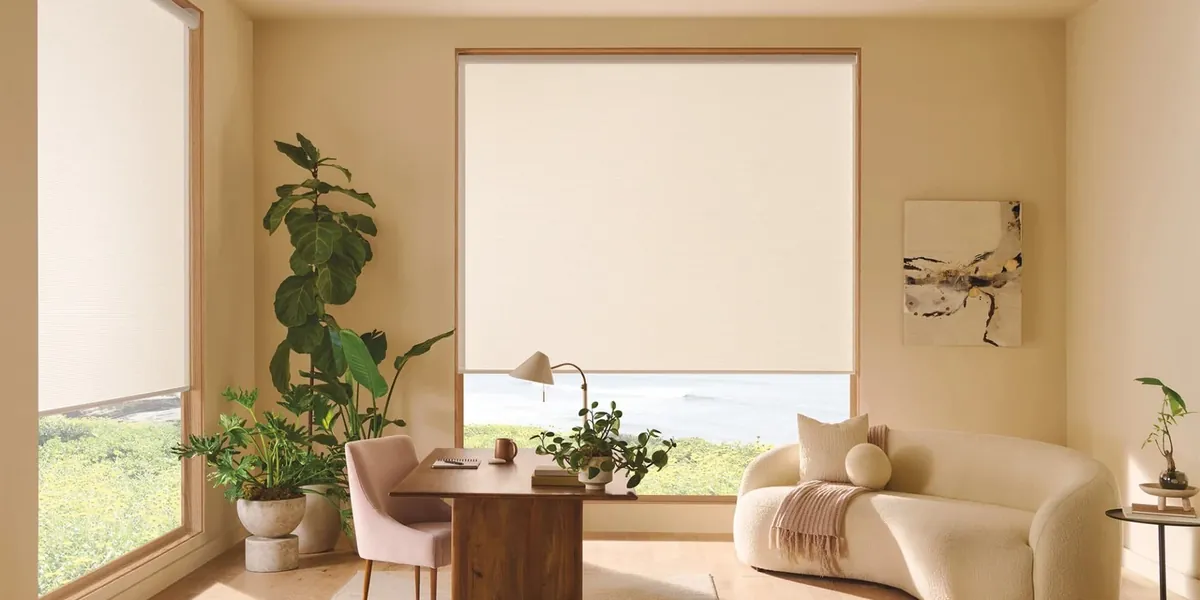
A solar screen is a woven fabric with small, even gaps in it. How open the weave is, the openness, is the whole decision, and it comes down to view and glare.
A more open weave shows you more of the outside and lets in more light and warmth. A tighter weave cuts more glare and gives more daytime privacy, but the view behind it gets softer. Color changes the result too. A darker screen tends to give the clearest view out, because it reflects less light back at you. A lighter screen brightens the room but looks a little hazier from inside.
In the great rooms and family rooms of the newer houses, where the glass runs high and the yard is the view, a screen is often the right shade. We bring several openness levels in more than one color, and you hold them up at the window in the light you actually have.
One thing to know about any solar screen: at night, with the lamps on, you can see in through it. For a room that faces the street, pair it with a second shade or choose a banded fabric that closes fully.
How an in-home consultation runs
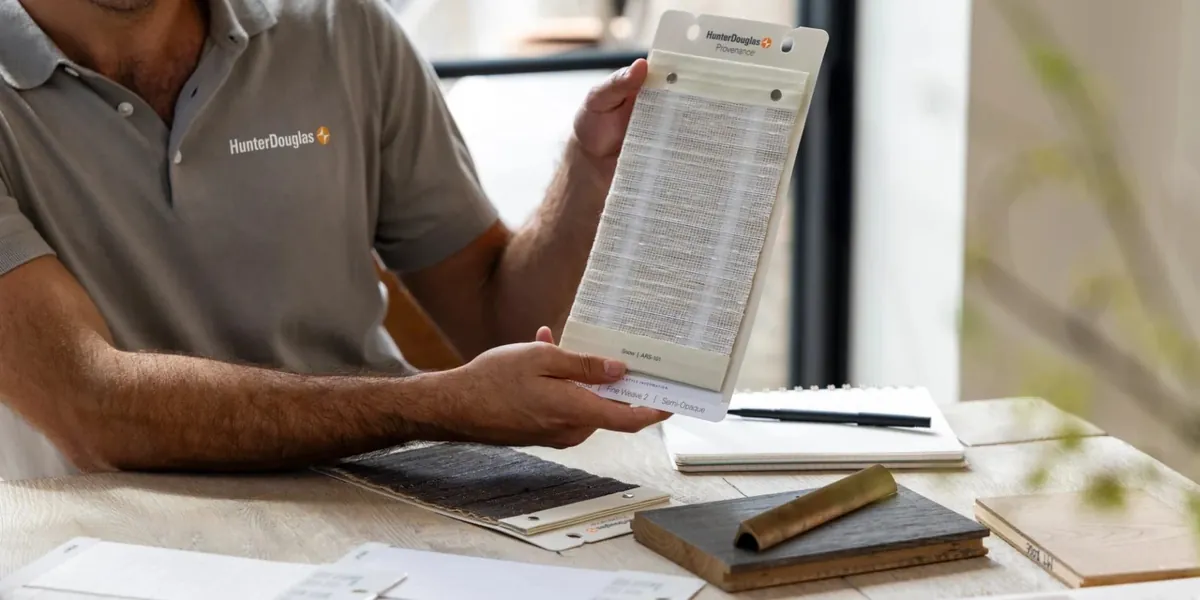
You can start at the Franklin showroom, but most roller orders are decided at home, because that is the only place to judge fabric against your own walls and your own light. Our vans carry the samples, so we can bring the showroom to you.
- Request a consultation online or use the call button, and pick a time that suits you.
- We arrive with roller, screen, banded and Alustra samples in a spread of colors and opacities.
- We walk the rooms with you, starting with the ones that get the most sun or the least privacy.
- You hold samples up at the windows and see how each one changes the room.
- We measure every window and check the depth for an inside mount.
- You get a free estimate for the shades you are thinking about, and you decide in your own time.
If you want help bringing a room together, ask about our interior design consultations. We can look at the fabric for your rollers alongside paint, drapery and the rest of the room at the same visit.
Valances, cassettes and how the top looks
On a roller, the top of the shade is the part people notice most once it is up. A plain tube with the fabric showing suits a modern room. In a period house near the common, most customers want the roll hidden.
A fascia is a flat cover across the front of the headrail. A cassette wraps the roll on more sides and gives a tidier look from below, which helps on a tall stairwell window where you look up at the top of the shade. Both come in finishes that suit the trim, and we bring examples so you can see them against your casing.
The fabric can roll off the back of the tube, close to the glass, or off the front, which pushes the shade out a little into the room. Rolling off the front can clear a window crank or a deep sill. Rolling off the back keeps the fabric tight to the window. We decide that window by window.
The bottom of the shade is a choice as well. A slim hem bar is the most discreet. A wrapped or decorative bottom rail adds a little weight and finish at the sill.
Kitchens, family rooms and the back of the house
In most of the newer colonials, the back of the house is one long open room: kitchen, eating area and family room, with a slider to the deck and a run of windows over the sink. That wall usually faces the yard, and depending on the lot it can take the full afternoon sun. Roller shades in Franklin, MA, earn their keep here, because one fabric can run across every window and the slider so the whole wall reads as one.
Over the sink, a roller that clears the faucet and the window crank matters more than the fabric. On the slider, a single wide roller can cover the glass, though many customers prefer two shades so the fixed panel can stay down while the door side goes up. For the family room end, where a television often sits opposite the windows, a screen fabric with a tight weave takes the glare off the picture without closing the room in.
Measuring and certified installation
A roller looks right when it fits the opening closely, and a close fit starts with careful measuring. Franklin’s antique windows rarely match each other, even in the same room, and the newer houses can hide surprises in the drywall above a tall window.
- Each opening gets three width readings, and the narrowest one sets the size of an inside-mounted shade.
- Height is taken down both sides and through the middle, since an old sill is seldom level.
- Wherever a headrail will sit, we note the depth and anything in the way: a lock, a crank or an interior storm.
- Before ordering, you sign off on the mount, the roll direction and the way each shade is controlled.
- On installation day our certified Hunter Douglas installers hang the shades, level them, cycle each one fully and walk you through the controls.
On the high windows in a newer foyer, the installers plan where any motor power connection sits so you never need to reach it, and they test the shades from wherever you will control them.
Pairing rollers with other shades in the house
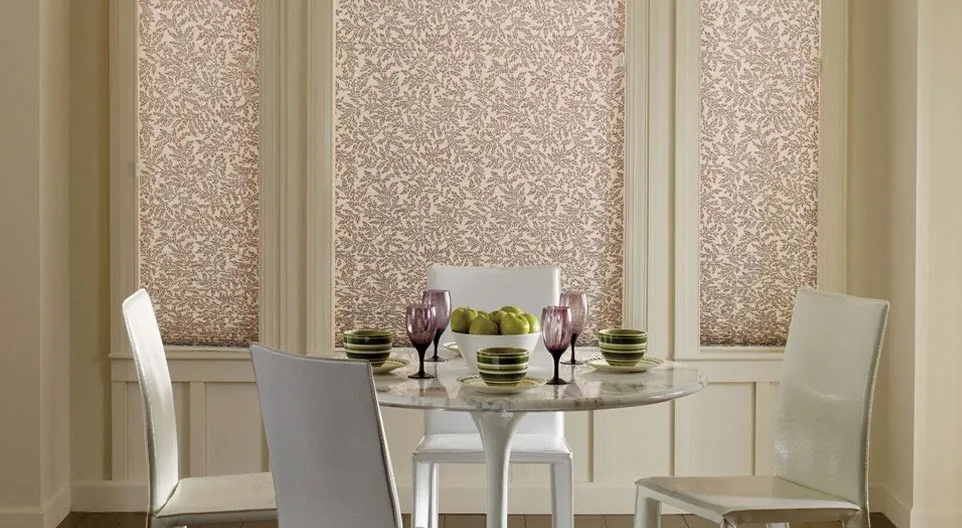
A roller is a clean, simple shade, and some rooms want something softer around it. In a dining room near the common, a roller behind a pair of drapery panels gives light control without hiding the fabric. In a bedroom, a blackout roller behind a roman shade gives you the look of the roman with the darkness of the roller.
Some customers mix shades from room to room as well: rollers in the kitchen, family room and stairwell, and cellular shades in Franklin on the cold north side, or plantation shutters in Franklin in the front parlor of an antique house. We can look at all of it in one visit. Our Franklin page lists every service we offer in town.

Why a Hunter Douglas Gallery dealer
Blinds & Designs is a Hunter Douglas Gallery dealer. That is Hunter Douglas’s own name for dealers who meet its standards, and for a roller shade it means the whole range in one place: Designer Roller, Designer Screen, Designer Banded, Sonnette and both Alustra lines, with every lift option and PowerView motorization.
The shades are fitted by our certified Hunter Douglas installers, so they go up the way Hunter Douglas intends. If a roller ever needs attention later, we handle blind and shade repair in Franklin too.
If you are weighing roller shades in Franklin, MA, the showroom is in town, and you can read about each line on our roller shades page before we visit.
Questions from Franklin
Will a roller shade fit inside the narrow sash of my antique colonial?
Often, yes, because the headrail is slim. The deciding factor is frame depth, since the fabric grows thicker as it rolls up. We measure each window and suggest an outside mount on the casing wherever an inside mount would rub on the sash or the lock.
How do I control a shade on the stairwell window I cannot reach?
PowerView motorization is the usual answer. The shade runs from your phone, a remote or a schedule, so nobody needs a ladder on the stairs. We plan where any power connection goes so it stays out of reach and out of sight.
What is the difference between a solar screen and a regular roller?
A solar screen is woven with small openings, so you keep a view out while the glare drops. A regular roller fabric is solid, and ranges from light filtering to blackout. The openness of a screen decides how much you see and how much light comes in.
Can I get a roller dark enough for a bedroom?
Yes. A blackout fabric stops the light through the shade itself. To cut the thin lines of light at the sides, we often suggest mounting it outside the frame so it overlaps the casing.
Is the estimate free?
Yes. We measure your windows and give you a free estimate for the shades you are considering, with no obligation.
Your next step
The best way to choose roller shades in Franklin, MA, is to see the fabrics at your own windows. Request a consultation and we will bring the samples, measure each opening and give you a free estimate. You can also use the call button, or stop in at the Franklin showroom.