
One town, three kinds of house
Millis packs a lot of variety into a small town. Capes and ranches sit on modest lots along the side streets, newer colonials line the roads off Main Street and Village Street, and around the center you still find older houses with their original sash. Most of the openings are standard modern sizes, which keeps things simple, but the older windows near the center need a closer look. Either way, planning cellular shades in Millis, MA, begins with the kind of house you live in.
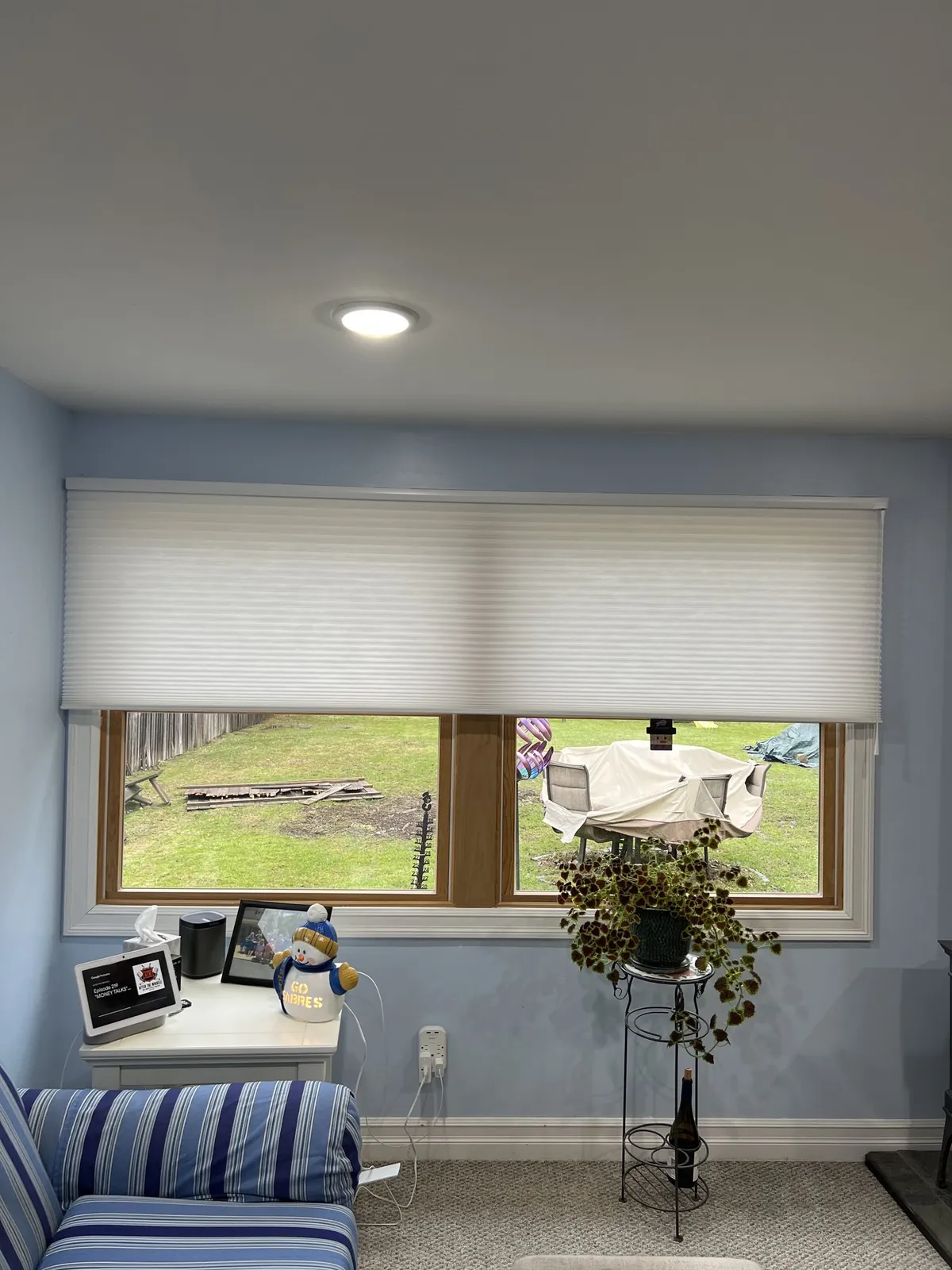
What every one of those houses shares is a New England winter. Glass is the weak point in any wall, and a room with two or three windows can feel noticeably cooler near the panes once the sun goes down. A honeycomb shade puts a band of still air in front of that glass. Its pleats are hollow cells, and the air trapped inside them slows the cold on its way into the room.
The same shade then answers the other questions a room raises: how much light you want, how much privacy you need, and how the window looks from the street.
Honeycomb options we bring to Millis
These six cover almost every window in a Millis cape, ranch or colonial. Each one rides along in the van as a sample you can try at your own glass.
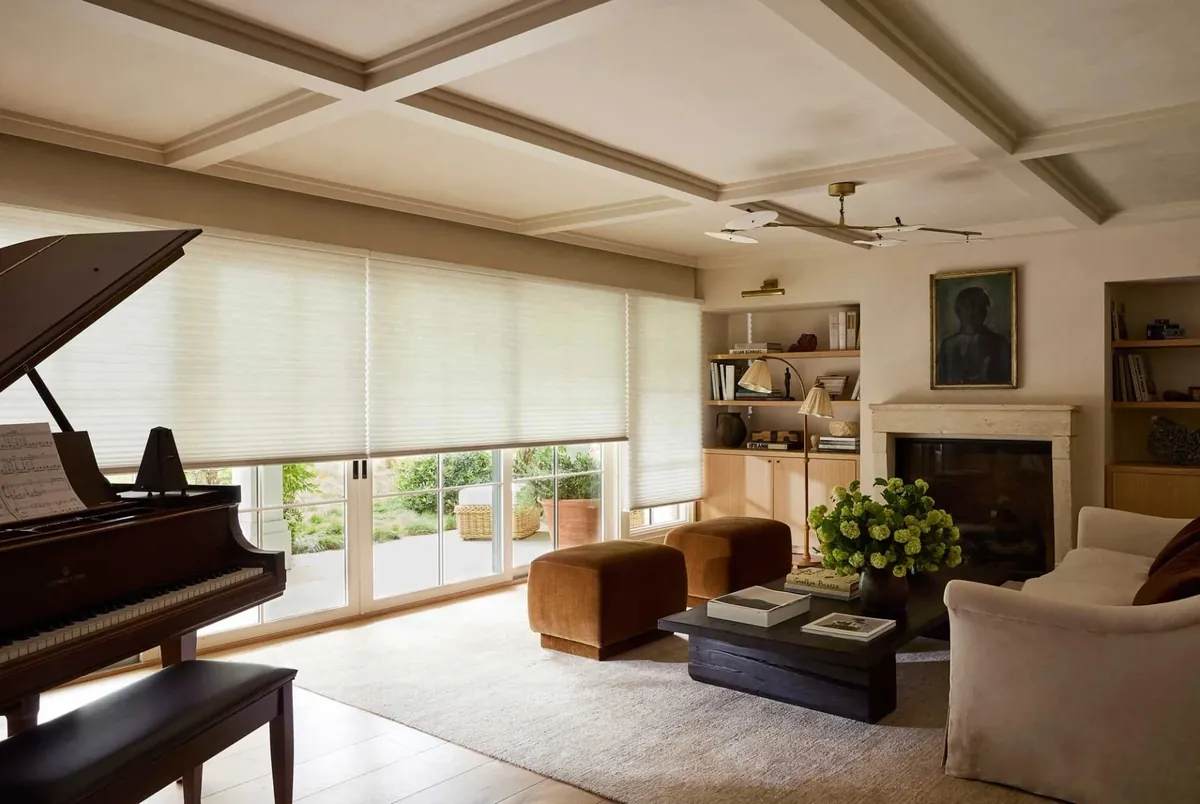
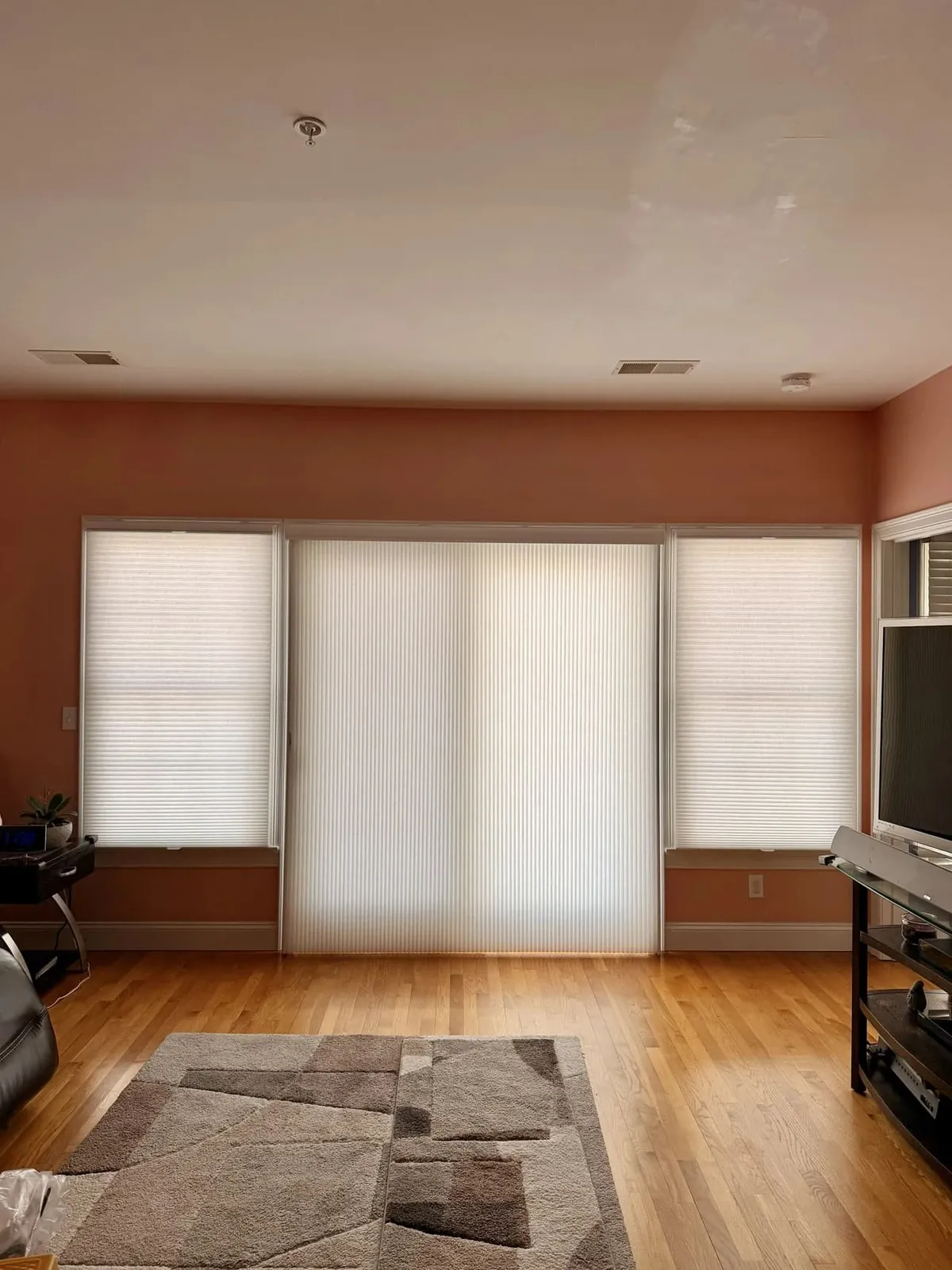
Duette honeycomb shades
Hunter Douglas’s deepest honeycomb collection, with the most fabrics, pleat sizes and lift systems.
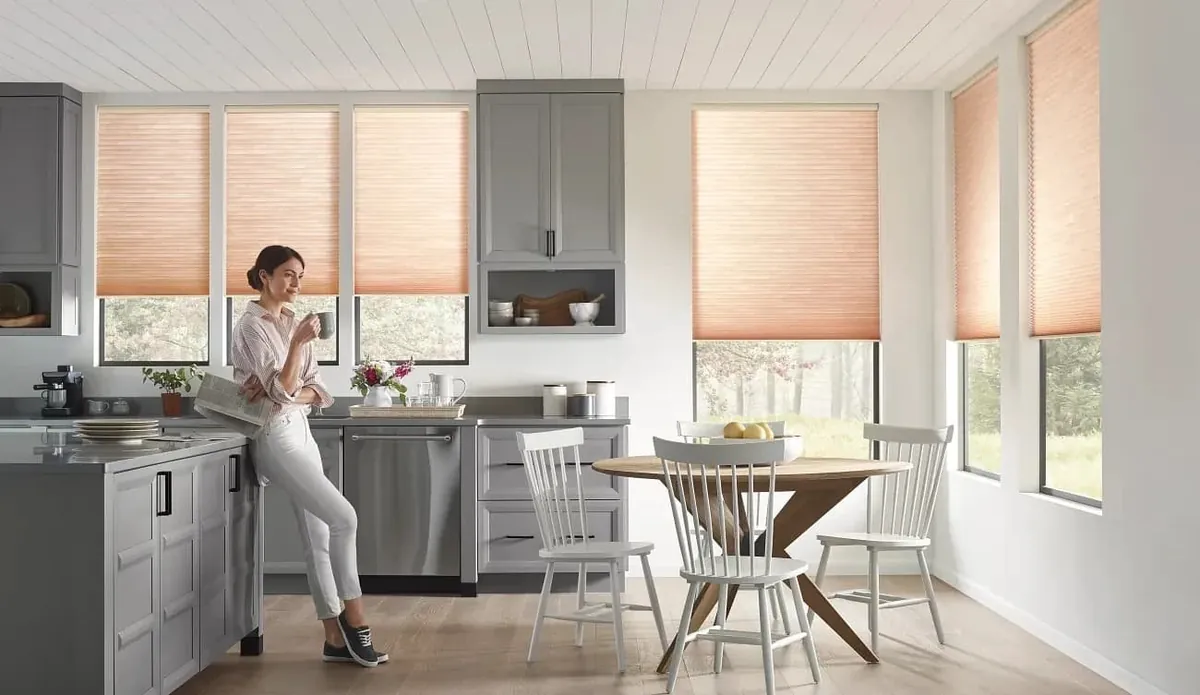
Applause honeycomb shades
The second Hunter Douglas honeycomb line, with a palette of its own and a natural fit for standard windows.
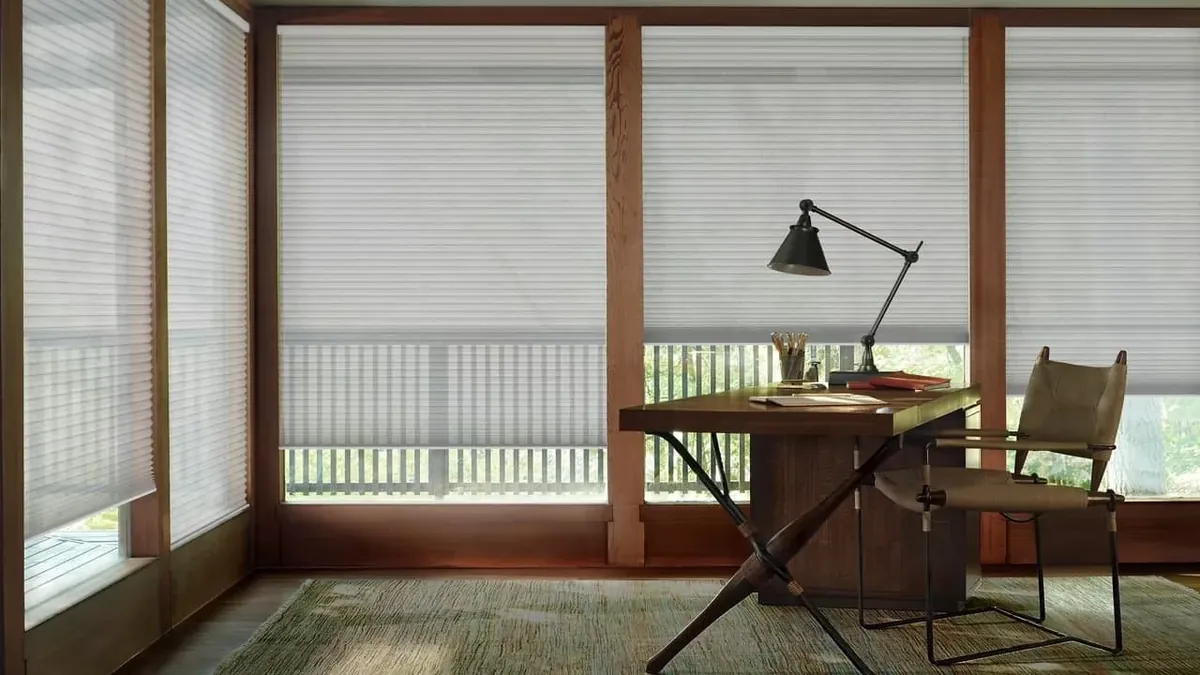
Cordless lifts
Raise or lower the bottom rail by hand, with no cord hanging beside the window.
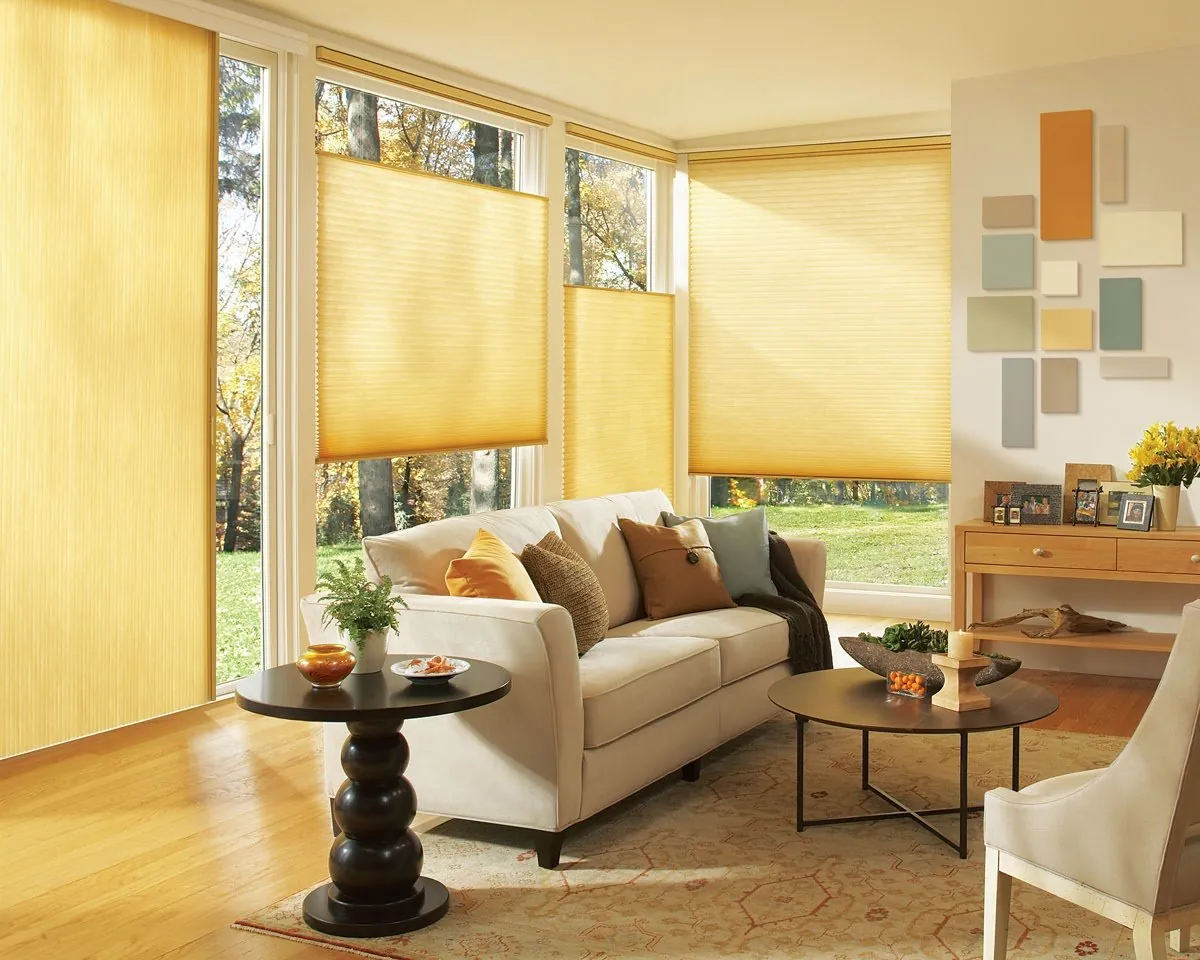
Top-down, bottom-up
Light through the top of the window, privacy across the bottom.
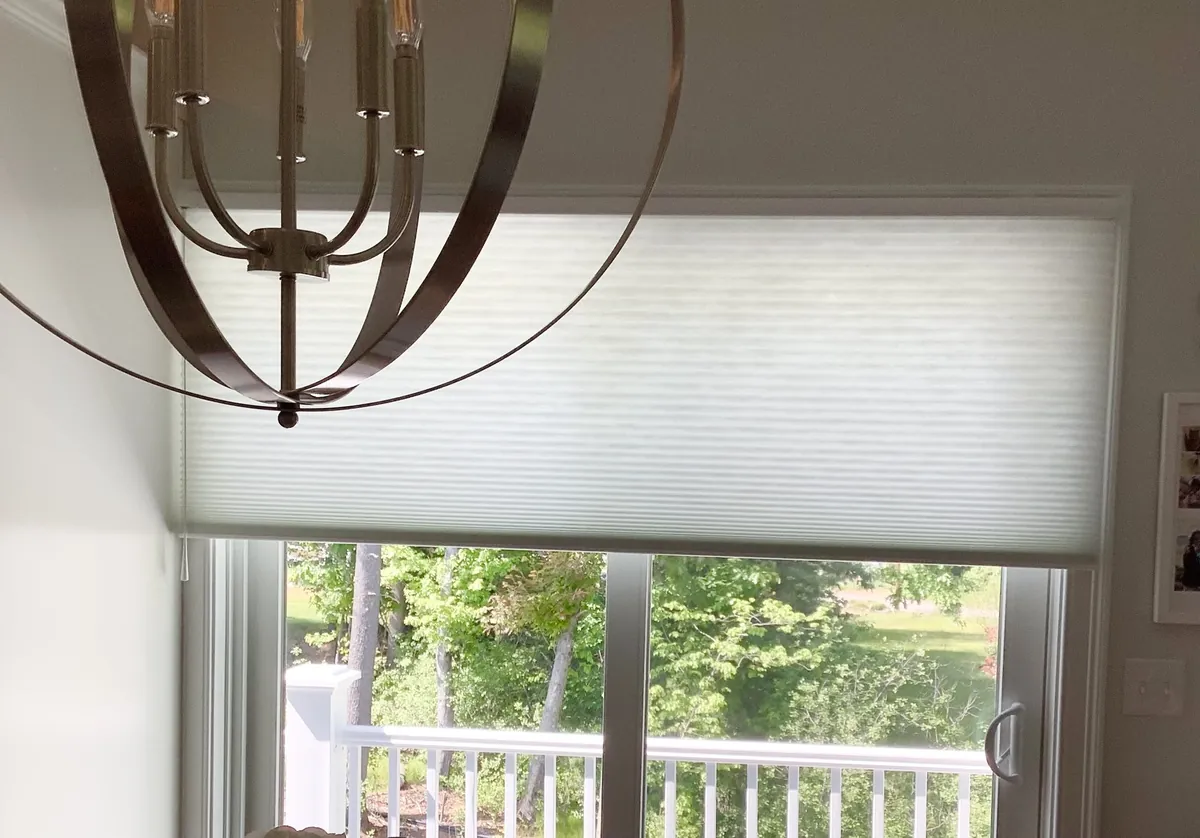
Sideways shades for sliders
A honeycomb shade that glides across a patio door and folds away at one edge.
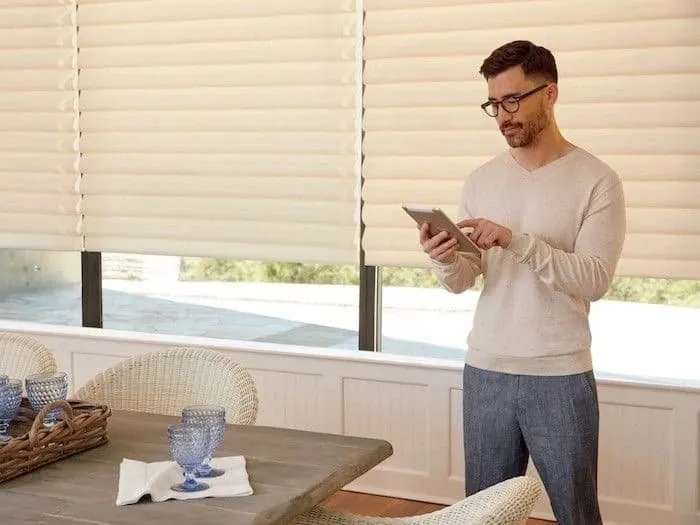
PowerView motorization
Shades run from a phone, a remote or a timetable you set once.
Older sash around the center
The houses closest to the center are the oldest in town, and many still have their original double-hung sash or replacements fitted into the old openings. Those windows give the rooms their character: deep painted casings, slightly wavy glass, proportions that newer houses rarely copy. They are also the coldest windows in town.
A honeycomb shade mounted inside the frame keeps that character on show. The headrail tucks up out of sight within the opening, the casing stays fully visible, and when you raise the shade it folds into a narrow stack at the top. In the evening, lowered, it sets a layer of trapped air between the room and the old glass.
The catch with older sash is the frame. Over many winters, frames shift. A window can be a little wider at the sill than at the head, or lean slightly to one side, and old pulleys, stops and layers of paint can eat into the depth a headrail needs. We measure these openings with extra care, at several heights and both sides, and where an inside mount would not sit properly we recommend fixing the shade to the face of the casing instead.
Capes on the side streets
A Millis cape usually puts the living room at the front, the kitchen at the back, and bedrooms both downstairs and up, with the upstairs rooms tucked under the roof behind dormer windows. The windows are standard sizes, and most frames are square, so the shades can sit inside each opening and line up neatly across the front of the house.
Upstairs is where a cape needs the most help. The roof above those rooms takes the summer sun and the winter cold, and the dormer windows sit right in the slope. A room-darkening honeycomb fabric in a dormer bedroom blocks long summer evenings and early light, and its cells slow the heat that builds up under the roof. Come winter, the same shade lowered at dusk keeps more warmth in the room.
Downstairs, when we plan cellular shades in Millis, MA, for a cape, a light-filtering fabric on the front windows keeps the living room bright while giving privacy from the street, because from outside the fabric glows rather than showing the room.
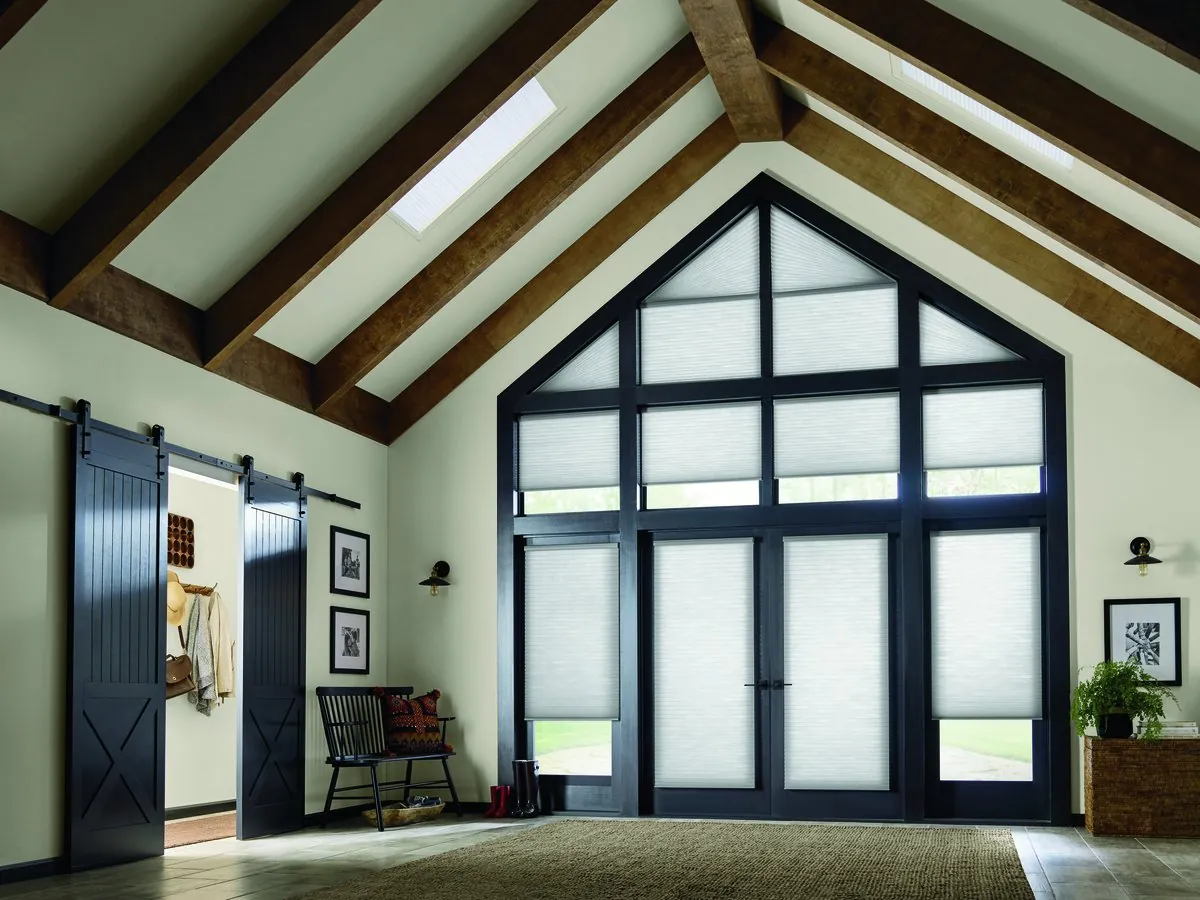
Ranches and the picture window
The ranches in town keep everything on one level and put the biggest window in the living room. That picture window, often a wide fixed pane with an opening window on each side, is the largest single stretch of glass in the house and the place where the room feels coldest on a winter night.
Rather than one oversized shade, we usually divide a picture window into a pair or a trio of honeycomb shades. They can be linked to rise together, or left independent so one end can stay down against the afternoon sun while the rest of the window is open to the yard. Across the back, a ranch typically has a kitchen window over the sink and a sliding door to the patio, and both benefit from the same honeycomb layer as the front.
On a modest lot, a ranch’s bedroom windows may face the house next door across a short side yard. A top-down, bottom-up shade covers the lower glass while the upper glass stays open for light, which is often all the privacy those rooms need.
Newer colonials off Main Street and Village Street
The newer colonials have two full floors of regular windows, the same size repeated across the front and down the sides. That regularity makes them simple to fit and rewards a consistent plan. One fabric color facing the street on every front window, every shade raised to the same height, and the house looks calm and finished.
Inside, each room can go its own way. Honeycomb shades are made with a neutral color on the side facing the glass, so a blue bedroom and a taupe living room look identical from outside. A family room at the back might want light-filtering fabric and a top-down lift to keep the view of the yard. Bedrooms usually want room-darkening fabric. A home office may want something in between so the screen is not washed out.
Colonials often have one window that nobody can reach: over the stairs, or high on the landing. A motorized shade solves that, and once it is in, many people decide they would like the bedroom shades on a schedule too.
How a honeycomb shade works through the year
It helps to know how to use honeycomb shades once they are up, because the same shade does different jobs in different seasons.
In winter, lower the shades at dusk. The cells hold still air against the glass through the night, and the room keeps more of the warmth your heating puts into it. On bright winter days, raise the shades on the sunny side and let the low sun warm the room, then lower them again as the light fades.
In summer, it works the other way. Lower the shades on the sunny side during the hottest part of the day, and the cells slow the heat coming through the glass. A light-filtering fabric keeps the room bright enough to use while the shade is down. Raise them again in the evening to let the house breathe.
Spring and autumn are about light more than temperature. Top-down, bottom-up shades are especially useful then, letting you open the top of the window for light and air while keeping the bottom covered. With PowerView, you can set this routine as a schedule and let the shades follow it without thinking about it.
Pleat size, cell layers and opacity
Three choices shape how a honeycomb shade looks and performs, and we walk through each one at the visit.
Pleat size. Duette is made in more than one pleat size. A smaller pleat suits smaller windows, such as the sash near the center or a cape’s dormers, and gives a finer, neater look. A larger pleat suits a big picture window or a patio door, where it looks more in proportion and folds into a stack that is still slim for the size of the window.
Cell layers. A standard shade has one row of cells. Some Duette fabrics add a smaller cell inside each one, and some shades carry two full rows. More layers mean more trapped air, which helps in the coldest rooms, often a north-facing bedroom or the upstairs of a cape.
Opacity. Sheer fabrics keep the most light and a soft view outside. Light-filtering fabrics give privacy and an even glow. Room-darkening fabrics block most of the light for sleeping. Most Millis houses use a mix, chosen room by room.
The kitchen and the patio door
At the back of most Millis houses, the kitchen and the patio door sit side by side, and between them they take a lot of punishment. The window over the sink faces steam and splashes and often the morning sun. The patio door is usually the largest single pane in the house, and on a winter evening you can feel the cold coming off it from across the kitchen table.
For the sink, we usually suggest a light-filtering honeycomb shade with a cordless lift, easy to push up or pull down with one hand across the counter. For the door, a sideways honeycomb shade runs on a track across the glass and folds neatly to one side, so the door opens without a shade swinging in the way. Made in the same fabric, the two look like a pair, and together they make cellular shades in Millis kitchens one of the most noticeable changes you can make to how warm the back of the house feels.
Children, pets and cords
A good many of the houses we visit have small children, a dog that likes to watch the street, or both. Loose cords are the first thing most parents want gone. Cordless lifts take care of that: there is nothing hanging at the side of the window, and the shade stays where you set it. PowerView shades have no cord at all, and a timetable means nobody has to climb onto a sofa to reach a window. How each motor is powered is worked out with you at the house.
Starting with the room that bothers you most
You do not have to treat a whole house at once. Many of our Millis customers start with one room: the cold dormer bedroom, the living room picture window, the slider that leaks chill across the kitchen floor. We measure that room, show you the fabrics that suit it and give you an estimate for those windows alone.
When you are ready to carry on through the house, your fabric and color are on record, so the next rooms match. Because so many of the openings in a cape, ranch or colonial repeat from room to room, a later order lines up easily with the first. Lots of people find that once one room has cellular shades in Millis winters, the rest of the house feels noticeably cooler by comparison.
What happens when we come to the house
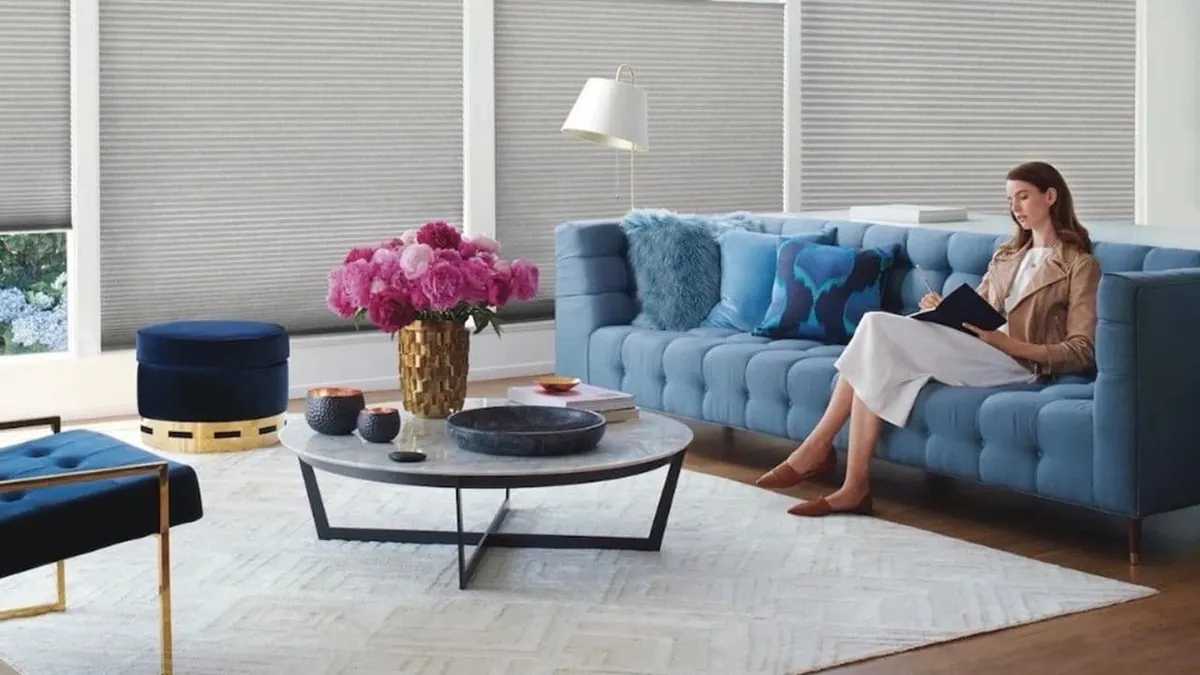
Choosing a fabric is much easier in your own room than anywhere else. The samples travel with us, which is how we can bring the showroom to you.
- Book through Request a Consultation, or use the call button, at a time that suits you.
- We set out honeycomb fabrics in a range of colors and opacities, the pleat sizes and the different lift systems.
- You show us the rooms that matter most and tell us what bothers you about each one.
- We hold the samples at those windows so you can see the light, the color and the way each shade opens.
- Every window gets measured, and the older sash near the center gets a closer look.
- You go away with a free estimate for the shades you want to consider, and decide when you are ready.
Our page on in-home consultations says more about the visit, and our interior design consultations can bring color and fabric for the whole house into the same conversation.
Duette or Applause in a Millis house
Both lines are Hunter Douglas honeycomb shades with the same air-holding cell. Duette offers the widest selection, including the pleat sizes, the larger shades for picture windows and the sideways shade for sliders. Applause has its own collection and suits many standard windows beautifully.
Plenty of houses here end up with both: Duette on the picture window and patio door, Applause in the bedrooms and kitchen. Our main cellular shades page covers the full range.
Fitting your shades
Once your shades arrive, our certified Hunter Douglas installers fit each one. On older sash they fix the brackets into solid wood so the shade stays level on a window that gets opened and closed every summer. Every headrail is levelled, every lift is tested, and any PowerView shades are paired with your remote or app and set to the schedule you want. Before they leave, they show you how everything works.
Our Franklin showroom
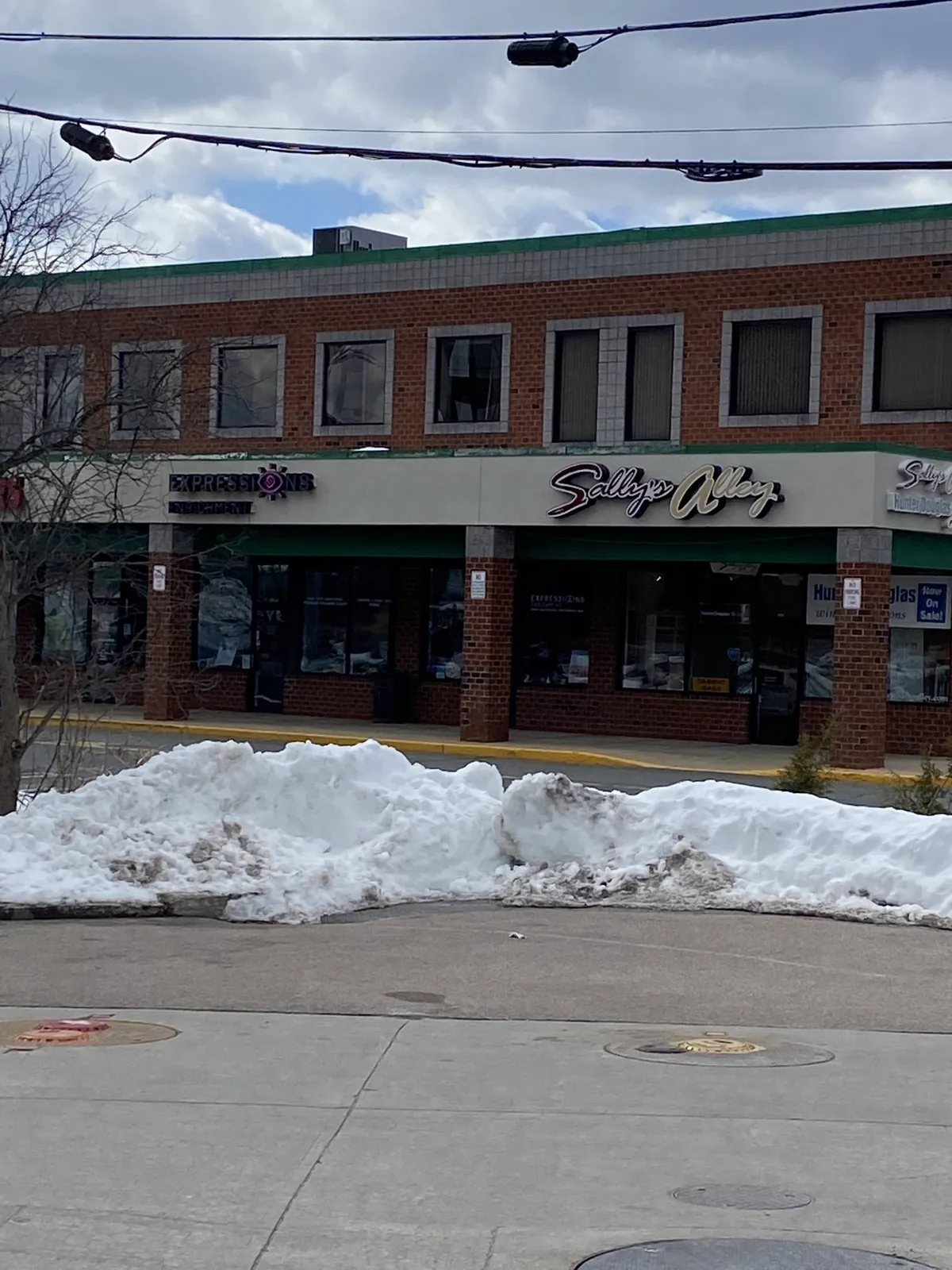
For Millis, the nearest Blinds & Designs showroom is in Franklin. You will find the address and hours on its page.
Some people like to start in person and arrange the home visit from there. Many more simply ask us to come to the house, where the samples can be judged against their own windows.

Why choose a Hunter Douglas Gallery dealer
Blinds & Designs is a Hunter Douglas Gallery dealer, which means every Duette and Applause fabric, pleat size, lift system and PowerView option is available through us, not just a short list.
Our installers hold Hunter Douglas certification, and we fit everything we sell. If a blind or shade you already own needs attention, we repair those too.
For other rooms, look at our roller shades in Millis, plantation shutters in Millis, or every service we offer locally on the Millis page.
Questions from Millis
My house has older sash near the center of town. Can it take an inside mount?
Often, but not always. Older frames can be out of square or too shallow because of old hardware and paint. We measure each one at several points and suggest a mount on the casing where an inside mount would not sit properly.
Which pleat size should I choose?
Smaller pleats suit smaller windows, such as dormers and older sash, and give a neater look. Larger pleats suit wide picture windows and patio doors. We bring both so you can compare them on your own glass.
What is the best way to use the shades in winter?
Lower them at dusk so the cells hold air against the glass overnight, and raise them on sunny days to let the low winter sun warm the room.
Can I start with one room and add more later?
Yes. We keep a note of your fabric and color, so later rooms can match. Many customers start with the coldest or brightest room and carry on from there.
How much does the estimate cost?
Nothing. Estimates are free, and you receive yours once we have measured.
Ready when you are
The easiest way to choose cellular shades in Millis, MA, is to see the fabrics against your own windows, in your own light. Request a consultation and we will bring the honeycomb range, measure each opening and leave you with a free estimate. If you want to talk it through first, use the call button, or visit our Franklin showroom.