
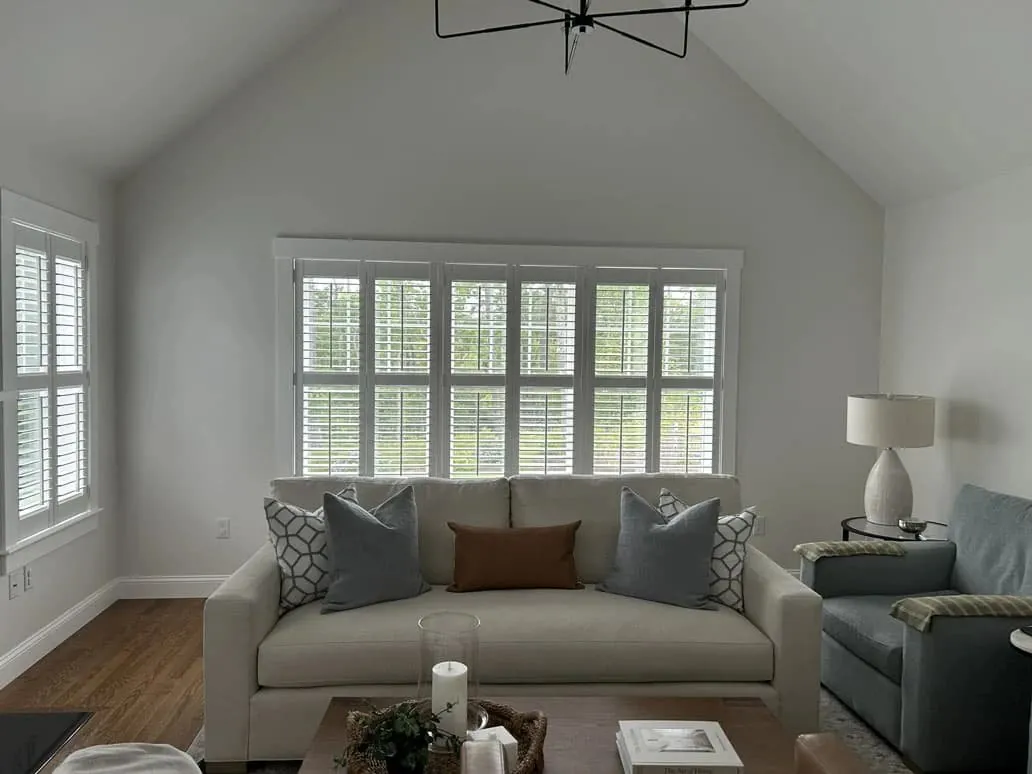
Standard openings, short setbacks
Most of Rockland is built on a familiar pattern. Capes and ranches sit on modest lots with short setbacks from the road, and off Union Street a run of newer colonials adds two-story houses to the mix. Across nearly all of it, the windows are standard modern openings: square, plumb and sized to common dimensions.
That is good news for anyone talking to a Hunter Douglas dealer in Rockland, MA. With standard frames, practically every Hunter Douglas product will fit, so you are choosing on looks, light and privacy rather than working around an awkward window. The short setbacks are the part that needs thought. When the front of the house sits close to the road and the neighbors are near on either side, what people can see from outside shapes most decisions.
We sort all of that out at your house. The consultation happens in your living room, with our sample vans parked outside, so every choice is judged against your own glass and your own light.
What we fit in Rockland
Tap any card for that product’s own Rockland page. These six cover nearly everything we are asked to fit in the town’s capes, ranches and colonials.
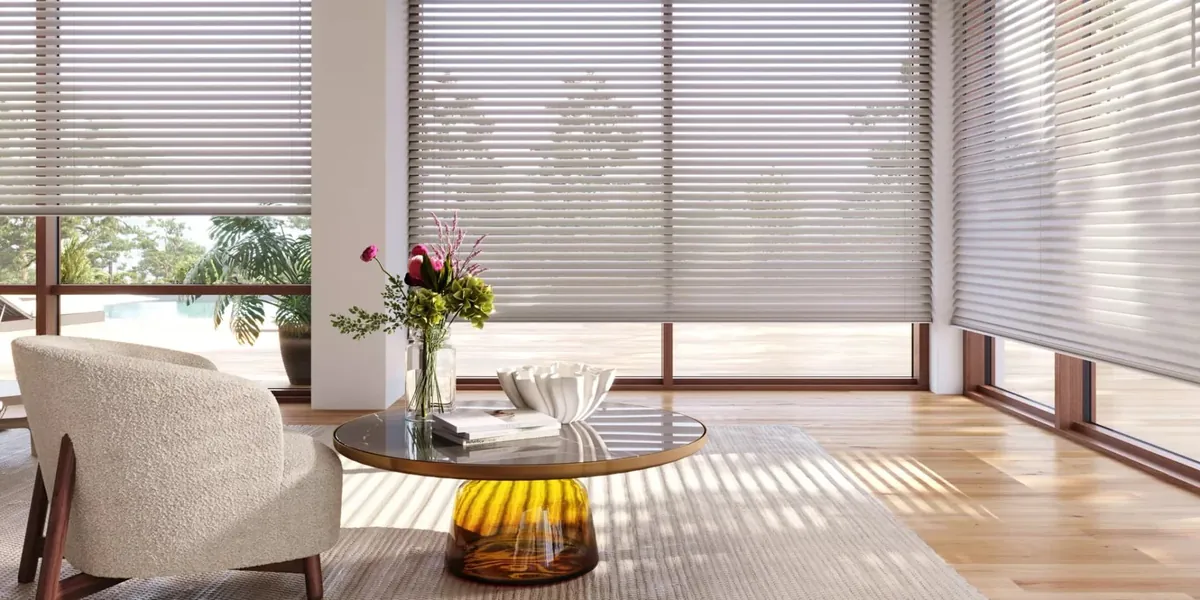
Custom blinds
Real wood, faux wood, aluminum and vertical blinds for crisp light control.
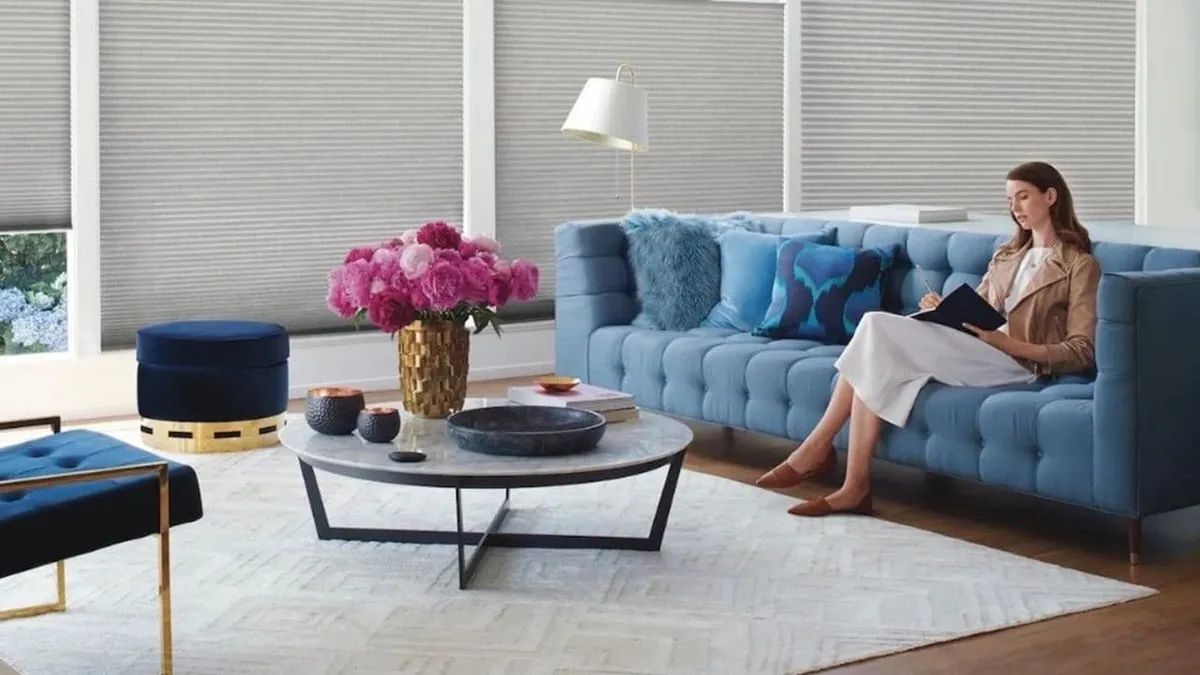
Cellular shades
Duette and Applause, the honeycomb lines with air-holding cells at the glass.
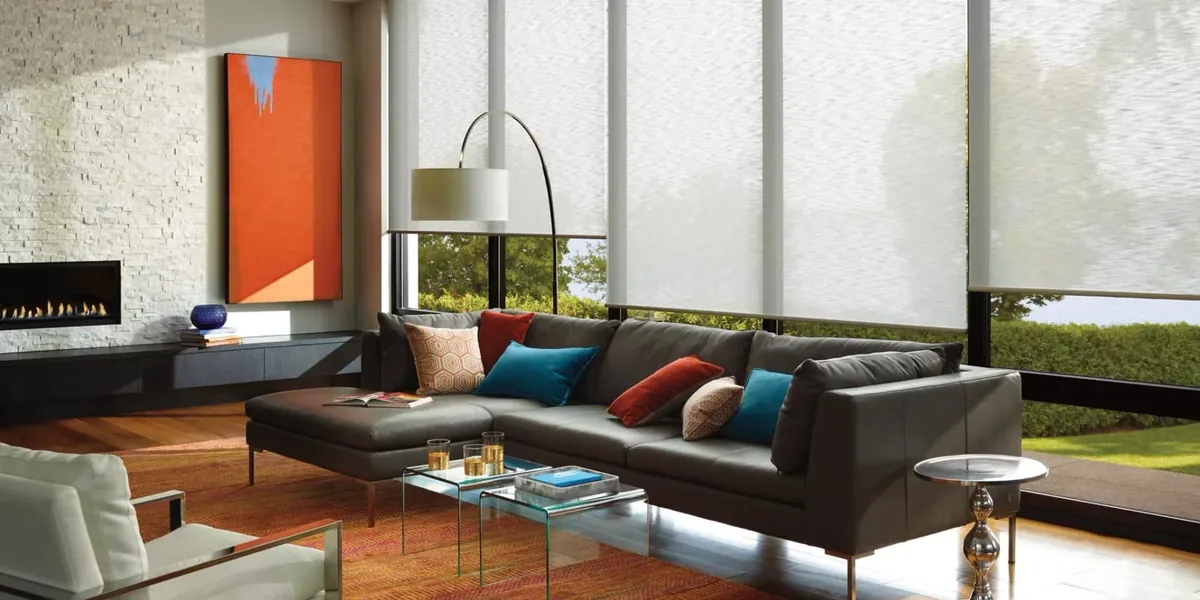
Roller shades
Designer and Alustra rollers and screens with a clean, simple line.
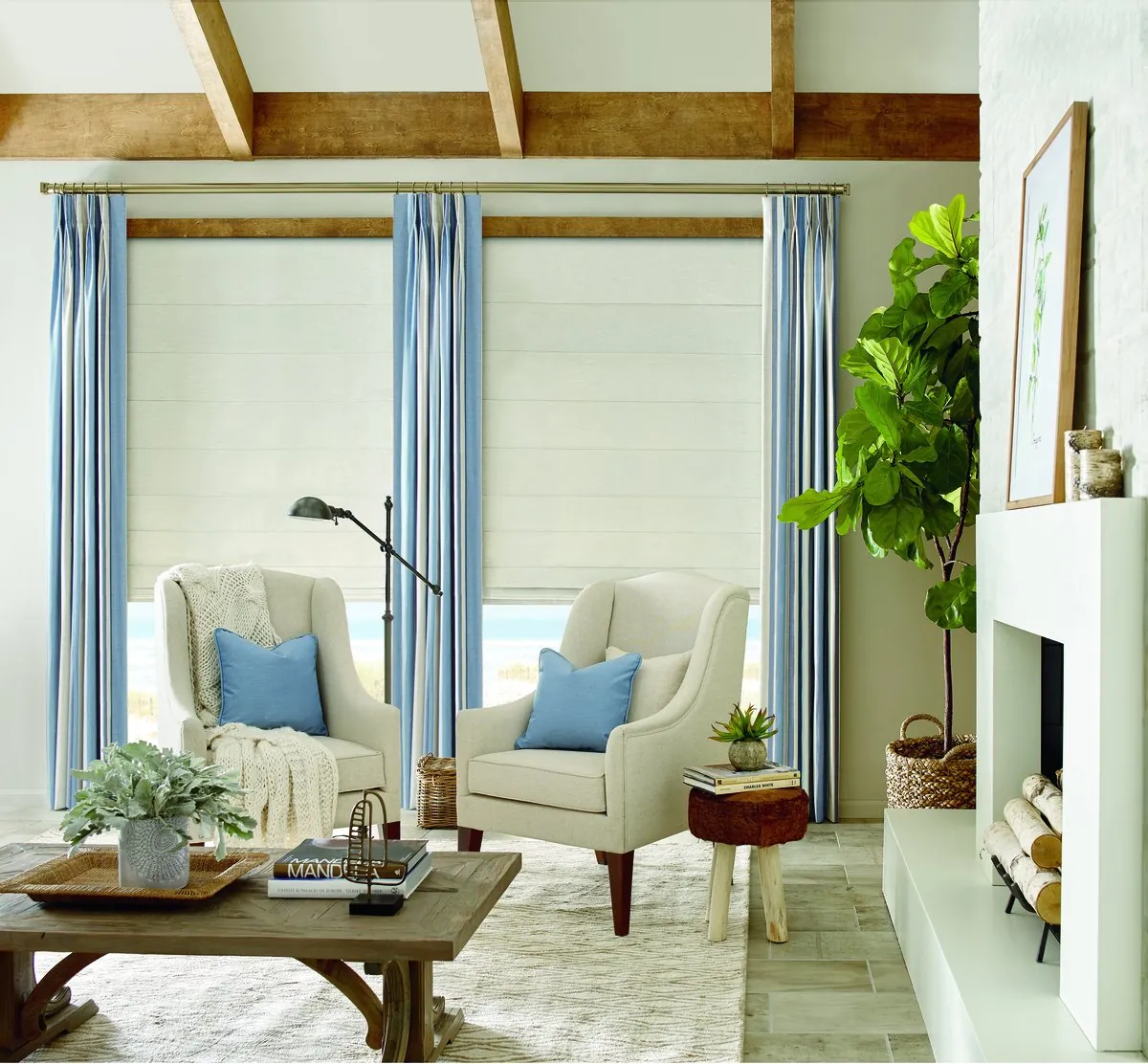
Roman shades
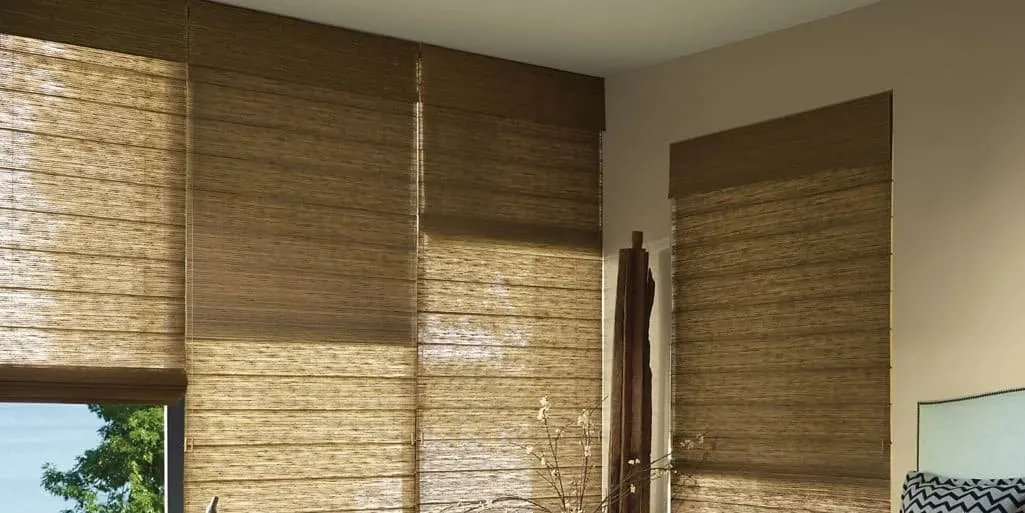
Folded or flat fabric from Vignette and Carole Fabrics for a dressed-up room.
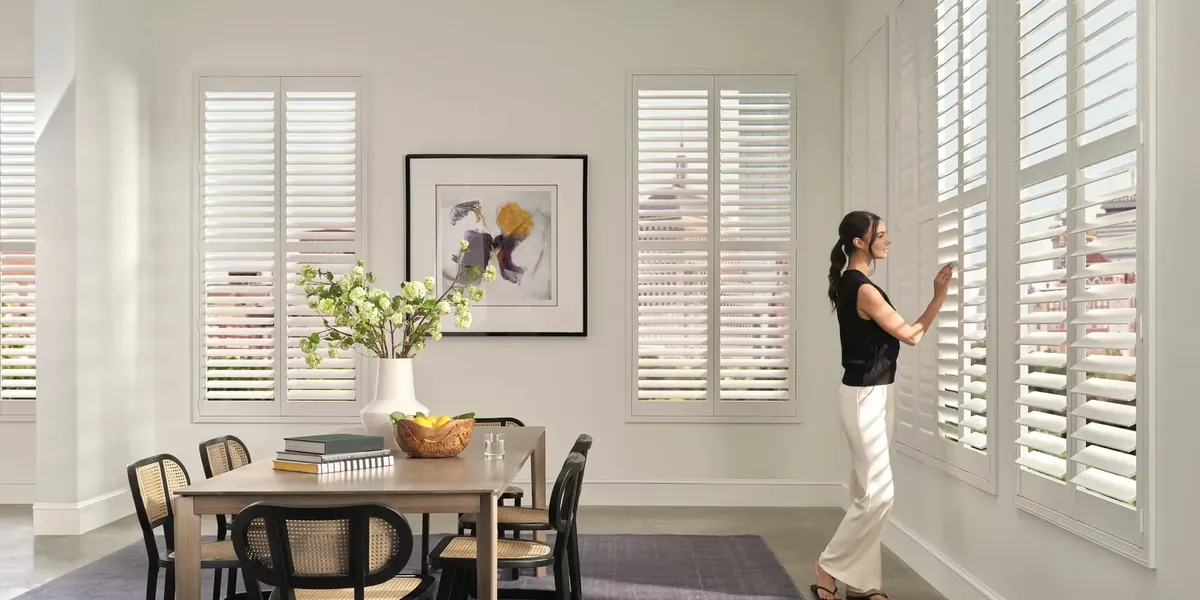
Plantation shutters
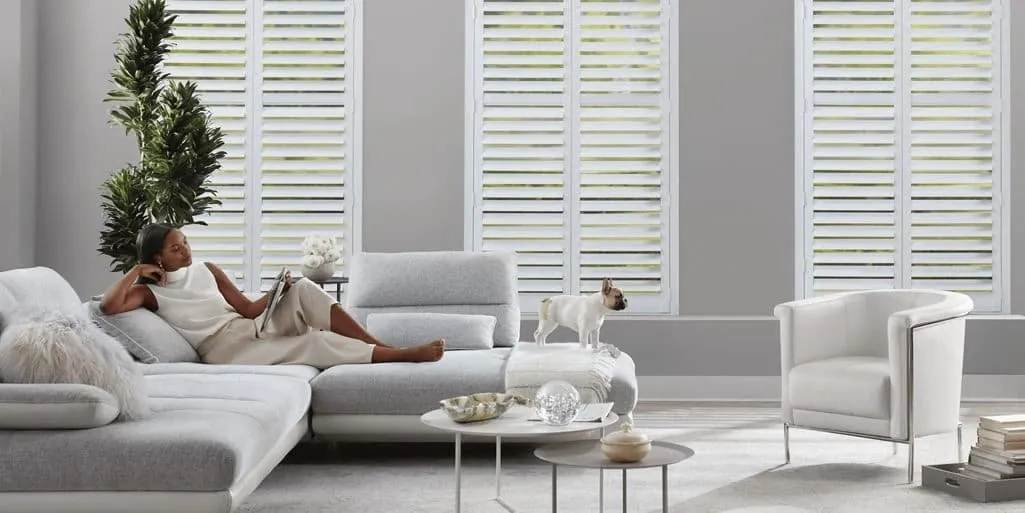
Palm Beach, NewStyle and Heritance, a lasting finish for colonial front rooms.
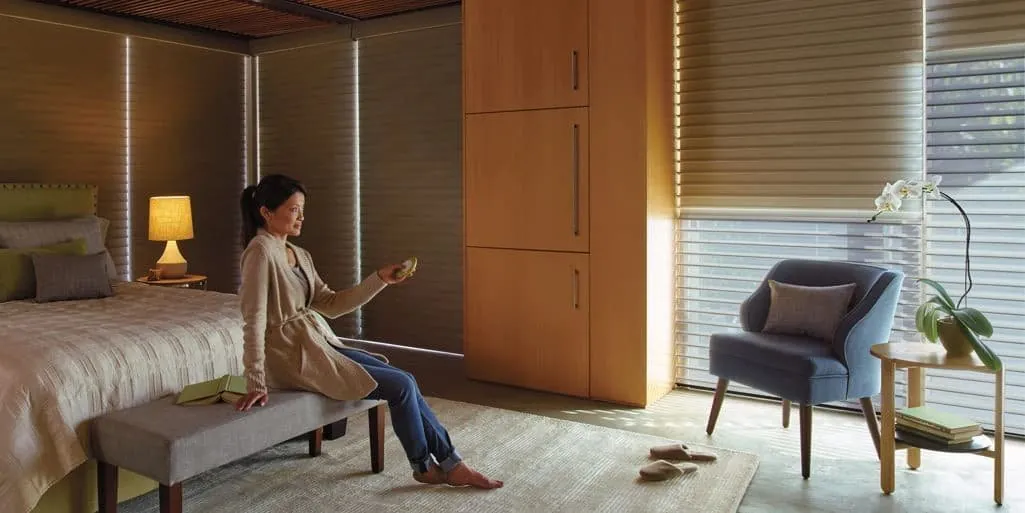
Motorized blinds
PowerView automation, worked from a remote, an app or a timetable you set.
When everything fits, how do you choose?
People are sometimes surprised that a house with easy windows can still be hard to decide on. The trouble is choice. If a window will take any shade, blind or shutter, the question shifts from what will fit to what each room actually needs. As a Hunter Douglas dealer in Rockland, we find it helps to think about rooms rather than products.
- The front room sits nearest the road. It usually wants privacy from the sidewalk in the evening and plenty of daylight during the day.
- Bedrooms care most about darkness and a calm look, and the window by the bed often matters more than the others.
- The kitchen needs controls you can work while leaning across a sink, and it often faces the yard next door.
- A home office wants glare off the screen without losing the outlook.
- The family room or den may hold a television, a slider to the yard or both.
Once each room has a job, the list of sensible products gets short very quickly. We then hold the two or three best candidates at the window so you can see them in place.
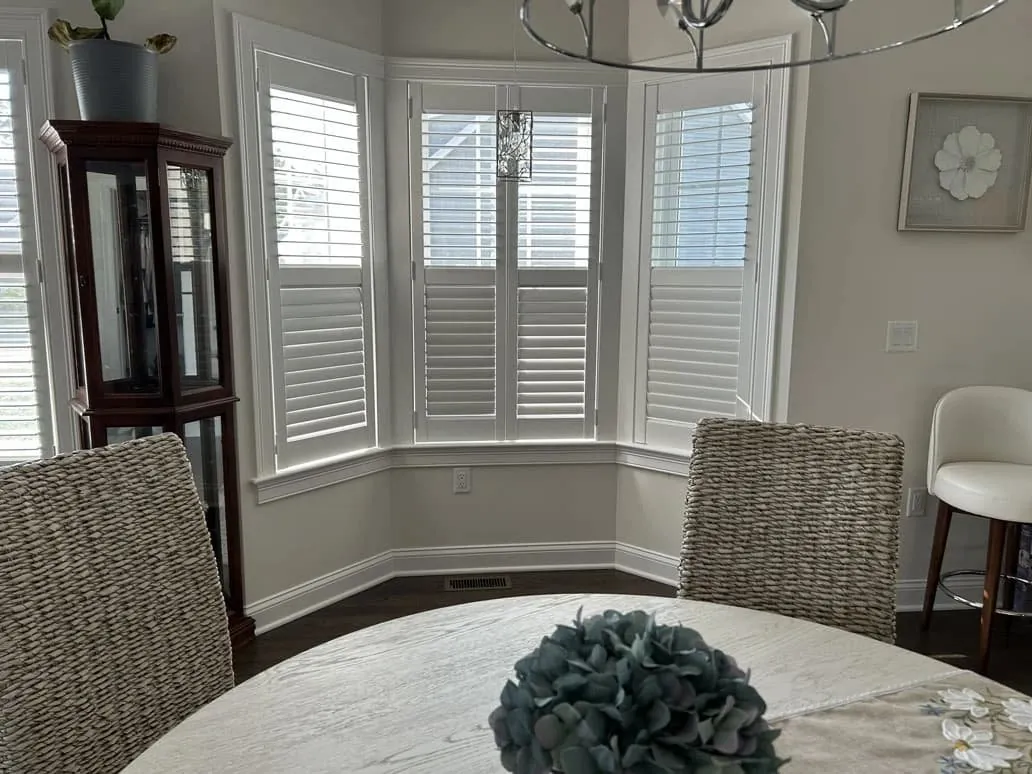
Newer colonials off Union Street
The colonials off Union Street bring a different shape of house. Two full stories, a center hall or a side entry, often a family room at the back and bedrooms upstairs. The windows are still standard openings, but there are more of them, and the front of the house shows two rows of windows to the road instead of one.
That front facade is worth planning as a whole. From the street, a colonial reads as a grid of matching windows, and a mix of colors behind them can look scattered. A single tone across both floors on the street side keeps the house looking orderly, even when the products behind it differ from room to room.
Inside, the rooms each ask their own questions:
Formal rooms at the front
Living and dining rooms at the front of a colonial are often the most dressed-up spaces in the house. Shutters give a tailored, built-in look that suits the style. Roman shades bring softness and color. Wood blinds are a crisp alternative that keeps the windows looking trim.
The family room at the back
The back of a newer colonial often opens up, with larger windows, a slider or French doors to a deck or patio. Here the questions are about sun, glare on a television and a covering that clears the doorway completely whenever someone heads outside. Vertical honeycomb shades, Luminette or vertical blinds travel sideways; a solar screen fabric keeps the view while cutting brightness.
Upstairs bedrooms
Bedrooms on the second floor have more distance from the street but often face a neighbor’s upstairs windows. Honeycomb shades are a frequent choice, with fabrics ranging from soft and light-filtering to darker options for sleep.
The stair and foyer
Many colonials have a window on the stair landing or beside the front door. These brighten the hall, but they also let a visitor waiting at the door look straight inside. A sheer or light-filtering shade keeps them bright while softening the view, and a motorized option saves reaching a landing window over the stairs.
Capes on modest lots
Rockland’s capes put a lot of living into a compact shape. Downstairs there is typically a front room facing the road and a kitchen at the back. The bedrooms are upstairs, set into the roofline and lit through dormers.
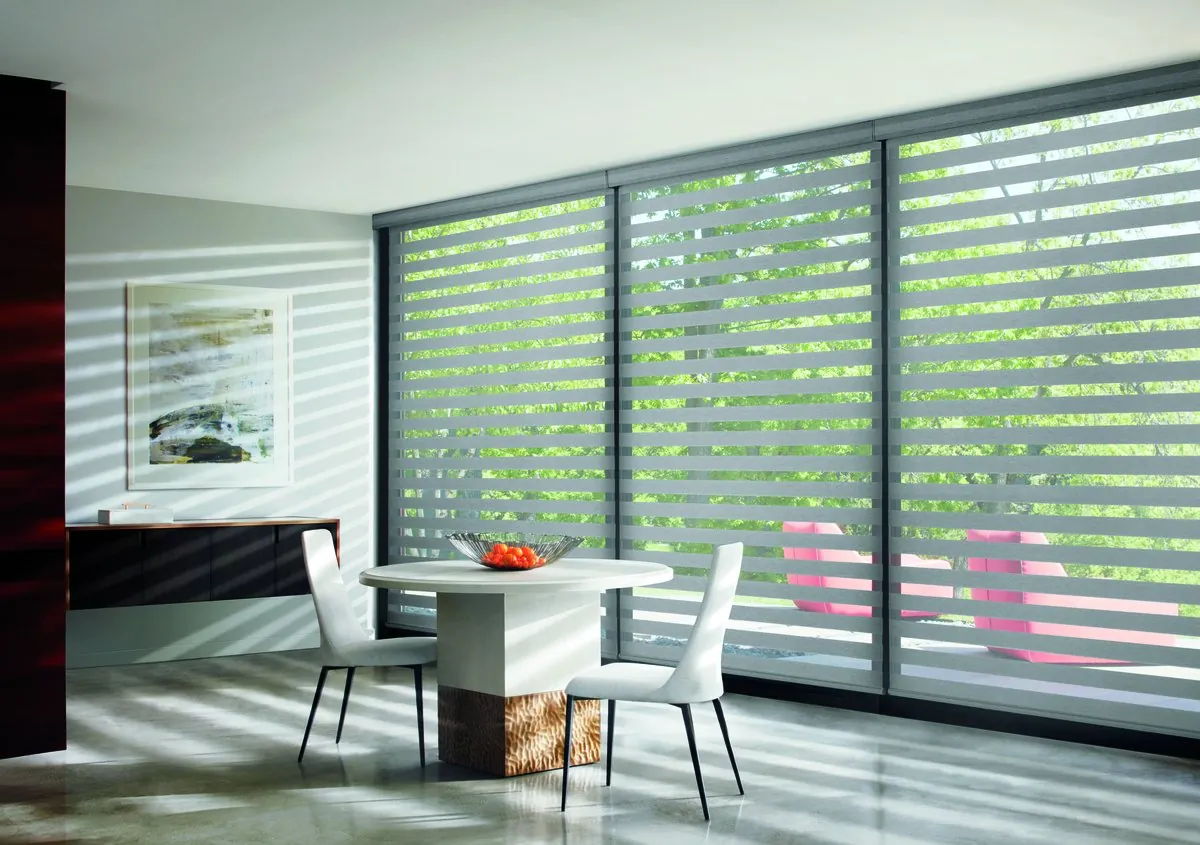
With short setbacks, a cape’s front room sits only steps from anyone walking by. Shutter louvers angled upward block that line of sight while light still reaches the ceiling, and sheers do something similar with a softer look. In the dormers upstairs, a covering fitted inside the recess keeps the sloped walls clear, and a compact stack at the top matters because dormer windows tend to be small.
Ranches and the long front wall
A ranch spreads its rooms along one floor, so the front of the house is a long line of windows close to the road. Bedrooms usually run along one side, the living room sits near the entry and the kitchen opens to the back.
Because every room is at ground level, privacy is a theme throughout, not just in the front room. A ranch picture window, wider than the others, may be better served by two or three coordinated coverings than one large one, so part can open while the rest stays closed. At the back, a slider to the yard wants something that clears the door completely.
Mixing products without a patchwork look
One of the advantages of standard openings is that you can mix product families freely, and many Rockland houses benefit from doing exactly that. A shutter might suit the front room, a honeycomb the bedrooms, a roller the kitchen and a vertical covering the slider. The risk is a house that looks pieced together from the outside.
The fix is coordination. We keep headrail colors and fabric tones in one family on every street-facing window, so the front of the house reads as one piece. Inside, each room still gets the covering that does its job best. A Hunter Douglas dealer in Rockland who carries the complete range can plan this in a single visit, with one maker behind every product and one team measuring and fitting.
Light through the day on a short setback
Because Rockland houses sit close to the road and close to each other, the light in each room depends heavily on which way it faces. A front room facing east gets bright, low sun in the morning and calm light after lunch. A west-facing kitchen or family room may be gentle until late afternoon and then take sun straight across the counters. Side windows that look at the next house may never see direct sun at all.
We plan around that. East-facing bedrooms often want a darker fabric so the room does not brighten too early. West-facing rooms benefit from a solar screen or a sheer that tames the late sun while keeping the outlook. Side windows facing a neighbor usually do best with pale, light-filtering fabrics that hold onto whatever daylight arrives. Choosing this way, by direction and use rather than by product, is one of the most useful things a Hunter Douglas dealer in Rockland can do for you, and it is easiest at the window with the sun where it actually falls.
Decks, patios and the back of the house
Many Rockland capes, ranches and colonials open onto a deck or patio at the back. That is often where the largest glass in the house is: a slider, a pair of French doors or a group of windows looking over the yard. With the next house close by, the yard is semi-private at best, so these openings need to handle both daylight and evening privacy.
For sliders, sideways-moving coverings keep the door easy to use. For French doors, a covering mounted on each door leaf moves with it. For a group of windows beside the door, matching the fabric or color to whatever is on the door makes the whole back wall look planned. Where a deck takes strong afternoon sun, a solar screen fabric can make the room behind it comfortable to sit in without closing off the view of the yard.
Sun, glare and the home office
More Rockland households now have a room set aside for work, often a spare bedroom or a corner of the family room. The window that brightens the room in the morning can put glare across a screen by afternoon.
Roller shades in a solar screen fabric are built for this. The openness of the weave decides how much of the view you keep and how much glare is cut, and we bring a range so you can compare them against your own window. Sheers are another good option, softening light and view at once. A honeycomb shade in a light-filtering fabric works where privacy from the neighbor matters as much as glare. If you want to read ahead, our guide to the best shades for sun and glare covers the choices.
A visit to your house, step by step
Rockland is served from our Canton shop-at-home territory, so you do not need to travel anywhere to start. The Canton shop-at-home page has the background. Here is how a consultation runs:
- We park the van out front and bring in samples of fabrics, slats, louvers and finishes.
- You show us the rooms on your list and tell us what is not working in each.
- The likely candidates go up against each window, so you judge them in that room’s real light.
- We talk over mounting, how each covering opens and closes and whether PowerView suits any window.
- Each opening on the quote is measured.
- You receive a free estimate, products and certified fitting included, and decide whenever you are ready.
Our guide to what happens at an in-home consultation goes further. Redoing a whole room? Our interior design consultations help pull fabrics and colors together.
Starting with a partly finished house
Not every Rockland project starts from bare windows. Often a house already has a few coverings from an earlier round of work: blinds in the kitchen, a shade or two upstairs, nothing at all in the newer family room. We can work around what is already there. If the existing pieces are in good shape and suit their rooms, we plan the new ones to sit comfortably beside them, matching tones on the street side where it counts. If some of them are tired or no longer suit how a room is used, we will say so and show you what could replace them. Either way, you end up with a house that looks considered rather than assembled over time, and you only replace what actually needs replacing.
Putting it all up
Hunter Douglas builds each piece to the sizes we record, and then our certified crew comes back for fitting day. They lay out each covering by its window first, set the brackets level and secure, hang each shade, blind or shutter and adjust it until it runs straight. Each covering is opened and closed fully, PowerView motors get linked to the remote or app you will use, and then they show you how each one operates and leave the rooms tidy. On standard modern openings like most of Rockland’s, the work is usually straightforward, yet no window is assumed to be like the next. There is more on our installation day page.
Repairs on what you already have
Some Rockland houses change hands with Hunter Douglas coverings still on the windows. If one of yours sticks, sags or will not move, point it out while we are there. Blind and shade repair on coverings you own is work we are glad to take on, and you will get a straight answer on whether fixing it is worth it.
One dealer for the whole Hunter Douglas range
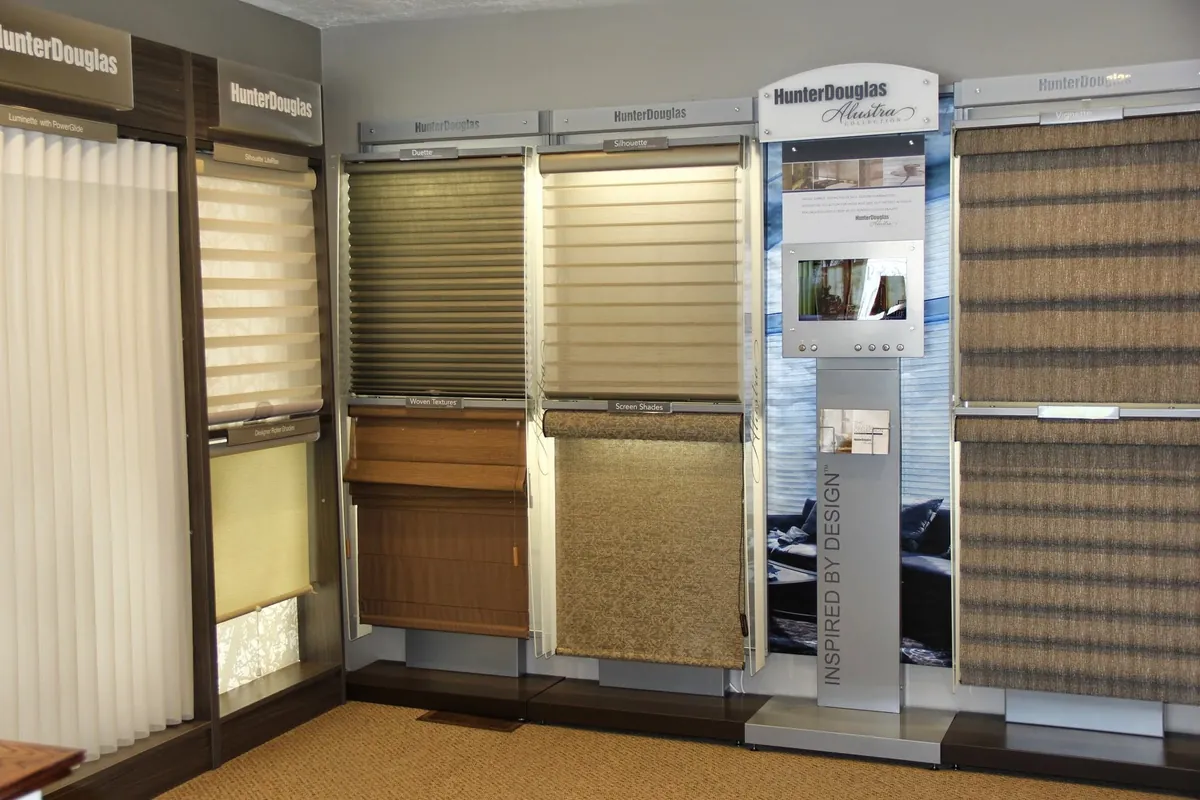
Blinds & Designs holds Hunter Douglas Gallery dealer status, and our installation is certified by Hunter Douglas. Those two facts are the backbone of what we offer. Each product family the maker offers comes through us, from Duette and Silhouette to Palm Beach shutters and PowerView, and our installers are trained to fit them as they are designed to be fitted.
For a Rockland colonial, cape or ranch, that means one consultation for the whole house and one estimate that covers it all. Choosing a Hunter Douglas dealer in Rockland with certified installation keeps the job in one set of hands from the first sample to the last bracket. Lines and colors can be explored in the Hunter Douglas catalog, and our own Hunter Douglas page explains our dealer work.
Where to see Hunter Douglas in person
Most Rockland projects begin with a consultation at home. If you would like to see products in a showroom as well, the closest to Rockland is our Franklin location; its details are on the Franklin showroom page.
PowerView basics are laid out on our motorized blinds and shades page, and and how each motor gets its power is settled during the visit. All of our services in town are listed on our Rockland page.
Questions from Rockland
My windows are all standard sizes. Does that limit my choices?
The opposite. Standard openings accept nearly the whole Hunter Douglas range, so you can choose purely on how each room is used and how you want it to look.
How do I keep the front of a colonial looking consistent?
We use one color family for every street-facing window on both floors. The products behind them can still differ from room to room.
What suits a slider or French doors in a family room?
Ones that draw to the side, for example vertical honeycomb shades, Luminette or vertical blinds. A solar screen fabric is worth considering where the doors take strong sun.
Can I mix shutters and shades in the same house?
Yes, and many households do. We coordinate the colors so the outside looks unified, while each room gets the covering that suits it.
Is there a charge for the estimate?
No. We provide a free estimate for products and certified installation, whatever the size of the project.
Let us bring the samples
A colonial off Union Street, a cape with dormers or a ranch with a long front wall close to the road: the starting point is the same. Ask for a consultation, and our van will bring samples to Rockland, take measurements of each window on your list and leave you with a free estimate. Got a quick question first? The call button up top will connect you.