
Harbor light, salt air and old shingles
Marion asks more of a window covering than most towns. The shingled captains’ houses around Sippican Harbor and through the village were built facing the water and the street, with formal front rooms and windows sized for another age. Out toward Converse Point the newer houses go the other way, with heavily glazed rooms turned to the harbor and the bay. And everywhere, the air carries salt.
That combination is what a Hunter Douglas dealer in Marion, MA has to plan around: glare off open water, front parlors where drapery is simply expected, and materials that cope with damp sea air year after year. Blinds & Designs is a Hunter Douglas Gallery dealer, so the full Hunter Douglas range is open to us for every one of those rooms, and our installers are certified by Hunter Douglas.
We bring the samples to the house, because harbor light is very hard to imagine anywhere else.
What a Gallery dealer brings to a Marion house
The cards below link to our page for each product in Marion. A village house and a water-view house will use them in very different proportions, which is why a Hunter Douglas dealer in Marion, MA needs the whole family to hand rather than one or two favorite lines.
Custom blinds
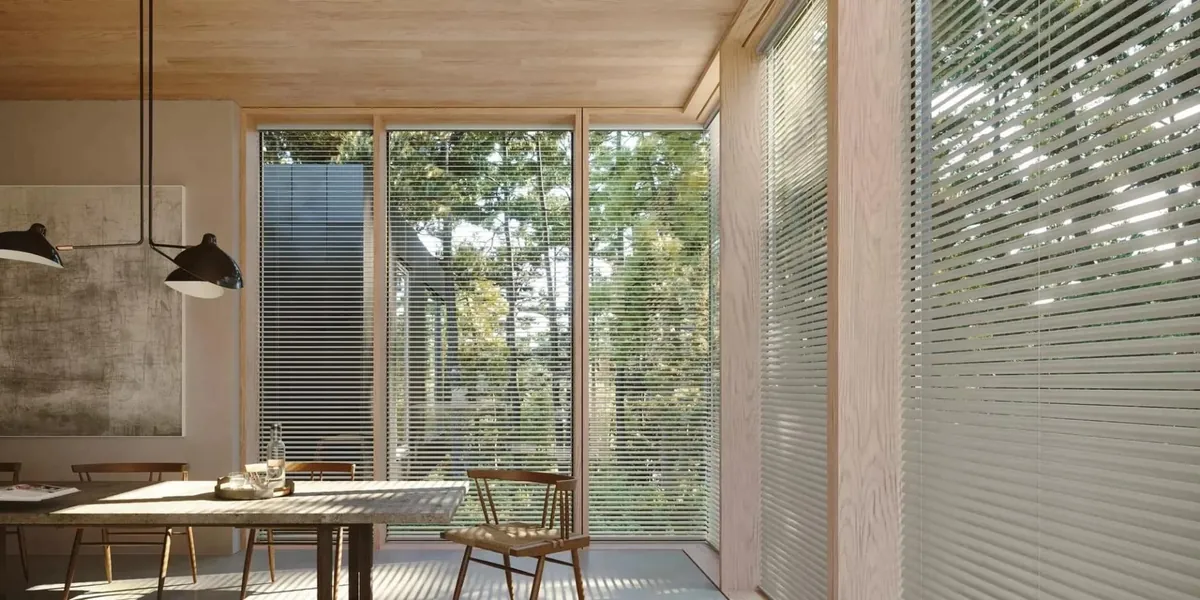
Metal, Parkland wood and EverWood faux wood blinds, chosen with damp air and strong light in mind.
Cellular shades
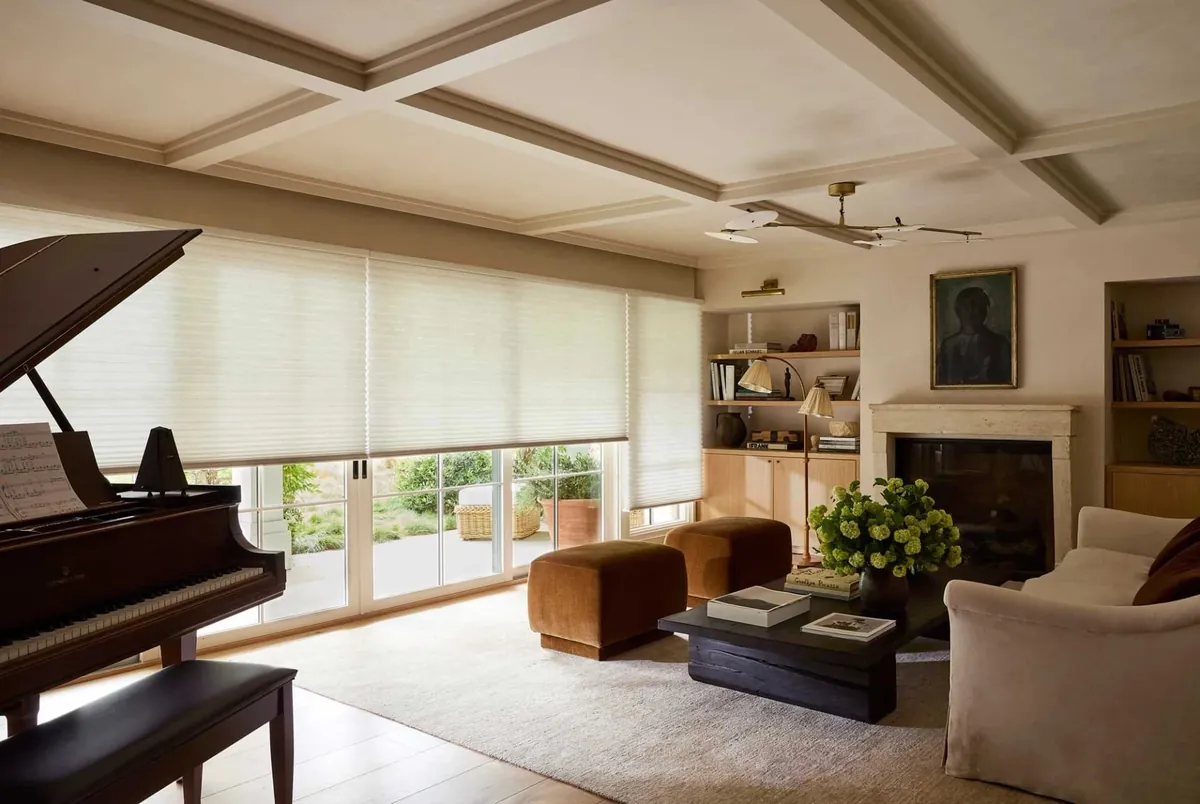
Duette and Applause honeycomb, to calm a bright room and keep it comfortable by the glass.
Roller shades
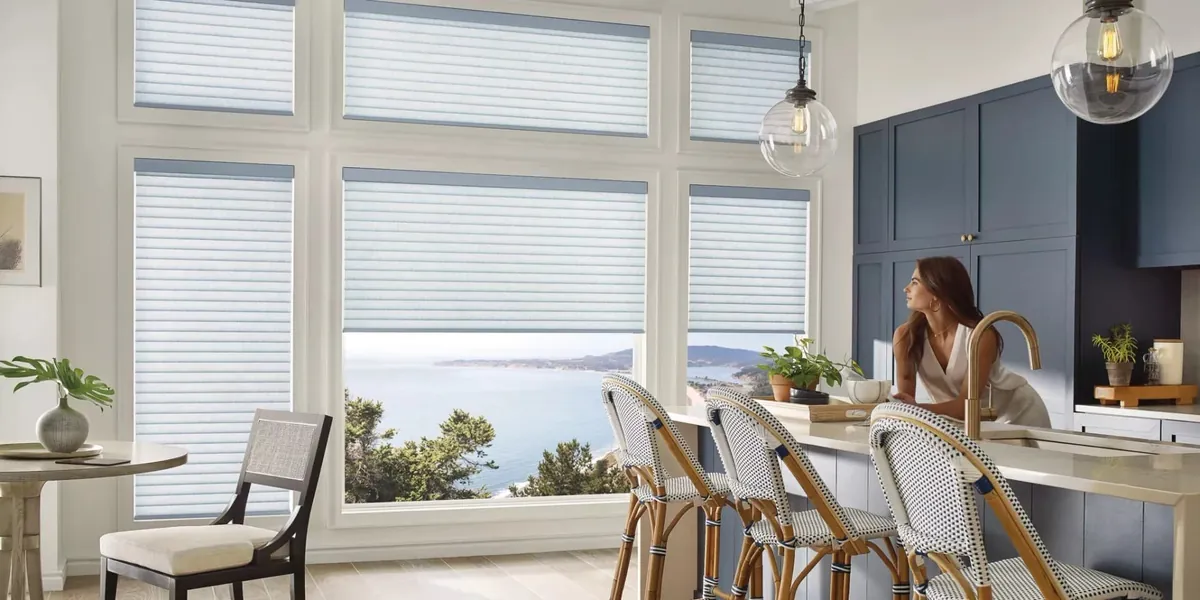
Designer and Alustra rollers and screens that tame harbor glare and keep the water in view.
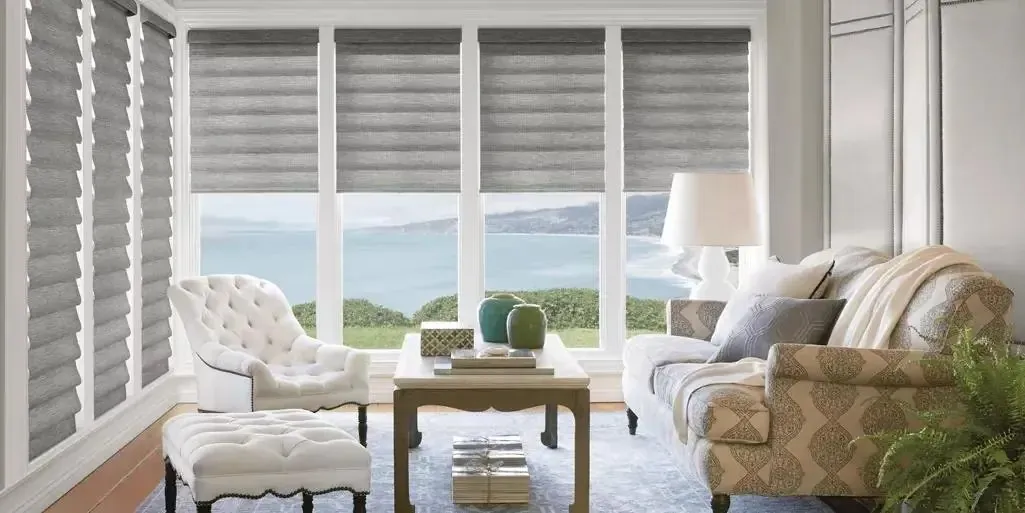
Roman shades
Vignette and Carole Roman folds, at home in a formal village room or a water-view sunroom.
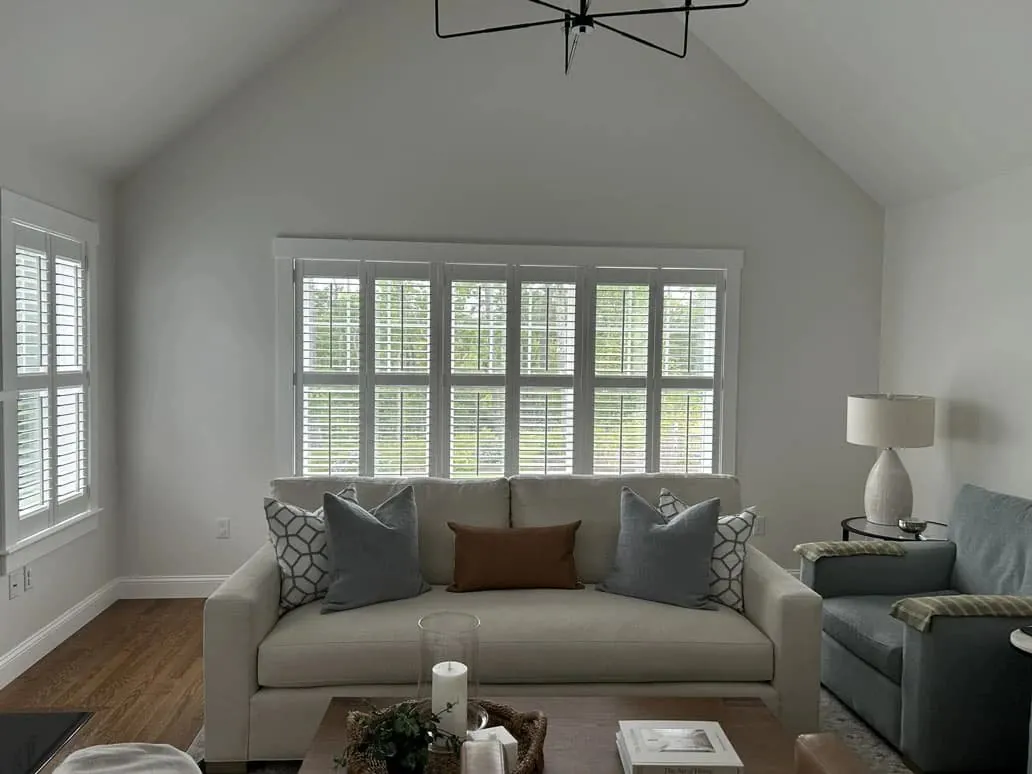
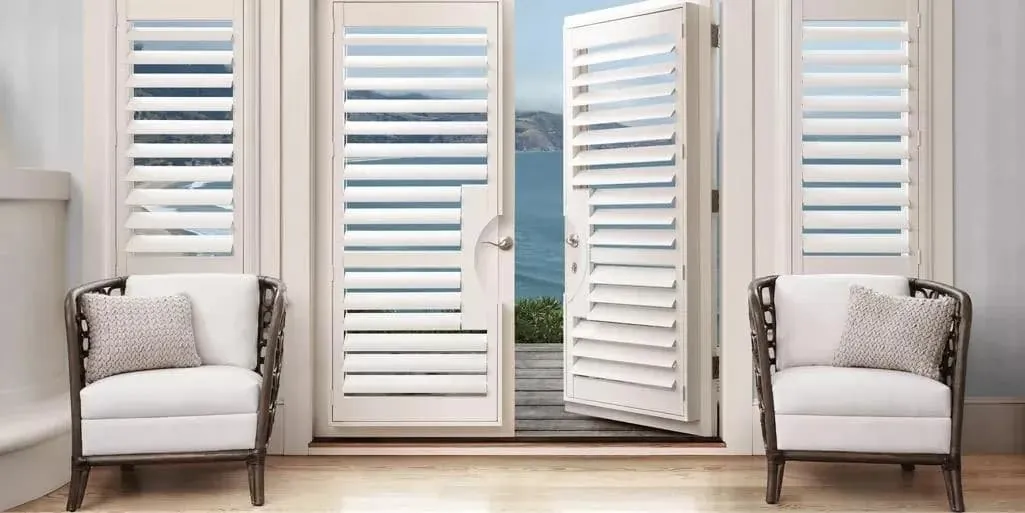
Plantation shutters
Palm Beach, NewStyle and Heritance shutters, with Palm Beach built for moisture and sun.
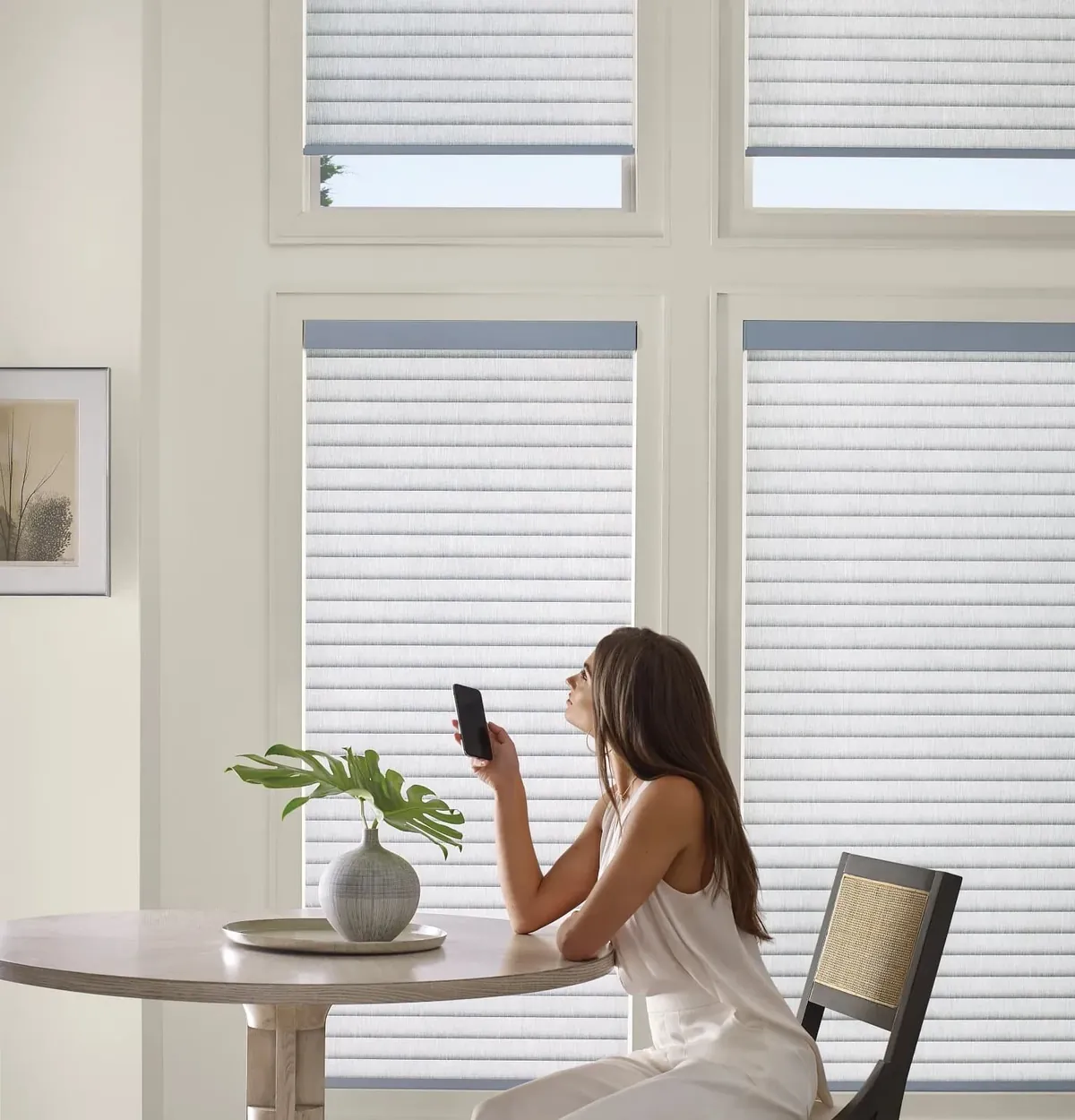
Motorized blinds and shades
PowerView schedules that lower the shades when the light comes off the water.
The captains’ houses in the village
The older houses around the harbor and along the village streets have a formality that a window covering has to respect. Front elevations are usually symmetrical, with evenly spaced double-hung windows, often with divided lights and original or carefully restored sash. Inside, there tends to be a proper front parlor, a dining room and a stair hall, each with its own character.
Captains’ houses were built by people who knew weather, and their windows show it: modest openings, heavy sash, and casings that have been painted many times over and may no longer sit perfectly square. We take the measurements of these windows slowly. Where the frame has the depth, a shade mounted inside lets the old casing and its layers of paint stay on show. Where the depth is not there, or where a sash lock is in the way, the headrail goes just above the trim and is sized so it covers as little of it as possible.
Scale is the other thing to get right. A heavy product overwhelms a small divided-light window. A Duette honeycomb or a Vignette Roman folds into a compact stack at the top of the frame, and narrow-slat Parkland wood blinds keep a period proportion that wide modern slats would lose.
From the street, one look across the front matters. We usually recommend a single line and color for every window facing the road, then let the rooms behind differ in fabric and opacity.
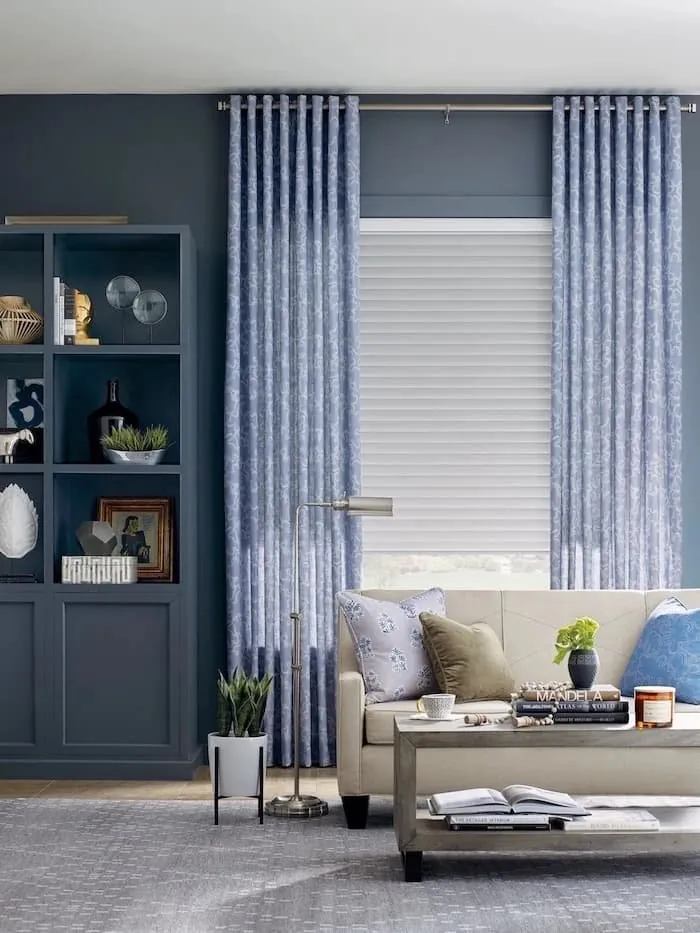
Formal rooms where drapery is expected
In a Marion village house, the front parlor and the dining room often feel unfinished without drapery. A Hunter Douglas dealer in Marion should be able to plan drapery and shades together, rather than leaving one to be added later.
The usual approach is a working shade in the window and drapery panels framing it. The shade handles light and privacy day to day: a Roman shade, a honeycomb or a sheer. The drapery adds color, softness and a sense of finish, and it can be stationary or made to draw across at night. Carole drapery from Hunter Douglas is made to the room, so panel width, length and fullness suit the height of the ceiling and the width of the wall, not a standard size.
A few things to think about in these rooms:
- Where the rod sits. Mounting higher than the casing makes a window look taller, which suits the proportions of many older rooms.
- How the panels stack. Panels that stack beside the window, rather than over the glass, keep the room bright when they are open.
- Lining. A lined panel hangs better and protects the fabric from strong light; a room-darkening lining helps in a front bedroom.
- The shade behind. A sheer or a light-filtering shade behind drapery gives privacy by day without closing the panels.
Our Hunter Douglas drapery page has more on the collection.
Water-facing rooms with a lot of glass
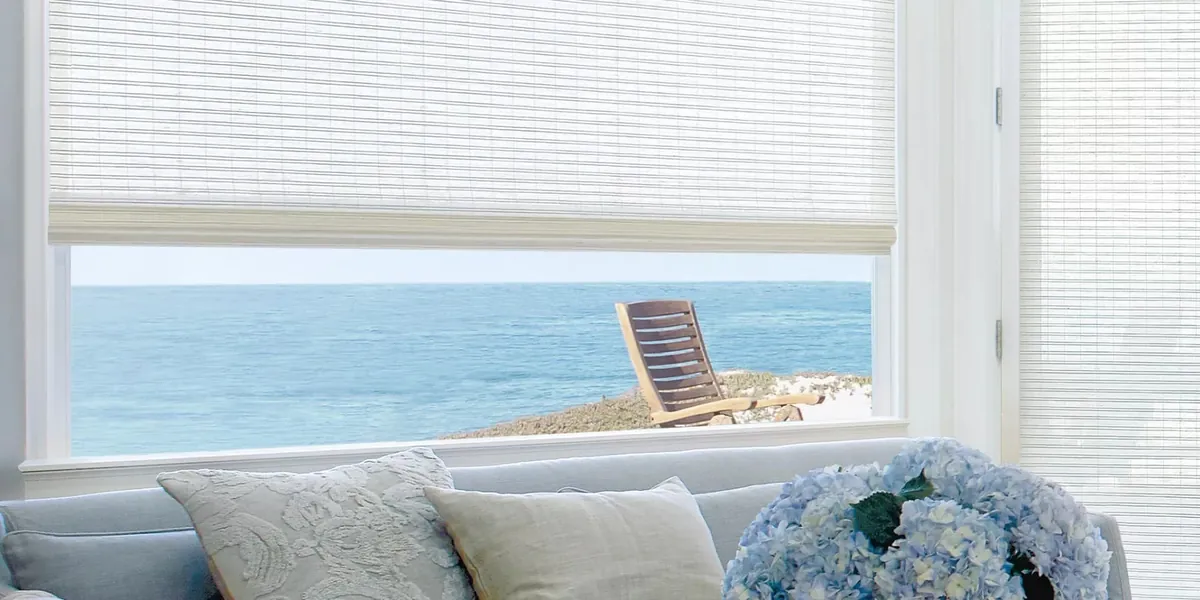
The newer houses toward Converse Point, and many older houses that have been opened up at the back, have rooms built around the water: walls of glass, wide sliders to a deck, sometimes a corner of windows that wraps the view. These rooms are beautiful and demanding. Light reflects off the harbor from below as well as above, the afternoon sun can be blinding, and the glass is often large enough that heat builds quickly.
The aim is to keep the view and still be able to sit in the room. Several Hunter Douglas lines do that in different ways:
- Screen shades. Designer Screen and Alustra screen fabrics cut glare and heat while keeping the water visible. A more open weave shows more of the view; a tighter one cuts more glare. We bring a range of openness to compare at your glass.
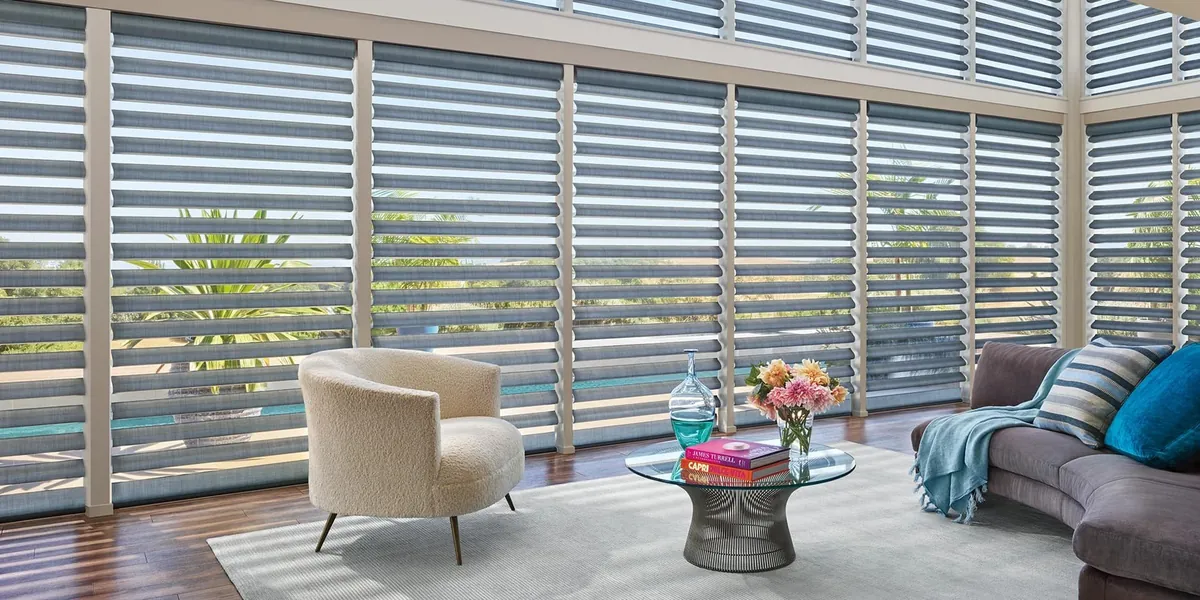
- Sheer shades. Silhouette and Pirouette hold fabric vanes between or over sheer layers. Tilting the vanes softens the light while the harbor stays in sight.
- Vertical sheers. Luminette slides aside for a slider and hangs in soft vertical panels, a good fit for a wide wall of doors.
- Honeycomb. Light-filtering Duette or Applause spreads the light evenly and slows the heat coming through the glass.
Reflection off water is worth a special mention. Because glare can come from below the line of the sun, a shade that drops from the top may not catch it. Top-down, bottom-up shades and screen fabrics handle that low glare better than most.
Living with salt air
Salt air is part of life by the harbor, and it affects window coverings over time. Damp, salty air settles on everything near an open window, and rooms that face the water take strong sun as well. That calls for some care in what you choose.
Shutters. Palm Beach shutters are made from a solid polysatin designed for moisture and sun, which makes them a sound choice for a bathroom, a kitchen or a room that is open to the sea breeze much of the summer. NewStyle and Heritance suit drier rooms, where their wood look or real hardwood can be enjoyed.
Blinds. EverWood faux wood blinds handle damp better than real wood. Metal blinds wipe clean easily.
Fabrics. Lighter, neutral fabrics generally hold their look longest in a bright water-facing room. Deep colors are better kept for rooms that face away from the afternoon sun.
Regular care. A light dusting or vacuuming with a brush attachment keeps most fabric shades looking good, and wiping down blinds and shutters now and then removes the salt film. Our guide to caring for fabric shades explains the basics.
Stair halls, fanlights and transoms
The village houses often have a front door with a fanlight or a transom above it, sidelights either side, and a stair hall rising to a landing window. These openings are easy to overlook and hard to treat well. Most fanlights are best left clear, because they are part of the house’s face to the street and let daylight into the hall. Sidelights can take a slim fixed shade or a narrow shutter panel where privacy at the door matters. The landing window, halfway up the stair, is usually out of easy reach, and it is a good candidate for a honeycomb shade on PowerView or a shutter that can be tilted with a wand.
A Hunter Douglas dealer in Marion sees a lot of these entrances, and the detail matters: a shade on a sidelight has to clear the door hardware, and anything on a landing window has to look right from the hall below and the street outside. We look at each one with you before suggesting anything.
Bedrooms under the eaves
Many of the older houses have bedrooms on the upper floor tucked under the roof, with dormers or small gable windows and sloped ceilings. They can be warm on a summer afternoon and cool on a winter night, and they often face east, so morning light comes in early.
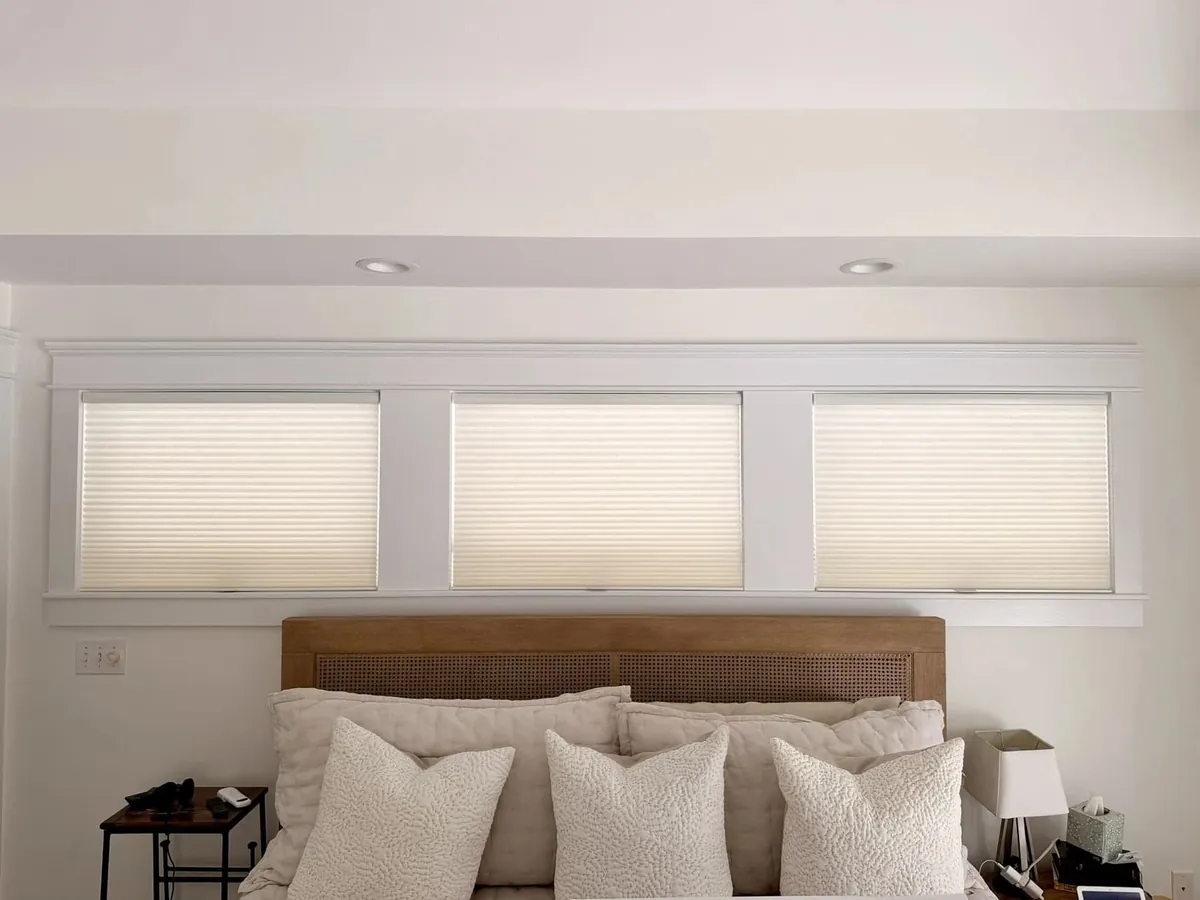
An inside-mounted room-darkening honeycomb is the usual answer for these windows. It fits a narrow dormer, stacks small to keep the room bright by day, and the cells hold a layer of still air at the glass, which helps the room feel more even through the seasons. Where a bedroom also faces the harbor, a sheer shade layered with a room-darkening option keeps the look of the water by day and darkness at night.
Porches and sunrooms on the water side
Many Marion houses have a porch, a screened porch or a sunroom on the side facing the harbor. These spaces swing from bright and hot on a summer afternoon to cool and breezy in the evening, and they are often glazed or screened on three sides.
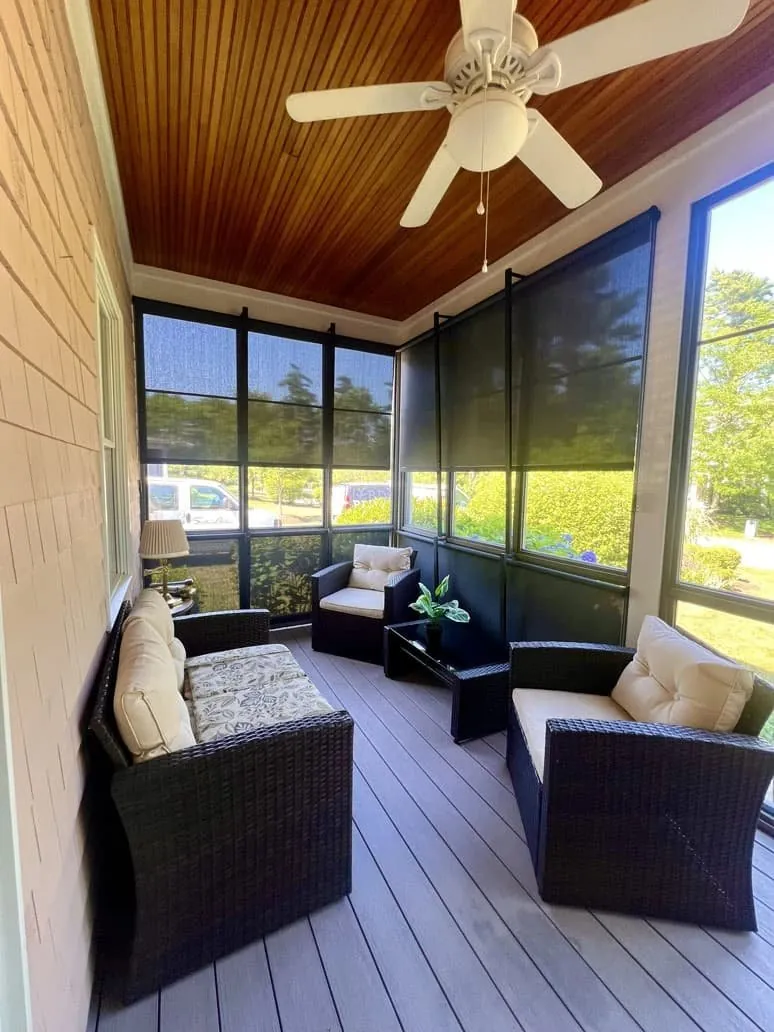
For a screened porch, solar screen shades give shade and some privacy while letting the breeze through. For an enclosed sunroom, light-filtering honeycomb or a screen shade can stay lowered for much of the day without closing the room in. Where a sunroom has a high or sloped ceiling, PowerView saves a lot of reaching, and a schedule can lower the shades for the hottest hours. We plan every shade in a sunroom so the bottom rails line up when lowered, which keeps a busy wall of glass calm. On a porch that stays open to the breeze, we also favour fabrics and hardware that shrug off damp, and we show you how to raise the shades fully when a storm is coming through.
The newer houses toward Converse Point
The houses out toward the point are larger and more modern, with open plans, big glass, and often a two-story living space facing the water. They need a plan for the whole house rather than a product per room.
The great room usually takes the most thought. High windows are hard to reach, low windows sit behind furniture, and the whole wall takes strong light at some hour of the day. Matching shades across every pane, with PowerView on the upper glass, keep the wall looking like one surface. Screen or sheer shades on the lower row keep the view. Bedrooms facing the water usually get a room-darkening option, sometimes layered behind a sheer, so mornings stay dark without losing the look of the window by day.
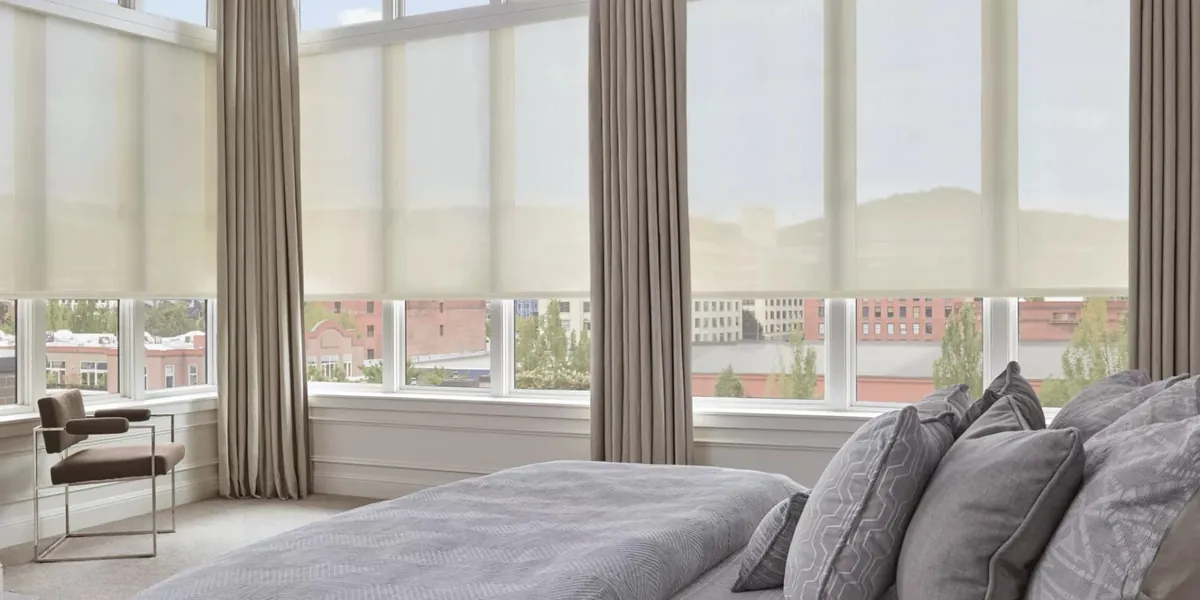
From the first visit to the finished window
We bring the showroom to you. The vans carry samples, and seeing a fabric on your own glass with the harbor behind it is the surest way to choose.
- Request a consultation online, or reach us through the call button.
- We start in the rooms that matter most, usually the water-facing living space or the formal front rooms.
- You compare samples on the glass, at the time of day the light is strongest if we can manage it.
- We discuss drapery and shades together for the formal rooms, and glare and view for the water-facing ones.
- We measure every opening and note how each should mount, allowing for older frames that are not square.
- You receive a free estimate and take whatever time you need.
- Hunter Douglas makes the order to our measurements, and our certified installers fit it.
For color, fabric and layering across a whole room, our interior design consultations help. Our guide to what happens on installation day explains the final step.
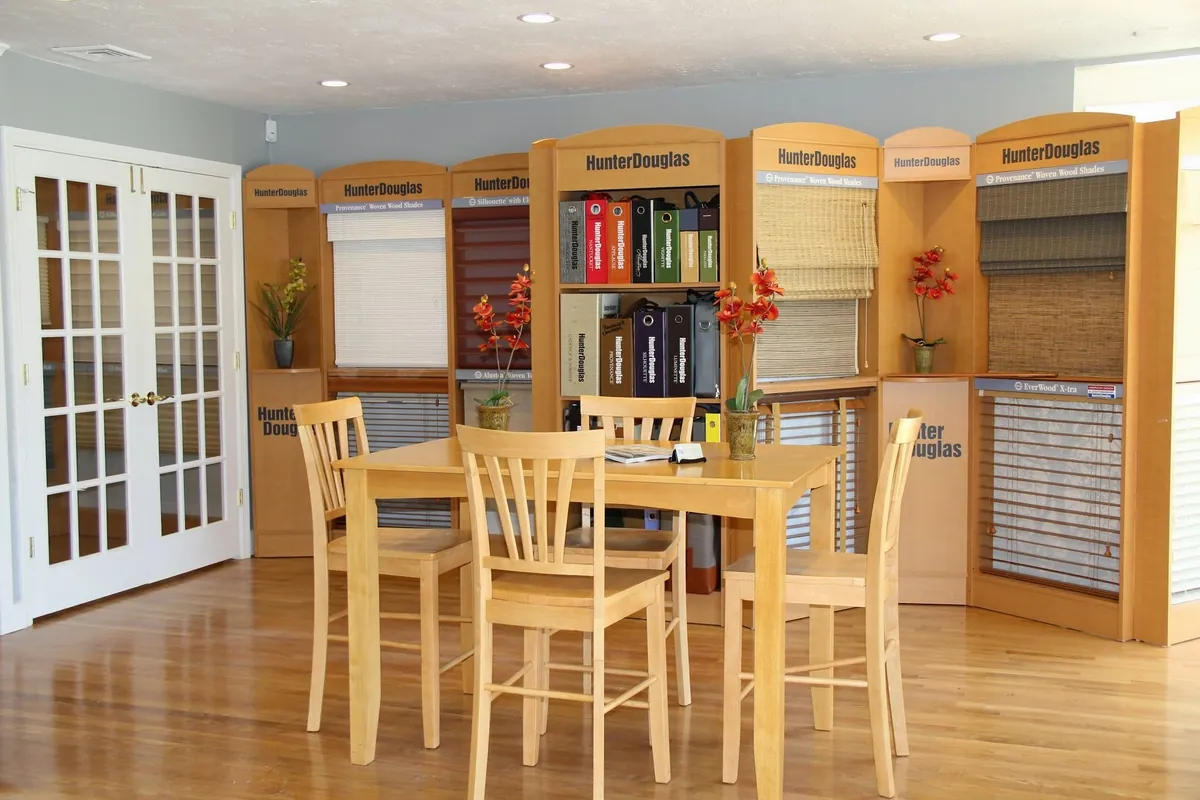
Gallery status and certified fitting
Gallery is the designation Hunter Douglas gives to dealers who meet its standards. For a Marion house, that means drapery for the parlor, honeycomb for the bedrooms, Palm Beach shutters in the bathroom and motorized screens across a harbor-facing wall can all be planned together, from one dealer, in one visit.
Installation is the other half. Our installers are certified by Hunter Douglas, and in older village houses that shows in the details: brackets shimmed level on frames that have settled, inside mounts that clear old sash hardware, drapery rods set true across a wide wall. Every motorized shade is paired and tested before we leave.
As your Hunter Douglas dealer in Marion, MA, we also offer blind and shade repair for window coverings you already own.
PowerView for harbor light
The light in a water-facing room changes all day. PowerView lets your shades follow it: a schedule can lower the screens when the afternoon sun comes off the harbor and raise them again at dusk, or open the bedroom shades at the same time each morning. High windows and wide walls of glass move from a phone, a remote or a wall control, alone or as a group.
We plan motorization during the visit, looking at where each shade sits, where controls are easiest to reach and how each motor is powered. See how motorized shades are controlled and our page for motorized blinds in Marion.
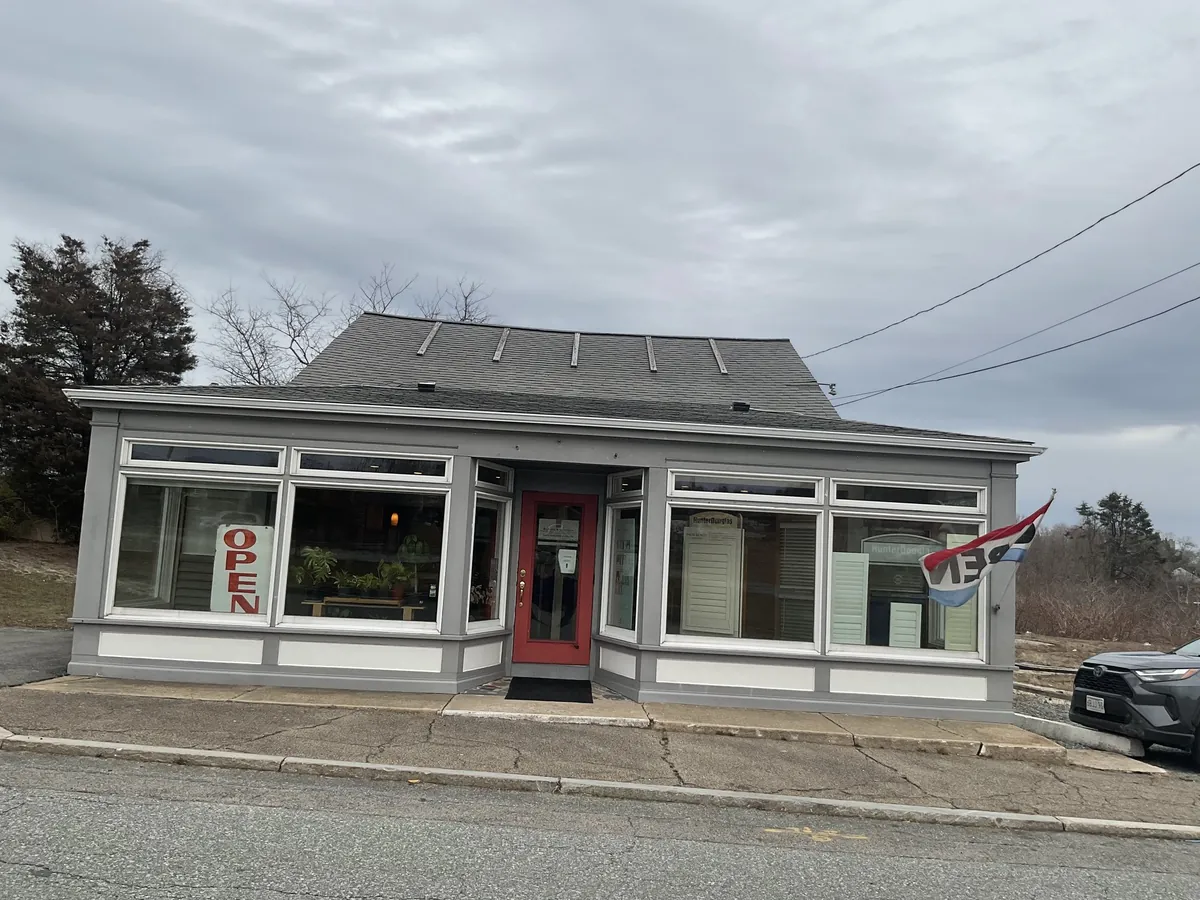
Visit us in Sagamore
Most Marion customers begin with an in-home visit, since the harbor light is what decides so much. If you would like to see Hunter Douglas products first, the Sagamore showroom is our nearest.
You can read about the brand on our Hunter Douglas page, browse the full Hunter Douglas catalog or see all of our services in town on our Marion page.
Questions from Marion
How do I cut harbor glare without losing the view?
A screen shade or a sheer shade with tilting vanes softens the light and keeps the water in sight. Because glare off water often comes from below, top-down, bottom-up shades and screen fabrics are especially useful.
Which products stand up to salt air?
Palm Beach shutters are made from a polysatin designed for moisture and sun, and EverWood faux wood and metal blinds handle damp well. Light, neutral fabrics tend to keep their look longest in bright rooms.
Can you plan drapery and shades together for a formal room?
Yes. We usually suggest a working shade in the window with Carole drapery panels framing it, planned together so the rod height, panel width and shade all suit the room.
Will shades fit inside the old sash of a captain’s house?
Often. We check each casing’s depth and the sash hardware. Slim honeycomb and narrow-slat wood blinds fit many older frames; where they will not, we mount tight above the casing.
Is the estimate free?
Yes. Every estimate is free and based on measurements taken at your house.
See samples at your own windows
Request a consultation and we will bring samples of the full range to your house, measure every window and leave a free estimate. You can also reach us with the call button, or see products first at the Sagamore showroom.