
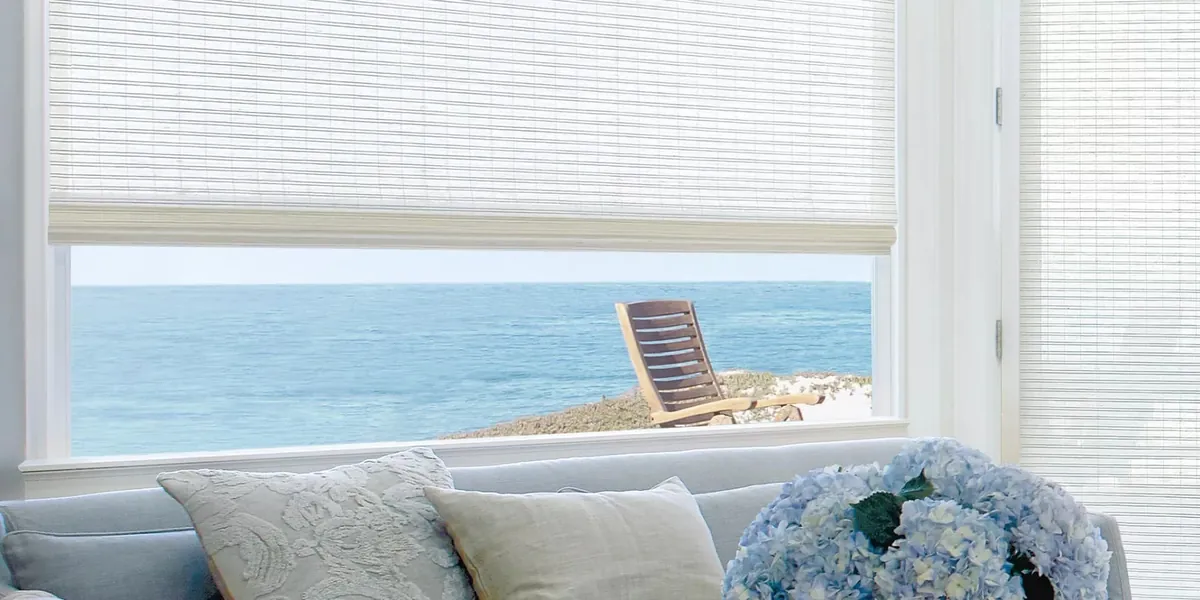
Glass that faces the water
Around the harbor and out along Ned’s Point, the houses were built to look at the water, and over the years their owners have added more glass to do it. A shingled cottage that once had a pair of small sash facing the bay may now have a wall of windows, a slider and a transom above. That glass is the reason to live there, and it is also the reason window treatments in Mattapoisett, MA, need more thought than in most places.
A water-facing room gets the sun twice: once from the sky and again off the surface of the bay. The salt air never really stops either, so whatever hangs near an open window spends its life in a damp, briny breeze. And a lot of the cottage stock has been converted from summer use to year-round living, which brings winter into rooms that were never planned for it.
Inland, the picture changes. The larger, newer houses away from the water have bigger rooms, higher ceilings and more standard openings. They ask different questions, and we answer those on their own terms.
Window treatments in Mattapoisett, MA, by product
Each product has its own Mattapoisett page. Follow the card that matches your room, or book one visit and plan every window together.
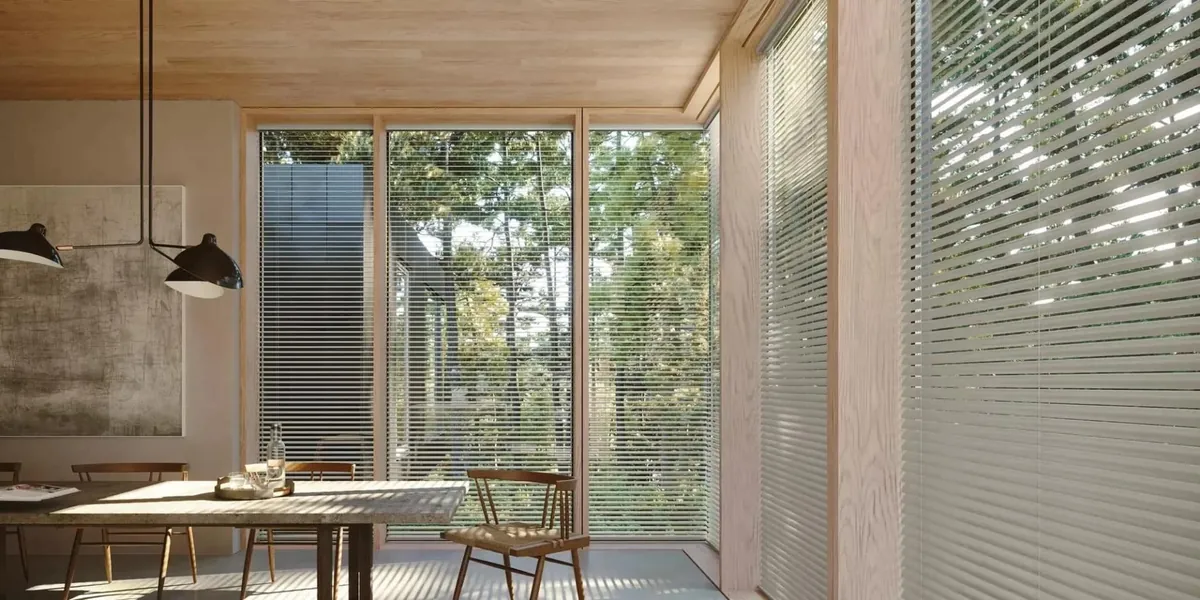
Blinds for bright rooms
Wood, faux wood, aluminum and vertical blinds. Tilt the slats and the glare off the bay goes to the ceiling instead of your eyes.
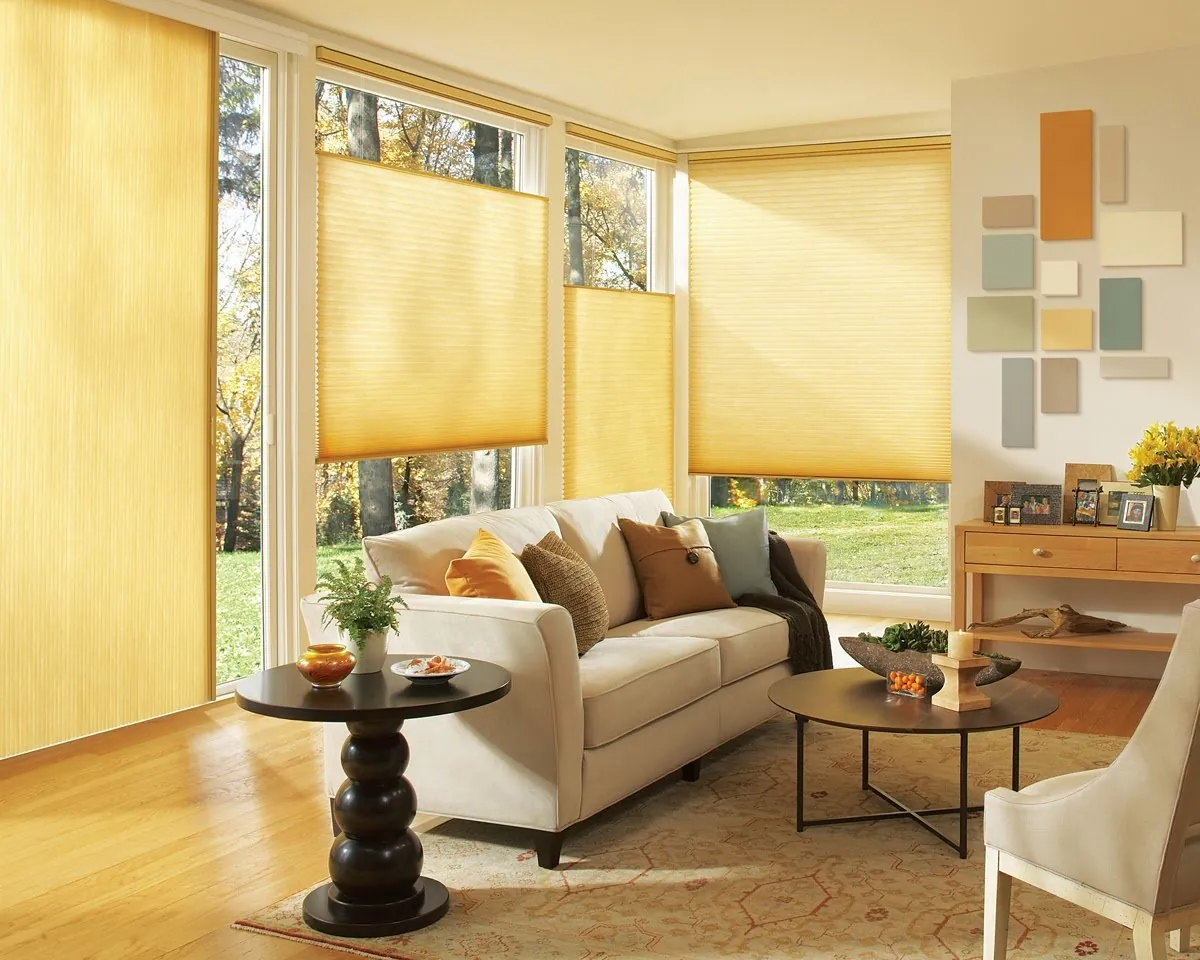
Cellular shades
Duette and Applause honeycomb fabric, whose air pockets help a converted cottage room hold its heat through the winter.
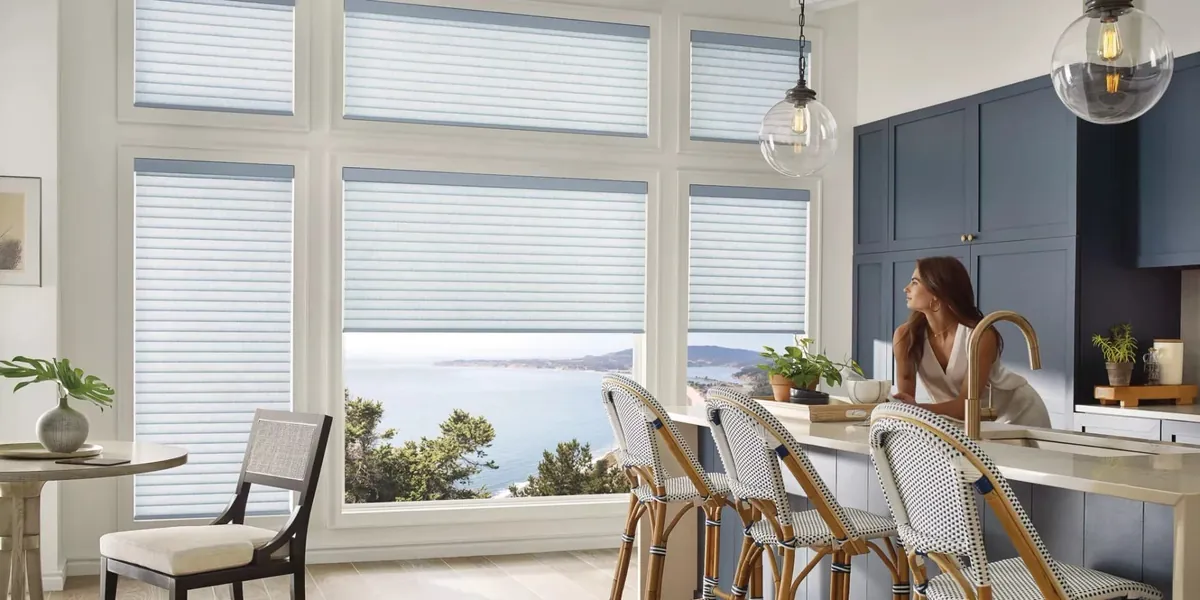
Screens for the view
Designer and Alustra roller and solar screen fabrics. The openness you choose decides how much harbor you keep and how much glare you stop.
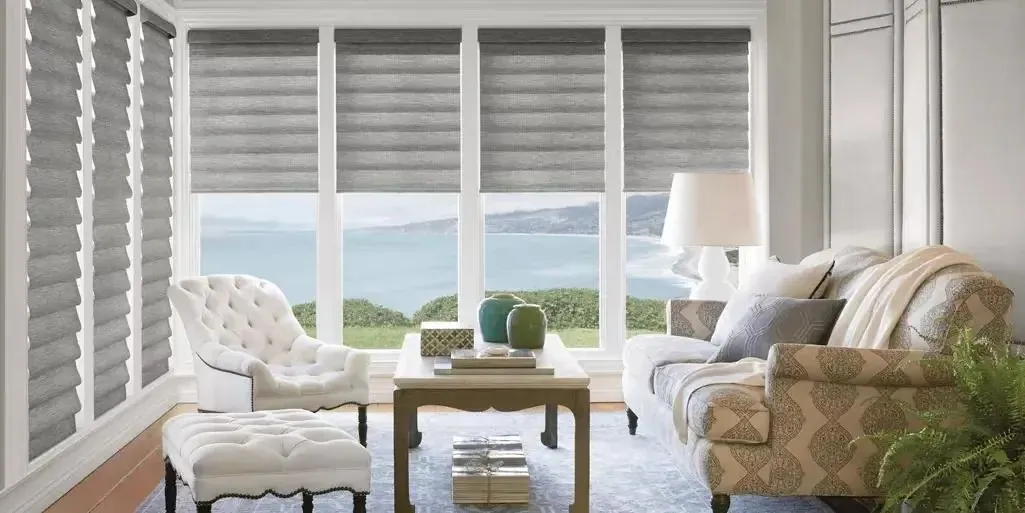
Soft folds
Vignette and Carole Fabrics romans, flat or folded, for a cottage bedroom or the formal rooms of a larger house inland.
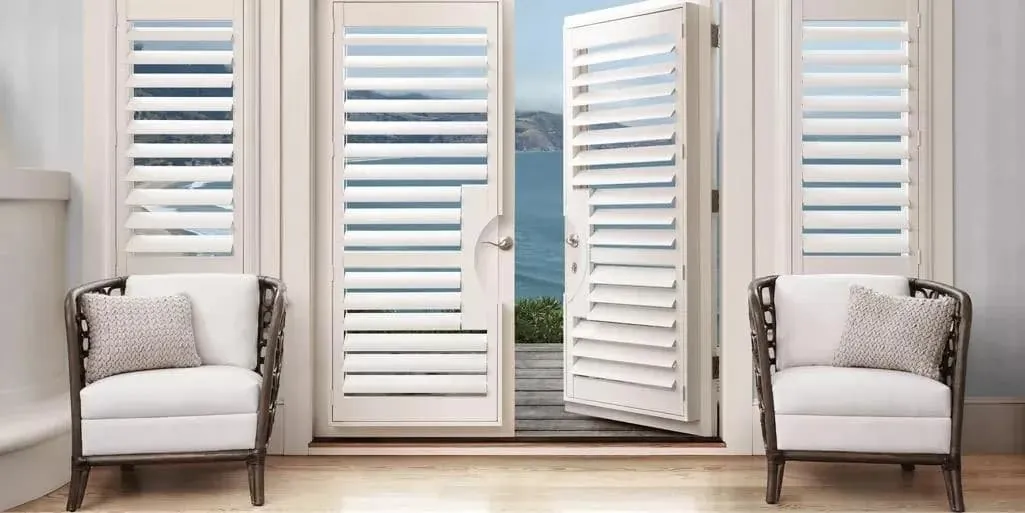
Shutters near the shore
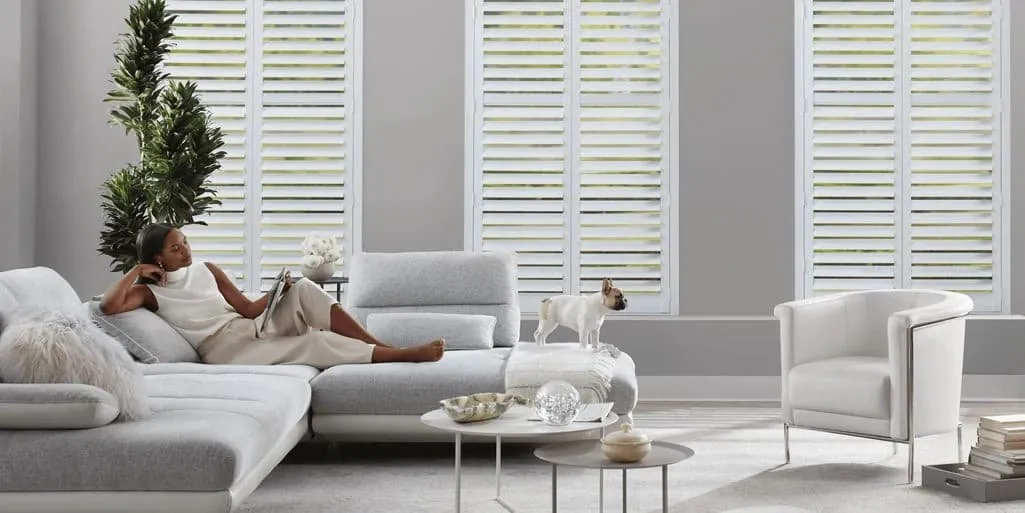
Palm Beach, NewStyle and Heritance plantation shutters, with very little hardware to trouble in a salty breeze.
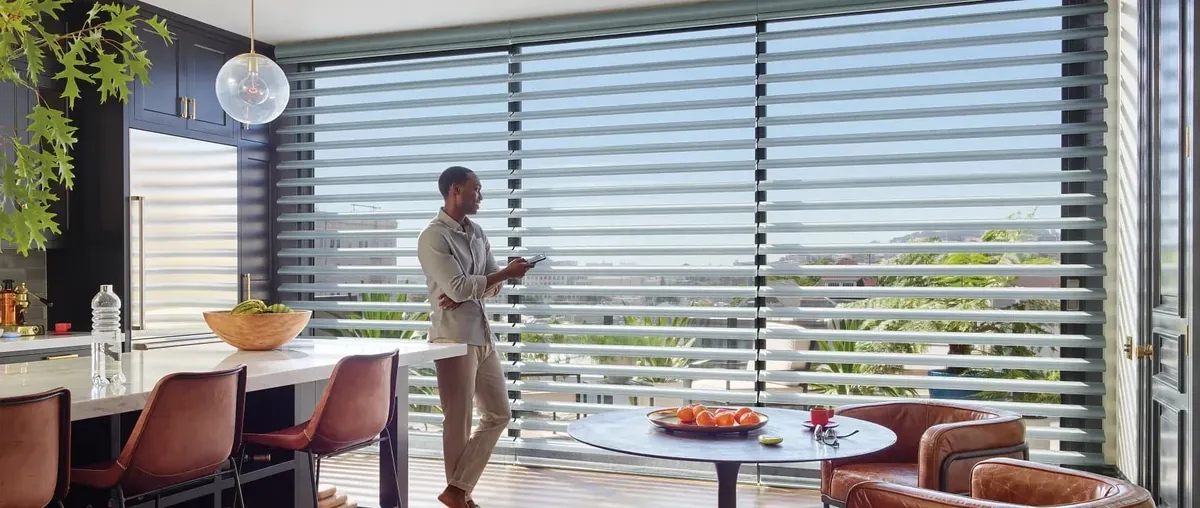
PowerView control
Motorized shades on a remote, an app or a schedule, so a wall of water-facing glass closes itself before the hottest hour.
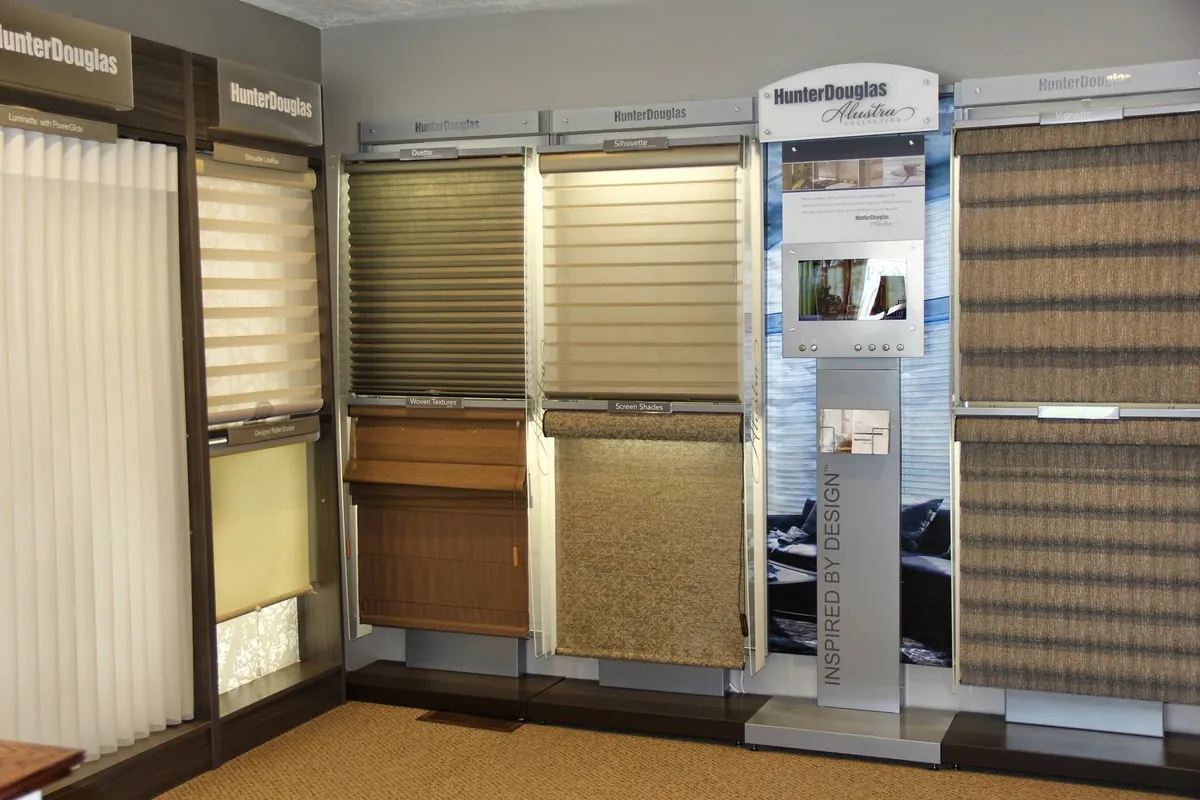
The Hunter Douglas range
A Hunter Douglas Gallery dealer with certified installation, so a single consultation can take in every product line.
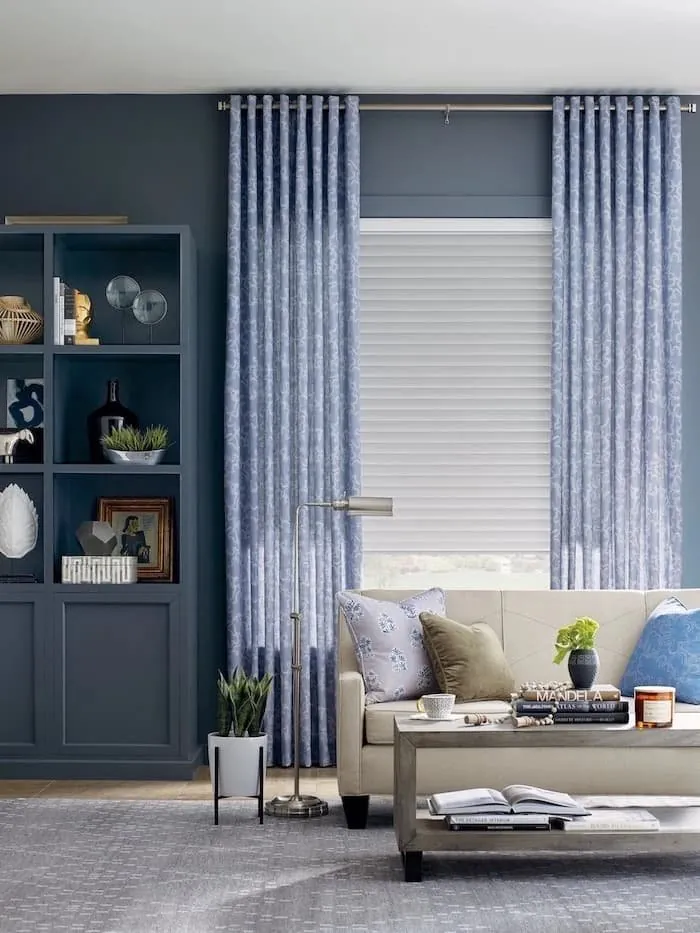
Drapery
Hunter Douglas drapery panels to warm up a big room, drawn at night over a shade that handles the daytime sun.
Taming the light off the bay
A room that looks across the harbor gets a doubled dose of light. Morning sun on an east-facing cottage comes in low and then comes in again off the water, and a south-facing wall of glass can be hard to sit in for much of a summer afternoon. The goal in those rooms is almost never darkness. It is keeping the view while cutting the glare to something you can live with.
Solar screen roller shades are the usual starting point. They are woven to a set openness, and the more open the weave, the more of the harbor you see through it. A tighter weave stops more glare but turns the view into more of an outline. We bring a range of openness samples to the house and hold them up at your own glass, at the hour the glare is worst if we can, because that is the only way to judge the trade.
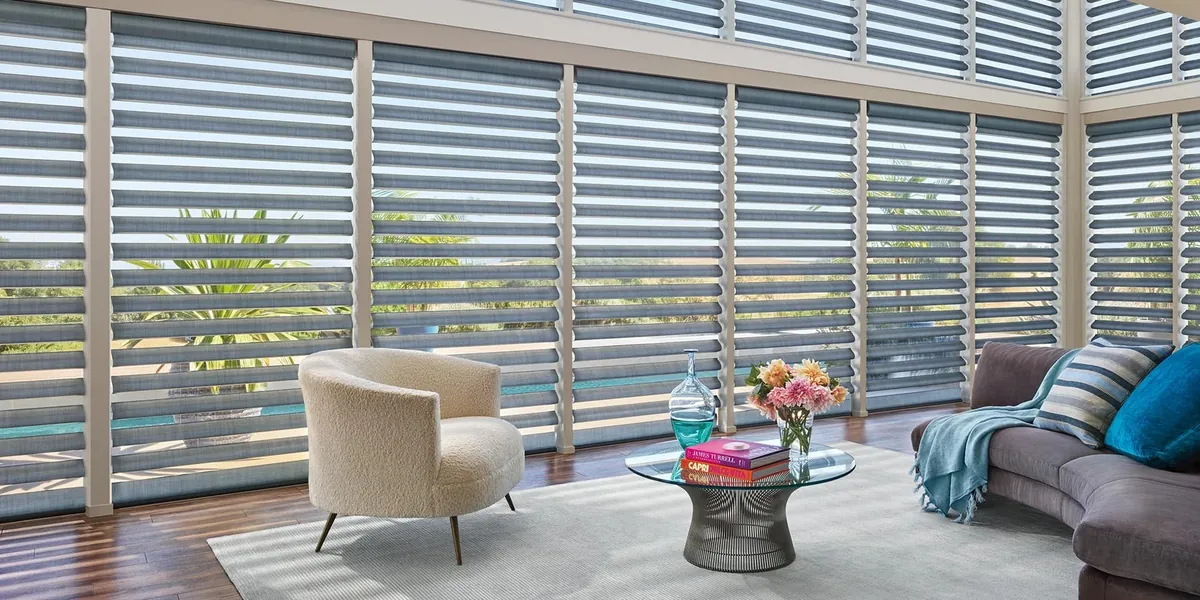
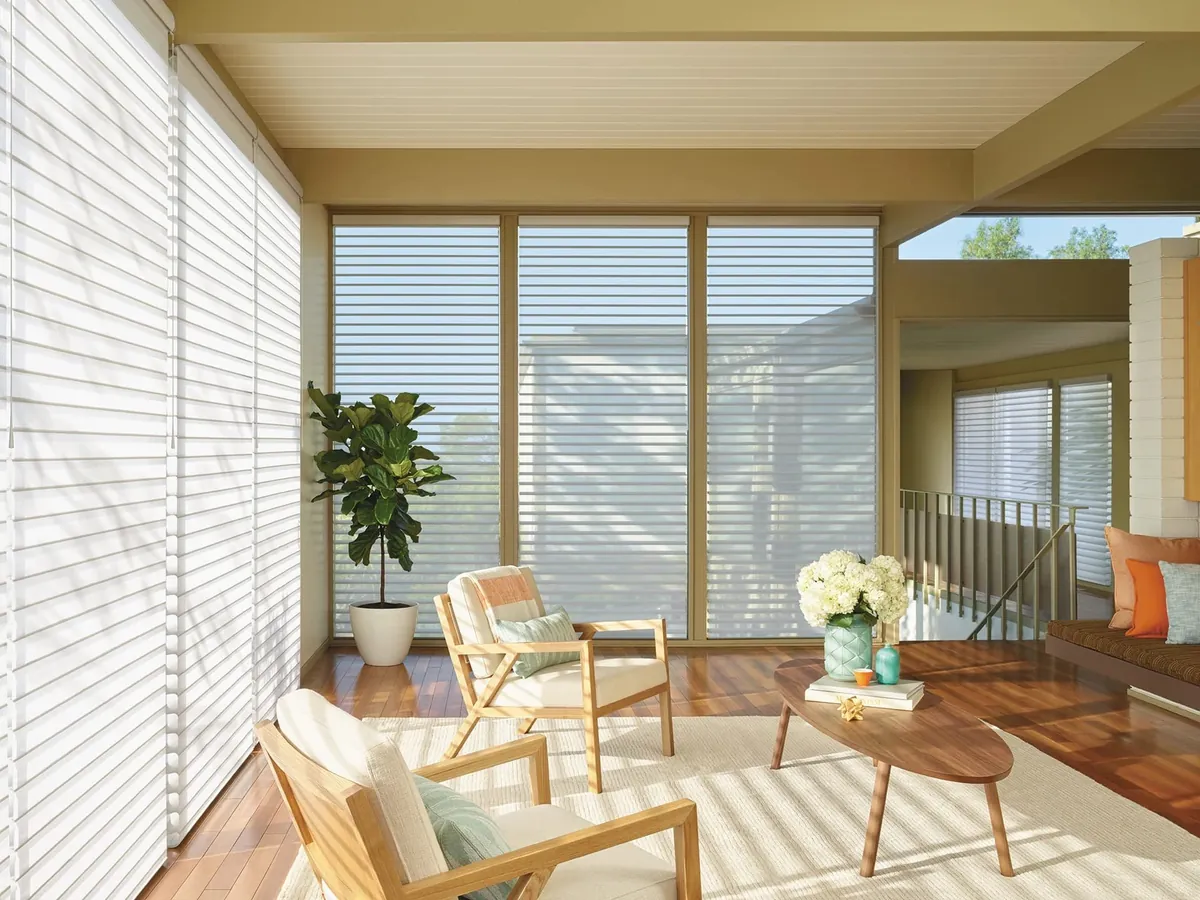
Sheer shades with soft fabric vanes are another good answer. With the vanes open, light passes through two layers of sheer and spreads gently across the room; with them closed, the room is private. Blinds work too: angle the slats upward and the light bounces off the ceiling instead of landing on the sofa.
What the salt does over time
Constant salt air is the other side of living on the water. It does not mean you have to avoid any product, but it does change what we suggest near a window that stays open from spring to fall.
Exposed metal is where trouble shows first: an old cord lock, a bracket, a bare metal slat by an open sash. Shades that keep their working parts enclosed in the headrail leave far less metal facing the breeze. Cordless lifts take away the cord lock entirely. Plantation shutters are among the most forgiving choices: after installation, a pair of hinges per panel is about all the metal they have, and the painted finish wipes down easily.
Fabric needs some thought as well. A damp, salty breeze and strong sun together are hard on any textile, so we steer water-facing rooms toward fabrics that suit that life and away from delicate ones. For the room that gets the full force of both, a roller or a shutter often outlasts a softer choice.
Firm mounting matters too. A shade on a window that is opened every day gets bumped and pulled, so brackets go into solid wood, not just plaster or old trim.
Cottages that became year-round houses
Many of the shingled cottages near the water started as summer places. They were built light, with single glass, small rooms and windows placed for a breeze rather than for winter. Turning one into a year-round house usually brings insulation and new heat, but the windows often stay much as they were, and they are where the cold gets in.
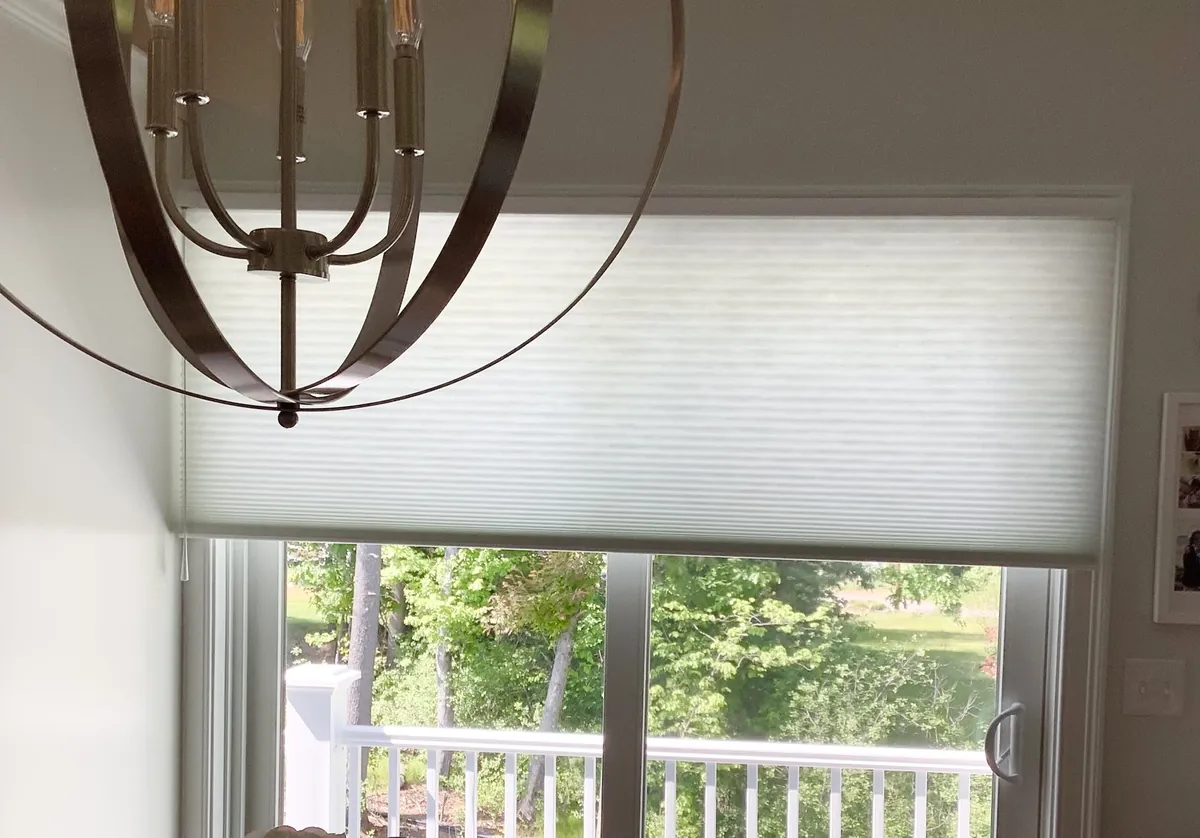
This is where cellular shades earn their place. The honeycomb fabric traps air in each cell and holds that layer against the glass, so the room stays warmer when the shade is down on a winter night. A double-cell fabric adds a second layer for the coldest rooms. In a cottage bedroom with a short window under the eaves, a cellular shade mounted inside the frame stacks small and leaves the old trim on show.
Conversions also tend to have odd windows: a new slider cut into a wall that used to be solid, a small square window from the original kitchen, a long porch now enclosed as a sitting room. Every one of them is made to size, so the mix of shapes still ends up with treatments that line up.
The larger houses inland
Away from the harbor, the newer houses inland have a different set of needs. The rooms are larger, ceilings are often higher, and there are more of the big openings that modern building likes: a two-story great room, a wide kitchen window, French doors to the patio.
Tall windows above a doorway or a stair are hard to reach, which makes them natural candidates for PowerView. Put a motor in the shade up there and it answers a handheld remote or a timetable you set, and the stepladder stays in the garage. In a great room with windows on two levels, the upper and lower shades can move together or on their own.
These houses also suit a more tailored look. Plantation shutters across a run of family room windows, roman shades in the dining room and wood blinds in the study are a common pairing, and drapery can frame a wide opening that would look bare with a shade alone.
Bedrooms in a larger house are often on the quiet side away from the road, so the main concern is darkness. A room-darkening cellular shade or a blackout roller fitted close to the frame handles that, and drapery on top closes the last gaps at the edges.
How a visit works
The light in a harbor room shifts so much that it pays to choose fabric right there, at the glass. We bring the showroom to you, in a van loaded with samples.
- Book through the Request a Consultation form or the call button.
- Your consultant pulls up with screen weaves, cellular and roman fabrics, slat and louver samples and drapery swatches.
- Room by room, you describe what is wrong now: too much glare, a chill by the glass, a neighbor’s view in, or a look you have outgrown.
- Swatches are pressed against the harbor-side glass first, then the quieter windows, so each is judged in its own light.
- Each opening gets measured, depth of the frame and all.
- A free estimate follows, and nobody rushes the decision.
For a fuller picture of the appointment, read what happens at an in-home consultation. If color across a whole floor feels daunting, interior design consultations bring a second opinion.
Houses that close for the winter
Not every house near Ned’s Point is lived in all year. A seasonal house that is shut up from fall to spring has its own requirements: the treatments should protect the furnishings while nobody is there and be easy to open up again in late spring.
Sunlight through closed-up glass can fade floors, rugs and upholstery over a long empty season. Lowering a room-darkening or light-blocking shade before you leave keeps much of that light out. Shutters closed tight do the same job and look tidy from the road.
Motorization helps here as well. PowerView schedules can raise and lower shades on a routine while the house stands empty, so it looks lived in, and you can check or change them from the app wherever you are. Our page on how motorized shades are controlled covers remotes, the app and schedules.
Color that holds up in strong sun
Water-facing rooms are hard on color. A deep navy or a rich red fabric facing a south window over the harbor will lighten over the years, and so will anything else in that room that the sun reaches, from the rug to the arms of the sofa. Choosing a fabric for those rooms is partly a question of what still looks right after many summers.
Lighter and neutral tones are the forgiving choice on the glass side, which is one reason so many shore houses settle on white or a pale shell color facing out. You can still have color facing the room: many fabrics come with a different tone on each side, and a roman or drapery panel can carry the pattern while a screen or cellular shade behind it takes the sun.
The treatment itself protects the room as well. A solar screen lowered on the hottest hours, or a light-filtering shade on a schedule, cuts how much direct sun reaches the floor and the furniture. Our guide to choosing fabric for a sunny room goes further into color and opacity.
Transoms, French doors and the odd shapes
Additions and renovations near the water often leave a house with shapes that do not fit a simple shade: a half-round transom over a door to the deck, a pair of French doors that swing into the room, a triangular gable window in a converted attic, or a long, narrow side light beside the front door.
French doors need a treatment that rides with the door, so it does not swing loose or block the handle. Shades or shutter panels mounted on the door itself solve that. Tall, narrow side lights can take a slim cellular or sheer shade, or a shutter panel that matches the rest of the hall.
Arches and gable shapes are often best left bare, with the rectangular glass below them covered, or fitted with a fixed shutter or shade made to the shape. Each window treatment in a Mattapoisett house of this kind is planned one opening at a time, and that care pays off most on the windows you look at every day.
Porches and sunrooms
Screened porches and enclosed sunrooms are a big part of life near the water, and they are among the hardest rooms to shade. They have glass or screen on three sides, they catch the sun from morning to evening, and they take the weather.
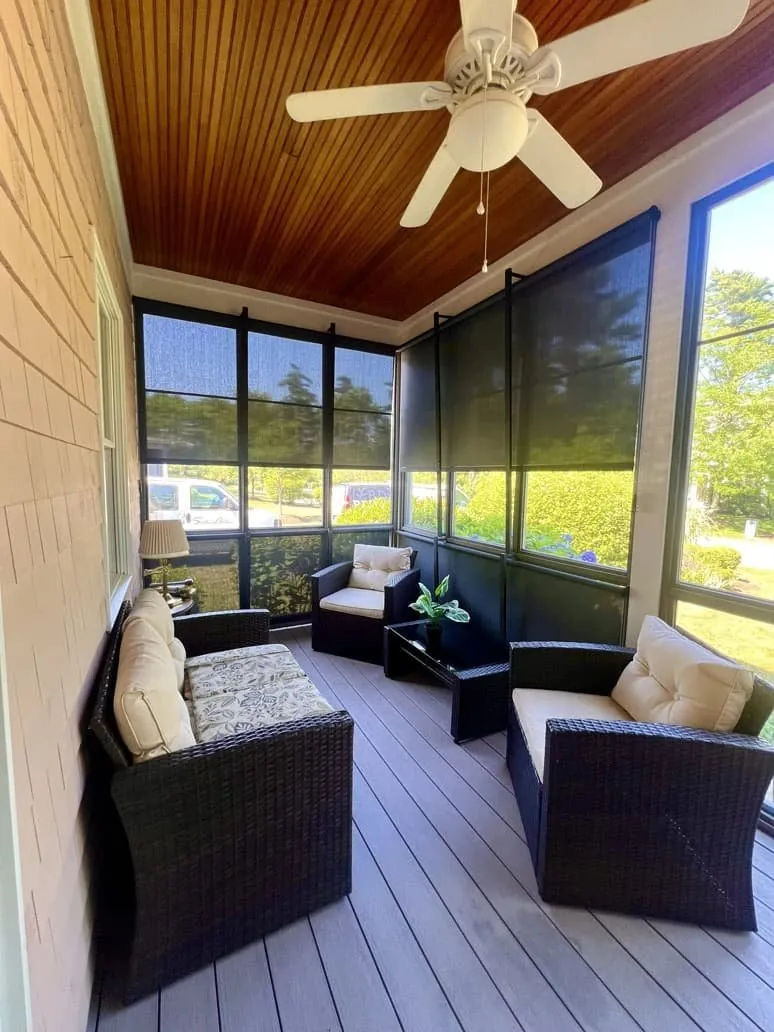
Solar screen shades are a natural fit. Drop them on every side of a porch and the heat eases off, yet the lawn and the water still show through the weave. Roller shades in a durable fabric suit an enclosed sunroom, and woven wood shades add warmth to a room that is mostly glass. For a sunroom used on cool evenings into the fall, cellular shades help the room keep the warmth of the day.
Planning window treatments for Mattapoisett porches always starts with the frames, which are often shallow or built by hand. Where a frame is too shallow for the shade to sit within it, the shade mounts across the front of the frame instead.
Tying the house together
Most houses near the harbor end up with a mix: screens where the bay glare lands, cellular fabric where people sleep, shutters toward the street and drapery in the main sitting room. Inland houses often add motorized shades on the tall glass.
What keeps the mix calm is repeating a few things. Seen from a boat or from the lane, the backing color behind every window is what registers, so one white or neutral on each glass-side face makes the house look of a piece. Indoors, the same rail finish and the same way of mounting on any one story does the rest. A broader look at every product is on our window treatments page.
Why a Gallery dealer suits a shore house
Gallery status is how Hunter Douglas marks a dealer that offers its complete line, and we have it. A shore house with a salty front and roomy inland spaces needs that breadth: the screen for the bay window, the cellular fabric for the cottage bedroom and the motorized shade for the great room all come out of the same van.
Installation is by certified Hunter Douglas installers on every job. Interior design consultations help with color and fabric, and if an older shade in the house has a broken cord, ask about a repair. The brand itself is covered on our Hunter Douglas page.

Your nearest showroom
West along the shore road, North Dartmouth has the showroom nearest to Mattapoisett. Many harbor jobs get decided at home over the sample books, but seeing a screen shade lowered against daylight can help before the visit.
Visit or not, one crew handles the measuring, the order and the fitting, and every estimate costs you nothing.
Mattapoisett window questions
How do I cut the glare from the water without losing the view?
Most often with a screen roller in whatever openness leaves enough view for your taste. Sheer vanes and upward-tilted slats soften glare too, and you can test all three against your own windows.
Will salt air damage new shades or blinds?
Salt is a reason to choose carefully, not to go without. Enclosed headrails, cordless operation and shutters leave little metal in the breeze, and the consultant points you toward fabrics that cope with damp and sun.
Our cottage is cold in winter. What helps most at the windows?
Cellular shades. The cells hold air against the glass, so the room keeps its warmth with the shades down. A double-cell fabric adds more, and drapery on top adds another layer.
Can you motorize the tall windows in our great room?
Yes. PowerView shades on high windows can be run from a remote, the app or a schedule, and upper and lower shades can move together or separately.
We only use the house in summer. What should we choose?
Shades or shutters that close tight protect furnishings from sun while the house is empty, and PowerView schedules can keep the shades moving so the house looks lived in.
Book your consultation
Bay glare, a cold cottage bedroom or a great room nobody can reach the top of: whichever one prompted you, start there. Request a consultation and we will bring samples down to the house, measure each opening and write up a free estimate for window treatments in Mattapoisett, MA. The call button works too, and North Dartmouth is the showroom closest by.