
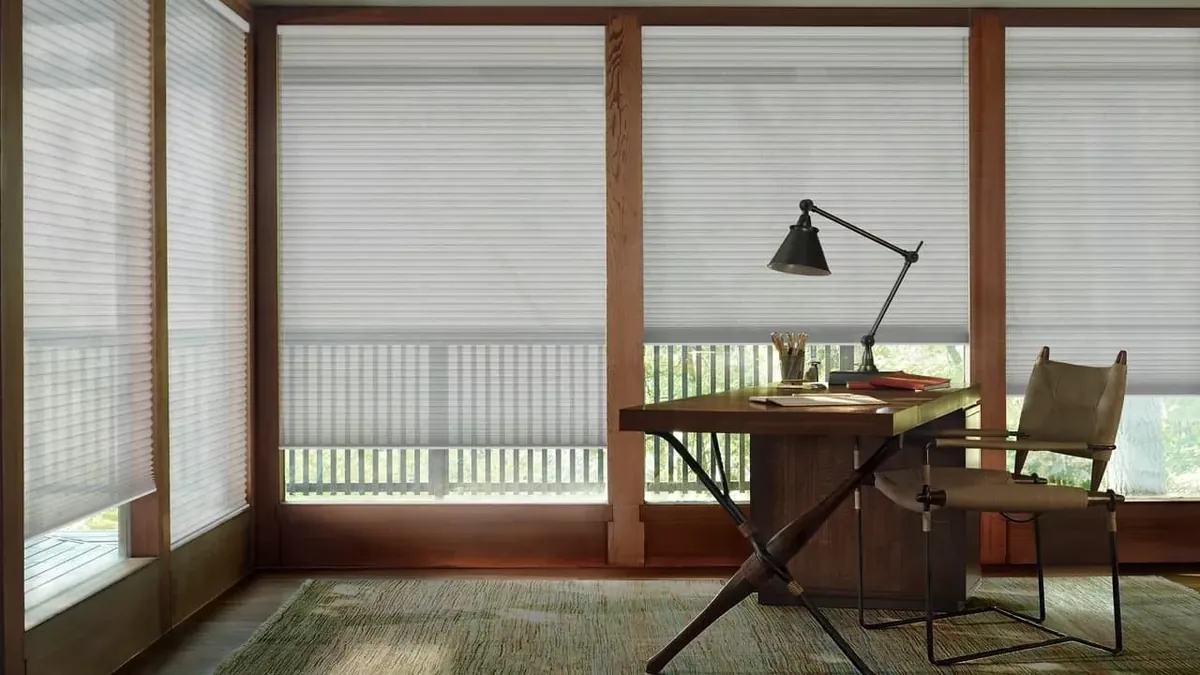
Two kinds of window in one town
Drive from the edge of town toward the center and the houses change under you. Out on the newer streets, post-war capes and ranches sit on modest lots with standard modern openings: double-hungs of ordinary size, a picture window here, a slider there, often replacement units fitted at some point along the way. Closer to the center, Victorians bring tall older sash, higher ceilings and the deeper trim of an earlier age.
That split shapes how we plan window treatments in Abington, MA. A cape’s openings tend to be regular and easy to match from room to room. A Victorian’s are taller, sometimes slightly out of square, and often grouped in bays. Both sit on lots where the next house is never far away, so privacy toward the side yard matters almost everywhere.
We sort out both kinds in person, standing at your windows with fabric and slat samples.
Pages for each service in town
Below are the window treatments in Abington, MA, that each have a page of their own for the town. Every card links straight to it.
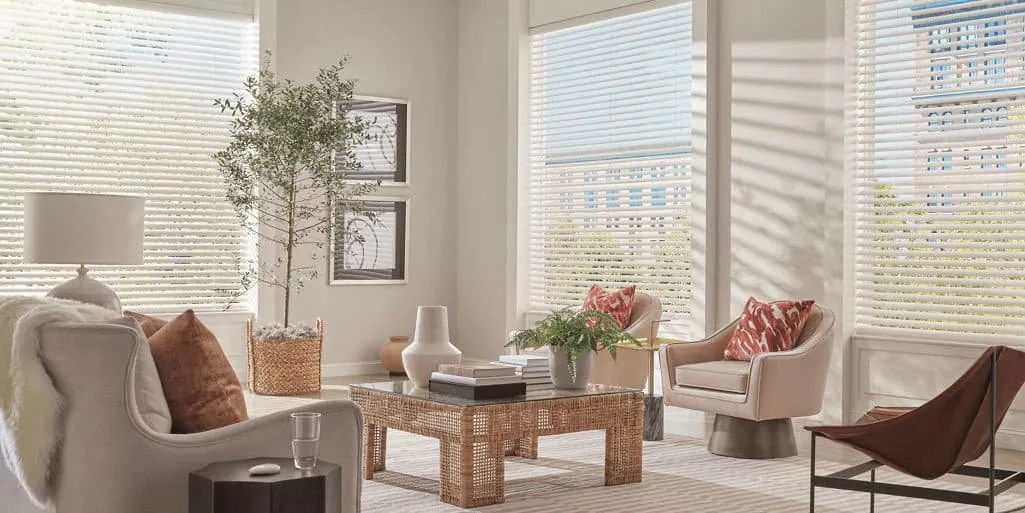
Custom Blinds in Abington
Wood, faux wood and metal horizontals and verticals. A familiar pick for a cape’s double-hungs, with slats that tilt toward privacy.
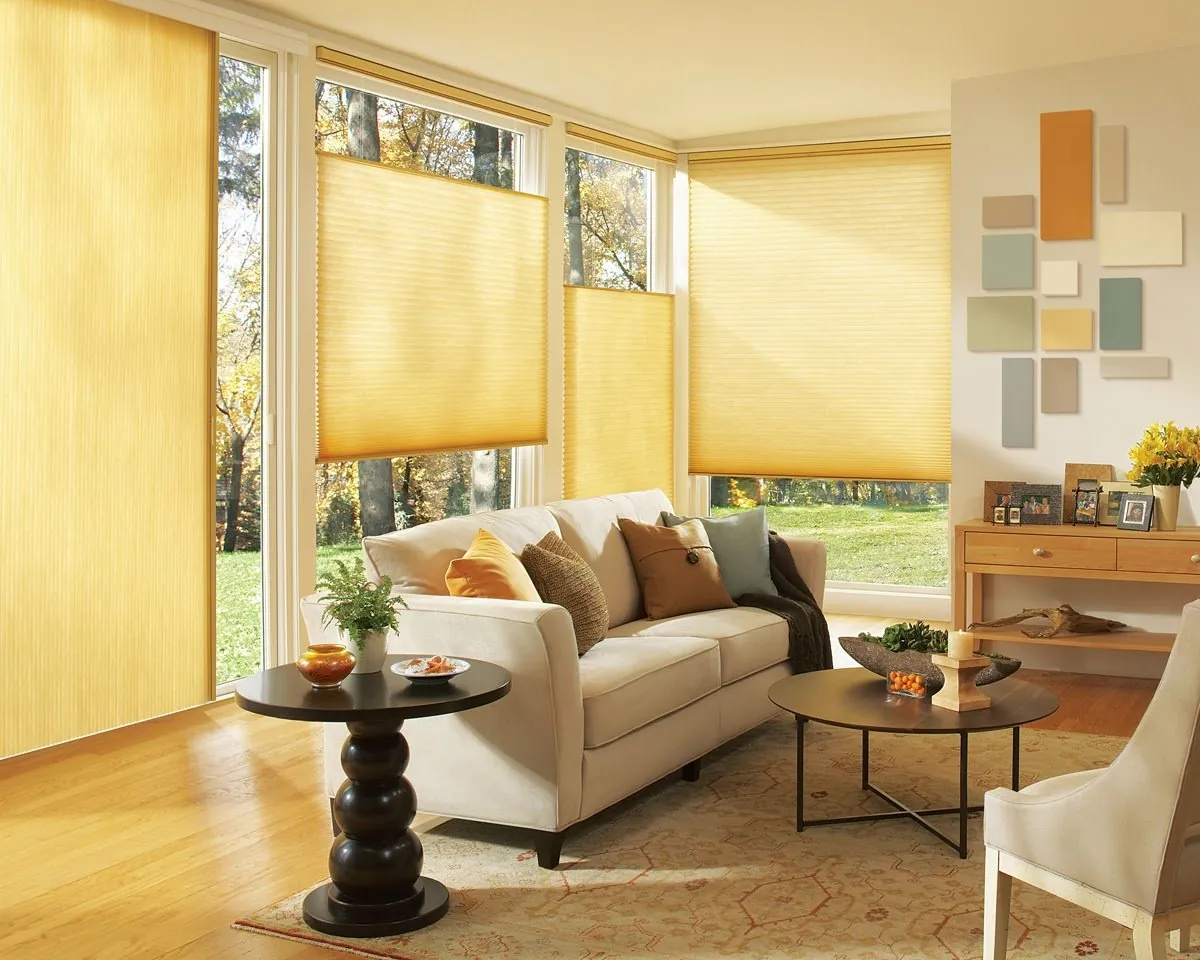
Cellular Shades in Abington
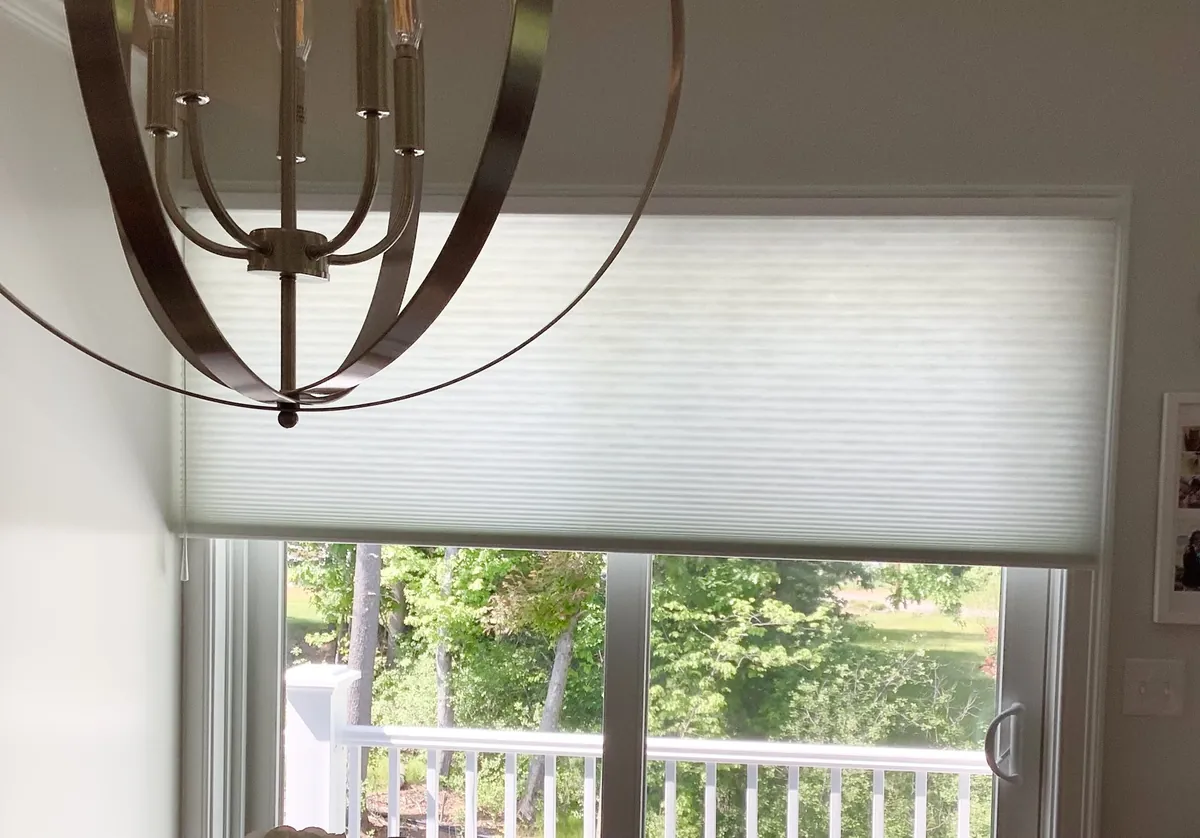
Duette and Applause honeycomb, neat inside regular openings and easy to run in one color from room to room.
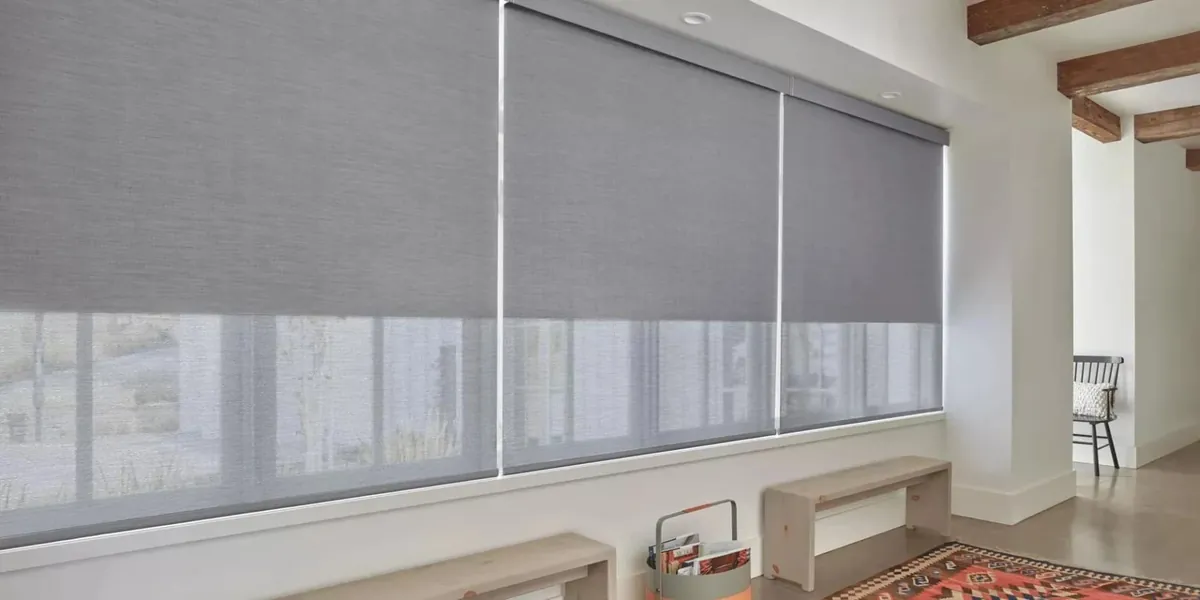
Roller Shades in Abington
Designer Roller and Alustra shades. Choose a more open weave to keep the yard in sight, or a solid fabric for a bedroom.
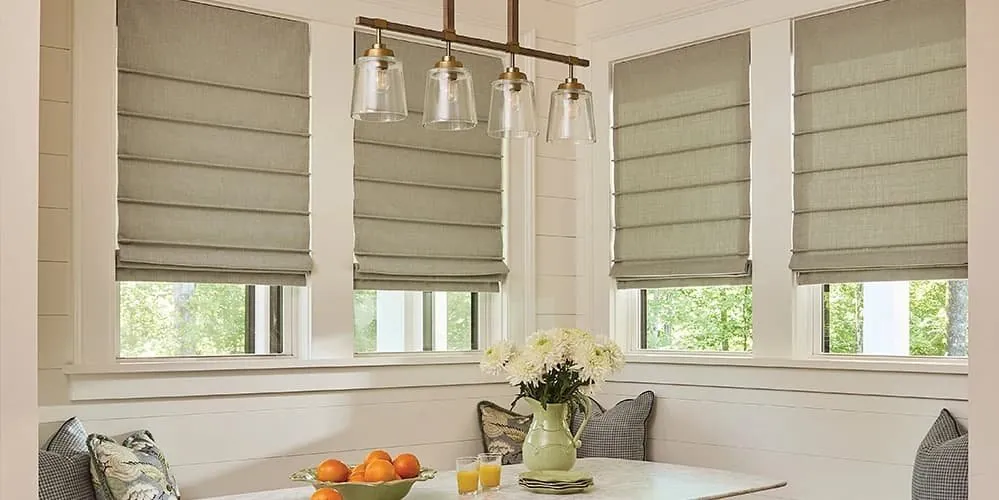
Roman Shades in Abington
Vignette and Carole romans in flat or folded styles, for a ranch breakfast corner or the tall front room of a Victorian.
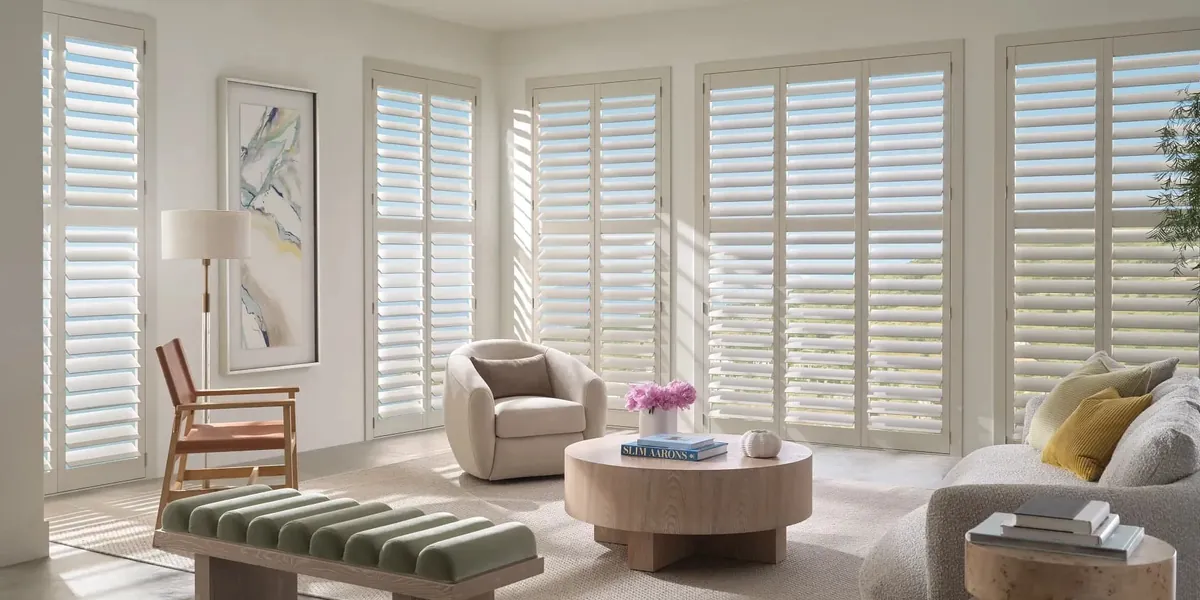
Plantation Shutters in Abington
Palm Beach, NewStyle and Heritance, with a frame style for a plain modern opening or for older, deeper trim.
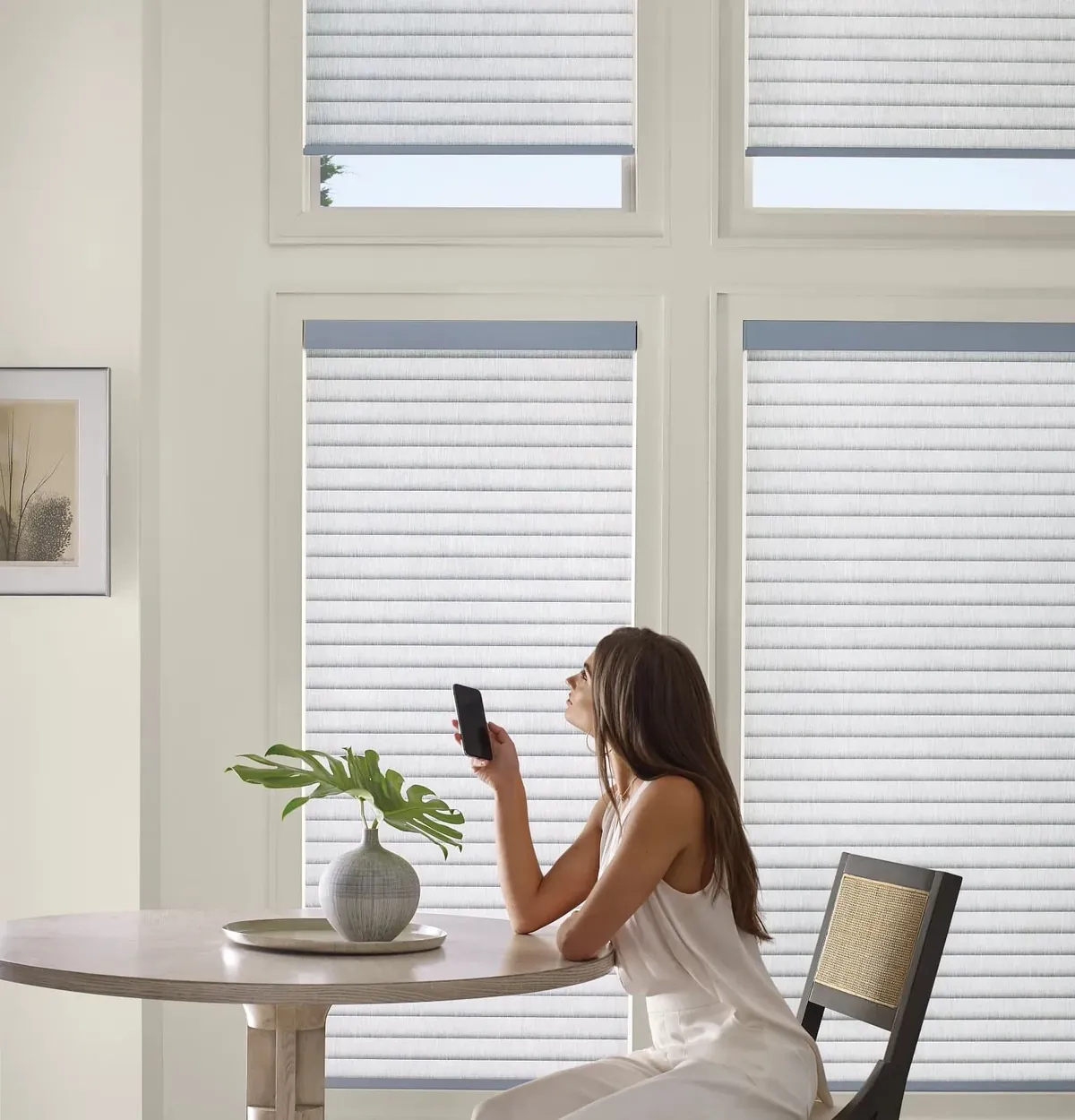
Motorized Blinds and Shades in Abington
PowerView, run by remote, phone or timetable, one room at a time or the whole house together.
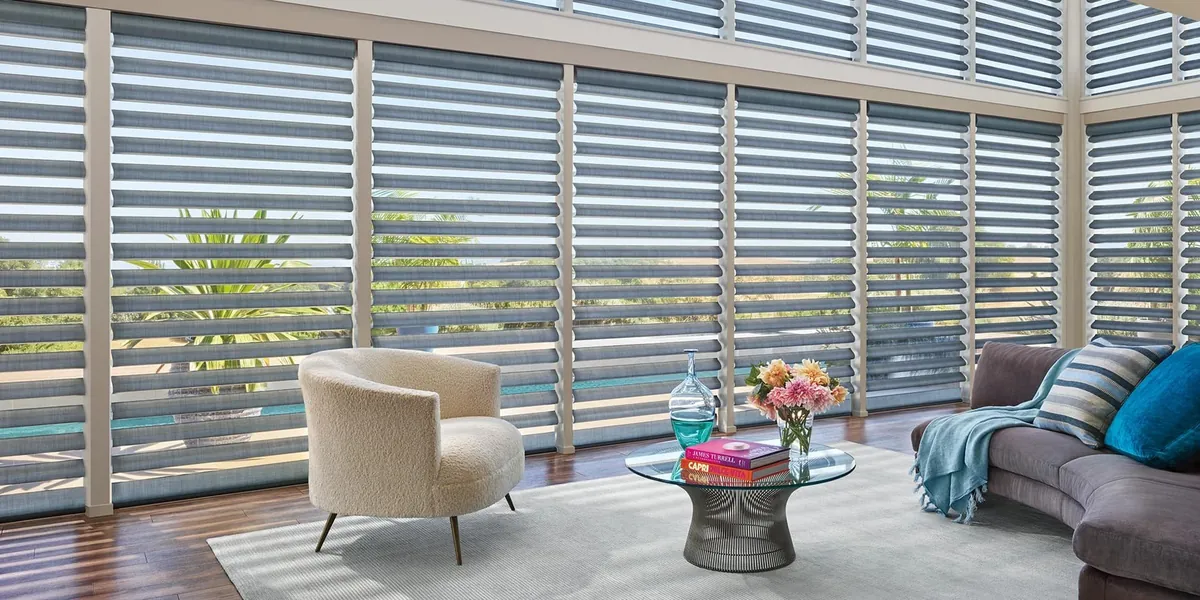
Hunter Douglas Dealer in Abington
Every Hunter Douglas line through a Gallery dealer, hung by certified Hunter Douglas installers.
Standard openings on the outer streets
Most capes and ranches built after the war, and most of the houses added since, have windows in a narrow band of familiar sizes. Many have been replaced with modern units that are true and even, with a shallow recess of consistent depth. That makes them about the easiest windows there are to cover well.
Regular sizes mean you can choose one product and carry it through the house without awkward exceptions. A honeycomb shade, a roller or a blind can sit inside the frame on nearly every window, which keeps the trim visible and the look neat. If the recess is too shallow for a particular product to sit fully inside, an outside mount on the casing works just as well and can make a small window look a little larger.
The rooms themselves are usually modest, so the covering is a big part of each wall. Pale colors that sit close to the wall color let the windows recede. A stronger color or pattern works best in one room where you want the window to stand out, such as a dining area or a den.
Tall sash near the center
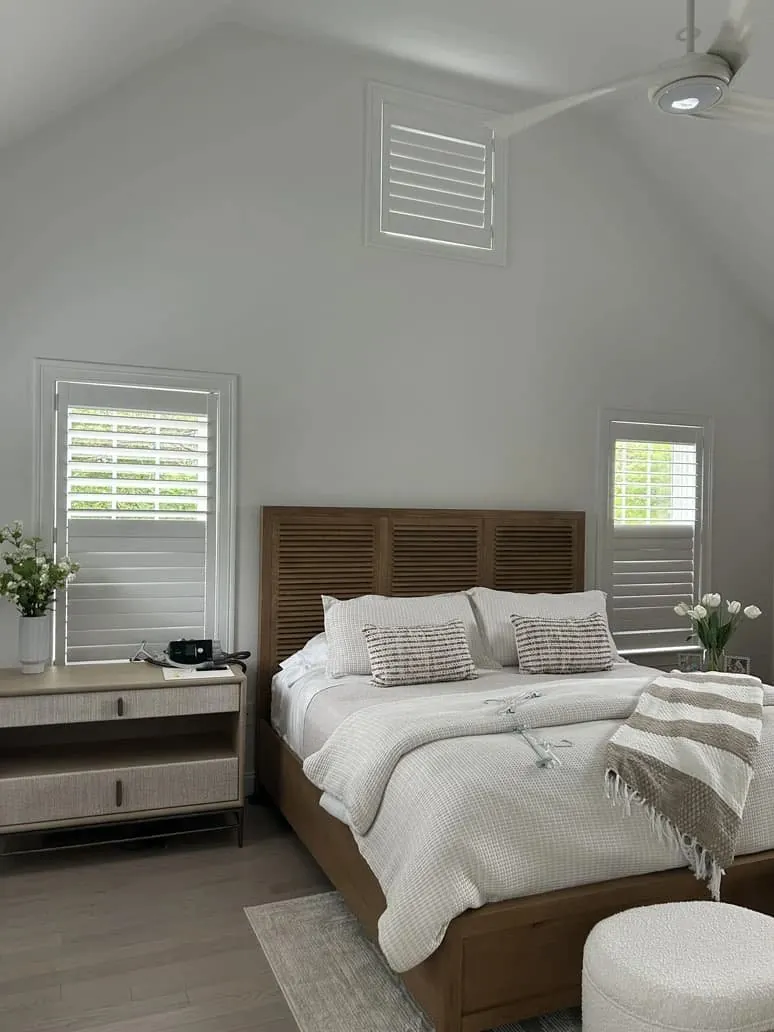
The Victorians around the town center were built with taller windows and higher ceilings than anything on the outer streets. Their sash is often tall and narrow, set in wide wood casings, and sometimes grouped in a bay that pushes out toward the street.
Older frames can drift slightly out of square after many years of settling. That matters for an inside mount, where a shade has to fit the opening closely. When we measure, we check each window at several points so the covering fits the tightest spot and still looks even. Where a frame is noticeably uneven, fixing to the casing instead hides the difference.
Shutters are a natural partner for older sash, because each panel is built to its opening and the louvers echo the lines of the trim. A tall window can take a shutter divided into an upper and a lower section, so daylight comes through the top while the bottom stays closed. Roman shades are the softer alternative, adding fabric and color to a parlor without hiding the woodwork.
Side yards and the house next door
Lots here are modest across the whole town, so nearly every house has at least one window aimed at a neighbor. On a cape it may be a side bedroom or a dining room; on a Victorian it may be the side faces of a bay.
How you handle it depends on the room:
- Bedrooms: a room-darkening honeycomb or roller hides the room entirely at night and early in the morning.
- Living and dining rooms: a light-filtering fabric softens what each side can see, and daylight still pours in.
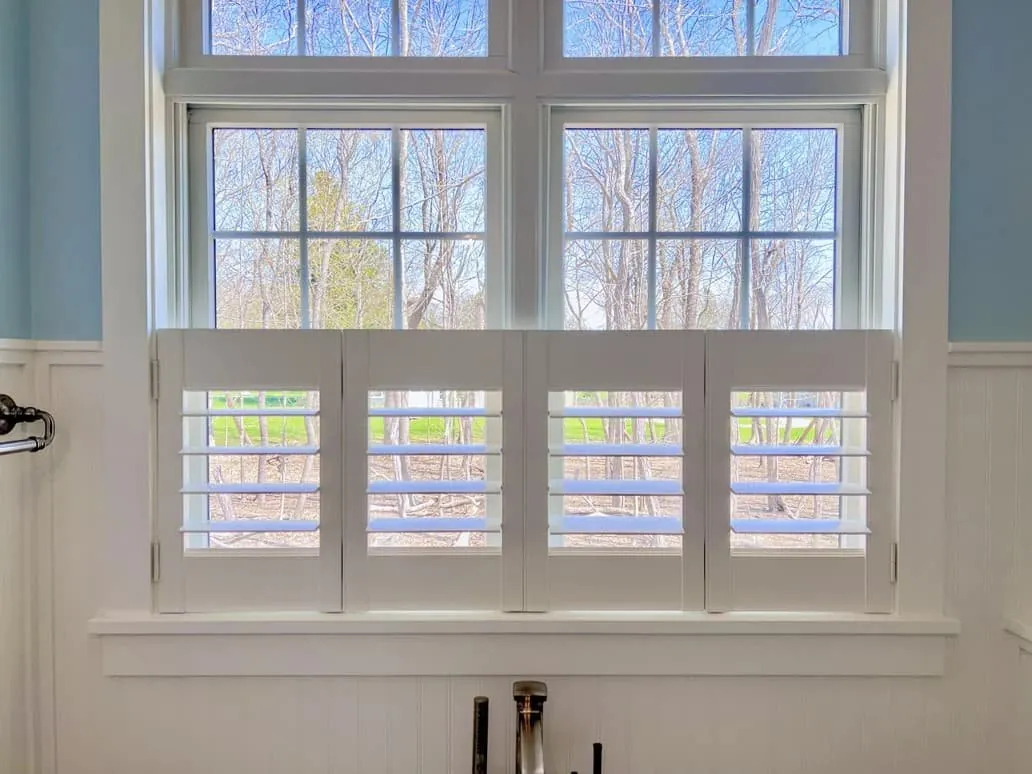
- Kitchens and baths: shutters covering just the lower sash leave the upper glass open, or blinds tipped upward show sky instead of siding.
- Hallways and stairs: a plain roller or blind does the job quietly.
Side windows face the yard rather than the street, so it is fine to choose them for function and keep the decorative pieces for the front.
Bedrooms beneath a sloping ceiling
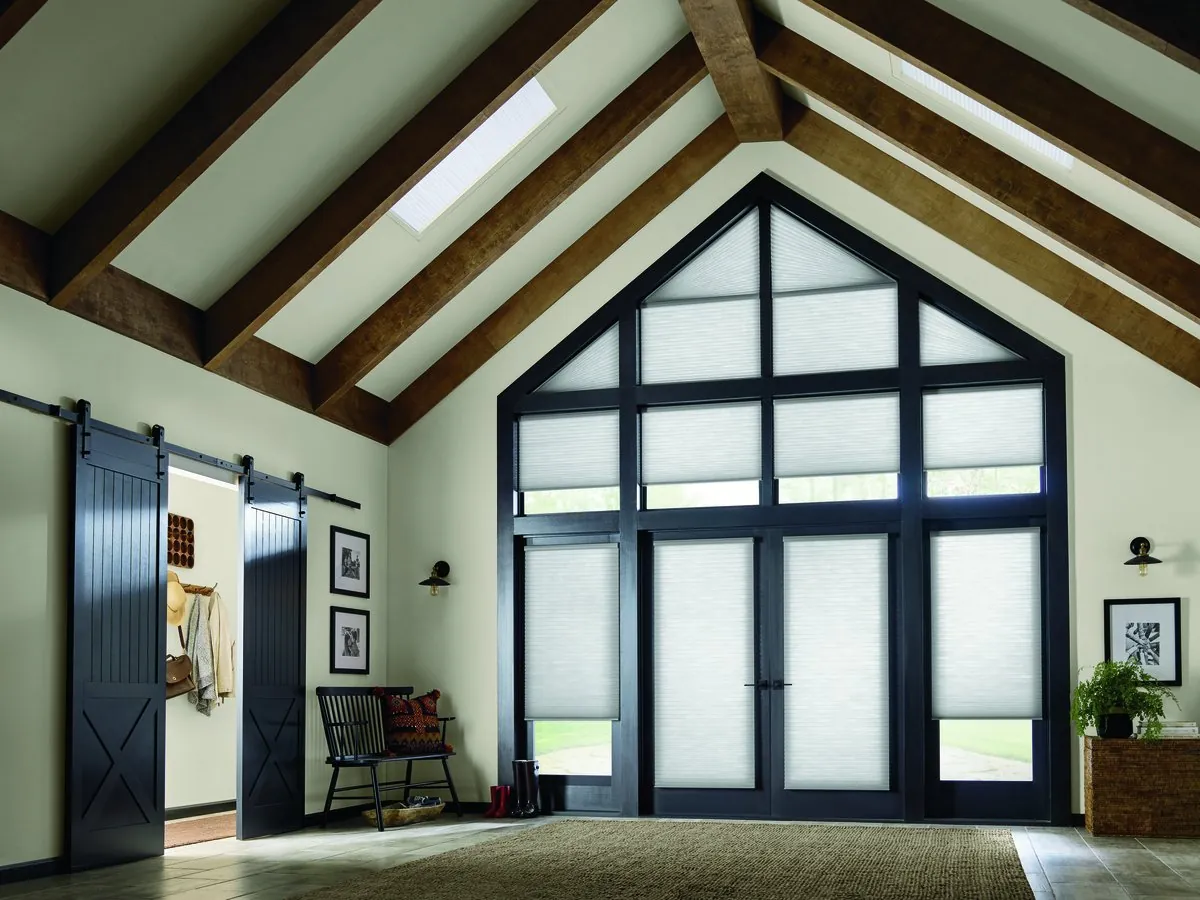
On the second floor of a cape, the rooms are shaped by the roof. The knee walls are short, the ceiling slopes and the windows sit in dormers, set back into small alcoves with hardly any wall beside them.
A shade mounted inside that alcove keeps the room clear and does not compete with the slope of the ceiling. Honeycomb and roller shades both fold or roll up into a small space, so a short dormer window keeps most of its glass when they are open. The end-wall windows are usually ordinary rectangles, so they can take the same product and color as the dormers.
Where a young child sleeps up there and the sun comes in early, a room-darkening fabric earns its place. If the room is a home office instead, a light-filtering fabric cuts the glare on a screen and keeps the room bright.
The main window of a ranch
A ranch’s living room is usually built around its biggest window, on the street side. Sometimes it is one large pane; sometimes a fixed middle pane with a narrower opening sash at each end.
One shade across the full width, whether honeycomb, roller or sheer shading, gives a calm, uninterrupted look. On a very wide opening, several shades can be mounted on a shared rail and operated as a set, so they still look like a single piece. Shutters suit this window too when the panel widths are worked out so the louvers run level from end to end. Because it is the window passers-by see, many homeowners decide on it first and let the rest of the house follow.
Mixing the two kinds of house
Some streets near the center hold both: a Victorian beside a cape, or an older house with a later addition built to modern sizes. Inside one house, that can mean tall old sash in the front rooms and standard modern openings in a newer kitchen or family room at the back.
The coverings do not have to be identical to look right. A common plan keeps the same color throughout and changes the product to suit the window: shutters on the tall front sash, honeycomb shades of the same tone on the newer windows behind. From the street the front stays uniform; inside, each room gets what fits it.
Your consultation, at home
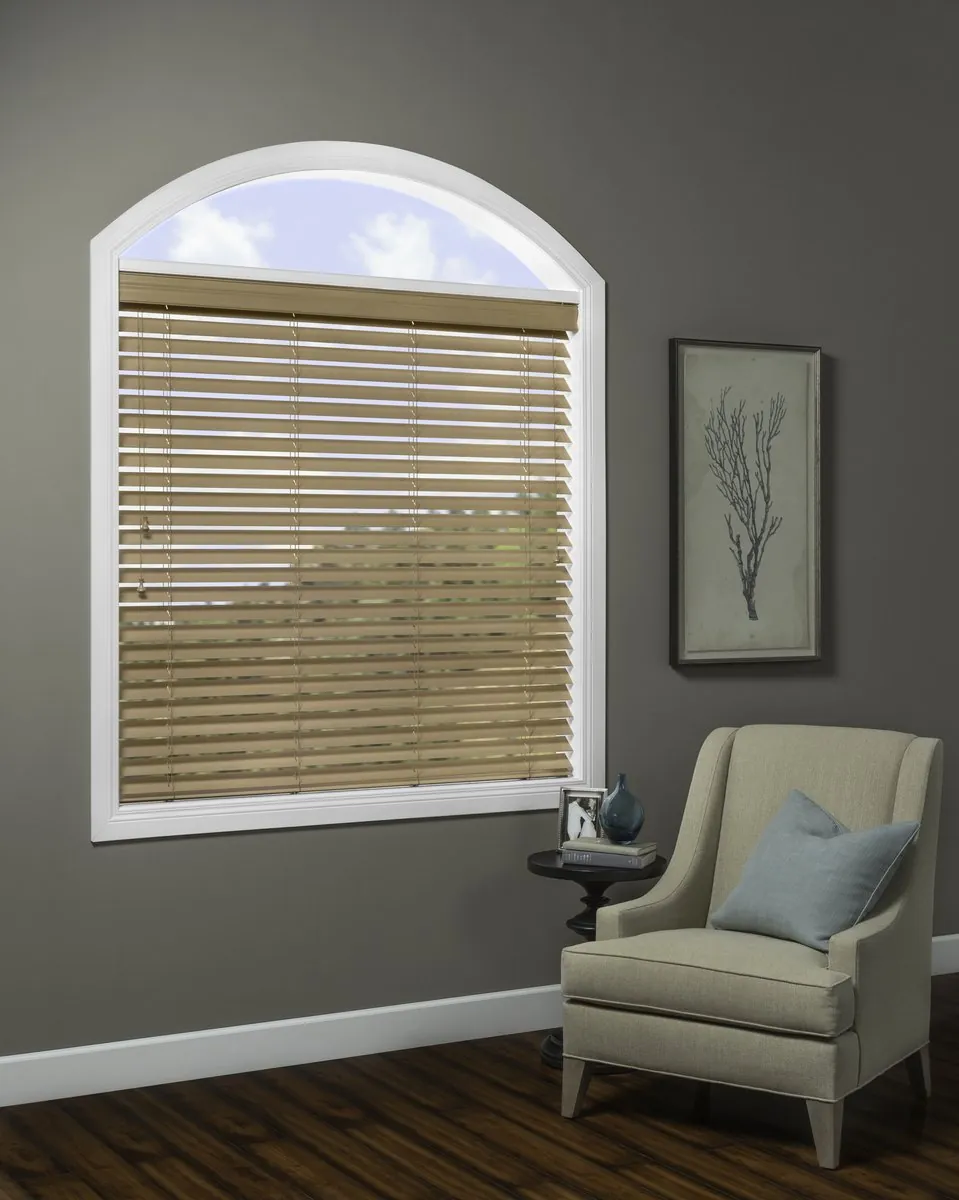
Rather than asking you to travel, we come to you. The shop-at-home side of the business is based in Canton, and the vans are stocked with samples, so the selection arrives at your door.
- Pick a slot using Request a Consultation, or tap the call button.
- A consultant comes over carrying sample books, slats, shutter pieces and a PowerView handset to try for yourself.
- We begin wherever the trouble is, a cape’s street-facing living room or a Victorian’s bay.
- Fabrics are held up at the window so you judge them in the light you actually live with.
- Measurements are taken window by window, with older frames checked at several points.
- A free estimate is left with you, and nobody presses you to sign that day.
The Canton shop-at-home page explains the service in more detail, and what happens at an in-home consultation goes through a visit step by step.
Sinks, tubs and the patio slider
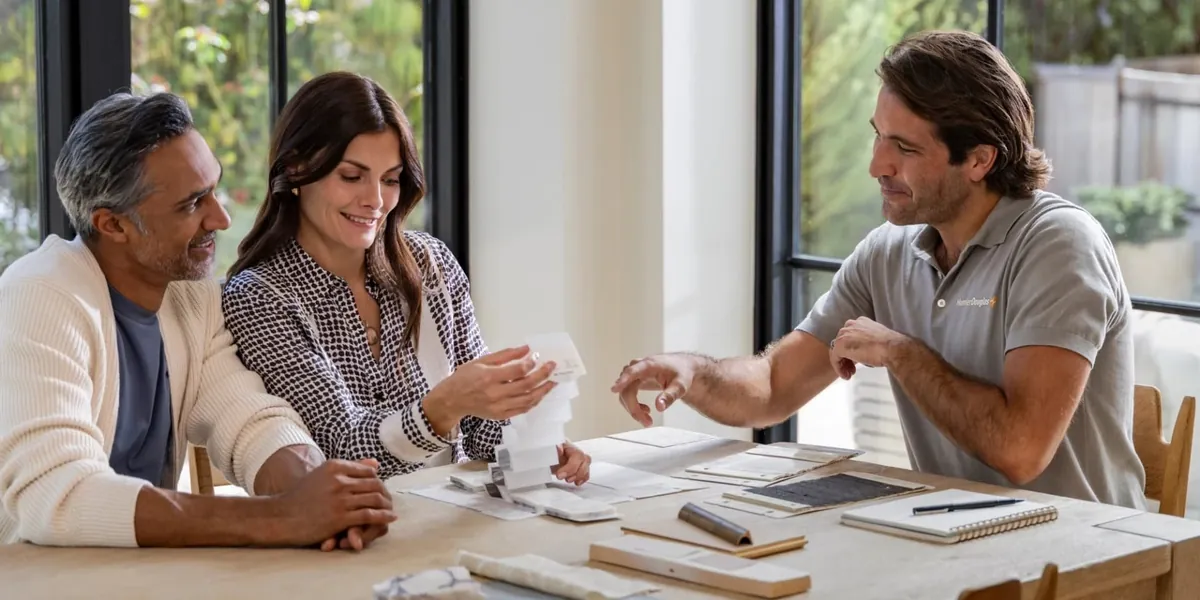
In both kinds of house, the kitchen window usually sits over the sink, so you reach for it across the counter. Whatever goes there should be easy to work at arm’s length. Shutters fitted to the bottom sash only are a favorite, leaving the top glass clear. Faux wood blinds and light-filtering rollers are other good choices.
A bathroom window needs privacy first, particularly on the side of the house facing a neighbor. A honeycomb shade fitted into the frame, or blinds with the slats turned upward, keeps it private and bright together.
At the back, many capes and ranches have a glass slider onto a deck or patio. Here a covering that moves sideways makes sense. Vertical blinds and vertical honeycomb shades both gather at the side, leaving the whole opening clear when you step out, and a vertical honeycomb can match the honeycomb on the windows next to it.
Same look everywhere, or a different one per room
On a smaller cape or ranch, a single product in a single color running through every room is a perfectly good plan. Honeycomb shades are often picked for this, with a darker-weave fabric for sleeping rooms and a lighter one for living spaces.
A larger Victorian tends to suit a mix that follows how each room is used:
- Shutters in the parlor and the dining room, where the trim is grandest.
- Roman shades wherever fabric and color would warm the room.
- Honeycomb or roller shades upstairs.
- Faux wood blinds, or shutters on the lower sash, in the kitchen and bath.
Whichever way you go, a single outward color across the front windows keeps the house looking orderly from the road and leaves you free indoors.
Natural textures and wood tones
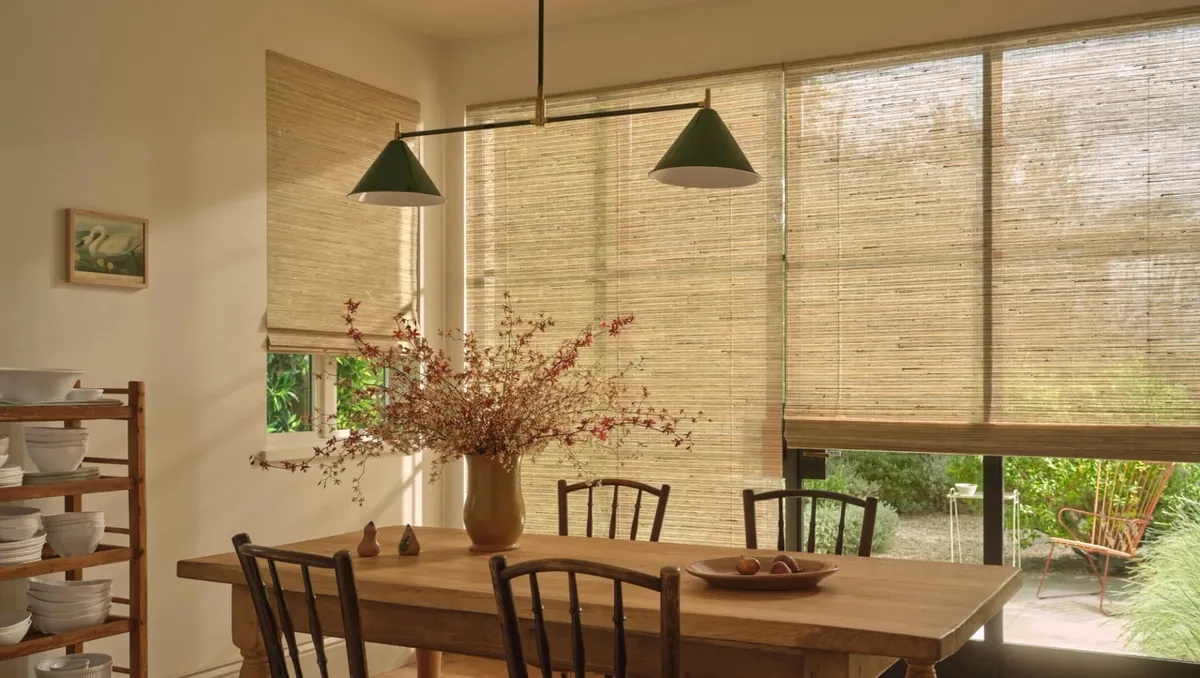
Not every room wants a smooth white or neutral fabric. Woven wood shades bring a natural texture to a den, a sunroom or a dining area, and they sit well beside wood floors and older trim. Wood blinds do something similar with a cleaner line. In a Victorian with stained woodwork, a stained shutter or a wood blind can look more at home than bright white.
On a newer cape or ranch, a woven shade in one room adds warmth without making the house feel busy, as long as the other windows stay calm around it. Samples come in several tones so you can see the texture in your own light.
Entry halls and front-door glass
Both kinds of house have a small window near the front door that is easy to overlook. On a cape it may be a narrow pane beside the door or a single window in a tiny front hall; on a Victorian it may be a tall sidelight or a window on the stair just inside. These are the first windows a visitor sees, and they often look straight onto the walk.
A slim honeycomb shade, a mini blind or a small shutter panel finishes them off and gives privacy at the door without darkening the hall. When you plan window treatments in Abington, MA, it is worth including these small openings from the start, so they match the rooms beside them instead of being left bare.
Older trim and outside mounts
A Victorian’s casings are often wide and decorative, with corner blocks or a molded head. Some homeowners want that trim fully on show, which points to an inside mount. Others have frames that are shallow, uneven or interrupted by old hardware, and there a covering fixed to the face of the casing is the tidier answer.
Shutters handle this well, since their frames can sit inside the opening or wrap the casing. Honeycomb and roller shades can go either way too. We look at each window’s depth and trim before suggesting one or the other, because the same house can need both.
Motorizing a single-level house
A ranch is a simple house to automate because every window is on the ground floor. PowerView shades can be set up in groups, say the bedrooms or the west side, and controlled from a handset, a phone or a programmed timetable, so the living room closes as evening comes on and the bedrooms open with the morning. In a Victorian, the same system means no more stretching for the top of tall sash. We plan how each motor is powered at the visit. The page on motorized blinds and shades in Abington has more.
Fixing older coverings
Blinds and shades left by a previous owner sometimes just need attention: a snapped cord, slats that will not turn, a shade that has slipped off its mounting. We are happy to take a look at coverings you already have and see whether they can be put right. Read about blind and shade repair.
A Hunter Douglas Gallery dealer for the whole house
Blinds & Designs is a Hunter Douglas Gallery dealer. A cape with regular openings and a Victorian with tall sash and a bay can draw on exactly the same selection: honeycomb, roller, roman, sheer and woven shades; wood, faux wood and metal blinds; verticals; shutters; and PowerView.
Each order, whether a single bathroom window or the entire house, is installed by certified Hunter Douglas installers. With free estimates, interior design consultations and repairs on what is already up, that is the full scope of the window treatments in Abington, MA, that we take care of.
Questions from Abington
My windows are standard modern replacements. Is there anything special to consider?
Very little. Regular, square openings take almost any product inside the frame. The main decisions are fabric, color and how much light you want in each room.
Will shades fit the older, slightly uneven windows in a Victorian?
Yes. We measure each frame at several points and size the covering to suit. If a frame is clearly out of square, fixing to the casing hides it.
What goes best in a cape dormer?
A shade mounted inside the alcove, such as a honeycomb or roller, so the small window keeps most of its glass when the shade is up.
Can I mix shutters and shades in the same house?
Yes. Plenty of houses use shutters in the front rooms and shades in a matching tone everywhere else.
Do you charge for the estimate?
No. The estimate is free, and you can take as long as you like to think it over.
Ready when you are
Whether you start with a ranch’s big street window or a Victorian parlor’s tall sash, the first step does not change. Ask for a consultation, and a consultant will bring samples to the house, measure each opening and give you a free estimate. Your window treatments in Abington, MA, can start with one room and grow from there. Our nearest showroom is in Franklin if you would like to see the range in person; its page lists the address and hours. Next door, there are pages for Whitman and Rockland too.
For the full range in one place, start with our window treatments page.