
Two ends of the scale in Medway houses
Few towns put window coverings at both extremes the way Medway does. Near the village, antique colonials still have their oldest windows: very small sash, set deep into thick walls, with little room around the glass. Across the subdivisions off Holliston Street, the large newer colonials go the other way, with two-story foyer windows that rise from the front door to the ceiling of the upper hall.
A blind in one of those deep little openings and a shade on that tall foyer glass fail for different reasons. The small one is cramped: its headrail sits tight against the frame and its controls are hard to get a hand to. The tall one is out of reach: its cords are long, its weight is considerable and nobody touches it unless they must. Good blind and shade repair in Medway, MA, starts with knowing which of those two problems you are dealing with.
Plenty of houses in between have ordinary windows too, and the repairs on those are as simple as you would hope.
What a Medway repair usually involves
These six jobs make up most blind and shade repair in Medway. If your problem is not here, describe it anyway.
Restringing
Fresh lift cord threaded through the whole product, so a shade that hangs lopsided rises square again.
Cord replacement
A frayed or broken cord swapped out, along with the cord lock if it has worn smooth.

New wands
A cracked or missing wand replaced, whether it tilts a horizontal blind or turns the vanes on a vertical.
Headrail fixes
Brackets reset, a jammed part freed or a worn component replaced, so the headrail sits level and works smoothly.
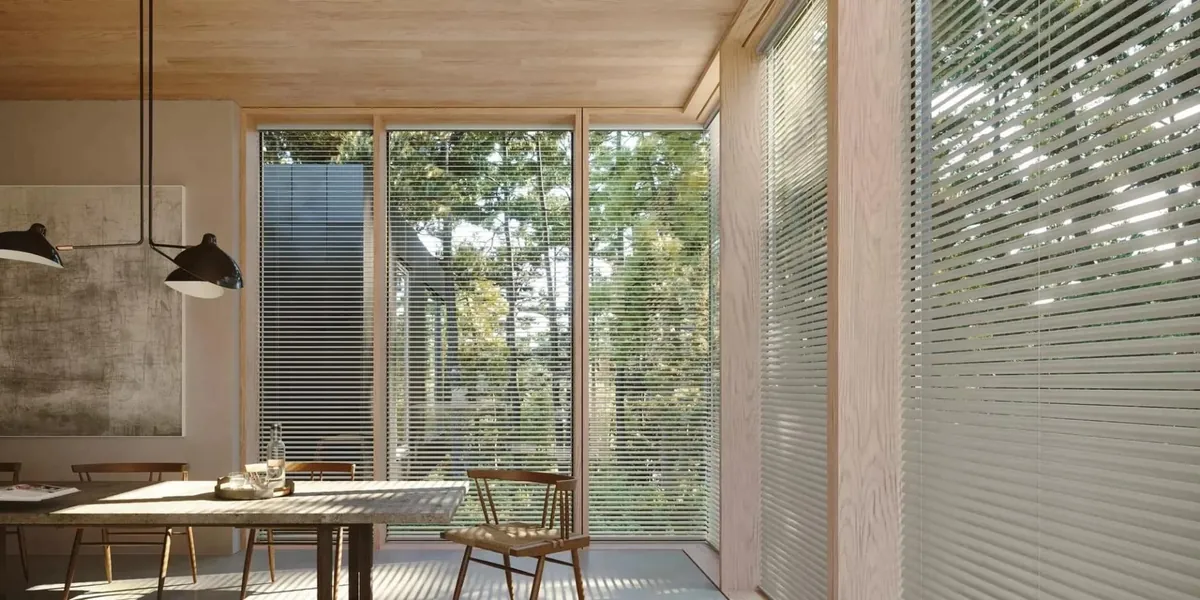
Tilt mechanisms
A tilt gear that has stripped, so the slats no longer open and close together, replaced with a working one.
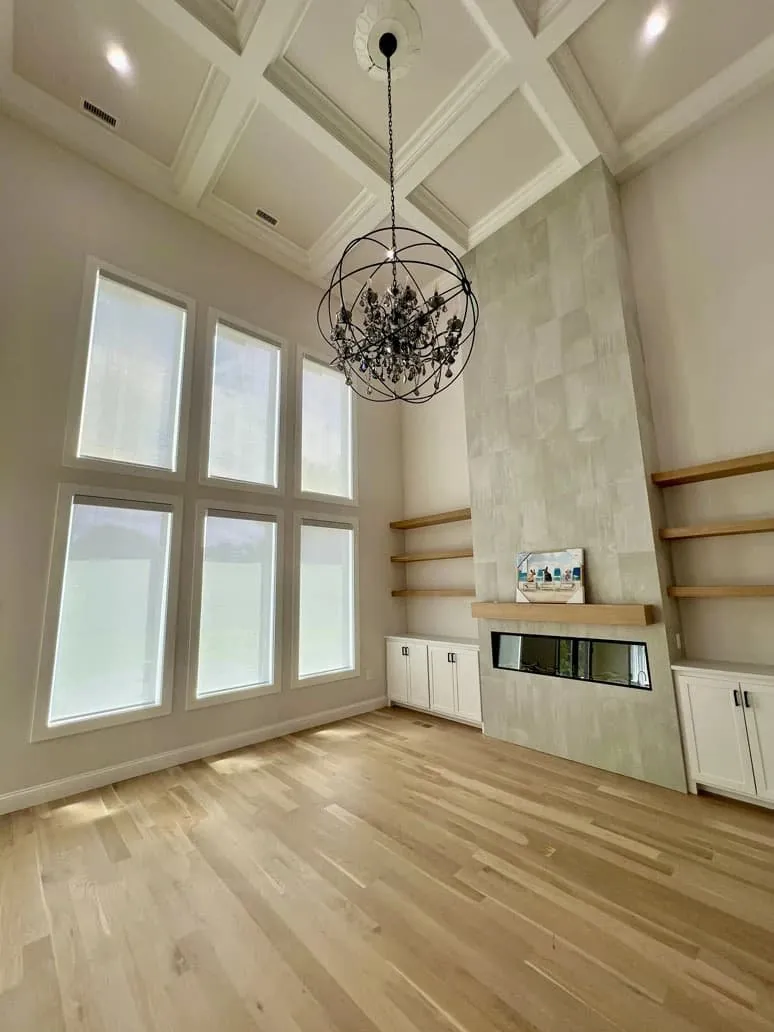
High foyer glass
Shades on the tallest windows in the house, the ones nobody can reach without the right ladder and some care.
Deep-set sash in the oldest houses
The antique colonials near Medway village were built with thick walls and small windows. Set into those walls, the sash sits well back from the room, leaving a deep recess between the glass and the inside edge of the trim. A blind mounted inside that recess looks tidy, but it lives in a tight space.
That tight space is where most of the wear comes from. The headrail fits snugly between the jambs, so any swelling of the old wood in damp weather can pinch it. The lift cord runs close to the frame and can rub against it every time the blind goes up. And the controls, whether a wand or a tilt cord, hang in a corner where a hand has to reach in at an angle. Angled pulling is hard on any lift.
When we repair a blind in one of these windows, we look at more than the broken part. We check whether the headrail is binding, whether the cord is rubbing and whether the brackets are set where they give the controls room to work. Sometimes a small shift in how the blind sits is the difference between a repair that holds and one that comes back.
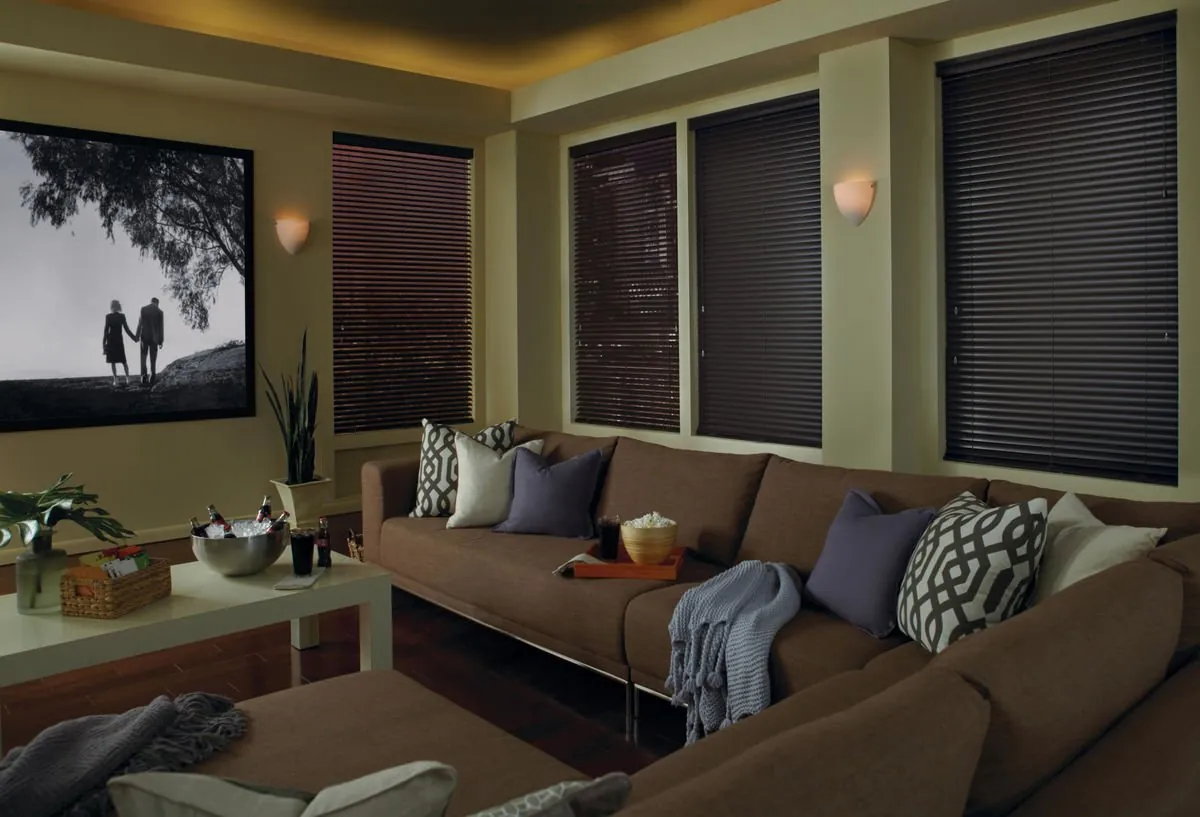
Why small blinds still break
It is tempting to think a small blind on a small window has an easy life. In practice, the blinds in old Medway sash are often among the most used in the house. A deep-set window in a thick-walled room lets in less light than a modern one, so its blind is opened fully every morning to bring in what daylight there is, then closed again in the evening. That is a full cycle every day.
Small blinds also tend to have short, thin cords, and a thin cord wears through faster where it bends around a pulley. The fix is usually simple: new cord, sometimes a new pulley, and a check that the lift runs straight. Because the blind is light, the work is lighter too.
The ordinary windows in between
Not every window in Medway is an extreme. The newer colonials have plenty of standard bedroom and kitchen windows, and the older houses have rooms where later owners put in larger replacement sash. Blinds and shades on those windows wear in the usual ways: a kitchen blind tilted many times a day, a bedroom shade raised every morning, a bathroom blind living with steam.
Those are the simplest repairs of all. The product fits the opening well, the brackets sit in sound wood and nothing about the window gets in the way. Often a new cord or wand is all it takes, and the blind goes back to everyday use looking exactly as it did. We explain what the repair involves before any work starts, whatever the window.
Foyer windows off Holliston Street
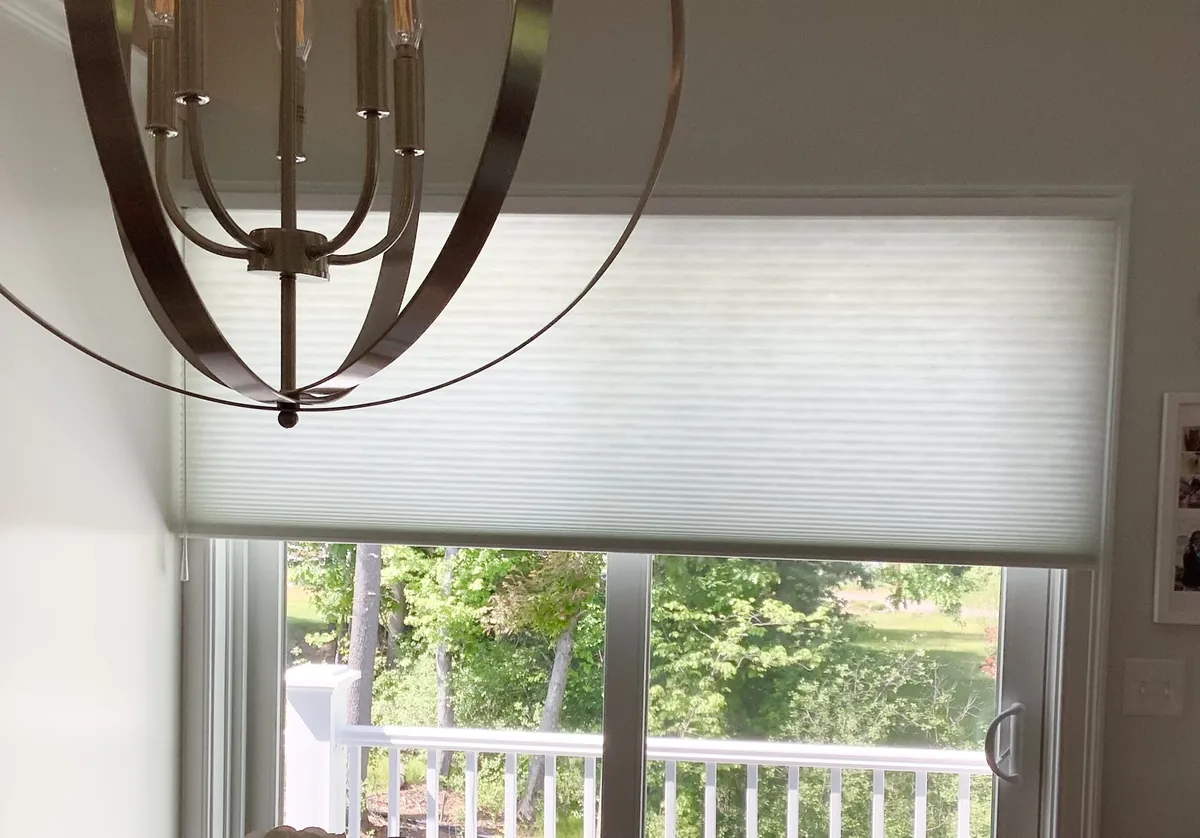
Step into one of the larger newer colonials off Holliston Street and you usually meet the foyer first: a two-story entry with a tall window, or a stack of windows, running up beside the stairs. Those windows flood the hall with light, and the shades on them are there to tame it.
The trouble is height. Shades on foyer glass are raised and lowered with long cords, long wands or sometimes not at all, because getting to them is a chore. A long cord carries a lot of weight and stretches over time, so the shade starts to hang at an angle. A long wand gets knocked by the front door and the coats that pass it. And a shade left in one position for months can stiffen, so the first pull in a long while is the one that breaks something.
Blind and shade repair in Medway often means a foyer shade like this. The fabric is usually fine, because it has hardly been touched. What has gone is a cord, a bracket or the part in the headrail that holds the shade where you put it.

Light through tall glass
Foyer windows in the newer houses take a lot of daylight, and a shade on that glass takes the same light every day. Over the years, fabric facing the sun can fade, and cords exposed to strong light can dry and weaken. That is one reason foyer shades in particular sometimes need restringing even when they have barely been moved.
It is also why we look at the fabric before recommending a repair. If the shade has held up well and only the cord has gone, a repair is the obvious answer. If the fabric itself has gone brittle, we will say so, because a new cord in a tired shade will not get you far.
From your first message to a finished repair
We keep the steps short and the conversation honest.
- Send us a description of the problem and, if you can, a photo of the shade or blind and any label on the headrail.
- We give you a first view: whether it sounds like a fix worth making.
- If so, we agree a time to come and look properly, bringing the ladder a foyer window needs.
- We show you what has failed and explain the repair before doing anything.
- The repair is made, the product is rehung and we run it up and down with you.
- If the product turns out not to be worth repairing, we tell you plainly and leave the next step with you.
What restringing actually means
Most blinds and shades have two kinds of cord inside them. Lift cords pull the bottom rail up and let it down. On a horizontal blind there are also ladder tapes or ladder cords, the rungs that hold each slat and tilt them all together. Restringing usually means replacing the lift cords, though on an older blind the ladders sometimes need attention too.
The job starts with taking the product down and laying it flat. The old cord is drawn out along its full path through the headrail, the slats or fabric and the bottom rail. New cord is threaded through the same path, knotted or fixed at the bottom and run back up through the lock. Then the lift is evened up, so both sides rise together and the shade stops where it is left.
On a tall foyer shade that is a longer job than on a small sash blind, simply because there is more cord to run. On a deep-set antique window it is the rehanging that takes care, so the restrung blind clears the frame.
Cords and wands that take the knocks
The cord and the wand are the parts of a blind people actually hold, so they wear first. On the small sash near the village, cords are short and often tugged sideways out of a deep recess. On the foyer glass, wands are long and hang where the front door swings. In both cases a worn control can make a perfectly good blind feel broken.
A wand usually hooks onto a small loop on the tilt gear. When that hook wears or the wand cracks, it slips off or spins without turning the slats. Replacing it is a simple job. A cord that has frayed at the lock is a slightly bigger job, because we like to check the lock at the same time. A new cord through a worn lock will slip again before long.
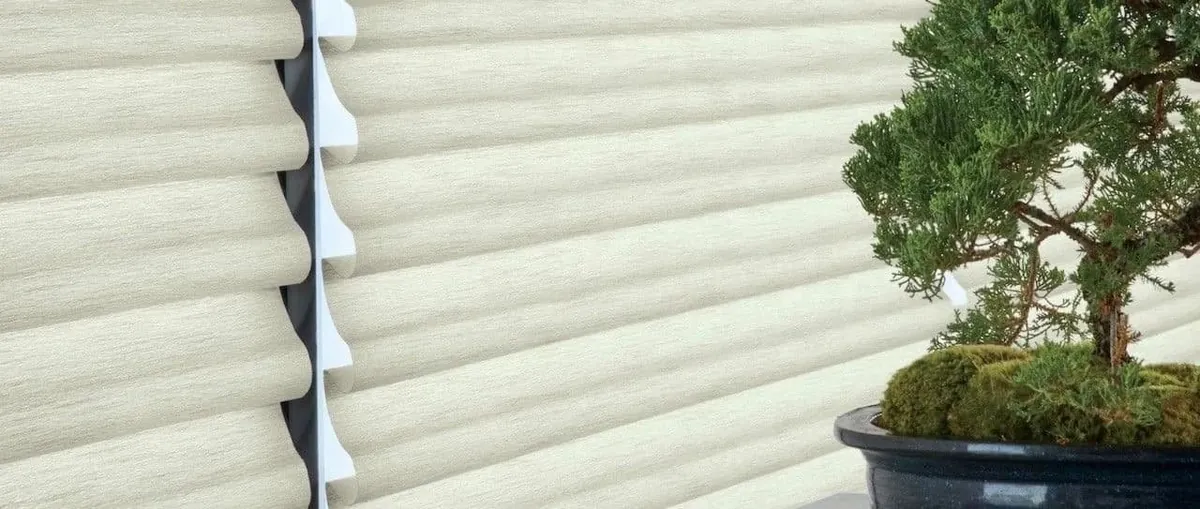
Headrails and tilt gears
The headrail holds everything that makes a blind work. On a horizontal blind the tilt gear inside turns a rod that runs its full length, and that rod rotates every slat through the ladders. When the gear strips, you turn the wand and nothing happens, or the slats move a little and stop.
Headrails can also fail at their brackets. In an old Medway frame, a bracket screwed into soft or dried-out wood can work loose over time, and a headrail that drops out of one bracket hangs at an angle that strains everything below it. Resetting brackets into sound wood, and checking they are level, is often part of a repair in the antique houses.
On the newer foyer glass, the headrail is usually wide and carries a long, heavy shade. A worn component inside it shows up as a shade that jams partway or refuses to hold its height. Most of those faults come down to a single part.
Mixed products in older colonials
An antique colonial that has been lived in by several families often has a mixture of window coverings: a wood blind in the dining room, a roman shade in a bedroom, an older pleated shade somewhere upstairs. Different products, bought at different times, all wearing at their own pace.
We look at whatever you have. A tilt on a wood blind, a ring on a roman shade and a cord on a honeycomb shade are all different repairs, but each is about finding the part that has gone and putting it right. If a product is too far gone, we say so, and if you want to talk about replacing it, our pages on custom blinds in Medway and roman shades in Medway are a good start. Every service we offer in town is on our Medway page.
Making the repair last in an old house
Old houses move with the seasons. In a humid summer the wood around Medway’s antique sash can swell a little, and in a dry winter it shrinks back. A blind that clears the frame comfortably in January can rub in August. If you notice a repaired blind starting to drag in damp weather, raise and lower it gently rather than forcing it, and tell us if it persists; a small adjustment to the brackets usually cures it.
Deep recesses collect dust on the headrail and the top slats, and dust works its way into the lift. A quick pass with a soft brush every so often keeps the cords running cleanly. When you lower a blind in a deep window, draw the cord straight toward you and down, not off to the side against the jamb.
For foyer shades the advice is almost the opposite: use them. A shade that moves now and then keeps its cord supple and its lift free. If raising a tall foyer shade is a chore you avoid, it may be worth knowing that a PowerView shade moves from a phone, a remote or a schedule; that is a separate subject, covered on our motorized blinds in Medway page.
Useful things to mention
When you first get in touch, a few details help us give a clearer, more useful answer.
- Which room the product is in, and whether it is in one of the small old windows or the tall foyer glass.
- What kind of covering it is, if you know: wood or faux wood blind, vertical, honeycomb, roman or roller shade.
- What it is doing wrong, in your own words.
- Whether anything has been tried already, such as re-seating a headrail in its brackets.
- A photo of the whole product and one of any label on the headrail.
That is usually enough for a first view, and it means we arrive with the right ladder and a clear idea of the job.
When a repair is not the answer
We would rather tell you the truth than make a repair that lets you down. These are the cases where we usually advise against it.
- The fabric has faded, split or gone brittle from years of sun.
- Several slats are cracked or warped, not just one.
- The headrail has bent along its length.
- Several parts are failing at the same time.
- The product never suited the window and has always been a struggle.
In any of those cases, a repair can cost you time for little gain. We explain why and leave the choice with you.
Repairs done the way the product was built
Blinds & Designs is a Hunter Douglas Gallery dealer, and our installers are certified by Hunter Douglas. That background is what makes a repair worth having: we know how these blinds and shades are assembled, where the weak points are and how they should hang once they are back up.
A repair from us aims to leave the product working as it should, not just moving again. You can read how our repair service works across all our areas on the blind and shade repair page.

The Franklin showroom, next door to Medway
Our nearest showroom to Medway is in Franklin. If you prefer to talk a problem over in person, bring a photo of the blind or shade and its headrail label.
Most people never need to make the trip, though. A short description and a photo with your consultation request are usually all we need to start blind and shade repair in Medway, MA.
Questions from Medway
Can you repair a blind that sits deep inside an old window?
Yes. Deep-set sash is common in Medway’s oldest colonials. Along with the repair itself, we check whether the headrail is binding against the frame and whether the cord is rubbing, so the blind runs freely afterwards.
The shade on my foyer window hangs at an angle. What is wrong?
Usually a lift cord has stretched or worn on one side. Long cords on tall foyer glass take a lot of weight. Restringing evens the lift so the shade hangs level again.
Can you get to a two-story foyer window?
That is a regular request from the newer colonials. Tell us roughly how high it is when you get in touch so we come with the right ladder.
My slats will not close. Can the blind be saved?
If the slats and headrail are sound, a stripped tilt gear is usually a contained repair. If there is more wrong, we tell you honestly.
Do I have to buy something new?
No. A repair is a repair. If you ever want new window coverings, our in-home consultations bring samples to you, with a free estimate.
Describe it, and we will take a look
The first step is easy: tell us what the blind or shade is doing. Request a consultation and include a photo if you have one, or use the call button to talk to the Franklin showroom. Blind and shade repair in Medway, MA, starts there.