
Harbor light, salt air and formal rooms
Around Sippican Harbor and through the village, the houses are shingled captains’ houses and formal village homes, many with rooms laid out to look toward the water. Further out toward Converse Point the houses are newer, and their water-facing rooms are often more glass than wall. Salt air reaches all of them. Planning window treatments in Marion, MA, comes down to three things: handling the glare off the water, dressing formal rooms the way the houses expect, and choosing materials that suit a damp, salty climate.
Those three needs pull in different directions. A room full of harbor light wants something that cuts glare but keeps the view. A front parlor in a village house often calls for drapery and a proper finish. A sunroom by the shore needs coverings that will look right season after season in sea air.
We take each room on its own merits, and then make sure the house holds together from the water and from the street.
Each Marion service, with its own page
The cards open our Marion page for each service. Together they cover the window treatments in Marion, MA, that we plan and install.
Custom blinds
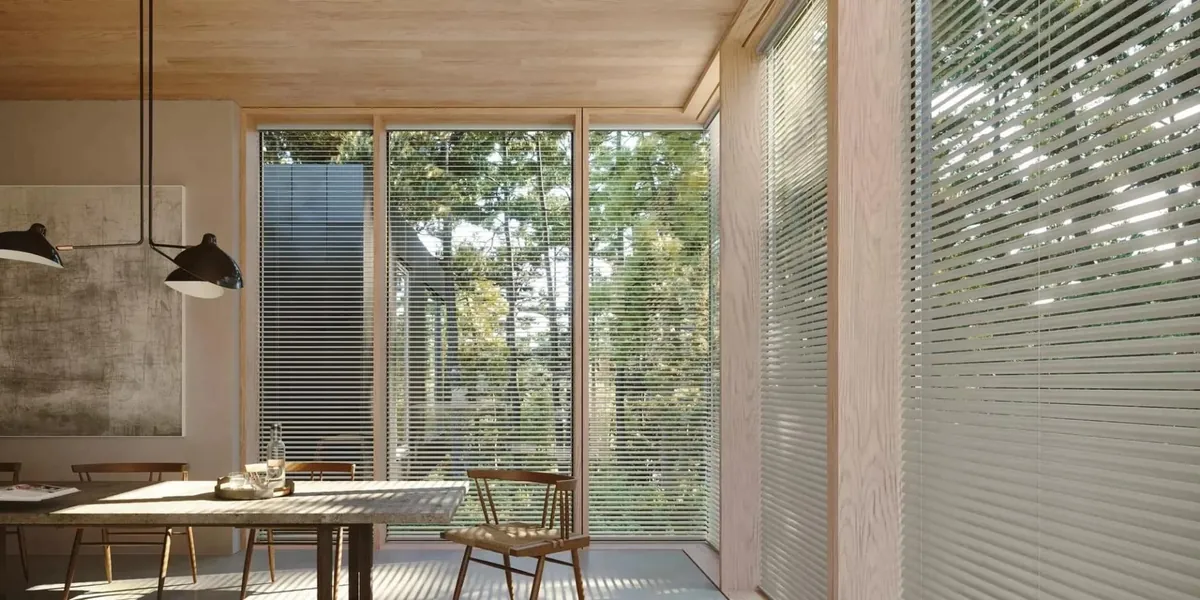
Wood, faux wood, metal and vertical blinds. Slim slats tilt to steer the light without hiding the harbor.
Cellular shades
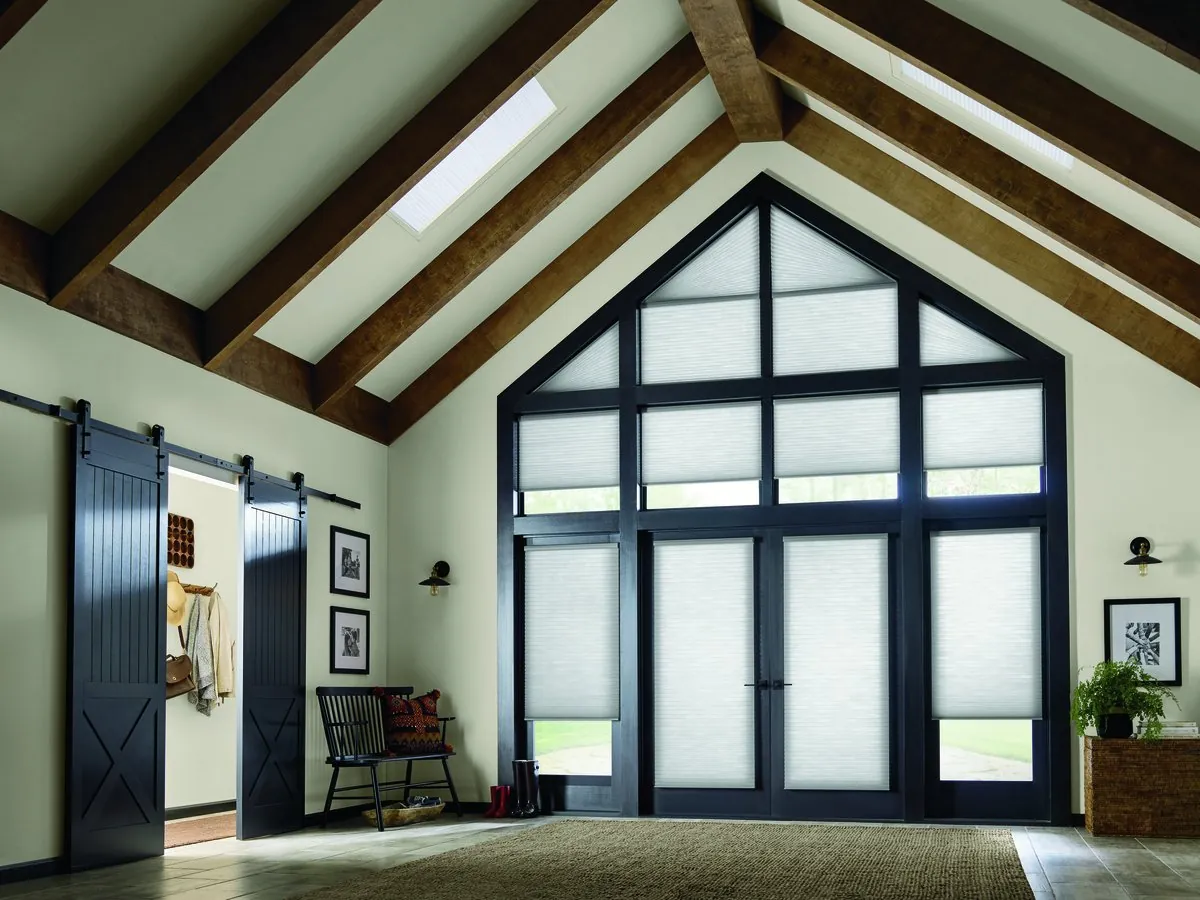
Duette and Applause honeycombs, with air held in each cell to help a glassy room keep its heat in winter.
Roller shades
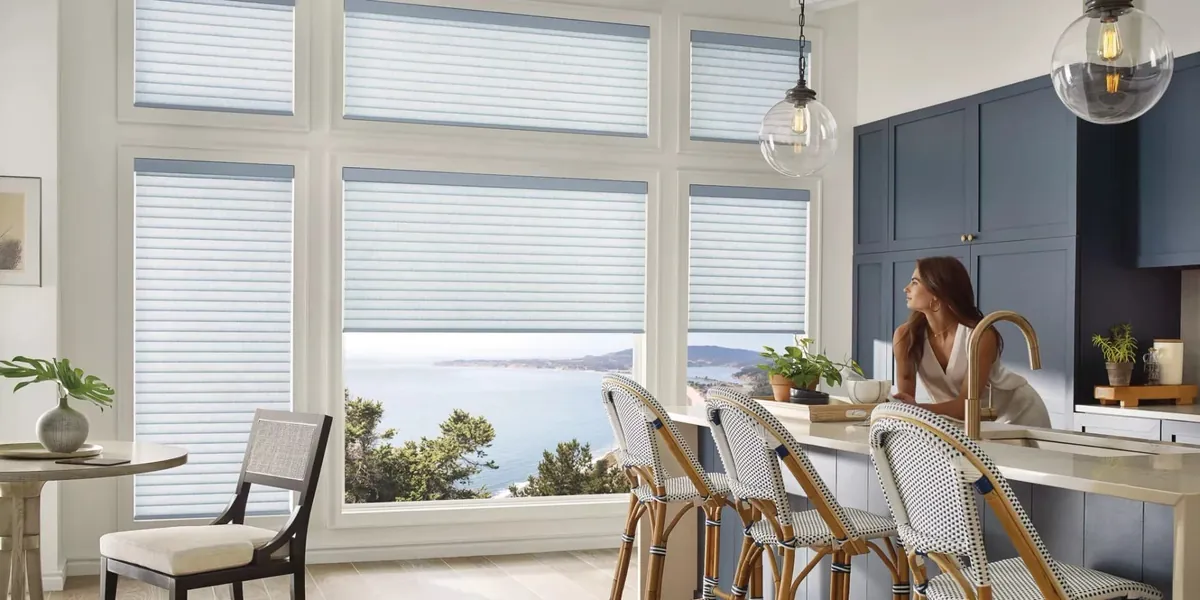
Designer and Alustra rollers and solar screens. The openness factor sets how much water you see and how much glare you lose.
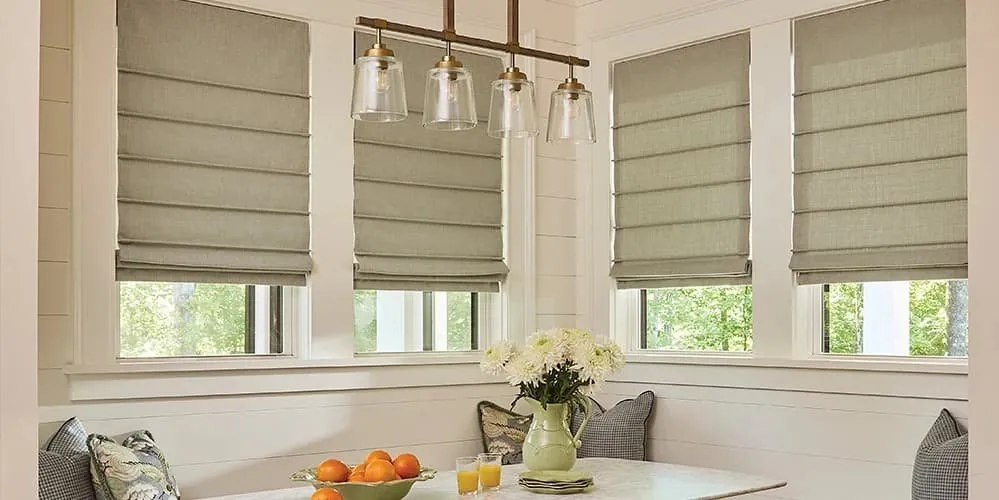
Roman shades
Vignette and Carole Fabrics romans, flat or folded, a natural partner for drapery in a formal room.
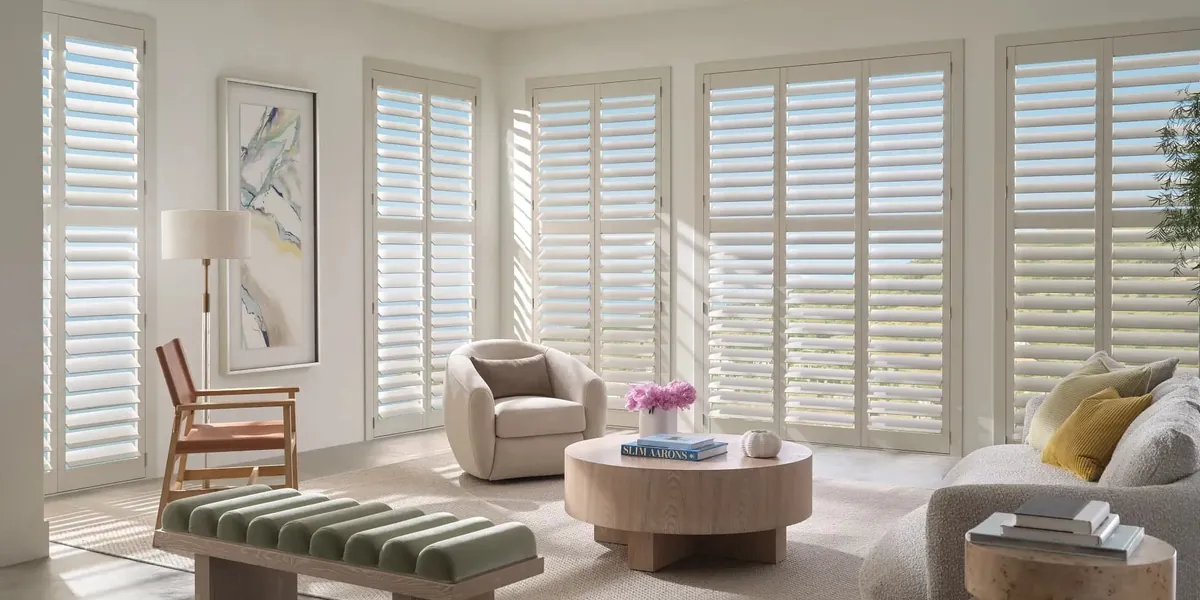
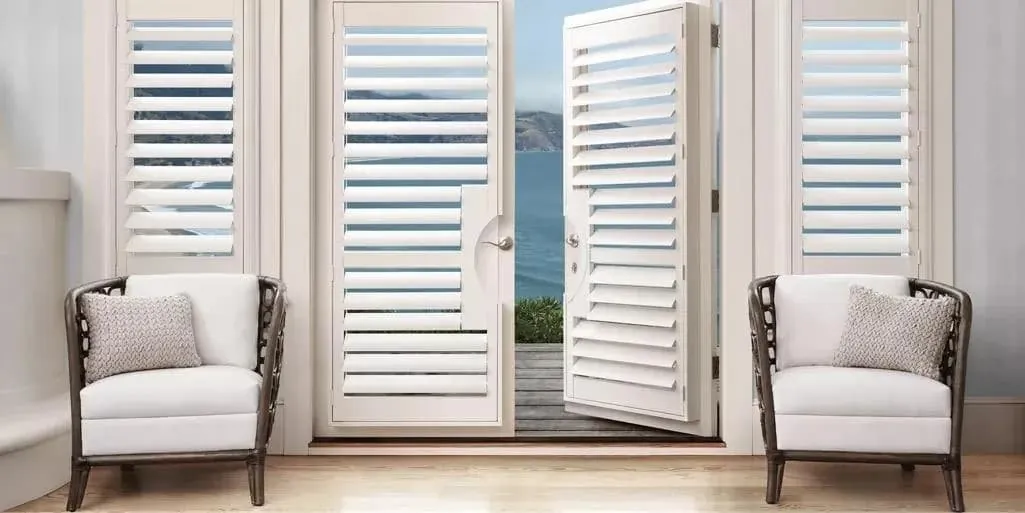
Plantation shutters
Palm Beach, NewStyle and Heritance shutters, sized for each window with the louver and frame to suit.
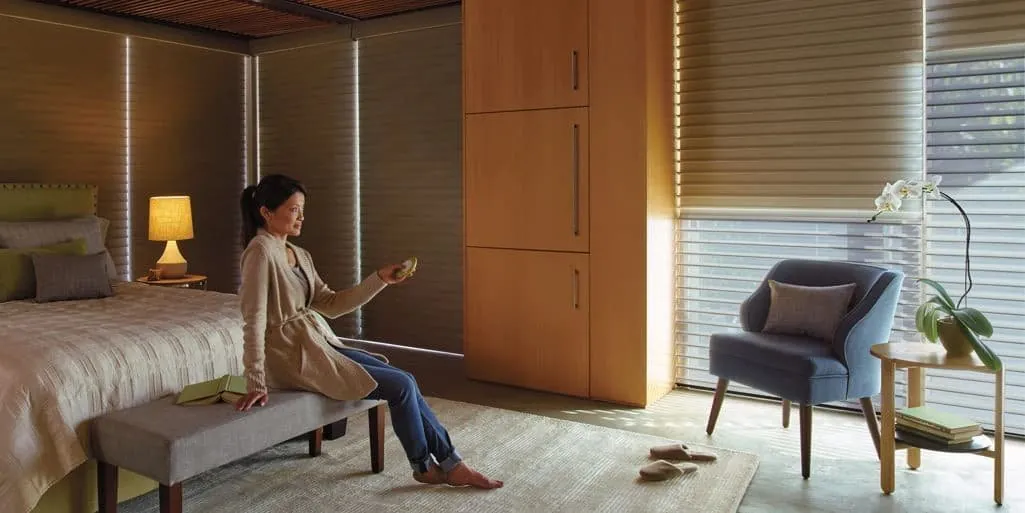
Motorized blinds and shades
PowerView remote, app and schedule control for wide walls of glass and windows that are hard to reach.
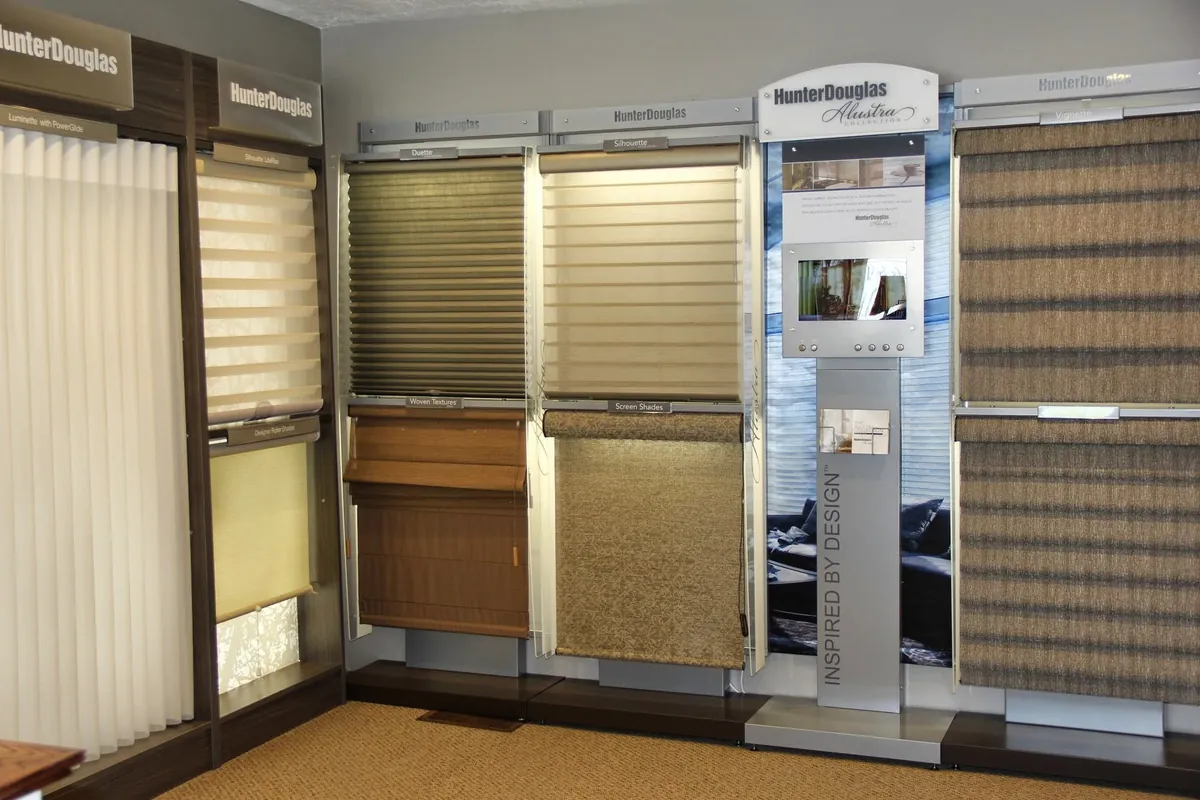
Hunter Douglas dealer
A Gallery dealer for the whole Hunter Douglas range, with certified Hunter Douglas installation.
Rooms that look out over the water
A water-facing room in Marion is usually the room the house was built around. In the captains’ houses it may be a front parlor with tall sash looking down to the harbor; in the newer houses toward Converse Point it is often a great room with a run of big windows and doors onto a deck. Either way, the light off the water is strong, it moves through the day, and it bounces up from below as well as coming down from the sky.
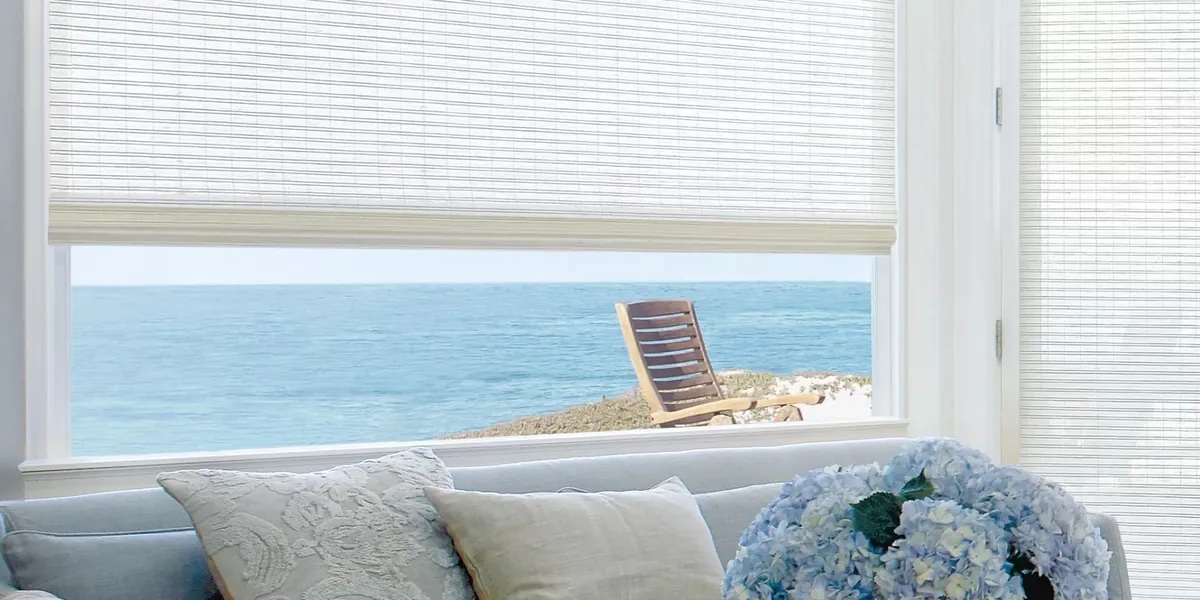
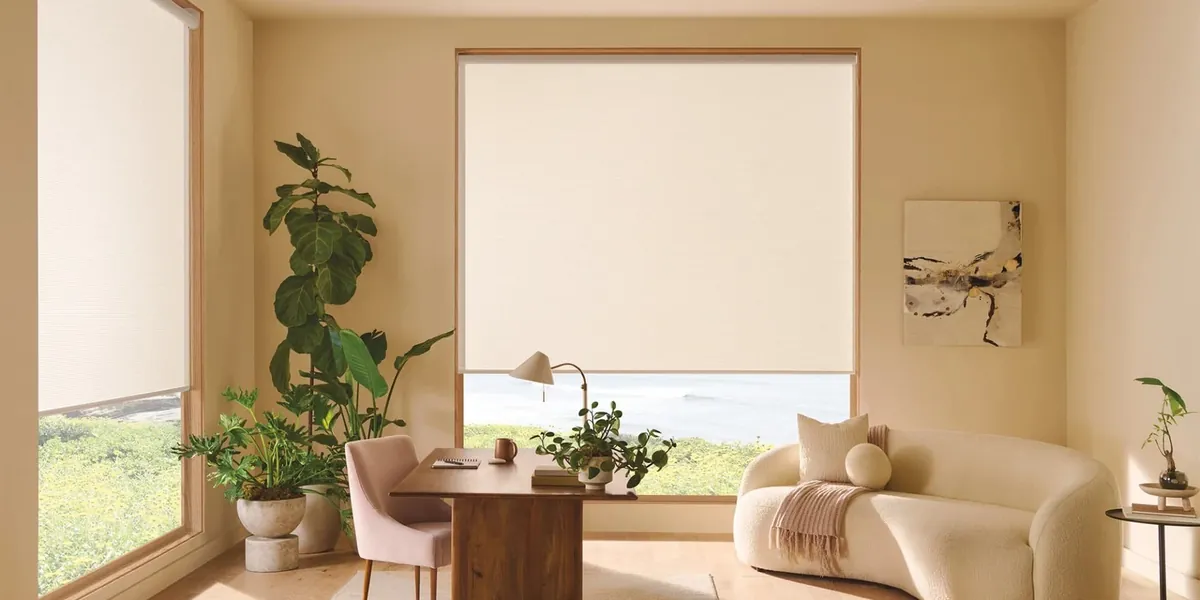
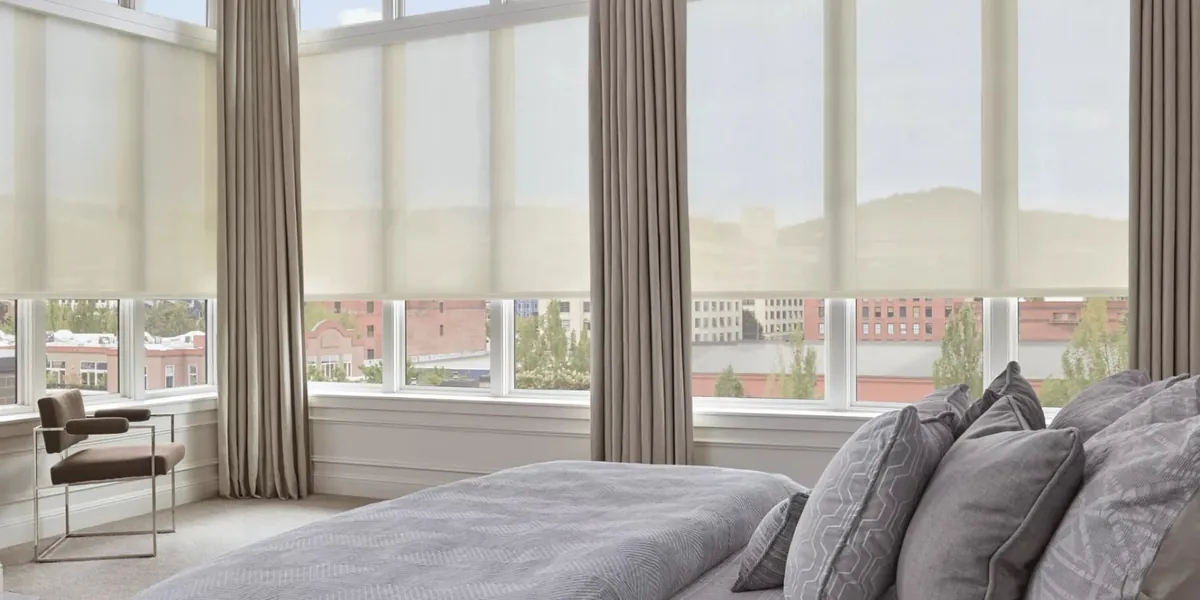
The goal is rarely to block that light. It is to take the edge off it. Solar screens are made for this job: the weave cuts glare while leaving the view visible through the fabric, and the openness factor lets you choose how much you see. A more open screen keeps the boats and the far shore clear; a tighter one calms a room that faces the afternoon sun across the water. Sheer shades such as Silhouette or Pirouette do a similar job with a softer look, their fabric vanes tilting to steer the light.
Our guide to the best shades for sun and glare sets the options side by side.
Glare from below
Glare off a harbor behaves differently from ordinary sunlight. Because it reflects off the surface, it can come in low under a half-lowered shade and land on a screen, a dining table or someone’s eyes. That is why we look at where you sit in a water-facing room, not just which way the window points.
A screen lowered all the way cuts the low reflected light as well as the sky glare, and because you can still see through it, the water stays in view. In a room with a television or a desk, we sometimes suggest one fabric for the main windows and a slightly tighter one for the window directly behind the screen.
Formal village houses where drapery is expected
The village has formal houses with symmetrical fronts, center halls and well-proportioned rooms either side: a parlor, a dining room, a study. Rooms like these were designed with fabric at the windows, and they often look bare without it. Drapery panels give the height, softness and finish these rooms ask for.
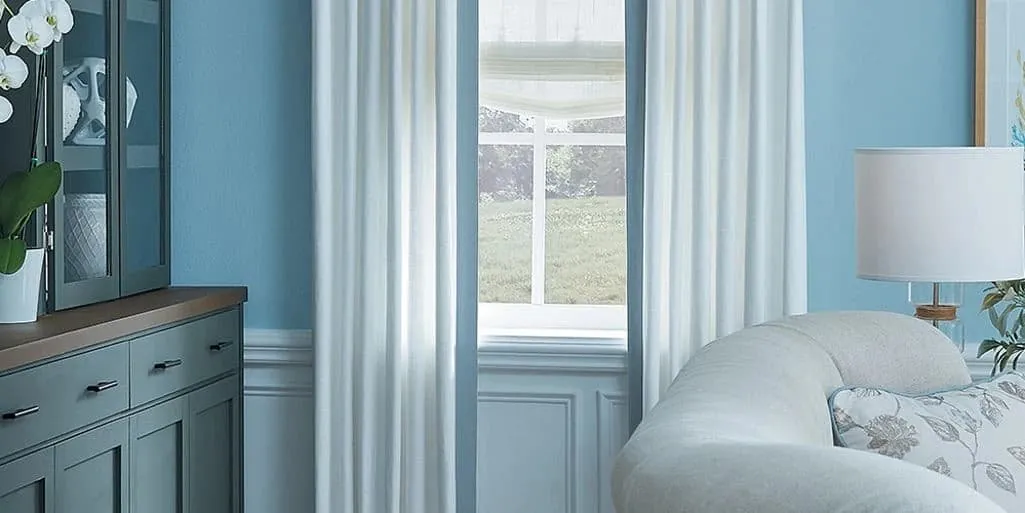
In practice, drapery here is usually part of a pair. A roman or a honeycomb sits inside the frame to handle light and privacy day to day, and the drapery hangs outside it, framing the window and adding warmth and color. You draw the drapery for the evening or leave it open as a frame. Our Hunter Douglas drapery page has more on the fabrics.
Matching the fabric to the room
A formal dining room with dark furniture and painted panelling suits a richer drapery color and a flat roman beneath it. A parlor with pale walls and white trim might take a simpler ivory panel with a soft-fold roman. In a study, a wood blind with drapery either side gives control over light on the desk without losing the formal look.
These are choices best made with samples in the room, held against your walls and seen at the time of day you use the space. Our interior design consultations help when you want a second eye on color, pattern and proportion across several rooms.
What a Gallery dealer means for a Marion house
Blinds & Designs is a Hunter Douglas Gallery dealer, so the full range is open to you: solar screens for the water rooms, drapery and romans for the formal rooms, shutters, honeycombs and PowerView for the rest.
Certified Hunter Douglas installers fit every order. With in-home consultations, vans carrying samples, free estimates, interior design consultations, automation and repairs, one company handles the house from the first sample to the last bracket.
Out toward Converse Point
The newer houses heading out toward Converse Point are built to make the most of the water. Many have a wall of glass across the back, tall windows in a two-story living room, doors onto a deck and sometimes a sunroom or screened porch. The openings are modern and square, which makes fitting simple, but the sheer area of glass changes how a room feels at different times of day and in different seasons.
Motorization earns its place in houses like these. With PowerView, a long run of shades can lower together at the press of a button, or follow a schedule that brings them down as the afternoon sun swings round and raises them again at dusk for the evening view. High windows that nobody can reach are simply part of the group. We plan how each motor is powered at the visit. Read how motorized shades are controlled for the options.
Seen from the water as well as the street
A harbor-front house has two faces: the one on the street and the one the water sees. From a mooring or the far shore, a row of windows with mismatched coverings looks untidy, and in the evening, with lights on inside, every difference in color and height shows. On the shingled captains’ houses in particular, where the windows sit in neat rows against gray shingle, a consistent line matters.
That does not mean every room needs the same product. A white shutter, a white honeycomb and an ivory roman all read as one from outside, as long as the color facing the glass agrees and the shades sit at a similar height when lowered. We bring this up early, because it is far easier to plan window treatments in Marion, MA, around a shared color from the start than to correct one later.
Doors onto the deck
Water-facing rooms nearly always have doors: French doors in the older houses, sliders or wide multi-panel doors in the newer ones. A covering on a door has to stay out of the way when you walk through, cope with being opened many times a day and still deal with the glare when the door is closed.
On French doors, a honeycomb or a shutter mounted on each door moves with it. On a slider, a vertical honeycomb or vertical blind stacks to one side so the opening is clear, and a solar screen in the same family as the windows keeps the room consistent. Where drapery is part of the look, we make sure the panels stack clear of the track so the door can open fully.
Living with salt air
Salt air is part of life by the harbor, and it shapes some of our recommendations. In rooms that see damp sea air, steam or regular open windows, we talk through which materials suit those conditions. Faux wood blinds and shutters are common choices in bathrooms and kitchens by the water. In a living room, the sun and the reflected light off the water are often a bigger factor than the salt, which is why fabric color and openness matter so much.
Damp also matters for drapery. Long panels by a door that opens to the deck will see weather, so we think about length, how the panels clear the floor and where they stack when the door is open.
Captains’ houses: old sash, old trim
The shingled captains’ houses often keep older sash with deep sills and wide casings. As with any older frame, we measure carefully, because openings that have been through many winters are rarely perfectly square. The depth at the head decides whether a shade can sit inside the frame or needs to mount on the casing.
Shutters are a natural fit for these houses, framing each window neatly and letting you tilt the louvers for light and privacy. A slim honeycomb inside the frame, with drapery outside, is another classic arrangement that respects the trim. Our guide to shutters for older windows explains the fitting in more detail.
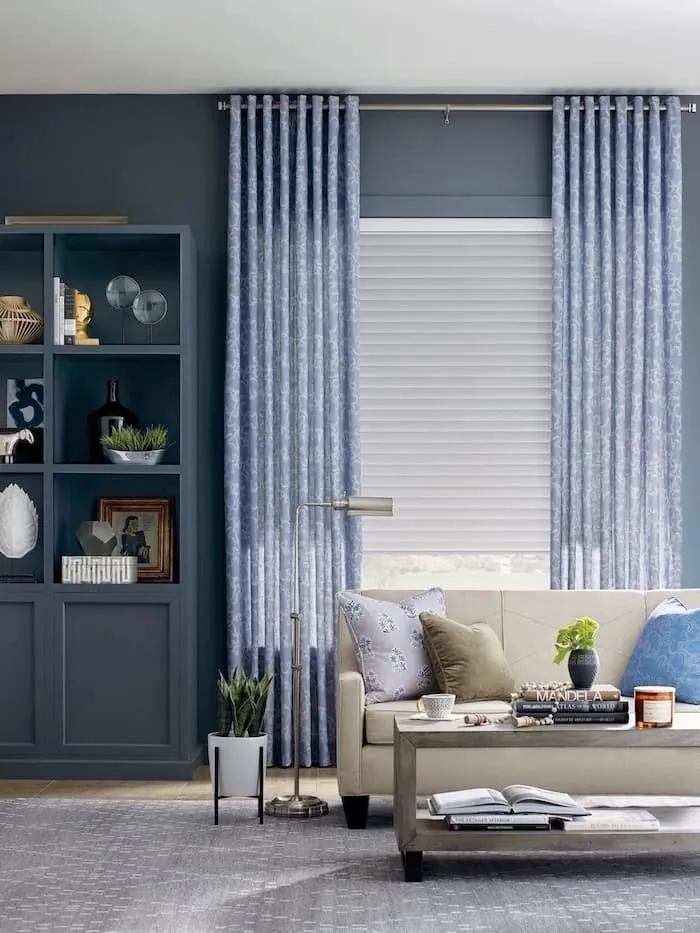
Sunrooms and porches
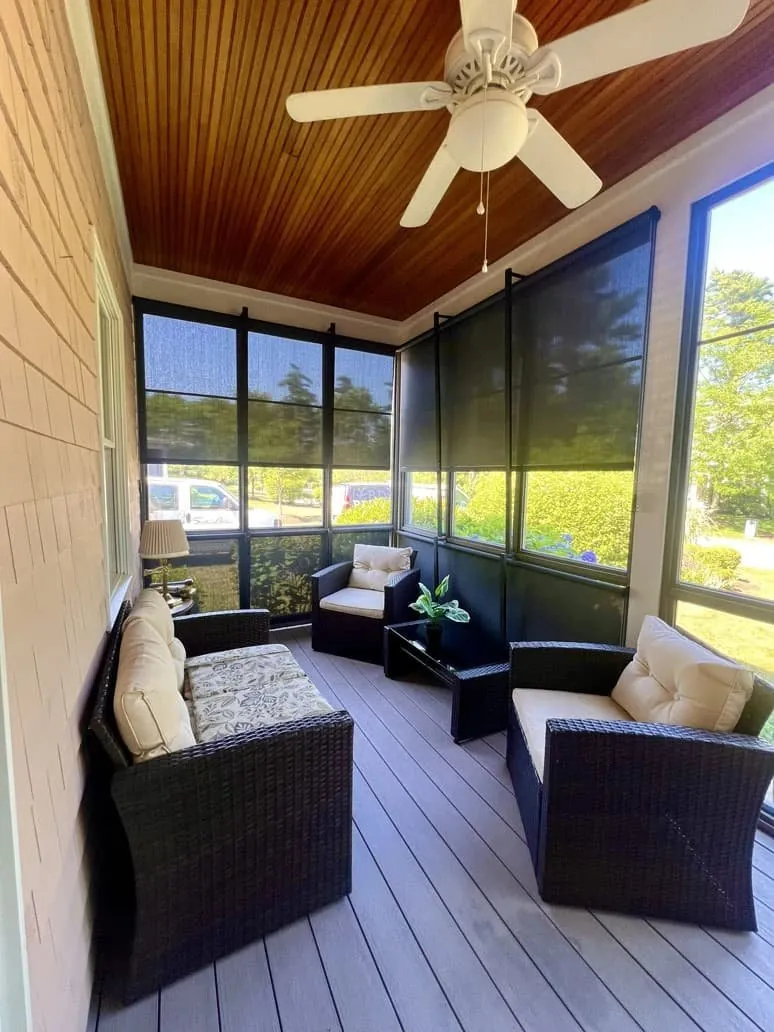
Plenty of houses near the water have a sunroom or a screened porch. These rooms catch sun on three sides and can overheat in summer, then feel cold in winter. Solar screens on a porch cut glare while keeping the breeze and the view; honeycombs in a glazed sunroom help it hold warmth after sunset. If the room faces the water, we look at both the direct sun and the light bouncing off the harbor.
Winter in a room full of glass
The same big windows that make a summer room by the harbor so pleasant can make it chilly from November to March. Glass loses heat at night, and a wall of it facing the water can leave a room feeling cold near the windows even with the heating on. Honeycomb shades help here: the cells hold a layer of air against the glass, and a Duette or Applause lowered at dusk keeps more of the warmth in the room. Our guide to cellular shades and winter heat explains why.
Many people pair the two needs: a solar screen for glare by day, and a honeycomb or drapery for warmth and privacy by night. Two shades on one window sounds like a lot, but with PowerView both can run from the same remote or schedule, and the result is a room that works in every season. Planning window treatments in Marion, MA, with both summer glare and winter cold in mind saves changing them later.
Kitchens and baths near the shore
A kitchen with a view of the water is a lovely place to cook and a hard place to shade. The window over the sink is usually hard to reach across the counter, which suits a motorized roller or a shade on a schedule. Faux wood blinds wipe down easily and suit a room with steam and cooking.
Bathrooms in the older houses tend to have one small window that faces a neighbor or the lane, where privacy comes first. A shutter sized to the opening, or a faux wood blind, gives privacy while letting you tilt the light in.
Bedrooms by the water
Bedrooms facing the harbor see the sunrise early and bright. A darker fabric inside the frame keeps the room dim; drapery over it adds softness and blocks the light at the edges. In a guest room on the water side, the same pairing works well. Where a captain’s house has a small bedroom tucked under the eaves, a slim honeycomb inside the frame keeps the room dark without crowding the window, and it matches the shades in the rooms below when seen from the harbor.
How a project runs
- Request a consultation online or tap the call button to arrange a visit.
- A consultant comes to the house with a van full of samples; we can bring the showroom to you.
- We walk each room together, looking at the water light, the formal rooms and any damp spaces.
- Samples go up at the glass so you see the real effect, then each window is measured.
- A free estimate follows, room by room, with no pressure to decide quickly.
- Once the order arrives from Hunter Douglas, certified installers fit everything, pair any motors and show you how it all works.
See in-home consultations and what happens on installation day for more detail on each stage.
Repairs welcome
If a shade or blind you already own has stopped working properly, we are glad to look at it. Repairs are a service we welcome, and we will tell you honestly if replacing it would be the wiser choice. See blind and shade repair.
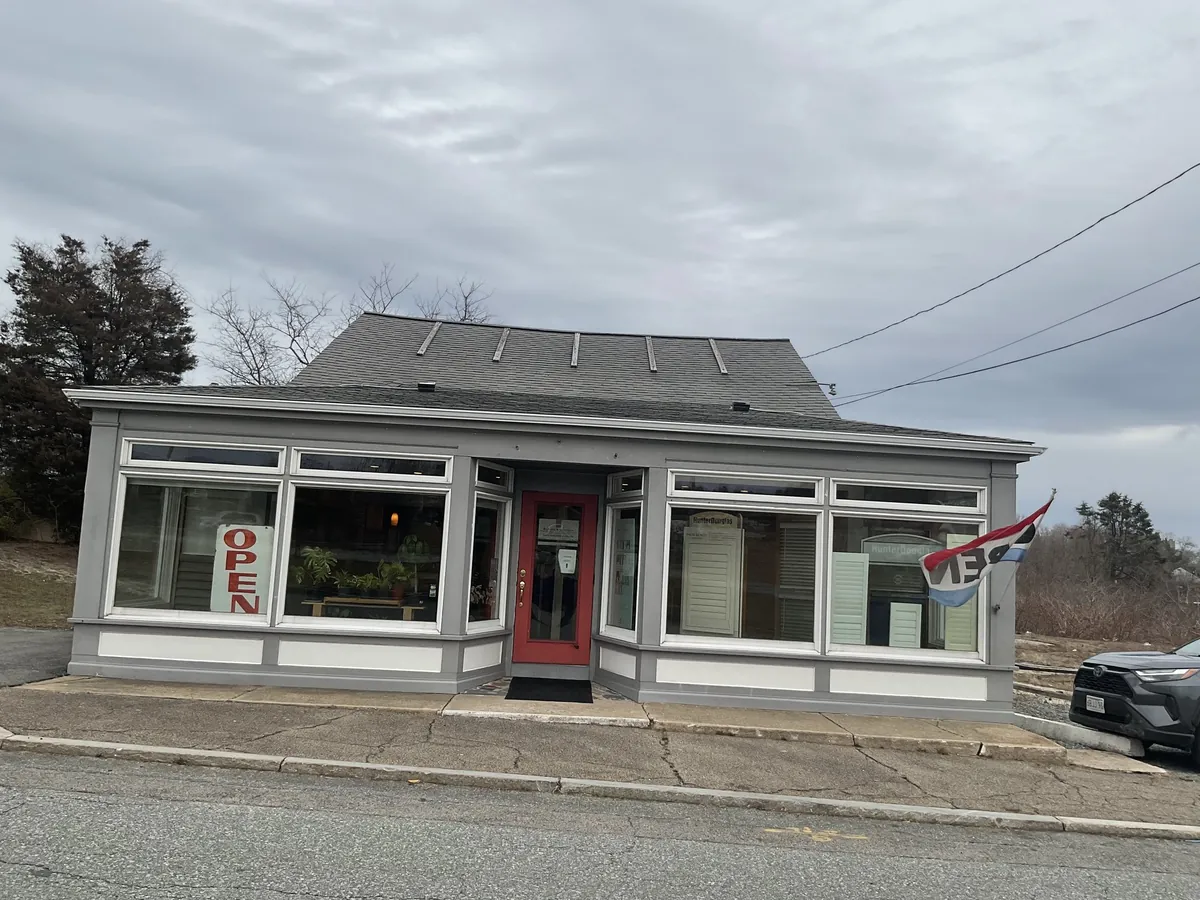
Our nearest showroom is in Sagamore
The Sagamore showroom is the closest Blinds & Designs location to Marion. Some people like to visit before a home consultation with a photo of a water-facing room or a swatch of fabric from the parlor.
Most final choices are still made at home, where the light off the water is the light you will live with. You are welcome to do both.
Questions from Marion
How do I cut the glare off the harbor without losing the view?
A solar screen is the usual answer. Its weave cuts glare while you still see out, and the openness factor lets you choose how much view you keep. Sheer shades with tilting vanes are a softer alternative.
My village house has a formal dining room. Do I need drapery?
Rooms like that often look unfinished without it. A common arrangement is a roman or honeycomb inside the frame for daily light control, with drapery panels outside to frame the window and add warmth.
Will salt air affect what I choose?
It can. For damp rooms by the water, such as bathrooms and kitchens, we talk through which materials suit those conditions. In living rooms, sun and reflected light are usually the bigger factor.
Can a whole wall of shades move together?
Yes. With PowerView, shades can be grouped to move together from a remote, the app or a schedule. We plan how each motor is powered at the visit.
Is the estimate free?
Yes. After the visit you receive a free estimate for the coverings you chose, and you can take your time with it.
Start with a visit
A single water-facing room or every window in a captain’s house, the next step for window treatments in Marion, MA, is the same: request a consultation, and we will bring the samples to you. Prefer to talk first? Use the call button or stop in at the Sagamore showroom.
Every product line we offer is gathered on our window treatments page.