
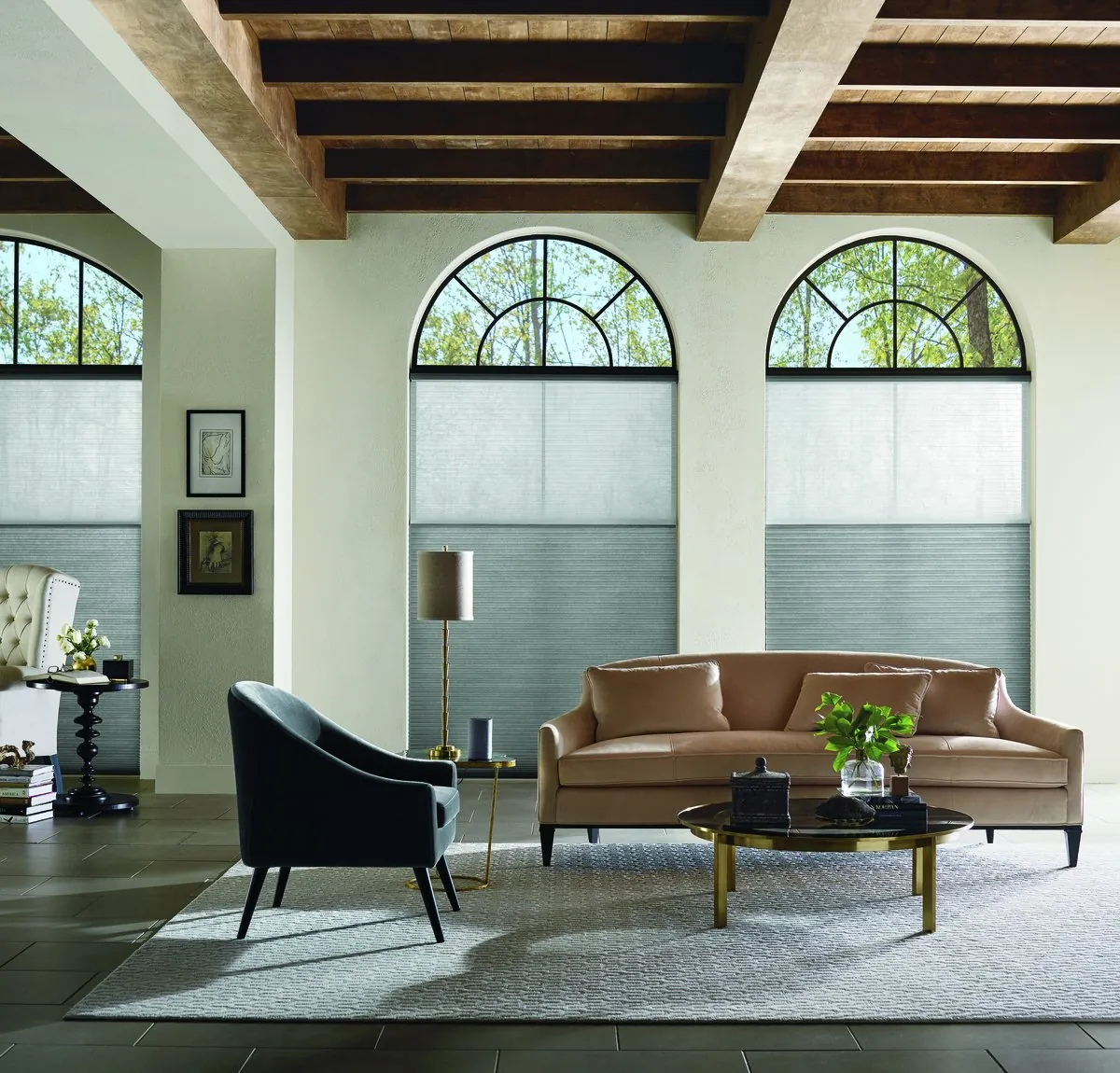
Rooms built around the view
In Westport the window is usually the point of the room. The newer homes on the harbor are laid out so the living spaces face the water, with long runs of glass toward the boats and the far shore. The shingled capes and farmhouses along Main Road and out toward Horseneck and the Westport River are older and smaller-windowed, but even there the best room in the house tends to be the one that looks across a field or a marsh to the river. So the first question we ask about cellular shades in Westport, MA, is simple: how do we keep you warm without taking the view away?
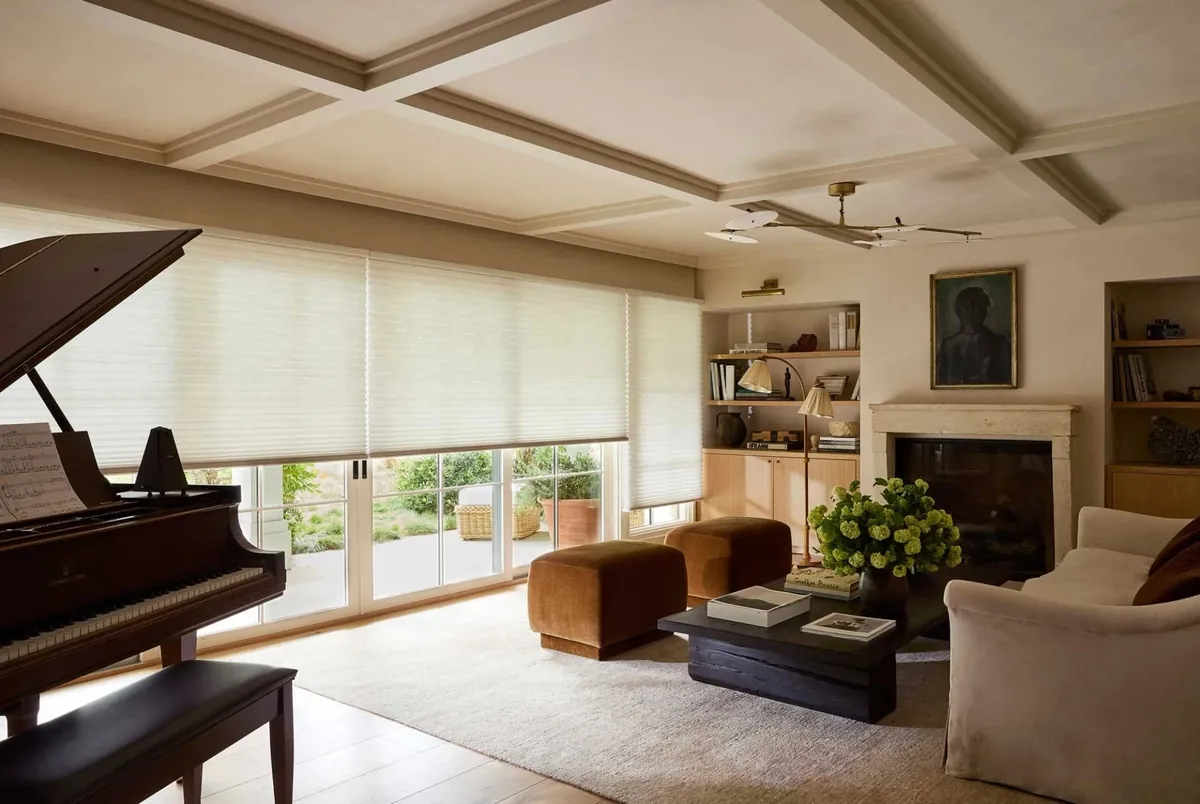
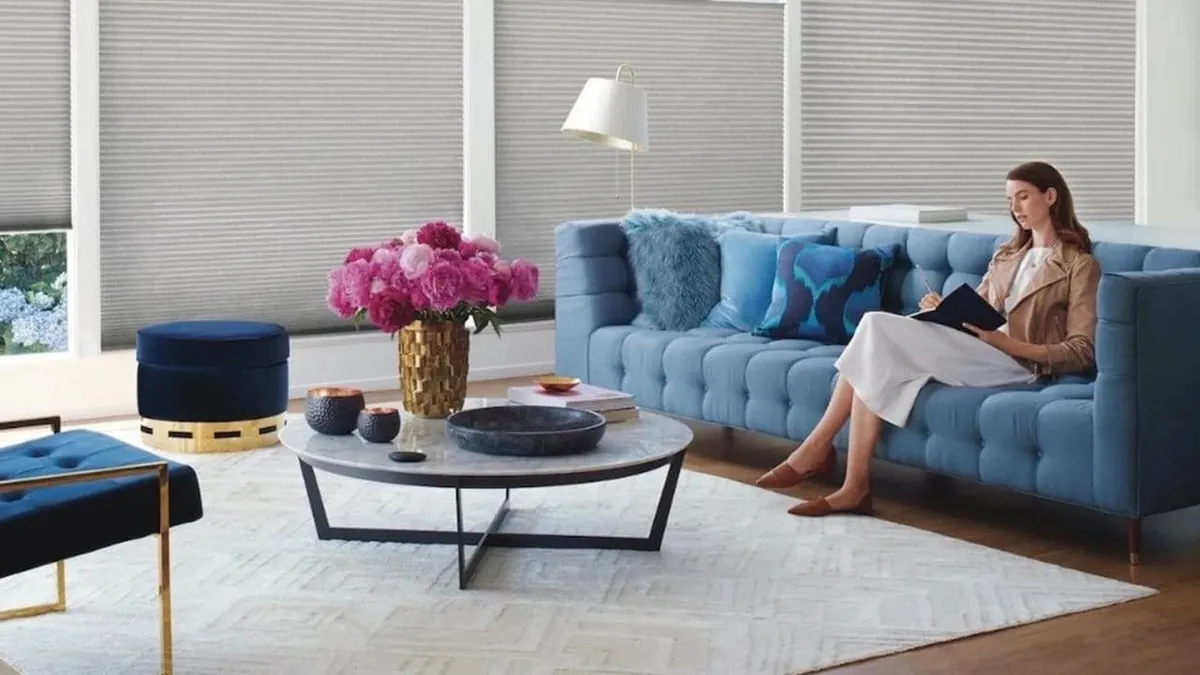
Honeycomb shades are a good answer because they work in layers. The cells hold still air against the glass, which slows heat loss on a raw winter night. Lowered from the top instead of the bottom, the same shade can cover only part of the window, leaving the view open. And in a sheer or light-filtering fabric, the water stays visible as a soft outline even when the shade is fully down.
The other governing fact is the coast itself. Salt air, sand and wind off Buzzards Bay are part of daily life near the water, and they shape which shade, which lift and which fabric make sense.
Honeycomb choices for cellular shades in Westport, MA
We carry the full Hunter Douglas honeycomb range and bring samples of every option to your home. These six come up most often near the water.
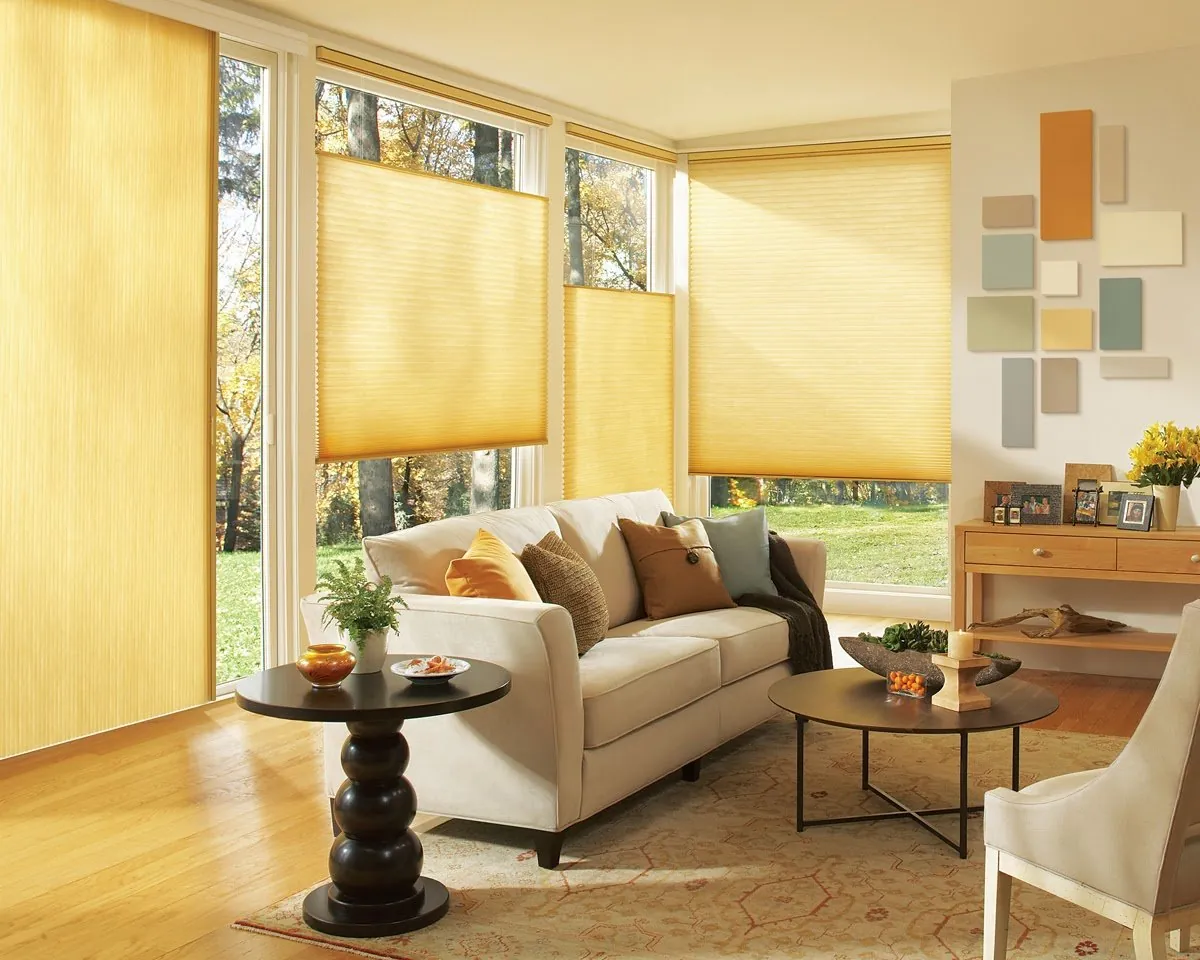
Top-down, bottom-up
Drop the shade from the top to keep sky and water in view while the lower glass stays covered. The single most useful feature on a harbor window.
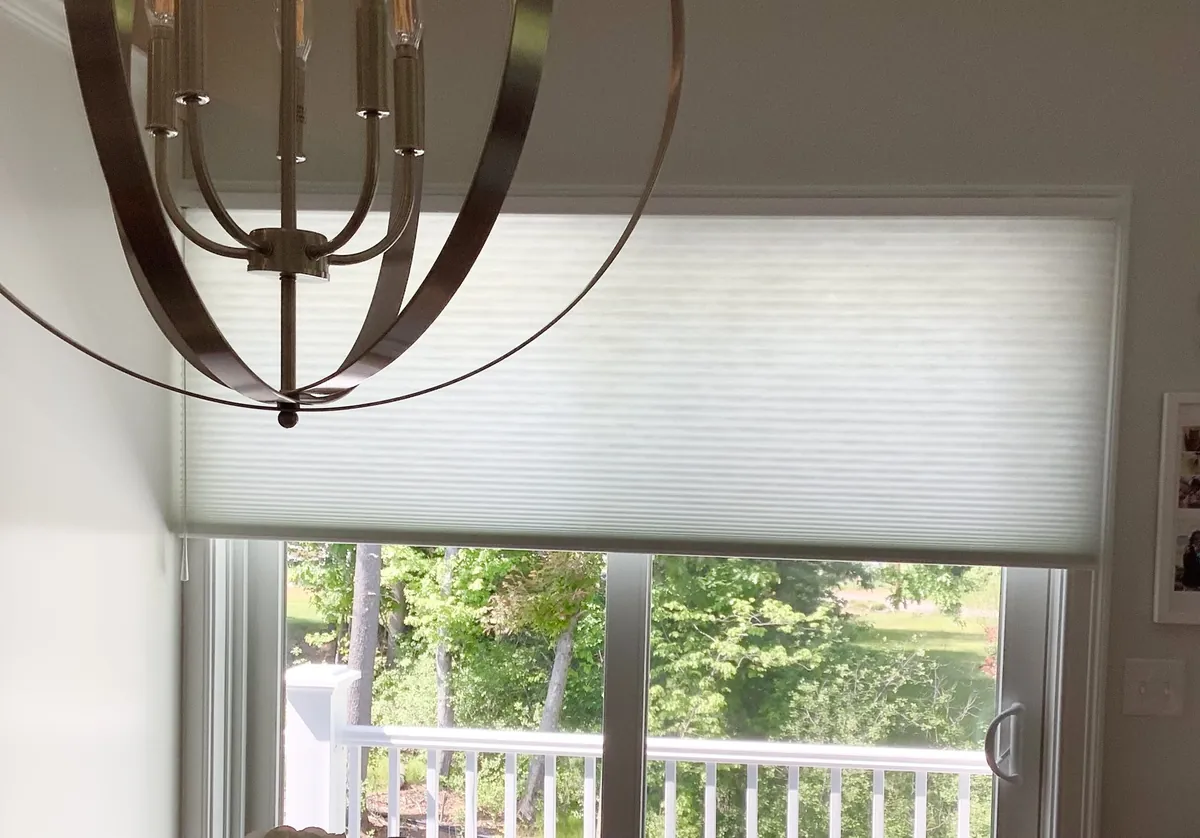
Vertical shades for sliders
A honeycomb that moves sideways across a slider to the deck, stacking neatly out of the way when the door is in use.
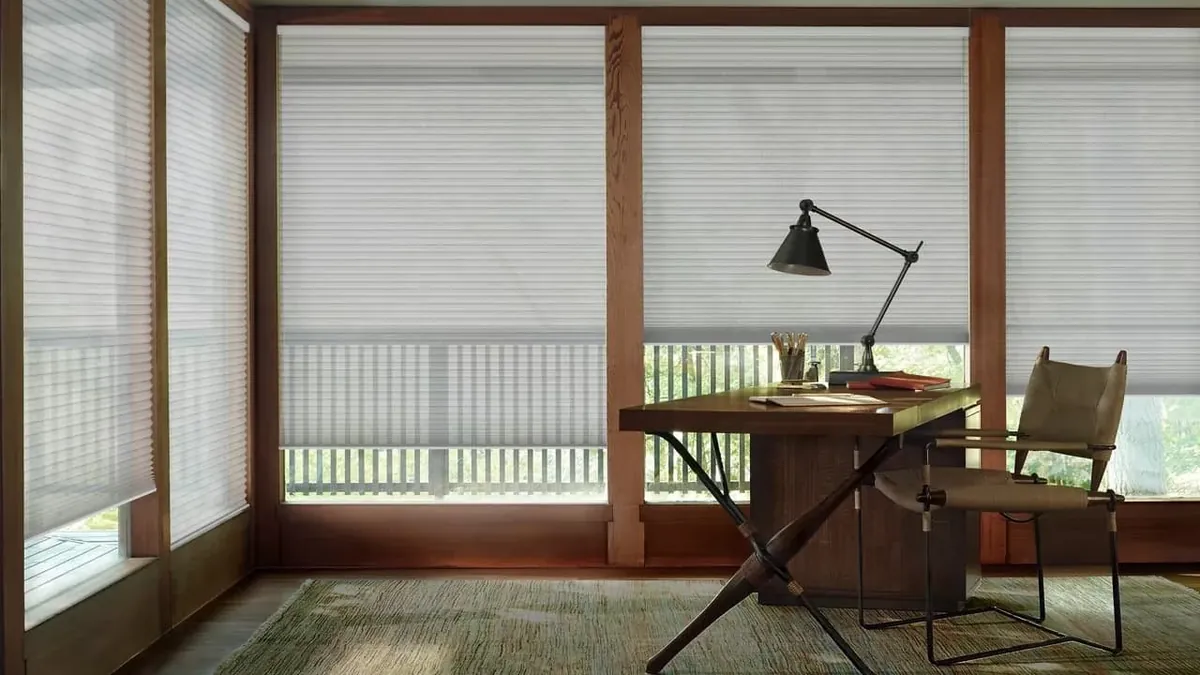
Applause for the everyday rooms
Hunter Douglas’s second honeycomb line, with its own fabrics. A sensible fit for studies, back bedrooms and the smaller windows of a cape.
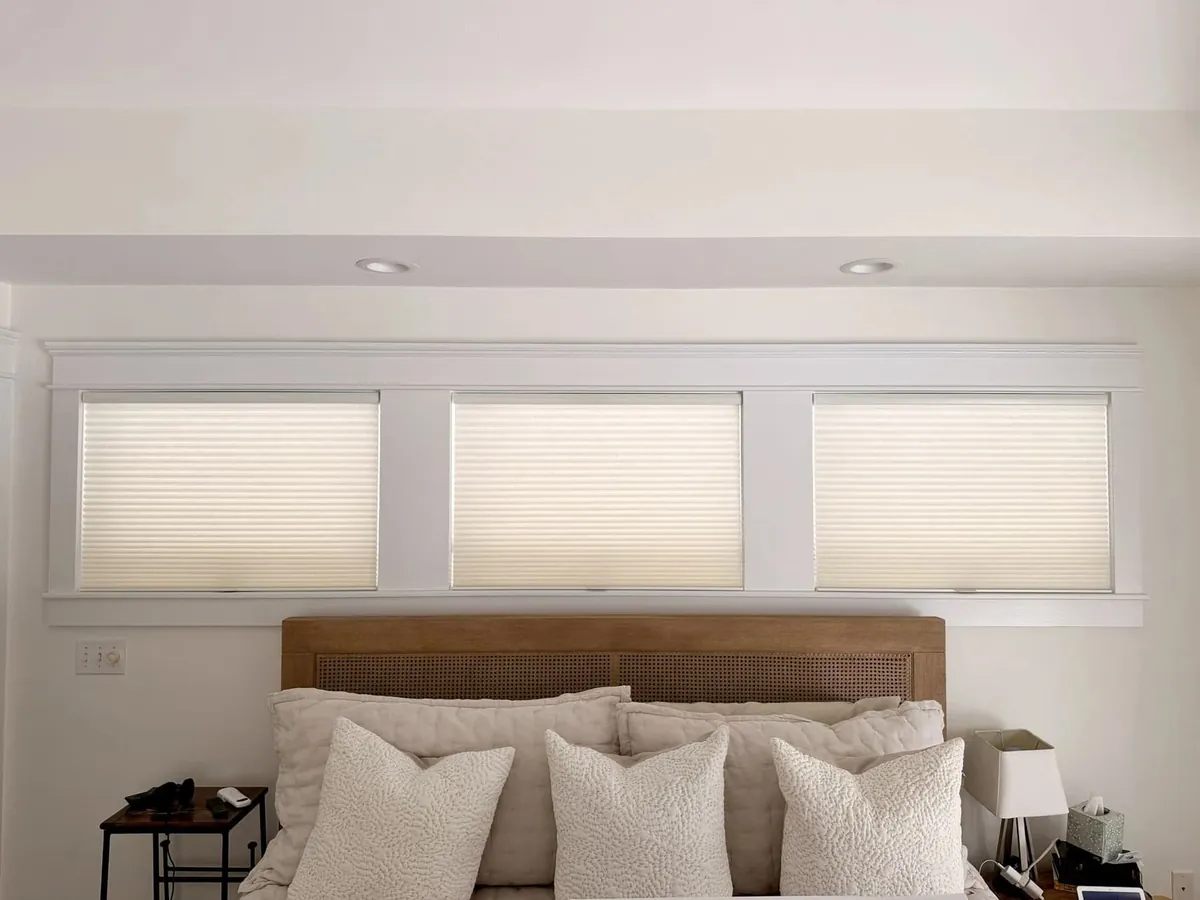
Darkening fabric for bedrooms
Coastal mornings are bright early. A room-darkening honeycomb keeps a bedroom dim until you are ready, while the cells keep holding air.
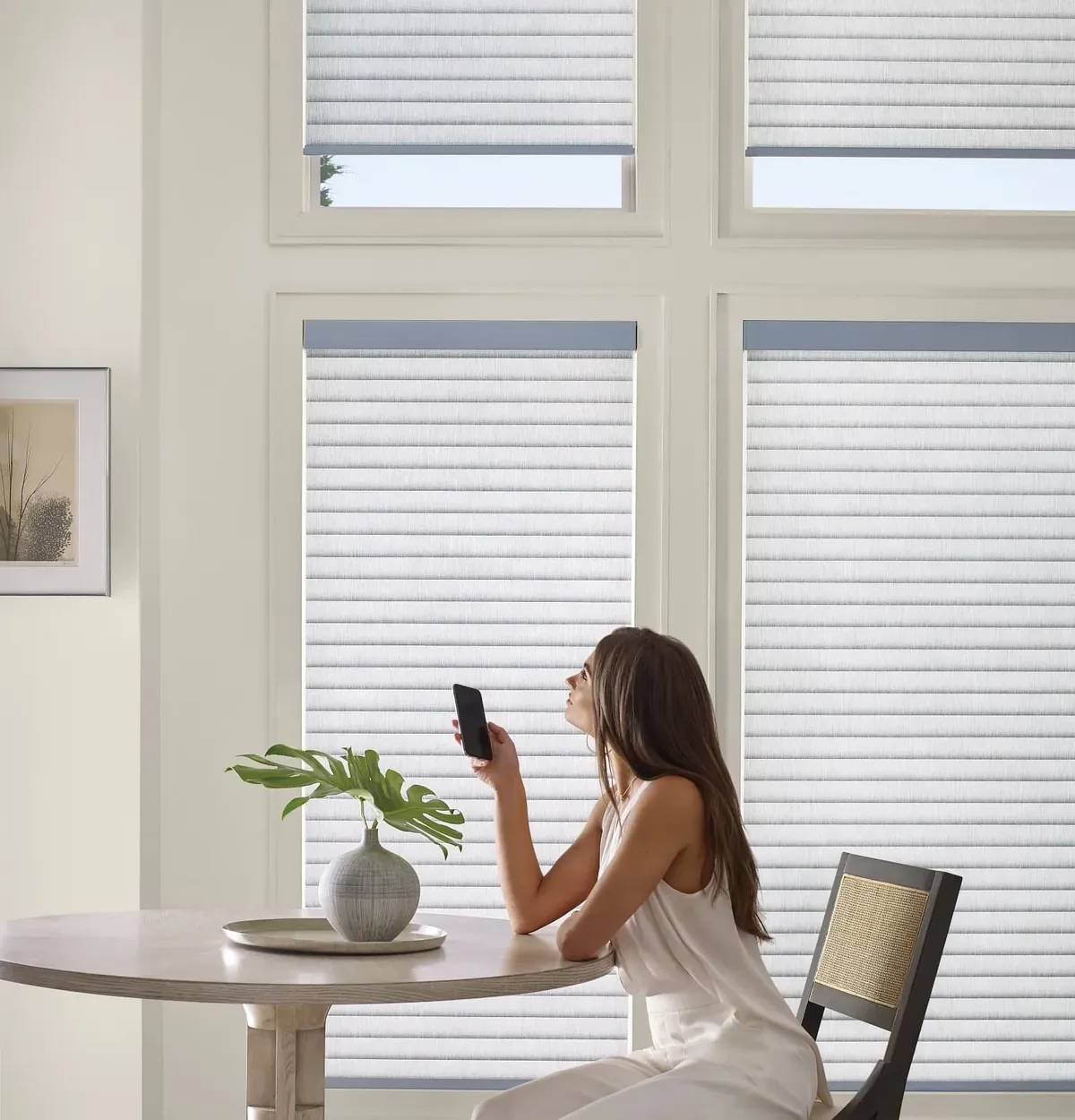
PowerView motorization
Control every shade from your phone or a remote, or set them to open and close on their own. Handy for tall glass and for a house that sits empty part of the week.
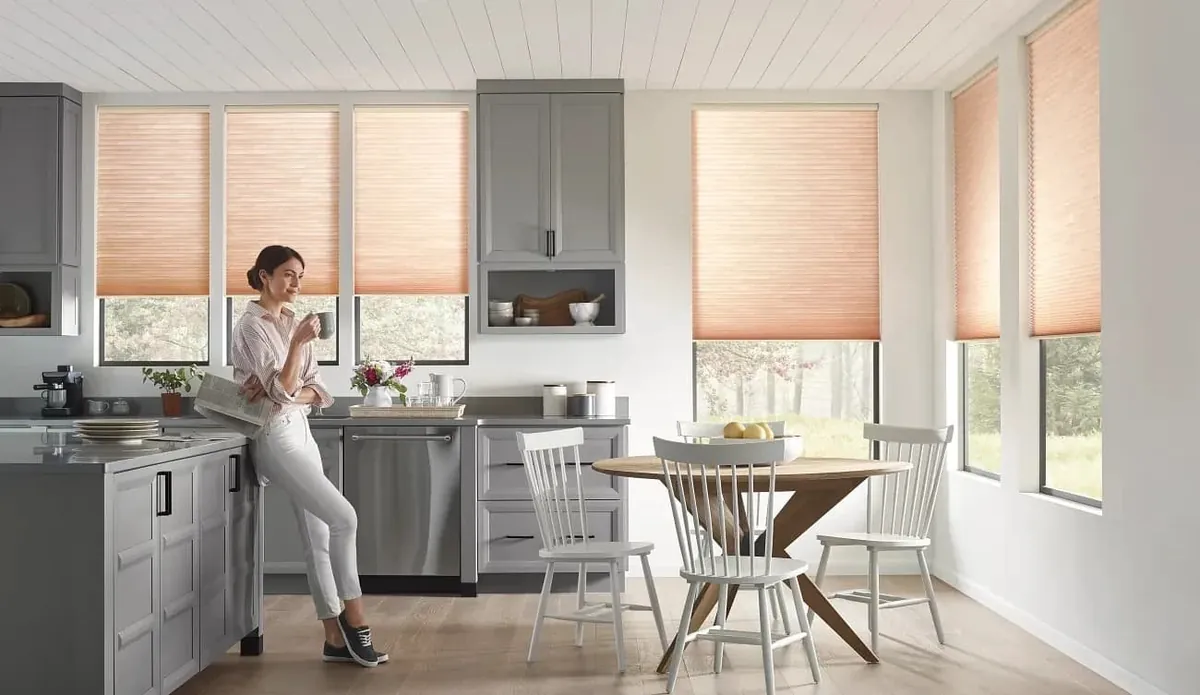
Duette for the big windows
The widest range of fabrics, very wide and specialty shapes and the Vertiglide door shade. Our usual choice for the main rooms of a harbor house.
Harbor houses and long runs of glass
The larger, newer homes on the harbor are often designed around one great room: a kitchen, dining and living space that opens onto a deck or a lawn running down to the water. The glass is generous, with tall windows, transoms, corner windows and sliders side by side. That much glass brings the view in, and it also brings in the summer heat and lets the winter warmth out.
Honeycomb shades handle a wall of glass well because they can be made very wide and lined up precisely. Several shades on one headrail can move as one or separately, and transoms above can take a matching shade or be left open. Corner windows get shades that meet cleanly where the two walls join. Sliders take a vertical honeycomb so the door stays usable.
For a room like this, the fabric is a balance. Too sheer and the afternoon glare off the harbor comes straight through. Too heavy and you lose the view you built the house for. Light-filtering fabrics in pale, warm neutrals usually land in the right place, and a Duolite design, which pairs a sheer and a darkening layer on one headrail, gives you both options at the same window.
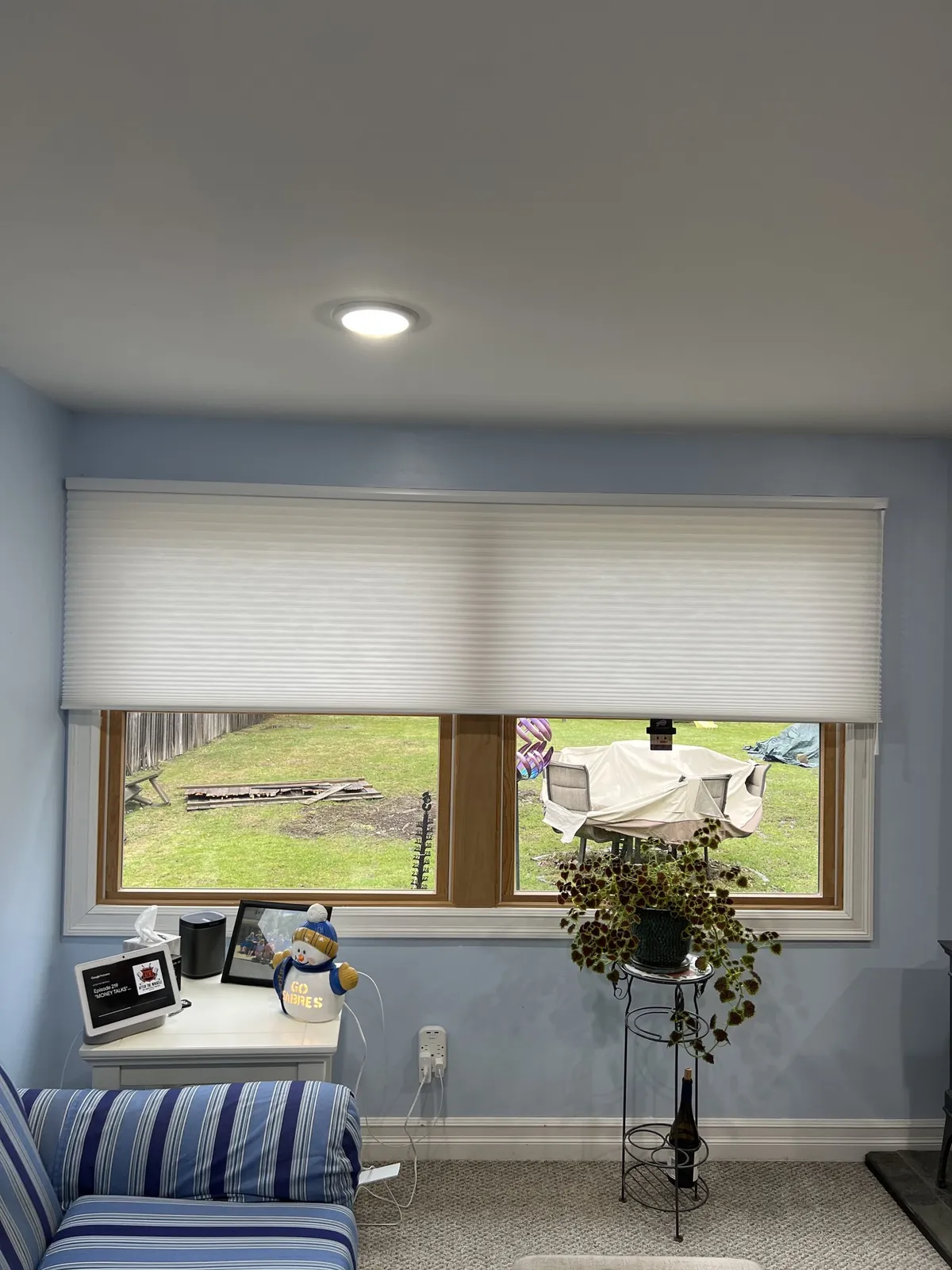
Capes and farmhouses along Main Road
Head north along Main Road and the houses grow older and simpler: shingled capes with dormers, and farmhouses with plain trim and modest double-hung windows set into thick walls. Many of these windows are original, and many face open land, so the wind hits them with nothing in the way.
These are the rooms where the insulating side of a honeycomb shade earns its place. A cape’s upstairs bedrooms, tucked under the roof, swing from hot to cold with the weather. A farmhouse kitchen with a window on the north wall can feel cold all winter. A double-cell fabric, or a Duette Architella fabric with a second cell inside each cell, gives these rooms the most trapped air.
Older openings often have enough depth for an inside mount, which keeps the shade within the frame and leaves the trim clean. Dormers suit honeycomb shades especially well, since a raised shade stacks so compactly that it barely takes anything away from a small window. We measure each opening separately, because farmhouse windows that look identical are often a little different.
Along the Westport River
The houses that look over the river and its marshes face a different kind of light from the harbor. The water is flatter and closer, the land around it is open, and in late afternoon the sun drops low across the marsh and comes straight in at eye level. In autumn and winter, when the sun stays low all day, a west-facing river room can be bright enough to make reading or watching television hard for hours at a time.
A honeycomb shade lowered from the top just far enough to catch that low sun is often all a river room needs. The marsh and the water stay in view below the shade, and the glare is gone. In winter, the same shade lowered fully at dusk keeps the warmth in a room that faces open ground with nothing to break the wind. For a run of river-facing windows, PowerView can lower the shades together at the same time each afternoon and lift them again once the sun has set.

Out toward Horseneck: salt, sand and wind
Near the beach and the mouth of the river, the weather is the main design consideration. Salt air reaches anything metal by an open window, fine sand finds its way indoors through the summer, and the wind can make a lightweight treatment flap and knock against the frame.
Honeycomb shades suit these conditions better than many older treatments. The working parts are enclosed in the headrail, so there is little exposed metal for salt to settle on. Cordless lift removes the cord and cord lock from the side of the window altogether. The fabric is easy to keep clean with a gentle dusting or a pass with a vacuum brush, which is useful when sand blows in.
On a window you leave open on a breezy day, a shade can move with the air. We talk about that at the consultation, and on the windward side of the house we often suggest an inside mount with the bottom rail resting close to the sill, or PowerView so the shades can be raised out of the way with one press.
Keeping the view with the shade down
A common worry is that any shade will make a water-facing room feel closed in. It does not have to.
- A top-down, bottom-up shade lowered from the top covers only the band of glass where the sun or a neighbor is a problem, and leaves the rest of the view open.
- Sheer and light-filtering honeycomb fabrics let the shape of the shoreline show through, so the room still feels connected to the water when the shade is lowered.
- A Duolite design puts a sheer layer in front for daytime and a darkening layer behind for night, both on the same window.
- PowerView lets you lower the shades only for the hours you need them, then raise them back to the full view without getting up.
Most harbor rooms end up using two or three of these together. We will show you each one at your own windows so you can judge what the view looks like through the fabric.
A house that is not always occupied
Some Westport houses are closed up for part of the week or part of the year. Shades left wide open let the sun fade furniture and floors, while shades left closed make the house look empty from the road. Neither is ideal.
PowerView motorization solves both. You can set a schedule so the shades lower during the brightest hours to protect the interior and rise again in the evening, giving the house a lived-in look. You can also control them from your phone while you are away. Honeycomb shades are among the easiest window coverings to motorize, and we plan the motor and power options for each window during the consultation. Our page on motorized blinds and shades covers the controls in more detail.
Duette or Applause near the water
Both lines are true Hunter Douglas honeycomb shades, so the insulating cells work the same way in each. Where they differ is range. Duette reaches further: more fabrics and textures, Architella double layers, Duolite, specialty shapes for arched or angled windows, very wide shades for a harbor great room, and the Vertiglide shade for sliders. Applause offers its own well-chosen palette that suits most standard windows.
In a Westport house the two often share the work. The water-facing rooms, with their big glass and their view, take Duette. The bedrooms, baths and back rooms of a cape or farmhouse take Applause in a matching tone. Because the street side of every honeycomb is a neutral backing, the house still looks consistent from the road and from the water.
Getting color right in coastal light
The light near the water is bright and changeable. It shifts from cool and silvery on a foggy morning to warm and golden late on a summer afternoon, and a fabric can look very different in each. That is the main reason we bring samples to you rather than asking you to choose from a book.
A few patterns hold true. Pale, warm neutrals tend to look good in every kind of coastal light and wear well in strong sun. Cooler grays can feel cold on a north-facing window. Deeper colors read beautifully inside but take more of a beating from daily sun off the water. From the outside, every honeycomb shade presents a consistent neutral backing, so you can choose a different color for each room without the house looking patchy from the harbor.
Our visit, step by step
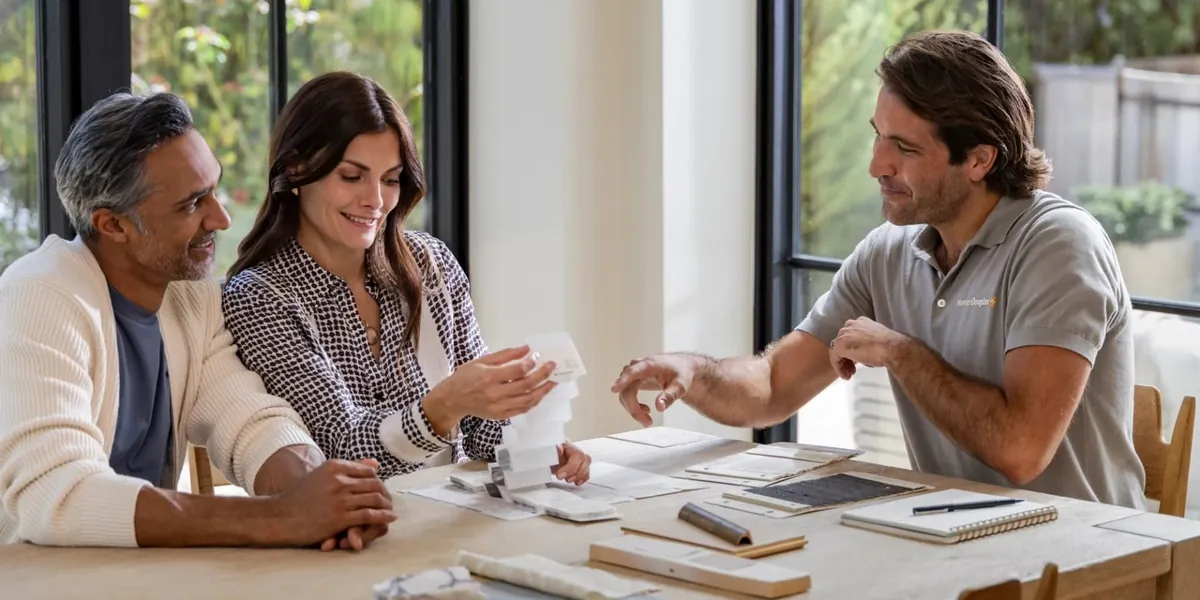
Choosing cellular shades in Westport means seeing them in Westport light, so we come to you. Our vans carry samples, and we can bring the showroom to your door.
- Request a consultation online or with the call button and choose a time.
- We start in the room you care about most, usually the one facing the water, and talk about glare, warmth and the view.
- You hold Duette and Applause fabrics against the glass at different times of day if you like, and compare sheer, light-filtering and darkening.
- We measure every window, check mounting depth, and look at how the wind and the sun hit each side of the house.
- We go over lift options, from cordless to PowerView.
- You receive a free estimate and take whatever time you need to decide.
When the shades arrive, our certified Hunter Douglas installers fit them, level them and show you how everything works. You can read more about what happens at an in-home consultation beforehand.
Measuring big glass and old sash
Westport has both extremes: wide modern openings on the harbor and small, settled farmhouse sash inland. Each needs its own approach when we measure.
- On a wide run of glass, we decide with you where the shades should break, so each section lines up with the window frames and the shades can move together or apart.
- On corner windows, we plan how the two shades meet so there is no light gap at the corner.
- On older sash, we measure the width at the top, middle and bottom and the height at both sides, and order to the tightest figure.
- On every window, we check the depth for an inside mount and look for latches or cranks in the way.
- Before anything is ordered, we confirm each mount, fabric and lift choice with you.
Getting these details right is what makes cellular shades in Westport look as if they were built with the house.
Why a Hunter Douglas Gallery dealer
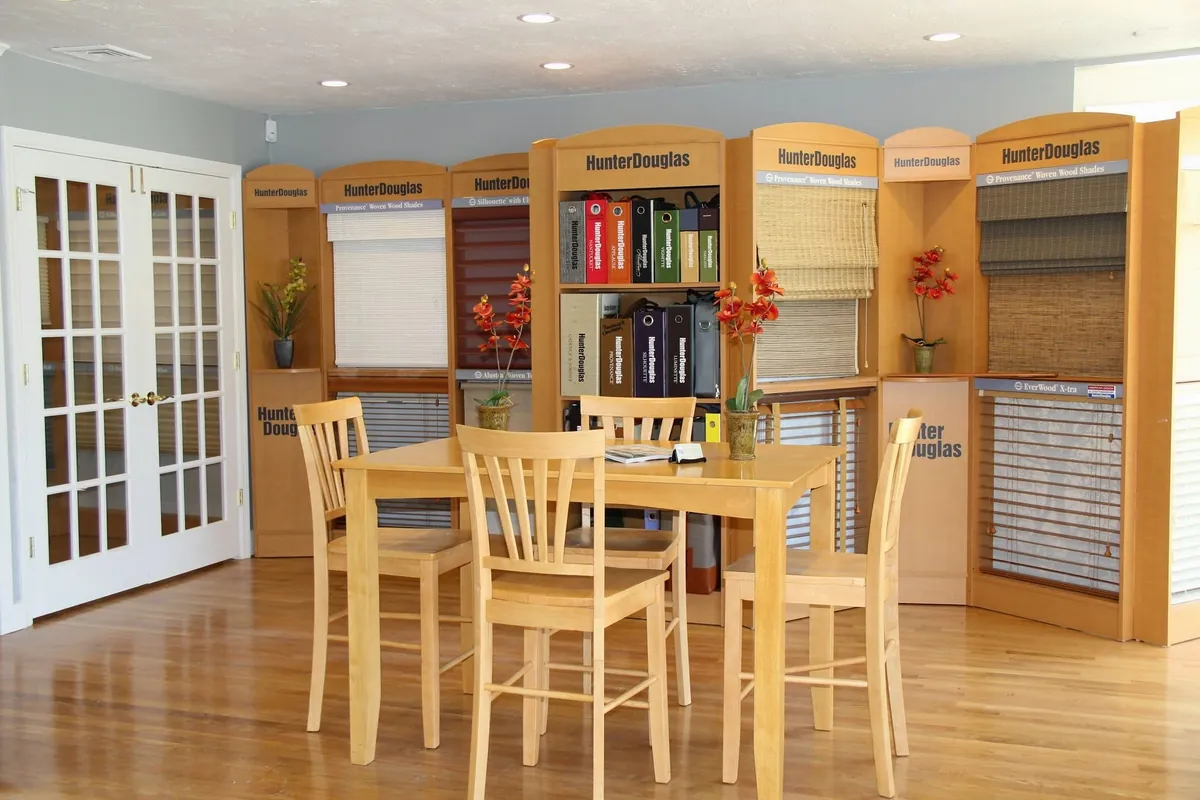
Blinds & Designs is a Hunter Douglas Gallery dealer. That gives you the full honeycomb range in one consultation: every Duette fabric and shape, the Applause palette, the Vertiglide door shade and PowerView motorization.
Certified Hunter Douglas installation means the shades are fitted to the standard the maker sets, which matters on large windows and wide spans of glass. We also handle blind and shade repairs on window coverings you already own.
For the rest of the house, we offer plantation shutters, roller shades, roman shades and more. See all our work in town on the Westport page, or read about roller shades in Westport, a natural companion for a sunny harbor room. The main cellular shades page, and the Duette and Applause pages, go deeper into each line.
Help pulling the whole room together
A harbor great room or a farmhouse front parlor often needs more than a shade. If you are redecorating, or just want a second opinion on color, ask about our interior design consultations. We can look at fabric, color and the other treatments in the room alongside the honeycomb shades, at the same visit.
Our nearest showroom to Westport is in North Dartmouth, a short drive north through town. You are welcome to see the shades there first, or let us bring everything to you.
Questions from Westport
Will a shade block my view of the water?
Not if you choose the right one. A top-down, bottom-up shade covers only part of the window, and sheer or light-filtering fabrics let the view show through when the shade is lowered.
How do honeycomb shades hold up near the beach?
The moving parts sit inside the headrail, so little metal is exposed to salt air, and cordless lift removes the cord lock. The fabric cleans easily with a light dusting or a vacuum brush when sand blows in.
Can I control the shades when I am not at the house?
Yes, with PowerView motorization. You can run the shades from your phone or set a schedule so they open and close each day on their own.
Do honeycomb shades work on a wall of sliders and windows?
Yes. Windows take horizontal honeycomb shades and sliders take a vertical honeycomb that travels side to side, all in matching fabric so the wall reads as one.
Is the estimate free?
Yes. After we measure your windows, the estimate is free. Request a consultation to get started.
See the fabrics against your own view
The best way to choose cellular shades in Westport, MA, is with the samples at your own glass and the water behind them. Request a consultation and we will bring the honeycomb range, measure every window and give you a free estimate. Or use the call button, or visit our North Dartmouth showroom.