
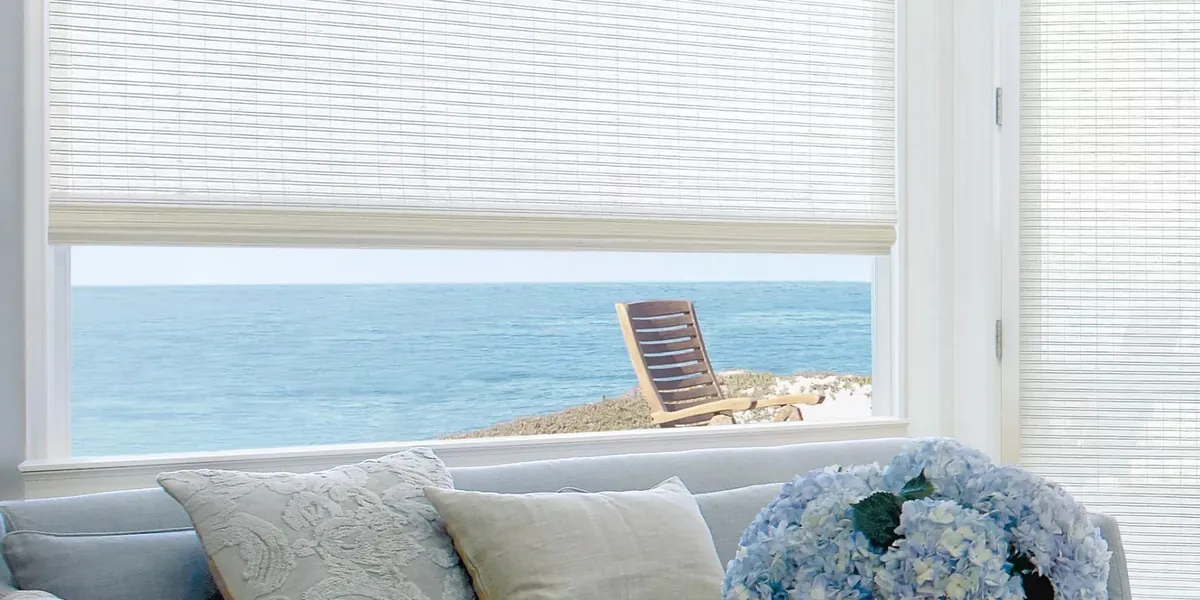
Salt wind, open fields and small old sash
Along the Commons and down the long roads toward Sakonnet Point, the houses are old and the land around them is wide. Antique capes sit low behind stone walls; shingled farmhouses stand alone in open fields with the ocean somewhere beyond. The lots are large, the weather comes straight off the water, and the windows are mostly the small original sash the houses were built with. That combination sets the terms for roman shades in Little Compton, RI.
Small sash calls for a shade made exactly to size, because there is very little glass to spare and nothing standard fits an antique opening well. The coastal exposure calls for fabric that copes with strong, reflected light and air that carries salt. And many houses here are lived in for part of the year only, which raises its own questions about protecting a room while nobody is in it.
A roman shade answers all three better than most coverings. It is one soft panel of fabric, made for a single window, that lowers flat to filter or block the light and folds up into a neat stack when you want the whole pane clear.
Folds that respect an antique room
Hunter Douglas makes roman shades under two names, Vignette and Carole Fabrics, in flat and folded styles. When we plan roman shades in Little Compton for an old house, these are the choices that tend to fit.
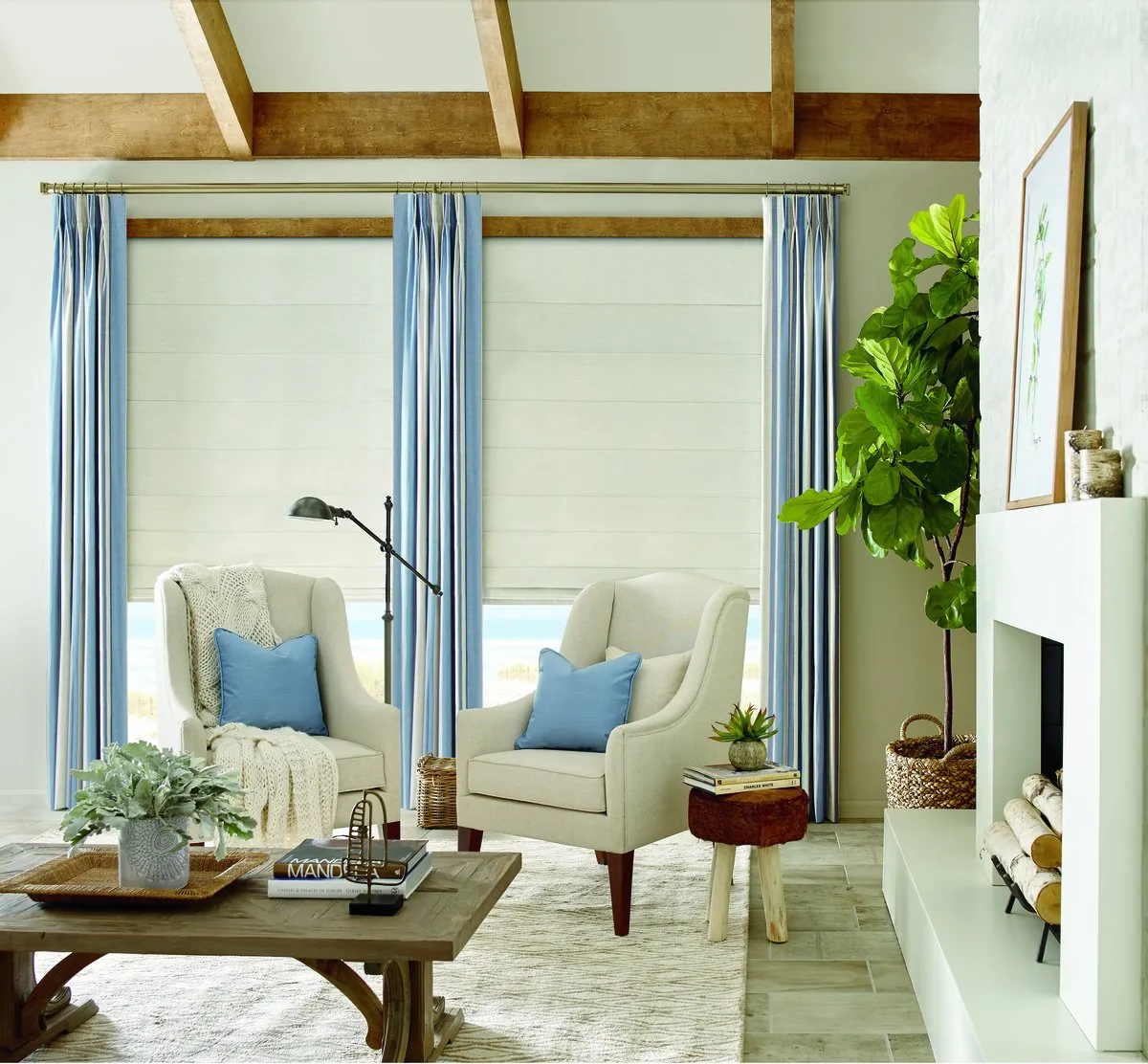
A soft fold for the front room
The best room in an antique cape usually has the best woodwork. A Carole Fabrics soft fold adds gentle shape without competing with the panelling or the hearth.
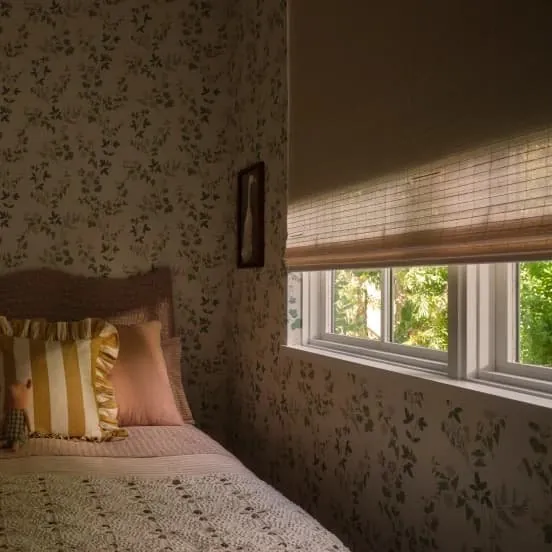
Natural weaves for a farmhouse
The Alustra Woven Textures roman suits shingled houses and plain plaster walls, filtering the light through natural fiber in a way that feels right in a country room.
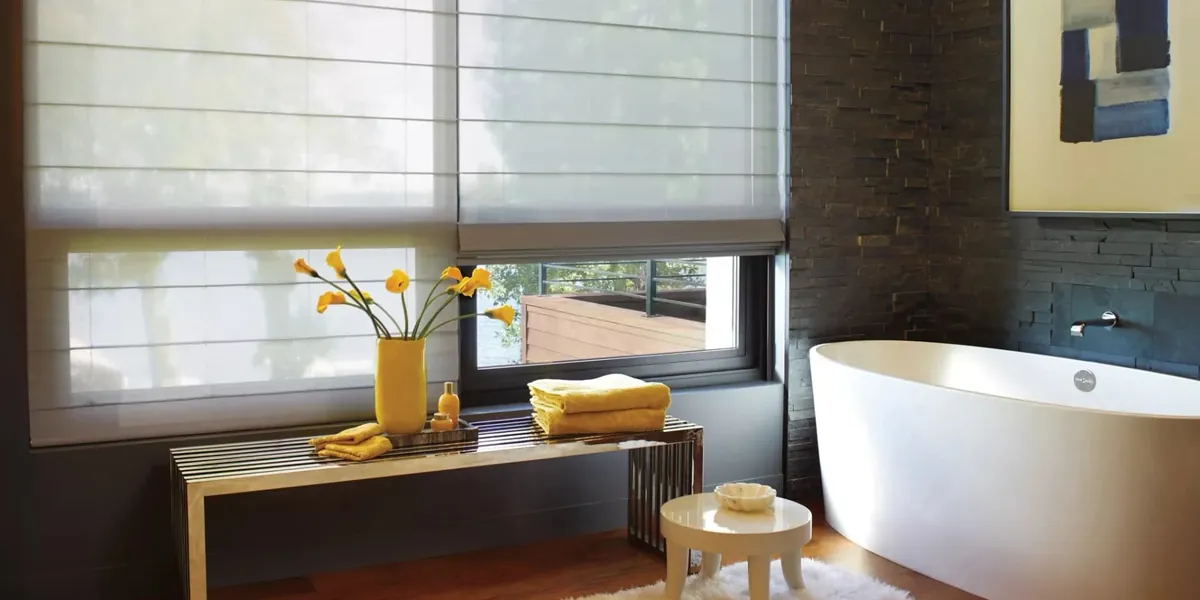
Sheer fabric for the ocean side
On windows that look toward the water, a sheer weave takes the hard glare out of the light and still lets you see the fields and the sea.
Antique capes along the Commons
The capes around the Commons are among the oldest houses in the area. They are low and broad, with a central chimney, small rooms arranged around it, and windows that are small even by old-house standards. Inside, the window reveals are often shallow, the sills worn and the frames softened by countless coats of paint. Very few of these windows are true rectangles any more.
A roman shade made to each opening, mounted inside the frame, leaves all of that character visible. When it is lowered, the fabric lies just inside the trim; when raised, it folds up neatly at the head of the window. On a small sash window, a flat fold is usually the best choice because it stacks into the smallest bundle and leaves the most glass clear.
Shallow reveals can be a problem for an inside mount. If there is not enough depth for the headrail, or a sash lock sticks out too far, we mount the shade on the face of the casing instead. We always look at each window closely before suggesting a mount, and we will be straight with you about what works.
Shingled farmhouses in open country
The farmhouses scattered across the fields are larger than the capes, with more rooms, taller ceilings and windows on every side. They stand on very large lots, often with no tree or building nearby to block the sun or the wind. That openness is part of their appeal, and it means the light inside changes completely through the day.
With no near neighbors, privacy in daylight is rarely the reason for a shade. Glare and heat are. A south-facing parlor with nothing between it and the horizon can be dazzling by mid-afternoon, and the morning sun across an open field is strong in an east bedroom. A light-filtering roman fabric handles the living rooms; a lined fabric suits the bedrooms.
Upstairs, a farmhouse often has small windows tucked into the gable ends, above the line of the roof below, where the room gets the late sun over the fields. Those little windows are easy to forget and hard to reach. A shade made to fit each one, in the same fabric as the bedroom’s main windows, keeps the room even, and a cordless lift means a quick push on the bottom rail is all it takes.
At night, a house alone in a field is visible from a long way off when its lamps are lit. Lined roman shades, lowered at dusk, give the rooms a sense of being closed in for the evening.
Toward Sakonnet Point, weather on every side
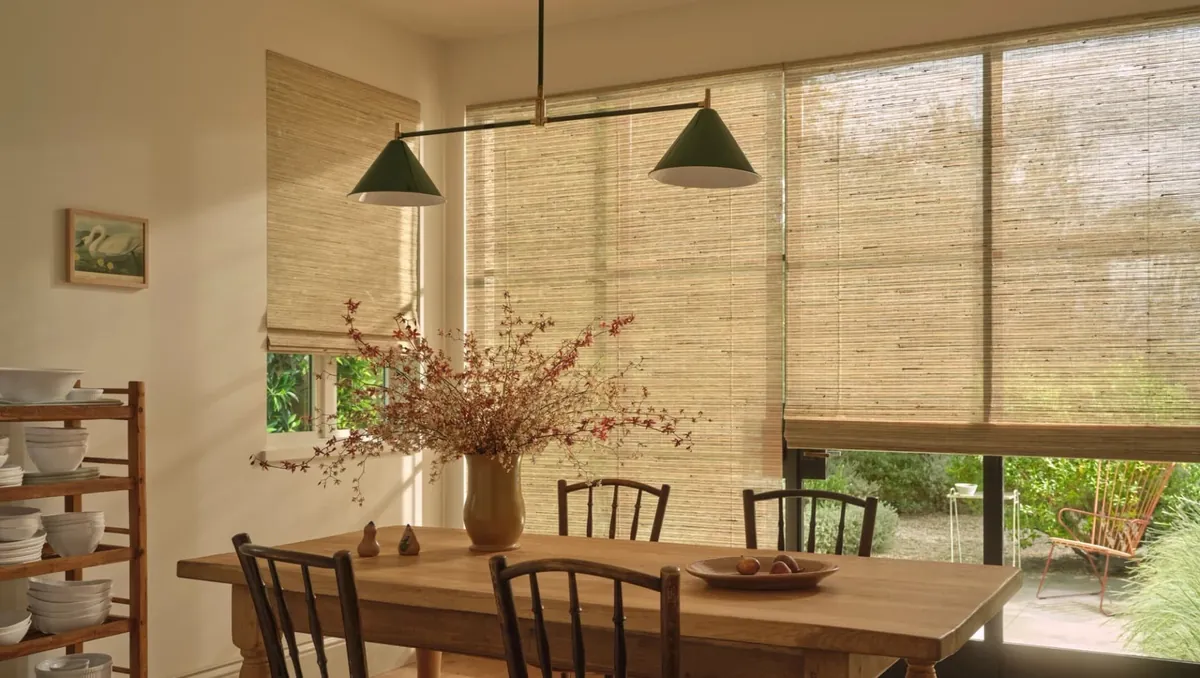
The closer you get to the Point, the more the houses take the full force of the coast. Wind brings salt in the air, and light reflects off the water as well as coming from the sky. Windows facing the ocean take direct sun and reflected glare for much of the day, and windows on the other sides still catch it at the edges.
Fabric choice matters here more than almost anywhere. Strong daily sun fades saturated colors, so lighter neutrals, soft grays and natural tones are the safer choice on the ocean side. A lining behind the face fabric protects it further. We point out which fabrics in the sample books suit a window that takes sun all day.
Salt air is hard on exposed metal. A roman shade keeps its working parts mostly inside the headrail, and a cordless lift does away with a cord lock at the side, so less is exposed to the air. When our certified Hunter Douglas installers fit the shades, they fix the brackets into solid wood so each shade stays secure on a window that is opened through the summer.
Houses shut for part of the year
A good share of the houses here are used seasonally: opened in late spring, lived in through the summer and closed up in autumn. While a house sits empty, the sun keeps coming in. Over a few months, strong light through bare windows can fade rugs, upholstery and wood floors, and in an antique house the old pine floors and painted panelling are worth protecting.
Lowering lined roman shades before you leave keeps the worst of the sun off the room. With PowerView motorization, you can set the shades to raise and lower on a schedule, so the house looks lived in and the light is controlled even while you are away. You can also adjust them from your phone if a forecast turns bright.
Opening the house in spring is easier too. With a cordless lift there are no cords to untangle after a winter, and each shade simply lifts by its bottom rail. If you have a caretaker who checks the house, the shades are simple for anyone to raise and lower without instructions.
For a house used only in summer, warmth may matter less than light and air. A light-filtering fabric in the main rooms and a lined one in the bedrooms is usually all you need. If you are thinking of winterizing, we can talk about which rooms would benefit from a heavier fabric.
Fabrics that stand up to coastal light
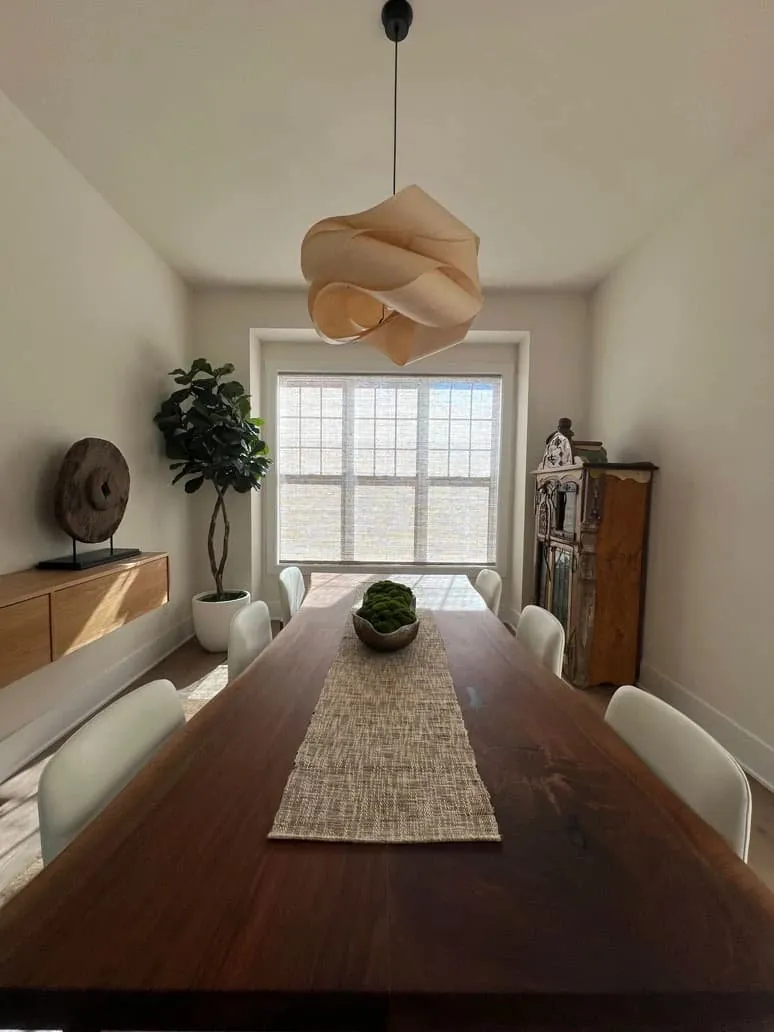
The main work of a roman shade is done by its fabric, so we spend most of the consultation on it. On the coast that means looking at three things together: how much light you want through the shade, how much the color will be tested by sun, and how the fabric suits an old room.
Sheer and light-filtering weaves are the usual choice for ocean-side living rooms. They soften glare and keep the view, and in a pale color they keep their look longest. Lined fabrics have more body and block more light; they suit bedrooms and rooms that need protecting while the house is closed. Room-darkening linings are for bedrooms where you want to sleep past the early summer sunrise.
Texture matters in an antique house. A linen-look weave or a woven roman suits plaster walls and wide floorboards better than a shiny modern fabric. A small check or stripe in a Carole Fabrics flat fold brings a little color to a kitchen or a back bedroom without looking out of place.
PowerView for a house you leave behind
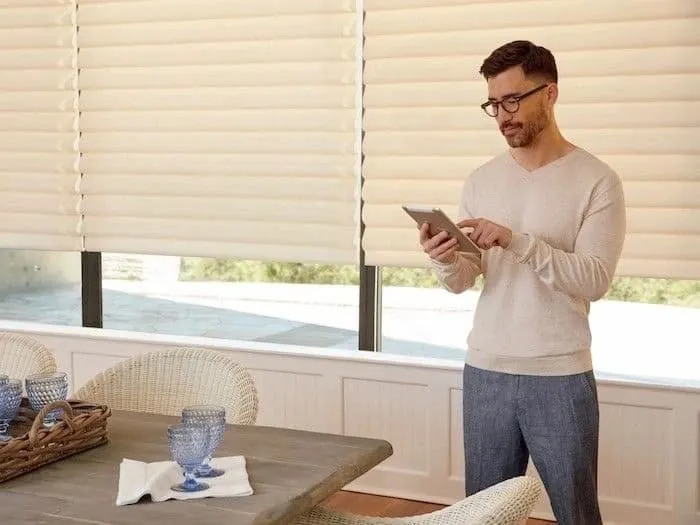
PowerView motorization is useful in any house with hard-to-reach windows, but in a seasonal house it does something more. Schedules raise and lower the shades on set times, so the house never sits with every shade down, and the strongest sun is kept off the furniture. From your phone you can adjust them wherever you are.
When you are in residence, the same system lowers the ocean-side shades when the afternoon glare arrives and opens them again for the evening light. We demonstrate the remote and the app on a working sample at the consultation, and once the shades are installed we can help set up the first schedules.
The summer kitchen and the back porch
Many old farmhouses here have a kitchen at the back, sometimes in an ell or a former summer kitchen, with a window over the sink and a door out to a porch. These rooms take the hardest use and often face a garden or a field where the morning sun comes in low.
A flat fold in an easy-care fabric suits a kitchen window, lowering to a tidy panel and lifting clear of the taps. On a porch door, a slim shade mounted on the door itself, with hold-down brackets, keeps the fabric from swinging when the door opens. A matching fabric through the kitchen and the door ties the back of the house together.
What the visit looks like
An antique house is hard to judge from a photograph, and fabric is hard to judge anywhere but at the window. Our vans carry samples, so we can bring the showroom to you, whether the house is on the Commons or at the end of a long lane near the Point.
- You request a consultation online or with the call button, and we settle a time while the house is open.
- We bring roman fabrics in every weight, woven samples and working examples of each fold and lift.
- We go through the house with you, starting with the ocean-side rooms where the light is strongest.
- You see the fabrics against your own windows, panelling and floors.
- We measure each window carefully, noting reveal depth and any hardware.
- You receive a free estimate and can decide in your own time, even after you have closed the house for the season.
If you want help with the colors and fabrics for the whole room, ask about our interior design consultations. There is more about what happens at an in-home consultation on its own page.
Vignette or Carole Fabrics for an old house
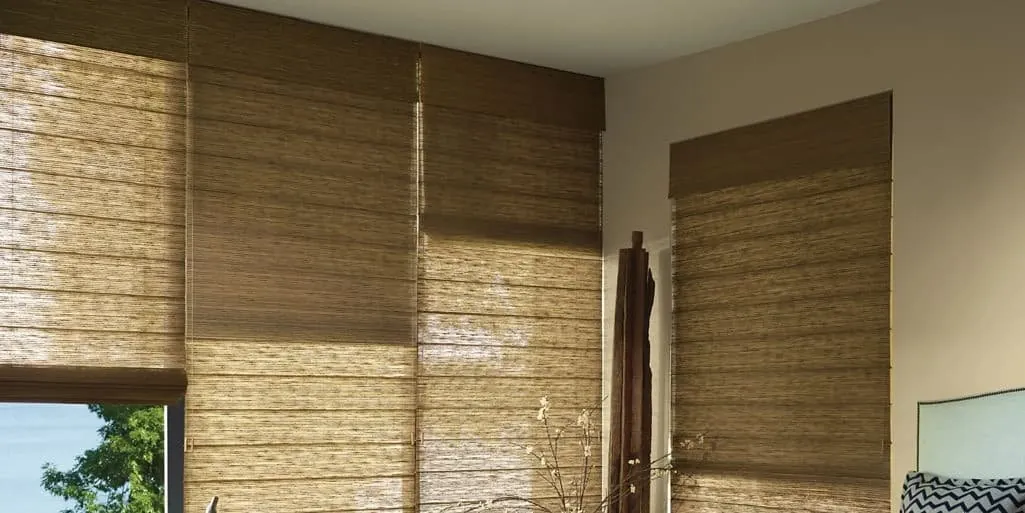
Vignette is Hunter Douglas’s modern roman shade. Its fabric rolls into soft, even folds and there are no cords across the back, so the shade looks finished from outside, which matters on a house seen from the road across an open field. Carole Fabrics offers the traditional flat and soft folds in a very large fabric library, including the plain linens, checks and stripes that suit an antique room.
Many orders for roman shades in Little Compton mix the two: Vignette on the ocean side, where the shades are seen from outside and the light is strongest, and Carole Fabrics in the kitchen, the bedrooms and the small rooms around the chimney. Our main roman shades page covers the range, with more on Carole roman shades and the Alustra Woven Textures roman.
Measuring small original sash
Small antique windows leave no room for error. A shade that is slightly too wide catches the frame; one slightly too narrow lets a bright line of light down each side. Because frames in old houses have moved over the years, we measure each one at the top, middle and bottom of the opening and at both sides and the center of its height, and check the depth of the reveal at more than one point.
We note any sash locks, old pulleys or interior storms that would get in the way, and agree the mount with you for every window before ordering. When the shades arrive, our certified installers fit them, level each headrail, test every lift and show you how they work. That patience is what makes roman shades in Little Compton look as though they had always been there.
What a Gallery dealer means for you
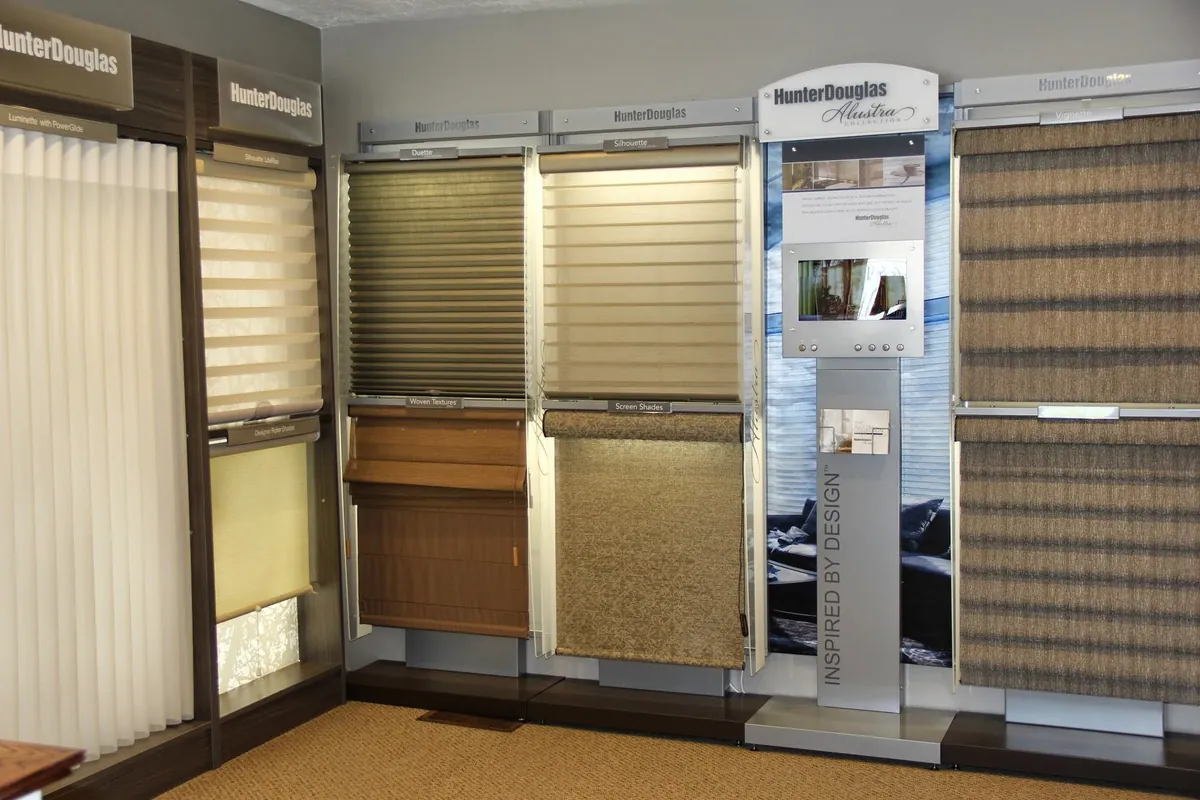
Gallery dealer is the title Hunter Douglas gives to dealers who meet its standards, and Blinds & Designs holds it. The practical result for you is choice: the full roman range, from every Vignette and Carole Fabrics style to the woven textures, lift systems and PowerView, at a single consultation.
Each of our installers is certified by Hunter Douglas, so the shades are hung as designed and checked before we go. We also take on blind and shade repairs if anything needs attention down the road.
The same visit can cover the rest of the house, whether that means plantation shutters in Little Compton for a bathroom or motorized blinds in Little Compton for the ocean side. Everything we do in town is on our Little Compton page.

However far down the lane
A farmhouse at the end of a long lane is as easy for us as a cape on the Commons. We bring the sample books and working shades, sit down with you and look at each window in its own light.
If you would like to see the range in person first, the North Dartmouth showroom is our nearest to Little Compton, across the state line in Massachusetts.
Questions from Little Compton
My antique cape has small windows with shallow frames. Can a roman shade fit inside?
Often, yes. We measure each window at several points and check the depth of the reveal. If it is too shallow or a sash lock is in the way, we mount the shade on the face of the casing instead.
How do I protect my floors and furniture while the house is closed?
Lowering lined roman shades before you leave keeps out most of the sun. With PowerView, you can set a schedule so the shades move while you are away, and adjust them from your phone.
Which fabrics hold up near the ocean?
Light neutrals, soft grays and natural tones hold their color longest under strong sun, and a lining helps protect the face fabric. Most of the working parts sit inside the headrail, away from the salt air.
Do I need lined shades if there are no neighbors?
In living rooms, a light-filtering fabric is often enough. Bedrooms usually benefit from a lining, and at night a lined shade stops a lit room being seen from the road.
Do you charge for the estimate?
No. After we measure, you get a free estimate. Request a consultation and we will bring the samples to your house.
Book while the house is open
The best time to choose is while you are there to see the light in your own rooms. Request a consultation and we will bring Vignette, Carole Fabrics and woven samples to the house, measure every window and give you a free estimate for roman shades in Little Compton, RI. If you would like to talk first, use the call button, or visit the North Dartmouth showroom.