
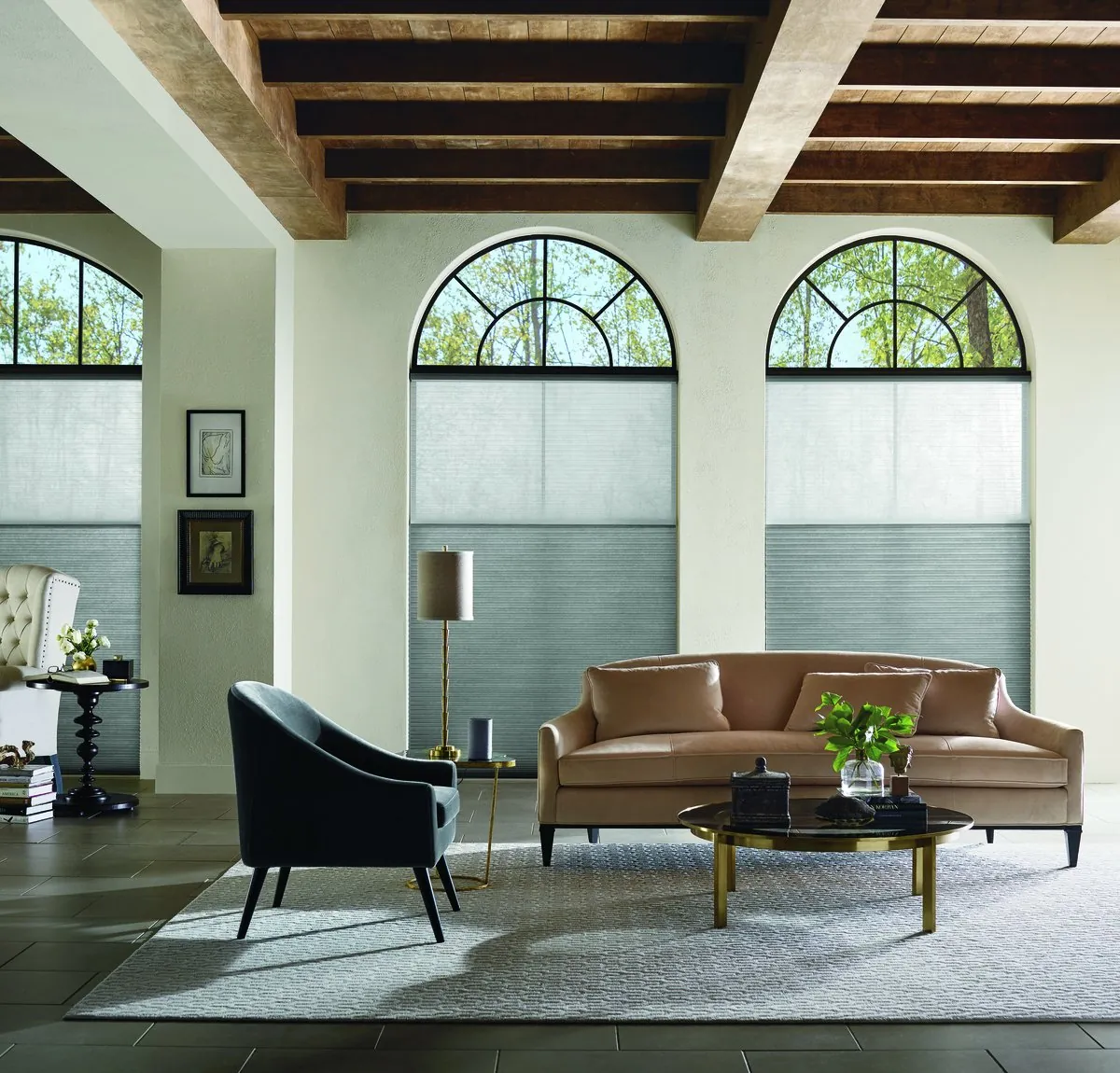
Bay side and sound side, two eras of house
Yarmouth runs from Cape Cod Bay down to Nantucket Sound, and the houses change completely along the way. On the north side, Route 6A winds past antique capes with small-paned sash, low ceilings and windows tucked under the eaves. On the south side, South Yarmouth is filled with post-war ranches and cottages set close together on smaller lots, with wide windows and sliders. Two very different eras of building, and two very different kinds of light.
That contrast is the starting point whenever we plan cellular shades in Yarmouth, MA. Houses on the bay side look north and get even, gentle daylight, so their windows are mostly about holding in warmth. Houses on the sound side look south and take strong sun for much of the day, so glare and summer heat come into it as well.
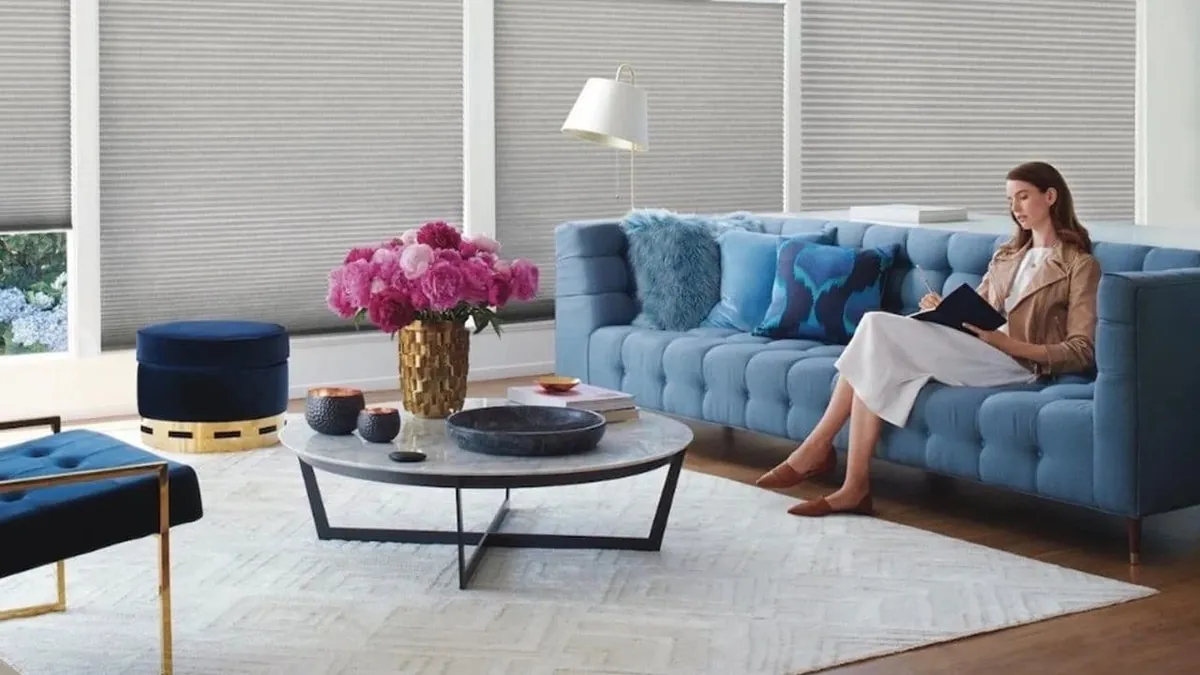
A honeycomb shade can be set up for either. The fabric is shaped into a stack of air pockets, and with the shade lowered the air inside them sits still, a soft insulating layer between the pane and the room. Choose the fabric, cell and lift to suit the house, and the same product serves an old cape on 6A and a ranch near the sound equally well.
Honeycomb shades we fit in Yarmouth
Samples of each come with us on the van, so you can see them at your own windows.
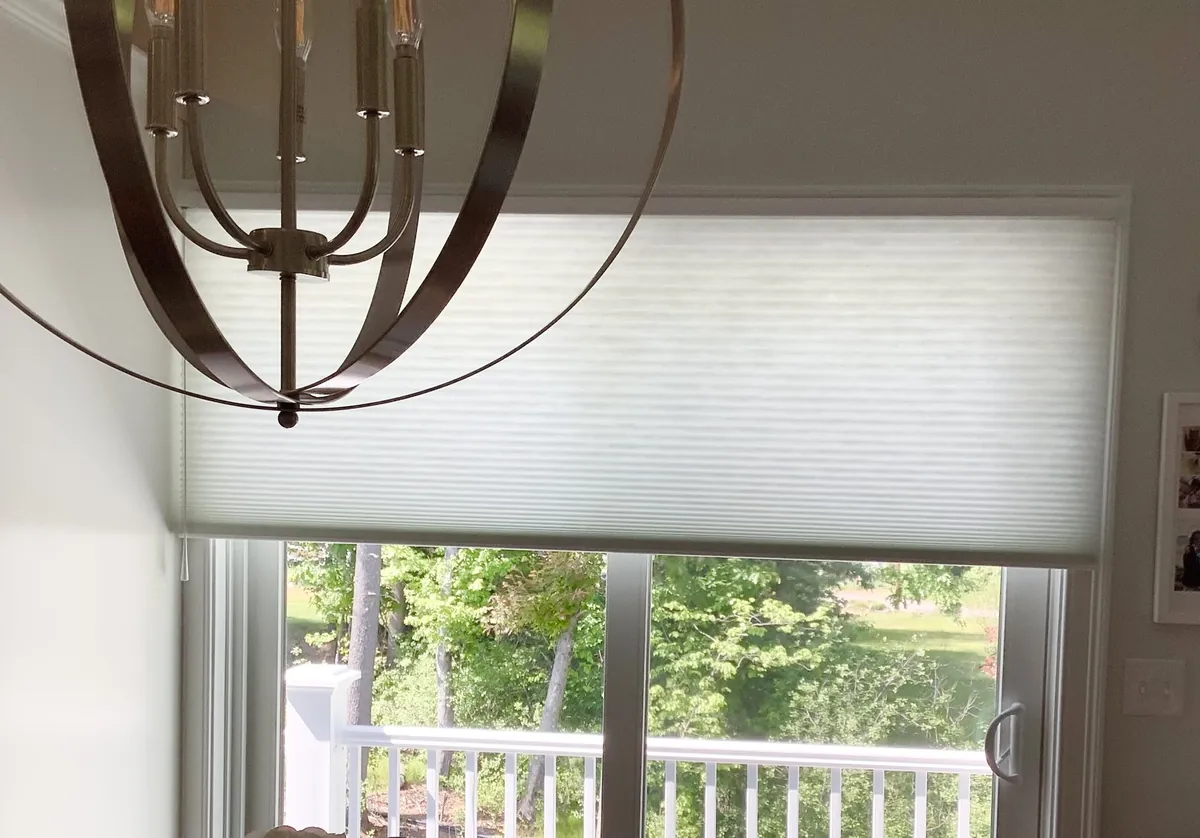
Cordless on the slider
A honeycomb across the back slider of a South Yarmouth ranch keeps the door from being the coldest spot in the room.
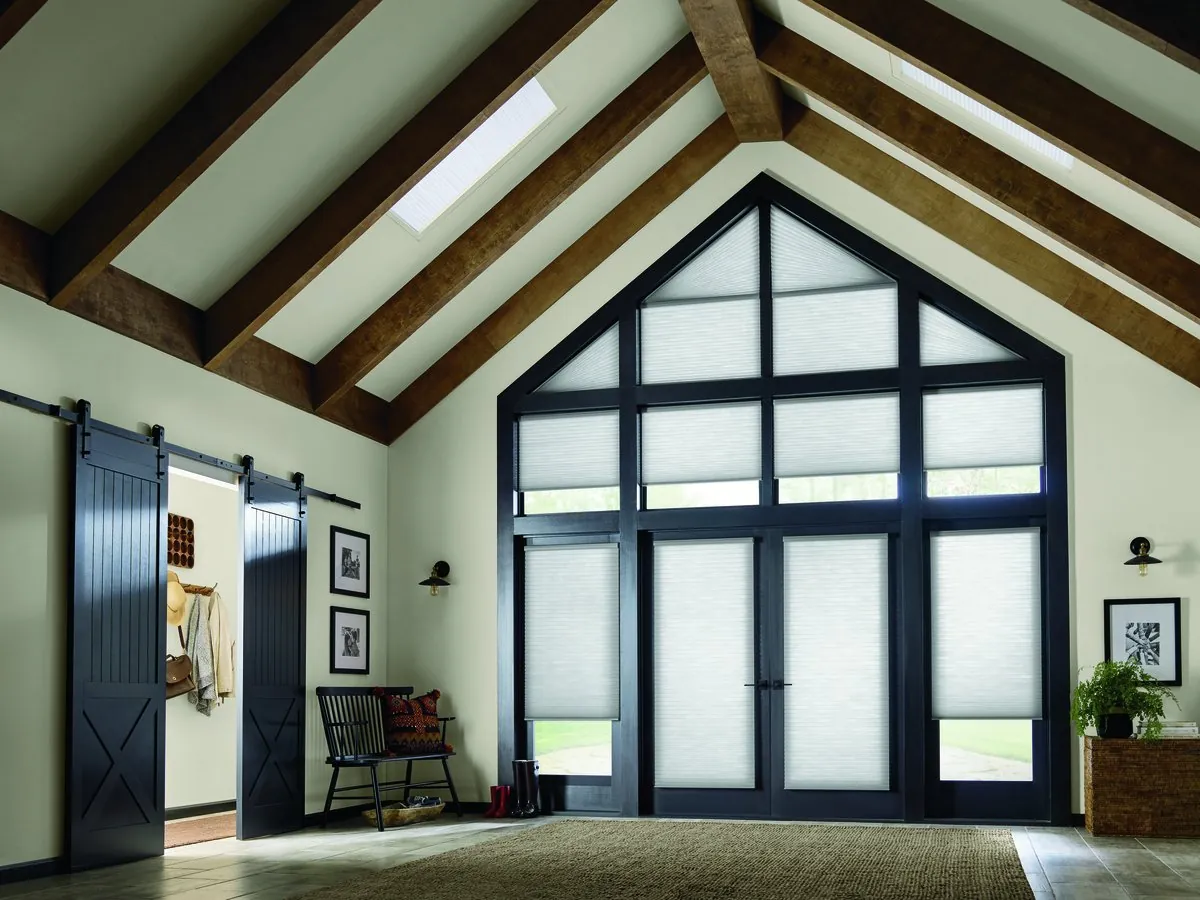
Shapes for odd windows
Duette in specialty shapes and small sizes, for gable windows, angled tops and the tiny sash of an antique cape.
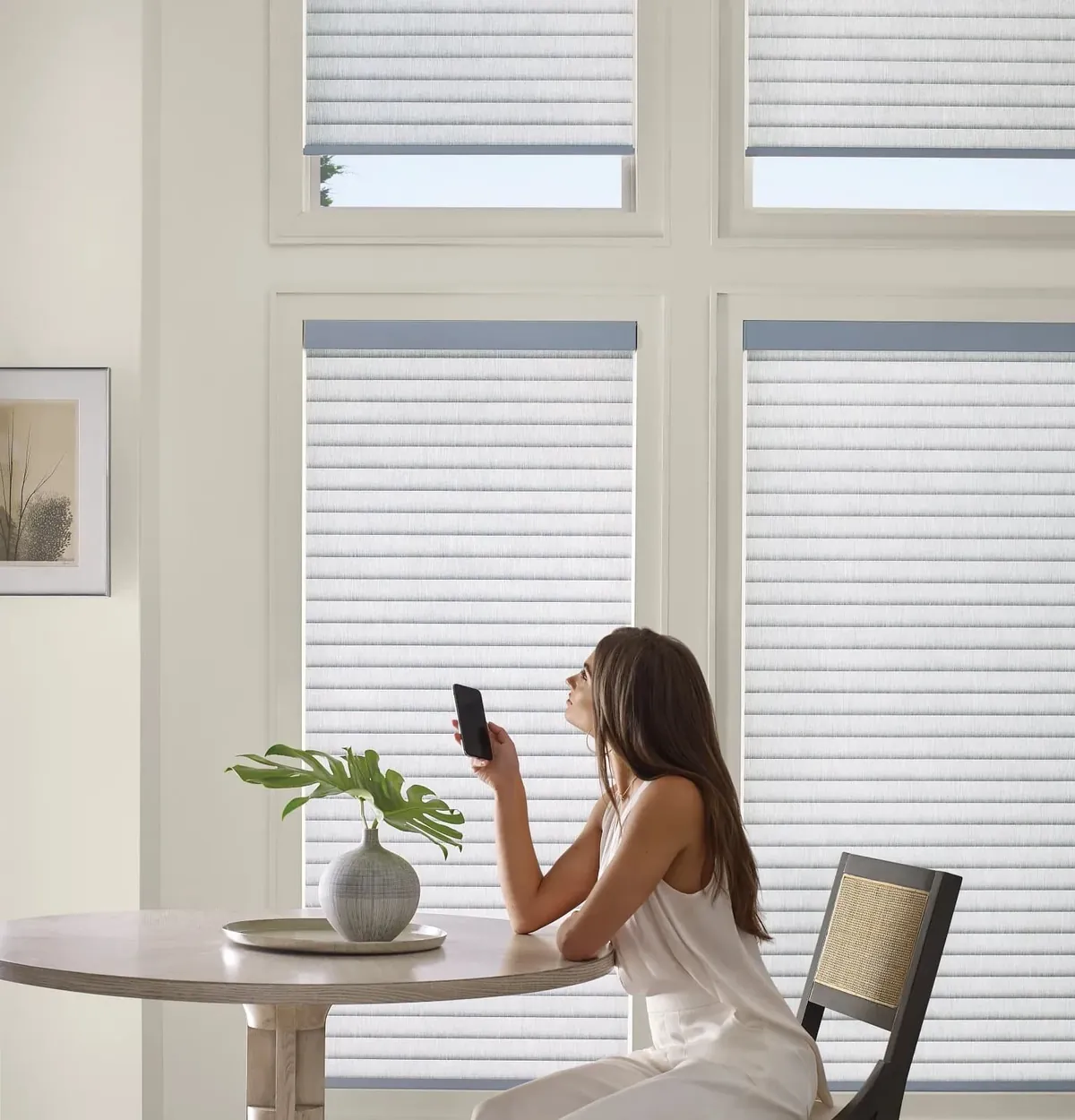
Shades that follow a schedule
PowerView lowers the sunny side of the house through the hottest hours and raises it again later, from your phone or on a timetable.
Antique capes along Route 6A
The stretch of 6A through Yarmouth Port is lined with some of the oldest houses on this part of the Cape. Many are classic capes: a steep roof, a central chimney, and small multi-pane windows set into thick walls under the eaves. Inside, rooms are compact and ceilings are low, and the windows sit well back from the room in deep openings.
Those recessed openings are made for a honeycomb shade. Tuck the headrail up inside the reveal and, once raised, the shade is a thin line you hardly notice, with every inch of the original moulding left visible. Let it down and the fabric sits flat to the glass, adding warmth but taking no space from a room that has little to spare.
Centuries of settling leave very few Yarmouth Port windows true. A frame can be noticeably narrower at the sill than at the head, and the old sash pulleys and parting beads eat into the room a headrail wants. So every window gets measured in three places each way, with the reveal depth checked along its length, before anyone talks about mounts. When the reveal is too shallow, we fix a narrow headrail to the face of the trim instead, which still looks neat.
The other thing a 6A cape is short of is daylight. Deep eaves shade small windows, and a dense fabric would turn a parlor into a cave by mid-afternoon. A pale, light-filtering honeycomb lets the room keep every bit of brightness it has, while still blocking the view in from passing traffic. If extra warmth is the aim, pick a double cell in that same pale fabric rather than a darker one.
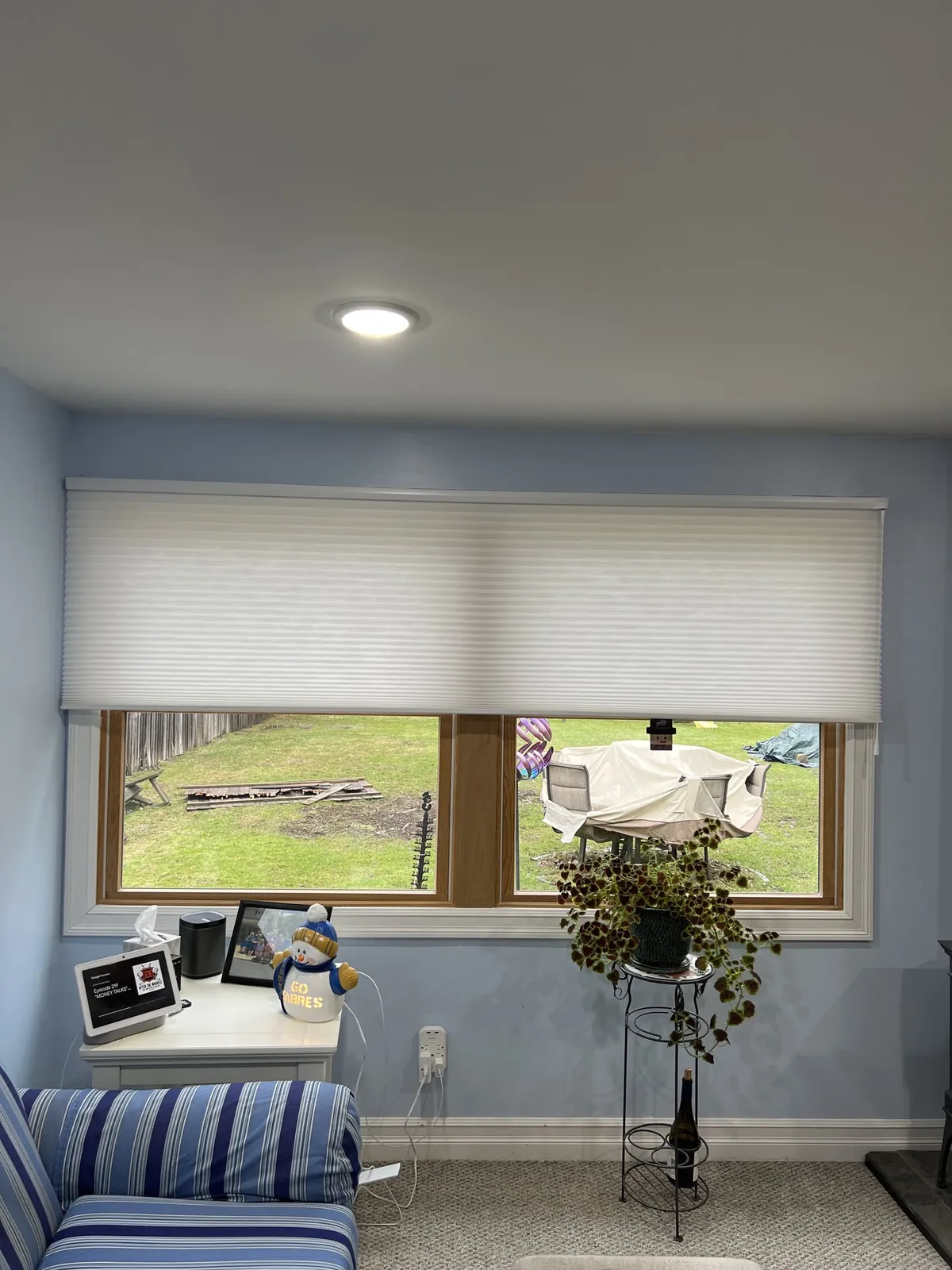
Soft northern light on the bay side
Because the 6A houses face north toward the bay, they rarely suffer the hard, direct sun that south-facing rooms do. The light is steady and cool, which painters love and which makes the rooms feel calm. The trade-off is warmth. North-facing glass gets little help from the sun in winter, and a cold pane in a small room is noticeable.
For these windows we usually lean toward warmth. A double-cell honeycomb holds two layers of air in place of one, so a north window loses its chill without the room becoming dim. Color matters too: a warm ivory or soft sand fabric on the room side can make a cool north room feel more inviting, while a white backing on the street side keeps the front of the house looking traditional from 6A.
Along this stretch of 6A, the look from the road carries real weight, and houses in the historic corridor are often treated with special care by the people who live in them. A shade’s street-facing side is part of that look. The answer is a two-tone shade: Duette and Applause can be made white or ivory where they meet the glass and any shade you like on the room side, so the front of a cape stays crisp and even while the rooms behind it get color. Any rules or preferences you work to, share them at the visit and the fabric choice will follow them.
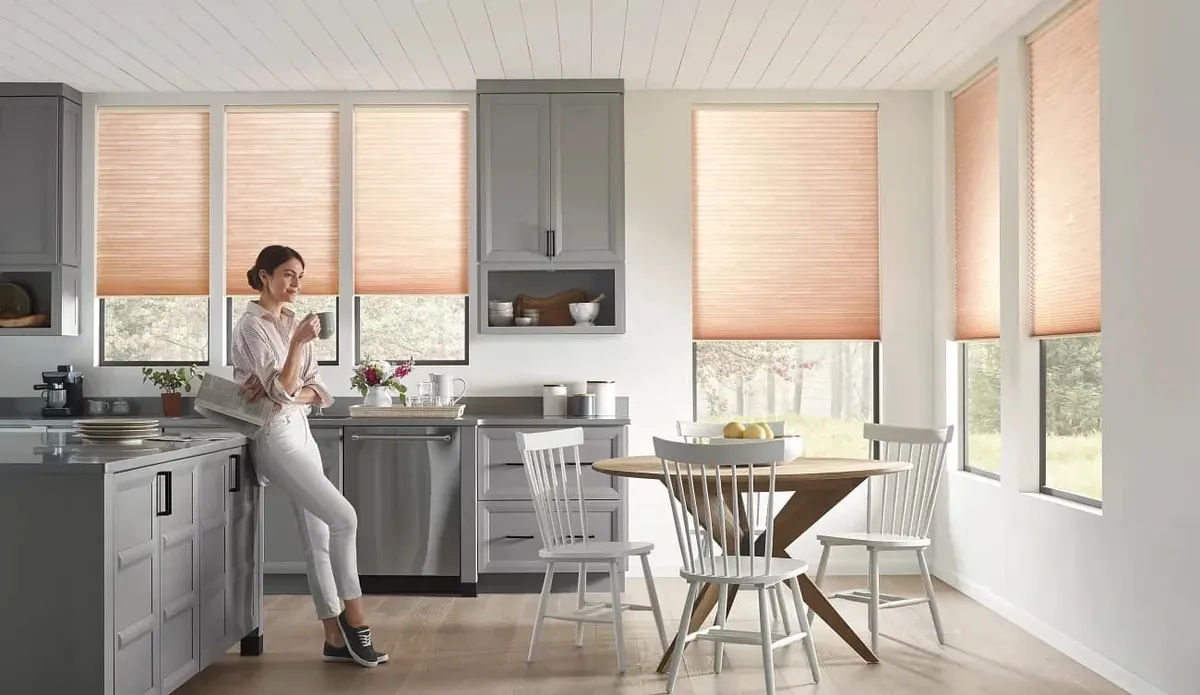
Kitchen wings, dormers and later additions
Few capes on 6A stayed the size they were built. Over time most gained a kitchen wing or ell, a dormer to make the upstairs usable, and perhaps a family room off the back with modern windows and a slider. The result is a house where a twelve-pane sash and a contemporary casement may be one doorway apart.
Honeycomb shades bridge that gap well. Every shade is made to its own opening, so the tiny original windows and the larger new ones can share one fabric and color, and the rooms read as one house rather than a collection of eras. Dormer windows, set deep in their little alcoves, take an inside-mount shade very neatly, and a top-down lift in an upstairs bathroom keeps the lower glass private while letting light in high.
The additions are usually the rooms with the most glass and the most exposure, so they often need a heavier fabric or a double cell, while the original rooms stay in a lighter weight. When we plan cellular shades in Yarmouth, MA, for an extended cape, we decide fabric weights room by room and keep the outward-facing color the same from the oldest window to the newest.
South Yarmouth’s post-war ranches and cottages
Head south toward the sound and the streets fill with post-war ranches and small cottages, many of them built close together on compact lots. The windows here are wider and lower: a picture window at the front, horizontal windows in the bedrooms, and a slider to the back yard. Plenty of the cottages were built for summer and have since been winterised for year-round living.
These houses are straightforward to fit, because the windows are mostly regular and square. The questions are about light, heat and privacy. With neighbors close on both sides, side windows often face straight into the next house. A top-down shade lets you lower the top for daylight while keeping the bottom covered, and a light-filtering fabric screens the room by day and with lamps on at night.
The picture window at the front of a ranch is usually the biggest heat leak in the house. If it is wider than a single shade, we split it into two or three shades on a shared headrail that rise and fall together, or separate them so you can open one end and keep the other closed. The back slider takes a vertical honeycomb, which draws aside to one end and matches the windows beside it.
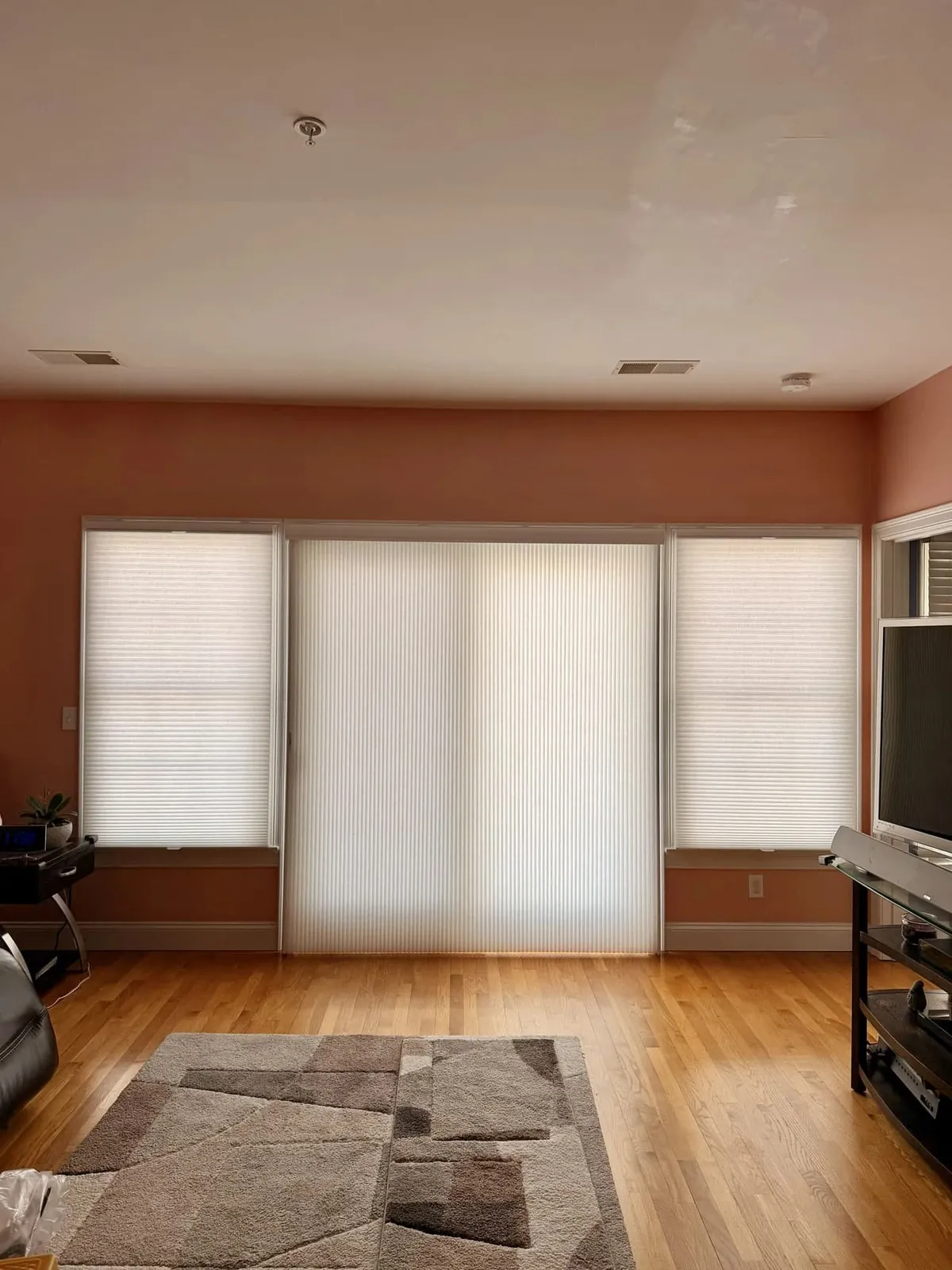
Strong southern sun near the sound
The sound-side houses face south, and in summer that means strong, direct sun through the main living rooms for much of the day. Ranches with big front windows and cottages with porches facing the water can heat up quickly, and the glare across a television or a kitchen counter is hard to live with.
Here the shade has to handle heat and light as well as warmth. A light-filtering honeycomb softens the light and spreads it evenly, so the room stays bright without the harsh patch on the floor. On the sunniest windows a heavier fabric or a double cell slows the heat more. For bedrooms, a room-darkening cell keeps the early sun out until you choose to let it in.
Fading is a quieter concern on this side of town. Floors, rugs and upholstery near south windows lose color over the years if the sun sits on them every afternoon. Lowering the shades during the brightest hours, or letting PowerView do it on a schedule, slows that down. Cellular shades in Yarmouth, MA, set up this way protect the furnishings as well as the comfort of the room.
One house, or one town, two fabric plans
What works on a 6A cape is not always right for a South Yarmouth ranch, and even inside one house the north and south rooms may need different fabrics. Here is how we usually think it through:
- Start with the direction each room faces. North rooms get gentle light and need warmth; south rooms get strong sun and need glare and heat control.
- Choose the cell. Double cell for the coldest rooms, single cell where light and simplicity matter more.
- Choose the opacity. Light-filtering for living spaces, room-darkening for bedrooms that catch the morning or evening sun.
- Choose the outside color. A white or neutral backing keeps the house consistent from the street.
- Choose the lift for each window, cordless, top-down or PowerView, depending on how high it is and how often it moves.
Working through those steps at the consultation means every room ends up with a shade that suits it, while the house looks like one project from outside. That is the approach we take with cellular shades in Yarmouth, MA, wherever in town the house is.
Why the pockets keep a room warm
Look at the edge of a honeycomb shade and you can see how it works: two or more layers of fabric joined into a row of six-sided pockets, stacked one above the next. Lower the shade and every pocket holds a thin layer of air. Heat travels easily through air that is moving and slowly through air that is held still, so that layer works as a buffer between the window and the room.
On a north-facing cape window in January, the buffer keeps the cold from creeping in off the glass. On a south-facing ranch window in August, it slows the sun’s heat on its way into the room. A double-cell shade adds a second row of pockets and a second layer of still air, which is why we often recommend it for the coldest rooms in an antique house.
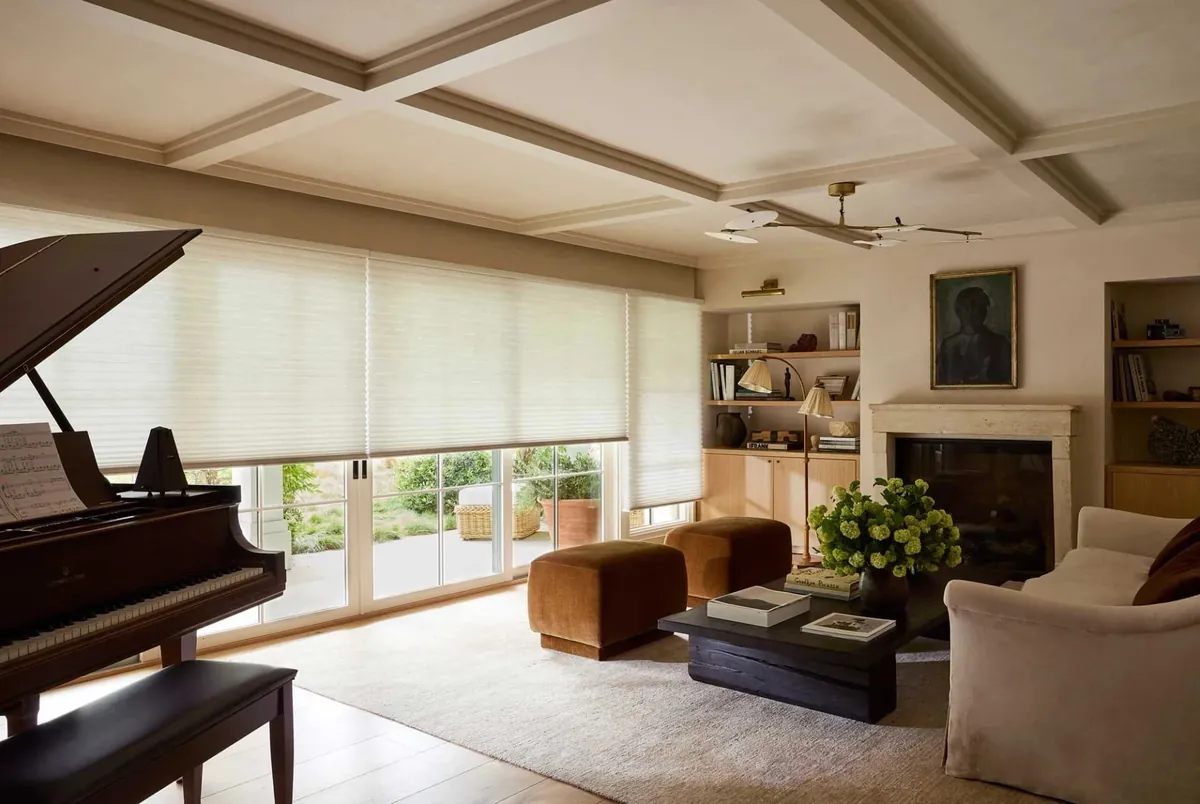
Duette and Applause, side by side
The two Hunter Douglas honeycomb names are Duette and Applause. Think of Duette as the specialist: tiny panels for cape sash, very wide ones for a ranch picture window, arched and angled shapes, and the side-drawing shade for a slider, all across the largest fabric library. Applause is the all-rounder, a collection with its own colors and weaves that dresses most everyday windows beautifully. Underneath, both rely on air held in their pockets.
So a Yarmouth Port cape often has Duette in the tiny sash and the gable, and Applause in the kitchen wing added later. On a South Yarmouth ranch the picture window and slider usually go Duette, the bedrooms Applause. Matching backings make the exterior consistent either way. Read more on the Duette and Applause pages, or browse the full cellular shades range. Mixing the two lines is one of the easiest ways to get cellular shades in Yarmouth, MA, that suit every window in an old house and a newer one.
What happens when we visit
North light and south light make the same fabric look like two different colors, so the choosing happens in your rooms. The sample vans let us carry a showroom’s worth of honeycomb to the door.
- Ask for a time with Request a Consultation, or ring through the call button.
- The van comes stocked with Duette and Applause in a wide spread of colors, weights and cell types, with every lift on hand to try.
- Room by room, we note which way each one faces, bay or sound, and what bothers you there: cold, glare or neighbors.
- Fabrics go up against each pane so you judge them in that room’s own daylight.
- Openings are measured, reveal depths recorded, and any old sash hardware noted.
- You receive a free estimate and think it over for as long as you like.
- When your shades are ready, Hunter Douglas certified installers hang and level them and walk you through each control.
Need help choosing color and fabric for the room as a whole? An interior design consultation can join the same appointment, and our guide to what happens at an in-home consultation explains the visit in more detail.

A Gallery dealer on both sides of town
Hunter Douglas reserves its Gallery dealer title for dealers who meet its standards, and Blinds & Designs is one of them. Whether your house is a cape on 6A or a ranch near the sound, the full honeycomb range is open to you, from the smallest Duette shade to PowerView across a whole house.
Fitting is done by Hunter Douglas certified installers, and later repairs to blinds and shades come back to us as well. The Yarmouth Hunter Douglas dealer page has the details.
Other rooms may suit other treatments. See plantation shutters in Yarmouth for a cape’s front room, motorized blinds in Yarmouth for the hard-to-reach windows, or our Yarmouth page for everything we do in town.

Samples at home, Sagamore up the road
Most Yarmouth customers choose their shades at home, with the fabric held up to the actual window. It is the only way to see how a sample looks in soft bay-side light or in the full sun on the sound side.
Anyone who wants to look before booking can head up Route 6 to the Sagamore showroom, the closest of our locations to Yarmouth. Phone photos and approximate window sizes give us a head start.
Questions from Yarmouth
Will honeycomb shades fit the small windows in my 6A cape?
They will. Duette comes in very small sizes, and a cape’s thick walls usually leave enough reveal for the shade to sit inside the frame. Each window is measured on its own, since settled frames are seldom the same twice.
Which fabric suits a north-facing room on the bay side?
Warmth matters more than sun control there. A double-cell, light-filtering fabric holds back the cold from the glass without making the room darker, and a warm color on the room side makes a cool north room feel more inviting.
What about the strong sun on my South Yarmouth ranch?
A light-filtering honeycomb softens the glare and slows the heat, and a heavier fabric or double cell does more on the sunniest windows. PowerView can lower the shades through the hottest hours on a schedule.
Can the slider match the windows?
Yes. A vertical honeycomb shade draws to one side across the slider in the same fabric as the windows beside it.
What does it cost to have you measure?
There is no charge. Measuring is part of the visit, and the free estimate that follows lists every shade we talked about.
Start with the room that bothers you most
Whether it is a cold north parlor on 6A or a sun-baked living room near the sound, the answer is easiest to see with samples at the window. Book a consultation, and the honeycomb range comes to you, every window gets measured, and a free estimate follows. For a quick question, the call button works, and the Sagamore showroom is open if you would like to browse.