
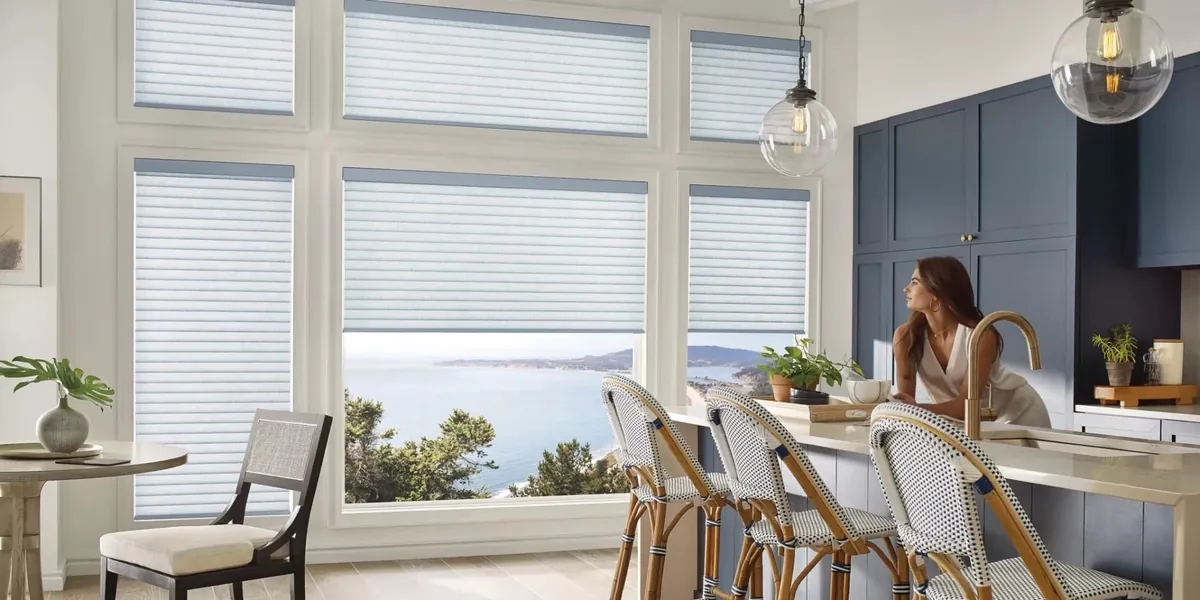
Stacked flats, shingled houses and light off the water
Quincy has several kinds of housing in one city, and each asks something different of a window shade. Across Wollaston and North Quincy, dense two- and three-families stand close together, their front rooms lit by tall, narrow sash. Out on Squantum, the houses are shingled and face a lot more sky. Near the center, older buildings have been turned into condominiums. And on the Squantum and Houghs Neck sides, the coastal exposure brings strong, reflected light.
That range is why roller shades in Quincy, MA, rarely come down to one fabric. A Wollaston flat might need privacy from the house next door on every side window. A Squantum living room might need relief from glare off the water while keeping the view. A condominium bedroom near the center might simply need to be dark.
A roller handles all of it with the same simple form, a flat panel of fabric that rolls away when it is not needed. What changes from house to house is the cloth: light filtering, room darkening, blackout or solar screen, in a color that suits the room and the building.
Fabrics for Quincy windows
Three Hunter Douglas lines cover most of the rollers we plan in Quincy. Each comes in a wide range of colors and weaves, and the sample van brings them all to your door.
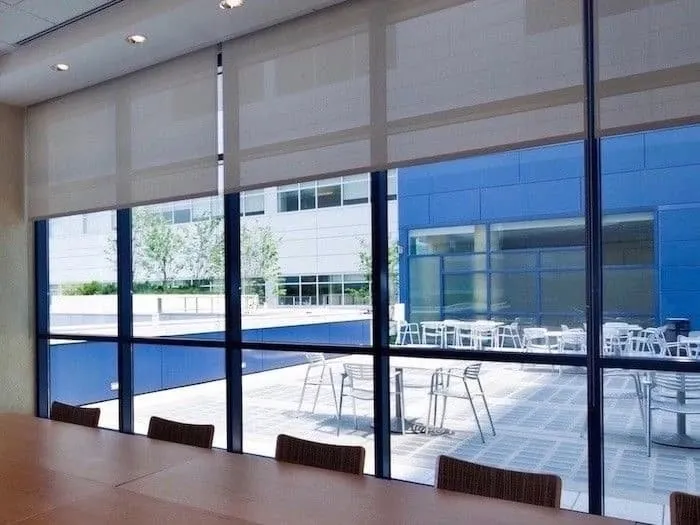
Designer Screen
Solar screen cloth for the bright, exposed rooms on the water side, softening glare while the view stays open.
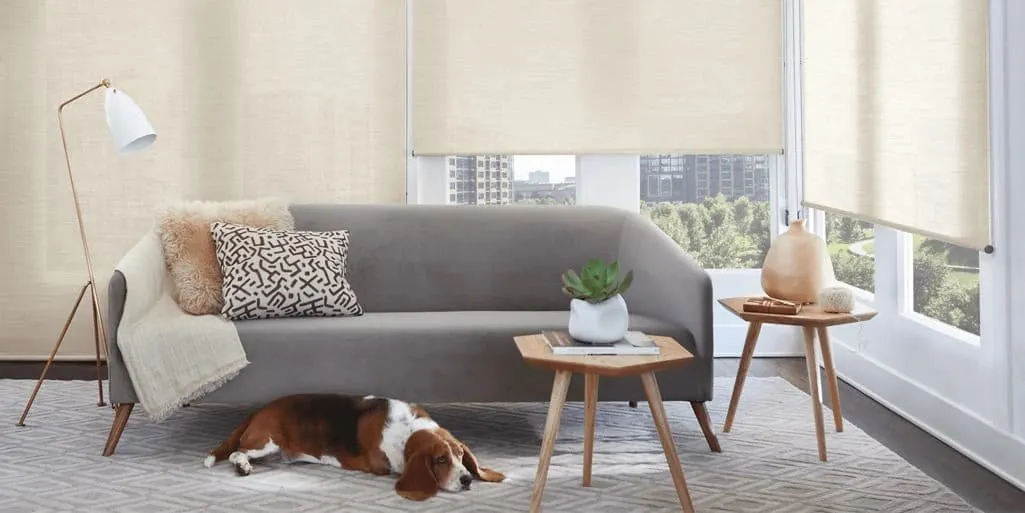
Designer Roller
Plain and textured cloth from light filtering to blackout, for the bedrooms and living rooms of a flat or a house.
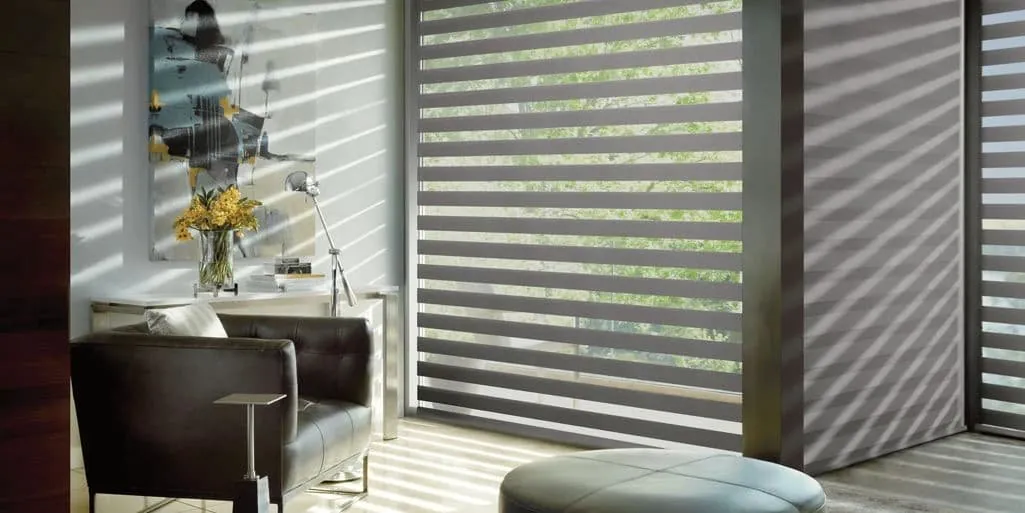
Designer Banded
Alternating sheer and solid stripes that let a side window switch between view and cover in a moment.
Stacked flats in Wollaston and North Quincy
The two- and three-families of Wollaston and North Quincy put one household on each floor, with the same layout repeated up the building. A typical floor has a front room facing the street, a run of rooms along one side and a kitchen at the back.
That repetition makes planning straightforward. Once one floor has been looked at, the others follow a similar pattern, though each still gets its own visit to every window. Owners who live on one floor and rent the others often choose a single neutral fabric for all the street-facing windows, so the building looks orderly from outside, and then let each unit vary inside.
The side of a three-family is where most of the privacy questions come from. With houses close together, the side windows of one building can be only a few feet from the side windows of the next. A dining room, a bedroom or a bathroom along that wall can be in full view of the neighbors. For those windows, a light filtering roller is often the starting point: it keeps the room bright while turning the view into a soft blur.
Tall narrow sash in a front room
The front rooms of Quincy’s older two- and three-families are often lit by tall, narrow sash, sometimes two or three across a bay. They are good windows, bringing in plenty of light from the street, and they suit a roller well because a raised shade tucks up near the top of the frame and leaves the sash clear.
Tall, slim windows look best when their shades line up, and that is a big part of planning roller shades in Quincy, MA, for an older front room. In a bay or a row of front windows, matching rollers lowered to one height give the room a calm, even look, and they make the front of the building look cared for from the sidewalk. Whether each shade sits inside the frame or across the trim is something we look at window by window, since older frames vary.
On a front room facing a busy street, a fabric that keeps the room private by day without making it dim is usually the aim. A medium-weight light filtering cloth does that well. If the front room doubles as a bedroom, as it often does in a flat, a room darkening or blackout cloth is the better fit.
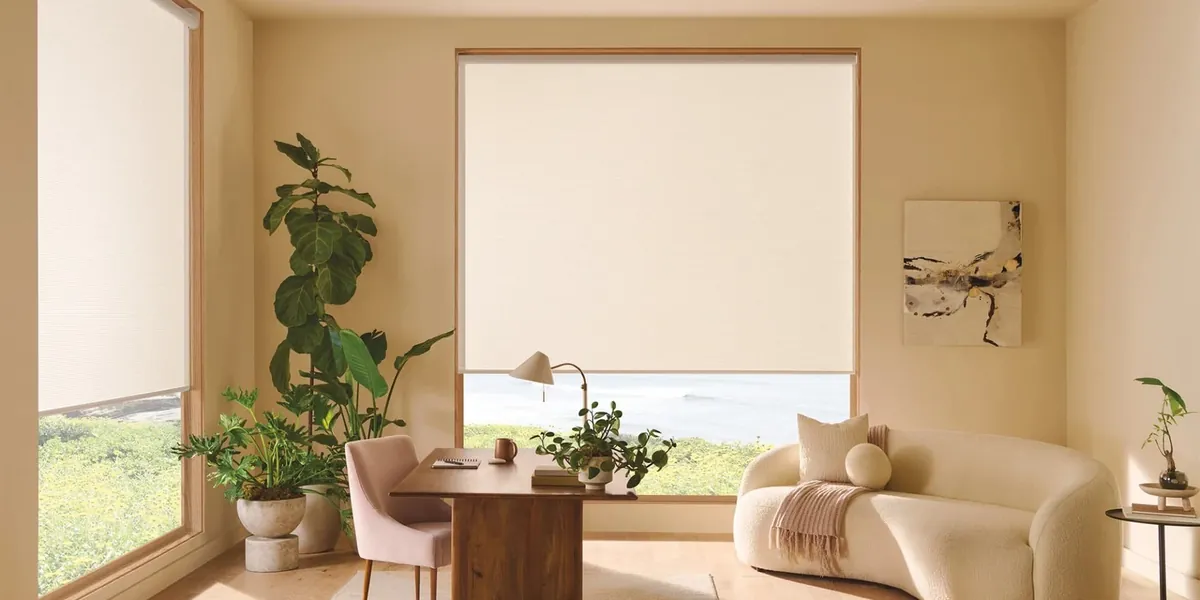
Living a few feet from the next building
Density is the defining feature of much of Quincy’s older housing. Buildings stand close, windows face windows, and back rooms often look across a narrow yard at the back rooms of the next street. A shade here has to work hard for privacy without shutting out what light the window gets.
Banded fabric is particularly useful in this setting. Its two layers of sheer and solid stripes slide past each other, so a small pull moves the window from open to covered without raising or lowering the shade. On a side window you want open in the morning and closed when the neighbors are home, that is a simple way to keep control.
Evening needs its own plan. With the lights on inside, a lighter fabric can show silhouettes to the building next door. For side bedrooms and bathrooms, a room darkening fabric is the safer choice, or a banded shade set to its covered position once the lamps are lit.
Roller shades in Quincy, MA, for a flat in Wollaston or North Quincy are often a mix of these: banded or light filtering on the side windows, a medium cloth at the front, and darker fabric wherever someone sleeps.
Kitchens and back rooms in a three-family
At the back of a Wollaston or North Quincy three-family, the kitchen usually looks across a small yard at the rear of the next building. These rooms often get the afternoon sun and a close view of the neighbors in the same window, which makes them a good test of what roller shades in Quincy, MA, can do.
A light filtering cloth over the sink keeps the room bright while softening the view across the yard, and it stays up out of the way when raised. If the kitchen faces west and the glare is the bigger problem, a tight solar screen is worth comparing, as long as the evening view from next door is handled some other way. A back bedroom off the same hall usually wants room darkening cloth for sleep.
Squantum’s shingled houses
Out on Squantum, the housing changes. The shingled houses there face more open sky and, in many cases, the water. The light is stronger and brighter, and it often reflects off the water into rooms that would otherwise be shaded.
In those rooms, the view is usually a reason the house was bought in the first place, so a shade that blocks it entirely feels like a loss. A solar screen roller is the natural choice: it cuts the hard edge of the glare and keeps the outlook visible through the weave. For a living room facing the water, a darker screen often keeps the view clearest.
The back and side rooms of a Squantum house may face neighbors or the street rather than the water, and those can take the same thinking as anywhere else: light filtering for bright privacy, room darkening or blackout for bedrooms. Choosing a single outward color for all the shades keeps the shingled exterior looking consistent from every side.
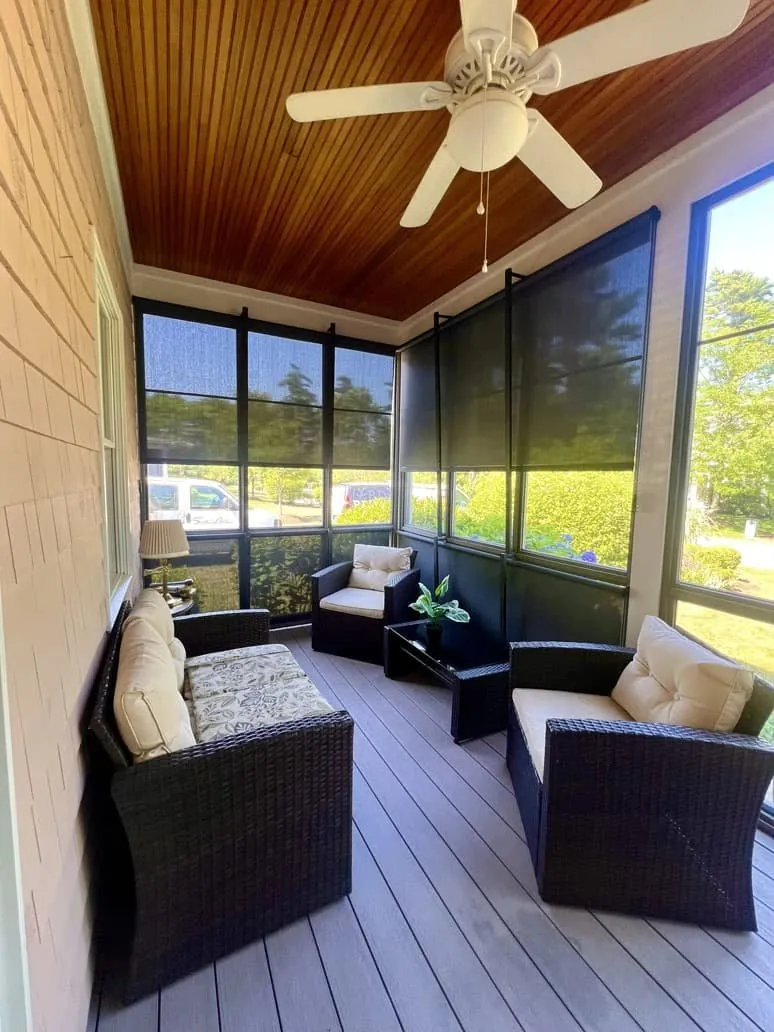
The Houghs Neck side and its exposure
Like Squantum, the Houghs Neck side of Quincy has coastal exposure, and that means bright, wide light for much of the day. Rooms on the water side can be dazzling in the afternoon, especially when the sun is low and its reflection comes off the water.
A solar screen is the main tool for those rooms. It lowers the glare to a comfortable level so you can sit, read or watch television without squinting, while the water stays in sight. On the very brightest walls, a tighter weave gives more relief; on a window where the view is everything, a more open weave keeps the outlook sharper.
Bedrooms facing the water have a different problem: early light in summer. A blackout roller in those rooms makes it possible to sleep past dawn. Some owners pair a screen on the living room windows with blackout in the bedrooms, all in one color, so the house looks uniform from outside.
Condominium conversions near the center
Near the center, many older buildings have been converted into condominiums. These units range widely: some keep the tall sash of the original building, others have newer windows, and many have a mix. Rooms are often smaller and serve more than one purpose.
In a condominium, a roller is a good fit because it takes up little space and looks clean in a modern interior. A living room that also serves as an office can take a light filtering cloth to soften glare on a screen. A bedroom that faces a busy street might want blackout for sleep and privacy.
Many condominium associations have views about how windows look from the street. It is worth checking whether your building has a preference for the outward color of shades before you choose. We bring a wide range of neutral fabrics, so finding one that suits both your room and the building is usually easy.

Glare off the water and how openness helps
When a window faces the harbor side of the city, the brightness arrives twice: straight from the sky and bounced back up off the water. Solar screen cloth exists for exactly that, and the number to understand is its openness.
Openness is simply how much air sits between the threads. Widen the gaps and the water looks sharper, the room gets more daylight and more of that bounced brightness gets in too. Narrow them and the dazzle settles down and the room becomes harder to see into by day, while the far shore turns soft and misty.
Shade of cloth matters nearly as much. Charcoal and bronze screens seem to vanish as you look through them, which is why a water view stays crisp behind them. White and pale linen screens glow, lifting a dim room but clouding the scene beyond. On Squantum and the Houghs Neck side, owners often land on a darker cloth with a middle openness.
Keep in mind that screens are daytime cloth. After sunset, a lit room shows straight through, so an evening room needs something more.
Opacity, floor by floor and room by room
Most Quincy orders mix fabrics. Here is how the range from light filtering to blackout tends to fall across the city’s housing.
- Front rooms of a flat: a medium light filtering cloth for daytime privacy from the street.
- Side rooms close to the next building: light filtering or banded for privacy with light.
- Bedrooms: room darkening, or blackout where the window faces east or the water.
- Water-facing living rooms: a solar screen for glare, with the view kept.
- Condominium rooms that do double duty: light filtering by day, with a darker cloth where someone sleeps.
Your consultant brings every one of these, so you can hold them up at your own windows and see the difference.
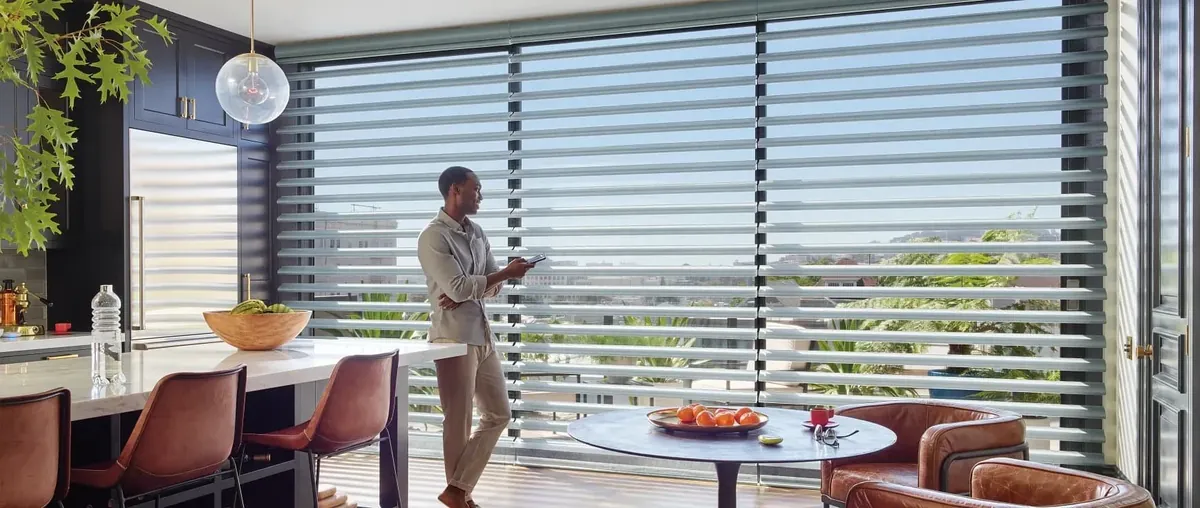
PowerView in a flat or a waterfront house
Hunter Douglas PowerView will drive any of these rollers. Shades answer to an app, a slim remote or a timetable you set once and forget.
Picture a Wollaston flat where the side windows close by themselves as the street lights come on and the bedroom blackout opens at the hour you choose on weekdays. Or a Squantum living room where the water-facing screens slide down through the sharpest hours of the afternoon and rise for the sunset. Grouped as a scene, a bay of tall sash moves as one and stops at one height.
Powering each motor is a point we settle with you during the visit. The page on motorized blinds and shades in Quincy goes further, and our guide to the best shades for sun and glare is good background reading.
Shopping at home in Quincy
Our shop-at-home team covers Quincy, so nobody needs to haul swatches across town. The consultant parks a sample van outside, carries the roller range in and lets you judge each cloth against your real glass. How the territory runs is set out on the Canton shop-at-home page.
Worth doing before the doorbell rings:
- Book online through Request a Consultation, or tap the call button, and mention rollers.
- Sort your windows into three piles: facing the next building, facing the street, facing the water.
- In a condominium, find out whether the association cares about the color seen from outside.
- In a two- or three-family, decide which floors are part of the plan.
- Flag any front room that is slept in, since it needs a darker cloth.
- A free estimate comes with the visit, to weigh in your own time.
For color schemes or a room planned from scratch, our interior design consultations are there too.
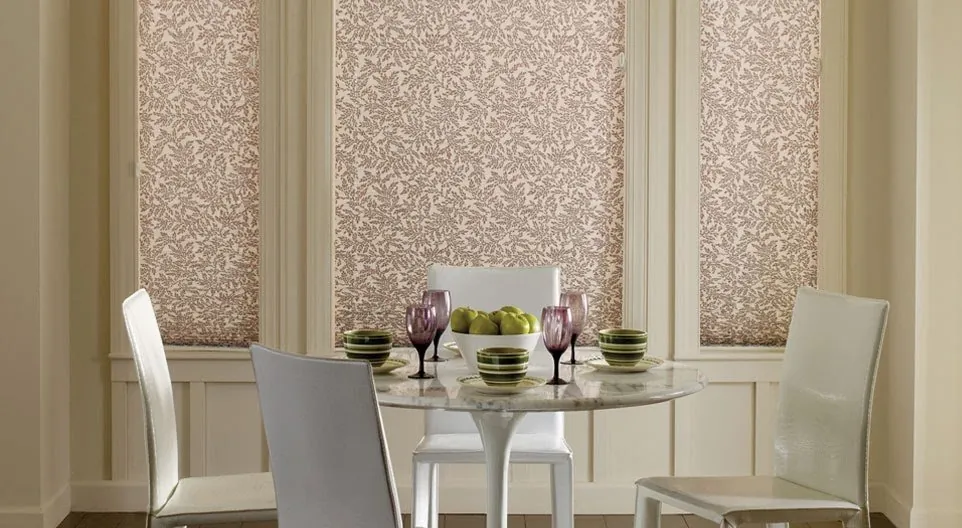
Designer and Alustra for Quincy
Two Hunter Douglas families make up the roller offer. Designer is the big one, spanning plain cloth, textures, screens and banded fabric, and it suits almost any opening from a North Quincy kitchen to a Squantum bedroom.
Alustra is the dressier sibling. Alustra Woven Textures adds a woven surface that warms up a front parlor in a three-family or a living room over the water. Plenty of owners spend on Alustra where guests look and use Designer in the bedrooms and kitchen.
The van carries both families. Every line is laid out on the roller shades overview, and the Quincy page gathers the rest of our local work.
Seeing shades in a showroom
Most Quincy decisions get made at home, where the cloth meets your own light. If you also want to look at shades in a store, the Franklin showroom is our closest.
As a Hunter Douglas Gallery dealer, Blinds & Designs carries the complete Hunter Douglas roller family, and finished shades are put up with certified Hunter Douglas installation. Older shades giving trouble can come to us for blind and shade repair.
If a bedroom wants more insulation than a roller offers, compare cellular shades in Quincy while the van is outside.
Questions from Quincy
Our three-family is very close to the next building. What works on the side windows?
A light filtering roller keeps the room bright and blurs the view. A banded shade lets you switch between seeing out and full cover with a small pull. For evenings, a room darkening fabric is the safer choice.
Can we keep our water view and still cut the glare?
Yes. A solar screen roller is made for that. A darker screen with moderate openness keeps the view clear while taking the edge off the reflected sun.
Do you work in condominiums?
Yes. Rollers suit condominiums well. It is worth checking whether your association has a preference for the outward color of shades before choosing.
Is there a showroom in Quincy?
No. Our shop-at-home team brings samples to you. The nearest showroom is in Franklin.
What does the estimate cost?
Nothing. Every estimate is free, and deciding against it costs nothing either.
From Wollaston to Squantum, start with a visit
A North Quincy flat, a shingled house above the water and a condominium near the center all begin in the same place. Book a consultation and a shop-at-home consultant will carry roller shades for Quincy, MA, homes through your front door, go over each window in turn and hand you a free estimate before leaving. If it is easier, the call button at the head of this page reaches us as well.