
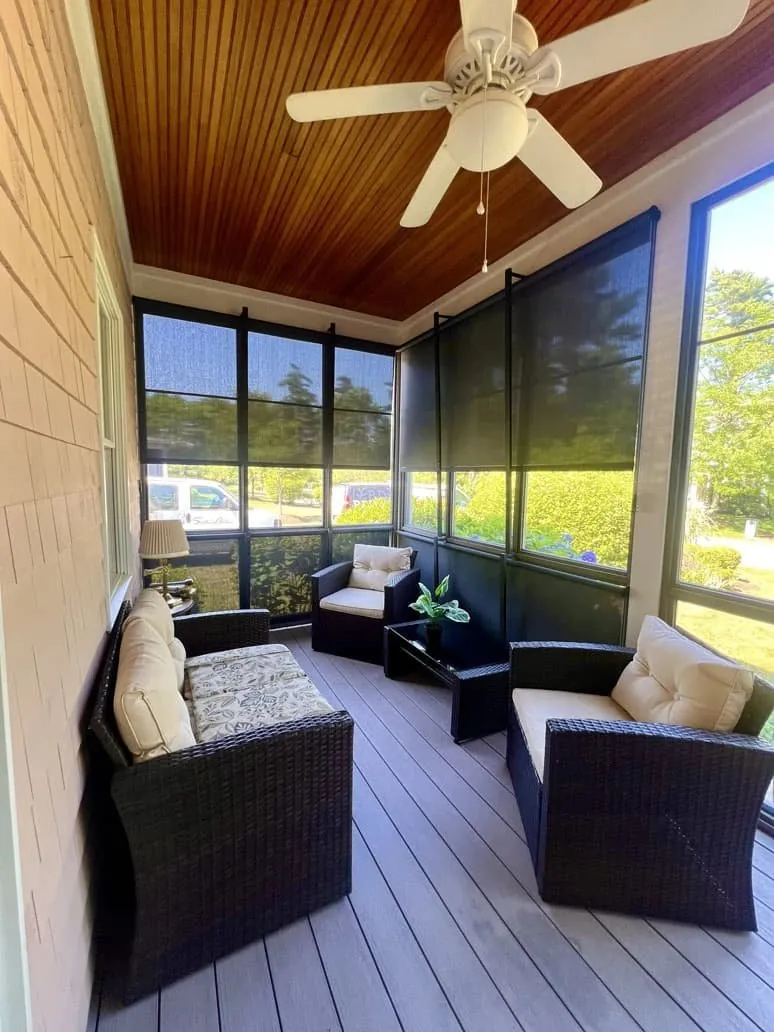
Room to breathe, and a lot of daylight
Most houses in town sit well back from the road on lots with real space around them. Capes and ranches make up much of the older stock, and newer colonials have gone up along the roads off Route 140 and in the neighborhoods around Norton Reservoir. Very few of these houses look straight into a neighbor’s window. What they get instead is a lot of open sky, long views across lawns and trees, and on the reservoir side, bright light bouncing off the water.
That changes the brief for roller shades in Norton, MA. In a tight village street the first job of a shade is privacy. Here the first job is usually managing light: keeping the glare off a television or a desk, stopping a south-facing room from overheating in July, and darkening the bedrooms in summer when the sun is up early, all without giving up the views that are the point of having space around the house.
The good news is that most of these houses have standard modern window openings, square and true. That makes them straightforward to fit, and it means the choice can focus on fabric and openness rather than on working around an awkward frame.
Roller shades in Norton, MA: three lines that suit the town
Our vans carry the full Hunter Douglas roller range. These three are the ones we reach for most often in houses with this much light and this much space.
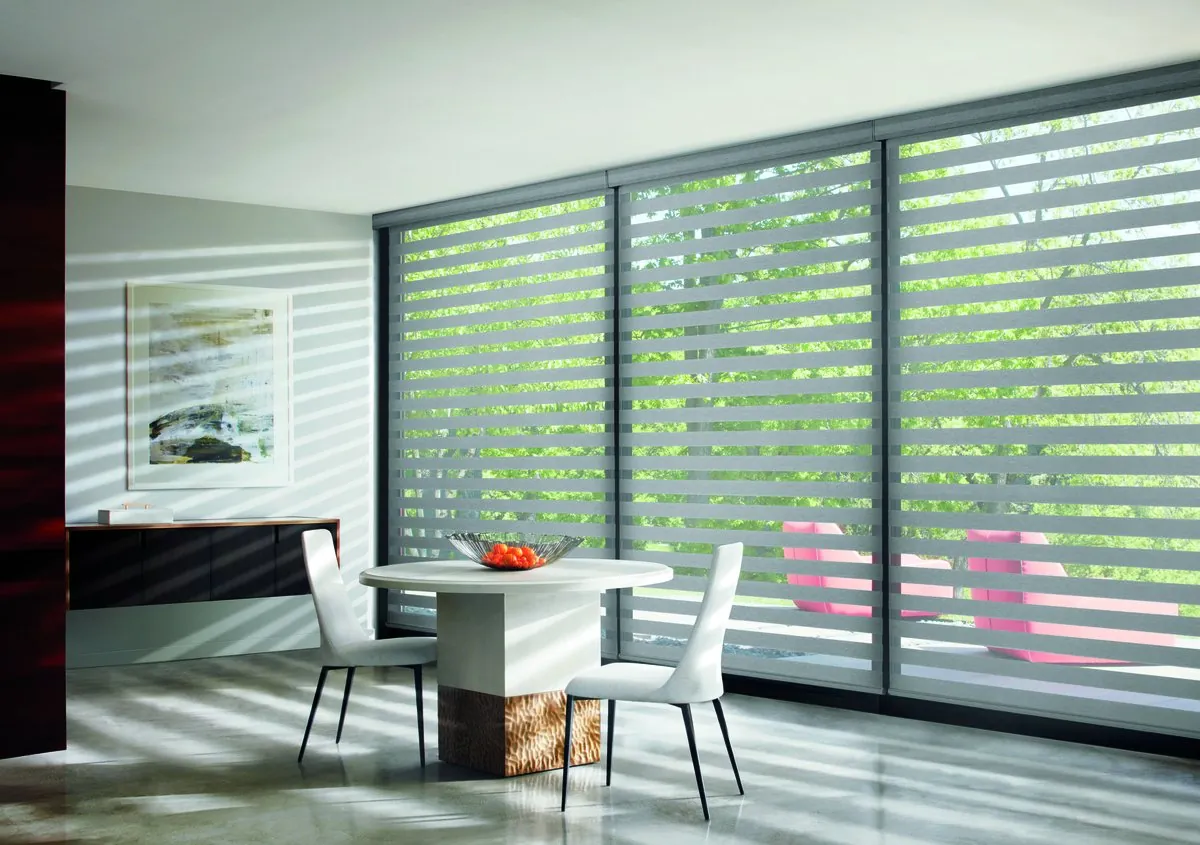
Designer Screen
Solar screen fabric in a range of openness levels, so you choose how much view to keep and how much glare to cut. The first thing we show for a sunny family room.
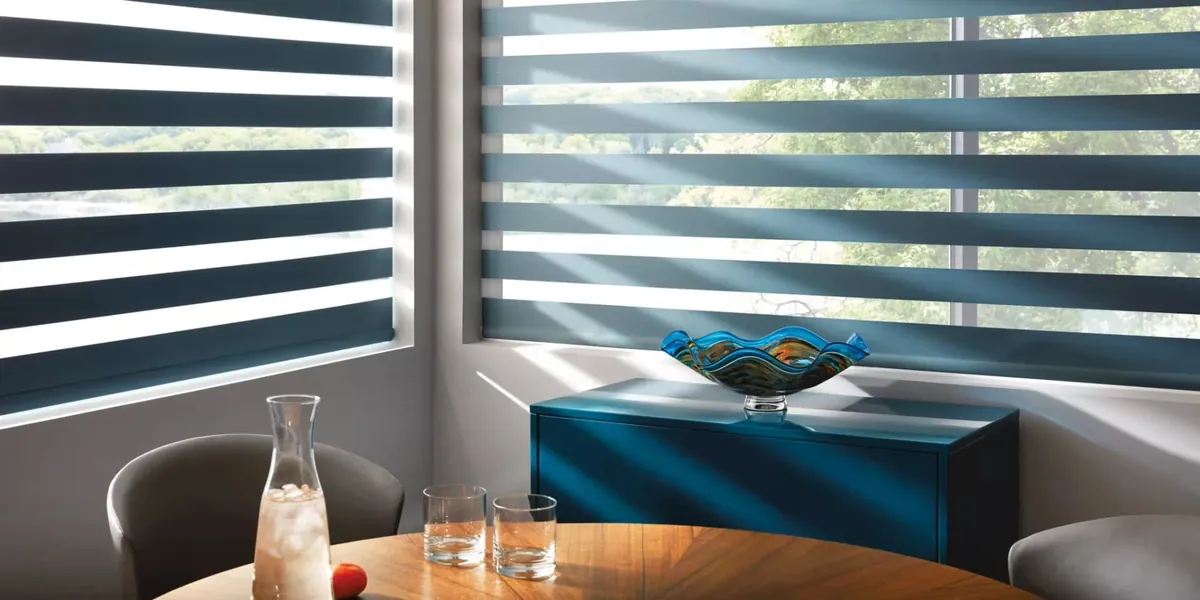
Designer Banded
Sheer and solid stripes that slide past each other to open the view or close it, all in one shade. Good for a dining room or kitchen that wants both moods.
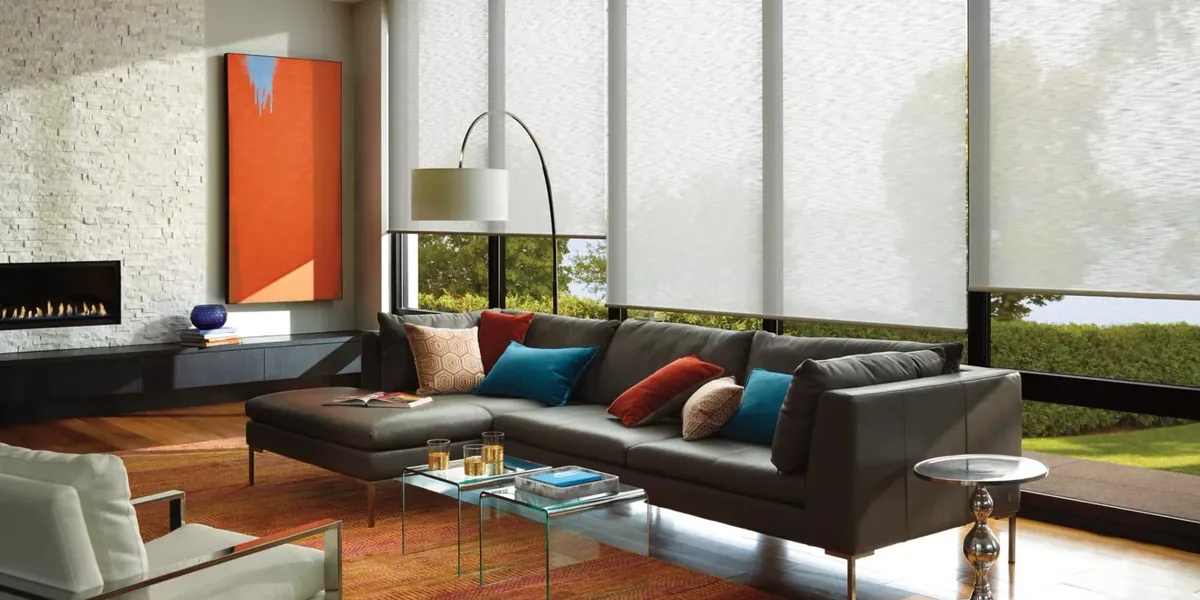
Alustra Architectural
The top tier of the roller family, with its own fabric collection. Often chosen for the main room of a newer colonial with large windows.
Light first, privacy second
On a deep lot, a window that faces the back yard may have nothing but trees and grass in front of it for a long way. You do not need a shade on that window to stop anyone seeing in during the day. You may well need one to deal with the sun. That is why solar screen fabric does so much of the work in Norton houses.
A screen is a woven fabric with a measured amount of open space in the weave, called its openness. That openness decides how the shade behaves. A more open weave keeps the view sharp and lets more daylight through, while still taking the edge off the brightness. A tighter weave blocks more of the glare and more of the heat that comes with it, and the view becomes softer. Choosing between them is mostly a question of what you value more on that particular window.
Darker screen colors are generally easier to see through than pale ones, because the eye reads through dark threads more easily. Pale screens look lighter in the room and blend with white trim. We hold several of each against your glass, at the time of day the window gives you the most trouble if we can, so you see the real difference.
Glare off Norton Reservoir
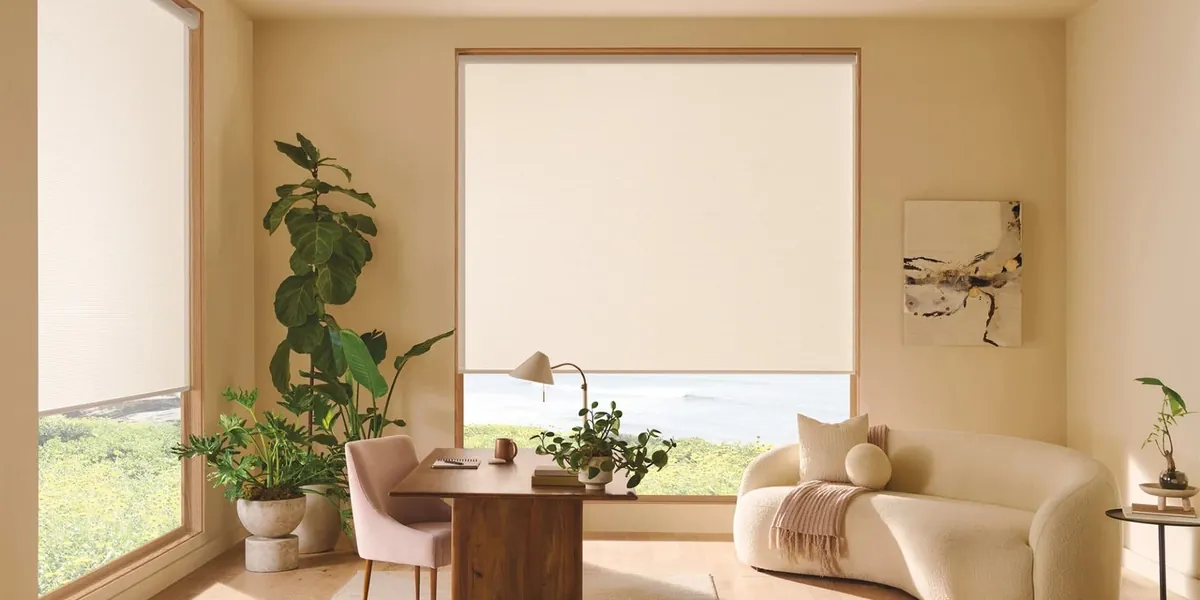
Houses on the streets near the reservoir get a particular kind of light. On a clear day, sun reflects up off the water and comes in at a low angle, so it reaches further into the room and hits screens, tables and faces that a high summer sun would miss. Afternoon rooms facing the water can be hard to sit in for a few hours each day.
For those rooms we usually suggest a screen in the middle of the openness range: tight enough to tame the reflected glare, open enough that the water stays in view. Many owners like to keep the shade only partly lowered, covering the band of glass that the reflection comes through and leaving the rest open. A roller stops wherever you leave it, which makes that easy.
Waterside bedrooms are a different matter. If the morning light off the water wakes you, a room-darkening or blackout cloth on the bedroom windows solves it, and the living rooms can keep their screens.
Capes with upstairs bedrooms
A cape keeps its main rooms on the ground floor and tucks bedrooms upstairs under the roof, lit by windows in the gable ends or in dormers. Those upstairs windows are often smaller than the ones below, and the rooms behind them can get warm under a summer roof.
Dormer windows usually sit in a small recess with walls close on both sides, which suits an inside-mounted roller very well: the shade stays inside the opening and takes no room from the dormer itself. Gable-end windows are often a pair or a single window high in the wall, and a light-filtering or room-darkening cloth is the usual choice for a bedroom up there.
On the ground floor of a cape, the front windows face the road across the front lawn. With the setbacks most Norton lots have, light filtering is often enough for daytime privacy, and the room stays bright.
Ranches with wide front windows
Ranches in town are generally laid out with the living room at the front behind a wide window, bedrooms along one side, and a kitchen and slider at the back facing the yard. With everything on one floor, the shades in a ranch are all within easy reach, and they are seen together from the road.
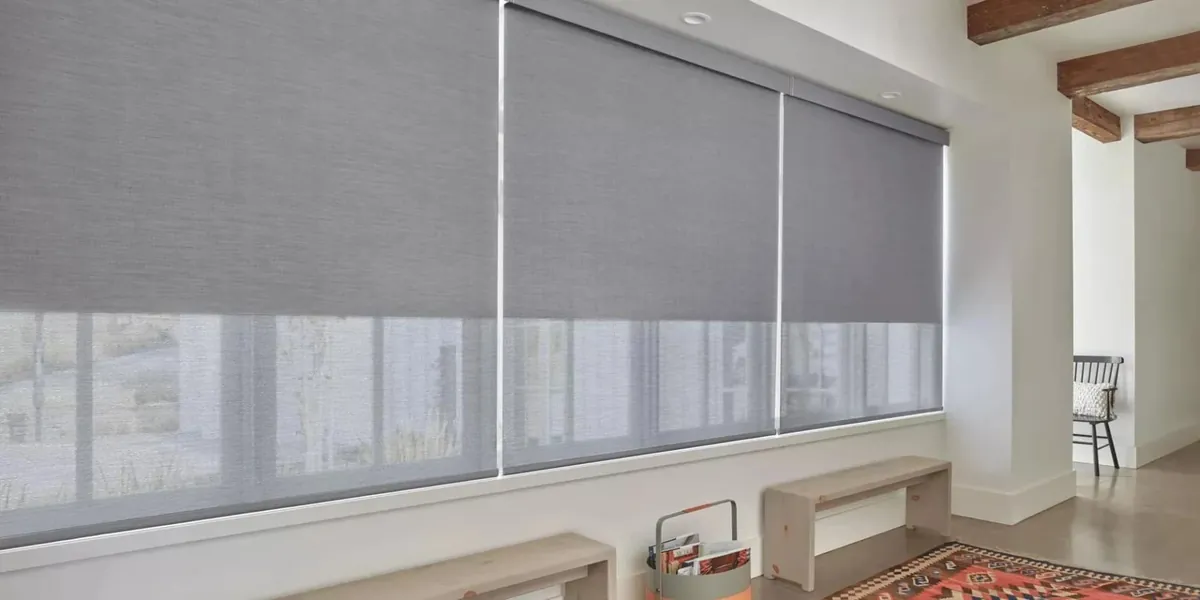
The wide front window is where the most thought goes. It can take a single long shade, or two or three shades side by side, each sized to its section of glass. Separate shades let you lower one end against the low afternoon sun while leaving the rest open. Because the whole front of a ranch is visible at once, we keep the fabric color the same across every front window, even if the bedrooms behind use a heavier cloth.
A slider at the back usually takes one shade across the full width of the door, so it can be raised completely when you head out to the yard. A screen fabric there keeps the yard in view while cutting the glare on the kitchen floor.
Sunrooms and porches at the back
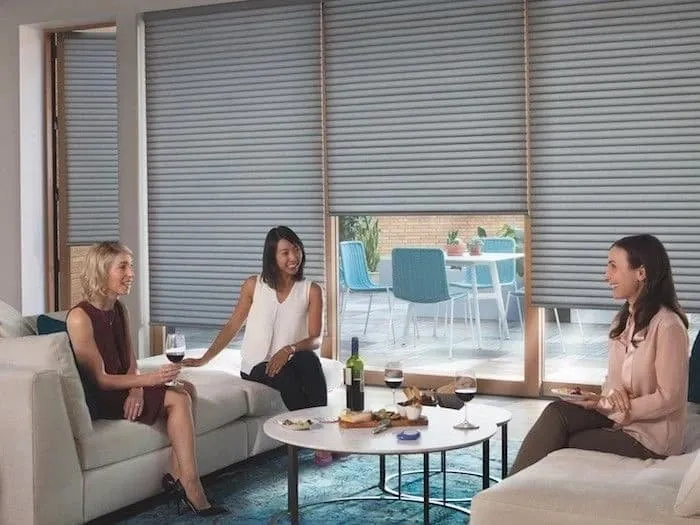
Larger lots give many houses room for a sunroom, a three-season room or a screened porch off the back, and those rooms have more glass, or more open screen, than anywhere else in the house. They are lovely in spring and autumn and can be close to unusable on a bright July afternoon, when the sun comes straight through and the floor and furniture soak up the heat.
Solar screen roller shades are a natural fit for a glass sunroom. Lowered through the hottest hours, a screen takes much of the glare off the room and keeps the garden in view, so it still feels like the outdoor room it was built to be. In a sunroom used for reading or a laptop, a tighter weave on the sunniest wall makes a real difference to how comfortable it is to sit there.
Every wall of a sunroom tends to face a different way, so the shades often do different jobs on different sides. We look at where the sun falls through the day, and size and choose each shade for its own wall rather than treating the room as one block.
Kitchens and home offices
A kitchen at the back of a ranch or colonial usually has a window over the sink and a slider or French door to the deck. The sink window is awkward to reach across, so a shade there wants to be simple to work, and a roller is one of the simplest. A light-filtering cloth keeps the kitchen bright; a screen keeps the yard in view while softening the morning or evening sun on the counters.
Home offices are increasingly common in the spare bedroom of a cape or the bonus room of a colonial. The problem there is glare on a monitor. A tighter screen fabric on the window that faces the desk usually fixes it without turning the room gloomy, and the other windows can stay more open. Where the desk faces away from the window, the glare lands on the screen from behind, and a light-filtering cloth on that one window may suit better.
Newer colonials off Route 140
The colonials built more recently off Route 140 bring bigger rooms and bigger glass: a two-story entry, a family room with a long run of windows, sometimes a sunroom or a bonus room over the garage. They are where roller shades in Norton tend to have the most to do, because so much glass in one room can make it bright and warm well into the evening.
For a family room with several large windows side by side, matching screens across the run keep the room even and the view consistent. Where the room also holds a television, the window facing the screen often gets a tighter weave than the others. Bonus rooms over a garage, which tend to take the full heat of the afternoon, often do best with a fairly tight screen or a light-filtering cloth.
The two-story entry deserves its own word. Its upper window often faces the front and throws a bright patch of sun down the stairs and across the hall floor at certain times of day. Some owners are happy to leave it uncovered and enjoy the light; others find the glare on the landing a nuisance or want privacy at night when the hall lights are on. A light-filtering roller made to the size of that high window solves both, and it can be left at a set height most of the time.
High windows in an entry or over a family room are hard to reach, and that is where motorization becomes practical rather than a luxury.
PowerView for high glass and daily routines
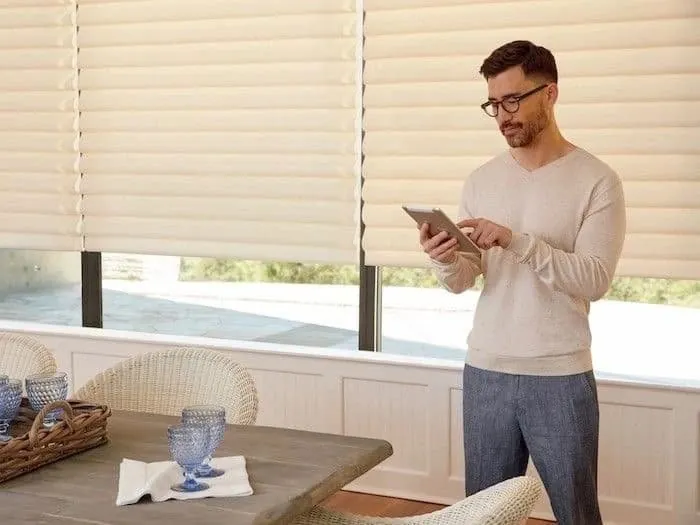
With PowerView, your roller shades move from a remote or the app on your phone, and you can group them so a whole room moves together. Schedules are the part many owners end up using most: the west-facing shades come down before the afternoon sun arrives, the bedroom shades rise at a chosen hour, and everything closes at dusk without anyone going round the house.
We plan how each motor is powered at the visit, so you know exactly what is involved before ordering. Our motorized blinds in Norton page covers the range, and we can motorize as few or as many windows as you like.
Color seen across a lawn
With houses set well back, the street sees the front of a Norton house as a whole rather than window by window. A row of front windows with the same shade color, lowered to the same height, looks calm and intentional from the road; a patchwork of different colors looks unfinished even when each one suits its room.
So for roller shades in Norton we usually agree the front color first, often a soft white, cream or light gray that sits well against most siding and trim, and then choose freely for the rooms at the back and sides, where the view from outside matters much less. Screen fabrics have their own color range, and a darker screen at the back of the house, where the view to the yard matters most, is perfectly at home behind a pale front.
Standard openings, still measured one by one
Modern window sizes make life easier, but even in a newer house two windows that look the same can differ slightly, and a shade made a little too wide will not fit inside the frame. So we measure every opening.
- We note each window’s width at three heights and its height at three points across.
- We check the frame depth for an inside mount and look for anything in the way, such as window locks or crank handles.
- We talk through inside or outside mount for each room, based on how dark you want it and how much trim you want to see.
- We agree the fabric, color and openness for each window with you.
- You get a free estimate for the shades you are considering.
- When the shades arrive, our certified Hunter Douglas installers fit them, level each one and show you how they work.
A Gallery dealer for the whole house
Blinds & Designs is a Hunter Douglas Gallery dealer, so every roller line is available to you in one order, along with PowerView and the rest of the Hunter Douglas range.
Our installation is certified by Hunter Douglas. We also offer interior design consultations for help pulling a room together, blind and shade repairs on window coverings you already own, and commercial blinds and shades.
If some rooms call for something else, look at our cellular shades in Norton, roman shades in Norton or custom blinds in Norton, or our Norton page for everything we do locally. The full roller family is on the main roller shades page.
Bring the samples, or come to Franklin
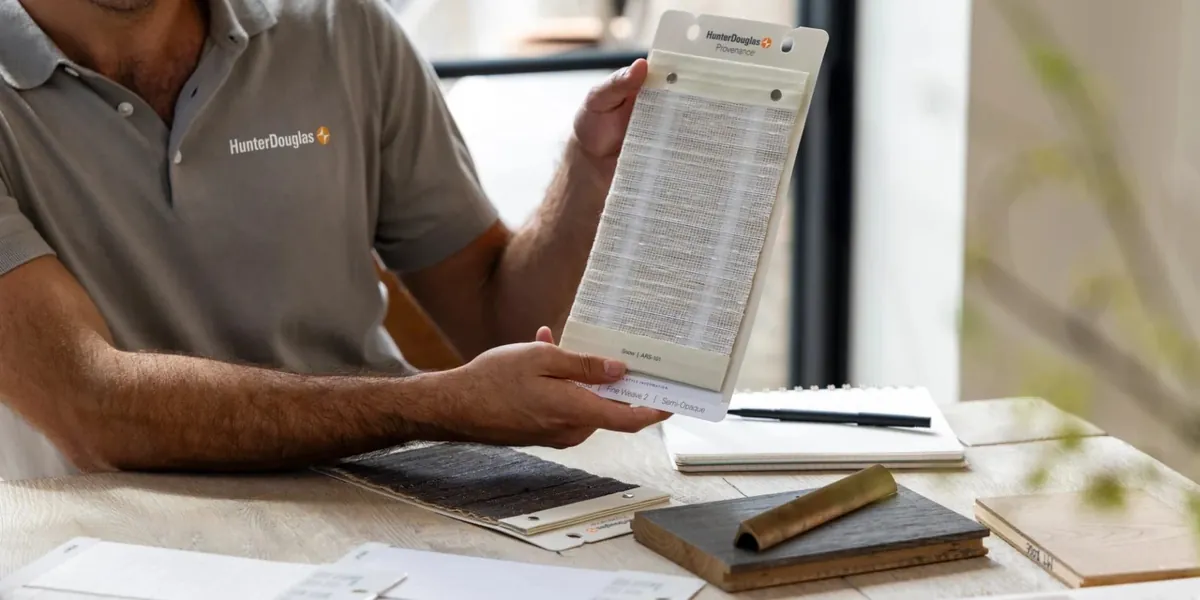
Light is what decides a roller fabric, and the light in your rooms is the light that matters. Our vans carry the samples, so we can bring the showroom to you, set fabrics against your windows at different openness levels, and measure while we are there. You can read what happens at an in-home consultation beforehand.
If you would rather see the roller family in person first, our Franklin showroom is the nearest to Norton. Look there, note the fabrics that catch your eye, and we will bring those same cloths to your house so you can judge them in the rooms they are meant for, against your own walls and floors.
Questions from Norton
We have no close neighbors. Do we still need shades?
For privacy in the day, often not. For glare, heat and bedrooms in summer, almost certainly. A solar screen handles the glare and keeps the view; a room-darkening cloth handles the bedrooms.
What openness should I choose near the reservoir?
Usually something in the middle of the range, tight enough to calm the reflected glare off the water but open enough to keep the view. We show you a few side by side on the window itself.
Will a roller fit inside a dormer window?
In most cases, yes. A dormer’s recess suits an inside mount, so the shade sits within the opening and takes no space from the room.
Can I schedule my shades to close in the afternoon?
Yes, with PowerView. You can set the west-facing shades to lower at a chosen time and the bedroom shades to rise each morning. We plan how each motor is powered at the visit.
Is there a charge for the estimate?
No. We measure and give you a free estimate for the shades you are considering.
The next step
The best way to pick roller shades in Norton, MA, is to see the fabrics in your own light. Request a consultation and we will bring samples to the house, measure every window and give you a free estimate. You can also use the call button, or visit the Franklin showroom.