
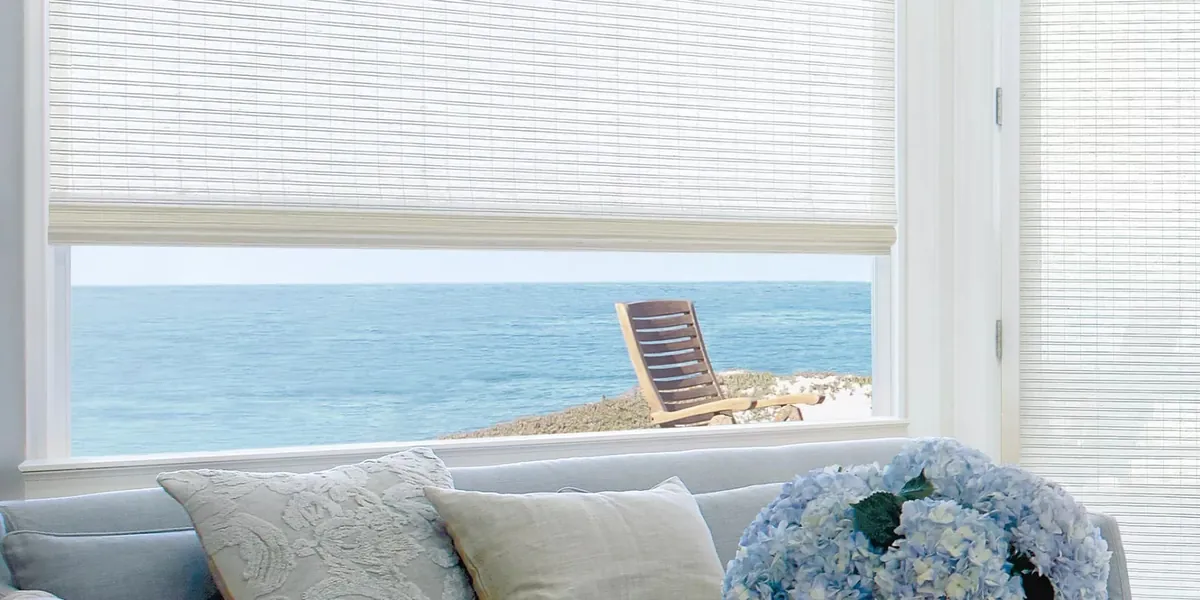
Beach cottages that became year-round houses
At Brant Rock and Green Harbor, many houses began as summer cottages: small, close-set, built for a few warm months with a window or two on each wall to catch the breeze. Over the years most have been converted to year-round use, with insulation, heating and often an addition or a dormer, but the original openings are usually still there, small and simply framed. Those cottages, and the larger newer houses inland, are the two sides of roman shades in Marshfield, MA.
A converted cottage asks a lot of a small window. It has to let in enough light to keep a compact room from feeling closed in, give privacy from a neighbor who may be only a few steps away, and keep the room comfortable through a winter on the shore, when the weather comes straight off the ocean. A folded fabric shade can do all three if the fabric, lining and stack are chosen with care.
Inland, the questions are different: bigger windows, more of them, and rooms that want a finished, comfortable look rather than a careful balance of light and privacy.
What a converted cottage needs from a shade
Three needs come up in nearly every cottage on the shore streets. Each one shapes the fabric, lining or lift we suggest.
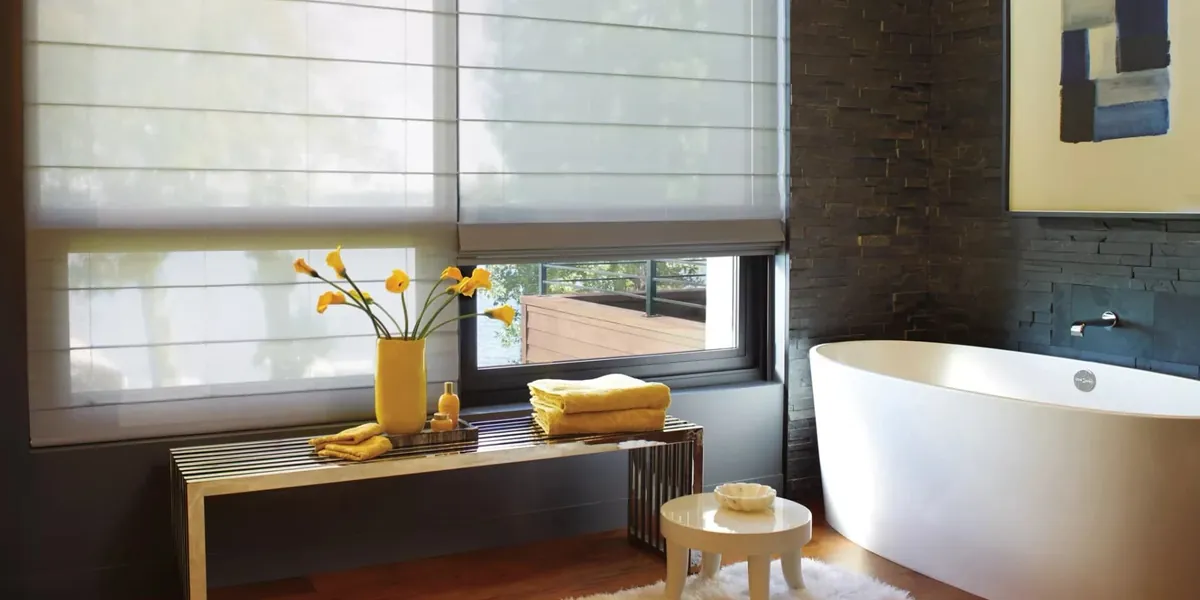
Privacy on the side windows
Close-set cottages often look straight into the house next door. A light-filtering fabric screens the room by day while keeping it bright.
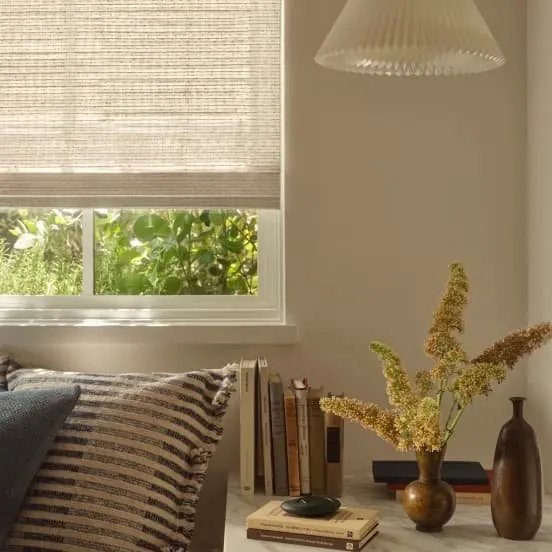
Light from small openings
On a small original window, every inch of glass matters. A slim stack and a high headrail keep the room as light as possible.
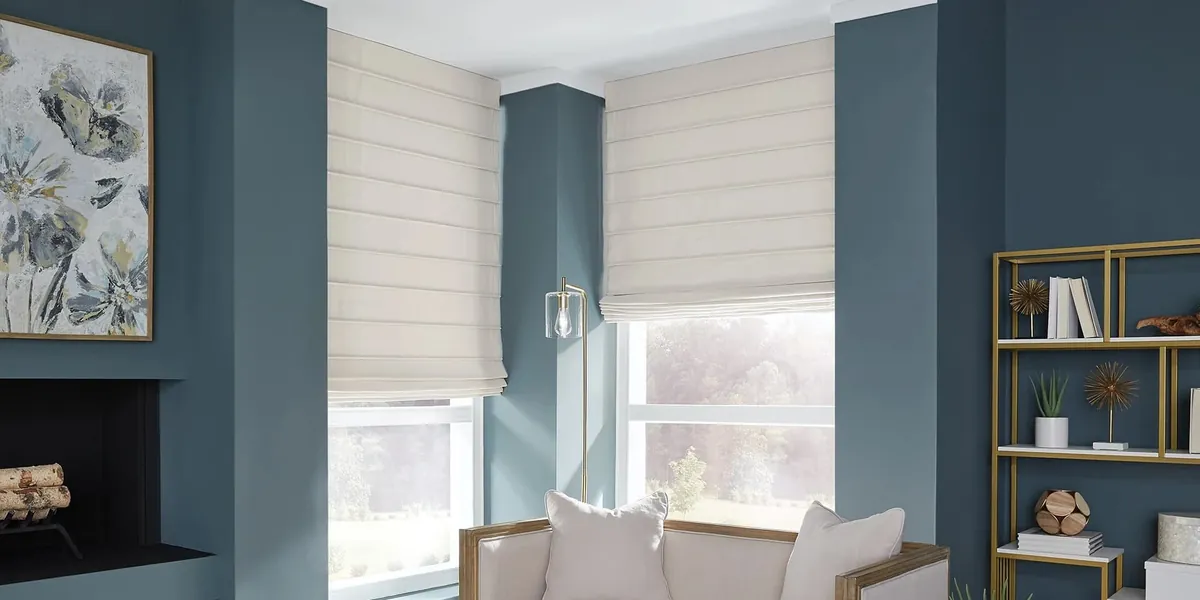
Warmth on winter evenings
A lined shade lowered at dusk adds a soft layer between the room and a cold pane, which a cottage built for summer appreciates.
Close-set cottages and the house next door
The cottages along the shore were built close together, sometimes with only a narrow path between them. Side windows that once just caught the summer breeze now look across a few feet of space into a neighbor’s kitchen or living room, and in a year-round house that matters every day, not just in July.
The usual answer is a light-filtering fabric on the side windows. By day it glows softly, so the room stays bright but nobody can see in. After dark, with lamps on, the same shade still screens the room. If the side window faces a neighbor’s lit window at night, a heavier lining adds extra privacy.
Front windows facing the street, and back windows facing the water, can take a lighter fabric or a sheer, since privacy is less of an issue there and the light and view matter more. Many cottages end up with two fabrics: a filtering one on the sides and a lighter one on the front and back, both in the same color so the room looks consistent.
Small original openings at Brant Rock
The original cottage windows are small, often a single double-hung or a pair of small sash with simple flat trim. Built for summer, they were never meant to light a room on a January afternoon, and in a converted cottage the rooms can feel dim in winter. The last thing a small window needs is a shade that takes away more light.
On these windows, how the shade stacks is everything. A sewn roman shade gathers its fabric at the top when raised, and on a small window that band can take a noticeable share of the glass. We keep it as small as possible in a few ways: a lighter fabric that folds thin, a flat fold that stacks neatly, and a headrail set as high as the frame allows so the gathered fabric sits over the top of the window. Vignette, which winds its fabric around a roller in the headrail instead of folding it, leaves the most glass of all.
An outside mount is worth considering on the smallest windows. Fixed above and slightly wider than the frame, the shade can be raised completely clear of the glass, and the window looks larger with the shade framing it.
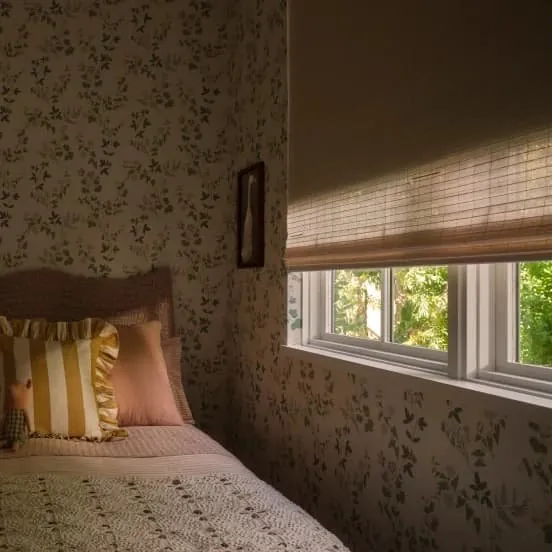
Green Harbor and weather off the ocean
The shore streets take the full weight of coastal weather. Wind drives rain and spray against the windows, salt settles on every surface, and winter storms make the house feel the cold through its glass. A shade cannot keep out a storm, but the right one makes a room more comfortable while it blows.
A lined roman shade lowered at night adds a layer of fabric between the room and the window. In a converted cottage, which may still have fairly modest windows, that layer makes the window side of the room feel less chilly. A room-darkening or thermal-feel lining adds weight to the fabric, and a shade mounted inside the frame, close to the glass, covers the opening edge to edge.
Salt air is hard on exposed hardware. Vignette tucks its mechanism inside the headrail, and choosing a cordless sewn shade does away with the cord lock at the side, so there is less exposed metal near a window you open in summer. We point out these options at the visit for any house on the shore streets.
Additions and dormers
Most converted cottages have grown. A second story, a dormer across the roof, a family room or a kitchen addition at the back: each brings newer, bigger windows alongside the small originals. The result is a house where windows of very different sizes and ages sit side by side.
Shades are a good way to make that mix feel like one house. Using the same fabric family throughout, and mounting the headrails at consistent heights where the windows allow, ties the old cottage rooms and the new addition together. A dormer window, short and set in a recess with sloping walls, suits an inside mount and a compact stack. A larger addition window can carry a soft fold or a pattern that would be too much on a small original sash.
Shore cottages and roman shades in Marshfield, MA
Planning a whole converted cottage is a balancing act. The original rooms need light and privacy from small windows; the additions have bigger glass and different light; and every window faces the coastal weather. The way to get it right is to look at the house as a whole, room by room.
We usually start with the rooms that bother you most: the dim front room, the bedroom that looks into the neighbor’s, the kitchen addition that overheats in summer. Then we choose a fabric and lining for each, and a lift that suits how often the shade will move. Throughout, we keep the colors related so the house feels joined up from front to back.
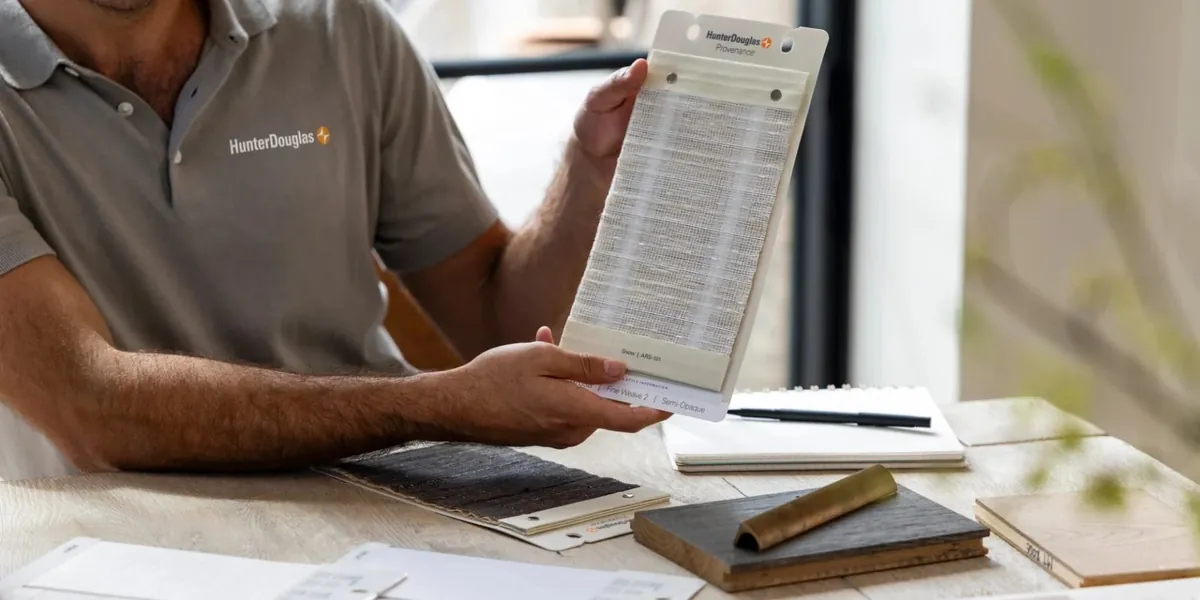
Larger newer houses inland
Away from the shore, Marshfield’s newer houses are larger, set on bigger lots with more space between them. Their windows are modern and generous: tall double-hungs, family rooms with long runs of glass, kitchens with sliders to the yard and bedrooms with wide windows. They are square and straightforward to fit.
In these houses roman shades in Marshfield are about comfort and style rather than squeezing light from a small opening. A dining room can wear a printed Carole Fabrics cloth, a family room’s bank of windows suits identical Vignette shades stopped at one level, and bedrooms get blackout-style linings in whatever color each one wants.
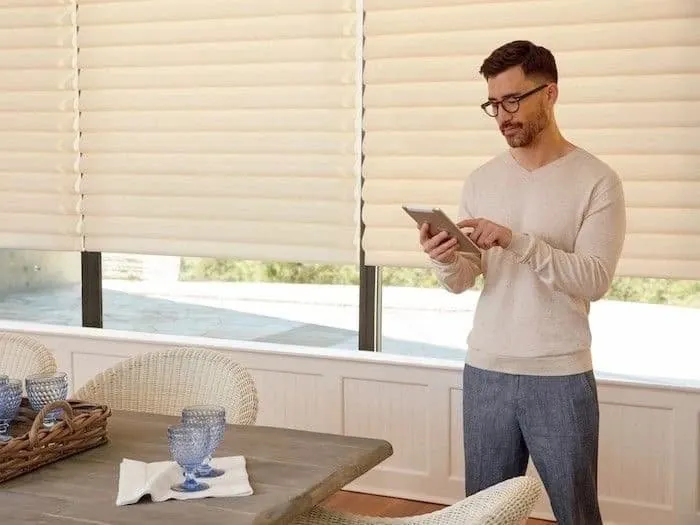
Inland entries and great rooms often climb two stories, leaving the upper glass out of reach. PowerView motors bring those shades down with a tap on a phone or remote, or on a timer, and can move a whole bank together. The motorized blinds and shades page has the details; motor power is planned at the visit.
Choosing fabric for a house near salt air
On the shore streets, fabric choice is about durability as much as looks. Three things help a shade last.
- Color: light off the ocean is strong and constant. Lighter neutrals and natural tones fade far more slowly than strong, saturated colors on a window that takes the sun every day.
- Lining: a lining protects the face fabric from the sun and adds weight and warmth in winter.
- Texture: a slubby or woven cloth forgives sand, dust and the odd mark far more than a smooth pale plain, handy in a cottage where the beach comes indoors on bare feet.
Inland, with trees and distance from the water softening the light, you have more freedom to choose a deeper color or a bolder pattern.
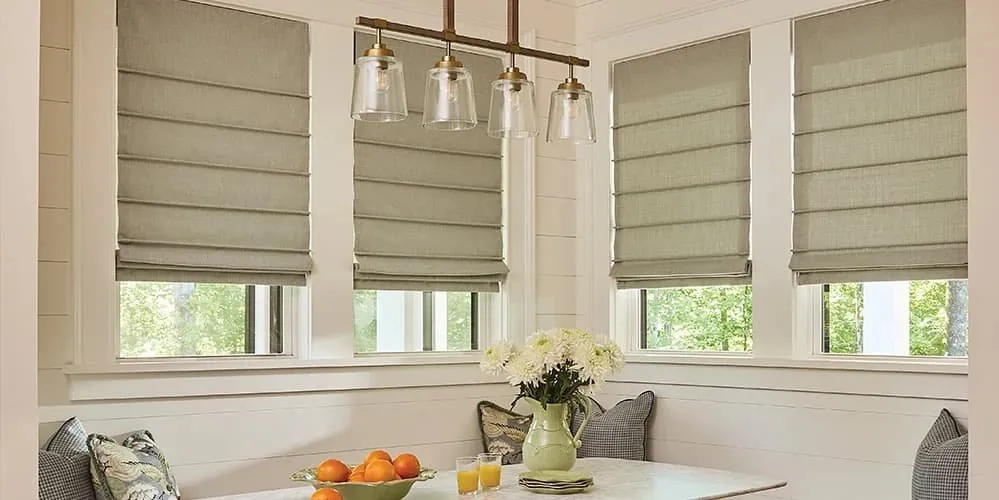
Vignette and Carole Fabrics on the shore and inland
Two Hunter Douglas folded shades cover almost every Marshfield window we see, and the cottage-or-inland question usually points to one or the other.
On a tiny Brant Rock sash, Vignette has the edge. The cloth is formed into rounded tiers at the factory and, when raised, spools onto a roller hidden in the headrail, so the window keeps more daylight than it would under a stitched stack. With no strings across the back and the mechanism enclosed, there is little hardware for salt air to reach. Inland, the same shade works neatly with PowerView on a tall run of glass.
Carole Fabrics is the choice when the cloth itself is the point. Each shade is stitched for its window from a decorator library, folded flat or softly, and lined to suit the room, which opens up prints, weaves and colors that tie in with a sofa, cushions or the curtains next door. A cottage sitting room with a sea-glass palette, or a formal dining room inland, often suits it best.
A converted cottage commonly mixes the two: Vignette on the smallest original windows, Carole Fabrics on the bigger addition glass, in colors that belong together. The Vignette and Carole Fabrics roman shades pages go deeper, and the roman shades page shows the range as a whole.
Open-plan cottage interiors
Many conversions knocked down the small summer partitions, so the ground floor of a cottage is often one open room: kitchen at one end, a sitting area at the other, windows on all four walls. In a space like that, the shades are seen together, and if each window has a different treatment the room can look restless.
We usually suggest one fabric and one fold for every window in an open space, with the lining varied where the need changes, filtering on the side facing next door, lighter on the side facing the water. Headrails go at a common height wherever the windows allow it, so the raised shades make a single clean line around the room. For roman shades in Marshfield, MA, cottages with open interiors, that consistency makes a small house feel larger and calmer.
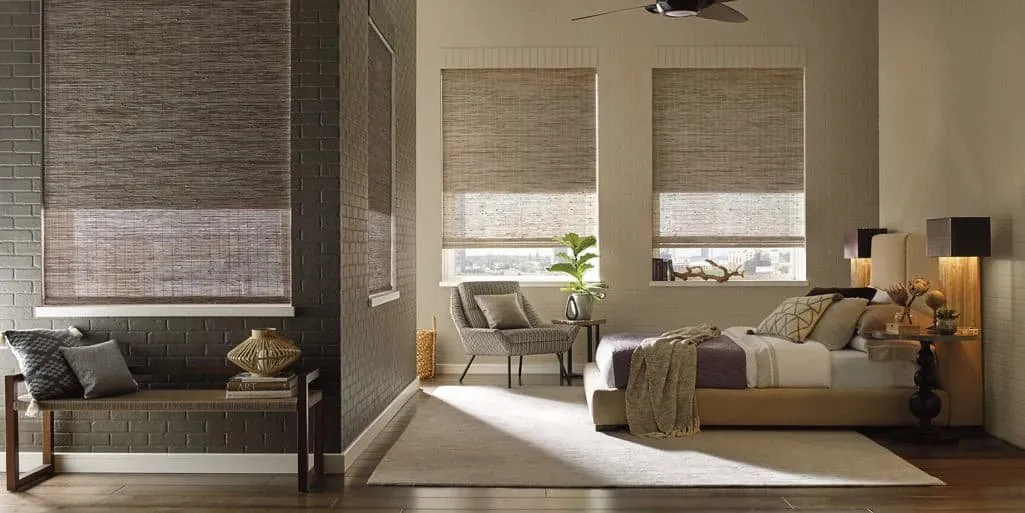
Sleeping rooms under a cottage roof
Cottage bedrooms are usually the smallest rooms in the house, squeezed under the eaves or added in a dormer when the place was converted. They tend to have one or two short windows, sometimes facing east toward the water, where the summer sun climbs out of the ocean very early and fills a small room with light.
Here the priorities flip. Light is no longer something to save; it is something to keep out until you are ready. A room-darkening lining behind a Carole Fabrics shade, or a Vignette in a darkening fabric, keeps the room dim, and an inside mount close to the glass leaves less of a gap at the sides for light to creep around. Because the windows are small, the stack matters less in a bedroom than in a living room, since nobody needs every inch of daylight there at night.
For roman shades in Marshfield, MA, bedrooms close to a neighbor, the same darkening lining doubles as privacy, so one shade answers both needs. A cordless lift keeps the narrow space beside the bed free of hanging cords.
How a shore visit works
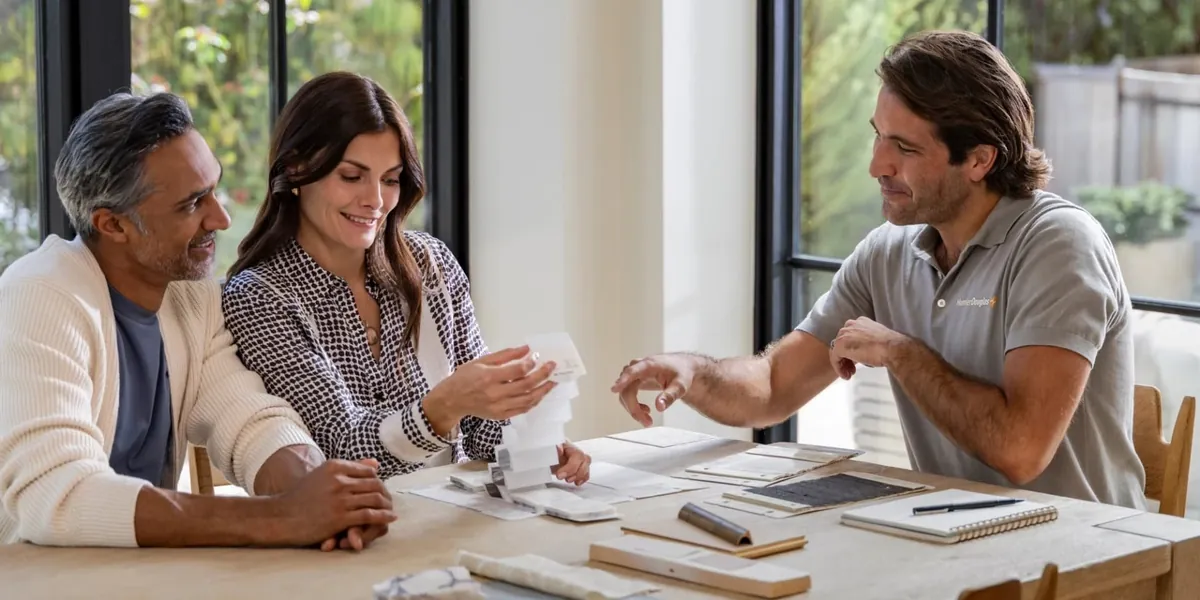
Cottage windows rarely repeat, and the view into the next house is impossible to judge from a brochure, so we come and look. With samples on board the van, your living room becomes the showroom.
- Choose a time through Request a Consultation, or reach us with the call button.
- Both lines come in with us, plus sheer, filtering and room-darkening linings.
- We start in the rooms that frustrate you, dim front room, overlooked bedroom, hot addition, and work outward.
- Cloth goes up against the side windows facing the neighbor so you can judge the privacy for yourself.
- Each window is measured, small openings get a stack plan, and a mount and lift are agreed for every one.
- A free estimate arrives afterwards for the windows on your list, with no answer expected on the day.
Color across an old cottage and its newer rooms can be tricky; our interior design consultations can tackle that during the same appointment. Later, installers certified by Hunter Douglas fix each bracket into solid timber, run every shade up and down and leave you happy with the controls.
Gallery dealer status, explained
dealers who meet its standards carry the Hunter Douglas Gallery title, and Blinds & Designs is one. From one appointment you can draw on all of Vignette, the full Carole Fabrics range, each lining and lift, and PowerView.
Certified installation comes with it, alongside design help and repairs to blinds and shades already in the house. For other rooms, see cellular shades in Marshfield, plantation shutters in Marshfield, or everything we offer on our Marshfield page.
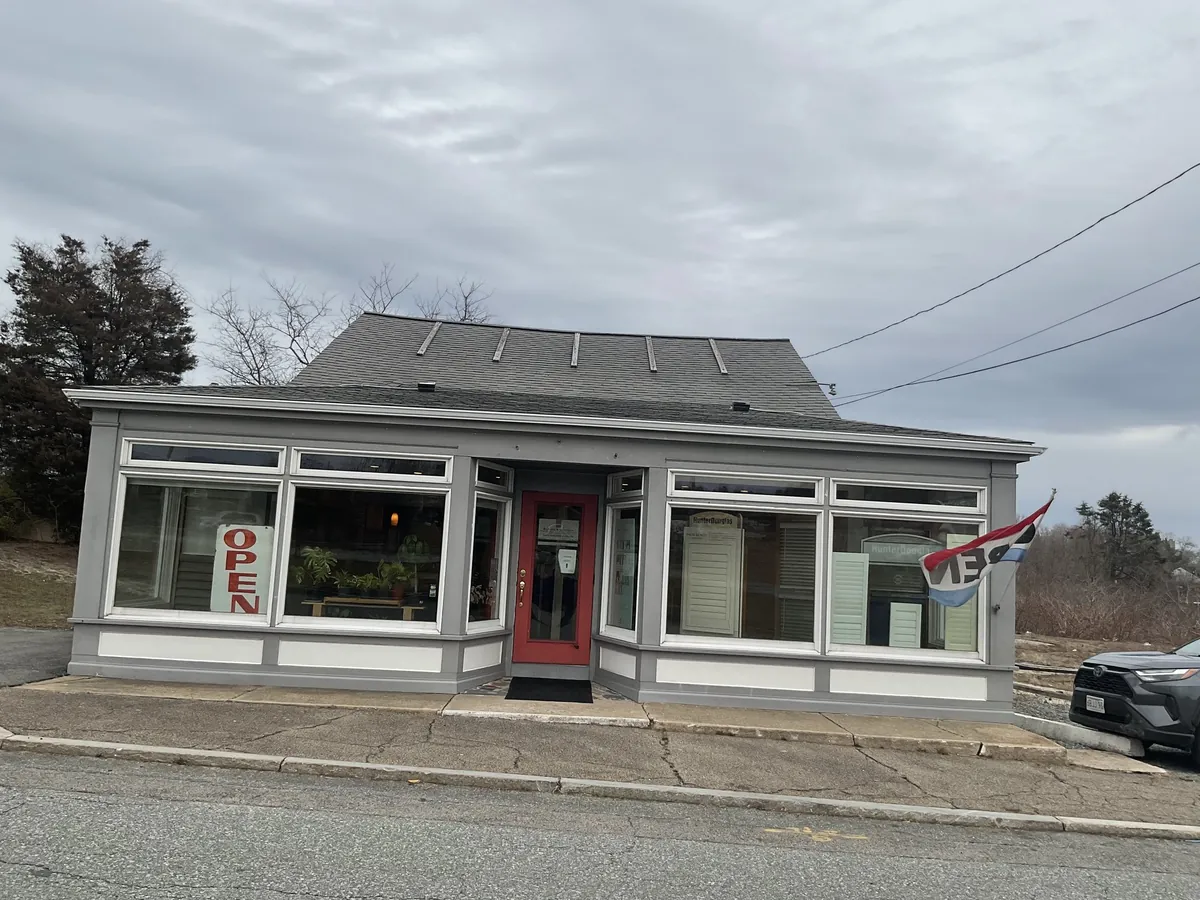
Visit us in Sagamore
Sagamore is our closest location to Marshfield, and the Sagamore showroom is a good place to try a folded shade with your own hands.
For a converted cottage, though, a home visit usually comes first, because the light through a small original window and the view into the house next door are hard to picture anywhere else.
Questions from Marshfield
Our cottage at Brant Rock has very small windows. Will a roman shade make the rooms darker?
Not if the stack is planned. A thin cloth, a flat fold and a headrail set high keep the raised shade slim, Vignette spools away into its headrail, and an outside mount can lift the fabric clear of the glass entirely.
Our side windows look straight into the house next door. What do you suggest?
A light-filtering cloth hides the room in daylight and after dark while keeping it bright. If the neighbor’s windows are lit at night, a heavier lining adds more cover.
Will roman shades help on cold winter nights by the shore?
A lined shade drawn down at dusk puts a layer of fabric between you and the cold glass, so the window end of a converted cottage room feels noticeably cosier.
Can the shades match between our original cottage and the new addition?
Yes. Drawing every fabric from one color family and keeping headrails at shared heights joins the rooms, even when the windows differ a lot in size.
What does the estimate cost?
Nothing at all. When the measuring is done we send a free estimate for the shades on your list.
From cottage to colonial
Whether your house is a converted cottage on a shore street or a newer house inland, the right fabric is easiest to spot at your own window. Book a consultation and the samples come to you; we measure every opening and a free estimate follows. Or use the call button, or drop in at Sagamore.