
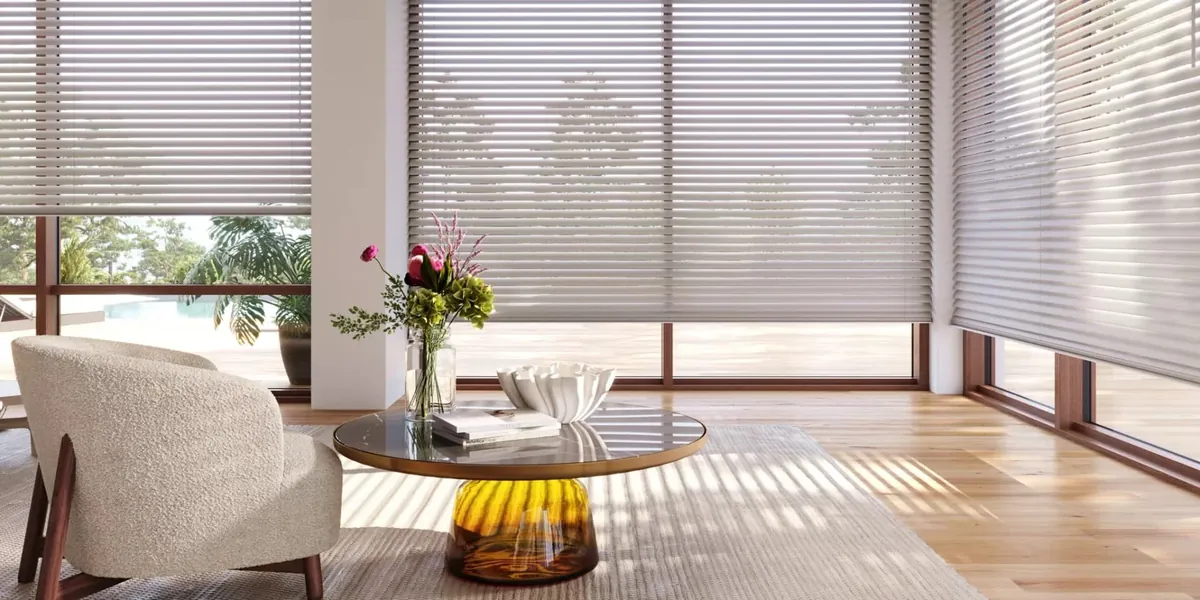
Bay side and sound side
Yarmouth reaches from Cape Cod Bay to Nantucket Sound, and the two ends of town could hardly be more different. On the bay side, Route 6A runs past antique capes set close to the road, with small sash, low ceilings and windows that face north across the marsh. On the sound side, South Yarmouth fills with post-war ranches and cottages packed onto small lots, their main rooms turned toward the southern sun. Two eras of building, and two very different kinds of light, inside one town. That is why custom blinds in Yarmouth, MA are planned for the house in front of us rather than for the town as a whole.
On the north shore the light is cool and even, and the challenge is to keep as much of it as possible in rooms that were built small and dim. On the south side the sun is strong from late morning until evening, and the challenge is to tame it without living behind closed coverings.
A blind does both jobs with one control. Tilt the slats one way and light is bounced deep into a dark room; tilt them the other and harsh sun is turned aside. Close them and the room is private. It is a simple tool that suits both halves of Yarmouth.
Custom blinds in Yarmouth, MA, for both ends of town
Every blind is made from the Hunter Douglas range to the measurements we take at your windows. Our vans carry samples of all four of these families.
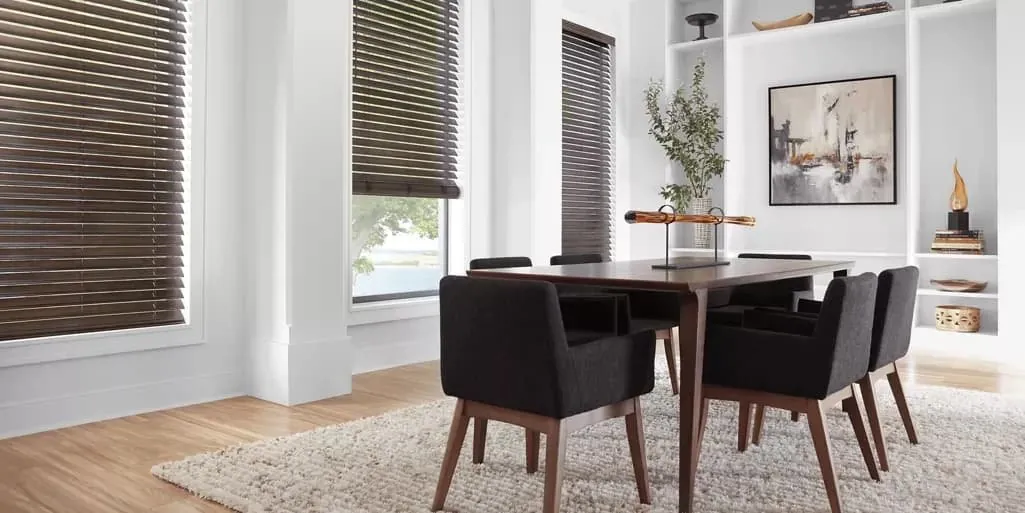
Hardwood
Real wood slats, stained or painted, for the front rooms of an antique cape and anywhere you want warmth and a furnished look.
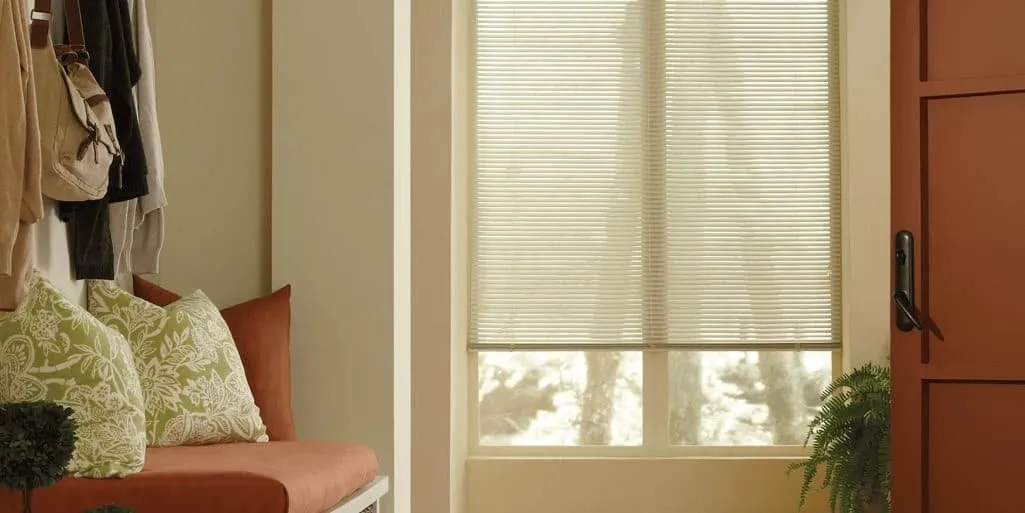
Aluminum
The slimmest slats we sell, for small sash, entry doors and shallow frames where a heavier blind would crowd the window.
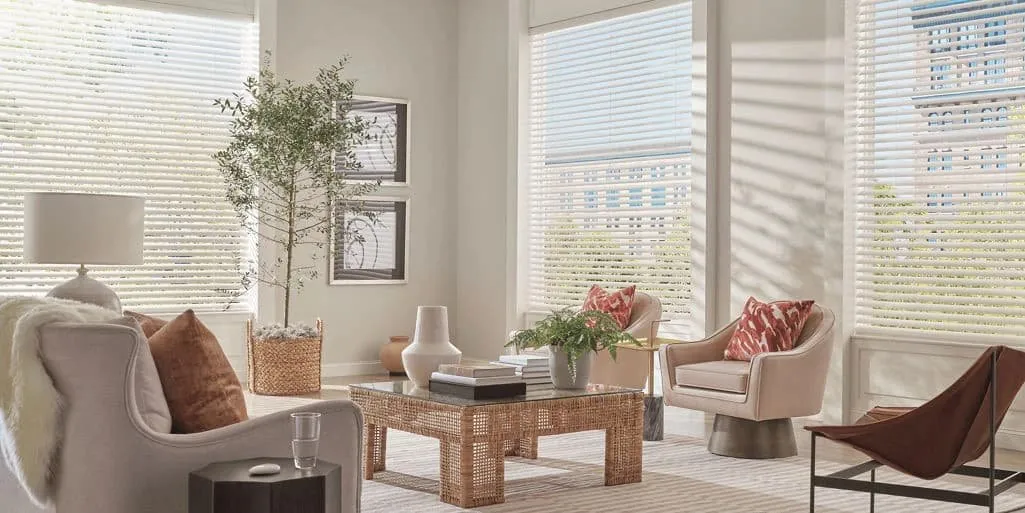
Faux wood
Painted-wood good looks in a slat that ignores steam, damp and strong sun. Suited to ranch kitchens, cottage baths and south-facing rooms.
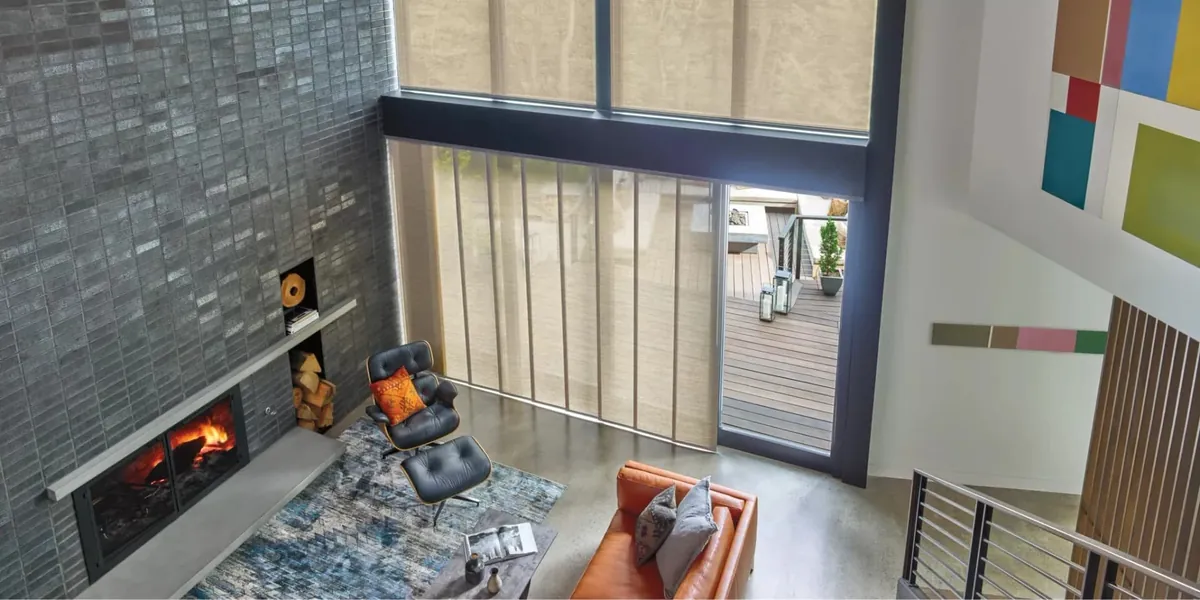
Vertical blinds
Vanes or gliding panels on a track for sliders onto a deck or patio, drawn to one side so the door opens freely.
North light along 6A
The antique capes of Yarmouth Port and the villages along 6A were built facing the road, and many of their back rooms look north toward the marsh and the bay. North light never blazes into a room. It arrives softly all day long, which is lovely for reading and painting, but in a small old house with modest windows it can leave rooms feeling dim, especially in winter.
In those rooms the aim is to give the light every chance. A pale slat color reflects daylight back into the room instead of soaking it up. Tilting the slats so the rounded side faces up sends light toward the ceiling, which in a low-ceilinged cape spreads it across the whole room. And a blind that stacks compactly when raised keeps the top of the window clear on the days you want all the light you can get.
North walls lose heat on a winter night, too. Closing the slats in the evening adds a layer between the room and the old glass, which takes some of the chill away from a chair placed by the window.
Low ceilings and close trim in an antique cape
Capes from the early days of the town have ceilings lower than modern houses, and their windows often sit close under the ceiling or under a summer beam. That leaves little space above the frame for a blind mounted outside the opening, so an inside mount is often the only tidy choice.
Inside mounts need depth, and antique frames vary. We check each one at several points, look for sash weights and pulley wheels in the jamb, and note any interior storm panels. A low-profile headrail takes the least depth and the least height from the glass. Where the frame has shifted out of square, as many have, we make the blind to the narrowest width so it does not rub on one side.
These houses also have small, many-paned sash. A narrow slat keeps the blind in proportion with the little panes, and a slim headrail keeps the top row of glass visible. For the front windows that face 6A, one color and one slat width across every window keeps the house looking quiet and even from the road. Whites, creams and natural wood tones sit most comfortably behind old glass.
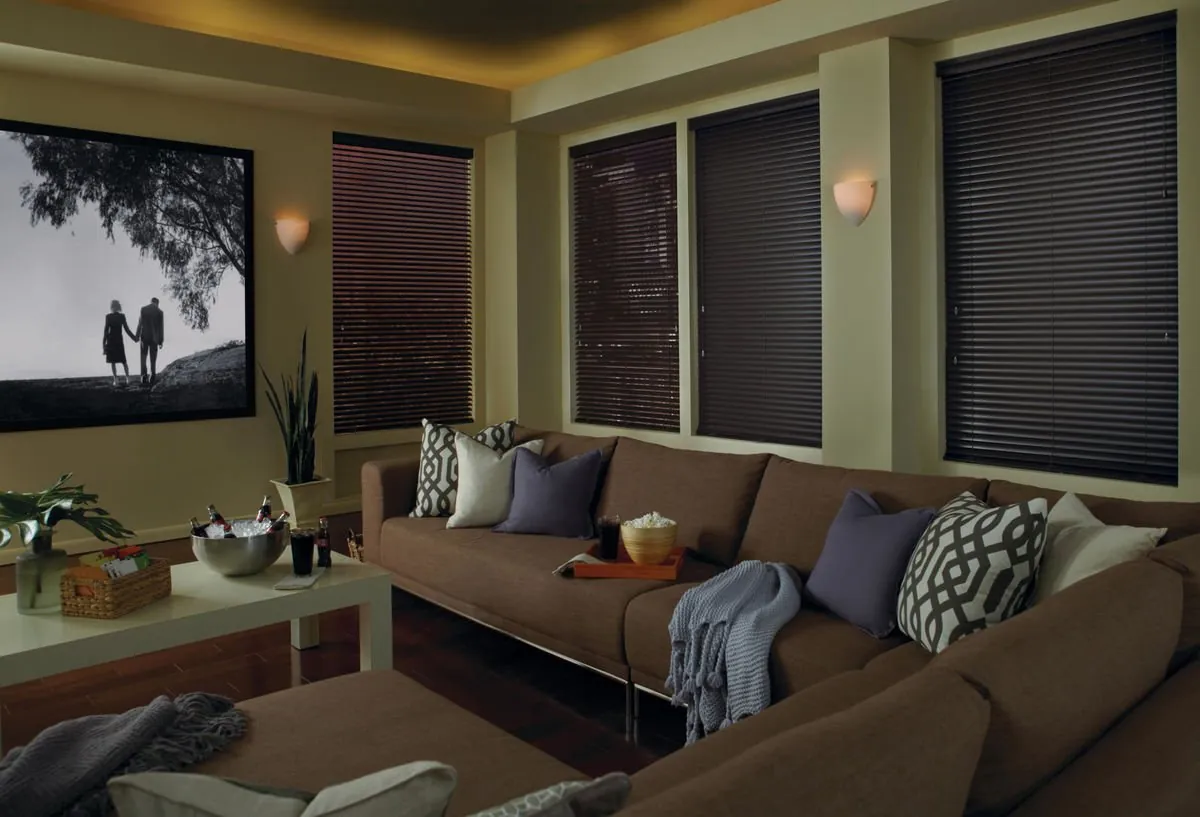
South Yarmouth and the strong southern sun
Cross to the sound side and the light changes. South Yarmouth’s houses mostly turn their living rooms toward the south, and on a clear summer day the sun reaches deep into those rooms from late morning until it sets. Near the water and along Bass River, reflected light off the water adds to it.
That much sun heats a room, glares on screens and fades rugs and upholstery. A blind manages all three. With the slats tilted upward, direct sun is thrown to the ceiling and diffused across the room. With them closed during the hottest hours, the room stays shaded and noticeably cooler. A white or light neutral slat reflects more heat back toward the glass and holds its color longer than a dark one under that kind of daily sun.
Many people on the sound side like to keep their view of the water or the garden while cutting the glare. Wide slats tilted just below level do that well: the sky is screened while you can still see out from a chair.
Rooms along Bass River add one more consideration: the river runs north to south, so houses on its banks often have big windows facing east or west across the water, catching low sun at one end of the day or the other. For those rooms we plan custom blinds in Yarmouth, MA around the hour the glare arrives, with a slat color and tilt that keep the river in view while the worst of the low sun is turned aside.
Post-war ranches on small lots
The ranches of South Yarmouth were built quickly and close together, and most share a pattern: a picture window in the living room facing the street, a window over the kitchen sink, two or three bedrooms with wide windows set higher on the wall, and often a slider added later to a deck or patio. Lots are small, so side windows frequently face the house next door at close range.
- The street-facing picture window: split into a trio of blinds hung on one rail, so the middle can stay down at noon while the flanking pair go up for a cross-breeze.
- Bedroom and bath windows a few yards from next door: slats turned slightly downward from level, enough to break a sightline without making the room gloomy.
- Over the kitchen sink: faux wood, lifted from the bottom rail without any cord, and happy to be wiped down after supper.
- Bedrooms on the east end: a deep slat color that shuts out the dawn in June.
- The added slider: verticals or gliding panels in the same tone as the window blinds.
These replacement-era windows are generally true and roomy enough inside, so a blind tucks within the frame and looks as though it came with the house.
Cottages off Route 28
Tucked between the ranches, South Yarmouth has clusters of little cottages, many first built as summer places near Bass River and the beaches and since converted for all-year living. Small openings, thin walls and the dampness of showers and sea air are typical.
Of the four materials, faux wood and aluminum are the ones we steer cottage rooms toward. Damp leaves them unmoved, sand and salt come off with a wet cloth, and a cottage that goes cold in February does them no harm. Thin walls mean thin frames, so an inside mount is not always possible. In that case the blind can sit on the face of the casing or on the wall just above it, where it lifts fully clear of the glass and gives a small window more presence. A bottom-rail lift with no cord leaves nothing dangling for a summer full of visitors to catch.
With cottages so close to one another, being able to screen a neighbor’s view while the room stays light is usually the reason people call us in the first place.
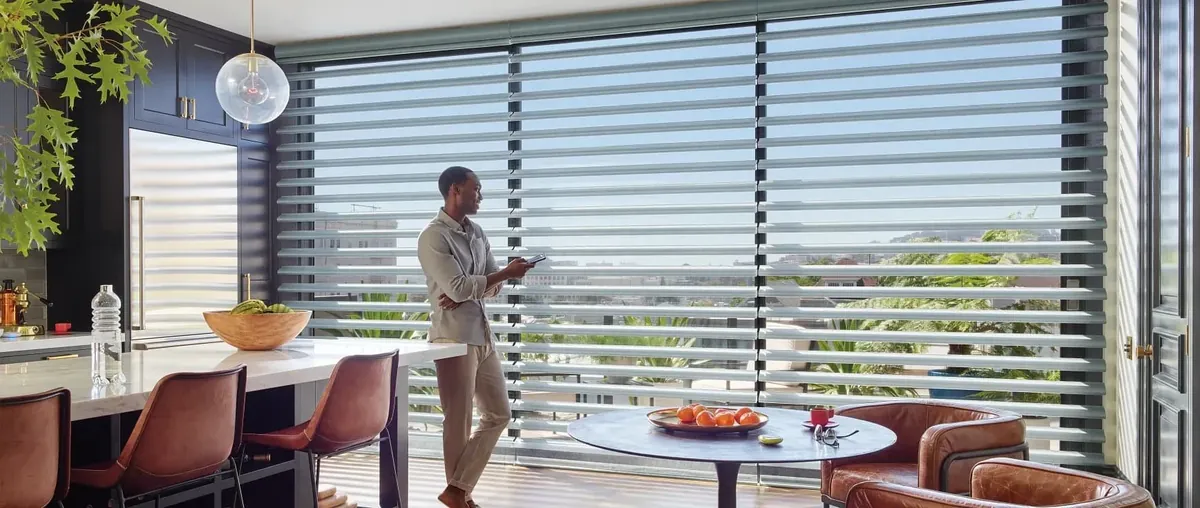
PowerView for the hard-to-reach windows
Some windows are awkward in any house: the one over a deep kitchen counter, a high window in a ranch that has had its ceiling vaulted, or a gable window in a cape’s upstairs room. Hunter Douglas PowerView puts a motor in the headrail, so the slats turn and the blind rises at a press on a handheld remote, a wall keypad or your phone.
On the sound side, schedules are especially useful. Blinds on the south-facing windows can close automatically as the midday sun arrives and open again in the evening, keeping a living room comfortable without anyone having to remember. Motor positions and power are planned with you in the house. More is on motorized blinds in Yarmouth if you want the detail.
Old rooms and new rooms in one house
Many Yarmouth houses, on both sides of town, combine eras. An antique cape on 6A may have a modern kitchen wing behind it; a South Yarmouth ranch may have a family room added with bigger windows and a slider. The windows in each part differ in size, age and depth.
Our usual advice is to settle the color first and the material second. Pick one shade for every blind in the house, and the outside of the building reads as one; then let each room have the slat that suits it. A narrow hardwood slat in the antique parlor and a wide faux wood slat in the new kitchen sit happily together under one color. Planned like that, custom blinds in Yarmouth houses hide the join between centuries instead of pointing at it.
A renovation is also the ideal moment to think about blinds, before the painters finish. If you are adding a wing or replacing windows, we can measure once the new frames are in and the trim is on, so the blinds are made to the finished openings. Bringing color into the conversation early means the trim paint, the slat color and any fabric in the room can be chosen together rather than matched afterwards.
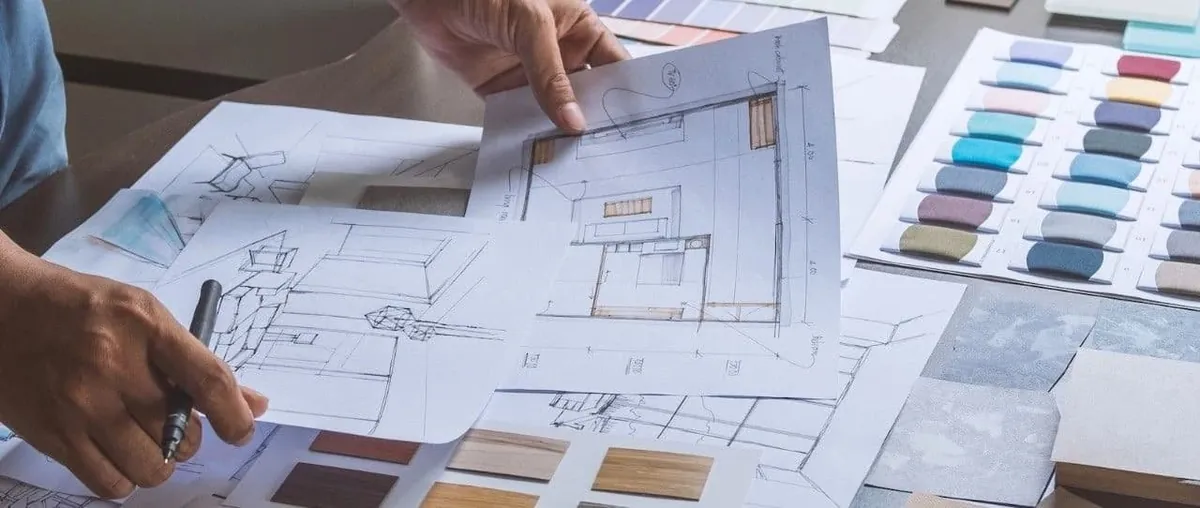
How an order comes together
Here is the path from first contact to finished windows.
- Get in touch through Request a Consultation or the call button, and we set a time at your house.
- Our van arrives with the full set of samples, so we can bring the showroom to you.
- Together we go window by window, deciding what each room needs: more light on the bay side, less glare on the sound side, privacy from a close neighbor or resistance to damp.
- You try slats against your trim and tilt them in your own light, comparing colors and widths.
- Each frame is measured across the head, middle and sill and down both sides, and its depth is noted along with any hardware that could block a headrail.
- A free estimate follows, and the decision is entirely yours, in your own time.
- Hunter Douglas certified installers hang the finished order, set each headrail level and run every blind through its tilt and lift while you watch.
Interior design consultations can join the same appointment if you want help with color or with blending blinds into the rest of the room. The visit is described step by step on what happens at an in-home consultation. Materials have their own pages, wood blinds, metal blinds and vertical blinds, and the range as a whole is on our custom blinds page.
Choosing color for each side of town
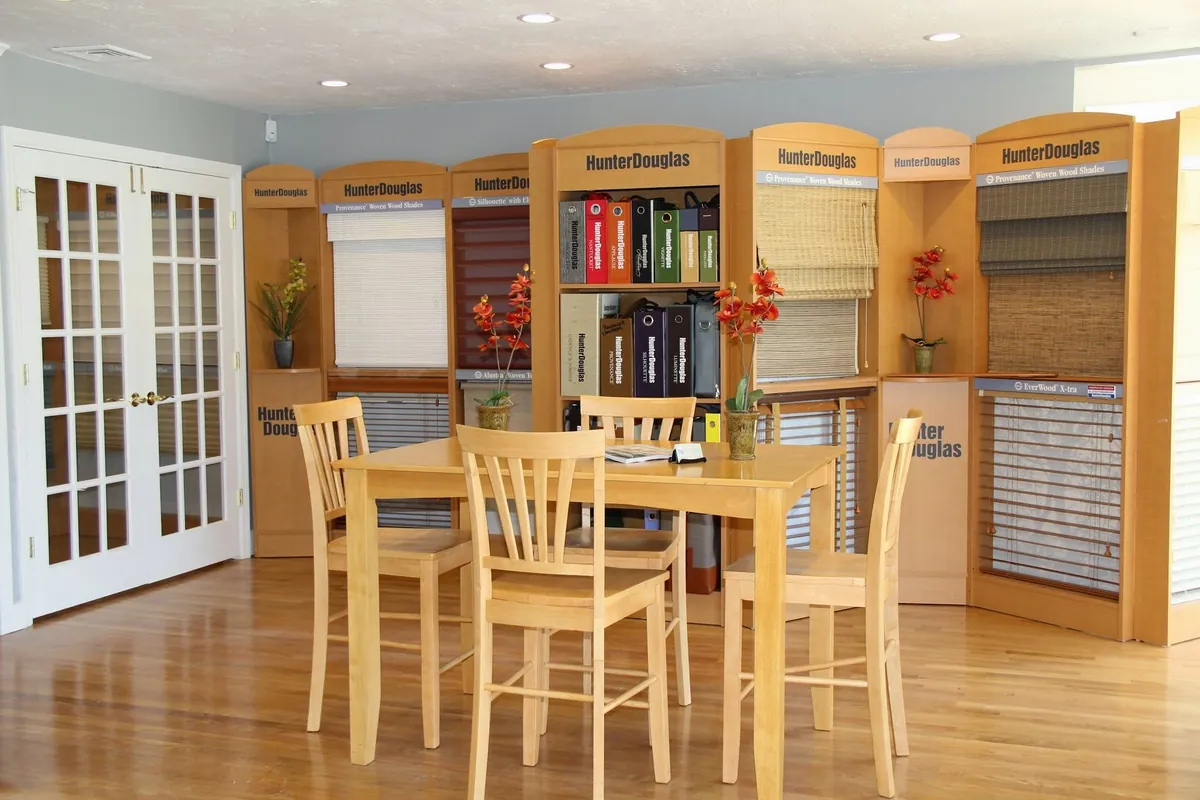
Color choices in Yarmouth tend to follow the light. On the bay side, in north-facing antique rooms, pale slats in white, cream or a light natural wood make the most of soft daylight and sit well with old trim. On the sound side, where the sun is strong, light colors also do best on the windows that face south, because they reflect heat and resist fading. Richer stains and darker paints find their place in the rooms that never see direct sun: a north-facing den, a hallway, a media room.
You are not tied to one answer for the whole house, and a sample at each window shows the difference far better than any description. Custom blinds in Yarmouth, MA are chosen color by color, room by room, at the visit.
A Hunter Douglas Gallery dealer
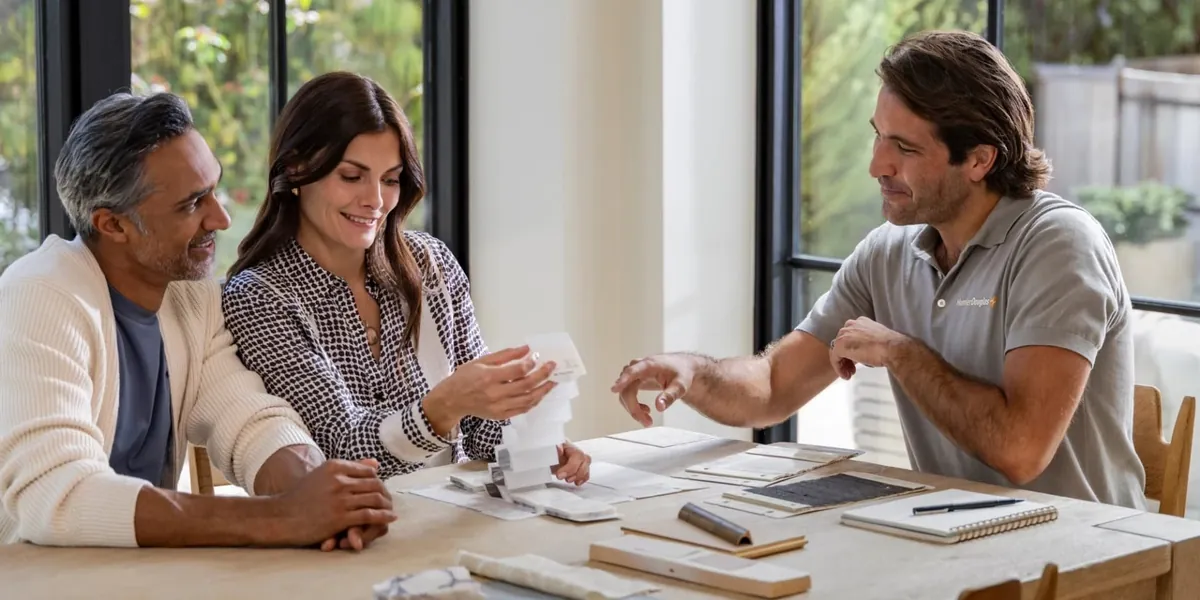
Gallery status is how Hunter Douglas marks out dealers who meet its standards, and it is a status Blinds & Designs holds. Practically, it means one company can show you, order and fit anything in the blind range, in any slat, color or control, with PowerView where you want it.
Hunter Douglas has certified the people who fit our blinds. Older blinds and shades that need attention can come to us for repair, too. Since the range also takes in shades, shutters and drapery, a single visit can cover a whole Yarmouth house. Cellular shades suit a cold north room on the bay side, as our cellular shades in Yarmouth page explains; plantation shutters in Yarmouth are another option, and the Yarmouth page lists everything we do in town.
The nearest showroom is Sagamore
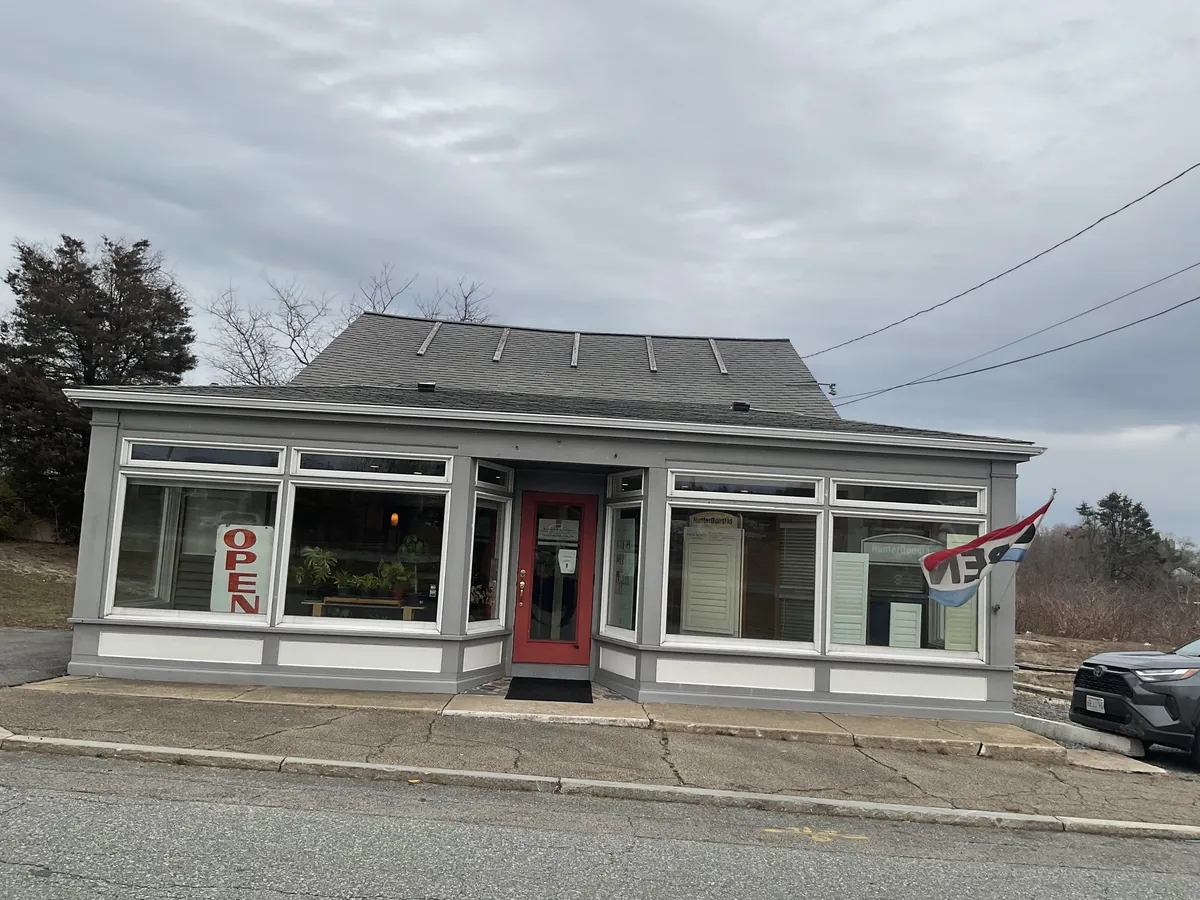
Heading up-Cape toward the bridge, our Sagamore showroom is the closest to Yarmouth for anyone who wants to look at blinds before an appointment at home.
Still, a slat is best judged where it will hang: in the gray north light of a 6A parlor or the hard noon sun of a South Yarmouth living room. Start at the showroom or start at home; what follows is identical, from careful measuring and a free estimate to certified installation.
Questions from Yarmouth
My cape on 6A has low ceilings. Will an inside mount work?
Usually, and it is often the tidiest option when there is little space above the window. We check each frame’s depth and squareness and use a low-profile headrail to keep as much glass clear as possible.
Which blinds help a dim north-facing room?
A pale slat color, tilted with the rounded side up, bounces light toward the ceiling and around the room. A blind that stacks compactly when raised keeps the top of the window clear.
How do I handle the afternoon sun in South Yarmouth?
Tilt the slats upward to diffuse direct sun, or close them through the hottest hours. Light colors reflect more heat and fade less. PowerView schedules can do it for you.
Our ranch is close to the houses on either side. Can we keep the side rooms bright?
Yes. Turn the slats slightly down from level and a neighbor’s line of sight is broken, while daylight from above still reaches the room.
Is there any charge for the estimate?
None. The estimate is free, and it covers every window we measured, so you can see the whole picture before deciding.
Take the first step
Bay side or sound side, north light or noon sun, the answer lies at your own windows. Ask for a consultation and the samples come to your door, each opening is measured and a free estimate is yours to keep. Rather have a word first? The call button rings our Sagamore showroom.